

The DOI matches its Crossref record; 70 of the 70 references it cites were found in a registry or an index.
Brain-to-cervical lymph node signaling after stroke.
Open accessAbstract
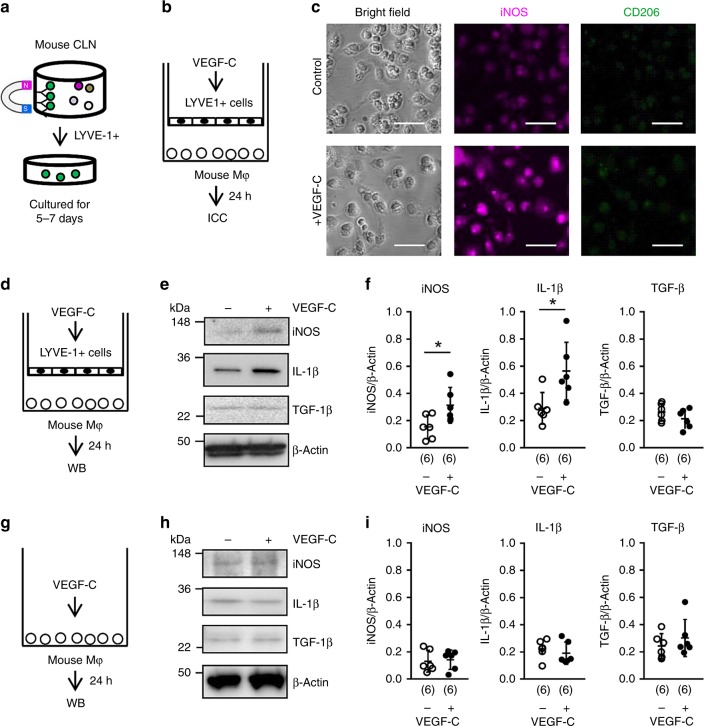
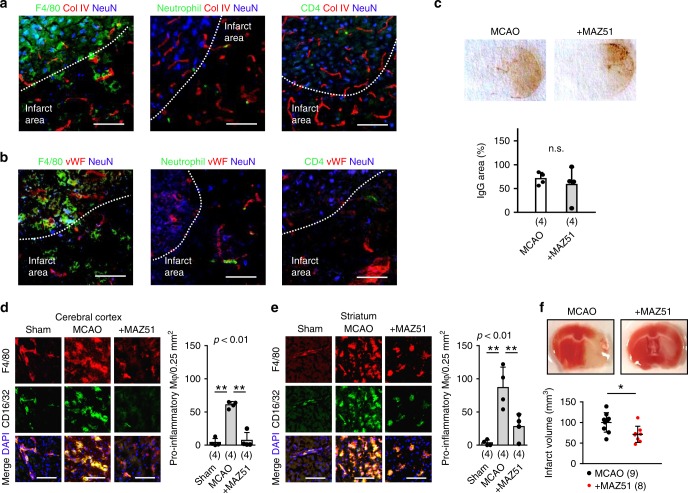
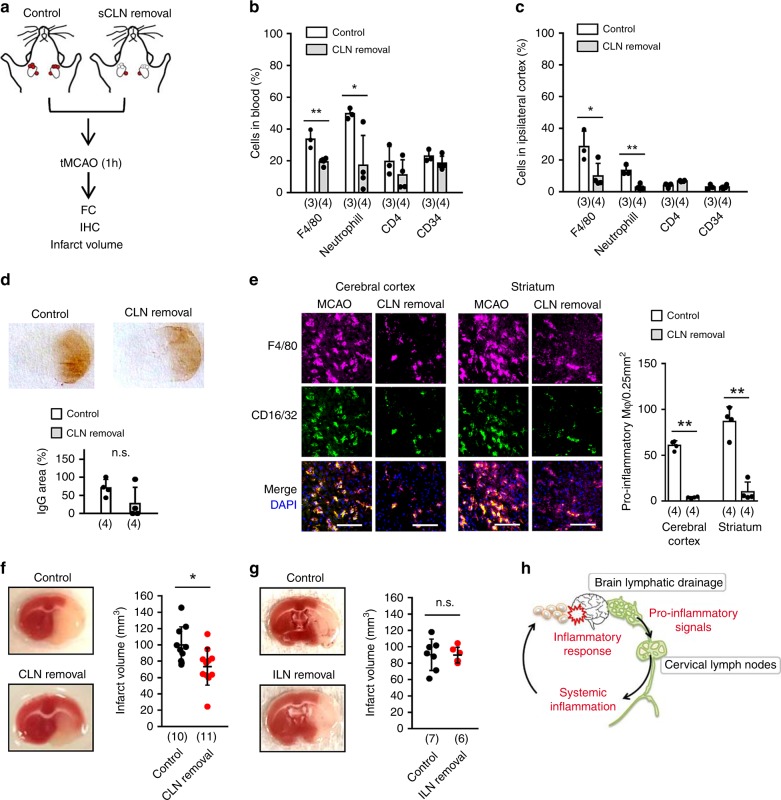
After stroke, peripheral immune cells are activated and these systemic responses may amplify brain damage, but how the injured brain sends out signals to trigger systemic inflammation remains unclear. Here we show that a brain-to-cervical lymph node (CLN) pathway is involved. In rats subjected to focal cerebral ischemia, lymphatic endothelial cells proliferate and macrophages are rapidly activated in CLNs within 24 h, in part via VEGF-C/VEGFR3 signalling. Microarray analyses of isolated lymphatic endothelium from CLNs of ischemic mice confirm the activation of transmembrane tyrosine kinase pathways. Blockade of VEGFR3 reduces lymphatic endothelial activation, decreases pro-inflammatory macrophages, and reduces brain infarction. In vitro, VEGF-C/VEGFR3 signalling in lymphatic endothelial cells enhances inflammatory responses in co-cultured macrophages. Lastly, surgical removal of CLNs in mice significantly reduces infarction after focal cerebral ischemia. These findings suggest that modulating the brain-to-CLN pathway may offer therapeutic opportunities to ameliorate systemic inflammation and brain injury after stroke.
Overview
The claims and statistics of this paper haven’t been checked yet.
Run the check — free, no account needed. It reads the open-access text and checks the sources it cites.
Integrity signals
Registry
Cites
Statistics
Figures
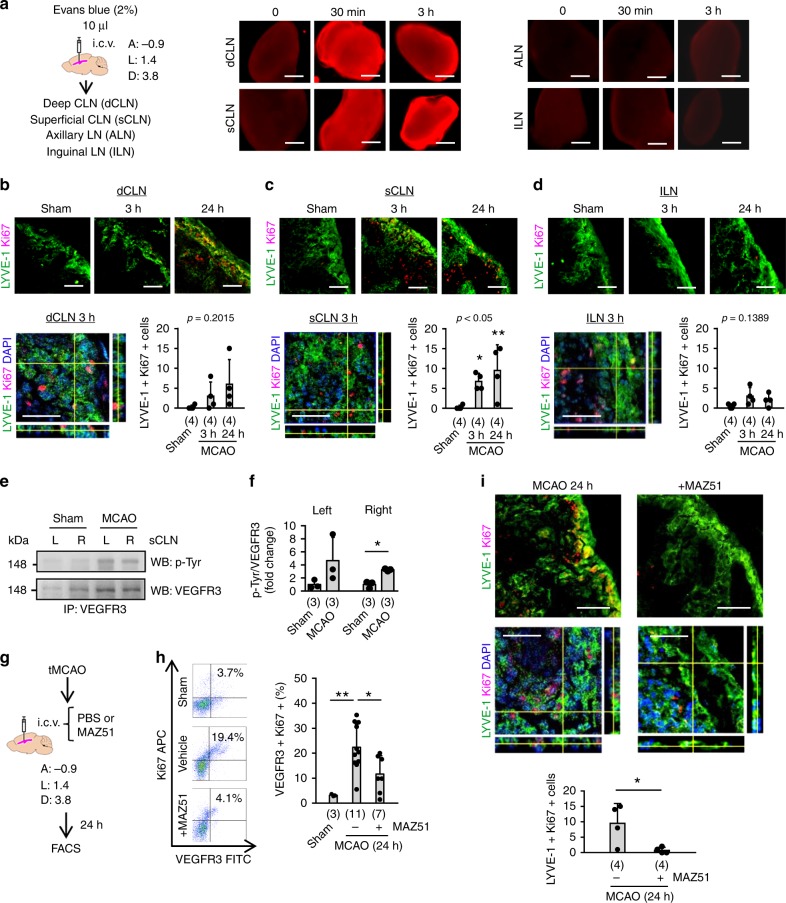
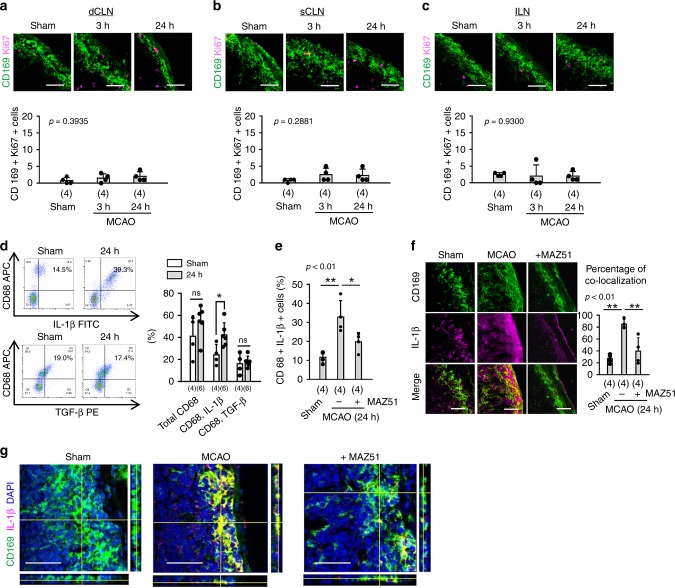
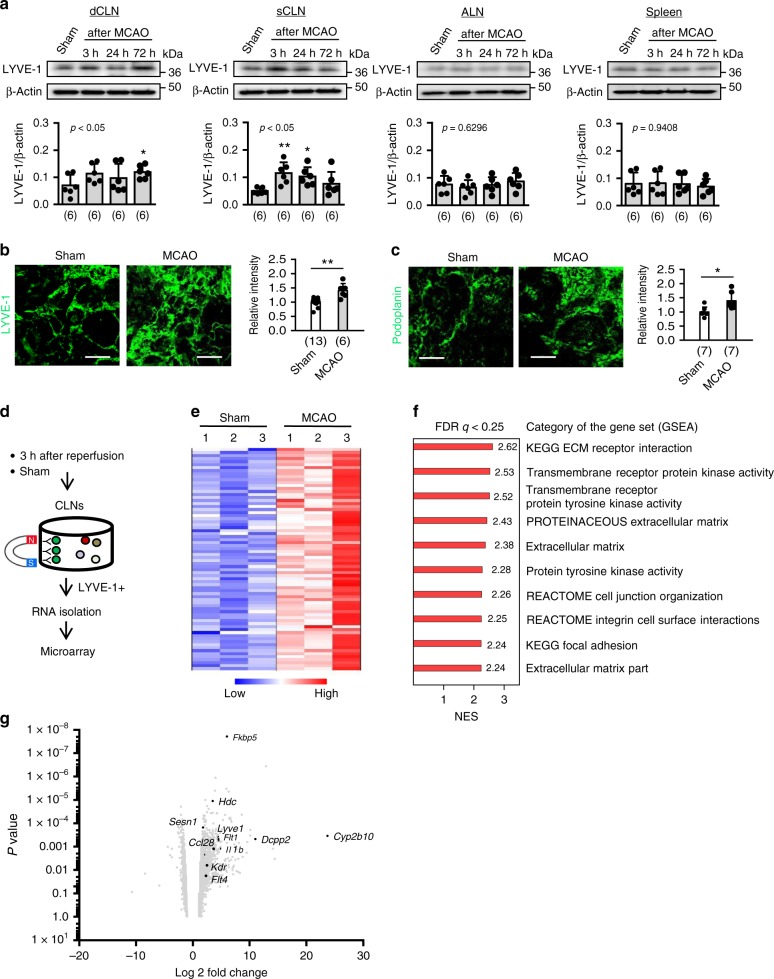
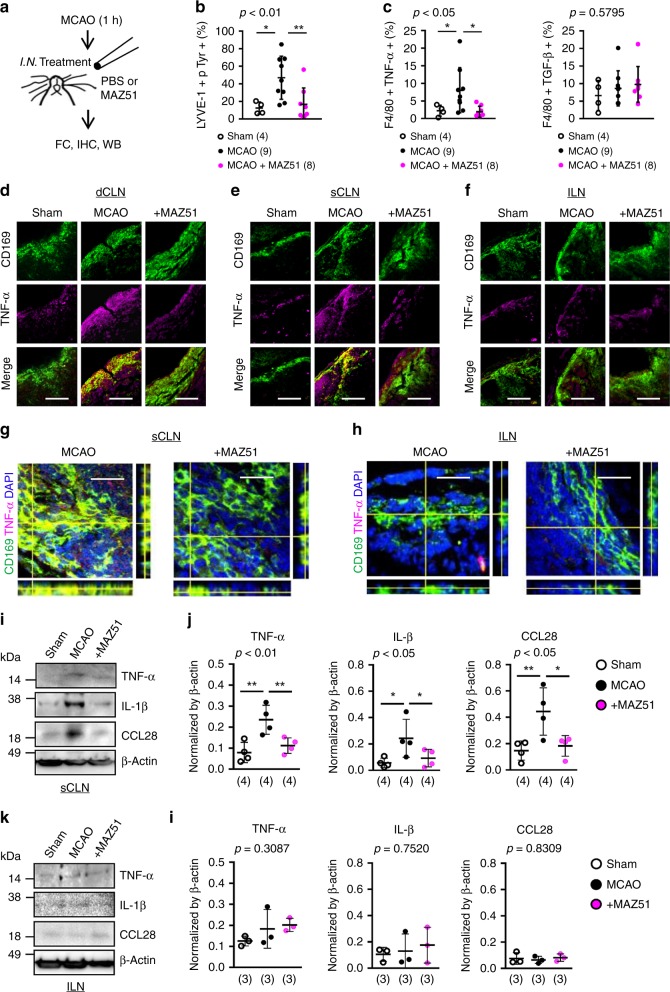
Verification
Claims the paper makes
The claims and statistics of this paper haven’t been checked yet.
Run the check — free, no account needed. It reads the open-access text and checks the sources it cites.
Claims other papers make about this one
Each is checked against this paper’s own text: does it say what the citing paper says it does?
In the citing paper
“Blockage of VEGFR3 (expressed by lymphatic endothelial cells) in mice following focal cerebral ischemia resulted in reduced inflammatory response and infarct”
From Living on the Edge of the CNS: Meninges Cell Diversity in Health and Disease (2021) · cites this paper as Esposito et al., 2019
Self-check
Percentages, sums and reported differences re-computed from the paper’s own numbers.
The self-check needs the paper’s full text.
Citations
Cites
Structural and functional features of central nervous system lymphatic vessels
Louveau, A., Smirnov, I., Keyes, T. J., Eccles, J. D., Rouhani, S. J., Peske, J. D., Derecki, N. C., Castle, D., Mandell, J. W., Lee, K. S., et al. (2015) · Nature · doi:10.1038/nature14432 · Cited by 4,413
Blood–brain barrier breakdown in Alzheimer disease and other neurodegenerative disorders
Sweeney, M. D., Sagare, A. P., & Zlokovic, B. V. (2018) · Nature Reviews Neurology · doi:10.1038/nrneurol.2017.188 · Cited by 3,076
The immunology of stroke: from mechanisms to translation
Iadecola, C., & Anrather, J. (2011) · Nature Medicine · doi:10.1038/nm.2399 · Cited by 2,596
A dural lymphatic vascular system that drains brain interstitial fluid and macromolecules
Aspelund, A., Antila, S., Proulx, S. T., Karlsen, T. V., Karaman, S., Detmar, M., Wiig, H., & Alitalo, K. (2015) · Journal of Experimental Medicine · doi:10.1084/jem.20142290 · Cited by 2,198
Transfer of mitochondria from astrocytes to neurons after stroke
Hayakawa, K., Esposito, E., Wang, X., Terasaki, Y., Liu, Y., Xing, C., Ji, X., & Lo, E. H. (2016) · Nature · doi:10.1038/nature18928 · Cited by 1,423
Self-citationLymphangiogenesis in development and human disease
Alitalo, K. K., Tammela, T., & Petrova, T. V. (2005) · Nature · doi:10.1038/nature04480 · Cited by 1,287
A new look at cerebrospinal fluid circulation
Brinker, T., Stopa, E., Morrison, J., & Klinge, P. (2014) · Fluids and Barriers of the CNS · doi:10.1186/2045-8118-11-10 · Cited by 819
Meningeal lymphatic vessels at the skull base drain cerebrospinal fluid
Ahn, J. H., Cho, H., Kim, J.-H., Kim, S. H., Ham, J.-S., Park, I., Suh, S. H., Hong, S. P., Song, J.-H., Hong, Y.-K., et al. (2019) · Nature · doi:10.1038/s41586-019-1419-5 · Cited by 811
Ma, Q., Ineichen, B. V., Detmar, M., & Proulx, S. T. (2017) · Nature Communications · doi:10.1038/s41467-017-01484-6 · Cited by 690
Kukk, E., Lymboussaki, A., Taira, S., Kaipainen, A., Jeltsch, M., Joukov, V., & Alitalo, K. K. (1996) · Development · doi:10.1242/dev.122.12.3829 · Cited by 687
Cited by
Sorted by citations
Immune responses to stroke: mechanisms, modulation, and therapeutic potential.
Iadecola, C., Buckwalter, M. S., & Anrather, J. (2020) · Journal of Clinical Investigation · doi:10.1172/jci135530 · Cited by 853
Rasmussen, M. K., Mestre, H., & Nedergaard, M. (2021) · Physiological Reviews · doi:10.1152/physrev.00031.2020 · Cited by 642
Meningeal lymphatic dysfunction exacerbates traumatic brain injury pathogenesis.
Bolte, A. C., Dutta, A. B., Hurt, M. E., Smirnov, I., Kovacs, M. A., McKee, C. A., Ennerfelt, H. E., Shapiro, D., Nguyen, B. H., Frost, E. L., et al. (2020) · Nature Communications · doi:10.1038/s41467-020-18113-4 · Cited by 357
Systemic inflammation after stroke: implications for post‐stroke comorbidities
Simats, A., & Liesz, A. (2022) · EMBO Molecular Medicine · doi:10.15252/emmm.202216269 · Cited by 276
Conserved meningeal lymphatic drainage circuits in mice and humans
Jacob, L., Brito, J. M., Lenck, S., Corcy, C., Benbelkacem, F., Geraldo, L. H., Xu, Y., Thomas, J.-M., Kamouh, M.-R. E., Spajer, M., et al. (2022) · The Journal of Experimental Medicine · doi:10.1084/jem.20220035 · Cited by 206
Metadata
- Authors
- Esposito, E., Ahn, B. J., Shi, J., Nakamura, Y., Park, J. H., Mandeville, E. T., Yu, Z., Chan, S. J., Desai, R., Hayakawa, A., Ji, X., Lo, E. H., & Hayakawa, K.
- Affiliations
- Harvard University (US)
- Capital Medical University (CN)
- Corresponding author
- Lo, Eng H.
- Hayakawa, Kazuhide
- ORCID
- Venue
- Nature Communications
- Published
- 2019-11-22
- Volume
- 10
- Issue
- 1
- Pages
- 5306-5306
- ISSN
- 2041-1723 (ISSN-L)
- PMC
- PMC6876639
- OpenAlex
- W2990744279
- Cited by
- 123
- References
- 70
- Citations by year
- 2026: 13 · 2025: 20 · 2024: 18 · 2023: 16 · 2022: 27 · 2021: 24 · 2020: 5
- FWCI
- 5.85
- Type
- journal article
- Language
- en
- Open access
- gold
- doi.org
- Locations
- Nature Communications (publishedVersion, cc-by)
- PubMed Central (publishedVersion, cc-by)
- PubMed (publishedVersion)
- National University of Singapore (submittedVersion, cc-by)
- RePEc: Research Papers in Economics (submittedVersion)
- DOAJ (DOAJ: Directory of Open Access Journals) (submittedVersion, cc-by-sa)
- DOAJ (DOAJ: Directory of Open Access Journals) (submittedVersion)
- Funders
- U.S. Department of Health & Human Services | NIH | National Institute of Neurological Disorders and Stroke
- Topics
- Health Sciences › Medicine › Oncology › Lymphatic System and Diseases
- Life Sciences › Neuroscience › Neurology › Neuroinflammation and Neurodegeneration Mechanisms
- Health Sciences › Medicine › Clinical Neurology › Acute Ischemic Stroke Management
- Keywords
- stroke, cervical lymph nodes, focal cerebral ischemia, systemic inflammation, lymphatic endothelial cells, macrophage activation, infarct size, lymphatic drainage
- MeSH terms
- Animals, Brain, Brain Ischemia, Endothelium, Lymphatic, Inflammation, Lymph Nodes, Macrophages, Neck, Brain Infarction, Stroke, Vascular Endothelial Growth Factor Receptor-3, Vascular Endothelial Growth Factor C, Lymphangiogenesis, Endothelial Cells, Cell Proliferation, Mice, Rats
About these checks
Registry, retraction, Cites and statistics results are computed, not judged, with one exception: a printed reference that no index lists is read once by a model before it counts as a citation error. Claims are extracted by a model and kept only when their quote appears verbatim in the text; each cited source is then checked, with a model’s help, for whether it says what the claim relies on. Those verdicts can be wrong — read the claim’s quote and the cited source before relying on one.
Statistics and arithmetic are recomputed, not judged.
Confidence bands are shown only for fields calibrated on our annotated test set. None is calibrated yet, so no band is shown.
What counts as a claim ›How we measure confidence ›How we check this ›
Are you an author, or do you see a problem with this page? Request a review
