

The DOI matches its Crossref record; 56 of the 56 references it cites were found in a registry or an index.
Mechanisms governing the pioneering and redistribution capabilities of the non-classical pioneer PU.1
Open accessAbstract
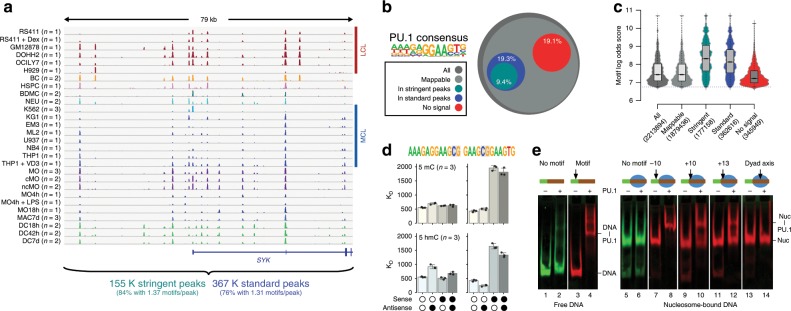
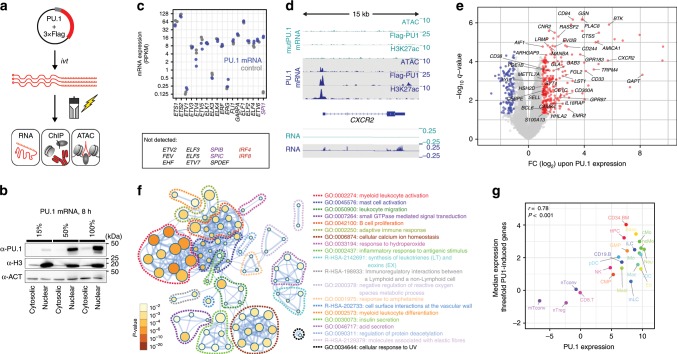
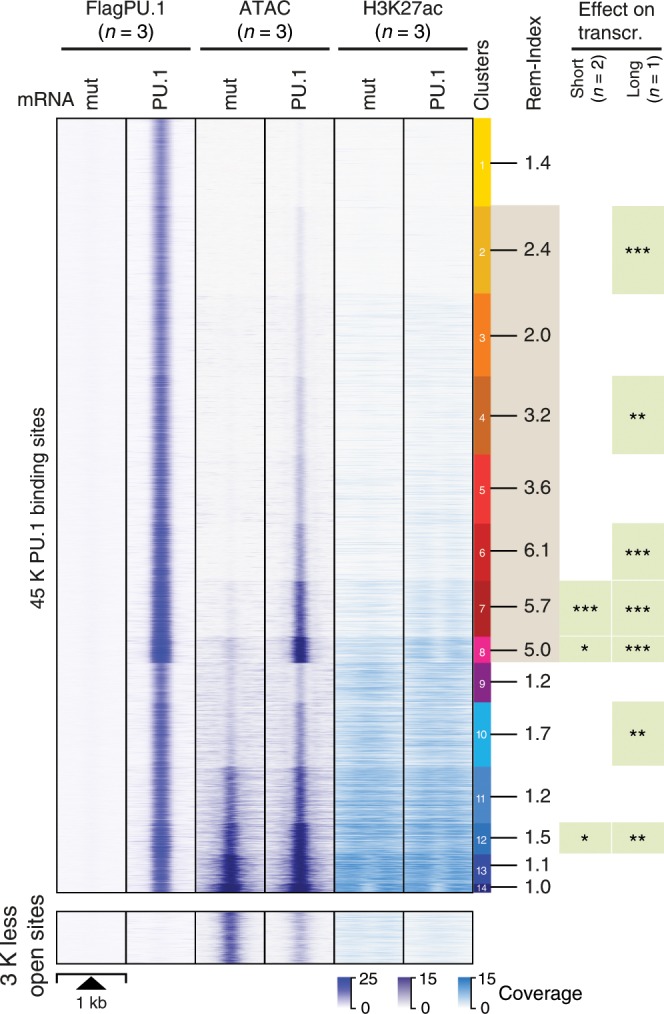
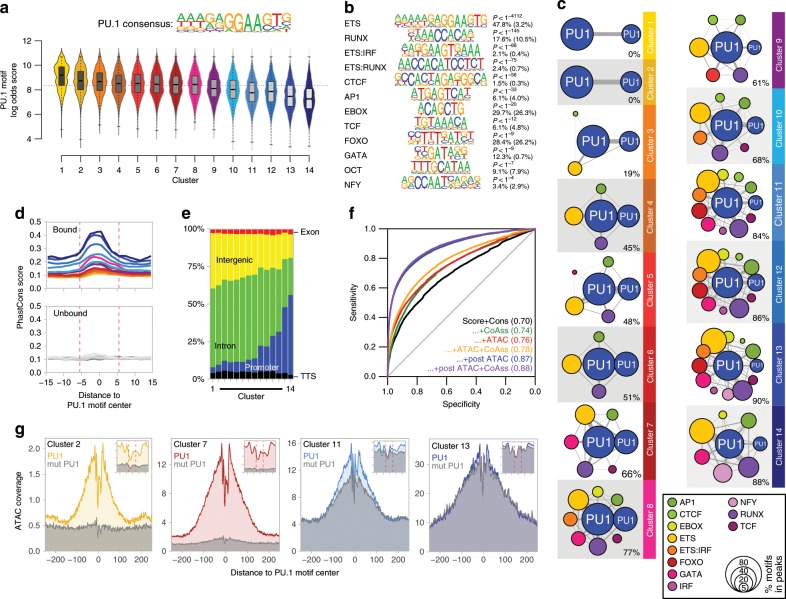
Establishing gene regulatory networks during differentiation or reprogramming requires master or pioneer transcription factors (TFs) such as PU.1, a prototype master TF of hematopoietic lineage differentiation. To systematically determine molecular features that control its activity, here we analyze DNA-binding in vitro and genome-wide in vivo across different cell types with native or ectopic PU.1 expression. Although PU.1, in contrast to classical pioneer factors, is unable to access nucleosomal target sites in vitro, ectopic induction of PU.1 leads to the extensive remodeling of chromatin and redistribution of partner TFs. De novo chromatin access, stable binding, and redistribution of partner TFs both require PU.1's N-terminal acidic activation domain and its ability to recruit SWI/SNF remodeling complexes, suggesting that the latter may collect and distribute co-associated TFs in conjunction with the non-classical pioneer TF PU.1.
Overview
The claims and statistics of this paper haven’t been checked yet.
Run the check — free, no account needed. It reads the open-access text and checks the sources it cites.
Integrity signals
Registry
Cites
Statistics
Figures
Verification
Claims the paper makes
The claims and statistics of this paper haven’t been checked yet.
Run the check — free, no account needed. It reads the open-access text and checks the sources it cites.
Claims other papers make about this one
Each is checked against this paper’s own text: does it say what the citing paper says it does?
The source backs part of the claim, not all of it — or backs it for a different population, condition or comparison.
In the citing paper
“PU.1, as an ETS family transcription factor, binds specific DNA sequences known as ETS motifs, which are located predominantly in the enhancers but also in the promoters of target genes [30, 31].”
From Targeting Microglial Transcriptional Reprogramming as a Therapy Strategy for Alzheimer's Disease (2026) · cites this paper as [31]
Experimental — accuracy not yet measuredThe source backs part of the claim, not all of it — or backs it for a different population, condition or comparison.
In the citing paper
“PU.1, IRF8, and BHLHE40/41 regulates multiple downstream targets that orchestrate microglial immune response functions, including phagocytosis, cytokine production, and inflammatory signaling”
From Targeting Microglial Transcriptional Reprogramming as a Therapy Strategy for Alzheimer's Disease (2026) · cites this paper as [31]
Experimental — accuracy not yet measuredThe cited source says what the claim attributes to it.
In the citing paper
“PU.1, a non-canonical pioneer transcription factor that functions as a master regulator of myeloid and lymphoid lineage differentiation18–20.”
From Lymphoid gene expression supports neuroprotective microglia function (2025) · cites this paper as [20]
The cited source says what the claim attributes to it.
In the citing paper
“suggesting a compromised differentiation-relevant chromatin rearrangement, in line with recent reports (41).”
From PU.1-Dependent Enhancer Inhibition Separates Tet2 -Deficient Hematopoiesis from Malignant Transformation (2022) · cites this paper as [41]
The cited source says what the claim attributes to it.
In the citing paper
“exceptions have been reported in the past (41).”
From PU.1-Dependent Enhancer Inhibition Separates Tet2 -Deficient Hematopoiesis from Malignant Transformation (2022) · cites this paper as [41]
The cited source says what the claim attributes to it.
In the citing paper
“We identified a set of highly enriched and similar ETS motifs harboring a core PU-box motif and 5′ flanking cytosines that have been shown to exhibit a reduced binding affinity for PU.1 when methylated (referred to as methETS; ref. 41).”
From PU.1-Dependent Enhancer Inhibition Separates Tet2 -Deficient Hematopoiesis from Malignant Transformation (2022) · cites this paper as [41]
The check wasn’t confident either way, so it gives no verdict — never disputed.
In the citing paper
“The HAF1 complex activates a range of genes associated with microglial activation, including inducible nitric oxide synthase (iNOS), Cyclooxygenase‐2 (COX‐2), TNF‐α, IL‐12α, IL‐12β, CXCL9, CCL5, and complement components such as the complement C1q C chain (C1qc) (Figure 1) [31, 35, 39, 61].”
From Targeting Microglial Transcriptional Reprogramming as a Therapy Strategy for Alzheimer's Disease (2026) · cites this paper as [31]
Experimental — accuracy not yet measuredThe check wasn’t confident either way, so it gives no verdict — never disputed.
In the citing paper
“MEF2C functions as a counterbalance by suppressing excessive pro‐inflammatory responses”
From Targeting Microglial Transcriptional Reprogramming as a Therapy Strategy for Alzheimer's Disease (2026) · cites this paper as [31]
Experimental — accuracy not yet measured
Self-check
Percentages, sums and reported differences re-computed from the paper’s own numbers.
The self-check needs the paper’s full text.
Citations
Cites
Moderated estimation of fold change and dispersion for RNA-seq data with DESeq2
Love, M. I., Huber, W., & Anders, S. (2014) · Genome Biology · doi:10.1186/s13059-014-0550-8 · Cited by 95,106
Fast gapped-read alignment with Bowtie 2
Langmead, B., & Salzberg, S. L. (2012) · Nature Methods · doi:10.1038/nmeth.1923 · Cited by 56,400
Cytoscape: A software Environment for integrated models of biomolecular interaction networks
Shannon, P., Markiel, A., Ozier, O., Baliga, N. S., Wang, J. T., Ramage, D., Amin, N., Schwikowski, B., & Ideker, T. (2003) · Genome Research · doi:10.1101/gr.1239303 · Cited by 51,888
STAR: ultrafast universal RNA-seq aligner
Dobin, A., Davis, C. A., Schlesinger, F., Drenkow, J., Zaleski, C., Jha, S., Batut, P., Chaisson, M., & Gingeras, T. R. (2013) · Bioinformatics · doi:10.1093/bioinformatics/bts635 · Cited by 51,709
Robinson, M. D., McCarthy, D. J., & Smyth, G. K. (2010) · Bioinformatics · doi:10.1093/bioinformatics/btp616 · Cited by 41,364
BEDTools: a flexible suite of utilities for comparing genomic features
Quinlan, A. R., & Hall, I. M. (2010) · Bioinformatics · doi:10.1093/bioinformatics/btq033 · Cited by 27,437
An integrated encyclopedia of DNA elements in the human genome
The ENCODE Project Consortium (2012) · Nature · doi:10.1038/nature11247 · Cited by 18,072
Robinson, J. T., Thorvaldsdóttir, H., Winckler, W., Guttman, M., Lander, E. S., Getz, G., & Mesirov, J. P. (2011) · Nature Biotechnology · doi:10.1038/nbt.1754 · Cited by 15,390
Heinz, S., Benner, C., Spann, N., Bertolino, E., Lin, Y. C., Laslo, P., Cheng, J. X., Murre, C., Singh, H., & Glass, C. K. (2010) · Molecular Cell · doi:10.1016/j.molcel.2010.05.004 · Cited by 13,382
Pérez-Riverol, Y., Csordas, A., Bai, J.-W., Bernal-Llinares, M., Hewapathirana, S., Kundu, D. J., Inuganti, A., Griss, J., Mayer, G., Eisenacher, M., et al. (2018) · Nucleic Acids Res. · doi:10.1093/nar/gky1106 · Cited by 6,216
Cited by
Sorted by citations
Pioneer Transcription Factors Initiating Gene Network Changes
Zaret, K. S. (2020) · Annual Review of Genetics · doi:10.1146/annurev-genet-030220-015007 · Cited by 409
Pioneer factors as master regulators of the epigenome and cell fate
Balsalobre, A., & Drouin, J. (2022) · Nature Reviews Molecular Cell Biology · doi:10.1038/s41580-022-00464-z · Cited by 251
How transcription factors drive choice of the T cell fate
Hosokawa, H., & Rothenberg, E. V. (2020) · Nature reviews. Immunology · doi:10.1038/s41577-020-00426-6 · Cited by 250
Mammalian SWI/SNF continuously restores local accessibility to chromatin
Iurlaro, M., Stadler, M. B., Masoni, F., Jagani, Z., Galli, G. G., & Schübeler, D. (2021) · Nature Genetics · doi:10.1038/s41588-020-00768-w · Cited by 190
A disease-associated gene desert directs macrophage inflammation through ETS2
Stankey, C. T., Bourges, C., Haag, L.-M., Turner‐Stokes, T., Piedade, A. P., Palmer-Jones, C., Papa, I., dos Santos, M. S., Zhang, Q., Cameron, A. J., et al. (2024) · Nature · doi:10.1038/s41586-024-07501-1 · Cited by 163
Generating specificity in genome regulation through transcription factor sensitivity to chromatin
Isbel, L., Grand, R. S., & Schübeler, D. (2022) · Nature Reviews Genetics · doi:10.1038/s41576-022-00512-6 · Cited by 152
Pioneer factors: roles and their regulation in development
Barral, A., & Zaret, K. S. (2023) · Trends in Genetics · doi:10.1016/j.tig.2023.10.007 · Cited by 135
Cell fate decisions, transcription factors and signaling during early retinal development
Diacou, R., Nandigrami, P., Fiser, A., Liu, W., Ashery‐Padan, R., & Cvekl, A. (2022) · Progress in Retinal and Eye Research · doi:10.1016/j.preteyeres.2022.101093 · Cited by 107
Transcriptional Regulation of Inflammasomes
Cornut, M., Bourdonnay, E., & Henry, T. (2020) · International Journal of Molecular Sciences · doi:10.3390/ijms21218087 · Cited by 98
Frederick, M. A., Williamson, K. E., García, M. F., Ferretti, M., McCarthy, R. L., Donahue, G., Luzete-Monteiro, E., Takenaka, N., Reynaga, J., Kadoch, C., et al. (2022) · Nature Structural & Molecular Biology · doi:10.1038/s41594-022-00886-5 · Cited by 83
Zhu, Y., Denholtz, M., Lu, H., & Murre, C. (2020) · Genes & Development · doi:10.1101/gad.343475.120 · Cited by 70
Wang, Y., Zolotarev, N., Yang, C., Rambold, A. S., Mittler, G., & Grosschedl, R. (2020) · Immunity · doi:10.1016/j.immuni.2020.10.009 · Cited by 74
The chromatin signatures of enhancers and their dynamic regulation
Barral, A., & Déjardin, J. (2023) · Nucleus · doi:10.1080/19491034.2022.2160551 · Cited by 78
Proximity Labeling Techniques to Study Chromatin
Ummethum, H., & Hamperl, S. (2020) · Frontiers in Genetics · doi:10.3389/fgene.2020.00450 · Cited by 65
A test of the pioneer factor hypothesis using ectopic liver gene activation
Hansen, J. L., Loell, K., & Cohen, B. A. (2022) · eLife · doi:10.7554/elife.73358 · Cited by 59
Păun, O., Tan, Y. X., Patel, H., Strohbuecker, S., Ghanate, A. D., Gigli, C. C., Sopeña, M. L., Gerontogianni, L., Goldstone, R. J., Ang, S., et al. (2023) · Genes & Development · doi:10.1101/gad.350269.122 · Cited by 62
Watt, S., Vasquez, L., Walter, K., Mann, A. L., Kundu, K., Chen, L., Sims, Y., Ecker, S., Burden, F., Farrow, S., et al. (2021) · Nature Communications · doi:10.1038/s41467-021-22548-8 · Cited by 63
Orlando, K. A., Douglas, A. K., Abudu, A., Wang, Y., Tessier‐Cloutier, B., Su, W., Peters, A., Sherman, L. S., Moore, R., Nguyen, V. Q., et al. (2020) · eLife · doi:10.7554/elife.59073 · Cited by 53
Rosa, F. A., Pires, C. F., Kurochkin, I., Halitzki, E., Zahan, T., Arh, N., Zimmermannová, O., Ferreira, A. G., Li, H., Karlsson, S., et al. (2022) · Science Immunology · doi:10.1126/sciimmunol.abg5539 · Cited by 52
Chambers, C., Čermáková, K., Chan, Y. S., Kurtz, K. J., Wohlan, K., Lewis, A. H., Wang, C., Pham, A., Dejmek, M., Šála, M., et al. (2023) · Cancer Research · doi:10.1158/0008-5472.can-22-2129 · Cited by 52
Mendes, K., Schmidhofer, S., Minderjahn, J., Glatz, D., Kiesewetter, C., Raithel, J., Wimmer, J., Gebhard, C., & Rehli, M. (2021) · Nature Communications · doi:10.1038/s41467-021-21661-y · Cited by 46
Self-citationLamontagne, J., Soldan, S. S., Su, C., Wiedmer, A., Won, K., Lu, F. Y., Goldman, A. R., Wickramasinghe, J. M., Tang, H., Speicher, D. W., et al. (2021) · PLoS Pathogens · doi:10.1371/journal.ppat.1009208 · Cited by 46
Liao, J., Ho, J., Burns, M. J., Dykhuizen, E. C., & Hargreaves, D. C. (2024) · Immunity · doi:10.1016/j.immuni.2024.05.008 · Cited by 47
Redirecting the pioneering function of FOXA1 with covalent small molecules
Won, S. J., Zhang, Y., Reinhardt, C. J., Hargis, L. M., MacRae, N. S., DeMeester, K. E., Njomen, E., Remsberg, J. R., Melillo, B. N., Cravatt, B. F., et al. (2024) · Molecular Cell · doi:10.1016/j.molcel.2024.09.024 · Cited by 43
Structures and consequences of pioneer factor binding to nucleosomes
Luzete-Monteiro, E., & Zaret, K. S. (2022) · Current Opinion in Structural Biology · doi:10.1016/j.sbi.2022.102425 · Cited by 43
Roels, J., Thénoz, M., Szarzyńska‐Zawadzka, B., Landfors, M., Coninck, S. D., Demoen, L., Provez, L., Kuchmiy, A. A., Strubbe, S., Reunes, L., et al. (2020) · Blood Cancer Discovery · doi:10.1158/2643-3230.bcd-20-0059 · Cited by 40
Liu, Y., Wan, X., Li, H., Chen, Y., Hu, X., Chen, H., Zhu, D., Li, C., & Zhang, Y. (2023) · Cell Reports · doi:10.1016/j.celrep.2023.113259 · Cited by 39
Sharma, T., Robinson, D. C. L., Witwicka, H., Dilworth, F. J., & Imbalzano, A. N. (2021) · Nucleic Acids Research · doi:10.1093/nar/gkab617 · Cited by 36
The Number of Transcription Factors at an Enhancer Determines Switch-like Gene Expression
Michida, H., Imoto, H., Shinohara, H., Yumoto, N., Seki, M., Umeda, M., Hayashi, T., Nikaido, I., Kasukawa, T., Suzuki, Y., et al. (2020) · Cell Reports · doi:10.1016/j.celrep.2020.107724 · Cited by 35
Systematic assessment of ISWI subunits shows that NURF creates local accessibility for CTCF
Iurlaro, M., Masoni, F., Flyamer, I. M., Wirbelauer, C., Iskar, M., Burger, L., Giorgetti, L., & Schübeler, D. (2024) · Nature Genetics · doi:10.1038/s41588-024-01767-x · Cited by 35
Lymphoid gene expression supports neuroprotective microglia function
Ayata, P., Crowley, J. M., Challman, M. F., Sahasrabuddhe, V., Gratuze, M., Werneburg, S., Ribeiro, D., Hays, E. C., Durán-Laforet, V., Faust, T. E., et al. (2025) · Nature · doi:10.1038/s41586-025-09662-z · Cited by 32
Gregoricchio, S., Polit, L., Esposito, M., Berthelet, J., Delestré, L., Evanno, E., Diop, M., Gallais, I., Aleth, H., Poplineau, M., et al. (2022) · Nucleic Acids Research · doi:10.1093/nar/gkac613 · Cited by 27
Kim, B., Dabin, L. C., Tate, M. D., Karahan, H., Sharify, A. D., Acri, D. J., Al-Amin, M. M., Philtjens, S., Smith, D. C., Wijeratne, H. R. S., et al. (2024) · Nature Communications · doi:10.1038/s41467-024-48484-x · Cited by 28
“Itwasreported that Hspa1b protects against A β 42 - induced memory impairments in a Drosophila model of AD 41 .”
Gamble, N., Bradu, A., Caldwell, J. A., McKeever, J., Bolonduro, O., Ermis, E., Kaiser, C., Kim, Y., Parks, B., Klemm, S., et al. (2024) · Nature Immunology · doi:10.1038/s41590-024-01807-y · Cited by 26
Transcriptional network dynamics in early T cell development
Shin, B., Chang, S. J., MacNabb, B. W., & Rothenberg, E. V. (2024) · The Journal of Experimental Medicine · doi:10.1084/jem.20230893 · Cited by 29
Devenish, L. P., Mhlanga, M. M., & Negishi, Y. (2021) · Frontiers in Immunology · doi:10.3389/fimmu.2021.662565 · Cited by 27
Pioneer factor Pax7 initiates two-step cell-cycle-dependent chromatin opening
Gouhier, A., Dumoulin-Gagnon, J., Lapointe-Roberge, V., Harris, J., Balsalobre, A., & Drouin, J. (2024) · Nature Structural & Molecular Biology · doi:10.1038/s41594-023-01152-y · Cited by 27
Structural mechanism of synergistic targeting of the CX3CR1 nucleosome by PU.1 and C/EBPα
Lian, T., Guan, R., Zhou, B., & Bai, Y. (2024) · Nature Structural & Molecular Biology · doi:10.1038/s41594-023-01189-z · Cited by 26
Halasz, H., Malekos, E., Covarrubias, S., Yitiz, S., Montano, C., Sudek, L. A., Katzman, S. J., Liu, S. J., Horlbeck, M. A., Namvar, L., et al. (2024) · Proceedings of the National Academy of Sciences · doi:10.1073/pnas.2322524121 · Cited by 25
Nair, V. D., Vasoya, M., Nair, V., Smith, G. R., Pinças, H., Ge, Y., Douglas, C. M., Esser, K. A., & Sealfon, S. C. (2021) · Genomics · doi:10.1016/j.ygeno.2021.09.013 · Cited by 25
Context transcription factors establish cooperative environments and mediate enhancer communication
Kribelbauer, J. F., Pushkarev, O., Gardeux, V., Faltejsková, K., Russeil, J., van Mierlo, G., & Deplancke, B. (2024) · Nature Genetics · doi:10.1038/s41588-024-01892-7 · Cited by 27
Postmitotic differentiation of human monocytes requires cohesin-structured chromatin
Minderjahn, J., Fischer, A. H., Maier, K., Mendes, K., Nuetzel, M., Raithel, J., Stanewsky, H., Ackermann, U., Månsson, R., Gebhard, C., et al. (2022) · Nature Communications · doi:10.1038/s41467-022-31892-2 · Cited by 24
Self-citationSong, H., Liu, Y., Tan, Y., Zhang, Y., Jin, W. Y., Chen, L., Wu, S., Yan, J., Li, J., Chen, Z., et al. (2022) · Blood · doi:10.1182/blood.2021014945 · Cited by 23
Aivalioti, M. M., Bartholdy, B. A., Pradhan, K., Bhagat, T. D., Zintiridou, A., Jeong, J. J., Thiruthuvanathan, V. J., Pujato, M., Paranjpe, A., Zhang, C., et al. (2022) · Blood Cancer Discovery · doi:10.1158/2643-3230.bcd-21-0226 · Cited by 22
“S6O and S6P), suggesting a compromised differentiation-relevant chromatin rearrangement, in line with recent reports (41).”
BackgroundResultTaylor, S. J., Stauber, J., Bohorquez, O., Tatsumi, G., Kumari, R., Chakraborty, J., Bartholdy, B. A., Schwenger, E., Sundaravel, S., Farahat, A. A., et al. (2024) · Nature Genetics · doi:10.1038/s41588-024-01911-7 · Cited by 22
Goldman, N., Chandra, A., Johnson, I., Sullivan, M. A., Patil, A. R., Vanderbeck, A., Jay, A., Zhou, Y., Ferrari, E. K., Mayne, L. C., et al. (2023) · Nature Immunology · doi:10.1038/s41590-023-01599-7 · Cited by 24
DNA selection by the master transcription factor PU.1
Terrell, J. R., Taylor, S. J., Schneider, A. L., Lu, Y., Vernon, T. N., Xhani, S., Gumpper, R. H., Luo, M., Wilson, W. D., Steidl, U. G., et al. (2023) · Cell Reports · doi:10.1016/j.celrep.2023.112671 · Cited by 22
Alzheimer’s Disease Genetics: A Dampened Microglial Response?
Chatila, Z. K., & Bradshaw, E. M. (2021) · The Neuroscientist · doi:10.1177/10738584211024531 · Cited by 20
Hume, D. A., SUMMERS, K. M., O'Brien, C. L., & Pavli, P. (2025) · Cellular and Molecular Gastroenterology and Hepatology · doi:10.1016/j.jcmgh.2025.101510 · Cited by 20
Changes in adenoviral chromatin organization precede early gene activation upon infection
Schwartz, U., Komatsu, T., Huber, C., Lagadec, F., Baumgartl, C., Silberhorn, E., Nuetzel, M., Rayne, F., Basyuk, E. I., Bertrand, É., et al. (2023) · The EMBO Journal · doi:10.15252/embj.2023114162 · Cited by 19
Self-citationSignaling‐to‐chromatin pathways in the immune system
de Paz, A. M., & Josefowicz, S. Z. (2021) · Immunological Reviews · doi:10.1111/imr.12955 · Cited by 18
Logic and lineage impacts on functional transcription factor deployment for T-cell fate commitment
Rothenberg, E. V. (2021) · Biophysical Journal · doi:10.1016/j.bpj.2021.04.002 · Cited by 17
Core-binding factor leukemia hijacks the T-cell–prone PU.1 antisense promoter
van der Kouwe, E., Heller, G., Czibere, A. G., Pulikkan, J. A., Agreiter, C., Castilla, L. H., Delwel, R., Ruscio, A. D., Ebralidze, A. K., Forte, M., et al. (2021) · Blood · doi:10.1182/blood.2020008971 · Cited by 16
Senescence-associated lineage-aberrant plasticity evokes T-cell-mediated tumor control
Belenki, D., Richter‐Pechańska, P., Shao, Z., Bhattacharya, A., Lau, A., de Freitas, J. A. N. L. F., Kandler, G., Hick, T., Cai, X., Scharnagl, E., et al. (2025) · Nature Communications · doi:10.1038/s41467-025-57429-x · Cited by 15
Shin, B., & Rothenberg, E. V. (2023) · Frontiers in Immunology · doi:10.3389/fimmu.2023.1108368 · Cited by 18
Transcription factor–mediated reprogramming to antigen-presenting cells
Ascic, E., & Pereira, C. (2024) · Current Opinion in Genetics & Development · doi:10.1016/j.gde.2024.102300 · Cited by 15
The roles of ETS transcription factors in liver fibrosis
Zhang, L.-Y., Tan, Y., Luo, X., Wu, J., & Ni, Y. (2022) · Human Cell · doi:10.1007/s13577-022-00848-5 · Cited by 11
The yin and yang of pioneer transcription factors: Dual roles in repression and activation
Katsuda, T., Sussman, J. H., Zaret, K. S., & Stanger, B. Z. (2024) · BioEssays · doi:10.1002/bies.202400138 · Cited by 12
A SWI/SNF-specific Ig-like domain, SWIFT, is a transcription factor binding platform
Jain, S. U., Williamson, K. E., Ying, A. W., Turner, A. M., Jiang, R. J., Raval, S., So, K., Allison, M. J., Sankar, A., Sáme Guerra, D. D., et al. (2026) · Science · doi:10.1126/science.aeb3627 · Cited by 11
Thoms, J. A. I., Koch, F. C., Raei, A., Subramanian, S., Wong, J. W. H., Vafaee, F., & Pimanda, J. E. (2023) · Nucleic Acids Research · doi:10.1093/nar/gkad918 · Cited by 9
Dissection of the MEF2D-IRF8 transcriptional circuit dependency in acute myeloid leukemia
Pingul, B. Y., Huang, H., Chen, Q., Alikarami, F., Zhang, Z., Qi, J., Bernt, K. M., Berger, S. L., Cao, Z., & Shi, J. (2022) · iScience · doi:10.1016/j.isci.2022.105139 · Cited by 10
Sun, S., Chen, Y., Ouyang, Y., & Tang, Z. (2024) · Clinical Reviews in Allergy & Immunology · doi:10.1007/s12016-024-09011-4 · Cited by 10
Zhang, Z., Li, W., Zhan, Q., Aillaud, M., Botey-Bataller, J., Zoodsma, M., ter Horst, R., Joosten, L. A. B., Bock, C., Schulte, L. N., et al. (2025) · Nature Communications · doi:10.1038/s41467-025-61192-4 · Cited by 11
The Route of Early T Cell Development: Crosstalk between Epigenetic and Transcription Factors
Chiara, V. D., Daxinger, L., & Staal, F. J. T. (2021) · Cells · doi:10.3390/cells10051074 · Cited by 11
Jeong, R., & Bulyk, M. L. (2023) · Cell Genomics · doi:10.1016/j.xgen.2023.100327 · Cited by 9
Rodó, J., García, M., Casana, E., MUÑOZ, S. A., Jambrina, C., Sacristan, V., Franckhauser, S., Grass, I., Jiménez, V., & Bosch, F. (2023) · Scientific Reports · doi:10.1038/s41598-023-33367-w · Cited by 9
Exploring the reciprocity between pioneer factors and development
Freund, M. M., Harrison, M. M., & Torres‐Zelada, E. F. (2024) · Development · doi:10.1242/dev.201921 · Cited by 8
DNA bendability regulates transcription factor binding to nucleosomes
Mariani, L., Liu, X., Lee, K., Gisselbrecht, S. S., Cole, P. A., & Bulyk, M. L. (2025) · Nature Structural & Molecular Biology · doi:10.1038/s41594-025-01633-2 · Cited by 11
Linker histone epitopes are hidden by in situ higher-order chromatin structure
Teif, V. B., Gould, T. J., Clarkson, C. T., Boyd, L., Antwi, E., Ishaque, N., Olins, A. L., & Olins, D. E. (2020) · Epigenetics & Chromatin · doi:10.1186/s13072-020-00345-9 · Cited by 9
BRG1 establishes the neuroectodermal chromatin landscape to restrict dorsal cell fates
Hoffman, J. A., Muse, G. W., Langer, L., Patterson, A. I., Gandara, I., Ward, J. M., & Archer, T. (2024) · Science Advances · doi:10.1126/sciadv.adj5107 · Cited by 9
Cell fate acquisition and reprogramming by the proneural transcription factor ASCL1
Lundie-Brown, J., Puletti, F., Philpott, A., & Azzarelli, R. (2025) · Open Biology · doi:10.1098/rsob.250018 · Cited by 10
SUMO operates from a unique long tandem repeat to keep innate immunity in check
Goffeney, A., Hendriks, I. A., Morel, V., Loe-Mie, Y., Charon, F., Nielsen, M. L., Cossec, J., Noordermeer, D., Seeler, J.-S., & Dejean, A. (2025) · Nucleic Acids Research · doi:10.1093/nar/gkaf750 · Cited by 8
Ontogeny specification and epigenetic regulation of macrophage plasticity
Huang, H.-Y., Zheng, X.-N., & Tian, L. H. (2025) · Frontiers in Immunology · doi:10.3389/fimmu.2025.1676953 · Cited by 8
Short circuit: Transcription factor addiction as a growing vulnerability in cancer
Davies, M., Boyce, M., & Conway, E. (2024) · Current Opinion in Structural Biology · doi:10.1016/j.sbi.2024.102948 · Cited by 10
I SPI1 something needed for B cells
Wahlster, L., & Sankaran, V. G. (2021) · The Journal of Experimental Medicine · doi:10.1084/jem.20210572 · Cited by 8
Precise modulation of BRG1 levels reveals features of mSWI/SNF dosage sensitivity
Hagihara, Y., Zhang, C., & Zhang, Y. (2025) · Nature Genetics · doi:10.1038/s41588-025-02305-z · Cited by 8
Kribelbauer, J. F., Gardeux, V., Llimos, G., Faltejsková, K., Russeil, J., Grenningloh, N., Levassor, L., Steiner, C., Vondrášek, J., & Deplancke, B. (2024) · bioRxiv (Cold Spring Harbor Laboratory) · doi:10.1101/2024.12.08.627402 · Cited by 6
Kazerani, M., Cernilogar, F. M., Pasquarella, A., Hinterberger, M., Nuber, A., Klein, L., & Schotta, G. (2024) · Proceedings of the National Academy of Sciences of the United States of America · doi:10.1073/pnas.2409656121 · Cited by 6
GATA2 decommissioning of enhancers: A mechanism to constrain inflammatory signaling
Jung, M. M., Tran, V. L., Xiong, Y., Johnson, K. D., Katsumura, K. R., Liu, P., & Bresnick, E. H. (2025) · Cell Reports · doi:10.1016/j.celrep.2025.116344 · Cited by 6
Long, T., Bhattacharyya, T., Repele, A., Naylor, M., Nooti, S. K., Krueger, S., & Manu (2023) · G3 Genes Genomes Genetics · doi:10.1093/g3journal/jkad269 · Cited by 8
Examining the NEUROG2 lineage and associated gene expression in human cortical organoids
Vasan, L., Chinchalongporn, V., Saleh, F., Zinyk, D. L., Ke, C., Suresh, H., Ghazale, H., Belfiore, L., Touahri, Y., Oproescu, A.-M., et al. (2024) · Development · doi:10.1242/dev.202703 · Cited by 8
Choudhury, R., Venkatasubramani, A. V., Hua, J., Borsò, M., Franconi, C., Kinkley, S., Forné, I., & Imhof, A. (2024) · eLife · doi:10.7554/elife.95718 · Cited by 5
Self-citationBisia, A., Xypolita, M.-E., Bikoff, E. K., Robertson, E. J., & Costello, I. (2025) · Nature Communications · doi:10.1038/s41467-025-60417-w · Cited by 5
Genomic and epigenomic adaptation in SP-R210 (Myo18A) isoform-deficient macrophages
Yau, E., Chen, Y., Song, C., Webb, J., Carillo, M., Kawasawa, Y. I., Tang, Z., Takahashi, Y., Umstead, T. M., Dovat, S., et al. (2021) · Immunobiology · doi:10.1016/j.imbio.2021.152150 · Cited by 6
Raczkowski, H. L., & DeKoter, R. P. (2021) · WIREs Mechanisms of Disease · doi:10.1002/wsbm.1519 · Cited by 4
Chu, J., Pease, N. A., & Kueh, H. Y. (2021) · Immunological Reviews · doi:10.1111/imr.12946 · Cited by 5
Reprogramming of 3D genome structure underlying HSPC development in zebrafish
He, M., Li, X., Xu, B., Lu, Y., Lai, J., Ling, Y., Liu, H., An, Z., Zhang, W., & Li, F. (2024) · Stem Cell Research & Therapy · doi:10.1186/s13287-024-03798-x · Cited by 3
Liao, J., & Hargreaves, D. C. (2024) · Nature Immunology · doi:10.1038/s41590-024-01822-z · Cited by 4
Context transcription factors establish cooperative environments and mediate enhancer communicationPreprint
Kribelbauer-Swietek, J. F., Pushkarev, O., Gardeux, V., Russeil, J., van Mierlo, G., & Deplancke, B. (2023) · bioRxiv (Cold Spring Harbor Laboratory) · doi:10.1101/2023.05.05.539543 · Cited by 4
Bender, A., Boydere, F., Jayavelu, A. K., Tibello, A., König, T., Aleth, H., zu Hörste, G. M., Vogl, T. J., & Rosenbauer, F. (2024) · The EMBO Journal · doi:10.1038/s44318-024-00295-y · Cited by 3
Wu, X., Meng, Y., Chen, J., Zhang, Y., & Xu, H. (2024) · Life Sciences · doi:10.1016/j.lfs.2024.122578 · Cited by 3
Curtiss, B. M., VanCampen, J., Kong, G., Yashar, W. M., Tsang, Y. H., Horton, W. R., Coleman, D. J., Estabrook, J., Lusardi, T. A., Mills, G. B., et al. (2021) · bioRxiv (Cold Spring Harbor Laboratory) · doi:10.1101/2021.08.24.456354 · Cited by 3
Burger, L., Gil, N., & Schübeler, D. (2025) · bioRxiv (Cold Spring Harbor Laboratory) · doi:10.1101/2025.08.11.669605 · Cited by 3
authors:, L., Cheng, J., Taylor, K. R., Nicolaisen, L., Pan, J., Bycroft, C., Perino, M., Ward, T., Hawkes, G., Covill, L., et al. (2026) · medRxiv · doi:10.64898/2026.09.16.26363192 · Cited by 12
Sadalge, D., Clasman, J. R., Topal, S., Musser, D., Von der Porten, L., Wu, S., Schultz, S. E., Austin, W., Huang, D., Gao, Y.-D., et al. (2025) · doi:10.1101/2025.08.01.667454 · Cited by 2
Jin, L., Pei, S., Dong, L., Li, X., Kuang, Y., Zhu, W., Chen, X., & Yin, M. (2026) · Journal of Autoimmunity · doi:10.1016/j.jaut.2026.103610 · Cited by 2
The regulatory role of pioneer factors during cardiovascular lineage specification – A mini review
Sierra-Pagán, J. E., & Garry, D. J. (2022) · Frontiers in Cardiovascular Medicine · doi:10.3389/fcvm.2022.972591 · Cited by 2
Transcriptional Regulation of Early B-Cell Development
Ng, A. P., Morris, R., & Nutt, S. L. (2024) · Elsevier eBooks · doi:10.1016/b978-0-323-95895-0.00014-3 · Cited by 2
Protein intrinsic disorder on a dynamic nucleosomal landscape
Bjarnason, S., Ruidiaz, S. F., McIvor, J. A. P., Mercadante, D., & Heidarsson, P. O. (2021) · Progress in molecular biology and translational science · doi:10.1016/bs.pmbts.2021.06.006 · Cited by 2
ASCL1 interacts with the mSWI/SNF at distal regulatory elements to regulate neural differentiationPreprint
Păun, O., Tan, Y. X., Patel, H., Strohbuecker, S., Ghanate, A. D., Gigli, C. C., Sopeña, M. L., Gerontogianni, L., Goldstone, R. J., Ang, S., et al. (2022) · bioRxiv (Cold Spring Harbor Laboratory) · doi:10.1101/2022.10.09.510609 · Cited by 2
Metadata
- Authors
- Minderjahn, J., Schmidt, A., Fuchs, A., Schill, R., Raithel, J., Babina, M., Schmidl, C., Gebhard, C., Schmidhofer, S., Mendes, K., Ratermann, A., Glatz, D., Nützel, M., Edinger, M., Hoffmann, P., Spang, R., Längst, G., Imhof, A., & Rehli, M.
- Affiliations
- University Hospital Regensburg (DE)
- Ludwig-Maximilians-Universität München (DE)
- University of Regensburg (DE)
- Charité – Universitätsmedizin Berlin (DE)
- Hôpital Maisonneuve-Rosemont (CA)
- Corresponding author
- Rehli, Michael
- ORCID
- Venue
- Nature Communications
- Published
- 2020-01-21
- Volume
- 11
- Issue
- 1
- Pages
- 402-402
- ISSN
- 2041-1723 (ISSN-L)
- PMC
- PMC6972792
- OpenAlex
- W3000851240
- Cited by
- 136
- References
- 56
- Citations by year
- 2026: 19 · 2025: 16 · 2024: 36 · 2023: 18 · 2022: 16 · 2021: 18 · 2020: 13
- FWCI
- 5.27
- Type
- journal article
- Language
- en
- Update notices
- correction (2020-02-25)
- Open access
- gold
- doi.org
- Locations
- Nature Communications (publishedVersion, cc-by)
- PubMed Central (publishedVersion, cc-by)
- PubMed (publishedVersion)
- University of Regensburg Publication Server (University of Regensburg) (acceptedVersion)
- RePEc: Research Papers in Economics (submittedVersion)
- DOAJ (DOAJ: Directory of Open Access Journals) (submittedVersion)
- DOAJ (DOAJ: Directory of Open Access Journals) (submittedVersion, cc-by-sa)
- Open access LMU (Ludwid Maxmilian's Universitat Munchen) (submittedVersion, cc-by)
- University of Regensburg Publication Server (University of Regensburg)
- Funders
- Deutsche Forschungsgemeinschaft (RE 1310/17)
- Topics
- Life Sciences › Biochemistry, Genetics and Molecular Biology › Molecular Biology › Genomics and Chromatin Dynamics
- Life Sciences › Biochemistry, Genetics and Molecular Biology › Molecular Biology › Chromatin Remodeling and Cancer
- Life Sciences › Biochemistry, Genetics and Molecular Biology › Molecular Biology › Epigenetics and DNA Methylation
- Keywords
- PU.1, pioneer transcription factors, hematopoietic differentiation, chromatin remodeling, SWI/SNF complex, nucleosome accessibility, transcription factor-DNA binding, gene regulatory networks, transcriptional reprogramming
- MeSH terms
- Protein Domains, RNA-Seq, Proto-Oncogene Protein Spi-1, Binding Sites, Cell Differentiation, Chromosomal Proteins, Non-Histone, DNA, Hematopoiesis, Hematopoietic Stem Cells, Humans, Leukapheresis, Nucleosomes, Proto-Oncogene Proteins, Trans-Activators, Chromatin Assembly and Disassembly, Cell Line, Tumor, Gene Regulatory Networks, Healthy Volunteers
About these checks
Registry, retraction, Cites and statistics results are computed, not judged, with one exception: a printed reference that no index lists is read once by a model before it counts as a citation error. Claims are extracted by a model and kept only when their quote appears verbatim in the text; each cited source is then checked, with a model’s help, for whether it says what the claim relies on. Those verdicts can be wrong — read the claim’s quote and the cited source before relying on one.
Statistics and arithmetic are recomputed, not judged.
Confidence bands are shown only for fields calibrated on our annotated test set. None is calibrated yet, so no band is shown.
What counts as a claim ›How we measure confidence ›How we check this ›
Are you an author, or do you see a problem with this page? Request a review
