

Microglial activation increases cocaine self-administration following adolescent nicotine exposure
Open accessThe DOI matches its Crossref record; 45 of the 46 references it cites were found in a registry or an index.
Abstract
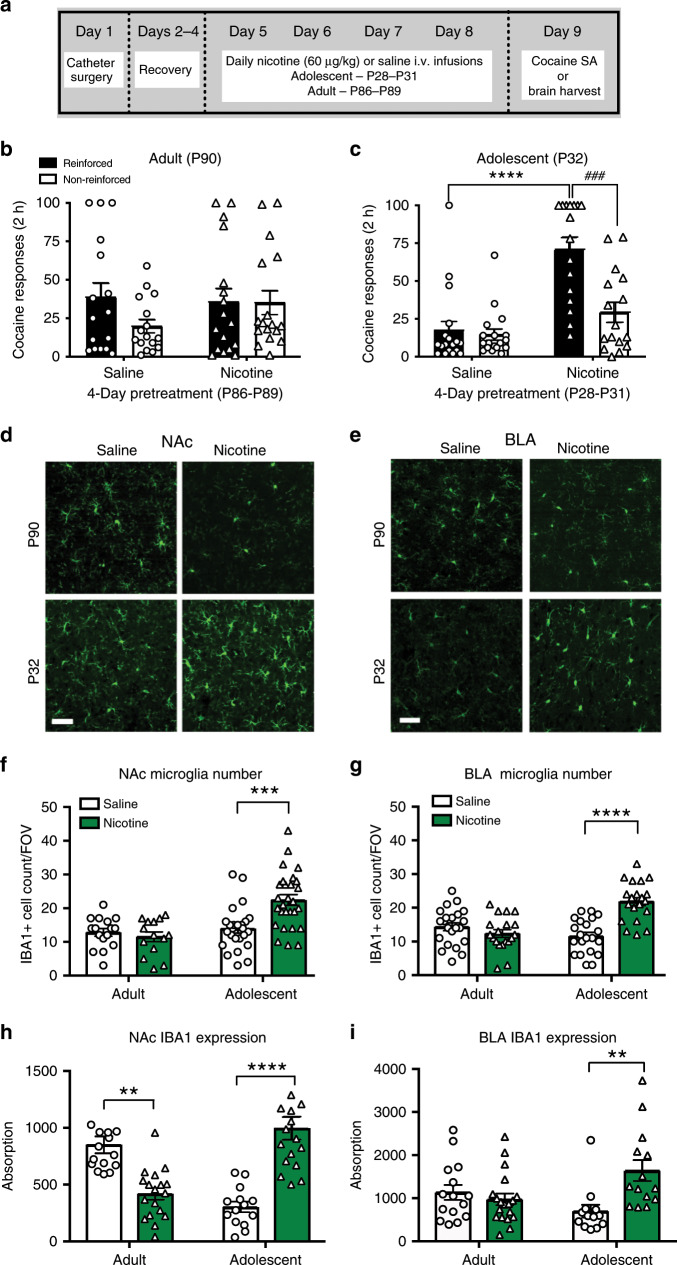
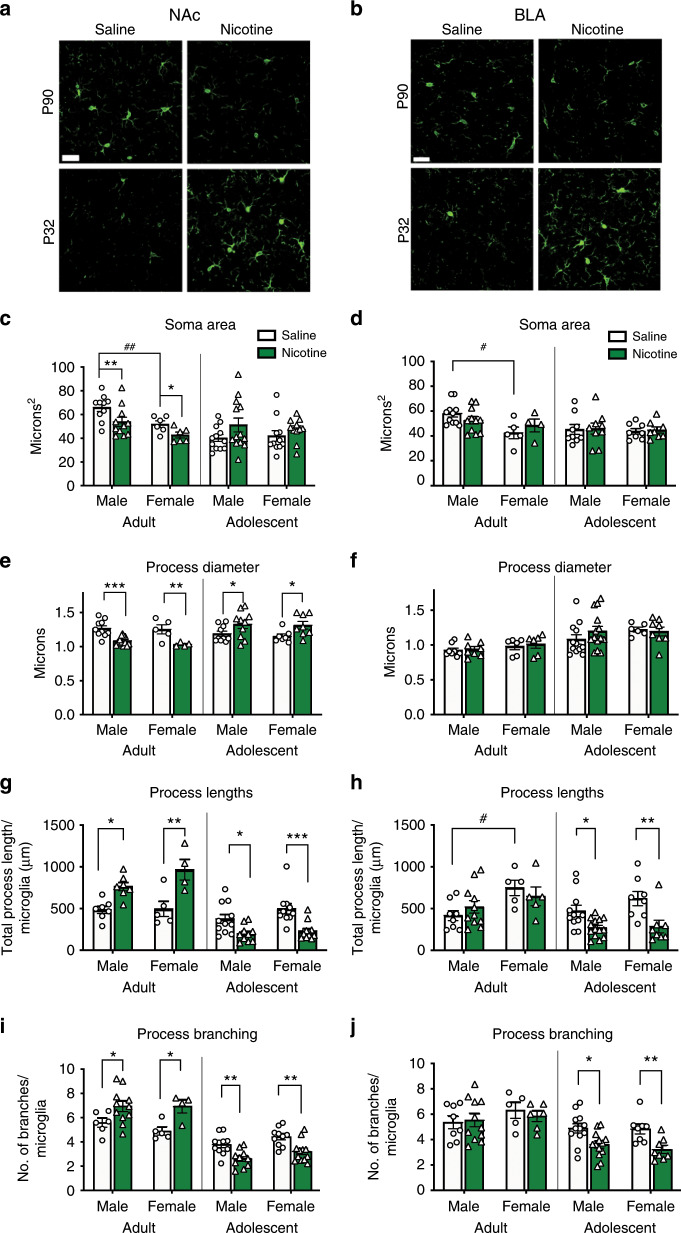
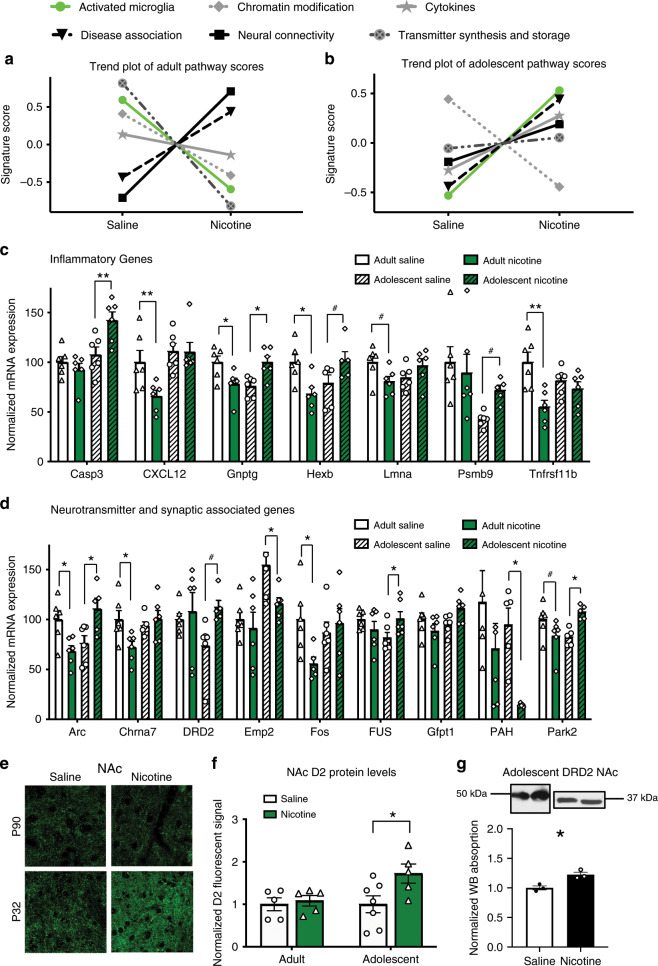
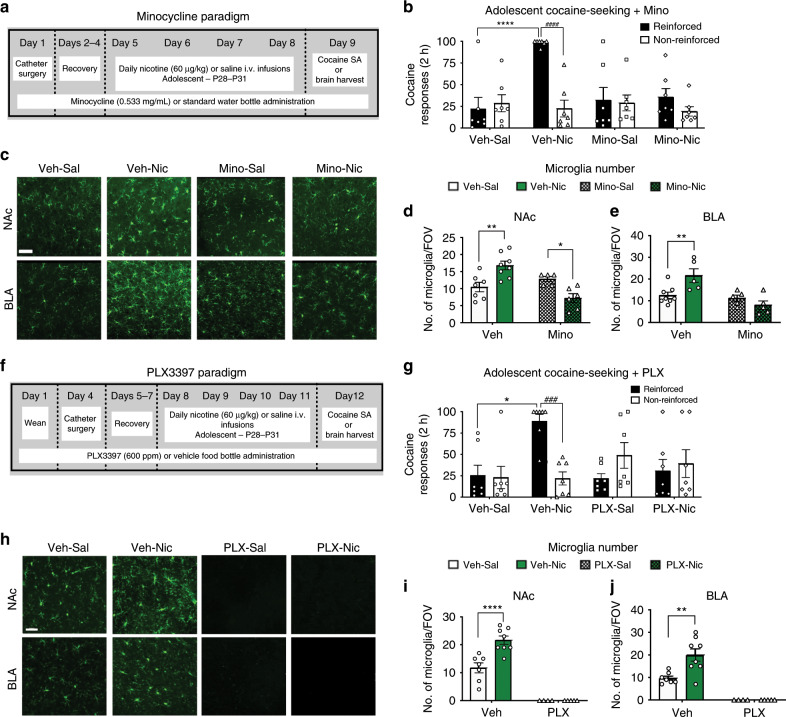
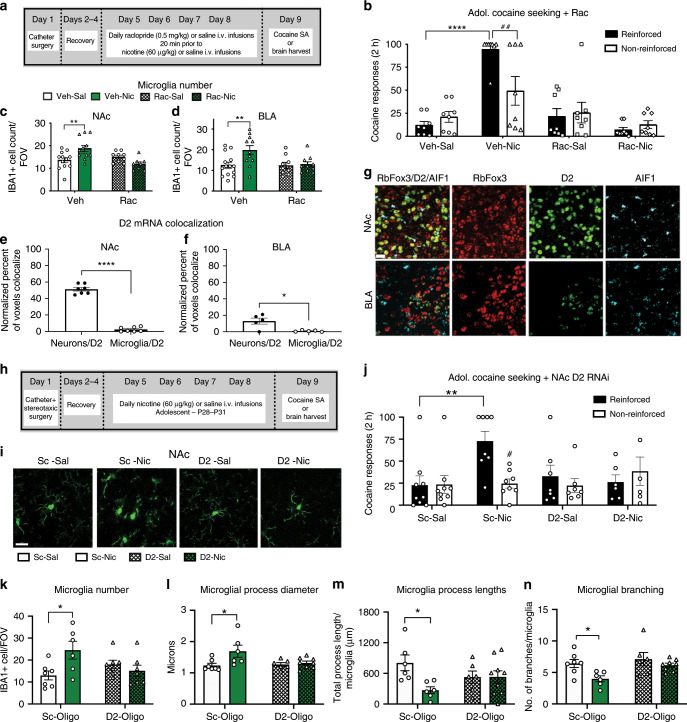
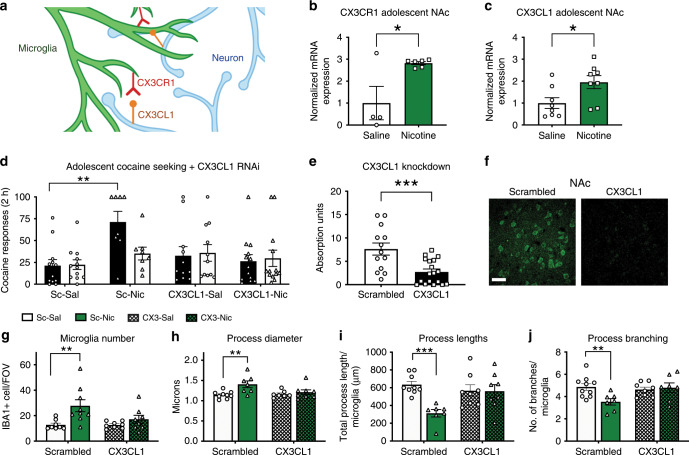
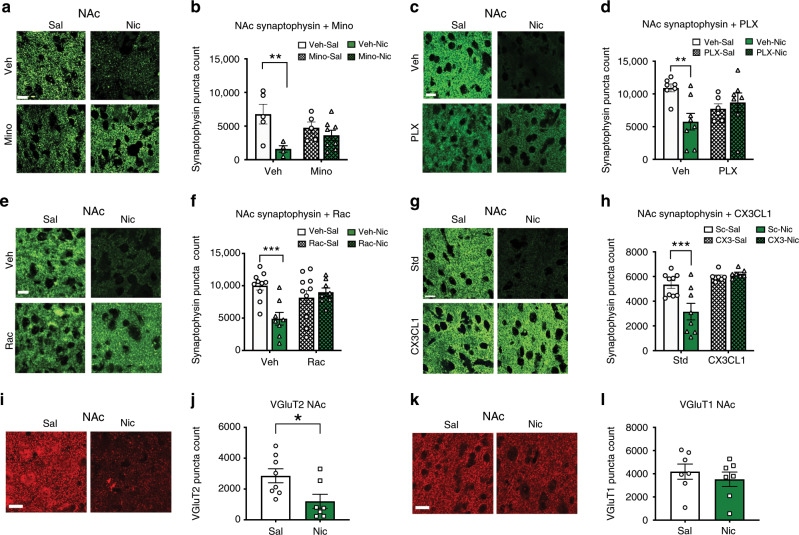
With the rise of e-cigarette use, teen nicotine exposure is becoming more widespread. Findings from clinical and preclinical studies show that the adolescent brain is particularly sensitive to nicotine. Animal studies have demonstrated that adolescent nicotine exposure increases reinforcement for cocaine and other drugs. However, the mechanisms that underlie these behaviors are poorly understood. Here, we report reactive microglia are critical regulators of nicotine-induced increases in adolescent cocaine self-administration. Nicotine has dichotomous, age-dependent effects on microglial morphology and immune transcript profiles. A multistep signaling mechanism involving D2 receptors and CX3CL1 mediates nicotine-induced increases in cocaine self-administration and microglial activation. Moreover, nicotine depletes presynaptic markers in a manner that is microglia-, D2- and CX3CL1-dependent. Taken together, we demonstrate that adolescent microglia are uniquely susceptible to perturbations by nicotine, necessary for nicotine-induced increases in cocaine-seeking, and that D2 receptors and CX3CL1 play a mechanistic role in these phenomena.
Overview
The claims and statistics of this paper haven’t been checked yet.
Free: it reads the open-access text and checks the first 5 claims that cite a source we can check. Create a free account to check every claim.
Integrity signals
Registry
Cites
Statistics
Figures
Verification
Claims the paper makes
The claims and statistics of this paper haven’t been checked yet.
Free: it reads the open-access text and checks the first 5 claims that cite a source we can check. Create a free account to check every claim.
Claims other papers make about this one
Each is checked against this paper’s own text: does it say what the citing paper says it does?
The source backs part of the claim, not all of it — or backs it for a different population, condition or comparison.
In the citing paper
“Although presynaptic dopamine markers are not impacted by this nicotine treatment, there is an increase in the efficacy of striatal D2 dopamine receptors (Mojica et al., 2014; Linker et al., 2020).”
From Unique, long-term effects of nicotine on adolescent brain. (2020) · cites this paper as Linker et al., 2020
Experimental — accuracy not yet measuredThe source backs part of the claim, not all of it — or backs it for a different population, condition or comparison.
In the citing paper
“The long-lasting enhancement of cocaine intake can be blocked by co-administration of a serotonin 5HT1A or dopamine D2 receptor antagonist during nicotine pretreatment”
From Unique, long-term effects of nicotine on adolescent brain. (2020) · cites this paper as Linker et al., 2020
Experimental — accuracy not yet measuredThe source backs part of the claim, not all of it — or backs it for a different population, condition or comparison.
In the citing paper
“Microglial activation then selectively prunes glutamate synapses in the nucleus accumbens and basolateral amygdala, and results in increased cocaine self-administration.”
From Unique, long-term effects of nicotine on adolescent brain. (2020) · cites this paper as Linker et al., 2020
Experimental — accuracy not yet measuredThe source backs part of the claim, not all of it — or backs it for a different population, condition or comparison.
In the citing paper
“NAc D2 receptors and CX3CL1 are a mechanistic interface for nicotine-induced microglial activation with resulting pruning of glutamate synapses and enhanced cocaine reinforcement in adolescents [149].”
From Nicotine on the developing brain. (2023) · cites this paper as [149]
Experimental — accuracy not yet measuredThe source backs part of the claim, not all of it — or backs it for a different population, condition or comparison.
In the citing paper
“Brief pretreatment of early adolescent rats (postnatal days (P) 28–31) with a low dose of nicotine that models smoking initiation significantly increases self-administration of cocaine, ethanol, fentanyl, and methamphetamine when compared to adults [146–151].”
From Nicotine on the developing brain. (2023) · cites this paper as [149]
Experimental — accuracy not yet measured
4 more claims about this paper
Create a free account to see every claim other papers make about this one.
Self-check
Percentages, sums and reported differences re-computed from the paper’s own numbers.
The self-check needs the paper’s full text.
Citations
Cites
Johnston, L. D., O'Malley, P. M., Bachman, J. G., & Schulenberg, J. E. (2009) · PsycEXTRA Dataset · doi:10.1037/e560352009-001 · Cited by 6,921
Synaptic Pruning by Microglia Is Necessary for Normal Brain Development
Paolicelli, R. C., Bolasco, G., Pagani, F., Maggi, L., Scianni, M., Panzanelli, P., Giustetto, M., Ferreira, T. A., Guiducci, E., Dumas, L., et al. (2011) · Science · doi:10.1126/science.1202529 · Cited by 4,244
The Classical Complement Cascade Mediates CNS Synapse Elimination
Stevens, B., Allen, N. J., Vazquez, L. E., Howell, G. R., Christopherson, K. S., Nouri, N., Micheva, K. D., Mehalow, A. K., Huberman, A. D., Stafford, B., et al. (2007) · Cell · doi:10.1016/j.cell.2007.10.036 · Cited by 3,313
Synaptic density in human frontal cortex —Developmental changes and effects of aging
Peter R., H. (1979) · Brain Research · doi:10.1016/0006-8993(79)90349-4 · Cited by 2,645
Hammond, T. R., Dufort, C., Dissing-Olesen, L., Giera, S., Young, A., Wysoker, A., Walker, A. J., Segel, M., Nemesh, J., Saunders, A., et al. (2018) · doi:10.1101/406140 · Cited by 2,225
Elmore, M. R. P., Najafi, A. R., Koike, M. A., Dagher, N. N., Spangenberg, E. E., Rice, R. A., Kitazawa, M., Matusow, B., Nguyen, H., West, B. L., et al. (2014) · Neuron · doi:10.1016/j.neuron.2014.02.040 · Cited by 1,968
Self-citationJohnston, L., Miech, R., & O'Malley, P. (2020) · doi:10.3998/2027.42/162579 · Cited by 1,611
The Expression of Vesicular Glutamate Transporters Defines Two Classes of Excitatory Synapse
Fremeau, R. T., Troyer, M. D., Pahner, I., Nygaard, G. O., Tran, C. H., Reimer, R. J., Bellocchio, E. E., Fortin, D., Storm-Mathisen, J., & Edwards, R. H. (2001) · Neuron · doi:10.1016/s0896-6273(01)00344-0 · Cited by 1,265
Trophic macrophages in development and disease
Pollard, J. W. (2009) · Nature Reviews Immunology · doi:10.1038/nri2528 · Cited by 1,178
Cullen, K. A., Ambrose, B. K., Gentzke, A. S., Apelberg, B. J., Jamal, A., & King, B. A. (2018) · MMWR. Morbidity and Mortality Weekly Report · doi:10.15585/mmwr.mm6745a5 · Cited by 734
Cited by
One Is Not Enough: Understanding and Modeling Polysubstance Use
Crummy, E. A., O’Neal, T. J., Baskin, B. M., & Ferguson, S. M. (2020) · Frontiers in Neuroscience · doi:10.3389/fnins.2020.00569 · Cited by 351
Consequences of adolescent drug use
Steinfeld, M. R., & Torregrossa, M. M. (2023) · Translational Psychiatry · doi:10.1038/s41398-023-02590-4 · Cited by 237
“Linker and colleagues [216] reported a myriad of differences in how microglia in adult and adolescent rats respond to injections of nicotine, including differences in IBA1 expression in the NAc and BLA and microglial morphology.”
BackgroundXu, F., Han, L., Wang, Y., Deng, D., Ding, Y., Zhao, S., Zhang, Q., Ma, L., & Chen, X. (2023) · BMC Medicine · doi:10.1186/s12916-022-02705-6 · Cited by 192
“In the second experiment, rats were fed AIN-76A chow supplemented with PLX3397, a selective CSF1R (Colonystimulating factor 1 receptor) inhibitor that has been demonstrated to readily cross the blood-brain barrier (BBB) and deplete microglia by oral delivery in rat chows [12, 13].”
MethodUnique, long-term effects of nicotine on adolescent brain.
Leslie, F. M. (2020) · Pharmacology, Biochemistry, and Behavior · doi:10.1016/j.pbb.2020.173010 · Cited by 178
“Although presynaptic dopamine markers are not impacted by this nicotine treatment, there is an increase in the efficacy of striatal D2 dopamine receptors (Mojica et al., 2014; Linker et al., 2020).”
BackgroundResultSelf-citationNicotine on the developing brain.
Castro, E. M., Lotfipour, S., & Leslie, F. M. (2023) · Pharmacological research · doi:10.1016/j.phrs.2023.106716 · Cited by 157
Self-citationMesocorticolimbic Dopamine Pathways Across Adolescence: Diversity in Development
Reynolds, L. M., & Flores, C. (2021) · Frontiers in Neural Circuits · doi:10.3389/fncir.2021.735625 · Cited by 137
Temporally distinct myeloid cell responses mediate damage and repair after cerebrovascular injury
Mastorakos, P., Mihelson, N., Luby, M., Burks, S. R., Johnson, K., Hsia, A. W., Witko, J., Frank, J. A., Latour, L., & McGavern, D. B. (2021) · Nature Neuroscience · doi:10.1038/s41593-020-00773-6 · Cited by 113
Microglia dynamics in adolescent traumatic brain injury
Eyolfson, E., Khan, A. C., Mychasiuk, R., & Lohman, A. W. (2020) · Journal of Neuroinflammation · doi:10.1186/s12974-020-01994-z · Cited by 79
“during development is highly responsive to experience [166, 167].”
BackgroundMahajan, S. D., Homish, G. G., & Quisenberry, A. J. (2021) · Frontiers in Public Health · doi:10.3389/fpubh.2021.664748 · Cited by 85
“A recent study showed that microglia are essential regulators of nicotine induced increases in cocaine seeking behavior (101) in adolescent microglia.”
BackgroundInfluentialThe role of microglia in neuropsychiatric disorders and suicide
Brisch, R., Wojtylak, S., Saniotis, A., Steiner, J., Gos, T., Kumaratilake, J., Henneberg, M., & Wolf, R. J. (2021) · European Archives of Psychiatry and Clinical Neuroscience · doi:10.1007/s00406-021-01334-z · Cited by 78
“Nicotine-induced microglial activation in reward seeking brain regions such as nucleus accumbens and basolateral amygdala increases cocaine reinforcement in adolescent rats but not adult rats [128].”
BackgroundJenssen, B. P., & Boykan, R. (2019) · Children · doi:10.3390/children6020030 · Cited by 76
Moshensky, A., Brand, C. S., Alhaddad, H., Shin, J., Masso-Silva, J. A., Advani, I., Gunge, D., Sharma, A., Mehta, S., Jahan, A., et al. (2022) · eLife · doi:10.7554/elife.67621 · Cited by 61
“…et al., 2016 ), lung cancer ( Tang et al., 2019 ), increased lung injury in the setting of influenza infection ( Madison et al., 2019 ), increased arterial stiffness and atherosclerosis, and activation of addiction neurocircuits in the brain ( Alasmari et al., 2017 ; Linker et al., 2020 ).”
BackgroundHirai, S., Miwa, H., Tanaka, T., Toriumi, K., Kunii, Y., Shimbo, H., Sakamoto, T., Hino, M., Izumi, R., Nagaoka, A., et al. (2021) · Science Advances · doi:10.1126/sciadv.abl6077 · Cited by 46
“S5F, G, H), both of which are phenotypes identified in activated 9 microglia (29, 30).”
BackgroundMicroglia in neuroimmunopharmacology and drug addiction
Li, H., Watkins, L. R., & Wang, X. (2024) · Molecular Psychiatry · doi:10.1038/s41380-024-02443-6 · Cited by 45
“Ultimately, these alterations in neurotransmitter dynamics can reinforce drug-seeking behavior [82, 83].”
Unique effects of nicotine across the lifespan
Ren, M., Lotfipour, S., & Leslie, F. (2022) · Pharmacology Biochemistry and Behavior · doi:10.1016/j.pbb.2022.173343 · Cited by 40
Self-citationDobric, A., Luca, S. N. D., Spencer, S. J., Bozinovski, S., Saling, M. M., McDonald, C. F., & Vlahos, R. (2021) · Pharmacology & Therapeutics · doi:10.1016/j.pharmthera.2021.108017 · Cited by 40
da Silva, M. C. M., Gomes, G. F., Fernandes, H. D. B., Silva, A. M., Teixeira, A. L., Moreira, F. A., de Miranda, A. S., & de Oliveira, A. C. P. (2021) · Scientific Reports · doi:10.1038/s41598-021-95059-7 · Cited by 39
Chen, X.-D., Zhao, J., Yang, X., Zhou, B., Yan, Z., Liu, W.-F., Li, C., & Liu, K. (2021) · Molecular Neurobiology · doi:10.1007/s12035-021-02444-4 · Cited by 32
Microglia‐Mediated Neuroimmune Response Regulates Cardiac Remodeling After Myocardial Infarction
Wang, M., Zhang, J., Yin, Z., Ding, W., Zhao, M., Liu, J., Xu, Y. Q., Xu, S., Pan, W. D., Cheng, W., et al. (2023) · Journal of the American Heart Association · doi:10.1161/jaha.122.029053 · Cited by 32
Role of Microglia in Psychostimulant Addiction
da Silva, M. C. M., Iglesias, L. P., Candelario‐Jalil, E., Khoshbouei, H., Moreira, F. A., & de Oliveira, A. C. P. (2022) · Current Neuropharmacology · doi:10.2174/1570159x21666221208142151 · Cited by 29
“Besides, minocycline also alters cocaine reward after nicotine and morphine exposure [91, 124].”
Sexually dimorphic neuroimmune response to chronic opioid treatment and withdrawal
Kumar, M., Rainville, J. R., Williams, K., Lile, J. A., Hodes, G. E., Vassoler, F. M., & Turner, J. R. (2021) · Neuropharmacology · doi:10.1016/j.neuropharm.2021.108469 · Cited by 27
“, 2019), cocaine (Linker et al., 2020) and morphine (Maduna et al.”
BackgroundReynolds, L. M., Faure, P., & Barik, J. (2025) · Molecular Psychiatry · doi:10.1038/s41380-025-03110-0 · Cited by 26
“Furthermore, these behavioral outcomes have been linked to differences in response to nicotine across several neurotransmitter systems, as well as recruiting microglial pathways to sculpt circuitry in response to acute exposure [44, 89 – 91].”
Torres-Rodríguez, O. I., Ortiz-Nazario, E., Rivera-Escobales, Y., Velázquez, B., Alonso-Colón, M., & Porter, J. T. (2023) · Frontiers in Behavioral Neuroscience · doi:10.3389/fnbeh.2022.1014767 · Cited by 25
“Depleting microglia with oral PLX3397 suggests that microglia support synaptic connections, neuronal plasticity, and behavioral changes (Linker et al., 2020; Liu et al., 2021; Ferrara et al., 2022).”
BackgroundUnsicker, C., Cristian, F.-B., von Hahn, M., Eckstein, V., Rappold, G., & Berkel, S. (2021) · Scientific Reports · doi:10.1038/s41598-021-81241-4 · Cited by 22
Cardenas, A., Martinez, M., Saenz Mejia, A., & Lotfipour, S. (2021) · Behavioural Pharmacology · doi:10.1097/fbp.0000000000000593 · Cited by 21
“Our data fit with a growing body of preclinical and clinical literature highlighting the consequences of adolescent nicotine exposure (Alajaji et al., 2016; Dao et al., 2011; Kandel, 1975; Kota et al., 2018; Linker et al., 2020; McQuown et al., 2007; Vihavainen et al., 2008).”
BackgroundMethodResultInfluentialTranscriptional and epigenetic regulation of microglia in substance use disorders
Vilca, S. J., Margetts, A. V., Pollock, T. A., & Tuesta, L. M. (2023) · Molecular and Cellular Neuroscience · doi:10.1016/j.mcn.2023.103838 · Cited by 20
Tuan, L., Yeh, J.-W., Lee, L. J., & Lee, L. (2023) · Molecular Neurobiology · doi:10.1007/s12035-023-03258-2 · Cited by 18
Fang, Y., Yang, R., Song, R., Gu, Y., Lu, X., Chen, Z., Hu, W., Cao, Z., Sun, M., Wang, H., et al. (2025) · International Immunopharmacology · doi:10.1016/j.intimp.2025.115060 · Cited by 18
Cardenas, A., & Lotfipour, S. (2022) · Nicotine & Tobacco Research · doi:10.1093/ntr/ntab218 · Cited by 16
Lee, H., Lee, Y., Chung, C., Park, S., Shin, H. J., Joe, E.-H., Lee, S. J., Kim, D. W., Jo, S., & Choi, S. (2024) · Glia · doi:10.1002/glia.24629 · Cited by 15
“Following brain ischemic injury, D2R expression was detected in microglia, indicating that injury conditions can induce D2R expression (Huck et al., 2015; Linker et al., 2020).”
Cardenas, A. M., Bai, Y., Heydary, Y. H., Li, J., Leslie, F. M., & Lotfipour, S. (2022) · International Journal of Molecular Sciences · doi:10.3390/ijms23063145 · Cited by 16
Self-citationMicroglia sustain anterior cingulate cortex neuronal hyperactivity in nicotine-induced pain
Long, D.-D., Zhang, Y.-Z., Liu, A., Shen, L., Wei, H.-R., Lou, Q., Hu, S., Chen, D., Chai, X., & Wang, D. (2023) · Journal of Neuroinflammation · doi:10.1186/s12974-023-02767-0 · Cited by 15
“in NAc are key mediators of nicotine dependence [10], but little is known regarding the role of ACC microglia in nicotine-elicited allodynia and their phenotypic changes in response to chronic nicotine exposure.”
BackgroundJia, W., Kawahata, K., Cheng, A., Sasaki, T., Sasaoka, T., & Fukunaga, K. (2023) · International Journal of Molecular Sciences · doi:10.3390/ijms24076644 · Cited by 14
“Some studies have indicated that D2R protein levels in NAc of adolescents were significantly upregulated following exposure to nicotine, and cocaine-induced reinforcement was inhibited by blocking D2Rs [42].”
BackgroundCao, K., Cheng, W., Qiu, L., Wang, Z., Zhao, Y., Yuan, Y., Wu, W., Xue, J., Zeng, L., Wu, Z.-Y., et al. (2026) · Neuron · doi:10.1016/j.neuron.2025.12.044 · Cited by 11
Emerging non-proinflammatory roles of microglia in healthy and diseased brains
Sun, Y., Che, J., & Zhang, J. (2023) · Brain Research Bulletin · doi:10.1016/j.brainresbull.2023.110664 · Cited by 11
Nicotine is an Immunosuppressant: Implications for Women's Health and Disease
White, A. M., Craig, A. J., Richie, D. L., Corley, C. L., Sadek, S. M., Barton, H. N., & Gipson, C. D. (2024) · Journal of Neuroimmunology · doi:10.1016/j.jneuroim.2024.578468 · Cited by 11
Effects of Cocaine on Human Glial-Derived Extracellular Vesicles
Kumar, S., Matthews, Q. L., & Sims, B. (2021) · Frontiers in Cell and Developmental Biology · doi:10.3389/fcell.2020.563441 · Cited by 11
“Another drug that is a potent activator of microglia (Burkovetskaya et al., 2020; Linker et al., 2020) and may regulate EVs is cocaine.”
BackgroundSilva, C. P., Maggs, J. L., Kelly, B. C., Vuolo, M., & Staff, J. (2022) · Nicotine & Tobacco Research · doi:10.1093/ntr/ntac219 · Cited by 11
Carreño, D., & Lotfipour, S. (2022) · Nicotine & Tobacco Research · doi:10.1093/ntr/ntac234 · Cited by 10
Nazmi, A., Griffin, É. W., Field, R. H., Doyle, S., Hennessy, E., O’Donnell, M., Rehill, A. M., McCarthy, A. W., Healy, D., Doran, M. M., et al. (2021) · bioRxiv (Cold Spring Harbor Laboratory) · doi:10.1101/2021.01.18.427123 · Cited by 10
Nicotine and fluoxetine alter adolescent dopamine-mediated behaviors via 5-HT1A receptor activation
Yuan, M., & Leslie, F. M. (2024) · Frontiers in Psychiatry · doi:10.3389/fpsyt.2024.1380123 · Cited by 9
Self-citationAlami, K., Fathollahi, Y., Hashemizadeh, S., Mosleh, M., Semnanian, S., Mousavi, S. Y., & Azizi, H. (2024) · Neuropharmacology · doi:10.1016/j.neuropharm.2024.110211 · Cited by 9
Unraveling the Role of CHRNA6, the Neuronal α6 Nicotinic Acetylcholine Receptor Subunit
Heydary, Y. H., Castro, E. M., Lotfipour, S., & Leslie, F. M. (2025) · Receptors · doi:10.3390/receptors4010001 · Cited by 10
“Further evaluation revealed that NAc D2 receptors and CX3CL1 are a mechanistic interface for nicotine-induced microglial activation with resulting pruning of glutamate synapses and enhanced cocaine reinforcement in adolescents [93].”
Self-citationAnimal models of cocaine use: importance of social context and co-use
Allen, M. I., & Nader, M. A. (2025) · Trends in Pharmacological Sciences · doi:10.1016/j.tips.2025.01.003 · Cited by 9
Carreño, D., Facundo, A., Cardenas, A. M., & Lotfipour, S. (2024) · Frontiers in Pharmacology · doi:10.3389/fphar.2024.1445303 · Cited by 8
“(McQuown et al., 2007; Dao et al., 2011; Linker et al., 2020; Cardenas et al., 2021).”
Chen, X., Long, K., Liu, S., Cai, Y., Cheng, L., Chen, W., Lin, F., & Lei, H. C. (2024) · Neuroscience · doi:10.1016/j.neuroscience.2024.11.059 · Cited by 8
Toll-like receptor 4 antagonists reduce cocaine-primed reinstatement of drug seeking
Brown, K. T., Levis, S. C., O’Neill, C. E., Levy, C. L., Rice, K. C., Watkins, L. R., & Bachtell, R. K. (2023) · Psychopharmacology · doi:10.1007/s00213-023-06392-w · Cited by 6
“Finally, neuroimmune interactions are not limited to psychostimulants, as indicated by studies in alcohol, opioid, and nicotine drug models (Hutchinson et al. 2012; Theberge et al. 2013; Northcutt et al. 2015; Crews et al. 2017; Linker et al. 2020).”
BackgroundYe, J., Gao, S., Liu, Z.-C., Chen, X., He, J., & Hu, Z. (2024) · Brain and Behavior · doi:10.1002/brb3.3457 · Cited by 6
“Minocycline, a widely used inhibitor of microglial activation, inhibits cocaine-induced loco-motor sensitization and self-administration (Avalos et al., 2022; Linker et al., 2020).”
BackgroundSong, H., Lv, A., Zhu, Z., Li, R., Zhao, Q., Yu, X., Jiang, J., Lin, X., Zhang, C., Li, R., et al. (2024) · PNAS Nexus · doi:10.1093/pnasnexus/pgae334 · Cited by 6
“Furthermore, the other studies demonstrated that PLX3397-induced microglia reduction is a useful technique for understanding microglial functions without altering cognition or behavior (41, 42).”
BackgroundPotential roles for microglia in drug addiction: Adolescent neurodevelopment and beyond
Martinez, M. X., & Mahler, S. V. (2025) · Journal of Neuroimmunology · doi:10.1016/j.jneuroim.2025.578600 · Cited by 5
Microglia depletion prevents lactation by inhibition of prolactin secretion
Csikós, V., Oláh, S., Dóra, F., Arrasz, N., Cservenák, M., & Dobolyi, Á. (2023) · iScience · doi:10.1016/j.isci.2023.106264 · Cited by 5
“In rats, PLX3397 was also similarly effective in eliminating microglia cells from organotypic cultures(40,40) as well as in vivo following oral PLX3397 treatment.(41) Such depletion of microglia cells had negative consequences in stroke models(3,4) without affecting normal behaviors of the animals.”
BackgroundTian, Z. R., Sharma, A., Muresanu, D. F., Sharma, S., Feng, L., Zhang, Z., Li, C., Buzoianu, A. D., Lafuente, J. V., Nozari, A., et al. (2023) · International review of neurobiology · doi:10.1016/bs.irn.2023.07.002 · Cited by 5
A ketogenic diet regulates microglial activation to treat drug addiction
Ji, J., & Tang, Y. (2025) · Frontiers in Pharmacology · doi:10.3389/fphar.2025.1462699 · Cited by 5
Nowak, D. B., Taborda-Bejarano, J. P., Chaure, F. J., Mantsch, J. R., & García‐Keller, C. (2025) · Cells · doi:10.3390/cells14131014 · Cited by 6
“Nicotine (green) within the NAC induces an increase in IBA-1 + microglia in the NAc and upregulates CX3CL1–CX3CR1 signaling, which is essential for nicotine’s effects during adolescence [104,108].”
Reviewing the mechanism of propofol addiction
Zhong, T., Lin, Y., Zhuge, R., Lin, Y., Huang, B., & Zeng, R. (2023) · All Life · doi:10.1080/26895293.2023.2174708 · Cited by 4
Hirai, S., Miwa, H., Tanaka, T., Toriumi, K., Kunii, Y., Shimbo, H., Sakamoto, T., Hino, M., Izumi, R., Nagaoka, A., et al. (2020) · bioRxiv (Cold Spring Harbor Laboratory) · doi:10.1101/2020.02.14.939546 · Cited by 4
“S4A, F, G, H), both of 13 which are phenotypes identified in activated microglia (23, 24).”
BackgroundRogers, A. D., Castro, E. M., Lotfipour, S., & Leslie, F. M. (2025) · Neuropharmacology · doi:10.1016/j.neuropharm.2025.110350 · Cited by 4
Self-citationAbboussi, O., Khan, Z. A., Ibork, H., Zulu, S. S., Daniels, W. M. U., Taghzouti, K., & Hales, T. G. (2023) · Behavioural Pharmacology · doi:10.1097/fbp.0000000000000759 · Cited by 3
“Additionally, cannabinoids induce an anti-inflammatory response, modulating CX3CL1 expression in astrocytes, and subsequently attenuating cocaine-induced rewarding effects (Linker et al ., 2020).”
BackgroundNewton, K. A., & Biase, L. M. D. (2024) · Advances in neurobiology · doi:10.1007/978-3-031-55529-9_19 · Cited by 3
Eshrati, S., Nikbakhtzadeh, M., Arezoomandan, R., & Fattahi, A. (2025) · Pharmacology Biochemistry and Behavior · doi:10.1016/j.pbb.2025.173982 · Cited by 3
Substance abuse and inflammation: consequences beyond the brain
Yang, L., & Wheeler, M. A. (2026) · Trends in Immunology · doi:10.1016/j.it.2026.04.011 · Cited by 2
Chlorpromazine directly inhibits Kv1.3 channels by facilitating the inactivation of channels
Park, S., Hwang, S., Lee, Y., Lee, H.-Y., Kim, S., Hong, J., Jo, S., & Choi, S. (2025) · Molecular Brain · doi:10.1186/s13041-025-01211-z · Cited by 2
“Regarding the pharmacological effects of CPZ in the mPFC, we cannot completely exclude indirect effects of neuronal dopamine receptor inhibition and altered neuron-glia communication [36].”
Castro, E. M., Nguyen, M., Georgy, D. H., & Lotfipour, S. (2025) · Nicotine & Tobacco Research · doi:10.1093/ntr/ntaf147 · Cited by 2
Neuroglia in substance use disorders
Castro, E. M., Lotfipour, S., & Leslie, F. M. (2025) · Handbook of clinical neurology · doi:10.1016/b978-0-443-19102-2.00014-4 · Cited by 2
Self-citationXie, L., Hu, Y., Yan, D., McQuillan, P. M., Liu, Y., Zhu, S., Zhu, Z., Jiang, Y., & Hu, Z. (2021) · Pharmacological Research · doi:10.1016/j.phrs.2021.105440 · Cited by 2
Panzacchi, S., Belpoggi, F., Mandrioli, D., Bua, L., DeAngelis, L., Falcioni, L., Gnudi, F., Manservigi, M., Manzoli, I., Menghetti, I., et al. (2024) · doi:10.22427/niehs-11 · Cited by 2
Lv, C., Xia, C., Li, Z., Liu, T., Sha, Z., Dong, S., Qian, Y., Liu, M., Zhang, K., Zhang, X., et al. (2026) · CNS Neuroscience & Therapeutics · doi:10.1002/cns.71040 · Cited by 1
“Adolescent male C57BL/6 mice (5 weeks old, 18–22 g; HFK Bioscience Corporation) were used in accordance with previous studies [11].”
Gale, A., Kelly, M., Belfield, J. B., Williams, N., Fisher, M., Guarraci, F. A., & Stokes, J. A. (2024) · Nicotine & Tobacco Research · doi:10.1093/ntr/ntad225 · Cited by 1
Shirazi, F. J., Alami, K., Hashemizadeh, S., Shahabi, R., Semnanian, S., & Azizi, H. (2026) · Physiology & Behavior · doi:10.1016/j.physbeh.2026.115414 · Cited by 1
Mechanisms underlying the enduring addiction vulnerability conferred by nicotine in adolescence
Reynolds, L. M. (2026) · Addiction Neuroscience · doi:10.1016/j.addicn.2026.100272 · Cited by 1
Faculty Opinions recommendation of One is not enough: understanding and modeling polysubstance use.
Grunberg, N. E. (2020) · Faculty Opinions – Post-Publication Peer Review of the Biomedical Literature · doi:10.3410/f.738149771.793576347
Alpha7 nicotinic receptors as potential theranostic targets for experimental stroke
Garbizu, M., Aguado, L., & Martín, A. (2023) · Neural Regeneration Research · doi:10.4103/1673-5374.385294
“Despite this, Linker and colleagues showed that nicotine exerted anti-inflammatory effects in adult brain, but pro-inflammatory responses in adolescents, and thus, this work described a dual effect of nicotine on inflammation (Linker et al., 2020; Zhang et al., 2022).”
BackgroundRasmussen, S. K. B., Petersen, C. B., Rasmussen, M., Kamstrup–Larsen, N., & Pisinger, C. H. (2025) · PLoS ONE · doi:10.1371/journal.pone.0323514
“Furthermore, early exposure to nicotine in any form may yield long-term negative consequences for brain development [6–8] and has been found to function as a “gateway drug” to other psychoactive substances, including cocaine and cannabis [9–11].”
Long, D.-D., Zhang, Y.-Z., Liu, A., Shen, L., Wei, H.-R., Lou, Q., Hu, S.-S., Chen, D.-Y., Chai, X.-Q., & Wang, D. (2024) · Figshare · doi:10.6084/m9.figshare.26576624
Xu, F., Han, L., Wang, Y., Deng, D., Ding, Y., Zhao, S., Zhang, Q., Ma, L., & Chen, X. (2023) · Figshare · doi:10.6084/m9.figshare.22608284
Xu, F., Han, L., Wang, Y., Deng, D., Ding, Y., Zhao, S., Zhang, Q., Ma, L., & Chen, X. (2023) · Figshare · doi:10.6084/m9.figshare.22608281
Age, sex, and genetic mechanisms involved in the neurocircuitry of nicotine and alcohol exposure
Castro, E. M. (2024) · eScholarship (California Digital Library)
Carreño, D. (2023) · eScholarship (California Digital Library)
Fighting a giant: a translational neurofunctional hypothesis of tobacco dependence
Cerri, L., Fregni, F., & Carvalho, S. (2026) · Medical Hypotheses · doi:10.1016/j.mehy.2026.112060
Research advances in the mechanisms of neuroinflammatory in substance addiction
Jiahui, Z. H. O. U., Zou, Z., Pan, T., & Yu, L. I. U. (2026) · Journal of Zhejiang University (Medical Sciences) · doi:10.3724/zdxbyxb-2026-0195
Torres-Rodriguez, O., Ortiz-Nazario, E., Rivera-Escobales, Y., Velazquez, B., Colón, M., & Porter, J. T. (2023) · doi:10.3389/fnbeh.2022.1014767.s001
Metadata
- Authors
- Linker, K. E., Gad, M., Tawadrous, P., Cano, M., Green, K. N., Wood, M. A., & Leslie, F. M.
- Affiliations
- University of California, Irvine (US)
- Corresponding author
- Linker, K. E.
- Venue
- Nature Communications
- Published
- 2020-01-16
- Volume
- 11
- Issue
- 1
- Pages
- 306-306
- ISSN
- 2041-1723 (ISSN-L)
- PMC
- PMC6965638
- OpenAlex
- W3000346829
- Semantic Scholar
- 52cc44f113e83495ff27956747a6e1a17c4d56a7
- Cited by
- 77
- References
- 46
- Citations by year
- 2026: 6 · 2025: 14 · 2024: 13 · 2023: 18 · 2022: 6 · 2021: 14 · 2020: 5
- FWCI
- 4.16
- Type
- journal article
- Language
- en
- Update notices
- correction (2021-06-29)
- Open access
- gold
- doi.org
- Licence
- cc-by
- creativecommons.org/licenses/by/4.0 (tdm)
- creativecommons.org/licenses/by/4.0 (vor)
- Locations
- Nature Communications (publishedVersion, cc-by)
- PubMed Central (publishedVersion, cc-by)
- PubMed (publishedVersion)
- RePEc: Research Papers in Economics (submittedVersion)
- DOAJ (DOAJ: Directory of Open Access Journals) (submittedVersion, cc-by-sa)
- DOAJ (DOAJ: Directory of Open Access Journals) (submittedVersion)
- Funders
- Plexxikon
- National Institute on Aging (RF1AG056768)
- National Institute on Drug Abuse (R01DA025922, R01DA040440)
- National Institute of Neurological Disorders and Stroke (R01NS083801)
- Topics
- Life Sciences › Neuroscience › Neurology › Neuroinflammation and Neurodegeneration Mechanisms
- Life Sciences › Neuroscience › Cellular and Molecular Neuroscience › Neurotransmitter Receptor Influence on Behavior
- Health Sciences › Medicine › Public Health, Environmental and Occupational Health › Smoking Behavior and Cessation
- Keywords
- microglial activation, adolescent nicotine exposure, cocaine self-administration, dopamine D2 receptor, fractalkine, vaping, adolescent brain, neuroinflammation, drug reinforcement
- MeSH terms
- Aminopyridines, Animals, Cocaine, Disease Models, Animal, Female, Gene Expression Regulation, Male, Minocycline, Nicotine, Phenotype, Pyrroles, Reinforcement, Psychology, Reward, Self Administration, Synaptophysin, Rats, Sprague-Dawley, Receptors, Dopamine D2, Microglia, Rats, Chemokine CX3CL1, Drug-Seeking Behavior, Electronic Nicotine Delivery Systems
About these checks
Registry, retraction, Cites and statistics results are computed, not judged, with one exception: a printed reference that no index lists is read once by a model before it counts as a citation error. Claims are extracted by a model and kept only when their quote appears verbatim in the text; each cited source is then checked, with a model’s help, for whether it says what the claim relies on. Those verdicts can be wrong — read the claim’s quote and the cited source before relying on one.
Statistics and arithmetic are recomputed, not judged.
Confidence bands are shown only for fields calibrated on our annotated test set. None is calibrated yet, so no band is shown.
What counts as a claim ›How we measure confidence ›How we check this ›
Are you an author, or do you see a problem with this page? Request a review
Data sources
Bibliographic data: Semantic Scholar, OpenAlex, Crossref.
Contains information from the Semantic Scholar Academic Graph Datasets, made available under the ODC Attribution License (ODC-BY 1.0).
Semantic Scholar’s data is described in: Kinney, R., et al. (2023). The Semantic Scholar Open Data Platform. arXiv:2301.10140.
