

Microglial activation increases cocaine self-administration following adolescent nicotine exposure
Open accessThe DOI matches its Crossref record; 45 of the 46 references it cites were found in a registry or an index.
Abstract
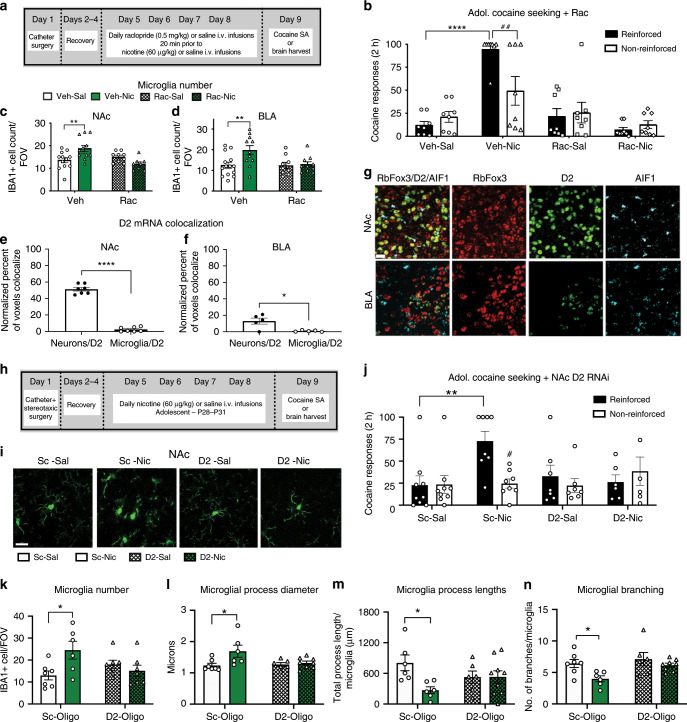
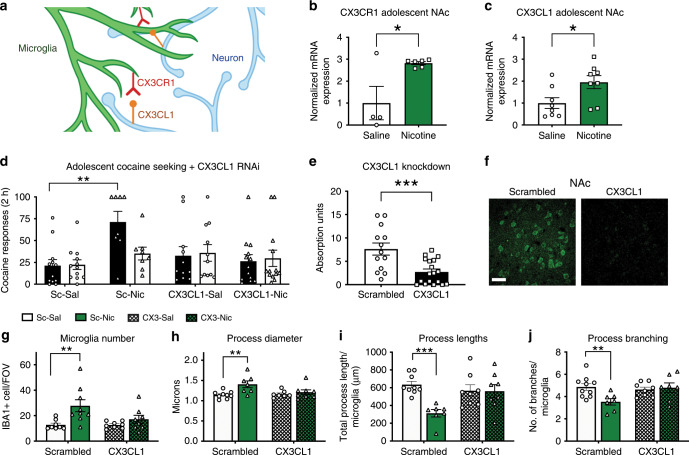
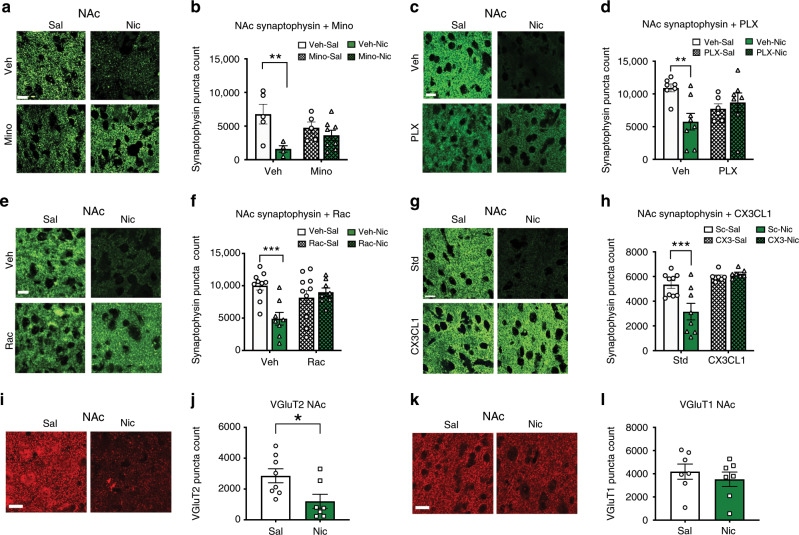
With the rise of e-cigarette use, teen nicotine exposure is becoming more widespread. Findings from clinical and preclinical studies show that the adolescent brain is particularly sensitive to nicotine. Animal studies have demonstrated that adolescent nicotine exposure increases reinforcement for cocaine and other drugs. However, the mechanisms that underlie these behaviors are poorly understood. Here, we report reactive microglia are critical regulators of nicotine-induced increases in adolescent cocaine self-administration. Nicotine has dichotomous, age-dependent effects on microglial morphology and immune transcript profiles. A multistep signaling mechanism involving D2 receptors and CX3CL1 mediates nicotine-induced increases in cocaine self-administration and microglial activation. Moreover, nicotine depletes presynaptic markers in a manner that is microglia-, D2- and CX3CL1-dependent. Taken together, we demonstrate that adolescent microglia are uniquely susceptible to perturbations by nicotine, necessary for nicotine-induced increases in cocaine-seeking, and that D2 receptors and CX3CL1 play a mechanistic role in these phenomena.
Overview
The claims and statistics of this paper haven’t been checked yet.
Free: it reads the open-access text and checks the first 5 claims that cite a source we can check. Create a free account to check every claim.
Integrity signals
Registry
Cites
Statistics
Figures
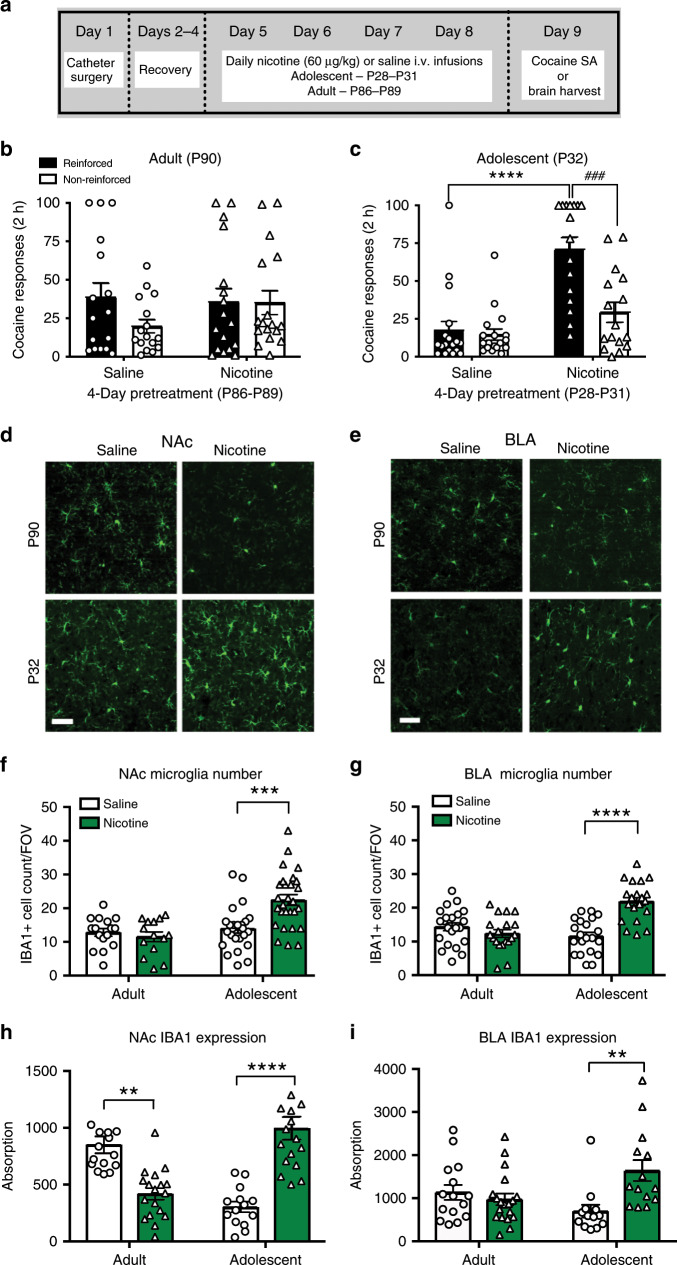
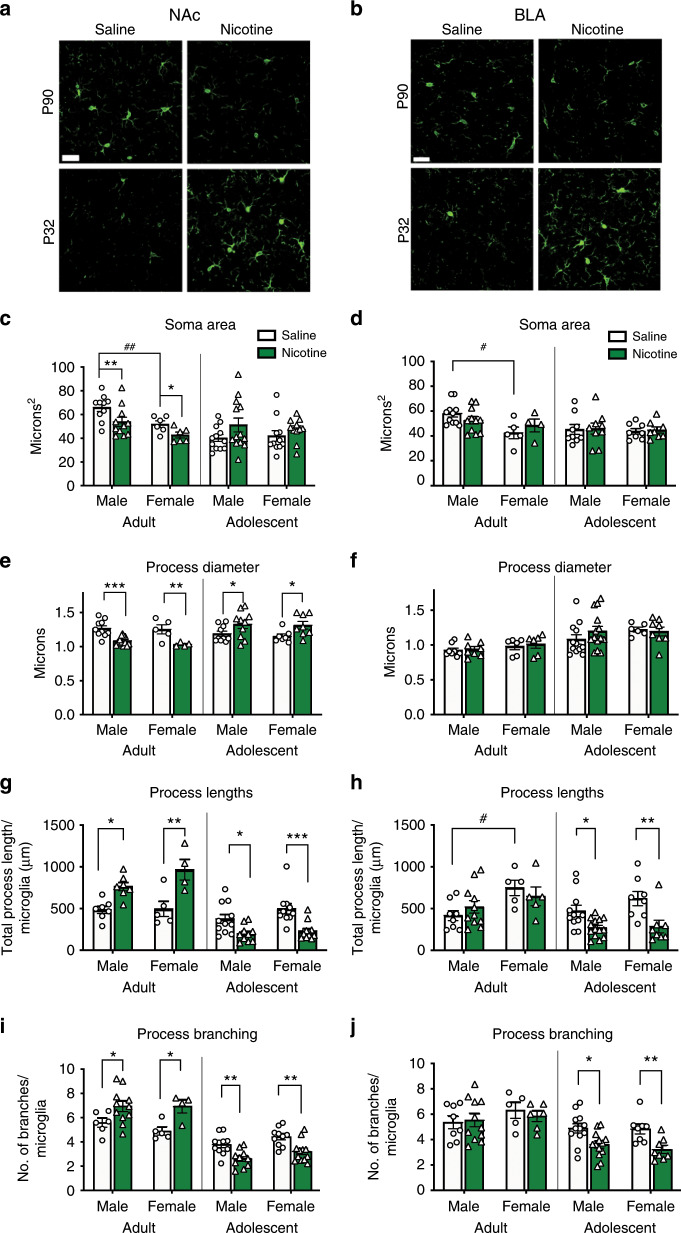
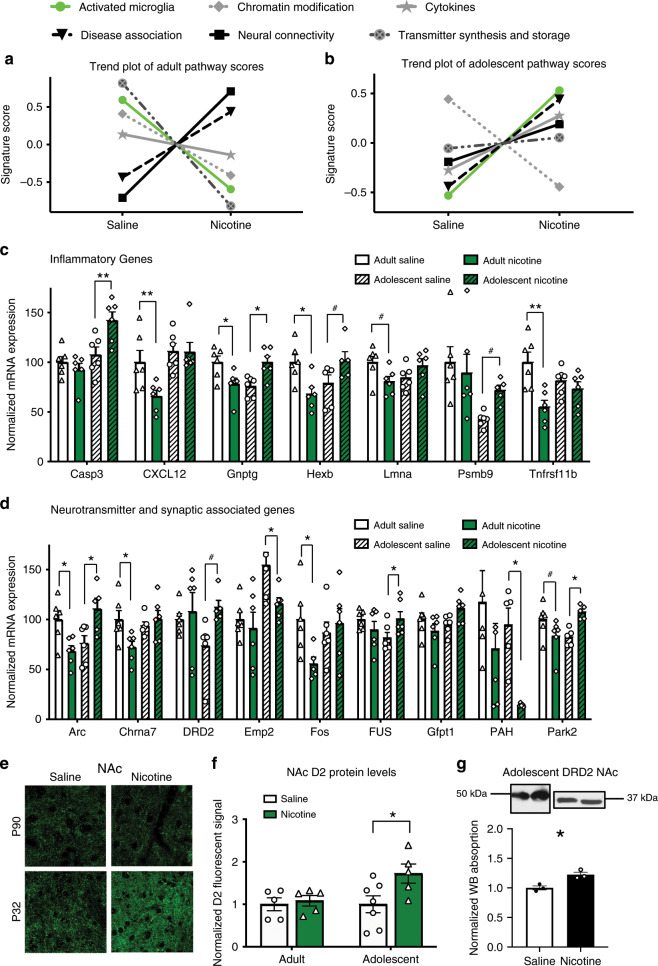
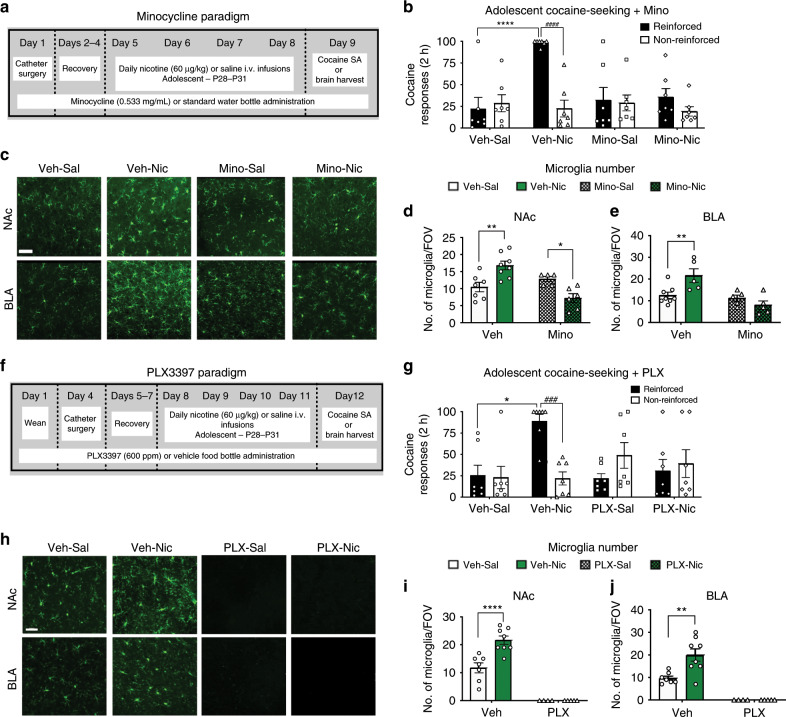
Verification
Claims the paper makes
The claims and statistics of this paper haven’t been checked yet.
Free: it reads the open-access text and checks the first 5 claims that cite a source we can check. Create a free account to check every claim.
Claims other papers make about this one
Each is checked against this paper’s own text: does it say what the citing paper says it does?
The source backs part of the claim, not all of it — or backs it for a different population, condition or comparison.
In the citing paper
“Although presynaptic dopamine markers are not impacted by this nicotine treatment, there is an increase in the efficacy of striatal D2 dopamine receptors (Mojica et al., 2014; Linker et al., 2020).”
From Unique, long-term effects of nicotine on adolescent brain. (2020) · cites this paper as Linker et al., 2020
Experimental — accuracy not yet measuredThe source backs part of the claim, not all of it — or backs it for a different population, condition or comparison.
In the citing paper
“The long-lasting enhancement of cocaine intake can be blocked by co-administration of a serotonin 5HT1A or dopamine D2 receptor antagonist during nicotine pretreatment”
From Unique, long-term effects of nicotine on adolescent brain. (2020) · cites this paper as Linker et al., 2020
Experimental — accuracy not yet measuredThe source backs part of the claim, not all of it — or backs it for a different population, condition or comparison.
In the citing paper
“Microglial activation then selectively prunes glutamate synapses in the nucleus accumbens and basolateral amygdala, and results in increased cocaine self-administration.”
From Unique, long-term effects of nicotine on adolescent brain. (2020) · cites this paper as Linker et al., 2020
Experimental — accuracy not yet measuredThe source backs part of the claim, not all of it — or backs it for a different population, condition or comparison.
In the citing paper
“NAc D2 receptors and CX3CL1 are a mechanistic interface for nicotine-induced microglial activation with resulting pruning of glutamate synapses and enhanced cocaine reinforcement in adolescents [149].”
From Nicotine on the developing brain. (2023) · cites this paper as [149]
Experimental — accuracy not yet measuredThe source backs part of the claim, not all of it — or backs it for a different population, condition or comparison.
In the citing paper
“Brief pretreatment of early adolescent rats (postnatal days (P) 28–31) with a low dose of nicotine that models smoking initiation significantly increases self-administration of cocaine, ethanol, fentanyl, and methamphetamine when compared to adults [146–151].”
From Nicotine on the developing brain. (2023) · cites this paper as [149]
Experimental — accuracy not yet measured
4 more claims about this paper
Create a free account to see every claim other papers make about this one.
Self-check
Percentages, sums and reported differences re-computed from the paper’s own numbers.
The self-check needs the paper’s full text.
Citations
Cites
Johnston, L. D., O'Malley, P. M., Bachman, J. G., & Schulenberg, J. E. (2009) · PsycEXTRA Dataset · doi:10.1037/e560352009-001 · Cited by 6,921
Synaptic Pruning by Microglia Is Necessary for Normal Brain Development
Paolicelli, R. C., Bolasco, G., Pagani, F., Maggi, L., Scianni, M., Panzanelli, P., Giustetto, M., Ferreira, T. A., Guiducci, E., Dumas, L., et al. (2011) · Science · doi:10.1126/science.1202529 · Cited by 4,244
The Classical Complement Cascade Mediates CNS Synapse Elimination
Stevens, B., Allen, N. J., Vazquez, L. E., Howell, G. R., Christopherson, K. S., Nouri, N., Micheva, K. D., Mehalow, A. K., Huberman, A. D., Stafford, B., et al. (2007) · Cell · doi:10.1016/j.cell.2007.10.036 · Cited by 3,313
Synaptic density in human frontal cortex —Developmental changes and effects of aging
Peter R., H. (1979) · Brain Research · doi:10.1016/0006-8993(79)90349-4 · Cited by 2,645
Hammond, T. R., Dufort, C., Dissing-Olesen, L., Giera, S., Young, A., Wysoker, A., Walker, A. J., Segel, M., Nemesh, J., Saunders, A., et al. (2018) · doi:10.1101/406140 · Cited by 2,225
Elmore, M. R. P., Najafi, A. R., Koike, M. A., Dagher, N. N., Spangenberg, E. E., Rice, R. A., Kitazawa, M., Matusow, B., Nguyen, H., West, B. L., et al. (2014) · Neuron · doi:10.1016/j.neuron.2014.02.040 · Cited by 1,968
Self-citationJohnston, L., Miech, R., & O'Malley, P. (2020) · doi:10.3998/2027.42/162579 · Cited by 1,611
The Expression of Vesicular Glutamate Transporters Defines Two Classes of Excitatory Synapse
Fremeau, R. T., Troyer, M. D., Pahner, I., Nygaard, G. O., Tran, C. H., Reimer, R. J., Bellocchio, E. E., Fortin, D., Storm-Mathisen, J., & Edwards, R. H. (2001) · Neuron · doi:10.1016/s0896-6273(01)00344-0 · Cited by 1,265
Trophic macrophages in development and disease
Pollard, J. W. (2009) · Nature Reviews Immunology · doi:10.1038/nri2528 · Cited by 1,178
Cullen, K. A., Ambrose, B. K., Gentzke, A. S., Apelberg, B. J., Jamal, A., & King, B. A. (2018) · MMWR. Morbidity and Mortality Weekly Report · doi:10.15585/mmwr.mm6745a5 · Cited by 734
Breslau, N., & Peterson, E. L. (1996) · American Journal of Public Health · doi:10.2105/ajph.86.2.214 · Cited by 684
Microglia: Dynamic Mediators of Synapse Development and Plasticity
Wu, Y., Dissing-Olesen, L., MacVicar, B. A., & Stevens, B. (2015) · Trends in Immunology · doi:10.1016/j.it.2015.08.008 · Cited by 661 · cited 6×
“l D2-morpholino blocks the thickening NAc microglial process diameter (F(1,23)= 6.”
BackgroundInfluentialNeurotransmitter receptors on microglia
Pocock, J. M., & Kettenmann, H. (2007) · Trends in Neurosciences · doi:10.1016/j.tins.2007.07.007 · Cited by 650
Nicotine and the adolescent brain
Yuan, M., Cross, S. J., Loughlin, S. E., & Leslie, F. M. (2015) · The Journal of Physiology · doi:10.1113/jp270492 · Cited by 623
Self-citationBraking and accelerating of the adolescent brain
Casey, B. J., Jones, R. M., & Somerville, L. H. (2011) · Journal of Research on Adolescence · doi:10.1111/j.1532-7795.2010.00712.x · Cited by 621
The dynamic effects of nicotine on the developing brain
Dwyer, J. B., McQuown, S. C., & Leslie, F. M. (2009) · Pharmacology & Therapeutics · doi:10.1016/j.pharmthera.2009.02.003 · Cited by 559
Self-citationCholinergic modulation of microglial activation by α7 nicotinic receptors
Shytle, R. D., Mori, T., Townsend, K., Vendrame, M., Sun, N., Zeng, J., Ehrhart, J., Silver, A. A., Sanberg, P. R., & Tan, J. (2004) · Journal of Neurochemistry · doi:10.1046/j.1471-4159.2004.02347.x · Cited by 534
Microglia during development and aging
Harry, G. J. (2013) · Pharmacology & Therapeutics · doi:10.1016/j.pharmthera.2013.04.013 · Cited by 524
Transcriptional and Translational Differences of Microglia from Male and Female Brains
Guneykaya, D., Ivanov, A., Hernandez, D. P., Haage, V., Wojtas, B., Meyer, N., Maricos, M., Jordan, P., Buonfiglioli, A., Gielniewski, B., et al. (2018) · Cell Reports · doi:10.1016/j.celrep.2018.08.001 · Cited by 477
Microglial control of neuronal death and synaptic properties
Bessis, A., Béchade, C., Bernard, D., & Roumier, A. (2007) · Glia · doi:10.1002/glia.20459 · Cited by 452
A role for synaptic plasticity in the adolescent development of executive function
Selemon, L. D. (2013) · Translational Psychiatry · doi:10.1038/tp.2013.7 · Cited by 439
Kandel, D. (1997) · Drug and Alcohol Dependence · doi:10.1016/s0376-8716(96)01315-4 · Cited by 395
Felger, J. C., & Miller, A. H. (2012) · Frontiers in Neuroendocrinology · doi:10.1016/j.yfrne.2012.09.003 · Cited by 391
Levine, A., Huang, Y., Drisaldi, B., Griffin, E. A., Pollak, D. D., Xu, S., Yin, D., Schaffran, C., Kandel, D. B., & Kandel, E. R. (2011) · Science Translational Medicine · doi:10.1126/scitranslmed.3003062 · Cited by 280
Chronic Immune Stimulation Correlates with Reduced Phenylalanine Turnover
Neurauter, G., Schrocksnadel, K., Scholl-Burgi, S., Sperner-Unterweger, B., Schubert, C., Ledochowski, M., & Fuchs, D. (2008) · Current Drug Metabolism · doi:10.2174/138920008785821738 · Cited by 274
Glial and Neuroimmune Mechanisms as Critical Modulators of Drug Use and Abuse
Lacagnina, M. J., Rivera, P. D., & Bilbo, S. D. (2017) · Neuropsychopharmacology · doi:10.1038/npp.2016.121 · Cited by 271
Microglial TNF-α Suppresses Cocaine-Induced Plasticity and Behavioral Sensitization
Lewitus, G. M., Konefal, S. C., Greenhalgh, A. D., Pribiag, H., Augereau, K., & Stellwagen, D. (2016) · Neuron · doi:10.1016/j.neuron.2016.03.030 · Cited by 246
Suzuki, T., Hide, I., Matsubara, A., Hama, C., Harada, K., Miyano, K., Andrä, M., Matsubayashi, H., Sakai, N., Kohsaka, S., et al. (2006) · Journal of Neuroscience Research · doi:10.1002/jnr.20850 · Cited by 241
The association between cigarette smoking and drug abuse in the United States
Lai, S., Lai, H., Page, J. B., & McCoy, C. B. (2000) · Journal of Addictive Diseases · doi:10.1300/j069v19n04_02 · Cited by 212
Coller, J. K., & Hutchinson, M. R. (2012) · Pharmacology & Therapeutics · doi:10.1016/j.pharmthera.2012.01.008 · Cited by 186
Collins, S. L., & Izenwasser, S. (2003) · Neuropharmacology · doi:10.1016/j.neuropharm.2003.09.024 · Cited by 166
Immunoadolescence: Neuroimmune development and adolescent behavior
Brenhouse, H. C., & Schwarz, J. M. (2016) · Neuroscience & Biobehavioral Reviews · doi:10.1016/j.neubiorev.2016.05.035 · Cited by 150
Microglia and synapse interactions: fine tuning neural circuits and candidate molecules
Miyamoto, A., Wake, H., Moorhouse, A. J., & Nabekura, J. (2013) · Frontiers in Cellular Neuroscience · doi:10.3389/fncel.2013.00070 · Cited by 142
Ragozzino, D., Di Angelantonio, S., Trettel, F., Bertollini, C., Maggi, L., Gross, C., Charo, I. F., Limatola, C., & Eusebi, F. (2006) · The Journal of Neuroscience · doi:10.1523/jneurosci.3192-06.2006 · Cited by 128
Adolescent Maturation of Cortical Dopamine
O’Donnell, P. (2010) · Neurotoxicity Research · doi:10.1007/s12640-010-9157-3 · Cited by 107
McCabe, S. E., West, B. T., & McCabe, V. V. (2017) · Nicotine & Tobacco Research · doi:10.1093/ntr/ntx231 · Cited by 102
Nicotine alters limbic function in adolescent rat by a 5-HT1A receptor mechanism
Dao, J. M., McQuown, S. C., Loughlin, S. E., Belluzzi, J. D., & Leslie, F. M. (2011) · Neuropsychopharmacology · doi:10.1038/npp.2011.8 · Cited by 79
Self-citationJenssen, B. P., & Boykan, R. (2019) · Children · doi:10.3390/children6020030 · Cited by 76
Giunta, B. N., Ehrhart, J. C., Townsend, K. P., Sun, N., Vendrame, M., Shytle, D., Tan, J., & Fernandez, F. (2004) · Brain Research Bulletin · doi:10.1016/j.brainresbull.2004.06.008 · Cited by 74
Glial mechanisms underlying substance use disorders
Linker, K. E., Cross, S. J., & Leslie, F. M. (2019) · European Journal of Neuroscience · doi:10.1111/ejn.14163 · Cited by 64
Self-citationLocomotor and stress responses to nicotine differ in adolescent and adult rats
Cao, J., Belluzzi, J. D., Loughlin, S. E., Dao, J. M., Chen, Y., & Leslie, F. M. (2010) · Pharmacology Biochemistry and Behavior · doi:10.1016/j.pbb.2010.04.010 · Cited by 47
Self-citationD2 dopamine modulation of corticoaccumbens synaptic responses changes during adolescence
Benoit‐Marand, M., & O'Donnell, P. (2008) · European Journal of Neuroscience · doi:10.1111/j.1460-9568.2008.06107.x · Cited by 45
McQuown, S. C., Dao, J. M., Belluzzi, J. D., & Leslie, F. M. (2009) · Psychopharmacology · doi:10.1007/s00213-009-1642-0 · Cited by 39
Self-citationEarly adolescent nicotine exposure affects later-life cocaine reward in mice
Alajaji, M., Lazenka, M. F., Kota, D., Wise, L. E., Younis, R. M., Carroll, F. I., Levine, A., Selley, D. E., Sim-Selley, L. J., & Damaj, M. I. (2016) · Neuropharmacology · doi:10.1016/j.neuropharm.2016.01.032 · Cited by 39
Nicotine modulation of adolescent dopamine receptor signaling and hypothalamic peptide response
Mojica, C. Y., Dao, J. M., Yuan, M., Loughlin, S. E., & Leslie, F. M. (2014) · Neuropharmacology · doi:10.1016/j.neuropharm.2013.10.012 · Cited by 10
Self-citation
Cited by
One Is Not Enough: Understanding and Modeling Polysubstance Use
Crummy, E. A., O’Neal, T. J., Baskin, B. M., & Ferguson, S. M. (2020) · Frontiers in Neuroscience · doi:10.3389/fnins.2020.00569 · Cited by 351
Consequences of adolescent drug use
Steinfeld, M. R., & Torregrossa, M. M. (2023) · Translational Psychiatry · doi:10.1038/s41398-023-02590-4 · Cited by 237
“Linker and colleagues [216] reported a myriad of differences in how microglia in adult and adolescent rats respond to injections of nicotine, including differences in IBA1 expression in the NAc and BLA and microglial morphology.”
BackgroundXu, F., Han, L., Wang, Y., Deng, D., Ding, Y., Zhao, S., Zhang, Q., Ma, L., & Chen, X. (2023) · BMC Medicine · doi:10.1186/s12916-022-02705-6 · Cited by 192
“In the second experiment, rats were fed AIN-76A chow supplemented with PLX3397, a selective CSF1R (Colonystimulating factor 1 receptor) inhibitor that has been demonstrated to readily cross the blood-brain barrier (BBB) and deplete microglia by oral delivery in rat chows [12, 13].”
MethodUnique, long-term effects of nicotine on adolescent brain.
Leslie, F. M. (2020) · Pharmacology, Biochemistry, and Behavior · doi:10.1016/j.pbb.2020.173010 · Cited by 178
“Although presynaptic dopamine markers are not impacted by this nicotine treatment, there is an increase in the efficacy of striatal D2 dopamine receptors (Mojica et al., 2014; Linker et al., 2020).”
BackgroundResultSelf-citationNicotine on the developing brain.
Castro, E. M., Lotfipour, S., & Leslie, F. M. (2023) · Pharmacological research · doi:10.1016/j.phrs.2023.106716 · Cited by 157
Self-citation
Metadata
- Authors
- Linker, K. E., Gad, M., Tawadrous, P., Cano, M., Green, K. N., Wood, M. A., & Leslie, F. M.
- Affiliations
- University of California, Irvine (US)
- Corresponding author
- Linker, K. E.
- Venue
- Nature Communications
- Published
- 2020-01-16
- Volume
- 11
- Issue
- 1
- Pages
- 306-306
- ISSN
- 2041-1723 (ISSN-L)
- PMC
- PMC6965638
- OpenAlex
- W3000346829
- Cited by
- 77
- References
- 46
- Citations by year
- 2026: 6 · 2025: 14 · 2024: 13 · 2023: 18 · 2022: 6 · 2021: 14 · 2020: 5
- FWCI
- 4.16
- Type
- journal article
- Language
- en
- Update notices
- correction (2021-06-29)
- Open access
- gold
- doi.org
- Licence
- cc-by
- creativecommons.org/licenses/by/4.0 (tdm)
- creativecommons.org/licenses/by/4.0 (vor)
- Locations
- Nature Communications (publishedVersion, cc-by)
- PubMed Central (publishedVersion, cc-by)
- PubMed (publishedVersion)
- RePEc: Research Papers in Economics (submittedVersion)
- DOAJ (DOAJ: Directory of Open Access Journals) (submittedVersion, cc-by-sa)
- DOAJ (DOAJ: Directory of Open Access Journals) (submittedVersion)
- Funders
- Plexxikon
- National Institute on Aging (RF1AG056768)
- National Institute on Drug Abuse (R01DA025922, R01DA040440)
- National Institute of Neurological Disorders and Stroke (R01NS083801)
- Topics
- Life Sciences › Neuroscience › Neurology › Neuroinflammation and Neurodegeneration Mechanisms
- Life Sciences › Neuroscience › Cellular and Molecular Neuroscience › Neurotransmitter Receptor Influence on Behavior
- Health Sciences › Medicine › Public Health, Environmental and Occupational Health › Smoking Behavior and Cessation
- Keywords
- microglial activation, adolescent nicotine exposure, cocaine self-administration, dopamine D2 receptor, fractalkine, vaping, adolescent brain, neuroinflammation, drug reinforcement
- MeSH terms
- Aminopyridines, Animals, Cocaine, Disease Models, Animal, Female, Gene Expression Regulation, Male, Minocycline, Nicotine, Phenotype, Pyrroles, Reinforcement, Psychology, Reward, Self Administration, Synaptophysin, Rats, Sprague-Dawley, Receptors, Dopamine D2, Microglia, Rats, Chemokine CX3CL1, Drug-Seeking Behavior, Electronic Nicotine Delivery Systems
About these checks
Registry, retraction, Cites and statistics results are computed, not judged, with one exception: a printed reference that no index lists is read once by a model before it counts as a citation error. Claims are extracted by a model and kept only when their quote appears verbatim in the text; each cited source is then checked, with a model’s help, for whether it says what the claim relies on. Those verdicts can be wrong — read the claim’s quote and the cited source before relying on one.
Statistics and arithmetic are recomputed, not judged.
Confidence bands are shown only for fields calibrated on our annotated test set. None is calibrated yet, so no band is shown.
What counts as a claim ›How we measure confidence ›How we check this ›
Are you an author, or do you see a problem with this page? Request a review
Data sources
Bibliographic data: Semantic Scholar, OpenAlex, Crossref.
Contains information from the Semantic Scholar Academic Graph Datasets, made available under the ODC Attribution License (ODC-BY 1.0).
Semantic Scholar’s data is described in: Kinney, R., et al. (2023). The Semantic Scholar Open Data Platform. arXiv:2301.10140.
