

Impact of commonly used drugs on the composition and metabolic function of the gut microbiota
Open accessThe DOI matches its Crossref record; 45 of the 47 references it cites were found in a registry or an index.
Abstract
The human gut microbiota has now been associated with drug responses and efficacy, while chemical compounds present in these drugs can also impact the gut bacteria. However, drug–microbe interactions are still understudied in the clinical context, where polypharmacy and comorbidities co-occur. Here, we report relations between commonly used drugs and the gut microbiome. We performed metagenomics sequencing of faecal samples from a population cohort and two gastrointestinal disease cohorts. Differences between users and non-users were analysed per cohort, followed by a meta-analysis. While 19 of 41 drugs are found to be associated with microbial features, when controlling for the use of multiple medications, proton-pump inhibitors, metformin, antibiotics and laxatives show the strongest associations with the microbiome. We here provide evidence for extensive changes in taxonomy, metabolic potential and resistome in relation to commonly used drugs. This paves the way for future studies and has implications for current microbiome studies by demonstrating the need to correct for multiple drug use.
Overview
The claims and statistics of this paper haven’t been checked yet.
Free: it reads the open-access text and checks the first 5 claims that cite a source we can check. Create a free account to check every claim.
Integrity signals
Registry
Cites
Statistics
Figures
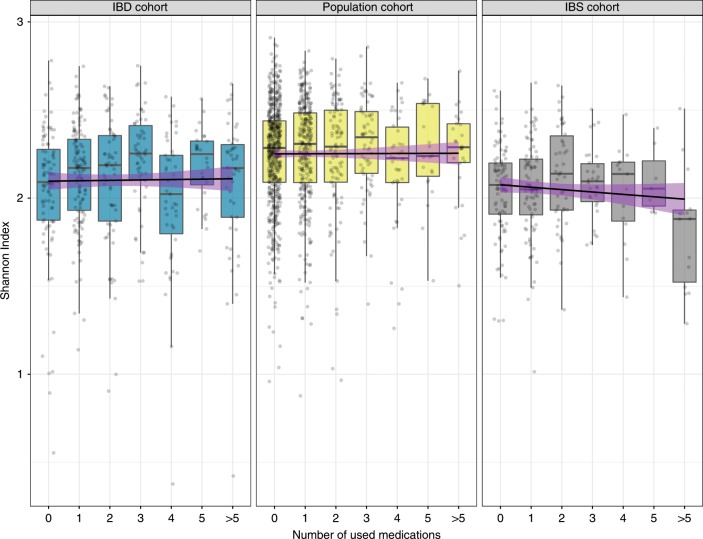
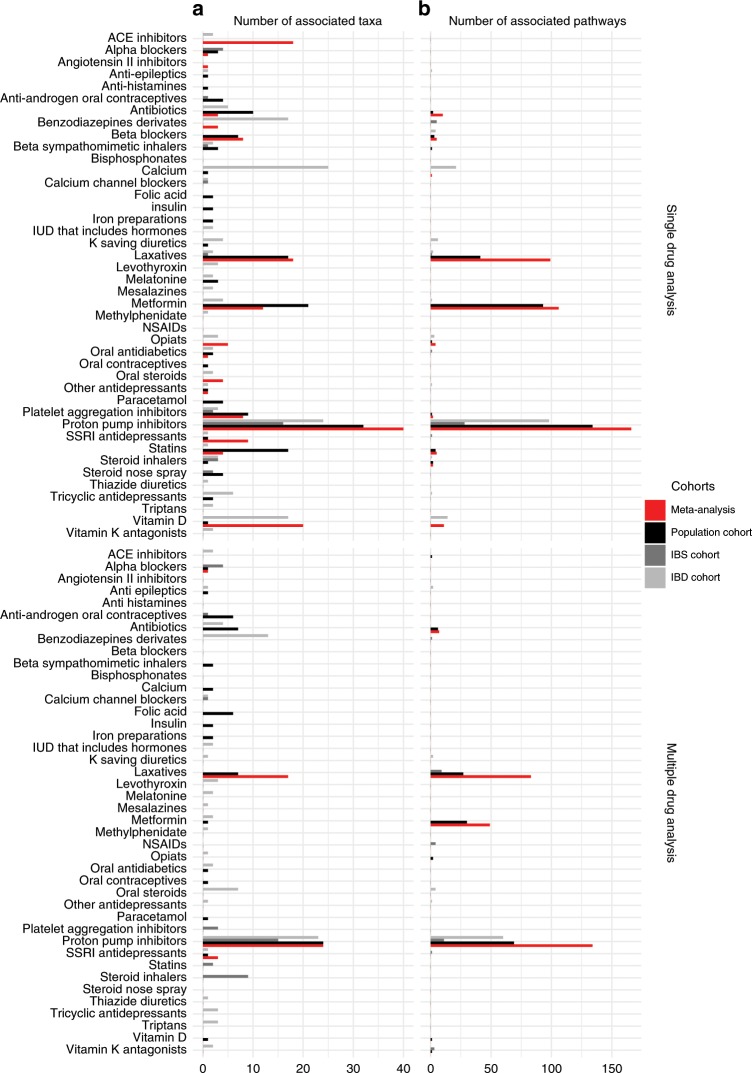
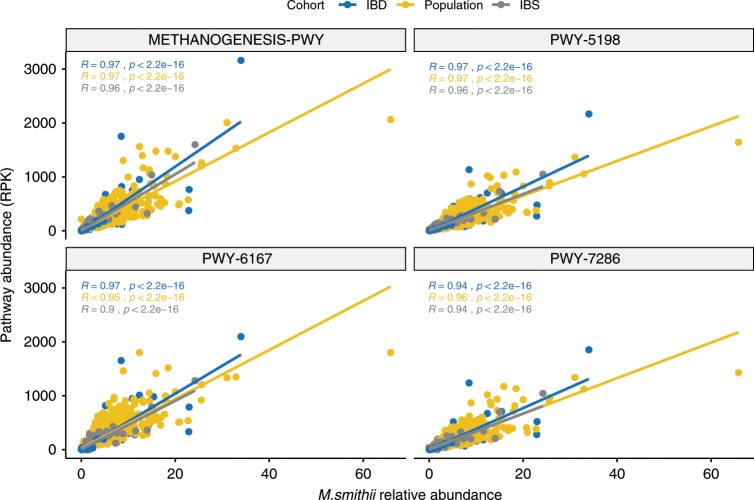
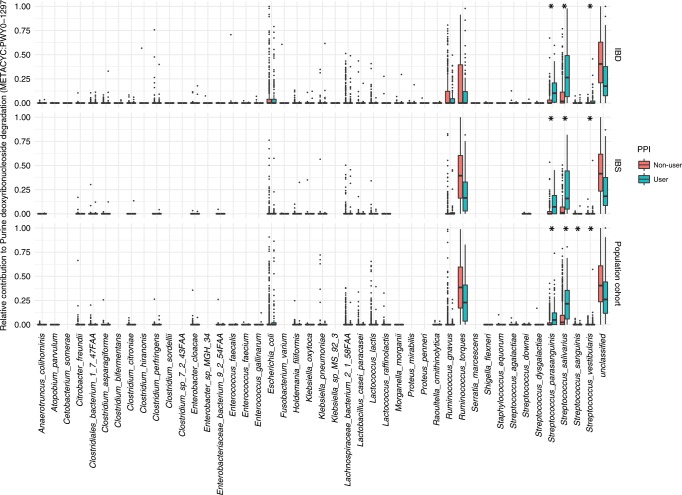
Verification
Claims the paper makes
The claims and statistics of this paper haven’t been checked yet.
Free: it reads the open-access text and checks the first 5 claims that cite a source we can check. Create a free account to check every claim.
Claims other papers make about this one
Each is checked against this paper’s own text: does it say what the citing paper says it does?
In the citing paper
“Broad surveys identify antibiotics,16 proton-pump inhibitors (PPIs),89 benzodiazepine derivatives,90 antidiabetics, non-steroidal anti-inflammatories, and immunosuppressants as major drivers of microbial richness, diversity, and composition.43,58,70,91”
From Gut dysbiosis in oncology: a risk factor for immunoresistance (2026) · doi:10.1038/s41422-025-01212-6 · cites this paper as [91]
Self-check
Percentages, sums and reported differences re-computed from the paper’s own numbers.
The self-check needs the paper’s full text.
Citations
Cites
METAL: fast and efficient meta-analysis of genomewide association scans
Willer, C. J., Li, Y., & Abecasis, G. R. (2010) · Bioinformatics · doi:10.1093/bioinformatics/btq340 · Cited by 5,205
Ford Alexander, C., Paul, M., Hanauer Steven, B., 谭蓓, & Dong, W. Z. (2001) · Cited by 3,021
Population-level analysis of gut microbiome variation
Falony, G., Joossens, M., Vieira-Silva, S., Wang, J., Darzi, Y., Faust, K., Kurilshikov, A., Bonder, M. J., Valles-Colomer, M., Vandeputte, D., et al. (2016) · Science · doi:10.1126/science.aad3503 · Cited by 2,400
Self-citationMetaPhlAn2 for enhanced metagenomic taxonomic profiling
Truong, D. T., Franzosa, E. A., Tickle, T. L., Scholz, M., Weingart, G., Pasolli, E., Tett, A., Huttenhower, C., & Segata, N. (2015) · Nature Methods · doi:10.1038/nmeth.3589 · Cited by 2,185
Baumgart, D. C., & Sandborn, W. J. (2012) · The Lancet · doi:10.1016/s0140-6736(12)60026-9 · Cited by 2,154
Disentangling type 2 diabetes and metformin treatment signatures in the human gut microbiota
MetaHIT consortium, Forslund, K., Hildebrand, F., Nielsen, T., Falony, G., Le Chatelier, E., Sunagawa, S., Prifti, E., Vieira-Silva, S., Gudmundsdottir, V., et al. (2015) · Nature · doi:10.1038/nature15766 · Cited by 2,116
Ordás, I., Eckmann, L., Talamini, M., Baumgart, D. C., & Sandborn, W. J. (2012) · The Lancet · doi:10.1016/s0140-6736(12)60150-0 · Cited by 2,078
Gut microbiome structure and metabolic activity in inflammatory bowel disease
Franzosa, E. A., Sirota-Madi, A., Avila-Pacheco, J., Fornelos, N., Haiser, H. J., Reinker, S., Vatanen, T., Hall, A. B., Mallick, H., McIver, L. J., et al. (2018) · Nature Microbiology · doi:10.1038/s41564-018-0306-4 · Cited by 1,995
Self-citationPopulation-based metagenomics analysis reveals markers for gut microbiome composition and diversity
Zhernakova, A., Kurilshikov, A., Bonder, M. J., Tigchelaar, E. F., Schirmer, M., Vatanen, T., Mujagic, Z., Vila, A. V., Falony, G., Vieira-Silva, S., et al. (2016) · Science · doi:10.1126/science.aad3369 · Cited by 1,914
Self-citationExtensive impact of non-antibiotic drugs on human gut bacteria
Maier, L., Pruteanu, M., Kuhn, M., Zeller, G., Telzerow, A., Anderson, E. E., Brochado, A. R., Fernandez, K. C., Dose, H., Mori, H., et al. (2018) · Nature · doi:10.1038/nature25979 · Cited by 1,905
Cited by
Items 401–500 of 793
Li, L., Simopoulos, C. M. A., Mayne, J., Ning, Z., Zhang, X., Hamada, M., Butcher, J., Serrana, J. M., Wang, L., Cheng, K., et al. (2025) · Nature Communications · doi:10.1038/s41467-025-64433-8 · Cited by 17
A resource to empirically establish drug exposure records directly from untargeted metabolomics data
Zhao, H. N., Kvitne, K. E., Brungs, C., Mohan, S., Charron‐Lamoureux, V., Bittremieux, W., Tang, R., Schmid, R., Lamichhane, S., Xing, S., et al. (2025) · Nature Communications · doi:10.1038/s41467-025-65993-5 · Cited by 16
Dalhoff, A. (2020) · Infection · doi:10.1007/s15010-020-01547-9 · Cited by 13
Interactions between Medications and the Gut Microbiome in Inflammatory Bowel Disease
Eckenberger, J., Butler, J. C., Bernstein, C. N., Shanahan, F., & Claesson, M. J. (2022) · Microorganisms · doi:10.3390/microorganisms10101963 · Cited by 14
“Moreover, commonly used non-IBD drugs can also affect the composition and metabolic function of gut microbiota [16].”
BackgroundBikov, A., Dragonieri, S., Csoma, B., Mazzuca, C., Finamore, P., Rocchi, G., Putignani, L., Guarino, M. P. L., & Scarlata, S. (2022) · Microorganisms · doi:10.3390/microorganisms10122457 · Cited by 13
Stencel, A. (2020) · BioEssays · doi:10.1002/bies.202000148 · Cited by 12
Impact of Environmental and Pharmacologic Changes on the Upper Gastrointestinal Microbiome
Bilello, J. L., & Okereke, I. C. (2021) · Biomedicines · doi:10.3390/biomedicines9060617 · Cited by 11
Dukaew, N., Thongkumkoon, P., Sirikaew, N., Dissook, S., Sakuludomkan, W., Tongjai, S., Thiennimitr, P., Takuathung, M. N., Benjanuwattra, J., Kongthaweelert, P., et al. (2023) · Pharmaceutics · doi:10.3390/pharmaceutics15061734 · Cited by 11
van den Ende, T., de Clercq, N. C., Davids, M., Goedegebuure, R. S. A., Doeve, B. H., Ebrahimi, G., Buijsen, J., Hoekstra, R. E., Mohammad, N. H., Bijlsma, M. F., et al. (2024) · JNCI Journal of the National Cancer Institute · doi:10.1093/jnci/djae153 · Cited by 14
Normal Gut Microbiomes in Diverse Populations: Clinical Implications
Shete, O., & Ghosh, T. S. (2024) · Annual Review of Medicine · doi:10.1146/annurev-med-051223-031809 · Cited by 12
Gut microbiota’s role in heart failure
Florek, K., Komorowska, K., Ptak, J., Jarocki, M., Gontarczyk, J., Mania, R., Boluk, A., Żurawska-Płaksej, E., Łaczmański, Ł., & Sokolski, M. (2025) · Heart Failure Reviews · doi:10.1007/s10741-025-10543-w · Cited by 13
“Another major factor influencing microbiota composition in the general population is medication use, with proton pump inhibitors (PPIs), metformin, antibiotics, and laxatives having the strongest effects [31].”
Jiménez-Arroyo, C., Molinero, N., & Moreno-Arribas, M. V. (2025) · Advances in Nutrition · doi:10.1016/j.advnut.2025.100520 · Cited by 11
“Functional consequences included altered lipid and NAD metabolism [179].”
New Personalized Medicine Model for Medication Management
Alagiakrishnan, K., Halverson, T., Olivares, D. V. F., & Sadowski, C. A. (2026) · Journal of Personalized Medicine · doi:10.3390/jpm16040182 · Cited by 10
Khalikov, A. A., Михайлович, К. Е., Олегович, К. К., & Рифовна, Р. Г. (2022) · Forensic Medical Expertise · doi:10.17116/sudmed20226503149 · Cited by 12
MiCloud: A unified web platform for comprehensive microbiome data analysis
Gu, W., Moon, J., Chisina, C., Kang, B., Park, T., & Koh, H. (2022) · PLoS ONE · doi:10.1371/journal.pone.0272354 · Cited by 10
“, antibiotics [3], non-antibiotic drugs [15]), and so forth.”
BackgroundLeardini, D., Venturelli, F., Baccelli, F., Cerasi, S., Muratore, E., Brigidi, P., Pession, A., Prete, A., & Masetti, R. (2022) · International Journal of Molecular Sciences · doi:10.3390/ijms232315387 · Cited by 12
Skowrońska, A., Gawlik-Kotelnicka, O., Margulska, A., & Strzelecki, D. (2023) · Metabolites · doi:10.3390/metabo13020182 · Cited by 11
Gut Microbial Intersections with Human Ecology and Evolution
Amato, K. R., & Carmody, R. N. (2023) · Annual Review of Anthropology · doi:10.1146/annurev-anthro-052721-085122 · Cited by 13
Xuan, P., Xu, Z., Cui, H., Gu, J., Liu, C., Zhang, T., & Wu, P. (2024) · Bioinformatics · doi:10.1093/bioinformatics/btae562 · Cited by 11
“For example, Vich Vila et al. (2020) have shown that the human gut microbiota is involved in drug metabolism processes, and compounds present in these drugs can promote the growth of gut bacteria.”
BackgroundFatimi, H. E., El‐Mansoury, B., Tinakoua, A., Ndayambaje, M., Zaid, Y., Khalki, H., & Khalki, L. (2025) · Pharmacological Reports · doi:10.1007/s43440-025-00759-w · Cited by 10
“…drug is likely multifactorial, with direct effects on GABAergic neurotransmission within the CNS, but also potentially involving peripheral systems such as the GM. Emerging research has demonstrated that BZDs can impact the composition and function of the GM, potentially contributing to GD [225 ].”
Polypharmacy is associated with altered gut microbiota diversity in older post-stroke inpatients
Matsumoto, A., Yoshimura, Y., Wakabayashi, H., Nagano, F., Shimazu, S., Kido, Y., Shiraishi, A., Hamada, T., Yoneda, K., & Maeda, K. (2025) · Clinical Nutrition ESPEN · doi:10.1016/j.clnesp.2025.10.015 · Cited by 11
Liu, L., Wang, H., Minichino, A., Xiao, R., Du, Y., Wang, L. Y., He, D., Guo, S., Mo, X., Xiang, Y., et al. (2025) · Molecular Psychiatry · doi:10.1038/s41380-025-03345-x · Cited by 10
Wu, J., Peng, Z.-T., Wu, Q., Tang, R. W.-L., Dong, T. T.-X., Wang, H., & Tsim, K. W. K. (2022) · Phytomedicine · doi:10.1016/j.phymed.2022.154421 · Cited by 10
Altered gut microbiome diversity and function in patients with propionic acidemia
Tims, S., Marsaux, C. F. M., Pinto, A., Daly, A., Karall, D., Kuhn, M., Santra, S., Roeselers, G., Knol, J., MacDonald, A., et al. (2022) · Molecular Genetics and Metabolism · doi:10.1016/j.ymgme.2022.09.012 · Cited by 9
Transport of metformin metabolites by guanidinium exporters of the small multidrug resistance family
Lucero, R. M., Demirer, K., Yeh, T. J., & Stockbridge, R. B. (2024) · The Journal of General Physiology · doi:10.1085/jgp.202313464 · Cited by 10
Viewing Bacterial Colonization through the Lens of Systems Biology
Barron, M. R., & Young, V. B. (2022) · mSystems · doi:10.1128/msystems.01383-21 · Cited by 10
“Drugs, including proton pump inhibitors (PPIs; used to decrease stomach acid), metformin (an antidiabetic), laxatives, and antipsychotics, among others, are associated with structural and functional changes in the gut microbial community (89, 90).”
BackgroundHigh association of COVID-19 severity with poor gut health score in Lebanese patients
Kassaa, I. A., Omari, S. A., Abbas, N., Papon, N., Drider, D., Kassem, I. I., & Osman, M. (2021) · PLoS ONE · doi:10.1371/journal.pone.0258913 · Cited by 11
“Furthermore, the chronic use of proton pump inhibitors (PPIs), anti-diabetes, anti-obesity non-steroidal anti-inflammatory, and antidepression drugs has direct effects on gut microbiota composition and consequently on gut health [67].”
BackgroundCanny, S. G. D. L. T., Mueller, O., Craciunescu, C. V., Blumberg, B., & Rawls, J. F. (2021) · bioRxiv (Cold Spring Harbor Laboratory) · doi:10.1101/2021.07.09.451869 · Cited by 10
Considerations for laxatives in terms of their interactions with other drugs
Bassotti, G., & Battaglia, E. (2023) · Expert Opinion on Drug Metabolism & Toxicology · doi:10.1080/17425255.2023.2193326 · Cited by 10
Tronel, A., Roger‐Margueritat, M., Plazy, C., Cunin, V., Mohanty, I., Dorrestein, P. C., Soranzo, T., & Gouëllec, A. L. (2025) · Metabolomics · doi:10.1007/s11306-025-02288-2 · Cited by 11
“…including bacteria, fungi, viruses, protists, and archaea, along with their biological components (metabolites, proteins, and free nucleic acids (Berg et al., 2020)), is modulated by environmental factors including diet (Graf et al., 2015), medication (Vich Vila et al., 2020) and host physiology.”
Montégut, L., Rousseau, A., Ungolo, C., Derosa, L., Fidelle, M., Alves Costa Silva, C., Routy, B., Zitvogel, L., Besse, B., Pasolli, E., et al. (2025) · OncoImmunology · doi:10.1080/2162402x.2025.2528955 · Cited by 8
“…between these two phenomena is still ambiguous since, on the one hand, oral benzodiazepine administration may affect the intestinal microbiota, 46,47 and on the other hand, gut intestinal dysbiosis may affect immunity, general and mental health, hence increasing the need for benzodiazepine…”
Vahed, A., Shamsi, M. M., Siadat, S. D., Behmanesh, M., Negaresh, R., Agh-Mohammadi, S., & Ebrahimi, M. (2025) · Diabetes Research and Clinical Practice · doi:10.1016/j.diabres.2025.112908 · Cited by 8
Ravikant, R., Kumari, P., Kumar, M., Roy, P., & Jeya, M. (2022) · Journal of Pure and Applied Microbiology · doi:10.22207/jpam.16.2.37 · Cited by 8
“22-23 .”
Parker, A., James, S. A., Purse, C., Brion, A., Goldson, A. J., Telatin, A., Baker, D., & Carding, S. R. (2022) · Frontiers in Aging Neuroscience · doi:10.3389/fnagi.2022.828429 · Cited by 9
Coelho, D. M. N., Júnior, D. C. C., da Silva, D. M. A., Alves, A. C. B., Chaves, R. D. C., Rebouças, M. D. O., Valentim, J. T., de Oliveira, A. A., Lopes, I. S., Nicolau, L. A. D., et al. (2024) · Naunyn-Schmiedeberg s Archives of Pharmacology · doi:10.1007/s00210-024-03023-9 · Cited by 8
“…is important to note that weight gain reduction is associated with alterations in gut microbiota composition (Sands et al. 2014), and proton pump inhibitors (PPIs) are known to be among the most common drugs capable of modulating the profile and diversity of gut microbiota (Vich Vila et al. 2020).”
Ren, H., Shi, Z., Yang, F., Wang, S., Yuan, F., Li, T., Li, M., Zhu, J., Li, J., Wu, K., et al. (2024) · iMeta · doi:10.1002/imt2.179 · Cited by 10
“Although analyzing pre – post multi ‐ omics data from clinical trials could effectively mitigate the confounding effects of interindividual variations and environmental exposures [2, 17, 18], this study has inherent limitations.”
BackgroundChronic Kidney Disease Diets for Kidney Failure Prevention: Insights from the IL-11 Paradigm
Elshoff, D., Mehta, P., & Ziouzenkova, O. (2024) · Nutrients · doi:10.3390/nu16091342 · Cited by 8
Zhao, Y. C., Wang, X.-J., Zhu, M.-J., Chen, A., Zhang, D., Du, Q., Kim, J. J., & Hu, W. (2024) · World Journal of Gastroenterology · doi:10.3748/wjg.v30.i39.4295 · Cited by 8
El‐Sehrawy, A. A. M. A., Ayoub, I. I., Uthirapathy, S., Ballal, S., Gabble, B. C., Singh, A., Kavitha, V., Panigrahi, R., Kamali, M., & Khosravi, M. (2025) · European Journal of Translational Myology · doi:10.4081/ejtm.2025.13690 · Cited by 13
Hayes, A., Zhang, L., Feil, E. J., Kasprzyk‐Hordern, B., Snape, J., Gaze, W. H., & Murray, A. K. (2025) · Environment International · doi:10.1016/j.envint.2025.109490 · Cited by 9
The Human Gut Microbiota in all its States: From Disturbance to Resilience
Tap, J., Ruppé, É., & Derrien, M. (2021) · Elsevier eBooks · doi:10.1016/b978-0-12-819265-8.00039-5 · Cited by 9
Bacterial metabolites and cardiovascular risk in children with chronic kidney disease
Schlender, J., Behrens, F., McParland, V. J., Müller, D. N., Wilck, N., Bartolomaeus, H., & Holle, J. B. (2021) · Molecular and Cellular Pediatrics · doi:10.1186/s40348-021-00126-8 · Cited by 10
“However, a plethora of factors can impact the gut microbiome: medication, which is not limited to antibiotics [50, 61–63], but also includes proton pump inhibitors [64, 65] and laxatives; diet (fiber, artificial sweeteners, and sodium chloride intake) [66–68]; chronic autoimmune, inflammatory, metabolic, and neurodege…”
BackgroundPharmacomicrobiomics – Another frontier of precision medicine
Chenchula, S., Atal, S., Bhattacharyya, A., Medhi, B., Chavan, M., & Sarma, P. (2024) · Indian Journal of Pharmacology · doi:10.4103/ijp.ijp_646_24 · Cited by 8
“[9] Another chemotherapeutic agent, anti‑PD‑L1 antibody, has shown improved efficacy in the presence of Bifidobacterium by enhancing dendritic cell function and CD8+ T‑cell priming.”
InfluentialGut microbiome signatures predict cognitive impairment in older cancer survivors
Miller, B. C., Haggler, J. A., Chaudhari, D. S., Shukla, R., Kumar, V., Mishra, S. P., Masternak, M. M., Holland, P., Labyak, C., Golden, A., et al. (2025) · GeroScience · doi:10.1007/s11357-025-01917-x · Cited by 7
The skin microbiome in dermatologic disease
MacGibeny, M. A., Adjei, S., Pyle, H. J., Bunick, C. G., Ghannoum, M. A., Grada, A. A., Harris-Tryon, T. A., Tyring, S. K., & Kong, H. H. (2024) · Journal of the American Academy of Dermatology · doi:10.1016/j.jaad.2024.07.1499 · Cited by 9
Shi, Y., Jiang, M., Zhu, W., Chang, K., Cheng, X., Bao, H., Peng, Z., Hu, Y., Li, C., Fang, F., et al. (2025) · Biomedicine & Pharmacotherapy · doi:10.1016/j.biopha.2025.118017 · Cited by 7
Stool Microbiome Features and Weight Change Response to Treatment for cancer cachexia
Nasrah, R., Kanbalian, M., Borch, C. V. D., Dewar, K., Chevalier, S., & Jagoe, R. T. (2025) · Journal of Cachexia Sarcopenia and Muscle · doi:10.1002/jcsm.13816 · Cited by 10
Intra- and inter-individual variation of the human lipidome
Anh, N. H., Beyene, H. B., Mocciaro, G., Hahnefeld, L., Lamichhane, S., Fabritius, M., Avela, H. F., Wang, Y., Dickens, A. M., Gurke, R., et al. (2025) · TrAC Trends in Analytical Chemistry · doi:10.1016/j.trac.2025.118368 · Cited by 8
Mavel, S., Pellé, L., & Andres, C. R. (2025) · Brain Behavior & Immunity - Health · doi:10.1016/j.bbih.2025.101074 · Cited by 9
“When multiple medications are considered, proton-pump inhibitors, metformin, antibiotics, and laxatives demonstrate the strongest associations with a disturbed microbiome (Vich Vila et al., 2020).”
Wei, K., Yang, Y., Chen, C., Yang, Y., Hu, K. R., & Chen, Q. (2025) · Journal of Oral Microbiology · doi:10.1080/20002297.2025.2580559 · Cited by 7
“Recent research has increasingly focused on the interactions between prescription medications and the gut microbiota, revealing complex bidirectional relationships that may affect both drug metabolism and microbial balance [12–14].”
Remember the gut: The emerging role of microbial SCFAs in cognitive health
de Paiva, I. H. R., Duarte-Silva, E. P., & Peixoto, C. A. (2025) · Food Bioscience · doi:10.1016/j.fbio.2025.107838 · Cited by 16
Dai, M., Lau, L. H. S., Shi, H., Sun, Y., Li, X. Q., Li, M., Wang, H., Lau, R. I., Liang, Q., Chan, F. K. L., et al. (2026) · Journal of Gastroenterology and Hepatology · doi:10.1111/jgh.70295 · Cited by 8
“Similarly, drugs, such as antibiotics and other medications for chronic diseases such as diabetes, can directly or indirectly influence the diversity and abundance of microorganisms in the gut [12, 13].”
Liang, S., Sun, Y., Miao, Z., Li, B.-Y., Xing, Z., Xie, Y., Cai, E., Li, S., Liu, P., Yang, M., et al. (2026) · Cell Metabolism · doi:10.1016/j.cmet.2026.02.012 · Cited by 10
Serum cholesterol increase in statin users associated with antibiotic use: Case-crossover study
Lavi, I., & Gronich, N. (2022) · European Journal of Pharmacology · doi:10.1016/j.ejphar.2022.175209 · Cited by 7
Evaluating Gut Microbiota Modification as a Next-Generation Therapy for Obesity and Diabetes
Hossain, M. I., Akash, S. R., Faruk, M. O., Mimi, S. I., Chowdhury, I. H., Islam, M. S., Alam, M. M., & Ali, M. S. (2023) · Current Diabetes Reviews · doi:10.2174/1573399820666230515115307 · Cited by 7
The gut microbiome in end-stage lung disease and lung transplantation
Zhang, S., Swarte, J. C., Gaćeša, R., Knobbe, T. J., Kremer, D., Jansen, B. H., de Borst, M. H., TransplantLines Investigators, Harmsen, H. J. M., Erasmus, M. E., et al. (2024) · mSystems · doi:10.1128/msystems.01312-23 · Cited by 9
Self-citationLi, Y. I., Pagulayan, K. F., Rau, H., Hendrickson, R. C., & Schindler, A. G. (2024) · Neurotrauma Reports · doi:10.1089/neur.2024.0011 · Cited by 8
“…reuptake inhibitors, tricyclic antidepressants), angiotensin-converting enzyme (ACE) inhibitors, alpha and beta blockers, and vitamin D. 63,64 Self-reported health conditions were categorized into mental health conditions (depression, PTSD, generalized anxiety disorder, and ADHD),…”
Sex Difference of Effect of Sophora flavescens on Gut Microbiota in Rats
Duan, X., Xie, X., Zhu, C., Duan, Z., Chen, R., Xu, J. J., Zhang, Q., Yu, Q., & Tian, W. (2022) · Evidence-based Complementary and Alternative Medicine · doi:10.1155/2022/4552904 · Cited by 8
Host—microbial interactions in metabolic diseases: from diet to immunity
Lee, J.-H., & Park, J. (2022) · The Journal of Microbiology · doi:10.1007/s12275-022-2087-y · Cited by 7
“…commonly used drugs are associated with alterations in the composition of the gut microbiome (Forslund et al., 2015; Rogers and Aronoff, 2016; Jackson et al., 2018; Vich Vila et al., 2020), offering clues for the search of new drugs to alleviate metabolic disorders via microbiome modulation.”
BackgroundHuang, F., Marungruang, N., Martinsson, I., Camprubí-Ferrer, L., Nguyen, T. D., Gondo, T. F., Karlsson, E. N., Deierborg, T., Öste, R., & Heyman‐Lindén, L. (2023) · Frontiers in Nutrition · doi:10.3389/fnut.2023.1257472 · Cited by 9
“This includes its role in preventing pathogen colonization (43), supporting the function of the intestinal epithelium (44), metabolizing both dietary and pharmaceutical compounds (44, 45), and modulating immune function (46).”
BackgroundZhang, J., Sun, Y., He, J., Wu, G., Wang, R., & Zhang, J. (2023) · Current Drug Metabolism · doi:10.2174/0113892002272030231005103840 · Cited by 7
Microbial Features Linked to Medication Strategies in Cardiometabolic Disease Management
Shearer, J., Shah, S., Shen‐Tu, G., Schlicht, K., Laudes, M., & Mu, C. (2024) · ACS Pharmacology & Translational Science · doi:10.1021/acsptsci.3c00261 · Cited by 8
Lin, T., Wu, C., Fan, Y., Chang, Y., Ho, H. J., & Chen, Y. (2022) · Annals of Allergy Asthma & Immunology · doi:10.1016/j.anai.2021.12.016 · Cited by 8
Hisamatsu, D., Masuoka, H., Takeshige‐Amano, H., Kurokawa, R., Ogata, Y., Suda, W., Hatano, T., Asaoka, D., Mabuchi, Y., Naraoka, Y., et al. (2025) · iScience · doi:10.1016/j.isci.2025.112593 · Cited by 6
“10 Therefore, we divided all prescribed drugs into 26 categories based on their mode of action (see STAR Methods) and performed multivariate analyses to evaluate the contribution of these drugs and other host variables (e.g., oral health) on the salivary and gut micro-biomes.”
Research status and development trends of probiotics in clinical applications
Li, Y., Yao, Y., Zhang, Z., & Gan, Y. (2025) · Frontiers in Nutrition · doi:10.3389/fnut.2025.1650883 · Cited by 13
Hu, G., Savini, M., Cooke, M. B., Wei, X. L., Deng, D., Gao, S. M., Xia, R. A., Guan, Y., Wen, A. X., Yu, X., et al. (2025) · PLoS Biology · doi:10.1371/journal.pbio.3002749 · Cited by 6
“Commonly used medications, such as proton pump inhibitors, metformin, antibiotics, and laxatives, have been linked to alterations in microbial metabolic pathways [15].”
Ding, B., Fan, M., Shi, Y., Chen, X., & Duan, Y. (2025) · Microbiome Research Reports · doi:10.20517/mrr.2025.62 · Cited by 10
Gut Microbiota Alterations in Heart Failure Patients: Insights from a Systematic Review
Báez‐Ferrer, N., Lemus-Martín, A., Castro-Hernández, M. B., y, P. A., González, S. M., Lecuona, M., & Domínguez‐Rodríguez, A. (2025) · Journal of Clinical Medicine · doi:10.3390/jcm14228110 · Cited by 6
Microbiota and depressive disorders – a review
Kosyra, K., Drabczyk, M., Marczyńska, Z., Zyśk, A., & MAGDA, I. (2024) · Journal of Education Health and Sport · doi:10.12775/jehs.2024.60.013 · Cited by 9
van der Laan, J., & Cabreiro, F. (2024) · Trends in Endocrinology and Metabolism · doi:10.1016/j.tem.2024.08.005 · Cited by 6
“Despite the reduced richness of the gut microbiota in disease cohorts, several drugs – such as proton pump inhibitors (PPIs), metformin, and laxatives – were shown to impact species abundance in a cohort-dependent or -independent manner [2].”
InfluentialCrock, L. W., Rodgers, R., Huck, N. A., Schriefer, L. A., Lawrence, D., Wang, L., Muwanga, G. P. B., Tawfik, V. L., & Baldridge, M. T. (2024) · Neurobiology of Pain · doi:10.1016/j.ynpai.2024.100173 · Cited by 7
“Medications such as opioids may affect microbiota composition and we were unable to control for this in this small study (Vich Vila et al., 2020).”
Lin, D.-J., Hu, D.-X., Wu, Q., Huang, L.-G., Lin, Z.-H., Xu, J., He, X., & Wu, L. (2025) · Frontiers in Nutrition · doi:10.3389/fnut.2025.1508381 · Cited by 9
Faysal, M. F., Zehravi, M., Amin, M. A., Rab, S. O., Jahnavi, P., Arjun, U. V. N. V., Gupta, J. K., Billah, A. A. M., Vodeti, R., Prasad, P. D., et al. (2025) · Pathology - Research and Practice · doi:10.1016/j.prp.2025.156090 · Cited by 7
Xu, H., Ou, Z., Zhou, Y., Li, Y., Huang, H., Zhao, H., Xu, J., Luo, M., Zhou, Y., & Nie, Y. (2021) · Experimental and Therapeutic Medicine · doi:10.3892/etm.2021.9822 · Cited by 6
Mukhopadhyay, S., Ray, P., & Aich, P. (2022) · Life Sciences · doi:10.1016/j.lfs.2022.121212 · Cited by 7
Gu, W., Koh, H., Jang, H., Lee, B., & Kang, B. (2023) · Microbiology Spectrum · doi:10.1128/spectrum.05059-22 · Cited by 6
Ferraz, M. P. (2023) · Applied Sciences · doi:10.3390/app131810540 · Cited by 7
The gut microbiome and dietary metabolites in the treatment of renal cell carcinoma
Zugman, M., Wong, M. H., Jaime‐Casas, S., & Pal, S. K. (2024) · Urologic Oncology Seminars and Original Investigations · doi:10.1016/j.urolonc.2024.07.003 · Cited by 6
Peregud, D., & Gulyaeva, N. V. (2024) · Biochemistry (Moscow) · doi:10.1134/s0006297924110026 · Cited by 6
“As xenobiotics, many classes of drugs (including PASs) have a direct impact on the intestinal bacteria [130, 131].”
Gut Microbiome Alteration after Reboxetine Administration in Type-1 Diabetic Rats
Aydın, S. G., Özkul, C., Yücel, N. T., & Karaca, H. (2021) · Microorganisms · doi:10.3390/microorganisms9091948 · Cited by 7
“Despite remarkable scientific interest in the well-defined effects of various antibiotics [19,33,34] and non-antibiotic drugs [35] across microbial community structure, the impact of antipsychiatry drugs on the gut microbiome has generally been disregarded [36].”
BackgroundRogers, C. C., Moutinho, T. J., Liu, X., & Valdez, R. S. (2021) · JMIR Human Factors · doi:10.2196/27452 · Cited by 6
“The interconnected nature of these factors is supported by the scientific evidence, as both food and medications have been shown to affect the composition of the gut microbiome [42,43] and, thus, inflammation in the intestine [44].”
BackgroundOptimizing DNA hypomethylating therapy in acute myeloid leukemia and myelodysplastic syndromes
Straube, J., Lane, S., & Vu, T. (2021) · BioEssays · doi:10.1002/bies.202100125 · Cited by 7
“[91] These interactions are often bidirectional in that oral compounds may edit gut microbe composition,[92] and conversely gut microbiota can directly influence the metabolic activity of drugs, potentially affecting bioavailability and toxification.”
BackgroundCao, J., Zhang, J., Wu, H., Lin, Y., Fang, X., Yun, S., Du, M., Su, S., Liu, Y., Wang, N., et al. (2025) · Microorganisms · doi:10.3390/microorganisms13050957 · Cited by 6
“For instance, compared to healthy individuals, the diversity of the gut microbiota in colitis patients is significantly reduced [54].”
Prenatal Exposure to Acid-Suppressive Medications and Risk of Neuropsychiatric Disorders in Children
Hong, S., Lee, S., Kim, H., Jo, H., Lee, K., Jo, Y., Kim, T. H., Park, J., Lee, J., Woo, H. G., et al. (2026) · JAMA · doi:10.1001/jama.2025.23956 · Cited by 8
Martínez-Nortes, M. E., Carrascosa, C., Ávila‐Gálvez, M. Á., & Espín, J. C. (2026) · Maturitas · doi:10.1016/j.maturitas.2026.108830 · Cited by 6
Çelik, M. N., Dazıroğlu, M. E. Ç., Atabılen, B., Nanì, M. F., Romano, B., Ağagündüz, D., & Capasso, R. (2026) · Food Research International · doi:10.1016/j.foodres.2026.118945 · Cited by 11
Habtemariam, S. (2026) · BioTech · doi:10.3390/biotech15020043 · Cited by 7
“…and sulphonamides, exhibit microbiome-dependent variability in pharmacokinetics, as alterations in gut microbial composition can modify drug biodisposi-tion, hepatic metabolism, and enterohepatic cycling through changes in microbial-derived metabolites and host–microbe co-metabolism [79,80].”
Gut microbiota alters drug metabolism and therapeutic outcomes
Guo, F., Bai, Y., & Lei, X. (2026) · Cell Host & Microbe · doi:10.1016/j.chom.2026.06.001 · Cited by 7
Strzępa, A., Marcińska, K., Kiecka, A., Majewska‐Szczepanik, M., & Szczepanik, M. (2024) · Frontiers in Immunology · doi:10.3389/fimmu.2024.1390025 · Cited by 6
Association between constipation and incident chronic kidney disease in the UK Biobank study
Kim, K., Cho, W.-H., Hwang, S. D., Lee, S. W., & Song, J. H. (2024) · Scientific Reports · doi:10.1038/s41598-024-83855-w · Cited by 5
“Laxatives are a class of drugs that strongly interact with the gut microbiome, possibly affecting host health 46,47 .”
Zouiouich, S., Wan, Y., Vogtmann, E., Porras, C., Abnet, C. C., Shi, J., & Sinha, R. (2025) · Cancer Epidemiology Biomarkers & Prevention · doi:10.1158/1055-9965.epi-24-0839 · Cited by 5
The Small Intestinal Microbiota and the Gut–Brain Axis in Parkinson’s Disease: A Narrative Review
Carrossa, G., Misenti, V., Faggin, S., Giron, M. C., & Antonini, A. (2025) · Biomedicines · doi:10.3390/biomedicines13071769 · Cited by 4
Richie, T. G., Wiechman, H., Vogt, B., Ingold, C., Heeren, L., Kamke, A., Pogranichniy, S., Monk, K., Summers, T., Ran, Q., et al. (2026) · Microbiome · doi:10.1186/s40168-026-02457-y · Cited by 7
Questionable Safety of Proton Pump Inhibitor Use in Children
Berry, J. G., & Mansbach, J. M. (2023) · Archives of Pediatrics and Adolescent Medicine · doi:10.1001/jamapediatrics.2023.2906 · Cited by 5
Shi, Y., Li, W., Fang, J., Ji, W., Cao, H., Yang, Y., & Gao, L. (2024) · Journal of Applied Toxicology · doi:10.1002/jat.4587 · Cited by 5
“…that drug treatment can significantly change the host's intestinal microbiota (Forslund et al., 2015; Freedberg et al., 2015; Javdan et al., 2020; Vich Vila et al., 2020), and our previous study also confirmed that COL treatment altered the composition of intestinal microbiota in mice and…”
ResultDysbiosis promotes recurrence of adenomatous polyps in the distal colorectum
Yin, L., Qi, P., Hu, Y., Fu, X., He, R.-S., Wang, M., Deng, Y.-J., Xiong, S.-Y., Yu, Q., Hu, J., et al. (2024) · World Journal of Gastrointestinal Oncology · doi:10.4251/wjgo.v16.i8.3600 · Cited by 7
“This could lead to alterations in the total quantity, diversity, and abundance of some high-load bacteria, resulting in the loss of patient specificity[109,110].”
Gut microbiome and bladder cancer: A new link through nitrosamine metabolism
Mani, S. (2024) · Cell Host & Microbe · doi:10.1016/j.chom.2024.09.003 · Cited by 6
The impact of proton pump inhibitors in liver diseases and the effects on the liver
Liu, Y., & Chen, M. K. (2022) · Journal of Digestive Diseases · doi:10.1111/1751-2980.13093 · Cited by 5
“While intestinal dysbiosis can lead to infection of the enteric tract in the host.(22,23) In general, composition of the gut microbiota is influenced by diet, ethnicity, and use of antibiotics.”
BackgroundJang, H., Koh, H., Gu, W., & Kang, B. (2022) · Scientific Reports · doi:10.1038/s41598-022-25093-6 · Cited by 5
“002% (default) are removed] and (4) erroneous taxonomic names to be removed (Fig.”
BackgroundMethodThe gut remembers: the long-lasting effect of medication use on the gut microbiome
Ferretti, P. (2025) · mSystems · doi:10.1128/msystems.01076-25 · Cited by 5
Metadata
- Authors
- Vich Vila, A., Collij, V., Sanna, S., Sinha, T., Imhann, F., Bourgonje, A. R., Mujagic, Z., Jonkers, D. M. A. E., Masclee, A. A. M., Fu, J., Kurilshikov, A., Wijmenga, C., Zhernakova, A., & Weersma, R. K.
- Affiliations
- University Medical Center Groningen (NL)
- Maastricht University Medical Centre (NL)
- Corresponding author
- Weersma, Rinse K.
- ORCID
- Venue
- Nature Communications
- Published
- 2020-01-17
- Volume
- 11
- Issue
- 1
- Pages
- 362-362
- ISSN
- 2041-1723 (ISSN-L)
- PMC
- PMC6969170
- OpenAlex
- W3000095198
- Semantic Scholar
- de95d51a7f72bd924b7150f57110e3a883ea9e44
- Cited by
- 791
- References
- 47
- Citations by year
- 2026: 127 · 2025: 116 · 2024: 131 · 2023: 118 · 2022: 131 · 2021: 114 · 2020: 54
- FWCI
- 33.91
- Type
- journal article
- Language
- en
- Open access
- gold
- doi.org
- Licence
- cc-by
- creativecommons.org/licenses/by/4.0 (tdm)
- creativecommons.org/licenses/by/4.0 (vor)
- Locations
- Nature Communications (publishedVersion, cc-by)
- PubMed Central (publishedVersion, cc-by)
- PubMed (publishedVersion)
- Research Publications (Maastricht University) (publishedVersion, cc-by)
- RePEc: Research Papers in Economics (submittedVersion)
- DOAJ (DOAJ: Directory of Open Access Journals) (submittedVersion)
- DOAJ (DOAJ: Directory of Open Access Journals) (submittedVersion, cc-by-sa)
- University of Groningen research database (University of Groningen / Centre for Information Technology) (submittedVersion, cc-by)
- University of Groningen research database (University of Groningen / Centre for Information Technology) (submittedVersion)
- Research Publications (Maastricht University) (submittedVersion, other-oa)
- Funders
- Nederlandse Organisatie voor Wetenschappelijk Onderzoek (016.136.308)
- Maag Lever Darm Stichting (D16-14)
- Topics
- Life Sciences › Biochemistry, Genetics and Molecular Biology › Molecular Biology › Gut microbiota and health
- Health Sciences › Medicine › Gastroenterology › Gastrointestinal motility and disorders
- Health Sciences › Medicine › Microbiology (medical) › Antibiotic Resistance in Bacteria
- Keywords
- gut microbiota, drug-microbiome interactions, polypharmacy, proton pump inhibitors, metformin, antibiotics, laxatives, resistome, microbial metabolic potential, gastrointestinal diseases
- MeSH terms
- Gastrointestinal Microbiome, Adult, Anti-Bacterial Agents, Antidepressive Agents, Bacteria, Feces, Female, Humans, Male, Metformin, Middle Aged, Cohort Studies, Body Mass Index, Case-Control Studies, Ecosystem, Computational Biology, Irritable Bowel Syndrome, Proton Pump Inhibitors, Laxatives, Metagenomics, Microbial Interactions
About these checks
Registry, retraction, Cites and statistics results are computed, not judged, with one exception: a printed reference that no index lists is read once by a model before it counts as a citation error. Claims are extracted by a model and kept only when their quote appears verbatim in the text; each cited source is then checked, with a model’s help, for whether it says what the claim relies on. Those verdicts can be wrong — read the claim’s quote and the cited source before relying on one.
Statistics and arithmetic are recomputed, not judged.
Confidence bands are shown only for fields calibrated on our annotated test set. None is calibrated yet, so no band is shown.
What counts as a claim ›How we measure confidence ›How we check this ›
Are you an author, or do you see a problem with this page? Request a review
Data sources
Bibliographic data: Semantic Scholar, OpenAlex, Crossref.
Contains information from the Semantic Scholar Academic Graph Datasets, made available under the ODC Attribution License (ODC-BY 1.0).
Semantic Scholar’s data is described in: Kinney, R., et al. (2023). The Semantic Scholar Open Data Platform. arXiv:2301.10140.
