

Prefrontal parvalbumin interneurons require juvenile social experience to establish adult social behavior
Open accessThe DOI matches its Crossref record; 46 of the 46 references it cites were found in a registry or an index.
Abstract
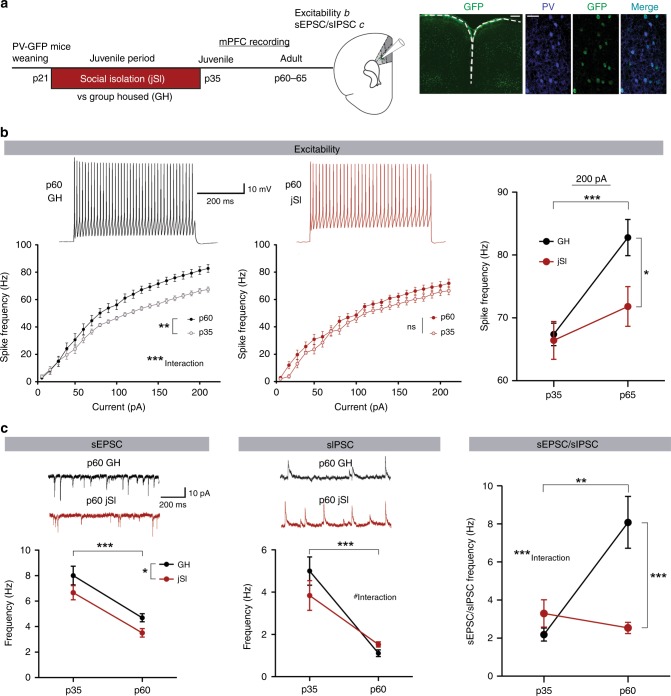
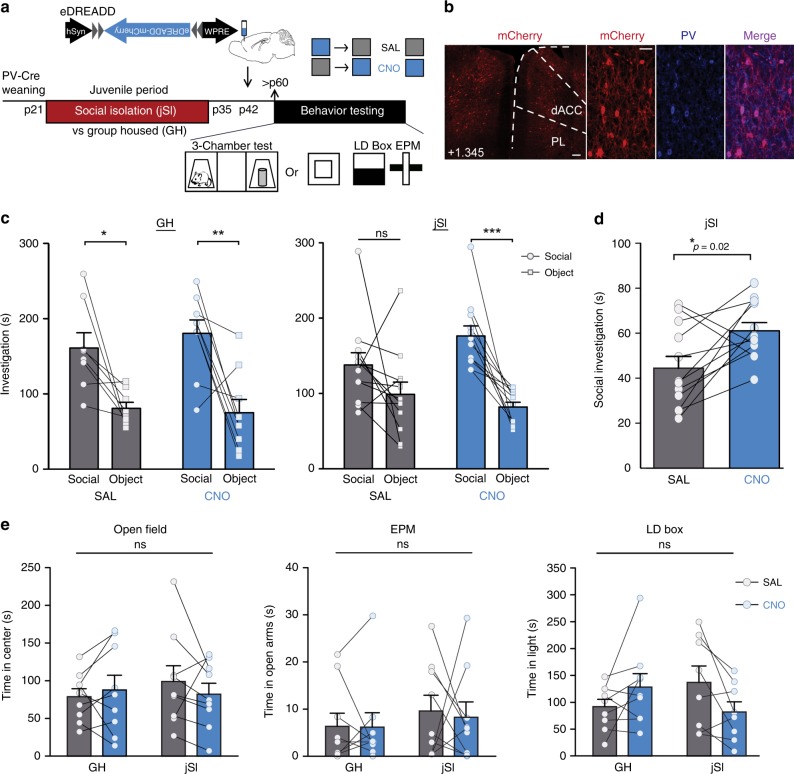
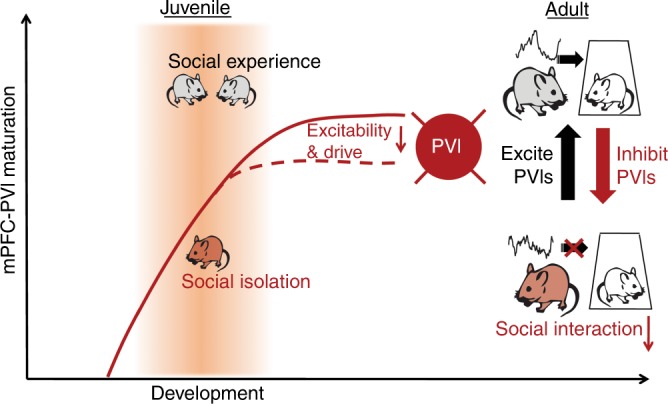
Social isolation during the juvenile critical window is detrimental to proper functioning of the prefrontal cortex (PFC) and establishment of appropriate adult social behaviors. However, the specific circuits that undergo social experience-dependent maturation to regulate social behavior are poorly understood. We identify a specific activation pattern of parvalbumin-positive interneurons (PVIs) in dorsal-medial PFC (dmPFC) prior to an active bout, or a bout initiated by the focal mouse, but not during a passive bout when mice are explored by a stimulus mouse. Optogenetic and chemogenetic manipulation reveals that brief dmPFC-PVI activation triggers an active social approach to promote sociability. Juvenile social isolation decouples dmPFC-PVI activation from subsequent active social approach by freezing the functional maturation process of dmPFC-PVIs during the juvenile-to-adult transition. Chemogenetic activation of dmPFC-PVI activity in the adult animal mitigates juvenile isolation-induced social deficits. Therefore, social experience-dependent maturation of dmPFC-PVI is linked to long-term impacts on social behavior.
Overview
The claims and statistics of this paper haven’t been checked yet.
Free: it reads the open-access text and checks the first 5 claims that cite a source we can check. Create a free account to check every claim.
Integrity signals
Registry
Cites
Statistics
Figures
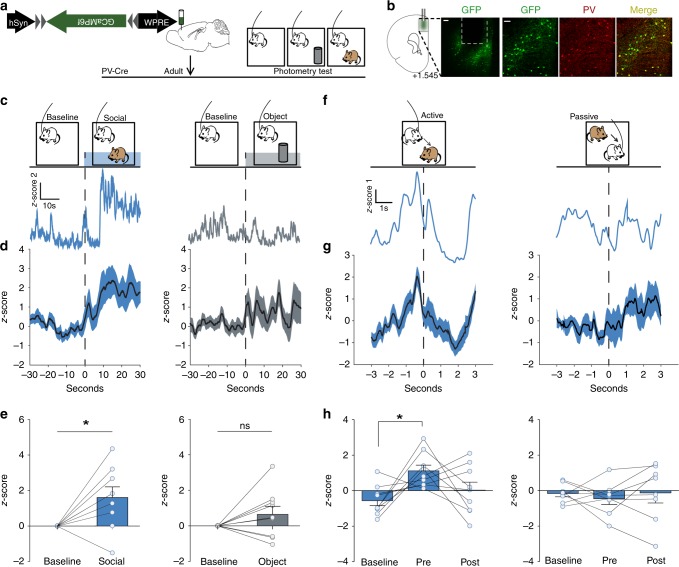
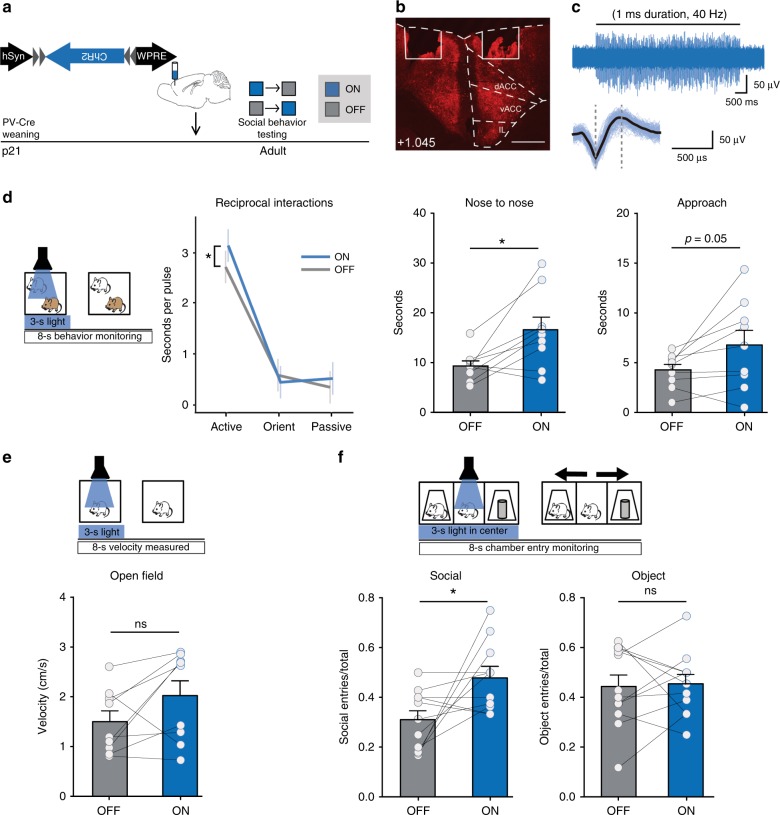
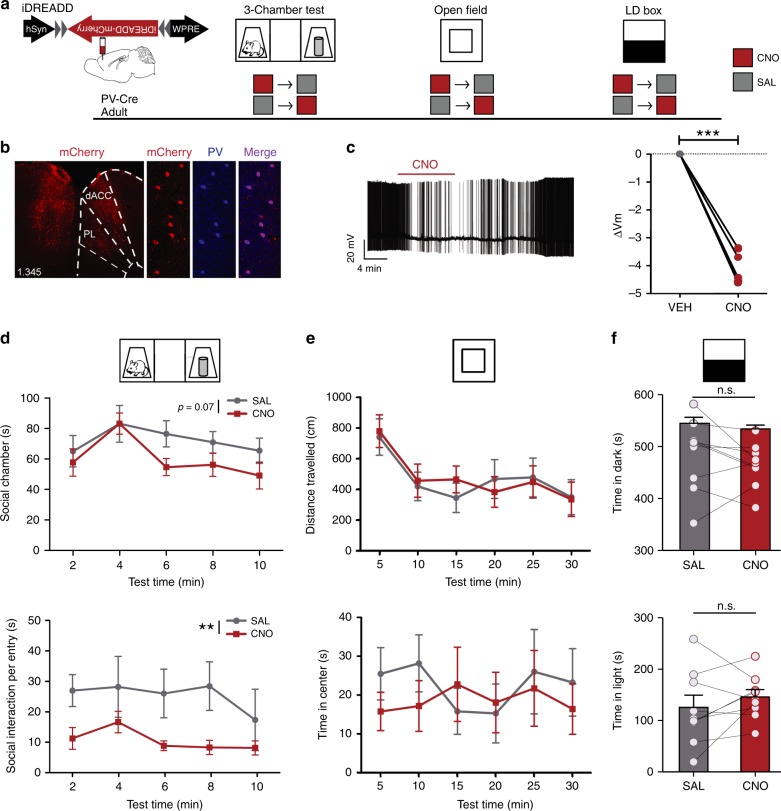
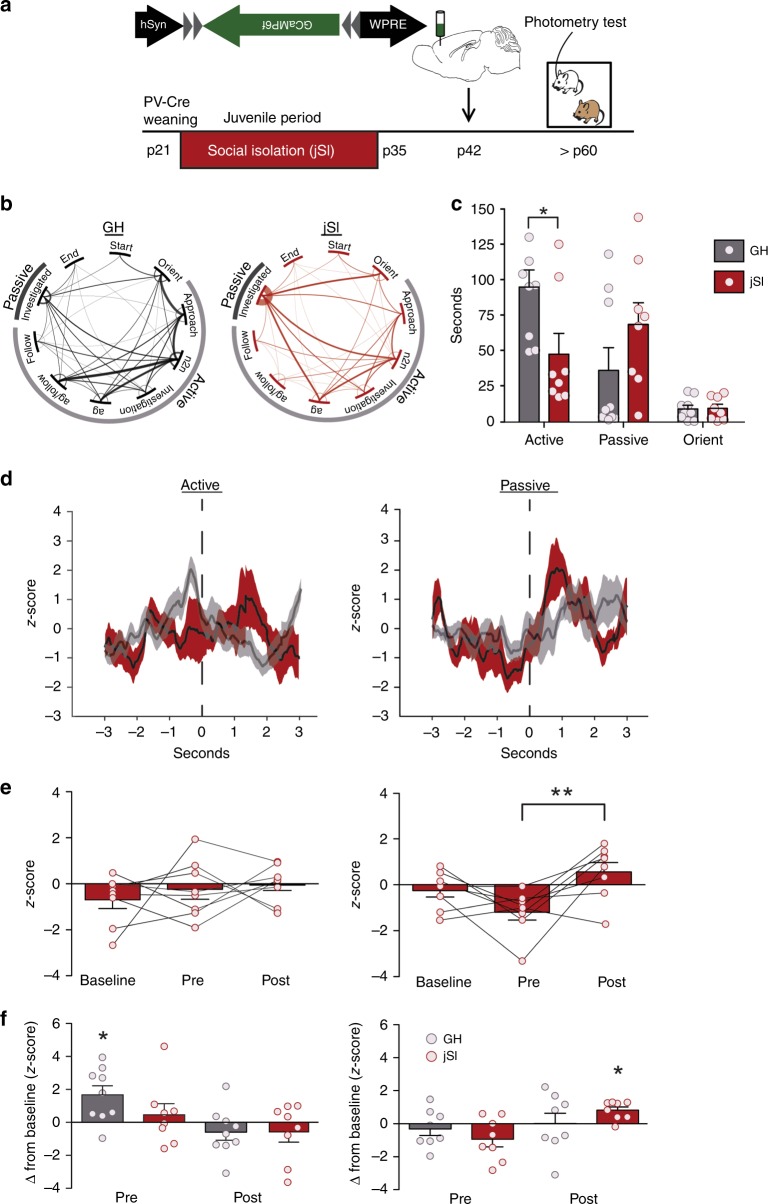
Verification
Claims the paper makes
The claims and statistics of this paper haven’t been checked yet.
Free: it reads the open-access text and checks the first 5 claims that cite a source we can check. Create a free account to check every claim.
Claims other papers make about this one
Each is checked against this paper’s own text: does it say what the citing paper says it does?
The cited source says what the claim attributes to it.
In the citing paper
“Social interactions are also a necessary environmental exposure for establishing adult social behavior [56]”
From Towards a youth mental health paradigm: a perspective and roadmap (2023) · cites this paper as [56]
The cited source says what the claim attributes to it.
In the citing paper
“Juvenile social isolation reduces sociability in adulthood, but the neural circuit mechanisms are poorly understood.”
From A prefrontal–paraventricular thalamus circuit requires juvenile social experience to regulate adult sociability in mice (2020) · cites this paper as [11]
The cited source says what the claim attributes to it.
In the citing paper
“We thus screened sub-types of mPFC interneurons expressing somatostatin (SST)12 and parvalbumin11, and found that a subclass of deep-layer SST-expressing low-threshold spiking (LTS) interneurons showed increased excitability in adult jSI mice compared with GH mice (Extended Data Fig. 8).”
From A prefrontal–paraventricular thalamus circuit requires juvenile social experience to regulate adult sociability in mice (2020) · cites this paper as [11]
The cited source says what the claim attributes to it.
In the citing paper
“No statistical methods were used to pre-determine sample sizes but our sample sizes are similar to those reported in previous publications11,28.”
From A prefrontal–paraventricular thalamus circuit requires juvenile social experience to regulate adult sociability in mice (2020) · cites this paper as [11]
The cited source says what the claim attributes to it.
In the citing paper
“a direct link between PFC PV cell activity and social behavior was recently demonstrated (Bicks et al., 2020;Sun et al., 2020).”
From Social Play Behavior Is Critical for the Development of Prefrontal Inhibitory Synapses and Cognitive Flexibility in Rats (2022) · cites this paper as Bicks et al., 2020
Self-check
Percentages, sums and reported differences re-computed from the paper’s own numbers.
The self-check needs the paper’s full text.
Citations
Cites
Circos: An information aesthetic for comparative genomics
Krzywinski, M., Schein, J., Birol, İ., Connors, J., Gascoyne, R., Horsman, D., Jones, S. J., & Marra, M. A. (2009) · Genome Research · doi:10.1101/gr.092759.109 · Cited by 10,964
Casey, B. J., Jones, R. M., & Hare, T. A. (2008) · Annals of the New York Academy of Sciences · doi:10.1196/annals.1440.010 · Cited by 3,345
Neocortical excitation/inhibition balance in information processing and social dysfunction
Yizhar, O., Fenno, L. E., Prigge, M., Schneider, F., Davidson, T. J., O’Shea, D. J., Sohal, V. S., Goshen, I., Finkelstein, J., Paz, J. T., et al. (2011) · Nature · doi:10.1038/nature10360 · Cited by 2,454
Critical period plasticity in local cortical circuits
Hensch, T. K. (2005) · Nature Reviews Neuroscience · doi:10.1038/nrn1787 · Cited by 2,323
Cortical inhibitory neurons and schizophrenia
Lewis, D. A., Hashimoto, T., & Volk, D. W. (2005) · Nature Reviews Neuroscience · doi:10.1038/nrn1648 · Cited by 2,297
Insel, T. R. (2010) · Nature · doi:10.1038/nature09552 · Cited by 1,783
Moy, S. S., Nadler, J. J., Perez, A., Barbaro, R. P., Johns, J. M., Magnuson, T. R., Piven, J., & Crawley, J. N. (2004) · Genes, Brain and Behavior · doi:10.1111/j.1601-1848.2004.00076.x · Cited by 1,522
Behavioural phenotyping assays for mouse models of autism
Silverman, J. L., Yang, M., Lord, C., & Crawley, J. N. (2010) · Nature Reviews Neuroscience · doi:10.1038/nrn2851 · Cited by 1,462
Preliminary report of a simple animal behavior model for the anxiolytic effects of benzodiazepines
Crawley, J., & Goodwin, F. K. (1980) · Pharmacology Biochemistry and Behavior · doi:10.1016/0091-3057(80)90067-2 · Cited by 1,425
GABAergic cell subtypes and their synaptic connections in rat frontal cortex
Kawaguchi, Y. (1997) · Cerebral Cortex · doi:10.1093/cercor/7.6.476 · Cited by 1,416
Research works printed but not linked: 1
- 36. Xu H, et al. A disinhibitory microcircuit mediates conditioned social fear in the prefrontal cortex. Neuron. 2019;102:668–682 e665. doi: 10.1016/j.neuron.2019.02.026. · DOI · Paper page
Cited by
Items 101–155 of 155
Zhou, J., Yin, Z., Chen, Z., Fu, H., Li, Q., Li, S., Zhang, Y., Zhang, X., Tang, D., Li, A., et al. (2025) · Advanced Science · doi:10.1002/advs.202406192 · Cited by 8
Kitano, E., Ueno, H., Takahashi, Y., Mori, S., Murakami, S., Wani, K., Matsumoto, Y., Ochi, A., Hatano, T., Okamoto, M., et al. (2025) · Neuroscience · doi:10.1016/j.neuroscience.2025.03.029 · Cited by 3
Wang, W.-L., Liu, J.-K., Sun, Y., Liu, X., Ma, Y., Gao, X.-Z., Chen, L.-M., Zhou, Z., & Zhou, H. (2024) · World Journal of Psychiatry · doi:10.5498/wjp.v14.i10.1484 · Cited by 2
Kim, M., Netser, S., Wagner, S., & Harony‐Nicolas, H. (2025) · Scientific Reports · doi:10.1038/s41598-025-95920-z · Cited by 4
Medeiros, D., Polepalli, L., Li, W., & Pozzo‐Miller, L. D. (2025) · Journal of Neurophysiology · doi:10.1152/jn.00360.2025 · Cited by 2
Wang, X., Ma, Z., Luo, Y., Han, Y., Zhan, C., Ouyang, Y., & Zhan, Y. (2025) · Proceedings of the National Academy of Sciences · doi:10.1073/pnas.2516279122 · Cited by 4
“Calcium imaging studies have shown that PV neurons in the mPFC signal the encounter of social stimuli ( 57 ).”
McCoy, E., Pendala, V., Fariborzi, M., Demir, L. Y., Buell, O., Fedde, S., Stinger, J., Elbaum, L., Holsworth, T. D., Amenyo-Awude, P., et al. (2026) · Nature Communications · doi:10.1038/s41467-026-68948-6 · Cited by 2
Santos, M. D., Forrest, M. P., Bomba-Warczak, E. K., Dey, S., Parnell, E., Christiansen, J. M., Edassery, S. L., Yang, K., Hayes, L. N., Coughlin, J. M., et al. (2026) · Neuron · doi:10.1016/j.neuron.2026.02.004 · Cited by 4
Qi, Y., Weng, S., Yin, Q., Li, M., Shen, L., Qiao, E., Gao, L., Wang, Y., Li, Y., Luo, W., et al. (2026) · Interdisciplinary medicine · doi:10.1002/inmd.70118 · Cited by 2
Conhecimento de neurociências para a comunidade: Neuroanatomia e memória/aprendizado
Faria, J. A., Thomasi, R. M. D. O., Moraes, F. A. A., Nava, J. M., Silva, A. R. D. O. S., Tilelli, C. Q., & Lima, M. D. C. (2022) · Revista Brasileira de Extensão Universitária · doi:10.36661/2358-0399.2022v13n2.12668 · Cited by 3
Ma, D., & Gu, C. (2024) · Neuroscience & Biobehavioral Reviews · doi:10.1016/j.neubiorev.2024.105897 · Cited by 2
Jin, Y., Song, D. F., Quan, Z., Ni, J., & Qing, H. (2024) · Physiology & Behavior · doi:10.1016/j.physbeh.2024.114698 · Cited by 3
Hutchens, S., Khurram, I., & Hurley, L. M. (2024) · Frontiers in Neuroscience · doi:10.3389/fnins.2024.1446866 · Cited by 1
Schizophrenia-like phenotypes and long-term synaptic plasticity impairment in GluN2A-transgenic mice
Zhang, H., Si, W., Wang, B., Han, J., Ding, F., Xue, Q., & Cao, X. (2025) · Pharmacology Biochemistry and Behavior · doi:10.1016/j.pbb.2025.174026 · Cited by 1
Regulation of sociability by the cortico-habenula pathway in an animal model of depression
Park, H.-Y., & Chung, C. (2025) · Progress in Neurobiology · doi:10.1016/j.pneurobio.2025.102799 · Cited by 1
Safety learning during adolescence facilitates fear regulation in adult mice
Meyer, H. C. (2025) · Developmental Cognitive Neuroscience · doi:10.1016/j.dcn.2025.101606 · Cited by 1
“…example, previous research has shown that social experience (e.g., opportunities for social approach and interaction) during adolescence can have a formative impact on the integration of interneurons into the local neural circuit environment, shaping adult social interaction (Bicks et al., 2020).”
Female-biased vulnerability to transgenerational impact of paternal early-life stress
Ishikawa, I., Ohta, K.-I., Imai, M., Ishikawa, M., Kumei, H., Kashima, M., Fugo, U., Suzuki, S., Otabi, H., Miki, T., et al. (2026) · Psychoneuroendocrinology · doi:10.1016/j.psyneuen.2026.107773 · Cited by 1
Factors Modulating the Effects of Juvenile Social Isolation on Adult Social Behavior in Rodents
Leventhal, M. B., Kawatake-Kuno, A., Lidoski, A., & Morishita, H. (2026) · Developmental Psychobiology · doi:10.1002/dev.70129 · Cited by 3
Self-citationYou, Y., Lv, C.-T., Ni, P.-T., Wang, S.-J., Liu, L., Song, Y.-T., Hui, Z., Huang, Y., Liu, Y., Tong, K., et al. (2026) · Cell Reports · doi:10.1016/j.celrep.2026.117281 · Cited by 2
Parvalbumin interneurons under stress: converging mechanisms of vulnerability
Santos‐Silva, T., Godoy, L. D., Guimarães, F. S., & Gomes, F. V. (2026) · The International Journal of Neuropsychopharmacology · doi:10.1093/ijnp/pyag043 · Cited by 1
“67 Importantly, these effects may not appear immediately after stress exposure but instead emerge gradually as disrupted developmental trajectories unfold across adolescence, ultimately producing long-lasting deficits that persist into adulthood.”
Narita, A., Asano, H., Kudo, H., Miyata, S., Shutoh, F., & Miyoshi, G. (2024) · Neuroscience Research · doi:10.1016/j.neures.2024.08.002 · Cited by 1
“Notably, the social environment, such as being raised with littermates or being housed individually in isolation, has been demonstrated to influence the sociability of animals (Bicks et al., 2020; Lee et al., 2021; Makinodan et al., 2012).”
BackgroundElucidating Memory Specificity by Exploring Parvalbumin Interneuron Modulation of Perineuronal Nets
Yeung, B.-R. A. (2020) · TSpace (University of Toronto)
On the role of parvalbumin interneurons in neuronal network activity in the prefrontal cortex
Guyon, N. (2021) · Figshare
How social play experience shapes development of higher brain function: From synapses to behaviour
Bijlsma, A. (2023) · Utrecht University Repository (Utrecht University) · doi:10.33540/1927
Regnauld, C. (2022) · theses.fr (ABES) · doi:10.70675/01b5bf90z7c46z4c1aza1e6za8b63ef201a0
Neurobiological mechanisms of social recognition memory
Park, G., & Lee, Y. (2024) · Elsevier eBooks · doi:10.1016/b978-0-443-15754-7.00027-4
Interneurons in learning and memory
Campos‐Cardoso, R., Desa, Z. R., Fitzgerald, B. L., Franks, H. T., Gonçalez, J. L., & Cummings, K. A. (2024) · Elsevier eBooks · doi:10.1016/b978-0-443-15754-7.00055-9
From Circuits to Drug Targets: The Promise of Opto- and Chemogenetics for Drug Discovery
Kätzel, D. (2024) · Royal Society of Chemistry eBooks · doi:10.1039/9781837672059-00185 · Cited by 1
Low-Intensity Blast Exposure Induces Multifaceted Long-Lasting Anxiety-Related Behaviors in Mice
Siedhoff, H. R., Chen, S., Balderrama, A., Jackson, D., Li, R., Sun, G. Y., DePalma, R. G., Cui, J., & Gu, Z. (2024) · Neurotrauma Reports · doi:10.1089/neur.2024.0134
“37,38 33 Despite of different ways to assess social interaction, such as the three-chamber protocol as described by Bicks et al. 2020, 39 other studies such as the one by Jabarin et al. 2022 40 also indicated advantage using the open-fi eld arena for assessment of social interaction.”
Co-release of opposing signaling molecules controls the escalation and release of aggressionPreprint
Gatlin, R. E., Gagon, J., Kwak, D., Park, S., Walker, H., Kronheim, L., Everett, T. J., Covington, A., Fluck, M. M., Zickmund, T., et al. (2025) · bioRxiv (Cold Spring Harbor Laboratory) · doi:10.1101/2025.03.13.643119 · Cited by 1
„Youth Mental Health“: Früherkennung und Frühintervention psychischer Erkrankungen im Jugendalter
Uhlhaas, P. J., Bechdolf, A., Konrad, K., Koutsouleris, N., Meisenzahl, E. M., Meyer‐Lindenberg, A., Reininghaus, U., & Correll, C. U. (2025) · Der Nervenarzt · doi:10.1007/s00115-025-01847-1 · Cited by 2
“Soziale Interaktionen im Jugendalter sind auch eine notwendige Voraussetzung für die Entwicklung neuro-naler Schaltkreise im PFC [21].”
Jindal, K., Ringland, A., Fitzcharles, S., Redd, C., Wheeler, D. G., & Coutellier, L. D. (2025) · Progress in Neurobiology · doi:10.1016/j.pneurobio.2025.102810 · Cited by 1
Transient Early Postnatal Neuronal Hyperexcitation Results in Lasting Social Preference DeficitsPreprint
Bach, H., Nakamura-Vernet, M., Lançon, K., Drapeau, P., Mhenni, H. B., Oram, C., Martin, S., Séguéla, P., & Poulin, J.-F. (2025) · bioRxiv (Cold Spring Harbor Laboratory) · doi:10.1101/2025.09.04.674307
“Further work also highlights the role of PVINs in regulating social behaviour with one study identifying a specific mPFC PVIN subpopulation that was sufficient for initiating and maintaining social approach behaviour in mice (Bicks et al., 2020).”
Stranger-directed consolation-like behavior in mice in a test of social decision making
Blumenthal, S. A., Kietzman, H. W., Cobb, K. E., & Gourley, S. L. (2025) · Hormones and Behavior · doi:10.1016/j.yhbeh.2025.105831 · Cited by 1
“We speculate that isolation-evoked consolation may be restricted to isolation in adulthood, given that isolation in the juvenile age induces poor discrimination between conspecifics and objects and other atypical social behavior later in life (Bicks et al., 2020).”
Gong, Y., Guo, S.-S., Chen, X., Zhang, Z., Song, X.-L., Jiang, Q., Li, Y., Wu, D., Zhang, T., Zhao, X., et al. (2025) · bioRxiv (Cold Spring Harbor Laboratory) · doi:10.64898/2025.12.16.694530
Additional file 1 of Maternal immunoglobulin G affects brain development of mouse offspring
Sadakata, M., Fujii, K., Kaneko, R., Hosoya, E., Sugimoto, H., Kawabata‐Iwakawa, R., Kasamatsu, T., Hongo, S., Koshidaka, Y., Takase, A., et al. (2024) · Figshare · doi:10.6084/m9.figshare.25744315
Klinger, M. (2024) · eScholarship (California Digital Library)
Tahsin, M. R., Sultana, A., Aktar, F., Bahar, N. B., Rony, M. N. H., Chowdhury, R. N., Mim, S. R., Qahl, S. H., Jahan, I., & Amran, M. S. (2025) · Journal of Holistic Integrative Pharmacy · doi:10.1016/j.jhip.2025.09.006
Bach, H. (2025) · eScholarship@McGill (McGill) · doi:10.82308/22643
Rôle de l'acétylcholine préfrontale dans les comportements sociaux
Lhopitallier, C. (2022) · theses.fr (ABES) · doi:10.70675/d11e07bfz4199z419azba80z60d0aba3994a
Atypical social behaviors in mouse models for Rett syndrome
Acevedo-Triana, C. A., Medeiros, D., Gonçalez, J. L., Li, W., & Pozzo‐Miller, L. D. (2026) · Frontiers in Neurology · doi:10.3389/fneur.2026.1744450
“Historically, rodent assays have focused on proximity-based measures of sociability or recognition, such as time spent near a conspecific in the three-chamber test (60, 75, 202, 206–208).”
The Theoretical Evolution of Social Memory and the Core Contribution of the Medial Prefrontal Cortex
Li, T., & Zhang, X. (2026) · Neuroscience Bulletin · doi:10.1007/s12264-026-01625-2
“This prediction contradicts empirical evidence from clinical and animal studies, which typically show graded social memory deficits following distributed brain damage rather than selective, complete obliterations [9, 10, 25–36].”
InfluentialSocioemotional Responses and Interbrain Coupling Correlates in the Murine Dorsal Peduncular Cortex
SPATTINI, L. (2026) · Electronic Theses and Dissertations Repository (University of Pisa)
Chen, M., Zhao, K., Gao, C., Mei, D., Shi, S., wang, L., Sun, L., Guo, J., Guo, B., Zhao, S., et al. (2026) · Translational Psychiatry · doi:10.1038/s41398-026-04123-1
“In accordance with our results, Bicks et al., identi fi ed that chemogenetic activation of PV interneurons activity of dorsal-medial PFC in the adult animal alleviates social defects induced by juvenile isolation [59].”
Post-weaning social isolation increases reward-seeking behavior in mice
Noback, M. N., Husaini, Z. A., van Kralingen, T., Afzal, A., Ye, L., Barrow, J. C., & Carr, G. V. (2026) · Physiology & Behavior · doi:10.1016/j.physbeh.2026.115437
Janíčková, H., Abbondanza, A., Eliáš, J., Verma, C., Barboza, A., Čapek, M., Dhabalia, T., Grígelová, A., Dumas, S., & Bernard, V. (2026) · Research Square · doi:10.21203/rs.3.rs-10142145/v1
Ohta, K., Kumei, H., Arai, N., Honda, S., Tominaga, Y., Ishikawa, M., Matsumoto, K., Kuwahara, T., Nakayama‐Imaohji, H., & Suzuki, S. (2026) · Food Bioscience · doi:10.1016/j.fbio.2026.109597
Uhlhaas, P. J. (2026) · Molecular Psychiatry · doi:10.1038/s41380-026-03734-w
“Similar observations have been made on the impact of social isolation on dendritic complexity and BDFN-levels [47] and E/I-balance in the PFC [46, 48].”
Overview of the DREADDs chemogenetics and the patent landscape of their actuators
Dutta, S., & Iyer, M. R. (2026) · Medicinal Chemistry Research · doi:10.1007/s00044-026-03585-8
“Manipulating pyramidal neuron activity or interneuron populations has helped uncover mechanisms underlying cognitive dysfunction [ 29], hallu-cination-like behaviors [ 30, 31 ], and social withdrawal [ 32].”
Spacing theta-burst stimulation enhances synaptic potentiation in the vulnerable prefrontal cortexPreprint
Zolis, A., Hsieh, A. H.-Y., Venkatesan, S., Ingram, R., Georgiou, J., Zrenner, C., Collingridge, G. L., Rajji, T. K., & Lambe, E. K. (2026) · bioRxiv (Cold Spring Harbor Laboratory) · doi:10.64898/2026.08.27.746330
“…social isolation are relevant for plasticity, such as alterations in inhibitory circuits, NMDA receptors, and G-protein coupled receptor signalling (Bicks et al., 2020; Biro et al., 2023; Gondora et al., 2021; Medendorp et al., 2018; Okamura et al., 2023; Sargin et al., 2020; Ueno et al., 2017;…”
Impact of parvalbumin interneuron inhibition during adolescence on social behaviors
Lin, K., & Coutellier, L. D. (2026) · Behavioural Brain Research · doi:10.1016/j.bbr.2026.116507
Yamauchi, T., Kamikawa, K., Yamamuro, K., Kubota, H., Ikehara, M., Takeda, T., Okumura, K., Toritsuka, M., Sugio, S., Nagaoka, A., et al. (2026) · bioRxiv (Cold Spring Harbor Laboratory) · doi:10.64898/2026.10.06.757195
“Juvenile social isolation also compromises maturation of fast-spiking parvalbumin (PV)-positive interneurons, which regulate network synchronization and prefrontal-dependent social behaviors, including sociability and social hierarchy (Bicks et al. , 2020; Zhang et al. , 2021).”
Self-citationYamamuro, K., Takahashi, M., Okuda, M., Okumura, K., Kashida, N., Yoshihara, T., Takeda, T., Toritsuka, M., Yamauchi, T., & Makinodan, M. (2026) · PLoS ONE · doi:10.1371/journal.pone.0361386
“Subsequent processing was performed using Python 3.10.8, in-house programs, and a previously described algorithm [8].”
InfluentialSelf-citation
Metadata
- Authors
- Bicks, L. K., Yamamuro, K., Flanigan, M. E., Kim, J. M., Kato, D., Lucas, E. K., Koike, H., Peng, M. S., Brady, D. M., Chandrasekaran, S., Norman, K. J., Smith, M. R., Clem, R. L., Russo, S. J., Akbarian, S., & Morishita, H.
- Affiliations
- Icahn School of Medicine at Mount Sinai (US)
- Mount Sinai Hospital (US)
- Corresponding author
- Morishita, Hirofumi
- ORCID
- Venue
- Nature Communications
- Published
- 2020-02-21
- Volume
- 11
- Issue
- 1
- Pages
- 1003-1003
- ISSN
- 2041-1723 (ISSN-L)
- PMC
- PMC7035248
- OpenAlex
- W3006798069
- Semantic Scholar
- 684d58b04eff40215aa4f39d0da7db822e6bb34e
- Cited by
- 150
- References
- 46
- Citations by year
- 2026: 16 · 2025: 25 · 2024: 26 · 2023: 24 · 2022: 19 · 2021: 27 · 2020: 13
- FWCI
- 22.68
- Type
- journal article
- Language
- en
- Open access
- gold
- doi.org
- Licence
- cc-by
- creativecommons.org/licenses/by/4.0 (tdm)
- creativecommons.org/licenses/by/4.0 (vor)
- Locations
- Nature Communications (publishedVersion, cc-by)
- Europe PMC (PubMed Central) (publishedVersion, cc-by)
- PubMed Central (publishedVersion, cc-by)
- PubMed (publishedVersion)
- RePEc: Research Papers in Economics (submittedVersion, cc-by)
- DOAJ (DOAJ: Directory of Open Access Journals) (submittedVersion, cc-by-sa)
- Funders
- U.S. Department of Health & Human Services | NIH | National Institute of Mental Health (R01MH119523)
- Simons Foundation
- Topics
- Life Sciences › Neuroscience › Endocrine and Autonomic Systems › Neuroendocrine regulation and behavior
- Life Sciences › Neuroscience › Cellular and Molecular Neuroscience › Neuroscience and Neuropharmacology Research
- Life Sciences › Neuroscience › Cellular and Molecular Neuroscience › Neurotransmitter Receptor Influence on Behavior
- Keywords
- parvalbumin interneurons, prefrontal cortex, dorsomedial prefrontal cortex, sociability, social approach, optogenetics, chemogenetics, juvenile-adult transition, social dysfunction
- MeSH terms
- Animals, Interneurons, Interpersonal Relations, Male, Mice, Inbred C57BL, Mice, Transgenic, Models, Neurological, Models, Psychological, Parvalbumins, Social Behavior, Social Isolation, Prefrontal Cortex, Mice, Optogenetics
About these checks
Registry, retraction, Cites and statistics results are computed, not judged, with one exception: a printed reference that no index lists is read once by a model before it counts as a citation error. Claims are extracted by a model and kept only when their quote appears verbatim in the text; each cited source is then checked, with a model’s help, for whether it says what the claim relies on. Those verdicts can be wrong — read the claim’s quote and the cited source before relying on one.
Statistics and arithmetic are recomputed, not judged.
Confidence bands are shown only for fields calibrated on our annotated test set. None is calibrated yet, so no band is shown.
What counts as a claim ›How we measure confidence ›How we check this ›
Are you an author, or do you see a problem with this page? Request a review
Data sources
Bibliographic data: Semantic Scholar, OpenAlex, Crossref.
Contains information from the Semantic Scholar Academic Graph Datasets, made available under the ODC Attribution License (ODC-BY 1.0).
Semantic Scholar’s data is described in: Kinney, R., et al. (2023). The Semantic Scholar Open Data Platform. arXiv:2301.10140.
