

Prefrontal parvalbumin interneurons require juvenile social experience to establish adult social behavior
Open accessThe DOI matches its Crossref record; 46 of the 46 references it cites were found in a registry or an index.
Abstract
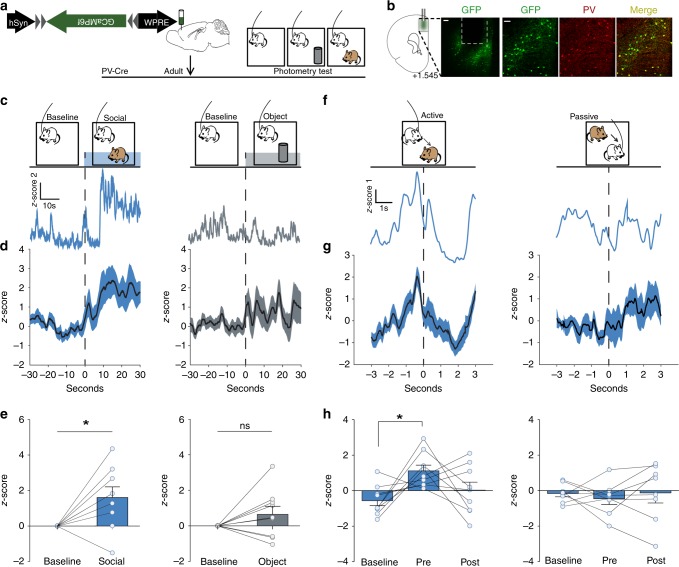
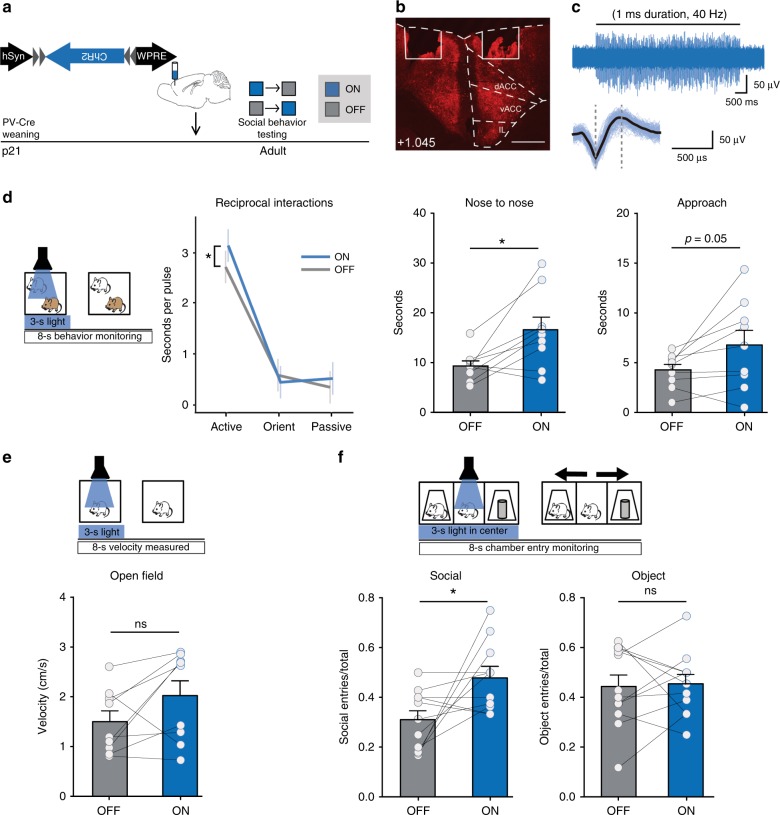
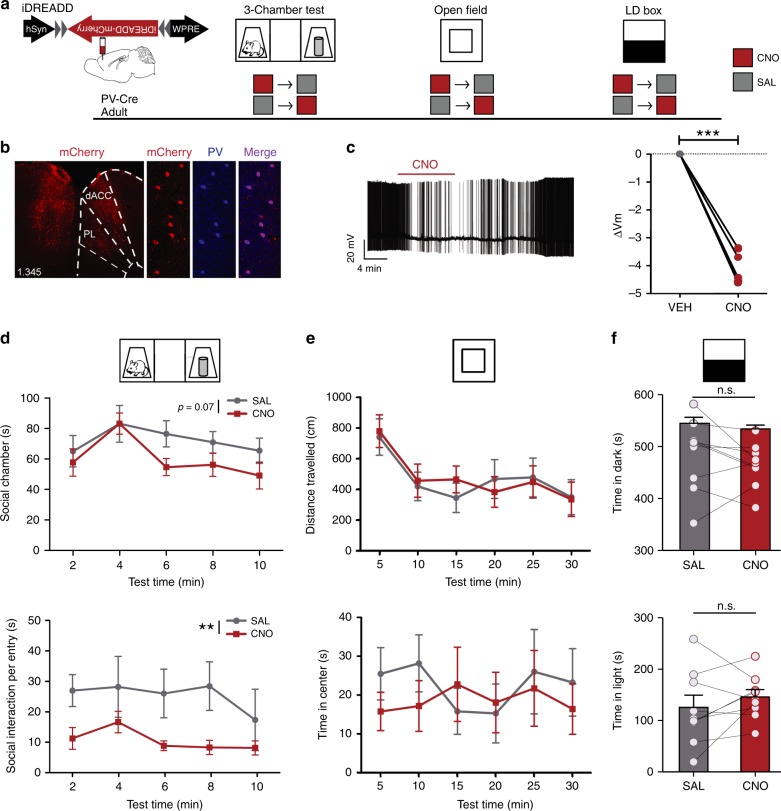
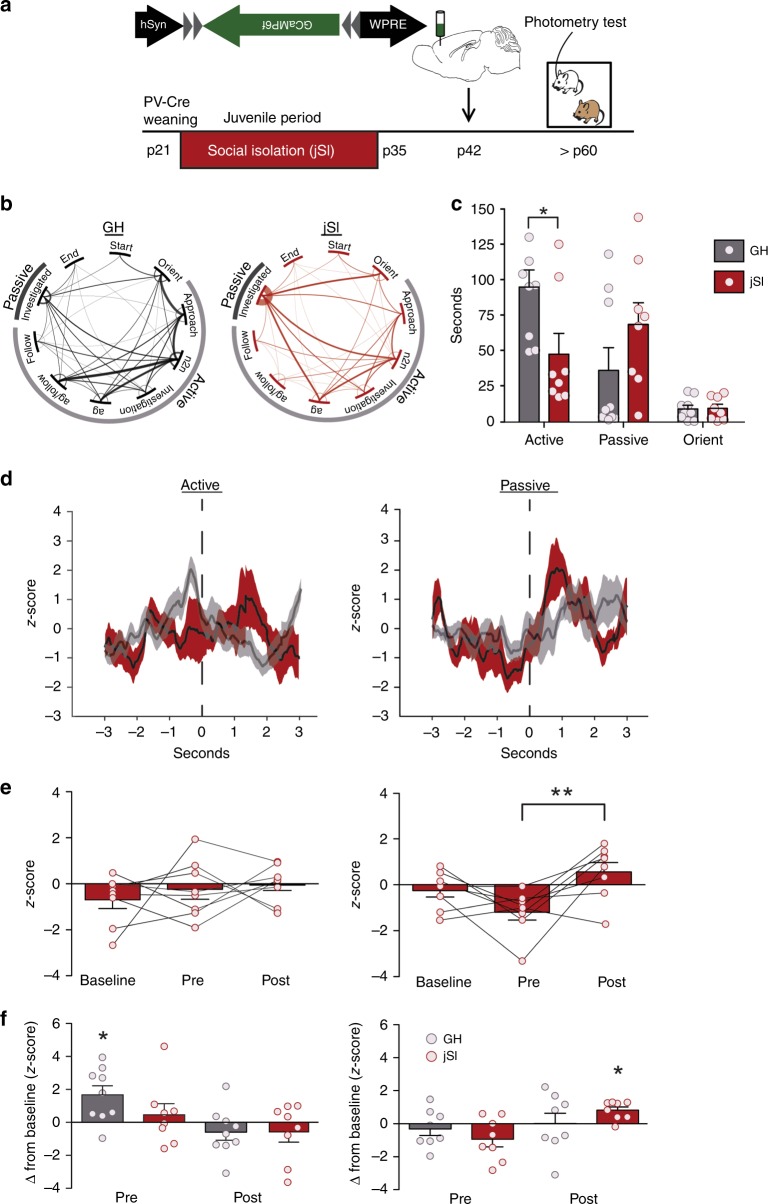
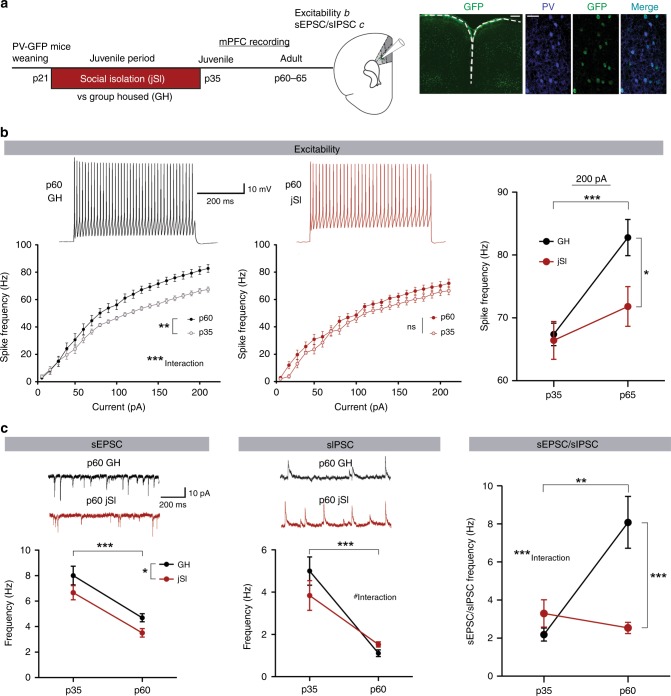
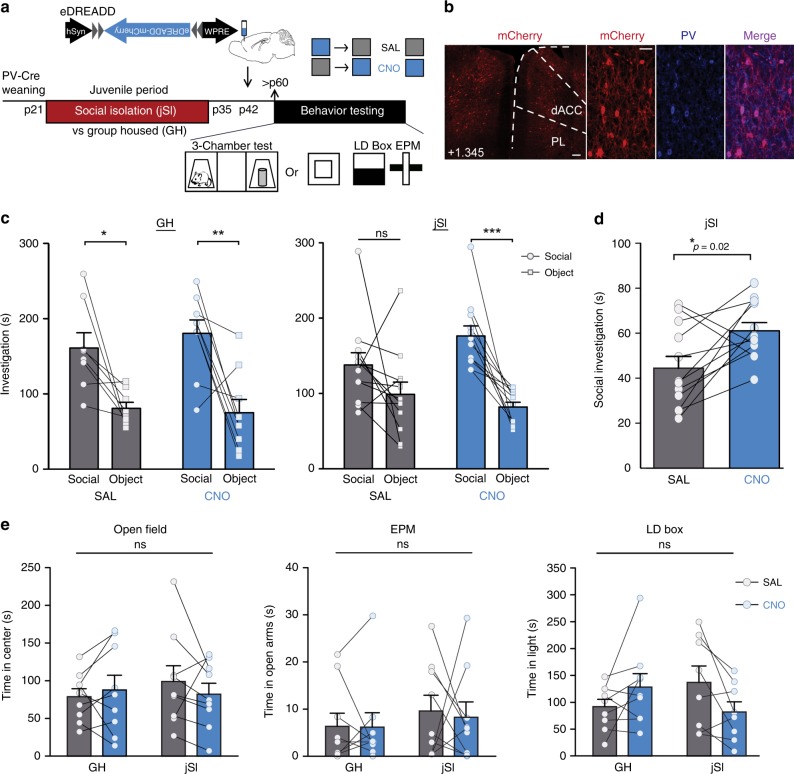
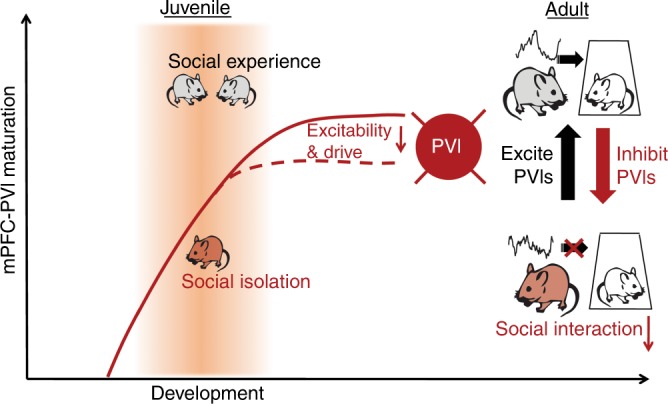
Social isolation during the juvenile critical window is detrimental to proper functioning of the prefrontal cortex (PFC) and establishment of appropriate adult social behaviors. However, the specific circuits that undergo social experience-dependent maturation to regulate social behavior are poorly understood. We identify a specific activation pattern of parvalbumin-positive interneurons (PVIs) in dorsal-medial PFC (dmPFC) prior to an active bout, or a bout initiated by the focal mouse, but not during a passive bout when mice are explored by a stimulus mouse. Optogenetic and chemogenetic manipulation reveals that brief dmPFC-PVI activation triggers an active social approach to promote sociability. Juvenile social isolation decouples dmPFC-PVI activation from subsequent active social approach by freezing the functional maturation process of dmPFC-PVIs during the juvenile-to-adult transition. Chemogenetic activation of dmPFC-PVI activity in the adult animal mitigates juvenile isolation-induced social deficits. Therefore, social experience-dependent maturation of dmPFC-PVI is linked to long-term impacts on social behavior.
Overview
The claims and statistics of this paper haven’t been checked yet.
Free: it reads the open-access text and checks the first 5 claims that cite a source we can check. Create a free account to check every claim.
Integrity signals
Registry
Cites
Statistics
Figures
Verification
Claims the paper makes
The claims and statistics of this paper haven’t been checked yet.
Free: it reads the open-access text and checks the first 5 claims that cite a source we can check. Create a free account to check every claim.
Claims other papers make about this one
Each is checked against this paper’s own text: does it say what the citing paper says it does?
The cited source says what the claim attributes to it.
In the citing paper
“Social interactions are also a necessary environmental exposure for establishing adult social behavior [56]”
From Towards a youth mental health paradigm: a perspective and roadmap (2023) · cites this paper as [56]
The cited source says what the claim attributes to it.
In the citing paper
“Juvenile social isolation reduces sociability in adulthood, but the neural circuit mechanisms are poorly understood.”
From A prefrontal–paraventricular thalamus circuit requires juvenile social experience to regulate adult sociability in mice (2020) · cites this paper as [11]
The cited source says what the claim attributes to it.
In the citing paper
“We thus screened sub-types of mPFC interneurons expressing somatostatin (SST)12 and parvalbumin11, and found that a subclass of deep-layer SST-expressing low-threshold spiking (LTS) interneurons showed increased excitability in adult jSI mice compared with GH mice (Extended Data Fig. 8).”
From A prefrontal–paraventricular thalamus circuit requires juvenile social experience to regulate adult sociability in mice (2020) · cites this paper as [11]
The cited source says what the claim attributes to it.
In the citing paper
“No statistical methods were used to pre-determine sample sizes but our sample sizes are similar to those reported in previous publications11,28.”
From A prefrontal–paraventricular thalamus circuit requires juvenile social experience to regulate adult sociability in mice (2020) · cites this paper as [11]
The cited source says what the claim attributes to it.
In the citing paper
“a direct link between PFC PV cell activity and social behavior was recently demonstrated (Bicks et al., 2020;Sun et al., 2020).”
From Social Play Behavior Is Critical for the Development of Prefrontal Inhibitory Synapses and Cognitive Flexibility in Rats (2022) · cites this paper as Bicks et al., 2020
Self-check
Percentages, sums and reported differences re-computed from the paper’s own numbers.
The self-check needs the paper’s full text.
Citations
Cites
Circos: An information aesthetic for comparative genomics
Krzywinski, M., Schein, J., Birol, İ., Connors, J., Gascoyne, R., Horsman, D., Jones, S. J., & Marra, M. A. (2009) · Genome Research · doi:10.1101/gr.092759.109 · Cited by 10,964
Casey, B. J., Jones, R. M., & Hare, T. A. (2008) · Annals of the New York Academy of Sciences · doi:10.1196/annals.1440.010 · Cited by 3,345
Neocortical excitation/inhibition balance in information processing and social dysfunction
Yizhar, O., Fenno, L. E., Prigge, M., Schneider, F., Davidson, T. J., O’Shea, D. J., Sohal, V. S., Goshen, I., Finkelstein, J., Paz, J. T., et al. (2011) · Nature · doi:10.1038/nature10360 · Cited by 2,454
Critical period plasticity in local cortical circuits
Hensch, T. K. (2005) · Nature Reviews Neuroscience · doi:10.1038/nrn1787 · Cited by 2,323
Cortical inhibitory neurons and schizophrenia
Lewis, D. A., Hashimoto, T., & Volk, D. W. (2005) · Nature Reviews Neuroscience · doi:10.1038/nrn1648 · Cited by 2,297
Insel, T. R. (2010) · Nature · doi:10.1038/nature09552 · Cited by 1,783
Moy, S. S., Nadler, J. J., Perez, A., Barbaro, R. P., Johns, J. M., Magnuson, T. R., Piven, J., & Crawley, J. N. (2004) · Genes, Brain and Behavior · doi:10.1111/j.1601-1848.2004.00076.x · Cited by 1,522
Behavioural phenotyping assays for mouse models of autism
Silverman, J. L., Yang, M., Lord, C., & Crawley, J. N. (2010) · Nature Reviews Neuroscience · doi:10.1038/nrn2851 · Cited by 1,462
Preliminary report of a simple animal behavior model for the anxiolytic effects of benzodiazepines
Crawley, J., & Goodwin, F. K. (1980) · Pharmacology Biochemistry and Behavior · doi:10.1016/0091-3057(80)90067-2 · Cited by 1,425
GABAergic cell subtypes and their synaptic connections in rat frontal cortex
Kawaguchi, Y. (1997) · Cerebral Cortex · doi:10.1093/cercor/7.6.476 · Cited by 1,416
Research works printed but not linked: 1
- 36. Xu H, et al. A disinhibitory microcircuit mediates conditioned social fear in the prefrontal cortex. Neuron. 2019;102:668–682 e665. doi: 10.1016/j.neuron.2019.02.026. · DOI · Paper page
Cited by
Critical period regulation across multiple timescales
Reh, R. K., Dias, B. G., Nelson, C. A., Kaufer, D., Werker, J. F., Kolb, B., Levine, J. D., & Hensch, T. K. (2020) · Proceedings of the National Academy of Sciences · doi:10.1073/pnas.1820836117 · Cited by 492
Towards a youth mental health paradigm: a perspective and roadmap
Uhlhaas, P. J., Davey, C. G., Mehta, U. M., Shah, J., Torous, J., Allen, N. B., Avenevoli, S., Bella-Awusah, T., Chanen, A., Chen, E. Y. H., et al. (2023) · Molecular Psychiatry · doi:10.1038/s41380-023-02202-z · Cited by 318
“Social interactions are also a necessary environmental exposure for establishing adult social behavior [56], a particularly pertinent issue given the widespread reduction of social interactions during the COVID-pandemic [57].”
BackgroundYamamuro, K., Bicks, L. K., Leventhal, M. B., Kato, D., Im, S., Flanigan, M. E., Garkun, Y., Norman, K. J., Caro, K., Sadahiro, M., et al. (2020) · Nature Neuroscience · doi:10.1038/s41593-020-0695-6 · Cited by 169
Self-citationSocial isolation and the brain: effects and mechanisms
Xiong, Y., Hong, H., Liu, C., & Zhang, Y. (2022) · Molecular Psychiatry · doi:10.1038/s41380-022-01835-w · Cited by 153
Ren, Y. L., Savadlou, A., Park, S., Siska, P., Epp, J. R., & Sargin, D. (2023) · Frontiers in Neuroendocrinology · doi:10.1016/j.yfrne.2023.101061 · Cited by 149
Cuénod, M., Steullet, P., Cabungcal, J.-H., Dwir, D., Khadimallah, I., Klauser, P., Conus, P., & Kim, Q. (2021) · Molecular Psychiatry · doi:10.1038/s41380-021-01374-w · Cited by 138
Dynamics of a disinhibitory prefrontal microcircuit in controlling social competition
Zhang, C., Zhu, H. L., Ni, Z., Xin, Q., Zhou, T., Wu, R., Gao, G., Gao, Z., Ma, H., Li, H., et al. (2021) · Neuron · doi:10.1016/j.neuron.2021.10.034 · Cited by 134
The connecting brain in context: How adolescent plasticity supports learning and development
Baker, A. E., Galván, A., & Fuligni, A. J. (2024) · Developmental Cognitive Neuroscience · doi:10.1016/j.dcn.2024.101486 · Cited by 138
“Social isolation during this window further disrupts maturation of prefrontal interneurons that trigger social approach behaviors, leading to long-term social deficits (Bicks et al., 2020).”
Park, G., Ryu, C., Kim, S., Jeong, S. J., Koo, J. W., Lee, Y., & Kim, S. J. (2021) · Cell Reports · doi:10.1016/j.celrep.2021.109104 · Cited by 119
Guadagno, A., Belliveau, C., Mechawar, N., & Walker, C.-D. (2021) · Frontiers in Human Neuroscience · doi:10.3389/fnhum.2021.669120 · Cited by 91
Larsen, B., Sydnor, V. J., Keller, A. S., Yeo, B. T. T., & Satterthwaite, T. D. (2023) · Trends in Neurosciences · doi:10.1016/j.tins.2023.07.007 · Cited by 104
Coming of age in the frontal cortex: The role of puberty in cortical maturation
Delevich, K., Klinger, M., Okada, N. J., & Wilbrecht, L. (2021) · Seminars in Cell & Developmental Biology · doi:10.1016/j.semcdb.2021.04.021 · Cited by 82
“…notable that PV+ INs have been implicated in a variety of behaviors that mature over adolescence including cognitive flexibility [80,81], fear learning [82,83], and social behaviors [84–86], although the relationship between PV+ IN maturation and mPFC-dependent behaviors is not necessarily linear.”
Adolescent sleep and the foundations of prefrontal cortical development and dysfunction
Anastasiades, P. G., de Vivo, L., Bellesi, M., & Jones, M. W. (2022) · Progress in Neurobiology · doi:10.1016/j.pneurobio.2022.102338 · Cited by 84
“…development of PV cells is influenced by both the external environment and intrinsic factors, which include social interaction, dopamine receptor expression and pubertal hormones (Bicks et al., 2020; Clemens et al., 2019; Piekarski et al., 2017; Tomasella et al., 2018; Tseng and O’Donnell, 2007).”
The social dilemma: prefrontal control of mammalian sociability
Yizhar, O., & Levy, D. R. (2021) · Current Opinion in Neurobiology · doi:10.1016/j.conb.2021.01.007 · Cited by 78
Ren, C., Peng, K., Yang, R., Liu, W., Liu, C., & Komiyama, T. (2022) · Neuron · doi:10.1016/j.neuron.2022.04.031 · Cited by 83
Komori, T., Okamura, K., Ikehara, M., Yamamuro, K., Endo, N., Okumura, K., Yamauchi, T., Ikawa, D., Ouji-Sageshima, N., Toritsuka, M., et al. (2024) · Molecular Psychiatry · doi:10.1038/s41380-024-02413-y · Cited by 66
“Previous studies have also revealed increased inhibitory inputs in mPFC layer V pyramidal cells in j-SI mice and other abnormalities in inhibitory interneuron functions in the mPFC [11, 15, 17, 18].”
Self-citationParvalbumin interneuron alterations in stress-related mood disorders: A systematic review
Perlman, G., Tanti, A., & Mechawar, N. (2021) · Neurobiology of Stress · doi:10.1016/j.ynstr.2021.100380 · Cited by 81
A Common Space Approach to Comparative Neuroscience
Mars, R. B., Jbabdi, S., & Rushworth, M. F. S. (2021) · Annual Review of Neuroscience · doi:10.1146/annurev-neuro-100220-025942 · Cited by 76
“However, using a rodent model allows a much wider range of vertical translations, including the use of genetic mutants, optogenetics, and invasive tracers (Bicks et al. 2020; Velez et al. 2010).”
MethodPost-error recruitment of frontal sensory cortical projections promotes attention in mice
Norman, K. J., Riceberg, J. S., Koike, H., Bateh, J., McCraney, S. E., Caro, K., Kato, D., Liang, A., Yamamuro, K., Flanigan, M. E., et al. (2021) · Neuron · doi:10.1016/j.neuron.2021.02.001 · Cited by 66
Self-citationCanetta, S. E., Holt, E. S., Benoit, L. J., Teboul, E., Sahyoun, G. M., Ogden, R. T., Harris, A. Z., & Kellendonk, C. (2022) · eLife · doi:10.7554/elife.80324 · Cited by 59
“80324 2 of 24 adolescence appears to be a particularly important time for prefrontal maturation as environmental and pharmacological experiences in this period can elicit long- lasting effects on prefrontal function and behavior (Makinodan et al., 2012; Yamamuro et al., 2018; Bicks et al., 2020; Thomases et al., 2013;…”
BackgroundAdolescent thalamic inhibition leads to long-lasting impairments in prefrontal cortex function
Benoit, L. J., Holt, E. S., Posani, L., Fusi, S., Harris, A. Z., Canetta, S., & Kellendonk, C. (2022) · Nature Neuroscience · doi:10.1038/s41593-022-01072-y · Cited by 63
Bijlsma, A., Omrani, A., Spoelder, M., Verharen, J. P. H., Bauer, L., Cornelis, C., de Zwart, B., van Dorland, R., Vanderschuren, L. J. M. J., & Wierenga, C. J. (2022) · The Journal of Neuroscience · doi:10.1523/jneurosci.0524-22.2022 · Cited by 61
Miyoshi, G., Ueta, Y., Natsubori, A., Hiraga, K., Osaki, H., Yagasaki, Y., Kishi, Y., Yanagawa, Y., Fishell, G., Machold, R. P., et al. (2021) · Nature Communications · doi:10.1038/s41467-021-23987-z · Cited by 60
Neural Circuits for Social Interactions: From Microcircuits to Input-Output Circuits
Xu, S., Jiang, M., Liu, X., Sun, Y., Yang, L., Yang, Q., & Bai, Z. (2021) · Frontiers in Neural Circuits · doi:10.3389/fncir.2021.768294 · Cited by 55
Smith, C. J. W., Kingsbury, M. A., Dziabis, J. E., Hanamsagar, R., Malacon, K. E., Tran, J. N., Norris, H. A., Gulino, M., Bordt, E. A., & Bilbo, S. D. (2020) · Brain Behavior and Immunity · doi:10.1016/j.bbi.2020.08.013 · Cited by 53
Thalamocortical Development: A Neurodevelopmental Framework for Schizophrenia
Benoit, L., Canetta, S., & Kellendonk, C. (2022) · Biological Psychiatry · doi:10.1016/j.biopsych.2022.03.004 · Cited by 53
Stability in the Face of Change: Lifelong Experience-Dependent Plasticity in the Sensory Cortex
Ribic, A. (2020) · Frontiers in Cellular Neuroscience · doi:10.3389/fncel.2020.00076 · Cited by 48
“The development of new juvenile learning paradigms that explore more complex skills and behaviors may be central in identifying potential top-down pathways that may mediate learning during development (Bicks et al., 2020).”
BackgroundYang, S.-S., Mack, N. R., Shu, Y., & Gao, W. (2021) · Frontiers in Neural Circuits · doi:10.3389/fncir.2021.716408 · Cited by 57
Gildawie, K. R., Ryll, L. M., Hexter, J. C., Peterzell, S., Valentine, A. A., & Brenhouse, H. C. (2021) · Developmental Cognitive Neuroscience · doi:10.1016/j.dcn.2021.100924 · Cited by 43
“Notably, social experience during juvenility has been found to be necessary for the development and function of fast-spiking, GABAergic parvalbumin (PV)-positive interneurons (Bicks et al., 2020).”
BackgroundInfluentialDwir, D., Cabungcal, J.-H., Xin, L., Giangreco, B., Parietti, E., Cleusix, M., Jenni, R., Klauser, P., Conus, P., Cuénod, M., et al. (2021) · Schizophrenia Bulletin · doi:10.1093/schbul/sbab066 · Cited by 42
Guo, B., Xi, K., Mao, H., Ren, K., Xiao, H., Hartley, N. D., Zhang, Y., Kang, J., Liu, Y., Xie, Y., et al. (2023) · Neuron · doi:10.1016/j.neuron.2023.10.027 · Cited by 41
The role of social isolation stress in escalated aggression in rodent models
Takahashi, A. (2025) · Neuroscience Research · doi:10.1016/j.neures.2022.07.009 · Cited by 37
Woodward, E. M., & Coutellier, L. D. (2021) · Neuroscience & Biobehavioral Reviews · doi:10.1016/j.neubiorev.2021.10.031 · Cited by 45
Perica, M. I., & Luna, B. (2023) · Neuroscience & Biobehavioral Reviews · doi:10.1016/j.neubiorev.2023.105378 · Cited by 41
“Similarly, 2 weeks of social isolation starting at PND 21 found that stressed adolescent rats failed to exhibit developmentally normative increases in dmPFC PV neuron activity; rather, they showed decreased activity of PV neurons by way of lower excitatory drive onto PV neurons and decreased excitability of PV neurons…”
Age-related impact of social isolation in mice: Young vs middle-aged
Magalhães, D. M., Mampay, M., Sebastião, A. M., Sheridan, G. K., & Valente, C. A. (2024) · Neurochemistry International · doi:10.1016/j.neuint.2024.105678 · Cited by 37
“…impairments in cognitive tasks (Famitafreshi et al., 2015; Chen et al., 2016; An et al., 2017), changes in social interaction (Lander et al., 2017; Bicks et al., 2020; Kinley et al., 2021), aggressive behaviour (An et al., 2017; Zeli-kowsky et al., 2018), alterations in neurotrophin levels (Han…”
BackgroundChemogenetics as a neuromodulatory approach to treating neuropsychiatric diseases and disorders
Song, J., Patel, R. V., Sharif, M. S., Ashokan, A., & Michaelides, M. (2021) · Molecular Therapy · doi:10.1016/j.ymthe.2021.11.019 · Cited by 37
Klimczak, P., Rizzo, A., Castillo-Gómez, E., Pérez-Rando, M., Gramuntell, Y., Beltrán, M. A. C. S., & Nácher, J. (2021) · Frontiers in Synaptic Neuroscience · doi:10.3389/fnsyn.2021.733989 · Cited by 35
“Alterations in PV+ interneurons and PNNs have also been observed after juvenile social isolation and maternal separation and/or multiple hits of early life adversity in the PFC of rodents (Bicks et al., 2020; Gildawie et al., 2021).”
BackgroundKozlova, E. V., Valdez, M. C., Denys, M. E., Bishay, A. E., Krum, J. M., Rabbani, K. M., Carrillo, V., Gonzalez, G. M., Lampel, G., Tran, J. D., et al. (2021) · Archives of Toxicology · doi:10.1007/s00204-021-03163-4 · Cited by 32
Gillespie, B., Panthi, S., Sundram, S., & Hill, R. (2023) · Neuroscience & Biobehavioral Reviews · doi:10.1016/j.neubiorev.2023.105488 · Cited by 33
“PV interneurons in the PFC play a critical role in establishing typical social behaviour (Bicks et al., 2020), and disruptions to PV interneurons may disinhibit the PFC and promote social dysfunction (Yizhar et al., 2011b).”
Panthi, S., & Leitch, B. (2021) · Frontiers in Cellular Neuroscience · doi:10.3389/fncel.2021.688905 · Cited by 31
“vary between 70 and 95% in viral-mediated delivery of DREADD constructs into brain regions (Zou et al., 2016; Xia et al., 2017; Hijazi et al., 2019; Bicks et al., 2020).”
BackgroundEarly life stress and altered social behaviors: A perspective across species
Parise, L. F., Joseph Burnett, C., & Russo, S. J. (2025) · Neuroscience Research · doi:10.1016/j.neures.2023.11.005 · Cited by 28
“Isolation stress in young animals can produce a syndrome of maladaptive behaviors (Valzelli, 1973), including markedly reduced pro-social behaviors with unfamiliar conspecifics (Bicks et al., 2020) and increased aggressive behavior.”
BackgroundSelf-citationBíró, L., Miskolczi, C., Szebik, H., Bruzsik, B., Varga, Z. K., Szente, L., Tóth, M., Halász, J., & Mikics, É. (2023) · Neurobiology of Stress · doi:10.1016/j.ynstr.2023.100546 · Cited by 30
“Accordingly, recent studies employing fiber photometry and electrophysiological recordings indicate an activity-increase of mPFC PV+ neurons during social encounters (Bicks et al., 2020).”
BackgroundResultInfluentialShedding Light on Social Reward Circuitry: (Un)common Blueprints in Humans and Rodents
Grimm, C., Balsters, J. H., & Zerbi, V. (2020) · The Neuroscientist · doi:10.1177/1073858420923552 · Cited by 26
Yokoyama, R., Ago, Y., Igarashi, H., Higuchi, M., Tanuma, M., Shimazaki, Y., Kawai, T., Seiriki, K., Hayashida, M., Yamaguchi, S., et al. (2024) · Molecular Psychiatry · doi:10.1038/s41380-024-02419-6 · Cited by 28
“Prolonged social isolation rearing is known to elicit fear responses toward unfamiliar mice [52].”
BackgroundInterconnected neural circuits mediating social reward
Isaac, J., & Murugan, M. (2024) · Trends in Neurosciences · doi:10.1016/j.tins.2024.10.004 · Cited by 30
Prefrontal Regulation of Social Behavior and Related Deficits: Insights From Rodent Studies
Mack, N. R., Bouras, N. N., & Gao, W. (2024) · Biological Psychiatry · doi:10.1016/j.biopsych.2024.03.008 · Cited by 28
Li, X., Sun, H., Zhu, Y., Wang, F., Wang, X., Han, L., Cui, D., Luo, D., Zhai, Y., Zhuo, L., et al. (2022) · Frontiers in Molecular Neuroscience · doi:10.3389/fnmol.2022.1010152 · Cited by 27
“To eliminate the effect of the biological features of different age stages, we used age-matched group-housed mice as the control groups (Bicks et al., 2020) (Figure 1A).”
BackgroundMethodResultAdolescent Parvalbumin Expression in the Left Orbitofrontal Cortex Shapes Sociability in Female Mice
Jeon, Y.-S., Jeong, D., Kweon, H., Kim, J., Kim, C. Y., Oh, Y., Lee, Y.-H., Kim, C. H., Kim, S., Jeong, J., et al. (2023) · Journal of Neuroscience · doi:10.1523/jneurosci.0918-22.2023 · Cited by 25
Self-citationFalk, E. N., Norman, K. J., Garkun, Y., Demars, M. P., Im, S., Taccheri, G., Short, J., Caro, K., McCraney, S. E., Cho, C., et al. (2021) · Science Advances · doi:10.1126/sciadv.abe1527 · Cited by 28
Self-citationJendryka, M. M., Lewin, U., van der Veen, B., Kapanaiah, S. K. T., Prex, V., Strahnen, D., Akam, T., Liss, B., Pekcec, A., Nissen, W., et al. (2023) · Translational Psychiatry · doi:10.1038/s41398-023-02541-z · Cited by 22
“CNO doses were chosen according to prior chemogenetic studies demonstrating effective activation of hM4Di in PV-cells by 10 mg/kg [28 – 31] and of hM3Dq in PV-and Sst-cells by 1 mg/kg CNO in rodents [28, 32 – 36], around which we chose our starting doses for hM3Dq (0.7 and 2.1 mg/kg).”
InfluentialZheng, C., Lei, W. I., Liu, B., Wang, Q., Huang, Y., Wang, S., Li, X., Gong, H., & Wang, Z. (2023) · Cell Reports · doi:10.1016/j.celrep.2023.112799 · Cited by 24
Parvalbumin interneuron-derived tissue-type plasminogen activator shapes perineuronal net structure
Lépine, M., Douceau, S., Devienne, G. F., Prunotto, P., Lenoir, S., Regnauld, C., Pouettre, E., Piquet, J., Lebouvier, L., Hommet, Y., et al. (2022) · BMC Biology · doi:10.1186/s12915-022-01419-8 · Cited by 21
“Furthermore, it has been described that the activity of PV cells and the density of PNNs influence fear memory and social behaviors [3, 6, 8, 18, 69, 79].”
BackgroundSpace wandering in the rodent default mode network
Nghiem, T.-A. E., Lee, B., Chao, T.-H. H., Branigan, N. K., Mistry, P. K., Shih, Y. I., & Menon, V. (2024) · Proceedings of the National Academy of Sciences · doi:10.1073/pnas.2315167121 · Cited by 23
Aoki, C. J., & Santiago, A. N. (2022) · Frontiers in Behavioral Neuroscience · doi:10.3389/fnbeh.2022.990354 · Cited by 21
“This delay is particularly pronounced for associational areas of cortex, such as mPFC and hippocampus (Pattwell et al., 2012; Bicks et al., 2020).”
BackgroundHu, Y., Ding, X.-S., Yang, G., Liang, X.-S., Feng, L., Sun, Y., Chen, R., & Ma, Q. (2023) · Frontiers in Psychiatry · doi:10.3389/fpsyt.2023.1186073 · Cited by 23
“Additionally, changes in neuronal activity in specific brain areas can influence social interaction (16, 17).”
BackgroundWiring of higher-order cortical areas: Spatiotemporal development of cortical hierarchy
Teissier, A., & Pierani, A. (2021) · Seminars in Cell and Developmental Biology · doi:10.1016/j.semcdb.2021.05.010 · Cited by 25
Scheuer, T., Brinke, E. A. D., Grosser, S., Wolf, S. A., Mattei, D., Sharkovska, Y., Barthel, P. C., Endesfelder, S., Friedrich, V., Bührer, C., et al. (2021) · Development · doi:10.1242/dev.198390 · Cited by 25
“Early cerebral oxidative challenge resulted in altered social behavior in young adult mice The function of PVALB GABAergic interneurons is involved in establishment of functional social behavior and social interaction (Bicks et al., 2020).”
BackgroundInvestigating hierarchical critical periods in human neurodevelopment
Sydnor, V. J., Ojha, A., Larsen, B., Martínez, Á., Calabro, F. J., & Luna, B. (2025) · Neuropsychopharmacology · doi:10.1038/s41386-025-02246-5 · Cited by 26
Bicks, L. K., Peng, M., Taub, A., Akbarian, S., & Morishita, H. (2021) · Frontiers in Neural Circuits · doi:10.3389/fncir.2021.676308 · Cited by 19
Self-citationSocial experience in adolescence shapes prefrontal cortex structure and function in adulthood
Li, D. C., Hinton, E. A., Guo, J., Knight, K. A., Sequeira, M. K., Wynne, M. E., Dighe, N. M., & Gourley, S. L. (2024) · Molecular Psychiatry · doi:10.1038/s41380-024-02540-6 · Cited by 23
“Interestingly, isolation occurring during an earlier juvenile period, when dendritic spines are proliferating, produces neuronal hypo -excitability in the mPFC [68 – 70], including among speci fi c vmPFC → nucleus accumbens projection populations [71].”
Amygdala circuit transitions supporting developmentally-appropriate social behavior
Ferrara, N. C., & Opendak, M. M. (2023) · Neurobiology of Learning and Memory · doi:10.1016/j.nlm.2023.107762 · Cited by 18
Social play behavior shapes the development of prefrontal inhibition in a region-specific manner
Bijlsma, A., Vanderschuren, L. J. M. J., & Wierenga, C. J. (2023) · Cerebral Cortex · doi:10.1093/cercor/bhad212 · Cited by 21
Hippocampal-Prefrontal Connectivity Prior to the COVID-19 Pandemic Predicts Stress Reactivity
Perica, M. I., Ravindranath, O., Calabro, F. J., Foran, W., & Luna, B. (2021) · Biological Psychiatry Global Open Science · doi:10.1016/j.bpsgos.2021.06.010 · Cited by 17
Chehrazi, P., Lee, K. K. Y., Lavertu-Jolin, M., Abbasnejad, Z., Carreño-Muñoz, M. I., Chattopadhyaya, B., & Cristo, G. D. (2023) · Biological Psychiatry · doi:10.1016/j.biopsych.2023.04.019 · Cited by 18
Prefrontal Cortical Control of Anxiety: Recent Advances
Mack, N. R., Deng, S., Yang, S.-S., Shu, Y., & Gao, W. (2022) · The Neuroscientist · doi:10.1177/10738584211069071 · Cited by 17
Potrebić, M., Pavković, Ž., Puškaš, N., & Pešić, V. (2022) · Frontiers in Behavioral Neuroscience · doi:10.3389/fnbeh.2022.872628 · Cited by 17
Schaer, R., Wenger, N., Herrero, F., Notter, T., & Meyer, U. (2025) · Brain Behavior and Immunity · doi:10.1016/j.bbi.2025.06.040 · Cited by 14
Zhang, X., Wu, M., Cheng, L., Cao, W., Liu, Z., Yang, S., & Kim, M. S. (2024) · Molecular Psychiatry · doi:10.1038/s41380-024-02756-6 · Cited by 16
“Additionally, activation of PV-INs in the dorsal-medial prefrontal cortex (PFC) by chemogenetic manipulation triggered an active social approach, promoting sociability during the juvenile critical window period [195].”
Okamura, K., Yoshino, H., Ogawa, Y., Yamamuro, K., Kimoto, S., Yamaguchi, Y., Nishihata, Y., Ikehara, M., Makinodan, M., Saito, Y., et al. (2022) · Cerebral Cortex · doi:10.1093/cercor/bhac294 · Cited by 14
Self-citationMatthiesen, M., Khlaifia, A., Steininger, C. F. D., Dadabhoy, M., Mumtaz, U., & Arruda-Carvalho, M. (2023) · Molecular Brain · doi:10.1186/s13041-023-01028-8 · Cited by 14
Juvenile handling rescues autism-related effects of prenatal exposure to valproic acid
Seiffe, A., Ramírez, M. F., Sempé, L., & Depino, A. M. (2022) · Scientific Reports · doi:10.1038/s41598-022-11269-7 · Cited by 13
Inglis, G. A. S., Zhou, Y., Patterson, D. G., Scharer, C. D., Han, Y., Boss, J. M., Wen, Z., & Escayg, A. (2020) · Human Molecular Genetics · doi:10.1093/hmg/ddaa150 · Cited by 12
Noback, M. N., Zhang, G., White, N., Barrow, J. C., & Carr, G. V. (2020) · Neuroscience Letters · doi:10.1016/j.neulet.2020.135423 · Cited by 13
Friuli, M., Eramo, B., Sepe, C., Kiani, M., Casolini, P., & Zuena, A. R. (2025) · Physiology & Behavior · doi:10.1016/j.physbeh.2025.114929 · Cited by 11
“The mPFC is involved in encoding conspecific identity, social hierarchy, and outcome prediction during social interactions [138 – 140].”
Cho, J. Y., Rumschlag, J. A., Tsvetkov, E., Proper, D. S., Lang, H., Berto, S., Assali, A., & Cowan, C. W. (2024) · Biological Psychiatry Global Open Science · doi:10.1016/j.bpsgos.2024.100289 · Cited by 11
Zahedi, E., Sadr, S. S., Sanaeierad, A., Hosseini, M., & Roghani, M. (2024) · Neuroscience · doi:10.1016/j.neuroscience.2024.08.022 · Cited by 10
Chen, X., Kim, Y., & Kawaguchi, D. (2025) · Frontiers in Neural Circuits · doi:10.3389/fncir.2025.1568610 · Cited by 12
C57BL/6N mice show a sub-strain specific resistance to the psychotomimetic effects of ketamine
Harda, Z., Misiołek, K., Klimczak, M., Chrószcz, M., & Parkitna, J. M. R. (2022) · Frontiers in Behavioral Neuroscience · doi:10.3389/fnbeh.2022.1057319 · Cited by 10
“, periods when environmental disturbances influence later behavior most, were described to occur much earlier in the mouse ontogeny (Dyer and Southwick, 1974; Makinodan et al., 2012; Bicks et al., 2020).”
BackgroundFournier, L. A., Phadke, R. A., Salgado, M., Brack, A., Nocon, J. C., Bolshakova, S., Grant, J. R., Padró-Luna, N. M., Sen, K., & Cruz‐Martín, A. (2024) · iScience · doi:10.1016/j.isci.2024.110800 · Cited by 9
“In support of the role of mPFC PV neurons in the regulation of social behavior, Bicks et al. 108 demonstrated that PV cell activity in the mPFC precededan active social episode, or an episodeinitiated by the experimentalmouse.”
Minervini, A., LaVarco, A., Zorns, S., Propper, R. E., Suriano, C. M., & Keenan, J. P. (2023) · Brain Sciences · doi:10.3390/brainsci13070989 · Cited by 8
Rajagopal, L., Huang, M., Mahjour, S., Ryan, C., Elzokaky, A., Svensson, K. A., & Meltzer, H. Y. (2023) · Behavioural Brain Research · doi:10.1016/j.bbr.2023.114766 · Cited by 9
Hijazi, S., Pascual-Garcia, M., Nabawi, Y., & Kushner, S. A. (2025) · PLoS Biology · doi:10.1371/journal.pbio.3003421 · Cited by 8
“…PV interneuron maturation has been suggested as a contributor to the pathogenesis of multiple neurodevelopmental diseases, and impairments in the development of prefrontal cortex (PFC) circuits has been at the center of many studies investigating neurodevelopmental disorders in rodents [9–13].”
Goral, R. O., Harper, K. M., Bernstein, B. J., Fry, S. A., Lamb, P. W., Moy, S. S., Cushman, J. D., & Yakel, J. L. (2022) · Frontiers in Behavioral Neuroscience · doi:10.3389/fnbeh.2022.1067409 · Cited by 8
“…in mouse models for study of autism, Alzheimer’s disease, or other brain dysfunctions (Riedel et al. (2009), Liu et al. (2020), Huang et al. (2020), Bicks et al. (2020), Franklin et al. (2017), Phillips et al. (2019), Gordon (2011), Johnson et al. (2013), Kim et al. (2017), Liang et al. (2018),…”
BackgroundInfluentialCircuits underlying social function and dysfunction
Wang, Z., Yueh, H., Chau, M., Veenstra-VanderWeele, J. M., & O’Reilly, K. C. (2023) · Autism Research · doi:10.1002/aur.2978 · Cited by 9
“The electrophysiological effects of chemogenetic silencing or stimulation have largely been shown to be reversible (e.g., (Bicks et al., 2020)).”
BackgroundResultInfluentialIrie, K., Ohta, K., Ujihara, H., Araki, C., Honda, K., Suzuki, S., Warita, K., Otabi, H., Kumei, H., Nakamura, S., et al. (2024) · Frontiers in Neuroscience · doi:10.3389/fnins.2023.1308368 · Cited by 11
A prefrontal social circuit vulnerable to juvenile social isolation
Morishita, H. (2020) · Neuropsychopharmacology · doi:10.1038/s41386-020-00821-6 · Cited by 8
Self-citationSakata, J. T., Alonge, K. M., Diethorn, E. J., Krishnan, K., Milman, N., Ramsaran, A. I., Wan, X., & Sorg, B. A. (2025) · Journal of Neuroscience · doi:10.1523/jneurosci.1367-25.2025 · Cited by 9
Impact of early social isolation on social circuits and behavior: relevance to schizophrenia
Kawatake-Kuno, A., Leventhal, M. B., & Morishita, H. (2025) · Neuropsychopharmacology · doi:10.1038/s41386-025-02156-6 · Cited by 9
Self-citationMaturation of a cortical-amygdala circuit limits sociability in male rats
Ferrara, N. C., Trask, S., Padival, M., & Rosenkranz, J. A. (2023) · Cerebral Cortex · doi:10.1093/cercor/bhad124 · Cited by 8
Rodent models for mood disorders – understanding molecular changes by investigating social behavior
Reinhardt, P. R., Theis, C. D. C., Juckel, G., & Freund, N. (2023) · Biological Chemistry · doi:10.1515/hsz-2023-0190 · Cited by 7
Calcium Imaging in Drug Discovery for Psychiatric Disorders
Seshadri, S., Hoeppner, D. J., & Tajinda, K. (2020) · Frontiers in Psychiatry · doi:10.3389/fpsyt.2020.00713 · Cited by 11
“autism-like cortical hyperexcitability (63), fear conditioning (64), genetic alteration (61, 65), and juvenile social isolation (59).”
BackgroundEvidence for the involvement of a fronto-striatal pathway in the processing of social reward
Lin, K., & Coutellier, L. D. (2025) · Progress in Neurobiology · doi:10.1016/j.pneurobio.2025.102834 · Cited by 6
Preclinical behavioral and pharmacological treatments for enhancing fear extinction in adolescence
Wall, E. K., Virakorn, E. A., Baker, K., Cohen, E. M., & Richardson, R. (2025) · Neuroscience & Biobehavioral Reviews · doi:10.1016/j.neubiorev.2025.106090 · Cited by 7
“…restraint and social stress in adolescence reduces the number and the length of dendritic branches of pyramidal neurons in the hippocampus (Eiland et al., 2012) and IL (Eiland and Romeo, 2013), and reduces excitation in the mPFC (Bicks et al., 2020; Urban and Valentino, 2017; Yuen et al., 2012).”
Disruption of neonatal Purkinje cell function underlies injury-related learning deficits
Sathyanesan, A., Kratimenos, P., & Gallo, V. (2021) · Proceedings of the National Academy of Sciences · doi:10.1073/pnas.2017876118 · Cited by 7
“The 480-nm signal was then subtracted from the filtered 410-nm signal, background-adjusted, and then z-scored (37).”
Stuefer, A., Colombo, G., Gini, S., Sastre-Yagüe, D., Coletta, L., Rocchi, F., Aldrighetti, M., D’Epifanio, B., Como, G., Balasco, L., et al. (2025) · bioRxiv (Cold Spring Harbor Laboratory) · doi:10.1101/2025.09.07.674483 · Cited by 6
Excess Neonatal Testosterone Causes Male-Specific Social and Fear Memory Deficits in Wild-Type Mice
Quiñones-Labernik, P., Blocklinger, K. L., Bruce, M. R., Hagan, E., Preuschl, D., Tesar, C., & Ferri, S. L. (2025) · eneuro · doi:10.1523/eneuro.0020-25.2025 · Cited by 8
Maternal immunoglobulin G affects brain development of mouse offspring
Sadakata, M., Fujii, K., Kaneko, R., Hosoya, E., Sugimoto, H., Kawabata‐Iwakawa, R., Kasamatsu, T., Hongo, S., Koshidaka, Y., Takase, A., et al. (2024) · Journal of Neuroinflammation · doi:10.1186/s12974-024-03100-z · Cited by 4
“Parvalbumin cells have been suggested to be associated with sociability [52, 53].”
BackgroundTakemura, S., Isonishi, A., Horii‐Hayashi, N., Tanaka, T., Tatsumi, K., Komori, T., Yamamuro, K., Yamano, M., Nishi, M., Makinodan, M., et al. (2022) · Neurochemistry International · doi:10.1016/j.neuint.2022.105439 · Cited by 4
Self-citationHow childhood social isolation causes social dysfunction: deprivation or mismatch?
Leventhal, M. B., & Morishita, H. (2024) · Trends in Cognitive Sciences · doi:10.1016/j.tics.2024.05.005 · Cited by 4
Self-citationDistinct transcriptional programs define a heterogeneous neuronal ensemble for social interaction
Walker, H., & Frost, N. A. (2024) · iScience · doi:10.1016/j.isci.2024.110355 · Cited by 4
“While prior studies have implicated specific inhibitory neuronal populations in the regulation of social interactions ( 7, 8, 20, 21 ) our data supports a model in which heterogeneous inhibitory neuron populations are recruited alongside excitatory neurons during social interaction.”
BackgroundResult
Metadata
- Authors
- Bicks, L. K., Yamamuro, K., Flanigan, M. E., Kim, J. M., Kato, D., Lucas, E. K., Koike, H., Peng, M. S., Brady, D. M., Chandrasekaran, S., Norman, K. J., Smith, M. R., Clem, R. L., Russo, S. J., Akbarian, S., & Morishita, H.
- Affiliations
- Icahn School of Medicine at Mount Sinai (US)
- Mount Sinai Hospital (US)
- Corresponding author
- Morishita, Hirofumi
- ORCID
- Venue
- Nature Communications
- Published
- 2020-02-21
- Volume
- 11
- Issue
- 1
- Pages
- 1003-1003
- ISSN
- 2041-1723 (ISSN-L)
- PMC
- PMC7035248
- OpenAlex
- W3006798069
- Cited by
- 150
- References
- 46
- Citations by year
- 2026: 16 · 2025: 25 · 2024: 26 · 2023: 24 · 2022: 19 · 2021: 27 · 2020: 13
- FWCI
- 22.68
- Type
- journal article
- Language
- en
- Open access
- gold
- doi.org
- Licence
- cc-by
- creativecommons.org/licenses/by/4.0 (tdm)
- creativecommons.org/licenses/by/4.0 (vor)
- Locations
- Nature Communications (publishedVersion, cc-by)
- Europe PMC (PubMed Central) (publishedVersion, cc-by)
- PubMed Central (publishedVersion, cc-by)
- PubMed (publishedVersion)
- RePEc: Research Papers in Economics (submittedVersion, cc-by)
- DOAJ (DOAJ: Directory of Open Access Journals) (submittedVersion, cc-by-sa)
- Funders
- U.S. Department of Health & Human Services | NIH | National Institute of Mental Health (R01MH119523)
- Simons Foundation
- Topics
- Life Sciences › Neuroscience › Endocrine and Autonomic Systems › Neuroendocrine regulation and behavior
- Life Sciences › Neuroscience › Cellular and Molecular Neuroscience › Neuroscience and Neuropharmacology Research
- Life Sciences › Neuroscience › Cellular and Molecular Neuroscience › Neurotransmitter Receptor Influence on Behavior
- Keywords
- parvalbumin interneurons, prefrontal cortex, dorsomedial prefrontal cortex, sociability, social approach, optogenetics, chemogenetics, juvenile-adult transition, social dysfunction
- MeSH terms
- Animals, Interneurons, Interpersonal Relations, Male, Mice, Inbred C57BL, Mice, Transgenic, Models, Neurological, Models, Psychological, Parvalbumins, Social Behavior, Social Isolation, Prefrontal Cortex, Mice, Optogenetics
About these checks
Registry, retraction, Cites and statistics results are computed, not judged, with one exception: a printed reference that no index lists is read once by a model before it counts as a citation error. Claims are extracted by a model and kept only when their quote appears verbatim in the text; each cited source is then checked, with a model’s help, for whether it says what the claim relies on. Those verdicts can be wrong — read the claim’s quote and the cited source before relying on one.
Statistics and arithmetic are recomputed, not judged.
Confidence bands are shown only for fields calibrated on our annotated test set. None is calibrated yet, so no band is shown.
What counts as a claim ›How we measure confidence ›How we check this ›
Are you an author, or do you see a problem with this page? Request a review
Data sources
Bibliographic data: Semantic Scholar, OpenAlex, Crossref.
Contains information from the Semantic Scholar Academic Graph Datasets, made available under the ODC Attribution License (ODC-BY 1.0).
Semantic Scholar’s data is described in: Kinney, R., et al. (2023). The Semantic Scholar Open Data Platform. arXiv:2301.10140.
