

Prefrontal parvalbumin interneurons require juvenile social experience to establish adult social behavior
Open accessThe DOI matches its Crossref record; 46 of the 46 references it cites were found in a registry or an index.
Abstract
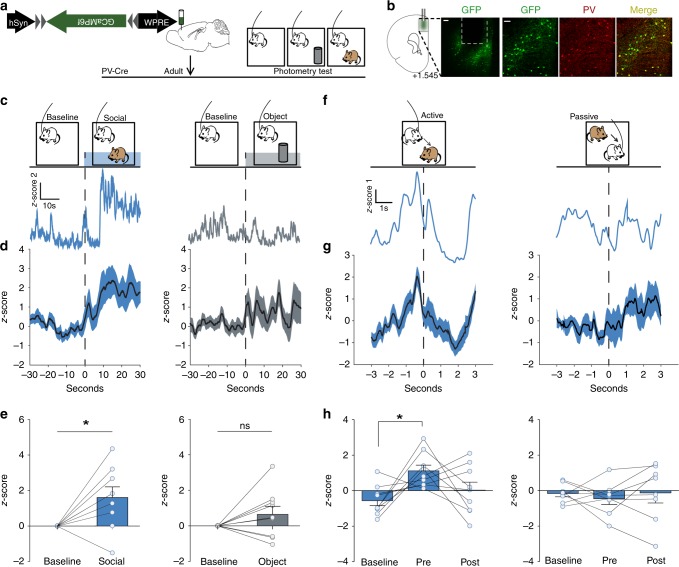
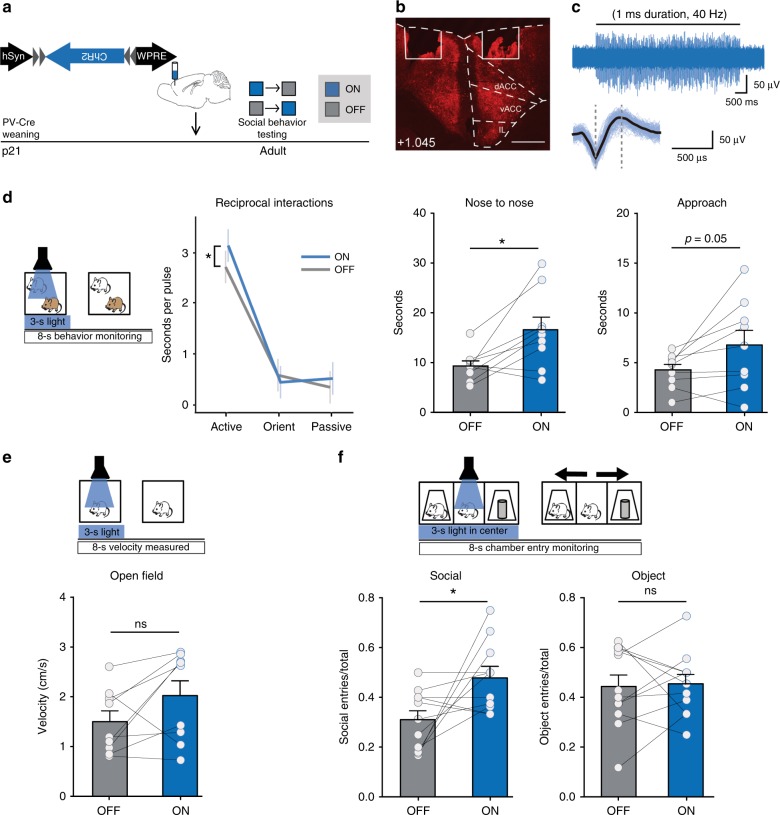
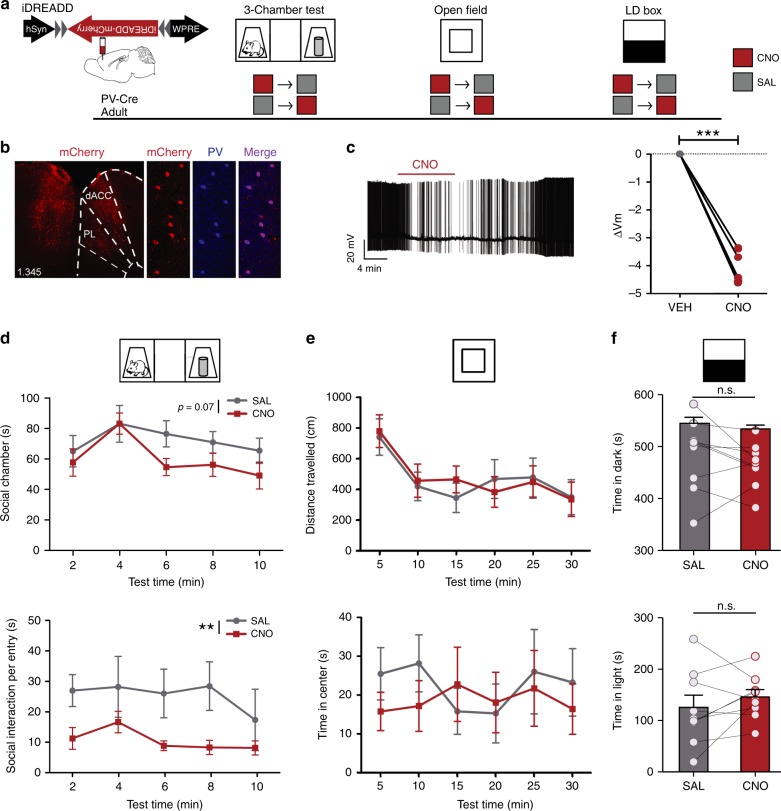
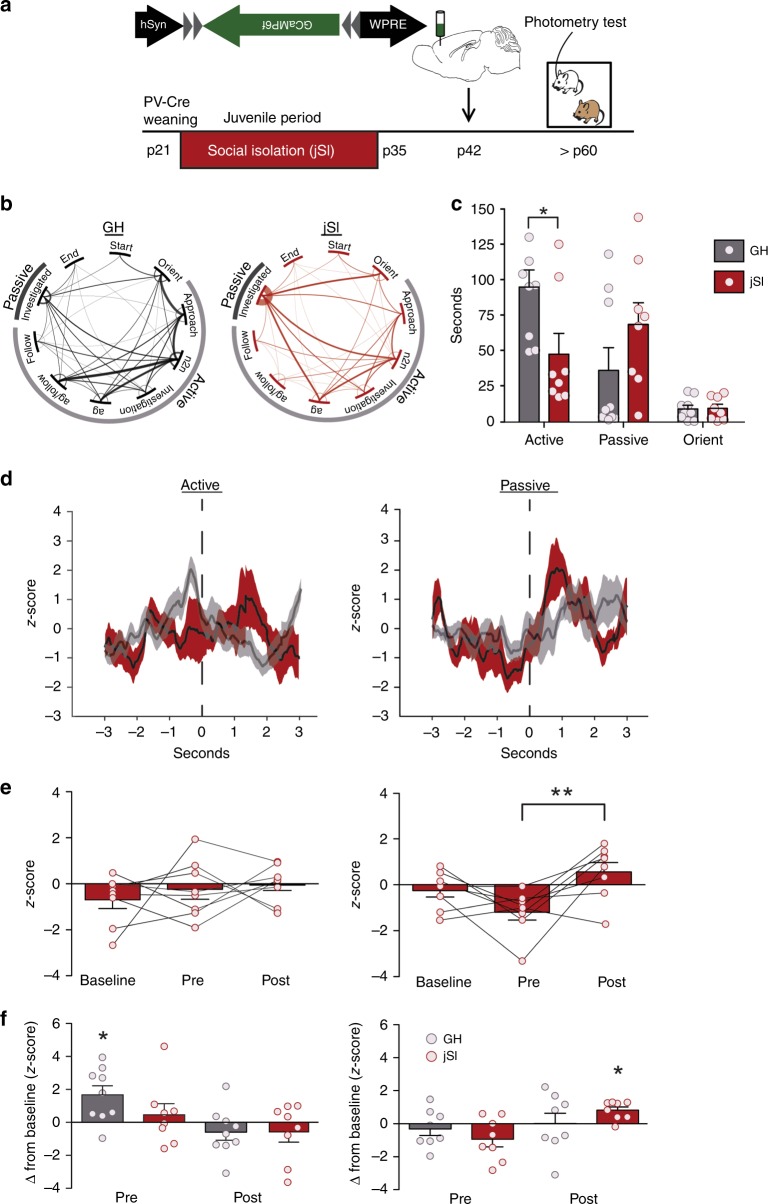
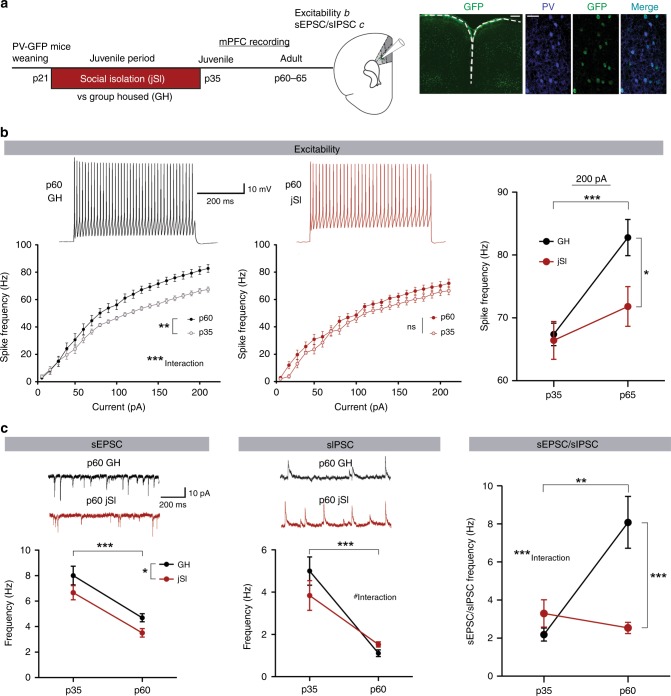
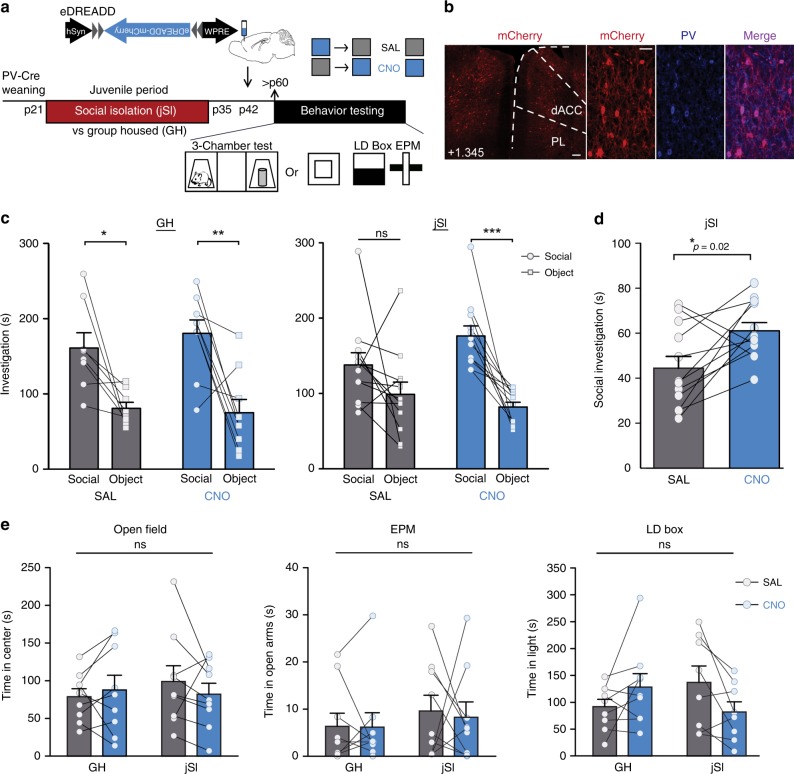
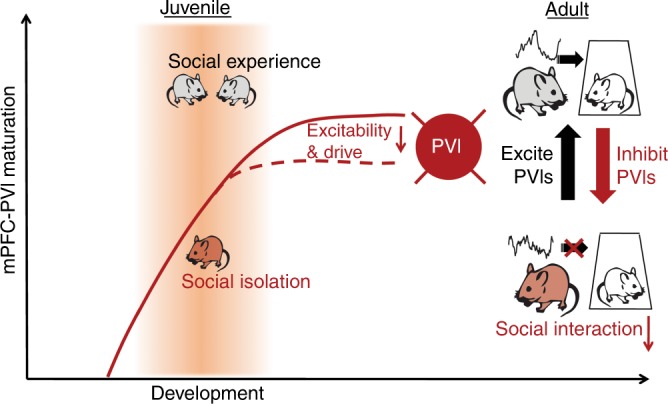
Social isolation during the juvenile critical window is detrimental to proper functioning of the prefrontal cortex (PFC) and establishment of appropriate adult social behaviors. However, the specific circuits that undergo social experience-dependent maturation to regulate social behavior are poorly understood. We identify a specific activation pattern of parvalbumin-positive interneurons (PVIs) in dorsal-medial PFC (dmPFC) prior to an active bout, or a bout initiated by the focal mouse, but not during a passive bout when mice are explored by a stimulus mouse. Optogenetic and chemogenetic manipulation reveals that brief dmPFC-PVI activation triggers an active social approach to promote sociability. Juvenile social isolation decouples dmPFC-PVI activation from subsequent active social approach by freezing the functional maturation process of dmPFC-PVIs during the juvenile-to-adult transition. Chemogenetic activation of dmPFC-PVI activity in the adult animal mitigates juvenile isolation-induced social deficits. Therefore, social experience-dependent maturation of dmPFC-PVI is linked to long-term impacts on social behavior.
Overview
The claims and statistics of this paper haven’t been checked yet.
Free: it reads the open-access text and checks the first 5 claims that cite a source we can check. Create a free account to check every claim.
Integrity signals
Registry
Cites
Statistics
Figures
Verification
Claims the paper makes
The claims and statistics of this paper haven’t been checked yet.
Free: it reads the open-access text and checks the first 5 claims that cite a source we can check. Create a free account to check every claim.
Claims other papers make about this one
Each is checked against this paper’s own text: does it say what the citing paper says it does?
The cited source says what the claim attributes to it.
In the citing paper
“Social interactions are also a necessary environmental exposure for establishing adult social behavior [56]”
From Towards a youth mental health paradigm: a perspective and roadmap (2023) · cites this paper as [56]
The cited source says what the claim attributes to it.
In the citing paper
“Juvenile social isolation reduces sociability in adulthood, but the neural circuit mechanisms are poorly understood.”
From A prefrontal–paraventricular thalamus circuit requires juvenile social experience to regulate adult sociability in mice (2020) · cites this paper as [11]
The cited source says what the claim attributes to it.
In the citing paper
“We thus screened sub-types of mPFC interneurons expressing somatostatin (SST)12 and parvalbumin11, and found that a subclass of deep-layer SST-expressing low-threshold spiking (LTS) interneurons showed increased excitability in adult jSI mice compared with GH mice (Extended Data Fig. 8).”
From A prefrontal–paraventricular thalamus circuit requires juvenile social experience to regulate adult sociability in mice (2020) · cites this paper as [11]
The cited source says what the claim attributes to it.
In the citing paper
“No statistical methods were used to pre-determine sample sizes but our sample sizes are similar to those reported in previous publications11,28.”
From A prefrontal–paraventricular thalamus circuit requires juvenile social experience to regulate adult sociability in mice (2020) · cites this paper as [11]
The cited source says what the claim attributes to it.
In the citing paper
“a direct link between PFC PV cell activity and social behavior was recently demonstrated (Bicks et al., 2020;Sun et al., 2020).”
From Social Play Behavior Is Critical for the Development of Prefrontal Inhibitory Synapses and Cognitive Flexibility in Rats (2022) · cites this paper as Bicks et al., 2020
Self-check
Percentages, sums and reported differences re-computed from the paper’s own numbers.
The self-check needs the paper’s full text.
Citations
Cites
Circos: An information aesthetic for comparative genomics
Krzywinski, M., Schein, J., Birol, İ., Connors, J., Gascoyne, R., Horsman, D., Jones, S. J., & Marra, M. A. (2009) · Genome Research · doi:10.1101/gr.092759.109 · Cited by 10,964
Casey, B. J., Jones, R. M., & Hare, T. A. (2008) · Annals of the New York Academy of Sciences · doi:10.1196/annals.1440.010 · Cited by 3,345
Neocortical excitation/inhibition balance in information processing and social dysfunction
Yizhar, O., Fenno, L. E., Prigge, M., Schneider, F., Davidson, T. J., O’Shea, D. J., Sohal, V. S., Goshen, I., Finkelstein, J., Paz, J. T., et al. (2011) · Nature · doi:10.1038/nature10360 · Cited by 2,454
Critical period plasticity in local cortical circuits
Hensch, T. K. (2005) · Nature Reviews Neuroscience · doi:10.1038/nrn1787 · Cited by 2,323
Cortical inhibitory neurons and schizophrenia
Lewis, D. A., Hashimoto, T., & Volk, D. W. (2005) · Nature Reviews Neuroscience · doi:10.1038/nrn1648 · Cited by 2,297
Insel, T. R. (2010) · Nature · doi:10.1038/nature09552 · Cited by 1,783
Moy, S. S., Nadler, J. J., Perez, A., Barbaro, R. P., Johns, J. M., Magnuson, T. R., Piven, J., & Crawley, J. N. (2004) · Genes, Brain and Behavior · doi:10.1111/j.1601-1848.2004.00076.x · Cited by 1,522
Behavioural phenotyping assays for mouse models of autism
Silverman, J. L., Yang, M., Lord, C., & Crawley, J. N. (2010) · Nature Reviews Neuroscience · doi:10.1038/nrn2851 · Cited by 1,462
Preliminary report of a simple animal behavior model for the anxiolytic effects of benzodiazepines
Crawley, J., & Goodwin, F. K. (1980) · Pharmacology Biochemistry and Behavior · doi:10.1016/0091-3057(80)90067-2 · Cited by 1,425
GABAergic cell subtypes and their synaptic connections in rat frontal cortex
Kawaguchi, Y. (1997) · Cerebral Cortex · doi:10.1093/cercor/7.6.476 · Cited by 1,416
Natural neural projection dynamics underlying social behavior
Gunaydin, L. A., Grosenick, L., Finkelstein, J. C., Kauvar, I. V., Fenno, L. E., Adhikari, A., Lammel, S., Mirzabekov, J. J., Airan, R. D., Zalocusky, K. A., et al. (2014) · Cell · doi:10.1016/j.cell.2014.05.017 · Cited by 1,389
Alexander, G. M., Rogan, S. C., Abbas, A. I., Armbruster, B. N., Pei, Y., Allen, J. A., Nonneman, R. J., Hartmann, J., Moy, S. S., Nicolelis, M. A., et al. (2009) · Neuron · doi:10.1016/j.neuron.2009.06.014 · Cited by 992
Chemogenetics revealed: DREADD occupancy and activation via converted clozapine
Gomez, J. L., Bonaventura, J., Lesniak, W., Mathews, W. B., Sysa-Shah, P., Rodriguez, L. A., Ellis, R. J., Richie, C. T., Harvey, B. K., Dannals, R. F., et al. (2017) · Science · doi:10.1126/science.aan2475 · Cited by 980
Cognitive Recovery in Socially Deprived Young Children: The Bucharest Early Intervention Project
Nelson, C. A., Zeanah, C. H., Fox, N. A., Marshall, P. J., Smyke, A. T., & Guthrie, D. (2007) · Science · doi:10.1126/science.1143921 · Cited by 951
Hashimoto, T., Volk, D. W., Eggan, S. M., Mirnics, K., Pierri, J. N., Sun, Z., Sampson, A. R., & Lewis, D. A. (2003) · The Journal of Neuroscience · doi:10.1523/jneurosci.23-15-06315.2003 · Cited by 938
A critical period for social experience-dependent oligodendrocyte maturation and myelination
Makinodan, M., Rosen, K. M., Ito, S., & Corfas, G. (2012) · Science · doi:10.1126/science.1220845 · Cited by 922
Impaired adult myelination in the prefrontal cortex of socially isolated mice
Liu, J., Dietz, K., DeLoyht, J. M., Pedre, X., Kelkar, D., Kaur, J., Vialou, V., Lobo, M. K., Dietz, D. M., Nestler, E. J., et al. (2012) · Nature Neuroscience · doi:10.1038/nn.3263 · Cited by 685
Akbarian, S. (1993) · Archives of General Psychiatry · doi:10.1001/archpsyc.1993.01820150007001 · Cited by 678
Self-citationHuman EEG gamma oscillations in neuropsychiatric disorders
Herrmann, C. S., & Demiralp, T. (2005) · Clinical Neurophysiology · doi:10.1016/j.clinph.2005.07.007 · Cited by 599
Use of the elevated plus maze in the search for novel anxiolytic agents
Dawson, G. R., & Tricklebank, M. D. (1995) · Trends in Pharmacological Sciences · doi:10.1016/s0165-6147(00)88973-7 · Cited by 559
Panksepp, J. (1981) · Developmental Psychobiology · doi:10.1002/dev.420140405 · Cited by 537
Bidirectional control of social hierarchy by synaptic efficacy in medial prefrontal cortex
Wang, F., Zhu, J., Zhu, H., Zhang, Q., Lin, Z., & Hu, H. (2011) · Science · doi:10.1126/science.1209951 · Cited by 528
Prefrontal Cortex and Social Cognition in Mouse and Man
Bicks, L. K., Koike, H., Akbarian, S., & Morishita, H. (2015) · Frontiers in Psychology · doi:10.3389/fpsyg.2015.01805 · Cited by 500
Self-citationAlterations in Cortical Network Oscillations and Parvalbumin Neurons in Schizophrenia
Gonzalez-Burgos, G., Cho, R. Y., & Lewis, D. A. (2015) · Biological Psychiatry · doi:10.1016/j.biopsych.2015.03.010 · Cited by 497
Prefrontal Parvalbumin Neurons in Control of Attention
Kim, H., Ährlund-Richter, S., Wang, X., Deisseroth, K., & Carlén, M. (2016) · Cell · doi:10.1016/j.cell.2015.11.038 · Cited by 454
Correlated neural activity and encoding of behavior across brains of socially interacting animals
Kingsbury, L., Huang, S., Wang, J., Gu, K., Golshani, P., Wu, Y. E., & Hong, W. (2019) · Cell · doi:10.1016/j.cell.2019.05.022 · Cited by 380
Selimbeyoglu, A., Kim, C. K., Inoue, M., Lee, S. Y., Hong, A. S. O., Kauvar, I., Ramakrishnan, C., Fenno, L. E., Davidson, T. J., Wright, M., et al. (2017) · Science Translational Medicine · doi:10.1126/scitranslmed.aah6733 · Cited by 326
Hashemi, E., Ariza, J., Rogers, H., Noctor, S. C., & Martínez-Cerdeño, V. (2016) · Cerebral Cortex · doi:10.1093/cercor/bhw021 · Cited by 322 · cited 2×
“25, housing x behavior interaction, F(2,15)= 9.”
Combined Social and Spatial Coding in a Descending Projection from the Prefrontal Cortex
Murugan, M., Jang, H. J., Park, M., Miller, E. M., Cox, J., Taliaferro, J. P., Parker, N. F., Bhave, V., Hur, H., Liang, Y., et al. (2017) · Cell · doi:10.1016/j.cell.2017.11.002 · Cited by 311
Okaty, B. W., Miller, M. N., Sugino, K., Hempel, C. M., & Nelson, S. B. (2009) · The Journal of Neuroscience · doi:10.1523/jneurosci.0105-09.2009 · Cited by 309
Liu, J., Dupree, J. L., Gacias, M., Frawley, R., Sikder, T., Naik, P., & Casaccia, P. (2016) · The Journal of Neuroscience · doi:10.1523/jneurosci.3608-15.2016 · Cited by 274
Burke, A. R., McCormick, C. M., Pellis, S. M., & Lukkes, J. L. (2017) · Neuroscience & Biobehavioral Reviews · doi:10.1016/j.neubiorev.2017.01.018 · Cited by 225
An assessment of the elevated X-maze for studying anxiety and anxiety-modulating drugs
Handley, S. L., & McBlane, J. W. (1993) · Journal of Pharmacological and Toxicological Methods · doi:10.1016/1056-8719(93)90063-k · Cited by 214
GABAergic Function as a Limiting Factor for Prefrontal Maturation during Adolescence
Caballero, A., & Tseng, K. Y. (2016) · Trends in Neurosciences · doi:10.1016/j.tins.2016.04.010 · Cited by 182
A Disinhibitory Microcircuit Mediates Conditioned Social Fear in the Prefrontal Cortex
Xu, H., Liu, L., Tian, Y., Wang, J., Li, J., Zheng, J., Zhao, H., He, M., Xu, T.-L., Duan, S., et al. (2019) · Neuron · doi:10.1016/j.neuron.2019.02.026 · Cited by 181
Caballero, A., Flores-Barrera, E., Cass, D. K., & Tseng, K. Y. (2014) · Brain Structure and Function · doi:10.1007/s00429-013-0508-8 · Cited by 178
Enhanced Neuronal Activity in the Medial Prefrontal Cortex during Social Approach Behavior
Lee, E., Rhim, I., Lee, J. W., Ghim, J.-W., Lee, S., Kim, E., & Jung, M. W. (2016) · Journal of Neuroscience · doi:10.1523/jneurosci.0307-16.2016 · Cited by 168
Brumback, A. C., Ellwood, I. T., Kjaerby, C., Iafrati, J., Robinson, S., Lee, A. T., Patel, T., Nagaraj, S., Davatolhagh, F., & Sohal, V. S. (2018) · Molecular Psychiatry · doi:10.1038/mp.2017.213 · Cited by 165
Long-Term Behavioral Effects of Post-weaning Social Isolation in Males and Females
Walker, D. M., Cunningham, A. M., Gregory, J. K., & Nestler, E. J. (2019) · Frontiers in Behavioral Neuroscience · doi:10.3389/fnbeh.2019.00066 · Cited by 138
Identification of a Corticohabenular Circuit Regulating Socially Directed Behavior
Benekareddy, M., Stachniak, T. J., Bruns, A., Knoflach, F., von Kienlin, M., Künnecke, B., & Ghosh, A. (2017) · Biological Psychiatry · doi:10.1016/j.biopsych.2017.10.032 · Cited by 106
Behavioral Phenotyping for Autism Spectrum Disorders in Mice
Chang, Y., Cole, T. B., & Costa, L. G. (2017) · Current Protocols in Toxicology · doi:10.1002/cptx.19 · Cited by 89
Yamamuro, K., Yoshino, H., Ogawa, Y., Makinodan, M., Toritsuka, M., Yamashita, M., Corfas, G., & Kishimoto, T. (2018) · Cerebral Cortex · doi:10.1093/cercor/bhx010 · Cited by 86
Self-citationTzanoulinou, S., & Sandi, C. (2015) · Current topics in behavioral neurosciences · doi:10.1007/7854_2015_430 · Cited by 82
Almas, A. N., Degnan, K. A., Nelson, C. A., Zeanah, C. H., & Fox, N. A. (2016) · Developmental Psychology · doi:10.1037/dev0000167 · Cited by 63
A chemical-genetic approach for precise spatio-temporal control of cellular signaling
Dong, S., Allen, J. A., Farrell, M., & Roth, B. L. (2010) · Molecular BioSystems · doi:10.1039/c002568m · Cited by 55
Development×environment interactions control tph2 mRNA expression
Lukkes, J. L., Kopelman, J. M., Donner, N. C., Hale, M. W., & Lowry, C. A. (2013) · Neuroscience · doi:10.1016/j.neuroscience.2013.01.070 · Cited by 28
Research works printed but not linked: 1
- 36. Xu H, et al. A disinhibitory microcircuit mediates conditioned social fear in the prefrontal cortex. Neuron. 2019;102:668–682 e665. doi: 10.1016/j.neuron.2019.02.026. · DOI · Paper page
Cited by
Critical period regulation across multiple timescales
Reh, R. K., Dias, B. G., Nelson, C. A., Kaufer, D., Werker, J. F., Kolb, B., Levine, J. D., & Hensch, T. K. (2020) · Proceedings of the National Academy of Sciences · doi:10.1073/pnas.1820836117 · Cited by 492
Towards a youth mental health paradigm: a perspective and roadmap
Uhlhaas, P. J., Davey, C. G., Mehta, U. M., Shah, J., Torous, J., Allen, N. B., Avenevoli, S., Bella-Awusah, T., Chanen, A., Chen, E. Y. H., et al. (2023) · Molecular Psychiatry · doi:10.1038/s41380-023-02202-z · Cited by 318
“Social interactions are also a necessary environmental exposure for establishing adult social behavior [56], a particularly pertinent issue given the widespread reduction of social interactions during the COVID-pandemic [57].”
BackgroundYamamuro, K., Bicks, L. K., Leventhal, M. B., Kato, D., Im, S., Flanigan, M. E., Garkun, Y., Norman, K. J., Caro, K., Sadahiro, M., et al. (2020) · Nature Neuroscience · doi:10.1038/s41593-020-0695-6 · Cited by 169
Self-citationSocial isolation and the brain: effects and mechanisms
Xiong, Y., Hong, H., Liu, C., & Zhang, Y. (2022) · Molecular Psychiatry · doi:10.1038/s41380-022-01835-w · Cited by 153
Ren, Y. L., Savadlou, A., Park, S., Siska, P., Epp, J. R., & Sargin, D. (2023) · Frontiers in Neuroendocrinology · doi:10.1016/j.yfrne.2023.101061 · Cited by 149
Metadata
- Authors
- Bicks, L. K., Yamamuro, K., Flanigan, M. E., Kim, J. M., Kato, D., Lucas, E. K., Koike, H., Peng, M. S., Brady, D. M., Chandrasekaran, S., Norman, K. J., Smith, M. R., Clem, R. L., Russo, S. J., Akbarian, S., & Morishita, H.
- Affiliations
- Icahn School of Medicine at Mount Sinai (US)
- Mount Sinai Hospital (US)
- Corresponding author
- Morishita, Hirofumi
- ORCID
- Venue
- Nature Communications
- Published
- 2020-02-21
- Volume
- 11
- Issue
- 1
- Pages
- 1003-1003
- ISSN
- 2041-1723 (ISSN-L)
- PMC
- PMC7035248
- OpenAlex
- W3006798069
- Cited by
- 150
- References
- 46
- Citations by year
- 2026: 16 · 2025: 25 · 2024: 26 · 2023: 24 · 2022: 19 · 2021: 27 · 2020: 13
- FWCI
- 22.68
- Type
- journal article
- Language
- en
- Open access
- gold
- doi.org
- Licence
- cc-by
- creativecommons.org/licenses/by/4.0 (tdm)
- creativecommons.org/licenses/by/4.0 (vor)
- Locations
- Nature Communications (publishedVersion, cc-by)
- Europe PMC (PubMed Central) (publishedVersion, cc-by)
- PubMed Central (publishedVersion, cc-by)
- PubMed (publishedVersion)
- RePEc: Research Papers in Economics (submittedVersion, cc-by)
- DOAJ (DOAJ: Directory of Open Access Journals) (submittedVersion, cc-by-sa)
- Funders
- U.S. Department of Health & Human Services | NIH | National Institute of Mental Health (R01MH119523)
- Simons Foundation
- Topics
- Life Sciences › Neuroscience › Endocrine and Autonomic Systems › Neuroendocrine regulation and behavior
- Life Sciences › Neuroscience › Cellular and Molecular Neuroscience › Neuroscience and Neuropharmacology Research
- Life Sciences › Neuroscience › Cellular and Molecular Neuroscience › Neurotransmitter Receptor Influence on Behavior
- Keywords
- parvalbumin interneurons, prefrontal cortex, dorsomedial prefrontal cortex, sociability, social approach, optogenetics, chemogenetics, juvenile-adult transition, social dysfunction
- MeSH terms
- Animals, Interneurons, Interpersonal Relations, Male, Mice, Inbred C57BL, Mice, Transgenic, Models, Neurological, Models, Psychological, Parvalbumins, Social Behavior, Social Isolation, Prefrontal Cortex, Mice, Optogenetics
About these checks
Registry, retraction, Cites and statistics results are computed, not judged, with one exception: a printed reference that no index lists is read once by a model before it counts as a citation error. Claims are extracted by a model and kept only when their quote appears verbatim in the text; each cited source is then checked, with a model’s help, for whether it says what the claim relies on. Those verdicts can be wrong — read the claim’s quote and the cited source before relying on one.
Statistics and arithmetic are recomputed, not judged.
Confidence bands are shown only for fields calibrated on our annotated test set. None is calibrated yet, so no band is shown.
What counts as a claim ›How we measure confidence ›How we check this ›
Are you an author, or do you see a problem with this page? Request a review
Data sources
Bibliographic data: Semantic Scholar, OpenAlex, Crossref.
Contains information from the Semantic Scholar Academic Graph Datasets, made available under the ODC Attribution License (ODC-BY 1.0).
Semantic Scholar’s data is described in: Kinney, R., et al. (2023). The Semantic Scholar Open Data Platform. arXiv:2301.10140.
