

Transient non-integrative expression of nuclear reprogramming factors promotes multifaceted amelioration of aging in human cells.
Open accessPublished version of a preprint
The DOI matches its Crossref record; 46 of the 47 references it cites were found in a registry or an index.
Abstract
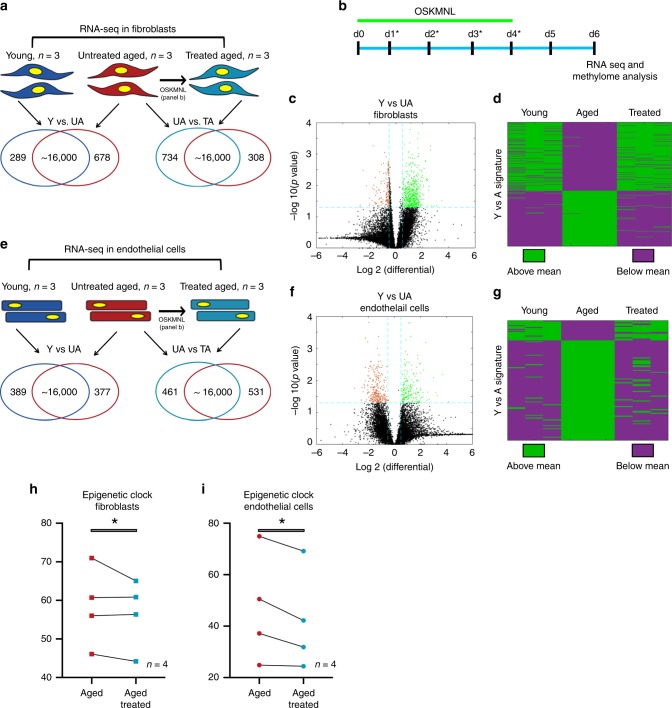
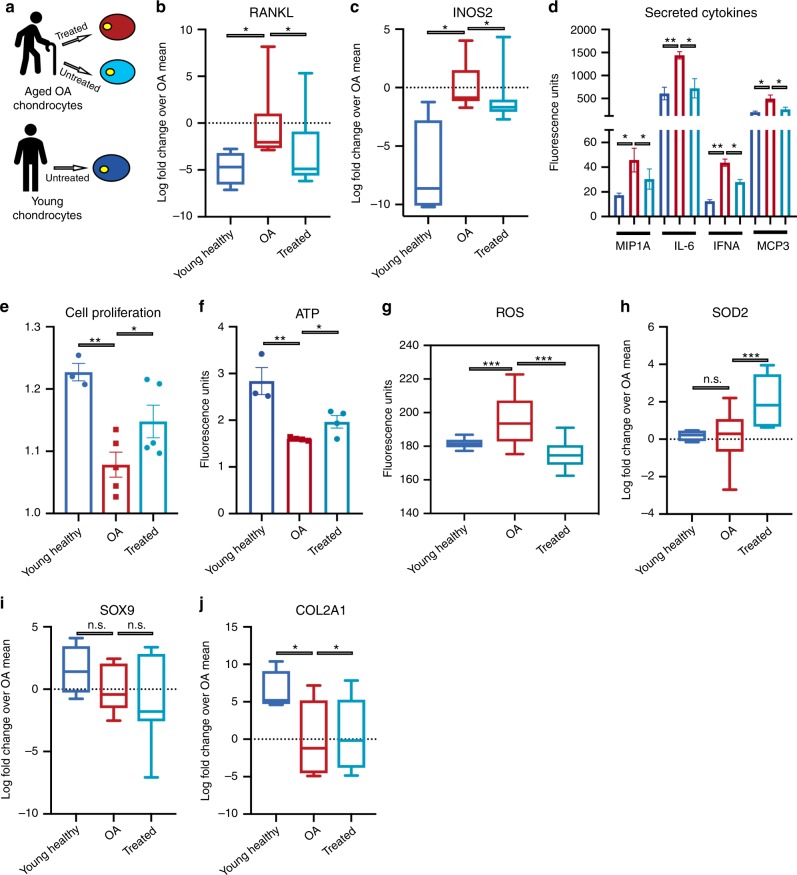
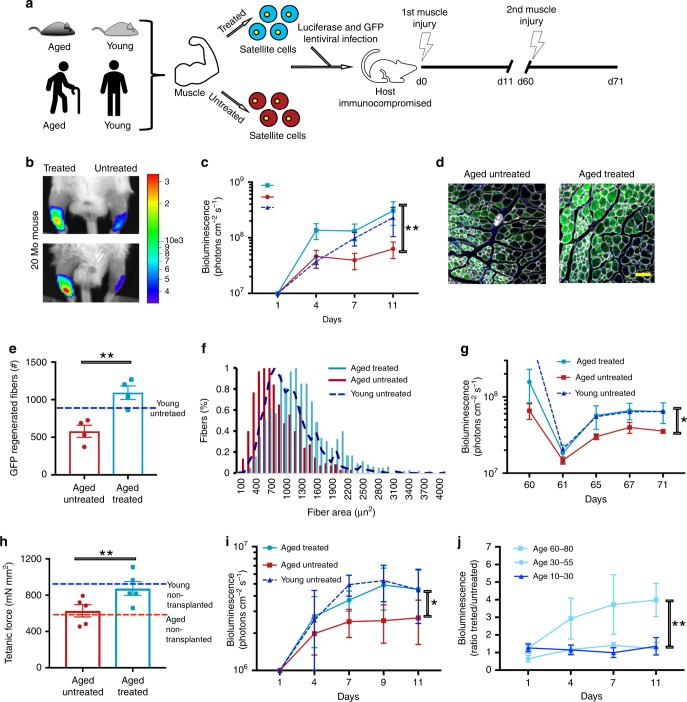
Aging is characterized by a gradual loss of function occurring at the molecular, cellular, tissue and organismal levels. At the chromatin level, aging associates with progressive accumulation of epigenetic errors that eventually lead to aberrant gene regulation, stem cell exhaustion, senescence, and deregulated cell/tissue homeostasis. Nuclear reprogramming to pluripotency can revert both the age and the identity of any cell to that of an embryonic cell. Recent evidence shows that transient reprogramming can ameliorate age-associated hallmarks and extend lifespan in progeroid mice. However, it is unknown how this form of rejuvenation would apply to naturally aged human cells. Here we show that transient expression of nuclear reprogramming factors, mediated by expression of mRNAs, promotes a rapid and broad amelioration of cellular aging, including resetting of epigenetic clock, reduction of the inflammatory profile in chondrocytes, and restoration of youthful regenerative response to aged, human muscle stem cells, in each case without abolishing cellular identity.
Overview
The claims and statistics of this paper haven’t been checked yet.
Free: it reads the open-access text and checks the first 5 claims that cite a source we can check. Create a free account to check every claim.
Integrity signals
Registry
Cites
Statistics
Figures
Verification
Claims the paper makes
The claims and statistics of this paper haven’t been checked yet.
Free: it reads the open-access text and checks the first 5 claims that cite a source we can check. Create a free account to check every claim.
Claims other papers make about this one
Each is checked against this paper’s own text: does it say what the citing paper says it does?
The source backs part of the claim, not all of it — or backs it for a different population, condition or comparison.
In the citing paper
“The cyclic expression of Yamanaka factors Oct4, Sox2, Klf4 and Myc (OSKM) (Takahashi and Yamanaka, 2006) alleviates the symptoms and extends the lifespan of progeroid mice and other aspects of aging (Ocampo et al., 2016; Sarkar et al., 2020).”
From Loss of epigenetic information as a cause of mammalian aging (2023) · cites this paper as Sarkar et al., 2020
Experimental — accuracy not yet measuredThe source backs part of the claim, not all of it — or backs it for a different population, condition or comparison.
In the citing paper
“Numerous tissues, including brain tissue, kidney, and muscle, have now been reprogrammed without causing cancer [7, 8, 22, 24, 25].”
From Chemically induced reprogramming to reverse cellular aging (2023) · cites this paper as [24]
Experimental — accuracy not yet measuredThe source backs part of the claim, not all of it — or backs it for a different population, condition or comparison.
In the citing paper
“The magnitude of rejuvenation in H3K9me3 levels in our transiently reprogrammed cells is similar to that observed from IP transient reprogramming (Sarkar et al., 2020).”
From Multi-omic rejuvenation of human cells by maturation phase transient reprogramming (2022) · cites this paper as Sarkar et al., 2020
Experimental — accuracy not yet measuredThe source backs part of the claim, not all of it — or backs it for a different population, condition or comparison.
In the citing paper
“Regardless of the development strategy, most current biomarkers of aging predict aging-related outcomes and identify factors associated with the pace of aging, in retrospective epidemiological studies 1-7.”
From Validation of biomarkers of aging (2024) · cites this paper as [7]
Experimental — accuracy not yet measuredThe source backs part of the claim, not all of it — or backs it for a different population, condition or comparison.
In the citing paper
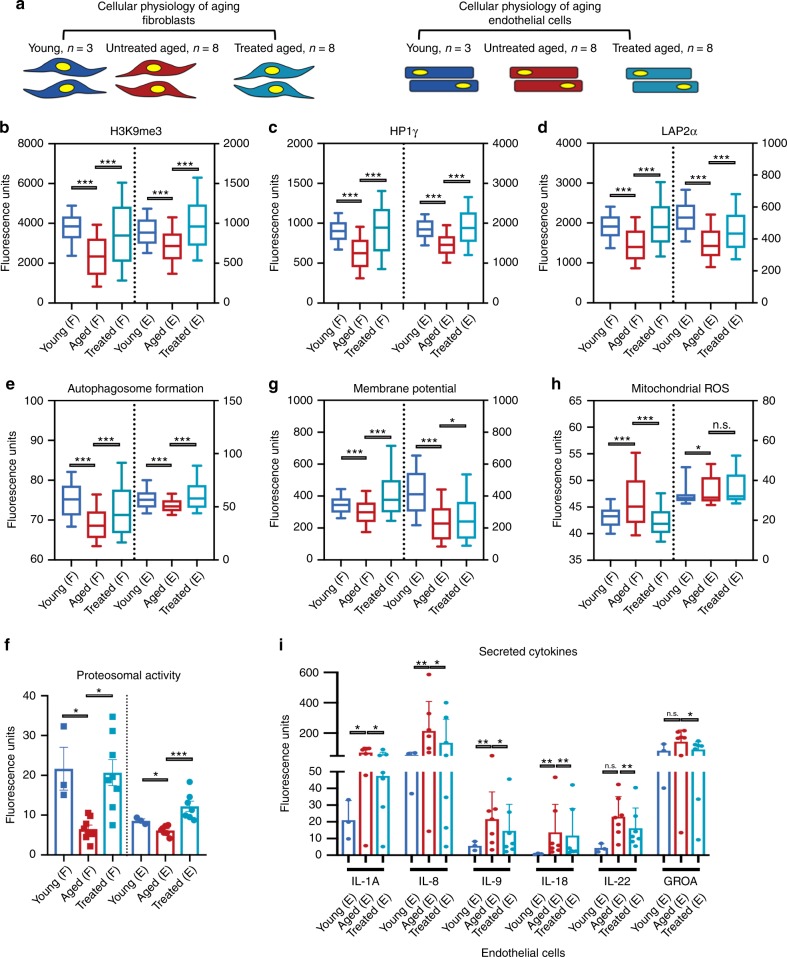
“epigenetic hallmarks of aging (H3K9me3, HP1g, LAP2a and SIRT1), functional parameters (autophagosomal, mitochondrial and proteasomal activities) and epigenetic clocks were significantly impacted, with treated cells more closely resembling younger cells compared with their age-matched old counterparts.”
From Mechanisms, pathways and strategies for rejuvenation through epigenetic reprogramming (2023) · cites this paper as [17]
Experimental — accuracy not yet measured
16 more claims about this paper
Create a free account to see every claim other papers make about this one.
Self-check
Percentages, sums and reported differences re-computed from the paper’s own numbers.
The self-check needs the paper’s full text.
Citations
Cites
lmerTest Package: Tests in Linear Mixed Effects Models
Kuznetsova, A., Brockhoff, P. B., & Christensen, R. H. B. (2017) · Journal of Statistical Software · doi:10.18637/jss.v082.i13 · Cited by 24,346
López-Otín, C., Blasco, M. A., Partridge, L., Serrano, M., & Kroemer, G. (2013) · Cell · doi:10.1016/j.cell.2013.05.039 · Cited by 14,982
The Molecular Signatures Database Hallmark Gene Set Collection
Liberzon, A., Birger, C., Thorvaldsdóttir, H., Ghandi, M., Mesirov, J. P., & Tamayo, P. (2015) · Cell Systems · doi:10.1016/j.cels.2015.12.004 · Cited by 13,807
DNA methylation age of human tissues and cell types
Horvath, S. (2013) · Genome Biology · doi:10.1186/gb-2013-14-10-r115 · Cited by 7,075
Self-citationDNA methylation-based biomarkers and the epigenetic clock theory of ageing
Horvath, S., & Raj, K. (2018) · Nature Reviews Genetics · doi:10.1038/s41576-018-0004-3 · Cited by 3,095
Self-citationEpidemiology of Osteoarthritis
Zhang, Y., & Jordan, J. M. (2010) · Clinics in Geriatric Medicine · doi:10.1016/j.cger.2010.03.001 · Cited by 2,316
Clearance of senescent cells by ABT263 rejuvenates aged hematopoietic stem cells in mice
Chang, J., Wang, Y., Shao, L., Laberge, R.-M., Demaria, M., Campisi, J., Janakiraman, K., Sharpless, N. E., Ding, S., Feng, W., et al. (2016) · Nature Medicine · doi:10.1038/nm.4010 · Cited by 1,819
Autophagy maintains stemness by preventing senescence
García-Prat, L., Martínez-Vicente, M., Perdiguero, E., Ortet, L., Rodríguez-Ubreva, J., Rebollo, E., Ruiz-Bonilla, V., Gutarra, S., Ballestar, E., Serrano, A. L., et al. (2016) · Nature · doi:10.1038/nature16187 · Cited by 1,355
DNA methylation age of blood predicts all-cause mortality in later life
Marioni, R. E., Shah, S., McRae, A. F., Chen, B. H., Colicino, E., Harris, S. E., Gibson, J., Henders, A. K., Redmond, P., Cox, S. R., et al. (2015) · Genome Biology · doi:10.1186/s13059-015-0584-6 · Cited by 1,261
Self-citationLehnertz, B., Ueda, Y., Derijck, A. A. H. A., Braunschweig, U., Perez-Burgos, L., Kubicek, S., Chen, T., Li, E., Jenuwein, T., & Peters, A. H. F. M. (2003) · Current Biology · doi:10.1016/s0960-9822(03)00432-9 · Cited by 1,245
Cited by
Items 201–300 of 311
Vandiver, A. R., Torres, A., Sanden, A., Nguyen, T. L., Gasilla, J., Doan, M. T., Martirosian, V., Hoang, A. N., Wanagat, J., & Teitell, M. A. (2024) · Aging Cell · doi:10.1111/acel.14402 · Cited by 7
Emerging strategies in senotherapeutics: from broad-spectrum senolysis to precision reprogramming
Zhang, W., Song, S., Zhang, Y., Pan, Y., Hu, D., & Wang, Y. (2026) · npj Aging · doi:10.1038/s41514-026-00355-z · Cited by 6
CASTILHO, R. M., Castilho, L. S., Palomares, B. H., & SQUARIZE, C. H. (2024) · Genes · doi:10.3390/genes15060710 · Cited by 8
Reversing aging for heart repair
Wang, Y. X., & Blau, H. M. (2021) · Science · doi:10.1126/science.abl8679 · Cited by 6
de Lázaro, I., Zhang, B., Makarova, N. E., Mariotti, M., Orejón-Sánchez, T. L., Tringides, C. M., Gladyshev, V. N., & Mooney, D. J. (2021) · bioRxiv (Cold Spring Harbor Laboratory) · doi:10.1101/2021.12.22.473302 · Cited by 8
Epigenetic clock and lifespan prediction in the short-lived killifish Nothobranchius furzeriPreprint
Giannuzzi, C., Baumgart, M., Neri, F., & Cellerino, A. (2024) · bioRxiv (Cold Spring Harbor Laboratory) · doi:10.1101/2024.08.07.606986 · Cited by 10
Various Strategies of Tendon Stem/Progenitor Cell Reprogramming for Tendon Regeneration
Ahn, S. Y. (2024) · International Journal of Molecular Sciences · doi:10.3390/ijms252111745 · Cited by 5
“Several researchers have attempted to convert tissue-differentiated cells into induced tissue-specific stem cells (iTSCs) or partially/transiently reprogram them instead of iP-SCs [49,50].”
BackgroundZhang, B., Tarkhov, A. E., Ratzan, W. J., Ying, K., Moqri, M., Poganik, J. R., Barré, B. P., Trapp, A., Zoller, J. A., Haghani, A., et al. (2022) · bioRxiv (Cold Spring Harbor Laboratory) · doi:10.1101/2022.08.02.502559 · Cited by 6
Self-citationSengstack, J., Zheng, J., Mobaraki, M., Lin, J., Deng, C., & Li, H. (2022) · bioRxiv (Cold Spring Harbor Laboratory) · doi:10.1101/2022.11.20.517270 · Cited by 6
Sun, E., Lu, S., Yang, C., Li, Z., Yu, Q., Chen, Y., Chen, S., Ma, X., Deng, Y., Shan, X., et al. (2024) · Experimental Neurology · doi:10.1016/j.expneurol.2024.114803 · Cited by 4
Stem Cell Aging and Rejuvenation in the Skeletal Muscle System
Libergoli, M., & Almada, A. E. (2025) · Rejuvenation Research · doi:10.1089/rej.2025.0028 · Cited by 5
“…incorporation, higher myogenic fusion index in differentiating myosin heavy chain positive (MyHC + ve ) myoblasts, and increased mitochondrial mass. 131 While the precise mechanisms behind OKSM ’ s rejuvenating effects remain unclear, studies have suggested that short-term OKSM induction in fi…”
Yu, A., Ma, C., & Hu, M. (2025) · Cells · doi:10.3390/cells14151153 · Cited by 4
“There have been some aging/rejuvenation indicators used to assess cellular rejuvenation effects, such as H3K9me3 and H4K20me3 levels, as well as DNA damage marker γ H2AX [67], DNA methylation clock [68], or telomere length [80].”
InfluentialA Youthful Touch: Reversal of Aging Hallmarks by Cell Reprogramming
Miliotou, E., & de Lázaro, I. (2024) · Cells Tissues Organs · doi:10.1159/000539415 · Cited by 7
“Partially reprogrammed endothelial cells also showed a decrease in proin fl ammatory senescence secretory phenotype cytokines [69].”
InfluentialStem cell-based therapeutic strategies for liver aging
Niu, H., Wang, Y., Ding, Y. S., Lin, Y., Qin, J., & Wang, J. (2025) · Liver Research · doi:10.1016/j.livres.2025.04.003 · Cited by 5
Sebastiano, V., & Zack, D. J. (2021) · New England Journal of Medicine · doi:10.1056/nejmcibr2034927 · Cited by 4
Self-citationHealthspan Extension through Innovative Genetic Medicines
Garcia, H., Brown, D. W., Scholz, M., & Lewis, J. D. (2021) · Plastic & Reconstructive Surgery · doi:10.1097/prs.0000000000009674 · Cited by 6
Multi-Omic Rejuvenation: A New Strategy for Lifespan Extension
Rybina, O. Y., & PASYUKOVA, E. G. (2024) · Molecular Biology · doi:10.1134/s0026893324700377 · Cited by 4
“In skeletal muscle stem cells obtained from old mice, not only physiological improvement was observed but also restoration of the ability to differentiate [28].”
Oligodendroglia in Ageing and Age-Dependent Neurodegenerative Diseases
Niu, J., Verkhratsky, A., Butt, A. M., & Yi, C. (2025) · Advances in neurobiology · doi:10.1007/978-3-031-87919-7_13 · Cited by 5
Epigenetic aging and rejuvenation of the brain: drivers, consequences, and interventions
Lee, S., Cho, S., Kim, S.-K., & Yang, J.-H. (2026) · BMB Reports · doi:10.5483/bmbrep.2025-0214 · Cited by 7
“In human fibroblasts and endothelial cells from elderly donors, transient expression of OSKM combined with LIN28 and NANOG (OSKMLN) using non-integrative mRNA produced rapid rejuvenation at transcriptomic, epigenetic, and cellular levels (89).”
Evolutionary genetics of ageing
Dönertaş, H. M., & Partridge, L. (2026) · Nature Reviews Genetics · doi:10.1038/s41576-026-00959-x · Cited by 3
Potential of Stem Cell-Based Therapy to Restore Function in Aging Systems: Are We There Yet?
Hare, J. M., & Beerman, I. (2022) · The Journals of Gerontology Series A · doi:10.1093/gerona/glac003 · Cited by 3
Non-ionizing radiation-induced cellular senescence and age-related diseases
Wang, H., Tong, J., & Cao, Y. (2024) · Radiation Medicine and Protection · doi:10.1016/j.radmp.2024.04.002 · Cited by 5
Transient Epigenetic Reprogramming: The Future of Skin Rejuvenation
Menon, S., Monteleon, C. L., Rhodes, A. S. J., Sebastiano, V., & Hsia, E. (2024) · Dermatologic Surgery · doi:10.1097/dss.0000000000004433 · Cited by 3
Self-citationA Biophysics of Epigenetic Rejuvenation
Singh, P. B. (2025) · Cells · doi:10.3390/cells14161249 · Cited by 3
“Epigenetic rejuvenation by OSKM-driven age reprogramming can restore H3K9me3 levels in old cells to that found in young cells [53–57].”
Ohta, S., & Yamada, Y. (2023) · Current Opinion in Genetics & Development · doi:10.1016/j.gde.2023.102067 · Cited by 3
Amending the injured heart by in vivo reprogramming
Yuan, X., & Braun, T. W. (2023) · Current Opinion in Genetics & Development · doi:10.1016/j.gde.2023.102098 · Cited by 3
In-silico evaluation of aging-related interventions using omics data and predictive modeling
Fuellen, G., Palmer, D. H., Fruijtier-Pölloth, C., & Avelar, R. A. (2025) · Ageing Research Reviews · doi:10.1016/j.arr.2025.102777 · Cited by 4
“Integrative datasets, featuring aging-related interventions with functional outcomes and gene expression data, are becoming available (Tyshkovskiy et al., 2024), also, for example, with a focus on partial reprogramming (Browder et al., 2022) (Hishida et al., 2022) (Sarkar et al., 2020).”
Toward precision longevity: aging interventions in the single-cell atlas era
Chen, J. B., Wang, M. C., Gong, S., & Li, H. (2025) · Frontiers in Aging · doi:10.3389/fragi.2025.1674112 · Cited by 3
Zhang, M., Pan, X., Li, J., & Wang, H. (2026) · Chinese Chemical Letters · doi:10.1016/j.cclet.2026.112358 · Cited by 3
Cancer therapy-related cardiovascular aging: mechanisms, monitoring, and intervention strategies
Lin, X., Wu, Z., Liu, Y., & Liao, X. (2026) · Frontiers in Cardiovascular Medicine · doi:10.3389/fcvm.2025.1668623 · Cited by 3
mRNA therapy: A novel approach for retinal neurodegenerative diseases
Zhang, B., Tang, J., Zhang, Q., Qiu, Y., Cheng, Y., Yu, S., Liu, L., Xue, J., Liu, X., He, Q., et al. (2026) · Neural Regeneration Research · doi:10.4103/nrr.nrr-d-25-01306 · Cited by 3
Cellular reprogramming beyond pluripotency
Nuñez-Quintela, V., Li, H., & Collado, M. (2026) · Trends in Molecular Medicine · doi:10.1016/j.molmed.2026.01.007 · Cited by 2
Decoding human longevity: Genetic and molecular insights from accelerated to successful ageing
Cattaneo, M., Carnevali, S., Madeddu, P. R., & Puca, A. A. (2026) · Ageing Research Reviews · doi:10.1016/j.arr.2026.103176 · Cited by 2
Promises of reprogramming-induced rejuvenation
Simpson, D. J., Arif, N., Suwanlikit, Y., Kirschner, K., & Chandra, T. (2026) · Current Opinion in Genetics & Development · doi:10.1016/j.gde.2026.102484 · Cited by 2
From germline immortality to somatic rejuvenation: Unlocking the ovarian blueprint for longevity
Chiavellini, P., & Sebastiano, V. (2026) · PLoS Biology · doi:10.1371/journal.pbio.3003804 · Cited by 2
Self-citationSystemic recalibration and epigenetic resetting as complementary strategies in ageing biology
Li, Y.-Y., & Tay, F. R. (2026) · Ageing Research Reviews · doi:10.1016/j.arr.2026.103227 · Cited by 3
Cellular Senescence and Aging: Mechanisms, Disease Convergence, and Therapeutic Frontiers
Cai, G., Ren, J., Wang, L., Wu, Y., Wang, H., Cao, X., Shang, H., Hou, X., Wang, Y., Xue, H., et al. (2026) · MedComm · doi:10.1002/mco2.70827 · Cited by 2
Aging and “rejuvenation” of resident stem cells — a new way to active longevity?
Baklaushev, V. P., Samoilova, E. M., Анатольевич, К. В., & Yusubalieva, G. M. (2022) · Journal of clinical practice · doi:10.17816/clinpract104999 · Cited by 5
Kalmykova, A. I. (2024) · Russian Journal of Developmental Biology · doi:10.1134/s106236042470005x · Cited by 2
“Partial reprogramming of human cells derived from aged donors reversed certain signs of cellular aging (Sarkar et al., 2020).”
Ильинский, Н. С., Nesterov, S. V., Shestoperova, E. I., Fonin, A. V., Уверский, В. Н., & Gordeliy, V. (2021) · Biochemistry (Moscow) · doi:10.31857/s0320972521030040 · Cited by 3
Rejuvenation through iPSCs and reprogramming in vivo and in vitro
Mendelsohn, A. R., Mendelsohn, A. R., & Lei, J. L. (2022) · Elsevier eBooks · doi:10.1016/b978-0-323-99892-5.00015-3 · Cited by 2
Marsellach, X. (2020) · Preprints.org · doi:10.20944/preprints202012.0506.v1 · Cited by 2
Single short reprogramming early in life increases healthspan
Milhavet, O., & Lemaître, J.-M. (2022) · Aging · doi:10.18632/aging.204457 · Cited by 3
Lu, Y. R., Cameron, J. C., Hu, Y., Shen, H., Shirahama, S., Tyshkovskiy, A., Chen, Z., 艾家和, Zhu, D. Y., Karg, M. M., et al. (2025) · bioRxiv (Cold Spring Harbor Laboratory) · doi:10.1101/2025.08.30.673239 · Cited by 3
YAP activation reverses aging-related visual dysfunction caused by impaired cell‒matrix adhesionPreprint
Kim, G., Son, C., Lee, H. K., Choi, J., Lee, S., Oh, S., Chae, J., Park, C.-W., Kim, C., Ryu, J.-H., et al. (2026) · bioRxiv (Cold Spring Harbor Laboratory) · doi:10.64898/2026.01.07.697636 · Cited by 2
Transitional cell states at the crossroads of development, disease, and repair-regeneration
Ke, X., & Cardoso, W. V. (2026) · Physiological Reviews · doi:10.1152/physrev.00041.2025 · Cited by 4
Genetic and Epigenetic Influences on Cutaneous Cellular Senescence
Sarkar, T. J., Hermsmeier, M., Ross, J. L., & Herron, G. S. (2022) · Physiology · doi:10.5772/intechopen.101152 · Cited by 1
Self-citationYan, Y., Huang, Y., Cao, C., Li, D., Che, Y., Wang, Q., Liu, Y., Zhang, Q., Hu, Y., Zhang, X., et al. (2026) · Journal of Molecular and Cellular Cardiology · doi:10.1016/j.yjmcc.2026.04.005 · Cited by 1
The epigenetic landscape of skeletal muscle in response to exercise and aging
Champsi, S., & Hood, D. A. (2026) · FEBS Journal · doi:10.1111/febs.70591 · Cited by 1
Emison, B., Lynn, C. W., Mugler, A., Ambrosio, F., & Dixit, P. D. (2026) · Cell Reports Physical Science · doi:10.1016/j.xcrp.2026.103516 · Cited by 1
Partial Cell Reprogramming as a Way to Revitalize Living Systems
Shorokhova, M. (2024) · Cell and Tissue Biology · doi:10.1134/s1990519x23700104 · Cited by 1
“A number of studies have shown that cell proliferation was first restored in reprogrammed cells, with a rejuvenation effect being observed only later (Manukyan and Singh, 2014; Sarkar et al., 2020).”
InfluentialEl envejecimiento: un breve relato desde un enfoque molecular
Alonso, P. S., Vázquez‐Cruz, C., & Alonso, S. S. (2020) · RD-ICUAP · doi:10.32399/icuap.rdic.2448-5829.2020.18.245 · Cited by 4
Kardeh, S., Mazloomrezaei, M., Jalouli, M., & Faezi-Marian, S. (2021) · Burns · doi:10.1016/j.burns.2021.04.008 · Cited by 1
Perdiguero, E., García‐Prat, L., Sousa‐Victor, P., & Muñoz‐Cánoves, P. (2022) · Elsevier eBooks · doi:10.1016/b978-0-12-821618-7.00138-3 · Cited by 1
In vivo reprogramming of Caenorhabditis elegans leads to heterogeneous effects on lifespanPreprint
M., N. H. K., Mauge, Y., Mouridi, S. E., Picó, S., Vílchez-Acosta, A., de Sousa, J. A., Pierron, M., Praz, V., von Meyenn, F., Frøkjær‐Jensen, C., et al. (2024) · bioRxiv (Cold Spring Harbor Laboratory) · doi:10.1101/2024.05.03.592330 · Cited by 4
Vílchez-Acosta, A., Maza, M. D. C. L., Parras, A., Planells, A., Picó, S., Desdín-Micó, G., Mrabti, C., Branchina, C., Maroun, C. Y., Deigin, Y., et al. (2024) · bioRxiv (Cold Spring Harbor Laboratory) · doi:10.1101/2024.07.24.604939 · Cited by 1
Ergul, O. C., & Önder, T. T. (2025) · bioRxiv (Cold Spring Harbor Laboratory) · doi:10.1101/2025.11.27.690966 · Cited by 1
“Such partial reprogramming reduces senescence markers, decreases DNA damage, and restores mitochondrial function in both cultured cells and intact tissues 6-8 .”
Marsellach, X. (2021) · Preprints.org · doi:10.20944/preprints202012.0506.v2 · Cited by 1
Injury and regeneration in renal aging
Bábíčková, J., Yang, H., & Fogo, A. B. (2021) · Elsevier eBooks · doi:10.1016/b978-0-12-823318-4.00032-9
Immer älter – von Methusalem-Genen bis Verjüngung und Unsterblichkeit
Lange, A. (2021) · Springer eBooks · doi:10.1007/978-3-662-63055-6_9
Ontogenetic Principles of Accelerated Aging and the Prospects for Its Prevention and Treatment
Meshchaninov, V. N., Tsyvian, P. B., Myakotnykh, V. S., Kovtun, O. P., Shcherbakov, D., & Blagodareva, M. S. (2022) · Advances in Gerontology · doi:10.1134/s2079057022030080
Maden, M. (2021) · Faculty Opinions – Post-Publication Peer Review of the Biomedical Literature · doi:10.3410/f.739135920.793582270
Marsellach, X. (2021) · Preprints.org · doi:10.20944/preprints202012.0506.v3
Liu, P. (2020) · Faculty Opinions – Post-Publication Peer Review of the Biomedical Literature · doi:10.3410/f.739135920.793580966
Epigenetic aging and its reversal
de la Parte, C., & Guallar, D. (2022) · Elsevier eBooks · doi:10.1016/b978-0-323-91617-2.00006-7 · Cited by 1
Research progress and prospect of aging mechanism and anti-aging
Tian, H. (2022) · International Conference on Biomedical and Intelligent Systems (IC-BIS) · doi:10.1117/12.2660284
“Various methods commonly used in laboratories, such as physical ability tests, the detection of telomere length in blood cells, the detection of cell aging degree, SASP testing, and the observation of the degree of recovery from damage, cannot accurately reflect the aging process [37-39].”
MethodReprogramación celular para implementar rejuvenecimiento, manipular el reloj epigenético
Chiavellini, P. (2023) · El Servicio de Difusión de la Creación Intelectual (National University of La Plata) · doi:10.35537/10915/151503
Cui, S., & Wang, V. (2022) · International Conference on Computational Biology and Bioinformatics (ICCBB) · doi:10.1145/3589437.3589442
Reprogramación celular y rejuvenecimiento: aplicación en el cerebro senil
Canatelli-Mallat, M. (2023) · El Servicio de Difusión de la Creación Intelectual (National University of La Plata) · doi:10.35537/10915/160047
Partial Cell Reprogramming as a Method of Revitalizing Living Systems
Shorokhova, M. (2023) · Tsitologiya · doi:10.31857/s0041377123060093
Wu, Y. (2024) · bioRxiv (Cold Spring Harbor Laboratory) · doi:10.1101/2024.07.20.604423 · Cited by 2
“The cells that are already in the attractor site, if given enough time and conditions, would travel out of the attractor influence toward its progenitor state and transiently enter a zone of epigenetic instability and ambiguous identity, as observed [32].”
BackgroundПОНИМАНИЕ КОНЦЕПЦИИ ПЕРЕПРОГРАММИРОВАНИЯ ВОЗРАСТА
Жакупова, А. С., Turmukhambetova, A., Saliev, T. M., & Сингх, П. Б. (2023) · Фтизиопульмонология · doi:10.26212/2227-1937.2023.55.94.017
Dror, D. M. (2025) · Letters in Economic Research Updates · doi:10.66311/3068-9236.01.02.03
Unraveling Epigenetic Modifications in Glaucoma: Biomarkers and Therapeutic Targets
Tonti, E., Tonti, S., D’Esposito, F., Gagliano, C., Spadea, L., & Zeppieri, M. (2025) · RNA technologies · doi:10.1007/978-3-031-91072-2_8
Biomarkers of aging as it relates osteoarthritis: we can’t improve what we can’t measure
Diekman, B. O., & Hsueh, M.-F. (2025) · Connective Tissue Research · doi:10.1080/03008207.2025.2528792
Exploring Epigenetic Ageing Using Direct Methylome Sequencing
Găitănaru, E.-C., Popescu, R. G., Stroe, A.-A., Georgescu, S. E., & Marinescu, G. C. (2025) · Epigenomes · doi:10.3390/epigenomes9030025 · Cited by 2
Cellular Reprogramming to Stimulate Retina Regeneration
Urrutia-Cabrera, D., Wang, L., & Wong, R. C. B. (2025) · Stem cell biology and regenerative medicine · doi:10.1007/978-3-031-94101-6_12
REJUVENATING HALLMARKS OF AGEING BY MODULATING PROTEOSTASIS AND MITOCHONDRIAL ACTIVITY
Berdigaliyev, N., & Singh, P. B. (2025) · Vestnik · doi:10.53065/kaznmu.2025.74.3.004
Synthetic biology and genetic engineering in pharmaceutical bioprospecting
Kant, S., Roy, S., & Sarkar, N. (2025) · Elsevier eBooks · doi:10.1016/b978-0-443-33032-2.00019-8
Conserved Master Regulators Orchestrate Cellular Reprogramming-Induced RejuvenationPreprint
Yücel, A. D., Stevens, H. P., Tyshkovskiy, A., & Gladyshev, V. N. (2025) · bioRxiv (Cold Spring Harbor Laboratory) · doi:10.1101/2025.11.27.690899
“16,17 These observations suggest that reprogramming-induced rejuvenation (RIR) 18 is separable from full cell fate reversal and can be achieved through targeted remodeling of the regulatory architecture that maintains core cell identity.”
Transposable elements in aging: From biomarkers to effectors
Fuentes-Iglesias, A., García-Vílchez, R., & Guallar, D. (2025) · Advances in genetics · doi:10.1016/bs.adgen.2025.11.001 · Cited by 1
Partial Reprogramming Is Conserved from Insect to Mammal
Tolwinski, N. S., Fong, S., Shankar, S., & Gruber, J. (2026) · Cells · doi:10.3390/cells15020168 · Cited by 1
“In the liver, partial re-programming promotes hepatocyte growth and survival despite toxins, accompanied by dedifferentiation into fetal-like states similar to those seen after severe injury [25,30].”
InfluentialThe harmonies played by miR-302/367 cluster in pluripotency, reprogramming, and rejuvenation
Zamanian, M., Moradi, S., & Baharvand, H. (2026) · Stem Cells Translational Medicine · doi:10.1093/stcltm/szaf072
Ghasemzadeh, F., Mousakhani, A., & Karimipour, M. (2025) · Biomedical Research Bulletin · doi:10.34172/biomedrb.9078
“56 Despite advancements, hurdles persist in achieving targeted differentiation and functional integration within host neural networks and ensuring the long-term safety of the interventions.”
Amélioration de la régénération cellulaire et tissulaire au cours du vieillissement
Alle, Q. (2020) · theses.fr (ABES) · doi:10.70675/932e617bzcb45z4332z8badzfda37d5299a8
Organelle resilience as a comparative blueprint for longevity
Cikes, D. (2026) · EMBO Molecular Medicine · doi:10.1038/s44321-026-00428-2
“Partial cellular reprogramming produces striking rejuvenation in progeria models (Ocampo et al, 2016) and aged human cells (Sarkar et al, 2020), yet safety, delivery, and ef fi cacy in normal aging remain major open questions, with the strongest effects so far in accelerated-aging contexts (Browder…”
Onward and Downward: Aging Theories, Philosophies, and Fallacies
Cramer, J. G. (2026) · Copernicus books · doi:10.1007/978-3-032-17741-4_3
Longer-Term Interventions: Senolytics, Epigenetics, Telomeres
Cramer, J. G. (2026) · Copernicus books · doi:10.1007/978-3-032-17741-4_7
Cellular reprogramming for reverse aging
Mishra, P. K., Ghosh, S., Singh, K. K., & Sinha, J. K. (2026) · Elsevier eBooks · doi:10.1016/b978-0-443-33159-6.00001-1 · Cited by 2
Rejuvenating stem cells to reverse aging
Ranwa, S., Yadav, S., Nurboo, S., & Nazir, A. (2026) · Elsevier eBooks · doi:10.1016/b978-0-443-33159-6.00019-9
Csoka, A. B., Stambler, I., West, M. D., Heinbockel, T., Bhowmik, D., Herbig, U., & Stair, S. E. (2026) · Healthy ageing and longevity · doi:10.1007/978-3-032-20006-8_9
A cross-talk between p16High senescence and cellular reprogramming
Emelyanov, A., & Bulavin, D. V. (2026) · Clinical Science · doi:10.1042/cs20260240
Induced pluripotent stem cells
Choudhery, M. S., Mahmood, R., & Arif, T. (2026) · Elsevier eBooks · doi:10.1016/b978-0-443-36634-5.00008-7
Manukyan, M., Saliev, T. M., & Singh, P. B. (2026) · Central Asian Journal of Medical Hypotheses and Ethics · doi:10.47316/cajmhe.2026.7.2.01
Kelm, R. C. (2026) · Journal of Cosmetic Dermatology · doi:10.1111/jocd.71076
“Studies of reprogramming have shown restoration of youthful DNA methylation patterns, chromatin organization, and transcriptional programs, along with improvements in senescence markers, mitochondrial function, and other hallmarks of aging [35, 39, 42, 44–46].”
InfluentialLuo, Y., Zhu, D., Tian, J., Li, P., Qin, X., & Wang, J. (2026) · Stem Cell Research & Therapy · doi:10.1186/s13287-026-05193-0
“Previous studies employing viral vectors or prolonged factor expression have demonstrated rejuvenating effects but also reported risks of tumorigenicity and iPSC contamination [11].”
A genetic switch involving EGR1 and EZH2 links aging and development across human tissuesPreprint
Khetan, N., Zheng, J., Deng, C., Wu, E., & Li, H. (2026) · bioRxiv (Cold Spring Harbor Laboratory) · doi:10.64898/2026.07.29.741427
Jash, S., & Sedivy, J. M. (2026) · Biomedicines · doi:10.3390/biomedicines14081729
“Crucially, iPSC reprogramming platforms have shown that epigenetic age—quantified by DNA methylation clocks—can be deliberately introduced or erased [93], enabling isogenic “aged” versus “rejuvenated” organoid pairs.”
Metadata
- Authors
- Sarkar, T. J., Quarta, M., Mukherjee, S., Colville, A., Paine, P., Doan, L., Tran, C. M., Chu, C. R., Horvath, S., Qi, L. S., Bhutani, N., Rando, T. A., & Sebastiano, V.
- Affiliations
- Stanford Medicine (US)
- VA Palo Alto Health Care System (US)
- University of California, Los Angeles (US)
- Stanford University (US)
- Corresponding author
- Quarta, Marco
- Sebastiano, Vittorio
- ORCID
- Venue
- Nature Communications
- Published
- 2020-03-24
- Volume
- 11
- Issue
- 1
- Pages
- 1545-1545
- ISSN
- 2041-1723 (ISSN-L)
- PMC
- PMC7093390
- OpenAlex
- W3013381082
- Semantic Scholar
- 2fcd81fe90b05e46046934745a6398162bf3a042
- Cited by
- 308
- References
- 47
- Citations by year
- 2026: 47 · 2025: 40 · 2024: 52 · 2023: 44 · 2022: 55 · 2021: 48 · 2020: 22
- FWCI
- 13.64
- Type
- journal article
- Language
- en
- Open access
- gold
- doi.org
- Licence
- cc-by
- creativecommons.org/licenses/by/4.0 (tdm)
- creativecommons.org/licenses/by/4.0 (vor)
- Locations
- Nature Communications (publishedVersion, cc-by)
- bioRxiv (Cold Spring Harbor Laboratory) (acceptedVersion)
- PubMed Central (publishedVersion, cc-by)
- PubMed (publishedVersion)
- eScholarship (California Digital Library) (submittedVersion, cc-by)
- RePEc: Research Papers in Economics (submittedVersion)
- DOAJ (DOAJ: Directory of Open Access Journals) (submittedVersion, cc-by-sa)
- Funders
- U.S. Department of Health & Human Services | NIH | National Institute of Arthritis and Musculoskeletal and Skin Diseases (RO1 AR070865, RO1 AR070864)
- American Federation for Aging Research (AW692172)
- Topics
- Life Sciences › Biochemistry, Genetics and Molecular Biology › Molecular Biology › Pluripotent Stem Cells Research
- Life Sciences › Biochemistry, Genetics and Molecular Biology › Cell Biology › Telomeres, Telomerase, and Senescence
- Life Sciences › Biochemistry, Genetics and Molecular Biology › Aging › Genetics, Aging, and Longevity in Model Organisms
- Keywords
- cellular aging, pluripotency factors, epigenetic clocks, chondrocytes, muscle stem cells, inflammation, regenerative capacity, rejuvenation, human cells
- MeSH terms
- Intravital Microscopy, Adolescent, Adult, Aged, Aged, 80 and over, Aging, Animals, Cell Nucleus, Cells, Cultured, Female, Fibroblasts, Humans, Male, Middle Aged, Rejuvenation, RNA, Messenger, Stem Cells, Cellular Senescence, DNA Methylation, Chondrocytes, Gene Expression Profiling, Muscle Cells, Endothelial Cells, Epigenesis, Genetic, Mice, Young Adult, Primary Cell Culture, Cellular Reprogramming
About these checks
Registry, retraction, Cites and statistics results are computed, not judged, with one exception: a printed reference that no index lists is read once by a model before it counts as a citation error. Claims are extracted by a model and kept only when their quote appears verbatim in the text; each cited source is then checked, with a model’s help, for whether it says what the claim relies on. Those verdicts can be wrong — read the claim’s quote and the cited source before relying on one.
Statistics and arithmetic are recomputed, not judged.
Confidence bands are shown only for fields calibrated on our annotated test set. None is calibrated yet, so no band is shown.
What counts as a claim ›How we measure confidence ›How we check this ›
Are you an author, or do you see a problem with this page? Request a review
Data sources
Bibliographic data: Semantic Scholar, OpenAlex, Crossref.
Contains information from the Semantic Scholar Academic Graph Datasets, made available under the ODC Attribution License (ODC-BY 1.0).
Semantic Scholar’s data is described in: Kinney, R., et al. (2023). The Semantic Scholar Open Data Platform. arXiv:2301.10140.
