

Transient non-integrative expression of nuclear reprogramming factors promotes multifaceted amelioration of aging in human cells.
Open accessPublished version of a preprint
The DOI matches its Crossref record; 46 of the 47 references it cites were found in a registry or an index.
Abstract
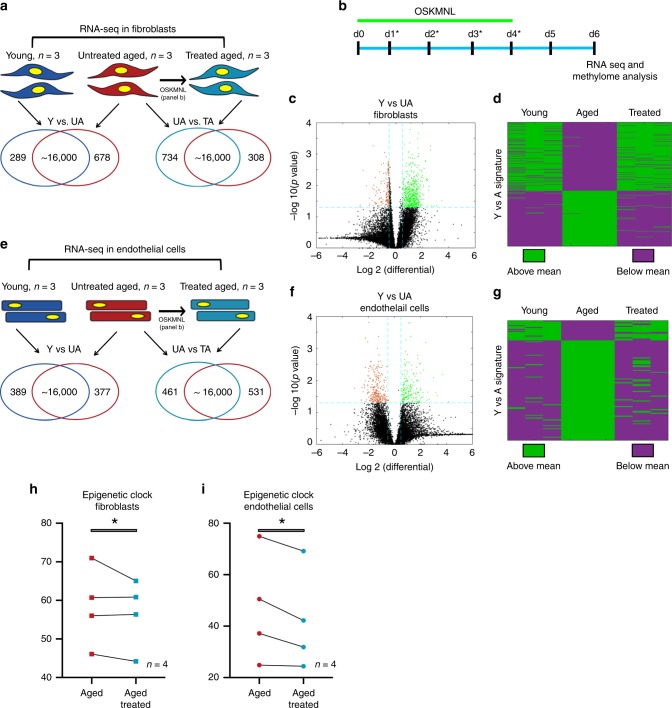
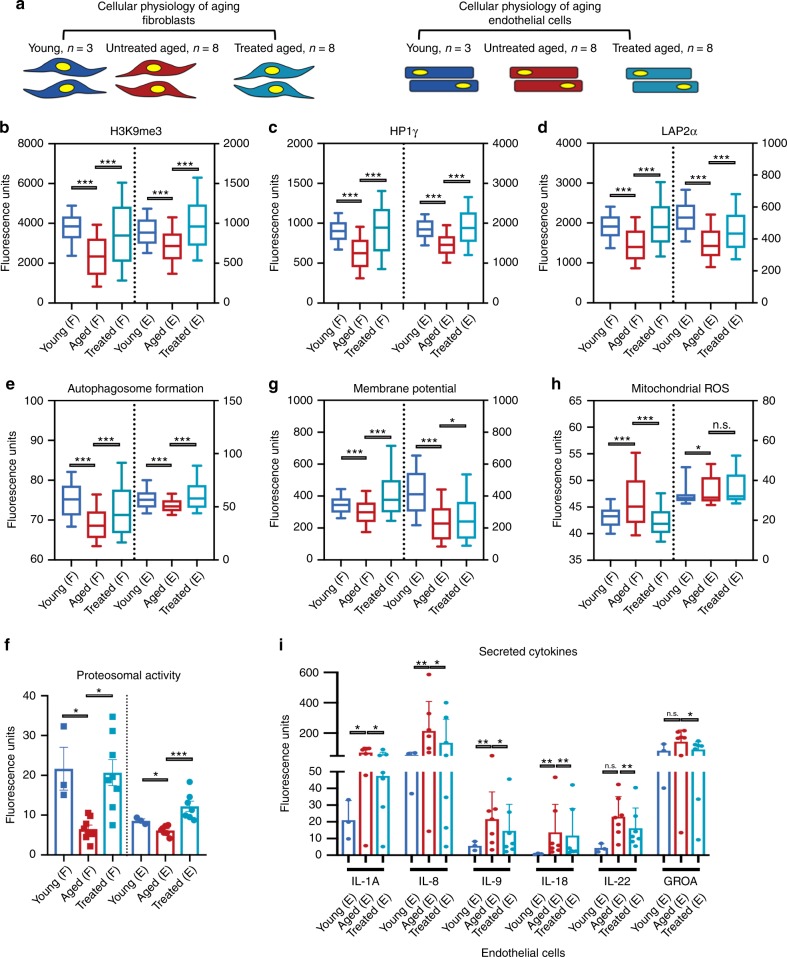
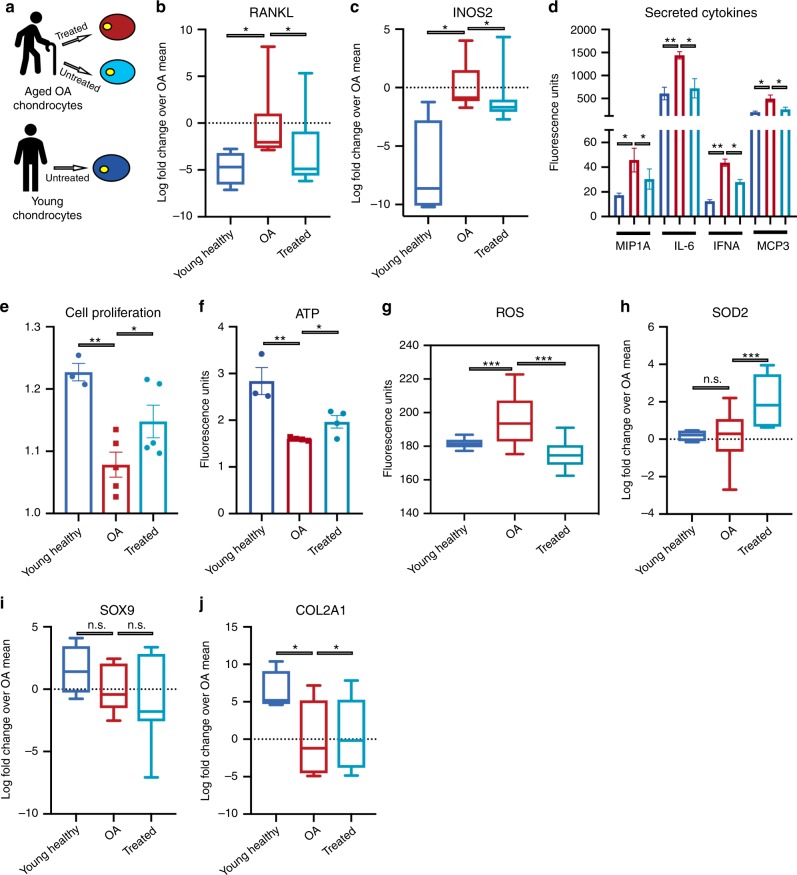
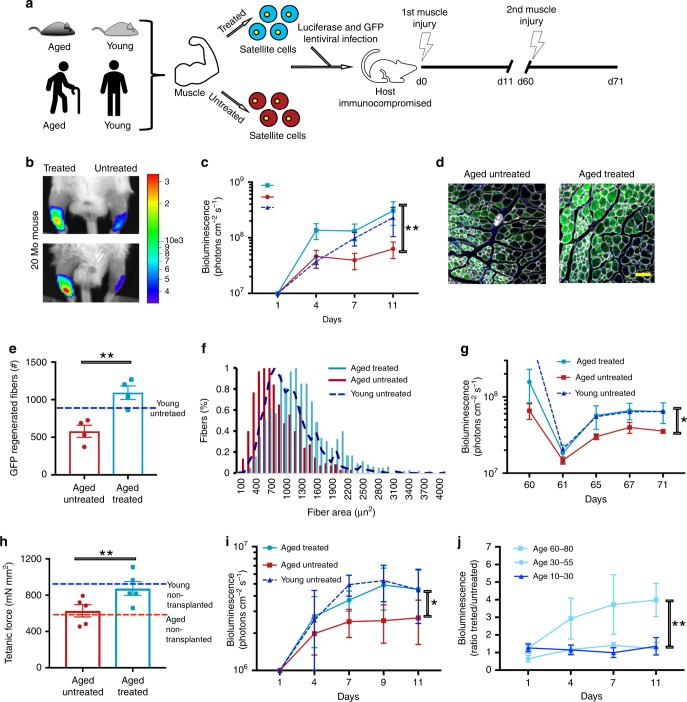
Aging is characterized by a gradual loss of function occurring at the molecular, cellular, tissue and organismal levels. At the chromatin level, aging associates with progressive accumulation of epigenetic errors that eventually lead to aberrant gene regulation, stem cell exhaustion, senescence, and deregulated cell/tissue homeostasis. Nuclear reprogramming to pluripotency can revert both the age and the identity of any cell to that of an embryonic cell. Recent evidence shows that transient reprogramming can ameliorate age-associated hallmarks and extend lifespan in progeroid mice. However, it is unknown how this form of rejuvenation would apply to naturally aged human cells. Here we show that transient expression of nuclear reprogramming factors, mediated by expression of mRNAs, promotes a rapid and broad amelioration of cellular aging, including resetting of epigenetic clock, reduction of the inflammatory profile in chondrocytes, and restoration of youthful regenerative response to aged, human muscle stem cells, in each case without abolishing cellular identity.
Overview
The claims and statistics of this paper haven’t been checked yet.
Free: it reads the open-access text and checks the first 5 claims that cite a source we can check. Create a free account to check every claim.
Integrity signals
Registry
Cites
Statistics
Figures
Verification
Claims the paper makes
The claims and statistics of this paper haven’t been checked yet.
Free: it reads the open-access text and checks the first 5 claims that cite a source we can check. Create a free account to check every claim.
Claims other papers make about this one
Each is checked against this paper’s own text: does it say what the citing paper says it does?
The source backs part of the claim, not all of it — or backs it for a different population, condition or comparison.
In the citing paper
“The cyclic expression of Yamanaka factors Oct4, Sox2, Klf4 and Myc (OSKM) (Takahashi and Yamanaka, 2006) alleviates the symptoms and extends the lifespan of progeroid mice and other aspects of aging (Ocampo et al., 2016; Sarkar et al., 2020).”
From Loss of epigenetic information as a cause of mammalian aging (2023) · cites this paper as Sarkar et al., 2020
Experimental — accuracy not yet measuredThe source backs part of the claim, not all of it — or backs it for a different population, condition or comparison.
In the citing paper
“Numerous tissues, including brain tissue, kidney, and muscle, have now been reprogrammed without causing cancer [7, 8, 22, 24, 25].”
From Chemically induced reprogramming to reverse cellular aging (2023) · cites this paper as [24]
Experimental — accuracy not yet measuredThe source backs part of the claim, not all of it — or backs it for a different population, condition or comparison.
In the citing paper
“The magnitude of rejuvenation in H3K9me3 levels in our transiently reprogrammed cells is similar to that observed from IP transient reprogramming (Sarkar et al., 2020).”
From Multi-omic rejuvenation of human cells by maturation phase transient reprogramming (2022) · cites this paper as Sarkar et al., 2020
Experimental — accuracy not yet measuredThe source backs part of the claim, not all of it — or backs it for a different population, condition or comparison.
In the citing paper
“Regardless of the development strategy, most current biomarkers of aging predict aging-related outcomes and identify factors associated with the pace of aging, in retrospective epidemiological studies 1-7.”
From Validation of biomarkers of aging (2024) · cites this paper as [7]
Experimental — accuracy not yet measuredThe source backs part of the claim, not all of it — or backs it for a different population, condition or comparison.
In the citing paper
“epigenetic hallmarks of aging (H3K9me3, HP1g, LAP2a and SIRT1), functional parameters (autophagosomal, mitochondrial and proteasomal activities) and epigenetic clocks were significantly impacted, with treated cells more closely resembling younger cells compared with their age-matched old counterparts.”
From Mechanisms, pathways and strategies for rejuvenation through epigenetic reprogramming (2023) · cites this paper as [17]
Experimental — accuracy not yet measured
16 more claims about this paper
Create a free account to see every claim other papers make about this one.
Self-check
Percentages, sums and reported differences re-computed from the paper’s own numbers.
The self-check needs the paper’s full text.
Citations
Cites
lmerTest Package: Tests in Linear Mixed Effects Models
Kuznetsova, A., Brockhoff, P. B., & Christensen, R. H. B. (2017) · Journal of Statistical Software · doi:10.18637/jss.v082.i13 · Cited by 24,346
López-Otín, C., Blasco, M. A., Partridge, L., Serrano, M., & Kroemer, G. (2013) · Cell · doi:10.1016/j.cell.2013.05.039 · Cited by 14,982
The Molecular Signatures Database Hallmark Gene Set Collection
Liberzon, A., Birger, C., Thorvaldsdóttir, H., Ghandi, M., Mesirov, J. P., & Tamayo, P. (2015) · Cell Systems · doi:10.1016/j.cels.2015.12.004 · Cited by 13,807
DNA methylation age of human tissues and cell types
Horvath, S. (2013) · Genome Biology · doi:10.1186/gb-2013-14-10-r115 · Cited by 7,075
Self-citationDNA methylation-based biomarkers and the epigenetic clock theory of ageing
Horvath, S., & Raj, K. (2018) · Nature Reviews Genetics · doi:10.1038/s41576-018-0004-3 · Cited by 3,095
Self-citationEpidemiology of Osteoarthritis
Zhang, Y., & Jordan, J. M. (2010) · Clinics in Geriatric Medicine · doi:10.1016/j.cger.2010.03.001 · Cited by 2,316
Clearance of senescent cells by ABT263 rejuvenates aged hematopoietic stem cells in mice
Chang, J., Wang, Y., Shao, L., Laberge, R.-M., Demaria, M., Campisi, J., Janakiraman, K., Sharpless, N. E., Ding, S., Feng, W., et al. (2016) · Nature Medicine · doi:10.1038/nm.4010 · Cited by 1,819
Autophagy maintains stemness by preventing senescence
García-Prat, L., Martínez-Vicente, M., Perdiguero, E., Ortet, L., Rodríguez-Ubreva, J., Rebollo, E., Ruiz-Bonilla, V., Gutarra, S., Ballestar, E., Serrano, A. L., et al. (2016) · Nature · doi:10.1038/nature16187 · Cited by 1,355
DNA methylation age of blood predicts all-cause mortality in later life
Marioni, R. E., Shah, S., McRae, A. F., Chen, B. H., Colicino, E., Harris, S. E., Gibson, J., Henders, A. K., Redmond, P., Cox, S. R., et al. (2015) · Genome Biology · doi:10.1186/s13059-015-0584-6 · Cited by 1,261
Self-citationLehnertz, B., Ueda, Y., Derijck, A. A. H. A., Braunschweig, U., Perez-Burgos, L., Kubicek, S., Chen, T., Li, E., Jenuwein, T., & Peters, A. H. F. M. (2003) · Current Biology · doi:10.1016/s0960-9822(03)00432-9 · Cited by 1,245
Cited by
Why does COVID-19 disproportionately affect older people?
Mueller, A. L., McNamara, M. S., & Sinclair, D. A. (2020) · Aging · doi:10.18632/aging.103344 · Cited by 1,128
Reprogramming to recover youthful epigenetic information and restore vision
Lu, Y., Brommer, B., Tian, X., Krishnan, A., Meer, M., Wang, C., Vera, D. L., Zeng, Q., Yu, D., Bonkowski, M. S., et al. (2020) · Nature · doi:10.1038/s41586-020-2975-4 · Cited by 820
Self-citationEpigenetic regulation of aging: implications for interventions of aging and diseases
Wang, K., Liu, H., Hu, Q., Wang, L., Liu, J., Zheng, Z., Zhang, W., Ren, J., Zhu, F., & Liu, G.-H. (2022) · Signal Transduction and Targeted Therapy · doi:10.1038/s41392-022-01211-8 · Cited by 663
“Transfecting aged human fibroblasts, chondrocytes, and endothelial cells with mRNAs expressing OSKMLN (OSKM, LIN28 and NANOG) rejuvenates host cells and significantly reverses the epigenetic clock.(295) More recently, a 13day OSKM reprogramming using the Tet-on expression system significantly reduced the epigenetic ag…”
BackgroundLoss of epigenetic information as a cause of mammalian aging
Yang, J.-H., Hayano, M., Griffin, P. T., Amorim, J. A., Bonkowski, M. S., Apostolides, J. K., Salfati, E. L., Blanchette, M., Munding, E. M., Bhakta, M., et al. (2023) · Cell · doi:10.1016/j.cell.2022.12.027 · Cited by 643
Measuring biological age using omics data
Rutledge, J., Oh, H., & Wyss-Coray, T. (2022) · Nature Reviews Genetics · doi:10.1038/s41576-022-00511-7 · Cited by 570
“Epigenetic alteration is a hallmark of ageing 4 , and recent studies have demonstrated cellular and functional reju-venation by transient epigenetic reprogramming 17,51,52 .”
BackgroundUniversal DNA methylation age across mammalian tissues
Lu, A. T., Fei, Z., Haghani, A., Robeck, T. R., Zoller, J. A., Li, C. Z., Lowe, R., Yan, Q., Zhang, J., Vu, H., et al. (2023) · Nature Aging · doi:10.1038/s43587-023-00462-6 · Cited by 386
Control of satellite cell function in muscle regeneration and its disruption in ageing
Sousa-Victor, P., García-Prat, L., & Muñoz-Cánoves, P. (2022) · Nature Reviews Molecular Cell Biology · doi:10.1038/s41580-021-00421-2 · Cited by 476
Chronic inflammation and the hallmarks of aging
Baechle, J. J., Chen, N., Makhijani, P., Winer, S., Furman, D., & Winer, D. A. (2023) · Molecular Metabolism · doi:10.1016/j.molmet.2023.101755 · Cited by 471
“[394] Sarkar TJ, Quarta M, Mukherjee S, Colville A, Paine P, Doan L, et al.”
BackgroundAgeing and rejuvenation of tissue stem cells and their niches
Brunet, A., Goodell, M. A., & Rando, T. A. (2023) · Nature Reviews Molecular Cell Biology · doi:10.1038/s41580-022-00510-w · Cited by 407
Self-citationDNA damage and repair in age-related inflammation
Zhao, Y., Simon, M., Seluanov, A., & Gorbunova, V. (2023) · Nature Reviews Immunology · doi:10.1038/s41577-022-00751-y · Cited by 372
Validation of biomarkers of aging
Moqri, M., Herzog, C., Poganik, J. R., Ying, K., Justice, J. N., Belsky, D. W., Higgins-Chen, A. T., Chen, B. H., Cohen, A. A., Fuellen, G., et al. (2024) · Nature Medicine · doi:10.1038/s41591-023-02784-9 · Cited by 361
“Regardless of the development strategy, most current biomarkers of aging predict aging-related outcomes and identify factors associated with (the pace of) aging in retrospective epidemiological studies 1–7 .”
Self-citationEpigenetic clock: A promising biomarker and practical tool in aging
Duan, R., Fu, Q., Sun, Y., & Li, Q. (2022) · Ageing Research Reviews · doi:10.1016/j.arr.2022.101743 · Cited by 342
Molecular mechanisms of aging and anti-aging strategies
Li, Y., Tian, X., Luo, J., Bao, T., Wang, S., & Wu, X. (2024) · Cell Communication and Signaling · doi:10.1186/s12964-024-01663-1 · Cited by 293
“In addition, mesenchymal stem cell therapy has been shown to improve frailty and facial skin aging [306].”
BackgroundBrowder, K. C., Reddy, P., Yamamoto, M., Haghani, A., Guillen, I. G., Sahu, S., Wang, C., Luque, Y., Prieto, J., Shi, L., et al. (2022) · Nature Aging · doi:10.1038/s43587-022-00183-2 · Cited by 253
Self-citationMulti-omic rejuvenation of human cells by maturation phase transient reprogramming
Gill, D., Parry, A., Santos, F., Okkenhaug, H., Todd, C. D., Hernando-Herraez, I., Stubbs, T. M., Milagre, I., & Reik, W. (2022) · eLife · doi:10.7554/elife.71624 · Cited by 185
“This reduction in transcription age is substantially greater than that recently achieved by transient transfection of Yamanaka factors (Sarkar et al., 2020), which was by approximately 10 years according to our transcription age predictor (Supplementary Figure 2A), consistent with our approach of…”
BackgroundResultInfluentialApplications of synthetic biology in medical and pharmaceutical fields
Yan, X., Liu, X., Zhao, C., & Chen, G.-Q. (2023) · Signal Transduction and Targeted Therapy · doi:10.1038/s41392-023-01440-5 · Cited by 179
“The anti-aging effects of iPSCs are observed during mouse studies.(84) The chemical-induced differentiation of iPSCs to cardiomyocytes has been commonly used.”
BackgroundSimpson, D. J., & Chandra, T. (2021) · Aging Cell · doi:10.1111/acel.13452 · Cited by 181
“Other results based on cellular reprogramming showed epigenetic rejuvenation in mice and humans might be possible (Lu et al., 2020; Manukyan & Singh, 2012, 2014; Ocampo et al., 2016; Olova et al., 2019; Sarkar et al., 2020; Singh & Zacouto, 2010).”
BackgroundDNA methylation-based age clocks: From age prediction to age reversion
Noroozi, R., Ghafouri-Fard, S., Pisarek, A., Rudnicka, J., Spólnicka, M., Branicki, W., Taheri, M., & Pośpiech, E. (2021) · Ageing Research Reviews · doi:10.1016/j.arr.2021.101314 · Cited by 163
Cellular rejuvenation: molecular mechanisms and potential therapeutic interventions for diseases
Ji, S., Xiong, M., Chen, H., Liu, Y., Zhou, L., Hong, Y., Wang, M., Wang, C., Fu, X., & Sun, X. (2023) · Signal Transduction and Targeted Therapy · doi:10.1038/s41392-023-01343-5 · Cited by 159
“Using a non-integrative partial reprogramming protocol with a cocktail of mRNAs carrying OSKM+ LIN28, naturally aged human fibroblasts and endothelial cells exhibited a multifaceted alleviation of cellular ageing, such as resetting the epigenetic clock, reducing inflammatory responses in chondrocytes, and restoring yo…”
BackgroundProfiling epigenetic age in single cells
Trapp, A., Kerepesi, C., & Gladyshev, V. N. (2021) · Nature Aging · doi:10.1038/s43587-021-00134-3 · Cited by 168
A pan-tissue DNA-methylation epigenetic clock based on deep learning
Camillo, L. P. D. L., Lapierre, L. R., & Singh, R. (2022) · npj Aging · doi:10.1038/s41514-022-00085-y · Cited by 180
“Intriguingly as well, AltumAge does not uncover a rejuvenation event from transient reprogramming 62 .”
BackgroundThe interaction between ageing and Alzheimer's disease: insights from the hallmarks of ageing
Liu, Y., Tan, Y., Zhang, Z., Yi, M., Zhu, L., & Peng, W. (2024) · Translational Neurodegeneration · doi:10.1186/s40035-024-00397-x · Cited by 175
“Nuclear reprogramming to pluripotency can revert both the age and the identity of any cell to that of an embryonic cell [195].”
BackgroundStress, epigenetics, and aging: Unraveling the intricate crosstalk
Wu, Z., Qu, J., Zhang, W., & Liu, G.-H. (2024) · Molecular Cell · doi:10.1016/j.molcel.2023.10.006 · Cited by 134
The Information Theory of Aging
Lu, Y. R., Tian, X., & Sinclair, D. A. (2023) · Nature Aging · doi:10.1038/s43587-023-00527-6 · Cited by 141
“Similarly, the introduction of OSKM mRNA into aged human fibroblasts and endothelial cells, plus two other stem cell factors, LIN28 and NANOG , recovers levels of HP1y and H3K9me3 and reverses the DNA methylation clock 116 (Table 1).”
InfluentialWang, Y., Jin, S., Luo, D., He, D., Shi, C., Zhu, L., Guan, B., Li, Z., Zhang, T., Zhou, Y.-H., et al. (2021) · Nature Communications · doi:10.1038/s41467-021-21545-1 · Cited by 149
Chemically induced reprogramming to reverse cellular aging
Yang, J.-H., Petty, C. A., Dixon-McDougall, T., Lopez, M. V., Tyshkovskiy, A., Maybury-Lewis, S., Tian, X., Ibrahim, N., Chen, Z., Griffin, P. T., et al. (2023) · Aging · doi:10.18632/aging.204896 · Cited by 136
Multi-omic rejuvenation and lifespan extension on exposure to youthful circulation
Zhang, B., Lee, D. E., Trapp, A., Tyshkovskiy, A., Lu, A. T., Bareja, A., Kerepesi, C., McKay, L. K., Shindyapina, A. V., Dmitriev, S. E., et al. (2023) · Nature Aging · doi:10.1038/s43587-023-00451-9 · Cited by 134
“Together, all four clocks correctly predicted the age clocks have successfully predicted the reversal of epigenetic age by several interventions, including reprogramming factor expression and treatment with drugs or blood components 8–12 .”
Self-citationTargeting Cardiac Stem Cell Senescence to Treat Cardiac Aging and Disease
Cianflone, E., Torella, M., Biamonte, F., De Angelis, A., Urbanek, K., Costanzo, F. S., Rota, M., Ellison-Hughes, G. M., & Torella, D. (2020) · Cells · doi:10.3390/cells9061558 · Cited by 132
Multi‐omic rejuvenation of naturally aged tissues by a single cycle of transient reprogramming
Chondronasiou, D., Gill, D., Mosteiro, L., Urdinguio, R. G., Berenguer‐Llergo, A., Aguilera, M., Durand, S., Aprahamian, F., Nirmalathasan, N., Abad, M., et al. (2022) · Aging Cell · doi:10.1111/acel.13578 · Cited by 133
Epigenetic Regulation of Cellular Senescence
Crouch, J., Shvedova, M., Thanapaul, R. J. R. S., Botchkarev, V., & Roh, D. (2022) · Cells · doi:10.3390/cells11040672 · Cited by 126
Aging and the emerging role of cellular senescence in osteoarthritis
Diekman, B. O., & Loeser, R. F. (2023) · Osteoarthritis and Cartilage · doi:10.1016/j.joca.2023.11.018 · Cited by 152
Epigenetic clocks reveal a rejuvenation event during embryogenesis followed by aging
Kerepesi, C., Zhang, B., Lee, S.-G., Trapp, A., & Gladyshev, V. N. (2021) · Science Advances · doi:10.1126/sciadv.abg6082 · Cited by 130
Cellular reprogramming and epigenetic rejuvenation
Simpson, D. J., Olova, N. N., & Chandra, T. (2021) · Clinical Epigenetics · doi:10.1186/s13148-021-01158-7 · Cited by 126
“RIR has shown promise as a treatment to safely reverse ageing whilst retaining the ability to revert to or maintain original cell identity, both in vivo [74, 127, 129] and in vitro [73, 118, 125].”
BackgroundMethodInfluentialAsynchronous, contagious and digital aging
Rando, T. A., & Wyss-Coray, T. (2021) · Nature Aging · doi:10.1038/s43587-020-00015-1 · Cited by 121
Self-citationWang, C., Rabadan Ros, R., Martinez-Redondo, P., Ma, Z., Shi, L., Xue, Y., Guillen-Guillen, I., Huang, L., Hishida, T., Liao, H.-K., et al. (2021) · Nature Communications · doi:10.1038/s41467-021-23353-z · Cited by 119
In Vivo Reprogramming Ameliorates Aging Features in Dentate Gyrus Cells and Improves Memory in Mice.
Rodríguez-Matellán, A., Alcazar, N., Hernández, F., Serrano, M., & Ávila, J. (2020) · Stem Cell Reports · doi:10.1016/j.stemcr.2020.09.010 · Cited by 116
“15 j 1056–1066 j November 10, 2020 Effect of Cycled Expression of YFs on the Appearance of DG Markers of Adult Hippocampal Neurogenesis Since the continuous expression of YFs (continuous protocol) led to premature death (Figure S1D), we tested a cyclic protocol (see Experimental Procedures) (Ocampo et al., 2016; Sarka…”
BackgroundMethodInfluentialRejuvenation of three germ layers tissues by exchanging old blood plasma with saline-albumin
Mehdipour, M., Skinner, C., Wong, N., Lieb, M., Liu, C., Etienne, J., Kato, C., Kiprov, D., Conboy, M. J., & Conboy, I. M. (2020) · Aging · doi:10.18632/aging.103418 · Cited by 115
Sirtuin 6: linking longevity with genome and epigenome stability
Korotkov, A., Seluanov, A., & Gorbunova, V. A. (2021) · Trends in Cell Biology · doi:10.1016/j.tcb.2021.06.009 · Cited by 133
Epigenetic reprogramming as a key to reverse ageing and increase longevity
Pereira, B., Correia, F. P., Alves, I. A., Costa, M., Gameiro, M. D., Martins, A. P., & Saraiva, J. A. (2024) · Ageing Research Reviews · doi:10.1016/j.arr.2024.102204 · Cited by 129
Radiation-induced senescence: therapeutic opportunities
Kim, J. H., Brown, S. L., & Gordon, M. N. (2023) · Radiation Oncology · doi:10.1186/s13014-022-02184-2 · Cited by 120
Zhu, T., Liu, J., Beck, S., Pan, S., Capper, D., Lechner, M., Thirlwell, C., Breeze, C. E., & Teschendorff, A. E. (2022) · Nature Methods · doi:10.1038/s41592-022-01412-7 · Cited by 103
Chemical reprogramming for cell fate manipulation: Methods, applications, and perspectives
Wang, J., Sun, S., & Deng, H. (2023) · Cell Stem Cell · doi:10.1016/j.stem.2023.08.001 · Cited by 91
ATF3 drives senescence by reconstructing accessible chromatin profiles
Zhang, C., Zhang, X., Huang, L., Guan, Y., Huang, X., Tian, X., Zhang, L., & Tao, W. (2021) · Aging Cell · doi:10.1111/acel.13315 · Cited by 84
“T. J. Sarkar et.al transiently expressed OCT4, SOX2, KLF4, c-MYC, LIN28, and NANOG (OSKMLN) in human cell partially reverted cellular senescence and restored aged tissue(Sarkar et al., 2020).”
BackgroundRoux, A. E., Zhang, C., Paw, J., Zavala-Solorio, J., Malahias, E., Vijay, T., Kolumam, G., Kenyon, C., & Kimmel, J. C. (2022) · Cell Systems · doi:10.1016/j.cels.2022.05.002 · Cited by 78
mRNA – A game changer in regenerative medicine, cell-based therapy and reprogramming strategies
Chabanovska, O., Galow, A.-M., David, R., & Lemcke, H. (2021) · Advanced Drug Delivery Reviews · doi:10.1016/j.addr.2021.114002 · Cited by 83
“Transfection with mRNAs expressing OCT4, SOX2, KLF4, c-MYC, LIN28 and NANOG for four consecutive days was reported to reset the epigenetic clock, reduce the inflammatory status in chondrocytes, and restore regenerative potential in aged, human muscle stem cells [230].”
BackgroundThe long and winding road of reprogramming-induced rejuvenation
Yücel, A. D., & Gladyshev, V. N. (2024) · Nature Communications · doi:10.1038/s41467-024-46020-5 · Cited by 92
“RIR is commonly accomplished through partial cell reprogramming, a method in which cells transiently undergo an induced pluripotent stem cell (iPSC) reprogramming 10 – 16 .”
BackgroundMethodEmerging epigenetic insights into aging mechanisms and interventions
Wu, Z., Zhang, W., Qu, J. T., & Liu, G. (2024) · Trends in Pharmacological Sciences · doi:10.1016/j.tips.2023.12.002 · Cited by 81
Aging conundrum: A perspective for ovarian aging
Wu, J., Liu, Y., Song, Y., Wang, L., Ai, J., & Li, K. (2022) · Frontiers in Endocrinology · doi:10.3389/fendo.2022.952471 · Cited by 73
Patrick, R., Naval-Sánchez, M., Deshpande, N., Huang, Y., Zhang, J., Chen, X., Yang, Y., Tiwari, K., Esmaeili, M., Tran, M., et al. (2024) · Cell Metabolism · doi:10.1016/j.cmet.2024.06.006 · Cited by 82
A hyper-quiescent chromatin state formed during aging is reversed by regeneration
Yang, N., Occean, J. R., Melters, D. P., Shi, C., Wang, L., Stransky, S., Doyle, M. E., Cui, C., Delannoy, M. R., Fan, J., et al. (2023) · Molecular Cell · doi:10.1016/j.molcel.2023.04.005 · Cited by 86
Alle, Q., Le Borgne, E., Bensadoun, P., Lemey, C., Béchir, N., Gabanou, M., Estermann, F., Bertrand‐Gaday, C., Pessemesse, L., Toupet, K., et al. (2022) · Aging Cell · doi:10.1111/acel.13714 · Cited by 66
Khalil, R., Diab‐Assaf, M., & Lemaître, J.-M. (2023) · Cells · doi:10.3390/cells12060915 · Cited by 74
Ageing as a software design flaw
de Magalhães, J. P. (2023) · Genome Biology · doi:10.1186/s13059-023-02888-y · Cited by 63
“Although the mechanisms are poorly understood, partial reprogramming reduces epigenetic age (though not to zero like full reprogramming) and leads to functional improvements in cells [113, 115].”
BackgroundRando, T. A., Brunet, A., & Goodell, M. A. (2025) · Cell stem cell · doi:10.1016/j.stem.2025.06.004 · Cited by 80
Self-citationMechanisms, pathways and strategies for rejuvenation through epigenetic reprogramming
Cipriano, A., Moqri, M., Maybury-Lewis, S. Y., Rogers-Hammond, R., de Jong, T. A., Parker, A., Rasouli, S., Schöler, H. R., Sinclair, D. A., & Sebastiano, V. (2023) · Nature Aging · doi:10.1038/s43587-023-00539-2 · Cited by 66
“…when the factors were overexpressed for 13 days, and no significant effects were observed at the other time points, suggesting that day 13 is a critical time point in the rejuvenation process, though, notably, later time points (days 15 and 17) failed to show an epigenetic rejuvenation effect.”
Self-citationPRC2-AgeIndex as a universal biomarker of aging and rejuvenation
Moqri, M., Cipriano, A., Simpson, D. J., Rasouli, S., Murty, T., de Jong, T. A., Nachun, D. C., Brandine, G. D. S., Ying, K., Tarkhov, A. E., et al. (2024) · Nature Communications · doi:10.1038/s41467-024-50098-2 · Cited by 74
“Tostudythe rejuvenation effect of epigenetic reprogramming 43 – 47 , DNAm changes were examined in a rejuvenation treatment of mouse skin through partial reprogramming via Yamanaka Factors (OSKM) 43 in vivo, using HorvathMammalMethylChip40 48 methylation data (GSE190665).”
MethodSelf-citationAdeno-Associated Virus Vectors: Principles, Practices, and Prospects in Gene Therapy
Zwi‐Dantsis, L., Mohamed, S., Massaro, G., & Moeendarbary, E. (2025) · Viruses · doi:10.3390/v17020239 · Cited by 79
Regeneration, rejuvenation, and replacement: turning back the clock on tissue aging
Rando, T. A., & Jones, D. L. (2021) · Cold Spring Harbor Perspectives in Biology · doi:10.1101/cshperspect.a040907 · Cited by 63
Self-citationGatto, N., Dos Santos Souza, C., Shaw, A. C., Bell, S. M., Myszczynska, M. A., Powers, S., Meyer, K., Castelli, L. M., Karyka, E., Mortiboys, H., et al. (2021) · Aging Cell · doi:10.1111/acel.13281 · Cited by 58
Galow, A.-M., & Peleg, S. (2022) · Cells · doi:10.3390/cells11030468 · Cited by 66
In vivo reprogramming leads to premature death linked to hepatic and intestinal failure
Parras, A., Vílchez-Acosta, A., Desdín-Micó, G., Picó, S., Mrabti, C., Montenegro-Borbolla, E., Maroun, C. Y., Haghani, A., Brooke, R. T., Maza, M. D. C. L., et al. (2023) · Nature Aging · doi:10.1038/s43587-023-00528-5 · Cited by 62
Self-citationEpigenetic predictors of species maximum life span and other life-history traits in mammals
Li, C. Z., Haghani, A., Robeck, T. R., Villar, D., Lu, A. T., Zhang, J., Faulkes, C. G., Vu, H., Ablaeva, J., Adams, D. M., et al. (2024) · Science Advances · doi:10.1126/sciadv.adm7273 · Cited by 64
The intersection of aging and estrogen in osteoarthritis
Atasoy‐Zeybek, A., Showel, K. K., Nagelli, C. V., Westendorf, J. J., & Evans, C. H. (2025) · npj Women s Health · doi:10.1038/s44294-025-00063-1 · Cited by 71
Boroni, M., Zonari, A. A. C., de Oliveira, C. R., Al-Katib, K., Cruz, E. A. O., Brace, L. E., & Carvalho, J. L. (2020) · Clinical Epigenetics · doi:10.1186/s13148-020-00899-1 · Cited by 69
Cellular plasticity in reprogramming, rejuvenation and tumorigenesis: a pioneer TF perspective
Huyghe, A., Trajkova, A., & Lavial, F. (2024) · Trends in Cell Biology · doi:10.1016/j.tcb.2023.07.013 · Cited by 56
Current Trends in Anti-Aging Strategies
Rosen, R. S., & Yarmush, M. L. (2023) · Annual Review of Biomedical Engineering · doi:10.1146/annurev-bioeng-120122-123054 · Cited by 64
Clinical Trials Targeting Aging
Nielsen, J. L., Bakula, D., & Scheibye‐Knudsen, M. (2022) · Frontiers in Aging · doi:10.3389/fragi.2022.820215 · Cited by 61
“However, we encourage the reader to also investigate emerging interventions such as stem cell reprogramming (Sarkar et al., 2020), senescence immunotherapy (Song et al.”
BackgroundStress induced aging in mouse eye
Xu, Q., Rydz, C., Nguyen Huu, V. A., Rocha, L., Palomino La Torre, C., Lee, I., Cho, W., Jabari, M., Donello, J., Lyon, D. C., et al. (2022) · Aging Cell · doi:10.1111/acel.13737 · Cited by 53
Self-citationEpigenetic clocks and programmatic aging
Gems, D., Virk, R. S., & de Magalhães, J. P. (2024) · Ageing Research Reviews · doi:10.1016/j.arr.2024.102546 · Cited by 59
Chemical reprogramming ameliorates cellular hallmarks of aging and extends lifespan
(2025) · doi:10.1038/s44321-025-00265-9 · Cited by 49
“…multiple aging phenotypes and reset the epigenetic clock utilizing translational non-integrative methods such as modi fi ed mRNAs encoding for six transcription factors (OSKM + Lin28 and Nanog) or adeno-associated virus for expression of three factors (OSK)(Sarkar et al, 2020; Lu et al, 2020).”
Self-citationEmerging rejuvenation strategies—Reducing the biological age
Zhang, B., Trapp, A., Kerepesi, C., & Gladyshev, V. N. (2022) · Aging Cell · doi:10.1111/acel.13538 · Cited by 51
“…PhenoAge Hannum blood GrimAge A decrease in epigenetic age after 12 months of treatment (intended to regenerate the thymus) by four applied clocks Sarkar et al. (2020) Reprogramming (in vitro) Human GSE14 2439 Horvath multi- tissue Transient reprogramming reverted the DNA methylation age of aged…”
BackgroundMethodChemical reprogramming ameliorates cellular hallmarks of aging and extends lifespan
(2022) · doi:10.1101/2022.08.29.505222 · Cited by 49
Age reprogramming: cell rejuvenation by partial reprogramming
Singh, P. B., & Zhakupova, A. (2022) · Development · doi:10.1242/dev.200755 · Cited by 47
Jones, R. G., Dimet‐Wiley, A., Haghani, A., da Silva, F. M., Brightwell, C. R., Lim, S., Khadgi, S., Wen, Y., Dungan, C. M., Brooke, R. T., et al. (2023) · The Journal of Physiology · doi:10.1113/jp283836 · Cited by 48
“Phenotypes and transcriptomes associated with ameliorated ageing hallmarks are similarly observed with transient OKSM-mediated reprogramming of cells derived from aged humans (Gill et al., 2022; Sarkar et al., 2020).”
BackgroundSelf-citationRestoring aged stem cell functionality: Current progress and future directions
Spehar, K., Pan, A., & Beerman, I. (2020) · Stem Cells · doi:10.1002/stem.3234 · Cited by 41
Molecular Insights Into Lysyl Oxidases in Cartilage Regeneration and Rejuvenation
Lin, W., Xu, L., & Li, G. (2020) · Frontiers in Bioengineering and Biotechnology · doi:10.3389/fbioe.2020.00359 · Cited by 50
Docosahexaenoic Acid Alleviates Brain Damage by Promoting Mitophagy in Mice with Ischaemic Stroke
Sun, E., Zhang, J., Deng, Y., Wang, J., Wu, Q., Chen, W., Ma, X., Chen, S., Xiang, X., Chen, Y., et al. (2022) · Oxidative Medicine and Cellular Longevity · doi:10.1155/2022/3119649 · Cited by 48
“The function of mitochondria in PC12 cells in each group was examined as described in a previous study [29].”
Aging and cancer epigenetics: Where do the paths fork?
Pérez, R. F., Tejedor, J. R., Fernández, A. F., & Fraga, M. F. (2022) · Aging Cell · doi:10.1111/acel.13709 · Cited by 44
“…indicating that the rejuvenation of the epigenetic clock occurs during embryonic development (Kerepesi et al., 2021) and can be achieved through the transient expression of reprogramming factors in human and mouse models (Chondronasiou et al., 2022; Gill et al., 2022; Sarkar et al., 2020).”
BackgroundDifferentiation reveals latent features of aging and an energy barrier in murine myogenesis
Kimmel, J. C., Yi, N., Roy, M., Hendrickson, D. G., & Kelley, D. R. (2021) · Cell Reports · doi:10.1016/j.celrep.2021.109046 · Cited by 42
Partial reprogramming strategy for intervertebral disc rejuvenation by activating energy switch
Cheng, F., Wang, C., Ji, Y., Yang, B., Shu, J., Shi, K., Wang, L., Wang, S., Zhang, Y., Huang, X., et al. (2022) · Aging Cell · doi:10.1111/acel.13577 · Cited by 42
Epigenetic rejuvenation by partial reprogramming
Puri, D., & Wagner, W. (2023) · BioEssays · doi:10.1002/bies.202200208 · Cited by 57
“Recently, Sarkar et al.[54] indicated that transient expression of repro-”
BackgroundMyc determines the functional age state of oligodendrocyte progenitor cells
Neumann, B., Segel, M., Ghosh, T., Zhao, C., Tourlomousis, P., Young, A. M. H., Foerster, S., Sharma, A., Chen, C. Z.-Y., Cubillos, J. F., et al. (2021) · Nature Aging · doi:10.1038/s43587-021-00109-4 · Cited by 43
Computational Methods for Single-Cell Imaging and Omics Data Integration
Watson, E. R., Fard, A. T., & Mar, J. C. (2022) · Frontiers in Molecular Biosciences · doi:10.3389/fmolb.2021.768106 · Cited by 50
“, 2014), as well as therapeutics for biological ageing as a whole (Sarkar et al., 2020), often through targeting cellular senescence (FuhrmannStroissnigg et al.”
BackgroundRestoration of neuronal progenitors by partial reprogramming in the aged neurogenic niche
Xu, L., Ramirez-Matias, J., Hauptschein, M., Sun, E., Lunger, J. C., Buckley, M. T., & Brunet, A. (2024) · Nature Aging · doi:10.1038/s43587-024-00594-3 · Cited by 41
“…19,22,28,29 : a genetic strategy to target reprogramming to the muscle stem cells in vivo does not seem to improve their function (in young mice) 28 , while ex vivo reprogramming in old muscle stem cells and reimplantation in old muscles does seem sufficient to improve repair after injury 29 .”
Iyer, A. A., & Groves, A. K. (2021) · Frontiers in Cellular Neuroscience · doi:10.3389/fncel.2021.660748 · Cited by 44
Counteracting aged DNA methylation states to combat ageing and age-related diseases
Reale, A., Tagliatesta, S., Zardo, G., & Zampieri, M. (2022) · Mechanisms of Ageing and Development · doi:10.1016/j.mad.2022.111695 · Cited by 44
“(Sarkar et al., 2020) transiently expressed OSKM together with the transcription factors LIN28”
BackgroundSenotherapeutic peptide treatment reduces biological age and senescence burden in human skin models
Zonari, A. A. C., Brace, L. E., Al-Katib, K., Porto, W. F., Foyt, D. A., Guiang, M., Cruz, E. A. O., Marshall, B., Salgueiro, W. G., Inan, M. D., et al. (2023) · npj Aging · doi:10.1038/s41514-023-00109-1 · Cited by 53
“Strikingly, Retinol While reduction in biological age has been shown several times in reprogrammed samples 4,59,60 , age reversal of tissues is a more challenging task 61,62 .”
BackgroundTranslating musculoskeletal bioengineering into tissue regeneration therapies
Khodabukus, A., Guyer, T., Moore, A. C., Stevens, M. M., Guldberg, R. E., & Bursac, N. (2022) · Science Translational Medicine · doi:10.1126/scitranslmed.abn9074 · Cited by 45
“In addition, aged muscle stem cells or OA chondrocytes can be rejuvenated in vitro by transient expression of Yamanaka factors, LIN28, and NANOG (170).”
BackgroundPartial cellular reprogramming: A deep dive into an emerging rejuvenation technology
Paine, P., Nguyen, A. T., & Ocampo, A. (2023) · Aging Cell · doi:10.1111/acel.14039 · Cited by 44
“…levels of senescence-associated beta-Galactosidase (SABG) staining and decreased expression of p16, p21, and p53 in both human and mouse cell types (Alle et al., 2022; Browder et al., 2022; Cheng et al., 2022; Ocampo, Reddy, Martinez-Redondo, et al., 2016; Sarkar et al., 2020; Wang et al., 2021).”
BackgroundMethodInfluentialSelf-citationGATA6 regulates aging of human mesenchymal stem/stromal cells
Jiao, H., Walczak, B. E., Lee, M., Lemieux, M. E., & Li, W. (2020) · Stem Cells · doi:10.1002/stem.3297 · Cited by 41
Identification of the canonical and noncanonical role of miR-143/145 in estrogen-deficient bone loss
Xu, R., Shen, X., Xie, H., Zhang, H., Liu, D., Chen, X., Fu, Y., Zhang, P., Yang, Y. A., Cheng, J., et al. (2021) · Theranostics · doi:10.7150/thno.55041 · Cited by 38
“Loss of core TFs results in genomic instability and irreversible senescence state of somatic cells due to progressive accumulation of epigenetic errors in chromatin [6, 7], Ivyspring”
BackgroundVallés-Saiz, L., Ávila, J., & Hernández, F. (2023) · International Journal of Molecular Sciences · doi:10.3390/ijms241311144 · Cited by 35
“Cellular systems that keep TEs under control decline with age, and the loss of this regulation contributes to age-related decline in tissue function (3, 9–12).”
BackgroundInfluentialTransplanting rejuvenated blood stem cells extends lifespan of aged immunocompromised mice
Montserrat‐Vazquez, S., Ali, N., Matteini, F., Lozano-Bartolomé, J., Tu, Z., Mejía-Ramírez, E., Marka, G., Vollmer, A., Soller, K., Saçma, M., et al. (2022) · npj Regenerative Medicine · doi:10.1038/s41536-022-00275-y · Cited by 40
Reprogramming: Emerging Strategies to Rejuvenate Aging Cells and Tissues
Alle, Q., Le Borgne, E., Milhavet, O., & Lemaitre, J.-M. (2021) · International Journal of Molecular Sciences · doi:10.3390/ijms22083990 · Cited by 35
“recently developed an in vitro strategy based on the use of mRNA to allow the expression of the 6 OSKMNL reprogramming factors in young and old human cells [186], whose effectiveness in erasing aging hallmarks leading to a rejuvenated phenotype had previously been established by the work of our team [128].”
BackgroundMethodNeural cell state shifts and fate loss in ageing and age-related diseases
Traxler, L., Lucciola, R., Herdy, J. R., Jones, J. R., Mertens, J., & Gage, F. H. (2023) · Nature Reviews Neurology · doi:10.1038/s41582-023-00815-0 · Cited by 43
Ndhlovu, L. C., Bendall, M. L., Dwaraka, V. B., Pang, A. P. S., Dopkins, N., Carreras-Gallo, N., Smith, R. C., Nixon, D. F., & Corley, M. J. (2024) · Aging Cell · doi:10.1111/acel.14288 · Cited by 42
Unraveling aging from transcriptomics
Huang, Y., Zhu, S., Yao, S., Zhai, H., Liu, C., & Han, J. J. (2024) · Trends in Genetics · doi:10.1016/j.tig.2024.09.006 · Cited by 36
Senescent cells as a target for anti-aging interventions: From senolytics to immune therapies
Fu, T., & Zhou, Z. (2025) · Journal of Translational Internal Medicine · doi:10.1515/jtim-2025-0005 · Cited by 44
“[103] Moreover, ectopic expression of OSK factors in inducible changes in the epigenome (ICE) mice developed by Yang et al. improved senescent phenotypes such as nuclear envelope integrity, reversed transcriptomic markers of aging and restored youthful DNA methylation landscape.”
The ageing immune system as a driver of systemic ageing
Jang, I. H., Niedernhofer, L. J., Robbins, P. D., & Camell, C. D. (2026) · Nature reviews. Immunology · doi:10.1038/s41577-026-01269-3 · Cited by 45
“Delivery of OSKM by viral gene transfer with a regulated promoter or transiently using mRNA transfection has shown evidence of rejuvenation in specific tissues in vivo 181,182 .”
DNA methylation and histone variants in aging and cancer
Mangelinck, A., & Mann, C. (2021) · International review of cytology · doi:10.1016/bs.ircmb.2021.06.002 · Cited by 41
Metadata
- Authors
- Sarkar, T. J., Quarta, M., Mukherjee, S., Colville, A., Paine, P., Doan, L., Tran, C. M., Chu, C. R., Horvath, S., Qi, L. S., Bhutani, N., Rando, T. A., & Sebastiano, V.
- Affiliations
- Stanford Medicine (US)
- VA Palo Alto Health Care System (US)
- University of California, Los Angeles (US)
- Stanford University (US)
- Corresponding author
- Quarta, Marco
- Sebastiano, Vittorio
- ORCID
- Venue
- Nature Communications
- Published
- 2020-03-24
- Volume
- 11
- Issue
- 1
- Pages
- 1545-1545
- ISSN
- 2041-1723 (ISSN-L)
- PMC
- PMC7093390
- OpenAlex
- W3013381082
- Semantic Scholar
- 2fcd81fe90b05e46046934745a6398162bf3a042
- Cited by
- 308
- References
- 47
- Citations by year
- 2026: 47 · 2025: 40 · 2024: 52 · 2023: 44 · 2022: 55 · 2021: 48 · 2020: 22
- FWCI
- 13.64
- Type
- journal article
- Language
- en
- Open access
- gold
- doi.org
- Licence
- cc-by
- creativecommons.org/licenses/by/4.0 (tdm)
- creativecommons.org/licenses/by/4.0 (vor)
- Locations
- Nature Communications (publishedVersion, cc-by)
- bioRxiv (Cold Spring Harbor Laboratory) (acceptedVersion)
- PubMed Central (publishedVersion, cc-by)
- PubMed (publishedVersion)
- eScholarship (California Digital Library) (submittedVersion, cc-by)
- RePEc: Research Papers in Economics (submittedVersion)
- DOAJ (DOAJ: Directory of Open Access Journals) (submittedVersion, cc-by-sa)
- Funders
- U.S. Department of Health & Human Services | NIH | National Institute of Arthritis and Musculoskeletal and Skin Diseases (RO1 AR070865, RO1 AR070864)
- American Federation for Aging Research (AW692172)
- Topics
- Life Sciences › Biochemistry, Genetics and Molecular Biology › Molecular Biology › Pluripotent Stem Cells Research
- Life Sciences › Biochemistry, Genetics and Molecular Biology › Cell Biology › Telomeres, Telomerase, and Senescence
- Life Sciences › Biochemistry, Genetics and Molecular Biology › Aging › Genetics, Aging, and Longevity in Model Organisms
- Keywords
- cellular aging, pluripotency factors, epigenetic clocks, chondrocytes, muscle stem cells, inflammation, regenerative capacity, rejuvenation, human cells
- MeSH terms
- Intravital Microscopy, Adolescent, Adult, Aged, Aged, 80 and over, Aging, Animals, Cell Nucleus, Cells, Cultured, Female, Fibroblasts, Humans, Male, Middle Aged, Rejuvenation, RNA, Messenger, Stem Cells, Cellular Senescence, DNA Methylation, Chondrocytes, Gene Expression Profiling, Muscle Cells, Endothelial Cells, Epigenesis, Genetic, Mice, Young Adult, Primary Cell Culture, Cellular Reprogramming
About these checks
Registry, retraction, Cites and statistics results are computed, not judged, with one exception: a printed reference that no index lists is read once by a model before it counts as a citation error. Claims are extracted by a model and kept only when their quote appears verbatim in the text; each cited source is then checked, with a model’s help, for whether it says what the claim relies on. Those verdicts can be wrong — read the claim’s quote and the cited source before relying on one.
Statistics and arithmetic are recomputed, not judged.
Confidence bands are shown only for fields calibrated on our annotated test set. None is calibrated yet, so no band is shown.
What counts as a claim ›How we measure confidence ›How we check this ›
Are you an author, or do you see a problem with this page? Request a review
Data sources
Bibliographic data: Semantic Scholar, OpenAlex, Crossref.
Contains information from the Semantic Scholar Academic Graph Datasets, made available under the ODC Attribution License (ODC-BY 1.0).
Semantic Scholar’s data is described in: Kinney, R., et al. (2023). The Semantic Scholar Open Data Platform. arXiv:2301.10140.
