

Transient non-integrative expression of nuclear reprogramming factors promotes multifaceted amelioration of aging in human cells.
Open accessPublished version of a preprint
The DOI matches its Crossref record; 46 of the 47 references it cites were found in a registry or an index.
Abstract
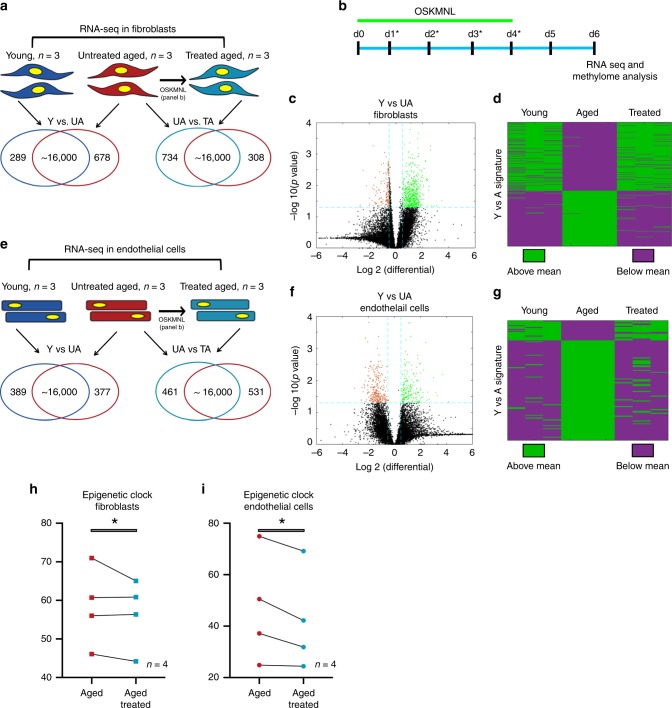
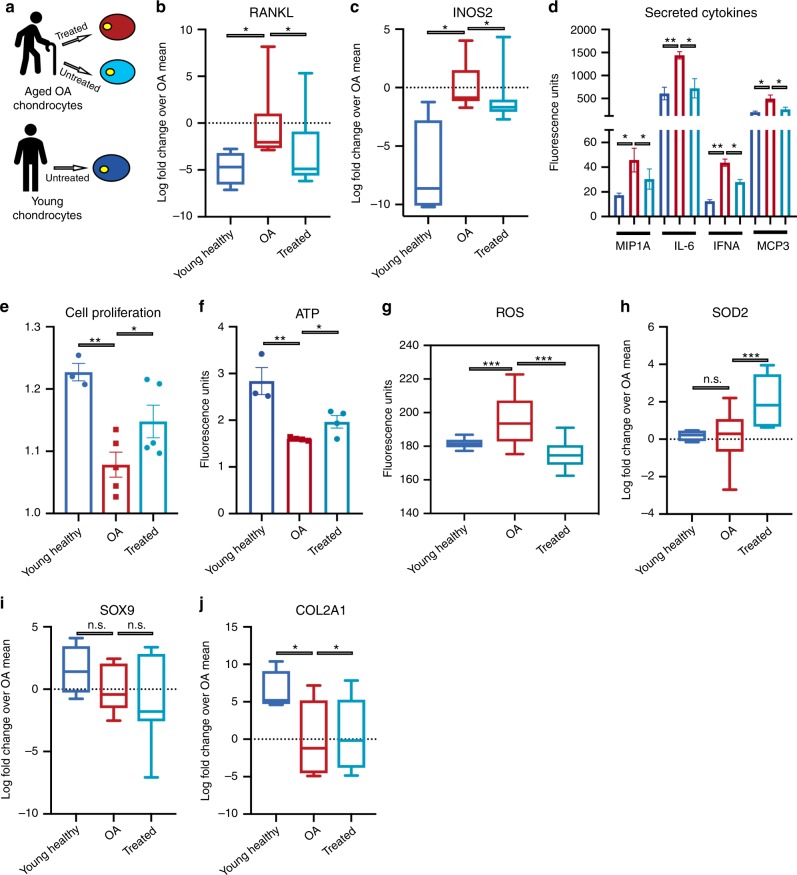
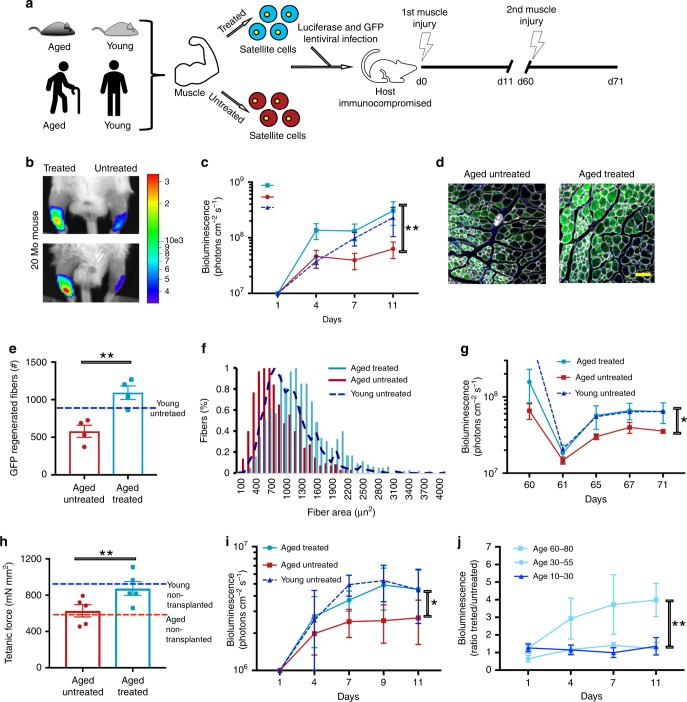
Aging is characterized by a gradual loss of function occurring at the molecular, cellular, tissue and organismal levels. At the chromatin level, aging associates with progressive accumulation of epigenetic errors that eventually lead to aberrant gene regulation, stem cell exhaustion, senescence, and deregulated cell/tissue homeostasis. Nuclear reprogramming to pluripotency can revert both the age and the identity of any cell to that of an embryonic cell. Recent evidence shows that transient reprogramming can ameliorate age-associated hallmarks and extend lifespan in progeroid mice. However, it is unknown how this form of rejuvenation would apply to naturally aged human cells. Here we show that transient expression of nuclear reprogramming factors, mediated by expression of mRNAs, promotes a rapid and broad amelioration of cellular aging, including resetting of epigenetic clock, reduction of the inflammatory profile in chondrocytes, and restoration of youthful regenerative response to aged, human muscle stem cells, in each case without abolishing cellular identity.
Overview
The claims and statistics of this paper haven’t been checked yet.
Free: it reads the open-access text and checks the first 5 claims that cite a source we can check. Create a free account to check every claim.
Integrity signals
Registry
Cites
Statistics
Figures
Verification
Claims the paper makes
The claims and statistics of this paper haven’t been checked yet.
Free: it reads the open-access text and checks the first 5 claims that cite a source we can check. Create a free account to check every claim.
Claims other papers make about this one
Each is checked against this paper’s own text: does it say what the citing paper says it does?
The source backs part of the claim, not all of it — or backs it for a different population, condition or comparison.
In the citing paper
“The cyclic expression of Yamanaka factors Oct4, Sox2, Klf4 and Myc (OSKM) (Takahashi and Yamanaka, 2006) alleviates the symptoms and extends the lifespan of progeroid mice and other aspects of aging (Ocampo et al., 2016; Sarkar et al., 2020).”
From Loss of epigenetic information as a cause of mammalian aging (2023) · cites this paper as Sarkar et al., 2020
Experimental — accuracy not yet measuredThe source backs part of the claim, not all of it — or backs it for a different population, condition or comparison.
In the citing paper
“Numerous tissues, including brain tissue, kidney, and muscle, have now been reprogrammed without causing cancer [7, 8, 22, 24, 25].”
From Chemically induced reprogramming to reverse cellular aging (2023) · cites this paper as [24]
Experimental — accuracy not yet measuredThe source backs part of the claim, not all of it — or backs it for a different population, condition or comparison.
In the citing paper
“The magnitude of rejuvenation in H3K9me3 levels in our transiently reprogrammed cells is similar to that observed from IP transient reprogramming (Sarkar et al., 2020).”
From Multi-omic rejuvenation of human cells by maturation phase transient reprogramming (2022) · cites this paper as Sarkar et al., 2020
Experimental — accuracy not yet measuredThe source backs part of the claim, not all of it — or backs it for a different population, condition or comparison.
In the citing paper
“Regardless of the development strategy, most current biomarkers of aging predict aging-related outcomes and identify factors associated with the pace of aging, in retrospective epidemiological studies 1-7.”
From Validation of biomarkers of aging (2024) · cites this paper as [7]
Experimental — accuracy not yet measuredThe source backs part of the claim, not all of it — or backs it for a different population, condition or comparison.
In the citing paper
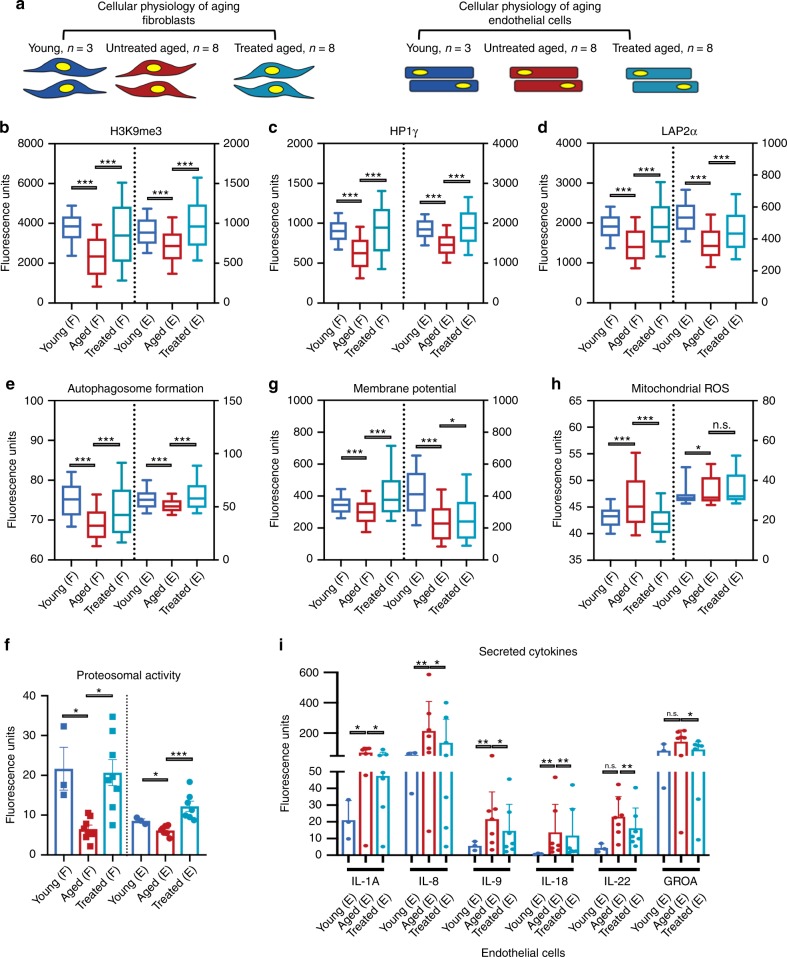
“epigenetic hallmarks of aging (H3K9me3, HP1g, LAP2a and SIRT1), functional parameters (autophagosomal, mitochondrial and proteasomal activities) and epigenetic clocks were significantly impacted, with treated cells more closely resembling younger cells compared with their age-matched old counterparts.”
From Mechanisms, pathways and strategies for rejuvenation through epigenetic reprogramming (2023) · cites this paper as [17]
Experimental — accuracy not yet measured
16 more claims about this paper
Create a free account to see every claim other papers make about this one.
Self-check
Percentages, sums and reported differences re-computed from the paper’s own numbers.
The self-check needs the paper’s full text.
Citations
Cites
lmerTest Package: Tests in Linear Mixed Effects Models
Kuznetsova, A., Brockhoff, P. B., & Christensen, R. H. B. (2017) · Journal of Statistical Software · doi:10.18637/jss.v082.i13 · Cited by 24,346
López-Otín, C., Blasco, M. A., Partridge, L., Serrano, M., & Kroemer, G. (2013) · Cell · doi:10.1016/j.cell.2013.05.039 · Cited by 14,982
The Molecular Signatures Database Hallmark Gene Set Collection
Liberzon, A., Birger, C., Thorvaldsdóttir, H., Ghandi, M., Mesirov, J. P., & Tamayo, P. (2015) · Cell Systems · doi:10.1016/j.cels.2015.12.004 · Cited by 13,807
DNA methylation age of human tissues and cell types
Horvath, S. (2013) · Genome Biology · doi:10.1186/gb-2013-14-10-r115 · Cited by 7,075
Self-citationDNA methylation-based biomarkers and the epigenetic clock theory of ageing
Horvath, S., & Raj, K. (2018) · Nature Reviews Genetics · doi:10.1038/s41576-018-0004-3 · Cited by 3,095
Self-citationEpidemiology of Osteoarthritis
Zhang, Y., & Jordan, J. M. (2010) · Clinics in Geriatric Medicine · doi:10.1016/j.cger.2010.03.001 · Cited by 2,316
Clearance of senescent cells by ABT263 rejuvenates aged hematopoietic stem cells in mice
Chang, J., Wang, Y., Shao, L., Laberge, R.-M., Demaria, M., Campisi, J., Janakiraman, K., Sharpless, N. E., Ding, S., Feng, W., et al. (2016) · Nature Medicine · doi:10.1038/nm.4010 · Cited by 1,819
Autophagy maintains stemness by preventing senescence
García-Prat, L., Martínez-Vicente, M., Perdiguero, E., Ortet, L., Rodríguez-Ubreva, J., Rebollo, E., Ruiz-Bonilla, V., Gutarra, S., Ballestar, E., Serrano, A. L., et al. (2016) · Nature · doi:10.1038/nature16187 · Cited by 1,355
DNA methylation age of blood predicts all-cause mortality in later life
Marioni, R. E., Shah, S., McRae, A. F., Chen, B. H., Colicino, E., Harris, S. E., Gibson, J., Henders, A. K., Redmond, P., Cox, S. R., et al. (2015) · Genome Biology · doi:10.1186/s13059-015-0584-6 · Cited by 1,261
Self-citationLehnertz, B., Ueda, Y., Derijck, A. A. H. A., Braunschweig, U., Perez-Burgos, L., Kubicek, S., Chen, T., Li, E., Jenuwein, T., & Peters, A. H. F. M. (2003) · Current Biology · doi:10.1016/s0960-9822(03)00432-9 · Cited by 1,245
Cited by
Items 301–311 of 311
Conserved Partial Reprogramming Effects on the Methylome
Găitănaru, E.-C., Popescu, R. G., Stroe, A.-A., Georgescu, S. E., & Marinescu, G. C. (2026) · Epigenomes · doi:10.3390/epigenomes10030055
“To investigate conserved methylation changes, we performed a cross-species integrative secondary analysis of five independent DNA methylation datasets from partial reprogramming experiments with pluripotency-associated transcription factors (OSK, OSKM, and OSKMLN) [10,16,19,33,35,37].”
InfluentialRole of epigenetic factors during blockade of the renin-angiotensin system across aging
de Cavanagh, E. M. V., Inserra, F., & Ferder, L. (2026) · American Journal of Physiology-Heart and Circulatory Physiology · doi:10.1152/ajpheart.00417.2026
Li, X., Wan, R., Wu, Y., Zhao, Y., Chen, X., Li, Y., Yang, R., Zhang, D., Li, Q., & Luo, C. (2026) · Ageing Research Reviews · doi:10.1016/j.arr.2026.103359 · Cited by 1
Ji, Z., Yu, Y., Cao, Q., Luo, D., Xu, H., Xu, H., Zhou, Y., Ma, M., Wang, G., Yin, Z., et al. (2026) · Chemical Engineering Journal · doi:10.1016/j.cej.2026.181742
Singh, R. D., Calvoli, M., & Kim, K. K. (2026) · Advanced Science · doi:10.1002/advs.77370
“In iPSC-based reprogramming systems, partially reprogrammed cells have been found to exhibit rejuvenated epigenetics resembling those of young cells, accompanied by the expression of developmental regulators, improved metabolism, and stress sensitivity [ 279–281 ].”
mRNA Therapeutics for Skin Rejuvenation: From Aging Atlases to Clinical Translation
Boncimino, F., Sol, S., Todorova, K. A., & Mandinova, A. (2026) · Experimental Dermatology · doi:10.1111/exd.70367
Written in development and lost in ageing: the grammar of cellular identity
Yücel, A. D., Molière, A., & Gladyshev, V. N. (2026) · Nature · doi:10.1038/s41586-026-10955-0 · Cited by 3
Emerging nanomedicine upshot: Reprogramming cellular dormancy for tissue regeneration
Rawat, T., Pathan, N. S., Sengar, D., & Gajbhiye, V. (2026) · International Journal of Pharmaceutics · doi:10.1016/j.ijpharm.2026.127491
Epigenetics in development, disease, and therapy: from mechanisms to clinical interventions
Ren, Y., Yang, L., Fei, B., Guo, R., Huang, J., Xu, Z., Wang, R., Zhang, P., Cao, D., Chen, P., et al. (2026) · Science China Life Sciences · doi:10.1007/s11427-025-3356-1
Cell Reprogramming: Therapeutic Advances and Challenges
Li, A., Zhipeng, W., Lyu, Z., Tuo, Z., Li, X., Wu, R., Wang, J., Wusiman, D., Wang, Y., Zhang, Q., et al. (2026) · Research · doi:10.34133/research.1472
Молекулярные механизмы старения: сигнальные пути, клеточное старение и геропротективные подходы
Tiasto, V., & Андреевна, Б. М. (2026) · Clinical and Fundamental Medicine · doi:10.24866/3033-5485/2026-3/31-46
Metadata
- Authors
- Sarkar, T. J., Quarta, M., Mukherjee, S., Colville, A., Paine, P., Doan, L., Tran, C. M., Chu, C. R., Horvath, S., Qi, L. S., Bhutani, N., Rando, T. A., & Sebastiano, V.
- Affiliations
- Stanford Medicine (US)
- VA Palo Alto Health Care System (US)
- University of California, Los Angeles (US)
- Stanford University (US)
- Corresponding author
- Quarta, Marco
- Sebastiano, Vittorio
- ORCID
- Venue
- Nature Communications
- Published
- 2020-03-24
- Volume
- 11
- Issue
- 1
- Pages
- 1545-1545
- ISSN
- 2041-1723 (ISSN-L)
- PMC
- PMC7093390
- OpenAlex
- W3013381082
- Semantic Scholar
- 2fcd81fe90b05e46046934745a6398162bf3a042
- Cited by
- 308
- References
- 47
- Citations by year
- 2026: 47 · 2025: 40 · 2024: 52 · 2023: 44 · 2022: 55 · 2021: 48 · 2020: 22
- FWCI
- 13.64
- Type
- journal article
- Language
- en
- Open access
- gold
- doi.org
- Licence
- cc-by
- creativecommons.org/licenses/by/4.0 (tdm)
- creativecommons.org/licenses/by/4.0 (vor)
- Locations
- Nature Communications (publishedVersion, cc-by)
- bioRxiv (Cold Spring Harbor Laboratory) (acceptedVersion)
- PubMed Central (publishedVersion, cc-by)
- PubMed (publishedVersion)
- eScholarship (California Digital Library) (submittedVersion, cc-by)
- RePEc: Research Papers in Economics (submittedVersion)
- DOAJ (DOAJ: Directory of Open Access Journals) (submittedVersion, cc-by-sa)
- Funders
- U.S. Department of Health & Human Services | NIH | National Institute of Arthritis and Musculoskeletal and Skin Diseases (RO1 AR070865, RO1 AR070864)
- American Federation for Aging Research (AW692172)
- Topics
- Life Sciences › Biochemistry, Genetics and Molecular Biology › Molecular Biology › Pluripotent Stem Cells Research
- Life Sciences › Biochemistry, Genetics and Molecular Biology › Cell Biology › Telomeres, Telomerase, and Senescence
- Life Sciences › Biochemistry, Genetics and Molecular Biology › Aging › Genetics, Aging, and Longevity in Model Organisms
- Keywords
- cellular aging, pluripotency factors, epigenetic clocks, chondrocytes, muscle stem cells, inflammation, regenerative capacity, rejuvenation, human cells
- MeSH terms
- Intravital Microscopy, Adolescent, Adult, Aged, Aged, 80 and over, Aging, Animals, Cell Nucleus, Cells, Cultured, Female, Fibroblasts, Humans, Male, Middle Aged, Rejuvenation, RNA, Messenger, Stem Cells, Cellular Senescence, DNA Methylation, Chondrocytes, Gene Expression Profiling, Muscle Cells, Endothelial Cells, Epigenesis, Genetic, Mice, Young Adult, Primary Cell Culture, Cellular Reprogramming
About these checks
Registry, retraction, Cites and statistics results are computed, not judged, with one exception: a printed reference that no index lists is read once by a model before it counts as a citation error. Claims are extracted by a model and kept only when their quote appears verbatim in the text; each cited source is then checked, with a model’s help, for whether it says what the claim relies on. Those verdicts can be wrong — read the claim’s quote and the cited source before relying on one.
Statistics and arithmetic are recomputed, not judged.
Confidence bands are shown only for fields calibrated on our annotated test set. None is calibrated yet, so no band is shown.
What counts as a claim ›How we measure confidence ›How we check this ›
Are you an author, or do you see a problem with this page? Request a review
Data sources
Bibliographic data: Semantic Scholar, OpenAlex, Crossref.
Contains information from the Semantic Scholar Academic Graph Datasets, made available under the ODC Attribution License (ODC-BY 1.0).
Semantic Scholar’s data is described in: Kinney, R., et al. (2023). The Semantic Scholar Open Data Platform. arXiv:2301.10140.
