

Transient non-integrative expression of nuclear reprogramming factors promotes multifaceted amelioration of aging in human cells.
Open accessPublished version of a preprint
The DOI matches its Crossref record; 46 of the 47 references it cites were found in a registry or an index.
Abstract
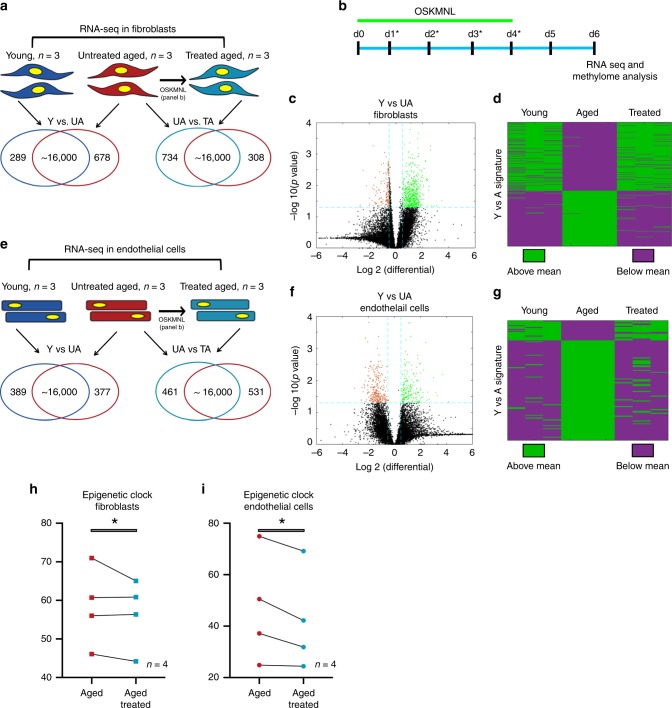
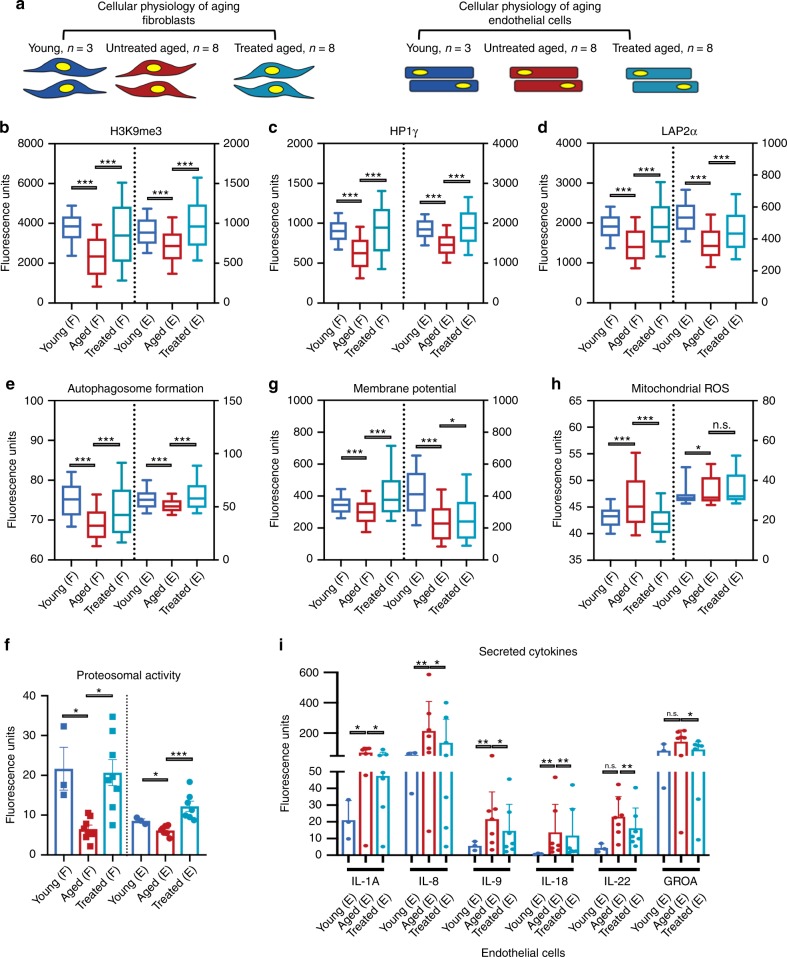
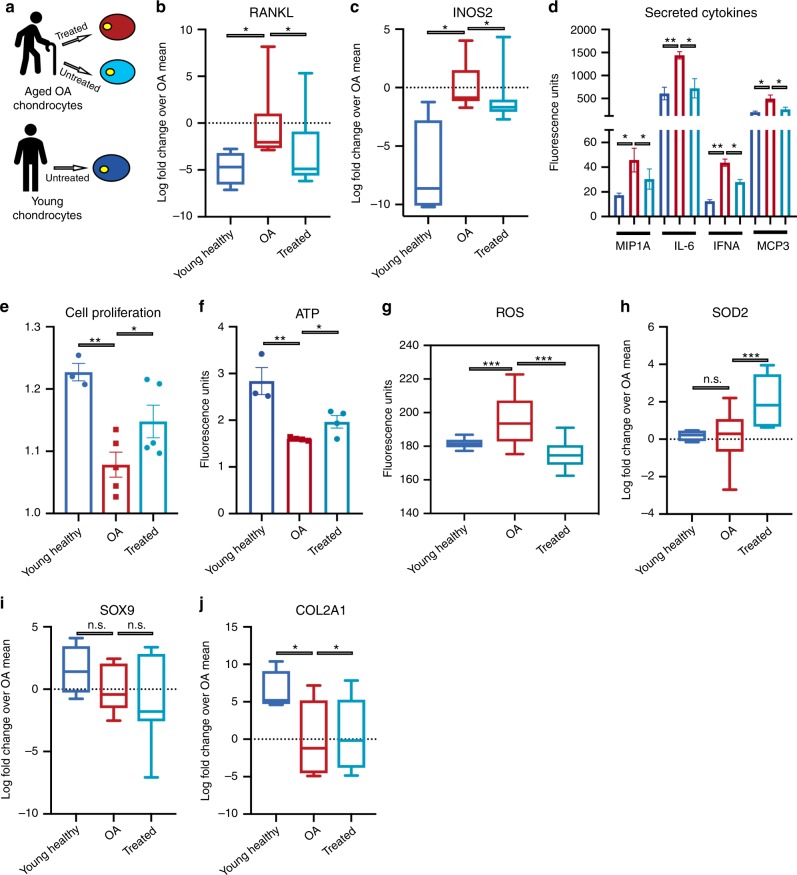
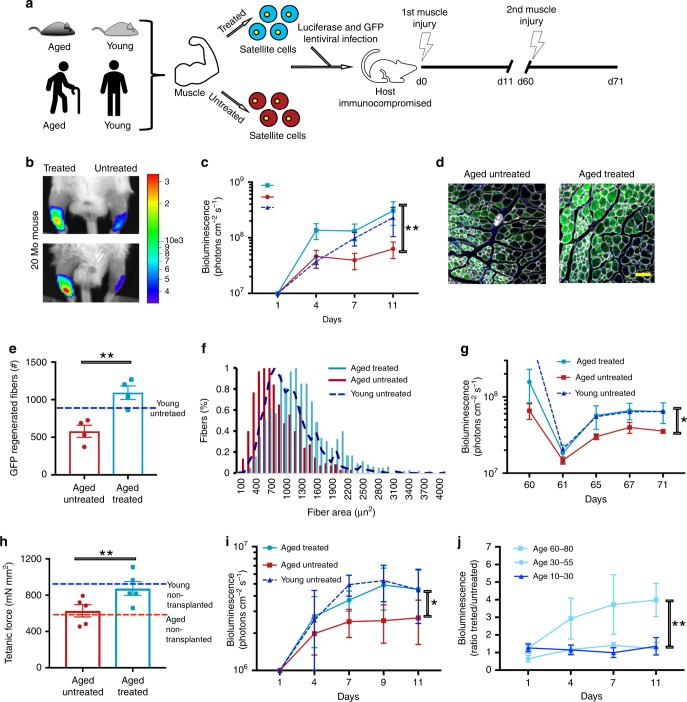
Aging is characterized by a gradual loss of function occurring at the molecular, cellular, tissue and organismal levels. At the chromatin level, aging associates with progressive accumulation of epigenetic errors that eventually lead to aberrant gene regulation, stem cell exhaustion, senescence, and deregulated cell/tissue homeostasis. Nuclear reprogramming to pluripotency can revert both the age and the identity of any cell to that of an embryonic cell. Recent evidence shows that transient reprogramming can ameliorate age-associated hallmarks and extend lifespan in progeroid mice. However, it is unknown how this form of rejuvenation would apply to naturally aged human cells. Here we show that transient expression of nuclear reprogramming factors, mediated by expression of mRNAs, promotes a rapid and broad amelioration of cellular aging, including resetting of epigenetic clock, reduction of the inflammatory profile in chondrocytes, and restoration of youthful regenerative response to aged, human muscle stem cells, in each case without abolishing cellular identity.
Overview
The claims and statistics of this paper haven’t been checked yet.
Free: it reads the open-access text and checks the first 5 claims that cite a source we can check. Create a free account to check every claim.
Integrity signals
Registry
Cites
Statistics
Figures
Verification
Claims the paper makes
The claims and statistics of this paper haven’t been checked yet.
Free: it reads the open-access text and checks the first 5 claims that cite a source we can check. Create a free account to check every claim.
Claims other papers make about this one
Each is checked against this paper’s own text: does it say what the citing paper says it does?
The source backs part of the claim, not all of it — or backs it for a different population, condition or comparison.
In the citing paper
“The cyclic expression of Yamanaka factors Oct4, Sox2, Klf4 and Myc (OSKM) (Takahashi and Yamanaka, 2006) alleviates the symptoms and extends the lifespan of progeroid mice and other aspects of aging (Ocampo et al., 2016; Sarkar et al., 2020).”
From Loss of epigenetic information as a cause of mammalian aging (2023) · cites this paper as Sarkar et al., 2020
Experimental — accuracy not yet measuredThe source backs part of the claim, not all of it — or backs it for a different population, condition or comparison.
In the citing paper
“Numerous tissues, including brain tissue, kidney, and muscle, have now been reprogrammed without causing cancer [7, 8, 22, 24, 25].”
From Chemically induced reprogramming to reverse cellular aging (2023) · cites this paper as [24]
Experimental — accuracy not yet measuredThe source backs part of the claim, not all of it — or backs it for a different population, condition or comparison.
In the citing paper
“The magnitude of rejuvenation in H3K9me3 levels in our transiently reprogrammed cells is similar to that observed from IP transient reprogramming (Sarkar et al., 2020).”
From Multi-omic rejuvenation of human cells by maturation phase transient reprogramming (2022) · cites this paper as Sarkar et al., 2020
Experimental — accuracy not yet measuredThe source backs part of the claim, not all of it — or backs it for a different population, condition or comparison.
In the citing paper
“Regardless of the development strategy, most current biomarkers of aging predict aging-related outcomes and identify factors associated with the pace of aging, in retrospective epidemiological studies 1-7.”
From Validation of biomarkers of aging (2024) · cites this paper as [7]
Experimental — accuracy not yet measuredThe source backs part of the claim, not all of it — or backs it for a different population, condition or comparison.
In the citing paper
“epigenetic hallmarks of aging (H3K9me3, HP1g, LAP2a and SIRT1), functional parameters (autophagosomal, mitochondrial and proteasomal activities) and epigenetic clocks were significantly impacted, with treated cells more closely resembling younger cells compared with their age-matched old counterparts.”
From Mechanisms, pathways and strategies for rejuvenation through epigenetic reprogramming (2023) · cites this paper as [17]
Experimental — accuracy not yet measured
16 more claims about this paper
Create a free account to see every claim other papers make about this one.
Self-check
Percentages, sums and reported differences re-computed from the paper’s own numbers.
The self-check needs the paper’s full text.
Citations
Cites
lmerTest Package: Tests in Linear Mixed Effects Models
Kuznetsova, A., Brockhoff, P. B., & Christensen, R. H. B. (2017) · Journal of Statistical Software · doi:10.18637/jss.v082.i13 · Cited by 24,346
López-Otín, C., Blasco, M. A., Partridge, L., Serrano, M., & Kroemer, G. (2013) · Cell · doi:10.1016/j.cell.2013.05.039 · Cited by 14,982
The Molecular Signatures Database Hallmark Gene Set Collection
Liberzon, A., Birger, C., Thorvaldsdóttir, H., Ghandi, M., Mesirov, J. P., & Tamayo, P. (2015) · Cell Systems · doi:10.1016/j.cels.2015.12.004 · Cited by 13,807
DNA methylation age of human tissues and cell types
Horvath, S. (2013) · Genome Biology · doi:10.1186/gb-2013-14-10-r115 · Cited by 7,075
Self-citationDNA methylation-based biomarkers and the epigenetic clock theory of ageing
Horvath, S., & Raj, K. (2018) · Nature Reviews Genetics · doi:10.1038/s41576-018-0004-3 · Cited by 3,095
Self-citationEpidemiology of Osteoarthritis
Zhang, Y., & Jordan, J. M. (2010) · Clinics in Geriatric Medicine · doi:10.1016/j.cger.2010.03.001 · Cited by 2,316
Clearance of senescent cells by ABT263 rejuvenates aged hematopoietic stem cells in mice
Chang, J., Wang, Y., Shao, L., Laberge, R.-M., Demaria, M., Campisi, J., Janakiraman, K., Sharpless, N. E., Ding, S., Feng, W., et al. (2016) · Nature Medicine · doi:10.1038/nm.4010 · Cited by 1,819
Autophagy maintains stemness by preventing senescence
García-Prat, L., Martínez-Vicente, M., Perdiguero, E., Ortet, L., Rodríguez-Ubreva, J., Rebollo, E., Ruiz-Bonilla, V., Gutarra, S., Ballestar, E., Serrano, A. L., et al. (2016) · Nature · doi:10.1038/nature16187 · Cited by 1,355
DNA methylation age of blood predicts all-cause mortality in later life
Marioni, R. E., Shah, S., McRae, A. F., Chen, B. H., Colicino, E., Harris, S. E., Gibson, J., Henders, A. K., Redmond, P., Cox, S. R., et al. (2015) · Genome Biology · doi:10.1186/s13059-015-0584-6 · Cited by 1,261
Self-citationLehnertz, B., Ueda, Y., Derijck, A. A. H. A., Braunschweig, U., Perez-Burgos, L., Kubicek, S., Chen, T., Li, E., Jenuwein, T., & Peters, A. H. F. M. (2003) · Current Biology · doi:10.1016/s0960-9822(03)00432-9 · Cited by 1,245
Cited by
Items 101–200 of 311
Vertebrate cell culture as an experimental approach – limitations and solutions
Abbas, M., Moradi, F., Hu, W., Regudo, K. L., Osborne, M., Pettipas, J., Atallah, D. S., Hachem, R., Ott-Peron, N., & Stuart, J. A. (2021) · Comparative Biochemistry and Physiology Part B Biochemistry and Molecular Biology · doi:10.1016/j.cbpb.2021.110570 · Cited by 37
Epigenetic Clock and Circadian Rhythms in Stem Cell Aging and Rejuvenation
Samoilova, E. M., Викторович, Б. В., Ekusheva, E. V., Zhang, C., Troitskiy, A. V., & Baklaushev, V. P. (2021) · Journal of Personalized Medicine · doi:10.3390/jpm11111050 · Cited by 32
“More recently, it has been shown that transient non-integrative expression of nuclear reprogramming factors in vitro reverses many aspects of aging for human fibroblasts and chondrocytes, including resetting of epigenetic clock, reduction in the inflammatory profile, and restoration of youthful regenerative response […”
BackgroundAirway epithelial ITGB4 deficiency induces airway remodeling in a mouse model
Yuan, L., Liu, H., Du, X., Yao, Y., Qin, L., Xia, Z., Zhou, K., Wu, X., Yuan, Y., Qing, B., et al. (2022) · Journal of Allergy and Clinical Immunology · doi:10.1016/j.jaci.2022.09.032 · Cited by 34
DNA repair‐deficient premature aging models display accelerated epigenetic age
Perez, K., Parras, A., Picó, S., Rechsteiner, C., Haghani, A., Brooke, R., Mrabti, C., Schoenfeldt, L., Horvath, S., & Ocampo, A. (2024) · Aging Cell · doi:10.1111/acel.14058 · Cited by 31
Self-citationERCC1 mice, unlike other premature aging models, display accelerated epigenetic age
(2022) · doi:10.1101/2022.12.28.522011 · Cited by 31
A ride through the epigenetic landscape: aging reversal by reprogramming
Camillo, L. P. D. L., & Quinlan, R. B. A. (2021) · GeroScience · doi:10.1007/s11357-021-00358-6 · Cited by 32
“It appears that transient reprogramming greatly supports tissue regeneration following injury [28, 175], as partially reprogrammed cells can replenish tissues more faithfully [29].”
BackgroundInfluentialWang, Y. T., Jin, S., Luo, D., He, D., Yu, M., Zhu, L., Li, Z., Chen, L., Ding, C., Wu, X., et al. (2023) · Bone Research · doi:10.1038/s41413-023-00288-3 · Cited by 36
“13,14 However, an ef fi cient strategy to identify stemness-promoting small molecules is currently lacking.”
BackgroundChen, Z., Luo, L., Ye, T., Zhou, J., Niu, X., Ji, Y., Yuan, T., Fu, D., Li, H., Li, Q., et al. (2024) · Journal of Extracellular Vesicles · doi:10.1002/jev2.12409 · Cited by 33
“Some studies have proved that OCT4 and LIN28A can promote multifaceted amelioration of aging in human cells (Han et al., 2018; Sarkar et al., 2020).”
BackgroundGenetic and epigenetic alterations in aging and rejuvenation of human
Park, K., Jeon, M. C., Lee, D., Kim, J., & Im, S.-W. (2024) · Molecules and Cells · doi:10.1016/j.mocell.2024.100137 · Cited by 37
Anti-senescence therapies: a new concept to address cardiovascular disease
Stojanović, S. D., Thum, T., & Bauersachs, J. K. (2025) · Cardiovascular Research · doi:10.1093/cvr/cvaf030 · Cited by 34
Yang, Y., Chen, X., Feng, Z., Cai, X., Zhu, X., Cao, M., Yang, L., Chen, Y., Wang, Y., & Feng, H. (2021) · Journal of Neurochemistry · doi:10.1111/jnc.15493 · Cited by 32
ATM-deficient neural precursors develop senescence phenotype with disturbances in autophagy
Sunderland, P., Augustyniak, J., Lenart, J., Bużańska, L., Carlessi, L., Delia, D., & Sikora, E. (2020) · Mechanisms of Ageing and Development · doi:10.1016/j.mad.2020.111296 · Cited by 30
“Recently, it has been documented for the first time that chondrocytes from patients with osteoarthritis, a disease that is strongly age-related, loose their proinflammatory phenotype and epigenetic alterations after transient expression of reprogramming factors (Sarkar et al., 2020).”
Relationship among α‑synuclein, aging and inflammation in Parkinson's disease (Review)
Zhang, N., Yan, Z., Hua, X., Shao, S., Xue, S., Cespuglio, R., & Wang, S. (2023) · Experimental and Therapeutic Medicine · doi:10.3892/etm.2023.12311 · Cited by 33
Expansion of the neocortex and protection from neurodegeneration by in vivo transient reprogramming
Shen, Y.-R., Zaballa, S., Bech, X., Sancho‐Balsells, A., Rodríguez-Navarro, I., Cifuentes-Díaz, C., Seyit-Bremer, G., Chun, S. H., Straub, T., Abante, J., et al. (2024) · Cell stem cell · doi:10.1016/j.stem.2024.09.013 · Cited by 28
Epigenetic Clocks: Beyond Biological Age, Using the Past to Predict the Present and Future
Liang, R., Tang, Q., Chen, J., & Zhu, L. (2024) · Aging and Disease · doi:10.14336/ad.2024.1495 · Cited by 58
“Cellular reprogramming, particularly through the use of OSKM factors, exemplifies this potential; it enables the resetting of epigenetic information and extends cellular lifespan, observable through the reversal of epigenetic age [24, 56, 158, 159].”
Ferreira, F. J., Galhardo, M., Nogueira, J. M., Teixeira, J., Logarinho, E., & Bessa, J. (2025) · Nature Communications · doi:10.1038/s41467-025-57503-4 · Cited by 33
“Epigeneticchanges playa key role during senescent cellevolution based on the discovery that partial reprogramming can modulate aging phenotypes in functionally compromised aged cells 5,6 , and that epigenetic clocks are capable of estimating age accurately 7 .”
Cell reprogramming: methods, mechanisms and applications
Zhu, F., & Nie, G. (2025) · Cell Regeneration · doi:10.1186/s13619-025-00229-x · Cited by 28
“…characteristics of donor cells (Lapas-set et al. 2011; Miller et al. 2013), which laid foundations for the recent discoveries of partial reprogramming-induced rejuvenation (Ocampo et al. 2016; Simpson et al. 2021; Sarkar et al. 2020; Chondronasiou et al. 2022; Gill et al. 2022; Olova et al. 2019).”
Li, N., Chen, Y., Wang, Q., Liu, X., Han, C., Qu, C., Guan, X., Zou, W., Wang, X., Li, A., et al. (2025) · Stem Cell Research & Therapy · doi:10.1186/s13287-025-04481-5 · Cited by 30
“…aged SCs expansion in vitro via epigenetic remodeling, while transient mRNA transfection of nuclear reprogramming factors (OCT4/SOX2/ KLF4) reversed senescence in human SCs and restored muscle strength in aged mice post-transplantation, validating allogeneic cell therapy feasibility [117, 118].”
c-MYC Triggers Lipid Remodelling During Early Somatic Cell Reprogramming to Pluripotency
Prieto, J., García‐Cañaveras, J. C., León, M., Sendra, R., Ponsoda, X., Belmonte, J. C. I., Lahoz, A., & Torres, J. (2021) · Stem Cell Reviews and Reports · doi:10.1007/s12015-021-10239-2 · Cited by 26
“Thus, it is not unreasonable to propose a role for c-MYC in restoring CLs and antioxidant protein levels, such as UCP2 [76], to guarantee an optimal renovation of mitochondrial function while ROS levels are upheld under control, reinforcing therefore the idea of cell rejuvenation early in cell reprogramming [40, 77].”
BackgroundDoes Modulation of an Epigenetic Clock Define a Geroprotector?
Schork, N. J., Beaulieu‐Jones, B. K., Liang, W. S., Smalley, S. L., & Goetz, L. H. (2022) · Advances in Geriatric Medicine and Research · doi:10.20900/agmr20220002 · Cited by 28
Cell-based regenerative and rejuvenation strategies for treating neurodegenerative diseases
Deng, S., Xie, H., & Xie, B. (2025) · Stem Cell Research & Therapy · doi:10.1186/s13287-025-04285-7 · Cited by 29
Cellular reprogramming and the rise of rejuvenation biotech
de Magalhães, J. P., & Ocampo, A. (2022) · Trends in biotechnology · doi:10.1016/j.tibtech.2022.01.011 · Cited by 30
PRC2 clock: a universal epigenetic biomarker of aging and rejuvenation
Moqri, M., Cipriano, A., Nachun, D., Murty, T., de Sena Brandine, G., Rasouli, S., Tarkhov, A., Aberg, K. A., van den Oord, E., Zhou, W., et al. (2022) · doi:10.1101/2022.06.03.494609 · Cited by 22
Self-citationBertucci, E. M., Shealy, E. P., & Parrott, B. B. (2024) · Aging · doi:10.18632/aging.205503 · Cited by 28
Zhang, Z., Wiencke, J. K., Kelsey, K. T., Koestler, D. C., Molinaro, A. M., Pike, S. C., Karra, P., Christensen, B. C., & Salas, L. A. (2023) · Frontiers in Neuroscience · doi:10.3389/fnins.2023.1198243 · Cited by 26
No Time to Age: Uncoupling Aging from Chronological Time
Larocca, D., Lee, J., West, M. D., Labat, I., & Sternberg, H. (2021) · Genes · doi:10.3390/genes12050611 · Cited by 25
“Two recent studies provide evidence suggesting that a reversal of the DNAm clock during in vivo reprogramming may be possible (169, 170).”
BackgroundMethodInfluentialJi, X., Dong, X., Li, J., Tai, G., Qiu, S., Wei, W., Silumbwe, C. W., Damdinjav, D., Otieno, J. N., Li, X., et al. (2025) · Phytotherapy Research · doi:10.1002/ptr.8507 · Cited by 26
The crosstalk between cellular reprogramming and senescence in aging and regeneration
Chiche, A., Chen, C., & Li, H. (2020) · Experimental Gerontology · doi:10.1016/j.exger.2020.111005 · Cited by 22
Nefzger, C. M., Jardé, T., Srivastava, A., Schröder, J., Rossello, F. J., Horvay, K., Prasko, M., Paynter, J. M., Chen, J., Weng, C.-F., et al. (2022) · npj Regenerative Medicine · doi:10.1038/s41536-022-00226-7 · Cited by 24
Aging and rejuvenation - a modular epigenome model
Chiavellini, P., Canatelli-Mallat, M., Lehmann, M., Gallardo, M. D., Hereñú, C. B., Cordeiro, J. L., Clement, J., & Goya, R. G. (2021) · Aging · doi:10.18632/aging.202712 · Cited by 23
“Interestingly, in human umbilical cord cells transduced with a Tet-Off regulatable helperdependent adenovector expressing an OSKM-GFP polycistronic cassette [52], continuous expression of the five transgenes for over 15 weeks, induced neither toxicity nor proliferation although it did induce a significant redistributi…”
BackgroundMetabolic Remodeling in Skeletal Muscle Atrophy as a Therapeutic Target
Renzini, A., Riera, C. S., Minic, I., D’Ercole, C., Lozanoska‐Ochser, B., Cedola, A., Gigli, G., Moresi, V., & Madaro, L. (2021) · Metabolites · doi:10.3390/metabo11080517 · Cited by 24
“However, in spite of its beneficial effects, caloric restriction is not enough to counteract aging, a phenomenon that is characterized by slow and progressive accumulation of epigenetic errors [51].”
BackgroundArora, D., & Robey, P. G. (2022) · PubMed Central · doi:10.12336/biomatertransl.2022.01.002 · Cited by 24
Exploring Epigenetic Modifications as Potential Biomarkers and Therapeutic Targets in Glaucoma
Tonti, E., dell’Omo, R., Filippelli, M., Spadea, L., Salati, C., Gagliano, C., Musa, M., & Zeppieri, M. (2024) · International Journal of Molecular Sciences · doi:10.3390/ijms25052822 · Cited by 23
“These alterations, observed in various ocular tissues and bodily fluids of glaucoma patients, suggest a widespread dysregulation of gene expression networks, contributing to disease onset and progression [92].”
BackgroundCombining stem cell rejuvenation and senescence targeting to synergistically extend lifespan
Kaur, P., Otgonbaatar, A., Ramamoorthy, A., Chua, E. H. Z., Harmston, N., Gruber, J., & Tolwinski, N. S. (2022) · Aging · doi:10.18632/aging.204347 · Cited by 22
“that this approach can be applied to human aging and age-related disease (14-18), and cycling expression can rejuvenate stem cells in vitro (19).”
BackgroundCellular quality control during gametogenesis
Goodman, J. S., King, G. A., & Ünal, E. (2020) · Experimental Cell Research · doi:10.1016/j.yexcr.2020.112247 · Cited by 21
Richard, D. J., Capellini, T. D., & Diekman, B. O. (2023) · American Journal of Physiology-Cell Physiology · doi:10.1152/ajpcell.00574.2022 · Cited by 18
How can aging be reversed? Exploring rejuvenation from a damage‐based perspective
Zhang, B., & Gladyshev, V. N. (2020) · Advanced Genetics · doi:10.1002/ggn2.10025 · Cited by 20
Metabolic regulation in adult and aging skeletal muscle stem cells
Sartorelli, V., & Ciuffoli, V. (2024) · Genes & Development · doi:10.1101/gad.352277.124 · Cited by 25
“Different protocols may also explain the varying outcomes observed by Wang et al. (2021) and Sarkar et al. (2020).”
The microbiota and aging microenvironment in pancreatic cancer: Cell origin and fate
Chen, Z., Wang, Z., Du, Y., Shi, H., & Zhou, W. (2022) · Biochimica et Biophysica Acta (BBA) - Reviews on Cancer · doi:10.1016/j.bbcan.2022.188826 · Cited by 17
Nurturing longevity through natural compounds: Where do we stand, and where do we go?
Todorova, M. N., Savova, M. S., Mihaylova, L. V., & Georgiev, M. I. (2024) · Food Frontiers · doi:10.1002/fft2.350 · Cited by 20
RNA-Based Strategies for Cell Reprogramming toward Pluripotency
Bailly, A., Milhavet, O., & Lemaître, J.-M. (2022) · Pharmaceutics · doi:10.3390/pharmaceutics14020317 · Cited by 20
Landsberger, T., Amit, I., & Alon, U. S. (2023) · GeroScience · doi:10.1007/s11357-023-00915-1 · Cited by 17
“Cellular reprogramming has been shown to have a rejuvenating effect both ex vivo [57] and in vivo [58], which could involve deactivating stress signals from damaged cells.”
Hernández‐Benítez, R., Wang, C., Shi, L., Ouchi, Y., Zhong, C., Hishida, T., Liao, H., Magill, E. A., Memczak, S., Soligalla, R. D., et al. (2024) · Cell Reports Medicine · doi:10.1016/j.xcrm.2024.101449 · Cited by 18
“24,25,29 Addressing muscle regeneration using metabolites as a therapeutic approach has been extensively addressed; nonetheless, the explanations about the positive outcomes are still limited and usually consider either amino acids as merely building blocks or point to some elusive antioxidant…”
Self-citationSing, T. L., Brar, G. A., & Ünal, E. (2022) · Annual Review of Genetics · doi:10.1146/annurev-genet-080320-025104 · Cited by 19
“For example, the epigenetic clock is reset, protein degradation pathways are restored, mitochondrial function is improved, inflammation is reduced, and regenerative capacity is restored (130).”
Immunoinflammation and post-translational modifications in the aging process
Xiao, J., Qin, X., Chen, W., Que, X., Ma, Y., Huang, W., Ou, H., Bao, Y., Qu, L., & Shan, S. (2025) · Journal of Translational Medicine · doi:10.1186/s12967-025-06892-7 · Cited by 19
“In contrast, H3K9me3 modification is predominantly localized to heterochromatin, and its abundance declines with advancing age [156].”
Rejuvenating aged stem cells: therapeutic strategies to extend health and lifespan
Matteini, F., Montserrat‐Vazquez, S., & Florian, M. C. (2024) · FEBS Letters · doi:10.1002/1873-3468.14865 · Cited by 16
Zwi‐Dantsis, L., Jayarajan, V., Church, G. M., Kamm, R. D., de Magalhães, J. P., & Moeendarbary, E. (2025) · Advanced Healthcare Materials · doi:10.1002/adhm.202500217 · Cited by 16
Infectious Keratitis: An Update on Role of Epigenetics
Verma, S., Singh, A., Varshney, A., Chandru, R. A., Acharya, M., Rajput, J., Sangwan, V., Tiwari, A. K., Bhowmick, T., & Tiwari, A. (2021) · Frontiers in Immunology · doi:10.3389/fimmu.2021.765890 · Cited by 15
Synergistic Anti-Ageing through Senescent Cells Specific Reprogramming
Chen, R., & Skutella, T. (2022) · Cells · doi:10.3390/cells11050830 · Cited by 16
“Partial reprogramming can be achieved by the transient expression of nuclear reprogramming factors transfected by mRNAs [36] or by AAV delivery [37].”
BackgroundEffects of lifespan-extending interventions on cognitive healthspan
Čulig, L., Sahbaz, B. D., & Bohr, V. A. (2022) · Expert Reviews in Molecular Medicine · doi:10.1017/erm.2022.36 · Cited by 14
Ribaudo, G., & Gianoncelli, A. (2023) · Antioxidants · doi:10.3390/antiox12020288 · Cited by 16
“ganglion cells; the latter experiment led to the restoration of vision in a glaucoma mouse model [11,32].”
Hyun, J., Eom, J., Im, J., Kim, Y., Seo, I., Kim, S., Im, G., Kim, Y. H., Lee, D., Park, H. S., et al. (2024) · Journal of Controlled Release · doi:10.1016/j.jconrel.2024.02.047 · Cited by 15
Cognitive rejuvenation in old rats by hippocampal OSKM gene therapy
Horvath, S., Lacunza, E., Canatelli-Mallat, M., Portiansky, E. L., Gallardo, M. D., Brooke, R. T., Chiavellini, P., Pasquini, D. C., Girard, M., Lehmann, M., et al. (2024) · GeroScience · doi:10.1007/s11357-024-01269-y · Cited by 15
“Given the inherent rejuvenating properties of the Yamanaka genes [20–22, 28, 30, 31], studies examining their functional effects in adult and old animals present a promising research avenue in regenerative medicine.”
Self-citationPotential Role for Herpesviruses in Alzheimer’s Disease
Duggan, M. R., Torkzaban, B., Ahooyi, T. M., & Khalili, K. (2020) · Journal of Alzheimer's Disease · doi:10.3233/jad-200814 · Cited by 13
“Suchgenomic-regulatoryapproaches intreatmentseemappealing,asthedeliveryof selecttranscriptionfactorswasrecentlyshownto revertagingandAD-associatedmechanisms[182].”
Paine, P. T., Rechsteiner, C., Morandini, F., Desdín-Micó, G., Mrabti, C., Parras, A., Haghani, A., Brooke, R., Horvath, S., Seluanov, A., et al. (2024) · Frontiers in Aging · doi:10.3389/fragi.2023.1323194 · Cited by 13
Self-citationImmune senescence: A key player in cancer biology
Yang, Y., Fan, L., Li, M., & Wang, Z. (2024) · Seminars in Cancer Biology · doi:10.1016/j.semcancer.2024.12.001 · Cited by 16
Rejuvenation Through Oxygen, More or Less
Kamat, S., Mendelsohn, A. R., & Larrick, J. W. (2021) · Rejuvenation Research · doi:10.1089/rej.2021.0014 · Cited by 16
Doan, L., Paine, P., Tran, C., Parsons, B., Hiller, A., Joshua, I., Collaco, N., Vitari, A., de Morrée, A., Ishak, H. D., et al. (2020) · Research Square · doi:10.21203/rs.3.rs-92962/v1 · Cited by 16
Self-citationPaine, P. T., Rechsteiner, C., Morandini, F., Desdin Mico, G., Mrabti, C., Parras, A., Haghani, A., Brooke, R., Horvath, S., Seluanov, A., et al. (2023) · doi:10.1101/2023.05.12.540500 · Cited by 13
Self-citationGenetic and Epigenetic Interactions Involved in Senescence of Stem Cells
Iordache, F., Ionescu, A., & Alexandru, D. M. (2024) · International Journal of Molecular Sciences · doi:10.3390/ijms25179708 · Cited by 14
“An elderly mouse glaucoma model’s lost eyesight was recovered, and greater axon regeneration following injury resulted from the use of this transfection technique to restore youthful DNA methylation patterns and transcriptomes in the central nervous system tissue of aged mice [80–82].”
BackgroundWang, Y., Zhang, K.-Y., Chen, X., Yang, C.-Y., Wang, J., Lei, X., Quan, Y., Chen, W., Zhao, H., Yang, L., et al. (2022) · Neural Regeneration Research · doi:10.4103/1673-5374.353495 · Cited by 12
“After 12 hours, the function of mitochondria in the PC12 cells in each group ( Figure 1A ) was examined as described in a previous study (Sarkar et al., 2020).”
Anti-aging strategies and ex vivo organ rejuvenation
Haoui, M., Reddy, P., & Belmonte, J. C. I. (2026) · Cell stem cell · doi:10.1016/j.stem.2025.12.011 · Cited by 13
Sengstack, J., Zheng, J., Aghayev, T., Bieri, G., Mobaraki, M., Lin, J., Deng, C., Villeda, S., & Li, H. (2026) · Proceedings of the National Academy of Sciences · doi:10.1073/pnas.2515183123 · Cited by 13
“Partial reprogramming at the cellular level with the Yamanaka factors (four stem cell transcription factors) reverses cellular and tissue - level aging markers and can extend lifespan in old mice (5 –8).”
Skin aging: mechanisms, evaluation, and rejuvenation
Li, R., Zhang, J., Mao, K., Meng, D., & Han, J.-D. J. (2026) · The EMBO Journal · doi:10.1038/s44318-026-00810-3 · Cited by 16
“In human skin fi broblasts, partial OSKM reprogramming reduces both DNA methylation age and transcriptomic age, restores mitochondrial function, suppresses SASP gene expression (Sarkar et al, 2020).”
Florkowski, M. R., Hamer, S. A., & Yorzinski, J. L. (2023) · FEMS Microbiology Ecology · doi:10.1093/femsec/fiad096 · Cited by 13
Time's up: Epigenetic clocks in plants
Vo, B. T., Más, P., & Johannes, F. M. (2024) · Current Opinion in Plant Biology · doi:10.1016/j.pbi.2024.102602 · Cited by 13
Butler, M., Ambrosi, T. H., Murphy, M. P., & Chan, C. K. F. (2022) · Advances in Geriatric Medicine and Research · doi:10.20900/agmr20220006 · Cited by 14
“Remodeling of stem cell chromatin and transient expression of nuclear reprogramming factors could potentially restore SSCs to a more youthful epigenetic state, increasing the potential for differentiation into osteochondrogenic lineages [62,63].”
BackgroundEpigenetics of Ageing and Psychiatric Disorders
Coliță, C.-I., Udriștoiu, I., Ancuța, D.-L., Hermann, D. M., Coliță, D., Coliță, E., Glăvan, D., & Popa‐Wagner, A. (2024) · Journal of Integrative Neuroscience · doi:10.31083/j.jin2301013 · Cited by 16
Analysis of epigenetic aging in vivo and in vitro : Factors controlling the speed and direction
Matsuyama, M., Søraas, A. V. L., Yu, S. G., Kim, K., Stavrou, E. X., Caimi, P. F., Wald, D. N., Lima, M. J. G. D., Dahl, J. A., Horvath, S., et al. (2020) · Experimental Biology and Medicine · doi:10.1177/1535370220947015 · Cited by 11
“DNAmAge was rejuvenated in humanmuscle stem cells by the transient expression of the reprogramming factors used for iPS production.(28) Moreover, we reported that hypoxia condition(24) and G-CSF treatment(21) have effects of slowing or slightly reversing DNAmAge progression, respectively.”
MethodSelf-citationMesenchymal drift: A convergent framework for the hallmarks of aging
Lu, J. Y., Tu, W. B., Ma, S., Ma, Z., Imaz-Rosshandler, I., Weng, M., Qu, J., Esteban, C. R., Reddy, P., Liu, G.-H., et al. (2026) · Cell · doi:10.1016/j.cell.2026.04.020 · Cited by 12
The circadian clock, aging and its implications in cancer
Rezaeian, A.-H., Dang, F., & Wei, W. (2023) · Neoplasia · doi:10.1016/j.neo.2023.100904 · Cited by 11
3D ECM-Based Scaffolds Boost Young Cell Secretome-Derived EV Rejuvenating Effects in Senescent Cells
Arcuri, S., Pennarossa, G., Iorio, T. D., Gandolfi, F., & Brevini, T. A. L. (2023) · International Journal of Molecular Sciences · doi:10.3390/ijms24098285 · Cited by 10
“Consistent with this result, recent pilot works described the possibility of achieving a young phenotype after restoration of a vigorous cell growth in non-dividing quiescent and senescent cells [4,5], pointing to a scenario where proliferation was an essential requirement for cellular rejuvenation [6].”
ResultEvaluation of quantitative biomarkers of aging in human PBMCs
Owen, B. M., Phie, J. K. P., Huynh, J., Needham, S., & Fraser, C. (2023) · Frontiers in Aging · doi:10.3389/fragi.2023.1260502 · Cited by 12
Hacking the immune system could slow ageing — here’s how
Abbott, A. (2024) · Nature · doi:10.1038/d41586-024-01274-3 · Cited by 11
Unlocking Tissue Regenerative Potential by Epigenetic Reprogramming
Reddy, P., Memczak, S., & Belmonte, J. C. I. (2021) · Cell stem cell · doi:10.1016/j.stem.2020.12.006 · Cited by 12
Opportunities and Challenges in Stem Cell Aging
Larijani, B. A., Heravani, N. F., Alaei, S., Rezaei–Tavirani, M., Alavi-Moghadam, S., Payab, M., Goodarzi, P., Tayanloo-Beik, A., Aghayan, H. R., & Arjmand, B. (2021) · Advances in experimental medicine and biology · doi:10.1007/5584_2021_624 · Cited by 13
Pennarossa, G., Iorio, T. D., Arcuri, S., Gandolfi, F., & Brevini, T. A. L. (2022) · Stem Cell Reviews and Reports · doi:10.1007/s12015-022-10438-5 · Cited by 10
“Consistent with this, recent pilot works described the possibility to achieve a young phenotype after restoration of a vigorous cell growth in non-dividing quiescent and senescent cells [45, 46], pointing to a scenario where proliferation is an essential requirement for cellular rejuvenation [47].”
ResultGil, L., Chi-Ahumada, É., Niño, S. A., Capdeville, G., Méndez-Torres, A. M., Guerrero, C., Poves, A. B. R., Olazabal, I. M., & Jiménez-Capdeville, M. E. (2022) · International Journal of Molecular Sciences · doi:10.3390/ijms232112873 · Cited by 10
Saito, Y., Ishikawa, M., Ohkuma, M., Moody, J., Mabuchi, Y., Sanosaka, T., Ando, Y., Yamashita, T., Hon, C.-C., Shin, J. W., et al. (2025) · Proceedings of the National Academy of Sciences · doi:10.1073/pnas.2401387122 · Cited by 8
Unlocking regeneration: how partial reprogramming resembles tissue healing
Adams, M. T., Jasper, H., & Mosteiro, L. (2025) · Current Opinion in Genetics & Development · doi:10.1016/j.gde.2025.102351 · Cited by 11
Plasticity of muscle stem cells in homeostasis and aging
Porpiglia, E., & Blau, H. M. (2022) · Current Opinion in Genetics & Development · doi:10.1016/j.gde.2022.101999 · Cited by 11
Ilyinsky, N. S., Nesterov, S. V., Shestoperova, E. I., Fonin, A. V., Uversky, V. N., & Gordeliy, V. (2021) · Biochemistry (Moscow) · doi:10.1134/s0006297921030056 · Cited by 13
Ivanova, J. S., Shorokhova, M., Pugovkina, N. A., Kozhukharova, I. V., Lp, A., Guriev, N., Kuneev, I. K., Domnina, A. P., Гринчук, Т. М., Zemelko, V. I., et al. (2024) · International Journal of Molecular Sciences · doi:10.3390/ijms252312533 · Cited by 9
“Alternative methods for delivering reprogramming factors are RNA transfection, transient or episomal transfection [13,20], and chemical-based reprogramming using small molecules and growth factors [18], as well as lipophilic compounds [21].”
Avelar, R. A., Palmer, D. H., Kulaga, A. Y., & Fuellen, G. (2025) · Ageing Research Reviews · doi:10.1016/j.arr.2025.102737 · Cited by 11
“…reprogrammed cells either do not show increases in telomere length or showcase slight but statistically significant decreases in length, potentially due to reprogramming-associated stress or increases in cellular proliferation (Gill et al., 2022; Sarkar et al., 2020; Shimamoto et al., 2015).”
InfluentialOrgan‐Specific Dedifferentiation and Epigenetic Remodeling in In Vivo Reprogramming
Jo, B., Lee, S., Eom, H., Kim, J., & Cha, H. (2025) · Aging Cell · doi:10.1111/acel.70268 · Cited by 11
Antón‐Fernández, A., Cuadros, R., Peinado-Cahuchola, R., Hernández, F., & Ávila, J. (2024) · Scientific Reports · doi:10.1038/s41598-024-57095-x · Cited by 9
“The expression of these transcription factors brings about an amelioration of some hallmarks of aging in peripheral tissues 4–6 .”
BackgroundBadial, K., Lacayo, P., & Murakami, S. (2024) · International Journal of Molecular Sciences · doi:10.3390/ijms251910493 · Cited by 9
The role of the stem cell epigenome in normal aging and rejuvenative therapy
Jayarajan, J., & Milsom, M. D. (2020) · Human Molecular Genetics · doi:10.1093/hmg/ddaa167 · Cited by 9
Aging and immunity: the age-old tango
Fernández-Maestre, I., Harris, A. S., & Amor, C. (2025) · Genes & Development · doi:10.1101/gad.352644.125 · Cited by 8
“Recent advances in induced pluripotent stem cell technology and nuclear reprogramming have made significant progress in stem cell biology and tissue restoration in aged organisms (Sarkar et al. 2020; Browder et al. 2022).”
Sun, Y., Zhu, G., & Zhong, H. (2024) · European Journal Of Haematology · doi:10.1111/ejh.14187 · Cited by 9
“73 A standardized test is in development for personalized AML treatment decisions based on stemness profiles.”
BackgroundKalies, K., Knöpp, K., Koch, S., Pilowski, C., Wurmbrand, L., & Sedding, D. (2025) · PLoS ONE · doi:10.1371/journal.pone.0319381 · Cited by 7
“Further, it has been demonstrated that fibroblasts and endothelial cells obtained from patients can ameliorate age-related traits through the temporary and non-permanent activation of nuclear reprogramming factors OSKM [54].”
Microvascular Health as a Key Determinant of Organismal Aging
Cenciarini, M., Uccelli, A., Mangili, F., Grunewald, M., & Bersini, S. (2025) · Advanced Science · doi:10.1002/advs.202508659 · Cited by 14
Li, Y.-Y., & Tay, F. R. (2026) · Ageing Research Reviews · doi:10.1016/j.arr.2026.103009 · Cited by 11
Cellular senescence as a therapeutic target for aging intervention
Bi, Y., & Ji, G. (2026) · Biomedical Journal · doi:10.1016/j.bj.2026.100948 · Cited by 11
“Long-term monitoring through single-cell and multi-omics profiling will be essential for evaluating durability, lineage stability, and detecting potential risks [165,166].”
Lee, J., Han, M., Wang, K., Butler, L. R., & Sinclair, D. A. (2026) · Progress in Retinal and Eye Research · doi:10.1016/j.preteyeres.2026.101442 · Cited by 9
Overcoming muscle stem cell aging
Memczak, S., & Belmonte, J. C. I. (2023) · Current Opinion in Genetics & Development · doi:10.1016/j.gde.2023.102127 · Cited by 8
Partial Reprogramming as a Method for Regenerating Neural Tissues in Aged Organisms
Sichani, A. S., Khoddam, S., Shakeri, S., Tavakkoli, Z., Jafroodi, A. R., Dabbaghipour, R., Sisakht, M., & Fallahi, J. (2024) · Cellular Reprogramming · doi:10.1089/cell.2023.0123 · Cited by 7
Comparative analysis of mouse strains for in vivo induction of reprogramming factors
Picó, S., Vílchez-Acosta, A., de Sousa, J. A., Maza, M. D. C. L., Mrabti, C., Parras, A., Desdín-Micó, G., Maroun, C. Y., Branchina, C., von Meyenn, F., et al. (2025) · Cell Reports · doi:10.1016/j.celrep.2025.115879 · Cited by 8
Rejuvenation of the Aging Heart: Molecular Determinants and Applications
Alibhai, F. J., & Li, R. (2024) · Canadian Journal of Cardiology · doi:10.1016/j.cjca.2024.03.004 · Cited by 9
A Computational Investigation of In Vivo Cytosolic Protein Delivery for Cancer Therapy
Torres, C., Dumas, S., Palacio-Castañeda, V., Descroix, S., Brock, R. E., & Verdurmen, W. P. R. (2021) · Pharmaceutics · doi:10.3390/pharmaceutics13040562 · Cited by 7
“, members of the BCL-2 protein family [67,68], to the delivery of transcription factors over several days for in vivo reprogramming efforts, as was recently accomplished using an mRNA-based approach [69].”
Background
Metadata
- Authors
- Sarkar, T. J., Quarta, M., Mukherjee, S., Colville, A., Paine, P., Doan, L., Tran, C. M., Chu, C. R., Horvath, S., Qi, L. S., Bhutani, N., Rando, T. A., & Sebastiano, V.
- Affiliations
- Stanford Medicine (US)
- VA Palo Alto Health Care System (US)
- University of California, Los Angeles (US)
- Stanford University (US)
- Corresponding author
- Quarta, Marco
- Sebastiano, Vittorio
- ORCID
- Venue
- Nature Communications
- Published
- 2020-03-24
- Volume
- 11
- Issue
- 1
- Pages
- 1545-1545
- ISSN
- 2041-1723 (ISSN-L)
- PMC
- PMC7093390
- OpenAlex
- W3013381082
- Semantic Scholar
- 2fcd81fe90b05e46046934745a6398162bf3a042
- Cited by
- 308
- References
- 47
- Citations by year
- 2026: 47 · 2025: 40 · 2024: 52 · 2023: 44 · 2022: 55 · 2021: 48 · 2020: 22
- FWCI
- 13.64
- Type
- journal article
- Language
- en
- Open access
- gold
- doi.org
- Licence
- cc-by
- creativecommons.org/licenses/by/4.0 (tdm)
- creativecommons.org/licenses/by/4.0 (vor)
- Locations
- Nature Communications (publishedVersion, cc-by)
- bioRxiv (Cold Spring Harbor Laboratory) (acceptedVersion)
- PubMed Central (publishedVersion, cc-by)
- PubMed (publishedVersion)
- eScholarship (California Digital Library) (submittedVersion, cc-by)
- RePEc: Research Papers in Economics (submittedVersion)
- DOAJ (DOAJ: Directory of Open Access Journals) (submittedVersion, cc-by-sa)
- Funders
- U.S. Department of Health & Human Services | NIH | National Institute of Arthritis and Musculoskeletal and Skin Diseases (RO1 AR070865, RO1 AR070864)
- American Federation for Aging Research (AW692172)
- Topics
- Life Sciences › Biochemistry, Genetics and Molecular Biology › Molecular Biology › Pluripotent Stem Cells Research
- Life Sciences › Biochemistry, Genetics and Molecular Biology › Cell Biology › Telomeres, Telomerase, and Senescence
- Life Sciences › Biochemistry, Genetics and Molecular Biology › Aging › Genetics, Aging, and Longevity in Model Organisms
- Keywords
- cellular aging, pluripotency factors, epigenetic clocks, chondrocytes, muscle stem cells, inflammation, regenerative capacity, rejuvenation, human cells
- MeSH terms
- Intravital Microscopy, Adolescent, Adult, Aged, Aged, 80 and over, Aging, Animals, Cell Nucleus, Cells, Cultured, Female, Fibroblasts, Humans, Male, Middle Aged, Rejuvenation, RNA, Messenger, Stem Cells, Cellular Senescence, DNA Methylation, Chondrocytes, Gene Expression Profiling, Muscle Cells, Endothelial Cells, Epigenesis, Genetic, Mice, Young Adult, Primary Cell Culture, Cellular Reprogramming
About these checks
Registry, retraction, Cites and statistics results are computed, not judged, with one exception: a printed reference that no index lists is read once by a model before it counts as a citation error. Claims are extracted by a model and kept only when their quote appears verbatim in the text; each cited source is then checked, with a model’s help, for whether it says what the claim relies on. Those verdicts can be wrong — read the claim’s quote and the cited source before relying on one.
Statistics and arithmetic are recomputed, not judged.
Confidence bands are shown only for fields calibrated on our annotated test set. None is calibrated yet, so no band is shown.
What counts as a claim ›How we measure confidence ›How we check this ›
Are you an author, or do you see a problem with this page? Request a review
Data sources
Bibliographic data: Semantic Scholar, OpenAlex, Crossref.
Contains information from the Semantic Scholar Academic Graph Datasets, made available under the ODC Attribution License (ODC-BY 1.0).
Semantic Scholar’s data is described in: Kinney, R., et al. (2023). The Semantic Scholar Open Data Platform. arXiv:2301.10140.
