

α-Synuclein-specific T cell reactivity is associated with preclinical and early Parkinson’s disease
Open accessThe DOI matches its Crossref record; 39 of the 40 references it cites were found in a registry or an index.
Abstract
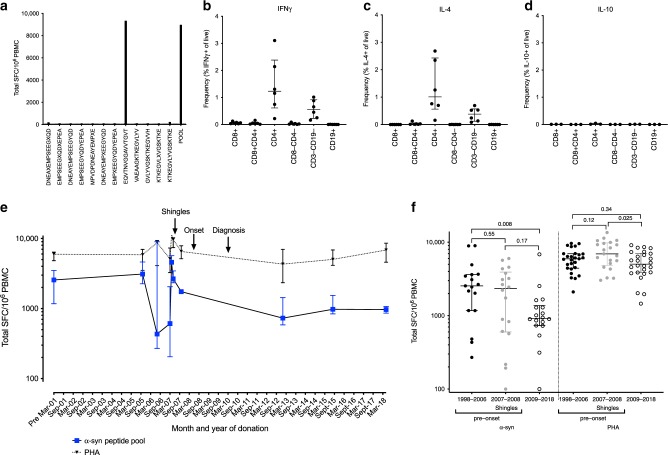
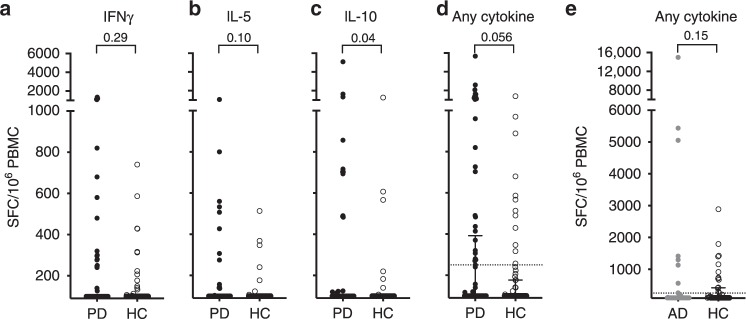
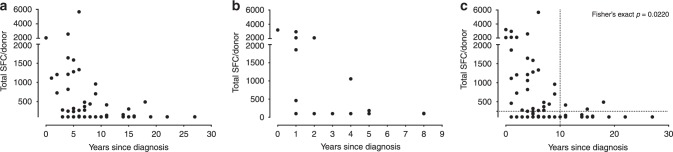
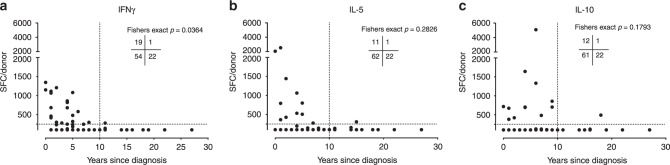
A diagnosis of motor Parkinson’s disease (PD) is preceded by a prolonged premotor phase with accumulating neuronal damage. Here we examined the temporal relation between α-synuclein (α-syn) T cell reactivity and PD. A longitudinal case study revealed that elevated α-syn-specific T cell responses were detected prior to the diagnosis of motor PD, and declined after. The relationship between T cell reactivity and early PD in two independent cohorts showed that α-syn-specific T cell responses were highest shortly after diagnosis of motor PD and then decreased. Additional analysis revealed significant association of α-syn-specific T cell responses with age and lower levodopa equivalent dose. These results confirm the presence of α-syn-reactive T cells in PD and show that they are most abundant immediately after diagnosis of motor PD. These cells may be present years before the diagnosis of motor PD, suggesting avenues of investigation into PD pathogenesis and potential early diagnosis.
Overview
The claims and statistics of this paper haven’t been checked yet.
Free: it reads the open-access text and checks the first 5 claims that cite a source we can check. Create a free account to check every claim.
Integrity signals
Registry
Cites
Statistics
Figures
Verification
Claims the paper makes
The claims and statistics of this paper haven’t been checked yet.
Free: it reads the open-access text and checks the first 5 claims that cite a source we can check. Create a free account to check every claim.
Claims other papers make about this one
Each is checked against this paper’s own text: does it say what the citing paper says it does?
The source backs part of the claim, not all of it — or backs it for a different population, condition or comparison.
In the citing paper
“Microglia activation by α-synuclein aggregates or other factors can increase the expression of MHC I expression on neurons, enhance the presentation of α-synuclein antigens by neurons, which were subsequently killed by α-synuclein reactive T cells.74–76”
From Role of neuroinflammation in neurodegeneration development (2023) · cites this paper as [75]
Experimental — accuracy not yet measuredThe source backs part of the claim, not all of it — or backs it for a different population, condition or comparison.
In the citing paper
“A high number of T cells response to α-synuclein were found in the brain of PD patients and mouse model.”
From Role of neuroinflammation in neurodegeneration development (2023) · cites this paper as [75]
Experimental — accuracy not yet measuredThe source backs part of the claim, not all of it — or backs it for a different population, condition or comparison.
In the citing paper
“Recently, numerous evidences suggest that adaptive immune system plays important role in approximately 40% PD.”
From Role of neuroinflammation in neurodegeneration development (2023) · cites this paper as [75]
Experimental — accuracy not yet measuredThe cited source says what the claim attributes to it.
In the citing paper
“A strong CD4 + T cell response to a-synuclein epitopes can be detected before the onset and diagnosis of Parkinson's disease.95”
From The role of gut dysbiosis in Parkinson’s disease: mechanistic insights and therapeutic options (2021) · cites this paper as [95]
Self-check
Percentages, sums and reported differences re-computed from the paper’s own numbers.
The self-check needs the paper’s full text.
Citations
Cites
McKhann, G., Drachman, D., Folstein, M., Katzman, R., Price, D., & Stadlan, E. M. (1984) · Neurology · doi:10.1212/wnl.34.7.939 · Cited by 27,915
The Montreal Cognitive Assessment, MoCA: a brief screening tool for mild cognitive impairment
Nasreddine, Z. S., Phillips, N. A., Bédirian, V., Charbonneau, S., Whitehead, V., Collin, I., Cummings, J. L., & Chertkow, H. (2005) · Journal of the American Geriatrics Society · doi:10.1111/j.1532-5415.2005.53221.x · Cited by 25,553
McKhann, G. M., Knopman, D. S., Chertkow, H., Hyman, B. T., Jack, C. R., Kawas, C. H., Klunk, W. E., Koroshetz, W. J., Manly, J. J., Mayeux, R., et al. (2011) · Alzheimer's & Dementia · doi:10.1016/j.jalz.2011.03.005 · Cited by 18,657
Systematic review of levodopa dose equivalency reporting in Parkinson's disease
Tomlinson, C. L., Stowe, R., Patel, S., Rick, C., Gray, R., & Clarke, C. E. (2010) · Movement Disorders · doi:10.1002/mds.23429 · Cited by 4,219
Evolution of the immune system in humans from infancy to old age
Simon, A. K., Hollander, G. A., & McMichael, A. (2015) · Proceedings of the Royal Society B: Biological Sciences · doi:10.1098/rspb.2014.3085 · Cited by 1,796
Incidence of Parkinson's Disease: Variation by Age, Gender, and Race/Ethnicity
Van Den Eeden, S. K. (2003) · American Journal of Epidemiology · doi:10.1093/aje/kwg068 · Cited by 1,747
Disease duration and the integrity of the nigrostriatal system in Parkinson’s disease
Kordower, J. H., Olanow, C. W., Dodiya, H. B., Chu, Y., Beach, T. G., Adler, C. H., Halliday, G. M., & Bartus, R. T. (2013) · Brain · doi:10.1093/brain/awt192 · Cited by 1,286
Accuracy of clinical diagnosis of Parkinson disease: A systematic review and meta-analysis
Rizzo, G., Copetti, M., Arcuti, S., Martino, D., Fontana, A., & Logroscino, G. (2016) · Neurology · doi:10.1212/wnl.0000000000002350 · Cited by 870
T cells from patients with Parkinson’s disease recognize α-synuclein peptides
Sulzer, D., Alcalay, R. N., Garretti, F., Cote, L., Kanter, E., Agin-Liebes, J., Liong, C., McMurtrey, C., Hildebrand, W. H., Mao, X., et al. (2017) · Nature · doi:10.1038/nature22815 · Cited by 866
Self-citationThe who's who of T ‐cell differentiation: Human memory T ‐cell subsets
Mahnke, Y. D., Brodie, T. M., Sallusto, F., Roederer, M., & Lugli, E. (2013) · European Journal of Immunology · doi:10.1002/eji.201343751 · Cited by 817
Self-citation
Cited by
Role of neuroinflammation in neurodegeneration development
Zhang, W., Xiao, D., Mao, Q., & Xia, H. (2023) · Signal Transduction and Targeted Therapy · doi:10.1038/s41392-023-01486-5 · Cited by 1,668
Inflammation and immune dysfunction in Parkinson disease
Tansey, M. G., Wallings, R. L., Houser, M. C., Herrick, M. K., Keating, C. E., & Joers, V. (2022) · Nature Reviews Immunology · doi:10.1038/s41577-022-00684-6 · Cited by 1,382
The pathogenesis of Parkinson's disease
Morris, H. R., Spillantini, M. G., Sue, C. M., & Williams-Gray, C. H. (2024) · The Lancet · doi:10.1016/s0140-6736(23)01478-2 · Cited by 1,019
Calabresi, P., Mechelli, A., Natale, G., Volpicelli-Daley, L., Di Lazzaro, G., & Ghiglieri, V. (2023) · Cell Death & Disease · doi:10.1038/s41419-023-05672-9 · Cited by 817
Transforming the understanding of brain immunity
Castellani, G., Croese, T., Peralta Ramos, J. M., & Schwartz, M. (2023) · Science · doi:10.1126/science.abo7649 · Cited by 386
Neurodegeneration and Inflammation—An Interesting Interplay in Parkinson’s Disease
Marogianni, C., Sokratous, M., Dardiotis, E., Hadjigeorgiou, G. M., Bogdanos, D., & Xiromerisiou, G. (2020) · International Journal of Molecular Sciences · doi:10.3390/ijms21228421 · Cited by 366
“This process highlights the implication of the innate immune system to the disease course, and mostly the fact that α-synuclein fibrils are potentially involved in the early stages of PD, and therefore they are promising candidate biomarkers for the preclinical PD [53,54].”
BackgroundDopamine, Immunity, and Disease
Channer, B., Matt, S. M., Nickoloff-Bybel, E. A., Pappa, V., Agarwal, Y., Wickman, J., & Gaskill, P. J. (2023) · Pharmacological Reviews · doi:10.1124/pharmrev.122.000618 · Cited by 308
CD4 T cells mediate brain inflammation and neurodegeneration in a mouse model of Parkinson's disease
Williams, G. P., Schonhoff, A. M., Jurkuvenaite, A., Gallups, N. J., Standaert, D. G., & Harms, A. S. (2021) · Brain · doi:10.1093/brain/awab103 · Cited by 306
Self-citationEmerging roles of innate and adaptive immunity in Alzheimer’s disease
Chen, X., & Holtzman, D. M. (2022) · Immunity · doi:10.1016/j.immuni.2022.10.016 · Cited by 297
The role of gut dysbiosis in Parkinson’s disease: mechanistic insights and therapeutic options
Wang, Q., Luo, Y., Ray Chaudhuri, K., Reynolds, R., Tan, E.-K., & Pettersson, S. (2021) · Brain · doi:10.1093/brain/awab156 · Cited by 281
Periphery and brain, innate and adaptive immunity in Parkinson’s disease
Harms, A. S., Ferreira, S. A., & Romero-Ramos, M. (2021) · Acta Neuropathologica · doi:10.1007/s00401-021-02268-5 · Cited by 272
The role of Toll-like receptors and neuroinflammation in Parkinson’s disease
Heidari, A., Yazdanpanah, N., & Rezaei, N. (2022) · Journal of Neuroinflammation · doi:10.1186/s12974-022-02496-w · Cited by 275
“It has also been shown that these memory T cells can appear even before the start of clinical manifestations of the disease, and therefore it would be worthwhile to determine their efficacy as early PD biomarkers [58].”
BackgroundAlpha-Synuclein Aggregation in Parkinson's Disease
Srinivasan, E., Chandrasekhar, G., Chandrasekar, P., Anbarasu, K., Vickram, A. S., Karunakaran, R., Rajasekaran, R., & Srikumar, P. S. (2021) · Frontiers in Medicine · doi:10.3389/fmed.2021.736978 · Cited by 248
The role of T cells in age-related diseases
Carrasco, E., Gómez de las Heras, M. M., Gabandé-Rodríguez, E., Desdín-Micó, G., Aranda, J. F., & Mittelbrunn, M. (2022) · Nature Reviews Immunology · doi:10.1038/s41577-021-00557-4 · Cited by 239
STING mediates neurodegeneration and neuroinflammation in nigrostriatal α-synucleinopathy
Hinkle, J. T., Patel, J., Panicker, N., Karuppagounder, S. S., Biswas, D., Belingon, B., Chen, R., Brahmachari, S., Pletnikova, O., Troncoso, J. C., et al. (2022) · Proceedings of the National Academy of Sciences · doi:10.1073/pnas.2118819119 · Cited by 240
CD4 + T cells contribute to neurodegeneration in Lewy body dementia
Gate, D., Tapp, E., Leventhal, O., Shahid, M., Nonninger, T. J., Yang, A. C., Strempfl, K., Unger, M. S., Fehlmann, T., Oh, H., et al. (2021) · Science · doi:10.1126/science.abf7266 · Cited by 214
Ten Unsolved Questions About Neuroinflammation in Parkinson's Disease
Hirsch, E. C., & Standaert, D. G. (2021) · Movement Disorders · doi:10.1002/mds.28075 · Cited by 189
Self-citationBido, S., Muggeo, S., Massimino, L., Marzi, M. J., Giannelli, S. G., Melacini, E., Nannoni, M., Gambarè, D., Bellini, E., Ordazzo, G., et al. (2021) · Nature Communications · doi:10.1038/s41467-021-26519-x · Cited by 190
Picca, A., Guerra, F., Calvani, R., Romano, R., Coelho-Júnior, H. J., Bucci, C., & Marzetti, E. (2021) · Biomolecules · doi:10.3390/biom11101508 · Cited by 189
The Gut–Brain Axis and Its Relation to Parkinson’s Disease: A Review
Klann, E. M., Dissanayake, U., Gurrala, A., Farrer, M., Shukla, A. W., Ramirez-Zamora, A., Mai, V., & Vedam-Mai, V. (2022) · Frontiers in Aging Neuroscience · doi:10.3389/fnagi.2021.782082 · Cited by 182
Parkinson's Disease: A Multisystem Disorder
Costa, H. N., Esteves, A. R., Empadinhas, N., & Cardoso, S. M. (2023) · Neuroscience Bulletin · doi:10.1007/s12264-022-00934-6 · Cited by 181
“A serological increase in antiinflammatory cytokines has also been demonstrated, and is thought to be due to compensatory mechanisms [101, 102].”
BackgroundMacMahon Copas, A. N., McComish, S. F., Fletcher, J. M., & Caldwell, M. A. (2021) · Frontiers in Neurology · doi:10.3389/fneur.2021.666737 · Cited by 173
“, determined in a single longitudinal case study that this α-syn-specific T cell response was elevated prior to diagnosis and decreased thereafter (142).”
BackgroundAlpha-synuclein research: defining strategic moves in the battle against Parkinson’s disease
Oliveira, L. M. A., Gasser, T., Edwards, R., Zweckstetter, M., Melki, R., Stefanis, L., Lashuel, H. A., Sulzer, D., Vekrellis, K., Halliday, G. M., et al. (2021) · npj Parkinson's Disease · doi:10.1038/s41531-021-00203-9 · Cited by 168
Self-citationAging and Neurodegenerative Disease: Is the Adaptive Immune System a Friend or Foe?
Mayne, K., White, J. A., McMurran, C. E., Rivera, F. J., & de la Fuente, A. G. (2020) · Frontiers in Aging Neuroscience · doi:10.3389/fnagi.2020.572090 · Cited by 167
Schonhoff, A. M., Figge, D. A., Williams, G. P., Jurkuvenaite, A., Gallups, N. J., Childers, G. M., Webster, J. M., Standaert, D. G., Goldman, J. E., & Harms, A. S. (2023) · Nature Communications · doi:10.1038/s41467-023-39060-w · Cited by 161
Self-citationBoyd, R. J., Avramopoulos, D., Jantzie, L. L., & McCallion, A. S. (2022) · Journal of Neuroinflammation · doi:10.1186/s12974-022-02584-x · Cited by 153
“While there is some evidence of T-cell reactivity to nitrated SNCA epitopes (this posttranslational modification is not recognized as a selfprotein) in early PD [154], studies assaying anti-SNCA B-cell antibody levels in PD patients present discordant data [155].”
The immune system in Parkinson's disease: what we know so far
Roodveldt, C., Bernardino, L. I., Çakmak, Ö. Ö., Dragić, M., Fladmark, K. E., Ertan, S., Aktaş, B., Pita, C., Ciglar, L., Garraux, G., et al. (2024) · Brain · doi:10.1093/brain/awae177 · Cited by 174
“242,243 A recent scRNAseq T-cell receptor (TCR) study suggests that α -syn peptides could indeed be responsible for the clonal T-cell expansion seen in PD. 238 However, α -syn-specific T-cell reactivity is not found in all PD patients, suggesting again a heterogeneity in the immune response.”
BackgroundPanagiotakopoulou, V., Ivanyuk, D., De Cicco, S., Haq, W., Arsić, A., Yu, C., Messelodi, D., Oldrati, M., Schöndorf, D. C., Perez, M.-J., et al. (2020) · Nature Communications · doi:10.1038/s41467-020-18755-4 · Cited by 131
Kline, E. M., Houser, M. C., Herrick, M. K., Seibler, P., Klein, C., West, A., & Tansey, M. G. (2021) · Movement Disorders · doi:10.1002/mds.28411 · Cited by 130
Hällqvist, J., Bartl, M., Dakna, M., Schade, S., Garagnani, P., Bacalini, M. G., Pirazzini, C., Bhatia, K. P., Schreglmann, S. R., Xylaki, M., et al. (2024) · Nature Communications · doi:10.1038/s41467-024-48961-3 · Cited by 150
Goddery, E. N., Fain, C. E., Lipovsky, C. G., Ayasoufi, K., Yokanovich, L. T., Malo, C. S., Khadka, R. H., Tritz, Z. P., Jin, F., Hansen, M. J., et al. (2021) · Frontiers in Immunology · doi:10.3389/fimmu.2021.726421 · Cited by 128
Neurodegeneration by α-synuclein-specific T cells in AAV-A53T-α-synuclein Parkinson’s disease mice
Karikari, A. A., McFleder, R. L., Ribechini, E., Blum, R., Bruttel, V., Knorr, S., Gehmeyr, M., Volkmann, J., Brotchie, J. M., Ahsan, F., et al. (2022) · Brain, Behavior, and Immunity · doi:10.1016/j.bbi.2022.01.007 · Cited by 116
Dysregulation of the Adaptive Immune System in Patients With Early-Stage Parkinson Disease
Yan, Z., Yang, W., Wei, H., Dean, M. N., Standaert, D. G., Cutter, G., Benveniste, E. N., & Qin, H. (2021) · Neurology Neuroimmunology & Neuroinflammation · doi:10.1212/nxi.0000000000001036 · Cited by 120
“CD8 T cells from patients with PD recognize α-Syn peptides and produce IFN-γ, which potentially contributes to pathogenic immune responses in PD.(12,13) Our results demonstrate an increase of IFN-γ–producing CD8 T cells in response to PMA/ionomycin in patients with PD.”
BackgroundResultSelf-citationImmune responses in the Parkinson's disease brain
Weiss, F. C., Labrador‐Garrido, A., Dzamko, N. L., & Halliday, G. M. (2022) · Neurobiology of Disease · doi:10.1016/j.nbd.2022.105700 · Cited by 105
The immunology of Parkinson’s disease
Zhu, B., Yin, D., Zhao, H., & Zhang, L. (2022) · Seminars in Immunopathology · doi:10.1007/s00281-022-00947-3 · Cited by 119
Antigen-presenting innate lymphoid cells orchestrate neuroinflammation
Grigg, J. B., Shanmugavadivu, A., Regen, T., Parkhurst, C. N., Ahmed, A., Joseph, A. M., Mazzucco, M. R., Gronke, K., Diefenbach, A., Eberl, G., et al. (2021) · Nature · doi:10.1038/s41586-021-04136-4 · Cited by 99
Single-cell transcriptomic and proteomic analysis of Parkinson’s disease brains
Zhu, B., Park, J.-M., Coffey, S., Russo, A. J., Hsu, I.-U. Y., Wang, J., Su, C., Chang, R. B., Lam, T. T., Gopal, P. P., et al. (2024) · Science Translational Medicine · doi:10.1126/scitranslmed.abo1997 · Cited by 117
Grotemeyer, A., McFleder, R. L., Wu, J., Wischhusen, J., & Ip, C. W. (2022) · Frontiers in Immunology · doi:10.3389/fimmu.2022.878771 · Cited by 90
Clonally expanded CD8 T cells characterize amyotrophic lateral sclerosis-4
Campisi, L., Chizari, S., Ho, J., Gromova, A., Arnold, F. J., Mosca, L., Mei, X., Fstkchyan, Y. S., Torre, D., Beharry, C., et al. (2022) · Nature · doi:10.1038/s41586-022-04844-5 · Cited by 99
Kip, E., & Parr‐Brownlie, L. C. (2022) · Ageing Research Reviews · doi:10.1016/j.arr.2022.101618 · Cited by 98
GSK-3β: An exuberating neuroinflammatory mediator in Parkinson's disease
Khan, S. S., Janrao, S., Srivastava, S., Singh, S. B., Vora, L. K., & Khatri, D. K. (2023) · Biochemical Pharmacology · doi:10.1016/j.bcp.2023.115496 · Cited by 88
Thome, A. D., Atassi, F., Wang, J., Faridar, A., Zhao, W., Thonhoff, J. R., Beers, D. R., Lai, E. C., & Appel, S. H. (2021) · npj Parkinson s Disease · doi:10.1038/s41531-021-00188-5 · Cited by 91
Duan, W.-X., Wang, F., Liu, J., & Liu, C. (2023) · Neuroscience Bulletin · doi:10.1007/s12264-023-01123-9 · Cited by 95
Hollenbach, J. A., Norman, P. J., Creary, L. E., Damotte, V., Montero-Martin, G., Caillier, S., Anderson, K. M., Misra, M. K., Nemat-Gorgani, N., Osoegawa, K., et al. (2019) · Proceedings of the National Academy of Sciences · doi:10.1073/pnas.1821778116 · Cited by 76
Type 2 Diabetes and Parkinson's Disease: A Focused Review of Current Concepts
Cullinane, P. W., Pablo‐Fernández, E. D., König, A., Outeiro, T. F., Jaunmuktane, Z., & Warner, T. T. (2022) · Movement Disorders · doi:10.1002/mds.29298 · Cited by 83
CNS-Draining Meningeal Lymphatic Vasculature: Roles, Conundrums and Future Challenges
das Neves, S. P., Delivanoglou, N., & Mesquita, S. D. (2021) · Frontiers in Pharmacology · doi:10.3389/fphar.2021.655052 · Cited by 79
Blood and Cerebrospinal Fluid Biomarkers of Inflammation in Parkinson’s Disease
Zimmermann, M., & Brockmann, K. (2022) · Journal of Parkinson s Disease · doi:10.3233/jpd-223277 · Cited by 87
Role of Peripheral Immune Cells-Mediated Inflammation on the Process of Neurodegenerative Diseases
Yang, Q., Wang, G., & Zhang, F. (2020) · Frontiers in Immunology · doi:10.3389/fimmu.2020.582825 · Cited by 81
“Moreover, a relationship between α-syn-specific T cells and PD emerged that the presence of these T cells might be a feature of preclinical and early motor PD (80).”
BackgroundFine mapping of the HLA locus in Parkinson’s disease in Europeans
Yu, E., Ambati, A., Andersen, M. S., Krohn, L., Estiar, M. A., Saini, P., Senkevich, K. A., Sosero, Y. L., Sreelatha, A. A. K., Ruskey, J. A., et al. (2021) · npj Parkinson's Disease · doi:10.1038/s41531-021-00231-5 · Cited by 85
White matter injury across neurodegenerative disease
Festa, L. K., Grinspan, J. B., & Jordan‐Sciutto, K. L. (2023) · Trends in Neurosciences · doi:10.1016/j.tins.2023.11.003 · Cited by 88
Alpha-Synuclein Contribution to Neuronal and Glial Damage in Parkinson’s Disease
Saramowicz, K., Siwecka, N., Galita, G., Kucharska-Lusina, A., Rozpędek‐Kamińska, W., & Majsterek, I. (2023) · International Journal of Molecular Sciences · doi:10.3390/ijms25010360 · Cited by 88
Role of P2X7 Receptors in Immune Responses During Neurodegeneration
Oliveira-Giacomelli, Á., Petiz, L. L., Andrejew, R., Turrini, N., Silva, J. B., Sack, U., & Ulrich, H. (2021) · Frontiers in Cellular Neuroscience · doi:10.3389/fncel.2021.662935 · Cited by 68
Bido, S., Nannoni, M., Muggeo, S., Gambarè, D., Ruffini, G., Bellini, E. N., Passeri, L., Iaia, S., Luoni, M., Provinciali, M., et al. (2024) · Science Translational Medicine · doi:10.1126/scitranslmed.adm8563 · Cited by 77
Wang, P., Luo, M., Zhou, W., Jin, X., Xu, Z., Yan, S., Li, Y., Xu, C., Cheng, R., Huang, Y., et al. (2022) · Frontiers in Immunology · doi:10.3389/fimmu.2022.814239 · Cited by 78
“Specific variants in the HLA region are associated with PD (10, 11), and a-synuclein specific T cells were found to be involved in the pathogenesis of PD (12, 13).”
BackgroundNeuroinflammation in Parkinson’s Disease: Triggers, Mechanisms, and Immunotherapies
Wang, T., Shi, C., Luo, H., Zheng, H., Fan, L., Tang, M., Su, Y., Yang, J., Mao, C., & Xu, Y. (2021) · The Neuroscientist · doi:10.1177/1073858421991066 · Cited by 73
How the immune system shapes neurodegenerative diseases
Mason, H. D., & McGavern, D. B. (2022) · Trends in Neurosciences · doi:10.1016/j.tins.2022.08.001 · Cited by 68
Yu, J., Zhou, R., Liu, S., Zheng, J., Yan, H., Su, S., Chai, N., Segal, E., Jiang, C., Guo, K., et al. (2025) · Analytical Chemistry · doi:10.1021/acs.analchem.4c02619 · Cited by 67
Brain and Systemic Inflammation in De Novo Parkinson's Disease
Yacoubian, T. A., Fang, Y.-H. D., Gerstenecker, A. T., Amara, A. W., Stover, N. P., Ruffrage, L., Collette, C., Kennedy, R., Zhang, Y., Hong, H., et al. (2023) · Movement Disorders · doi:10.1002/mds.29363 · Cited by 73
Self-citationT-cell dysregulation is associated with disease severity in Parkinson’s Disease
Bhatia, D., Grozdanov, V., Ruf, W. P., Kassubek, J., Ludolph, A. C., Weishaupt, J. H., & Danzer, K. M. (2021) · Journal of Neuroinflammation · doi:10.1186/s12974-021-02296-8 · Cited by 71
T Lymphocytes in Parkinson’s Disease
Contaldi, E., Magistrelli, L., & Comi, C. (2022) · Journal of Parkinson s Disease · doi:10.3233/jpd-223152 · Cited by 73
Role of Microgliosis and NLRP3 Inflammasome in Parkinson’s Disease Pathogenesis and Therapy
de Araújo, F. M., Cuenca‐Bermejo, L., Fernández‐Villalba, E., Costa, S. L., da Silva, V. D. A., & Herrero, M. T. (2021) · Cellular and Molecular Neurobiology · doi:10.1007/s10571-020-01027-6 · Cited by 67
Bogale, T. A., Faustini, G., Longhena, F., Mitola, S. M. F., Pizzi, M., & Bellucci, A. (2021) · Frontiers in Immunology · doi:10.3389/fimmu.2021.611761 · Cited by 67
“Alpha-synuclein-specific T-cell reactivity has been found to be higher in early PD while decreasing in patients with late-stage disease (164).”
BackgroundParkinsonism in viral, paraneoplastic, and autoimmune diseases
Xing, F., Marsili, L., & Truong, D. D. (2021) · Journal of the Neurological Sciences · doi:10.1016/j.jns.2021.120014 · Cited by 63
Neuroinflammation and Immune Changes in Prodromal Parkinson’s Disease and Other Synucleinopathies
Terkelsen, M. H., Klæstrup, I. H., Hvingelby, V. S., Lauritsen, J., Pavese, N., & Romero‐Ramos, M. (2022) · Journal of Parkinson s Disease · doi:10.3233/jpd-223245 · Cited by 73
Le Guen, Y., Luo, G., Ambati, A., Damotte, V., Jansen, I., Yu, E., Nicolas, A., de Rojas, I., Peixoto Leal, T., Miyashita, A., et al. (2023) · Proceedings of the National Academy of Sciences · doi:10.1073/pnas.2302720120 · Cited by 60
“Notably, comparisons of healthy controls and individuals with neurodegenerative diseases have shown that a complex polyclonal T cell response develops against α - synuclein, and tau (11–13).”
Immune mechanisms and shared immune targets in neurodegenerative diseases
Weiner, H. L. (2024) · Nature Reviews Neurology · doi:10.1038/s41582-024-01046-7 · Cited by 75
“Moreover, reactivity of T cells to α-synuclein is associated with preclinical and early motor PD 284 .”
Nissen, S. K., Farmen, K., Carstensen, M., Schulte, C., Goldeck, D., Brockmann, K., & Romero‐Ramos, M. (2022) · Brain Behavior and Immunity · doi:10.1016/j.bbi.2022.01.005 · Cited by 69
Garretti, F., Monahan, C., Sloan, N., Bergen, J., Shahriar, S., Kim, S. W., Sette, A., Cutforth, T., Kanter, E., Agalliu, D., et al. (2023) · Neuron · doi:10.1016/j.neuron.2023.07.015 · Cited by 67
Self-citationGan, Y., Ma, L., Zhang, Y., You, J., Guo, Y. X., He, Y., Wang, L., He, X.-Y., Li, Y., Dong, Q., et al. (2025) · Nature Aging · doi:10.1038/s43587-025-00818-0 · Cited by 81
Central and Peripheral Inflammation: Connecting the Immune Responses of Parkinson’s Disease
Williams, G. P., Schonhoff, A. M., Sette, A., & Arlehamn, C. S. L. (2022) · Journal of Parkinson s Disease · doi:10.3233/jpd-223241 · Cited by 72
Self-citationAbnormal B-Cell and Tfh-Cell Profiles in Patients With Parkinson Disease: A Cross-sectional Study
Li, R., Tropea, T. F., Baratta, L. R., Zuroff, L. R., Diaz‐Ortiz, M. E., Zhang, B., Shinoda, K., Rezk, A., Alcalay, R. N., Chen‐Plotkin, A. S., et al. (2021) · Neurology Neuroimmunology & Neuroinflammation · doi:10.1212/nxi.0000000000001125 · Cited by 62
Inflammation promotes synucleinopathy propagation
Kim, T.-K., Bae, E.-J., Jung, B. C., Choi, M.-S., Shin, S. J., Park, S. J., Kim, J. T., Jung, M. K., Ulusoy, A., Song, M., et al. (2022) · Experimental & Molecular Medicine · doi:10.1038/s12276-022-00895-w · Cited by 63
T Cells: A Growing Universe of Roles in Neurodegenerative Diseases
Dressman, D., & Elyaman, W. (2021) · The Neuroscientist · doi:10.1177/10738584211024907 · Cited by 68
Specific immune status in Parkinson’s disease at different ages of onset
Tian, J., Dai, S., Jiang, S., Yang, W., Yan, Y., Lin, Z., Dong, J., Liu, Y., Zheng, R., Chen, Y., et al. (2022) · npj Parkinson's Disease · doi:10.1038/s41531-021-00271-x · Cited by 68
Olson, K. E., Namminga, K. L., Lu, Y., Schwab, A. D., Thurston, M. J., Abdelmoaty, M. M., Kumar, V. S., Wojtkiewicz, M. S., Obaro, H., Santamaria, P. M., et al. (2021) · EBioMedicine · doi:10.1016/j.ebiom.2021.103380 · Cited by 63
The Involvement of Neuroinflammation in the Onset and Progression of Parkinson’s Disease
Jurcău, A., Andronie-Cioară, F. L., Nistor-Cseppento, C. D., Pașcalău, N., Rus, M., Vasca, E., & Jurcău, M. C. (2023) · International Journal of Molecular Sciences · doi:10.3390/ijms241914582 · Cited by 64
“Peripheral T cells of patients with PD are able to recognize α-synuclein peptides [210,211].”
Neurons and Glia Interplay in α-Synucleinopathies
Mavroeidi, P., & Xilouri, M. (2021) · International Journal of Molecular Sciences · doi:10.3390/ijms22094994 · Cited by 64
Dhanwani, R., Lima-Júnior, J. R., Sethi, A., Pham, J. W., Williams, G. P., Frazier, A., Xu, Y., Amara, A. W., Standaert, D. G., Goldman, J. G., et al. (2022) · npj Parkinson's Disease · doi:10.1038/s41531-022-00282-2 · Cited by 56
Self-citationLi, J., Zhao, J., Chen, L., Gao, H., Zhang, J., Wang, D., Zou, Y., Qin, Q., Qu, Y., Li, J., et al. (2022) · Brain Behavior and Immunity · doi:10.1016/j.bbi.2022.10.023 · Cited by 56
B lymphocyte responses in Parkinson’s disease and their possible significance in disease progression
Scott, K. M., Chong, Y. T., Park, S., Wijeyekoon, R., Hayat, S., Mathews, R. J., Fitzpatrick, Z., Tyers, P., Wright, G., Whitby, J., et al. (2023) · Brain Communications · doi:10.1093/braincomms/fcad060 · Cited by 53
“after diagnosis, compared with those later in the disease course.(8) Interestingly, we did not find a difference in alpha-”
ResultThe role of the CD8+ T cell compartment in ageing and neurodegenerative disorders
Terrabuio, E., Zenaro, E., & Constantin, G. (2023) · Frontiers in Immunology · doi:10.3389/fimmu.2023.1233870 · Cited by 57
SARS‐COV‐2 infection and Parkinson's disease: Possible links and perspectives
Al-Kuraishy, H. M., Al-Gareeb, A. I., Kaushik, A. K., Kujawska, M., Ahmed, E., & Batiha, G. E. (2023) · Journal of Neuroscience Research · doi:10.1002/jnr.25171 · Cited by 48
The MegaPool Approach to Characterize Adaptive CD4+ and CD8+ T Cell Responses
Antunes, R. D. S., Weiskopf, D., Sidney, J., Rubiro, P., Peters, B., Arlehamn, C. S. L., Grifoni, A., & Sette, A. (2023) · Current Protocols · doi:10.1002/cpz1.934 · Cited by 47
Self-citationThe immunoproteasome disturbs neuronal metabolism and drives neurodegeneration in multiple sclerosis
Woo, M. S., Brand, J., Bal, L. C., Moritz, M., Walkenhorst, M., Vieira, V., Ipenberg, I., Rothammer, N., Wang, M., Dogan, B., et al. (2025) · Cell · doi:10.1016/j.cell.2025.05.029 · Cited by 55
Lipid nanoparticle (LNP) mediated mRNA delivery in neurodegenerative diseases
Moosavi, S. G., Rahiman, N., Jaafari, M. R., & Arabi, L. (2025) · Journal of Controlled Release · doi:10.1016/j.jconrel.2025.113641 · Cited by 61
Sex-based differences in the activation of peripheral blood monocytes in early Parkinson disease
Carlisle, S. M., Qin, H., Hendrickson, R. C., Muwanguzi, J. E., Lefkowitz, E. J., Kennedy, R., Yan, Z., Yacoubian, T. A., Benveniste, E. N., West, A. B., et al. (2021) · npj Parkinson s Disease · doi:10.1038/s41531-021-00180-z · Cited by 50
Self-citationGranzyme K+ CD8 T cells slow tauopathy progression by targeting microglia
Mason, H. D., Latour, Y. L., Boughter, C. T., Johnson, K. R., Maric, D., Dorrier, C., Guedes, V. A., Lai, C., Duncker, P. C., Johnson, A. M., et al. (2025) · Nature Immunology · doi:10.1038/s41590-025-02198-4 · Cited by 54
“CD8 + and CD4 + T cells were also linked to neurogenerative diseases, including AD 20,29–33 , tauopathy 24,34 , Parkinson’s disease 22,25,35,36 and amyotrophic lateral sclerosis 37–39 , but T cell depletion in animal models has yielded different outcomes depending on the specific model, disease…”
Parkinson's disease is an autoimmune disease: A reappraisal
Bonam, S. R., & Muller, S. (2020) · Autoimmunity Reviews · doi:10.1016/j.autrev.2020.102684 · Cited by 46
Hong, H., Wang, Y., Menard, M. A., Buckley, J. A., Zhou, L., Volpicelli‐Daley, L. A., Standaert, D. G., Qin, H., & Benveniste, E. N. (2024) · Journal of Neuroinflammation · doi:10.1186/s12974-024-03210-8 · Cited by 47
Self-citationMolecular and Cellular Interactions in Pathogenesis of Sporadic Parkinson Disease
Долгачева, Л. П., Зинченко, В. П., & Goncharov, N. V. (2022) · International Journal of Molecular Sciences · doi:10.3390/ijms232113043 · Cited by 51
Capelle, C., Ciré, S., Hedin, F., Hansen, M., Pavelka, L., Grzyb, K., Kyriakis, D., Hunewald, O. E., Konstantinou, M., Revets, D., et al. (2023) · Nature Communications · doi:10.1038/s41467-023-43053-0 · Cited by 49
Novel human iPSC models of neuroinflammation in neurodegenerative disease and regenerative medicine
Summers, R. A., Fagiani, F., Rowitch, D. H., Absinta, M., & Reich, D. S. (2024) · Trends in Immunology · doi:10.1016/j.it.2024.08.004 · Cited by 39
The TCR repertoire of α-synuclein-specific T cells in Parkinson’s disease is surprisingly diverse
Singhania, A., Pham, J. W., Dhanwani, R., Frazier, A., Dutra, J. R., Marder, K. S., Phillips, E. J., Mallal, S. A., Amara, A. W., Standaert, D. G., et al. (2021) · Scientific Reports · doi:10.1038/s41598-020-79726-9 · Cited by 41
Self-citationAge-Related Midbrain Inflammation and Senescence in Parkinson’s Disease
Russo, T., & Rießland, M. (2022) · Frontiers in Aging Neuroscience · doi:10.3389/fnagi.2022.917797 · Cited by 40
Therapeutic Strategies for Immune Transformation in Parkinson’s Disease
Saleh, M., Marković, M., Olson, K. E., Gendelman, H. E., & Mosley, R. L. (2022) · Journal of Parkinson s Disease · doi:10.3233/jpd-223278 · Cited by 44
Genotype-driven therapeutic developments in Parkinson’s disease
Prasuhn, J., & Brüggemann, N. (2021) · Molecular Medicine · doi:10.1186/s10020-021-00281-8 · Cited by 44
Extracellular alpha-synuclein: Sensors, receptors, and responses
Domingues, R., Sant’Anna, R., da Fonseca, A. C. C., Robbs, B. K., Foguel, D., & Outeiro, T. F. (2022) · Neurobiology of Disease · doi:10.1016/j.nbd.2022.105696 · Cited by 41
T cells, α-synuclein and Parkinson disease
Garretti, F., Monahan, C., Sette, A., Agalliu, D., & Sulzer, D. (2022) · Handbook of clinical neurology · doi:10.1016/b978-0-12-819410-2.00023-0 · Cited by 42
Self-citationLerche, S., Zimmermann, M., Wurster, I., Röeben, B., Fries, F. L., Deuschle, C., Waniek, K., Lachmann, I., Gasser, T., Jakobi, M., et al. (2022) · Frontiers in Neurology · doi:10.3389/fneur.2022.834580 · Cited by 38
Changes of T lymphocyte subpopulations and their roles in predicting the risk of Parkinson’s disease
He, Y., Peng, K., Li, R., Zhang, Z., Pan, L., Zhang, T., Lin, A., Hong, R., Nie, Z., Guan, Q., et al. (2022) · Journal of Neurology · doi:10.1007/s00415-022-11190-z · Cited by 39
Metadata
- Authors
- Lindestam Arlehamn, C. S., Dhanwani, R., Pham, J., Kuan, R., Frazier, A., Rezende Dutra, J., Phillips, E., Mallal, S., Roederer, M., Marder, K. S., Amara, A. W., Standaert, D. G., Goldman, J. G., Litvan, I., Peters, B., Sulzer, D., & Sette, A.
- Affiliations
- La Jolla Institute for Immunology (US)
- Murdoch University (AU)
- National Institutes of Health (US)
- Columbia University Irving Medical Center (US)
- University of Alabama at Birmingham (US)
- Northwestern University (US)
- University of California San Diego (US)
- Corresponding author
- Sulzer, David
- Sette, Alessandro
- ORCID
- Venue
- Nature Communications
- Published
- 2020-04-20
- Volume
- 11
- Issue
- 1
- Pages
- 1875-1875
- ISSN
- 2041-1723 (ISSN-L)
- PMC
- PMC7171193
- OpenAlex
- W3016458340
- Semantic Scholar
- 4892a025b9032bb745aa0ad742988ec589d462e5
- Cited by
- 386
- References
- 40
- Citations by year
- 2026: 33 · 2025: 59 · 2024: 72 · 2023: 70 · 2022: 82 · 2021: 54 · 2020: 15
- FWCI
- 23.92
- Type
- journal article
- Language
- en
- Open access
- gold
- doi.org
- Licence
- cc-by
- creativecommons.org/licenses/by/4.0 (tdm)
- creativecommons.org/licenses/by/4.0 (vor)
- Locations
- Nature Communications (publishedVersion, cc-by)
- PubMed Central (publishedVersion, cc-by)
- PubMed (publishedVersion)
- Murdoch University Research Portal (submittedVersion)
- DOAJ (DOAJ: Directory of Open Access Journals) (submittedVersion, cc-by-sa)
- eScholarship (California Digital Library) (submittedVersion)
- Funders
- U.S. Department of Health & Human Services | NIH | National Institute of Neurological Disorders and Stroke (R01NS095435, P50NS108675)
- U.S. Department of Health & Human Services | NIH | National Institute on Aging (P50AG08702)
- Parkinson's Foundation
- Michael J. Fox Foundation for Parkinson's Research
- UCSD-LJI Program in Immunology
- Topics
- Health Sciences › Medicine › Clinical Neurology › Parkinson's Disease Mechanisms and Treatments
- Life Sciences › Neuroscience › Neurology › Neuroinflammation and Neurodegeneration Mechanisms
- Life Sciences › Biochemistry, Genetics and Molecular Biology › Molecular Biology › Nuclear Receptors and Signaling
- Keywords
- alpha-synuclein, T cell response, Parkinson's disease, early diagnosis, autoimmunity, levodopa equivalent daily dose, pathogenesis
- MeSH terms
- Aged, Aged, 80 and over, Female, Humans, Levodopa, Longitudinal Studies, Male, Middle Aged, Neurons, Parkinson Disease, T-Lymphocytes, Cytokines, alpha-Synuclein
About these checks
Registry, retraction, Cites and statistics results are computed, not judged, with one exception: a printed reference that no index lists is read once by a model before it counts as a citation error. Claims are extracted by a model and kept only when their quote appears verbatim in the text; each cited source is then checked, with a model’s help, for whether it says what the claim relies on. Those verdicts can be wrong — read the claim’s quote and the cited source before relying on one.
Statistics and arithmetic are recomputed, not judged.
Confidence bands are shown only for fields calibrated on our annotated test set. None is calibrated yet, so no band is shown.
What counts as a claim ›How we measure confidence ›How we check this ›
Are you an author, or do you see a problem with this page? Request a review
Data sources
Bibliographic data: Semantic Scholar, OpenAlex, Crossref.
Contains information from the Semantic Scholar Academic Graph Datasets, made available under the ODC Attribution License (ODC-BY 1.0).
Semantic Scholar’s data is described in: Kinney, R., et al. (2023). The Semantic Scholar Open Data Platform. arXiv:2301.10140.
