

α-Synuclein-specific T cell reactivity is associated with preclinical and early Parkinson’s disease
Open accessThe DOI matches its Crossref record; 39 of the 40 references it cites were found in a registry or an index.
Abstract
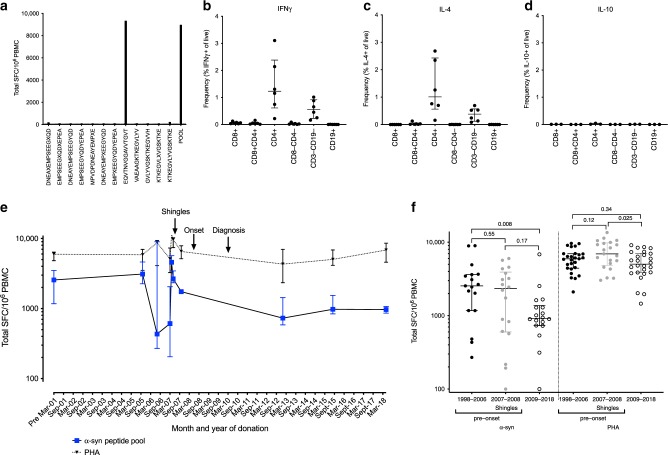
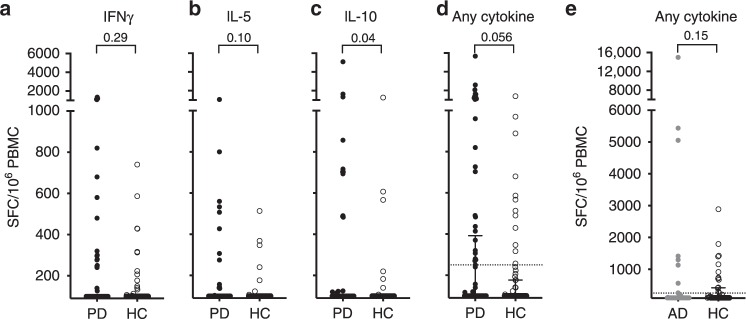
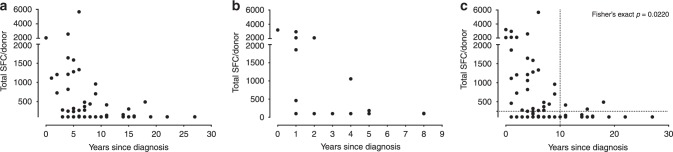
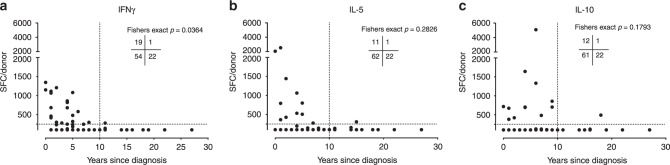
A diagnosis of motor Parkinson’s disease (PD) is preceded by a prolonged premotor phase with accumulating neuronal damage. Here we examined the temporal relation between α-synuclein (α-syn) T cell reactivity and PD. A longitudinal case study revealed that elevated α-syn-specific T cell responses were detected prior to the diagnosis of motor PD, and declined after. The relationship between T cell reactivity and early PD in two independent cohorts showed that α-syn-specific T cell responses were highest shortly after diagnosis of motor PD and then decreased. Additional analysis revealed significant association of α-syn-specific T cell responses with age and lower levodopa equivalent dose. These results confirm the presence of α-syn-reactive T cells in PD and show that they are most abundant immediately after diagnosis of motor PD. These cells may be present years before the diagnosis of motor PD, suggesting avenues of investigation into PD pathogenesis and potential early diagnosis.
Overview
The claims and statistics of this paper haven’t been checked yet.
Free: it reads the open-access text and checks the first 5 claims that cite a source we can check. Create a free account to check every claim.
Integrity signals
Registry
Cites
Statistics
Figures
Verification
Claims the paper makes
The claims and statistics of this paper haven’t been checked yet.
Free: it reads the open-access text and checks the first 5 claims that cite a source we can check. Create a free account to check every claim.
Claims other papers make about this one
Each is checked against this paper’s own text: does it say what the citing paper says it does?
The source backs part of the claim, not all of it — or backs it for a different population, condition or comparison.
In the citing paper
“Microglia activation by α-synuclein aggregates or other factors can increase the expression of MHC I expression on neurons, enhance the presentation of α-synuclein antigens by neurons, which were subsequently killed by α-synuclein reactive T cells.74–76”
From Role of neuroinflammation in neurodegeneration development (2023) · cites this paper as [75]
Experimental — accuracy not yet measuredThe source backs part of the claim, not all of it — or backs it for a different population, condition or comparison.
In the citing paper
“A high number of T cells response to α-synuclein were found in the brain of PD patients and mouse model.”
From Role of neuroinflammation in neurodegeneration development (2023) · cites this paper as [75]
Experimental — accuracy not yet measuredThe source backs part of the claim, not all of it — or backs it for a different population, condition or comparison.
In the citing paper
“Recently, numerous evidences suggest that adaptive immune system plays important role in approximately 40% PD.”
From Role of neuroinflammation in neurodegeneration development (2023) · cites this paper as [75]
Experimental — accuracy not yet measuredThe cited source says what the claim attributes to it.
In the citing paper
“A strong CD4 + T cell response to a-synuclein epitopes can be detected before the onset and diagnosis of Parkinson's disease.95”
From The role of gut dysbiosis in Parkinson’s disease: mechanistic insights and therapeutic options (2021) · cites this paper as [95]
Self-check
Percentages, sums and reported differences re-computed from the paper’s own numbers.
The self-check needs the paper’s full text.
Citations
Cites
McKhann, G., Drachman, D., Folstein, M., Katzman, R., Price, D., & Stadlan, E. M. (1984) · Neurology · doi:10.1212/wnl.34.7.939 · Cited by 27,915
The Montreal Cognitive Assessment, MoCA: a brief screening tool for mild cognitive impairment
Nasreddine, Z. S., Phillips, N. A., Bédirian, V., Charbonneau, S., Whitehead, V., Collin, I., Cummings, J. L., & Chertkow, H. (2005) · Journal of the American Geriatrics Society · doi:10.1111/j.1532-5415.2005.53221.x · Cited by 25,553
McKhann, G. M., Knopman, D. S., Chertkow, H., Hyman, B. T., Jack, C. R., Kawas, C. H., Klunk, W. E., Koroshetz, W. J., Manly, J. J., Mayeux, R., et al. (2011) · Alzheimer's & Dementia · doi:10.1016/j.jalz.2011.03.005 · Cited by 18,657
Systematic review of levodopa dose equivalency reporting in Parkinson's disease
Tomlinson, C. L., Stowe, R., Patel, S., Rick, C., Gray, R., & Clarke, C. E. (2010) · Movement Disorders · doi:10.1002/mds.23429 · Cited by 4,219
Evolution of the immune system in humans from infancy to old age
Simon, A. K., Hollander, G. A., & McMichael, A. (2015) · Proceedings of the Royal Society B: Biological Sciences · doi:10.1098/rspb.2014.3085 · Cited by 1,796
Incidence of Parkinson's Disease: Variation by Age, Gender, and Race/Ethnicity
Van Den Eeden, S. K. (2003) · American Journal of Epidemiology · doi:10.1093/aje/kwg068 · Cited by 1,747
Disease duration and the integrity of the nigrostriatal system in Parkinson’s disease
Kordower, J. H., Olanow, C. W., Dodiya, H. B., Chu, Y., Beach, T. G., Adler, C. H., Halliday, G. M., & Bartus, R. T. (2013) · Brain · doi:10.1093/brain/awt192 · Cited by 1,286
Accuracy of clinical diagnosis of Parkinson disease: A systematic review and meta-analysis
Rizzo, G., Copetti, M., Arcuti, S., Martino, D., Fontana, A., & Logroscino, G. (2016) · Neurology · doi:10.1212/wnl.0000000000002350 · Cited by 870
T cells from patients with Parkinson’s disease recognize α-synuclein peptides
Sulzer, D., Alcalay, R. N., Garretti, F., Cote, L., Kanter, E., Agin-Liebes, J., Liong, C., McMurtrey, C., Hildebrand, W. H., Mao, X., et al. (2017) · Nature · doi:10.1038/nature22815 · Cited by 866
Self-citationThe who's who of T ‐cell differentiation: Human memory T ‐cell subsets
Mahnke, Y. D., Brodie, T. M., Sallusto, F., Roederer, M., & Lugli, E. (2013) · European Journal of Immunology · doi:10.1002/eji.201343751 · Cited by 817
Self-citation
Cited by
Items 301–387 of 387
From disease to syndrome: the evolution of Parkinson’s as a heterogeneous entity
Kumar, K. R., Wong, R., Çakmak, Ö. Ö., & Ertan, S. (2026) · Current Opinion in Immunology · doi:10.1016/j.coi.2026.102759 · Cited by 3
Wójcik, P., Culmsee, C., & Adamczyk, A. (2026) · Cellular and Molecular Neurobiology · doi:10.1007/s10571-026-01733-7 · Cited by 3
Emerging targets signaling for inflammation in Parkinson’s disease drug discovery
Khairnar, R. C., Parihar, N., Prabhavalkar, K. S., & Bhatt, L. K. (2022) · Metabolic Brain Disease · doi:10.1007/s11011-022-00999-2 · Cited by 5
Effect of aging on biomarkers and clinical profile in Parkinson’s disease
Lazzaro, G. D., Paoletti, F. P., Bellomo, G., Schirinzi, T., Grillo, P., Giuffrè, G. M., Petracca, M., Picca, A., Mercuri, N. B., Parnetti, L., et al. (2025) · Journal of Neurology · doi:10.1007/s00415-025-13384-7 · Cited by 5
“Moreover, recent evidence suggests a higher inflammatory activity in early disease stage, with subsequent attenuation [8].”
Predicting Algorithm of Tissue Cell Ratio Based on Deep Learning Using Single-Cell RNA Sequencing
Liu, Z., Lv, X., Chen, X., Li, D., Qin, M., Bai, K., Yang, Y., Li, X., & Zhang, P. (2022) · Applied Sciences · doi:10.3390/app12125790 · Cited by 3
Detection of α-Synuclein-Specific T Cells in Parkinson’s Disease
Dhanwani, R., Sette, A., & Arlehamn, C. S. L. (2022) · Methods in molecular biology · doi:10.1007/978-1-0716-2712-9_5 · Cited by 4
Self-citationChen, L., Xin, G., He, Y., Tian, Q., Kong, X., Fu, Y., Wang, J., Zhang, H., & Wang, L. (2023) · PLoS ONE · doi:10.1371/journal.pone.0295699 · Cited by 3
Waheed, I., Sikandri, T., Zaheen, S., Khakwani, M. M. A. K., An, Z., Liu, T., Zhu, C., & Wei, J. (2025) · ACS Chemical Neuroscience · doi:10.1021/acschemneuro.4c00819 · Cited by 3
Iyengar, A. S., Dunkley, P. R., & Dickson, P. W. (2025) · Journal of Neuroimmunology · doi:10.1016/j.jneuroim.2025.578755 · Cited by 2
Valdés‐Fuentes, M., Rodríguez-Martínez, E., & Rivas-Arancibia, S. (2025) · Medical Sciences · doi:10.3390/medsci13040293 · Cited by 3
“Key mechanisms involved in this disease include the activation of microglia and the infiltration of T lymphocytes into brain structures, along with evidence of autoimmune processes targeting neuronal antigens [101].”
Moon, J., Moutusy, S. I., Zhang, M., Ndayisaba, A., Rodriguez, D., Kodsi, D. N. E., Kuzkina, A., Younis, S., Jahanbani, S., van Dam, L. S., et al. (2026) · Proceedings of the National Academy of Sciences · doi:10.1073/pnas.2537271123 · Cited by 3
“Notably, T cells in PD, previously shown to recognize and respond to α-syn (44, 45), exhibited the greatest degree of clonal expansion, with MSA T cells showing intermediate expansion and HCs the lowest.”
InfluentialWang, K., Han, K., & Wang, Y. (2026) · Journal of Neuroinflammation · doi:10.1186/s12974-026-03918-9 · Cited by 2
“…PD-associated T-cell responses is not isolated events. α-Synuclein-, PINK1-and mitochondrial antigen-reactive T cells may arise or persist in a host environment already shaped by altered immune surveillance, increased glial reactivity, barrier changes and reduced repair capacity [2, 10, 11].”
Adaptive immunity in the pathogenesis of neurodegeneration
Li, Y., Ulrich, J. D., & Holtzman, D. M. (2026) · Nature Immunology · doi:10.1038/s41590-026-02538-y · Cited by 4
“This is also supported by an increase in the population of highly clonal, yet diverse, α-synuclein-specific T cells in the peripheral blood mononuclear cells of patients with Parkinson’s disease 78,79 .”
Profiling peripheral immune cells in Parkinson's disease: A scoping review
Recinto, S. J., Jernigan, J. E., Lefter, N., Vitic, Z., Overgaard, M. O., Liu, L., Howden, A. J. M., Eyer, K., Romero‐Ramos, M., Tansey, M. G., et al. (2026) · Journal of Parkinson s Disease · doi:10.1177/1877718x261479505 · Cited by 3
Neshige, S., Aoki, S., Nezu, T., Nakamori, M., Yamazaki, Y., Ohshita, T., & Maruyama, H. (2022) · Parkinsonism & Related Disorders · doi:10.1016/j.parkreldis.2022.11.019 · Cited by 2
Neuroinflammation and Immune Dysfunction in the Mechanisms of Development of Parkinson’s Disease
Idova, G. V., Лазаревна, А. Е., & Zhanaeva, S. Y. (2023) · Neuroscience and Behavioral Physiology · doi:10.1007/s11055-023-01549-8 · Cited by 2
“…in CD8 + T cells recognizing α -syn proteins and producing IFN γ , which is known to enhance the cytotoxic properties of cells, have been found in PD, and this potentially contributes to immune disorders in the disease [Sulzer et al., 2017; Lindestam Arlehamn et al., 2020 ; Yan et al., 2021].”
Wan, Y., Zhao, Y., Pan, M., Gan, J., Wu, N., Zhang, Y., Liu, Z., & Song, L. (2024) · BMC Neurology · doi:10.1186/s12883-024-03918-3 · Cited by 5
Biomarkers for Neurodegenerative Diseases
Abdelmoaty, M. M., Lu, E., & Foster, E. G. (2024) · Springer eBooks · doi:10.1007/978-3-031-68237-7_44 · Cited by 2
Disease mechanisms as subtypes: Immune dysfunction in Parkinson's disease
Contaldi, E., Magistrelli, L., & Comi, C. (2023) · Handbook of clinical neurology · doi:10.1016/b978-0-323-85555-6.00008-4 · Cited by 3
Wang, C., Qiu, Z.-J., Zhang, P., & Tang, X. (2023) · Current Neuropharmacology · doi:10.2174/1570159x21666230502123729 · Cited by 3
“And specific T cell reactivity to α-syn-derived epitopes is a feature of premotor and early motor PD [123].”
BackgroundPeripheral Immune pattern in a genetic cohort of p.A53T alpha-synuclein carriers
Koros, C., Simitsi, A., Papagiannakis, N., Antonelou, R. C., Bougea, A. M., Papadimitriou, D. A., Pachi, I., Beratis, I., Kontaxopoulou, D., Fragkiadaki, S., et al. (2025) · Parkinsonism & Related Disorders · doi:10.1016/j.parkreldis.2025.107853 · Cited by 2
Features of innate and adaptive immunity in patients with Parkinson's disease
Вячеславович, К. И., Davydova, N. I., Андреевна, К. А., Litvinenko, I., Aleksanin, S. S., & Макарова, Н. В. (2022) · Annals of Clinical and Experimental Neurology · doi:10.54101/acen.2022.1.2 · Cited by 3
Patel, M. (2023) · Preprints.org · doi:10.20944/preprints202305.0554.v1 · Cited by 2
Cerebrospinal Fluid Inflammation in Prodromal Parkinson’s DiseasePreprint
Yasumizu, Y., Deerhake, M. E., Corbin-Stein, N. J., Neish, K., Moon, J., Buitrago-Pocasangre, N., Renkl, E., Esposito, S., Russo, A. J., Wang, H., et al. (2025) · bioRxiv (Cold Spring Harbor Laboratory) · doi:10.1101/2025.05.16.654530 · Cited by 3
Neuroprotection induced by apigenin
dos Santos, C. C., Carreira, R. B., Dourado, N. S., de Araújo, F. M., de Almeida, M. M. A., de Souza, V. M., Soares, J. R. P., do Nascimento, R. P., de Oliveira, J. V. R., Victor, M. M., et al. (2024) · Elsevier eBooks · doi:10.1016/b978-0-443-23763-8.00025-7 · Cited by 2
Low CD3 level is a risk factor for amyotrophic lateral sclerosis: a Mendelian randomization study
Yang, W., Liu, X., & Fan, D. (2024) · Amyotrophic Lateral Sclerosis and Frontotemporal Degeneration · doi:10.1080/21678421.2024.2407408 · Cited by 1
MicroRNAs and synaptic dysfunction in Parkinson’s disease
Ogwo, M. N., Sharma, B., Goyal, G., Lakshmanaswamy, R., & Kumar, S. (2025) · Molecular Therapy — Nucleic Acids · doi:10.1016/j.omtn.2025.102673 · Cited by 3
“67 This degeneration is frequently associated with immuno-reactivity and signs of apoptosis.”
Parkinson's disease: A chronic systemic inflammatory disorder
Khan, H., & Benskey, M. J. (2025) · Handbook of behavioral neuroscience · doi:10.1016/b978-0-443-21992-4.00006-3 · Cited by 1
Kilpeläinen, T. P., Yang, R., Toivio, J., Eteläinen, T. S., Lorenzo, F. D., Fastré, B., Zuo, C., Uhari-Väänänen, J. K., Julku, U. H., Cui, H., et al. (2025) · Experimental Neurology · doi:10.1016/j.expneurol.2025.115593 · Cited by 1
Reinventing brain immunity in neurodegeneration
Huang, H., Han, Y., Han, Z., Yang, H., Fu, Y., & Liu, Q. (2025) · Immunity & Inflammation · doi:10.1007/s44466-025-00011-3 · Cited by 2
Guduru, K. K., Gundawar, R., Eranti, B., Turaga, K., Sahista Anjum, S., Tadimarri, P., Pujari, H. P., Mahasool, W. T., & Arigela, P. P. (2025) · Drug Metabolism and Bioanalysis · doi:10.2174/0118723128397400250910222116 · Cited by 1
Meglaj, S., Mandić, K., Krajinović, L. C., Šafranko, Ž. M., Borovečki, F., Barešić, A., & Blažeković, A. (2026) · npj Parkinson s Disease · doi:10.1038/s41531-026-01283-1 · Cited by 3
Cardamonin ameliorates neuroinflammation in Parkinson’s disease by regulating NF-κB signaling
Xia, Y., Zhang, Y., Li, Y., Li, X., Wu, Y., & Yao, Q. Z. (2026) · Hereditas · doi:10.1186/s41065-026-00660-3 · Cited by 1
Zhao, J., Liang, H., & Bi, Y. (2026) · Brain Research Bulletin · doi:10.1016/j.brainresbull.2026.111990 · Cited by 1
Emerging biomarkers for Parkinson's disease in biological fluids
Rožanković, P. B., & Šimić, G. (2026) · Frontiers in Aging Neuroscience · doi:10.3389/fnagi.2026.1835751 · Cited by 2
Beyond Sequence: Posttranslational Remodeling of Antigens in Autoimmunity
Shrestha, C., Weisfelder, H. M., & Do, T. D. (2026) · Immunological Reviews · doi:10.1111/imr.70150 · Cited by 1
Immune-mediated excitotoxicity in brain disorders
Shin, J., Vogelaar, C. F., Bittner, S., & Zipp, F. (2026) · Nature reviews. Immunology · doi:10.1038/s41577-026-01348-5 · Cited by 1
Stevenson, T. J., Vinnell, L., McCullough, S. J., Flyger, D. X., Highet, B., Wiseman, J. A., Watkin, B., Romero, K. H., Low, V. F., Smith, A. M., et al. (2026) · The Journal of Experimental Medicine · doi:10.1084/jem.20251245 · Cited by 1
“Given that α-syn can engage peripheral immune populations, extracellular α-syn at these interfaces may represent a persistent inflammatory stimulus that contributes to neuro-degeneration (Grozdanov et al., 2019; Lindestam Arlehamn et al., 2020; Schonhoff et al., 2023).”
NEUROINFLAMMATION AND IMMUNE DYSFUNCTION IN THE PATHOGENESIS OF PARKINSON’S DISEASE
Idova, G. V., Лазаревна, А. Е., & Zhanaeva, S. Y. (2023) · Журнал высшей нервной деятельности им И П Павлова · doi:10.31857/s0044467723040056 · Cited by 2
Association of Autoimmune Diseases with the Risk of Parkinson’s Disease
Ma, Y., Xiao, Y., Zhang, S., Liu, J., & Shang, H. (2024) · Neuroepidemiology · doi:10.1159/000539466 · Cited by 2
Therapeutic Strategies in Neurodegenerative Diseases
Eid, A. M., Faridar, A., & Appel, S. H. (2024) · Springer eBooks · doi:10.1007/978-3-031-68237-7_39 · Cited by 2
Immune response during idiopathic Parkinson's disease: From humans to animal models
Nissen, S. K., Ferreira, S. A., Klæstrup, I. H., & Romero‐Ramos, M. (2021) · International review of movement disorders · doi:10.1016/bs.irmvd.2021.08.006 · Cited by 1
Oligoclonal Bands in Multiple System Atrophy: Case Report and Proposed Mechanisms of Immunogenicity
Neilson, L. E., Hollen, C., Hiller, A., & Wooliscroft, L. (2022) · Frontiers in Neuroscience · doi:10.3389/fnins.2022.852939 · Cited by 2
“It is becoming more wellestablished the synucleinopathies have underlying inflammatory components with both B-cells (Yang et al., 2020) and T-cells being implicated (Lindestam Arlehamn et al., 2020).”
BackgroundVitamin D and Parkinson's disease
Gonçalves, V., Scorza, F. A., de Almeida, A.-C. G., & Scorza, C. A. (2023) · Elsevier eBooks · doi:10.1016/b978-0-323-89835-5.00031-4 · Cited by 1
Роль Т-клеточных субпопуляций в патогенезе и терапии болезни Паркинсона (обзор литературы)
Idova, G. V., Лазаревна, А. Е., & Zhanaeva, S. Y. (2023) · Сибирский вестник психиатрии и наркологии · doi:10.26617/1810-3111-2023-1(118)-96-103
Parkinson- und Alzheimer-Erkrankung als Systemerkrankungen
Bartsch, T., Berg, D., Heneka, M. T., & Leypoldt, F. (2023) · Der Nervenarzt · doi:10.1007/s00115-023-01542-z · Cited by 2
“Neuere Techniken konnten zusätzlich erstmals den Nachweis von α-Synuklein-spezifischen T-Zellen aus peripherem Blut erbringen, und dies insbesondere bei Patienten mit Frühformen eines Morbus Parkinson [23].”
BackgroundIba, M., McDevitt, R. A., Kim, C., Roy, R., Sarantopoulou, D., Tommer, E., Kwon, S., Siegars, B., Sallin, M. A., Sen, J. M., et al. (2021) · Research Square · doi:10.21203/rs.3.rs-211252/v1 · Cited by 1
LRRK2 G2019S mutation suppresses differentiation of Th9 and Treg cells via JAK/STAT3Preprint
Zheng, N., Jaffery, R., Guerrero, A. M., Hou, J., Pan, Y., Zhou, F., Chen, S., Xu, C., Egan, N. A., Bohat, R., et al. (2024) · bioRxiv (Cold Spring Harbor Laboratory) · doi:10.1101/2024.02.28.582561 · Cited by 1
Transcriptional pathobiology and multi-omics predictors for Parkinson’s diseasePreprint
Hu, R., Wang, R., Yuan, J., Lin, Z., Hutchins, E. D., Landin, B., Liao, Z., Liu, G., Scherzer, C. R., & Dong, X. (2024) · bioRxiv (Cold Spring Harbor Laboratory) · doi:10.1101/2024.06.18.599639 · Cited by 4
“A longitudinal case study of a PD patient found that alpha-synuclein-reactive T cells were most abundant in peripheral blood prior to the appearance of motor symptoms(68).”
BackgroundIn on the ground floor: T cells respond to α-synuclein in preclinical Parkinson’s disease
Davis, A. A. (2020) · Science Translational Medicine · doi:10.1126/scitranslmed.abb7100
Brockmann, K., Lerche, S., Zimmermann, M., Röeben, B., Wurster, I., Fries, F. L., Deuschle, C., Waniek, K., Lachmann, I., Jakobi, M., et al. (2022) · Research Square · doi:10.21203/rs.3.rs-2131597/v1
Fredlund, F., Jiménez-Ferrer, I., Grabert, K., Belfiori-Carrasco, L. F., Luk, K. C., & Swanberg, M. (2022) · bioRxiv (Cold Spring Harbor Laboratory) · doi:10.1101/2022.12.02.518821
Editorial: Updates on inflammation in Parkinson's disease
Dzamko, N. L., Romero‐Ramos, M., & Thaler, A. (2023) · Frontiers in Neurology · doi:10.3389/fneur.2023.1138543
“Several genes associated with PD risk have roles in immunity (9), and misfolded forms of the hallmark PD pathological protein, alpha-synuclein, can also activate the cellular immune system (10).”
BackgroundBäckström, F., Jiménez-Ferrer, I., Grabert, K., Belfiori-Carrasco, L. F., Luk, K. C., & Swanberg, M. (2023) · Research Square · doi:10.21203/rs.3.rs-2660160/v1
Wehbe, F., Adams, L., Yuen, S., Kim, Y., & Tanaka, Y. (2023) · bioRxiv (Cold Spring Harbor Laboratory) · doi:10.1101/2023.12.01.569595
Early Immune Changes Identified in Parkinson's Disease and Amyotrophic Lateral Sclerosis
Talan, J. (2023) · Neurology Today · doi:10.1097/01.nt.0001004700.94200.e6
Gopinath, A., Ramirez‐Zamora, A., Franks, S., Riaz, T., Smith, A., Dizon, G., Hornstein, L., Follett, J., Swartz, C., Bravo, J., et al. (2024) · medRxiv · doi:10.1101/2024.01.03.23300647
Peripheral Mononuclear Cell Cerna Analysis and Immunoinfiltration Analysis in Parkinson's DiseasePreprint
Guo, L., Li, Q., Li, J. J., & Yang, F. H. (2024) · SSRN Electronic Journal · doi:10.2139/ssrn.4683459
Han, Q., Luo, X., Zhang, S., Zhou, Z., Wang, L., Li, J., & Zhang, B. (2024) · Research Square · doi:10.21203/rs.3.rs-4823563/v1
Peripheral Immune pattern in a genetic cohort of p.A53T alpha-synuclein Parkinson’s diseasePreprint
Koros, C., Simitsi, A., Papagiannakis, N., Antonelou, R. C., Bougea, A. M., Papadimitriou, D. A., Pachi, I., Beratis, I., Kontaxopoulou, D., Fragkiadaki, S., et al. (2024) · medRxiv · doi:10.1101/2024.11.14.24317039
Novel Drug Targets in Neuro-immune Disorders
Gorain, B., Karmakar, V., Pandey, M., Pooja, P., Sahoo, B. M., Senapati, D., & Bhattamisra, S. K. (2024) · Interdisciplinary biotechnological advances · doi:10.1007/978-981-97-5508-0_9
Tsalenchuk, M., Farmer, K., Castro, S. L., Scheirer, A., Ye, Y., Greenamyre, J. T., Rocha, E. M., & Marzi, S. J. (2024) · bioRxiv (Cold Spring Harbor Laboratory) · doi:10.1101/2024.12.17.628873
Ogwo, M. N., Goyal, G., Zotor, P., Sharma, B., Rodarte, D., Lakshmanaswamy, R., & Kumar, S. (2025) · bioRxiv (Cold Spring Harbor Laboratory) · doi:10.1101/2025.03.12.642888
Magnetoelectric nanodiscs diminish motor deficits in a model of Parkinson's diseasePreprint
Kim, Y. J., Comite, A. D., Paniagua, E. V., Selvaraji, S., Frey, E. J., Mondal, R., Biglari, N., Leomi, R., Seethapathi, N., & Anikeeva, P. (2025) · bioRxiv (Cold Spring Harbor Laboratory) · doi:10.1101/2025.06.04.657885 · Cited by 2
Epigenetic Regulation Mediating Immunopathology in Parkinson’s Disease
Khan, S. S., & Khatri, D. K. (2025) · RNA technologies · doi:10.1007/978-3-031-91072-2_13 · Cited by 1
Kefalakes, E., Mewes, F., Peristich, D., Plötner, C., Shcherbatyy, V., Schipke, J., Schneider, F., Käufer, C., & Rumpel, R. (2025) · Brain Research Bulletin · doi:10.1016/j.brainresbull.2025.111464 · Cited by 2
“…Although PD is not an autoimmune disease, neuroinflammation is prominent in PD patients with some inflammatory responses preceding motor phenotypes (Lindestam Arlehamn et al. 2020). r Apart from the histological hallmarks of PD, one of the most crucial aspects is the development of motor…”
Monroy‐Jaramillo, N., Ortega‐Vázquez, A., López, M., & Adalid-Peralta, L. V. (2025) · Life · doi:10.3390/life15091480 · Cited by 1
Recinto, S. J., MacDonald, A., Premachandran, S., Liu, L., Bayati, A., Rodriguez, L., Nguyen, M., Petit, F., Mukherjee, S., Larmanjat, J., et al. (2026) · bioRxiv (Cold Spring Harbor Laboratory) · doi:10.64898/2026.01.07.694713 · Cited by 1
Muñoz‐Delgado, L., Williams‐Gray, C. H., Garraux, G., Clemente, D., Çakmak, Ö. Ö., Greenland, J. C., Figueira, I., Machín-Díaz, I., Pirovano, E., di Flora, A., et al. (2024) · Portuguese National Funding Agency for Science, Research and Technology (RCAAP Project by FCT)
Turk, A. Z., Millwater, M., Sheikh‐Bahaei, S., Mollaei, F., Rießland, M., & SheikhBahaei, S. (2026) · European Journal of Neuroscience · doi:10.1111/ejn.70393 · Cited by 1
“Notably, recent studies have identified CD4+ and CD8+ T cells as early markers indicative of autoimmune reactions to alpha-synuclein in PD patients' peripheral blood and cerebrospinal fluid, suggesting an autoimmune component to disease onset (Lindestam Arlehamn et al. 2020).”
Hu, X., Cai, Z., Zhou, F., Chen, S., Li, P., Jin, S., Lan, S., Du, X., & Xing, R. (2026) · PeerJ · doi:10.7717/peerj.20994 · Cited by 1
Carver, J. J., Pugh, B. A., Ma, Q., Caillier, S. J., Denbrock, R. R., Martines, C. C., Puckett, A. E., Roberson, T. C., Fernández-Viña, M., Hollenbach, J. A., et al. (2026) · Neurology Neuroimmunology & Neuroinflammation · doi:10.1212/nxi.0000000000200580 · Cited by 2
Li, Y., Guo, L., Yu, X., & Peng, C. (2026) · Ageing and Neurodegenerative Diseases · doi:10.20517/and.2025.31 · Cited by 1
Zhao, J., Fu, J., Zhang, J., Zhang, Z., Bai, X., & Yao, L. (2026) · Mammalian Genome · doi:10.1007/s00335-026-10236-1
“However, this remains an inference from the contrast between analytic approaches rather than a direct mechanistic demonstration(Garretti et al. 2019; Harms et al. 2021; Lindestam Arlehamn et al. 2020).”
Neuroinflammation and vaccination strategy in Parkinson’s disease
Yukti, Sharma, S., Dubey, A. K., Sharma, A., & Prajapati, V. K. (2026) · Advances in immunology · doi:10.1016/bs.ai.2026.04.006
Robust Microbial Signature Discovery via Post-Selection Inference for Microbiome Compositions
Wang, W., Xu, X., Zhao, H., & Wang, T. (2026) · Journal of the American Statistical Association · doi:10.1080/01621459.2026.2671446
IMMUNE SYSTEM ACTIVITY IN PATIENTS WITH PARKINSON’S DISEASE WHO HAVE HAD COVID-19
Boika, A. V. (2023) · Vestnik of Vitebsk State Medical University · doi:10.22263/2312-4156.2023.6.69
Martinez, O., Gentile, L., Bretheau, F., Yearwood, A., Arevalo, O. J., Borba, F. N., Boutin, M., Morin, F., Vaillancourt, M., Breton, S., et al. (2026) · Acta Neuropathologica Communications · doi:10.64898/2026.06.04.730214
Zhao, X., Zhang, G., Wang, Z., Zhang, D. J., Xia, Z., & Huo, C. (2026) · Frontiers in Immunology · doi:10.3389/fimmu.2026.1893167 · Cited by 1
Complement dysregulation during the early phases of synucleinopathy
Khan, H., Gifford, M., Kordbacheh, A., Bury, A., Panoushek, S., Cole-Strauss, A., Kemp, C. J., Luk, K. C., Steece‐Collier, K., Kuhn, N. C., et al. (2026) · Acta Neuropathologica · doi:10.1007/s00401-026-03057-8
The Neuroimmune Duality of CD4⁺ T Cells: Drivers of Damage and Repair in the Brain
Kumar, N., Mir, P. A., Bhutia, G. T., Uppal, J., Kaur, A., Kaur, G., & Gupta, S. K. (2026) · Molecular Neurobiology · doi:10.1007/s12035-026-06138-7
Role of T cells in Parkinson’s disease
Koops, D., Lehmann, R., Bianchi, F., & van den Bogaart, G. (2026) · BMJ Immunology · doi:10.1136/bmjimm-2026-000039
Cross-species molecular stratification enables T cell receptor diagnosis of Parkinson’s disease
Chen, J., Xia, X., Zhang, Y., Tong, X., Liang, Y., Fan, X., Meng, Q., Wei, Y., & Hu, G. (2026) · Genome Medicine · doi:10.1186/s13073-026-01776-x
“…distributed assumption for statistical analysis, we considered each patient only once and random selection was restricted to early patients as previous study [6] found that α-syn-specific T cell response was negatively related to daily levodopa equivalent dose (Methods and Supplementary Fig.”
InfluentialPeripheral Immune Alterations and T Cell Clonal Dynamics Across the Parkinson’s Disease SpectrumPreprint
Rosen, M. R., Majos, J. O. N., Mattei, D., Mejia, E., Mandry, C. P., Jang, B., Kailash, B. P., Naito, T., Allan, A., Khashan, T., et al. (2026) · medRxiv · doi:10.64898/2026.09.23.26363800
“Consistent with this possibility, peripheral T cells reactive for α-synuclein have been detected in individuals with PD 25,26 and associated with diagnosis, disease duration, and clinical severity 25–28 .”
Cao, Z., Zhou, C., Lu, J., Piao, X., Li, Z., Cao, S., Chang, Y., & Jin, H. (2026) · Computational Biology and Chemistry · doi:10.1016/j.compbiolchem.2026.109494
Kahveci, O., Ay, U., & Gurvit, H. I. (2026) · Reviews in the Neurosciences · doi:10.1515/revneuro-2026-0155
“…α -Synuclein – reactive CD4 + and CD8 + T-cell responses, and more recent PINK1-reactive responses, therefore, provide a di ff erent level of mechanistic information from bulk T-cell frequencies (Johansson et al. 2025; Lindestam Arlehamn et al. 2020; Sulzer et al. 2017; Williams et al. 2025).”
Castro, J., Jiménez, J. M., Elgueta, D., Chovar, O., Ugalde-Tagle, V., Martínez, N., Cea, J., Espinoza, A., Mora, J., Valenzuela, S., et al. (2026) · Research Square · doi:10.21203/rs.3.rs-10670304/v1
Metadata
- Authors
- Lindestam Arlehamn, C. S., Dhanwani, R., Pham, J., Kuan, R., Frazier, A., Rezende Dutra, J., Phillips, E., Mallal, S., Roederer, M., Marder, K. S., Amara, A. W., Standaert, D. G., Goldman, J. G., Litvan, I., Peters, B., Sulzer, D., & Sette, A.
- Affiliations
- La Jolla Institute for Immunology (US)
- Murdoch University (AU)
- National Institutes of Health (US)
- Columbia University Irving Medical Center (US)
- University of Alabama at Birmingham (US)
- Northwestern University (US)
- University of California San Diego (US)
- Corresponding author
- Sulzer, David
- Sette, Alessandro
- ORCID
- Venue
- Nature Communications
- Published
- 2020-04-20
- Volume
- 11
- Issue
- 1
- Pages
- 1875-1875
- ISSN
- 2041-1723 (ISSN-L)
- PMC
- PMC7171193
- OpenAlex
- W3016458340
- Semantic Scholar
- 4892a025b9032bb745aa0ad742988ec589d462e5
- Cited by
- 386
- References
- 40
- Citations by year
- 2026: 33 · 2025: 59 · 2024: 72 · 2023: 70 · 2022: 82 · 2021: 54 · 2020: 15
- FWCI
- 23.92
- Type
- journal article
- Language
- en
- Open access
- gold
- doi.org
- Licence
- cc-by
- creativecommons.org/licenses/by/4.0 (tdm)
- creativecommons.org/licenses/by/4.0 (vor)
- Locations
- Nature Communications (publishedVersion, cc-by)
- PubMed Central (publishedVersion, cc-by)
- PubMed (publishedVersion)
- Murdoch University Research Portal (submittedVersion)
- DOAJ (DOAJ: Directory of Open Access Journals) (submittedVersion, cc-by-sa)
- eScholarship (California Digital Library) (submittedVersion)
- Funders
- U.S. Department of Health & Human Services | NIH | National Institute of Neurological Disorders and Stroke (R01NS095435, P50NS108675)
- U.S. Department of Health & Human Services | NIH | National Institute on Aging (P50AG08702)
- Parkinson's Foundation
- Michael J. Fox Foundation for Parkinson's Research
- UCSD-LJI Program in Immunology
- Topics
- Health Sciences › Medicine › Clinical Neurology › Parkinson's Disease Mechanisms and Treatments
- Life Sciences › Neuroscience › Neurology › Neuroinflammation and Neurodegeneration Mechanisms
- Life Sciences › Biochemistry, Genetics and Molecular Biology › Molecular Biology › Nuclear Receptors and Signaling
- Keywords
- alpha-synuclein, T cell response, Parkinson's disease, early diagnosis, autoimmunity, levodopa equivalent daily dose, pathogenesis
- MeSH terms
- Aged, Aged, 80 and over, Female, Humans, Levodopa, Longitudinal Studies, Male, Middle Aged, Neurons, Parkinson Disease, T-Lymphocytes, Cytokines, alpha-Synuclein
About these checks
Registry, retraction, Cites and statistics results are computed, not judged, with one exception: a printed reference that no index lists is read once by a model before it counts as a citation error. Claims are extracted by a model and kept only when their quote appears verbatim in the text; each cited source is then checked, with a model’s help, for whether it says what the claim relies on. Those verdicts can be wrong — read the claim’s quote and the cited source before relying on one.
Statistics and arithmetic are recomputed, not judged.
Confidence bands are shown only for fields calibrated on our annotated test set. None is calibrated yet, so no band is shown.
What counts as a claim ›How we measure confidence ›How we check this ›
Are you an author, or do you see a problem with this page? Request a review
Data sources
Bibliographic data: Semantic Scholar, OpenAlex, Crossref.
Contains information from the Semantic Scholar Academic Graph Datasets, made available under the ODC Attribution License (ODC-BY 1.0).
Semantic Scholar’s data is described in: Kinney, R., et al. (2023). The Semantic Scholar Open Data Platform. arXiv:2301.10140.
