

α-Synuclein-specific T cell reactivity is associated with preclinical and early Parkinson’s disease
Open accessThe DOI matches its Crossref record; 39 of the 40 references it cites were found in a registry or an index.
Abstract
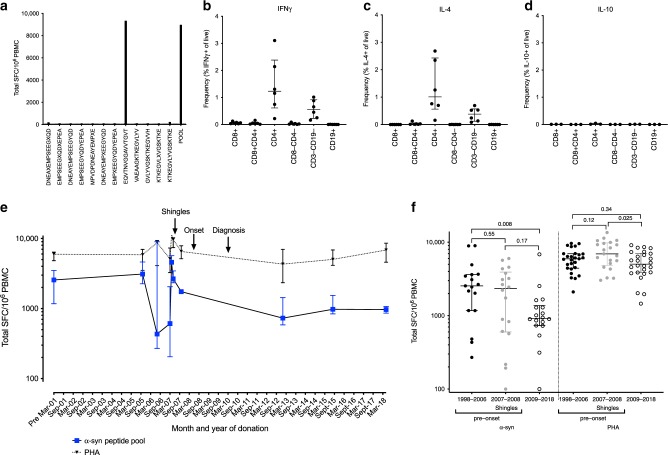
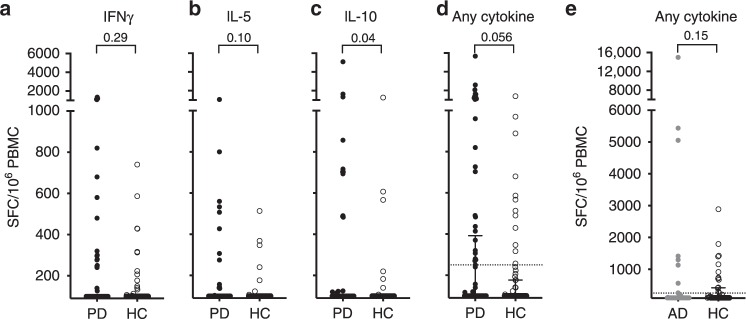
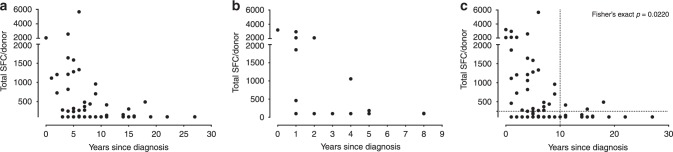
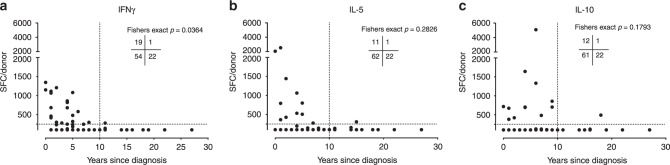
A diagnosis of motor Parkinson’s disease (PD) is preceded by a prolonged premotor phase with accumulating neuronal damage. Here we examined the temporal relation between α-synuclein (α-syn) T cell reactivity and PD. A longitudinal case study revealed that elevated α-syn-specific T cell responses were detected prior to the diagnosis of motor PD, and declined after. The relationship between T cell reactivity and early PD in two independent cohorts showed that α-syn-specific T cell responses were highest shortly after diagnosis of motor PD and then decreased. Additional analysis revealed significant association of α-syn-specific T cell responses with age and lower levodopa equivalent dose. These results confirm the presence of α-syn-reactive T cells in PD and show that they are most abundant immediately after diagnosis of motor PD. These cells may be present years before the diagnosis of motor PD, suggesting avenues of investigation into PD pathogenesis and potential early diagnosis.
Overview
The claims and statistics of this paper haven’t been checked yet.
Free: it reads the open-access text and checks the first 5 claims that cite a source we can check. Create a free account to check every claim.
Integrity signals
Registry
Cites
Statistics
Figures
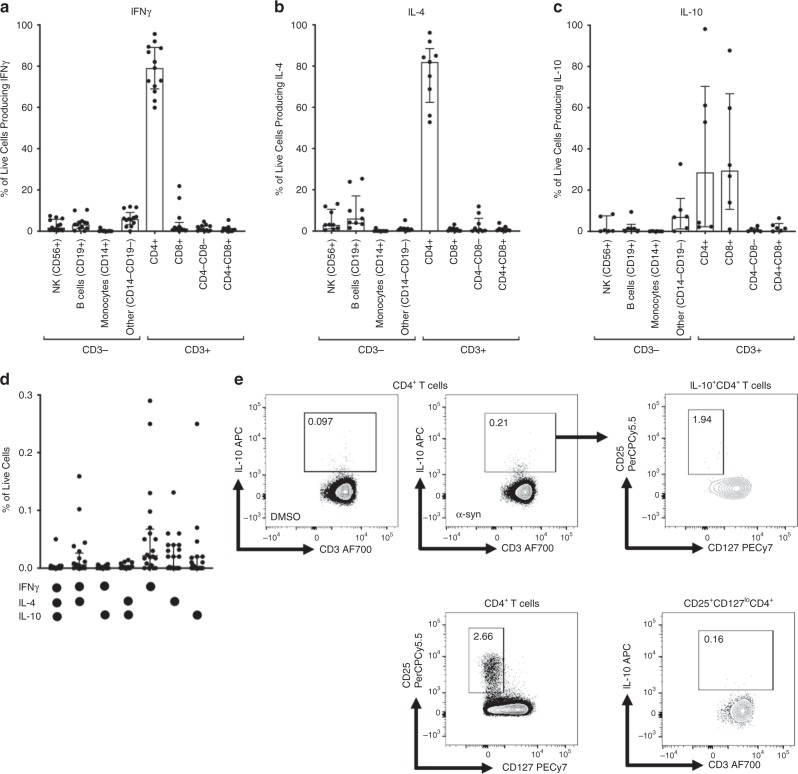
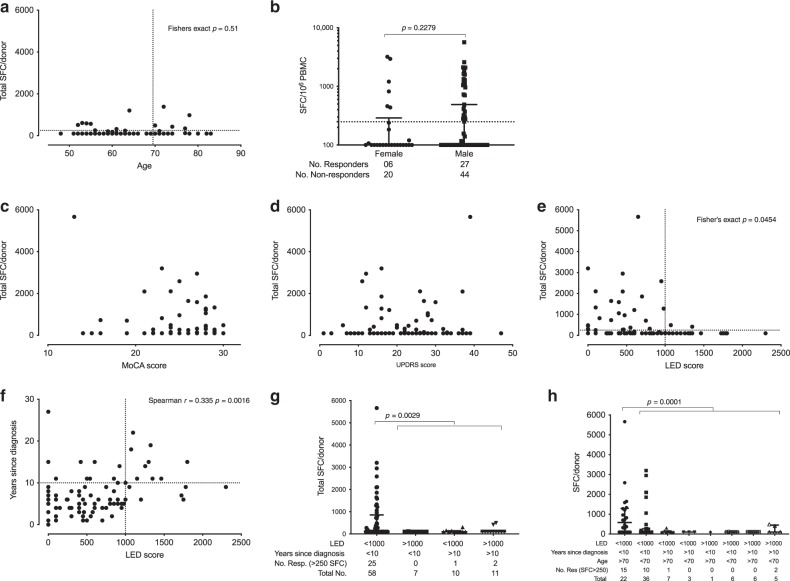
Verification
Claims the paper makes
The claims and statistics of this paper haven’t been checked yet.
Free: it reads the open-access text and checks the first 5 claims that cite a source we can check. Create a free account to check every claim.
Claims other papers make about this one
Each is checked against this paper’s own text: does it say what the citing paper says it does?
The source backs part of the claim, not all of it — or backs it for a different population, condition or comparison.
In the citing paper
“Microglia activation by α-synuclein aggregates or other factors can increase the expression of MHC I expression on neurons, enhance the presentation of α-synuclein antigens by neurons, which were subsequently killed by α-synuclein reactive T cells.74–76”
From Role of neuroinflammation in neurodegeneration development (2023) · cites this paper as [75]
Experimental — accuracy not yet measuredThe source backs part of the claim, not all of it — or backs it for a different population, condition or comparison.
In the citing paper
“A high number of T cells response to α-synuclein were found in the brain of PD patients and mouse model.”
From Role of neuroinflammation in neurodegeneration development (2023) · cites this paper as [75]
Experimental — accuracy not yet measuredThe source backs part of the claim, not all of it — or backs it for a different population, condition or comparison.
In the citing paper
“Recently, numerous evidences suggest that adaptive immune system plays important role in approximately 40% PD.”
From Role of neuroinflammation in neurodegeneration development (2023) · cites this paper as [75]
Experimental — accuracy not yet measuredThe cited source says what the claim attributes to it.
In the citing paper
“A strong CD4 + T cell response to a-synuclein epitopes can be detected before the onset and diagnosis of Parkinson's disease.95”
From The role of gut dysbiosis in Parkinson’s disease: mechanistic insights and therapeutic options (2021) · cites this paper as [95]
Self-check
Percentages, sums and reported differences re-computed from the paper’s own numbers.
The self-check needs the paper’s full text.
Citations
Cites
McKhann, G., Drachman, D., Folstein, M., Katzman, R., Price, D., & Stadlan, E. M. (1984) · Neurology · doi:10.1212/wnl.34.7.939 · Cited by 27,915
The Montreal Cognitive Assessment, MoCA: a brief screening tool for mild cognitive impairment
Nasreddine, Z. S., Phillips, N. A., Bédirian, V., Charbonneau, S., Whitehead, V., Collin, I., Cummings, J. L., & Chertkow, H. (2005) · Journal of the American Geriatrics Society · doi:10.1111/j.1532-5415.2005.53221.x · Cited by 25,553
McKhann, G. M., Knopman, D. S., Chertkow, H., Hyman, B. T., Jack, C. R., Kawas, C. H., Klunk, W. E., Koroshetz, W. J., Manly, J. J., Mayeux, R., et al. (2011) · Alzheimer's & Dementia · doi:10.1016/j.jalz.2011.03.005 · Cited by 18,657
Systematic review of levodopa dose equivalency reporting in Parkinson's disease
Tomlinson, C. L., Stowe, R., Patel, S., Rick, C., Gray, R., & Clarke, C. E. (2010) · Movement Disorders · doi:10.1002/mds.23429 · Cited by 4,219
Evolution of the immune system in humans from infancy to old age
Simon, A. K., Hollander, G. A., & McMichael, A. (2015) · Proceedings of the Royal Society B: Biological Sciences · doi:10.1098/rspb.2014.3085 · Cited by 1,796
Incidence of Parkinson's Disease: Variation by Age, Gender, and Race/Ethnicity
Van Den Eeden, S. K. (2003) · American Journal of Epidemiology · doi:10.1093/aje/kwg068 · Cited by 1,747
Disease duration and the integrity of the nigrostriatal system in Parkinson’s disease
Kordower, J. H., Olanow, C. W., Dodiya, H. B., Chu, Y., Beach, T. G., Adler, C. H., Halliday, G. M., & Bartus, R. T. (2013) · Brain · doi:10.1093/brain/awt192 · Cited by 1,286
Accuracy of clinical diagnosis of Parkinson disease: A systematic review and meta-analysis
Rizzo, G., Copetti, M., Arcuti, S., Martino, D., Fontana, A., & Logroscino, G. (2016) · Neurology · doi:10.1212/wnl.0000000000002350 · Cited by 870
T cells from patients with Parkinson’s disease recognize α-synuclein peptides
Sulzer, D., Alcalay, R. N., Garretti, F., Cote, L., Kanter, E., Agin-Liebes, J., Liong, C., McMurtrey, C., Hildebrand, W. H., Mao, X., et al. (2017) · Nature · doi:10.1038/nature22815 · Cited by 866
Self-citationThe who's who of T ‐cell differentiation: Human memory T ‐cell subsets
Mahnke, Y. D., Brodie, T. M., Sallusto, F., Roederer, M., & Lugli, E. (2013) · European Journal of Immunology · doi:10.1002/eji.201343751 · Cited by 817
Self-citation
Cited by
Items 101–200 of 387
Central and peripheral innate and adaptive immunity in Parkinson’s disease
Harms, A. S., Yang, Y., & Tansey, M. G. (2023) · Science Translational Medicine · doi:10.1126/scitranslmed.adk3225 · Cited by 36
Badr, M., McFleder, R. L., Wu, J., Knörr, S., Koprich, J. B., Hünig, T., Brotchie, J. M., Volkmann, J., Lutz, M. B., & Ip, C. W. (2022) · Journal of Neuroinflammation · doi:10.1186/s12974-022-02685-7 · Cited by 41
Early β‐amyloid accumulation in the brain is associated with peripheral T cell alterations
Gericke, C., Kirabali, T., Flury, R., Mallone, A., Rickenbach, C., Kulic, L., Toševski, V., Höck, C., Nitsch, R. M., Treyer, V., et al. (2023) · Alzheimer s & Dementia · doi:10.1002/alz.13136 · Cited by 36
Impact of sex on neuroimmune contributions to Parkinson’s disease
Bourque, M., Morissette, M., Soulet, D., & Paolo, T. D. (2023) · Brain Research Bulletin · doi:10.1016/j.brainresbull.2023.110668 · Cited by 37
Neuroinflammation in Age-Related Neurodegenerative Diseases: Role of Mitochondrial Oxidative Stress
Abadin, X., de Dios, C., Zubillaga, M., Ivars, E., Puigròs, M., Marí, M., Morales, A., Vizuete, M., Vitórica, J., Trullás, R., et al. (2024) · Antioxidants · doi:10.3390/antiox13121440 · Cited by 47
Pathogenesis of Parkinson’s Disease
Xiao, B., Zhou, Z., Chao, Y., & Tan, E.-K. (2025) · Neurologic Clinics · doi:10.1016/j.ncl.2024.12.003 · Cited by 77
Calpain activation and progression of inflammatory cycles in Parkinson’s disease
Gao, A., McCoy, H. M., Zaman, V., Shields, D. C., Banik, N. L., & Haque, A. (2022) · Frontiers in Bioscience-Landmark · doi:10.31083/j.fbl2701020 · Cited by 38
“Furthermore, the α-syn-specific T-cell response is more pronounced immediately following PD diagnosis; this gradually declines afterward [50].”
BackgroundCOVID-19 and Parkinsonism: A Critical Appraisal
Cavallieri, F., Fioravanti, V., Bove, F., Prete, E. D., Meoni, S., Grisanti, S., Zedde, M., Pascarella, R., Moro, E., & Valzania, F. (2022) · Biomolecules · doi:10.3390/biom12070970 · Cited by 39
Mechanisms of Glucocerebrosidase Dysfunction in Parkinson’s Disease
Chatterjee, D., & Krainc, D. (2023) · Journal of Molecular Biology · doi:10.1016/j.jmb.2023.168023 · Cited by 34
Evidence for immune system alterations in peripheral biological fluids in Parkinson’s disease
Bartl, M., Xylaki, M., Bähr, M., Weber, S., Trenkwalder, C., & Mollenhauer, B. (2022) · Neurobiology of Disease · doi:10.1016/j.nbd.2022.105744 · Cited by 33
The role of immune-mediated alterations and disorders in ALS disease
Rodrigues Lima-Junior, J., Sulzer, D., Lindestam Arlehamn, C. S., & Sette, A. (2021) · Human Immunology · doi:10.1016/j.humimm.2021.01.017 · Cited by 33
Self-citationParkinson’s Disease: Can Targeting Inflammation Be an Effective Neuroprotective Strategy?
Gundersen, V. (2021) · Frontiers in Neuroscience · doi:10.3389/fnins.2020.580311 · Cited by 33
Neuronal Presentation of Antigen and Its Possible Role in Parkinson’s Disease
Hobson, B. D., & Sulzer, D. (2022) · Journal of Parkinson s Disease · doi:10.3233/jpd-223153 · Cited by 39
Self-citationLi, M., Wan, J., Xu, Z., & Tang, B. (2023) · Frontiers in Immunology · doi:10.3389/fimmu.2023.1103053 · Cited by 42
Evidence of Inflammation in Parkinson’s Disease and Its Contribution to Synucleinopathy
Lai, T. T., Kim, Y. J., Ma, H.-I., & Kim, Y. E. (2022) · Journal of Movement Disorders · doi:10.14802/jmd.21078 · Cited by 32
Carlomagno, C., Bertazioli, D., Gualerzi, A., Picciolini, S., Andrico, M., Rodà, F., Meloni, M., Banfi, P. I., Verde, F., Ticozzi, N., et al. (2021) · Frontiers in Neuroscience · doi:10.3389/fnins.2021.704963 · Cited by 38
Bernard‐Valnet, R., Frieser, D., Nguyen, X., Khajavi, L., Queriault, C., Arthaud, S., Melzi, S., Fusade-Boyer, M., Masson, F., Zytnicki, M., et al. (2022) · Brain · doi:10.1093/brain/awab455 · Cited by 38
Specificity of Adaptive Immune Responses in Central Nervous System Health, Aging and Diseases
Rickenbach, C., & Gericke, C. (2022) · Frontiers in Neuroscience · doi:10.3389/fnins.2021.806260 · Cited by 38
The Role of Immune Dysfunction in Parkinson’s Disease Development
Cossu, D., Hatano, T., & Hattori, N. (2023) · International Journal of Molecular Sciences · doi:10.3390/ijms242316766 · Cited by 37
The Nigral Coup in Parkinson’s Disease by α-Synuclein and Its Associated Rebels
Sian‐Hülsmann, J., & Riederer, P. F. (2021) · Cells · doi:10.3390/cells10030598 · Cited by 33
“Interestingly, Arlehamn and colleagues [71] found profound α-synuclein-specific T cells reactivity close to the time of motor symptoms onset; however, this weakened as the disease progressed.”
BackgroundInflammation in Experimental Models of α‐Synucleinopathies
Harms, A. S., Kordower, J. H., Sette, A., Lindestam Arlehamn, C. S., Sulzer, D., & Mach, R. H. (2021) · Movement Disorders · doi:10.1002/mds.28264 · Cited by 29
Self-citationWallin, J., & Svenningsson, P. (2021) · International Journal of Molecular Sciences · doi:10.3390/ijms22115606 · Cited by 31
“α-synuclein-specific T-cell reactivity was analyzed and reactivity was detectable 10 years before the onset of motor symptoms and PD diagnosis [39].”
BackgroundBiased TCR gene usage in citrullinated Tenascin C specific T-cells in rheumatoid arthritis
Sharma, R. K., Boddul, S. V., Yoosuf, N., Turcinov, S., Dubnovitsky, A. P., Kozhukh, G., Wermeling, F., Kwok, W. W., Klareskog, L., & Malmström, V. (2021) · Scientific Reports · doi:10.1038/s41598-021-04291-8 · Cited by 30
Rydbirk, R., Østergaard, O., Folke, J., Hempel, C., DellaValle, B., Andresen, T. L., Løkkegaard, A., Hejl, A., Bode, M., Blaabjerg, M., et al. (2022) · Cellular and Molecular Life Sciences · doi:10.1007/s00018-022-04378-z · Cited by 30
You, J., Wang, L., Wang, Y., Kang, J., Yu, J., Cheng, W., & Feng, J. (2024) · Neurology · doi:10.1212/wnl.0000000000209531 · Cited by 38
Stoll, A. C., & Sortwell, C. E. (2022) · Neurobiology of Disease · doi:10.1016/j.nbd.2022.105804 · Cited by 32
Conserved and cell type-specific transcriptional responses to IFN-γ in the ventral midbrain
Hobson, B. D., Stanley, A. T., Santos, M. B. D. L., Culbertson, B., Mosharov, E. V., Sims, P. A., & Sulzer, D. (2023) · Brain Behavior and Immunity · doi:10.1016/j.bbi.2023.04.008 · Cited by 31
“We have demonstrated T cell autoreactivity towards α-synuclein peptides in PD patients (Sulzer et al., 2017) and recently showed that peripheral α-synuclein-reactive T cells are most abundant in early stage PD patients (Lindestam Arlehamn et al., 2020).”
BackgroundSelf-citationDifferential profiles of serum cytokines in Parkinson's disease according to disease duration
Lazzaro, G. D., Picca, A., Boldrini, S., Bove, F., Marzetti, E., Petracca, M., Piano, C., Bentivoglio, A. R., & Calabresi, P. (2023) · Neurobiology of Disease · doi:10.1016/j.nbd.2023.106371 · Cited by 32
“This is in line with previous findings showing that patients with shorter disease duration had lower levels of IL-5, IL-10 and IL-17[27].”
ResultLin, R., Cai, G., Chen, Y., Zheng, J., Wang, S., Xiao, H., Ye, Q., Xue, Y., & Jiang, R. (2025) · npj Parkinson's Disease · doi:10.1038/s41531-025-00909-0 · Cited by 38
Intracellular Alpha-Synuclein and Immune Cell Function
Grozdanov, V., & Danzer, K. M. (2020) · Frontiers in Cell and Developmental Biology · doi:10.3389/fcell.2020.562692 · Cited by 29
Dhanwani, R., Pham, J. W., Premlal, A. L. R., Frazier, A., Kumar, A., Pero, M. E., Bartolini, F., Dutra, J. R., Marder, K. S., Peters, B., et al. (2020) · Frontiers in Neuroscience · doi:10.3389/fnins.2020.00874 · Cited by 32
“In a recent study (Lindestam Arlehamn et al., 2020), the T cell reactivity to α-synuclein was related to early diagnoses of PD, suggesting that correlational studies may help establish a link with disease progression.”
BackgroundMethodResultInfluentialSelf-citationParkinson disease following COVID ‐19: Report of six cases
Calculli, A., Bocci, T., Porcino, M., Avenali, M., Casellato, C., Arceri, S., Regalbuto, S., Priori, A., & Pisani, A. (2023) · European Journal of Neurology · doi:10.1111/ene.15732 · Cited by 29
George, S., Tyson, T., Rey, N. L., Sheridan, R. T. C., Peelaerts, W., Becker, K., Schulz, E., Meyerdirk, L. K., Burmeister, A. R., von Linstow, C. U., et al. (2021) · Journal of Parkinson s Disease · doi:10.3233/jpd-202351 · Cited by 30
Rauschenberger, L., Behnke, J. K., Grotemeyer, A., Knörr, S., Volkmann, J., & Ip, C. W. (2022) · Neurobiology of Disease · doi:10.1016/j.nbd.2022.105798 · Cited by 30
Iba, M., McDevitt, R. A., Kim, C., Roy, R., Sarantopoulou, D., Tommer, E., Siegars, B., Sallin, M. A., Kwon, S., Sen, J. M., et al. (2022) · Molecular Neurodegeneration · doi:10.1186/s13024-022-00564-6 · Cited by 26
“In agreement with studies showing T cell infiltration following ɑ -syn pff in rodent models [42, 60], recent studies have shown that in DLB [36, 38] and PD [77, 78] there is abundant T cell infiltration in the brain.”
ResultRetractedNew Insights into Immune-Mediated Mechanisms in Parkinson’s Disease
Tan, J. S. Y., Chao, Y., Rötzschke, O., & Tan, E. (2020) · International Journal of Molecular Sciences · doi:10.3390/ijms21239302 · Cited by 30
“More significantly, α-synuclein-specific T cells were detected in a PD patient more than a decade before his PD diagnosis [104].”
BackgroundMethodInfluentialHepp, D. H., van Wageningen, T. A., Kuiper, K. L., van Dijk, K. D., Oosterveld, L. P., Berendse, H. W., & van de Berg, W. D. J. (2023) · International Journal of Molecular Sciences · doi:10.3390/ijms241914915 · Cited by 31
Relationship among α‑synuclein, aging and inflammation in Parkinson's disease (Review)
Zhang, N., Yan, Z., Hua, X., Shao, S., Xue, S., Cespuglio, R., & Wang, S. (2023) · Experimental and Therapeutic Medicine · doi:10.3892/etm.2023.12311 · Cited by 33
“A previous study also suggested that the reactivity of CD4 + T cells against α ‑Syn could be detected ~10 years before the onset of motor disorders associated with PD and is positively correlated with age (123).”
BackgroundEarly-stage idiopathic Parkinson’s disease is associated with reduced circular RNA expression
Whittle, B. J., Izuogu, O. G., Lowes, H., Deen, D., Pyle, A., Coxhead, J., Lawson, R. A., Yarnall, A. J., Jackson, M. S., Santibanez‐Koref, M., et al. (2024) · npj Parkinson's Disease · doi:10.1038/s41531-024-00636-y · Cited by 26
Gąssowska-Dobrowolska, M., Olech-Kochańczyk, G., Culmsee, C., & Adamczyk, A. (2024) · Journal of Inflammation Research · doi:10.2147/jir.s468609 · Cited by 31
“245 Many studies implicate PRR-based mechanisms, including TLRs and NLRs signalling, as mediators of neuroinflammation in α-synucleinopathies.”
BackgroundSabahi, M., Joshaghanian, A., Dolatshahi, M., Jabbari, P., Rahmani, F., & Rezaei, N. (2021) · Journal of Molecular Neuroscience · doi:10.1007/s12031-021-01818-6 · Cited by 26
New Insights into Molecular Mechanisms Underlying Neurodegenerative Disorders
Liu, J., Duan, W., Deng, Y., Zhang, Q., Li, R., Long, J., Waqas, A., Gu, C., Qiu, Y., Cai, H., et al. (2023) · Journal of Integrative Neuroscience · doi:10.31083/j.jin2203058 · Cited by 28
T cells in the brain inflammation
Yoshimura, A., Ohyagi, M., & Ito, M. (2022) · Advances in immunology · doi:10.1016/bs.ai.2022.10.001 · Cited by 31
Microbial amyloids in neurodegenerative amyloid diseases
Sampson, T. R. (2023) · FEBS Journal · doi:10.1111/febs.17023 · Cited by 28
CD4+ T-Cell Senescence in Neurodegenerative Disease: Pathogenesis and Potential Therapeutic Targets
Gao, Y., Lu, Y., Liang, X., Zhao, M., Yu, X., Fu, H., & Yang, W. (2024) · Cells · doi:10.3390/cells13090749 · Cited by 29
PINK1 is a target of T cell responses in Parkinson’s disease
Williams, G. P., Freuchet, A., Michaelis, T., Frazier, A., Tran, N. K., Lima-Júnior, J. R., Phillips, E. J., Mallal, S. A., Litvan, I., Goldman, J. G., et al. (2024) · Journal of Clinical Investigation · doi:10.1172/jci180478 · Cited by 39
Self-citationHegelmaier, T., Duscha, A., Desel, C., Fuchs, S., Shapira, M., Amidror, S., Shan, Q., Stangl, G. I., Hirche, F., Kempa, S., et al. (2025) · Scientific Reports · doi:10.1038/s41598-025-29692-x · Cited by 36
Hobson, R., Levy, S. H. S., Singal, C. M. S., Flaherty, D., Xiao, H., Ciener, B., Reddy, H., Zabinyakov, N., Kim, C. Y., Teich, A. F., et al. (2026) · Nature Immunology · doi:10.1038/s41590-025-02401-6 · Cited by 47
Experimental deep brain stimulation in rodent models of movement disorders
Knörr, S., Musacchio, T., Paulat, R., Matthies, C., Endres, H., Wenger, N., Harms, C., & Ip, C. W. (2021) · Experimental Neurology · doi:10.1016/j.expneurol.2021.113926 · Cited by 29
Hurben, A. K., & Tretyakova, N. Y. (2022) · Chemical Research in Toxicology · doi:10.1021/acs.chemrestox.2c00193 · Cited by 26
Glia as antigen-presenting cells in the central nervous system
Sutter, P. A., & Crocker, S. J. (2022) · Current Opinion in Neurobiology · doi:10.1016/j.conb.2022.102646 · Cited by 41
Telomerase reverse transcriptase and neurodegenerative diseases
Yu, X., Liu, M., Zheng, C., Liu, Y., Wang, Z., & Wang, Z.-Y. (2023) · Frontiers in Immunology · doi:10.3389/fimmu.2023.1165632 · Cited by 29
Antigen‐specific and cross‐reactive T cells in protection and disease
Jiang, N. J., Malone, M. D., & Chizari, S. (2023) · Immunological Reviews · doi:10.1111/imr.13217 · Cited by 25
Miller, M. R., Landis, H. E., Miller, R. E., & Tizabi, Y. (2024) · Cells · doi:10.3390/cells13181554 · Cited by 27
Passive Immunization in Alpha-Synuclein Preclinical Animal Models
Folke, J., Ferreira, N., Brudek, T., Borghammer, P., & Berge, N. V. D. (2022) · Biomolecules · doi:10.3390/biom12020168 · Cited by 24
“Evidence implicates that autoimmunity is a wide-ranging process of PD progression and recent studies suggest that T cells in certain PD haplotypes are auto-reactive towards αsyn [104,105].”
BackgroundLerche, S., Zimmermann, M., Röeben, B., Wurster, I., Fries, F. L., Deuschle, C., Waniek, K., Lachmann, I., Jakobi, M., Joos, T. O., et al. (2023) · npj Parkinson s Disease · doi:10.1038/s41531-023-00476-2 · Cited by 30
Pike, S. C., Havrda, M. C., Gilli, F., Zhang, Z., & Salas, L. A. (2024) · npj Parkinson's Disease · doi:10.1038/s41531-023-00626-6 · Cited by 31
Intestinal macrophages modulate synucleinopathy along the gut–brain axis
Schepper, S. D., Konstantellos, V., Conway, J. A., Sokolova, D., Zaccagnini, L., Cowley, M. V., Sierksma, A. S. R., Yudina, M. M., Edmonds, M. J., Gavriouchkina, D., et al. (2026) · Nature · doi:10.1038/s41586-025-09984-y · Cited by 38
Naito, T., Satake, W., Ogawa, K., Ken, S., Hirata, J., Foo, J. N., Tan, E., Toda, T., & Okada, Y. (2021) · Movement Disorders · doi:10.1002/mds.28583 · Cited by 25
γδ T Cells in Brain Homeostasis and Diseases
Park, J. H., Kang, I., & Lee, H. K. (2022) · Frontiers in Immunology · doi:10.3389/fimmu.2022.886397 · Cited by 29
Li, H., Qian, J., Wang, Y., Wang, J., Mi, X., Qu, L., Song, N., & Xie, J. (2024) · Ageing Research Reviews · doi:10.1016/j.arr.2024.102288 · Cited by 23
Deep phenotyping for precision medicine in Parkinson's disease
Schalkamp, A., Rahman, N., Monzón‐Sandoval, J., & Sandor, C. (2022) · Disease Models & Mechanisms · doi:10.1242/dmm.049376 · Cited by 27
Stoll, A. C., Kemp, C. J., Patterson, J. R., Howe, J. W., Steece‐Collier, K., Luk, K. C., Sortwell, C. E., & Benskey, M. J. (2024) · Neurobiology of Disease · doi:10.1016/j.nbd.2024.106411 · Cited by 31
“Finally, increased levels of α -syn reactive T-cells are detected in the blood of prodromal PD patients, which then decline following the clinical onset of motor symptoms (Lindestam Arlehamn et al., 2020).”
BackgroundInfluentialAge-Related Adaptive Immune Changes in Parkinson’s Disease
Kouli, A., & Williams-Gray, C. H. (2022) · Journal of Parkinson's Disease · doi:10.3233/jpd-223228 · Cited by 20
Innate and adaptive immunity in neurodegenerative disease
Huang, Y., Zhang, G., Li, S., Feng, J., & Zhang, Z. (2025) · Cellular and Molecular Life Sciences · doi:10.1007/s00018-024-05533-4 · Cited by 26
Autoimmune response to C9orf72 protein in amyotrophic lateral sclerosis
Michaelis, T., Arlehamn, C. S. L., Johansson, E., Frazier, A., Williams, G. P., Berry, J. D., Cudkowicz, M., Goyal, N., Fournier, C. N., Snyder, A., et al. (2025) · Nature · doi:10.1038/s41586-025-09588-6 · Cited by 27
“Because of the low frequency of autoreactive T cells, our experiments required an in vitro restimulation step to expand the relatively rare responding T cells 7,18,20 so as to obtain sufficient cells for a reliable phenotyping.”
InfluentialSelf-citationCCR3 plays a role in murine age-related cognitive changes and T-cell infiltration into the brain
Rege, S. V., Teichert, A., Masumi, J., Dhande, O. S., Harish, R., Higgins, B. W., Lopez, Y. C., Akrapongpisak, L., Hackbart, H., Caryotakis, S. E., et al. (2023) · Communications Biology · doi:10.1038/s42003-023-04665-w · Cited by 22
Natural killer cells have an activated profile in early Parkinson's disease
Holbrook, J. A., Patel, B., Camacho, M., Kahanawita, L., Greenland, J. C., & Williams‐Gray, C. H. (2023) · Journal of Neuroimmunology · doi:10.1016/j.jneuroim.2023.578154 · Cited by 23
Li, C., Ke, B., Chen, J., Xiao, Y., Wang, S., Jiang, R., Zheng, X., Lin, J., Huang, J., & Shang, H. (2024) · Brain Behavior and Immunity · doi:10.1016/j.bbi.2024.02.013 · Cited by 24
Hill, A. E., Wade‐Martins, R., & Burnet, P. W. J. (2021) · Frontiers in Neuroscience · doi:10.3389/fnins.2021.708587 · Cited by 20
Immunogenetic Determinants of Parkinson’s Disease Etiology
Kung, P., Elsayed, I. T., Reyes‐Pérez, P., & Bandrés‐Ciga, S. (2022) · Journal of Parkinson s Disease · doi:10.3233/jpd-223176 · Cited by 27
Harnessing the immune system for the treatment of Parkinson’s disease
Vedam‐Mai, V. (2021) · Brain Research · doi:10.1016/j.brainres.2021.147308 · Cited by 21
Zheng, Q. Y., Gao, Y., Han, M., Wang, Y., Liu, H., Cao, G., Wang, T., Zhang, H., & Li, Z. (2025) · ACS Nano · doi:10.1021/acsnano.5c01068 · Cited by 22
Gene Therapy to Modulate Alpha-Synuclein in Synucleinopathies
Sandoval, I. M., Marmion, D. J., Meyers, K. T., & Manfredsson, F. P. (2021) · Journal of Parkinson s Disease · doi:10.3233/jpd-212679 · Cited by 20
Vavilova, J. D., Boyko, A. A., Пономарева, Н. В., Fokin, V. F., Fedotova, E. Y., Streltsova, M. A., Kust, S. A., Grechikhina, M. V., Витальевна, Б. Е., Zimnyakova, O. S., et al. (2021) · International Journal of Molecular Sciences · doi:10.3390/ijms222313119 · Cited by 20
“It was shown, that the presence of α-synucleinreactive T cells in PD patients [61] and serum α-synuclein levels were higher during the PD [62].”
BackgroundBartl, M., Nilsson, J., Dakna, M., Weber, S. K., Schade, S., Xylaki, M., Gomes, B. F., Ernst, M. S., Muntean, M., Sixel‐Döring, F., et al. (2024) · npj Parkinson s Disease · doi:10.1038/s41531-024-00714-1 · Cited by 19
Emerging roles of leptin in Parkinson’s disease: Chronic inflammation, neuroprotection and more?
Regensburger, M., Rasul Chaudhry, S., Yasin, H., Zhao, Y., Stadlbauer, A., Buchfelder, M., & Kinfe, T. (2023) · Brain, Behavior, and Immunity · doi:10.1016/j.bbi.2022.09.010 · Cited by 17
Effects of exercise on neuroinflammation in age-related neurodegenerative disorders
Su, Y., & Su, Z. (2025) · European journal of medical research · doi:10.1186/s40001-025-03165-3 · Cited by 26
Yang, Q., Li, X., Yang, R., Qin, T., Long, H., Zhang, S., & Zhang, F. (2022) · CNS Neuroscience & Therapeutics · doi:10.1111/cns.13906 · Cited by 21
Unaltered T cell responses to common antigens in individuals with Parkinson's disease
Williams, G. P., Muskat, K., Frazier, A., Xu, Y., Mateus, J., Grifoni, A., Antunes, R. D. S., Weiskopf, D., Amara, A. W., Standaert, D. G., et al. (2022) · Journal of the Neurological Sciences · doi:10.1016/j.jns.2022.120510 · Cited by 20
“20 (2-28) UPDRS Part III (mean, SD): Total N/A 18.”
BackgroundSelf-citationKulski, J. K., Suzuki, S., Shiina, T., Pfaff, A. L., & Kõks, S. (2024) · Frontiers in Immunology · doi:10.3389/fimmu.2024.1349030 · Cited by 18
Immunological aspects of central neurodegeneration
Niso‐Santano, M., Fuentes, J. M., & Galluzzi, L. (2024) · Cell Discovery · doi:10.1038/s41421-024-00666-z · Cited by 21
Wu, J., Xu, W., Su, Y., Wang, G., & Ma, J. (2024) · Acta Pharmacologica Sinica · doi:10.1038/s41401-024-01416-3 · Cited by 23
Senkevich, K. A., Kopytova, A. E., Usenko, T. S., Emelyanov, A., & Pchelina, S. (2021) · Acta Naturae · doi:10.32607/actanaturae.11031 · Cited by 21
The role of interferon signaling in neurodegeneration and neuropsychiatric disorders
Sirkis, D. W., Oddi, A. P., Jonson, C., Bonham, L. W., Hoang, P. T., & Yokoyama, J. S. (2024) · Frontiers in Psychiatry · doi:10.3389/fpsyt.2024.1480438 · Cited by 17
Growth arrest and DNA damage-inducible 45: a new player on inflammatory diseases
Ma, Y., Hossen, M. M., Huang, J. J., Yin, Z., Du, J., Ye, Z., Zeng, M., & Huang, Z. W. (2025) · Frontiers in Immunology · doi:10.3389/fimmu.2025.1513069 · Cited by 22
Modulating Stress Proteins in Response to Therapeutic Interventions for Parkinson’s Disease
Silvestro, S., Raffaele, I., & Mazzon, E. (2023) · International Journal of Molecular Sciences · doi:10.3390/ijms242216233 · Cited by 19
Clinical biomarkers for Lewy body diseases
Abdelmoaty, M. M., Lu, E., Kadry, R., Foster, E. G., Bhattarai, S., Mosley, R. L., & Gendelman, H. E. (2023) · Cell & Bioscience · doi:10.1186/s13578-023-01152-x · Cited by 19
Chen, Y., Zhu, G., Yuan, T., Ma, R., Zhang, X., Meng, F., Yang, A., Du, T., & Zhang, J. (2024) · npj Parkinson s Disease · doi:10.1038/s41531-024-00668-4 · Cited by 23
Elyaman, W., Stern, L. J., Jiang, N. J., Dressman, D., Bradley, P. H., Klatzmann, D., Bradshaw, E. M., Färber, D. L., Kent, S. C., Chizari, S., et al. (2025) · Alzheimer s & Dementia · doi:10.1002/alz.14548 · Cited by 23
α-Synuclein orchestrates Th17 responses as antigen and adjuvant in Parkinson’s disease
Furusawa-Nishii, E., Солонго, Б., Rai, K., Yoshikawa, S., Chiba, A., Okuzumi, A., Ueno, S., Hoshino, Y., Imamichi, Y., Kimura, H., et al. (2025) · Journal of Neuroinflammation · doi:10.1186/s12974-025-03359-w · Cited by 19
“Although αS-specific Th1 responses have been observed at an early stage of the disease [24], the T cell subset involved in disease progression remains unclear.”
Cytokine and chemokine map of peripheral specific immune cell subsets in Parkinson’s disease
Jiang, S., Wang, Y., Xu, Q.-H., Gu, L., Kang, R., Yang, W., Zhang, B., Tian, J., & Pu, J. (2023) · npj Parkinson's Disease · doi:10.1038/s41531-023-00559-0 · Cited by 21
Bendig, J., Frank, A. K., & Reichmann, H. (2024) · Ageing and Neurodegenerative Diseases · doi:10.20517/and.2023.36 · Cited by 18
Inflammation and heterogeneity in synucleinopathies
Freuchet, A., Pinçon, A., Sette, A., & Arlehamn, C. S. L. (2024) · Frontiers in Immunology · doi:10.3389/fimmu.2024.1432342 · Cited by 16
Self-citationClinical Trial Highlights: Anti-Inflammatory and Immunomodulatory Agents
Patel, B., Greenland, J. C., & Williams‐Gray, C. H. (2024) · Journal of Parkinson s Disease · doi:10.3233/jpd-240353 · Cited by 24
A functional role for alpha-synuclein in neuroimmune responses
Heiden, D. L., Monogue, B., Ali, M., & Beckham, J. D. (2023) · Journal of Neuroimmunology · doi:10.1016/j.jneuroim.2023.578047 · Cited by 17
Mercado, G., Käufer, C., Richter, F., & Peelaerts, W. (2024) · Journal of Parkinson s Disease · doi:10.3233/jpd-240195 · Cited by 20
Alpha-synuclein and cortico-striatal plasticity in animal models of Parkinson disease
Marino, G., Calabresi, P., & Ghiglieri, V. (2022) · Handbook of clinical neurology · doi:10.1016/b978-0-12-819410-2.00008-4 · Cited by 17
Lucien, F., Benarroch, E. E., Mullan, A. F., Ali, F., Boeve, B. F., Mielke, M. M., Petersen, R. C., Kim, Y., Stang, C. D., Camerucci, E., et al. (2022) · PLoS ONE · doi:10.1371/journal.pone.0264446 · Cited by 14
Emerging Roles of T Helper Cells in Non-Infectious Neuroinflammation: Savior or Sinner
Liu, W., Fan, M., Lu, W., Zhu, W., Meng, L., & Lu, S. (2022) · Frontiers in Immunology · doi:10.3389/fimmu.2022.872167 · Cited by 20
Metadata
- Authors
- Lindestam Arlehamn, C. S., Dhanwani, R., Pham, J., Kuan, R., Frazier, A., Rezende Dutra, J., Phillips, E., Mallal, S., Roederer, M., Marder, K. S., Amara, A. W., Standaert, D. G., Goldman, J. G., Litvan, I., Peters, B., Sulzer, D., & Sette, A.
- Affiliations
- La Jolla Institute for Immunology (US)
- Murdoch University (AU)
- National Institutes of Health (US)
- Columbia University Irving Medical Center (US)
- University of Alabama at Birmingham (US)
- Northwestern University (US)
- University of California San Diego (US)
- Corresponding author
- Sulzer, David
- Sette, Alessandro
- ORCID
- Venue
- Nature Communications
- Published
- 2020-04-20
- Volume
- 11
- Issue
- 1
- Pages
- 1875-1875
- ISSN
- 2041-1723 (ISSN-L)
- PMC
- PMC7171193
- OpenAlex
- W3016458340
- Semantic Scholar
- 4892a025b9032bb745aa0ad742988ec589d462e5
- Cited by
- 386
- References
- 40
- Citations by year
- 2026: 33 · 2025: 59 · 2024: 72 · 2023: 70 · 2022: 82 · 2021: 54 · 2020: 15
- FWCI
- 23.92
- Type
- journal article
- Language
- en
- Open access
- gold
- doi.org
- Licence
- cc-by
- creativecommons.org/licenses/by/4.0 (tdm)
- creativecommons.org/licenses/by/4.0 (vor)
- Locations
- Nature Communications (publishedVersion, cc-by)
- PubMed Central (publishedVersion, cc-by)
- PubMed (publishedVersion)
- Murdoch University Research Portal (submittedVersion)
- DOAJ (DOAJ: Directory of Open Access Journals) (submittedVersion, cc-by-sa)
- eScholarship (California Digital Library) (submittedVersion)
- Funders
- U.S. Department of Health & Human Services | NIH | National Institute of Neurological Disorders and Stroke (R01NS095435, P50NS108675)
- U.S. Department of Health & Human Services | NIH | National Institute on Aging (P50AG08702)
- Parkinson's Foundation
- Michael J. Fox Foundation for Parkinson's Research
- UCSD-LJI Program in Immunology
- Topics
- Health Sciences › Medicine › Clinical Neurology › Parkinson's Disease Mechanisms and Treatments
- Life Sciences › Neuroscience › Neurology › Neuroinflammation and Neurodegeneration Mechanisms
- Life Sciences › Biochemistry, Genetics and Molecular Biology › Molecular Biology › Nuclear Receptors and Signaling
- Keywords
- alpha-synuclein, T cell response, Parkinson's disease, early diagnosis, autoimmunity, levodopa equivalent daily dose, pathogenesis
- MeSH terms
- Aged, Aged, 80 and over, Female, Humans, Levodopa, Longitudinal Studies, Male, Middle Aged, Neurons, Parkinson Disease, T-Lymphocytes, Cytokines, alpha-Synuclein
About these checks
Registry, retraction, Cites and statistics results are computed, not judged, with one exception: a printed reference that no index lists is read once by a model before it counts as a citation error. Claims are extracted by a model and kept only when their quote appears verbatim in the text; each cited source is then checked, with a model’s help, for whether it says what the claim relies on. Those verdicts can be wrong — read the claim’s quote and the cited source before relying on one.
Statistics and arithmetic are recomputed, not judged.
Confidence bands are shown only for fields calibrated on our annotated test set. None is calibrated yet, so no band is shown.
What counts as a claim ›How we measure confidence ›How we check this ›
Are you an author, or do you see a problem with this page? Request a review
Data sources
Bibliographic data: Semantic Scholar, OpenAlex, Crossref.
Contains information from the Semantic Scholar Academic Graph Datasets, made available under the ODC Attribution License (ODC-BY 1.0).
Semantic Scholar’s data is described in: Kinney, R., et al. (2023). The Semantic Scholar Open Data Platform. arXiv:2301.10140.
