

Stress gates an astrocytic energy reservoir to impair synaptic plasticity
Open accessThe DOI matches its Crossref record; 72 of the 73 references it cites were found in a registry or an index.
Abstract
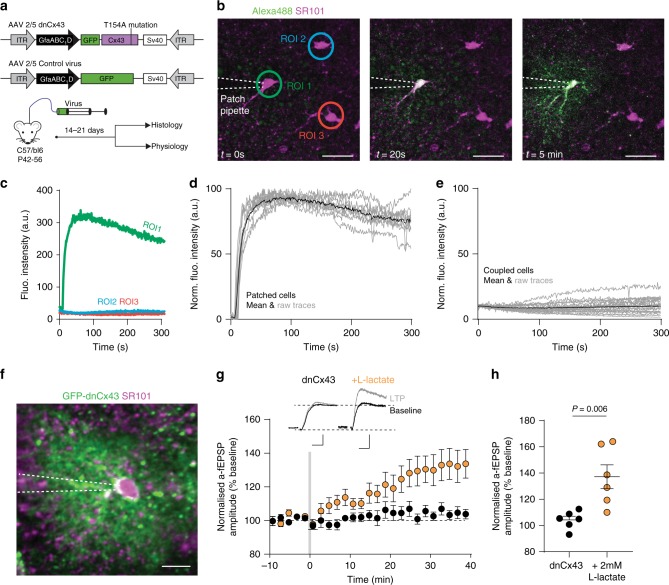
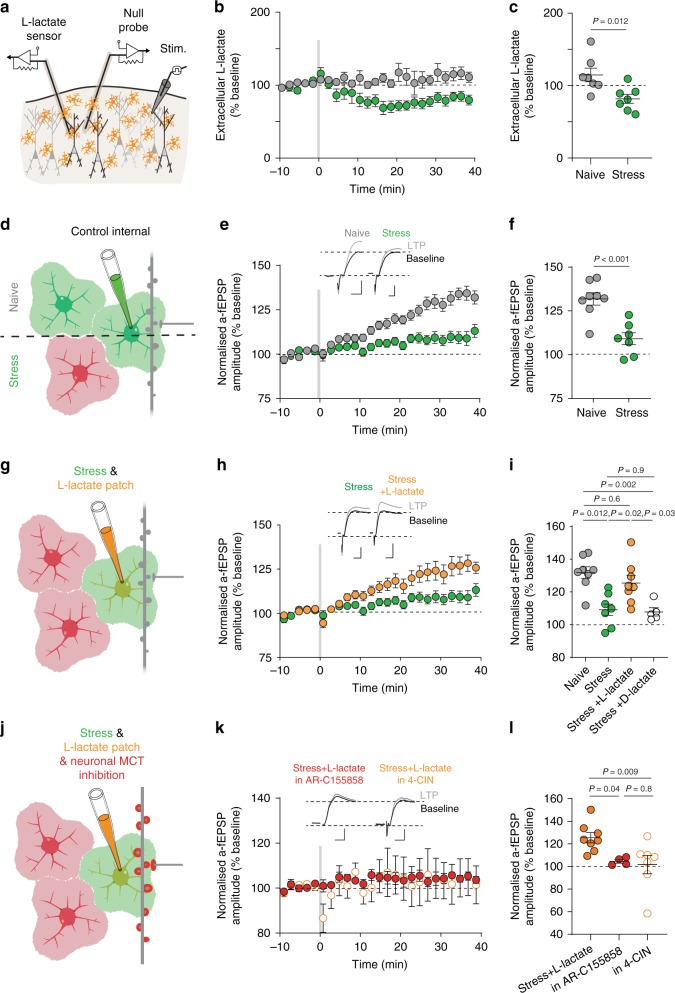
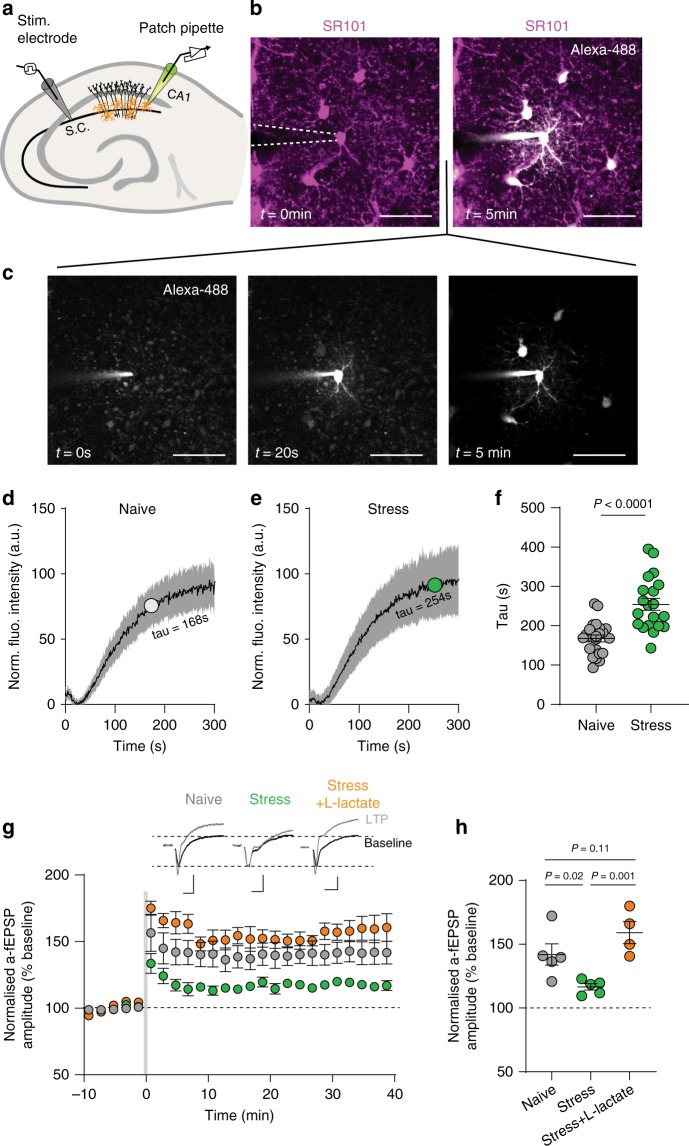
Astrocytes support the energy demands of synaptic transmission and plasticity. Enduring changes in synaptic efficacy are highly sensitive to stress, yet whether changes to astrocyte bioenergetic control of synapses contributes to stress-impaired plasticity is unclear. Here we show in mice that stress constrains the shuttling of glucose and lactate through astrocyte networks, creating a barrier for neuronal access to an astrocytic energy reservoir in the hippocampus and neocortex, compromising long-term potentiation. Impairing astrocytic delivery of energy substrates by reducing astrocyte gap junction coupling with dominant negative connexin 43 or by disrupting lactate efflux was sufficient to mimic the effects of stress on long-term potentiation. Furthermore, direct restoration of the astrocyte lactate supply alone rescued stress-impaired synaptic plasticity, which was blocked by inhibiting neural lactate uptake. This gating of synaptic plasticity in stress by astrocytic metabolic networks indicates a broader role of astrocyte bioenergetics in determining how experience-dependent information is controlled.
Overview
The claims and statistics of this paper haven’t been checked yet.
Free: it reads the open-access text and checks the first 5 claims that cite a source we can check. Create a free account to check every claim.
Integrity signals
Registry
Cites
Statistics
Figures
Verification
Claims the paper makes
The claims and statistics of this paper haven’t been checked yet.
Free: it reads the open-access text and checks the first 5 claims that cite a source we can check. Create a free account to check every claim.
Claims other papers make about this one
Each is checked against this paper’s own text: does it say what the citing paper says it does?
The source backs part of the claim, not all of it — or backs it for a different population, condition or comparison.
In the citing paper
“Chronic unpredictable stress (CUS) and acute stress both specifically reduce the expression of the gap junction-forming proteins Cx30 and Cx43, 164”
From Major depressive disorder: hypothesis, mechanism, prevention and treatment (2024) · cites this paper as [164]
Experimental — accuracy not yet measuredThe source backs part of the claim, not all of it — or backs it for a different population, condition or comparison.
In the citing paper
“Another study reported that inhibiting lactate transfer from astrocytes to neurons abolished hippocampal and cortical synaptic plasticity under stress conditions in mice.38”
From ApoE4-dependent lysosomal cholesterol accumulation impairs mitochondrial homeostasis and oxidative phosphorylation in human astrocytes (2023) · cites this paper as [38]
Experimental — accuracy not yet measured
Self-check
Percentages, sums and reported differences re-computed from the paper’s own numbers.
The self-check needs the paper’s full text.
Citations
Cites
Zhang, Y., Chen, K., Sloan, S. A., Bennett, M. L., Scholze, A. R., O'Keeffe, S., Phatnani, H. P., Guarnieri, P., Caneda, C., Ruderisch, N., et al. (2014) · The Journal of Neuroscience · doi:10.1523/jneurosci.1860-14.2014 · Cited by 4,875
Neural regulation of endocrine and autonomic stress responses
Ulrich-Lai, Y. M., & Herman, J. P. (2009) · Nature Reviews Neuroscience · doi:10.1038/nrn2647 · Cited by 3,318
Astrocyte-Neuron Lactate Transport Is Required for Long-Term Memory Formation
Suzuki, A., Stern, S. A., Bozdagi, O., Huntley, G. W., Walker, R. H., Magistretti, P. J., & Alberini, C. M. (2011) · Cell · doi:10.1016/j.cell.2011.02.018 · Cited by 1,711
Long-term potentiation depends on release of d-serine from astrocytes
Henneberger, C., Papouin, T., Oliet, S. H. R., & Rusakov, D. A. (2010) · Nature · doi:10.1038/nature08673 · Cited by 1,389
Astrocyte calcium signaling: the third wave
Bazargani, N., & Attwell, D. (2016) · Nature Neuroscience · doi:10.1038/nn.4201 · Cited by 944
Astroglial Metabolic Networks Sustain Hippocampal Synaptic Transmission
Rouach, N., Koulakoff, A., Abudara, V., Willecke, K., & Giaume, C. (2008) · Science · doi:10.1126/science.1164022 · Cited by 871
Astroglial networks: a step further in neuroglial and gliovascular interactions
Giaume, C., Koulakoff, A., Roux, L., Holcman, D., & Rouach, N. (2010) · Nature Reviews Neuroscience · doi:10.1038/nrn2757 · Cited by 777
Chai, H., Diaz-Castro, B., Shigetomi, E., Monte, E., Octeau, J. C., Yu, X., Cohn, W., Rajendran, P. S., Vondriska, T. M., Whitelegge, J. P., et al. (2017) · Neuron · doi:10.1016/j.neuron.2017.06.029 · Cited by 769
Self-citationImpaired Memory Retrieval after Psychosocial Stress in Healthy Young Men
Kuhlmann, S., Piel, M., & Wolf, O. T. (2005) · The Journal of Neuroscience · doi:10.1523/jneurosci.5139-04.2005 · Cited by 679
Ca2+ signaling in astrocytes from Ip3r2−/− mice in brain slices and during startle responses in vivo
Srinivasan, R., Huang, B. S., Venugopal, S., Johnston, A. D., Chai, H., Zeng, H., Golshani, P., & Khakh, B. S. (2015) · Nature Neuroscience · doi:10.1038/nn.4001 · Cited by 505
Self-citation
Cited by
Major depressive disorder: hypothesis, mechanism, prevention and treatment
Cui, L., Li, S., Wang, S., Wu, X., Liu, Y., Yu, W., Wang, Y., Tang, Y., Xia, M., & Li, B. (2024) · Signal Transduction and Targeted Therapy · doi:10.1038/s41392-024-01738-y · Cited by 1,244
“163 Chronic unpredictable stress (CUS) and acute stress both speci fi cally reduce the expression of the gap junction-forming proteins Cx30 and Cx43, 164 and the integrity of the BBB is weakened in mice lacking Cx30 and Cx43.”
BackgroundAstrocyte-neuron metabolic cooperation shapes brain activity
Bonvento, G., & Bolaños, J. P. (2021) · Cell Metabolism · doi:10.1016/j.cmet.2021.07.006 · Cited by 580
Energy matters: presynaptic metabolism and the maintenance of synaptic transmission
Li, S., & Sheng, Z.-H. (2022) · Nature Reviews Neuroscience · doi:10.1038/s41583-021-00535-8 · Cited by 267
Spatial transcriptomics reveal neuron–astrocyte synergy in long-term memory
Sun, W., Liu, Z., Jiang, X., Chen, M. B., Dong, H., Liu, J., Südhof, T. C., & Quake, S. R. (2024) · Nature · doi:10.1038/s41586-023-07011-6 · Cited by 165
“Utp14b was found to be upregulated in astrocytes of the neocortex in stressed mice 48 .”
Cells of the Blood–Brain Barrier: An Overview of the Neurovascular Unit in Health and Disease
McConnell, H., & Mishra, A. (2022) · Methods in molecular biology · doi:10.1007/978-1-0716-2289-6_1 · Cited by 200
Cortical astrocytes independently regulate sleep depth and duration via separate GPCR pathways
Vaidyanathan, T. V., Collard, M., Yokoyama, S., Reitman, M. E., & Poskanzer, K. E. (2021) · eLife · doi:10.7554/elife.63329 · Cited by 166
Direct vascular contact is a hallmark of cerebral astrocytes
Hösli, L., Zuend, M., Bredell, G., Zanker, H. S., de Oliveira, C. E. P., Saab, A. S., & Weber, B. (2022) · Cell Reports · doi:10.1016/j.celrep.2022.110599 · Cited by 132
McNeill, J., Rudyk, C., Hildebrand, M. E., & Salmaso, N. (2021) · Frontiers in Cellular Neuroscience · doi:10.3389/fncel.2021.644126 · Cited by 143
Dysfunctional serotonergic neuron-astrocyte signaling in depressive-like states
González-Arias, C., Sánchez-Ruiz, A., Esparza, J., Sánchez-Puelles, C., Arancibia, L., Ramírez-Franco, J., Gobbo, D., Kirchhoff, F., & Perea, G. (2023) · Molecular Psychiatry · doi:10.1038/s41380-023-02269-8 · Cited by 113
“Never-theless, little is known about how this pathological brain state impacts astrocyte Ca 2 + signaling, a key intracellular regulator of astrocyte physiology, both in resting and in response to neuronal demands [17].”
BackgroundA genetically encoded fluorescent biosensor for extracellular l-lactate
Nasu, Y., Murphy-Royal, C., Wen, Y., Haidey, J. N., Molina, R. S., Aggarwal, A., Zhang, S., Kamijo, Y., Paquet, M.-E., Podgorski, K., et al. (2021) · Nature Communications · doi:10.1038/s41467-021-27332-2 · Cited by 109
Self-citationDecoupling astrocytes in adult mice impairs synaptic plasticity and spatial learning
Hösli, L., Binini, N., Ferrari, K. D., Thieren, L., Looser, Z. J., Zuend, M., Zanker, H. S., Berry, S., Holub, M., Möbius, W., et al. (2022) · Cell Reports · doi:10.1016/j.celrep.2022.110484 · Cited by 109
“, 2020) and facilitate lactate supply to neurons (Clasadonte et al., 2017; Murphy-Royal et al., 2020; Rouach et al., 2008).”
BackgroundA conceptual framework for astrocyte function
Murphy‐Royal, C., Ching, S., & Papouin, T. (2023) · Nature Neuroscience · doi:10.1038/s41593-023-01448-8 · Cited by 126
“In this three-step framework, astrocytes are stimulated by diffusive signals that are relevant to the function of the local circuit 15 and encode a change in the animal’s state 21 (Fig.”
BackgroundSelf-citationLee, H., Cho, S., Kim, M.-J., Park, Y. J., Cho, E., Jo, Y. S., Kim, Y.-S., Lee, J. Y., Thoudam, T., Woo, S.-H., et al. (2023) · Cell Reports · doi:10.1016/j.celrep.2023.113183 · Cited by 93
Dong, R., Han, Y., Jiang, L., Liu, S., Zhang, F., Peng, L., Wang, Z., Ma, Z., Xia, T., & Gu, X. (2022) · Journal of Neuroinflammation · doi:10.1186/s12974-022-02424-y · Cited by 100
“Disruption of the astrocyte network can impair energy metabolism in neurons and impair long-term plasticity [20].”
BackgroundLactate Transporters Mediate Glia-Neuron Metabolic Crosstalk in Homeostasis and Disease
Jha, M. K., & Morrison, B. M. (2020) · Frontiers in Cellular Neuroscience · doi:10.3389/fncel.2020.589582 · Cited by 86
York, E. M., Zhang, J., Choi, H. B., & MacVicar, B. A. (2021) · Glia · doi:10.1002/glia.23913 · Cited by 78
“Although it has garnered increasing attention, the definitive link between in situ microglial metabolism, their immune functions, and impacts on synaptic plasticity remain unclear (Baik et al., 2019; Fodelianaki et al., 2019; Lynch, 2020; Nair et al., 2019; Wang et al., 2019).”
BackgroundRole of adult hippocampal neurogenesis in the antidepressant actions of lactate
Carrard, A., Cassé, F., Carron, C., Burlet-Godinot, S., Toni, N., Magistretti, P. J., & Martin, J. (2021) · Molecular Psychiatry · doi:10.1038/s41380-021-01122-0 · Cited by 75
“In addition, increasing evidence supports a role for lactate as a signaling molecule [4] involved, among other functions, in long-term memory formation [10, 11] and conditioned responses to cocaine [12, 13].”
BackgroundAstrocytic ALKBH5 in stress response contributes to depressive-like behaviors in mice
Guo, F., Fan, J., Liu, J., Kong, P., Ren, J., Mo, J., Lu, C., Zhong, Q., Chen, L.-Y., Jiang, H.-T., et al. (2024) · Nature Communications · doi:10.1038/s41467-024-48730-2 · Cited by 93
“Astrocytes are known to play a critical role in maintaining BBB and CNS homeostasis, preventing potentially harmful signals in the blood from entering the brain 15,36 .”
Beyond the neuron: Role of non-neuronal cells in stress disorders
Cathomas, F., Holt, L. M., Parise, E. M., Liu, J., Murrough, J. W., Casaccia, P., Nestler, E. J., & Russo, S. J. (2022) · Neuron · doi:10.1016/j.neuron.2022.01.033 · Cited by 76
Multiomic profiling of the acute stress response in the mouse hippocampus
von Ziegler, L., Floriou‐Servou, A., Waag, R., Gupta, R. R. D., Sturman, O., Gapp, K., Maat, C. A., Kockmann, T., Lin, H.-Y., Duss, S. N., et al. (2022) · Nature Communications · doi:10.1038/s41467-022-29367-5 · Cited by 72
Lactate Supply Overtakes Glucose When Neural Computational and Cognitive Loads Scale Up
Dembitskaya, Y., Piette, C., Siaume‐Perez, S., Berry, H., Magistretti, P. J., & Venance, L. (2022) · Proceedings of the National Academy of Sciences · doi:10.1073/pnas.2212004119 · Cited by 76
Lactate biosensors for spectrally and spatially multiplexed fluorescence imaging
Nasu, Y., Aggarwal, A., Le, G. N. T., Vo, C. T., Kambe, Y., Wang, X., Beinlich, F. R. M., Lee, A. B., Ram, T. R., Wang, F., et al. (2023) · Nature Communications · doi:10.1038/s41467-023-42230-5 · Cited by 77
Self-citationDopamine activates astrocytes in prefrontal cortex via α1-adrenergic receptors
Pittolo, S., Yokoyama, S., Willoughby, D. D., Taylor, C. R., Reitman, M. E., Tse, V., Wu, Z., Etchenique, R., Li, Y., & Poskanzer, K. E. (2022) · Cell Reports · doi:10.1016/j.celrep.2022.111426 · Cited by 78
“, 2018), with changes in astrocytes following stress (Abbink et al., 2019; Bender et al., 2020; Murphy-Royal et al., 2020; Simard et al., 2018), and with divergent transcriptomic, morphological, and cellular signaling landscapes in astrocytes of different brain areas (Batiuk et al.”
BackgroundProfiling DNA break sites and transcriptional changes in response to contextual fear learning
Stott, R. T., Kritsky, O., & Tsai, L.-H. (2021) · PLOS ONE · doi:10.1371/journal.pone.0249691 · Cited by 62
Aten, S., Du, Y., Taylor, O., Dye, C., Collins, K., Thomas, M., Kiyoshi, C., & Zhou, M. (2023) · Neurochemical Research · doi:10.1007/s11064-022-03663-4 · Cited by 60
“However, a recently published study demonstrated that acute stress leads to astrocyte atrophy and prolongs spontaneous calcium events within astrocytes [25].”
BackgroundMethodKaul, D., Schwab, S. G., Mechawar, N., & Matosin, N. (2021) · Neuroscience & Biobehavioral Reviews · doi:10.1016/j.neubiorev.2021.01.025 · Cited by 64
Neurovascular adaptations modulating cognition, mood, and stress responses
Dion‐Albert, L., Dudek, K., Russo, S. J., Campbell, M., & Ménard, C. (2023) · Trends in Neurosciences · doi:10.1016/j.tins.2023.01.005 · Cited by 61
“neuronal function or even contribute to cognitive impairment? Acute stress hinders lactate shuttle between cortical and hippocampal (HC) neurons and astrocytes, a mechanism crucial for memory processes (A) [42].”
BackgroundThe Acute Stress Response in the Multiomic Era
Floriou-Servou, A., von Ziegler, L., Waag, R., Schläppi, C., Germain, P.-L., & Bohacek, J. (2021) · Biological Psychiatry · doi:10.1016/j.biopsych.2020.12.031 · Cited by 51
Experience-dependent myelination following stress is mediated by the neuropeptide dynorphin
Osso, L. A., Rankin, K. A., & Chan, J. R. (2021) · Neuron · doi:10.1016/j.neuron.2021.08.015 · Cited by 52
Brain–immune interaction mechanisms: Implications for cognitive dysfunction in psychiatric disorders
Zhao, F., Li, B., Yang, W., Ge, T., & Cui, R. (2022) · Cell Proliferation · doi:10.1111/cpr.13295 · Cited by 56
“has shown that stress impairs LTP by limiting shuttling of the astrocyte network, thereby impeding neuronal access to the astrocyte energy depots in the hippocampus and neocortex.(181) Alterations in glial cell synapse or network function and abnormalities in astrocyte signalling may cause or contribute to synaptic an…”
BackgroundKong, E., Li, Y., Deng, M., Tong, H., Yang, M., Li, J., Feng, X., & Yuan, H. (2022) · Frontiers in Immunology · doi:10.3389/fimmu.2022.861290 · Cited by 49
“Glial cells are implicated in a variety of neurophysiological processes, including neuronal development, synaptic remodeling, and neuropathic pain (6).”
BackgroundThe many ways astroglial connexins regulate neurotransmission and behavior
Mazaud, D., Capano, A., & Rouach, N. (2021) · Glia · doi:10.1002/glia.24040 · Cited by 49
Exploring alterations in sensory pathways in migraine
Meylakh, N., & Henderson, L. A. (2022) · The Journal of Headache and Pain · doi:10.1186/s10194-021-01371-y · Cited by 50
Metabolic Recruitment in Brain Tissue
Barros, L. F., Ruminot, I., Sotelo-Hitschfeld, T., Lerchundi, R., & Fernández‐Moncada, I. (2022) · Annual Review of Physiology · doi:10.1146/annurev-physiol-021422-091035 · Cited by 46
Astrocytes in depression and Alzheimer’s disease
Liao, Y., Xing, Q., Li, Q., Zhang, J., Pan, R., & Yuan, Z. (2021) · Frontiers of Medicine · doi:10.1007/s11684-021-0875-0 · Cited by 49
“We can regard this phenomenon as an instant energy compensation to neuronal stress, which verifies the function of rapid energy supply about lactate [53].”
BackgroundHeard, K. J., Shokhirev, M. N., Becronis, C., Fredlender, C., Zahid, N., Le, A. T., Ji, Y., Skime, M. K., Nelson, T. J., Hall‐Flavin, D. K., et al. (2021) · Translational Psychiatry · doi:10.1038/s41398-021-01733-9 · Cited by 48
Assessment of astrocytes as a mediator of memory and learning in rodents
Akther, S., & Hirase, H. (2021) · Glia · doi:10.1002/glia.24099 · Cited by 46
“the primary target for blood-borne stress co-factors (Murphy-Royal et al., 2020).”
BackgroundAstrocyte Networks as Therapeutic Targets in Glaucomatous Neurodegeneration
Boal, A. M., Risner, M. L., Cooper, M., Wareham, L. K., & Calkins, D. J. (2021) · Cells · doi:10.3390/cells10061368 · Cited by 41
“Local delivery of high levels of L-lactate, the metabolically active enantiomer that can be utilized by neurons, rescues the phenotype and allows for the re-establishment of LTP independent of astrocytic networks [46].”
BackgroundReduced Oligodendrocyte Precursor Cell Impairs Astrocytic Development in Early Life Stress
Wang, Y., Su, Y., Yu, G., Wang, X., Chen, X., Yu, B., Cheng, Y., Li, R., Sáez, J. C., Yi, C., et al. (2021) · Advanced Science · doi:10.1002/advs.202101181 · Cited by 40
Lactate as an Astroglial Signal Augmenting Aerobic Glycolysis and Lipid Metabolism
Horvat, A., Zorec, R., & Vardjan, N. (2021) · Frontiers in Physiology · doi:10.3389/fphys.2021.735532 · Cited by 44
Long-Term Impact of Early-Life Stress on Hippocampal Plasticity: Spotlight on Astrocytes
Çalışkan, G., Müller, A., & Albrecht, A. (2020) · International Journal of Molecular Sciences · doi:10.3390/ijms21144999 · Cited by 38
“Acute swim stress in adulthood further resulted in astrocytic hypertrophy and an increase of calcium levels in astrocytic microdomains [90].”
BackgroundInfluentialPowell, C. L., Davidson, A. R., & Brown, A. M. (2020) · Biosensors · doi:10.3390/bios10110183 · Cited by 36
“Analysis of post mortem brain dorsolateral prefrontal cortex in subjects with schizophrenia, and two mouse model of schizophrenia, found increased lactate in the brain, where there was a decrease in lactate in the DISC mouse [86].”
BackgroundTranslational models of stress and resilience: An applied neuroscience methodology review
Albayrak, Z. S., Vaz, A., Bordes, J., Ünlü, S., Sep, M. S. C., Vinkers, C. H., Pinto, L., & Eser, H. Y. (2024) · Neuroscience Applied · doi:10.1016/j.nsa.2024.104064 · Cited by 48
Huntington, T. E., & Srinivasan, R. (2021) · Cell Calcium · doi:10.1016/j.ceca.2021.102383 · Cited by 31
Geng, X., Wu, H., Li, Z., Li, C., Chen, D., Zong, J., Liu, Z., Wei, S., & Peng, W. (2021) · Oxidative Medicine and Cellular Longevity · doi:10.1155/2021/1703981 · Cited by 33
Role of astrocytes in sleep deprivation: accomplices, resisters, or bystanders?
Que, M., Li, Y., Wang, X., Zhan, G., Luo, X., & Zhou, Z. (2023) · Frontiers in Cellular Neuroscience · doi:10.3389/fncel.2023.1188306 · Cited by 38
“As neuronal long-term plasticity and energy metabolism can both be hampered by the disruption of the astrocyte network (Murphy-Royal et al., 2020), altering glycogen turnover and glutamatergic neurotransmission through the ANLS may be a potential mechanism for identifying and ameliorating the root causes of the viciou…”
BackgroundAstrocyte-derived lactate in stress disorders
Chamaa, F., Magistretti, P. J., & Fiumelli, H. (2024) · Neurobiology of Disease · doi:10.1016/j.nbd.2024.106417 · Cited by 32
Function and therapeutic value of astrocytes in diabetic cognitive impairment
Meng, F., Fu, J., Zhang, L., Guo, M., Zhuang, P., Yin, Q., & Zhang, Y. (2023) · Neurochemistry International · doi:10.1016/j.neuint.2023.105591 · Cited by 31
Bansal, Y., Codeluppi-Arrowsmith, S. A., & Banasr, M. (2024) · International Journal of Molecular Sciences · doi:10.3390/ijms25126357 · Cited by 30
“Since astroglia are critical mediators of brain homeostasis and are one of the first points of contact for many peripheral signals of stress and inflammation, such as corticosteroids and glucocorticoids (GCs), they are highly affected by chronic stress exposure [19,27,28].”
BackgroundEnvironmental toxicants in the brain: A review of astrocytic metabolic dysfunction
McCann, M. S., & Maguire‐Zeiss, K. A. (2021) · Environmental Toxicology and Pharmacology · doi:10.1016/j.etap.2021.103608 · Cited by 27
Prolonged Exposure to Social Stress Impairs Homeostatic Sleep Regulation
Radwan, B., Touzet, A. Y., Hammami, S., & Chaudhury, D. (2021) · Frontiers in Neuroscience · doi:10.3389/fnins.2021.633955 · Cited by 31
Noradrenaline release from the locus coeruleus shapes stress-induced hippocampal gene expression
Privitera, M., von Ziegler, L., Floriou‐Servou, A., Duss, S. N., Zhang, R., Waag, R., Leimbacher, S., Sturman, O., Roessler, F. K., Heylen, A., et al. (2024) · eLife · doi:10.7554/elife.88559 · Cited by 34
Su, Z., Kong, R., Huang, C., Wang, K., Liu, C., Gu, X., & Wang, H. (2025) · Archives of Toxicology · doi:10.1007/s00204-025-04002-6 · Cited by 30
“This is achieved by preventing potentially deleterious signals from the blood from entering the brain (Murphy-Royal et al. 2020; Abbott et al. 2006).”
Machado-Santos, A. R., Loureiro‐Campos, E., Patrício, P., Araújo, B., Alves, N. D., Mateus‐Pinheiro, A., Correia, J. S., Morais, M., Bessa, J. M., Sousa, N., et al. (2022) · Cells · doi:10.3390/cells11030390 · Cited by 27
York, E. M., Miller, A., Stopka, S. A., Martínez‐François, J. R., Hossain, M. A., Baquer, G., Regan, M. S., Agar, N. Y. R., & Yellen, G. (2023) · Journal of Neurochemistry · doi:10.1111/jnc.16004 · Cited by 23
“While this shuttle may occur during rest or in specific conditions (Ide et al., 2000 ; Murphy-Royal et al., 2020 ), accumulating evidence now suggests that upon stimulation, neurons increase their use of glucose rather than importing and metabolizing lactate (Bak et al., 2009; Diaz-Garcia et al.,…”
BackgroundPan, S., Pan, Y., Tang, Y., Zuo, N., Zhang, Y., Jia, K., & Kong, L. (2021) · Journal of Neurochemistry · doi:10.1111/jnc.15489 · Cited by 23
Pan, S., Zhou, Y., Zuo, N., Jiao, R., Kong, L., & Pan, Y. (2022) · Frontiers in Pharmacology · doi:10.3389/fphar.2022.872375 · Cited by 26
“Hundred Nanometre corticosterone was chosen to stimulate primary astrocytes according to previous study (Murphy-Royal et al., 2020; Pan et al., 2021).”
BackgroundMethodKaul, D., Schwab, S. G., Mechawar, N., Ooi, L., & Matosin, N. (2022) · Journal of Neuroscience · doi:10.1523/jneurosci.2410-21.2022 · Cited by 24
Disrupting astrocyte-neuron lactate transport prevents cocaine seeking after prolonged withdrawal
Chen, W., Zhang, Y., Liang, J., Zhang, Z., Zhang, L., Huang, E., Zhang, G., Lü, L., Han, Y., & Shi, J. (2023) · Science Advances · doi:10.1126/sciadv.adi4462 · Cited by 21
“Blockade of lactate production and transport significantly attenuates long-term potentiation, as well as multiple processes required for memory, including formation, consolidation, reconsolidation, and maintenance ( 21 – 25 , 54 ).”
BackgroundHorn, M. R. V., Benfey, N. J., Shikany, C., Severs, L. J., & Deemyad, T. (2021) · Journal of Neurophysiology · doi:10.1152/jn.00062.2021 · Cited by 21
Cellular Environment Remodels the Genomic Fabrics of Functional Pathways in Astrocytes
Iacobaş, D. A., Iacobaş, S., Stout, R. F., & Spray, D. C. (2020) · Genes · doi:10.3390/genes11050520 · Cited by 18
Self-citationAstrocytes connect specific brain regions through plastic networks
Cooper, M., Sellés, M. C., Cammer, M., Redd, C., Gildea, H. K., Sall, J., Chiurri, K. E., Cheung, P., Wheeler, D. G., Saab, A. S., et al. (2026) · Nature · doi:10.1038/s41586-026-10426-6 · Cited by 40
Institóris, Á., Murphy‐Royal, C., Tarantini, S., Yabluchanskiy, A., Haidey, J. N., Csiszár, A., Ungvari, Z. I., & Gordon, G. R. (2020) · GeroScience · doi:10.1007/s11357-020-00289-8 · Cited by 19
Self-citationThe role of neuroglial cells communication in ischemic stroke
Yu, Y., Liao, X., Xie, X., Qihua, L., Chen, X., & Liu, R. (2024) · Brain Research Bulletin · doi:10.1016/j.brainresbull.2024.110910 · Cited by 22
From energy metabolism to mood regulation: The rise of lactate as a therapeutic target
Zhang, S., Xia, J., He, W., Zou, Y., Liu, W., Li, L., Huang, Z., Li, Q., Li, Q. X., & Liu, W. (2025) · Journal of Advanced Research · doi:10.1016/j.jare.2025.04.018 · Cited by 32
“Stress impairs the transfer of glucose and lactate through the astrocyte network in the hippocampus and neocortex, creating barriers that hinder neuronal access to astrocyte-derived energy and impair LTP [66].”
InfluentialGlucocorticoids, synaptic plasticity and Alzheimer’s disease
Klyubin, I., Ondrejcak, T., Hu, N.-W., & Rowan, M. J. (2022) · Current Opinion in Endocrine and Metabolic Research · doi:10.1016/j.coemr.2022.100365 · Cited by 16
Doke, M., McLaughlin, J. P., Cai, J. J., Pendyala, G., Kashanchi, F., Khan, M. A., & Samikkannu, T. (2022) · Molecular Therapy — Nucleic Acids · doi:10.1016/j.omtn.2022.07.001 · Cited by 14
“LncExpDB, LncBase, and LncRRIsearch database analyses revealed 10 lncRNA nodes, 2 miRNA nodes, and 8 mRNA nodes in the network. bipolar disorder, the kynurenine (KYN) pathway (KP) plays a significant role in L-tryptophan (TRP)metabolism, producing several neurotoxic and neuroprotective metabolic precursors that may af…”
BackgroundInfluentialIntrusive thinking: Circuit and synaptic mechanisms of a transdiagnostic psychiatric symptom
Kalivas, P. W., Gourley, S. L., & Paulus, M. P. (2023) · Neuroscience & Biobehavioral Reviews · doi:10.1016/j.neubiorev.2023.105196 · Cited by 18
Liu, C., Yang, T., Zhou, Y., & Shen, Y. (2022) · Neuroscience Letters · doi:10.1016/j.neulet.2022.136766 · Cited by 18
“The reduced expression of the gap junction forming proteins Cx30 and Cx43, which impact such parameters in the regulation of synaptic numbers, morphology and functions, have been revealed in animals exposed to various stressors and also in MDD patients [11].”
BackgroundThe role of astrocytes in behaviors related to emotion and motivation
Shigetomi, E., & Koizumi, S. (2022) · Neuroscience Research · doi:10.1016/j.neures.2022.09.015 · Cited by 21
Astrocytic CREB in Nucleus Accumbens Promotes Susceptibility to Chronic Stress
Holt, L. M., Gyles, T. M., Parise, E. M., Minier-Toribio, A. M., Rivera, M., Markovic, T., Yeh, S.-Y., & Nestler, E. J. (2024) · Biological Psychiatry · doi:10.1016/j.biopsych.2024.09.021 · Cited by 15
Román, C., Egert, L., & Benedetto, B. D. (2020) · European Journal of Neuroscience · doi:10.1111/ejn.14900 · Cited by 17
“Specifically, acute stress and chronic unpredictable stress (CUS) decrease the diffusion of a special channel-permeable dye through astrocytes, with a corresponding reduced expression of the gap junction forming proteins Cx30 and Cx43, respectively (Sun, Liu, Yuan, Li, & Chen 2012; Murphy-Royal et al. 2020).”
BackgroundEarly-life stress induces persistent astrocyte dysfunction associated with fear generalisationPreprint
Guayasamin, M., Depaauw-Holt, L. R., Adedipe, I. I., Ghenissa, O., Vaugeois, J., Duquenne, M., Rogers, B., Latraverse-Arquilla, J., Peyrard, S., Bosson, A., et al. (2025) · eLife · doi:10.7554/elife.99988 · Cited by 20
Self-citationCircadian regulation of memory under stress: Endocannabinoids matter
Morena, M., Santori, A., & Campolongo, P. (2022) · Neuroscience & Biobehavioral Reviews · doi:10.1016/j.neubiorev.2022.104712 · Cited by 17
New Radiobiological Principles for the CNS Arising from Space Radiation Research
Britten, R. A., & Limoli, C. L. (2023) · Life · doi:10.3390/life13061293 · Cited by 18
Park, B., & Choi, G. E. (2025) · Progress in Neurobiology · doi:10.1016/j.pneurobio.2025.102786 · Cited by 16
Depaauw-Holt, L. R., Duquenne, M., Hamane, S., Peyrard, S., Rogers, B., Ireland, C., Nasu, Y., Fulton, S., Bosson, A., Alquier, T., et al. (2025) · Nature Communications · doi:10.1038/s41467-025-61643-y · Cited by 21
“First, we would like to thank all three peer reviewers for their time and the enthusiasm shown towards our manuscript.”
Self-citationPaton, S. E. J., & Ménard, C. (2023) · Journal of Clinical Investigation · doi:10.1172/jci168662 · Cited by 17
“Exposure to chronic stress also disturbs connections between astrocytes and neurons, impairing metabolite shuttling through the brain (19).”
BackgroundSingaravelu, S. K., Hoheisel, U., Mense, S., & Treede, R. (2021) · PAIN Reports · doi:10.1097/pr9.0000000000000904 · Cited by 14
When the Stars Misfire: Astrocytic Dysfunctions in Major Depressive Disorder
González-Arias, C., & Perea, G. (2025) · Neurochemical Research · doi:10.1007/s11064-025-04483-y · Cited by 16
“Animals exposed to based on an increase in the soma and the number and length of processes [ 26, 54, 55].”
Senescent Astrocytes: A New Player in Brain Aging and Cognitive Decline
Pessoa, B., Hayashide, L. D. S., Dias, G. R., Pontes, B., Pinto, R. S., & Diniz, L. P. (2026) · Brain Sciences · doi:10.3390/brainsci16010076 · Cited by 14
Lactate: A Theranostic Biomarker for Metabolic Psychiatry?
Caddye, E., Pineau, J., Reyniers, J., Ronen, I., & Colasanti, A. (2023) · Antioxidants · doi:10.3390/antiox12091656 · Cited by 18
Fabbri, R., Spennato, D., Conte, G., Konstantoulaki, A., Lazzarini, C., Saracino, E., Nicchia, G. P., Frigeri, A., Zamboni, R., Spray, D. C., et al. (2022) · Pharmacology & Therapeutics · doi:10.1016/j.pharmthera.2023.108403 · Cited by 12
Self-citationPersistent changes in extracellular lactate dynamics following synaptic potentiation
Bingul, D., Kalra, K., Murata, E. M., Belser, A., & Dash, M. B. (2020) · Neurobiology of Learning and Memory · doi:10.1016/j.nlm.2020.107314 · Cited by 13
“, 2011) or disruption of the astrocytic syncytium through diminished gap junctions (Murphy-Royal et al., 2020), effects that are rescued by lactate infusion.”
BackgroundRadiation-Induced Brain Injury with Special Reference to Astrocytes as a Therapeutic Target
Wang, C., Fan, X., Shi, Y., & Tang, F. R. (2025) · Journal of Integrative Neuroscience · doi:10.31083/jin25907 · Cited by 12
“This connectivity is also critical for the spreading of metabolic substrates such as glucose and lactate to supply neuronal activity [263].”
Astrocyte Bioenergetics and Major Psychiatric Disorders
Maly, I. V., Morales, M. J., & Pletnikov, M. V. (2021) · Advances in neurobiology · doi:10.1007/978-3-030-77375-5_9 · Cited by 11
Li, X., Rao, Y., Li, G., He, L., Wang, Y., He, W., Fang, P., Pei, C., 堂西, 倫., Xie, H., et al. (2025) · Scientific Reports · doi:10.1038/s41598-025-92030-8 · Cited by 11
Li, Z., Liu, Q., Shi, X., Jiao, X., Zhou, Y. X., Chen, C., Wu, W.-F., Dong, W., Qiu, Y.-K., Liu, Y., et al. (2025) · Molecular Neurobiology · doi:10.1007/s12035-025-05167-y · Cited by 8
“Previous studies have reported that astrocytes support synaptic transmission and plasticity in terms of energy demand [54], and research results have shown that astrocytes control cognitive function through glycolysis [55].”
Lan, X., Zhang, C., Ren, Z., Cheng, J., Chen, C., Zheng, Y., Han, J., Zhao, Y., Li, J., Cheng, F., et al. (2026) · Journal of Translational Medicine · doi:10.1186/s12967-025-07290-9 · Cited by 13
“Evidence indicates that mitochondrial modulation of lactate metabolism plays a key role in regulating synaptic plasticity, with studies showing that restoration of astrocytic lactate supply can rescue synaptic plasticity impaired by cellular stress [56].”
Early-life stress induces persistent astrocyte dysfunction associated with fear generalisation
Guayasamin, M., Depaauw-Holt, L. R., Adedipe, I. I., Ghenissa, O., Vaugeois, J., Duquenne, M., Rogers, B., Latraverse-Arquilla, J., Peyrard, S., Bosson, A., et al. (2025) · eLife · doi:10.7554/elife.99988.3 · Cited by 12
Self-citationKambe, Y. (2022) · Biochimica et Biophysica Acta (BBA) - General Subjects · doi:10.1016/j.bbagen.2022.130137 · Cited by 7
Astrocytic Regulation of Endocannabinoid-Dependent Synaptic Plasticity in the Dorsolateral Striatum
Adermark, L., Stomberg, R., Söderpalm, B., & Ericson, M. (2024) · International Journal of Molecular Sciences · doi:10.3390/ijms25010581 · Cited by 8
“Connexin hemichannels have also been suggested to be involved in the release of gliotransmitters and biomolecules from astrocytes [71,72], and they are required for the diffusion of metabolites such as glucose and lactate [73,74].”
BackgroundProfumo, F., Borghi, F., Angì, T., Maschietto, M., Vassanelli, S., & Milani, P. (2025) · Advanced Intelligent Systems · doi:10.1002/aisy.202401150 · Cited by 6
Synaptic plasticity through a naturalistic lens
Piette, C., Gervasi, N., & Venance, L. (2023) · Frontiers in Synaptic Neuroscience · doi:10.3389/fnsyn.2023.1250753 · Cited by 6
Zhao, J., Wang, Y., Tian, C., Wang, J., Chen, F., Dong, X., Luo, J., Zhu, Y., Liu, A., Ma, Z., et al. (2025) · Behavioural Neurology · doi:10.1155/bn/8890705 · Cited by 5
Maladaptive plasticity induced by morphine is mediated by hippocampal astrocytic Connexin-43
Darvishmolla, M., Saeedi, N., Tavassoli, Z., Heysieattalab, S., Janahmadi, M., & Hosseinmardi, N. (2023) · Life Sciences · doi:10.1016/j.lfs.2023.121969 · Cited by 5
Zong, B., Yu, F., Li, F., Sun, P., & Lin, L. (2025) · Biomolecules · doi:10.3390/biom16010043 · Cited by 5
Brain mitochondria as key drivers of cognition and behaviour
Sandi, C., Lobo, M. K., Hollis, F., Hirabayashi, Y., de Juan‐Sanz, J., & Bolaños, J. P. (2026) · Nature reviews. Neuroscience · doi:10.1038/s41583-026-01061-1 · Cited by 9
“…glial physiology, with reports of reduced activity-dependent lactate shuttling, altered astrocytic calcium activity and astrocytic hypertrophy 226 , in alignment with the view that stress can affect circuit functioning through changes in production, Ca 2+ buffering and mitochondrial dynamics…”
Astrocytes in neural circuits controlling appetite and food intake
Ellacott, K. L. J. (2021) · Current Opinion in Endocrine and Metabolic Research · doi:10.1016/j.coemr.2021.100313 · Cited by 5
Osemwegie, O., Ramkumar, S., & Smith, E. (2020) · Neurotoxicity research · doi:10.1007/s12640-020-00308-8 · Cited by 3
Metadata
- Authors
- Murphy-Royal, C., Johnston, A. D., Boyce, A. K. J., Diaz-Castro, B., Institoris, A., Peringod, G., Zhang, O., Stout, R. F., Spray, D. C., Thompson, R. J., Khakh, B. S., Bains, J. S., & Gordon, G. R.
- Affiliations
- University of California, Los Angeles (US)
- University of Calgary (CA)
- New York Institute of Technology (US)
- Albert Einstein College of Medicine (US)
- Corresponding author
- Gordon, Grant R.
- ORCID
- Venue
- Nature Communications
- Published
- 2020-04-24
- Volume
- 11
- Issue
- 1
- Pages
- 2014-2014
- ISSN
- 2041-1723 (ISSN-L)
- PMC
- PMC7181611
- OpenAlex
- W3018483640
- Semantic Scholar
- e27117621827d420a3eb5ecaaef832749ff31c36
- Cited by
- 158
- References
- 73
- Citations by year
- 2026: 17 · 2025: 26 · 2024: 26 · 2023: 23 · 2022: 24 · 2021: 31 · 2020: 10
- FWCI
- 10.08
- Type
- journal article
- Language
- en
- Update notices
- correction (2020-06-11)
- Open access
- gold
- doi.org
- Licence
- cc-by
- creativecommons.org/licenses/by/4.0 (tdm)
- creativecommons.org/licenses/by/4.0 (vor)
- Locations
- Nature Communications (publishedVersion, cc-by)
- PubMed Central (publishedVersion, cc-by)
- PubMed (publishedVersion)
- RePEc: Research Papers in Economics (submittedVersion)
- DOAJ (DOAJ: Directory of Open Access Journals) (submittedVersion, cc-by-sa)
- Funders
- University of Calgary
- McGill University
- Alberta Innovates
- National Institutes of Health
- Canadian Institutes of Health Research
- Topics
- Life Sciences › Neuroscience › Cellular and Molecular Neuroscience › Neuroscience and Neuropharmacology Research
- Life Sciences › Neuroscience › Neurology › Neuroinflammation and Neurodegeneration Mechanisms
- Life Sciences › Biochemistry, Genetics and Molecular Biology › Molecular Biology › Connexins and lens biology
- Keywords
- astrocytes, stress, synaptic plasticity, long-term potentiation, electrical coupling, connexin 43, lactate efflux, hippocampus, neocortex, astrocyte-neuron metabolic coupling
- MeSH terms
- Adaptation, Psychological, Animals, Astrocytes, Disease Models, Animal, Energy Metabolism, Female, Glucose, Hippocampus, Humans, Male, Neurons, Stress, Psychological, Long-Term Potentiation, Patch-Clamp Techniques, Lactic Acid, Neocortex, Mice, Metabolic Networks and Pathways
About these checks
Registry, retraction, Cites and statistics results are computed, not judged, with one exception: a printed reference that no index lists is read once by a model before it counts as a citation error. Claims are extracted by a model and kept only when their quote appears verbatim in the text; each cited source is then checked, with a model’s help, for whether it says what the claim relies on. Those verdicts can be wrong — read the claim’s quote and the cited source before relying on one.
Statistics and arithmetic are recomputed, not judged.
Confidence bands are shown only for fields calibrated on our annotated test set. None is calibrated yet, so no band is shown.
What counts as a claim ›How we measure confidence ›How we check this ›
Are you an author, or do you see a problem with this page? Request a review
Data sources
Bibliographic data: Semantic Scholar, OpenAlex, Crossref.
Contains information from the Semantic Scholar Academic Graph Datasets, made available under the ODC Attribution License (ODC-BY 1.0).
Semantic Scholar’s data is described in: Kinney, R., et al. (2023). The Semantic Scholar Open Data Platform. arXiv:2301.10140.
