

The TSPO-NOX1 axis controls phagocyte-triggered pathological angiogenesis in the eye
Open accessThe DOI matches its Crossref record; 67 of the 67 references it cites were found in a registry or an index.
Abstract
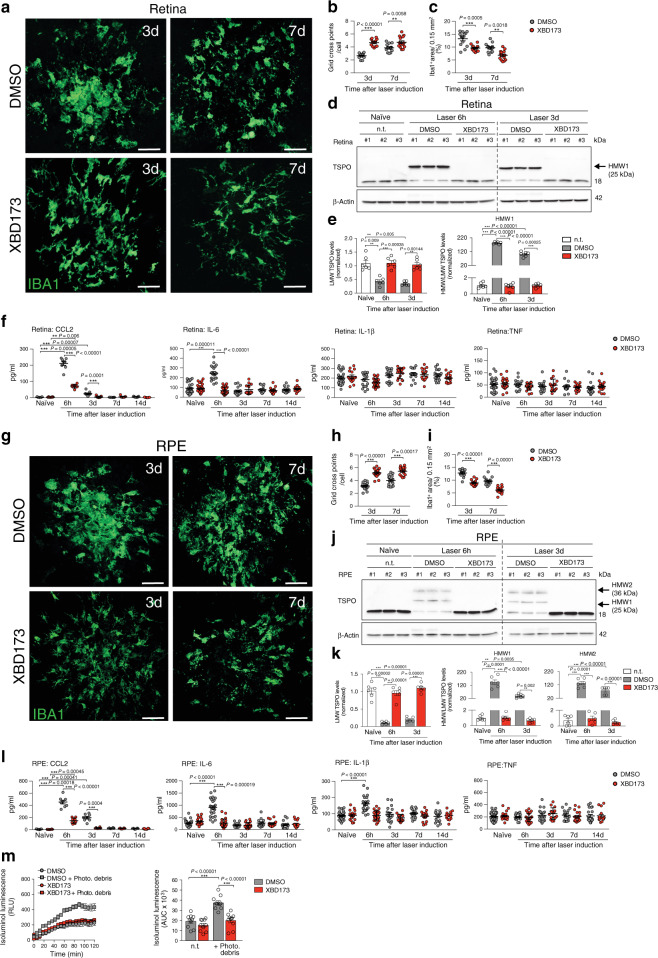
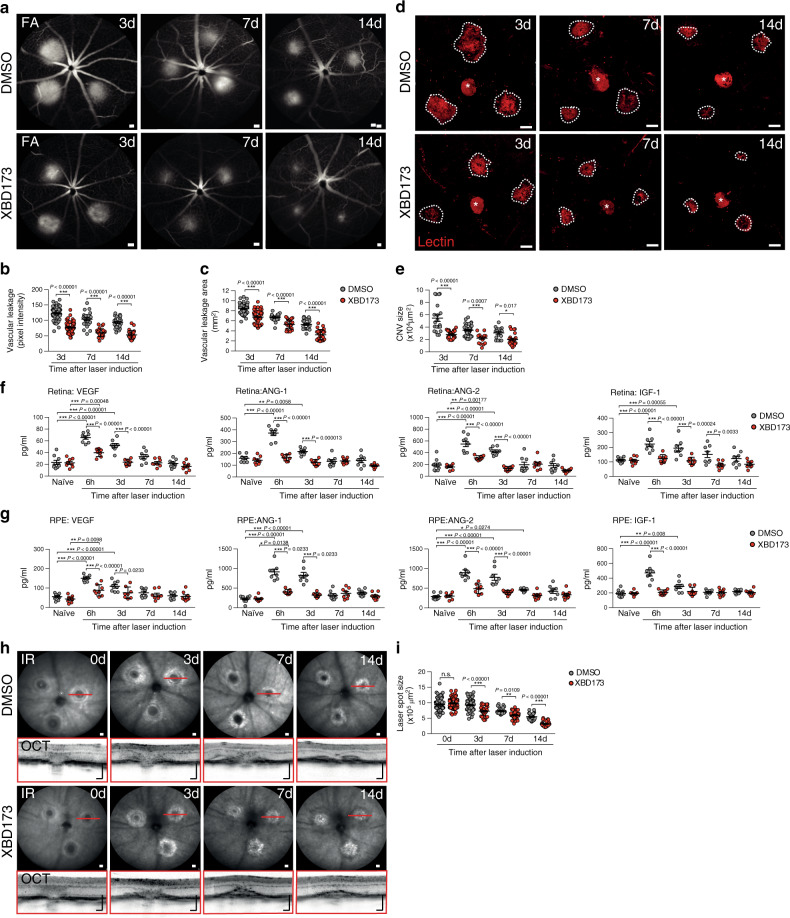
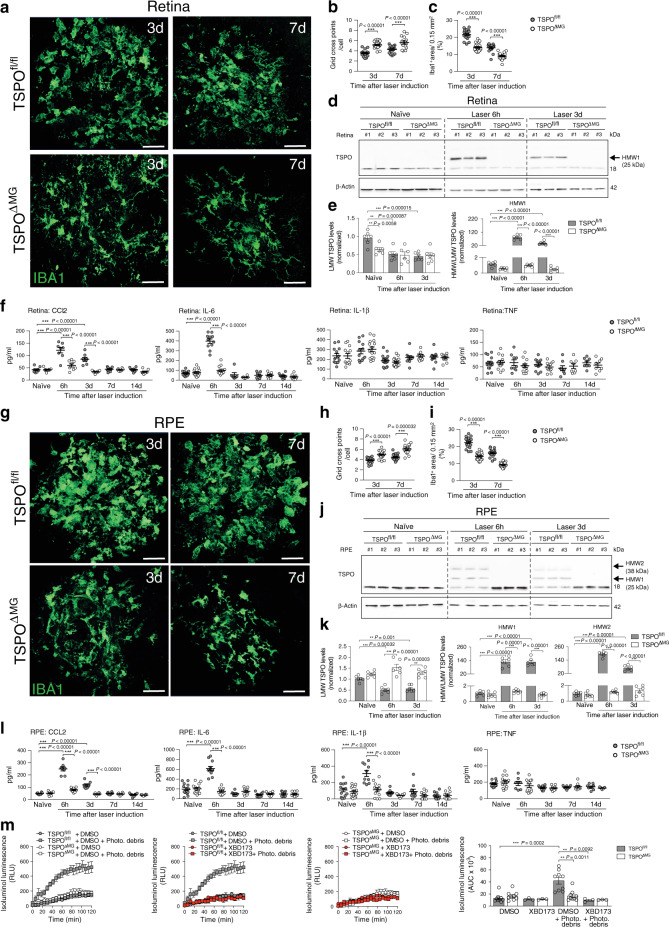
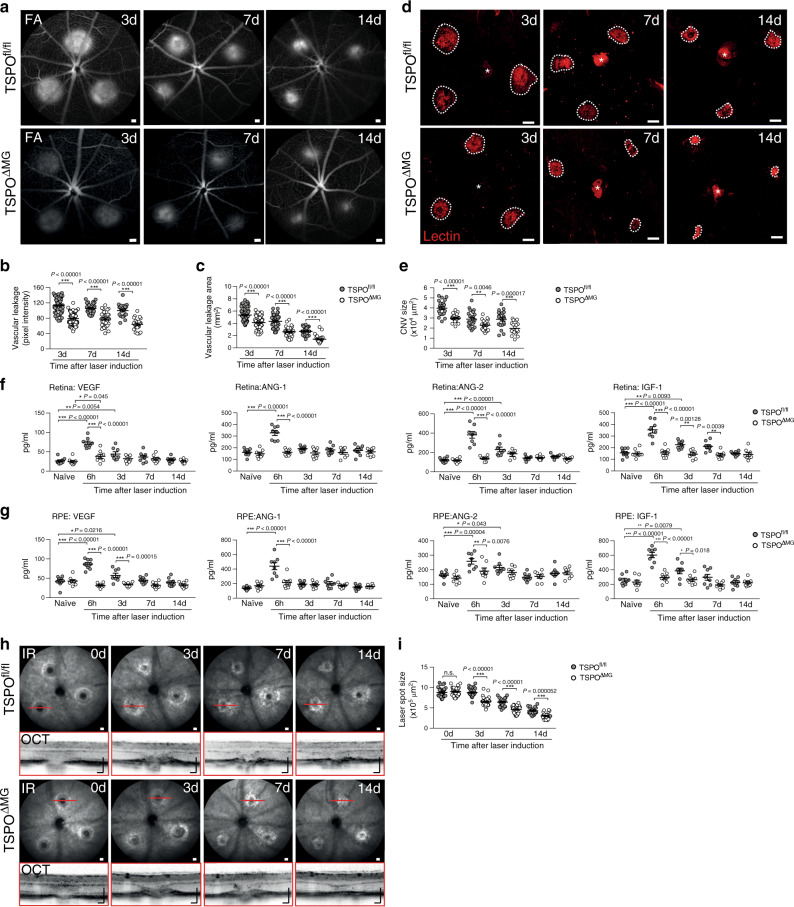
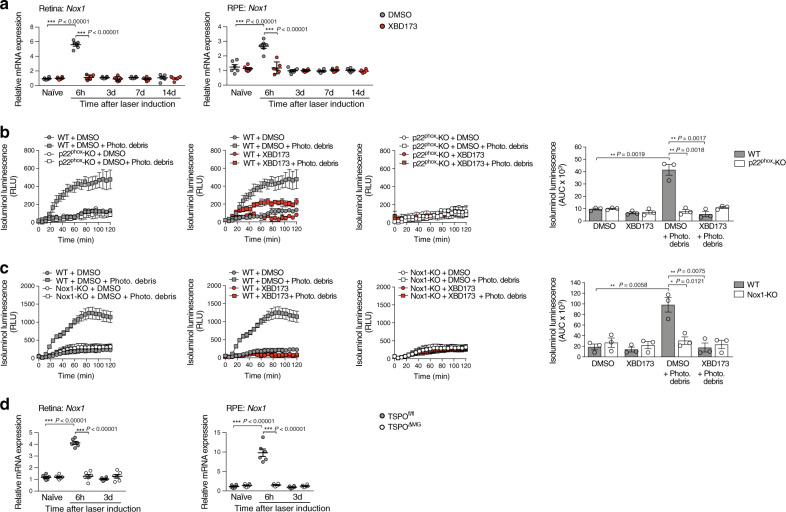
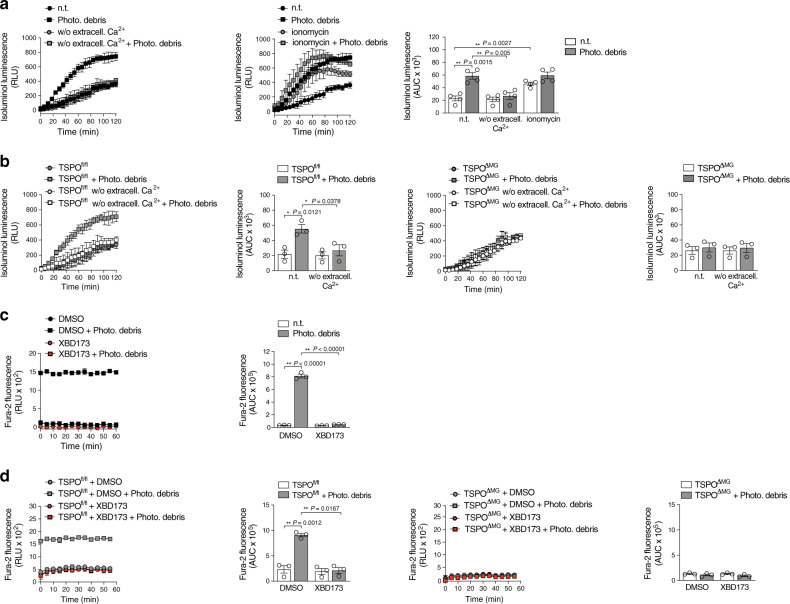
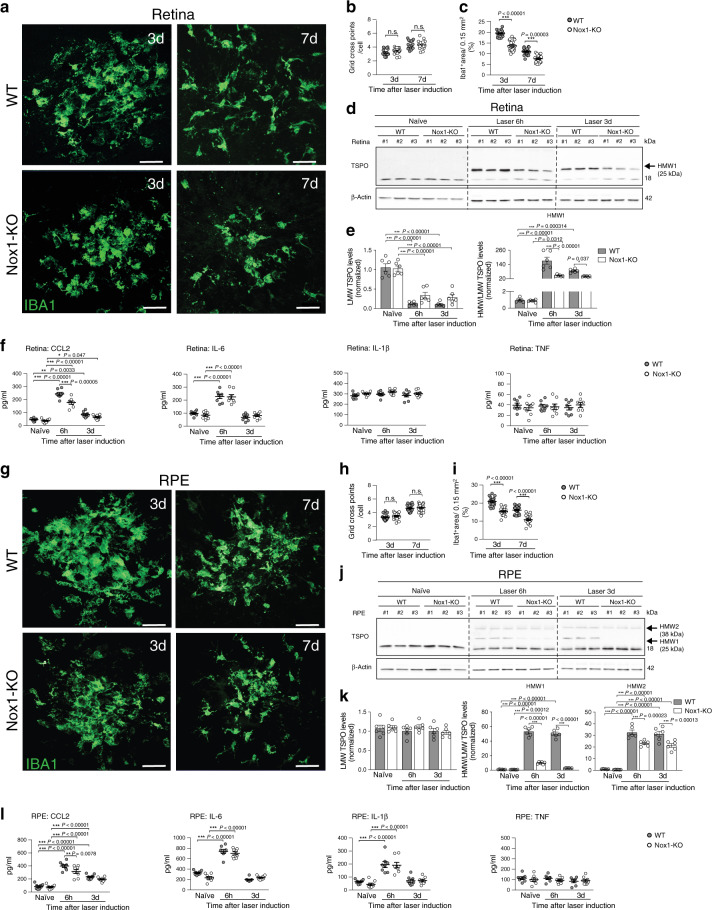
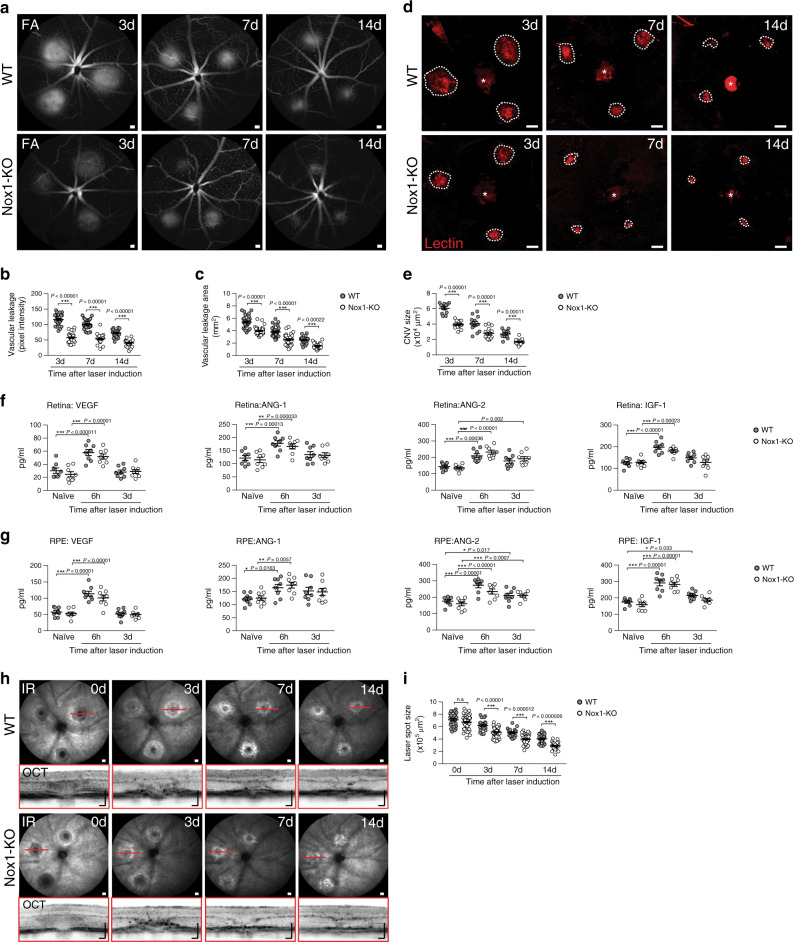
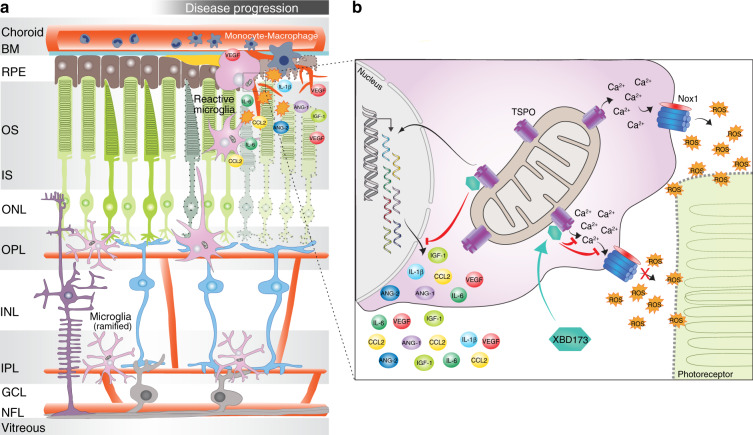
Aberrant immune responses including reactive phagocytes are implicated in the etiology of age-related macular degeneration (AMD), a major cause of blindness in the elderly. The translocator protein (18 kDa) (TSPO) is described as a biomarker for reactive gliosis, but its biological functions in retinal diseases remain elusive. Here, we report that tamoxifen-induced conditional deletion of TSPO in resident microglia using Cx3cr1 CreERT2 :TSPO fl/fl mice or targeting the protein with the synthetic ligand XBD173 prevents reactivity of phagocytes in the laser-induced mouse model of neovascular AMD. Concomitantly, the subsequent neoangiogenesis and vascular leakage are prevented by TSPO knockout or XBD173 treatment. Using different NADPH oxidase-deficient mice, we show that TSPO is a key regulator of NOX1-dependent neurotoxic ROS production in the retina. These data define a distinct role for TSPO in retinal phagocyte reactivity and highlight the protein as a drug target for immunomodulatory and antioxidant therapies for AMD.
Overview
The claims and statistics of this paper haven’t been checked yet.
Free: it reads the open-access text and checks the first 5 claims that cite a source we can check. Create a free account to check every claim.
Integrity signals
Registry
Cites
Statistics
Figures
Verification
Claims the paper makes
The claims and statistics of this paper haven’t been checked yet.
Free: it reads the open-access text and checks the first 5 claims that cite a source we can check. Create a free account to check every claim.
Claims other papers make about this one
Each is checked against this paper’s own text: does it say what the citing paper says it does?
The source backs part of the claim, not all of it — or backs it for a different population, condition or comparison.
In the citing paper
“MitoSOX Red (MitoSOX) is a modified DHE analog attached to a triphenylphosphonium (TPP) group, which leads to accumulation of the probe in the mitochondrial matrix [365,366]. Like DHE itself, MitoSOX specifically detects O2●− and emits red fluorescence after the reaction (see Figure 7) [30,99,360]. In contrast to DHE, MitoSOX does so mainly in the mitochondrial matrix, though. Notably, MitoSOX can”
From Functions of ROS in Macrophages and Antimicrobial Immunity (2021) · cites this paper as [99]
Experimental — accuracy not yet measuredThe source backs part of the claim, not all of it — or backs it for a different population, condition or comparison.
In the citing paper
“Isoluminol is a derivative of the chemiluminescent luminol with the amino group placed on a more exposed position on the molecule. This modification makes isoluminol cell-impermeable. This makes it ideal for exclusive measurement of extracellular ROS, which also includes ROS produced into the lumen of endosomes and phagosomes [30,58,99,254,353,361]. However, the probe cannot differ between”
From Functions of ROS in Macrophages and Antimicrobial Immunity (2021) · cites this paper as [99]
Experimental — accuracy not yet measuredThe cited source says what the claim attributes to it.
In the citing paper
“As an exception, we could recently show that Nox1 is also a source for large quantities of ROS in activated proinflammatory microglia [99].”
From Functions of ROS in Macrophages and Antimicrobial Immunity (2021) · cites this paper as [99]
In the citing paper
“5-(and -6)-Carboxy-2′,7′-dihydrochlorofluorescein-diacetat (5/6-Carboxy-DCF) is a derivative of H2DCF-DA that contains two additional carboxyl groups that enhance its hydrophilicity and therefore strongly increase its retention in the cytosol. Therefore, in contrast to H2DCF-DA, which detects total cellular ROS levels, the green fluorescent 5/6-Carboxy-DCF can be used to specifically detect cytos”
From Functions of ROS in Macrophages and Antimicrobial Immunity (2021) · cites this paper as [99]
In the citing paper
“we could exclusively observe extracellular ROS scavenging in macrophages (own unpublished data) and microglia [99].”
From Functions of ROS in Macrophages and Antimicrobial Immunity (2021) · cites this paper as [99]
Self-check
Percentages, sums and reported differences re-computed from the paper’s own numbers.
The self-check needs the paper’s full text.
Citations
Cites
Wong, W. L., Su, X., Li, X., Cheung, C. M. G., Klein, R., Cheng, C.-Y., & Wong, T. Y. (2014) · The Lancet Global Health · doi:10.1016/s2214-109x(13)70145-1 · Cited by 5,331
Vascular endothelial growth factors and angiogenesis in eye disease
Witmer, A. (2003) · Progress in Retinal and Eye Research · doi:10.1016/s1350-9462(02)00043-5 · Cited by 927
Pollock, J. D., Williams, D. A., Gifford, M. A. C., Li, L. L., Du, X., Fisherman, J., Orkin, S. H., Doerschuk, C. M., & Dinauer, M. C. (1995) · Nature Genetics · doi:10.1038/ng0295-202 · Cited by 921
Homologs of gp91 phox : cloning and tissue expression of Nox3, Nox4, and Nox5
Cheng, G., Cao, Z., Xu, X., Meir, E. G. V., & Lambeth, J. D. (2001) · Gene · doi:10.1016/s0378-1119(01)00449-8 · Cited by 819
Prata, C., Zambonin, L., Rizzo, B., Maraldi, T., Angeloni, C., Vieceli Dalla Sega, F., Fiorentini, D., & Hrelia, S. (2017) · Oxidative Medicine and Cellular Longevity · doi:10.1155/2017/3724545 · Cited by 540
Age-Related Macular Degeneration: Genetics and Biology Coming Together
Fritsche, L. G., Fariss, R. N., Stambolian, D., Abecasis, G. R., Curcio, C. A., & Swaroop, A. (2014) · Annual Review of Genomics and Human Genetics · doi:10.1146/annurev-genom-090413-025610 · Cited by 534
Evolution of nadph oxidase inhibitors: Selectivity and mechanisms for target engagement
Altenhöfer, S., Radermacher, K. A., Kleikers, P. W. M., Wingler, K., & Schmidt, H. H. H. W. (2015) · Antioxidants & Redox Signaling · doi:10.1089/ars.2013.5814 · Cited by 521
Macrophage Depletion Inhibits Experimental Choroidal Neovascularization
Sakurai, E., Anand, A., Ambati, B. K., van Rooijen, N., & Ambati, J. (2003) · Investigative Opthalmology & Visual Science · doi:10.1167/iovs.03-0097 · Cited by 503
Microglia activation in retinal degeneration
Langmann, T. (2007) · Journal of Leukocyte Biology · doi:10.1189/jlb.0207114 · Cited by 496
Self-citationNox enzymes and new thinking on reactive oxygen: A double-edged sword revisited
Lambeth, J. D., & Neish, A. S. (2014) · Annual Review of Pathology: Mechanisms of Disease · doi:10.1146/annurev-pathol-012513-104651 · Cited by 495
Cited by
Functions of ROS in Macrophages and Antimicrobial Immunity
Herb, M., & Schramm, M. (2021) · Antioxidants · doi:10.3390/antiox10020313 · Cited by 633
“As for extracellular ROS detection, PMA can also be used as positive control to induce cytosolic ROS in macrophages.”
BackgroundInfluentialSelf-citationReactive Oxygen Species in Macrophages: Sources and Targets
Canton, M., Sánchez-Rodríguez, R., Spera, I., Venegas, F. C., Favia, M., Viola, A., & Castegna, A. (2021) · Frontiers in Immunology · doi:10.3389/fimmu.2021.734229 · Cited by 449
Microglia and Inflammatory Responses in Diabetic Retinopathy
Kinuthia, U. M., Wolf, A., & Langmann, T. (2020) · Frontiers in Immunology · doi:10.3389/fimmu.2020.564077 · Cited by 321
“Notably, reactive microglia express TSPO which modulates microglial inflammatory response, phagocytosis, and secretion of reactive oxygen species that can enhance retinal angiogenesis (115, 116).”
BackgroundSelf-citationInhibition of estrogen signaling in myeloid cells increases tumor immunity in melanoma
Chakraborty, B., Byemerwa, J. K., Shepherd, J., Haines, C., Baldi, R., Gong, W., Liu, W., Mukherjee, D., Artham, S., Lim, F., et al. (2021) · Journal of Clinical Investigation · doi:10.1172/jci151347 · Cited by 137
“16 increased expression of multiple genes, such as Vegfa, Tgm2 and Tspo and Stat1 (50-52) (Figure 362”
BackgroundGuilarte, T. R., Rodichkin, A. N., McGlothan, J. L., Acanda De La Rocha, A. M., & Azzam, D. J. (2022) · Pharmacology & Therapeutics · doi:10.1016/j.pharmthera.2021.108048 · Cited by 111
Reactive Oxygen Species: Not Omnipresent but Important in Many Locations
Herb, M., Gluschko, A., & Schramm, M. (2021) · Frontiers in Cell and Developmental Biology · doi:10.3389/fcell.2021.716406 · Cited by 87
Self-citationLuo, Z., Yao, J., Wang, Z., & Xu, J. (2023) · Journal of Translational Medicine · doi:10.1186/s12967-023-04286-1 · Cited by 102
“TSPO knockout or specific ligand XBD173 dampened phagocyte reactivity towards a neuroprotective phenotype, decreased retina pro-angiogenesis and vascular leakage, limiting pathological choroidal neovascularization [116].”
BackgroundMicroglia as Therapeutic Target for Radiation-Induced Brain Injury
Liu, Q., Yan, H., Duan, M., Yang, Q., Ren, B., & Tang, F. R. (2022) · International Journal of Molecular Sciences · doi:10.3390/ijms23158286 · Cited by 88
“In mice with selective deletion of TSPO in microglia, it has been demonstrated that TSPO-mediated ROS generation is Nox1 dependent in reactive microglia, and an increase in cytosolic calcium concentrations is necessary for functional coupling between TSPO and NOX-1 [93].”
BackgroundMore than meets the eye: The role of microglia in healthy and diseased retina
Murenu, E., Gerhardt, M.-J., Biel, M., & Michalakis, S. (2022) · Frontiers in Immunology · doi:10.3389/fimmu.2022.1006897 · Cited by 73
The Role of Osteopontin in Microglia Biology: Current Concepts and Future Perspectives
Rosmus, D.-D., Lange, C., Ludwig, F., Ajami, B., & Wieghofer, P. (2022) · Biomedicines · doi:10.3390/biomedicines10040840 · Cited by 67
“Mechanistic studies have shown that Translocator Protein (TSPO) in retinal microglia is upregulated during inflammatory conditions and that its conditional depletion or pharmacological inhibition by synthetic ligands prevents microglia reactivity, neoangiogenesis and reactive oxygen species (ROS) production [209].”
BackgroundNAT10 regulates the LPS-induced inflammatory response via the NOX2-ROS-NF-κB pathway in macrophages
Zhang, Z., Zhang, Y., Cai, Y., Li, D., He, J., Feng, Z., & Xu, Q. (2023) · Biochimica et Biophysica Acta (BBA) - Molecular Cell Research · doi:10.1016/j.bbamcr.2023.119521 · Cited by 73
Targeting Microglia to Treat Degenerative Eye Diseases
Wang, S. K., & Cepko, C. L. (2022) · Frontiers in Immunology · doi:10.3389/fimmu.2022.843558 · Cited by 73
“The same paper then found laserinduced CNV to improve with conditional deletion of TSPO in microglia (77), supporting the idea that inhibition of TSPO might instead be beneficial.”
BackgroundTabel, M., Wolf, A., Szczepan, M., Xu, H., Jägle, H., Moehle, C., Chen, M., & Langmann, T. (2022) · Journal of Neuroinflammation · doi:10.1186/s12974-022-02589-6 · Cited by 56
“Retinal and RPE/choroidal flat mounts were stained with a polyclonal rabbit anti-Iba-1 antibody (1:500 dilution, 019-19741, Wako) as previously described [27].”
MethodSelf-citationSuliman, R. S., Alghamdi, S. S., Ali, R., Aljatli, D., Aljammaz, N. A., Huwaizi, S. M., Suliman, R. S., Kahtani, K. M., Albadrani, G. M., Barhoumi, T., et al. (2022) · Pharmaceuticals · doi:10.3390/ph15080944 · Cited by 52
Emerging therapies and their delivery for treating age‐related macular degeneration
Thomas, C. N., Sim, D. A., Lee, W. H., Alfahad, N., Dick, A. D., Denniston, A. K., & Hill, L. J. (2021) · British Journal of Pharmacology · doi:10.1111/bph.15459 · Cited by 49
“Moreover, in a laser-induced CNV mouse, microglial-specific TSPO-KO and treat-ment with TSPO ligand XBD173 diminished mononuclear phagocyte reactivity and neovascularisation (Wolf et al., 2020).”
BackgroundSchlecht, A., Zhang, P., Wolf, J., Thien, A., Rosmus, D.-D., Boneva, S., Schlunck, G., Lange, C., & Wieghofer, P. (2021) · Frontiers in Cell and Developmental Biology · doi:10.3389/fcell.2020.618598 · Cited by 46
“This strategy was successfully applied in the past and will decipher microglial functions in a muchmore specific setting in the future (Lückoff et al., 2016; Wolf et al., 2020).”
MethodCorsi, F., Baglini, E., Barresi, E., Salerno, S., Cerri, C., Martini, C., Settimo, F. D., Taliani, S., Gargini, C., & Piano, I. (2022) · ACS Chemical Neuroscience · doi:10.1021/acschemneuro.2c00582 · Cited by 39
A Novel Interaction of Translocator Protein 18 kDa (TSPO) with NADPH Oxidase in Microglia
Loth, M. K., Guariglia, S. R., Ré, D. B., Perez, J., de Paiva, V. N., McGlothan, J. L., Chambers, J. W., Azzam, D. J., & Guilarte, T. R. (2020) · Molecular Neurobiology · doi:10.1007/s12035-020-02042-w · Cited by 40
IL ‐17 signaling induces iNOS + microglia activation in retinal vascular diseases
Zhou, T., Liu, Y., Yang, Z., Ni, B., Zhu, X., Huang, Z., Xu, H., Feng, Q., Lin, X., He, C., et al. (2021) · Glia · doi:10.1002/glia.24063 · Cited by 42
“The modulation of microglial activity is thus a promising therapy for suppressing vascular damage and pathological angiogenesis (Wang et al., 2020; Wolf et al., 2020).”
BackgroundSignalling regulation of reactive oxygen species in fish inflammation
Gao, F., Zhao, Y., Shi, X., Qiao, D., Pei, C., & Kong, X. (2024) · Reviews in Aquaculture · doi:10.1111/raq.12895 · Cited by 36
Luo, Y., Xiong, B., Liu, H., Chen, Z., Huang, H., Yu, C., & Yang, J. (2021) · Frontiers in Pharmacology · doi:10.3389/fphar.2020.622074 · Cited by 41
“Recent studies have shown that a translocator protein (18 kDa) (TSPO) plays an important role in modulating NOX1dependent ROS production in the retina (Wolf et al., 2020).”
BackgroundTSPO protein binding partners in bacteria, animals, and plants
Hiser, C., Montgomery, B. L., & Ferguson-Miller, S. M. (2021) · Journal of Bioenergetics and Biomembranes · doi:10.1007/s10863-021-09905-4 · Cited by 32
Takata, K., Kimura, H., Yanagisawa, D., Harada, K., Nishimura, K., Kitamura, Y., Shimohama, S., & Tooyama, I. (2022) · Molecules · doi:10.3390/molecules27092780 · Cited by 31
NADPH-oxidases as potential pharmacological targets for thrombosis and depression comorbidity
Amadio, P., Sandrini, L., Zarà, M., Barbieri, S. S., & Ieraci, A. (2024) · Redox Biology · doi:10.1016/j.redox.2024.103060 · Cited by 29
“It has also been described that the ROS produced by NOXs in macrophages contribute to fatty liver disease [124], neurotoxic processes for retinal microglia [125], and NLRP3 inflammasome activation [126 – 128].”
BackgroundLiao, J., Lai, Z., Huang, G., Lin, J., Huang, W. H., Qin, Y., Chen, Q., Hu, Y., Cheng, Q., Jiang, L., et al. (2023) · Biomedicine & Pharmacotherapy · doi:10.1016/j.biopha.2023.116042 · Cited by 25
Kumari, A., Ayala-Ramírez, R., Zenteno, J. C., Huffman, K., Šášik, R., Ayyagari, R., & Borooah, S. (2022) · Scientific Reports · doi:10.1038/s41598-022-19351-w · Cited by 22
Lee, E., Ozigbo, A. A., Varón, J., Halma, M. T. J., Laezzo, M., Ang, S. P., & Iglesias, J. I. (2025) · Biomolecules · doi:10.3390/biom15091339 · Cited by 28
“In retinal phagocytes, NOX1 is the primary source of ROS and depends on the translocator protein (TSPO) for activation; this NOX1-TSPO activity in microglia has been linked to neurotoxicity and abnormal retinal angiogenesis in age-related macular degeneration in a mouse model [47,48].”
Trotta, M. C., Gesualdo, C., Petrillo, F., Cavasso, G., Corte, A. D., D’Amico, G., Hermenean, A. O., Simonelli, F., & Rossi, S. (2022) · Translational Vision Science & Technology · doi:10.1167/tvst.11.3.16 · Cited by 18
Rosmus, D.-D., Koch, J., Hausmann, A., Chiot, A., Arnhold, F., Masuda, T., Kierdorf, K., Hansen, S. M., Kuhrt, H., Fröba, J. S., et al. (2024) · Journal of Neuroinflammation · doi:10.1186/s12974-024-03110-x · Cited by 17
TSPO deficiency exacerbates acute lung injury via NLRP3 inflammasome-mediated pyroptosis
Han, J., Zhang, X., Cai, M., Tian, F., Xu, Y., Chen, H., He, W., Zhang, J., & Tian, H. (2024) · Chinese Medical Journal · doi:10.1097/cm9.0000000000003105 · Cited by 14
“[41] Our previous research showed that TSPO plays a crucial protective role in inflammatory bowel disease occurrence and development.”
BackgroundGuo, Y., Sun, Z., Wang, L., Jiang, R., Shu, Q., & Xu, G. (2022) · Molecular Medicine Reports · doi:10.3892/mmr.2022.12869 · Cited by 14
Maternally expressed gene 3 regulates retinal neovascularization in retinopathy of prematurity
Nie, Q.-Z., Di, Y., Wang, Y., Wang, Y., Wang, X., & Ma, Y. (2021) · Neural Regeneration Research · doi:10.4103/1673-5374.327358 · Cited by 14
“This results from an imbalance between angiogenesis and inhibitory factors leading to the formation of pathological neovascularization (Kandasamy et al., 2017; Wolf et al., 2020).”
BackgroundTSPO Ligands Protect against Neuronal Damage Mediated by LPS‐Induced BV‐2 Microglia Activation
Ma, B., Liu, Y., Xiao, Z., Zhang, R., Zhang, Z., Zhang, Z., Liu, J., Juan, Z., Sun, X., Sun, L., et al. (2022) · Oxidative Medicine and Cellular Longevity · doi:10.1155/2022/5896699 · Cited by 16
“TSPO ligands have shown promising therapeutic prospects in various studies [14, 15].”
BackgroundÖzkaya, D., Shu, X., & Nazıroğlu, M. (2021) · Biology · doi:10.3390/biology10050382 · Cited by 12
Microglia depletion/repopulation does not affect light-induced retinal degeneration in mice
Laudenberg, N., Kinuthia, U. M., & Langmann, T. (2024) · Frontiers in Immunology · doi:10.3389/fimmu.2023.1345382 · Cited by 13
“Microglia activation is a hallmark of retinal degenerative diseases and we have previously demonstrated that pharmacological or genetic modulation of microglia-related genes including TSPO and galectin-3 can delay retinal degeneration (36, 37).”
BackgroundSelf-citationMeredith, H. R., Wesolowski, A., Okoth, D., Maraga, L., Ambani, G., Chepkwony, T. J., Abel, L., Kipkoech, J., Lokoel, G., Esimit, D., et al. (2024) · PLOS Global Public Health · doi:10.1371/journal.pgph.0002750 · Cited by 12
The efficient generation of knockout microglia cells using a dual-sgRNA strategy by CRISPR/Cas9
Zhang, M., Fang, Y., Wu, J., & Tang, Y. (2022) · Frontiers in Molecular Neuroscience · doi:10.3389/fnmol.2022.1008827 · Cited by 11
Nguyen, K. D., Amerio, A., Aguglia, A., Magnani, L., Parise, A., Conio, B., Serafini, G., Amore, M., & Costanza, A. (2023) · Cells · doi:10.3390/cells12162099 · Cited by 14
Microglial translocator protein and stressor-related disorder
Kikutani, K., Giga, H., Hosokawa, K., Shime, N., & Aizawa, H. (2020) · Neurochemistry International · doi:10.1016/j.neuint.2020.104855 · Cited by 10
Translocator protein (18 kDa) (Tspo) in the retina and implications for ocular diseases
Hector, M., Langmann, T., & Wolf, A. (2024) · Progress in Retinal and Eye Research · doi:10.1016/j.preteyeres.2024.101249 · Cited by 11
Self-citationKinuthia, U. M., Moehle, C., Adams, R. H., & Langmann, T. (2025) · JCI Insight · doi:10.1172/jci.insight.184465 · Cited by 16
Self-citationKhan, A. S., Wolf, A., & Langmann, T. (2021) · Biochemical and Biophysical Research Communications · doi:10.1016/j.bbrc.2021.09.054 · Cited by 11
Self-citationZhang, S., Deng, Z., Qiu, Y., Lu, G., Wu, J., & Huang, H. (2023) · Neuroscience · doi:10.1016/j.neuroscience.2023.10.017 · Cited by 11
Zhai, D., Wang, X., Yang, L., Jiang, Y., Jin, Y., Yan, Y.-X., Song, D., Zhang, K., Han, Z.-K., Liu, M.-Y., et al. (2023) · Journal of Affective Disorders · doi:10.1016/j.jad.2023.12.051 · Cited by 9
Zech, T., Wolf, A., Hector, M., Bischoff‐Kont, I., Krishnathas, G. M., Kuntschar, S., Schmid, T., Bracher, F., Langmann, T., & Fürst, R. (2024) · Angiogenesis · doi:10.1007/s10456-024-09906-y · Cited by 8
“Laser photocoagulation was carried out as described previously [22].”
MethodSelf-citationBréhat, J., Issop, L., & Morin, D. (2024) · Biochimie · doi:10.1016/j.biochi.2024.03.001 · Cited by 9
Hector, M., Behnke, V., Dabrowska‐Schlepp, P., Busch, A., Schaaf, A., Langmann, T., & Wolf, A. (2025) · Journal of Neuroinflammation · doi:10.1186/s12974-025-03418-2 · Cited by 8
“Notably, several studies have demonstrated that targeted microglia-directed immunomodulation can improve disease outcome in a variety of retinal degenerative diseases [9–12].”
Self-citationNovel drug-inducible CRISPRa/i systems for rapid and reversible manipulation of gene transcription
Sui, M., Zhou, M., Cui, M., Liu, H., Zhang, X., Hu, N., Li, Y., Wang, B., Yang, G., Gui, P., et al. (2025) · Cellular and Molecular Life Sciences · doi:10.1007/s00018-025-05786-7 · Cited by 10
“Cre recombinase fused with an ERT2 domain has been widely used for inducible gene ablation with 4OHT treat-ment [ 31–34], therefore we hypothesized that fusing ERT2 domains to CRISPRa/i might render the nuclear transloca - tion of the fusion proteins dependent on 4OHT.”
Functional role of translocator protein and its ligands in ocular diseases (Review)
Yu, M., & Zhao, S. (2024) · Molecular Medicine Reports · doi:10.3892/mmr.2024.13157 · Cited by 11
“For neovascular AMD, XBD173 treatment inhibits the generation of CNV, which is thought to be associated with inhibiting pro‑angiogenic factor (Vegf, Ang1 and Ang2) expression, regulating phagocytosis and facilitating the transition of microglia to neuroprotective phenotypes (40).”
BackgroundRole of the TSPO–NOX4 axis in angiogenesis in glioblastoma
Jiang, H., Li, F., Cai, L., & Chen, Q. (2022) · Frontiers in Pharmacology · doi:10.3389/fphar.2022.1001588 · Cited by 8
“Wolfe et al. (Wolf et al., 2020) showed that the translocator protein (TSPO) is a regulatory node for microglial functions in angiogenesis carried out in a NOX1-dependent manner.”
BackgroundInfluentialZou, Y., Jiang, J., Li, Y., Ding, X., Tong, Q., Shi, Y., Xiao, L., & Chen, L. (2025) · Advanced Science · doi:10.1002/advs.202400747 · Cited by 9
Morin, D., & Lacapère, J.-J. (2025) · Biochimie · doi:10.1016/j.biochi.2025.08.002 · Cited by 8
Blum, N., Mirian, C., Maier, A. D., Mathiesen, T. I., Vilhardt, F., & Haslund-Vinding, J. L. (2023) · Journal of Neuropathology & Experimental Neurology · doi:10.1093/jnen/nlad093 · Cited by 6
Regulation of astrocyte metabolism by mitochondrial translocator protein 18 kDa
Firth, W., Robb, J. L., Stewart, D., Pye, K. R., Bamford, R., Oguro‐Ando, A., Beall, C., & Ellacott, K. L. J. (2024) · Journal of Neurochemistry · doi:10.1111/jnc.16089 · Cited by 5
“…et al., 2020 ; Selvaraj & Tu, 2016 ), phagocytosis (Fairley et al., 2023 ; Yao et al., 2020; Zhang et al., 2021 ), reactive oxygen species production (Guilarte et al., 2016 ; Wolf et al., 2020 ), and regulation of cellular metabolism (Betlazar et al., 2020 ; Selvaraj & Tu, 2016 ; Tu et al., 2014 ).”
Cao, R., Chen, Z., Ye, Q., Sun, W., Lin, W., Tang, H., Yang, X., Liang, J., Chen, Y., Wang, L., et al. (2024) · Advanced Functional Materials · doi:10.1002/adfm.202409071 · Cited by 6
Inhibition of DYRK1B BY C81 impedes inflammatory processes in leukocytes by reducing STAT3 activity
Ciurus, S., Elewa, M. A. F., Palmer, M. A., Wolf, A., Hector, M., Fuhrmann, D. C., Thomas, D., Gurke, R., Schwalm, M. P., Berger, L. M., et al. (2025) · Cellular and Molecular Life Sciences · doi:10.1007/s00018-025-05579-y · Cited by 5
Self-citationCung, T., Wang, H., & Hartnett, M. E. (2022) · Cells · doi:10.3390/cells11121951 · Cited by 5
PET imaging of retinal inflammation in mice exposed to blue light using [18F]-DPA-714.
Chen, Y., Zhou, Y., Zhu, X., Yan, G., Pan, D., Wang, L., Yang, M., & Wang, K. (2022) · PubMed Central · Cited by 6
Chen, Y., Veenman, L., Liao, M., Huang, W., Yu, J., & Zeng, J. (2023) · Journal of Cerebral Blood Flow & Metabolism · doi:10.1177/0271678x231214671 · Cited by 5
“23 These findings demonstrate the importance of positive expression of TSPO in cerebral vessels and highlight the protein as a drug target for angiogenesis and neuro-protective therapies in brain disorders.”
BackgroundTherapeutic potential of translocator protein ligands for age-related macular degeneration
Shu, X., Li, X., & He, Z. (2021) · Neural Regeneration Research · doi:10.4103/1673-5374.322460 · Cited by 3
“In addition, 88 XBD173 lowered laser-induced vascular leakage intensity and area, through reducing the levels of 89 proangiogenic growth factors in both the retina and RPE (Wolf et al., 2020).”
BackgroundEmri, E., Cappa, O., Kelly, C., Körtvely, E., SanGiovanni, J. P., McKay, B. S., Bergen, A. A. B., Simpson, D. A. C., & Lengyel, I. (2023) · Cells · doi:10.3390/cells12050773 · Cited by 6
Matoba, K., Kochi, T., Mreyoud, Y., Badrani, J. H., Patel, H., Tsujioka, H., Yamashita, T., Crossman, D. K., Niwa, M., & Kano, S. (2024) · bioRxiv (Cold Spring Harbor Laboratory) · doi:10.1101/2024.09.19.609743 · Cited by 3
Yu, M., Xu, Y., Liu, H., Zhang, C., Yang, R., Huang, Y., Liu, Y.-C., & Zhao, S. (2026) · The Ocular Surface · doi:10.1016/j.jtos.2026.02.005 · Cited by 3
Eye-brain axis: the crosstalk between neurons and immune cells
Liu, C., Fang, Z., He, Z., Mao, Y., & Yang, H. (2026) · Eye Discovery · doi:10.1016/j.edisc.2026.100023 · Cited by 1
TSPO integrates redox and immune homeostasis in dermal fibroblasts to restrain vitiligo pathogenesis
Lv, J., Yin, C., Yu, W., Jiang, P., Xu, W., Zhang, H., Cao, Y., & Gao, R. (2026) · Free Radical Biology and Medicine · doi:10.1016/j.freeradbiomed.2026.05.009 · Cited by 1
Sun, Y., Xu, Z., Wu, Y., Zhang, M., & Lu, X. (2026) · Current Issues in Molecular Biology · doi:10.3390/cimb48060616 · Cited by 1
“Mechanistically, photoreceptor debris can activate a TSPO–NADPH oxidase 1 (NOX1) axis in retinal phagocytes, driving Ca 2+ -dependent ROS production; treatment with the synthetic TSPO ligand XBD173 or microglia-specific TSPO deletion suppresses this neurotoxic oxidative response [133].”
Cytokine signaling as key regulator of pathological angiogenesis in the eye
Langmann, T. (2021) · EBioMedicine · doi:10.1016/j.ebiom.2021.103662 · Cited by 1
“This model has been previously applied to document the role of long-lived resident retinal microglia that secrete pro-inflammatory cytokines and angiogenic growth factors, and thereby substantially contribute to the formation of retinal neovessels [7].”
MethodSelf-citationImage-Guided Optical Coherence Tomography to Assess Structural Changes in Rodent Retinas
Zeng, H.-Y., Yang, Q., Chen, J., Ding, L., Rao, F.-Q., Lv, J., Xie, B., Xiang, S., Yu, H., Chen, X., et al. (2023) · Journal of Visualized Experiments · doi:10.3791/64783 · Cited by 1
Efficacy of TSPO ligands on neuronal damage mediated by LPS-stimulated BV-2 microglial activationPreprint
Ma, B., Liu, Y., Zhang, X., Zhang, R., Zhang, Z., Zhang, Z., Liu, J., Juan, Z., Sun, X., Sun, L., et al. (2021) · Research Square · doi:10.21203/rs.3.rs-774268/v1 · Cited by 1
The role of antioxidant supplementation in neuronal disorders
ShamsEldeen, A. M., Ammar, H. I., Al-Hashem, F. H., Alrefaie, Z. A., Aly, M. H., & Hanna, M. (2025) · Elsevier eBooks · doi:10.1016/b978-0-443-27333-9.00004-x · Cited by 1
Tabel, M., Wolf, A., Szczepan, M., Xu, H., Jägle, H., Moehle, C., Chen, M., & Langmann, T. (2022) · Figshare · doi:10.6084/m9.figshare.21152882
Self-citationRosmus, D.-D., Koch, J., Hausmann, A., Chiot, A., Arnhold, F., Masuda, T., Kierdorf, K., Hansen, S. M., Kuhrt, H., Fröba, J. S., et al. (2024) · Figshare · doi:10.6084/m9.figshare.26742998
Rosmus, D.-D., Koch, J., Hausmann, A., Chiot, A., Arnhold, F., Masuda, T., Kierdorf, K., Hansen, S. M., Kuhrt, H., Fröba, J. S., et al. (2024) · Figshare · doi:10.6084/m9.figshare.26742995
Bréhat, J. (2022) · theses.fr (ABES) · doi:10.70675/c27c15d9z2609z401czb99bz0e3acbc98d92 · Cited by 1
Deletion of CEACAM1 does not affect retinal and choroidal morphology or transcriptome
Hannig, L., Braunger, B. M., Kleefeldt, N., Cagol, L., Zimmermann, J., Brunne, B., Ahmad, H., Vallon, M., Ergün, S., Hillenkamp, J., et al. (2026) · Cell and Tissue Research · doi:10.1007/s00441-026-04087-0
“Myeloid cells, such as resident microglia or infiltrating macrophages have been shown to modulate disease progression (Schlecht et al. 2020, 2021; Wolf et al. 2020) suggesting a strong endothelial-myeloid cell interaction during AMD.”
Cao, P., Yu, J., Duan, N., Li, Y., & Cui, J. (2026) · Neurochemical Journal · doi:10.1134/s1819712426700340
Shen, J., Ou, P., Fang, Y., Zhao, H., Chen, L., Miao, Y., Zhang, Q., Yang, Y., & Chen, Q. (2026) · Cell Biomaterials · doi:10.1016/j.celbio.2026.100548
Galante, A., Corsi, F., Amato, R., Taliani, S., Settimo, F. D., Cammalleri, M., Piano, I., Monte, M. D., & Gargini, C. (2026) · Antioxidants · doi:10.3390/antiox15081000
“By acting on mitochondrial stability, TSPO modulation limits ROS production and mitigates cytokine release, ultimately preserving neuronal viability and vascular functionality through systemic regulation of the retinal microenvironment [19,20].”
TSPO in systemic-ocular immunometabolic crosstalk: mechanisms and therapeutic implications
Yang, Z., Zhang, X., Tian, D., Li, X., Zhao, X., Wang, E., & Chen, Y. (2026) · Frontiers in Immunology · doi:10.3389/fimmu.2026.1929816
Mitochondrial dysfunction in microglia: a novel perspective of depression pathogenesis
Jia, Y., Zhao, S., Miao, F., Yang, Z., Zhao, S., Wu, Q., Wang, Y., & Xia, X. (2026) · Inflammation and Regeneration · doi:10.1186/s41232-026-00444-2
Metadata
- Authors
- Wolf, A., Herb, M., Schramm, M., & Langmann, T.
- Affiliations
- University of Cologne (DE)
- Corresponding author
- Langmann, Thomas
- Venue
- Nature Communications
- Published
- 2020-06-01
- Volume
- 11
- Issue
- 1
- Pages
- 2709-2709
- ISSN
- 2041-1723 (ISSN-L)
- PMC
- PMC7264151
- OpenAlex
- W3030804042
- Cited by
- 80
- References
- 67
- Citations by year
- 2026: 10 · 2025: 8 · 2024: 15 · 2023: 10 · 2022: 18 · 2021: 16 · 2020: 3
- FWCI
- 9.32
- Type
- journal article
- Language
- en
- Open access
- gold
- doi.org
- Licence
- cc-by
- creativecommons.org/licenses/by/4.0 (tdm)
- creativecommons.org/licenses/by/4.0 (vor)
- Locations
- Nature Communications (publishedVersion, cc-by)
- PubMed Central (publishedVersion, cc-by)
- PubMed (publishedVersion)
- Kölner Universitäts PublikationsServer (Universität zu Köln) (publishedVersion)
- RePEc: Research Papers in Economics (submittedVersion)
- DOAJ (DOAJ: Directory of Open Access Journals) (submittedVersion, cc-by-sa)
- Funders
- Deutsche Forschungsgemeinschaft (FOR2240 Project 6)
- Velux Stiftung (Project 967)
- Topics
- Health Sciences › Medicine › Ophthalmology › Retinal Diseases and Treatments
- Health Sciences › Medicine › Radiology, Nuclear Medicine and Imaging › Retinal Imaging and Analysis
- Life Sciences › Neuroscience › Neurology › Neuroinflammation and Neurodegeneration Mechanisms
- Keywords
- translocator protein (TSPO), NOX1, age-related macular degeneration, neovascular AMD, pathological angiogenesis, microglia, reactive oxygen species, NADPH oxidase, conditional knockout mice, vascular leakage, immunomodulatory therapy, antioxidant therapy
- MeSH terms
- NADPH Oxidase 1, Animals, Cell Line, Gene Expression Regulation, Mice, Inbred C57BL, Mice, Transgenic, Neovascularization, Pathologic, Phagocytes, Purines, Signal Transduction, Reactive Oxygen Species, Microglia, Receptors, GABA, Mice, Knockout, Wet Macular Degeneration
About these checks
Registry, retraction, Cites and statistics results are computed, not judged, with one exception: a printed reference that no index lists is read once by a model before it counts as a citation error. Claims are extracted by a model and kept only when their quote appears verbatim in the text; each cited source is then checked, with a model’s help, for whether it says what the claim relies on. Those verdicts can be wrong — read the claim’s quote and the cited source before relying on one.
Statistics and arithmetic are recomputed, not judged.
Confidence bands are shown only for fields calibrated on our annotated test set. None is calibrated yet, so no band is shown.
What counts as a claim ›How we measure confidence ›How we check this ›
Are you an author, or do you see a problem with this page? Request a review
Data sources
Bibliographic data: Semantic Scholar, OpenAlex, Crossref.
Contains information from the Semantic Scholar Academic Graph Datasets, made available under the ODC Attribution License (ODC-BY 1.0).
Semantic Scholar’s data is described in: Kinney, R., et al. (2023). The Semantic Scholar Open Data Platform. arXiv:2301.10140.
