

The TSPO-NOX1 axis controls phagocyte-triggered pathological angiogenesis in the eye
Open accessThe DOI matches its Crossref record; 67 of the 67 references it cites were found in a registry or an index.
Abstract
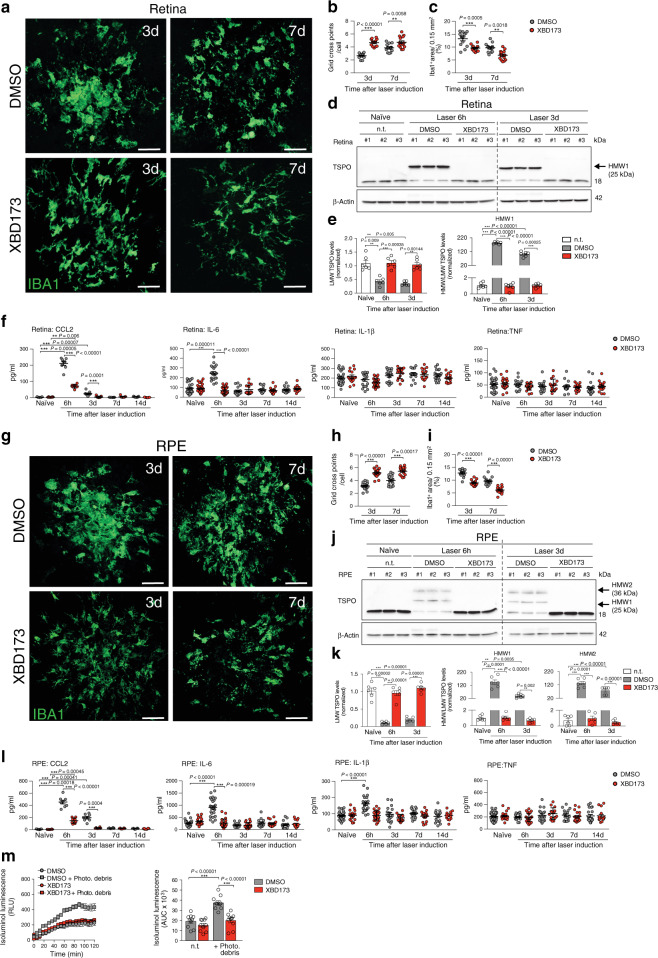
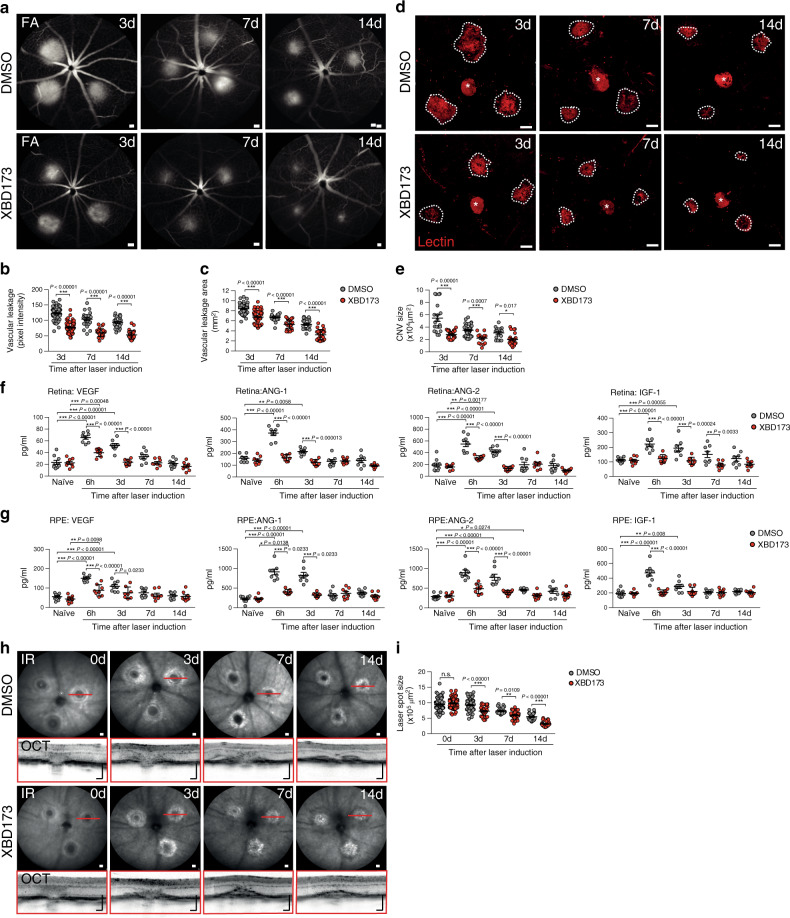
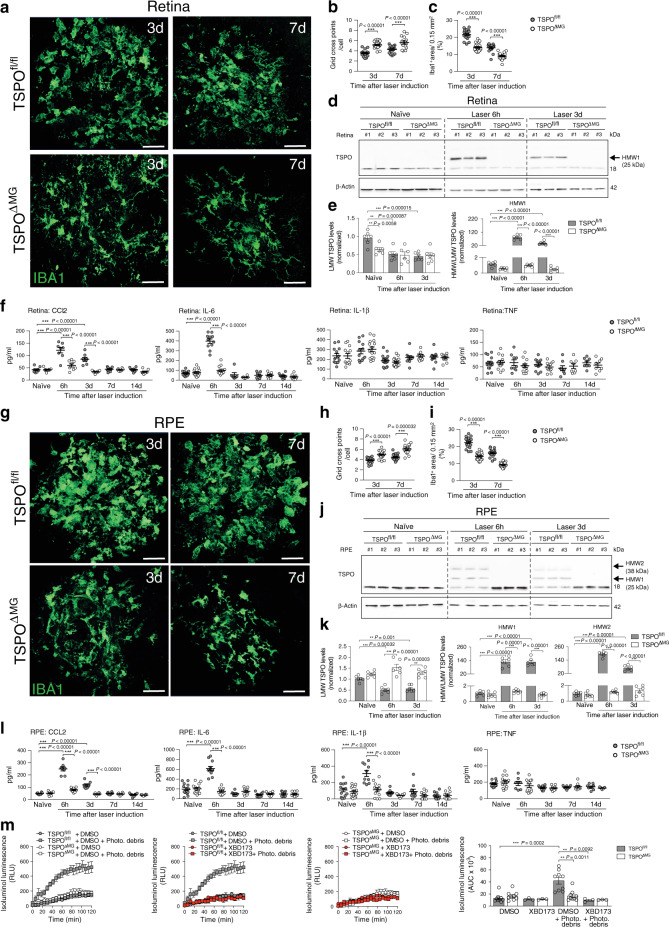
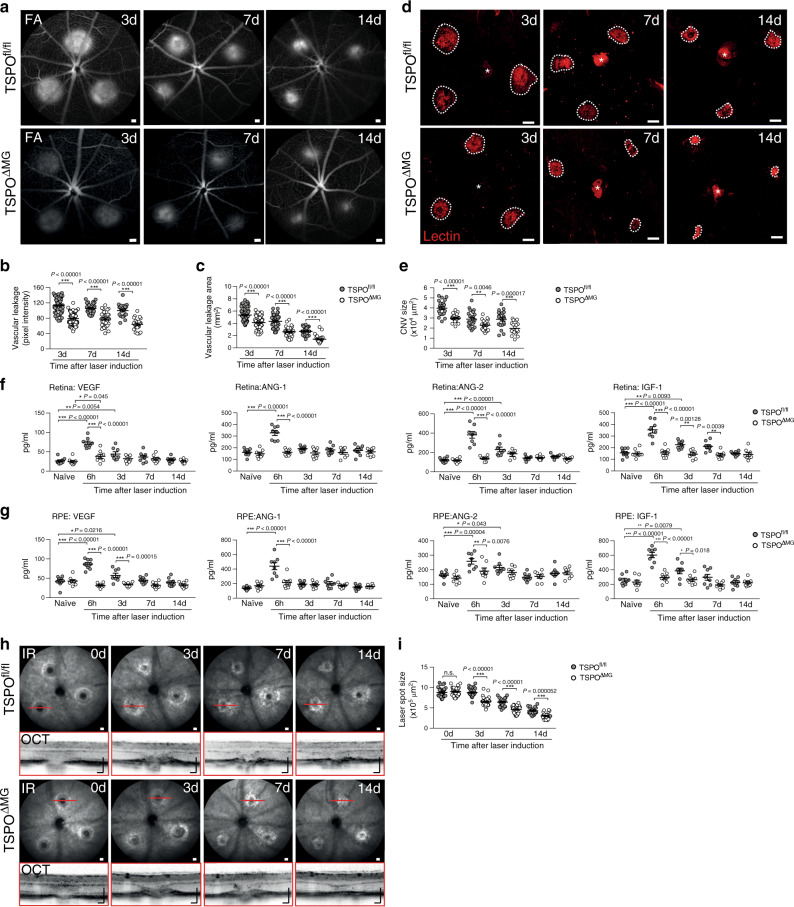
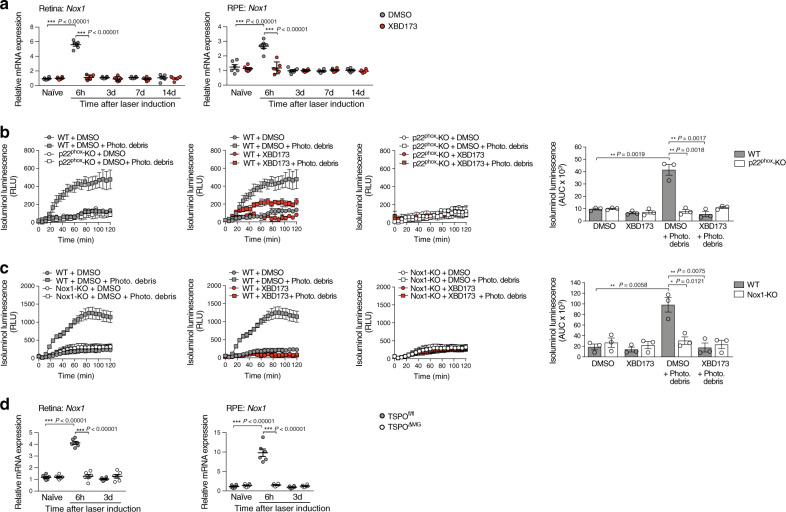
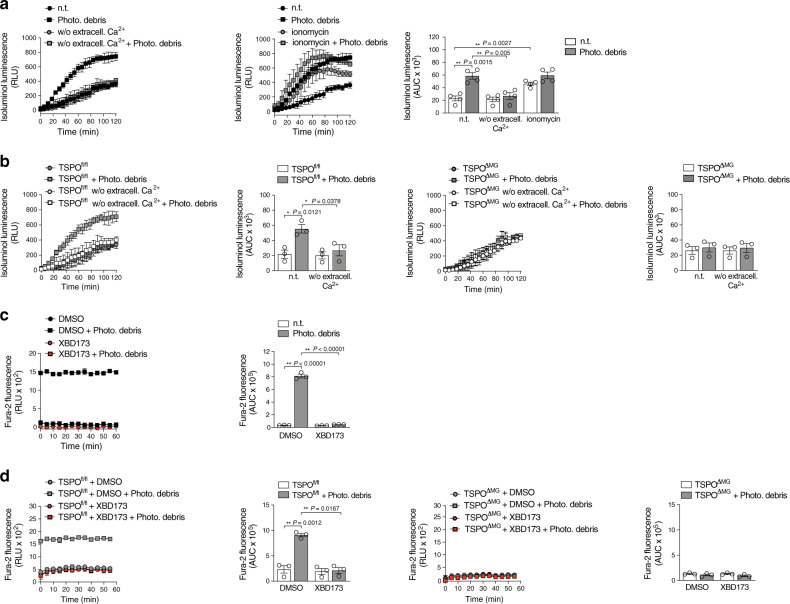
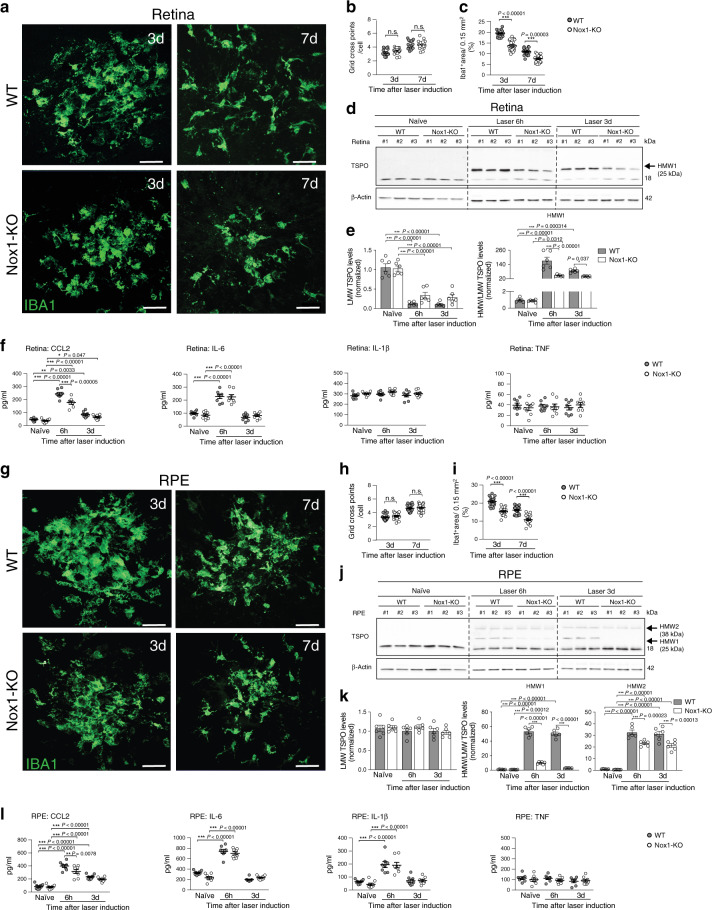
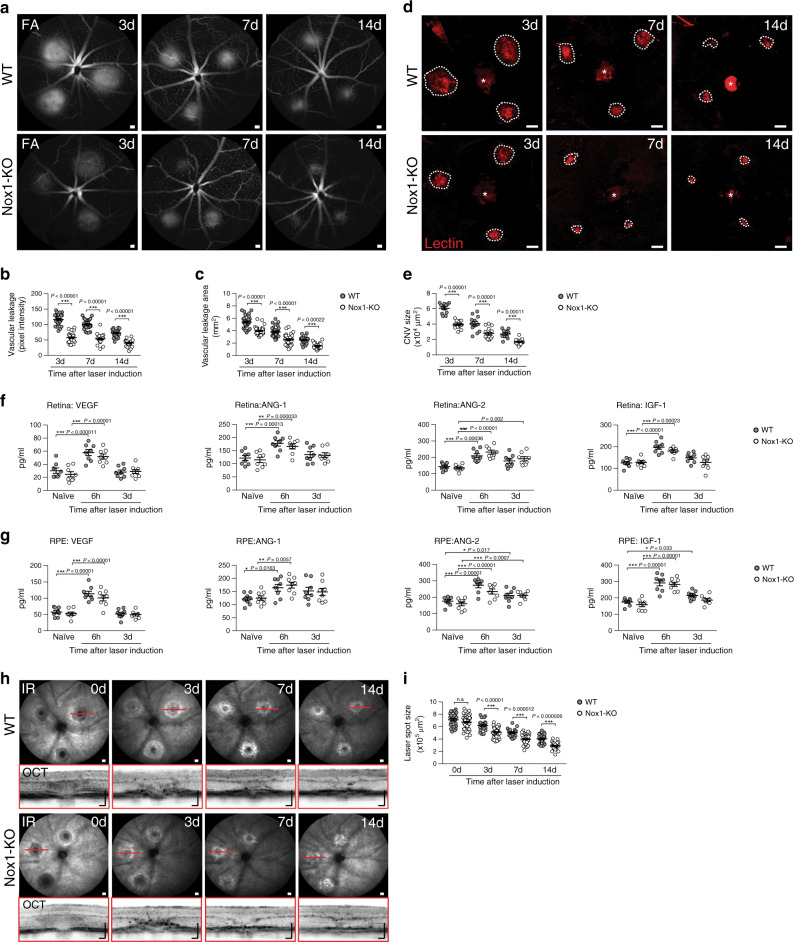
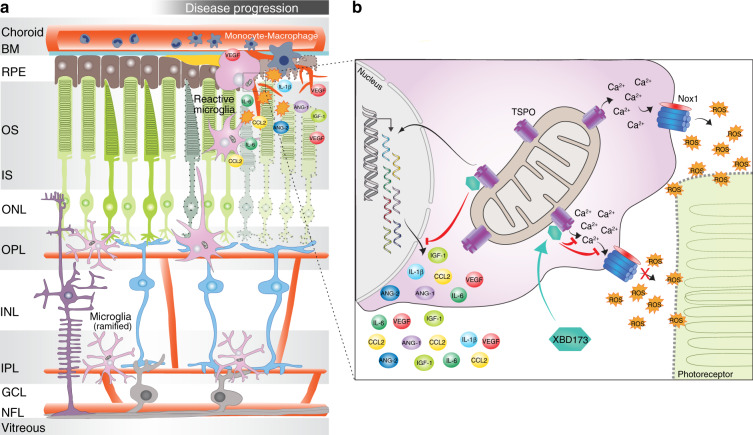
Aberrant immune responses including reactive phagocytes are implicated in the etiology of age-related macular degeneration (AMD), a major cause of blindness in the elderly. The translocator protein (18 kDa) (TSPO) is described as a biomarker for reactive gliosis, but its biological functions in retinal diseases remain elusive. Here, we report that tamoxifen-induced conditional deletion of TSPO in resident microglia using Cx3cr1 CreERT2 :TSPO fl/fl mice or targeting the protein with the synthetic ligand XBD173 prevents reactivity of phagocytes in the laser-induced mouse model of neovascular AMD. Concomitantly, the subsequent neoangiogenesis and vascular leakage are prevented by TSPO knockout or XBD173 treatment. Using different NADPH oxidase-deficient mice, we show that TSPO is a key regulator of NOX1-dependent neurotoxic ROS production in the retina. These data define a distinct role for TSPO in retinal phagocyte reactivity and highlight the protein as a drug target for immunomodulatory and antioxidant therapies for AMD.
Overview
The claims and statistics of this paper haven’t been checked yet.
Free: it reads the open-access text and checks the first 5 claims that cite a source we can check. Create a free account to check every claim.
Integrity signals
Registry
Cites
Statistics
Figures
Verification
Claims the paper makes
The claims and statistics of this paper haven’t been checked yet.
Free: it reads the open-access text and checks the first 5 claims that cite a source we can check. Create a free account to check every claim.
Claims other papers make about this one
Each is checked against this paper’s own text: does it say what the citing paper says it does?
The source backs part of the claim, not all of it — or backs it for a different population, condition or comparison.
In the citing paper
“MitoSOX Red (MitoSOX) is a modified DHE analog attached to a triphenylphosphonium (TPP) group, which leads to accumulation of the probe in the mitochondrial matrix [365,366]. Like DHE itself, MitoSOX specifically detects O2●− and emits red fluorescence after the reaction (see Figure 7) [30,99,360]. In contrast to DHE, MitoSOX does so mainly in the mitochondrial matrix, though. Notably, MitoSOX can”
From Functions of ROS in Macrophages and Antimicrobial Immunity (2021) · cites this paper as [99]
Experimental — accuracy not yet measuredThe source backs part of the claim, not all of it — or backs it for a different population, condition or comparison.
In the citing paper
“Isoluminol is a derivative of the chemiluminescent luminol with the amino group placed on a more exposed position on the molecule. This modification makes isoluminol cell-impermeable. This makes it ideal for exclusive measurement of extracellular ROS, which also includes ROS produced into the lumen of endosomes and phagosomes [30,58,99,254,353,361]. However, the probe cannot differ between”
From Functions of ROS in Macrophages and Antimicrobial Immunity (2021) · cites this paper as [99]
Experimental — accuracy not yet measuredThe cited source says what the claim attributes to it.
In the citing paper
“As an exception, we could recently show that Nox1 is also a source for large quantities of ROS in activated proinflammatory microglia [99].”
From Functions of ROS in Macrophages and Antimicrobial Immunity (2021) · cites this paper as [99]
In the citing paper
“5-(and -6)-Carboxy-2′,7′-dihydrochlorofluorescein-diacetat (5/6-Carboxy-DCF) is a derivative of H2DCF-DA that contains two additional carboxyl groups that enhance its hydrophilicity and therefore strongly increase its retention in the cytosol. Therefore, in contrast to H2DCF-DA, which detects total cellular ROS levels, the green fluorescent 5/6-Carboxy-DCF can be used to specifically detect cytos”
From Functions of ROS in Macrophages and Antimicrobial Immunity (2021) · cites this paper as [99]
In the citing paper
“we could exclusively observe extracellular ROS scavenging in macrophages (own unpublished data) and microglia [99].”
From Functions of ROS in Macrophages and Antimicrobial Immunity (2021) · cites this paper as [99]
Self-check
Percentages, sums and reported differences re-computed from the paper’s own numbers.
The self-check needs the paper’s full text.
Citations
Cites
Wong, W. L., Su, X., Li, X., Cheung, C. M. G., Klein, R., Cheng, C.-Y., & Wong, T. Y. (2014) · The Lancet Global Health · doi:10.1016/s2214-109x(13)70145-1 · Cited by 5,331
Vascular endothelial growth factors and angiogenesis in eye disease
Witmer, A. (2003) · Progress in Retinal and Eye Research · doi:10.1016/s1350-9462(02)00043-5 · Cited by 927
Pollock, J. D., Williams, D. A., Gifford, M. A. C., Li, L. L., Du, X., Fisherman, J., Orkin, S. H., Doerschuk, C. M., & Dinauer, M. C. (1995) · Nature Genetics · doi:10.1038/ng0295-202 · Cited by 921
Homologs of gp91 phox : cloning and tissue expression of Nox3, Nox4, and Nox5
Cheng, G., Cao, Z., Xu, X., Meir, E. G. V., & Lambeth, J. D. (2001) · Gene · doi:10.1016/s0378-1119(01)00449-8 · Cited by 819
Prata, C., Zambonin, L., Rizzo, B., Maraldi, T., Angeloni, C., Vieceli Dalla Sega, F., Fiorentini, D., & Hrelia, S. (2017) · Oxidative Medicine and Cellular Longevity · doi:10.1155/2017/3724545 · Cited by 540
Age-Related Macular Degeneration: Genetics and Biology Coming Together
Fritsche, L. G., Fariss, R. N., Stambolian, D., Abecasis, G. R., Curcio, C. A., & Swaroop, A. (2014) · Annual Review of Genomics and Human Genetics · doi:10.1146/annurev-genom-090413-025610 · Cited by 534
Evolution of nadph oxidase inhibitors: Selectivity and mechanisms for target engagement
Altenhöfer, S., Radermacher, K. A., Kleikers, P. W. M., Wingler, K., & Schmidt, H. H. H. W. (2015) · Antioxidants & Redox Signaling · doi:10.1089/ars.2013.5814 · Cited by 521
Macrophage Depletion Inhibits Experimental Choroidal Neovascularization
Sakurai, E., Anand, A., Ambati, B. K., van Rooijen, N., & Ambati, J. (2003) · Investigative Opthalmology & Visual Science · doi:10.1167/iovs.03-0097 · Cited by 503
Microglia activation in retinal degeneration
Langmann, T. (2007) · Journal of Leukocyte Biology · doi:10.1189/jlb.0207114 · Cited by 496
Self-citationNox enzymes and new thinking on reactive oxygen: A double-edged sword revisited
Lambeth, J. D., & Neish, A. S. (2014) · Annual Review of Pathology: Mechanisms of Disease · doi:10.1146/annurev-pathol-012513-104651 · Cited by 495
Microglial phagocytosis of living photoreceptors contributes to inherited retinal degeneration
Zhao, L., Zabel, M. K., Wang, X., Ma, W., Shah, P., Fariss, R. N., Qian, H., Parkhurst, C. N., Gan, W., & Wong, W. T. (2015) · EMBO Molecular Medicine · doi:10.15252/emmm.201505298 · Cited by 445
Calcium signalling remodelling and disease
Berridge, M. J. (2012) · Biochemical Society Transactions · doi:10.1042/bst20110766 · Cited by 391
Sun, X., Yang, S., & Zhao, J. (2016) · Drug Design, Development and Therapy · doi:10.2147/dddt.s97653 · Cited by 347
Chronic microglial activation and progressive dopaminergic neurotoxicity
Block, M. L., & Hong, J.-S. (2007) · Biochemical Society Transactions · doi:10.1042/bst0351127 · Cited by 322
Decreased blood pressure in NOX1‐deficient mice
Gavazzi, G., Banfi, B., Deffert, C., Fiette, L., Schappi, M., Herrmann, F., & Krause, K.-H. (2006) · FEBS Letters · doi:10.1016/j.febslet.2005.12.049 · Cited by 321
A key role for nox4 in epithelial cell death during development of lung fibrosis
Carnesecchi, S., Deffert, C., Donati, Y., Basset, O., Hinz, B., Preynat-Seauve, O., Guichard, C., Arbiser, J. L., Banfi, B., Pache, J.-C., et al. (2011) · Antioxidants & Redox Signaling · doi:10.1089/ars.2010.3829 · Cited by 290
Wang, X., Zhao, L., Zhang, J., Fariss, R. N., Ma, W., Kretschmer, F., Wang, M., Qian, H. H., Badea, T. C., Diamond, J. S., et al. (2016) · The Journal of Neuroscience · doi:10.1523/jneurosci.3575-15.2016 · Cited by 244
Tu, L. N., Morohaku, K., Manna, P. R., Pelton, S. H., Butler, W. R., Stocco, D. M., & Selvaraj, V. (2014) · Journal of Biological Chemistry · doi:10.1074/jbc.m114.578286 · Cited by 239
Papadopoulos, V., Lecanu, L., Brown, R. C., Han, Z., & Yao, Z.-X. (2006) · Neuroscience · doi:10.1016/j.neuroscience.2005.05.063 · Cited by 235
Karlstetter, M., Nothdurfter, C., Aslanidis, A., Moeller, K., Horn, F., Scholz, R., Neumann, H., Weber, B. H. F., Rupprecht, R., & Langmann, T. (2014) · Journal of Neuroinflammation · doi:10.1186/1742-2094-11-3 · Cited by 216
Self-citationTSPO interacts with VDAC1 and triggers a ROS-mediated inhibition of mitochondrial quality control
Gatliff, J., East, D., Crosby, J., Abeti, R., Harvey, R., Craigen, W., Parker, P., & Campanella, M. (2014) · Autophagy · doi:10.4161/15548627.2014.991665 · Cited by 215
Wang, M., Wang, X., Zhao, L., Ma, W., Rodriguez, I. R., Fariss, R. N., & Wong, W. T. (2014) · The Journal of Neuroscience · doi:10.1523/jneurosci.3153-13.2014 · Cited by 203
Microglia in the healthy and degenerating retina: Insights from novel mouse models
Karlstetter, M., Ebert, S., & Langmann, T. (2010) · Immunobiology · doi:10.1016/j.imbio.2010.05.010 · Cited by 197
Self-citationŠileikytė, J., Blachly-Dyson, E., Sewell, R., Carpi, A., Menabò, R., Di Lisa, F., Ricchelli, F., Bernardi, P., & Forte, M. (2014) · Journal of Biological Chemistry · doi:10.1074/jbc.m114.549634 · Cited by 189
Cross-Talk between Reactive Oxygen Species and Calcium in Living Cells
Gordeeva, A. V., Zvyagilskaya, R. A., & Labas, Y. A. (2003) · Biochemistry (Moscow) · doi:10.1023/a:1026398310003 · Cited by 187
Translocator protein (18 kDa) TSPO: An emerging therapeutic target in neurotrauma
Papadopoulos, V., & Lecanu, L. (2009) · Experimental Neurology · doi:10.1016/j.expneurol.2009.04.016 · Cited by 180
Haslund‐Vinding, J., McBean, G., Jaquet, V, & Vilhardt, F. (2017) · British Journal of Pharmacology · doi:10.1111/bph.13425 · Cited by 169
Delavoie, F., Li, H., Hardwick, M., Robert, J.-C., Giatzakis, C., Péranzi, G., Yao, Z.-X., Maccario, J., Lacapère, J.-J., & Papadopoulos, V. (2003) · Biochemistry · doi:10.1021/bi0267487 · Cited by 168
A TSPO ligand is protective in a mouse model of multiple sclerosis
Daugherty, D. J., Selvaraj, V., Chechneva, O. V., Liu, X., Pleasure, D. E., & Deng, W. (2013) · EMBO Molecular Medicine · doi:10.1002/emmm.201202124 · Cited by 159
Ligand for Translocator Protein Reverses Pathology in a Mouse Model of Alzheimer's Disease
Barron, A. M., Garcia-Segura, L. M., Caruso, D., Jayaraman, A., Lee, J.-W., Melcangi, R. C., & Pike, C. J. (2013) · The Journal of Neuroscience · doi:10.1523/jneurosci.1350-13.2013 · Cited by 152
Etifoxine improves peripheral nerve regeneration and functional recovery
Girard, C., Liu, S., Cadepond, F., Adams, D., Lacroix, C., Verleye, M., Gillardin, J.-M., Baulieu, E.-E., Schumacher, M., & Schweizer-Groyer, G. (2008) · Proceedings of the National Academy of Sciences · doi:10.1073/pnas.0811201106 · Cited by 152
Nagineni, C. N., Kommineni, V. K., William, A., Detrick, B., & Hooks, J. J. (2012) · Journal of Cellular Physiology · doi:10.1002/jcp.22708 · Cited by 150
Regulation of plasma membrane calcium fluxes by mitochondria
Demaurex, N., Poburko, D., & Frieden, M. (2009) · Biochimica et Biophysica Acta (BBA) - Bioenergetics · doi:10.1016/j.bbabio.2008.12.012 · Cited by 140
Diaz, F., Enríquez, J. A., & Moraes, C. T. (2012) · Molecular and Cellular Biology · doi:10.1128/mcb.06051-11 · Cited by 130
Modulation of three key innate immune pathways for the most common retinal degenerative diseases
Akhtar‐Schäfer, I., Wang, L., Krohne, T. U., Xu, H., & Langmann, T. (2018) · EMBO Molecular Medicine · doi:10.15252/emmm.201708259 · Cited by 129
Self-citationYang, C., Cao, H., Liu, N., Xu, K., Ding, M., & Mao, L. (2016) · Drug Design Development and Therapy · doi:10.2147/dddt.s115121 · Cited by 126
Herb, M., Gluschko, A., Wiegmann, K., Farid, A., Wolf, A., Utermöhlen, O., Krut, O., Krönke, M., & Schramm, M. (2019) · Science Signaling · doi:10.1126/scisignal.aar5926 · Cited by 119
Self-citationYu, J., Ba, J., Peng, R., Xu, D., Li, Y., Shi, H., & Wang, Q. (2015) · Drug Design, Development and Therapy · doi:10.2147/dddt.s86269 · Cited by 117
NADPH Oxidase 2 Regulates NLRP3 Inflammasome Activation in the Brain after Traumatic Brain Injury
Ma, M. W., Wang, J., Dhandapani, K. M., & Brann, D. W. (2017) · Oxidative Medicine and Cellular Longevity · doi:10.1155/2017/6057609 · Cited by 117
Scholz, R., Caramoy, A., Bhuckory, M. B., Rashid, K., Chen, M., Xu, H., Grimm, C., & Langmann, T. (2015) · Journal of Neuroinflammation · doi:10.1186/s12974-015-0422-5 · Cited by 111
Self-citationMutation of the Cyba gene encoding p22phox causes vestibular and immune defects in mice
Nakano, Y., Longo-Guess, C. M., Bergstrom, D. E., Nauseef, W. M., Jones, S. M., & Bánfi, B. (2008) · Journal of Clinical Investigation · doi:10.1172/jci33835 · Cited by 108
A role for TSPO in mitochondrial Ca2+ homeostasis and redox stress signaling
Gatliff, J., East, D. A., Singh, A., Alvarez, M. S., Frison, M., Matic, I., Ferraina, C., Sampson, N., Turkheimer, F., & Campanella, M. (2017) · Cell Death & Disease · doi:10.1038/cddis.2017.186 · Cited by 108
Hou, L., Bao, X., Zang, C., Yang, H., Sun, F., Che, Y., Wu, X., Li, S., Zhang, D., & Wang, Q. (2018) · Redox Biology · doi:10.1016/j.redox.2017.11.010 · Cited by 98
Neuroprotection from Retinal Ischemia/Reperfusion Injury by NOX2 NADPH Oxidase Deletion
Yokota, H., Narayanan, S. P., Zhang, W., Liu, H., Rojas, M., Xu, Z., Lemtalsi, T., Nagaoka, T., Yoshida, A., Brooks, S. E., et al. (2011) · Investigative Ophthalmology & Visual Science · doi:10.1167/iovs.11-8318 · Cited by 92
Nitric oxide is proangiogenic in the retina and choroid*
Ando, A., Yang, A., Mori, K., Yamada, H., Yamada, E., Takahashi, K., Saikia, J., Kim, M., Melia, M., Fishman, M., et al. (2002) · Journal of Cellular Physiology · doi:10.1002/jcp.10083 · Cited by 91
Lückoff, A., Caramoy, A., Scholz, R., Prinz, M., Kalinke, U., & Langmann, T. (2016) · EMBO Molecular Medicine · doi:10.15252/emmm.201505994 · Cited by 88
Self-citationAxonal Regeneration and Neuroinflammation: Roles for the Translocator Protein 18 kDa
Girard, C., Liu, S., Adams, D., Lacroix, C., Sinéus, M., Boucher, C., Papadopoulos, V., Rupprecht, R., Schumacher, M., & Groyer, G. (2012) · Journal of Neuroendocrinology · doi:10.1111/j.1365-2826.2011.02215.x · Cited by 75
Differential effects of TSPO ligands on mitochondrial function in mouse microglia cells
Bader, S., Wolf, L., Milenkovic, V. M., Gruber, M., Nothdurfter, C., Rupprecht, R., & Wetzel, C. H. (2019) · Psychoneuroendocrinology · doi:10.1016/j.psyneuen.2019.03.029 · Cited by 72
Wang, J., Ma, M. W., Dhandapani, K. M., & Brann, D. W. (2017) · Free Radical Biology and Medicine · doi:10.1016/j.freeradbiomed.2017.09.017 · Cited by 71
Zhao, M., Mantel, I., Gelize, E., Li, X., Xie, X., Arboleda, A., Seminel, M., Levy-Boukris, R., Dernigoghossian, M., Prunotto, A., et al. (2019) · Nature Communications · doi:10.1038/s41467-018-08125-6 · Cited by 70
Microglial NADPH oxidase activation mediates rod cell death in the retinal degeneration in rd mice
Zeng, H., Ding, M., Chen, X.-X., & Lu, Q. (2014) · Neuroscience · doi:10.1016/j.neuroscience.2014.05.065 · Cited by 68
Functional gains in energy and cell metabolism after TSPO gene insertion
Liu, G.-J., Middleton, R. J., Kam, W. W.-Y., Chin, D. Y., Hatty, C. R., Chan, R. H. Y., & Banati, R. B. (2017) · Cell Cycle · doi:10.1080/15384101.2017.1281477 · Cited by 68
Gong, J., Szego, É. M., Leonov, A., Benito, E., Becker, S., Fischer, A., Zweckstetter, M., Outeiro, T., & Schneider, A. (2019) · The Journal of Neuroscience · doi:10.1523/jneurosci.2070-18.2019 · Cited by 66
Thai, P. N., Daugherty, D. J., Frederich, B. J., Lu, X., Deng, W., Bers, D. M., Dedkova, E. N., & Schaefer, S. (2018) · Scientific Reports · doi:10.1038/s41598-018-34451-2 · Cited by 65
TSPO Finds NOX2 in Microglia for Redox Homeostasis
Guilarte, T. R., Loth, M. K., & Guariglia, S. R. (2016) · Trends in Pharmacological Sciences · doi:10.1016/j.tips.2016.02.008 · Cited by 64
Balser, C., Wolf, A., Herb, M., & Langmann, T. (2019) · Journal of Neuroinflammation · doi:10.1186/s12974-019-1419-2 · Cited by 62
Self-citationMilenkovic, V. M., Slim, D., Bader, S., Koch, V., Heinl, E.-S., Alvarez-Carbonell, D., Nothdurfter, C., Rupprecht, R., & Wetzel, C. H. (2019) · International Journal of Molecular Sciences · doi:10.3390/ijms20133359 · Cited by 62
Comprehensive analysis of mouse retinal mononuclear phagocytes
Lückoff, A., Scholz, R., Sennlaub, F., Xu, H., & Langmann, T. (2017) · Nature Protocols · doi:10.1038/nprot.2017.032 · Cited by 61
Self-citationDeletion of NADPH oxidase 4 reduces severity of traumatic brain injury
Ma, M. W., Wang, J., Dhandapani, K. M., & Brann, D. W. (2018) · Free Radical Biology and Medicine · doi:10.1016/j.freeradbiomed.2018.01.031 · Cited by 52
Cheng, L., Chen, L., Wei, X., Wang, Y., Ren, Z., Zeng, S., Zhang, X., Wen, H., Gao, C., & Liu, H. (2018) · Journal of Neuroinflammation · doi:10.1186/s12974-018-1289-z · Cited by 52
Mages, K., Graßmann, F., Jägle, H., Rupprecht, R., Weber, B. H. F., Hauck, S. M., & Grosche, A. (2019) · Journal of Neuroinflammation · doi:10.1186/s12974-019-1424-5 · Cited by 52
Issop, L., Ostuni, M. A., Lee, S., Laforge, M., Péranzi, G., Rustin, P., Benoist, J., Estaquier, J., Papadopoulos, V., & Lacapère, J.-J. (2016) · PLoS ONE · doi:10.1371/journal.pone.0152919 · Cited by 43
The hGFAP-driven conditional TSPO knockout is protective in a mouse model of multiple sclerosis
Daugherty, D. J., Chechneva, O., Mayrhofer, F., & Deng, W. (2016) · Scientific Reports · doi:10.1038/srep22556 · Cited by 36
Effect of NADPH oxidase 1 and 4 blockade in activated human retinal endothelial cells
Appukuttan, B., Ma, Y., Stempel, A. J., Ashander, L. M., Deliyanti, D., Wilkinson‐Berka, J. L., & Smith, J. R. (2018) · Clinical and Experimental Ophthalmology · doi:10.1111/ceo.13155 · Cited by 34
Studies on the Phosphorylation of the 18 kDa Mitochondrial Benzodiazepine Receptor Protein
Whalin, M. E., Boujrad, N., Papadopoulos, V., & Krueger, K. E. (1994) · Journal of Receptor Research · doi:10.3109/10799899409066033 · Cited by 32
NADPH oxidase 2 plays a role in experimental corneal neovascularization
Chan, E. C., van Wijngaarden, P., Chan, E., Ngo, D., Wang, J.-H., Peshavariya, H., Dusting, G. J., & Liu, G. (2016) · Clinical Science · doi:10.1042/cs20150103 · Cited by 23
Zeng, X., Ren, H., Zhu, Y., Zhang, R., Xue, X., Tao, T., & Xi, H. (2018) · Cellular Physiology and Biochemistry · doi:10.1159/000494243 · Cited by 19
Cited by
Functions of ROS in Macrophages and Antimicrobial Immunity
Herb, M., & Schramm, M. (2021) · Antioxidants · doi:10.3390/antiox10020313 · Cited by 633
“As for extracellular ROS detection, PMA can also be used as positive control to induce cytosolic ROS in macrophages.”
BackgroundInfluentialSelf-citationReactive Oxygen Species in Macrophages: Sources and Targets
Canton, M., Sánchez-Rodríguez, R., Spera, I., Venegas, F. C., Favia, M., Viola, A., & Castegna, A. (2021) · Frontiers in Immunology · doi:10.3389/fimmu.2021.734229 · Cited by 449
Microglia and Inflammatory Responses in Diabetic Retinopathy
Kinuthia, U. M., Wolf, A., & Langmann, T. (2020) · Frontiers in Immunology · doi:10.3389/fimmu.2020.564077 · Cited by 321
“Notably, reactive microglia express TSPO which modulates microglial inflammatory response, phagocytosis, and secretion of reactive oxygen species that can enhance retinal angiogenesis (115, 116).”
BackgroundSelf-citationInhibition of estrogen signaling in myeloid cells increases tumor immunity in melanoma
Chakraborty, B., Byemerwa, J. K., Shepherd, J., Haines, C., Baldi, R., Gong, W., Liu, W., Mukherjee, D., Artham, S., Lim, F., et al. (2021) · Journal of Clinical Investigation · doi:10.1172/jci151347 · Cited by 137
“16 increased expression of multiple genes, such as Vegfa, Tgm2 and Tspo and Stat1 (50-52) (Figure 362”
BackgroundGuilarte, T. R., Rodichkin, A. N., McGlothan, J. L., Acanda De La Rocha, A. M., & Azzam, D. J. (2022) · Pharmacology & Therapeutics · doi:10.1016/j.pharmthera.2021.108048 · Cited by 111
Metadata
- Authors
- Wolf, A., Herb, M., Schramm, M., & Langmann, T.
- Affiliations
- University of Cologne (DE)
- Corresponding author
- Langmann, Thomas
- Venue
- Nature Communications
- Published
- 2020-06-01
- Volume
- 11
- Issue
- 1
- Pages
- 2709-2709
- ISSN
- 2041-1723 (ISSN-L)
- PMC
- PMC7264151
- OpenAlex
- W3030804042
- Cited by
- 80
- References
- 67
- Citations by year
- 2026: 10 · 2025: 8 · 2024: 15 · 2023: 10 · 2022: 18 · 2021: 16 · 2020: 3
- FWCI
- 9.32
- Type
- journal article
- Language
- en
- Open access
- gold
- doi.org
- Licence
- cc-by
- creativecommons.org/licenses/by/4.0 (tdm)
- creativecommons.org/licenses/by/4.0 (vor)
- Locations
- Nature Communications (publishedVersion, cc-by)
- PubMed Central (publishedVersion, cc-by)
- PubMed (publishedVersion)
- Kölner Universitäts PublikationsServer (Universität zu Köln) (publishedVersion)
- RePEc: Research Papers in Economics (submittedVersion)
- DOAJ (DOAJ: Directory of Open Access Journals) (submittedVersion, cc-by-sa)
- Funders
- Deutsche Forschungsgemeinschaft (FOR2240 Project 6)
- Velux Stiftung (Project 967)
- Topics
- Health Sciences › Medicine › Ophthalmology › Retinal Diseases and Treatments
- Health Sciences › Medicine › Radiology, Nuclear Medicine and Imaging › Retinal Imaging and Analysis
- Life Sciences › Neuroscience › Neurology › Neuroinflammation and Neurodegeneration Mechanisms
- Keywords
- translocator protein (TSPO), NOX1, age-related macular degeneration, neovascular AMD, pathological angiogenesis, microglia, reactive oxygen species, NADPH oxidase, conditional knockout mice, vascular leakage, immunomodulatory therapy, antioxidant therapy
- MeSH terms
- NADPH Oxidase 1, Animals, Cell Line, Gene Expression Regulation, Mice, Inbred C57BL, Mice, Transgenic, Neovascularization, Pathologic, Phagocytes, Purines, Signal Transduction, Reactive Oxygen Species, Microglia, Receptors, GABA, Mice, Knockout, Wet Macular Degeneration
About these checks
Registry, retraction, Cites and statistics results are computed, not judged, with one exception: a printed reference that no index lists is read once by a model before it counts as a citation error. Claims are extracted by a model and kept only when their quote appears verbatim in the text; each cited source is then checked, with a model’s help, for whether it says what the claim relies on. Those verdicts can be wrong — read the claim’s quote and the cited source before relying on one.
Statistics and arithmetic are recomputed, not judged.
Confidence bands are shown only for fields calibrated on our annotated test set. None is calibrated yet, so no band is shown.
What counts as a claim ›How we measure confidence ›How we check this ›
Are you an author, or do you see a problem with this page? Request a review
Data sources
Bibliographic data: Semantic Scholar, OpenAlex, Crossref.
Contains information from the Semantic Scholar Academic Graph Datasets, made available under the ODC Attribution License (ODC-BY 1.0).
Semantic Scholar’s data is described in: Kinney, R., et al. (2023). The Semantic Scholar Open Data Platform. arXiv:2301.10140.
