

Prolonged tau clearance and stress vulnerability rescue by pharmacological activation of autophagy in tauopathy neurons
Open accessThe DOI matches its Crossref record; 80 of the 80 references it cites were found in a registry or an index.
Abstract
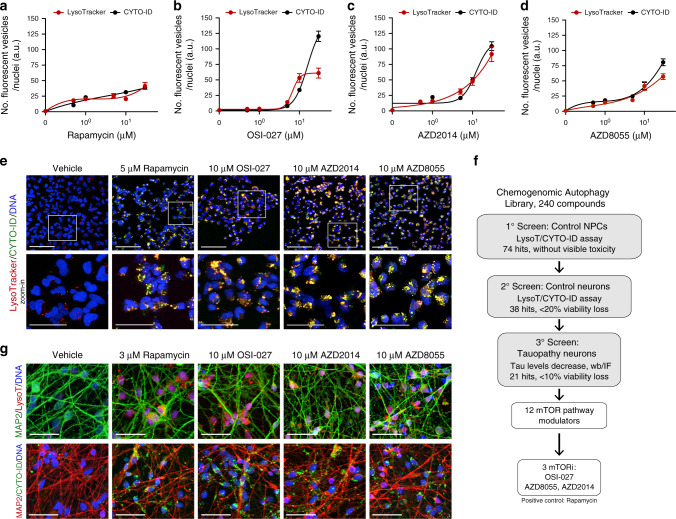
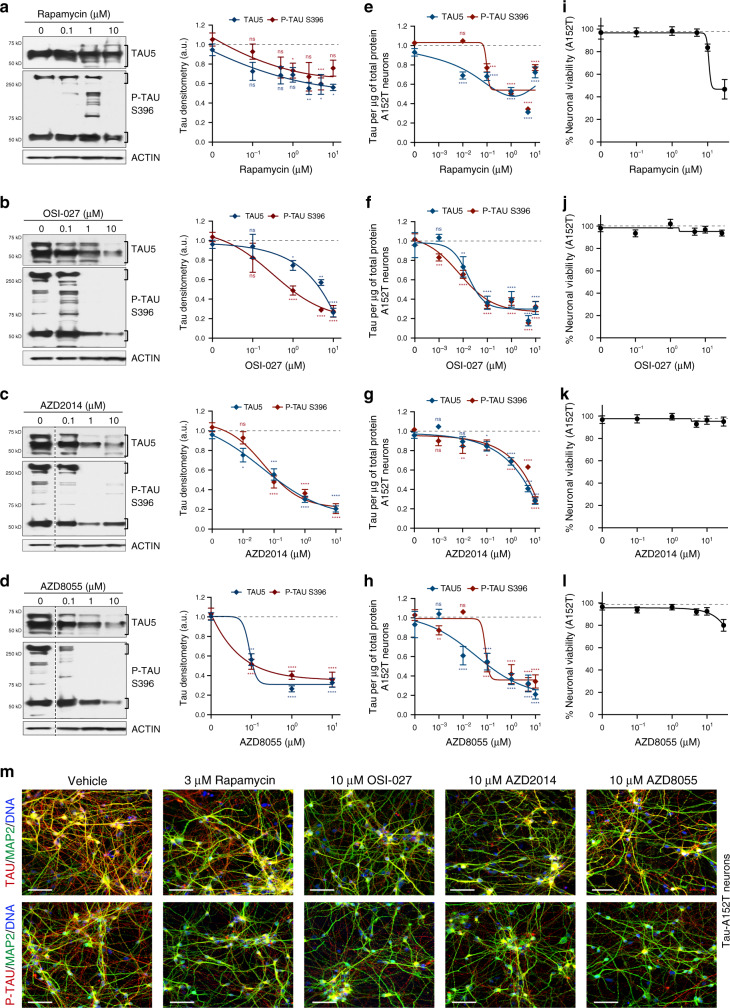
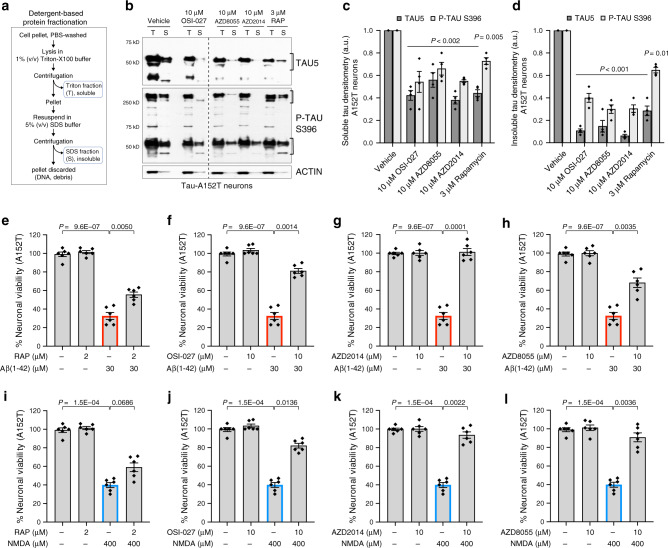
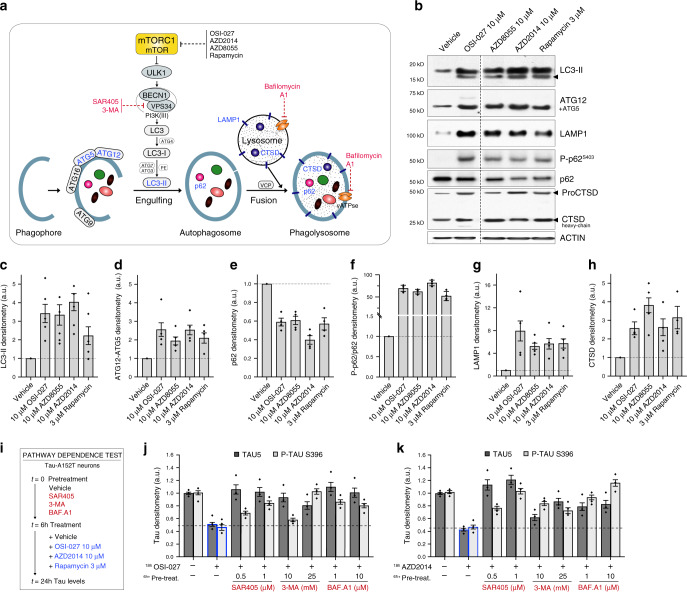
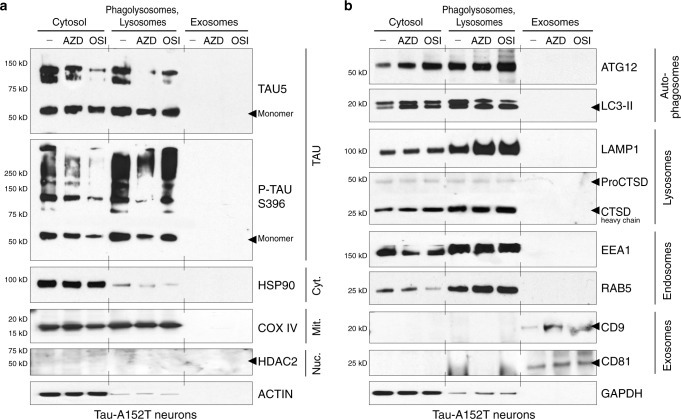
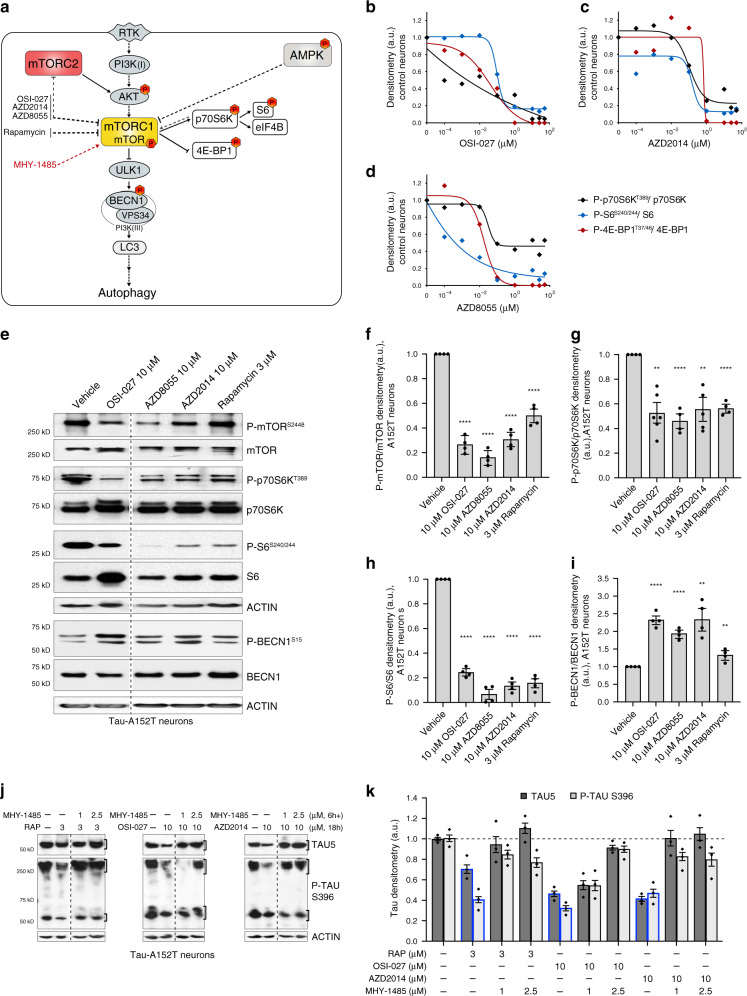
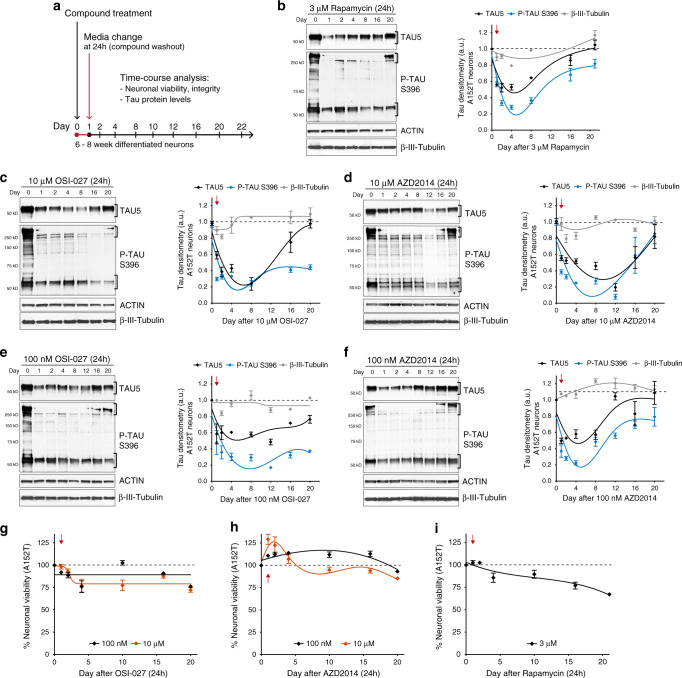
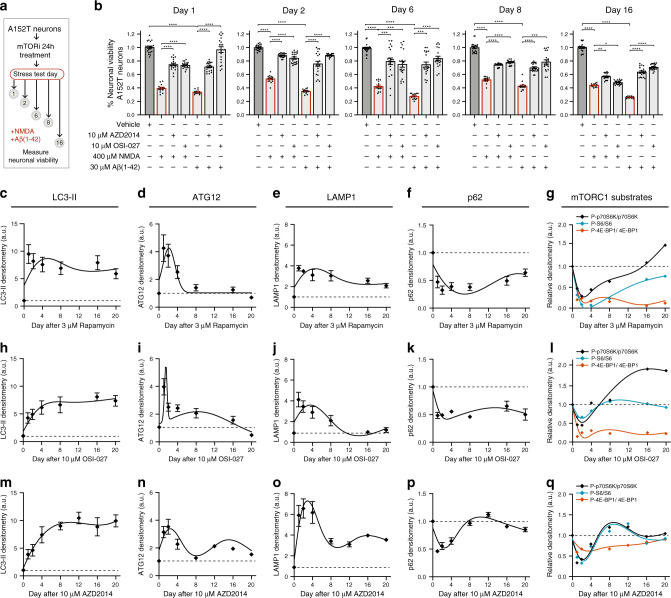
Tauopathies are neurodegenerative diseases associated with accumulation of abnormal tau protein in the brain. Patient iPSC-derived neuronal cell models replicate disease-relevant phenotypes ex vivo that can be pharmacologically targeted for drug discovery. Here, we explored autophagy as a mechanism to reduce tau burden in human neurons and, from a small-molecule screen, identify the mTOR inhibitors OSI-027, AZD2014 and AZD8055. These compounds are more potent than rapamycin, and robustly downregulate phosphorylated and insoluble tau, consequently reducing tau-mediated neuronal stress vulnerability. MTORC1 inhibition and autophagy activity are directly linked to tau clearance. Notably, single-dose treatment followed by washout leads to a prolonged reduction of tau levels and toxicity for 12 days, which is mirrored by a sustained effect on mTORC1 inhibition and autophagy. This new insight into the pharmacodynamics of mTOR inhibitors in regulation of neuronal autophagy may contribute to development of therapies for tauopathies.
Overview
The claims and statistics of this paper haven’t been checked yet.
Free: it reads the open-access text and checks the first 5 claims that cite a source we can check. Create a free account to check every claim.
Integrity signals
Registry
Cites
Statistics
Figures
Verification
Claims the paper makes
The claims and statistics of this paper haven’t been checked yet.
Free: it reads the open-access text and checks the first 5 claims that cite a source we can check. Create a free account to check every claim.
Claims other papers make about this one
Each is checked against this paper’s own text: does it say what the citing paper says it does?
The cited source says what the claim attributes to it.
In the citing paper
“functional autophagy is required to degrade soluble and aggregated variants of MAPT/tau (Berger et al, 2006; Silva et al, 2020).”
From Autophagy in major human diseases (2021) · cites this paper as Silva et al, 2020
Self-check
Percentages, sums and reported differences re-computed from the paper’s own numbers.
The self-check needs the paper’s full text.
Citations
Cites
AMPK Phosphorylation of Raptor Mediates a Metabolic Checkpoint
Gwinn, D. M., Shackelford, D. B., Egan, D. F., Mihaylova, M. M., Mery, A., Vasquez, D. S., Turk, B. E., & Shaw, R. J. (2008) · Molecular Cell · doi:10.1016/j.molcel.2008.03.003 · Cited by 3,849
Prolonged Rapamycin Treatment Inhibits mTORC2 Assembly and Akt/PKB
Sarbassov, D. D., Ali, S. M., Sengupta, S., Sheen, J.-H., Hsu, P. P., Bagley, A. F., Markhard, A. L., & Sabatini, D. M. (2006) · Molecular Cell · doi:10.1016/j.molcel.2006.03.029 · Cited by 2,365
Ravikumar, B., Vacher, C., Berger, Z., Davies, J. E., Luo, S., Oroz, L. G., Scaravilli, F., Easton, D. F., Duden, R., O'Kane, C. J., et al. (2004) · Nature Genetics · doi:10.1038/ng1362 · Cited by 2,347
Chloroquine inhibits autophagic flux by decreasing autophagosome-lysosome fusion
Mauthe, M., Orhon, I., Rocchi, C., Zhou, X., Luhr, M., Hijlkema, K.-J., Coppes, R. P., Engedal, N., Mari, M., & Reggiori, F. (2018) · Autophagy · doi:10.1080/15548627.2018.1474314 · Cited by 2,122
Depletion of microglia and inhibition of exosome synthesis halt tau propagation
Asai, H., Ikezu, S., Tsunoda, S., Medalla, M., Luebke, J., Haydar, T., Wolozin, B., Butovsky, O., Kügler, S., & Ikezu, T. (2015) · Nature Neuroscience · doi:10.1038/nn.4132 · Cited by 1,591
Wu, Y.-T., Tan, H.-L., Shui, G., Bauvy, C., Huang, Q., Wenk, M. R., Ong, C.-N., Codogno, P., & Shen, H.-M. (2010) · Journal of Biological Chemistry · doi:10.1074/jbc.m109.080796 · Cited by 1,127
Boland, B., Kumar, A., Lee, S., Platt, F. M., Wegiel, J., Yu, W. H., & Nixon, R. A. (2008) · Journal of Neuroscience · doi:10.1523/jneurosci.0800-08.2008 · Cited by 1,119
Tau-targeting therapies for Alzheimer disease
Congdon, E. E., & Sigurdsson, E. M. (2018) · Nature Reviews Neurology · doi:10.1038/s41582-018-0013-z · Cited by 1,113
Monitoring and Measuring Autophagy
Yoshii, S. R., & Mizushima, N. (2017) · International Journal of Molecular Sciences · doi:10.3390/ijms18091865 · Cited by 1,107
Isolation of a Protein Target of the FKBP12-Rapamycin Complex in Mammalian Cells
Sabers, C. J., Martin, M. M., Brunn, G. J., Williams, J. M., Dumont, F. J., Wiederrecht, G., & Abraham, R. T. (1995) · Journal of Biological Chemistry · doi:10.1074/jbc.270.2.815 · Cited by 887
Cited by
Items 101–169 of 169
The Spectrum of Small Heat Shock Protein B8 (HSPB8)-Associated Neuromuscular Disorders
Rashed, H. R., Nath, S. R., & Milone, M. (2025) · International Journal of Molecular Sciences · doi:10.3390/ijms26072905 · Cited by 8
“Enhancing autophagy to increase misfolded protein degradation is an area of active research in chaperonopathies, proteinopathies, and other neurodegenerative diseases [67,68].”
Hou, Q., Yuan, J., Li, S., Ma, J., Li, W., Zhang, B., Zhao, X., Zhang, F., Ma, Y., Zheng, H., et al. (2024) · Free Radical Biology and Medicine · doi:10.1016/j.freeradbiomed.2024.06.012 · Cited by 8
A natural small molecule induces MAPT clearance via mTOR-independent autophagy
Kim, D., Hwang, H., & Kwon, H. J. (2021) · Biochemical and Biophysical Research Communications · doi:10.1016/j.bbrc.2021.06.060 · Cited by 8
Palomares, D., Vanparys, A., Jorgji, J., Paître, E., Kienlen‐Campard, P., & Suelves, N. (2025) · Acta Neuropathologica Communications · doi:10.1186/s40478-025-02118-5 · Cited by 9
“Results from our previous study suggest that the autophagy flux is altered in the brains of Terc knockout mice [27], and a direct link between autophagy defects and increased tau phosphorylation and aggregation has been made [61].”
Targeted tau protein degradation: a promising therapeutic approach for tauopathies
Baazaoui, N., Alfaifi, M. Y., Shati, A. A., Saad, R. B., & Garzoli, S. (2025) · Neuroscience · doi:10.1016/j.neuroscience.2025.11.041 · Cited by 7
Fu, J., Yang, Y., Zhu, L., Chen, Y., & Liu, B. (2022) · Journal of Medicinal Chemistry · doi:10.1021/acs.jmedchem.1c02053 · Cited by 6
Altered Tau Kinase Activity in rTg4510 Mice after a Single Interfaced CHIMERA Traumatic Brain Injury
Cheng, W. H., Cheung, H., Kang, A., Fan, J., Cooper, J. G., Anwer, M., Barrón, C., Wilkinson, A., Hu, G., Yue, J., et al. (2023) · International Journal of Molecular Sciences · doi:10.3390/ijms24119439 · Cited by 6
Seo, S., Ham, D.-W., Lee, J.-E., & Shin, E. (2025) · Scientific Reports · doi:10.1038/s41598-025-00271-4 · Cited by 5
“Silva et al. (2020) used neurons from patients with AD to demonstrate that tau reduction in these cells requires autophagy through the sequestration of the cells into phagolysosomes 11 .”
InfluentialBahnassawy, L., Nicolaisen, N., Untucht, C., Mielich‐Süss, B., Reinhardt, L., Ried, J. S., Morawe, M. P., Geist, D., Finck, A., Käfer, E., et al. (2023) · SLAS DISCOVERY · doi:10.1016/j.slasd.2023.12.009 · Cited by 5
“In addition, Two GSK3-inhibitors A1070722 and CHIR-99021 were also tested in this assay [17,18].”
MethodTautou, M., Eddarkaoui, S., Descamps, F., Larchanché, P.-E., Bakali, J. E., Goveas, L. M., Dumoulin, M., Lamarre, C., Blum, D., Buée, L., et al. (2021) · Frontiers in Pharmacology · doi:10.3389/fphar.2021.679335 · Cited by 5
“, 2016), including autophagymodulators (Silva et al., 2020; Bourdenx et al., 2021), but to our knowledge, none of them, except the CMA activator (Bourdenx et al.”
BackgroundDecoding stress granules dynamics: Implications for neurodegenerative disease
Wang, Z., Yang, C., Wang, X., Lyu, W., Liao, H., Liu, X., Liu, H., Zhang, L., Shen, H., Zhang, L., et al. (2025) · Progress in Neurobiology · doi:10.1016/j.pneurobio.2025.102758 · Cited by 4
Phenotypic approaches for CNS drugs
Sharma, R., Oyagawa, C. R. M., Abbasi, H., Dragunow, M., & Conole, D. (2024) · Trends in Pharmacological Sciences · doi:10.1016/j.tips.2024.09.003 · Cited by 5
Mrzyglod, A., Mebrouk, A., Bartkiewicz, J., Hachami, H. E., Ryniejska, M., de Tisi, J., Coras, R., Blümcke, I., Xiao, F., Miserocchi, A., et al. (2025) · Epilepsia · doi:10.1111/epi.18418 · Cited by 4
“3 36 mTOR pathway activation occurs in neurons and glia in epilepsy surgical pathologies in addition to FCD II, as identified by downstream pS6 protein.”
A role for the autophagy receptor NBR1 in the degradation of tau aggregates
Neu, M., Parfentev, I., Potts, G. K., Stöberl, N., Korffmann, J., Striebinger, A., Geist, D., Papageorgiou, D. N., Tarhonskaya, H., McKitterick, N., et al. (2025) · Neurobiology of Disease · doi:10.1016/j.nbd.2025.107060 · Cited by 4
“Tau aggregates can be cleared by autophagy, and this process is thought to be impaired in AD (Krüger et al., 2012; Lee et al., 2013; Silva et al., 2020).”
Tau Seeds in Extracellular Vesicles Induce Tau Accumulation in Degradative Organelles of Cells
Pedrioli, G., Barberis, M., Magrin, C., Morone, D., Piovesana, E., Senesi, G., Sola, M., Papin, S., & Paganetti, P. (2021) · DNA and Cell Biology · doi:10.1089/dna.2021.0485 · Cited by 4
“…between exogenous GFP-MBD and cellular Tau 441 and its accumulation within DOs hinted an autophagy-mediated transport of cytosolic Tau 441 , in agreement with the evidence that Tau is a substrate of autophagy (Wang et al. , 2009; Wang and Mandelkow, 2012; Moreau et al. , 2014; Silva et al. , 2020).”
Schmauck‐Medina, T., Patrick-Brown, T. D. J. H., Zhang, S., Gilbert, A., & Fang, E. F. (2022) · Elsevier eBooks · doi:10.1016/b978-0-323-89906-2.00007-1 · Cited by 4
Interactions between Tau Phosphorylation and Endoplasmic Reticulum Stress in Diabetic Nephropathy
Lee, E. S., Kang, J. S., Lee, S. W., Jo, S. H., Lee, J.-H., Lee, E. Y., & Chung, C. H. (2025) · Diabetes & Metabolism Journal · doi:10.4093/dmj.2024.0618 · Cited by 3
“Given the complex interplay between these pathways, tau phosphorylation likely acts in concert with broader cellular stress responses [38-40].”
Presenilin-dependent regulation of neuronal tau pathology via the autophagy and proteasome pathways
del Ser‐Badia, A., Soto-Faguás, C. M., Vecino, R., Vendrell, C., Molina‐Porcel, L., Sánchez‐Valle, R., Rodríguez-Álvarez, J., Vicario‐Abejón, C., & Saura, C. A. (2026) · Acta Neuropathologica Communications · doi:10.1186/s40478-026-02270-6 · Cited by 3
Nguyen, L. D., Wei, Z., Silva, M. C., Barberán-Soler, S., Rabinovsky, R., Muratore, C., Stricker, J. M. S., Hortman, C., Young‐Pearse, T. L., Haggarty, S. J., et al. (2022) · bioRxiv (Cold Spring Harbor Laboratory) · doi:10.1101/2022.11.01.514550 · Cited by 3
Self-citationBakkar, N. Z., Arida, R. E., Soliman, A. Y., & EL‐Yazbi, A. F. (2025) · Elsevier eBooks · doi:10.1016/b978-0-443-32852-7.00016-4 · Cited by 2
Discovery of a tau-aggregate clearing compound that covalently targets P4HB
Conway, L. P., Estrada, M. A., Li, W., Walker, S. G., Mielich‐Süss, B., Shrestha, A., Townsend, M., Korffmann, J., Potts, G. K., Lee, J. Y., et al. (2025) · Cell chemical biology · doi:10.1016/j.chembiol.2025.09.006 · Cited by 2
Silva, M. C., Lindmeier, H., Pigini, P., Laughlin, J., Yu, Y., Morrill, C., Arnold, M. A., Barraza, S. J., Saadipour, K., Dieterich, M., et al. (2026) · Science Translational Medicine · doi:10.1126/scitranslmed.ady6759 · Cited by 2
Self-citationPotent of strategic approaches for tauopathies ranging from single-cell transcriptome to microbiome
Kim, S., Yang, S., Yang, E.-J., Kang, M., & Joo, J. (2023) · Animal Cells and Systems · doi:10.1080/19768354.2023.2285826 · Cited by 2
“The autophagy-lysosome system targeting the mammalian targets of rapamycin (mTOR) kinase shows reduced the autophagy signal, in turn, the mTOR kinase inhibitors, such as AZD2014, AZD8055, OSI-027 and rapamycin, alleviated aggregation of tau (Salama et al. 2019; Silva et al. 2020).”
BackgroundDeng, L., Yin, C., Zhou, X., Feng, C., Wu, J., An, X., Mi, J., Huang, L., Qin, D., Yu, L., et al. (2026) · Chinese Medicine · doi:10.1186/s13020-025-01276-x · Cited by 2
“Growing evidence indicates that autophagy and its selective subtype, mitophagy, are crucial in maintaining neuronal homeostasis by removing damaged organelles and aggregated proteins such as Tau [10, 11].”
Lam, M., Kuo, S.-Y., Reis, S. A., Gestwicki, J. E., Silva, M. C., & Haggarty, S. J. (2023) · bioRxiv (Cold Spring Harbor Laboratory) · doi:10.1101/2023.12.11.571147 · Cited by 2
Self-citationPromising Prospects for Human Cerebral Organoids to Advance Alzheimer's Disease Research
López, V., Rosca, A., Liste, I., Mateos-Martínez, P., Coronel, R., González-Sastre, R., Martín-Benito, S., & López, V. (2023) · Progress in Neurobiology · doi:10.60124/j.pneuro.2023.20.05 · Cited by 1
Cipriano, G. L., Floramo, A., Argento, V., Oddo, S., & Artimagnella, O. (2026) · International Journal of Molecular Sciences · doi:10.3390/ijms27010455 · Cited by 1
Molecular programs in human locus coeruleus link APOE and neuromelanin to Alzheimer’s vulnerability
Mulvey, B., Divecha, H. R., Tippani, M., Bach, S. V., Bharadwaj, R. A., Rosario, I. D., Maguire, S. E., Miller, R. A., Salisbury, A. J., Chandra, A., et al. (2026) · Acta Neuropathologica · doi:10.1007/s00401-026-03073-8 · Cited by 1
Alzheimer’s Disease Drug Discovery in Academia: From High-Throughput Screening to In Vivo Testing
Brunden, K. R., Nzou, G., & Ballatore, C. (2022) · Cambridge University Press eBooks · doi:10.1017/9781108975759.004 · Cited by 1
Wang, Y., He, Q., Fu, K., Bi, Y., Wang, B., Kong, W., Hua, S., Kong, J., Xu, S., Gong, H., et al. (2025) · Frontiers in Medicine · doi:10.3389/fmed.2025.1597764 · Cited by 1
Autophagy and selective autophagy receptors: Key players against Alzheimer’s disease
Bruqi, K., & Strappazzon, F. (2025) · Neural Regeneration Research · doi:10.4103/nrr.nrr-d-25-00976 · Cited by 1
“Besides this evidence, other mTOR inhibitors, more potent than Rapamycin (OSI-027, AZD2014, AZD8055), were reported to robustly decrease phosphorylated, insoluble, and total Tau in neurons differentiated from human progenitor cells harboring FTD mutations (Silva et al., 2020).”
Yue, J., Jones, B., Tran, K. H., Deen, M. C., Holicek, V., Cheng, W. H., Michalik, M. J., Power, S. C., Wellington, C. L., Watson, N. V., et al. (2026) · Journal of Parkinson s Disease · doi:10.1177/1877718x251410291 · Cited by 1
Autophagy in Post-Ischemic Brain Neurodegeneration: Friend, Foe, or Both?
Pluta, R. M., & Ułamek-Kozioł, M. (2026) · Discovery Medicine · doi:10.24976/discov.med.202638205.27 · Cited by 2
From comorbidity to continuum: Alzheimer’s disease and epilepsy are connected-now what?
Alves, S. S., Manzine, P. R., dos Santos, F. M., Migliaccio, M. M., Alves, L. D. C., da Silva-Júnior, R. M. P., Becerra-Hernández, L. V., González-Acosta, C. A., Buriticá, E., Cominetti, M. R., et al. (2026) · Neuroscience & Biobehavioral Reviews · doi:10.1016/j.neubiorev.2026.106682 · Cited by 1
Integrative genomic and functional analyses reveal NINL as a modulator of tau aggregation
Swift, S. K., Huang, G., Cochran, J. N., Albanus, R. D., Minaya, M., Castruita, P. A., Zhang, R., Miller, K. J., Starr, E., Galasso, G., et al. (2026) · Alzheimer s & Dementia · doi:10.1002/alz.71352 · Cited by 1
Guo, H., Savard, A., Manser, C., Dutta, K., Taylor, J. A., Rousseaux, M. W. C., Pozzi, S., Julien, J., Baird, S. D., & Gibbings, D. (2026) · Nature Biomedical Engineering · doi:10.1038/s41551-026-01774-9 · Cited by 2
Desai, R., Lee, D. C., & Selenica, M. B. (2025) · Biochimica et Biophysica Acta (BBA) - Molecular Basis of Disease · doi:10.1016/j.bbadis.2025.167991 · Cited by 1
Drug discovery in Alzheimer’s disease by regulating autophagy
Hamano, T., & Endo, Y. (2022) · Elsevier eBooks · doi:10.1016/b978-0-323-89906-2.00002-2 · Cited by 1
Autophagic enhancer rescues Tau accumulation in a stem cell model of frontotemporal dementiaPreprint
Mirfakhar, F. S., Marsh, J. A., Minaya, M., Pak, S. C., Silverman, G. A., Perlmutter, D. H., Macauley, S. L., & Karch, C. M. M. (2024) · bioRxiv (Cold Spring Harbor Laboratory) · doi:10.1101/2024.09.30.615921 · Cited by 1
“Phosphorylated Tau may be sequestered into autophagic vacuoles and targeted for degradation through the autophagy-lysosome pathway 13, 29 .”
BackgroundSelective Degradation of Aggregated Tau Protein Via Vectored Nanobody-TRIM21 RING Fusion Constructs
Benn, J. (2023) · Apollo (University of Cambridge) · doi:10.17863/cam.108220 · Cited by 1
Franck, M., Biswas, A., Jiang, P., Fernández-Campo, M., Mohapatra, S., Sankar, R., Dominguez‐Baquero, A., Ravatt, L. M., Nagy-Herczeg, B. K., Kantar, O. E., et al. (2026) · bioRxiv (Cold Spring Harbor Laboratory) · doi:10.64898/2026.03.18.711671 · Cited by 1
“While proteasomal degradation is mostly restricted to the degradation of soluble proteins ( 36 ), oligomer assemblies of Tau ( 37 ) - and potentially Tau condensates ( 38 ) - can be degraded by autophagy.”
Perspective Chapter: Alzheimer - A Complex Genetic Background
Calabrò, M., & Crisafulli, C. (2022) · IntechOpen eBooks · doi:10.5772/intechopen.101455
Manthapuri, S. S., & Davis, E. (2021) · Journal of Student Research · doi:10.47611/jsrhs.v10i4.2468
“The increase of autophagy components corroborates the implication that the inhibitors reduce tau through the ALP [37].”
BackgroundInfluentialUddin, M. N., Shimonaka, S., & Motoi, Y. (2022) · Elsevier eBooks · doi:10.1016/b978-0-323-89906-2.00014-9
Annadurai, N., Kubíčková, A., Frydrych, I., Hajdúch, M., & Das, V. (2023) · bioRxiv (Cold Spring Harbor Laboratory) · doi:10.1101/2023.08.26.554940
“ALP studies using human tauopathy brain samples and animal and cellular models suggest that autophagic vesicles and lysosome accumulation correlate with neuronal toxicity [11].”
Novel Approaches for Treating Alzheimer’s Disease and Other Dementias
Silva, M. C., Butler, D. C., Temple, S., & Haggarty, S. J. (2025) · Oxford University Press eBooks · doi:10.1093/med/9780197640654.003.0059
Self-citationSievers, S., Waldmann, H., & Ziegler, S. (2025) · Elsevier eBooks · doi:10.1016/b978-0-443-29808-0.00009-1
Tian, X., Le, N. N., Zhao, Y., Alawamleh, D., Schwartz, A. M., Meyer, L. F., Helm, E., & Wu, C. (2025) · International Journal of Molecular Sciences · doi:10.3390/ijms26157524
“In mouse models, pharmacological activation of autophagy has been shown to reduce the levels of accumulation and spread of misfolded proteins, thereby mitigating associated neuronal loss, underscoring the therapeutic potential of autophagy modulators [15–17].”
Zannino, C., Valente, D., Bressan, D., Bruzelius, A., Gabriele, C., Scalise, S., Covello, R., Benedetto, G. L., Talarico, M., Abbonante, V., et al. (2025) · bioRxiv (Cold Spring Harbor Laboratory) · doi:10.1101/2025.08.17.670724
Parrotta, E. I., Zannino, C., Valente, D., Bressan, D., Bruzelius, A., Gabriele, C., Scalise, S., Covello, R., Benedetto, G. L., Talarico, M., et al. (2025) · Research Square · doi:10.21203/rs.3.rs-7956425/v1
Targeting autophagy kinases: from mechanisms to therapy with novel small molecules
Deng, L., Li, L., Li, Y., Ma, T., Liang, S., & Tian, E. (2025) · Future Medicinal Chemistry · doi:10.1080/17568919.2025.2602421
Molecular mechanisms underlying presenilin-dependent tau pathology in neurodegeneration
Soto-Faguás, C. M. (2021) · Tesis Doctorals en Xarxa (Consorci de Serveis Universitaris de Catalunya)
Molecular mechanism of Alzheimer’s disease using integrated multi-omics
Alhusaini, M., Mussa, B. M., İlçe, B. Y., Alhaj, H. A., & Hamoudi, R. (2026) · Frontiers in Aging Neuroscience · doi:10.3389/fnagi.2026.1735696
Zhu, W., Tanaka, R., Matsuzaki, T., Nakai, T., Nagai, T., Nabeshima, T., Kaibuchi, K., Ozaki, N., Ikesue, H., Mizoguchi, H., et al. (2026) · Pharmacological Research · doi:10.1016/j.phrs.2026.108201
Computational Techniques in In Silico–Assisted Drug Design: A Comprehensive Review
Samyal, M., Saraswat, P., Khursheed, M., Maity, S., & Kumar, N. (2026) · International Journal of Research Publication and Reviews · doi:10.55248/gengpi.07.0426.a947
Kashtiban, B. A., Rezazadeh, M., Gharesouran, J., Jafari, B., & Ghafouri‐Fard, S. (2026) · Brain Research Bulletin · doi:10.1016/j.brainresbull.2026.111974
Kang, H., Jang, B.-K., Yun, S., Jeong, H., Park, E., Oh, K.-I., Jeong, J., & Jeong, S. (2026) · International Journal of Molecular Sciences · doi:10.3390/ijms27135748
“This approach is supported by previous studies suggesting that pharmacological activation of autophagy is an effective strategy for clearing pathological Tau species from neuronal cells [33,34].”
Cook, A. R. T. M., Mimura, C. B., Álvarez, L. D., & Liberman, A. C. (2026) · bioRxiv (Cold Spring Harbor Laboratory) · doi:10.64898/2026.07.24.740367
“Importantly, restoration of autophagic activity in patient-derived neurons reduces the levels of phosphorylated and insoluble tau, supporting autophagy as a promising intervention strategy for these neurodegenerative diseases (Menzies et al., 2015; Djajadikerta et al., 2020; Silva et al., 2020).”
Suri, P., Daartey, A. B., Khan, D. M. I. O., Rayana, N. P., Chilamakuri, R., Godugu, D., Azad, M. G., Reeb, K. L., & Richardson, D. R. (2026) · Pharmacological Reviews · doi:10.1016/j.pharmr.2026.100158
MAPT regulates autophagic-lysosomal function and phagocytosis in human microgliaPreprint
Schache, K. J., Zhang, R., Street, A., Starr, E., Marsh, J. A., Kast, D. J. E., Temple, S., Iyer, A. K., & Karch, C. M. M. (2026) · bioRxiv (Cold Spring Harbor Laboratory) · doi:10.64898/2026.08.27.747662
Tau Protein in Alzheimer’s Disease
忠則, 濵., Yamamoto, R., 充輝, 吉., Ono, T., Ishigami, K., Iwai, K., & Okuro, M. (2026) · Institutional Repositories DataBase (IRDB) · doi:10.57457/0002000276
Lipka, J., Shan, X., Zhang, Q., Dutka, P., Phu, L., Johnson, M. C., Wendorff, T. J., Adrian, M., Biton, A., Sun, D., et al. (2026) · bioRxiv (Cold Spring Harbor Laboratory) · doi:10.64898/2026.09.07.749799
An astrocyte-neuron HSPB1 axis preserves lysosomal integrity and protects from tau pathologyPreprint
Jiménez-Sánchez, M., Lobo, P. B., Yang, F., Power, C., Böken, D., Verlin, L., Guzman-Hernandez, R., Cantallops-Jimenez, S., Pollack, S., Chakka, A., et al. (2026) · Research Square · doi:10.21203/rs.3.rs-11192311/v1
BindingDB (2026) · UC San Diego · doi:10.7270/q2280dg7
Paruchuri, S., Sivanantharajah, L., Mudher, A. K., & Chatterjee, S. (2026) · Research Square · doi:10.21203/rs.3.rs-10786020/v1
Intartaglia, D., Giamundo, G., Naso, F., Nusco, E., Giulio, S. D., Salierno, F. G., Polishchuk, E., & Conte, I. (2022) · doi:10.3389/fnagi.2022.878958.s004
Silva, M. C., Nandi, G., Donovan, K. A., Cai, Q., Berry, B. C., Nowak, R. P., Fischer, E. S., Gray, N. S., Ferguson, F. M., & Haggarty, S. J. (2022) · doi:10.3389/fncel.2022.801179.s001
Self-citation
Metadata
- Authors
- Silva, M. C., Nandi, G. A., Tentarelli, S., Gurrell, I. K., Jamier, T., Lucente, D., Dickerson, B. C., Brown, D. G., Brandon, N. J., & Haggarty, S. J.
- Affiliations
- Harvard University (US)
- AstraZeneca (United States) (US)
- AstraZeneca (United Kingdom) (GB)
- Corresponding author
- Haggarty, Stephen J.
- ORCID
- Venue
- Nature Communications
- Published
- 2020-06-26
- Volume
- 11
- Issue
- 1
- Pages
- 3258-3258
- ISSN
- 2041-1723 (ISSN-L)
- PMC
- PMC7320012
- OpenAlex
- W3037940602
- Semantic Scholar
- 3a1d12c6c4667b46546ed50f2f926181ea5b8825
- Cited by
- 157
- References
- 80
- Citations by year
- 2026: 20 · 2025: 22 · 2024: 22 · 2023: 26 · 2022: 34 · 2021: 30 · 2020: 3
- FWCI
- 14.13
- Type
- journal article
- Language
- en
- Open access
- gold
- doi.org
- Licence
- cc-by
- creativecommons.org/licenses/by/4.0 (tdm)
- creativecommons.org/licenses/by/4.0 (vor)
- Locations
- Nature Communications (publishedVersion, cc-by)
- PubMed Central (publishedVersion, cc-by)
- PubMed (publishedVersion)
- RePEc: Research Papers in Economics (submittedVersion)
- DOAJ (DOAJ: Directory of Open Access Journals) (submittedVersion, cc-by-sa)
- Funders
- Association for Frontotemporal Degeneration
- AstraZeneca
- National Institutes of Health
- Tau Consortium
- National Institute of Neurological Disorders and Stroke (R21NS085487)
- Topics
- Life Sciences › Neuroscience › Cellular and Molecular Neuroscience › Alzheimer's disease research and treatments
- Life Sciences › Biochemistry, Genetics and Molecular Biology › Cell Biology › Autophagy in Disease and Therapy
- Health Sciences › Medicine › Clinical Neurology › Amyotrophic Lateral Sclerosis Research
- Keywords
- tauopathy, tau clearance, autophagy, mTOR inhibitors, OSI-027, AZD2014, AZD8055, rapamycin, mTORC1, iPSC-derived neurons, tau phosphorylation, small molecule screening, pharmacodynamics
- MeSH terms
- Mechanistic Target of Rapamycin Complex 1, Animals, Autophagy, Cell Line, Cell Survival, Female, Humans, Lysosomes, Male, Middle Aged, Models, Biological, Neurons, Phagosomes, Phenotype, Stress, Physiological, Time Factors, tau Proteins, Rats, Wistar, Tauopathies, Protein Kinase Inhibitors, TOR Serine-Threonine Kinases, Neural Stem Cells
About these checks
Registry, retraction, Cites and statistics results are computed, not judged, with one exception: a printed reference that no index lists is read once by a model before it counts as a citation error. Claims are extracted by a model and kept only when their quote appears verbatim in the text; each cited source is then checked, with a model’s help, for whether it says what the claim relies on. Those verdicts can be wrong — read the claim’s quote and the cited source before relying on one.
Statistics and arithmetic are recomputed, not judged.
Confidence bands are shown only for fields calibrated on our annotated test set. None is calibrated yet, so no band is shown.
What counts as a claim ›How we measure confidence ›How we check this ›
Are you an author, or do you see a problem with this page? Request a review
Data sources
Bibliographic data: Semantic Scholar, OpenAlex, Crossref.
Contains information from the Semantic Scholar Academic Graph Datasets, made available under the ODC Attribution License (ODC-BY 1.0).
Semantic Scholar’s data is described in: Kinney, R., et al. (2023). The Semantic Scholar Open Data Platform. arXiv:2301.10140.
