

Prolonged tau clearance and stress vulnerability rescue by pharmacological activation of autophagy in tauopathy neurons
Open accessThe DOI matches its Crossref record; 80 of the 80 references it cites were found in a registry or an index.
Abstract
Tauopathies are neurodegenerative diseases associated with accumulation of abnormal tau protein in the brain. Patient iPSC-derived neuronal cell models replicate disease-relevant phenotypes ex vivo that can be pharmacologically targeted for drug discovery. Here, we explored autophagy as a mechanism to reduce tau burden in human neurons and, from a small-molecule screen, identify the mTOR inhibitors OSI-027, AZD2014 and AZD8055. These compounds are more potent than rapamycin, and robustly downregulate phosphorylated and insoluble tau, consequently reducing tau-mediated neuronal stress vulnerability. MTORC1 inhibition and autophagy activity are directly linked to tau clearance. Notably, single-dose treatment followed by washout leads to a prolonged reduction of tau levels and toxicity for 12 days, which is mirrored by a sustained effect on mTORC1 inhibition and autophagy. This new insight into the pharmacodynamics of mTOR inhibitors in regulation of neuronal autophagy may contribute to development of therapies for tauopathies.
Overview
The claims and statistics of this paper haven’t been checked yet.
Free: it reads the open-access text and checks the first 5 claims that cite a source we can check. Create a free account to check every claim.
Integrity signals
Registry
Cites
Statistics
Figures
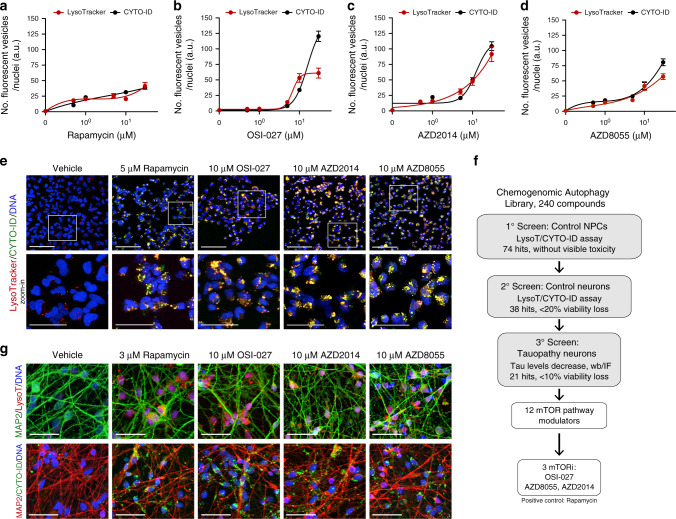
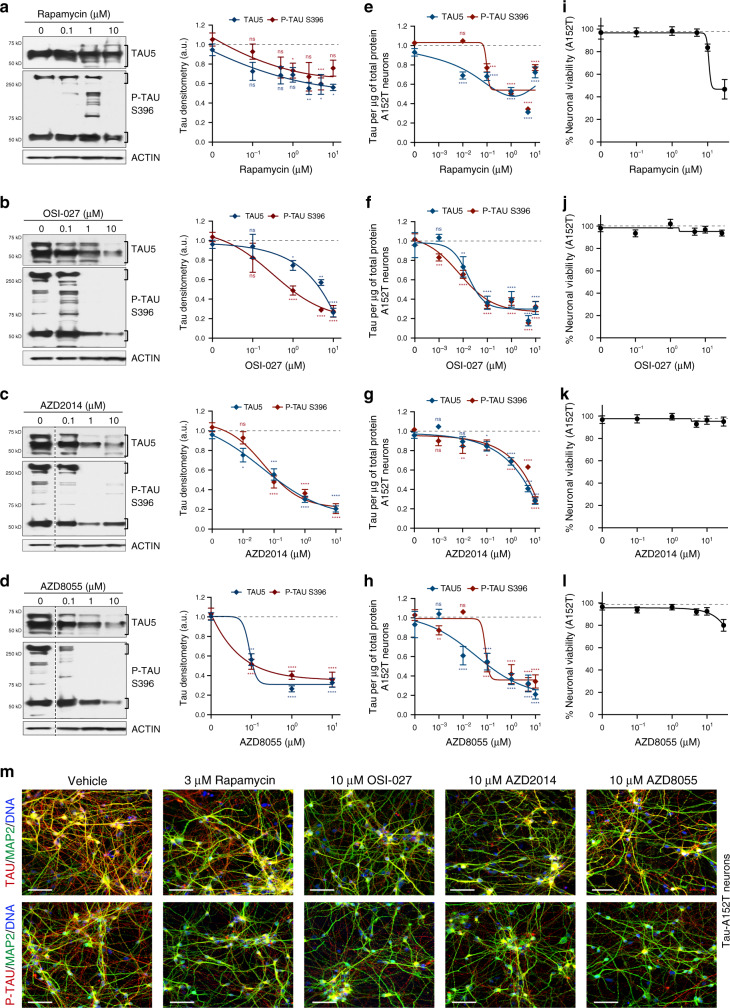
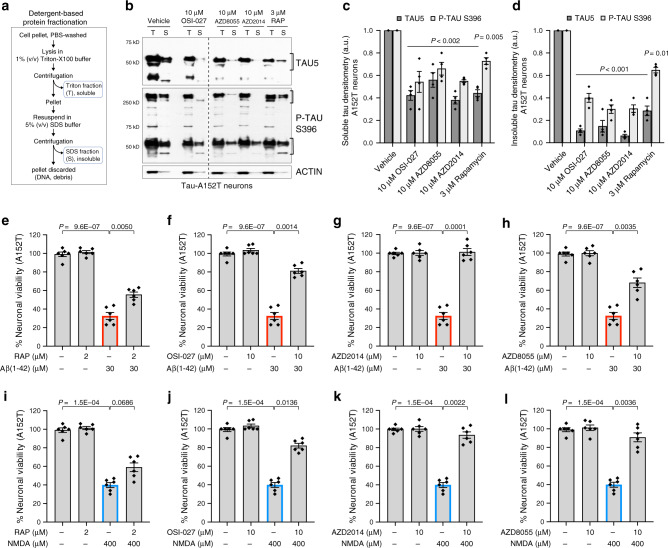
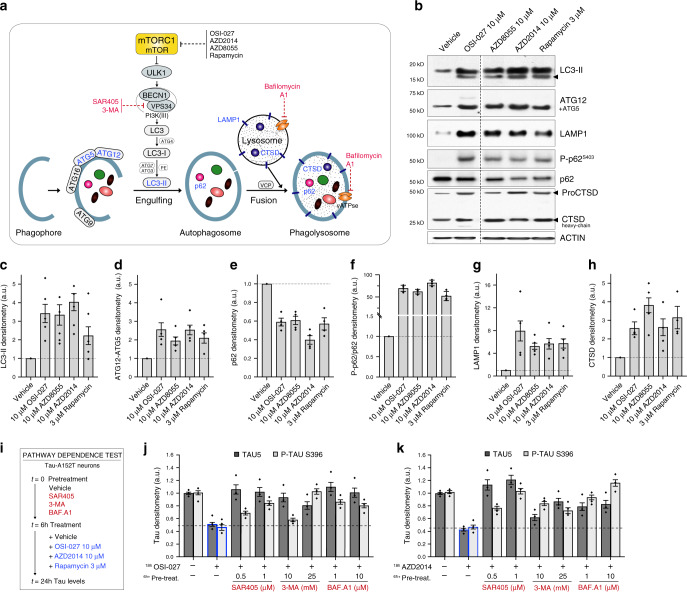
Verification
Claims the paper makes
The claims and statistics of this paper haven’t been checked yet.
Free: it reads the open-access text and checks the first 5 claims that cite a source we can check. Create a free account to check every claim.
Claims other papers make about this one
Each is checked against this paper’s own text: does it say what the citing paper says it does?
The cited source says what the claim attributes to it.
In the citing paper
“functional autophagy is required to degrade soluble and aggregated variants of MAPT/tau (Berger et al, 2006; Silva et al, 2020).”
From Autophagy in major human diseases (2021) · cites this paper as Silva et al, 2020
Self-check
Percentages, sums and reported differences re-computed from the paper’s own numbers.
The self-check needs the paper’s full text.
Citations
Cites
AMPK Phosphorylation of Raptor Mediates a Metabolic Checkpoint
Gwinn, D. M., Shackelford, D. B., Egan, D. F., Mihaylova, M. M., Mery, A., Vasquez, D. S., Turk, B. E., & Shaw, R. J. (2008) · Molecular Cell · doi:10.1016/j.molcel.2008.03.003 · Cited by 3,849
Prolonged Rapamycin Treatment Inhibits mTORC2 Assembly and Akt/PKB
Sarbassov, D. D., Ali, S. M., Sengupta, S., Sheen, J.-H., Hsu, P. P., Bagley, A. F., Markhard, A. L., & Sabatini, D. M. (2006) · Molecular Cell · doi:10.1016/j.molcel.2006.03.029 · Cited by 2,365
Ravikumar, B., Vacher, C., Berger, Z., Davies, J. E., Luo, S., Oroz, L. G., Scaravilli, F., Easton, D. F., Duden, R., O'Kane, C. J., et al. (2004) · Nature Genetics · doi:10.1038/ng1362 · Cited by 2,347
Chloroquine inhibits autophagic flux by decreasing autophagosome-lysosome fusion
Mauthe, M., Orhon, I., Rocchi, C., Zhou, X., Luhr, M., Hijlkema, K.-J., Coppes, R. P., Engedal, N., Mari, M., & Reggiori, F. (2018) · Autophagy · doi:10.1080/15548627.2018.1474314 · Cited by 2,122
Depletion of microglia and inhibition of exosome synthesis halt tau propagation
Asai, H., Ikezu, S., Tsunoda, S., Medalla, M., Luebke, J., Haydar, T., Wolozin, B., Butovsky, O., Kügler, S., & Ikezu, T. (2015) · Nature Neuroscience · doi:10.1038/nn.4132 · Cited by 1,591
Wu, Y.-T., Tan, H.-L., Shui, G., Bauvy, C., Huang, Q., Wenk, M. R., Ong, C.-N., Codogno, P., & Shen, H.-M. (2010) · Journal of Biological Chemistry · doi:10.1074/jbc.m109.080796 · Cited by 1,127
Boland, B., Kumar, A., Lee, S., Platt, F. M., Wegiel, J., Yu, W. H., & Nixon, R. A. (2008) · Journal of Neuroscience · doi:10.1523/jneurosci.0800-08.2008 · Cited by 1,119
Tau-targeting therapies for Alzheimer disease
Congdon, E. E., & Sigurdsson, E. M. (2018) · Nature Reviews Neurology · doi:10.1038/s41582-018-0013-z · Cited by 1,113
Monitoring and Measuring Autophagy
Yoshii, S. R., & Mizushima, N. (2017) · International Journal of Molecular Sciences · doi:10.3390/ijms18091865 · Cited by 1,107
Isolation of a Protein Target of the FKBP12-Rapamycin Complex in Mammalian Cells
Sabers, C. J., Martin, M. M., Brunn, G. J., Williams, J. M., Dumont, F. J., Wiederrecht, G., & Abraham, R. T. (1995) · Journal of Biological Chemistry · doi:10.1074/jbc.270.2.815 · Cited by 887
Compromised autophagy and neurodegenerative diseases
Menzies, F. M., Fleming, A., & Rubinsztein, D. C. (2015) · Nature Reviews Neuroscience · doi:10.1038/nrn3961 · Cited by 851
Chresta, C. M., Davies, B. R., Hickson, I., Harding, T., Cosulich, S., Critchlow, S. E., Vincent, J. P., Ellston, R., Jones, D., Sini, P., et al. (2010) · Cancer Research · doi:10.1158/0008-5472.can-09-1751 · Cited by 812
Matsumoto, G., Wada, K., Okuno, M., Kurosawa, M., & Nukina, N. (2011) · Molecular Cell · doi:10.1016/j.molcel.2011.07.039 · Cited by 701
Rapamycin alleviates toxicity of different aggregate-prone proteins
Berger, Z., Ravikumar, B., Menzies, F. M., Oroz, L. G., Underwood, B. R., Pangalos, M. N., Schmitt, I., Wullner, U., Evert, B. O., O'Kane, C. J., et al. (2006) · Human Molecular Genetics · doi:10.1093/hmg/ddi458 · Cited by 657
Seeding of Normal Tau by Pathological Tau Conformers Drives Pathogenesis of Alzheimer-like Tangles
Guo, J. L., & Lee, V. M.-Y. (2011) · Journal of Biological Chemistry · doi:10.1074/jbc.m110.209296 · Cited by 636
LAMP proteins are required for fusion of lysosomes with phagosomes
Huynh, K. K., Eskelinen, E., Scott, C. C., Malevanets, A., Saftig, P., & Grinstein, S. (2007) · The EMBO Journal · doi:10.1038/sj.emboj.7601511 · Cited by 619
Autophagy failure in Alzheimer's disease—locating the primary defect
Nixon, R. A., & Yang, D.-S. (2011) · Neurobiology of Disease · doi:10.1016/j.nbd.2011.01.021 · Cited by 595
Yanamandra, K., Kfoury, N., Jiang, H., Mahan, T. E., Ma, S., Maloney, S. E., Wozniak, D. F., Diamond, M. I., & Holtzman, D. M. (2013) · Neuron · doi:10.1016/j.neuron.2013.07.046 · Cited by 574
Phosphorylation of Mammalian Target of Rapamycin (mTOR) at Ser-2448 IsMediated by p70S6 Kinase
Chiang, G. G., & Abraham, R. T. (2005) · Journal of Biological Chemistry · doi:10.1074/jbc.m501707200 · Cited by 562
Trans-cellular Propagation of Tau Aggregation by Fibrillar Species
Kfoury, N., Holmes, B. B., Jiang, H., Holtzman, D. M., & Diamond, M. I. (2012) · Journal of Biological Chemistry · doi:10.1074/jbc.m112.346072 · Cited by 552
A New Protein Conjugation System in Human
Mizushima, N., Sugita, H., Yoshimori, T., & Ohsumi, Y. (1998) · Journal of Biological Chemistry · doi:10.1074/jbc.273.51.33889 · Cited by 513
A highly potent and selective Vps34 inhibitor alters vesicle trafficking and autophagy
Ronan, B., Flamand, O., Vescovi, L., Dureuil, C., Durand, L., Fassy, F., Bachelot, M.-F., Lamberton, A., Mathieu, M., Bertrand, T., et al. (2014) · Nature Chemical Biology · doi:10.1038/nchembio.1681 · Cited by 500
Dinkins, M. B., Dasgupta, S., Wang, G., Zhu, G., & Bieberich, E. (2014) · Neurobiology of Aging · doi:10.1016/j.neurobiolaging.2014.02.012 · Cited by 494
Altered lysosomal proteins in neural-derived plasma exosomes in preclinical Alzheimer disease
Goetzl, E. J., Boxer, A., Schwartz, J. B., Abner, E. L., Petersen, R. C., Miller, B. L., & Kapogiannis, D. (2015) · Neurology · doi:10.1212/wnl.0000000000001702 · Cited by 446
Very important pharmacogene summary
Hodges, L. M., Markova, S. M., Chinn, L. W., Gow, J. M., Kroetz, D. L., Klein, T. E., & Altman, R. B. (2011) · Pharmacogenetics and Genomics · doi:10.1097/fpc.0b013e3283385a1c · Cited by 436
Autophagosome–lysosome fusion is independent of V-ATPase-mediated acidification
Mauvezin, C., Nagy, P., Juhász, G., & Neufeld, T. P. (2015) · Nature Communications · doi:10.1038/ncomms8007 · Cited by 424
Autophagy and Its Possible Roles in Nervous System Diseases, Damage and Repair
Rubinsztein, D. C., DiFiglia, M., Heintz, N., Nixon, R. A., Qin, Z.-H., Ravikumar, B., Stefanis, L., & Tolkovsky, A. (2005) · Autophagy · doi:10.4161/auto.1.1.1513 · Cited by 423
Spires, T. L., Orne, J. D., SantaCruz, K., Pitstick, R., Carlson, G. A., Ashe, K. H., & Hyman, B. T. (2006) · The American Journal of Pathology · doi:10.2353/ajpath.2006.050840 · Cited by 401
Species similarities and differences in pharmacokinetics.
Lin, J. H. (1995) · Drug Metabolism and Disposition · doi:10.1016/s0090-9556(25)06742-x · Cited by 395
Stimulation of autophagy reduces neurodegeneration in a mouse model of human tauopathy
Schaeffer, V., Lavenir, I., Ozcelik, S., Tolnay, M., Winkler, D. T., & Goedert, M. (2012) · Brain · doi:10.1093/brain/aws143 · Cited by 343 · cited 10×
“AZD8055 (μM) Aβ(1-42) (μM) – – 10 – 30 30 – 10 9.”
InfluentialThe Human Brain in a Dish: The Promise of iPSC-Derived Neurons
Dolmetsch, R., & Geschwind, D. H. (2011) · Cell · doi:10.1016/j.cell.2011.05.034 · Cited by 304
Autophagic degradation of tau in primary neurons and its enhancement by trehalose
Krüger, U., Wang, Y., Kumar, S., & Mandelkow, E.-M. (2012) · Neurobiology of Aging · doi:10.1016/j.neurobiolaging.2011.11.009 · Cited by 297 · cited 10×
“AZD8055 (μM) Aβ(1-42) (μM) – – 10 – 30 30 – 10 9.”
InfluentialCongdon, E. E., Wu, J. W., Myeku, N., Figueroa, Y. H., Herman, M., Marinec, P. S., Gestwicki, J. E., Dickey, C. A., Yu, W. H., & Duff, K. E. (2012) · Autophagy · doi:10.4161/auto.19048 · Cited by 297
Shaping Development of Autophagy Inhibitors with the Structure of the Lipid Kinase Vps34
Miller, S., Tavshanjian, B., Oleksy, A., Perisic, O., Houseman, B. T., Shokat, K. M., & Williams, R. L. (2010) · Science · doi:10.1126/science.1184429 · Cited by 287
Targeted degradation of aberrant tau in frontotemporal dementia patient-derived neuronal cell models
Silva, M. C., Ferguson, F. M., Cai, Q., Donovan, K. A., Nandi, G., Patnaik, D., Zhang, T., Huang, H.-T., Lucente, D. E., Dickerson, B. C., et al. (2019) · eLife · doi:10.7554/elife.45457 · Cited by 283
Self-citationMolecular Pathogenesis of the Tauopathies
Götz, J., Halliday, G., & Nisbet, R. M. (2019) · Annual Review of Pathology: Mechanisms of Disease · doi:10.1146/annurev-pathmechdis-012418-012936 · Cited by 276
Polanco, J. C., Scicluna, B. J., Hill, A. F., & Götz, J. (2016) · Journal of Biological Chemistry · doi:10.1074/jbc.m115.709485 · Cited by 272
Coppola, G., Chinnathambi, S., Lee, J. J., Dombroski, B. A., Baker, M. C., Soto-Ortolaza, A. I., Lee, S. E., Klein, E., Huang, A. Y., Sears, R., et al. (2012) · Human Molecular Genetics · doi:10.1093/hmg/dds161 · Cited by 240
Soluble forms of tau are toxic in Alzheimer's disease
Kopeikina, K., Hyman, B., & Spires-Jones, T. (2012) · Translational Neuroscience · doi:10.2478/s13380-012-0032-y · Cited by 232
Rapamycin attenuates the progression of tau pathology in P301S tau transgenic mice.
Ozcelik, S., Fraser, G., Castets, P., Schaeffer, V., Skachokova, Z., Breu, K., Clavaguera, F., Sinnreich, M., Kappos, L., Goedert, M., et al. (2013) · PLoS ONE · doi:10.1371/journal.pone.0062459 · Cited by 226
Interplay of pathogenic forms of human tau with different autophagic pathways
Caballero, B., Wang, Y., Diaz, A., Tasset, I., Juste, Y. R., Stiller, B., Mandelkow, E., Mandelkow, E., & Cuervo, A. M. (2018) · Aging Cell · doi:10.1111/acel.12692 · Cited by 213
Pike, K. G., Malagu, K., Hummersone, M. G., Menear, K. A., Duggan, H. M. E., Gomez, S., Martin, N. M. B., Ruston, L., Pass, S. L., & Pass, M. (2013) · Bioorganic & Medicinal Chemistry Letters · doi:10.1016/j.bmcl.2013.01.019 · Cited by 207 · cited 10×
“AZD8055 (μM) Aβ(1-42) (μM) – – 10 – 30 30 – 10 9.”
InfluentialTherapeutic targeting of autophagy in neurodegenerative and infectious diseases
Rubinsztein, D. C., Bento, C. F., & Deretic, V. (2015) · Journal of Experimental Medicine · doi:10.1084/jem.20150956 · Cited by 202
Lim, F., Hernández, F., Lucas, J. J., Gómez-Ramos, P., Morán, M. A., & Ávila, J. (2001) · Molecular and Cellular Neuroscience · doi:10.1006/mcne.2001.1051 · Cited by 201
Bhagwat, S. V., Gokhale, P. C., Crew, A. P., Cooke, A., Yao, Y., Mantis, C., Kahler, J., Workman, J., Bittner, M., Dudkin, L., et al. (2011) · Molecular Cancer Therapeutics · doi:10.1158/1535-7163.mct-10-1099 · Cited by 198
Inhibitory effect of mTOR activator MHY1485 on autophagy: suppression of lysosomal fusion
Choi, Y. J., Park, Y. J., Park, J. Y., Jeong, H. O., Kim, D. H., Ha, Y. M., Kim, J. M., Song, Y. M., Heo, H.-S., Yu, B. P., et al. (2012) · PLoS ONE · doi:10.1371/journal.pone.0043418 · Cited by 192
Tau protein and neurodegeneration
Goedert, M. (2004) · Seminars in Cell & Developmental Biology · doi:10.1016/j.semcdb.2003.12.015 · Cited by 177
Rapamycin and Alzheimer’s disease: Time for a clinical trial?
Kaeberlein, M., & Galvan, V. (2019) · Science Translational Medicine · doi:10.1126/scitranslmed.aar4289 · Cited by 171
Degradation of tau protein by autophagy and proteasomal pathways
Wang, Y., & Mandelkow, E. (2012) · Biochemical Society Transactions · doi:10.1042/bst20120071 · Cited by 166
The Role of Cathepsin D in the Pathogenesis of Human Neurodegenerative Disorders
Vidoni, C., Follo, C., Savino, M., Melone, M. A. B., & Isidoro, C. (2016) · Medicinal Research Reviews · doi:10.1002/med.21394 · Cited by 164
Kraig, E., Linehan, L. A., Liang, H., Romo, T. Q., Liu, Q., Wu, Y., Benavides, A. D., Curiel, T. J., Javors, M. A., Musi, N., et al. (2018) · Experimental Gerontology · doi:10.1016/j.exger.2017.12.026 · Cited by 162
Inhibition of p25/Cdk5 Attenuates Tauopathy in Mouse and iPSC Models of Frontotemporal Dementia
Seo, J., Kritskiy, O., Watson, L. A., Barker, S. J., Dey, D., Raja, W. K., Lin, Y.-T., Ko, T., Cho, S., Penney, J., et al. (2017) · The Journal of Neuroscience · doi:10.1523/jneurosci.0621-17.2017 · Cited by 156
Self-citationAn Overview on the Clinical Development of Tau-Based Therapeutics
Medina, M. (2018) · International Journal of Molecular Sciences · doi:10.3390/ijms19041160 · Cited by 156
Lin, A.-L., Jahrling, J. B., Zhang, W., DeRosa, N., Bakshi, V., Romero, P., Galvan, V., & Richardson, A. (2017) · Journal of Cerebral Blood Flow & Metabolism · doi:10.1177/0271678x15621575 · Cited by 155
Fridén, M., Ducrozet, F., Middleton, B. J., Antonsson, M., Bredberg, U., & Hammarlund‐Udenaes, M. (2009) · Drug Metabolism and Disposition · doi:10.1124/dmd.108.026377 · Cited by 140
Holler, C. J., Taylor, G., Deng, Q., & Kukar, T. (2017) · eneuro · doi:10.1523/eneuro.0100-17.2017 · Cited by 136
mTORC1 signalling and mRNA translation
Proud, C. G. (2009) · Biochemical Society Transactions · doi:10.1042/bst0370227 · Cited by 131
Mandrioli, J., D’Amico, R., Zucchi, E., Gessani, A., Fini, N., Fasano, A., Caponnetto, C., Chiò, A., Dalla Bella, E., Lunetta, C., et al. (2018) · Medicine · doi:10.1097/md.0000000000011119 · Cited by 128
First-in-Human Pharmacokinetic and Pharmacodynamic Study of the Dual m-TORC 1/2 Inhibitor AZD2014
Basu, B., Dean, E., Puglisi, M., Greystoke, A., Ong, M., Burke, W., Cavallin, M., Bigley, G., Womack, C., Harrington, E. A., et al. (2015) · Clinical Cancer Research · doi:10.1158/1078-0432.ccr-14-2422 · Cited by 127
Guichard, S. M., Curwen, J., Bihani, T., D'Cruz, C. M., Yates, J. W. T., Grondine, M., Howard, Z., Davies, B. R., Bigley, G., Klinowska, T., et al. (2015) · Molecular Cancer Therapeutics · doi:10.1158/1535-7163.mct-15-0365 · Cited by 126
Siman, R., Cocca, R., & Dong, Y. (2015) · PLOS ONE · doi:10.1371/journal.pone.0142340 · Cited by 123
Lopez, A., Lee, S. E., Wojta, K., Ramos, E. M., Klein, E., Chen, J., Boxer, A. L., Gorno-Tempini, M. L., Geschwind, D. H., Schlotawa, L., et al. (2017) · Brain · doi:10.1093/brain/awx005 · Cited by 120
Kim, S., Choi, K. J., Cho, S.-J., Yun, S.-M., Jeon, J.-P., Koh, Y. H., Song, J., Johnson, G. V. W., & Jo, C. (2016) · Scientific Reports · doi:10.1038/srep24933 · Cited by 114 · cited 10×
“AZD8055 (μM) Aβ(1-42) (μM) – – 10 – 30 30 – 10 9.”
InfluentialSilva, M. C., Cheng, C., Mair, W., Almeida, S., Fong, H., Biswas, M. H. U., Zhang, Z., Huang, Y., Temple, S., Coppola, G., et al. (2016) · Stem Cell Reports · doi:10.1016/j.stemcr.2016.08.001 · Cited by 103
Self-citationPerspective Insights of Exosomes in Neurodegenerative Diseases: A Critical Appraisal
Jan, A. T., Malik, M. A., Rahman, S., Yeo, H. R., Lee, E. J., Abdullah, T. S., & Choi, I. (2017) · Frontiers in Aging Neuroscience · doi:10.3389/fnagi.2017.00317 · Cited by 100
Modulating mTOR in Aging and Health
Johnson, S. C., Sangesland, M., Kaeberlein, M., & Rabinovitch, P. S. (2015) · Interdisciplinary Topics in Gerontology and Geriatrics · doi:10.1159/000364974 · Cited by 94
Brunden, K. R., Ballatore, C., Crowe, A., Smith, Lee, V. M.-Y., & Trojanowski, J. Q. (2010) · Experimental Neurology · doi:10.1016/j.expneurol.2009.08.031 · Cited by 93
Lin, F., de Gooijer, M. C., Hanekamp, D., Chandrasekaran, G., Buil, L. C. M., Thota, N., Sparidans, R. W., Beijnen, J. H., Würdinger, T., & van Tellingen, O. (2016) · Clinical Cancer Research · doi:10.1158/1078-0432.ccr-16-1276 · Cited by 90
Huang, S., Yang, Z. J., Yu, C., & Sinicrope, F. A. (2011) · Journal of Biological Chemistry · doi:10.1074/jbc.m111.297432 · Cited by 89
Götz, J., Xia, D., Leinenga, G., Chew, Y. L., & Nicholas, H. (2013) · Frontiers in Neurology · doi:10.3389/fneur.2013.00072 · Cited by 85
Exosomes in the Diseased Brain: First Insights from In vivo Studies
Levy, E. (2017) · Frontiers in Neuroscience · doi:10.3389/fnins.2017.00142 · Cited by 74
Is amyotrophic lateral sclerosis/frontotemporal dementia an autophagy disease?
Deng, Z., Sheehan, P., Chen, S., & Yue, Z. (2017) · Molecular Neurodegeneration · doi:10.1186/s13024-017-0232-6 · Cited by 59
Inhibiting 4EBP1 in Glioblastoma
Fan, Q. W., Nicolaides, T. P., & Weiss, W. A. (2018) · Clinical Cancer Research · doi:10.1158/1078-0432.ccr-17-0042 · Cited by 48
Generation of Tau Aggregates and Clearance by Autophagy in an Inducible Cell Model of Tauopathy
Wang, Y., Krüger, U., Mandelkow, E., & Mandelkow, E.-M. (2010) · Neurodegenerative Diseases · doi:10.1159/000285516 · Cited by 44
Applications of induced pluripotent stem cells in studying the neurodegenerative diseases
Wan, W., Cao, L., Kalionis, B., Xia, S., & Tai, X. (2015) · Stem Cells International · doi:10.1155/2015/382530 · Cited by 40 · cited 1×
“5 μM CQ) and positive hits (74) were identified as compounds that increased the number LysoTracker+ and CYTOID+ vesicles, relative to vehicle-treated NPCs, without obvious toxicity (visual inspection of cell loss).”
Ikeda, K., Akiyama, H., Arai, T., Kondo, H., Haga, C., Iritani, S., & Tsuchiya, K. (1998) · Neuroscience Letters · doi:10.1016/s0304-3940(98)00867-2 · Cited by 38
The role of lysosomes and autophagosomes in frontotemporal lobar degeneration
Bain, H. D. C., Davidson, Y. S., Robinson, A. C., Ryan, S., Rollinson, S., Richardson, A., Jones, M., Snowden, J. S., Pickering‐Brown, S., & Mann, D. M. A. (2019) · Neuropathology and Applied Neurobiology · doi:10.1111/nan.12500 · Cited by 33
Mignon, L., Kordasiewicz, H., Lane, R., Smith, A., Miller, T., Narayanan, P., Swayze, E., Norris, D., Fitzsimmons, B., & Bennett, F. (2018) · Neurology · doi:10.1212/wnl.90.15_supplement.s2.006 · Cited by 29
Human iPSC Models in Drug Discovery: Opportunities and Challenges
Silva, M. C., Cross, A., Brandon, N. J., & Haggarty, S. J. (2017) · Comprehensive Medicinal Chemistry III · doi:10.1016/b978-0-12-409547-2.12284-x · Cited by 6
Self-citationClinical Reasoning: A 23-year-old woman with fever and vertical diplopia
Lin, D. J., Levin, S. N., Albin, C. S. W., Goodheart, A. E., & Venna, N. (2018) · Neurology · doi:10.1212/wnl.0000000000005600 · Cited by 4
Cited by
Autophagy in major human diseases
Klionsky, D. J., Petroni, G., Amaravadi, R. K., Baehrecke, E. H., Ballabio, A., Boya, P., Bravo‐San Pedro, J. M., Cadwell, K., Cecconi, F., Choi, A. M. K., et al. (2021) · The EMBO Journal · doi:10.15252/embj.2021108863 · Cited by 1,585
Autophagy in Alzheimer’s disease pathogenesis: Therapeutic potential and future perspectives
Zhang, Z., Yang, X., Song, Y.-Q., & Tu, J. (2021) · Ageing Research Reviews · doi:10.1016/j.arr.2021.101464 · Cited by 369
Tauopathies: new perspectives and challenges
Zhang, Y., Wu, K.-M., Yang, L., Dong, Q., & Yu, J.-T. (2022) · Molecular Neurodegeneration · doi:10.1186/s13024-022-00533-z · Cited by 323
Dewanjee, S., Chakraborty, P., Bhattacharya, H., Chacko, L., Singh, B., Chaudhary, A., Javvaji, K., Pradhan, S. R., Vallamkondu, J., Dey, A., et al. (2022) · Free Radical Biology and Medicine · doi:10.1016/j.freeradbiomed.2022.09.032 · Cited by 229
The PI3K/Akt signaling axis in Alzheimer’s disease: a valuable target to stimulate or suppress?
Razani, E., Pourbagheri-Sigaroodi, A., Safaroghli-Azar, A., Zoghi, A., Shanaki-Bavarsad, M., & Bashash, D. (2021) · Cell Stress and Chaperones · doi:10.1007/s12192-021-01231-3 · Cited by 227
Metadata
- Authors
- Silva, M. C., Nandi, G. A., Tentarelli, S., Gurrell, I. K., Jamier, T., Lucente, D., Dickerson, B. C., Brown, D. G., Brandon, N. J., & Haggarty, S. J.
- Affiliations
- Harvard University (US)
- AstraZeneca (United States) (US)
- AstraZeneca (United Kingdom) (GB)
- Corresponding author
- Haggarty, Stephen J.
- ORCID
- Venue
- Nature Communications
- Published
- 2020-06-26
- Volume
- 11
- Issue
- 1
- Pages
- 3258-3258
- ISSN
- 2041-1723 (ISSN-L)
- PMC
- PMC7320012
- OpenAlex
- W3037940602
- Cited by
- 157
- References
- 80
- Citations by year
- 2026: 20 · 2025: 22 · 2024: 22 · 2023: 26 · 2022: 34 · 2021: 30 · 2020: 3
- FWCI
- 14.13
- Type
- journal article
- Language
- en
- Open access
- gold
- doi.org
- Licence
- cc-by
- creativecommons.org/licenses/by/4.0 (tdm)
- creativecommons.org/licenses/by/4.0 (vor)
- Locations
- Nature Communications (publishedVersion, cc-by)
- PubMed Central (publishedVersion, cc-by)
- PubMed (publishedVersion)
- RePEc: Research Papers in Economics (submittedVersion)
- DOAJ (DOAJ: Directory of Open Access Journals) (submittedVersion, cc-by-sa)
- Funders
- Association for Frontotemporal Degeneration
- AstraZeneca
- National Institutes of Health
- Tau Consortium
- National Institute of Neurological Disorders and Stroke (R21NS085487)
- Topics
- Life Sciences › Neuroscience › Cellular and Molecular Neuroscience › Alzheimer's disease research and treatments
- Life Sciences › Biochemistry, Genetics and Molecular Biology › Cell Biology › Autophagy in Disease and Therapy
- Health Sciences › Medicine › Clinical Neurology › Amyotrophic Lateral Sclerosis Research
- Keywords
- tauopathy, tau clearance, autophagy, mTOR inhibitors, OSI-027, AZD2014, AZD8055, rapamycin, mTORC1, iPSC-derived neurons, tau phosphorylation, small molecule screening, pharmacodynamics
- MeSH terms
- Mechanistic Target of Rapamycin Complex 1, Animals, Autophagy, Cell Line, Cell Survival, Female, Humans, Lysosomes, Male, Middle Aged, Models, Biological, Neurons, Phagosomes, Phenotype, Stress, Physiological, Time Factors, tau Proteins, Rats, Wistar, Tauopathies, Protein Kinase Inhibitors, TOR Serine-Threonine Kinases, Neural Stem Cells
About these checks
Registry, retraction, Cites and statistics results are computed, not judged, with one exception: a printed reference that no index lists is read once by a model before it counts as a citation error. Claims are extracted by a model and kept only when their quote appears verbatim in the text; each cited source is then checked, with a model’s help, for whether it says what the claim relies on. Those verdicts can be wrong — read the claim’s quote and the cited source before relying on one.
Statistics and arithmetic are recomputed, not judged.
Confidence bands are shown only for fields calibrated on our annotated test set. None is calibrated yet, so no band is shown.
What counts as a claim ›How we measure confidence ›How we check this ›
Are you an author, or do you see a problem with this page? Request a review
Data sources
Bibliographic data: Semantic Scholar, OpenAlex, Crossref.
Contains information from the Semantic Scholar Academic Graph Datasets, made available under the ODC Attribution License (ODC-BY 1.0).
Semantic Scholar’s data is described in: Kinney, R., et al. (2023). The Semantic Scholar Open Data Platform. arXiv:2301.10140.
