

Prolonged tau clearance and stress vulnerability rescue by pharmacological activation of autophagy in tauopathy neurons
Open accessThe DOI matches its Crossref record; 80 of the 80 references it cites were found in a registry or an index.
Abstract
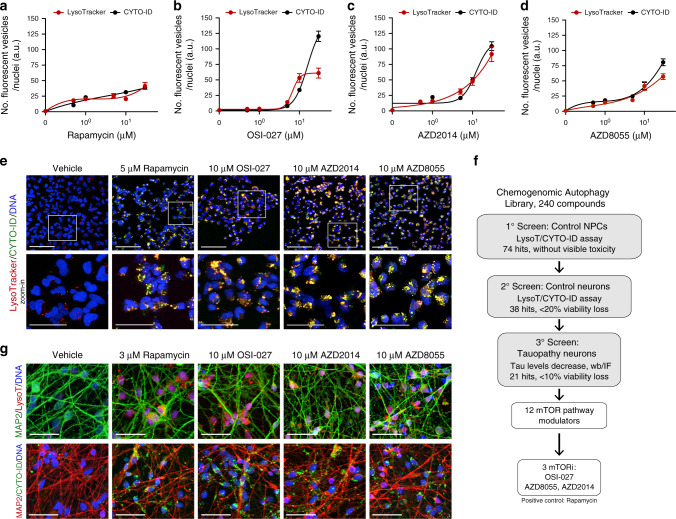
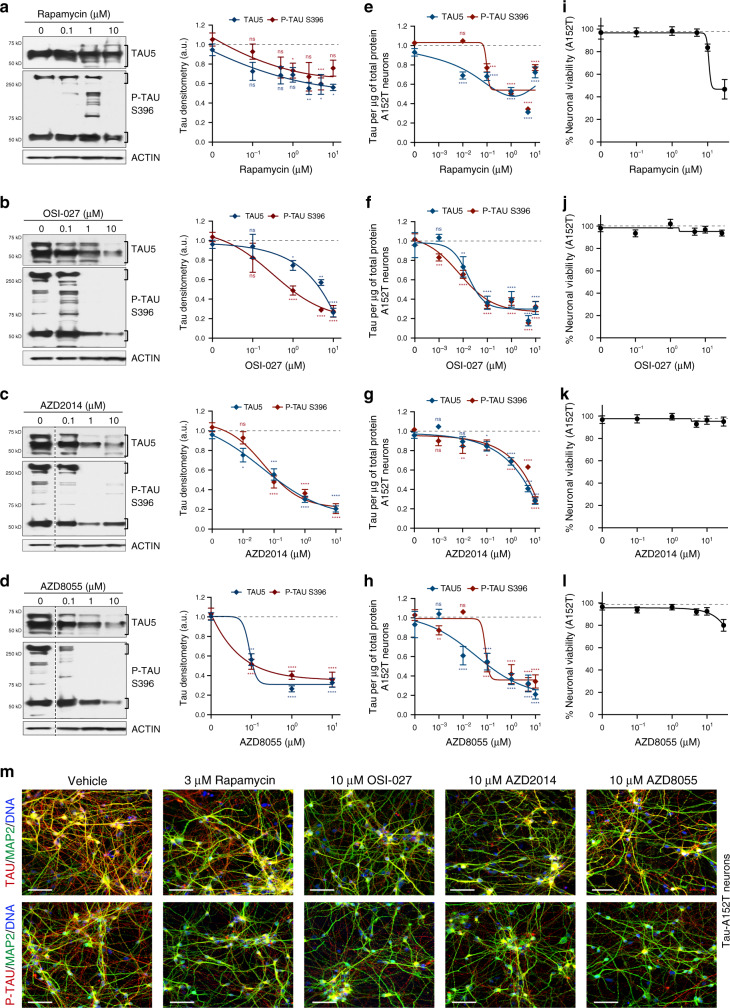
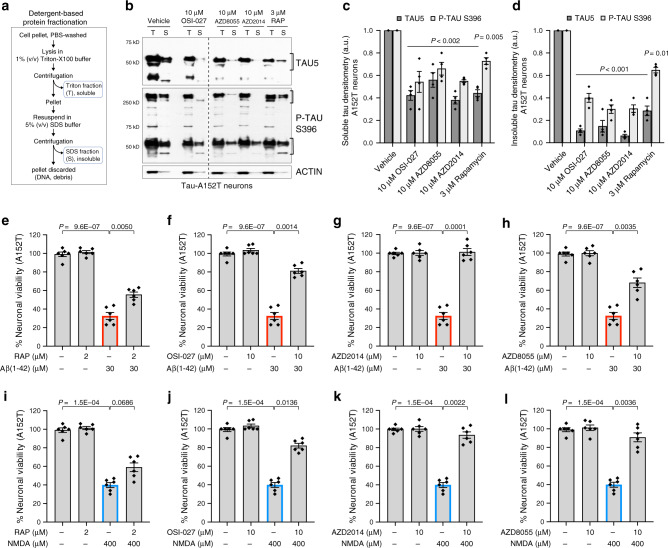
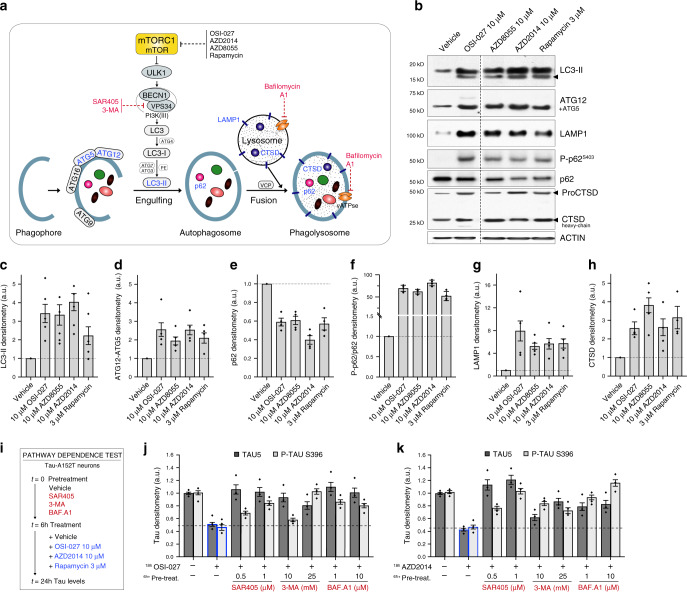
Tauopathies are neurodegenerative diseases associated with accumulation of abnormal tau protein in the brain. Patient iPSC-derived neuronal cell models replicate disease-relevant phenotypes ex vivo that can be pharmacologically targeted for drug discovery. Here, we explored autophagy as a mechanism to reduce tau burden in human neurons and, from a small-molecule screen, identify the mTOR inhibitors OSI-027, AZD2014 and AZD8055. These compounds are more potent than rapamycin, and robustly downregulate phosphorylated and insoluble tau, consequently reducing tau-mediated neuronal stress vulnerability. MTORC1 inhibition and autophagy activity are directly linked to tau clearance. Notably, single-dose treatment followed by washout leads to a prolonged reduction of tau levels and toxicity for 12 days, which is mirrored by a sustained effect on mTORC1 inhibition and autophagy. This new insight into the pharmacodynamics of mTOR inhibitors in regulation of neuronal autophagy may contribute to development of therapies for tauopathies.
Overview
The claims and statistics of this paper haven’t been checked yet.
Free: it reads the open-access text and checks the first 5 claims that cite a source we can check. Create a free account to check every claim.
Integrity signals
Registry
Cites
Statistics
Figures
Verification
Claims the paper makes
The claims and statistics of this paper haven’t been checked yet.
Free: it reads the open-access text and checks the first 5 claims that cite a source we can check. Create a free account to check every claim.
Claims other papers make about this one
Each is checked against this paper’s own text: does it say what the citing paper says it does?
The cited source says what the claim attributes to it.
In the citing paper
“functional autophagy is required to degrade soluble and aggregated variants of MAPT/tau (Berger et al, 2006; Silva et al, 2020).”
From Autophagy in major human diseases (2021) · cites this paper as Silva et al, 2020
Self-check
Percentages, sums and reported differences re-computed from the paper’s own numbers.
The self-check needs the paper’s full text.
Citations
Cites
AMPK Phosphorylation of Raptor Mediates a Metabolic Checkpoint
Gwinn, D. M., Shackelford, D. B., Egan, D. F., Mihaylova, M. M., Mery, A., Vasquez, D. S., Turk, B. E., & Shaw, R. J. (2008) · Molecular Cell · doi:10.1016/j.molcel.2008.03.003 · Cited by 3,849
Prolonged Rapamycin Treatment Inhibits mTORC2 Assembly and Akt/PKB
Sarbassov, D. D., Ali, S. M., Sengupta, S., Sheen, J.-H., Hsu, P. P., Bagley, A. F., Markhard, A. L., & Sabatini, D. M. (2006) · Molecular Cell · doi:10.1016/j.molcel.2006.03.029 · Cited by 2,365
Ravikumar, B., Vacher, C., Berger, Z., Davies, J. E., Luo, S., Oroz, L. G., Scaravilli, F., Easton, D. F., Duden, R., O'Kane, C. J., et al. (2004) · Nature Genetics · doi:10.1038/ng1362 · Cited by 2,347
Chloroquine inhibits autophagic flux by decreasing autophagosome-lysosome fusion
Mauthe, M., Orhon, I., Rocchi, C., Zhou, X., Luhr, M., Hijlkema, K.-J., Coppes, R. P., Engedal, N., Mari, M., & Reggiori, F. (2018) · Autophagy · doi:10.1080/15548627.2018.1474314 · Cited by 2,122
Depletion of microglia and inhibition of exosome synthesis halt tau propagation
Asai, H., Ikezu, S., Tsunoda, S., Medalla, M., Luebke, J., Haydar, T., Wolozin, B., Butovsky, O., Kügler, S., & Ikezu, T. (2015) · Nature Neuroscience · doi:10.1038/nn.4132 · Cited by 1,591
Wu, Y.-T., Tan, H.-L., Shui, G., Bauvy, C., Huang, Q., Wenk, M. R., Ong, C.-N., Codogno, P., & Shen, H.-M. (2010) · Journal of Biological Chemistry · doi:10.1074/jbc.m109.080796 · Cited by 1,127
Boland, B., Kumar, A., Lee, S., Platt, F. M., Wegiel, J., Yu, W. H., & Nixon, R. A. (2008) · Journal of Neuroscience · doi:10.1523/jneurosci.0800-08.2008 · Cited by 1,119
Tau-targeting therapies for Alzheimer disease
Congdon, E. E., & Sigurdsson, E. M. (2018) · Nature Reviews Neurology · doi:10.1038/s41582-018-0013-z · Cited by 1,113
Monitoring and Measuring Autophagy
Yoshii, S. R., & Mizushima, N. (2017) · International Journal of Molecular Sciences · doi:10.3390/ijms18091865 · Cited by 1,107
Isolation of a Protein Target of the FKBP12-Rapamycin Complex in Mammalian Cells
Sabers, C. J., Martin, M. M., Brunn, G. J., Williams, J. M., Dumont, F. J., Wiederrecht, G., & Abraham, R. T. (1995) · Journal of Biological Chemistry · doi:10.1074/jbc.270.2.815 · Cited by 887
Cited by
Autophagy in major human diseases
Klionsky, D. J., Petroni, G., Amaravadi, R. K., Baehrecke, E. H., Ballabio, A., Boya, P., Bravo‐San Pedro, J. M., Cadwell, K., Cecconi, F., Choi, A. M. K., et al. (2021) · The EMBO Journal · doi:10.15252/embj.2021108863 · Cited by 1,585
Autophagy in Alzheimer’s disease pathogenesis: Therapeutic potential and future perspectives
Zhang, Z., Yang, X., Song, Y.-Q., & Tu, J. (2021) · Ageing Research Reviews · doi:10.1016/j.arr.2021.101464 · Cited by 369
Tauopathies: new perspectives and challenges
Zhang, Y., Wu, K.-M., Yang, L., Dong, Q., & Yu, J.-T. (2022) · Molecular Neurodegeneration · doi:10.1186/s13024-022-00533-z · Cited by 323
Dewanjee, S., Chakraborty, P., Bhattacharya, H., Chacko, L., Singh, B., Chaudhary, A., Javvaji, K., Pradhan, S. R., Vallamkondu, J., Dey, A., et al. (2022) · Free Radical Biology and Medicine · doi:10.1016/j.freeradbiomed.2022.09.032 · Cited by 229
The PI3K/Akt signaling axis in Alzheimer’s disease: a valuable target to stimulate or suppress?
Razani, E., Pourbagheri-Sigaroodi, A., Safaroghli-Azar, A., Zoghi, A., Shanaki-Bavarsad, M., & Bashash, D. (2021) · Cell Stress and Chaperones · doi:10.1007/s12192-021-01231-3 · Cited by 227
Bowles, K. R., Silva, M. C., Whitney, K., Bertucci, T., Berlind, J. E., Lai, J. D., Garza, J. C., Boles, N. C., Mahali, S., Strang, K. H., et al. (2021) · Cell · doi:10.1016/j.cell.2021.07.003 · Cited by 182
Self-citationNeuronal autophagy and mitophagy in Parkinson's disease
Lizama, B. N., & Chu, C. T. (2021) · Molecular Aspects of Medicine · doi:10.1016/j.mam.2021.100972 · Cited by 161
Moreira, N. C. D. S., Lima, J. E. B. D. F., Marchiori, M. F., Carvalho, I., & Sakamoto‐Hojo, E. T. (2022) · Journal of Alzheimer s Disease Reports · doi:10.3233/adr-210061 · Cited by 154
“Enhanced mTORc1 activity is associated with reduced A clearance, accumulation of A aggregates [123, 124], tau protein and increased NFT formation [125, 126] due to dysfunctional autophagy.”
BackgroundAutophagy in health and disease: From molecular mechanisms to therapeutic target
Lu, G. X., Wang, Y., Shi, Y. P., Zhang, Z., Huang, C., He, W., Wang, C., & Shen, H. (2022) · MedComm · doi:10.1002/mco2.150 · Cited by 149
The gut microbiome and mental health: advances in research and emerging priorities
Shoubridge, A. P., Choo, J. M., Martin, A. M., Keating, D. J., Wong, M., Licinio, J., & Rogers, G. B. (2022) · Molecular Psychiatry · doi:10.1038/s41380-022-01479-w · Cited by 145
“In AD, neuronal autophagy is involved in the degradation of neurofibrillary tangles composed of hyperphosphorylated and misfolded tau protein within the brain [123].”
BackgroundPolanco, J. C., Hand, G. R., Briner, A., Li, C., & Götz, J. (2021) · Acta Neuropathologica · doi:10.1007/s00401-020-02254-3 · Cited by 131
Hamano, T., Enomoto, S., Shirafuji, N., Ikawa, M., Yamamura, O., Yen, S.-H., & Nakamoto, Y. (2021) · International Journal of Molecular Sciences · doi:10.3390/ijms22147475 · Cited by 114
mTOR signaling and Alzheimer's disease: What we know and where we are?
Davoody, S., Asgari Taei, A., Khodabakhsh, P., & Dargahi, L. (2024) · CNS Neuroscience & Therapeutics · doi:10.1111/cns.14463 · Cited by 96
“79 Wang et al. 80 showed that upregulation of mTOR, phosphorylated 70S6 kinase (p70S6K) as mTOR substrate, and the protein expression levels of tau (pS396 or pS199) were reported elevated in hippocampus tissues isolated from senescence-accelerated mouse prone 8 (SAMP8) newborn mice compared to…”
BackgroundTauopathies: Deciphering Disease Mechanisms to Develop Effective Therapies
Silva, M. C., & Haggarty, S. J. (2020) · International Journal of Molecular Sciences · doi:10.3390/ijms21238948 · Cited by 85
Self-citationThe Emerging Roles of Autophagy in Human Diseases
Lei, Y., & Klionsky, D. J. (2021) · Biomedicines · doi:10.3390/biomedicines9111651 · Cited by 71
“For instance, rapamycin and its analog temsirolimus lower the level of MAPT [277] and rescue memory impairment in an AD mouse model [278].”
BackgroundInfluentialPuangmalai, N., Sengupta, U., Bhatt, N., Gaikwad, S., Montalbano, M., Bhuyan, A., Garcia, S., McAllen, S., Sonawane, M., Jerez, C., et al. (2022) · Journal of Biological Chemistry · doi:10.1016/j.jbc.2022.101766 · Cited by 68
Tau-targeting therapy in Alzheimer’s disease: Critical advances and future opportunities
Guo, Y., Li, S., Zeng, L.-H., & Tan, J. (2022) · Ageing and Neurodegenerative Diseases · doi:10.20517/and.2022.16 · Cited by 61
Astrocytes in selective vulnerability to neurodegenerative disease
Zimmer, T. S., Orr, A. L., & Orr, A. G. (2024) · Trends in Neurosciences · doi:10.1016/j.tins.2024.02.008 · Cited by 48
Understanding and exploiting the roles of O-GlcNAc in neurodegenerative diseases
Pratt, M. R., & Vocadlo, D. J. (2023) · Journal of Biological Chemistry · doi:10.1016/j.jbc.2023.105411 · Cited by 60
“Augmentation of autophagy in synucleinopathy (161) and tauopathy cell (162) and animal (163, 164) models using a range of pharmacological agents, including various inhibitors of the mammalian target of rapamycin, decreases these pathologies and slows neurodegeneration (165).”
BackgroundAlquezar, C., Schoch, K. M., Geier, E. G., Ramos, E. M., Scrivo, A., Li, K. H., Argouarch, A. R., Mlynarski, E. E., Dombroski, B., DeTure, M., et al. (2021) · Science Advances · doi:10.1126/sciadv.abg3897 · Cited by 56
Silva, M. C., Nandi, G., Donovan, K. A., Cai, Q., Berry, B. C., Nowak, R. P., Fischer, E. S., Gray, N. S., Ferguson, F. M., & Haggarty, S. J. (2022) · Frontiers in Cellular Neuroscience · doi:10.3389/fncel.2022.801179 · Cited by 54
Self-citationLiu, X., Ye, M., & Ma, L. (2022) · Frontiers in Aging Neuroscience · doi:10.3389/fnagi.2022.1022821 · Cited by 53
Nguyen, L. D., Wei, Z., Silva, M. C., Barberán-Soler, S., Zhang, J., Rabinovsky, R., Muratore, C. R., Stricker, J. M. S., Hortman, C., Young-Pearse, T. L., et al. (2023) · Nature Communications · doi:10.1038/s41467-023-43293-0 · Cited by 50
“When differentiated into neurons (iPSC-neurons)for 6 – 8 weeks,theseNPCs represent well-established models for studying tauopathy phenotypes in patient-speci fi c neuronal cells relative to a healthy control 46 – 48 .”
Self-citationMelnik, B. C. (2021) · Biomolecules · doi:10.3390/biom11030404 · Cited by 52
Pharmacological mTOR inhibitors in ameliorating Alzheimer’s disease: current review and perspectives
Xie, P.-L., Zheng, M.-Y., Han, R., Chen, W., & Mao, J.-H. (2024) · Frontiers in Pharmacology · doi:10.3389/fphar.2024.1366061 · Cited by 48
Wang, X., Xiong, T., Cui, M., Li, N., Li, Q., Zhu, L., Duan, S., Wang, Y., & Guo, Y. (2020) · Journal of Nanobiotechnology · doi:10.1186/s12951-021-01139-1 · Cited by 47
“Myeloid leukemia factor-1 (Mcl-1), an anti-apoptotic member of the B-cell lymphoma 2 (Bcl-2) family, is highly expressed in cancer cells [36].”
BackgroundIyaswamy, A., Krishnamoorthi, S. K., Zhang, H., Sreenivasmurthy, S. G., Zhu, Z., Liu, J., Su, C.-F., Guan, X.-J., Wang, Z., Cheung, K., et al. (2021) · Phytomedicine · doi:10.1016/j.phymed.2021.153648 · Cited by 47
Compromised autophagy and mitophagy in brain ageing and Alzheimer’s diseases.
Caponio, D., Veverová, K., Zhang, S.-Q., Shi, L., Wong, G., Vyhnalek, M., & Fang, E. F. (2022) · Aging Brain · doi:10.1016/j.nbas.2022.100056 · Cited by 45
“By using mTOR inhibitors more potent than rapamycin in patient iPSC-derived neuronal cells carrying a Tau mutation, Tau phosphorylation and insoluble Tau were reduced [115].”
Limanaqi, F., Busceti, C. L., Celli, R., Biagioni, F., & Fornai, F. (2021) · Progress in Neurobiology · doi:10.1016/j.pneurobio.2021.102112 · Cited by 45
Implication of type 4 NADPH oxidase (NOX4) in tauopathy
Luengo, E., Trigo-Alonso, P., Fernández‐Mendívil, C., Núñez, Á., del Campo, M., Porrero, C., García‐Magro, N., Negredo, P., Senar, S., Sánchez‐Ramos, C., et al. (2021) · Free Radical Biology and Medicine · doi:10.1016/j.redox.2021.102210 · Cited by 45
Gong, B., Zhang, W., Cong, W., Gu, Y., Ji, W., Yin, T., Zhou, H., Hu, H., Zhuang, J., Luo, Y., et al. (2024) · Advanced Healthcare Materials · doi:10.1002/adhm.202400149 · Cited by 44
Perspectives on ROCK2 as a Therapeutic Target for Alzheimer’s Disease
Weber, A. J., & Herskowitz, J. H. (2021) · Frontiers in Cellular Neuroscience · doi:10.3389/fncel.2021.636017 · Cited by 45
“…questions in the field, but the selective vulnerability of neurons in EC layer 2/3, the subiculum, CA1 of the hippocampus, and basal forebrain cholinergic neurons likely contributes to the initiation of tau aggregates (Davies and Maloney, 1976; Hyman et al., 1984; Stranahan and Mattson, 2010).”
BackgroundExosomal and vesicle‐free tau seeds—propagation and convergence in endolysosomal permeabilization
Polanco, J. C., & Götz, J. (2022) · The FEBS Journal · doi:10.1111/febs.16055 · Cited by 42
Eteläinen, T. S., Silva, M. C., Uhari-Väänänen, J. K., Lorenzo, F. D., Jäntti, M. H., Cui, H., Chavero‐Pieres, M., Kilpeläinen, T. P., Mechtler, C., Svarcbahs, R., et al. (2023) · Science Translational Medicine · doi:10.1126/scitranslmed.abq2915 · Cited by 42
Self-citationThe pleiotropic roles of autophagy in Alzheimer’s disease: From pathophysiology to therapy
Festa, B. P., Barbosa, A. D., Rob, M., & Rubinsztein, D. C. (2021) · Current Opinion in Pharmacology · doi:10.1016/j.coph.2021.07.011 · Cited by 41
Sreenivasmurthy, S. G., Iyaswamy, A., Krishnamoorthi, S., Reddi, R. N., Kammala, A. K., Vasudevan, K., Senapati, S., Zhu, Z., Su, C.-F., Liu, J., et al. (2022) · Frontiers in Molecular Biosciences · doi:10.3389/fmolb.2022.1030534 · Cited by 39
“Recent findings from our group and others have demonstrated that activation of ALP or UPS caused a decline in pathological tau and improved cognitive abilities in various AD mice models (Zhu et al., 2022) (Silva et al., 2020).”
BackgroundMa, R.-Y., Li, L., Yang, H., Zou, B., Ma, R., Zhang, Y., Wu, M., Chen, P., Yao, Y., & Li, J. (2024) · Biomedicine & Pharmacotherapy · doi:10.1016/j.biopha.2024.117199 · Cited by 37
Autophagy and Cellular Senescence in Alzheimer's Disease: Key Drivers of Neurodegeneration
Hussain, M. S., Agrawal, N., Ilma, B., Rekha, M. M., Nayak, P. P., Kaur, M., Khachi, A., Goyal, K., Rekha, A., Gupta, S., et al. (2025) · CNS Neuroscience & Therapeutics · doi:10.1111/cns.70503 · Cited by 37
“The findings demonstrated a decline in tau phosphorylation and insoluble tau due to the discovered chemicals [105].”
CRISPR screens in iPSC-derived neurons reveal principles of tau proteostasis
Samelson, A. J., Ariqat, N., McKetney, J., Rohanitazangi, G., Parra Bravo, C., Bose, R. S., Travaglini, K. J., Lam, V. L., Goodness, D., Ta, T., et al. (2026) · Cell · doi:10.1016/j.cell.2025.12.038 · Cited by 36
“38 To find hits unique to the MAPT V337M tau genotype, we performed screens in a MAPT WT background, using both T22 and total tau antibodies (Figures 3E and 3F).”
Cheng, C., Reis, S. A., Adams, E. T., Fass, D. M., Angus, S. P., Stuhlmiller, T. J., Richardson, J. I., Olafson, H. R., Wang, E. T., Patnaik, D., et al. (2021) · Scientific Reports · doi:10.1038/s41598-021-96227-5 · Cited by 36
Self-citationIdentification of HDAC10 Inhibitors that Modulate Autophagy in Transformed Cells
Zeyen, P., Zeyn, Y., Herp, D., Mahmoudi, F., Yesiloglu, T. Z., Erdmann, F., Schmidt, M., Robaa, D., Romier, C., Ridinger, J., et al. (2022) · European Journal of Medicinal Chemistry · doi:10.1016/j.ejmech.2022.114272 · Cited by 36
Heo, H., Park, H., Lee, M., Kim, J., Kim, J., Jung, S.-Y., Kim, S. K., Lee, S., & Chang, J. (2023) · Autophagy · doi:10.1080/15548627.2023.2287925 · Cited by 35
“The activation of auto-phagy removes aggregate-prone proteins, ameliorates cognitive deficits [19–21], and reduces neuronal vulnerability to stress [22].”
BackgroundTheoretical basis, state and challenges of living cell-based drug delivery systems
Liu, W., Cheng, G., Cui, H., Tian, Z., Li, B., Han, Y., Wu, J., Sun, J., Zhao, Y., Chen, T., et al. (2024) · Theranostics · doi:10.7150/thno.99257 · Cited by 32
“Additionally, NSCs exhibit remarkable properties including amyloid-β and tau protein [104] clearance as well as tumor homing capabilities [105] Therefore, NSCs-based DDS have been explored for treating neurological diseases including glioblastoma [106] and Alzheimer’s disease [107].”
BackgroundArab, H. H., Eid, A. H., Alsufyani, S. E., Ashour, A. M., El‐Sheikh, A. A. K., Darwish, H. W., & Sabry, F. M. (2023) · Biomedicines · doi:10.3390/biomedicines11113000 · Cited by 31
“Autophagy stimulation has been characterized as a critical clearance mechanism for neuronal p-tau/neurofibrillary tangles [49] and A β aggregates [9].”
BackgroundThe interplay between probiotics and host autophagy: mechanisms of action and emerging insights
Sadeghloo, Z., Nabavi-Rad, A., Zali, M. R., Klionsky, D. J., & Yadegar, A. (2024) · Autophagy · doi:10.1080/15548627.2024.2403277 · Cited by 31
“Consequently, an increase in autophagy would be expected to reduce neurotoxicity through the efficient clearance of protein aggregates [164].”
Wei, J., Wang, Z., Wang, W., Liu, X., Wan, J., Yuan, Y., Li, X., Ma, L., & Liu, X. (2021) · Frontiers in Cell and Developmental Biology · doi:10.3389/fcell.2021.660005 · Cited by 31
Secker, C., Motzny, A., Kostova, S., Buntru, A., Helmecke, L., Reus, L., Steinfort, R., Brusendorf, L., Boeddrich, A., Neuendorf, N., et al. (2023) · Journal of Neurochemistry · doi:10.1111/jnc.15842 · Cited by 31
“However, given the poor ability of the proteasome to degrade amyloids, alternative strategies to boost other cellular protein degradation pathways such as autophagy (Siddiqi et al., 2019; Silva et al., 2020), are investigated for amyloid degradation.”
Synaptic sabotage: How Tau and α-Synuclein undermine synaptic health
Uytterhoeven, V., Verstreken, P., & Nachman, E. (2024) · The Journal of Cell Biology · doi:10.1083/jcb.202409104 · Cited by 29
Autophagy-targeted therapy to modulate age-related diseases: Success, pitfalls, and new directions
Martins, W. K., Silva, M. N., Pandey, K. R., Maejima, I., Ramalho, E. D. S., Olivon, V. C., Diniz, S. N., & Grasso, D. (2021) · Current Research in Pharmacology and Drug Discovery · doi:10.1016/j.crphar.2021.100033 · Cited by 31
Self-citationAutophagy system as a potential therapeutic target for neurodegenerative diseases
Cui, M., Yoshimori, T., & Nakamura, S. (2022) · Neurochemistry International · doi:10.1016/j.neuint.2022.105308 · Cited by 29
Conserved gene signatures shared among MAPT mutations reveal defects in calcium signaling
Minaya, M. A., Mahali, S., Iyer, A. K., Eteleeb, A. M., Martinez, R., Huang, G., Budde, J., Temple, S., Nana, A. L., Seeley, W. W., et al. (2023) · Frontiers in Molecular Biosciences · doi:10.3389/fmolb.2023.1051494 · Cited by 37
Bhatia, V., Sharma, V. V., Chandel, A., & Rattan, A. (2025) · Inflammopharmacology · doi:10.1007/s10787-025-01715-z · Cited by 28
BH3-only proteins Puma and Beclin1 regulate autophagic death in neurons in response to Amyloid-β
Saha, A. D., Saleem, S., Paidi, R. K., & Biswas, S. C. (2021) · Cell Death Discovery · doi:10.1038/s41420-021-00748-x · Cited by 28
Immunomodulatory role of spleen tyrosine kinase in chronic inflammatory and autoimmune diseases
Zhou, Y., Zhang, Y., Yu, W., Qin, Y., He, H., Dai, F., Wang, Y., Zhu, F., & Zhou, G. (2023) · Immunity Inflammation and Disease · doi:10.1002/iid3.934 · Cited by 24
“SYK is a key regulator of the rapamycin signaling pathway in mammals, and activation of SYK leads to increased phosphorylation and accumulation of Tau (Figure 3).(55) AG126 is a key inhibitor of the development of neuroinflammatory disorders.”
BackgroundBi-Directional Relationship Between Autophagy and Inflammasomes in Neurodegenerative Disorders
Panda, C., & Mahapatra, R. K. (2022) · Cellular and Molecular Neurobiology · doi:10.1007/s10571-021-01184-2 · Cited by 23
The innate immune response in tauopathies
Johnson, A. M., & Lukens, J. R. (2023) · European Journal of Immunology · doi:10.1002/eji.202250266 · Cited by 23
Targeting tau in Alzheimer’s and beyond: Insights into pathology and therapeutic strategies
Singh, S., Khan, S., Shahid, M., Sardar, M., Hassan, M. I., & Islam, A. (2024) · Ageing Research Reviews · doi:10.1016/j.arr.2024.102639 · Cited by 23
Knockdown of hsa_circ_0037658 inhibits the progression of osteoarthritis via inducing autophagy
Sui, C., Liu, D., Que, Y., Xu, S., & Hu, Y. (2020) · Human Cell · doi:10.1007/s13577-020-00440-9 · Cited by 22
Morawe, M. P., Liao, F., Amberg, W., van Bergeijk, J., Chang, R., Gulino, M., Hamilton, C., Hoft, C., Lumpkin, C., Mastis, B., et al. (2022) · European Journal of Pharmacology · doi:10.1016/j.ejphar.2022.175301 · Cited by 19
Bowles, K. R., Pedicone, C., Pugh, D. A., Oja, L.-M., Sousa, F. H., Keavey, L. K., Fulton-Howard, B., Weitzman, S. A., Liu, Y., Chen, J. L., et al. (2024) · Cell Reports · doi:10.1016/j.celrep.2024.115013 · Cited by 20
“6,8,11,14,15,31 In addition, iPSC neurons carrying the MAPT P301L mutation, which is in exon 10, still display tauopathy-relevant phenotypes despite very low 4R tau expression, 7,11 indicating that even low-level exon 10 inclusion substantially impacts cellular function.”
The connection between autophagy and Alzheimer’s disease
Nechushtai, L., Chen, D., Dan, F., & Pinkas‐Kramarski, R. (2025) · Inflammation Research · doi:10.1007/s00011-025-02118-0 · Cited by 22
Krishnamoorthi, S., Iyaswamy, A., Sreenivasmurthy, S. G., Thakur, A., Vasudevan, K., Kumar, G., Guan, X.-J., Lu, K., Gaurav, I., Su, C.-F., et al. (2023) · Journal of Neuroimmune Pharmacology · doi:10.1007/s11481-023-10083-w · Cited by 20
“Owing to the continuous failed endeavors to develop clinically effective drugs for ameliorating the root cause of AD progression, there is a need to revisit the existing drugs with potential neuroprotective role (Singh et al. 2019; Yiannopoulou et al. 2019; Chen et al. 2020).”
BackgroundNew insights into the therapeutic approaches for the treatment of tauopathies
Singh, H., Das, A., Khan, M. M., & Pourmotabbed, T. (2023) · Neural Regeneration Research · doi:10.4103/1673-5374.385288 · Cited by 20
“Rapamycin, an mTOR kinase inhibitor is tested in phase 1 and phase 2 clinical trials for patients with mild cognitive impairment and early-onset AD (Silva et al., 2020).”
BackgroundAutophagy modulation in cancer therapy: Challenges coexist with opportunities
Wu, Y., Wang, A., Feng, G., Pan, X., Shuai, W., Yang, P., Zhang, J., Ouyang, L., Luo, Y., & Wang, G. (2024) · European Journal of Medicinal Chemistry · doi:10.1016/j.ejmech.2024.116688 · Cited by 20
Numb regulates Tau levels and prevents neurodegeneration in tauopathy mouse models
Lacomme, M., Hales, S. C., Brown, T. W., Stevanovic, K., Jolicoeur, C., Cai, J., Bois, T., Desrosiers, M., Dalkara, D., & Cayouette, M. (2022) · Science Advances · doi:10.1126/sciadv.abm4295 · Cited by 20
Pathogenesis, Animal Models, and Drug Discovery of Alzheimer’s Disease
Xia, Z.-D., Ma, R.-X., Wen, J.-F., Zhai, Y.-F., Wang, Y.-Q., Wang, F.-Y., Liu, D., Zhao, X.-L., Sun, B., Jia, P., et al. (2023) · Journal of Alzheimer's Disease · doi:10.3233/jad-230326 · Cited by 19
“Studies have shown that autophagy can reduce the load of tau in human neurons, and mTOR inhibitors, OSI-027, AZD2014, and AZD8055, could significantly reduce the content of phosphorylated and insoluble tau and improve the neurostress disorder [111].”
Tau accumulation is cleared by the induced expression of VCP via autophagy
Giong, H.-K., Hyeon, S. J., Lee, J.-G., Cho, H.-J., Park, U., Stein, T. D., Lee, J.-H., Yu, K., Ryu, H., & Lee, J.-S. (2024) · Acta Neuropathologica · doi:10.1007/s00401-024-02804-z · Cited by 20
“Thus, the activation of autophagy led to clearance of wild-type Tau or mutant Tau proteins by treatment with trehalose [28] or an mTOR inhibitor [54], similar to Tau clearance mediated by increased VCP expression and autophagy in our animal models and cell culture, and can be considered one of the…”
Chen, M., Wang, X., Bao, S., Wang, D., Zhao, J., Wang, Q., Liu, C., Zhao, H., & Zhang, C. (2024) · International Journal of Biological Macromolecules · doi:10.1016/j.ijbiomac.2024.136119 · Cited by 19
Xiong, H., Pang, J., Min, X., Ye, Y., Lai, L., & Zheng, Y. (2022) · Neuroscience · doi:10.1016/j.neuroscience.2022.03.033 · Cited by 18
Chin, M. Y., Ang, K.-H., Davies, J. L., Alquézar, C., Garda, V. G., Rooney, B., Leng, K., Kampmann, M., Arkin, M. R., & Kao, A. W. (2022) · ACS Chemical Neuroscience · doi:10.1021/acschemneuro.1c00804 · Cited by 18
Cóppola-Segovia, V., & Reggiori, F. (2024) · Journal of Molecular Biology · doi:10.1016/j.jmb.2024.168493 · Cited by 18
Zhang, Z., Chen, S., Jun, S., Xu, X., Hong, Y., Yang, X., Zou, L., Song, Y., Chen, Y., & Tu, J. (2024) · Autophagy · doi:10.1080/15548627.2024.2395727 · Cited by 17
Inhibiting mTOR activity using AZD2014 increases autophagy in the mouse cerebral cortex
Bensalem, J., Fourrier, C., Hein, L. K., Hassiotis, S., Proud, C. G., & Sargeant, T. J. (2021) · Neuropharmacology · doi:10.1016/j.neuropharm.2021.108541 · Cited by 18
Gut Microbiome Regulation of Autophagic Flux and Neurodegenerative Disease Risks
Shoubridge, A. P., Fourrier, C., Choo, J. M., Proud, C. G., Sargeant, T. J., & Rogers, G. B. (2021) · Frontiers in Microbiology · doi:10.3389/fmicb.2021.817433 · Cited by 16
Arab, H. H., Eid, A. H., Yahia, R., Alsufyani, S. E., Ashour, A. M., El‐Sheikh, A. A. K., Darwish, H. W., Saad, M. A., Al‐Shorbagy, M. Y., & Masoud, M. A. (2023) · Pharmaceuticals · doi:10.3390/ph16091214 · Cited by 15
“Likewise, the observed and the reported [22] activation of autophagy events by topiramate also advocates the pro-survival signals by the removal of damaged mitochondria and ROS and associated clearance of aberrant Aβ aggregates [13] and p-tau/neurofibrillary tangles [38].”
BackgroundDu, Y. Z., & Cai, X. (2023) · Biomedicine & Pharmacotherapy · doi:10.1016/j.biopha.2023.114905 · Cited by 15
Yoon, L., Botham, R. C., Verhelle, A., Wu, Y., Cole, C. M., Tan, E. P., Massey, L. A., Sanz-Martinez, P., Chou, C., Xu, J., et al. (2022) · bioRxiv (Cold Spring Harbor Laboratory) · doi:10.1101/2022.09.29.509997 · Cited by 15
Self-citationPollack, S. J., Dakkak, D., Guo, T., Chennell, G., Gomez-Suaga, P., Noble, W., Jimenez-Sanchez, M., & Hanger, D. P. (2024) · Cellular and Molecular Life Sciences · doi:10.1007/s00018-024-05337-6 · Cited by 14
Sandhof, C. A., Murray, H. F. B., Silva, M. C., & Haggarty, S. J. (2024) · Neurotherapeutics · doi:10.1016/j.neurot.2024.e00499 · Cited by 14
Self-citationIntartaglia, D., Giamundo, G., Naso, F., Nusco, E., Giulio, S. D., Salierno, F. G., Polishchuk, E., & Conte, I. (2022) · Frontiers in Aging Neuroscience · doi:10.3389/fnagi.2022.878958 · Cited by 14
Wang, Z., Kennedy, B. K., Wong, L., & Sajikumar, S. (2023) · The FASEB Journal · doi:10.1096/fj.202201640rrr · Cited by 14
Kim, S., Hyun, D. G., Nam, Y., Shin, S. J., Im, D., Kim, H. S., Leem, S. H., Park, H. H., Kim, B., Park, Y., et al. (2023) · Biomedicine & Pharmacotherapy · doi:10.1016/j.biopha.2023.115770 · Cited by 14
Zheng, S., Zhu, J., Wang, C., Wu, Y., Sun, S., Guo, H., Chang, Y., Ma, R., & Li, G. (2024) · Cell Communication and Signaling · doi:10.1186/s12964-024-01872-8 · Cited by 13
“Furthermore, pharmacological inhibition of mTORC1 has been shown to promote autophagy, reduce tau protein levels, and exert neuroprotective effects in both in vitro and in vivo models [19, 20].”
BackgroundKondo, T., Ebinuma, I., Tanaka, H., Nishikawa, Y., Komiya, T., Ishikawa, M., & Okano, H. (2023) · International Journal of Molecular Sciences · doi:10.3390/ijms24086987 · Cited by 13
“Noticeably, compounds found by screening using patient-derived iPSCs have had encouraging results in ALS clinical trials [29,30], suggesting it to be a promising strategy for drug development.”
BackgroundCRISPRi: a way to integrate iPSC-derived neuronal models
Franks, S. N. J., Heon‐Roberts, R., & Ryan, B. J. (2024) · Biochemical Society Transactions · doi:10.1042/bst20230190 · Cited by 14
Molecular signatures of regional vulnerability to tauopathy in excitatory cortical neurons
Broekaart, D. W. M., Sharma, A., Ramakrishnan, A., Chongtham, A., Günther, D. M., Subramaniyan, S., Wang, M., Patel, V., Zhang, B., Grinberg, L. T., et al. (2025) · Acta Neuropathologica · doi:10.1007/s00401-025-02879-2 · Cited by 11
“The autophagy [84, 99], sumoylation [66, 86] and sirtuin [72] signaling pathways, which are known to affect tau protein function, were significantly enriched in vGLUT1 neurons compared with GAD2 neurons in both vulnerable regions.”
Cell Type‐Specific mTORC1 Signaling and Translational Control in Synaptic Plasticity and Memory
Huang, Z., Mahmood, N., Wiebe, S. A., Khoutorsky, A., Lacaille, J., & Sonenberg, N. (2025) · Journal of Neurochemistry · doi:10.1111/jnc.70281 · Cited by 12
Merocyanine Complexes Coupled with Plasmonic Au Nanoparticles for Inhibiting Tau Aggregation
Wu, Y.-C., Wu, C.-Y., Tsai, S.-W., Chen, H.-J., Liu, W.-J., Lin, D., Gong, T., Yong, K., & Kong, K. V. (2022) · ACS Applied Nano Materials · doi:10.1021/acsanm.2c03326 · Cited by 11
Culibrk, R. A., Ebbert, K. A., Yeisley, D. J., Chen, R., Qureshi, F. A., Hahn, J., & Hahn, M. S. (2024) · Journal of Alzheimer s Disease · doi:10.3233/jad-230600 · Cited by 11
“:3) and neurofib-rillary tangle formation associated with AD [4, 6].”
NR1D1 Inhibition Enhances Autophagy and Mitophagy in Alzheimer's Disease Models
Zhang, S., Niu, Z., Anisimov, A. S., Shi, F., Deng, S., Xiao, X., Cao, S., Pan, J., Wang, H., Lagartos-Donate, M. J., et al. (2025) · Aging and Disease · doi:10.14336/ad.2024.1654 · Cited by 10
Mirfakhar, F. S., Marsh, J. A., Sato, C., Schache, K. J., Minaya, M., Dolle, R. E., Pak, S. C., Silverman, G. A., Perlmutter, D. H., Macauley, S. L., et al. (2026) · Nature Communications · doi:10.1038/s41467-026-70473-5 · Cited by 12
“Phosphory-lated Tau may be sequestered into autophagic vacuoles and targeted for degradation through the autophagy-lysosome pathway 13,31 .”
Bastien, J., Menon, S., Messa, M., & Nyfeler, B. (2021) · Molecular Aspects of Medicine · doi:10.1016/j.mam.2021.101018 · Cited by 10
Litwa, K. (2022) · Frontiers in Genetics · doi:10.3389/fgene.2022.997461 · Cited by 11
“Finally, rapamycin reduces tau aggregate burden in mice and human neurons by activating autophagy (Ozcelik et al., 2013; Silva et al., 2020).”
BackgroundYao, W., Che, J., Zhao, C., Zhang, X., Zhou, H., & Bai, F. (2023) · Engineered Regeneration · doi:10.1016/j.engreg.2023.02.005 · Cited by 10
Nisha, N., & Sarkar, S. (2021) · Neurochemistry International · doi:10.1016/j.neuint.2021.105040 · Cited by 10
Multiple Roles of Paeoniflorin in Alzheimer’s Disease
Meng, Z., Chen, H., Deng, C., & Meng, S. (2022) · Evidence-based Complementary and Alternative Medicine · doi:10.1155/2022/2464163 · Cited by 10
“Intracellular MAPT/tau accumulation induced by macrophage/autophagy deficiency is a landmark pathological feature of AD [38], while the autophagy-lysosomal pathway (ALP) is the main pathway for clearance for tau in neurons [39].”
BackgroundSilva, M. C., Nandi, G., & Haggarty, S. J. (2022) · Methods in molecular biology · doi:10.1007/978-1-0716-1979-7_10 · Cited by 9
Self-citationSisto, A., van Wermeskerken, T., Pancher, M., Gatto, P., Asselbergh, B., Carreira, Á. S. A., Winter, V. D., Adami, V., Provenzani, A., & Timmerman, V. (2024) · Autophagy · doi:10.1080/15548627.2024.2439649 · Cited by 9
Shining a light on autophagy in neurodegenerative diseases
Chandran, A., & Rochet, J. (2021) · Journal of Biological Chemistry · doi:10.1016/j.jbc.2021.101437 · Cited by 9
“Based on evidence that autophagic impairment plays a role in neurodegeneration, autophagy upregulation would be predicted to alleviate neurotoxicity by stimulating the clearance of protein aggregates, whereas autophagy inhibitors should have the opposite effect (8).”
BackgroundSeo, J., Park, S., Lee, D. C., Yoo, W., Yang, Y. R., Seo, H. W., Park, J. L., Joo, J., Park, K. C., & Byun, S. (2026) · Signal Transduction and Targeted Therapy · doi:10.1038/s41392-026-02688-3 · Cited by 9
Metadata
- Authors
- Silva, M. C., Nandi, G. A., Tentarelli, S., Gurrell, I. K., Jamier, T., Lucente, D., Dickerson, B. C., Brown, D. G., Brandon, N. J., & Haggarty, S. J.
- Affiliations
- Harvard University (US)
- AstraZeneca (United States) (US)
- AstraZeneca (United Kingdom) (GB)
- Corresponding author
- Haggarty, Stephen J.
- ORCID
- Venue
- Nature Communications
- Published
- 2020-06-26
- Volume
- 11
- Issue
- 1
- Pages
- 3258-3258
- ISSN
- 2041-1723 (ISSN-L)
- PMC
- PMC7320012
- OpenAlex
- W3037940602
- Semantic Scholar
- 3a1d12c6c4667b46546ed50f2f926181ea5b8825
- Cited by
- 157
- References
- 80
- Citations by year
- 2026: 20 · 2025: 22 · 2024: 22 · 2023: 26 · 2022: 34 · 2021: 30 · 2020: 3
- FWCI
- 14.13
- Type
- journal article
- Language
- en
- Open access
- gold
- doi.org
- Licence
- cc-by
- creativecommons.org/licenses/by/4.0 (tdm)
- creativecommons.org/licenses/by/4.0 (vor)
- Locations
- Nature Communications (publishedVersion, cc-by)
- PubMed Central (publishedVersion, cc-by)
- PubMed (publishedVersion)
- RePEc: Research Papers in Economics (submittedVersion)
- DOAJ (DOAJ: Directory of Open Access Journals) (submittedVersion, cc-by-sa)
- Funders
- Association for Frontotemporal Degeneration
- AstraZeneca
- National Institutes of Health
- Tau Consortium
- National Institute of Neurological Disorders and Stroke (R21NS085487)
- Topics
- Life Sciences › Neuroscience › Cellular and Molecular Neuroscience › Alzheimer's disease research and treatments
- Life Sciences › Biochemistry, Genetics and Molecular Biology › Cell Biology › Autophagy in Disease and Therapy
- Health Sciences › Medicine › Clinical Neurology › Amyotrophic Lateral Sclerosis Research
- Keywords
- tauopathy, tau clearance, autophagy, mTOR inhibitors, OSI-027, AZD2014, AZD8055, rapamycin, mTORC1, iPSC-derived neurons, tau phosphorylation, small molecule screening, pharmacodynamics
- MeSH terms
- Mechanistic Target of Rapamycin Complex 1, Animals, Autophagy, Cell Line, Cell Survival, Female, Humans, Lysosomes, Male, Middle Aged, Models, Biological, Neurons, Phagosomes, Phenotype, Stress, Physiological, Time Factors, tau Proteins, Rats, Wistar, Tauopathies, Protein Kinase Inhibitors, TOR Serine-Threonine Kinases, Neural Stem Cells
About these checks
Registry, retraction, Cites and statistics results are computed, not judged, with one exception: a printed reference that no index lists is read once by a model before it counts as a citation error. Claims are extracted by a model and kept only when their quote appears verbatim in the text; each cited source is then checked, with a model’s help, for whether it says what the claim relies on. Those verdicts can be wrong — read the claim’s quote and the cited source before relying on one.
Statistics and arithmetic are recomputed, not judged.
Confidence bands are shown only for fields calibrated on our annotated test set. None is calibrated yet, so no band is shown.
What counts as a claim ›How we measure confidence ›How we check this ›
Are you an author, or do you see a problem with this page? Request a review
Data sources
Bibliographic data: Semantic Scholar, OpenAlex, Crossref.
Contains information from the Semantic Scholar Academic Graph Datasets, made available under the ODC Attribution License (ODC-BY 1.0).
Semantic Scholar’s data is described in: Kinney, R., et al. (2023). The Semantic Scholar Open Data Platform. arXiv:2301.10140.
