

SARS-CoV-2 proteome microarray for global profiling of COVID-19 specific IgG and IgM responses
Open accessPublished version of a preprint
The DOI matches its Crossref record; 56 of the 56 references it cites were found in a registry or an index.
Abstract
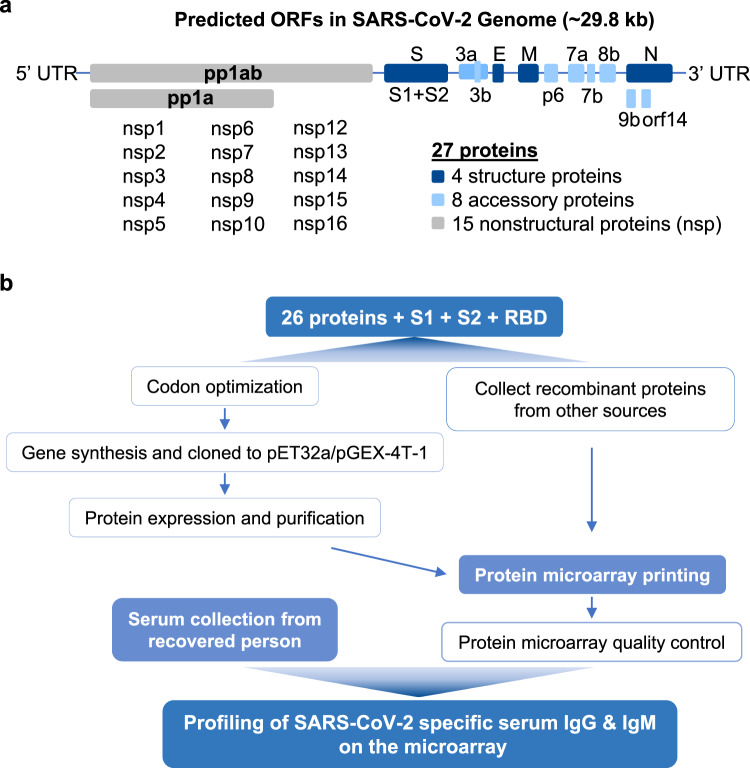
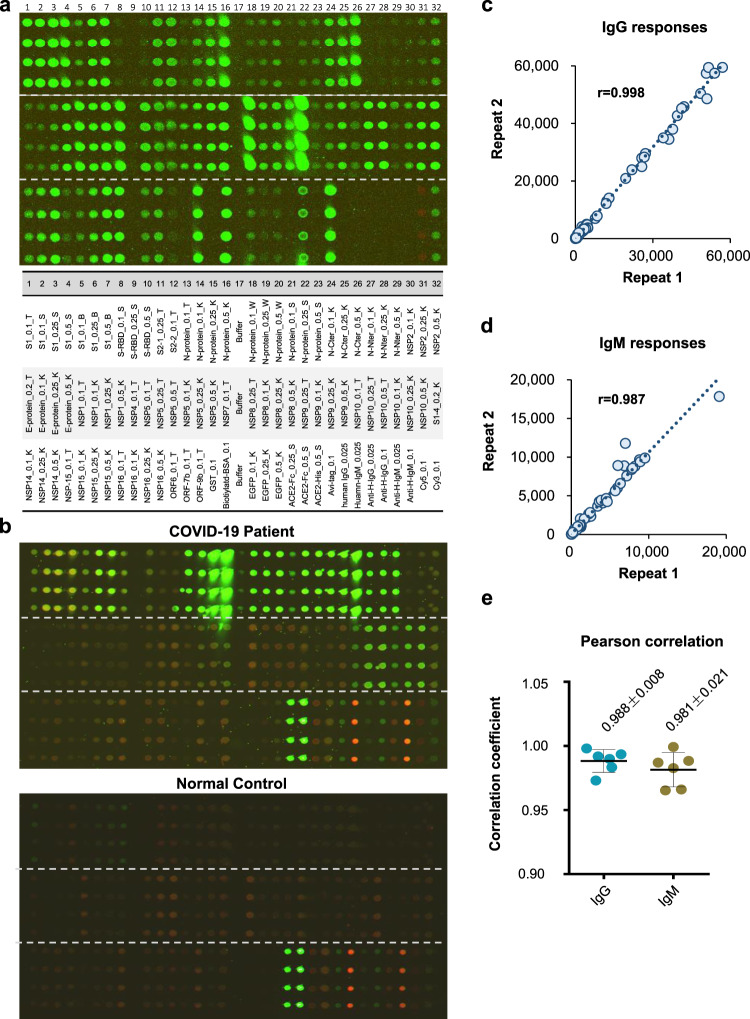
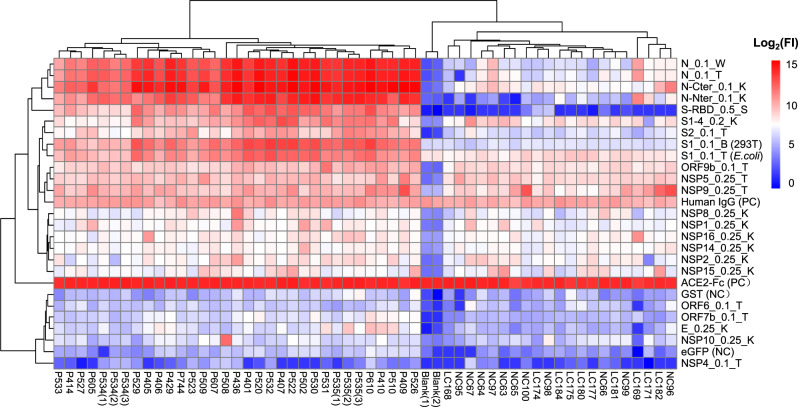
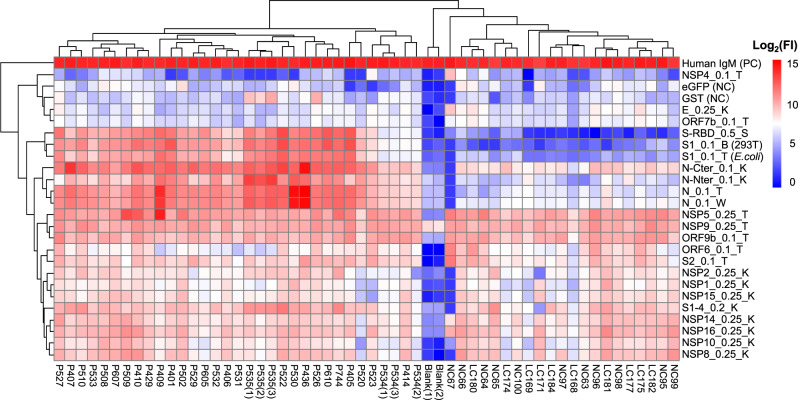
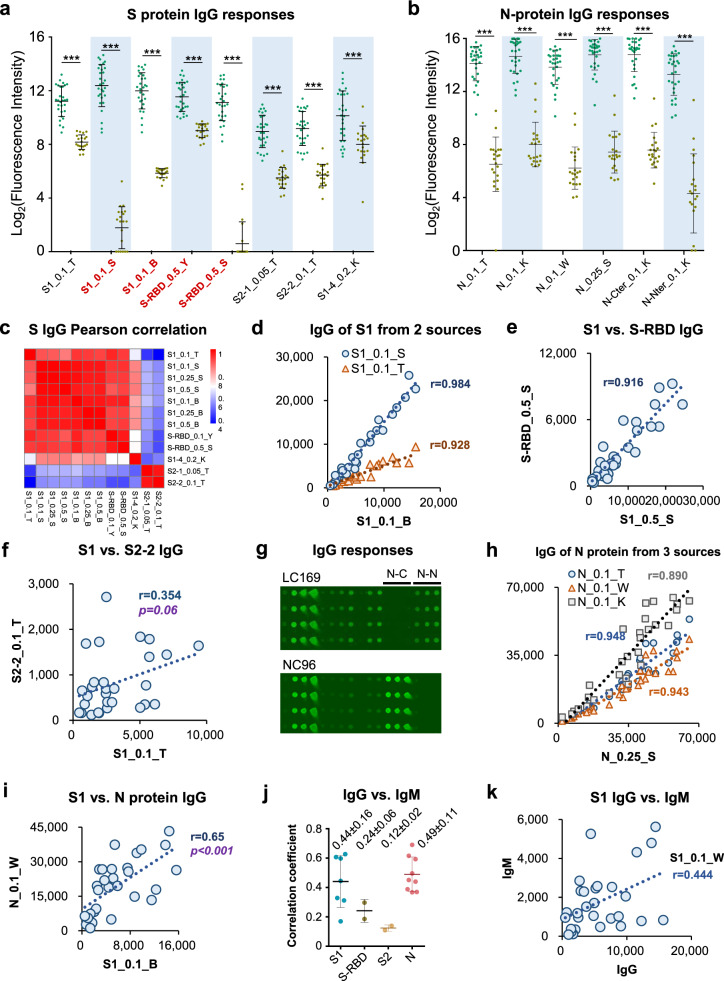
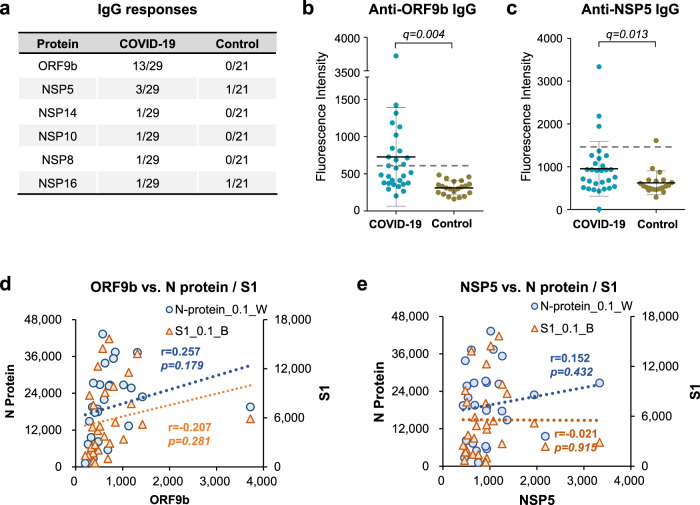
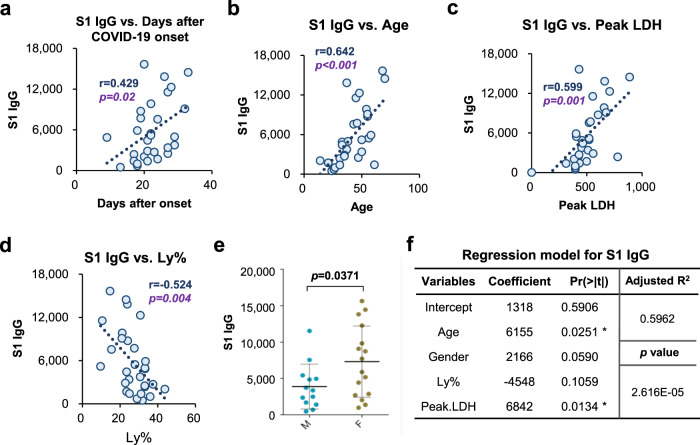
We still know very little about how the human immune system responds to SARS-CoV-2. Here we construct a SARS-CoV-2 proteome microarray containing 18 out of the 28 predicted proteins and apply it to the characterization of the IgG and IgM antibodies responses in the sera from 29 convalescent patients. We find that all these patients had IgG and IgM antibodies that specifically bind SARS-CoV-2 proteins, particularly the N protein and S1 protein. Besides these proteins, significant antibody responses to ORF9b and NSP5 are also identified. We show that the S1 specific IgG signal positively correlates with age and the level of lactate dehydrogenase (LDH) and negatively correlates with lymphocyte percentage. Overall, this study presents a systemic view of the SARS-CoV-2 specific IgG and IgM responses and provides insights to aid the development of effective diagnostic, therapeutic and vaccination strategies.
Overview
The claims and statistics of this paper haven’t been checked yet.
Free: it reads the open-access text and checks the first 5 claims that cite a source we can check. Create a free account to check every claim.
Integrity signals
Registry
Cites
Statistics
Figures
Verification
Claims the paper makes
The claims and statistics of this paper haven’t been checked yet.
Free: it reads the open-access text and checks the first 5 claims that cite a source we can check. Create a free account to check every claim.
Claims other papers make about this one
Each is checked against this paper’s own text: does it say what the citing paper says it does?
In the citing paper
“MS and array-based proteomics serology has screened for potential biomarkers and Abs against infection156,157.”
From A high-stringency blueprint of the human proteome (2020) · cites this paper as [156]
Self-check
Percentages, sums and reported differences re-computed from the paper’s own numbers.
The self-check needs the paper’s full text.
Citations
Cites
A pneumonia outbreak associated with a new coronavirus of probable bat origin
Zhou, P., Yang, X.-L., Wang, X.-G., Hu, B., Zhang, L., Zhang, W., Si, H.-R., Zhu, Y., Li, B., Huang, C.-L., et al. (2020) · Nature · doi:10.1038/s41586-020-2012-7 · Cited by 21,969
Self-citationHoffmann, M., Kleine-Weber, H., Schroeder, S., Krüger, N., Herrler, T., Erichsen, S., Schiergens, T. S., Herrler, G., Wu, N.-H., Nitsche, A., et al. (2020) · Cell · doi:10.1016/j.cell.2020.02.052 · Cited by 20,286
Wang, D., Hu, B., Hu, C., Zhu, F., Liu, X., Zhang, J., Wang, B., Xiang, H., Cheng, Z., Xiong, Y., et al. (2020) · JAMA · doi:10.1001/jama.2020.1585 · Cited by 20,148
Self-citationLa certeza de lo impredecible: Cultura Educación y Sociedad en tiempos de COVID19
Martínez González, M. (2020) · DSPACE System - Metalibrary (University of the Coast) · Cited by 18,463
A new coronavirus associated with human respiratory disease in China
Wu, F., Zhao, S., Yu, B., Chen, Y.-M., Wang, W., Song, Z.-G., Hu, Y., Tao, Z.-W., Tian, J.-H., Pei, Y.-Y., et al. (2020) · Nature · doi:10.1038/s41586-020-2008-3 · Cited by 11,688
Self-citationIn silico prediction of protein-protein interactions in human macrophages
Souiai, O., Guerfali, F., Ben Miled, S., Brun, C., & Benkahla, A. (2014) · BMC Research Notes · doi:10.1186/1756-0500-7-157 · Cited by 10,803
Significance analysis of microarrays applied to the ionizing radiation response
Tusher, V. G., Tibshirani, R., & Chu, G. (2001) · Proceedings of the National Academy of Sciences · doi:10.1073/pnas.091062498 · Cited by 10,568
Cryo-EM structure of the 2019-nCoV spike in the prefusion conformation
Wrapp, D., Wang, N., Corbett, K. S., Goldsmith, J. A., Hsieh, C.-L., Abiona, O., Graham, B. S., & McLellan, J. S. (2020) · Science · doi:10.1126/science.abb2507 · Cited by 8,897
Structure, function and antigenicity of the SARS-CoV-2 spike glycoprotein
Walls, A. C., Park, Y.-J., Tortorici, M. A., Wall, A., McGuire, A. T., & Veesler, D. (2020) · doi:10.1101/2020.02.19.956581 · Cited by 8,586
Structure of the SARS-CoV-2 spike receptor-binding domain bound to the ACE2 receptor
Lan, J., Ge, J., Yu, J., Shan, S., Zhou, H., Fan, S., Zhang, Q., Shi, X., Wang, Q., Zhang, L., et al. (2020) · Nature · doi:10.1038/s41586-020-2180-5 · Cited by 5,983
Cited by
Items 101–200 of 328
On the genetics and immunopathogenesis of COVID-19
Jacob, C. O. (2020) · Clinical Immunology · doi:10.1016/j.clim.2020.108591 · Cited by 42
Rono, N., Merad, A. E., Kibet, J. K., Martincigh, B. S., & Nyamori, V. O. (2021) · Energy Technology · doi:10.1002/ente.202100859 · Cited by 39
Zheng, Y.-X., Wang, L., Kong, W.-S., Chen, H., Wang, X., Meng, Q., Zhang, H., Guo, S., Jiang, H., & Tao, S. (2021) · Acta Biochimica et Biophysica Sinica · doi:10.1093/abbs/gmab088 · Cited by 47
Self-citationSinegubova, M. V., Orlova, N. A., Kovnir, S. V., Dayanova, L. K., & Vorobiev, I. I. (2021) · PLoS ONE · doi:10.1371/journal.pone.0242890 · Cited by 41
“In another microarray study it was found that IgG response toward the RBD domain in the convalescent plasma samples correlates well with the response toward full-length soluble S protein [38].”
BackgroundCorrelates of protection for booster doses of the SARS-CoV-2 vaccine BNT162b2
Hertz, T., Levy, S., Ostrovsky, D. A., Oppenheimer, H., Zismanov, S., Kuzmina, A., Friedman, L. M., Trifkovic, S., Brice, D. C., Chun-Yang, L., et al. (2023) · Nature Communications · doi:10.1038/s41467-023-39816-4 · Cited by 43
Hu, X., Zhou, Z., Li, F., Xiao, Y., Wang, Z., Xu, J., Dong, F., Zheng, H., & Yu, R. (2021) · Heliyon · doi:10.1016/j.heliyon.2021.e06387 · Cited by 38
Magnetofluidic immuno-PCR for point-of-care COVID-19 serological testing
Zhang, P., Chen, L., Hu, J., Trick, A. Y., Chen, F., Hsieh, K., Zhao, Y., Coleman, B., Kruczynski, K. L., Pisanic, T. R., et al. (2021) · Biosensors and Bioelectronics · doi:10.1016/j.bios.2021.113656 · Cited by 43
Ma, M., Shi, D., Li, Y., Hong, W., Lai, D., Xue, J., Jiang, H., Zhang, H., Qi, H., Meng, Q., et al. (2021) · Cell Discovery · doi:10.1038/s41421-021-00309-7 · Cited by 35
Self-citationJia, H., Zhang, A., Yang, Y., Cui, Y., Xu, J., Jiang, H., Tao, S., Zhang, D., Zeng, H., Hou, Z., et al. (2021) · Lab on a Chip · doi:10.1039/d0lc01231a · Cited by 37
Self-citationRole of Multiomics Data to Understand Host–Pathogen Interactions in COVID-19 Pathogenesis
Aggarwal, S., Acharjee, A., Mukherjee, A., Baker, M. S., & Srivastava, S. (2021) · Journal of Proteome Research · doi:10.1021/acs.jproteome.0c00771 · Cited by 38
Huang, Y., Guo, L., Chen, J., Wu, M., Zhang, C., Liu, Z., Li, J., Li, K., Xiong, Z., Wu, Q., et al. (2022) · Frontiers in Medicine · doi:10.3389/fmed.2021.671667 · Cited by 34
Takeshita, M., Nishina, N., Moriyama, S., Takahashi, Y., Uwamino, Y., Nagata, M., Aoki, W., Masaki, K., Ishii, M., Saya, H., et al. (2021) · Virology · doi:10.1016/j.virol.2020.12.020 · Cited by 33
“Antibody titers against various SARS-CoV-2-derived antigens have been measured and reported to have high specificity for the Spike protein and Nucleocapsid protein (N)(Jiang et al., 2020), and many of the antibody tests have been developed using Spike and/or N as antigens.”
Cheng, L., Zhang, X., Chen, Y., Wang, D., Zhang, D., Yan, S., Wang, H., Xiao, M., Liang, T., Li, H., et al. (2021) · Signal Transduction and Targeted Therapy · doi:10.1038/s41392-021-00718-w · Cited by 31
Self-citationNechipurenko, Y. D., Anashkina, A. A., & Matveeva, O. V. (2020) · BIOPHYSICS · doi:10.1134/s0006350920040119 · Cited by 33
Pedersen, J., Koumakpayi, I. H., Babuadze, G. G., Baz, M., Ndiaye, O., Faye, O., Diagne, C. T., Dia, N., Naghibosadat, M., McGeer, A., et al. (2022) · Scientific Reports · doi:10.1038/s41598-022-17241-9 · Cited by 31
Mass spectrometry-based phosphoproteomics in clinical applications
Wu, X., Liu, Y., Iliuk, A. B., & Tao, W. A. (2023) · TrAC Trends in Analytical Chemistry · doi:10.1016/j.trac.2023.117066 · Cited by 30
Antigenic variation of SARS‐CoV‐2 in response to immune pressure
Forni, D., Cagliani, R., Pontremoli, C., Mozzi, A., Pozzoli, U., Clerici, M., & Sironi, M. (2020) · Molecular Ecology · doi:10.1111/mec.15730 · Cited by 33
Đukić, T., Mladenović, M., Stanić-Vučinić, D., Radosavljević, J., Smiljanić, K., Sabljić, L., Dević, M., Ćujić, D., Vasović, T. D., Simović, A., et al. (2021) · Virology · doi:10.1016/j.virol.2021.01.004 · Cited by 31
Wang, C., Wang, C., Qiu, J., Gao, J., Liu, H., Zhang, Y., & Han, L. G. (2021) · Microchimica Acta · doi:10.1007/s00604-021-04896-w · Cited by 30
Morana, M., & Malavasi, L. (2021) · Solar RRL · doi:10.1002/solr.202100550 · Cited by 32
Akter, A., Ahmed, T., Tauheed, I., Akhtar, M., Rahman, S. I. A., Khaton, F., Ahmmed, F., Ferdous, J., Afrad, M. H., Kawser, Z., et al. (2022) · PLoS neglected tropical diseases · doi:10.1371/journal.pntd.0010102 · Cited by 30
“The SARS-CoV-2-specific antibodies, along with SARS-CoV-2-specific CD4+ and CD8+ T cells, have been previously reported to persist beyond 6–8 months [34].”
BackgroundAltered Subgenomic RNA Expression in SARS-CoV-2 B.1.1.7 InfectionsPreprint
Parker, M. D., Lindsey, B., Shah, D. R., Hsu, S., Keeley, A., Partridge, D., Leary, S., Cope, A., State, A., Johnson, K., et al. (2021) · bioRxiv · doi:10.1101/2021.03.02.433156 · Cited by 33
Assessment of Lead‐Free Tin Halide Perovskite Solar Cells Using J–V Hysteresis
Dixit, H., Boro, B., Ghosh, S., Paul, M., Kumar, A., & Singh, T. (2022) · physica status solidi (a) · doi:10.1002/pssa.202100823 · Cited by 29
Identification of immunodominant linear epitopes from SARS-CoV-2 patient plasmaPreprint
Soler, L. F., Daguer, J., Barluenga, S., Cohen, P., Pagano, S., Yerly, S., Kaiser, L., Vuilleumier, N., & Winssinger, N. (2020) · medRxiv · doi:10.1101/2020.06.15.20131391 · Cited by 29
Utility of lateral flow tests in SARS-CoV-2 infection monitorization
Candel, F. J., Viñuela-Prieto, J. M., del Castillo, J. M. G., García, P. B., Saavedra, M. F., Píriz, A. H., Virumbrales, D. J., Canora, J., Sánchez, G. G. D. C., Prieto, R. G., et al. (2020) · Revista Española de Quimioterapia · doi:10.37201/req/052.2020 · Cited by 32
Proteomics Analysis of Serum from COVID-19 Patients
Liu, X., Cao, Y., Fu, H., Wei, J., Chen, J., Hu, J. S., & Liu, B. (2021) · ACS Omega · doi:10.1021/acsomega.1c00616 · Cited by 30
Development and Application of Human Coronavirus Protein Microarray for Specificity Analysis
Du, P.-X., Chou, Y.-Y., Santos, H. M., Keskin, B. B., Hsieh, M.-H., Ho, T., Wang, J., Lin, Y., & Syu, G. (2021) · Analytical Chemistry · doi:10.1021/acs.analchem.1c00614 · Cited by 28
Micro and Nanoscale Technologies for Diagnosis of Viral Infections
Nasrollahi, F., Haghniaz, R., Hosseini, V., Davoodi, E., Mahmoodi, M., Karamikamkar, S., Darabi, M. A., Zhu, Y., Lee, J., Diltemiz, S. E., et al. (2021) · Small · doi:10.1002/smll.202100692 · Cited by 29
Lehmann, A. A., Kirchenbaum, G. A., Zhang, T., Reche, P. A., & Lehmann, P. (2021) · Frontiers in Immunology · doi:10.3389/fimmu.2021.635942 · Cited by 34
Diagnostic Tools for Rapid Screening and Detection of SARS-CoV-2 Infection
Pandey, S. K., Mohanta, G. C., Kumar, V., & Gupta, K. (2022) · Vaccines · doi:10.3390/vaccines10081200 · Cited by 32
“created a proteome microarray using 18 out of 28 predicted proteins [113].”
MethodWang, M., Zhao, Y., Liu, J., & Li, T. (2022) · MedComm – Future Medicine · doi:10.1002/mef2.29 · Cited by 28
“Importantly, the antibody responses to ORF9b were found in patients with the viral infection, suggesting the critical role for ORF9b of SARS‐CoV‐2 in host–virus interactions.(111) TOM70 is responsible for activating antiviral innate immune responses and initiating IFN production.”
BackgroundLong COVID: Molecular Mechanisms and Detection Techniques
Constantinescu‐Bercu, A., Lobiuc, A., Căliman-Sturdza, O. A., Oita, R. C., Iavorschi, M., Pavăl, N.-E., Șoldănescu, I., Dimian, M., & Covașă, M. (2023) · International Journal of Molecular Sciences · doi:10.3390/ijms25010408 · Cited by 32
Hotop, S., Reimering, S., Shekhar, A., Asgari, E., Beutling, U., Dahlke, C., Fathi, A., Khan, F., Lütgehetmann, M., Ballmann, R., et al. (2022) · Emerging Microbes & Infections · doi:10.1080/22221751.2022.2057874 · Cited by 26
“reports studied 29 and 10 patients from China [6,7] and 43 patients from Japan [8] with respect to IgM and IgG responses, and longitudinal responses with three patients from Germany [9].”
BackgroundCOVID-19 and gut immunomodulation
Roy, K., Agarwal, S., Banerjee, R., Paul, M. K., & Purbey, P. K. (2021) · World Journal of Gastroenterology · doi:10.3748/wjg.v27.i46.7925 · Cited by 26
Unheeded SARS-CoV-2 proteins? A deep look into negative-sense RNA
Bartas, M., Volná, A., Beaudoin, C. A., Poulsen, E. T., Červeň, J., Brázda, V., Špunda, V., Blundell, T. L., & Pečínka, P. (2022) · Briefings in Bioinformatics · doi:10.1093/bib/bbac045 · Cited by 33
“It has been established that the SARS-CoV-2 genome codes for at least 26 proteins: 16 non-structural proteins (NSP1-16), 4 structural proteins (surface glycoprotein, membrane glycoprotein, envelope protein, nucleocapsid phosphoprotein), and 6 – 9 accessory factors (designated as open reading frames, ORFs) (Gordon et a…”
Antigenic Cross-Reactivity Between SARS-CoV-2 S1-RBD and Its Receptor ACE2
Lai, Y., Cheng, Y., Chao, C.-H., Chang, Y., Chen, C.-D., Tsai, W., Wang, S., Lin, Y., Chang, C., Chuang, W., et al. (2022) · Frontiers in Immunology · doi:10.3389/fimmu.2022.868724 · Cited by 28
“In addition, higher anti-S antibody titers have been associated with worse clinical outcomes during SARS-CoV-2 infection (46).”
BackgroundRao, V. K. (2021) · Frontiers in Nanotechnology · doi:10.3389/fnano.2020.593619 · Cited by 31
Zaichuk, T. A., Nechipurenko, Y. D., Adzhubey, A. A., Оникиенко, С. Б., Черешнев, В. А., Zainutdinov, S. S., Kochneva, G. V., Sv, N., & Matveeva, O. V. (2020) · Molecular Biology · doi:10.1134/s0026893320060151 · Cited by 26
“In addition, the levels of antibodies correlated significantly with the level of lactate dehydrogenase, the marker of inflammation [34] and acute myocardial injury [35].”
BackgroundPredicting COVID-19 Severity with a Specific Nucleocapsid Antibody plus Disease Risk Factor Score
Sen, S. R., Sanders, E. C., Gabriel, K., Miller, B. M., Isoda, H. M., Salcedo, G. S., Garrido, J. E., Dyer, R. P., Nakajima, R., Jain, A., et al. (2021) · mSphere · doi:10.1128/msphere.00203-21 · Cited by 26
Butt, J., Murugan, R., Hippchen, T., Olberg, S., van Straaten, M., Wardemann, H., Stebbins, C. E., Kräusslich, H., Bartenschlager, R. F. W., Brenner, H., et al. (2021) · Viruses · doi:10.3390/v13050749 · Cited by 22
Bochnia-Bueno, L., de Almeida, S. M., Raboni, S. M., Adamóski, D., Amadeu, L. L. M., Carstensen, S., & Nogueira, M. B. (2021) · Diagnostic Microbiology and Infectious Disease · doi:10.1016/j.diagmicrobio.2021.115597 · Cited by 25
“In contrast, N protein is a more preserved region, including high homology with N protein SARS-CoV (>90%), but both may have false-positive results (Jiang et al., 2020).”
Autoimmune Effect of Antibodies against the SARS-CoV-2 Nucleoprotein
Matyushkina, D. S., Shokina, V., Tikhonova, P., Manuvera, V. A., Shirokov, D. A., Kharlampieva, D. D., Лазарев, В. Н., Varizhuk, A. M., Vedekhina, T., Pavlenko, A. V., et al. (2022) · Viruses · doi:10.3390/v14061141 · Cited by 28
“As has been shown in many studies, antibodies to both structural and non-structural proteins of SARS-CoV-2 virus are detected in the sera of individuals having recovered from COVID-19 [5,6].”
BackgroundResultResearch progress in protein microarrays: Focussing on cancer research
Chen, G., Yang, L., Liu, G., Zhu, Y., Yang, F., Dong, X., Xu, F., Zhu, F., Cao, C., Zhong, D., et al. (2022) · PROTEOMICS - CLINICAL APPLICATIONS · doi:10.1002/prca.202200036 · Cited by 28
Self-citationThe Rapid Coronavirus Antibody Test: Can We Improve Accuracy?
Pavlova, I. P., Nair, S. S., Kyprianou, N., & Tewari, A. (2020) · Frontiers in Medicine · doi:10.3389/fmed.2020.00569 · Cited by 22
Huggett, J. F., Moran‐Gilad, J., & Lee, J. E. (2021) · Current Opinion in Pulmonary Medicine · doi:10.1097/mcp.0000000000000768 · Cited by 22
“Protein microarrays, designed incorporating 18 of the 28 predicted SARS-CoV-2 proteomes to characterise the immunoglobulin (Ig)G and IgM responses from 29 convalescent patients, were all found to possess antibodies against N and S proteins [42].”
Science's Response to CoVID‐19
Long, M. J. C., & Aye, Y. (2021) · ChemMedChem · doi:10.1002/cmdc.202100079 · Cited by 26
“Antibodies have been detected in SARS-CoV-2 patients.(101) ORF9c Not present in SARS-CoV Linked to avoiding the immune response.”
BackgroundRigid monoclonal antibodies improve detection of SARS-CoV-2 nucleocapsid protein
Hodge, C. D., Rosenberg, D. J., Grob, P., Wilamowski, M., Joachimiak, A., Hura, G. L., & Hammel, M. (2021) · mAbs · doi:10.1080/19420862.2021.1905978 · Cited by 26
“However, serological assays cannot achieve diagnosis early in the onset of an infection because seroconversion occurs after 7–10 days in patients.(3,4,10)”
BackgroundDong, H., Pang, S., He, F., Yang, H., Zhu, W., Chen, D., Xi, H., Zhang, J., Hao, Y., & Zhang, C. (2021) · Solar RRL · doi:10.1002/solr.202100097 · Cited by 22
Molecular detection of SARS-CoV-2 being challenged by virus variation and asymptomatic infection
Jiang, C., Li, X., Ge, C., Ding, Y., Zhang, T., Cao, S., Meng, L., & Lu, S. (2021) · Journal of Pharmaceutical Analysis · doi:10.1016/j.jpha.2021.03.006 · Cited by 21
“Antibodies such as IgG and IgM are produced during the infection process with a well-recognized pattern and speci fi c binding to N and S viral proteins [57], which could become the molecular basis of the present SARS-CoV-2 antibody detection.”
Messina, F., Giombini, E., Montaldo, C., Sharma, A., Piacentini, M., Zoccoli, A., Sékaly, R., Locatelli, F., Zumla, A. I., Maeurer, M. J., et al. (2021) · Cell Death and Disease · doi:10.1038/s41419-021-03881-8 · Cited by 26
Quantifying antibody kinetics and RNA shedding during early-phase SARS-CoV-2 infectionPreprint
Borremans, B., Gamble, A., Prager, K. C., Helman, S. K., McClain, A. M., Cox, C., Savage, V. M., & Lloyd‐Smith, J. O. (2020) · medRxiv · doi:10.1101/2020.05.15.20103275 · Cited by 28
Application of omics technology to combat the COVID‐19 pandemic
Yang, J., Yan, Y., & Zhong, W. (2021) · MedComm · doi:10.1002/mco2.90 · Cited by 21
Advances in immunotherapy for COVID-19: A comprehensive review
Masoomikarimi, M., Garmabi, B., Alizadeh, J., Kazemi, E., Jafari, A. A., Mirmoeeni, S., Dargahi, M., Taheri, N., & Jafari, R. (2021) · International Immunopharmacology · doi:10.1016/j.intimp.2021.107409 · Cited by 23
Dromedary camels as a natural source of neutralizing nanobodies against SARS-CoV-2
Chouchane, L., Grivel, J., Farag, E., Pavlovski, I., Maacha, S., Sathappan, A., Al‐Romaihi, H. E., Abuaqel, S. W. J., Ata, M. M. A., Chouchane, A. I., et al. (2021) · JCI Insight · doi:10.1172/jci.insight.145785 · Cited by 21
“22 Protein/peptide microarray Microarray-based serum analysis of anti-SARS-CoV-2 antibodies in the camel serum was performed as previously described (31,34).”
MethodProteome-wide analysis of differentially-expressed SARS-CoV-2 antibodies in early COVID-19 infectionPreprint
Zhang, X., Wu, X., Wang, D., Lu, M., Hou, X., Wang, H., Liang, T., Dai, J., Duan, H., Xu, Y., et al. (2020) · medRxiv · doi:10.1101/2020.04.14.20064535 · Cited by 22
Self-citationAdvances of nanomaterials‐based strategies for fighting against COVID‐19
Zeng, C., Hou, X., Bohmer, M., & Dong, Y. (2021) · View · doi:10.1002/viw.20200180 · Cited by 21
Diagnosis, prevention, and treatment of coronavirus disease: a review
Sarangi, M. K., Padhi, S. K., Dheeman, S., Karn, S. K., Patel, L. D., Yi, D. K., & Nanda, S. S. (2021) · Expert Review of Anti-infective Therapy · doi:10.1080/14787210.2021.1944103 · Cited by 19
Falconi‐Agapito, F., Kerkhof, K., Merino, X., Míchiels, J., Esbroeck, M. V., Bartholomeeusen, K., Talledo, M., & Ariën, K. K. (2021) · Frontiers in Immunology · doi:10.3389/fimmu.2021.686691 · Cited by 24
Zhang, Z., Baranwal, A. K., Sahamir, S. R., Kapil, G., Sanehira, Y., Chen, M., Nishimura, K., Ding, C., Liu, D., Li, H., et al. (2021) · Solar RRL · doi:10.1002/solr.202100633 · Cited by 20
Self-citationParker, M. D., Stewart, H., Shehata, O. M., Lindsey, B. B., Shah, D. R., Hsu, S. N., Keeley, A. J., Partridge, D. G., Leary, S., Cope, A., et al. (2022) · Communications Biology · doi:10.1038/s42003-022-03565-9 · Cited by 54
Distinguishing features of fold‐switching proteins
Chakravarty, D., Schafer, J. W., & Porter, L. L. (2023) · Protein Science · doi:10.1002/pro.4596 · Cited by 20
Zhou, Y., Chen, Z., Liu, S., Liu, S., Liao, Y., Du, A., Dong, Z., Zhang, Y., Chen, X., Tao, S., et al. (2024) · Signal Transduction and Targeted Therapy · doi:10.1038/s41392-024-01874-5 · Cited by 24
Self-citationXu, J., Yang, Y., Hou, Z., Jia, H., & Wang, Y. (2021) · Theranostics · doi:10.7150/thno.58781 · Cited by 20
“Plasmids containing the viral spike (S) region or receptorbinding domain (RBD) of spike (His - SARS-CoV-2-S, His - SARS-CoV-2-S-RBD, respectively) were previously described [9].”
MethodWang, B., & Li, G. (2022) · Chemistry - A European Journal · doi:10.1002/chem.202202062 · Cited by 19
Recombinant Protein Vaccines against Human Betacoronaviruses: Strategies, Approaches and Progress
Kovalenko, A. O., Ryabchevskaya, E. M., Evtushenko, E. A., Nikitin, N. A., & Karpova, O. V. (2023) · International Journal of Molecular Sciences · doi:10.3390/ijms24021701 · Cited by 21
“(2020) also reported the detection of antibodies specific to the accessory ORF9b protein and non-structural Nsp5 protein [11].”
BackgroundCOVID-19 Diagnostic Strategies Part II: Protein-Based Technologies
Shaffaf, T., & Ghafar‐Zadeh, E. (2021) · Bioengineering · doi:10.3390/bioengineering8050054 · Cited by 20
Jing, L., Wu, X., Krist, M. P., Hsiang, T.-Y., Campbell, V. L., McClurkan, C. L., Favors, S. M., Hemingway, L. A., Godornes, C., Tong, D. Q., et al. (2022) · JCI Insight · doi:10.1172/jci.insight.158126 · Cited by 22
Single‐source evaporation of CH 3 NH 3 SnI 3 for Pb‐free perovskite solar cells
Choi, W., Lee, S., Jeon, B.-C., & Moon, T. (2022) · International Journal of Energy Research · doi:10.1002/er.7761 · Cited by 17
Systematic profiling of SARS-CoV-2-specific IgG epitopes at amino acid resolution
Qi, H., Ma, M., Jiang, H., Ling, J., Chen, L., Zhang, H., Lai, D., Li, Y., Guo, Z., Hu, C., et al. (2021) · Cellular and Molecular Immunology · doi:10.1038/s41423-021-00654-3 · Cited by 18
Self-citationXue, J.-B., Lai, D., Jiang, H., Qi, H., Guo, S., Zhu, Y., Xu, H. Y., Zhou, J., & Tao, S. (2022) · Cell Discovery · doi:10.1038/s41421-022-00380-8 · Cited by 16
Self-citationJin, X., Sun, X. J., Chai, Y., Bai, Y., Li, Y., Hao, T., Qi, J., Song, H., Wong, C. C. L., & Gao, G. F. (2022) · Science China Life Sciences · doi:10.1007/s11427-022-2168-8 · Cited by 19
“In addition, ORF9b monomer interacts with the human mitochondrial outer membrane receptor Tom70, leading to the modulation of interferon signaling and reduction in mitochondrial import efficiency (Brandherm et al., 2021; Gordon et al., 2020a; Jiang et al., 2020b).”
BackgroundInfluentialSelf-citationHigh SARS-CoV-2 seroprevalence in Lagos, Nigeria with robust antibody and cellular immune responses
Akanmu, S. A., Herrera, B. B., Chaplin, B., Ogunsola, S., Osibogun, A. O., Onawoga, F., John‐Olabode, S., Akase, I. E., Nwosu, A. O., Hamel, D. J., et al. (2023) · Journal of Clinical Virology Plus · doi:10.1016/j.jcvp.2023.100156 · Cited by 14
Codd, A. S., Hanna, S. J., Compeer, E. B., Richter, F. C., Pring, E. J., Gea-Mallorquí, E., Borsa, M., Moon, O. R., Scourfield, D. O., Ahern, D., et al. (2021) · Oxford Open Immunology · doi:10.1093/oxfimm/iqab016 · Cited by 19
Electrolyte regulation methods for improving the cycle life of zinc metal anodes
Liu, L., Hu, Z., Wang, X., Wang, X., Zheng, Q., Han, C., Xu, X., Liu, H., Dou, S. X., & Li, W. (2024) · Journal of Materials Chemistry A · doi:10.1039/d4ta05590j · Cited by 14
How can we interpret SARS-CoV-2 antibody test results?
Føns, S., & Krogfelt, K. A. (2020) · Pathogens and Disease · doi:10.1093/femspd/ftaa069 · Cited by 16
“A few research groups have developed peptide or protein microarrays, which could help establish the level of crossreactivity between antigens and which antigens elicit the strongest response (Jiang et al. 2020).”
BackgroundSu, W.-Y., Du, P.-X., Santos, H. M., Ho, T.-S., Keskin, B. B., Pau, C. H., Yang, A.-M., Chou, Y.-Y., Shih, H.-C., & Syu, G. (2022) · Analytical Chemistry · doi:10.1021/acs.analchem.1c05567 · Cited by 14
Persistence of IgG COVID-19 antibodies: A longitudinal analysis
Carvalho, Á. D., Henriques, A. R., Queirós, P., Rodrigues, J., Mendonça, N., Rodrigues, A. M., Canhão, H. M., de Sousa, G., Antunes, F., & Guimarães, M. (2023) · Frontiers in Public Health · doi:10.3389/fpubh.2022.1069898 · Cited by 16
“Age was previously associated with higher IgG antibody levels (18, 21, 22).”
BackgroundMurrell, I., Forde, D., Zelek, W. M., Tyson, L., Chichester, L., Palmer, N., Jones, R., Morgan, B. P., & Moore, C. (2021) · PLoS ONE · doi:10.1371/journal.pone.0245382 · Cited by 12
“Immune responses to coronaviruses include the generation of antibodies against viral structural proteins, with nucleocapsid protein (NP) and spike glycoprotein (S) being the dominant antigens and principal targets for SARS-CoV-2 serological assays [12, 13].”
BackgroundCurrent advances in antibody‐based serum biomarker studies: From protein microarray to phage display
Qi, H., Xue, J., Lai, D., Li, A., & Tao, S. (2022) · PROTEOMICS - CLINICAL APPLICATIONS · doi:10.1002/prca.202100098 · Cited by 15
“Subsequently, more than 3000 sera from COVID-19 patients, people immunized with the inactivated virus vaccine, and related controls were analyzed on a SARS-CoV-2 proteome microarray.”
BackgroundMethodInfluentialSelf-citationPrinciples Learned from the International Race to Develop a Safe and Effective COVID-19 Vaccine
Thames, A. H., Wolniak, K. L., Stupp, S. I., & Jewett, M. C. (2020) · ACS Central Science · doi:10.1021/acscentsci.0c00644 · Cited by 15
Gu, H., & Yuan, G. (2020) · bioRxiv (Cold Spring Harbor Laboratory) · doi:10.1101/2020.08.18.256735 · Cited by 15
“Microarray technologies on COVID-19 have been performed in several studies (7, 8).”
MethodCross-reactive antibody responses against SARS-CoV-2 and seasonal common cold coronavirusesPreprint
Klompus, S., Leviatan, S., Vogl, T. J., Kalka, I. N., Godneva, A., Shinar, E., Weinberger, A., & Segal, E. (2020) · medRxiv · doi:10.1101/2020.09.01.20182220 · Cited by 16
Iida, S., Arashiro, T., & Suzuki, T. (2021) · JMA Journal · doi:10.31662/jmaj.2021-0041 · Cited by 18
Ho, T., Du, P.-X., Su, W.-Y., Santos, H. M., Lin, Y., Chou, Y.-Y., Keskin, B. B., Pau, C. H., & Syu, G. (2022) · Biosensors and Bioelectronics · doi:10.1016/j.bios.2022.114067 · Cited by 15
Chazal, N. (2021) · Frontiers in Microbiology · doi:10.3389/fmicb.2021.682603 · Cited by 21
Ogunrinola, O. O., Kanmodi, R., & Ogunrinola, O. A. (2021) · Food Frontiers · doi:10.1002/fft2.107 · Cited by 18
SARS-CoV-2 integral membrane proteins shape the serological responses of patients with COVID-19
Martin, S., Heslan, C., Jégou, G., Eriksson, L. A., Gallo, M. L., Thibault, V., Chevet, É., Godey, F., & Avril, T. (2021) · iScience · doi:10.1016/j.isci.2021.103185 · Cited by 21
Ilinykh, P. A., Periasamy, S., Huang, K., Kuzmina, N. A., Ramanathan, P., Meyer, M. N., Mire, C. E., Kuzmin, I. V., Bharaj, P., Endsley, J. R., et al. (2022) · npj Vaccines · doi:10.1038/s41541-022-00471-3 · Cited by 16
Mubarak, A., Almutairi, S. M., Al-Dhabbah, A. D., Aldabas, S. Y., Bhat, R., Alqoufail, M. M., Abdel-Maksoud, M. A., Almanaa, T. N., Farrag, M. A., & Alturaiki, W. (2022) · Infection and Drug Resistance · doi:10.2147/idr.s369769 · Cited by 16
“During SARS-CoV-2 infection, the kinetics of the immune response, its magnitude, and its connection to disease severity have all been thoroughly studied.(40) The immune response and the level of IgG titer is reduced in the asymptomatic,(39) whereas the level of Ab titer is different between the patients regardless of…”
BackgroundNovel chimeric proteins mimicking SARS-CoV-2 spike epitopes with broad inhibitory activity
Cano‐Muñoz, M., Polo-Megías, D., Cámara-Artigas, A., Gavira, J. A., López-Rodríguez, M. J., Laumond, G., Schmidt, S., Demiselle, J., Bahram, S., Moog, C., et al. (2022) · International Journal of Biological Macromolecules · doi:10.1016/j.ijbiomac.2022.10.031 · Cited by 14
“Antibody responses produced by SARS-CoV-2 infection are mostly induced against the nucleocapsid protein and the spike protein and, within this, against the S1 subunit [30,31].”
Mou, L., Zhang, Y., Feng, Y., Hong, H., Xia, Y., & Jiang, X. (2022) · Analytical Chemistry · doi:10.1021/acs.analchem.1c04383 · Cited by 14
Pérez‐Gómez, A., Gasca‐Capote, C., Vitallé, J., Ostos, F. J., Serna‐Gallego, A., Trujillo‐Rodríguez, M., Muñoz‐Muela, E., Giráldez‐Pérez, T., Praena‐Segovia, J., Navarro-Amuedo, M. D., et al. (2022) · Clinical and Translational Medicine · doi:10.1002/ctm2.802 · Cited by 12
“Opposite to these findings, a higher magnitude and broader overall T-cell response (10,11) and higher antibody levels against SARS-CoV-2 (12) have anti-intuitively been associated, according to the original antigenic sin theory (13), with poor disease outcome.”
Glycosaminoglycan microarrays for studying glycosaminoglycan–protein systems
Chittum, J. E., Thompson, A., & Desai, U. R. (2024) · Carbohydrate Polymers · doi:10.1016/j.carbpol.2024.122106 · Cited by 14
Wang, Q., Ning, J., Chen, Y., Li, B., Shi, L., He, T., Zhang, F., Chen, X., Zhai, A., & Wu, C. (2022) · Frontiers in Microbiology · doi:10.3389/fmicb.2022.1008420 · Cited by 15
Lei, Q., Yu, C., Li, Y., Hou, H., Xu, Z., Yao, Z., Zhang, Y., Lai, D., Ndzouboukou, J. B., Zhang, B., et al. (2021) · Journal of Advanced Research · doi:10.1016/j.jare.2021.11.014 · Cited by 13
Self-citationDurability of the humoral immune response in recovered COVID-19 patients
Mahallawi, W. H., Alzahrani, M. E., & Alahmadey, Z. Z. (2021) · Saudi Journal of Biological Sciences · doi:10.1016/j.sjbs.2021.02.011 · Cited by 11
Immunoglobulin G2 Antibody as a Potential Target for COVID-19 Vaccine
Henok, A., Kiros, M., Belachew, Y., Wubet, S., & Hailemichael, W. (2020) · ImmunoTargets and Therapy · doi:10.2147/itt.s274746 · Cited by 12
COVID-19 rhapsody: Rage towards advanced diagnostics and therapeutic strategy
Sinha, K., Chaudhury, S. S., Sharma, P., & Ruidas, B. (2021) · Journal of Pharmaceutical Analysis · doi:10.1016/j.jpha.2021.06.004 · Cited by 11
“In addition, immunoglobulin pro fi ling of IgG and IgM in response to SARS-CoV-2, resulting in a SARS-CoV-2 proteome microarray, has been constructed with approximately 18 of the 28 predicted proteins [44].”
Al-Hamamy, H. R. (2022) · Research Journal of Pharmacy and Technology · doi:10.52711/0974-360x.2022.00076 · Cited by 11
AlMalki, F. A., Albukhaty, S., Alyamani, A. A., Khalaf, M. N., & Thomas, S. (2022) · Environmental Science and Pollution Research · doi:10.1007/s11356-022-18868-x · Cited by 16
Metadata
- Authors
- Jiang, H.-W., Li, Y., Zhang, H.-N., Wang, W., Yang, X., Qi, H., Li, H., Men, D., Zhou, J., & Tao, S.-C.
- Affiliations
- Shanghai Jiao Tong University (CN)
- The Fourth People's Hospital (CN)
- Chinese Academy of Sciences (CN)
- Corresponding author
- Men, Dong
- Zhou, Jie
- Tao, Sheng-ce
- Venue
- Nature Communications
- Published
- 2020-07-14
- Volume
- 11
- Issue
- 1
- Pages
- 3581-3581
- ISSN
- 2041-1723 (ISSN-L)
- PMC
- PMC7360742
- OpenAlex
- W3045737895
- Semantic Scholar
- 9b4aa18913d116f859a652d7ad3cdbb71cd8ba8b
- Cited by
- 329
- References
- 54
- Citations by year
- 2026: 3 · 2025: 7 · 2024: 16 · 2023: 36 · 2022: 71 · 2021: 129 · 2020: 66
- FWCI
- 9.85
- Type
- journal article
- Language
- en
- Open access
- gold
- doi.org
- Licence
- cc-by
- creativecommons.org/licenses/by/4.0 (tdm)
- creativecommons.org/licenses/by/4.0 (vor)
- Locations
- Nature Communications (publishedVersion, cc-by)
- medRxiv (acceptedVersion, cc-by-nc-nd)
- PubMed Central (publishedVersion, cc-by)
- PubMed (publishedVersion)
- RePEc: Research Papers in Economics (submittedVersion)
- DOAJ (DOAJ: Directory of Open Access Journals) (submittedVersion, cc-by-sa)
- Funders
- National Natural Science Foundation of China (31900112)
- Foshan Scientific and Technological Key Project for COVID-19
- National Key Research and Development Program of China Grant
- Topics
- Health Sciences › Medicine › Infectious Diseases › SARS-CoV-2 and COVID-19 Research
- Health Sciences › Medicine › Infectious Diseases › SARS-CoV-2 detection and testing
- Life Sciences › Biochemistry, Genetics and Molecular Biology › Molecular Biology › Advanced Biosensing Techniques and Applications
- Keywords
- SARS-CoV-2, COVID-19 pandemic, proteome microarray, antibody response, IgG, IgM, convalescent patients, S1 protein, nucleocapsid protein, ORF9b, NSP5, age, lactate dehydrogenase, lymphocyte percentage, humoral immunity
- MeSH terms
- Betacoronavirus, COVID-19, SARS-CoV-2, Coronavirus Nucleocapsid Proteins, Coronavirus 3C Proteases, Adult, Antibodies, Viral, Enzyme-Linked Immunosorbent Assay, Female, Humans, Immunoglobulin G, Immunoglobulin M, L-Lactate Dehydrogenase, Male, Middle Aged, Phosphoproteins, Pneumonia, Viral, Viral Nonstructural Proteins, Coronavirus Infections, Nucleocapsid Proteins, Proteome, Protein Array Analysis, Pandemics, Spike Glycoprotein, Coronavirus
About these checks
Registry, retraction, Cites and statistics results are computed, not judged, with one exception: a printed reference that no index lists is read once by a model before it counts as a citation error. Claims are extracted by a model and kept only when their quote appears verbatim in the text; each cited source is then checked, with a model’s help, for whether it says what the claim relies on. Those verdicts can be wrong — read the claim’s quote and the cited source before relying on one.
Statistics and arithmetic are recomputed, not judged.
Confidence bands are shown only for fields calibrated on our annotated test set. None is calibrated yet, so no band is shown.
What counts as a claim ›How we measure confidence ›How we check this ›
Are you an author, or do you see a problem with this page? Request a review
Data sources
Bibliographic data: Semantic Scholar, OpenAlex, Crossref.
Contains information from the Semantic Scholar Academic Graph Datasets, made available under the ODC Attribution License (ODC-BY 1.0).
Semantic Scholar’s data is described in: Kinney, R., et al. (2023). The Semantic Scholar Open Data Platform. arXiv:2301.10140.
