

SARS-CoV-2 proteome microarray for global profiling of COVID-19 specific IgG and IgM responses
Open accessPublished version of a preprint
The DOI matches its Crossref record; 56 of the 56 references it cites were found in a registry or an index.
Abstract
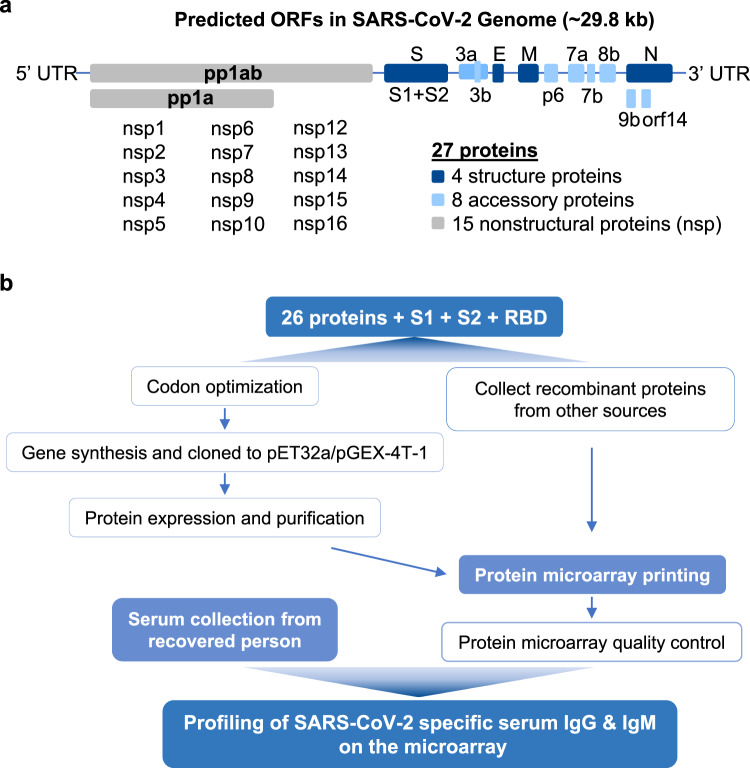
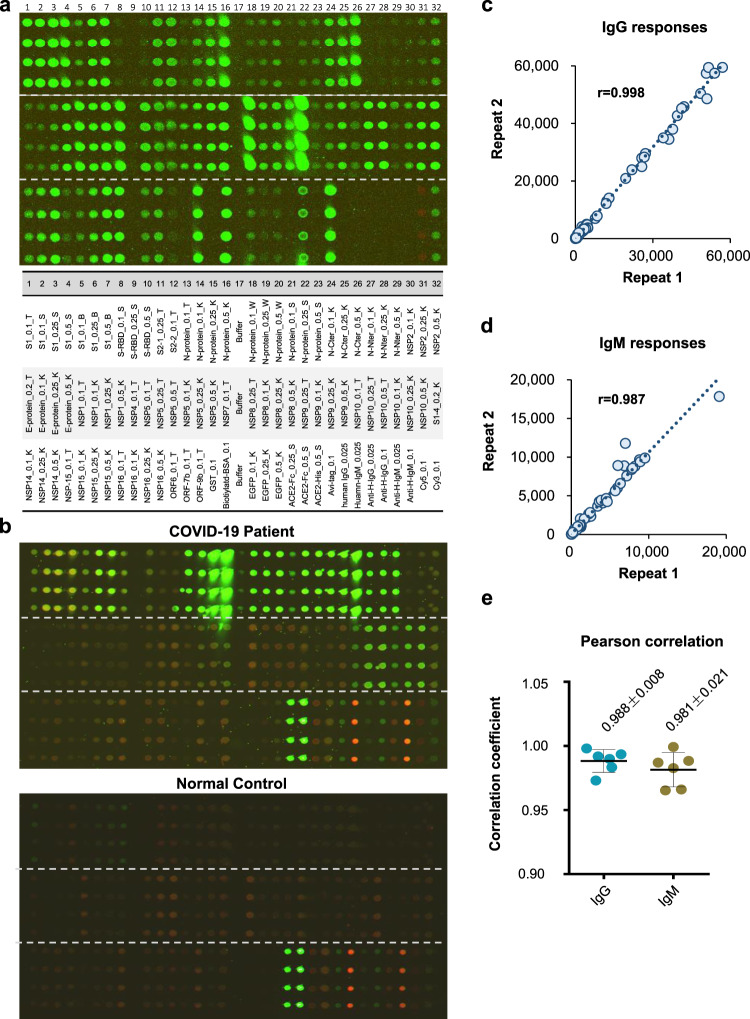
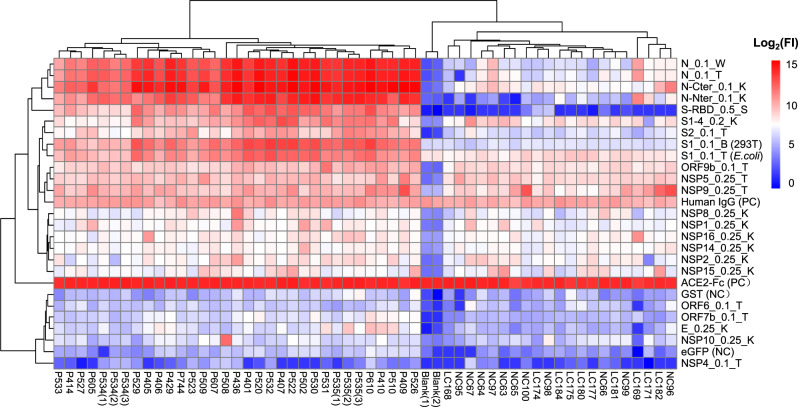
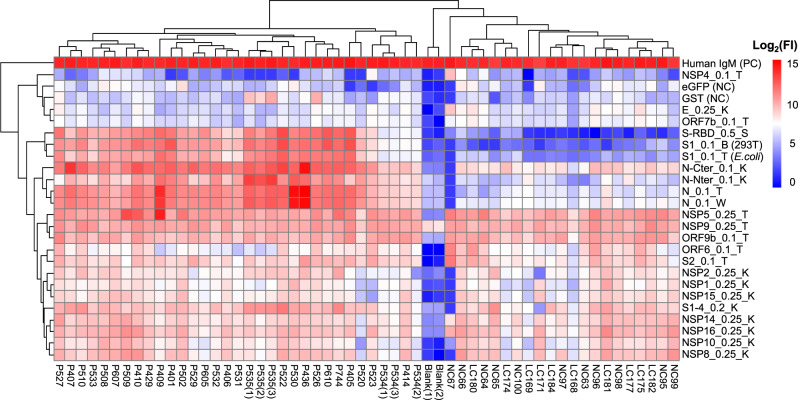
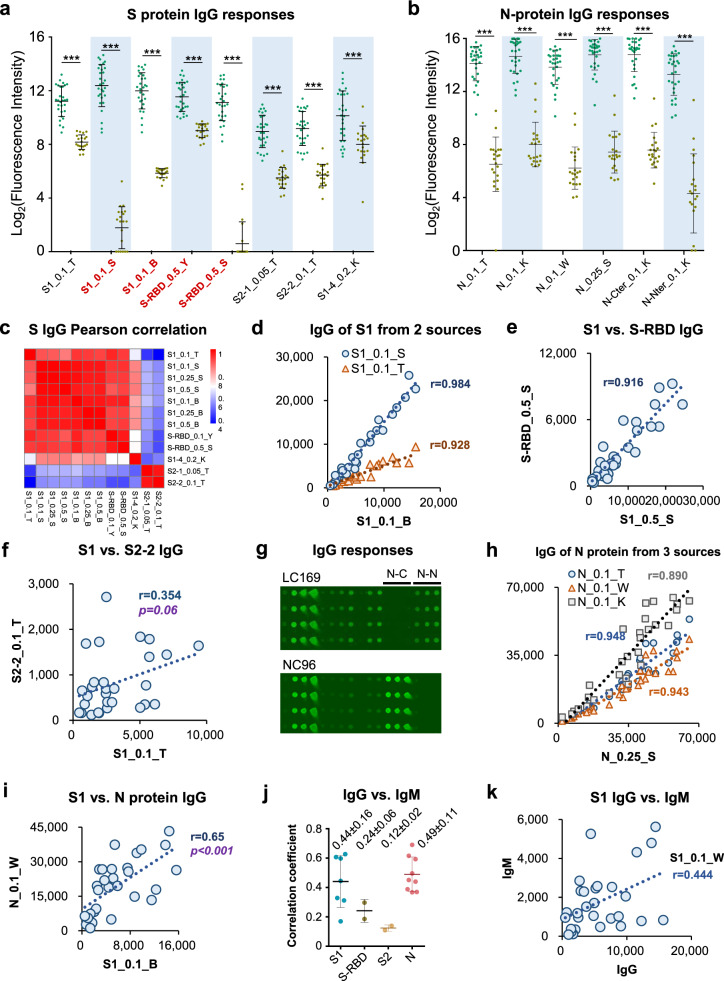
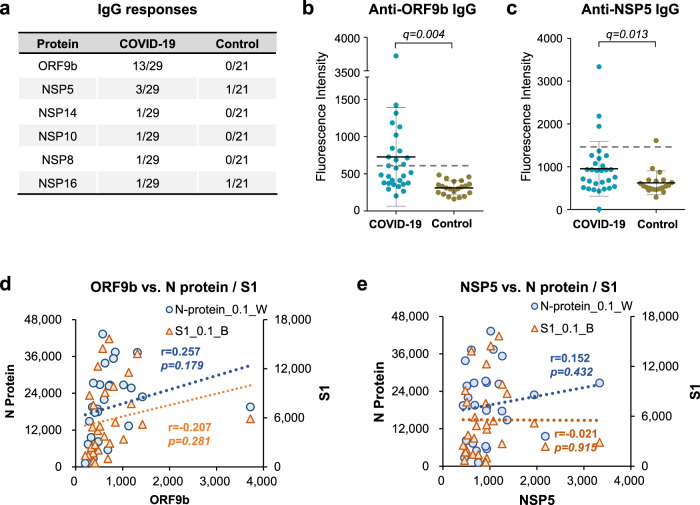
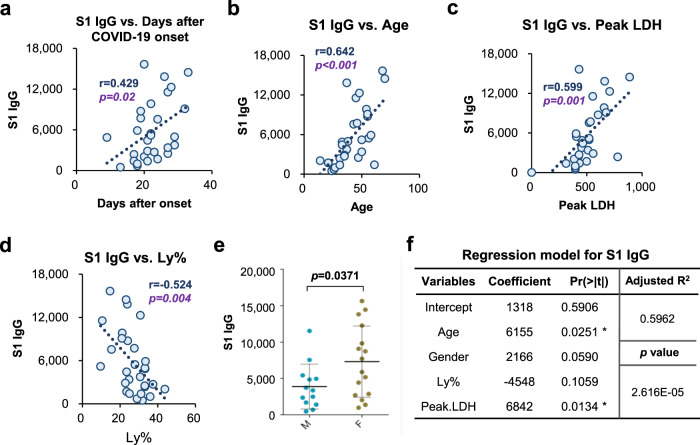
We still know very little about how the human immune system responds to SARS-CoV-2. Here we construct a SARS-CoV-2 proteome microarray containing 18 out of the 28 predicted proteins and apply it to the characterization of the IgG and IgM antibodies responses in the sera from 29 convalescent patients. We find that all these patients had IgG and IgM antibodies that specifically bind SARS-CoV-2 proteins, particularly the N protein and S1 protein. Besides these proteins, significant antibody responses to ORF9b and NSP5 are also identified. We show that the S1 specific IgG signal positively correlates with age and the level of lactate dehydrogenase (LDH) and negatively correlates with lymphocyte percentage. Overall, this study presents a systemic view of the SARS-CoV-2 specific IgG and IgM responses and provides insights to aid the development of effective diagnostic, therapeutic and vaccination strategies.
Overview
The claims and statistics of this paper haven’t been checked yet.
Free: it reads the open-access text and checks the first 5 claims that cite a source we can check. Create a free account to check every claim.
Integrity signals
Registry
Cites
Statistics
Figures
Verification
Claims the paper makes
The claims and statistics of this paper haven’t been checked yet.
Free: it reads the open-access text and checks the first 5 claims that cite a source we can check. Create a free account to check every claim.
Claims other papers make about this one
Each is checked against this paper’s own text: does it say what the citing paper says it does?
In the citing paper
“MS and array-based proteomics serology has screened for potential biomarkers and Abs against infection156,157.”
From A high-stringency blueprint of the human proteome (2020) · cites this paper as [156]
Self-check
Percentages, sums and reported differences re-computed from the paper’s own numbers.
The self-check needs the paper’s full text.
Citations
Cites
A pneumonia outbreak associated with a new coronavirus of probable bat origin
Zhou, P., Yang, X.-L., Wang, X.-G., Hu, B., Zhang, L., Zhang, W., Si, H.-R., Zhu, Y., Li, B., Huang, C.-L., et al. (2020) · Nature · doi:10.1038/s41586-020-2012-7 · Cited by 21,969
Self-citationHoffmann, M., Kleine-Weber, H., Schroeder, S., Krüger, N., Herrler, T., Erichsen, S., Schiergens, T. S., Herrler, G., Wu, N.-H., Nitsche, A., et al. (2020) · Cell · doi:10.1016/j.cell.2020.02.052 · Cited by 20,286
Wang, D., Hu, B., Hu, C., Zhu, F., Liu, X., Zhang, J., Wang, B., Xiang, H., Cheng, Z., Xiong, Y., et al. (2020) · JAMA · doi:10.1001/jama.2020.1585 · Cited by 20,148
Self-citationLa certeza de lo impredecible: Cultura Educación y Sociedad en tiempos de COVID19
Martínez González, M. (2020) · DSPACE System - Metalibrary (University of the Coast) · Cited by 18,463
A new coronavirus associated with human respiratory disease in China
Wu, F., Zhao, S., Yu, B., Chen, Y.-M., Wang, W., Song, Z.-G., Hu, Y., Tao, Z.-W., Tian, J.-H., Pei, Y.-Y., et al. (2020) · Nature · doi:10.1038/s41586-020-2008-3 · Cited by 11,688
Self-citationIn silico prediction of protein-protein interactions in human macrophages
Souiai, O., Guerfali, F., Ben Miled, S., Brun, C., & Benkahla, A. (2014) · BMC Research Notes · doi:10.1186/1756-0500-7-157 · Cited by 10,803
Significance analysis of microarrays applied to the ionizing radiation response
Tusher, V. G., Tibshirani, R., & Chu, G. (2001) · Proceedings of the National Academy of Sciences · doi:10.1073/pnas.091062498 · Cited by 10,568
Cryo-EM structure of the 2019-nCoV spike in the prefusion conformation
Wrapp, D., Wang, N., Corbett, K. S., Goldsmith, J. A., Hsieh, C.-L., Abiona, O., Graham, B. S., & McLellan, J. S. (2020) · Science · doi:10.1126/science.abb2507 · Cited by 8,897
Structure, function and antigenicity of the SARS-CoV-2 spike glycoprotein
Walls, A. C., Park, Y.-J., Tortorici, M. A., Wall, A., McGuire, A. T., & Veesler, D. (2020) · doi:10.1101/2020.02.19.956581 · Cited by 8,586
Structure of the SARS-CoV-2 spike receptor-binding domain bound to the ACE2 receptor
Lan, J., Ge, J., Yu, J., Shan, S., Zhou, H., Fan, S., Zhang, Q., Shi, X., Wang, Q., Zhang, L., et al. (2020) · Nature · doi:10.1038/s41586-020-2180-5 · Cited by 5,983
Cited by
Items 201–300 of 328
Acharjee, A., Ray, A., Salkar, A., Bihani, S., Tuckley, C., Shastri, J. S., Agrawal, S. R., Duttagupta, S. P., & Srivastava, S. (2023) · Viruses · doi:10.3390/v15010248 · Cited by 11
Yu, Y., Fang, B., Yang, X., & Zheng, Y. (2023) · Frontiers in Pharmacology · doi:10.3389/fphar.2023.1185076 · Cited by 11
Self-citationZhou, Y., Yuan, S., To, K. K., Xu, X., Li, H., Cai, J., Luo, C., Hung, I. F., Chan, K., Yuen, K., et al. (2022) · Chemical Science · doi:10.1039/d1sc05852e · Cited by 11
Self-citationImmunological aspects of SARS-CoV-2 coronavirus damage
Minnullin, T. I., Stepanov, A. V., Chepur, S. V., Ivchenko, E. V., Fateev, I. V., Kryukov, E. V., & Vn, T. (2021) · Bulletin of the Russian Military Medical Academy · doi:10.17816/brmma72051 · Cited by 9
COVID-ONE-hi: The One-Stop Database for COVID-19-Specific Humoral Immunity and Clinical Parameters
Xu, Z., Li, Y., Lei, Q., Huang, L., Lai, D., Guo, S., Jiang, H., Hou, H., Zheng, Y.-X., Wang, X., et al. (2021) · Genomics Proteomics & Bioinformatics · doi:10.1016/j.gpb.2021.09.006 · Cited by 9
“To understand how the human immune system responds to SARS-CoV-2, we constructed a SARS-CoV-2 proteome microarray containing 18 of the 28 predicted proteins and applied it to characterize IgG and IgM antibodies for the sera of 29 convalescent patients [7].”
Self-citationSARS-CoV-2 antibodies in the Southern Region of New Zealand, 2020
Craigie, A., McGregor, R., Whitcombe, A. L., Carlton, L. H., Harte, D., Sutherland, M., Parry, M. F., Smit, E., McAuliffe, G. N., Ussher, J. E., et al. (2021) · Pathology · doi:10.1016/j.pathol.2021.04.001 · Cited by 9
Nückel, J., Planatscher, E., Mohr, A., Deichl, K., Mijočević, H., Feuerherd, M., Wolff, L. S., Erber, J., Schneider, J., Quante, M., et al. (2022) · Frontiers in Immunology · doi:10.3389/fimmu.2022.889836 · Cited by 9
Svetlova, J. I., Gustin, D., Manuvera, V. A., Shirokov, D. A., Shokina, V., Prusakov, K. A., Aldarov, K. G., Kharlampieva, D. D., Matyushkina, D. S., Bespyatykh, J., et al. (2022) · International Journal of Molecular Sciences · doi:10.3390/ijms232113220 · Cited by 9
“Consistent with previous reports [17], the highest accuracy (97%) was achieved using the N-based classifier.”
ResultN’Guessan, A., Kailasam, S., Mostefai, F., Poujol, R., Grenier, J., Ismailova, N., Contini, P., Palma, R. D., Haber, C., Stadler, V., et al. (2023) · iScience · doi:10.1016/j.isci.2023.107394 · Cited by 9
Preliminary Analysis of B- and T-Cell Responses to SARS-CoV-2
Zhang, L.-X., Miao, S.-Y., Qin, Z.-H., Wu, J.-P., Chen, H.-Y., Sun, H.-B., Xie, Y. F., Du, Y.-Q., & Shen, J. (2020) · Molecular Diagnosis & Therapy · doi:10.1007/s40291-020-00486-3 · Cited by 9
Quantification of anti-SARS-CoV-2 antibodies in human serum with LC-QTOF-MS
de Jong, K. A. M., Rosing, H., Vermunt, M. A. C., Huitema, A. D. R., & Beijnen, J. H. (2021) · Journal of Pharmaceutical and Biomedical Analysis · doi:10.1016/j.jpba.2021.114319 · Cited by 8
“However unlikely, patients may obtain immunity without developing antibodies against S1-protein [10], and this assay will not detect antibodies against SARS-CoV-2 parts other than S1-protein.”
InfluentialVolpe, G. J., Vessoni, S. C. S., Soares, L. B., Almeida, M. A. A. L. D. S., Braga, P. E., de Moraes, G. R., Ferreira, N. N., Garibaldi, P. M. M., Kashima, S. H., da Fonseca, B. A. L., et al. (2023) · IJID Regions · doi:10.1016/j.ijregi.2023.04.003 · Cited by 9
“The nucleocapsid protein is a less variable portion, but tests may lead to false-positive results [26] .”
Sinegubova, M. V., Orlova, N. A., Kovnir, S. V., Dayanova, L. K., & Vorobiev, I. I. (2020) · bioRxiv (Cold Spring Harbor Laboratory) · doi:10.1101/2020.11.04.368092 · Cited by 8
Lalwani, P. J., Salgado, B. B., Filho, I. V. P., da Silva, D. S. S., de Morais, T. B. D. N., Jordão, M. F., Barbosa, A. R. C., Cordeiro, I. B., Neto, J. N. D. S., de Assunção, E. N., et al. (2021) · SSRN Electronic Journal · doi:10.2139/ssrn.3774177 · Cited by 12
Lab-in-a-Tip: a multiplex immunoassay platform based on a self-assembled barcoded protein array
He, Y., Jiang, M., Liang, Z., Luo, Z., Qin, J., Shen, Y., Gu, Y., Ma, X., Wang, H., Li, X., et al. (2025) · Nature Communications · doi:10.1038/s41467-025-59390-1 · Cited by 7
Lv, H., Tsang, O. T., So, R. T. Y., Wang, Y., Yuan, M., Liu, H., Yip, G. K., Teo, Q. W., Lin, Y., Liang, W., et al. (2021) · European Journal of Immunology · doi:10.1002/eji.202149234 · Cited by 6
Antibody landscapes of SARS-CoV-2 can reveal novel vaccine and diagnostic targets
Hachim, A., Kavian, N., & Valkenburg, S. A. (2021) · Current Opinion in Virology · doi:10.1016/j.coviro.2021.08.006 · Cited by 8
Bhuiyan, T. R., Banna, H. A., Kaisar, M. H., Karmakar, P. C., Hakim, A., Akter, A., Ahmed, T., Tauheed, I., Islam, S., Hasnat, M. A., et al. (2022) · Frontiers in Immunology · doi:10.3389/fimmu.2022.929849 · Cited by 8
“It has been reported earlier that the SARS-CoV-2-specific antibodies along with SARS-CoV-2specific helper and cytotoxic cells persist for approximately 6– 8 months (46).”
BackgroundCelikgil, A., Massimi, A. B., Nakouzi, A. S., Herrera, N. G., Morano, N. C., Lee, J. H., Yoon, H., Garforth, S., & Almo, S. C. (2023) · PLoS ONE · doi:10.1371/journal.pone.0276829 · Cited by 7
Immunology of SARS-CoV-2 infection and vaccination
Lin, B., Cheng, L., Zhang, J., Yang, M. X., Zhang, Y., Liu, J., & Qin, X. (2023) · Clinica Chimica Acta · doi:10.1016/j.cca.2023.117390 · Cited by 8
“High titers of S-specific antibodies have been reported in patients with COVID-19 [38, 39].”
Noval, M. G., Kaczmarek, M. E., Koide, A., Rodriguez-Rodriguez, B. A., Louie, P., Tada, T., Hattori, T., Panchenko, T., Romero, L. A., Teng, K. W., et al. (2020) · bioRxiv (Cold Spring Harbor Laboratory) · doi:10.1101/2020.08.15.252353 · Cited by 7
SARS-CoV2 Envelop Proteins Reshape the Serological Responses of COVID-19 PatientsPreprint
Martin, S., Heslan, C., Jégou, G., Eriksson, L. A., Gallo, M. L., Thibault, V., Chevet, É., Godey, F., & Avril, T. (2021) · bioRxiv (Cold Spring Harbor Laboratory) · doi:10.1101/2021.02.15.431237 · Cited by 7
Ou, F., Lai, D., Kuang, X., He, P., Li, Y., Jiang, H., Liu, W., Wei, H., Gu, H., Ji, Y., et al. (2022) · Biosensors and Bioelectronics · doi:10.1016/j.bios.2022.114710 · Cited by 6
“These results were also verified by a protein microarray method(Jiang et al., 2020) and commercial ELISA kits, which showed almost the same detection time point as that of the flow cytometry assay (Fig.”
MethodResultSelf-citationWilliams, D. M., Hornsby, H. R., Shehata, O. M., Brown, R. L., Gallis, M., Meardon, N., Newman, T., Plowright, M., Zafred, D., Shun-Shion, A. S., et al. (2023) · iScience · doi:10.1016/j.isci.2023.107056 · Cited by 6
“21 36 At present, it is unclear why we fail to detect immunoreactivity to these proteins when they are expressed in cells.”
BackgroundEffect of polyphenols against complications of COVID-19: current evidence and potential efficacy
Vajdi, M., Karimi, A., Hassanizadeh, S., Farhangi, M. A., Bagherniya, M., Askari, G., Roufogalis, B. D., Davies, N. M., & Sahebkar, A. (2024) · Pharmacological Reports · doi:10.1007/s43440-024-00585-6 · Cited by 6
Utility of Available Methods for Diagnosing SARS-CoV-2 in Clinical Samples
Shirvani, A., Azimi, L., Ghanaie, R. M., Alebouyeh, M., Fallah, F., Tabatabaei, S. R., Rajabnejad, M., Armin, S., Fahimzad, S. A., Shirvani, F., et al. (2020) · Archives of Pediatric Infectious Diseases · doi:10.5812/pedinfect.103677 · Cited by 9
Humoral immune responses in hospitalized COVID-19 patients
Mahallawi, W. H. (2021) · Saudi Journal of Biological Sciences · doi:10.1016/j.sjbs.2021.04.032 · Cited by 6
Kryukov, E. V., Салухов, В. В., Николаевич, К. Б., Ovchinnikov, D. V., Andreychuk, Y. V., Denisov, D. G., Bogomolov, А. B., Анатольевич, Х. М., Rudakov, Y. V., Садовников, П. С., et al. (2022) · Meditsinskiy sovet = Medical Council · doi:10.21518/2079-701x-2022-16-4-51-65 · Cited by 6
Aging mitochondria in the context of SARS-CoV-2: exploring interactions and implications
Delpino, M. V., & Quarleri, J. F. (2024) · Frontiers in Aging · doi:10.3389/fragi.2024.1442323 · Cited by 5
New perspective towards therapeutic regimen against SARS-CoV-2 infection
Srivastava, V., & Ahmad, A. (2021) · Journal of Infection and Public Health · doi:10.1016/j.jiph.2021.05.009 · Cited by 6
Kumar, A., Ladha, A., Choudhury, A., Ikbal, A. M. A., Bhattacharjee, B., Das, T., Gupta, G., Sharma, C., Sarbajna, A., Mandal, S. C., et al. (2022) · Expert Review of Vaccines · doi:10.1080/14760584.2022.2081156 · Cited by 6
Naked-Eye Readable Microarray for Rapid Profiling of Antibodies against Multiple SARS-CoV-2 Variants
Nan, J., Chen, Y., Sun, W., Yue, Y., Che, Y., Shan, H., Xu, W., Liu, B., Zhu, S., Zhang, J., et al. (2023) · Nano Letters · doi:10.1021/acs.nanolett.3c03139 · Cited by 5
Identification of long noncoding RNAs with machine learning methods: a review
Xu, L., Jiao, S., Zhang, D., Song, W. C., Zhang, H., & Gao, B. (2021) · Briefings in Functional Genomics · doi:10.1093/bfgp/elab017 · Cited by 5
Self-citationLai, D., Xue, J., He, P., Jiang, H., Yang, L., Ma, M., Hong, W., Yu, J., Wei, H., & Tao, S. (2022) · PROTEOMICS · doi:10.1002/pmic.202200306 · Cited by 4
“Themicroarraywas used for serum profiling as described previously with minor modifications [31, 32].”
MethodSelf-citationChen, L., Pang, P., Qi, H., Yan, K., Ren, Y., Ma, M., Cao, R., Li, H., Hu, C., Li, Y., et al. (2022) · Frontiers in Immunology · doi:10.3389/fimmu.2022.770982 · Cited by 6
“The evidence obtained from the microarray with truncated S proteins as antigens supported our previous conclusion that the intensity of immune responses against S1 was significantly higher than that against S2 and RBD domains of the S protein (35).”
MethodResultSelf-citationPhage Immunoprecipitation and Sequencing—a Versatile Technique for Mapping the Antibody Reactome
Sundell, G. N., & Tao, S. (2024) · Molecular & Cellular Proteomics · doi:10.1016/j.mcpro.2024.100831 · Cited by 8
“Protein microarrays can detect interactions based on structural and linear epitopes (15, 16), while peptide micro-arrays can detect antibody – antigen interactions at the linear epitope level (17).”
BackgroundSelf-citationZhang, H., Bhakta, D., Saha, A., Peddireddy, S. P., Bao, S., Li, L., Handali, S., Secor, W. E., Fraga, L. A. D. O., Fairley, J. K., et al. (2025) · Lab on a Chip · doi:10.1039/d5lc00042d · Cited by 4
Self-citationLi, S. C., & Kabeer, M. H. (2022) · Pharmaceutics · doi:10.3390/pharmaceutics14122653 · Cited by 4
“SARS-CoV-2 patient-specific IgG and IgM are derived from S1- and N-proteins, ORF9b and NSP5 [49].”
BackgroundCarzaniga, T., Casiraghi, L., Nava, G., Zanchetta, G., Inzani, T., Chiari, M., Bollati, V., Epis, S., Bandi, C., Lai, A., et al. (2024) · Frontiers in Immunology · doi:10.3389/fimmu.2024.1323406 · Cited by 7
Panahibakhsh, M., Faramarz, A., Doroudi, T., Sadeghi, M., Kolivand, P., Alipour, F., & Gorji, A. (2022) · Infection · doi:10.1007/s15010-022-01774-2 · Cited by 4
Rise of the SARS-CoV-2 Variants: can proteomics be the silver bullet?
Acharjee, A., Kingsly, J. S., Kamat, M., Kurlawala, V., Chakraborty, A., Vyas, P., Vaishnav, R., & Srivastava, S. (2022) · Expert Review of Proteomics · doi:10.1080/14789450.2022.2085564 · Cited by 4
Wang, S., Xu, J., Luo, P., Yang, L., Song, S., Tan, X., Chen, Q., Xia, H., Zhang, S., Ma, P., et al. (2020) · doi:10.21203/rs.3.rs-110981/v1 · Cited by 4
Self-citationPagotto, A., Uliana, F., Cavedon, E., Nordio, G., Pierangelini, A., Acquasaliente, L., Macchia, M. L., Bellanda, M., Gatto, B., Silvestro, G. D., et al. (2025) · Communications Biology · doi:10.1038/s42003-025-08570-2 · Cited by 4
Vidal, L., Figueira-Mansur, J., Jurgilas, P. B., Argondizzo, A., Pestana, C. P., Martins, F. O., da Silva, H. C., Miguez, M., Loureiro, B. O., Marques, C., et al. (2023) · Protein Expression and Purification · doi:10.1016/j.pep.2023.106263 · Cited by 3
“Studies with SARS-CoV and SARS-CoV-2 indicate N and S1 domains from S protein as dominant antigens that induce IgM and IgG response [23,24].”
Filimonova, I. N., Innocenti, G., & Vogl, T. J. (2023) · Methods in molecular biology · doi:10.1007/978-1-0716-3453-0_7 · Cited by 3
SARS-CoV-2-specific antibody response characteristics in COVID-19 patients of different ages
Lu, L., Yu, S., Liu, M., Li, Y., Lei, Q., Lin, M., Lai, D., Guo, S., Jiang, H., Hou, H., et al. (2022) · Acta Biochimica et Biophysica Sinica · doi:10.3724/abbs.2022014 · Cited by 3
“[11] The detailed protocol of peptide preparation was described by Li et al.”
BackgroundMethodSelf-citationImmunological tests: Essential and supportive tools in the fight against COVID-19
Zhang, D., Kukkar, D., & Kim, K. (2023) · TrAC Trends in Analytical Chemistry · doi:10.1016/j.trac.2023.117291 · Cited by 4
Electrochemical Biosensors for SARS-CoV-2 Detection
Andrianova, M. S., Panova, O. S., Titov, A. A., Komarova, N. V., & Kuznetsov, A. E. (2023) · Moscow University Chemistry Bulletin · doi:10.3103/s0027131423050048 · Cited by 3
Caobi, A., & Saeed, M. (2024) · Current Opinion in Microbiology · doi:10.1016/j.mib.2024.102454 · Cited by 5
Arinola, G. O. (2021) · European Journal of Clinical and Experimental Medicine · doi:10.15584/ejcem.2021.1.1 · Cited by 4
Experimental Identification of Immuno- dominant B-cell Epitopes from SARS-CoV-2
Soler, L. F., Daguer, J., Barluenga, S., & Winssinger, N. (2021) · CHIMIA International Journal for Chemistry · doi:10.2533/chimia.2021.276 · Cited by 3
Kwiecińska-Piróg, J., Przekwas, J., Kraszewska, Z., Sękowska, A., Brodzka, S., Wiktorczyk-Kapischke, N., Grudlewska‐Buda, K., Wałecka-Zacharska, E., Zacharski, M., Mańkowska‐Cyl, A., et al. (2021) · Vaccines · doi:10.3390/vaccines9121402 · Cited by 3
Application of Biosensors in the Detection of SARS-CoV-2
Zhu, Z., Liang, A., Haotian, R., Tang, S., Liu, M., Xie, B., & Luo, A. (2023) · 化学学报 · doi:10.6023/a22120483 · Cited by 4
Manouchehri, N., Steinman, L., & Stüve, O. (2020) · Neurology Neuroimmunology & Neuroinflammation · doi:10.1212/nxi.0000000000000935 · Cited by 3
Tan, H. W., Xu, Y., & Lau, A. T. Y. (2021) · Expert Review of Proteomics · doi:10.1080/14789450.2021.2010549 · Cited by 3
Zhu, A., Liu, M., Li, Y., Lei, Q., Wu, Q., Lin, M., Lai, D., Lu, L., Yu, S., Guo, S., et al. (2022) · Journal of Clinical Medicine · doi:10.3390/jcm11195974 · Cited by 3
“SARS-CoV-2 Proteome Microarray Construction The SARS-CoV-2 proteome microarray contained the 21 SARS-CoV-2 proteins [20] and the 197 S-protein peptides [21], and was generated in the 14-subarray format on PATH slides (Grace Bio-Labs, Bend, OR, USA) using a Super Marathon printer (Arrayjet, Roslin, UK).”
MethodSelf-citationRNAi Technology and Investigation on Possible Vaccines to Combat SARS-CoV-2 Infection
Talukder, P., & Chanda, S. (2021) · Applied Biochemistry and Biotechnology · doi:10.1007/s12010-021-03548-2 · Cited by 4
Guo, S., Ru, Y., Zhang, H., Xue, J., Liu, H., Men, D., Cui, Z., Shen, C., Tian, H. W., Ma, C., et al. (2025) · Journal of Virology · doi:10.1128/jvi.00478-25 · Cited by 5
Self-citationHodgkins, C., Buckton, L. K., Walker, G. J., Crossett, B., Cordwell, S. J., Horvath, A. R., & Rawlinson, W. D. (2022) · Scientific Reports · doi:10.1038/s41598-022-16250-y · Cited by 2
Breesam, A. A., & Noraldeen, M. Y. (2022) · NTU Journal of Pure Sciences · doi:10.56286/ntujps.v1i4.309 · Cited by 2
Xu, W., Chen, H., Li, Y., Cheng, H., Deng, Y., Zheng, P., Li, J., Yang, L., He, S., Ma, D., et al. (2023) · Analytical Chemistry · doi:10.1021/acs.analchem.2c03637 · Cited by 2
Self-citationAbbasian, M. H., Rahimian, K., Mahmanzar, M., Bayat, S., Kuehu, D. L., Sisakht, M. M., Moradi, B., & Deng, Y. (2024) · Viruses · doi:10.3390/v16081331 · Cited by 2
Malekzadeh, F., Kermaninezhad, S., Nikpoor, A. R., Vahidipour, M. A., & Asl, A. S. (2020) · Disease and Diagnosis · doi:10.34172/ddj.2020.07 · Cited by 2
Pulido, J., García-Durán, M., Fernández-Antonio, R., Galán, C., López, L., Vela, C., Venteo, Á., Rueda, P., & Rivas, L. A. (2021) · Journal of Veterinary Diagnostic Investigation · doi:10.1177/10406387211057859 · Cited by 2
Microarrays: A Road Map to Uncover Host Pathogen Interactions
Chugh, H., Dhawan, G., Chandra, R., & Dhawan, U. (2021) · Springer eBooks · doi:10.1007/978-981-16-0691-5_8 · Cited by 2
Pathology and Immunology of COVID-19
Iida, S., & Suzuki, T. (2020) · Uirusu · doi:10.2222/jsv.70.167 · Cited by 2
Fish, C. S., Owiti, P., Begnel, E. R., Itell, H. L., Ojee, E., Adhiambo, J., Ogweno, V. W., Holland, L. A., Richardson, B. A., Khan, A. K., et al. (2022) · Journal of Medical Virology · doi:10.1002/jmv.28221 · Cited by 1
Berre, M. L., Paulovčáková, T., Veríssimo, C. D. M., Doyle, S., Dalton, J. P., Masterson, C. H., Martínez, E. R., Walsh, L., Gormley, C., Laffey, J. G., et al. (2023) · PLoS ONE · doi:10.1371/journal.pone.0283537 · Cited by 2
“…IgG binding to RBD and S proteins expressed in the human-derived Expi293F compared to those expressed in insect cells [50] while Jiang, et al ., suggested that the use of mammalian cell-expressed S1 protein in a multiplex assay format had higher specificity compared to E . coli - expressed S1 [25].”
Liu, Y., ZHAO, L., Wang, L., Li, Y., Wang, L., Yu, B., Hu, D., Weng, H., Guo, J., Yang, J., et al. (2022) · Heliyon · doi:10.1016/j.heliyon.2023.e18093 · Cited by 2
Self-citationQi, H., Ma, M., Lai, D., Li, Y., Zhang, F., & Tao, S. (2020) · Acta Biochimica et Biophysica Sinica · doi:10.1093/abbs/gmaa152 · Cited by 2
“According to the protocol described previously [10], a set of 36 COVID-19 serum and 36 control serum are profiled by protein microarray.”
BackgroundMethodResultInfluentialSelf-citationShahriar, A., Mahmud, A. R., Ahmed, H. M., Rahman, N., & Khatun, M. C. (2021) · Austin Journal of Microbiology · doi:10.26420/austinjmicrobiol.2021.1028 · Cited by 3
“SARS-CoV-2 proteome microarray technology showed that IgG immunoglobulin response against N-protein, S1 protein, ORF9b, and other SARS-CoV-2 proteins were found from recovered individuals [4,27].”
BackgroundAnalysis of Whole-Genome Sequencing of SARS-CoV-2 Reveals Recurrent Mutations among Iranian PatientsPreprint
Abbasian, M. H., Mahdavi, B., Mahmanzar, M., Tokhanbigli, S., Sisakht, M. M., Moradi, B., & Rahimian, K. (2022) · medRxiv · doi:10.1101/2022.06.20.22276625 · Cited by 2
Correlates of protection for booster doses of the BNT162b2 vaccinePreprint
Hertz, T., Levy, S., Ostrovsky, D. A., Oppenheimer, H., Zismanov, S., Kuzmina, A., Friedman, L. M., Trifkovic, S., Brice, D. C., Chun-Yang, L., et al. (2022) · medRxiv · doi:10.1101/2022.07.16.22277626 · Cited by 2
Utilizing Protein–Peptide Hybrid Microarray for Time-Resolved Diagnosis and Prognosis of COVID-19
Zheng, P., Liao, B., Yang, J., Cheng, H., Cheng, Z. J., Huang, H., Luo, W., Sun, Y., Zhu, Q., Deng, Y., et al. (2023) · Microorganisms · doi:10.3390/microorganisms11102436 · Cited by 1
Self-citationElectroanalysis and Sensors for Biomedical and Clinical Applications
Parameswari, R., Babujanarthanam, R., Yogesh, T., Iswarya, S. J., & Ganesamoorthy, R. (2024) · Springer eBooks · doi:10.1007/978-981-97-2527-4_4 · Cited by 1
Meng, W., Duan, J., Guo, C., Xu, J., Zheng, S., & Wu, H. (2026) · Journal of Neuro-Oncology · doi:10.1007/s11060-025-05410-5 · Cited by 1
“ECM–receptor interactions and coagulation pathway disturbances may further modu - late cell signaling and immune infiltration in the TME [19 , 20].”
COVID-19’da Antikor Bağımlı İmmünpataloji, Monoklonal Antikorlar ve Mutasyonlar
Çakal, B. (2020) · Experimed · doi:10.26650/experimed.2020.0010 · Cited by 5
Role of Machine Learning in Handling the COVID-19 Pandemic
Aziz, S., Ilyas, Q. M., Mehmood, A., & Ahmad, A. (2022) · Advances in logistics, operations, and management science book series · doi:10.4018/978-1-7998-9201-4.ch011 · Cited by 1
Song, Z., Luo, Q., Wan, L., Zhu, Q. K., Liu, R., Yin, X., Lu, X., Wei, L., Xiang, Z., & Zou, Y. (2023) · Vaccines · doi:10.3390/vaccines11020442 · Cited by 1
“Since COVID-19 patients have strong antibody responses to both S and N antigen proteins, there was a significant correlation between anti-RBD IgG and anti-NP IgG levels in the serum of patients [23,24].”
BackgroundZheng, P., Ma, J., Yang, J., Liao, B., Cheng, Z. J., Xue, M., Li, S., Fang, Y., Lin, R., Zhang, G., et al. (2023) · Frontiers in Immunology · doi:10.3389/fimmu.2023.1079960 · Cited by 1
“Nucleocapsid antibodies were found to be biomarkers of natural exposure to SARS-CoV-2, which can be used to distinguish those previously exposed to the virus in vaccinated populations (8).”
BackgroundELECTROCHEMICAL BIOSENSORS FOR SARS-COV-2 DETECTION
Andrianova, M. S., Panova, O. S., Titov, A. A., Komarova, N. V., & Kuznetsov, A. E. (2023) · Lomonosov chemistry journal · doi:10.55959/msu0579-9384-2-2023-64-5-407-440 · Cited by 1
SARS-COV-2 ORF9b Dysregulate Fibrinogen and Albumin Genes in a Liver Cell Line
Jalili, S., Hashemi, S. M. A., & Sarvari, J. (2024) · Reports of Biochemistry and Molecular Biology · doi:10.61186/rbmb.13.1.51 · Cited by 1
Mitsunaga, T., Seki, Y., Yoshioka, M., Suzuki, I., Akita, K., Mashiko, S., Uzura, M., Takeda, S., Sekine, A., & Mashiko, K. (2021) · JMA Journal · doi:10.31662/jmaj.2020-0084 · Cited by 1
“, Korea); and (7) Kit G: Nadal COVID-19 IgG/IgM Rapid Test (BioServUK Ltd.”
BackgroundXenobiotics: The Impact of SARS-CoV-2 on the Evolutionary Development of Human
Владыко, А. С. (2020) · Open Access Journal of Waste Management & Xenobiotics · doi:10.23880/oajwx-16000153 · Cited by 1
"Tips to Boost Innate Immune System to Fight Viruses with a Focus on COVID-19: A Short Review"
Mahmood, M. M. (2022) · Open Access Journal of Biomedical Science · doi:10.38125/oajbs.000421 · Cited by 1
“Above mentioned food activates T cytotoxic (CD8+T cells), which is the key factor for killing viruses (for example SARS-CoV-2, the causative agent of COVID-19) in addition to the neutralizing antibodies (immunoglobulins, IgM and IgG) which are secreted by plasma cells differentiated from stimulated B cells [48-52].”
BackgroundMass Antibody Detection: Can It be An Avenger for Infectivity War against COVID-19Preprint
Ejazi, S. A., Ghosh, S., & Ali, N. (2020) · Preprints.org · doi:10.20944/preprints202006.0211.v1 · Cited by 1
Science’s Response to COVID-19Preprint
Aye, Y., & Long, M. J. C. (2021) · Preprints.org · doi:10.20944/preprints202103.0416.v1 · Cited by 1
Current Diagnostic Approach for COVID ‐19
Thakur, N., & Sood, R. (2021) · Wiley eBooks · doi:10.1002/9783527832521.ch1 · Cited by 2
Xu, Z., Li, Y., Lei, Q., Huang, L., Lai, D., Guo, S., Jiang, H., Hou, H., Zheng, Y.-X., Wang, X., et al. (2021) · bioRxiv (Cold Spring Harbor Laboratory) · doi:10.1101/2021.07.29.454261 · Cited by 1
“389 [7] Jiang HW, Li Y, Zhang HN, Wang W, Yang X, Qi H, et al.”
BackgroundMethodInfluentialSelf-citationWilliams, D. M., Hornsby, H. R., Shehata, O. M., Brown, R. L., Zafred, D., Shun-Shion, A. S., Hodder, A. J., Bliss, D., Metcalfe, A., Edgar, J. R., et al. (2021) · medRxiv · doi:10.1101/2021.10.14.21264873 · Cited by 1
Dendritic cell targeting virus-like particle delivers mRNA for in vivo immunizationPreprint
Yin, D., Ling, S., Tian, X., Li, Y., Xu, Z., Jiang, H., Zhang, X., Wang, X., Shi, Y. Y., Wang, Q., et al. (2021) · Research Square · doi:10.21203/rs.3.rs-1096471/v1 · Cited by 1
Self-citationN’Guessan, A., Kailasam, S., Mostefai, F., Poujol, R., Grenier, J., Contini, P., Palma, R. D., Haber, C., Stadler, V., Bourque, G., et al. (2022) · bioRxiv (Cold Spring Harbor Laboratory) · doi:10.1101/2022.06.01.494373 · Cited by 1
Chen, Z. (2020) · Current Opinion in HIV and AIDS · doi:10.1097/coh.0000000000000651
Homologous and heterologous serological response to the N-terminal domain of SARS-CoV-2Preprint
Lv, H., Tsang, O., So, R. T. Y., Wang, Y.-Q., Yuan, M., Liu, H., Yip, G. K., Teo, Q., Lin, Y., Liang, W.-W., et al. (2021) · bioRxiv · doi:10.1101/2021.02.17.431722
N. Umar, B., Adamu, J., T. Ahmad, M., H. Ahmad, K., Orakpoghenor, O., S. Aliyu, B., Nuhu, M., & Sada, A. (2021) · Novel Research in Microbiology Journal · doi:10.21608/nrmj.2021.164547
Diagnostically fighting the coronavirus disease 2019 pandemic: A general perspective
Devegowda, D., Ramesh, P. S., & Arun, B. (2021) · International Journal of Health & Allied Sciences · doi:10.4103/ijhas.ijhas_217_20
Бычков, С. (2007) · id = 595, shortTitle = ORT, editionType = 2, dateBegin = 1994-08-01 00:00:00.0, officeEncoding = Cp1251, officeStatus = 1, loadType = 1, langId = Russian
Quantitative plasma proteome profiling of COVID-19 patients with mild and moderate symptoms
Jiang, H., & Tao, S. (2021) · EBioMedicine · doi:10.1016/j.ebiom.2021.103773
Self-citation
Metadata
- Authors
- Jiang, H.-W., Li, Y., Zhang, H.-N., Wang, W., Yang, X., Qi, H., Li, H., Men, D., Zhou, J., & Tao, S.-C.
- Affiliations
- Shanghai Jiao Tong University (CN)
- The Fourth People's Hospital (CN)
- Chinese Academy of Sciences (CN)
- Corresponding author
- Men, Dong
- Zhou, Jie
- Tao, Sheng-ce
- Venue
- Nature Communications
- Published
- 2020-07-14
- Volume
- 11
- Issue
- 1
- Pages
- 3581-3581
- ISSN
- 2041-1723 (ISSN-L)
- PMC
- PMC7360742
- OpenAlex
- W3045737895
- Semantic Scholar
- 9b4aa18913d116f859a652d7ad3cdbb71cd8ba8b
- Cited by
- 329
- References
- 54
- Citations by year
- 2026: 3 · 2025: 7 · 2024: 16 · 2023: 36 · 2022: 71 · 2021: 129 · 2020: 66
- FWCI
- 9.85
- Type
- journal article
- Language
- en
- Open access
- gold
- doi.org
- Licence
- cc-by
- creativecommons.org/licenses/by/4.0 (tdm)
- creativecommons.org/licenses/by/4.0 (vor)
- Locations
- Nature Communications (publishedVersion, cc-by)
- medRxiv (acceptedVersion, cc-by-nc-nd)
- PubMed Central (publishedVersion, cc-by)
- PubMed (publishedVersion)
- RePEc: Research Papers in Economics (submittedVersion)
- DOAJ (DOAJ: Directory of Open Access Journals) (submittedVersion, cc-by-sa)
- Funders
- National Natural Science Foundation of China (31900112)
- Foshan Scientific and Technological Key Project for COVID-19
- National Key Research and Development Program of China Grant
- Topics
- Health Sciences › Medicine › Infectious Diseases › SARS-CoV-2 and COVID-19 Research
- Health Sciences › Medicine › Infectious Diseases › SARS-CoV-2 detection and testing
- Life Sciences › Biochemistry, Genetics and Molecular Biology › Molecular Biology › Advanced Biosensing Techniques and Applications
- Keywords
- SARS-CoV-2, COVID-19 pandemic, proteome microarray, antibody response, IgG, IgM, convalescent patients, S1 protein, nucleocapsid protein, ORF9b, NSP5, age, lactate dehydrogenase, lymphocyte percentage, humoral immunity
- MeSH terms
- Betacoronavirus, COVID-19, SARS-CoV-2, Coronavirus Nucleocapsid Proteins, Coronavirus 3C Proteases, Adult, Antibodies, Viral, Enzyme-Linked Immunosorbent Assay, Female, Humans, Immunoglobulin G, Immunoglobulin M, L-Lactate Dehydrogenase, Male, Middle Aged, Phosphoproteins, Pneumonia, Viral, Viral Nonstructural Proteins, Coronavirus Infections, Nucleocapsid Proteins, Proteome, Protein Array Analysis, Pandemics, Spike Glycoprotein, Coronavirus
About these checks
Registry, retraction, Cites and statistics results are computed, not judged, with one exception: a printed reference that no index lists is read once by a model before it counts as a citation error. Claims are extracted by a model and kept only when their quote appears verbatim in the text; each cited source is then checked, with a model’s help, for whether it says what the claim relies on. Those verdicts can be wrong — read the claim’s quote and the cited source before relying on one.
Statistics and arithmetic are recomputed, not judged.
Confidence bands are shown only for fields calibrated on our annotated test set. None is calibrated yet, so no band is shown.
What counts as a claim ›How we measure confidence ›How we check this ›
Are you an author, or do you see a problem with this page? Request a review
Data sources
Bibliographic data: Semantic Scholar, OpenAlex, Crossref.
Contains information from the Semantic Scholar Academic Graph Datasets, made available under the ODC Attribution License (ODC-BY 1.0).
Semantic Scholar’s data is described in: Kinney, R., et al. (2023). The Semantic Scholar Open Data Platform. arXiv:2301.10140.
