

SARS-CoV-2 proteome microarray for global profiling of COVID-19 specific IgG and IgM responses
Open accessPublished version of a preprint
The DOI matches its Crossref record; 56 of the 56 references it cites were found in a registry or an index.
Abstract
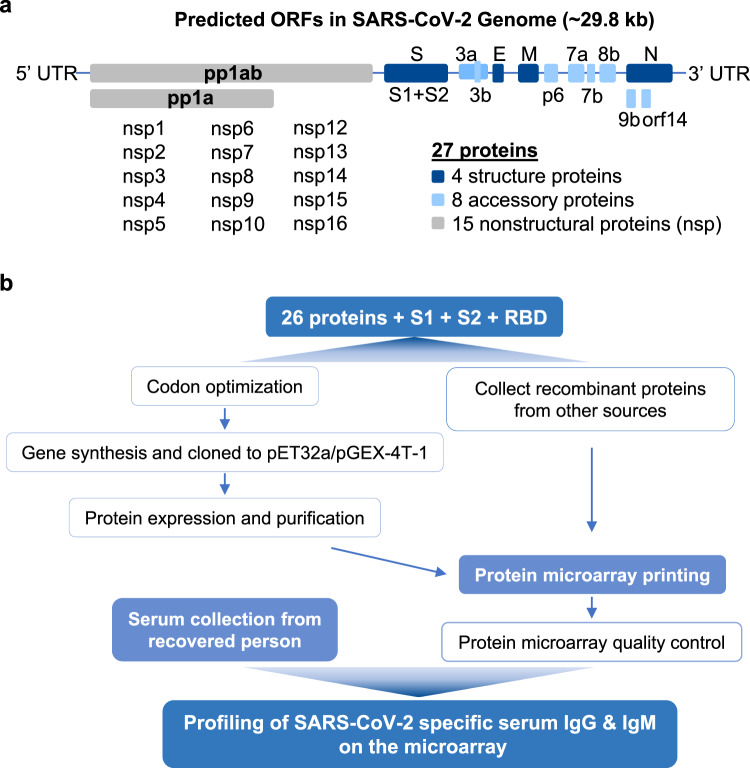
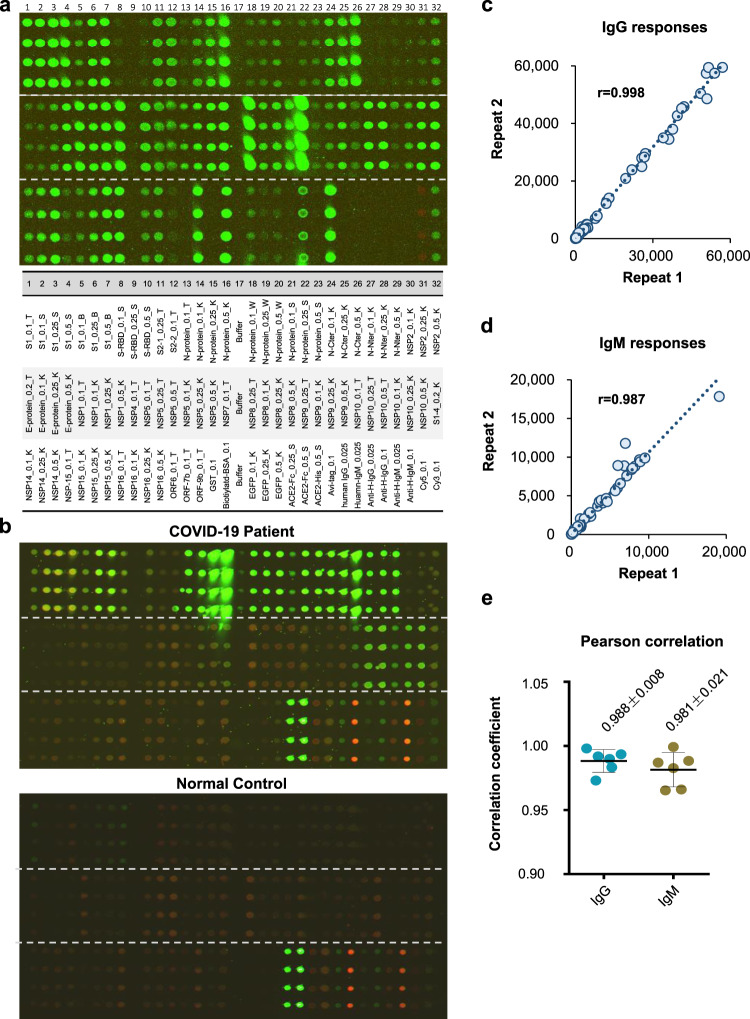
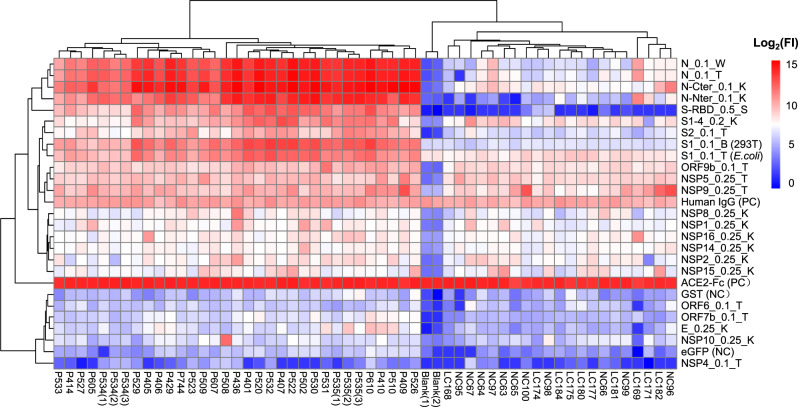
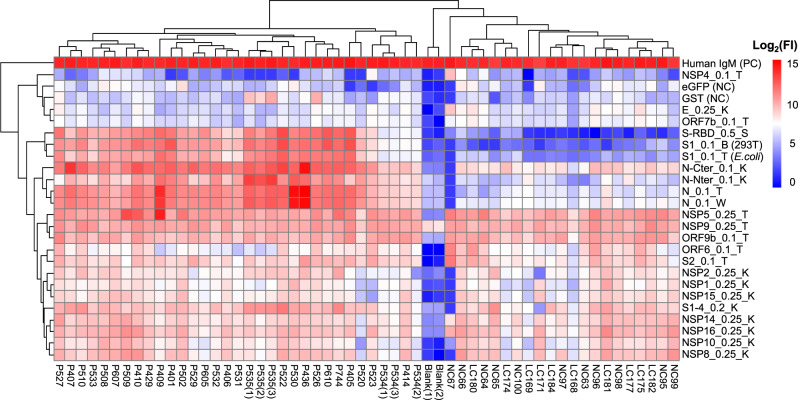
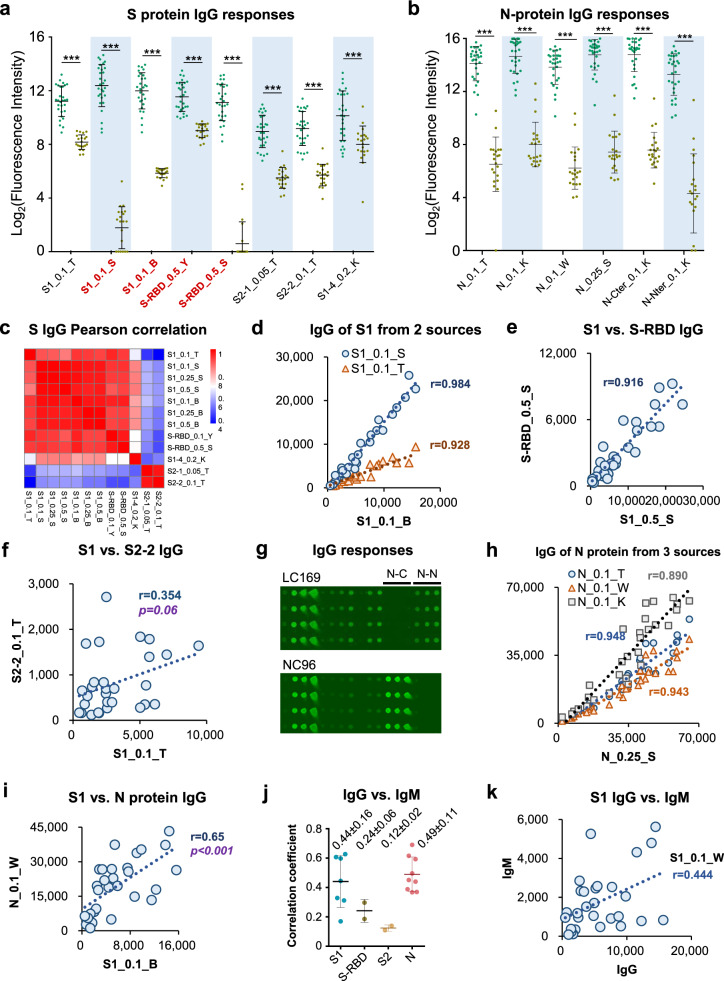
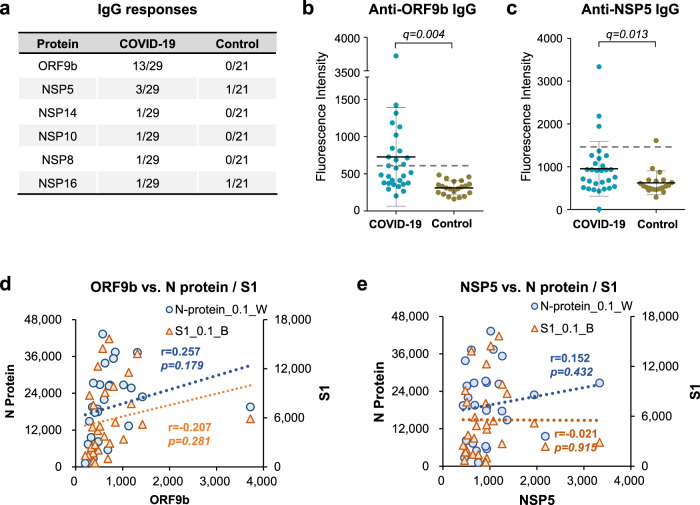
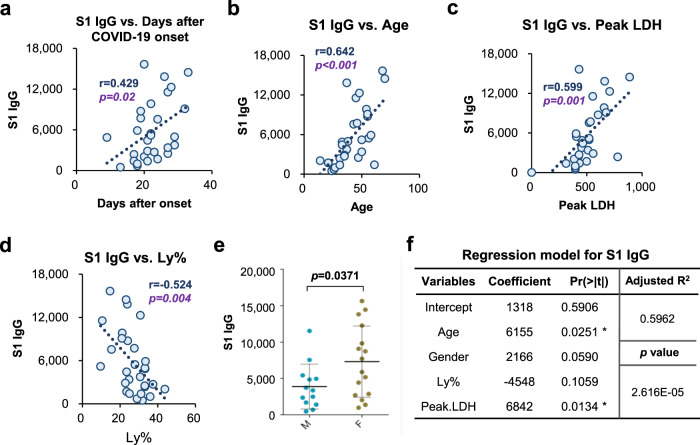
We still know very little about how the human immune system responds to SARS-CoV-2. Here we construct a SARS-CoV-2 proteome microarray containing 18 out of the 28 predicted proteins and apply it to the characterization of the IgG and IgM antibodies responses in the sera from 29 convalescent patients. We find that all these patients had IgG and IgM antibodies that specifically bind SARS-CoV-2 proteins, particularly the N protein and S1 protein. Besides these proteins, significant antibody responses to ORF9b and NSP5 are also identified. We show that the S1 specific IgG signal positively correlates with age and the level of lactate dehydrogenase (LDH) and negatively correlates with lymphocyte percentage. Overall, this study presents a systemic view of the SARS-CoV-2 specific IgG and IgM responses and provides insights to aid the development of effective diagnostic, therapeutic and vaccination strategies.
Overview
The claims and statistics of this paper haven’t been checked yet.
Free: it reads the open-access text and checks the first 5 claims that cite a source we can check. Create a free account to check every claim.
Integrity signals
Registry
Cites
Statistics
Figures
Verification
Claims the paper makes
The claims and statistics of this paper haven’t been checked yet.
Free: it reads the open-access text and checks the first 5 claims that cite a source we can check. Create a free account to check every claim.
Claims other papers make about this one
Each is checked against this paper’s own text: does it say what the citing paper says it does?
In the citing paper
“MS and array-based proteomics serology has screened for potential biomarkers and Abs against infection156,157.”
From A high-stringency blueprint of the human proteome (2020) · cites this paper as [156]
Self-check
Percentages, sums and reported differences re-computed from the paper’s own numbers.
The self-check needs the paper’s full text.
Citations
Cites
A pneumonia outbreak associated with a new coronavirus of probable bat origin
Zhou, P., Yang, X.-L., Wang, X.-G., Hu, B., Zhang, L., Zhang, W., Si, H.-R., Zhu, Y., Li, B., Huang, C.-L., et al. (2020) · Nature · doi:10.1038/s41586-020-2012-7 · Cited by 21,969
Self-citationHoffmann, M., Kleine-Weber, H., Schroeder, S., Krüger, N., Herrler, T., Erichsen, S., Schiergens, T. S., Herrler, G., Wu, N.-H., Nitsche, A., et al. (2020) · Cell · doi:10.1016/j.cell.2020.02.052 · Cited by 20,286
Wang, D., Hu, B., Hu, C., Zhu, F., Liu, X., Zhang, J., Wang, B., Xiang, H., Cheng, Z., Xiong, Y., et al. (2020) · JAMA · doi:10.1001/jama.2020.1585 · Cited by 20,148
Self-citationLa certeza de lo impredecible: Cultura Educación y Sociedad en tiempos de COVID19
Martínez González, M. (2020) · DSPACE System - Metalibrary (University of the Coast) · Cited by 18,463
A new coronavirus associated with human respiratory disease in China
Wu, F., Zhao, S., Yu, B., Chen, Y.-M., Wang, W., Song, Z.-G., Hu, Y., Tao, Z.-W., Tian, J.-H., Pei, Y.-Y., et al. (2020) · Nature · doi:10.1038/s41586-020-2008-3 · Cited by 11,688
Self-citationIn silico prediction of protein-protein interactions in human macrophages
Souiai, O., Guerfali, F., Ben Miled, S., Brun, C., & Benkahla, A. (2014) · BMC Research Notes · doi:10.1186/1756-0500-7-157 · Cited by 10,803
Significance analysis of microarrays applied to the ionizing radiation response
Tusher, V. G., Tibshirani, R., & Chu, G. (2001) · Proceedings of the National Academy of Sciences · doi:10.1073/pnas.091062498 · Cited by 10,568
Cryo-EM structure of the 2019-nCoV spike in the prefusion conformation
Wrapp, D., Wang, N., Corbett, K. S., Goldsmith, J. A., Hsieh, C.-L., Abiona, O., Graham, B. S., & McLellan, J. S. (2020) · Science · doi:10.1126/science.abb2507 · Cited by 8,897
Structure, function and antigenicity of the SARS-CoV-2 spike glycoprotein
Walls, A. C., Park, Y.-J., Tortorici, M. A., Wall, A., McGuire, A. T., & Veesler, D. (2020) · doi:10.1101/2020.02.19.956581 · Cited by 8,586
Structure of the SARS-CoV-2 spike receptor-binding domain bound to the ACE2 receptor
Lan, J., Ge, J., Yu, J., Shan, S., Zhou, H., Fan, S., Zhang, Q., Shi, X., Wang, Q., Zhang, L., et al. (2020) · Nature · doi:10.1038/s41586-020-2180-5 · Cited by 5,983
Angiotensin-converting enzyme 2 is a functional receptor for the SARS coronavirus
Li, W., Moore, M. J., Vasilieva, N., Sui, J., Wong, S. K., Berne, M. A., Somasundaran, M., Sullivan, J. L., Luzuriaga, K., Greenough, T. C., et al. (2003) · Nature · doi:10.1038/nature02145 · Cited by 5,923
Structural basis for the recognition of SARS-CoV-2 by full-length human ACE2
Yan, R., Zhang, Y., Li, Y., Xia, L., Guo, Y., & Zhou, Q. (2020) · Science · doi:10.1126/science.abb2762 · Cited by 5,040
Self-citationSARS and MERS: recent insights into emerging coronaviruses
de Wit, E., van Doremalen, N., Falzarano, D., & Munster, V. J. (2016) · Nature Reviews Microbiology · doi:10.1038/nrmicro.2016.81 · Cited by 3,510
Genome Composition and Divergence of the Novel Coronavirus (2019-nCoV) Originating in China
Wu, A., Peng, Y., Huang, B., Ding, X., Wang, X., Niu, P., Meng, J., Zhu, Z., Zhang, Z., Wang, J., et al. (2020) · Cell Host & Microbe · doi:10.1016/j.chom.2020.02.001 · Cited by 2,361
Isolation and characterization of a bat SARS-like coronavirus that uses the ACE2 receptor
Ge, X.-Y., Li, J.-L., Yang, X.-L., Chmura, A. A., Zhu, G., Epstein, J. H., Mazet, J. K., Hu, B., Zhang, W., Peng, C., et al. (2013) · Nature · doi:10.1038/nature12711 · Cited by 1,778
Self-citationLi, Z., Yi, Y., Luo, X., Xiong, N., Liu, Y., Li, S., Sun, R., Wang, Y., Hu, B., Chen, W., et al. (2020) · Journal of Medical Virology · doi:10.1002/jmv.25727 · Cited by 1,771
A serological assay to detect SARS-CoV-2 seroconversion in humans
Amanat, F., Stadlbauer, D., Strohmeier, S., Nguyen, T. H. O., Chromikova, V., McMahon, M., Jiang, K., Arunkumar, G. A., Jurczyszak, D., Polanco, J., et al. (2020) · Nature Medicine · doi:10.1038/s41591-020-0913-5 · Cited by 1,769
Therapeutic options for the 2019 novel coronavirus (2019-nCoV)
Li, G., & De Clercq, E. (2020) · Nature Reviews Drug Discovery · doi:10.1038/d41573-020-00016-0 · Cited by 1,729
Convalescent plasma as a potential therapy for COVID-19
Chen, L., Xiong, J., Bao, L., & Shi, Y. (2020) · The Lancet Infectious Diseases · doi:10.1016/s1473-3099(20)30141-9 · Cited by 1,038
Cryo-EM Structure of the 2019-nCoV Spike in the Prefusion ConformationPreprint
Wrapp, D., Wang, N., Corbett, K. S., et al. (2020) · bioRxiv (Cold Spring Harbor Laboratory) · doi:10.1101/2020.02.11.944462 · Cited by 1,010
Hosts and Sources of Endemic Human Coronaviruses
Corman, V. M., Muth, D., Niemeyer, D., & Drosten, C. (2018) · Advances in Virus Research · doi:10.1016/bs.aivir.2018.01.001 · Cited by 995
Mair-Jenkins, J., Saavedra-Campos, M., Baillie, J. K., Cleary, P., Khaw, F.-M., Lim, W. S., Makki, S., Rooney, K. D., Convalescent Plasma Study Group, Nguyen-Van-Tam, J. S., et al. (2015) · Journal of Infectious Diseases · doi:10.1093/infdis/jiu396 · Cited by 983
Diagnosis and Treatment Protocol for Novel Coronavirus Pneumonia (Trial Version 7)
(2020) · Chinese Medical Journal · doi:10.1097/cm9.0000000000000819 · Cited by 784
SARS — beginning to understand a new virus
Stadler, K., Masignani, V., Eickmann, M., Becker, S., Abrignani, S., Klenk, H.-D., & Rappuoli, R. (2003) · Nature Reviews Microbiology · doi:10.1038/nrmicro775 · Cited by 557
Shi, C.-S., Qi, H.-Y., Boularan, C., Huang, N.-N., Abu-Asab, M., Shelhamer, J. H., & Kehrl, J. H. (2014) · The Journal of Immunology · doi:10.4049/jimmunol.1303196 · Cited by 473
Self-citationProfile of Specific Antibodies to the SARS-Associated Coronavirus
Li, G., Chen, X., & Xu, A. (2003) · New England Journal of Medicine · doi:10.1056/nejm200307313490520 · Cited by 307
Hsueh, P.-R., Huang, L.-M., Chen, P.-J., Kao, C.-L., & Yang, P.-C. (2004) · Clinical Microbiology and Infection · doi:10.1111/j.1469-0691.2004.01009.x · Cited by 261
Xiang, J., Yan, M., Li, H., Liu, T., Lin, C., Huang, S., & Shen, C. (2020) · medRxiv · doi:10.1101/2020.02.27.20028787 · Cited by 239
Self-citationTang, X.-C., Agnihothram, S. S., Jiao, Y., Stanhope, J., Graham, R. L., Peterson, E. C., Avnir, Y., Tallarico, A. S. C., Sheehan, J., Zhu, Q., et al. (2014) · Proceedings of the National Academy of Sciences · doi:10.1073/pnas.1402074111 · Cited by 232
Jiang, L., Wang, N., Zuo, T., Shi, X., Poon, K.-M. V., Wu, Y., Gao, F., Li, D., Wang, R., Guo, J., et al. (2014) · Science Translational Medicine · doi:10.1126/scitranslmed.3008140 · Cited by 218
Zhang, H.-N., Yang, L., Ling, J.-Y., Czajkowsky, D. M., Wang, J.-F., Zhang, X.-W., Zhou, Y.-M., Ge, F., Yang, M.-K., Xiong, Q., et al. (2015) · Proceedings of the National Academy of Sciences · doi:10.1073/pnas.1521316112 · Cited by 168
Self-citationLiu, L., Liu, W., Zheng, Y., Jiang, X., Kou, G., Ding, J., Wang, Q., Huang, Q., Ding, Y., Ni, W., et al. (2020) · Microbes and Infection · doi:10.1016/j.micinf.2020.05.008 · Cited by 163
Self-citationPorcine Deltacoronavirus nsp5 Antagonizes Type I Interferon Signaling by Cleaving STAT2
Zhu, X., Wang, D., Zhou, J., Pan, T., Chen, J., Yang, Y., Lv, M., Ye, X., Peng, G., Fang, L., et al. (2017) · Journal of Virology · doi:10.1128/jvi.00003-17 · Cited by 159
Self-citationLiu, L., Liu, W., Zheng, Y., Jiang, X., Kou, G., Ding, J., Wang, Q., Huang, Q., Ding, Y., Ni, W., et al. (2020) · doi:10.1101/2020.03.06.20031856 · Cited by 159
Self-citationAntibody responses to individual proteins of SARS coronavirus and their neutralization activities
Qiu, M., Shi, Y., Guo, Z., Chen, Z., He, R., Chen, R., Zhou, D., Dai, E., Wang, X., Si, B., et al. (2005) · Microbes and Infection · doi:10.1016/j.micinf.2005.02.006 · Cited by 148
Porcine deltacoronavirus nsp5 inhibits interferon-β production through the cleavage of NEMO
Zhu, X., Fang, L., Wang, D., Yang, Y., Chen, J., Xu, Y., Foda, M. F., & Xiao, S. (2016) · Virology · doi:10.1016/j.virol.2016.12.005 · Cited by 144
Lau, S. K. P., Woo, P. C. Y., Wong, B. H. L., Tsoi, H., Woo, G. K. S., Poon, R. W., Chan, K., Wei, W., Peiris, M. J. S., & Yuen, K. (2004) · Journal of Clinical Microbiology · doi:10.1128/jcm.42.7.2884-2889.2004 · Cited by 141
Severe acute respiratory syndrome diagnostics using a coronavirus protein microarray
Zhu, H., Hu, S., Jona, G., Zhu, X., Kreiswirth, N., Willey, B. M., Mazzulli, T., Liu, G., Song, Q., Chen, P., et al. (2006) · Proceedings of the National Academy of Sciences · doi:10.1073/pnas.0510921103 · Cited by 137
SARS corona virus peptides recognized by antibodies in the sera of convalescent cases
Guo, J.-P., Petric, M., Campbell, W., & McGeer, P. L. (2004) · Virology · doi:10.1016/j.virol.2004.04.017 · Cited by 137
Anti-SARS-CoV IgG response in relation to disease severity of severe acute respiratory syndrome
Lee, N., Chan, P. K. S., Ip, M., Wong, E., Ho, J., Ho, C., Cockram, C. S., & Hui, D. S. (2006) · Journal of Clinical Virology · doi:10.1016/j.jcv.2005.07.005 · Cited by 119
The Crystal Structure of ORF-9b, a Lipid Binding Protein from the SARS Coronavirus
Meier, C., Aricescu, A. R., Assenberg, R., Aplin, R. T., Gilbert, R. J. C., Grimes, J. M., & Stuart, D. I. (2006) · Structure · doi:10.1016/j.str.2006.05.012 · Cited by 107
Deng, J., Bi, L., Zhou, L., Guo, S., Fleming, J., Jiang, H., Zhou, Y., Gu, J., Zhong, Q., Wang, Z.-X., et al. (2014) · Cell Reports · doi:10.1016/j.celrep.2014.11.023 · Cited by 93
Self-citationSpecific serology for emerging human coronaviruses by protein microarray
Reusken, C. B. E. M., Mou, H., Godeke, G.-J., van der Hoek, L., Meyer, B., Müller, M. A., Haagmans, B. L., de Sousa, R., Schuurman, N., Dittmer, U., et al. (2013) · Eurosurveillance · doi:10.2807/1560-7917.es2013.18.14.20441 · Cited by 89
SARS Immunity and Vaccination.
Minsheng, Z. (2004) · PubMed · Cited by 78
Hsueh, P.-R., Hsiao, C.-H., Yeh, S.-H., Wang, W.-K., Chen, P.-J., Wang, J.-T., Chang, S.-C., Kao, C.-L., Yang, P.-C., & The SARS Research Group of National Taiwan University College of Medicine and National Taiwan University Hospital (2003) · Emerging Infectious Diseases · doi:10.3201/eid0909.030367 · Cited by 73
Self-citationMeade, P., Kuan, G., Strohmeier, S., Maier, H. E., Amanat, F., Balmaseda, A., Ito, K., Kirkpatrick, E., Javier, A., Gresh, L., et al. (2020) · mBio · doi:10.1128/mbio.03243-19 · Cited by 66
Guan, M., Chen, H. Y., Foo, S. Y., Tan, Y., Goh, P., & Wee, S. H. (2004) · Clinical and Vaccine Immunology · doi:10.1128/cdli.11.2.287-291.2004 · Cited by 63
A toolbox of immunoprecipitation-grade monoclonal antibodies to human transcription factors
Venkataraman, A., Yang, K., Irizarry, J., Mackiewicz, M., Mita, P., Kuang, Z., Xue, L., Ghosh, D., Liu, S., Ramos, P., et al. (2018) · Nature Methods · doi:10.1038/nmeth.4632 · Cited by 62
Self-citationChen, S., Tian, J., Li, Z., Kang, H., Zhang, J., Huang, J., Yin, H., Hu, X., & Qu, L. (2019) · Viruses · doi:10.3390/v12010043 · Cited by 60
Interplay between the bacterial protein deacetylase CobB and the second messenger c‐di‐GMP
Xu, Z., Zhang, H., Zhang, X., Jiang, H., Liu, C., Wu, F., Qian, L., Hao, B., Czajkowsky, D. M., Guo, S., et al. (2018) · The EMBO Journal · doi:10.15252/embj.2018100948 · Cited by 46
Self-citationAntibody responses against SARS-coronavirus and its nucleocaspid in SARS patients
Shi, Y., Wan, Z., Li, L., Li, P., Li, C., Ma, Q., & Cao, C. (2004) · Journal of Clinical Virology · doi:10.1016/j.jcv.2004.05.006 · Cited by 43
Chutrakul, C., Jeennor, S., Panchanawaporn, S., Cheawchanlertfa, P., Suttiwattanakul, S., Veerana, M., & Laoteng, K. (2015) · Journal of Biotechnology · doi:10.1016/j.jbiotec.2015.12.003 · Cited by 40
Generation of antibodies against COVID-19 virus for development of diagnostic toolsPreprint
Li, M., Jin, R., Peng, Y., Wang, C., Ren, W., Lv, F., Gong, S., Fang, F., Wang, Q., Li, J., et al. (2020) · medRxiv · doi:10.1101/2020.02.20.20025999 · Cited by 36
Li, Y., Li, C., Guo, S., Guo, W., Jiang, H., Li, H., & Tao, S. (2020) · EBioMedicine · doi:10.1016/j.ebiom.2020.102674 · Cited by 35
Self-citationHe, X., Jiang, H., Chen, H., Zhang, H., Liu, Y., Xu, Z., Wu, F., Guo, S., Hou, J., Yang, M., et al. (2017) · Molecular & Cellular Proteomics · doi:10.1074/mcp.ra117.000296 · Cited by 20
Self-citationQi, H., Zhou, H., Czajkowsky, D. M., Guo, S., Li, Y., Wang, N., Shi, Y., Lin, L., Wang, J., Wu, D., et al. (2016) · Molecular & Cellular Proteomics · doi:10.1074/mcp.m116.064873 · Cited by 11
Self-citation
Cited by
Potent neutralizing antibodies from COVID-19 patients define multiple targets of vulnerability
Brouwer, P. J. M., Caniels, T. G., van der Straten, K., Snitselaar, J. L., Aldon, Y., Bangaru, S., Torres, J. L., Okba, N. M. A., Claireaux, M., Kerster, G., et al. (2020) · Science · doi:10.1126/science.abc5902 · Cited by 1,140
Boosting Zinc Electrode Reversibility in Aqueous Electrolytes by Using Low‐Cost Antisolvents
Hao, J., Yuan, L., Ye, C., Chao, D., Davey, K., Guo, Z., & Qiao, S. (2021) · Angewandte Chemie International Edition · doi:10.1002/anie.202016531 · Cited by 935
Antibody tests for identification of current and past infection with SARS‐CoV‐2
Geppert, J., Scandrett, K., Bigio, J., Sulis, G., Hettiarachchi, D., Mathangasinghe, Y., Weeratunga, P., Wickramasinghe, D., Bergman, H., Buckley, S. B., et al. (2022) · LSTM Online Archive (Liverpool School of Tropical Medicine) · Cited by 852
Antibody tests for identification of current and past infection with SARS-CoV-2
Deeks, J. J., Dinnes, J., Takwoingi, Y., Davenport, C., Spijker, R., Taylor-Phillips, S., Adriano, A., Beese, S., Dretzke, J., Ferrante di Ruffano, L., et al. (2020) · Cochrane Database of Systematic Reviews · doi:10.1002/14651858.cd013652 · Cited by 655
SARS-CoV-2 immunity: review and applications to phase 3 vaccine candidates
Poland, G. A., Ovsyannikova, I. G., & Kennedy, R. B. (2020) · The Lancet · doi:10.1016/s0140-6736(20)32137-1 · Cited by 572
Metadata
- Authors
- Jiang, H.-W., Li, Y., Zhang, H.-N., Wang, W., Yang, X., Qi, H., Li, H., Men, D., Zhou, J., & Tao, S.-C.
- Affiliations
- Shanghai Jiao Tong University (CN)
- The Fourth People's Hospital (CN)
- Chinese Academy of Sciences (CN)
- Corresponding author
- Men, Dong
- Zhou, Jie
- Tao, Sheng-ce
- Venue
- Nature Communications
- Published
- 2020-07-14
- Volume
- 11
- Issue
- 1
- Pages
- 3581-3581
- ISSN
- 2041-1723 (ISSN-L)
- PMC
- PMC7360742
- OpenAlex
- W3045737895
- Cited by
- 329
- References
- 54
- Citations by year
- 2026: 3 · 2025: 7 · 2024: 16 · 2023: 36 · 2022: 71 · 2021: 129 · 2020: 66
- FWCI
- 9.85
- Type
- journal article
- Language
- en
- Open access
- gold
- doi.org
- Licence
- cc-by
- creativecommons.org/licenses/by/4.0 (tdm)
- creativecommons.org/licenses/by/4.0 (vor)
- Locations
- Nature Communications (publishedVersion, cc-by)
- medRxiv (acceptedVersion, cc-by-nc-nd)
- PubMed Central (publishedVersion, cc-by)
- PubMed (publishedVersion)
- RePEc: Research Papers in Economics (submittedVersion)
- DOAJ (DOAJ: Directory of Open Access Journals) (submittedVersion, cc-by-sa)
- Funders
- National Natural Science Foundation of China (31900112)
- Foshan Scientific and Technological Key Project for COVID-19
- National Key Research and Development Program of China Grant
- Topics
- Health Sciences › Medicine › Infectious Diseases › SARS-CoV-2 and COVID-19 Research
- Health Sciences › Medicine › Infectious Diseases › SARS-CoV-2 detection and testing
- Life Sciences › Biochemistry, Genetics and Molecular Biology › Molecular Biology › Advanced Biosensing Techniques and Applications
- Keywords
- SARS-CoV-2, COVID-19 pandemic, proteome microarray, antibody response, IgG, IgM, convalescent patients, S1 protein, nucleocapsid protein, ORF9b, NSP5, age, lactate dehydrogenase, lymphocyte percentage, humoral immunity
- MeSH terms
- Betacoronavirus, COVID-19, SARS-CoV-2, Coronavirus Nucleocapsid Proteins, Coronavirus 3C Proteases, Adult, Antibodies, Viral, Enzyme-Linked Immunosorbent Assay, Female, Humans, Immunoglobulin G, Immunoglobulin M, L-Lactate Dehydrogenase, Male, Middle Aged, Phosphoproteins, Pneumonia, Viral, Viral Nonstructural Proteins, Coronavirus Infections, Nucleocapsid Proteins, Proteome, Protein Array Analysis, Pandemics, Spike Glycoprotein, Coronavirus
About these checks
Registry, retraction, Cites and statistics results are computed, not judged, with one exception: a printed reference that no index lists is read once by a model before it counts as a citation error. Claims are extracted by a model and kept only when their quote appears verbatim in the text; each cited source is then checked, with a model’s help, for whether it says what the claim relies on. Those verdicts can be wrong — read the claim’s quote and the cited source before relying on one.
Statistics and arithmetic are recomputed, not judged.
Confidence bands are shown only for fields calibrated on our annotated test set. None is calibrated yet, so no band is shown.
What counts as a claim ›How we measure confidence ›How we check this ›
Are you an author, or do you see a problem with this page? Request a review
Data sources
Bibliographic data: Semantic Scholar, OpenAlex, Crossref.
Contains information from the Semantic Scholar Academic Graph Datasets, made available under the ODC Attribution License (ODC-BY 1.0).
Semantic Scholar’s data is described in: Kinney, R., et al. (2023). The Semantic Scholar Open Data Platform. arXiv:2301.10140.
