

SARS-CoV-2 proteome microarray for global profiling of COVID-19 specific IgG and IgM responses
Open accessPublished version of a preprint
The DOI matches its Crossref record; 56 of the 56 references it cites were found in a registry or an index.
Abstract
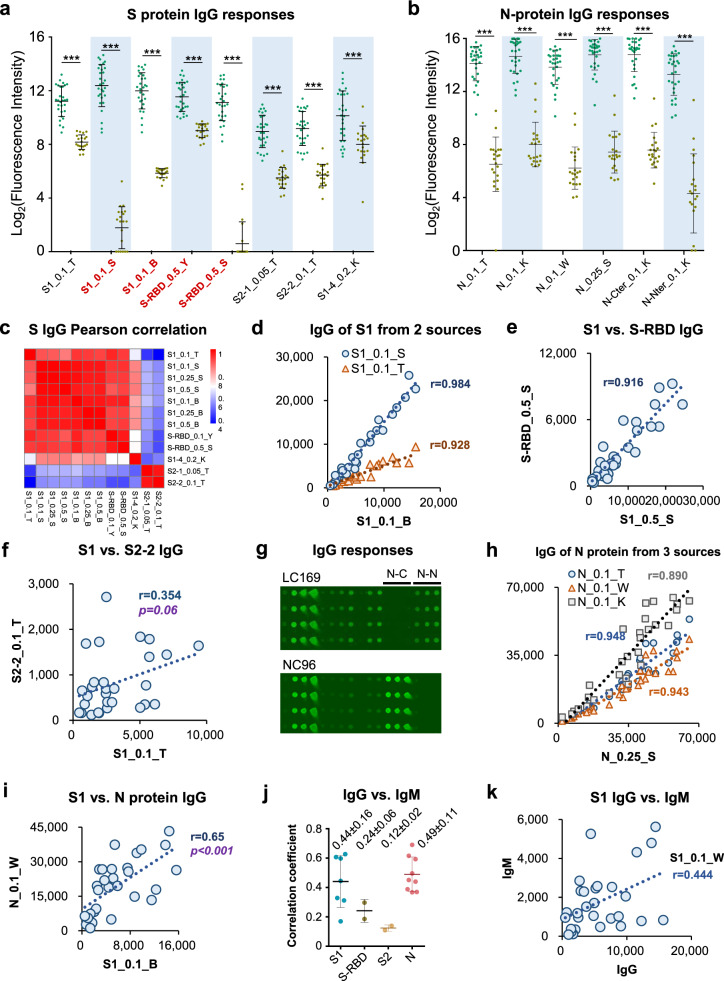
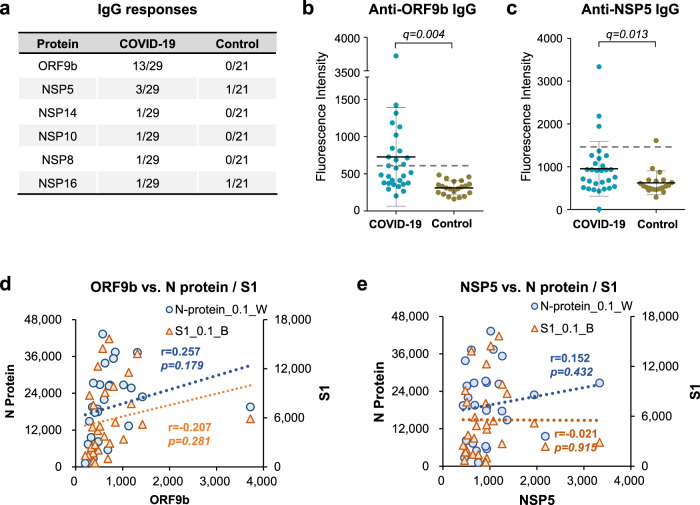
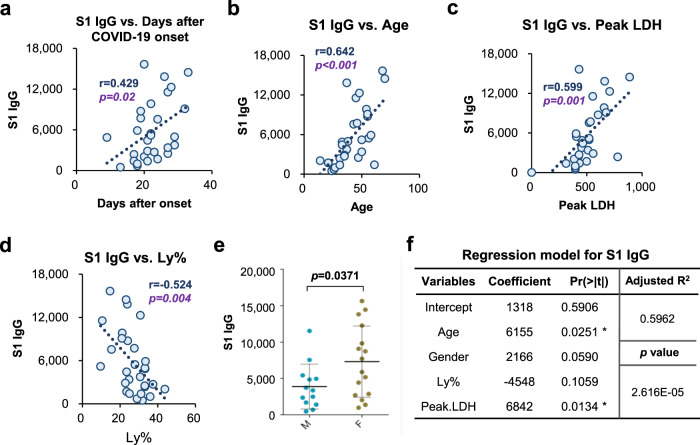
We still know very little about how the human immune system responds to SARS-CoV-2. Here we construct a SARS-CoV-2 proteome microarray containing 18 out of the 28 predicted proteins and apply it to the characterization of the IgG and IgM antibodies responses in the sera from 29 convalescent patients. We find that all these patients had IgG and IgM antibodies that specifically bind SARS-CoV-2 proteins, particularly the N protein and S1 protein. Besides these proteins, significant antibody responses to ORF9b and NSP5 are also identified. We show that the S1 specific IgG signal positively correlates with age and the level of lactate dehydrogenase (LDH) and negatively correlates with lymphocyte percentage. Overall, this study presents a systemic view of the SARS-CoV-2 specific IgG and IgM responses and provides insights to aid the development of effective diagnostic, therapeutic and vaccination strategies.
Overview
The claims and statistics of this paper haven’t been checked yet.
Free: it reads the open-access text and checks the first 5 claims that cite a source we can check. Create a free account to check every claim.
Integrity signals
Registry
Cites
Statistics
Figures
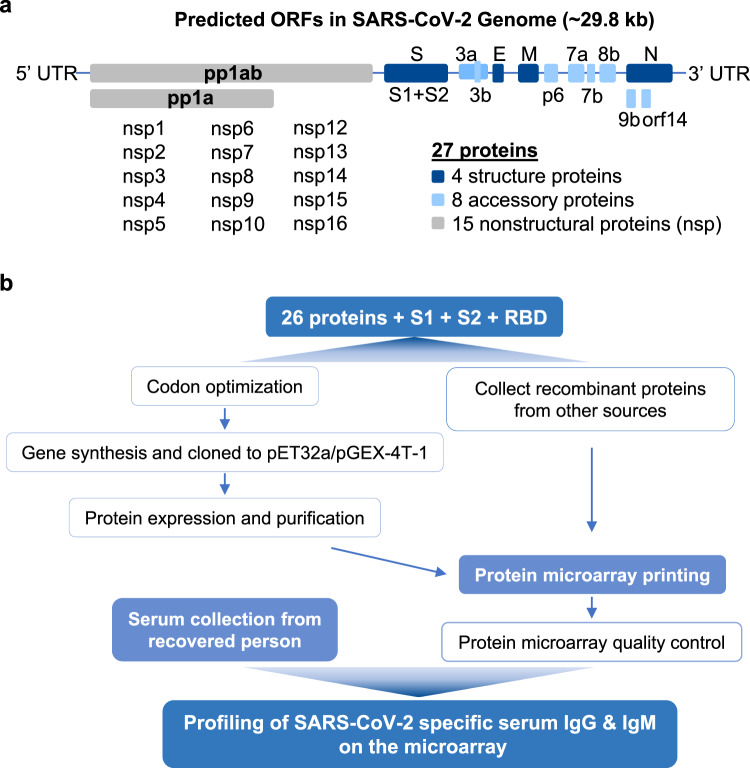
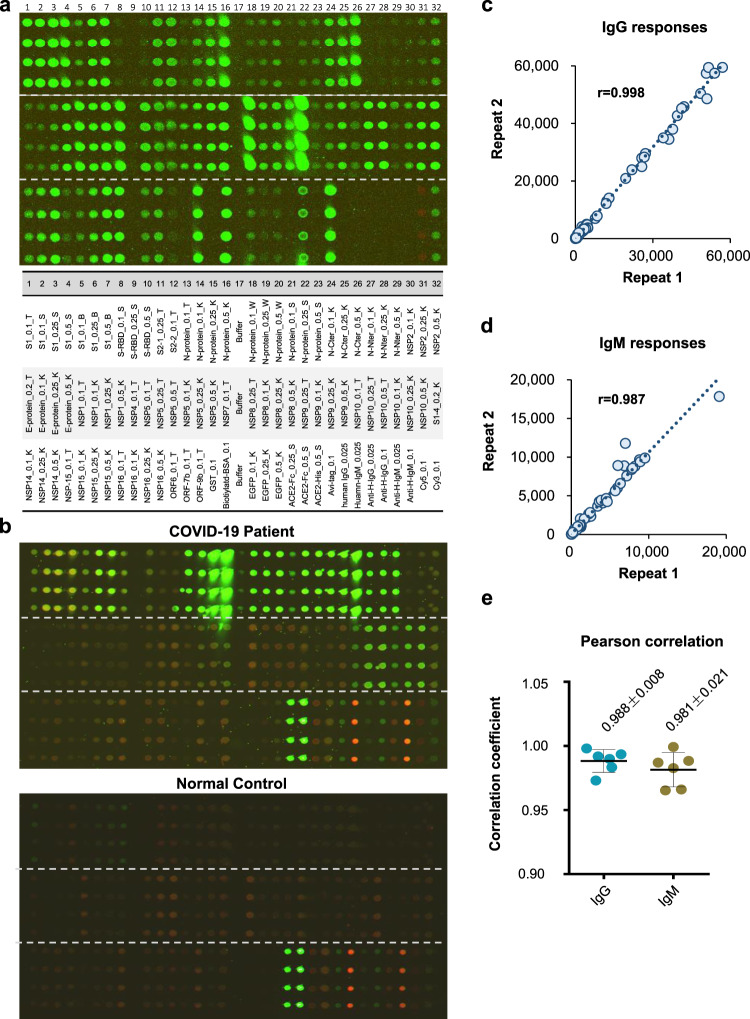
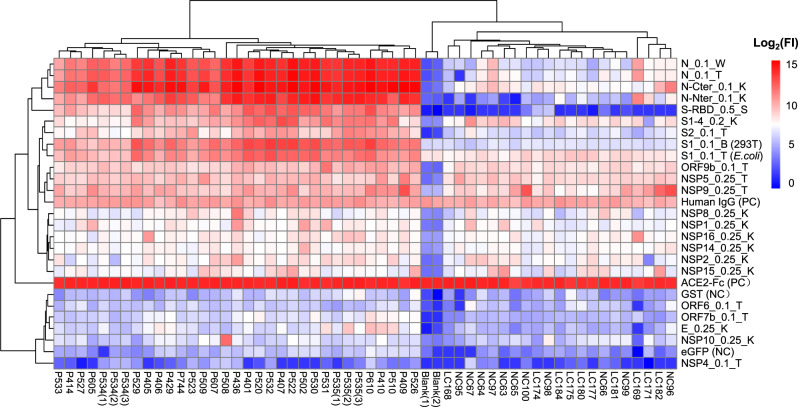
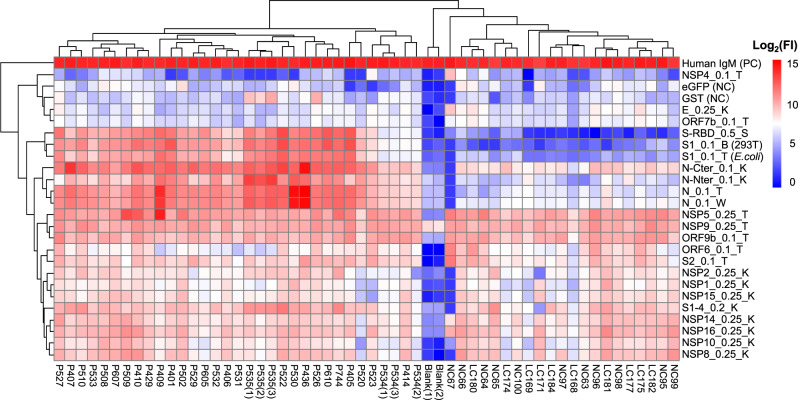
Verification
Claims the paper makes
The claims and statistics of this paper haven’t been checked yet.
Free: it reads the open-access text and checks the first 5 claims that cite a source we can check. Create a free account to check every claim.
Claims other papers make about this one
Each is checked against this paper’s own text: does it say what the citing paper says it does?
In the citing paper
“MS and array-based proteomics serology has screened for potential biomarkers and Abs against infection156,157.”
From A high-stringency blueprint of the human proteome (2020) · cites this paper as [156]
Self-check
Percentages, sums and reported differences re-computed from the paper’s own numbers.
The self-check needs the paper’s full text.
Citations
Cites
A pneumonia outbreak associated with a new coronavirus of probable bat origin
Zhou, P., Yang, X.-L., Wang, X.-G., Hu, B., Zhang, L., Zhang, W., Si, H.-R., Zhu, Y., Li, B., Huang, C.-L., et al. (2020) · Nature · doi:10.1038/s41586-020-2012-7 · Cited by 21,969
Self-citationHoffmann, M., Kleine-Weber, H., Schroeder, S., Krüger, N., Herrler, T., Erichsen, S., Schiergens, T. S., Herrler, G., Wu, N.-H., Nitsche, A., et al. (2020) · Cell · doi:10.1016/j.cell.2020.02.052 · Cited by 20,286
Wang, D., Hu, B., Hu, C., Zhu, F., Liu, X., Zhang, J., Wang, B., Xiang, H., Cheng, Z., Xiong, Y., et al. (2020) · JAMA · doi:10.1001/jama.2020.1585 · Cited by 20,148
Self-citationLa certeza de lo impredecible: Cultura Educación y Sociedad en tiempos de COVID19
Martínez González, M. (2020) · DSPACE System - Metalibrary (University of the Coast) · Cited by 18,463
A new coronavirus associated with human respiratory disease in China
Wu, F., Zhao, S., Yu, B., Chen, Y.-M., Wang, W., Song, Z.-G., Hu, Y., Tao, Z.-W., Tian, J.-H., Pei, Y.-Y., et al. (2020) · Nature · doi:10.1038/s41586-020-2008-3 · Cited by 11,688
Self-citationIn silico prediction of protein-protein interactions in human macrophages
Souiai, O., Guerfali, F., Ben Miled, S., Brun, C., & Benkahla, A. (2014) · BMC Research Notes · doi:10.1186/1756-0500-7-157 · Cited by 10,803
Significance analysis of microarrays applied to the ionizing radiation response
Tusher, V. G., Tibshirani, R., & Chu, G. (2001) · Proceedings of the National Academy of Sciences · doi:10.1073/pnas.091062498 · Cited by 10,568
Cryo-EM structure of the 2019-nCoV spike in the prefusion conformation
Wrapp, D., Wang, N., Corbett, K. S., Goldsmith, J. A., Hsieh, C.-L., Abiona, O., Graham, B. S., & McLellan, J. S. (2020) · Science · doi:10.1126/science.abb2507 · Cited by 8,897
Structure, function and antigenicity of the SARS-CoV-2 spike glycoprotein
Walls, A. C., Park, Y.-J., Tortorici, M. A., Wall, A., McGuire, A. T., & Veesler, D. (2020) · doi:10.1101/2020.02.19.956581 · Cited by 8,586
Structure of the SARS-CoV-2 spike receptor-binding domain bound to the ACE2 receptor
Lan, J., Ge, J., Yu, J., Shan, S., Zhou, H., Fan, S., Zhang, Q., Shi, X., Wang, Q., Zhang, L., et al. (2020) · Nature · doi:10.1038/s41586-020-2180-5 · Cited by 5,983
Cited by
Items 301–328 of 328
Systematic profiling of antigen bias in humoral response against SARS-CoV-2
Wei, N., Wang, Q., Lin, Z., Xu, L., Zhang, Z., Wang, Y., Yang, Z., Li, L., Zhao, T., Wang, L., et al. (2022) · Virus Research · doi:10.1016/j.virusres.2022.198711
Martin, L. M. A., & Buck, G. W. (2021) · Ethics in Biology Engineering and Medicine An International Journal · doi:10.1615/ethicsbiologyengmed.2022043551
Fluorescence-based biosensors for SARS-CoV-2 viral infection diagnostics
Joseph, J., & Rameshan, B. (2022) · Elsevier eBooks · doi:10.1016/b978-0-12-824494-4.00020-5
Lai, D., Xue, J., He, P., Jiang, H., Li, Y., Ma, M., Hong, W., Yu, J., Wei, H., & Tao, S. (2022) · SSRN Electronic Journal · doi:10.2139/ssrn.4119535
Self-citationPambuk, C. I. A., Ibraheem, U. M., & Muhammad, F. M. (2022) · International Journal of Medical Science and Clinical Research Studies · doi:10.47191/ijmscrs/v2-i8-26 · Cited by 1
Berre, M. L., Paulovčáková, T., Veríssimo, C. D. M., Doyle, S., Dalton, J. P., Masterson, C. H., Martínez, E. R., Walsh, L., Gormley, C., Laffey, J. G., et al. (2022) · medRxiv · doi:10.1101/2022.08.22.22278930
Smart Nanobiosensing for COVID-19 Diagnosis
Chowdhury, S. R., & Ghosh, M. (2022) · Springer eBooks · doi:10.1007/978-981-19-7130-3_6
High SARS-CoV-2 seroprevalence in Lagos, Nigeria with robust antibody and cellular responsesPreprint
Akanmu, S. A., Herrera, B. B., Chaplin, B., Ogunsola, S., Osibogun, A. O., Onawoga, F., John‐Olabode, S., Akase, I. E., Nwosu, A. O., Hamel, D. J., et al. (2022) · medRxiv · doi:10.1101/2022.11.30.22282833
“16 During infection with SARS-CoV-2, S and N proteins are major targets of both 344 antibodies and T cells (24).”
BackgroundA Synopsis of Diagnostic Testing for COVID-19
Pulukuri, S. (2022) · International journal of high school research · doi:10.36838/v4i6.16
Fateev, I. V., SchÖfer, T. V., Chepur, S. V., Ivchenko, E. V., Minnullin, T. I., Shubina, A. A., & Stepanov, A. V. (2023) · Bulletin of the Russian Military Medical Academy · doi:10.17816/brmma108612
Tin Halide Perovskite Solar Cells
Kapil, G., & Hayase, S. (2021) · doi:10.1002/9783527825851.ch14
Sağlık, İ., Payaslıoğlu, M., Aydın, R. B., Ener, B., Ağca, H., Tüzemen, N. Ü., Özakın, C., & Akalın, H. (2023) · Journal of Molecular Virology and Immunology · doi:10.46683/jmvi.2023.65 · Cited by 1
Publicly available resources in COVID-19 research and their applications
Baralić, K., Živančević, K., Božić, D., & Đukić-Ćosić, D. (2023) · Elsevier eBooks · doi:10.1016/b978-0-323-91794-0.00017-2
Applications of genetic engineering in COVID-19
Ysrafil, Y., Pratiwi, S. E., & Cornillot, E. (2023) · Elsevier eBooks · doi:10.1016/b978-0-323-91794-0.00021-4 · Cited by 1
Richez, B., Cantarel, C., Durrieu, F., Soubeyran, I., Blanchi, J., Pernot, S., Chakiba, C., Roubaud, G., Cousin, S., Étienne, G., et al. (2023) · International Journal of Environmental Research and Public Health · doi:10.3390/ijerph20115949
“However, serological tests detecting antibodies (Abs) directed against spike protein (S) and nucleocapsid (N), detectable from day 8 to 11 after contamination may have a place in epidemiological surveillance by identifying people who are or have been in contact with the virus [4,5].”
BackgroundВладыко, А. С., & Petkevich, A. S. (2023) · Journal of Environmental Science and Engineering Technology · doi:10.12974/2311-8741.2023.11.05
de Oliveira, J. R. (2023) · Digital Library of Theses and Dissertations (Universidade de São Paulo) · doi:10.11606/t.5.2023.tde-24082023-110203
Ayaz, A., Ali, A., Nazir, A., Mohammed, I., Bhat, K. A., Bhat, M. S., Ahmad, S. B., & John, A. (2024) · Elsevier eBooks · doi:10.1016/b978-0-443-23971-7.00012-2
Role of Immunochromatographic Techniques in the Diagnosis of COVID-19
Asif, A., Noman, M., Yasin, H., Ahmad, S., Naeem, M. T., Ijaz, M. S., Naeem, M. A., & Riaz, M. W. (2025) · Indus journal of bioscience research. · doi:10.70749/ijbr.v3i3.908
Beretta, M., Martin, E., Fogel, O., Medina, C. L., Planchais, C., Bruneau, T., Gonçalves, P., Avouac, J., Berenbaum, F., Sellam, J., et al. (2025) · RMD Open · doi:10.1136/rmdopen-2025-005673 · Cited by 2
Yang, L., Wang, L., Liu, Q., Zhang, X., Luo, Y., Xue, J., Yang, X., Byazrova, M. G., Filatov, A. V., Tao, S., et al. (2025) · Virologica Sinica · doi:10.1016/j.virs.2025.07.003
“…in SARS-CoV-2-specific antibody responses between vaccinated and recovered patients, we analyzed serum samples from the vaccinated and recovered groups using a SARS-CoV-2 protein microarray containing 3 structural proteins, 5 auxiliary proteins, and 12 nonstructural proteins (Jiang et al., 2020).”
Self-citationShu, J., Yao, J., Tan, M., Sun, H., Wu, X., Chen, F., Xuan, B., Du, C., Pan, Y., Zhou, L., et al. (2026) · Scientific Reports · doi:10.1038/s41598-026-38298-w
“Fluorescence intensity was quantified using GenePix Pro 6.0 software (Molecular Devices, CA, USA) 18 .”
InfluentialSelf-citationGenetic Evidence Indicates the Evolutionary Importance of the SARS-CoV-2 ORF9b proteinPreprint
Hisner, R., & Martin, D. P. (2026) · bioRxiv (Cold Spring Harbor Laboratory) · doi:10.64898/2026.02.23.707522 · Cited by 4
“A plausible reason that increased ORF9b expression in VOC lineages relative to pre-VOC lineages might be selectively advantageous in humans was presciently identified months before the emergence of the VOC lineages by Gordon et al 7 (Gordon, 2020) and Jiang et al 11 (Jiang, 2020).”
Caractérisation des activités antivirales des anticorps anti-VIH-1 et anti-SARS-CoV-2
Dufloo, J. (2021) · theses.fr (ABES) · doi:10.70675/215798eaz7f82z4e57za8eazf4453d37b8c8
Multi-scale studies of Measeles virus nucleocapsid assembly
Guseva, S. (2021) · theses.fr (ABES) · doi:10.70675/3d8ab89ez161cz41aczaa94zb6e8952689fe · Cited by 1
Metadata
- Authors
- Jiang, H.-W., Li, Y., Zhang, H.-N., Wang, W., Yang, X., Qi, H., Li, H., Men, D., Zhou, J., & Tao, S.-C.
- Affiliations
- Shanghai Jiao Tong University (CN)
- The Fourth People's Hospital (CN)
- Chinese Academy of Sciences (CN)
- Corresponding author
- Men, Dong
- Zhou, Jie
- Tao, Sheng-ce
- Venue
- Nature Communications
- Published
- 2020-07-14
- Volume
- 11
- Issue
- 1
- Pages
- 3581-3581
- ISSN
- 2041-1723 (ISSN-L)
- PMC
- PMC7360742
- OpenAlex
- W3045737895
- Semantic Scholar
- 9b4aa18913d116f859a652d7ad3cdbb71cd8ba8b
- Cited by
- 329
- References
- 54
- Citations by year
- 2026: 3 · 2025: 7 · 2024: 16 · 2023: 36 · 2022: 71 · 2021: 129 · 2020: 66
- FWCI
- 9.85
- Type
- journal article
- Language
- en
- Open access
- gold
- doi.org
- Licence
- cc-by
- creativecommons.org/licenses/by/4.0 (tdm)
- creativecommons.org/licenses/by/4.0 (vor)
- Locations
- Nature Communications (publishedVersion, cc-by)
- medRxiv (acceptedVersion, cc-by-nc-nd)
- PubMed Central (publishedVersion, cc-by)
- PubMed (publishedVersion)
- RePEc: Research Papers in Economics (submittedVersion)
- DOAJ (DOAJ: Directory of Open Access Journals) (submittedVersion, cc-by-sa)
- Funders
- National Natural Science Foundation of China (31900112)
- Foshan Scientific and Technological Key Project for COVID-19
- National Key Research and Development Program of China Grant
- Topics
- Health Sciences › Medicine › Infectious Diseases › SARS-CoV-2 and COVID-19 Research
- Health Sciences › Medicine › Infectious Diseases › SARS-CoV-2 detection and testing
- Life Sciences › Biochemistry, Genetics and Molecular Biology › Molecular Biology › Advanced Biosensing Techniques and Applications
- Keywords
- SARS-CoV-2, COVID-19 pandemic, proteome microarray, antibody response, IgG, IgM, convalescent patients, S1 protein, nucleocapsid protein, ORF9b, NSP5, age, lactate dehydrogenase, lymphocyte percentage, humoral immunity
- MeSH terms
- Betacoronavirus, COVID-19, SARS-CoV-2, Coronavirus Nucleocapsid Proteins, Coronavirus 3C Proteases, Adult, Antibodies, Viral, Enzyme-Linked Immunosorbent Assay, Female, Humans, Immunoglobulin G, Immunoglobulin M, L-Lactate Dehydrogenase, Male, Middle Aged, Phosphoproteins, Pneumonia, Viral, Viral Nonstructural Proteins, Coronavirus Infections, Nucleocapsid Proteins, Proteome, Protein Array Analysis, Pandemics, Spike Glycoprotein, Coronavirus
About these checks
Registry, retraction, Cites and statistics results are computed, not judged, with one exception: a printed reference that no index lists is read once by a model before it counts as a citation error. Claims are extracted by a model and kept only when their quote appears verbatim in the text; each cited source is then checked, with a model’s help, for whether it says what the claim relies on. Those verdicts can be wrong — read the claim’s quote and the cited source before relying on one.
Statistics and arithmetic are recomputed, not judged.
Confidence bands are shown only for fields calibrated on our annotated test set. None is calibrated yet, so no band is shown.
What counts as a claim ›How we measure confidence ›How we check this ›
Are you an author, or do you see a problem with this page? Request a review
Data sources
Bibliographic data: Semantic Scholar, OpenAlex, Crossref.
Contains information from the Semantic Scholar Academic Graph Datasets, made available under the ODC Attribution License (ODC-BY 1.0).
Semantic Scholar’s data is described in: Kinney, R., et al. (2023). The Semantic Scholar Open Data Platform. arXiv:2301.10140.
