

SARS-CoV-2 proteome microarray for global profiling of COVID-19 specific IgG and IgM responses
Open accessPublished version of a preprint
The DOI matches its Crossref record; 56 of the 56 references it cites were found in a registry or an index.
Abstract
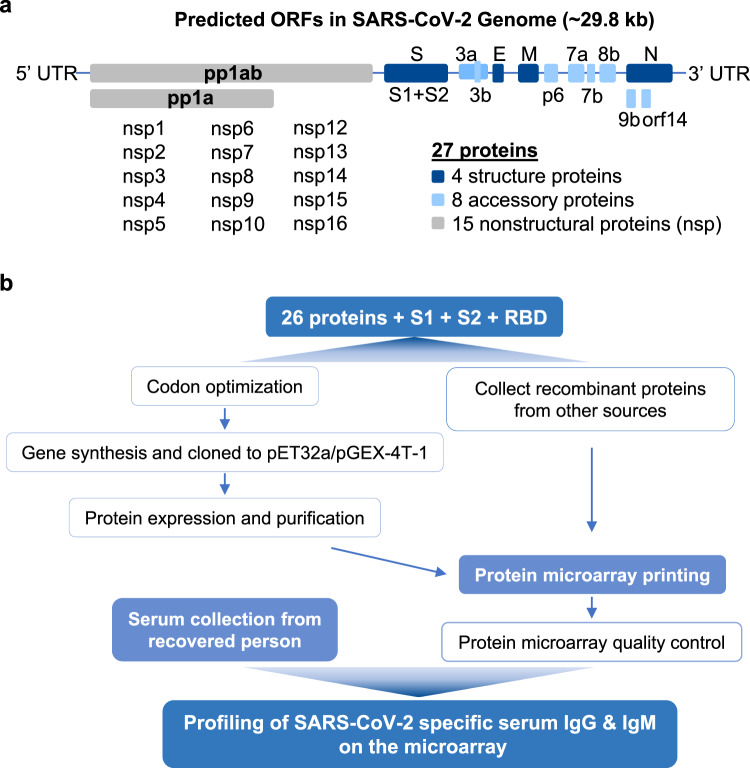
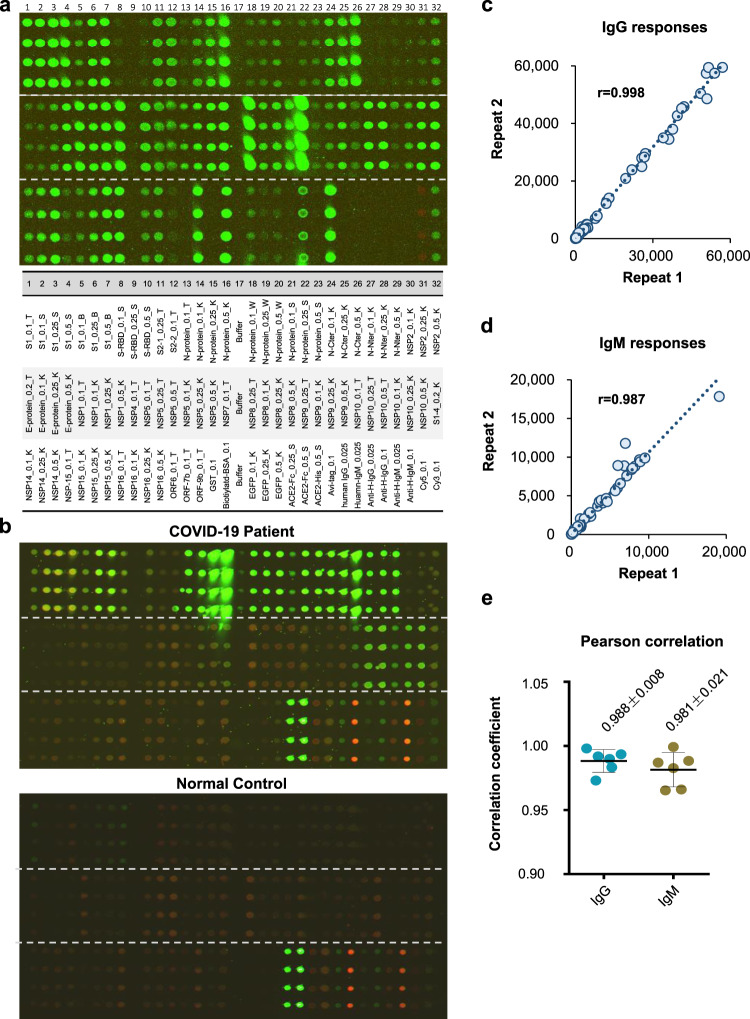
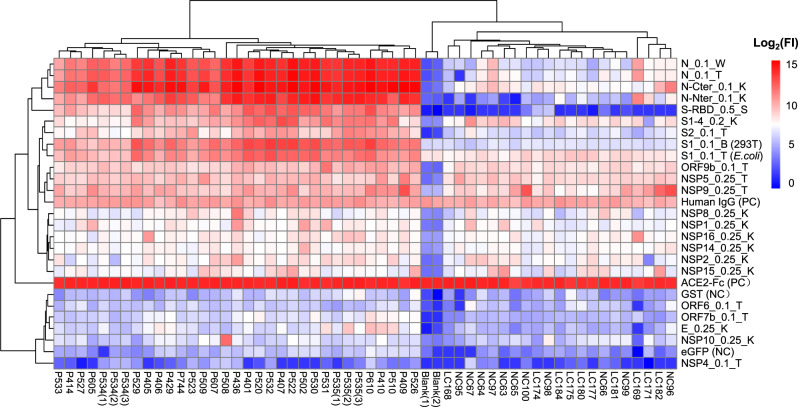
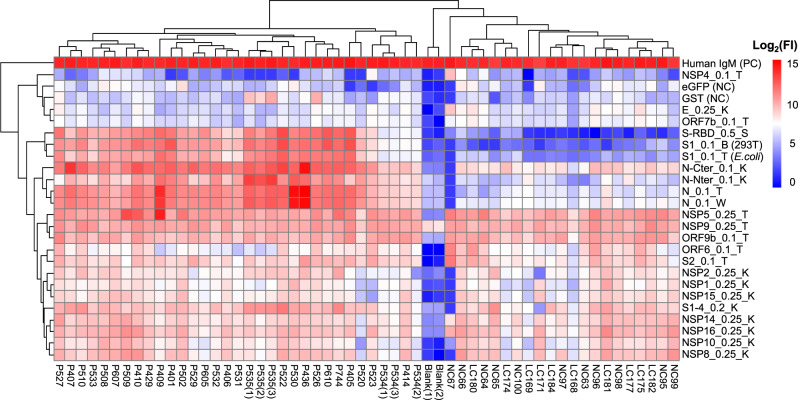
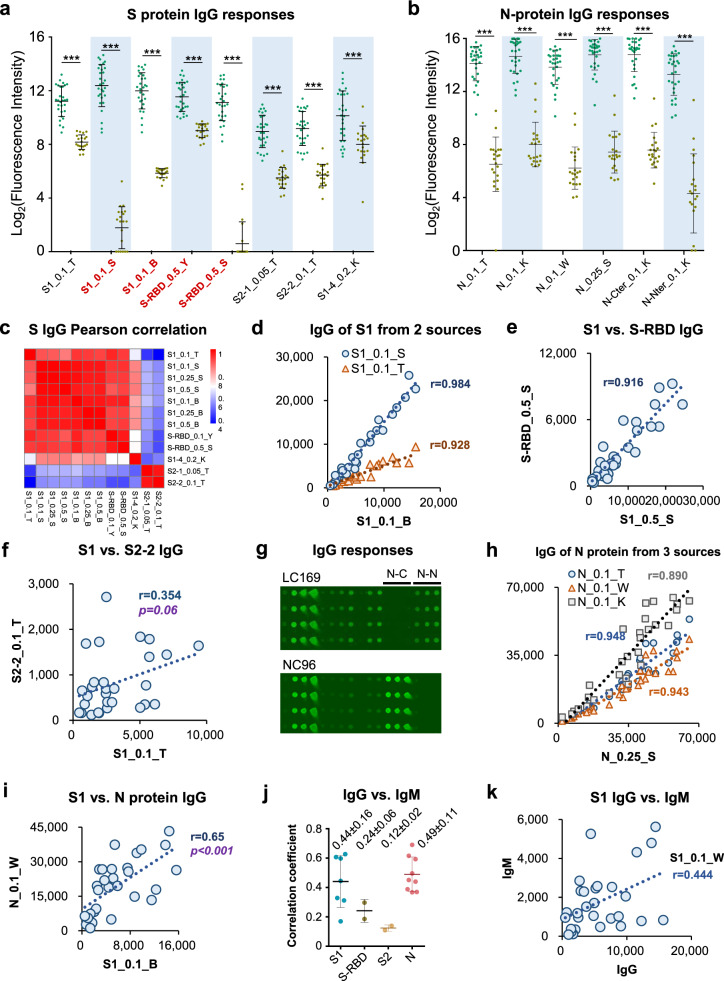
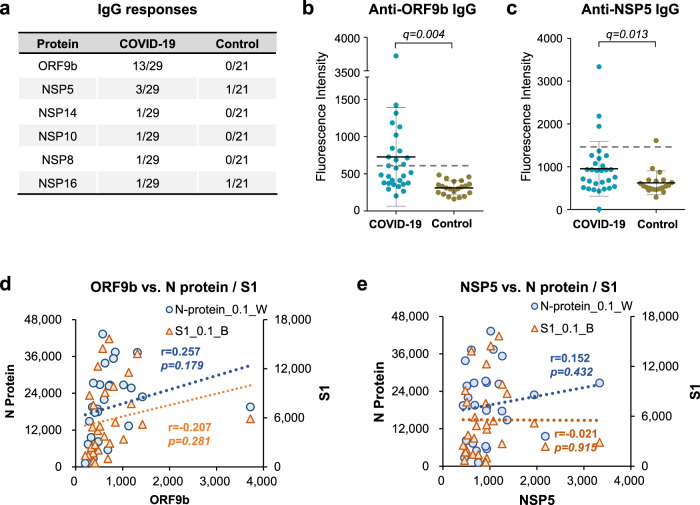
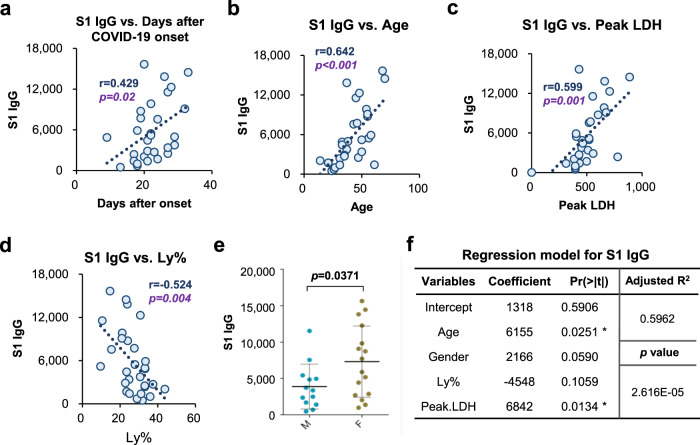
We still know very little about how the human immune system responds to SARS-CoV-2. Here we construct a SARS-CoV-2 proteome microarray containing 18 out of the 28 predicted proteins and apply it to the characterization of the IgG and IgM antibodies responses in the sera from 29 convalescent patients. We find that all these patients had IgG and IgM antibodies that specifically bind SARS-CoV-2 proteins, particularly the N protein and S1 protein. Besides these proteins, significant antibody responses to ORF9b and NSP5 are also identified. We show that the S1 specific IgG signal positively correlates with age and the level of lactate dehydrogenase (LDH) and negatively correlates with lymphocyte percentage. Overall, this study presents a systemic view of the SARS-CoV-2 specific IgG and IgM responses and provides insights to aid the development of effective diagnostic, therapeutic and vaccination strategies.
Overview
The claims and statistics of this paper haven’t been checked yet.
Free: it reads the open-access text and checks the first 5 claims that cite a source we can check. Create a free account to check every claim.
Integrity signals
Registry
Cites
Statistics
Figures
Verification
Claims the paper makes
The claims and statistics of this paper haven’t been checked yet.
Free: it reads the open-access text and checks the first 5 claims that cite a source we can check. Create a free account to check every claim.
Claims other papers make about this one
Each is checked against this paper’s own text: does it say what the citing paper says it does?
In the citing paper
“MS and array-based proteomics serology has screened for potential biomarkers and Abs against infection156,157.”
From A high-stringency blueprint of the human proteome (2020) · cites this paper as [156]
Self-check
Percentages, sums and reported differences re-computed from the paper’s own numbers.
The self-check needs the paper’s full text.
Citations
Cites
A pneumonia outbreak associated with a new coronavirus of probable bat origin
Zhou, P., Yang, X.-L., Wang, X.-G., Hu, B., Zhang, L., Zhang, W., Si, H.-R., Zhu, Y., Li, B., Huang, C.-L., et al. (2020) · Nature · doi:10.1038/s41586-020-2012-7 · Cited by 21,969
Self-citationHoffmann, M., Kleine-Weber, H., Schroeder, S., Krüger, N., Herrler, T., Erichsen, S., Schiergens, T. S., Herrler, G., Wu, N.-H., Nitsche, A., et al. (2020) · Cell · doi:10.1016/j.cell.2020.02.052 · Cited by 20,286
Wang, D., Hu, B., Hu, C., Zhu, F., Liu, X., Zhang, J., Wang, B., Xiang, H., Cheng, Z., Xiong, Y., et al. (2020) · JAMA · doi:10.1001/jama.2020.1585 · Cited by 20,148
Self-citationLa certeza de lo impredecible: Cultura Educación y Sociedad en tiempos de COVID19
Martínez González, M. (2020) · DSPACE System - Metalibrary (University of the Coast) · Cited by 18,463
A new coronavirus associated with human respiratory disease in China
Wu, F., Zhao, S., Yu, B., Chen, Y.-M., Wang, W., Song, Z.-G., Hu, Y., Tao, Z.-W., Tian, J.-H., Pei, Y.-Y., et al. (2020) · Nature · doi:10.1038/s41586-020-2008-3 · Cited by 11,688
Self-citationIn silico prediction of protein-protein interactions in human macrophages
Souiai, O., Guerfali, F., Ben Miled, S., Brun, C., & Benkahla, A. (2014) · BMC Research Notes · doi:10.1186/1756-0500-7-157 · Cited by 10,803
Significance analysis of microarrays applied to the ionizing radiation response
Tusher, V. G., Tibshirani, R., & Chu, G. (2001) · Proceedings of the National Academy of Sciences · doi:10.1073/pnas.091062498 · Cited by 10,568
Cryo-EM structure of the 2019-nCoV spike in the prefusion conformation
Wrapp, D., Wang, N., Corbett, K. S., Goldsmith, J. A., Hsieh, C.-L., Abiona, O., Graham, B. S., & McLellan, J. S. (2020) · Science · doi:10.1126/science.abb2507 · Cited by 8,897
Structure, function and antigenicity of the SARS-CoV-2 spike glycoprotein
Walls, A. C., Park, Y.-J., Tortorici, M. A., Wall, A., McGuire, A. T., & Veesler, D. (2020) · doi:10.1101/2020.02.19.956581 · Cited by 8,586
Structure of the SARS-CoV-2 spike receptor-binding domain bound to the ACE2 receptor
Lan, J., Ge, J., Yu, J., Shan, S., Zhou, H., Fan, S., Zhang, Q., Shi, X., Wang, Q., Zhang, L., et al. (2020) · Nature · doi:10.1038/s41586-020-2180-5 · Cited by 5,983
Cited by
Potent neutralizing antibodies from COVID-19 patients define multiple targets of vulnerability
Brouwer, P. J. M., Caniels, T. G., van der Straten, K., Snitselaar, J. L., Aldon, Y., Bangaru, S., Torres, J. L., Okba, N. M. A., Claireaux, M., Kerster, G., et al. (2020) · Science · doi:10.1126/science.abc5902 · Cited by 1,140
Boosting Zinc Electrode Reversibility in Aqueous Electrolytes by Using Low‐Cost Antisolvents
Hao, J., Yuan, L., Ye, C., Chao, D., Davey, K., Guo, Z., & Qiao, S. (2021) · Angewandte Chemie International Edition · doi:10.1002/anie.202016531 · Cited by 935
Antibody tests for identification of current and past infection with SARS‐CoV‐2
Geppert, J., Scandrett, K., Bigio, J., Sulis, G., Hettiarachchi, D., Mathangasinghe, Y., Weeratunga, P., Wickramasinghe, D., Bergman, H., Buckley, S. B., et al. (2022) · LSTM Online Archive (Liverpool School of Tropical Medicine) · Cited by 852
Antibody tests for identification of current and past infection with SARS-CoV-2
Deeks, J. J., Dinnes, J., Takwoingi, Y., Davenport, C., Spijker, R., Taylor-Phillips, S., Adriano, A., Beese, S., Dretzke, J., Ferrante di Ruffano, L., et al. (2020) · Cochrane Database of Systematic Reviews · doi:10.1002/14651858.cd013652 · Cited by 655
SARS-CoV-2 immunity: review and applications to phase 3 vaccine candidates
Poland, G. A., Ovsyannikova, I. G., & Kennedy, R. B. (2020) · The Lancet · doi:10.1016/s0140-6736(20)32137-1 · Cited by 572
Acute SARS-CoV-2 Infection Impairs Dendritic Cell and T Cell Responses
Zhou, R., To, K. K.-W., Wong, Y.-C., Liu, L., Zhou, B., Li, X., Huang, H., Mo, Y., Luk, T.-Y., Lau, T. T.-K., et al. (2020) · Immunity · doi:10.1016/j.immuni.2020.07.026 · Cited by 531
The potential danger of suboptimal antibody responses in COVID-19
Iwasaki, A., & Yang, Y. (2020) · Nature Reviews Immunology · doi:10.1038/s41577-020-0321-6 · Cited by 509
Dutta, A., Mitra, S., Basak, M., & Banerjee, T. (2023) · Energy Storage · doi:10.1002/est2.339 · Cited by 472
Molecular Diagnosis of COVID-19: Challenges and Research Needs
Feng, W., Newbigging, A. M., Le, C., Pang, B., Peng, H., Cao, Y., Wu, J., Abbas, G., Song, J., Wang, D.-B., et al. (2020) · Analytical Chemistry · doi:10.1021/acs.analchem.0c02060 · Cited by 389
Self-citationDiagnostic methods and potential portable biosensors for coronavirus disease 2019
Cui, F., & Zhou, H. S. (2020) · Biosensors and Bioelectronics · doi:10.1016/j.bios.2020.112349 · Cited by 373
COVID-19: Virology, biology and novel laboratory diagnosis
Mohamadian, M., Chiti, H., Shoghli, A., Biglari, S., Parsamanesh, N., & Esmaeilzadeh, A. (2021) · The Journal of Gene Medicine · doi:10.1002/jgm.3303 · Cited by 371
“Jiang et al.(87) constructed a SARS-CoV-2 proteome microarray consisting of 18 out of 28 expected proteins and”
MethodSARS-CoV-2 Orf9b suppresses type I interferon responses by targeting TOM70
Jiang, H.-W., Zhang, H.-N., Meng, Q.-F., Xie, J., Li, Y., Chen, H., Zheng, Y.-X., Wang, X.-N., Qi, H., Zhang, J., et al. (2020) · Cellular & Molecular Immunology · doi:10.1038/s41423-020-0514-8 · Cited by 351
Self-citationLessons learned 1 year after SARS-CoV-2 emergence leading to COVID-19 pandemic
To, K. K.-W., Sridhar, S., Chiu, K. H.-Y., Hung, D. L.-L., Li, X., Hung, I. F.-N., Tam, A. R., Chung, T. W.-H., Chan, J. F.-W., Zhang, A. J.-X., et al. (2021) · Emerging Microbes & Infections · doi:10.1080/22221751.2021.1898291 · Cited by 344
Grzelak, L., Temmam, S., Planchais, C., Demeret, C., Tondeur, L., Huon, C., Guivel-Benhassine, F., Staropoli, I., Chazal, M., Dufloo, J., et al. (2020) · Science Translational Medicine · doi:10.1126/scitranslmed.abc3103 · Cited by 310
SARS-CoV-2 Accessory Proteins in Viral Pathogenesis: Knowns and Unknowns
Redondo, N., Zaldívar-López, S., Garrido, J. J., & Montoya, M. (2021) · Frontiers in Immunology · doi:10.3389/fimmu.2021.708264 · Cited by 299
“In some cases, significant antibody responses to ORF9b have been found in COVID-19 convalescent patients (63).”
BackgroundStructural biology of SARS-CoV-2: open the door for novel therapies
Yan, W., Zheng, Y., Zeng, X., He, B., & Cheng, W. (2022) · Signal Transduction and Targeted Therapy · doi:10.1038/s41392-022-00884-5 · Cited by 291
“Antibodies targeted to ORF9b have also been observed in the plasma of convalescent COVID-19 patients.(358)”
BackgroundWu, J., Shi, Y., Pan, X., Wu, S., Hou, R., Zhang, Y., Zhong, T., Tang, H., Du, W., Wang, L., et al. (2021) · Cell Reports · doi:10.1016/j.celrep.2021.108761 · Cited by 265
Advances and Utility of the Human Plasma Proteome
Deutsch, E. W., Omenn, G. S., Sun, Z., Maes, M., Pernemalm, M., Palaniappan, K. K., Letunica, N., Vandenbrouck, Y., Brun, V., Tao, S.-C., et al. (2021) · Journal of Proteome Research · doi:10.1021/acs.jproteome.1c00657 · Cited by 246
Self-citationPaul, P. P., McShane, E. J., Colclasure, A. M., Balsara, N., Brown, D. E., Cao, C., Chen, B., Chinnam, P. R., Cui, Y., Dufek, E. J., et al. (2021) · Advanced Energy Materials · doi:10.1002/aenm.202100372 · Cited by 230
Wu, J., Liang, B., Chen, C., Wang, H., Fang, Y., Shen, S., Yang, X., Wang, B., Chen, L., Chen, Q., et al. (2021) · Nature Communications · doi:10.1038/s41467-021-22034-1 · Cited by 226
Self-citationCOVID-19 Antibody Tests and Their Limitations
Liu, G., & Rusling, J. F. (2021) · ACS Sensors · doi:10.1021/acssensors.0c02621 · Cited by 219
A high-stringency blueprint of the human proteome
Adhikari, S., Nice, E. C., Deutsch, E. W., Lane, L., Omenn, G. S., Pennington, S. R., Paik, Y.-K., Overall, C. M., Corrales, F. J., Cristea, I. M., et al. (2020) · Nature Communications · doi:10.1038/s41467-020-19045-9 · Cited by 210
de Assis, R. R., Jain, A., Nakajima, R., Jasinskas, A., Felgner, J., Obiero, J. M., Norris, P. J., Stone, M., Simmons, G., Bagri, A., et al. (2021) · Nature Communications · doi:10.1038/s41467-020-20095-2 · Cited by 205
Antibody tests for identification of current and past infection with SARS-CoV-2
Fox, T., Geppert, J., Dinnes, J., Scandrett, K., Bigio, J., Sulis, G., Hettiarachchi, D., Mathangasinghe, Y., Weeratunga, P., Wickramasinghe, D., et al. (2022) · Cochrane Database of Systematic Reviews · doi:10.1002/14651858.cd013652.pub2 · Cited by 199
Core mitochondrial genes are down-regulated during SARS-CoV-2 infection of rodent and human hosts
Guarnieri, J. W., Dybas, J. M., Fazelinia, H., Kim, M. S., Frere, J., Zhang, Y., Soto Albrecht, Y., Murdock, D. G., Angelin, A., Singh, L. N., et al. (2023) · Science Translational Medicine · doi:10.1126/scitranslmed.abq1533 · Cited by 189
Lithium Niobate on Insulator: An Emerging Platform for Integrated Quantum Photonics
Saravi, S., Pertsch, T., & Setzpfandt, F. (2021) · Advanced Optical Materials · doi:10.1002/adom.202100789 · Cited by 184
Linear epitopes of SARS-CoV-2 spike protein elicit neutralizing antibodies in COVID-19 patients
Li, Y., Lai, D.-Y., Zhang, H.-N., Jiang, H.-W., Tian, X., Ma, M.-L., Qi, H., Meng, Q.-F., Guo, S.-J., Wu, Y., et al. (2020) · Cellular & Molecular Immunology · doi:10.1038/s41423-020-00523-5 · Cited by 178
“Cellular & Molecular Immunology (2020) 17:1095–1097; https://doi.org/10.1038/s41423-020-00523-5 COVID-19 is caused by SARS-CoV-2.”
BackgroundInfluentialSelf-citationReview of Current Advances in Serologic Testing for COVID-19
Espejo, A. P., Akgun, Y., Al Mana, A. F., Tjendra, Y., Millan, N. C., Gomez-Fernandez, C., & Cray, C. (2020) · American Journal of Clinical Pathology · doi:10.1093/ajcp/aqaa112 · Cited by 167
Perovskite‐Based Tandem Solar Cells: Get the Most Out of the Sun
Zhang, Z., Li, Z., Meng, L., Lien, S., & Gao, P. (2020) · Advanced Functional Materials · doi:10.1002/adfm.202001904 · Cited by 165
Linear epitope landscape of the SARS-CoV-2 Spike protein constructed from 1,051 COVID-19 patients
Li, Y., Ma, M.-L., Lei, Q., Wang, F., Hong, W., Lai, D.-Y., Hou, H., Xu, Z.-W., Zhang, B., Chen, H., et al. (2021) · Cell Reports · doi:10.1016/j.celrep.2021.108915 · Cited by 162
Self-citationLaboratory diagnosis of coronavirus disease-2019 (COVID-19)
Li, C., Zhao, C., Bao, J., Tang, B., Wang, Y., & Gu, B. (2020) · Clinica Chimica Acta · doi:10.1016/j.cca.2020.06.045 · Cited by 188
Review of Current COVID-19 Diagnostics and Opportunities for Further Development
Mardian, Y., Kosasih, H., Karyana, M., Neal, A., & Lau, C. (2021) · Frontiers in Medicine · doi:10.3389/fmed.2021.615099 · Cited by 177
“In contrast to the conventional techniques described above, which test a single target antibody in a single reaction, protein microarrays employ proteome-wide characterization of antibodies in a high-throughput format to generate a more systematic description of antibody binding and viral antigens (232).”
ResultDiagnostic techniques for COVID-19 and new developments
Sheikhzadeh, E., Eissa, S., Aziah, I., & Zourob, M. M. (2020) · Talanta · doi:10.1016/j.talanta.2020.121392 · Cited by 155
Wong, N. A., & Saier, M. H. (2021) · International Journal of Molecular Sciences · doi:10.3390/ijms22031308 · Cited by 163
“, 2020 [378], using a SARS-CoV-2 proteomic microarray, characterized the IgG and IgM antibody responses to sera from 29 convalescent Covid-19 patients to most of the viral proteins.”
MethodRoles and functions of SARS-CoV-2 proteins in host immune evasion
Rashid, F., Xie, Z., Suleman, M., Shah, A., Khan, S., & Luo, S. (2022) · Frontiers in Immunology · doi:10.3389/fimmu.2022.940756 · Cited by 156
“Antibodies against ORF9b were detected in convalescent sera from SARS-CoV and SARSCoV-2 patients (84, 85).”
BackgroundXu, H., Zhu, J., Finegan, D. P., Zhao, H., Lu, X., Li, W., Hoffman, N., Bertei, A., Shearing, P. R., & Bazant, M. Z. (2021) · Advanced Energy Materials · doi:10.1002/aenm.202003908 · Cited by 162
The role of biosensors in coronavirus disease-2019 outbreak
Asif, M., Ajmal, M., Ashraf, G., Muhammad, N., Aziz, A., Iftikhar, T., Wang, J., & Liu, H. (2020) · Current Opinion in Electrochemistry · doi:10.1016/j.coelec.2020.08.011 · Cited by 136
Antibody dynamics to SARS‐CoV‐2 in asymptomatic COVID‐19 infections
Lei, Q., Li, Y., Hou, H., Wang, F., Ouyang, Z., Zhang, Y., Lai, D., Ndzouboukou, J. B., Xu, Z., Zhang, B., et al. (2020) · Allergy · doi:10.1111/all.14622 · Cited by 126
Self-citationBoosting Zinc Electrode Reversibility in Aqueous Electrolytes by Using Low‐Cost Antisolvents
Hao, J., Yuan, L., Ye, C., Chao, D., Davey, K. R., Guo, Z., & Qiao, S. (2021) · Angewandte Chemie · doi:10.1002/ange.202016531 · Cited by 128
Convalescent Plasma Therapy for COVID-19: State of the Art
Focosi, D., Anderson, A. O., Tang, J. W.-T., & Tuccori, M. (2020) · Clinical Microbiology Reviews · doi:10.1128/cmr.00072-20 · Cited by 135
Immune system and COVID-19 by sex differences and age
Ciarambino, T., Para, O., & Giordano, M. (2021) · Women s Health · doi:10.1177/17455065211022262 · Cited by 158
Dengue Fever, COVID ‐19 ( SARS‐CoV ‐2), and Antibody‐Dependent Enhancement ( ADE ): A Perspective
Ulrich, H., Pillat, M. M., & Tárnok, A. (2020) · Cytometry Part A · doi:10.1002/cyto.a.24047 · Cited by 140
SARS-CoV-2 Infection Severity Is Linked to Superior Humoral Immunity against the Spike
Guthmiller, J. J., Stovicek, O., Wang, J., Changrob, S., Li, L., Halfmann, P., Zheng, N.-Y., Utset, H., Stamper, C. T., Dugan, H. L., et al. (2021) · mBio · doi:10.1128/mbio.02940-20 · Cited by 120
“others (5, 6) have identified that subjects generally had similar antibody responses”
BackgroundSARS-CoV-2 Vaccine Development: Current Status
Poland, G. A., Ovsyannikova, I. G., Crooke, S. N., & Kennedy, R. B. (2020) · Mayo Clinic Proceedings · doi:10.1016/j.mayocp.2020.07.021 · Cited by 112
A Functionally Stable RuMn Electrocatalyst for Oxygen Evolution Reaction in Acid
An, L., Yang, F., Fu, C., Cai, X., Shen, S., Xia, G., Li, J., Du, Y., Luo, L., & Zhang, J. (2022) · Advanced Functional Materials · doi:10.1002/adfm.202200131 · Cited by 112
Dendritic-cell-targeting virus-like particles as potent mRNA vaccine carriers
Yin, D., Zhong, Y., Ling, S., Lu, S., Wang, X., Jiang, Z., Wang, J., Dai, Y., Tian, X., Huang, Q., et al. (2024) · Nature Biomedical Engineering · doi:10.1038/s41551-024-01208-4 · Cited by 127
Self-citationZhou, D., Chan, J. F.-W., Zhou, B., Zhou, R., Li, S., Shan, S., Liu, L., Zhang, A. J., Chen, S. J., Chan, C. C.-S., et al. (2021) · Cell Host & Microbe · doi:10.1016/j.chom.2021.02.019 · Cited by 102
“However, COVID-19 patients with higher amounts of anti-spike (S) and anti-nucleocapsid (NP) IgM and IgG tend to have poorer disease outcomes (Jiang et al., 2020; Tan et al., 2020).”
Self-citationYuan, Y., Feng, Z., Li, S., Huang, Z., Wan, Y., Cao, C., Lin, S., Wu, L., Zhou, J., Liao, L., et al. (2022) · Advanced Materials · doi:10.1002/adma.202201263 · Cited by 97
Self-citationYang, Z., Luo, Y., Hu, Y., Liang, K., He, G., Chen, Q., Wang, Q., & Chen, H. (2020) · Advanced Functional Materials · doi:10.1002/adfm.202007991 · Cited by 127
Antibody detection assays for COVID‐19 diagnosis: an early overview
Ejazi, S. A., Ghosh, S., & Ali, N. (2020) · Immunology and Cell Biology · doi:10.1111/imcb.12397 · Cited by 109
Borremans, B., Gamble, A., Prager, K., Helman, S. K., McClain, A. M., Cox, C., Savage, V., & Lloyd-Smith, J. O. (2020) · eLife · doi:10.7554/elife.60122 · Cited by 88
COVID‐19 diagnostic testing: Technology perspective
Xu, M., Wang, D., Wang, H., Zhang, X., Liang, T., Dai, J., Li, M., Zhang, J., Zhang, K., Xu, D., et al. (2020) · Clinical and Translational Medicine · doi:10.1002/ctm2.158 · Cited by 97
Immune response following infection with SARS‐CoV ‐2 and other coronaviruses: A rapid review
Murchú, É. Ó., Byrne, P., Walsh, K. A., Carty, P. G., Connolly, M. A., Gascun, C. F. D., Jordan, K., Keoghan, M., O’Brien, K. K., O’Neill, M., et al. (2020) · Reviews in Medical Virology · doi:10.1002/rmv.2162 · Cited by 93
Identification of immunodominant linear epitopes from SARS-CoV-2 patient plasma
Soler, L. F., Daguer, J., Barluenga, S., Vadas, O., Cohen, P., Pagano, S., Yerly, S., Kaiser, L., Vuilleumier, N., & Winssinger, N. (2020) · PLoS ONE · doi:10.1371/journal.pone.0238089 · Cited by 100
Becker, M., Strengert, M., Junker, D., Kaiser, P. D., Kerrinnes, T., Traenkle, B., Dinter, H., Häring, J., Ghozzi, S., Zeck, A., et al. (2021) · Nature Communications · doi:10.1038/s41467-021-20973-3 · Cited by 85
Batty, C. J., Heise, M. T., Bachelder, E. M., & Ainslie, K. M. (2021) · Advanced Drug Delivery Reviews · doi:10.1016/j.addr.2020.12.006 · Cited by 81
Rakib, A., Nain, Z., Sami, S. A., Mahmud, S., Islam, M. A., Ahmed, S., Siddiqui, A. B. F., Babu, S. M. O. F., Hossain, P., Shahriar, A., et al. (2021) · Briefings in Bioinformatics · doi:10.1093/bib/bbab045 · Cited by 85
“The SARS-CoV-2 proteome could be applied to IgG and IgM response profiling, as these antibodies have been found to bind specifically to the N and S proteins (95).”
BackgroundAntibody Responses to Natural SARS-CoV-2 Infection or after COVID-19 Vaccination
Altawalah, H. (2021) · Vaccines · doi:10.3390/vaccines9080910 · Cited by 81
“Moreover, higher titers of anti-S1 and anti-N IgG and IgM positively correlate with age and the level of lactate dehydrogenase [53].”
BackgroundLi, C., Yu, D., Wu, X., Liang, H., Zhou, Z., Xie, Y., Li, T., Wu, J., Lu, F., Feng, L., et al. (2021) · doi:10.1101/2021.04.05.437224 · Cited by 73
Self-citationEfficient Thermally Evaporated γ‐CsPbI3 Perovskite Solar Cells
Zhang, Z., Ji, R., Kroll, M., Hofstetter, Y. J., Jia, X., Becker‐Koch, D., Paulus, F., Löffler, M., Nehm, F., Leo, K., et al. (2021) · Advanced Energy Materials · doi:10.1002/aenm.202100299 · Cited by 88
Li, C., Yu, D., Wu, X. J., Hong, L., Zhou, Z., Xie, Y., Li, T., Wu, J., Lu, F., Feng, L. Z., et al. (2021) · Nature Communications · doi:10.1038/s41467-021-24230-5 · Cited by 80
Self-citationChen, M., Qin, R., Jiang, M., Yang, Z., Wen, W., & Li, J. (2021) · International Journal of Infectious Diseases · doi:10.1016/j.ijid.2021.01.016 · Cited by 72
Zhou, Y., Chen, Y., Liu, W., Fang, H., Li, X., Hou, L., Liu, Y., Lai, W., Huang, X., & Xiong, Y. (2021) · Sensors and Actuators B Chemical · doi:10.1016/j.snb.2021.130139 · Cited by 68
“In addition, serological detection contributes not only to the better knowledge of the antibody response characteristics to SARS-CoV-2 infection, but also the extent of COVID-19 within the community and the identification of individuals who have immunity and are likely to “protect” against infection [16,20, 21].”
Wu, J., Liang, B., Chen, C., Wang, H., Fang, Y., Shen, S., Yang, X., Wang, B., Chen, L., Chen, Q., et al. (2020) · medRxiv · doi:10.1101/2020.07.21.20159178 · Cited by 68
Self-citationA secreted fungal effector suppresses rice immunity through host histone hypoacetylation
Chen, X., Duan, Y., Qiao, F., Liu, H., Huang, J., Luo, C., Chen, X., Li, G., Xie, K., Hsiang, T., et al. (2022) · New Phytologist · doi:10.1111/nph.18265 · Cited by 70
SARS-CoV-2 immune repertoire in MIS-C and pediatric COVID-19
Ravichandran, S., Tang, J., Grubbs, G., Lee, Y., Pourhashemi, S., Hussaini, L., Lapp, S. A., Jerris, R. C., Singh, V., Chahroudi, A., et al. (2021) · Nature Immunology · doi:10.1038/s41590-021-01051-8 · Cited by 64
Saied, E. M., El‐Maradny, Y. A., Osman, A. A., Darwish, A. M. G., Nahas, H. H. A., Niedbała, G., Piekutowska, M., Abdel-Rahman, M. A., Balbool, B. A., & Abdel-Azeem, A. M. (2021) · Pharmaceutics · doi:10.3390/pharmaceutics13111759 · Cited by 65
“Additionally, antibody responses to other viral proteins (ORF9b and NSP5) have also been discovered using antibody microarray tests [79].”
BackgroundHeidepriem, J., Dahlke, C., Kobbe, R., Santer, R., Koch, T., Fathi, A., Seco, B. M. S., Ly, M. L., Schmiedel, S., Schwinge, D., et al. (2021) · Pathogens · doi:10.3390/pathogens10040438 · Cited by 66
“Data from a partial proteome array approach was reported [23], which confirms strong binding to the N protein, although they did not cover NSP3 and NSP12.”
BackgroundNucleocapsid protein of SARS‐CoV‐2 is a potential target for developing new generation of vaccine
Feng, W., Xiang, Y., Wu, L., Chen, Z., Li, Q., Chen, J., Guo, Y., Xia, D., Chen, N., Zhang, L., et al. (2022) · Journal of Clinical Laboratory Analysis · doi:10.1002/jcla.24479 · Cited by 62
The Circulating Proteome─Technological Developments, Current Challenges, and Future Trends
Geyer, P. E., Hornburg, D., Pernemalm, M., Hauck, S. M., Palaniappan, K. K., Albrecht, V., Dagley, L. F., Moritz, R. L., Yu, X., Edfors, F., et al. (2024) · Journal of Proteome Research · doi:10.1021/acs.jproteome.4c00586 · Cited by 63
Li, Y., Lai, D., Lei, Q., Xu, Z., Wang, F., Hou, H., Chen, L., Wu, J., Ren, Y., Ma, M., et al. (2021) · Cellular and Molecular Immunology · doi:10.1038/s41423-020-00612-5 · Cited by 53
Self-citationAltincekic, N., Korn, S. M., Qureshi, N. S., Dujardin, M., Ninot‐Pedrosa, M., Abele, R., Saad, M. J. A., Alfano, C., Almeida, F. C. L., Alshamleh, I., et al. (2021) · Frontiers in Molecular Biosciences · doi:10.3389/fmolb.2021.653148 · Cited by 57
Weis, S., Scherag, A., Baier, M., Kiehntopf, M., Kamradt, T., Kolanos, S., Ankert, J., Glöckner, S., Makarewicz, O., Hagel, S., et al. (2020) · Clinical Microbiology and Infection · doi:10.1016/j.cmi.2020.11.009 · Cited by 57
Perspectives in Peptide-Based Vaccination Strategies for Syndrome Coronavirus 2 Pandemic
Natale, C. D., Manna, S. L., Benedictis, I. D., Brandi, P., & Marasco, D. (2020) · Frontiers in Pharmacology · doi:10.3389/fphar.2020.578382 · Cited by 57
“Actually this protein is considered endowed with strong immunogenicity and multiple functions in regulating viral RNA synthesis during replication and transcription indeed several studies outlined high levels of IgG antibodies against N protein detected in sera from SARS patients (Dutta et al., 2020; Jiang et al., 202…”
BackgroundCorrelates of Vaccine-Induced Protection against SARS-CoV-2
Koch, T., Mellinghoff, S. C., Shamsrizi, P., Addo, M. M., & Dahlke, C. (2021) · Vaccines · doi:10.3390/vaccines9030238 · Cited by 61
Lalwani, P. J., Salgado, B. B., Filho, I. V. P., da Silva, D. S. S., de Morais, T. B. D. N., Jordão, M. F., Barbosa, A. R. C., Cordeiro, I. B., Neto, J. N. D. S., de Assunção, E. N., et al. (2021) · International Journal of Infectious Diseases · doi:10.1016/j.ijid.2021.07.017 · Cited by 64
Nonfluorinated Antisolvents for Ultrastable Potassium-Ion Batteries
Wen, J., Fu, H., Zhang, D., Ma, X., Wu, L., Fan, L., Yu, X., Zhou, J., & Lu, B. (2023) · ACS Nano · doi:10.1021/acsnano.3c05165 · Cited by 55
Self-citationKlompus, S., Leviatan, S., Vogl, T. J., Mazor, R. D., Kalka, I. N., Stoler‐Barak, L., Nathan, N., Peres, A., Moss, L., Godneva, A., et al. (2021) · Science Immunology · doi:10.1126/sciimmunol.abe9950 · Cited by 61
Development of Diagnostic Tests for Detection of SARS-CoV-2
Nguyen, N. N. T., McCarthy, C., Lantigua, D., & Camci‐Unal, G. (2020) · Diagnostics · doi:10.3390/diagnostics10110905 · Cited by 60
Epitope-specific antibody responses differentiate COVID-19 outcomes and variants of concern
Voss, C., Esmail, S., Liu, X., Knauer, M. J., Ackloo, S. Z., Kaneko, T., Lowes, L. E., Stogios, P. J., Seitova, A., Hutchinson, A., et al. (2021) · JCI Insight · doi:10.1172/jci.insight.148855 · Cited by 53
“antibody responses to SARS-CoV-2 (19, 20, 22, 24, 39), but more importantly, it also demonstrated that the complex antibody responses in individual patients may be deconvoluted by epitope-resolved antibody profiling.”
SARS-CoV-2 mitochondrial metabolic and epigenomic reprogramming in COVID-19
Guarnieri, J. W., Haltom, J., Albrecht, Y. E. S., Lie, T., Olali, A. Z., Widjaja, G. A., Ranshing, S., Angelin, A., Murdock, D. G., & Wallace, D. C. (2024) · Pharmacological Research · doi:10.1016/j.phrs.2024.107170 · Cited by 59
Roxhed, N., Bendes, A., Dale, M., Mattsson, C., Hanke, L., Dodig‐Crnković, T., Christian, M., Meineke, B., Elsässer, S. J., Andréll, J., et al. (2021) · Nature Communications · doi:10.1038/s41467-021-23893-4 · Cited by 46
Current Status of Multiple Drug Molecules, and Vaccines: An Update in SARS-CoV-2 Therapeutics
Kandimalla, R. J. L., John, A. A., Abburi, C., Vallamkondu, J., & Reddy, P. H. (2020) · Molecular Neurobiology · doi:10.1007/s12035-020-02022-0 · Cited by 53
Diagnostics and analysis of SARS-CoV-2: current status, recent advances, challenges and perspectives
Dong, T., Wang, M., Liu, J., Ma, P., Pang, S., Liu, W., & Liu, A. (2023) · Chemical Science · doi:10.1039/d2sc06665c · Cited by 56
Product of natural evolution (SARS, MERS, and SARS-CoV-2); deadly diseases, from SARS to SARS-CoV-2
Shahrajabian, M. H., Sun, W., & Cheng, Q. (2020) · Human Vaccines & Immunotherapeutics · doi:10.1080/21645515.2020.1797369 · Cited by 53
Antibody Binding Epitope Mapping (AbMap) of Hundred Antibodies in a Single Run
Qi, H., Ma, M., Hu, C., Xu, Z., Wu, F.-L., Wang, N., Lai, D., Li, Y., Zhang, H., Jiang, H., et al. (2020) · Molecular & Cellular Proteomics · doi:10.1074/mcp.ra120.002314 · Cited by 55
“Given the critical role that spike protein plays in the viral infection process (34) and high S protein-specific antibody titers in convalescent serum (35), the S1 and S2 subunits were used to enrich spike protein-specific antibodies from convalescent serum from a COVID-19 patient.”
Self-citationLiu, Y., Tan, Y., Fu, Q., Lin, M., He, J., He, S., Yang, M., Chen, S., & Zhou, J. (2020) · Biosensors and Bioelectronics · doi:10.1016/j.bios.2020.112920 · Cited by 48
Self-citationWu, X., Zhang, J., Qin, M., Liu, K., Lv, Z., Qin, Z., Guo, X., Li, Y., Xu, J., Li, G., et al. (2022) · EcoMat · doi:10.1002/eom2.12192 · Cited by 48
Self-citationSARS-CoV-2 Proteome-Wide Analysis Revealed Significant Epitope Signatures in COVID-19 Patients
Schwarz, T., Heiß, K., Mahendran, Y., Casilag, F., Kurth, F., Sander, L. E., Wendtner, C., Hoechstetter, M. A., Müller, M. A., Sekul, R., et al. (2021) · Frontiers in Immunology · doi:10.3389/fimmu.2021.629185 · Cited by 51
“There is only limited data available on SARSCoV-2 NSP15 as a target for humoral responses (25, 26).”
BackgroundCustomizing MRI‐Compatible Multifunctional Neural Interfaces through Fiber Drawing
Antonini, M., Sahasrabudhe, A., Tabet, A., Schwalm, M., Rosenfeld, D., Garwood, I. C., Park, J., Loke, G. Z. J., Khudiyev, T., Kanık, M., et al. (2021) · Advanced Functional Materials · doi:10.1002/adfm.202104857 · Cited by 52
Roadmap to the Bioanalytical Testing of COVID-19: From Sample Collection to Disease Surveillance
Hosseini, A., Pandey, R., Osman, E., Victorious, A. P., Li, F., Didar, T. F., & Soleymani, L. (2020) · ACS Sensors · doi:10.1021/acssensors.0c01377 · Cited by 50
Li, Y., Xu, Z., Lei, Q., Lai, D., Hou, H., Jiang, H., Zheng, Y.-X., Wang, X., Wu, J., Ma, M., et al. (2021) · Cell Reports · doi:10.1016/j.celrep.2021.109391 · Cited by 47
“Construction of expression vectors and protein preparation In addition to the protein library of SARS-CoV-2 we previously constructed (Jiang et al., 2020b), three more proteins, i. e., ORF3a, ORF3b and ORF7b, were prepared according to the samemethods.”
InfluentialSelf-citationNoval, M. G., Kaczmarek, M. E., Koide, A., Rodriguez-Rodriguez, B. A., Louie, P., Tada, T., Hattori, T., Panchenko, T., Romero, L. A., Teng, K. W., et al. (2021) · Scientific Reports · doi:10.1038/s41598-021-84913-3 · Cited by 55
Bray, R. A., Lee, J.-H., Brescia, P., Kumar, D., Nong, T., Shih, R. N. J., Woodle, E. S., Maltzman, J. S., & Gebel, H. M. (2020) · Transplantation · doi:10.1097/tp.0000000000003524 · Cited by 46
“Assays that interrogate a response to a single viral antigen limit our ability to understand fully the immune responsiveness to SARS-CoV-2.”
BackgroundInfluentialBepari, A. K., & Reza, H. M. (2021) · PeerJ · doi:10.7717/peerj.11261 · Cited by 49
“ORF1a and ORF1ab produce polypeptides pp1a and pp1ab, respectively, which generate nonstructural proteins (nsps) upon proteolytic cleavage and form the replicase–transcriptase complex (Kim et al., 2020; Gordon et al., 2020; Jiang et al., 2020).”
BackgroundHigh-resolution profiling of pathways of escape for SARS-CoV-2 spike-binding antibodies
Garrett, M. E., Galloway, J., Chu, H. Y., Itell, H. L., Stoddard, C. I., Wolf, C. R., Logue, J. K., McDonald, D., Weight, H., Matsen, F. A., IV, et al. (2021) · Cell · doi:10.1016/j.cell.2021.04.045 · Cited by 41
“While others have defined the linear epitopes bound by antibodies within COVID-19 patient serum (Jiang et al., 2020; Li et al., 2020b; Poh et al., 2020; Shrock et al., 2020; Yi et al., 2020; Zamecnik et al., 2020), there have been limited studies to determinewhatmutationswithin these regionscould abrogateantibody bind…”
Khoshkam, Z., Aftabı, Y., Stenvinkel, P., Lawrence, B. P., Habibi-Rezaei, M., Ichihara, G., & Fereidouni, S. (2021) · Journal of Advanced Research · doi:10.1016/j.jare.2020.12.013 · Cited by 46
SARS-CoV-2 accessory proteins reveal distinct serological signatures in children
Hachim, A., Gu, H., Kavian, O., Mori, M., Kwan, M. Y. W., Chan, W. H., Yau, Y. S., Chiu, S. S., Tsang, O. T. Y., Hui, D. S. C., et al. (2022) · Nature Communications · doi:10.1038/s41467-022-30699-5 · Cited by 42
Wang, M., Zhao, Y., Liu, J., Fan, R., Tang, Y., Guo, Z., & Li, T. (2024) · Acta Pharmacologica Sinica · doi:10.1038/s41401-023-01185-5 · Cited by 45
“Antibodies against SARS-CoV-2 accessory protein ORF9b have also been observed in the sera of convalescent SARS-CoV-2 patients [58].”
Targeted Down Regulation Of Core Mitochondrial Genes During SARS-CoV-2 InfectionPreprint
Guarnieri, J. W., Dybas, J. M., Fazelinia, H., Kim, M. S., Frere, J. J., Zhang, Y., Albrecht, Y. E. S., Murdock, D. G., Angelin, A., Singh, L. N., et al. (2022) · bioRxiv (Cold Spring Harbor Laboratory) · doi:10.1101/2022.02.19.481089 · Cited by 40
“S1 to S5 Tables S1 to S3 References (1-46) .”
Background
Metadata
- Authors
- Jiang, H.-W., Li, Y., Zhang, H.-N., Wang, W., Yang, X., Qi, H., Li, H., Men, D., Zhou, J., & Tao, S.-C.
- Affiliations
- Shanghai Jiao Tong University (CN)
- The Fourth People's Hospital (CN)
- Chinese Academy of Sciences (CN)
- Corresponding author
- Men, Dong
- Zhou, Jie
- Tao, Sheng-ce
- Venue
- Nature Communications
- Published
- 2020-07-14
- Volume
- 11
- Issue
- 1
- Pages
- 3581-3581
- ISSN
- 2041-1723 (ISSN-L)
- PMC
- PMC7360742
- OpenAlex
- W3045737895
- Semantic Scholar
- 9b4aa18913d116f859a652d7ad3cdbb71cd8ba8b
- Cited by
- 329
- References
- 54
- Citations by year
- 2026: 3 · 2025: 7 · 2024: 16 · 2023: 36 · 2022: 71 · 2021: 129 · 2020: 66
- FWCI
- 9.85
- Type
- journal article
- Language
- en
- Open access
- gold
- doi.org
- Licence
- cc-by
- creativecommons.org/licenses/by/4.0 (tdm)
- creativecommons.org/licenses/by/4.0 (vor)
- Locations
- Nature Communications (publishedVersion, cc-by)
- medRxiv (acceptedVersion, cc-by-nc-nd)
- PubMed Central (publishedVersion, cc-by)
- PubMed (publishedVersion)
- RePEc: Research Papers in Economics (submittedVersion)
- DOAJ (DOAJ: Directory of Open Access Journals) (submittedVersion, cc-by-sa)
- Funders
- National Natural Science Foundation of China (31900112)
- Foshan Scientific and Technological Key Project for COVID-19
- National Key Research and Development Program of China Grant
- Topics
- Health Sciences › Medicine › Infectious Diseases › SARS-CoV-2 and COVID-19 Research
- Health Sciences › Medicine › Infectious Diseases › SARS-CoV-2 detection and testing
- Life Sciences › Biochemistry, Genetics and Molecular Biology › Molecular Biology › Advanced Biosensing Techniques and Applications
- Keywords
- SARS-CoV-2, COVID-19 pandemic, proteome microarray, antibody response, IgG, IgM, convalescent patients, S1 protein, nucleocapsid protein, ORF9b, NSP5, age, lactate dehydrogenase, lymphocyte percentage, humoral immunity
- MeSH terms
- Betacoronavirus, COVID-19, SARS-CoV-2, Coronavirus Nucleocapsid Proteins, Coronavirus 3C Proteases, Adult, Antibodies, Viral, Enzyme-Linked Immunosorbent Assay, Female, Humans, Immunoglobulin G, Immunoglobulin M, L-Lactate Dehydrogenase, Male, Middle Aged, Phosphoproteins, Pneumonia, Viral, Viral Nonstructural Proteins, Coronavirus Infections, Nucleocapsid Proteins, Proteome, Protein Array Analysis, Pandemics, Spike Glycoprotein, Coronavirus
About these checks
Registry, retraction, Cites and statistics results are computed, not judged, with one exception: a printed reference that no index lists is read once by a model before it counts as a citation error. Claims are extracted by a model and kept only when their quote appears verbatim in the text; each cited source is then checked, with a model’s help, for whether it says what the claim relies on. Those verdicts can be wrong — read the claim’s quote and the cited source before relying on one.
Statistics and arithmetic are recomputed, not judged.
Confidence bands are shown only for fields calibrated on our annotated test set. None is calibrated yet, so no band is shown.
What counts as a claim ›How we measure confidence ›How we check this ›
Are you an author, or do you see a problem with this page? Request a review
Data sources
Bibliographic data: Semantic Scholar, OpenAlex, Crossref.
Contains information from the Semantic Scholar Academic Graph Datasets, made available under the ODC Attribution License (ODC-BY 1.0).
Semantic Scholar’s data is described in: Kinney, R., et al. (2023). The Semantic Scholar Open Data Platform. arXiv:2301.10140.
