

The DOI matches its Crossref record; 5 of the 5 references it cites were found in a registry or an index.
RNA-binding proteins Musashi and tau soluble aggregates initiate nuclear dysfunction
Abstract
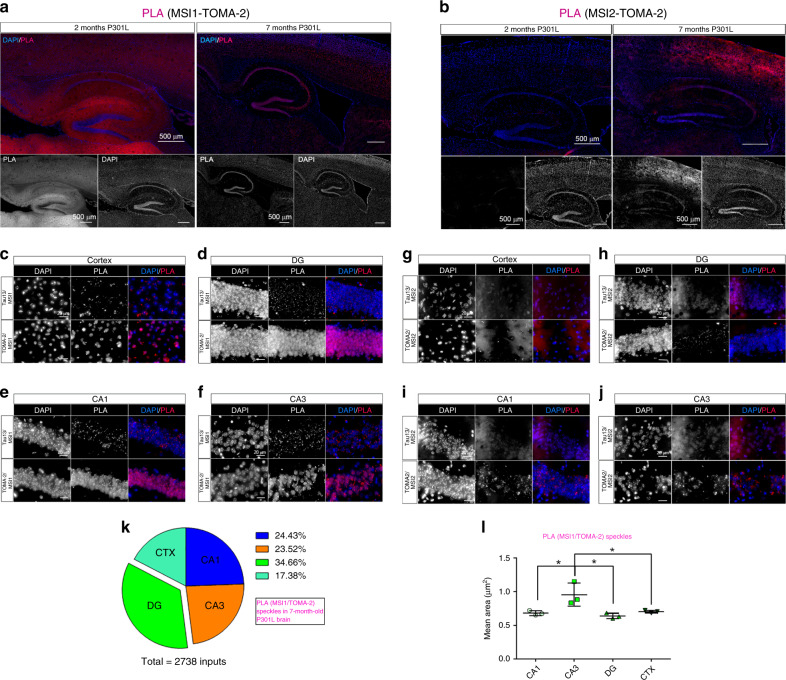
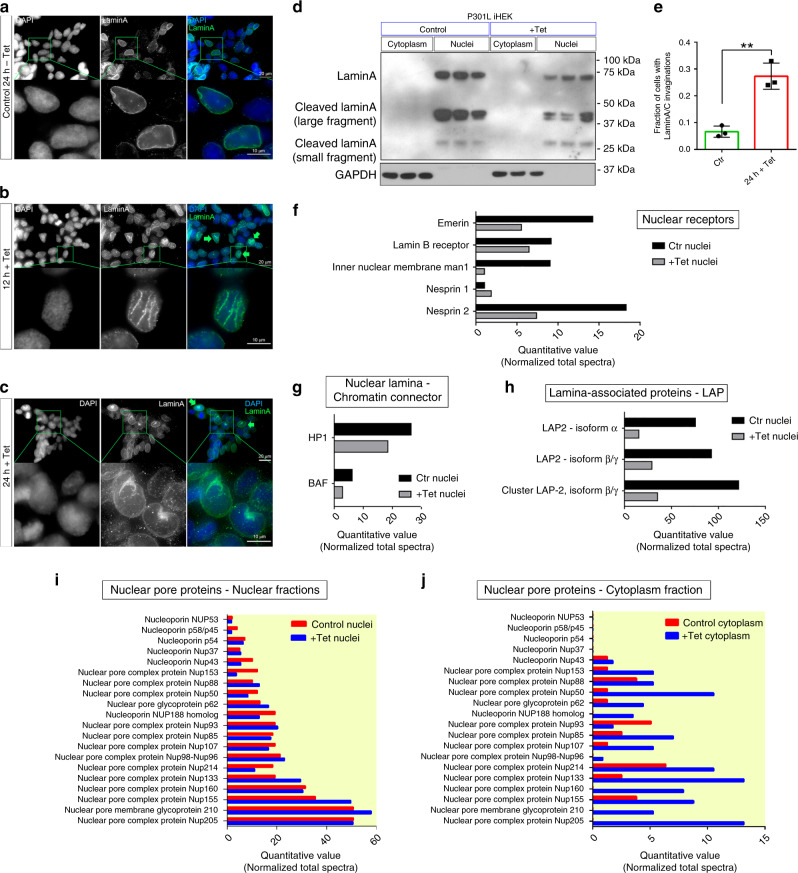
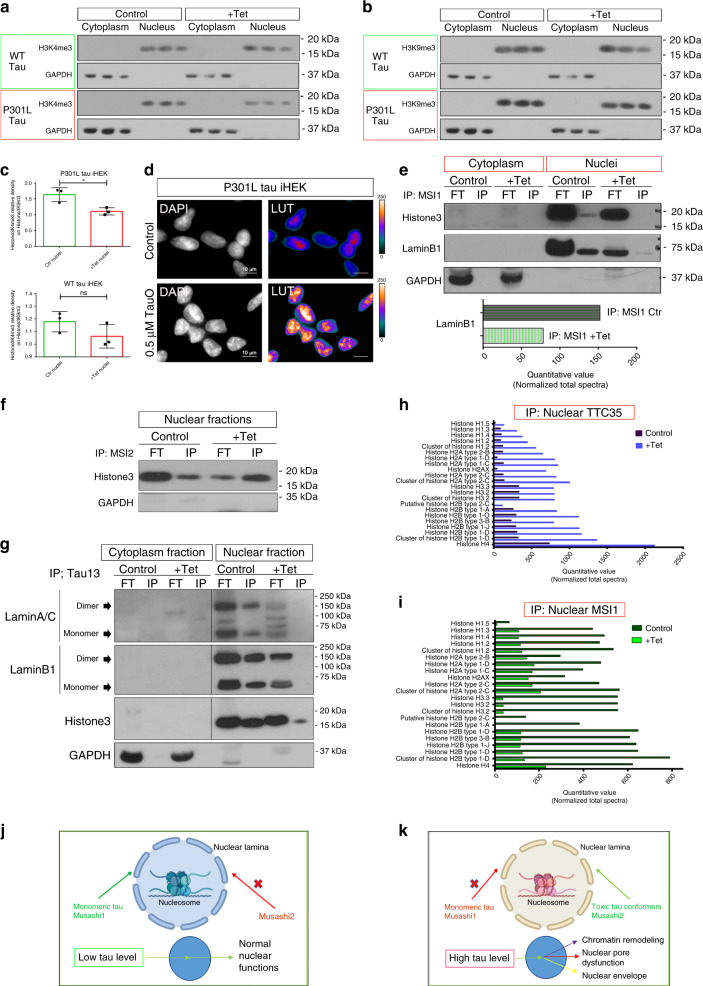
Oligomeric assemblies of tau and the RNA-binding proteins (RBPs) Musashi (MSI) are reported in Alzheimer’s disease (AD). However, the role of MSI and tau interaction in their aggregation process and its effects are nor clearly known in neurodegenerative diseases. Here, we investigated the expression and cellular localization of MSI1 and MSI2 in the brains tissues of Alzheimer’s disease (AD), amyotrophic lateral sclerosis (ALS) and frontotemporal dementia (FTD) as well as in the wild-type mice and tau knock-out and P301L tau mouse models. We observed that formation of pathologically relevant protein inclusions was driven by the aberrant interactions between MSI and tau in the nuclei associated with age-dependent extracellular depositions of tau/MSI complexes. Furthermore, tau and MSI interactions induced impairment of nuclear/cytoplasm transport, chromatin remodeling and nuclear lamina formation. Our findings provide mechanistic insight for pathological accumulation of MSI/tau aggregates providing a potential basis for therapeutic interventions in neurodegenerative proteinopathies.
Overview
The claims and statistics of this paper haven’t been checked yet.
Run the check — free, no account needed. It reads the open-access text and checks the sources it cites.
Integrity signals
Registry
Cites
Statistics
Figures
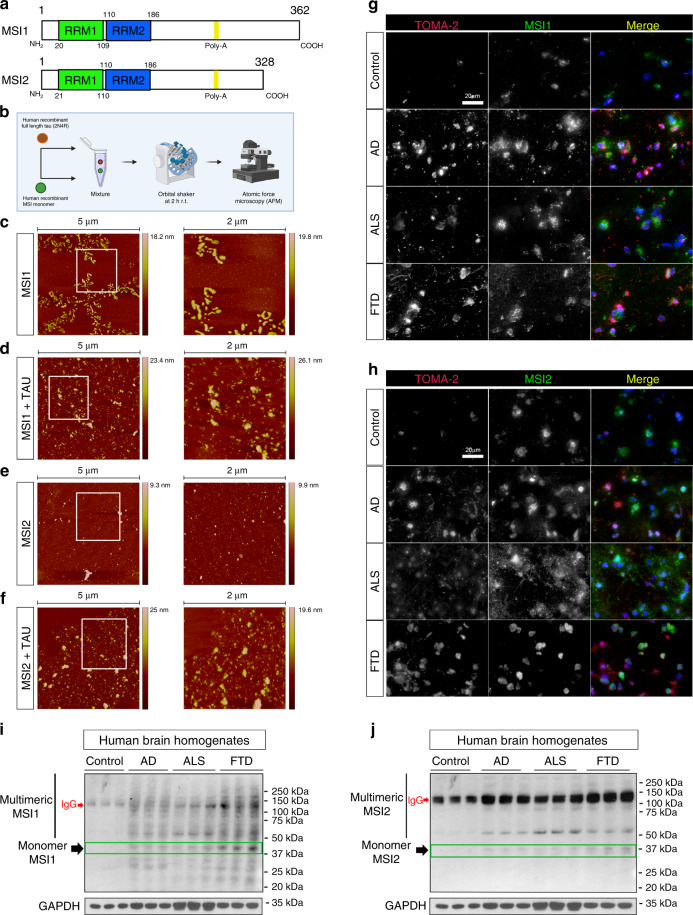
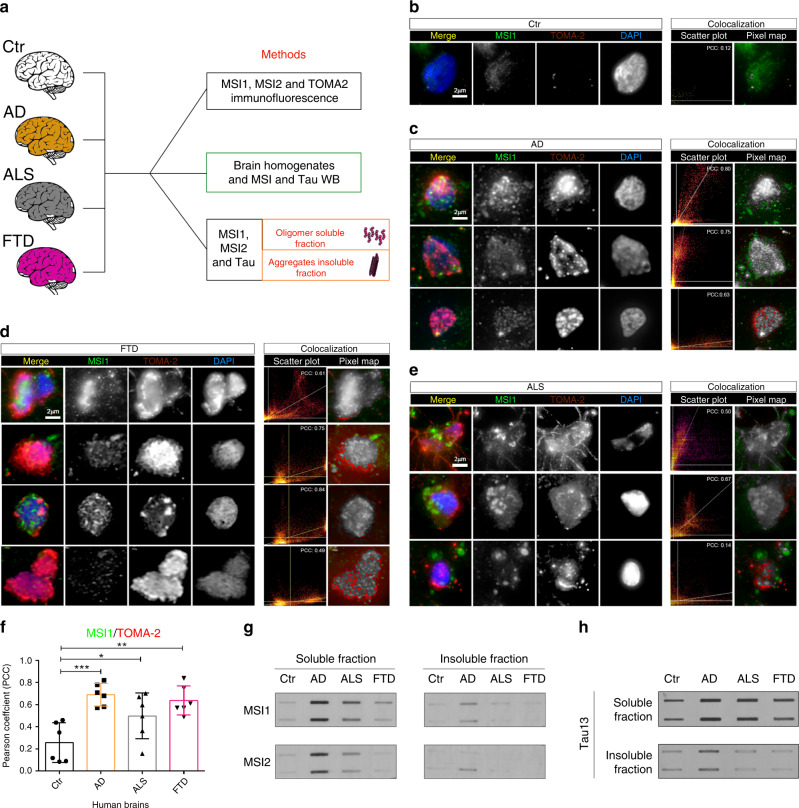
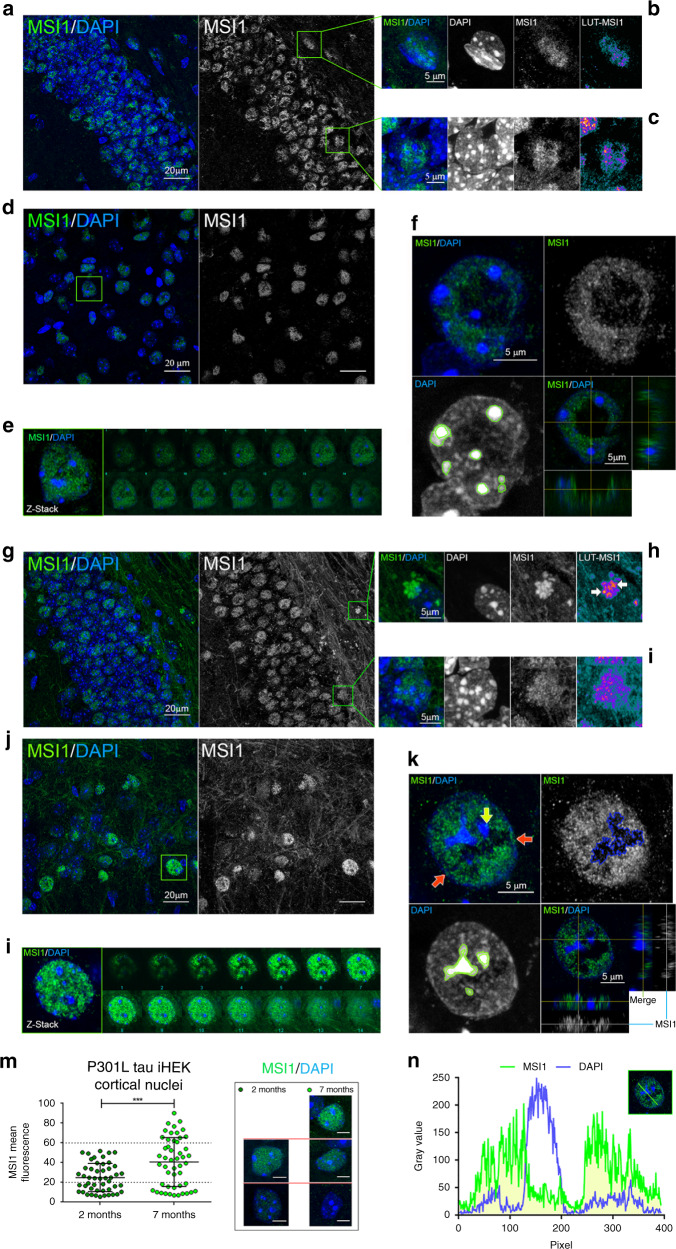
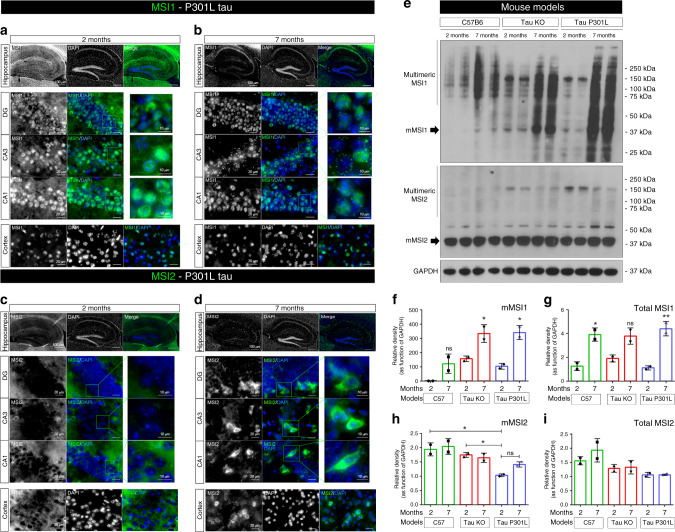
Verification
Claims the paper makes
The claims and statistics of this paper haven’t been checked yet.
Run the check — free, no account needed. It reads the open-access text and checks the sources it cites.
Claims other papers make about this one
Each is checked against this paper’s own text: does it say what the citing paper says it does?
In the citing paper
“RBPs constitute a large fraction of the tau interactome 11 , and pathogenic tau can have aberrant interactions with RBPs, leading to downstream consequences in cellular and RNA-related phenotypes 3,4,9,10,14-16 .”
From Tau is an m 6 A-associated RNA binding protein that causes RNA dysregulation in disease (2026) · cites this paper as [15]
Self-check
Percentages, sums and reported differences re-computed from the paper’s own numbers.
The self-check needs the paper’s full text.
Citations
Cites
A census of human RNA-binding proteins
Gerstberger, S., Hafner, M., & Tuschl, T. (2014) · Nature Reviews Genetics · doi:10.1038/nrg3813 · Cited by 2,032
Tau promotes neurodegeneration through global chromatin relaxation
Frost, B., Hemberg, M., Lewis, J., & Feany, M. B. (2014) · Nature Neuroscience · doi:10.1038/nn.3639 · Cited by 495
Nuclear Tau, a Key Player in Neuronal DNA Protection
Sultan, A., Nesslany, F., Violet, M., Bégard, S., Loyens, A., Talahari, S., Mansuroglu, Z., Marzin, D., Sergeant, N., Humez, S., et al. (2011) · Journal of Biological Chemistry · doi:10.1074/jbc.m110.199976 · Cited by 421
Reducing the RNA binding protein TIA1 protects against tau-mediated neurodegeneration in vivo
Apicco, D. J., Ash, P. E. A., Maziuk, B., LeBlang, C., Medalla, M., Al Abdullatif, A., Ferragud, A., Botelho, E., Ballance, H. I., Dhawan, U., et al. (2018) · Nature Neuroscience · doi:10.1038/s41593-017-0022-z · Cited by 281
RNA-binding proteins in neurodegeneration: Seq and you shall receive
Nussbacher, J. K., Batra, R., Lagier-Tourenne, C., & Yeo, G. W. (2015) · Trends in Neurosciences · doi:10.1016/j.tins.2015.02.003 · Cited by 115
Research works printed but not linked: 37
- Lunde, B. M., Moore, C. & Varani, G. RNA-binding proteins: modular design for efficient function. Nat. Rev. Mol. Cell Biol. 8, 479–490 (2007). · DOI
- De Conti, L., Baralle, M., Buratti, E. Neurodegeneration and RNA-binding proteins. Wiley Interdiscip. Rev. RNA. 8, https://doi.org/10.1002/wrna.1394 (2017) · DOI
- Montalbano, M., et al. Tau oligomers mediate aggregation of RNA-binding proteins Musashi1 and Musashi2 inducing Lamin alteration. Aging Cell 18, e13035 (2019). · DOI
- Maziuk, B., Ballance, H. I. & Wolozin, B. Dysregulation of RNA binding protein aggregation in neurodegenerative disorders. Front Mol. Neurosci. 10, 89 (2017). · DOI
- Vanderweyde, T. et al. Interaction of tau with the RNA-Binding Protein TIA1 Regulates tau Pathophysiology and Toxicity. Cell Rep. 15, 1455–1466 (2016). · DOI · Paper page
- Bishof I., et al. RNA-binding proteins with basic-acidic dipeptide (BAD) domains self-assemble and aggregate in Alzheimer’s disease. J Biol Chem. https://doi.org/10.1074/jbc.RA118.001747 (2018). · DOI · Paper page
- Sengupta, U. et al. Formation of toxic oligomeric assemblies of RNA-binding protein: Musashi in Alzheimer’s disease. Acta Neuropathol. Commun. 6, 113 (2018). · DOI · Paper page
- Nakamura, M., Okano, H., Blendy, J. A. & Montell, C. Musashi, a neural RNA-binding protein required for Drosophila adult external sensory organ development. Neuron 13, 67–81 (1994). · DOI
- Good, P. et al. The human Musashi homolog 1 (MSI1) gene encoding the homologue of Musashi/Nrp-1, a neural RNA-binding protein putatively expressed in CNS stem cells and neural progenitor cells. Genomics 52, 382–384 (1998). · DOI
- Sakakibara, S., Nakamura, Y., Satoh, H. & Okano, H. Rna-binding protein Musashi2: developmentally regulated expression in neural precursor cells and subpopulations of neurons in mammalian CNS. J. Neurosci. 21, 8091–8107 (2001). · DOI
- Lovell, M. A. & Markesbery, W. R. Ectopic expression of Musashi-1 in Alzheimer disease and Pick disease. J. Neuropathol. Exp. Neurol. 64, 675–680 (2005). · DOI
- Irwin, D. J. et al. Frontotemporal lobar degeneration: defining phenotypic diversity through personalized medicine. Acta Neuropathol. 129, 469–491 (2015). · DOI
- Zhao, M., Kim, J. R., van Bruggen, R. & Park, J. RNA-binding proteins in amyotrophic lateral sclerosis. Mol. Cells 41, 818–829 (2018).
- Ashizawa, T., Öz, G. & Paulson, H. L. Spinocerebellar ataxias: prospects and challenges for therapy development. Nat. Rev. Neurol. 14, 590–605 (2018). · DOI
- Nussbacher, J. K., Tabet, R., Yeo, G. W. & Lagier-Tourenne, C. Disruption of RNA Metabolism in Neurological Diseases and Emerging Therapeutic Interventions. Neuron 102, 294–320 (2019). · DOI
- Castillo-Carranza, D. L. et al. Specific targeting of tau oligomers in Htau mice prevents cognitive impairment and tau toxicity following injection with brain-derived tau oligomeric seeds. J. Alzheimers Dis. 40(Suppl 1), S97–S111 (2014). · DOI
- Gerson, J. E., Mudher, A. & Kayed, R. Potential mechanisms and implications for the formation of tau oligomeric strains. Crit. Rev. Biochem Mol. Biol. 51, 482–496 (2016). · DOI
- Arrasate, M., Perez, M. & Avila, J. Tau dephosphorylation at tau-1 site correlates with its association to cell membrane. Neurochem. Res. 25, 43–50 (2000). · DOI
- Buee, L., Bussiere, T., Buee-Scherrer, V., Delacourte, A. & Hof, P. R. Tau protein isoforms, phosphorylation and role in neurodegenerative disorders. Brain Res. Brain Res. Rev. 33, 95–130 (2000). · DOI
- Nishikawa, T. et al. The identification of raft-derived tau-associated vesicles that are incorporated into immature tangles and paired helical filaments. Neuropathol. Appl. Neurobiol. 42, 639–653 (2016). · DOI
- Kawarabayashi, T. et al. Dimeric amyloid beta protein rapidly accumulates in lipid rafts followed by apolipoprotein E and phosphorylated tau accumulation in the Tg2576 mouse model of Alzheimer’s disease. J. Neurosci. 24, 3801–3809 (2004). · DOI · Paper page
- Collin, L. et al. Neuronal uptake of tau/pS422 antibody and reduced progression of tau pathology in a mouse model of Alzheimer’s disease. Brain 137(Pt 10), 2834–2846 (2014). · DOI
- Lester, E. & Parker, R. The Tau of Nuclear-Cytoplasmic Transport. Neuron 99, 869–871 (2018). · DOI
- Eftekharzadeh, B. et al. Tau protein disrupts nucleocytoplasmic transport in Alzheimer’s disease. Neuron 101, 349 (2019). · DOI
- Metuzals, J., Robitaille, Y., Houghton, S., Gauthier, S. & Leblanc, R. Paired helical filaments and the cytoplasmic-nuclear interface in Alzheimer’s disease. J. Neurocytol. 17, 827–833 (1988). · DOI
- Brady, R. M., Zinkowski, R. P. & Binder, L. I. Presence of tau in isolated nuclei from human brain. Neurobiol. Aging 16, 479–486 (1995). · DOI
- Frost, B., Bardai, F. H. & Feany, M. B. Lamin dysfunction mediates neurodegeneration in tauopathies. Curr. Biol. 26, 129–136 (2016). · DOI · Paper page
- Lutz, M. I., Schwaiger, C., Hochreiter, B., Kovacs, G. G. & Schmid, J. A. Novel approach for accurate tissue-based protein colocalization and proximity microscopy. Sci. Rep. 7, 2668 (2017). · DOI
- Sakakibara, S. et al. RNA-binding protein Musashi family: roles for CNS stem cells and a subpopulation of ependymal cells revealed by targeted disruption and antisense ablation. Proc. Natl Acad. Sci. USA 99, 15194–15199 (2002). · DOI
- Rodríguez, J. J. & Verkhratsky, A. Neurogenesis in Alzheimer’s disease. J. Anat. 219, 78–89 (2011). · DOI
- Fahrenkrog B., Harel A. Perturbations in Traffic: Aberrant Nucleocytoplasmic Transport at the Heart of Neurodegeneration. Cells. 7. https://doi.org/10.3390/cells7120232 (2018). · DOI
- Terwel, D. et al. Changed conformation of mutant Tau-P301L underlies the moribund tauopathy, absent in progressive, nonlethal axonopathy of Tau-4R/2N transgenic mice. J. Biol. Chem. 280, 3963–3973 (2005). · DOI
- Andorfer, C. et al. Hyperphosphorylation and aggregation of tau in mice expressing normal human tau isoforms. J. Neurochem. 86, 582–590 (2003). · DOI · Paper page
- Lasagna-Reeves, C. A. et al. Identification of oligomers at early stages of tau aggregation in Alzheimer’s disease. FASEB J. Publ. Fed. Am. Soc. Exp. Biol. 26, 1946–1959 (2012).
- Lo Cascio, F. et al. Toxic tau oligomers modulated by novel curcumin derivatives. Sci. Rep. 9, 19011 (2019). · DOI
- Nesvizhskii, A. I., Keller, A., Kolker, E. & Aebersold, R. A statistical model for identifying proteins by tandem mass spectrometry. Anal. Chem. 75, 4646–4658 (2003). · DOI
- Gerson, J. E., Sengupta, U. & Kayed, R. Tau oligomers as pathogenic seeds: preparation and propagation in vitro and in vivo. Methods Mol. Biol. 1523, 141–157 (2017). · DOI
Cited by
Gaikwad, S., Puangmalai, N., Bittar, A., Montalbano, M., Garcia, S., McAllen, S., Bhatt, N., Sonawane, M., Sengupta, U., & Kayed, R. (2021) · Cell Reports · doi:10.1016/j.celrep.2021.109419 · Cited by 234
Self-citationMcMillan, P. J., Strovas, T. J., Baum, M., Mitchell, B. K., Eck, R. J., Hendricks, N., Wheeler, J. M., Latimer, C. S., Keene, C. D., & Kraemer, B. C. (2021) · Acta Neuropathologica Communications · doi:10.1186/s40478-021-01219-1 · Cited by 64
Frost, B., & Dubnau, J. (2024) · Annual Review of Neuroscience · doi:10.1146/annurev-neuro-082823-020615 · Cited by 45
m6A-dependent circular RNA formation mediates tau-induced neurotoxicity
Atrian, F., Ramirez, P., De Mange, J., Marquez, M., Gonzalez, E. M., Minaya, M., Karch, C. M., & Frost, B. (2024) · doi:10.1101/2024.01.25.577211 · Cited by 7
Tau is an m 6 A-associated RNA binding protein that causes RNA dysregulation in disease
Dixon, G., Keys, A., Rothamel, K., McKetney, J., Jiang, Y. X., Gordon, L. A., Page, M. L., Liu, C., Hou, K., Flanagan, K., et al. (2026) · doi:10.64898/2026.10.26.762095
Metadata
- Authors
- Montalbano, M., McAllen, S., Puangmalai, N., Sengupta, U., Bhatt, N., Johnson, O. D., Kharas, M. G., & Kayed, R.
- Venue
- Nature Communications
- Published
- 2020-08-27
- Volume
- 11
- Issue
- 1
- ISSN
- 2041-1723
- PMC
- PMC7453003
- Cited by
- 94
- References
- 5
- Language
- en
- Funders
- American Heart Association (17CSA33620007)
- The Gilson Longenbaugh Foundation
About these checks
Registry, retraction, Cites and statistics results are computed, not judged, with one exception: a printed reference that no index lists is read once by a model before it counts as a citation error. Claims are extracted by a model and kept only when their quote appears verbatim in the text; each cited source is then checked, with a model’s help, for whether it says what the claim relies on. Those verdicts can be wrong — read the claim’s quote and the cited source before relying on one.
Statistics and arithmetic are recomputed, not judged.
Confidence bands are shown only for fields calibrated on our annotated test set. None is calibrated yet, so no band is shown.
What counts as a claim ›How we measure confidence ›How we check this ›
Are you an author, or do you see a problem with this page? Request a review
Data sources
Bibliographic data: Semantic Scholar, OpenAlex, Crossref.
Contains information from the Semantic Scholar Academic Graph Datasets, made available under the ODC Attribution License (ODC-BY 1.0).
Semantic Scholar’s data is described in: Kinney, R., et al. (2023). The Semantic Scholar Open Data Platform. arXiv:2301.10140.
