

Structural bases of IMiD selectivity that emerges by 5-hydroxythalidomide
Open accessThe DOI matches its Crossref record; 57 of the 57 references it cites were found in a registry or an index.
Abstract
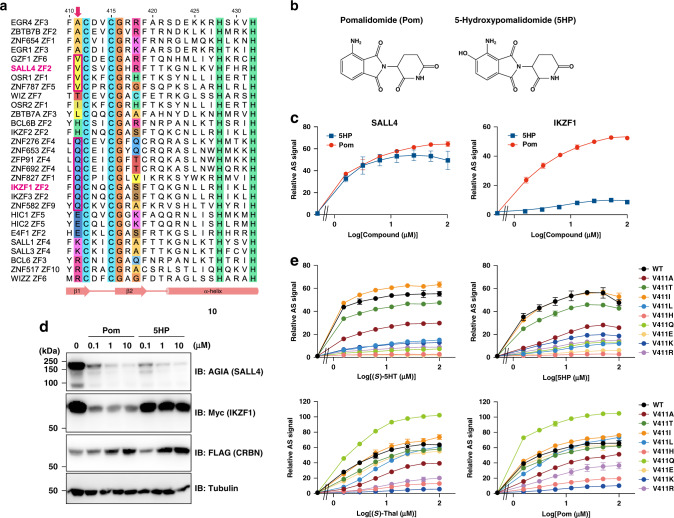
Thalidomide and its derivatives exert not only therapeutic effects as immunomodulatory drugs (IMiDs) but also adverse effects such as teratogenicity, which are due in part to different C2H2 zinc-finger (ZF) transcription factors, IKZF1 (or IKZF3) and SALL4, respectively. Here, we report the structural bases for the SALL4-specific proteasomal degradation induced by 5-hydroxythalidomide, a primary thalidomide metabolite generated by the enzymatic activity of cytochrome P450 isozymes, through the interaction with cereblon (CRBN). The crystal structure of the metabolite-mediated human SALL4-CRBN complex and mutagenesis studies elucidate the complex formation enhanced by the interaction between CRBN and an additional hydroxy group of ( S )-5-hydroxythalidomide and the variation in the second residue of β-hairpin structure that underlies the C2H2 ZF-type neo-morphic substrate (neosubstrate) selectivity of 5-hydroxythalidomide. These findings deepen our understanding of the pharmaceutical action of IMiDs and provide structural evidence that the glue-type E3 ligase modulators cause altered neosubstrate specificities through their metabolism.
Overview
The claims and statistics of this paper haven’t been checked yet.
Free: it reads the open-access text and checks the first 5 claims that cite a source we can check. Create a free account to check every claim.
Integrity signals
Registry
Cites
Statistics
Figures
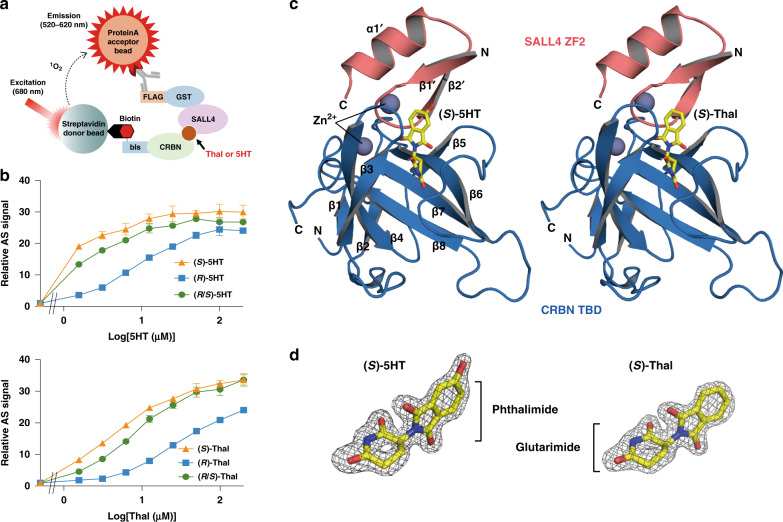
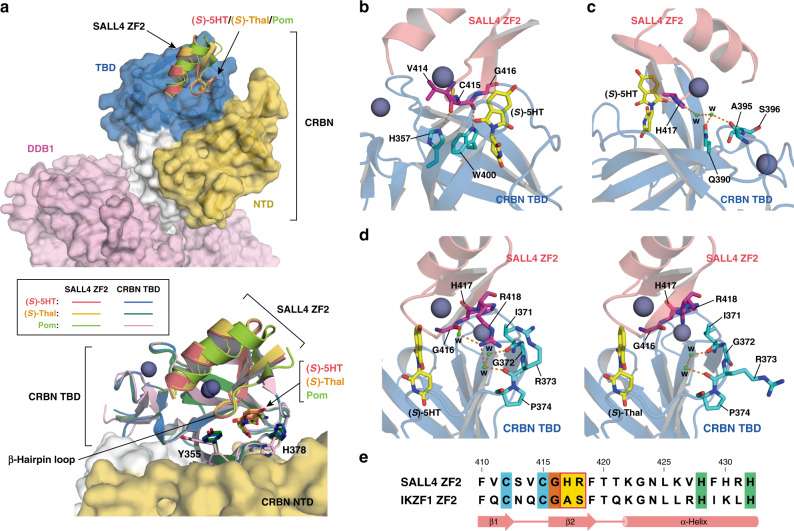
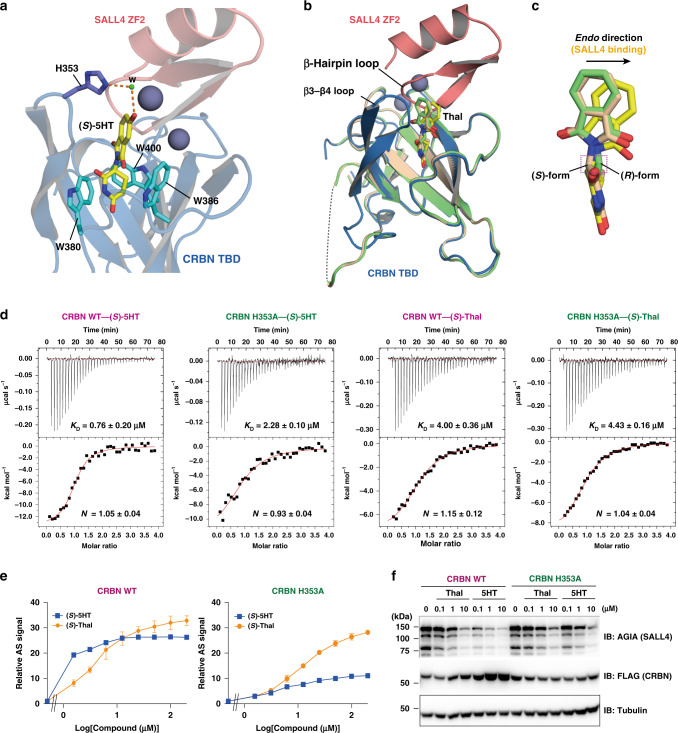
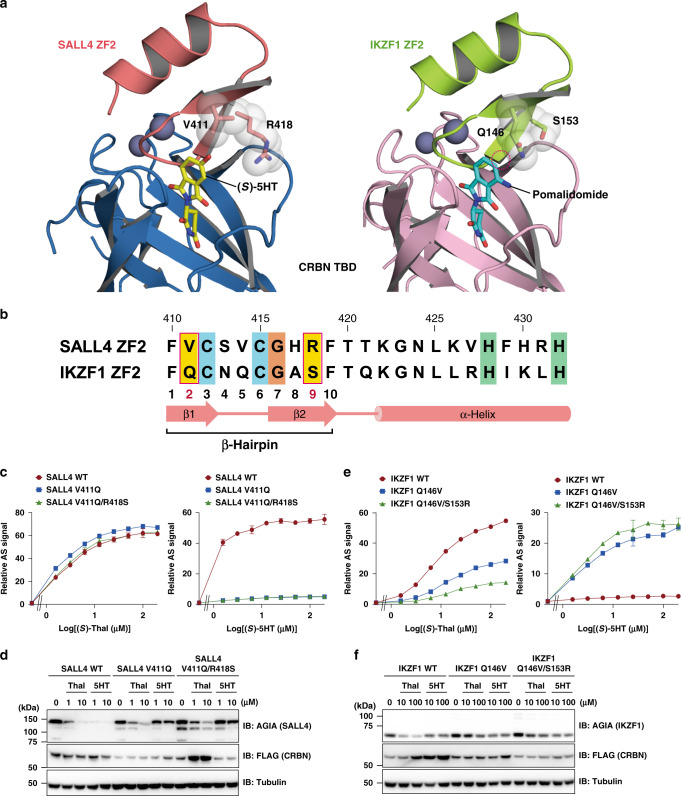
Verification
Claims the paper makes
The claims and statistics of this paper haven’t been checked yet.
Free: it reads the open-access text and checks the first 5 claims that cite a source we can check. Create a free account to check every claim.
Claims other papers make about this one
Each is checked against this paper’s own text: does it say what the citing paper says it does?
The source backs part of the claim, not all of it — or backs it for a different population, condition or comparison.
In the citing paper
“It was reported that 5-hydroxythalidomide, a metabolite of thalidomide, targets the ZFC1 of SALL4 to Cereblon (Furihata et al, 2020).”
From Targeting transcription factors through an IMiD independent zinc finger domain (2025) · cites this paper as Furihata et al, 2020
Experimental — accuracy not yet measuredThe cited source says what the claim attributes to it.
In the citing paper
“Using a combination of crystallography of the ZFC4 DNA binding regions with AlphaFold2, we predicted and demonstrated that SH6 binding to SALL4A and SALL4B differed from the previously reported thalidomide binding site (i.e., cerebelon-SALL4A interface)”
From Targeting transcription factors through an IMiD independent zinc finger domain (2025) · cites this paper as Furihata et al, 2020
Experimental — accuracy not yet measuredThe cited source says what the claim attributes to it.
In the citing paper
“These compounds, collectively known as immunomodulatory drugs (IMiDs), can promote the degradation of a host of cellular proteins by extending the subpar interfaces they form with CRBN, the substrate receptor of the CUL4-RBX1-DDB1 (CRL4) ubiquitin ligase complex9–20.”
From Defining molecular glues with a dual-nanobody cannabidiol sensor (2022) · cites this paper as [18]
Self-check
Percentages, sums and reported differences re-computed from the paper’s own numbers.
The self-check needs the paper’s full text.
Citations
Cites
Coot : model-building tools for molecular graphics
Emsley, P., & Cowtan, K. (2004) · Acta Crystallographica Section D Biological Crystallography · doi:10.1107/s0907444904019158 · Cited by 30,571
Phaser crystallographic software
McCoy, A. J., Grosse-Kunstleve, R. W., Adams, P. D., Winn, M. D., Storoni, L. C., & Read, R. J. (2007) · Journal of Applied Crystallography · doi:10.1107/s0021889807021206 · Cited by 20,612
Kabsch, W. (2010) · Acta Crystallographica Section D Biological Crystallography · doi:10.1107/s0907444909047337 · Cited by 16,463
MolProbity : all-atom structure validation for macromolecular crystallography
Chen, V. B., Arendall, W. B., Headd, J. J., Keedy, D. A., Immormino, R. M., Kapral, G. J., Murray, L. W., Richardson, J. S., & Richardson, D. C. (2010) · Acta Crystallographica Section D Biological Crystallography · doi:10.1107/s0907444909042073 · Cited by 14,115
How good are my data and what is the resolution?
Evans, P. R., & Murshudov, G. N. (2013) · Acta Crystallographica Section D Biological Crystallography · doi:10.1107/s0907444913000061 · Cited by 4,697
PHENIX : building new software for automated crystallographic structure determination
Adams, P. D., Grosse-Kunstleve, R. W., Hung, L.-W., Ioerger, T. R., McCoy, A. J., Moriarty, N. W., Read, R. J., Sacchettini, J. C., Sauter, N. K., & Terwilliger, T. C. (2002) · Acta Crystallographica Section D Biological Crystallography · doi:10.1107/s0907444902016657 · Cited by 4,361
Antitumor Activity of Thalidomide in Refractory Multiple Myeloma
Singhal, S., Mehta, J., Desikan, R., Ayers, D., Roberson, P., Eddlemon, P., Munshi, N., Anaissie, E., Wilson, C., Dhodapkar, M., et al. (1999) · New England Journal of Medicine · doi:10.1056/nejm199911183412102 · Cited by 2,575
Identification of a Primary Target of Thalidomide Teratogenicity
Ito, T., Ando, H., Suzuki, T., Ogura, T., Hotta, K., Imamura, Y., Yamaguchi, Y., & Handa, H. (2010) · Science · doi:10.1126/science.1177319 · Cited by 2,136
Lenalidomide Causes Selective Degradation of IKZF1 and IKZF3 in Multiple Myeloma Cells
Krönke, J., Udeshi, N. D., Narla, A., Grauman, P., Hurst, S. N., McConkey, M., Svinkina, T., Heckl, D., Comer, E., Li, X., et al. (2014) · Science · doi:10.1126/science.1244851 · Cited by 1,879
The Myeloma Drug Lenalidomide Promotes the Cereblon-Dependent Destruction of Ikaros Proteins
Lu, G., Middleton, R. E., Sun, H., Naniong, M., Ott, C. J., Mitsiades, C. S., Wong, K.-K., Bradner, J. E., & Kaelin, W. G. (2014) · Science · doi:10.1126/science.1244917 · Cited by 1,583
Structure of the DDB1–CRBN E3 ubiquitin ligase in complex with thalidomide
Fischer, E. S., Böhm, K., Lydeard, J. R., Yang, H., Stadler, M. B., Cavadini, S., Nagel, J., Serluca, F., Acker, V., Lingaraju, G. M., et al. (2014) · Nature · doi:10.1038/nature13527 · Cited by 1,141
Lenalidomide induces ubiquitination and degradation of CK1α in del(5q) MDS
Krönke, J., Fink, E. C., Hollenbach, P. W., MacBeth, K. J., Hurst, S. N., Udeshi, N. D., Chamberlain, P. P., Mani, D. R., Man, H. W., Gandhi, A. K., et al. (2015) · Nature · doi:10.1038/nature14610 · Cited by 863
Lopez-Girona, A., Mendy, D., Ito, T., Miller, K., Gandhi, A. K., Kang, J., Karasawa, S., Carmel, G., Jackson, P., Abbasian, M., et al. (2012) · Leukemia · doi:10.1038/leu.2012.119 · Cited by 814
The evolution of thalidomide and its IMiD derivatives as anticancer agents
Bartlett, J. B., Dredge, K., & Dalgleish, A. G. (2004) · Nature Reviews Cancer · doi:10.1038/nrc1323 · Cited by 809
A novel cereblon modulator recruits GSPT1 to the CRL4CRBN ubiquitin ligase
Matyskiela, M. E., Lu, G., Ito, T., Pagarigan, B., Lu, C.-C., Miller, K., Fang, W., Wang, N.-Y., Nguyen, D., Houston, J., et al. (2016) · Nature · doi:10.1038/nature18611 · Cited by 701
Structural insights into the catalysis and regulation of E3 ubiquitin ligases
Buetow, L., & Huang, D. T. (2016) · Nature Reviews Molecular Cell Biology · doi:10.1038/nrm.2016.91 · Cited by 679
Molecular architecture and assembly of the DDB1–CUL4A ubiquitin ligase machinery
Angers, S., Li, T., Yi, X., MacCoss, M. J., Moon, R. T., & Zheng, N. (2006) · Nature · doi:10.1038/nature05175 · Cited by 674
Structural basis of lenalidomide-induced CK1α degradation by the CRL4CRBN ubiquitin ligase
Petzold, G., Fischer, E. S., & Thomä, N. H. (2016) · Nature · doi:10.1038/nature16979 · Cited by 620
Gandhi, A. K., Kang, J., Havens, C. G., Conklin, T., Ning, Y., Wu, L., Ito, T., Ando, H., Waldman, M. F., Thakurta, A., et al. (2014) · British Journal of Haematology · doi:10.1111/bjh.12708 · Cited by 619
Plasticity in binding confers selectivity in ligand-induced protein degradation
Nowak, R. P., DeAngelo, S. L., Buckley, D., He, Z., Donovan, K. A., An, J., Safaee, N., Jedrychowski, M. P., Ponthier, C. M., Ishoey, M., et al. (2018) · Nature Chemical Biology · doi:10.1038/s41589-018-0055-y · Cited by 615
Cereblon expression is required for the antimyeloma activity of lenalidomide and pomalidomide
Zhu, Y. X., Braggio, E., Shi, C.-X., Bruins, L. A., Schmidt, J. E., Van Wier, S., Chang, X.-B., Bjorklund, C. C., Fonseca, R., Bergsagel, P. L., et al. (2011) · Blood · doi:10.1182/blood-2011-05-356063 · Cited by 607
Defining the human C2H2 zinc finger degrome targeted by thalidomide analogs through CRBN
Sievers, Q. L., Petzold, G., Bunker, R. D., Renneville, A., Słabicki, M., Liddicoat, B. J., Abdulrahman, W., Mikkelsen, T., Ebert, B. L., & Thomä, N. H. (2018) · Science · doi:10.1126/science.aat0572 · Cited by 537
Chamberlain, P. P., Lopez-Girona, A., Miller, K., Carmel, G., Pagarigan, B., Chie-Leon, B., Rychak, E., Corral, L. G., Ren, Y. J., Wang, M., et al. (2014) · Nature Structural & Molecular Biology · doi:10.1038/nsmb.2874 · Cited by 531
A cell-free protein synthesis system for high-throughput proteomics
Sawasaki, T., Ogasawara, T., Morishita, R., & Endo, Y. (2002) · Proceedings of the National Academy of Sciences · doi:10.1073/pnas.232580399 · Cited by 517
Self-citationDonovan, K. A., An, J., Nowak, R. P., Yuan, J. C., Fink, E. C., Berry, B. C., Ebert, B. L., & Fischer, E. S. (2018) · eLife · doi:10.7554/elife.38430 · Cited by 509
C2H2 zinc finger proteins greatly expand the human regulatory lexicon
Najafabadi, H. S., Mnaimneh, S., Schmitges, F. W., Garton, M., Lam, K. N., Yang, A., Albu, M., Weirauch, M. T., Radovani, E., Kim, P. M., et al. (2015) · Nature Biotechnology · doi:10.1038/nbt.3128 · Cited by 346
SALL4 mediates teratogenicity as a thalidomide-dependent cereblon substrate
Matyskiela, M. E., Couto, S., Zheng, X., Lu, G., Hui, J., Stamp, K., Drew, C., Ren, Y., Wang, M., Carpenter, A., et al. (2018) · Nature Chemical Biology · doi:10.1038/s41589-018-0129-x · Cited by 338
Okihiro syndrome is caused by SALL4 mutations
Kohlhase, J. (2002) · Human Molecular Genetics · doi:10.1093/hmg/11.23.2979 · Cited by 320
A mutation in a novel ATP-dependent Lon protease gene in a kindred with mild mental retardation
Higgins, J. J., Pucilowska, J., Lombardi, R. Q., & Rooney, J. P. (2004) · Neurology · doi:10.1212/01.wnl.0000146196.01316.a2 · Cited by 250
Melchert, M., & List, A. (2007) · The International Journal of Biochemistry & Cell Biology · doi:10.1016/j.biocel.2007.01.022 · Cited by 246
The Ikaros gene family: Transcriptional regulators of hematopoiesis and immunity
John, L. B., & Ward, A. C. (2011) · Molecular Immunology · doi:10.1016/j.molimm.2011.03.006 · Cited by 231
Murine inner cell mass-derived lineages depend on Sall4 function
Elling, U., Klasen, C., Eisenberger, T., Anlag, K., & Treier, M. (2006) · Proceedings of the National Academy of Sciences · doi:10.1073/pnas.0607884103 · Cited by 186
Malformations Caused by Drugs in Pregnancy
LENZ, W. (1966) · Archives of Pediatrics & Adolescent Medicine · doi:10.1001/archpedi.1966.02090110043001 · Cited by 177
Thalidomide metabolism by the CYP2C subfamily.
Ando, Y., Fuse, E., & Figg, W. D. (2002) · PubMed · Cited by 171
Cooperative and antagonistic interactions between Sall4 and Tbx5 pattern the mouse limb and heart
Koshiba-Takeuchi, K., Takeuchi, J. K., Arruda, E. P., Kathiriya, I. S., Mo, R., Hui, C.-C., Srivastava, D., & Bruneau, B. G. (2006) · Nature Genetics · doi:10.1038/ng1707 · Cited by 170
Teratogenic effects of thalidomide in rabbits, rats, hamsters, and mice
Fratta, I., Sigg, E. B., & Maiorana, K. (1965) · Toxicology and Applied Pharmacology · doi:10.1016/0041-008x(65)90095-5 · Cited by 159
p63 is a cereblon substrate involved in thalidomide teratogenicity
Asatsuma-Okumura, T., Ando, H., De Simone, M., Yamamoto, J., Sato, T., Shimizu, N., Asakawa, K., Yamaguchi, Y., Ito, T., Guerrini, L., et al. (2019) · Nature Chemical Biology · doi:10.1038/s41589-019-0366-7 · Cited by 134
Structural basis of thalidomide enantiomer binding to cereblon
Mori, T., Ito, T., Liu, S., Ando, H., Sakamoto, S., Yamaguchi, Y., Tokunaga, E., Shibata, N., Handa, H., & Hakoshima, T. (2018) · Scientific Reports · doi:10.1038/s41598-018-19202-7 · Cited by 128
Self-citationAbsorption, metabolism and excretion of [14C]pomalidomide in humans following oral administration
Hoffmann, M., Kasserra, C., Reyes, J., Schafer, P., Kosek, J., Capone, L., Parton, A., Kim-Kang, H., Surapaneni, S., & Kumar, G. (2013) · Cancer Chemotherapy and Pharmacology · doi:10.1007/s00280-012-2040-6 · Cited by 121
Crystal structure of the SALL4-pomalidomide-cereblon-DDB1 complex
Matyskiela, M. E., Clayton, T., Zheng, X., Mayne, C., Tran, E., Carpenter, A., Pagarigan, B., McDonald, J., Rolfe, M., Hamann, L. G., et al. (2020) · Nature Structural & Molecular Biology · doi:10.1038/s41594-020-0405-9 · Cited by 103
Yamanaka, S., Murai, H., Saito, D., Abe, G., Tokunaga, E., Iwasaki, T., Takahashi, H., Takeda, H., Suzuki, T., Shibata, N., et al. (2021) · The EMBO Journal · doi:10.15252/embj.2020105375 · Cited by 89
Self-citationThe application and biology of immunomodulatory drugs (IMiDs) in cancer
Pan, B., & Lentzsch, S. (2012) · Pharmacology & Therapeutics · doi:10.1016/j.pharmthera.2012.07.004 · Cited by 76
Akiyama, R., Kawakami, H., Wong, J., Oishi, I., Nishinakamura, R., & Kawakami, Y. (2015) · Proceedings of the National Academy of Sciences · doi:10.1073/pnas.1421949112 · Cited by 70
Thalidomide on the comeback trail
Hales, B. F. (1999) · Nature Medicine · doi:10.1038/8371 · Cited by 70
Sawasaki, T., Kamura, N., Matsunaga, S., Saeki, M., Tsuchimochi, M., Morishita, R., & Endo, Y. (2008) · FEBS Letters · doi:10.1016/j.febslet.2007.12.004 · Cited by 67
Self-citationYano, T., Takeda, H., Uematsu, A., Yamanaka, S., Nomura, S., Nemoto, K., Iwasaki, T., Takahashi, H., & Sawasaki, T. (2016) · PLOS ONE · doi:10.1371/journal.pone.0156716 · Cited by 66
Self-citationThe role of Ikaros in human erythroid differentiation
Dijon, M., Bardin, F., Murati, A., Batoz, M., Chabannon, C., & Tonnelle, C. (2008) · Blood · doi:10.1182/blood-2007-07-098202 · Cited by 50
Takahashi, H., Uematsu, A., Yamanaka, S., Imamura, M., Nakajima, T., Doi, K., Yasuoka, S., Takahashi, C., Takeda, H., & Sawasaki, T. (2016) · PLOS ONE · doi:10.1371/journal.pone.0156718 · Cited by 48
Self-citationChowdhury, G., Murayama, N., Okada, Y., Uno, Y., Shimizu, M., Shibata, N., Guengerich, F. P., & Yamazaki, H. (2010) · Chemical Research in Toxicology · doi:10.1021/tx900367p · Cited by 47
Self-citationYamazaki, H., Suemizu, H., Shimizu, M., Igaya, S., Shibata, N., Nakamura, M., Chowdhury, G., & Guengerich, F. P. (2012) · Chemical Research in Toxicology · doi:10.1021/tx300009j · Cited by 46
Self-citationChowdhury, G., Shibata, N., Yamazaki, H., & Guengerich, F. P. (2013) · Chemical Research in Toxicology · doi:10.1021/tx4004215 · Cited by 38
Self-citationAn IMiD-induced SALL4 degron system for selective degradation of target proteins
Yamanaka, S., Shoya, Y., Matsuoka, S., Nishida-Fukuda, H., Shibata, N., & Sawasaki, T. (2020) · Communications Biology · doi:10.1038/s42003-020-01240-5 · Cited by 29
Self-citationYamamoto, T., Shibata, N., Sukeguchi, D., Takashima, M., Nakamura, S., Toru, T., Matsunaga, N., Hara, H., Tanaka, M., Obata, T., et al. (2009) · Bioorganic & Medicinal Chemistry Letters · doi:10.1016/j.bmcl.2009.02.108 · Cited by 28
Self-citationShimizu, M., Suemizu, H., Mitsui, M., Shibata, N., Guengerich, F. P., & Yamazaki, H. (2016) · Xenobiotica · doi:10.1080/00498254.2016.1247218 · Cited by 20
Self-citationThe susceptible period for thalidomide malformations in man and monkey.
Lenz, W. (1968) · PubMed · Cited by 11
PLZF is a new substrate of CRBN with thalidomide and 5-hydroxythalidomidePreprint
Yamanaka, S., Murai, H., Saito, D., et al. (2020) · bioRxiv (Cold Spring Harbor Laboratory) · doi:10.1101/2020.02.28.969071 · Cited by 5
Self-citationOnodera, W., Asahi, T., & Sawamura, N. (2019) · Molecular Phylogenetics and Evolution · doi:10.1016/j.ympev.2019.03.001 · Cited by 5
Cited by
PROTACs: past, present and future
Li, K., & Crews, C. M. (2022) · Chemical Society Reviews · doi:10.1039/d2cs00193d · Cited by 869
Targeted protein degradation: from mechanisms to clinic
Tsai, J. M., Nowak, R. P., Ebert, B. L., & Fischer, E. S. (2024) · Nature Reviews Molecular Cell Biology · doi:10.1038/s41580-024-00729-9 · Cited by 438
“In fact, a number of variations on this concept exist that lead to different biological and clinical effects.”
Recent Developments in PROTAC‐Mediated Protein Degradation: From Bench to Clinic
Hu, Z., & Crews, C. M. (2022) · ChemBioChem · doi:10.1002/cbic.202100270 · Cited by 231
Ubiquitin ligases: guardians of mammalian development
Cruz Walma, D. A., Chen, Z., Bullock, A. N., & Yamada, K. M. (2022) · Nature Reviews Molecular Cell Biology · doi:10.1038/s41580-021-00448-5 · Cited by 211
Molecular glues for protein-protein interactions: Progressing toward a new dream
Konstantinidou, M., & Arkin, M. R. (2024) · Cell Chemical Biology · doi:10.1016/j.chembiol.2024.04.002 · Cited by 187
Metadata
- Authors
- Furihata, H., Yamanaka, S., Honda, T., Miyauchi, Y., Asano, A., Shibata, N., Tanokura, M., Sawasaki, T., & Miyakawa, T.
- Affiliations
- The University of Tokyo (JP)
- Ehime University (JP)
- Nagoya Institute of Technology (JP)
- Corresponding author
- Tanokura, Masaru
- Sawasaki, Tatsuya
- Miyakawa, Takuya
- ORCID
- Venue
- Nature Communications
- Published
- 2020-09-14
- Volume
- 11
- Issue
- 1
- Pages
- 4578-4578
- ISSN
- 2041-1723 (ISSN-L)
- PMC
- PMC7490372
- OpenAlex
- W3085433450
- Cited by
- 89
- References
- 56
- Citations by year
- 2026: 15 · 2025: 27 · 2024: 16 · 2023: 13 · 2022: 11 · 2021: 6 · 2020: 1
- FWCI
- 2.51
- Type
- journal article
- Language
- en
- Open access
- gold
- doi.org
- Licence
- cc-by
- creativecommons.org/licenses/by/4.0 (tdm)
- creativecommons.org/licenses/by/4.0 (vor)
- Locations
- Nature Communications (publishedVersion, cc-by)
- PubMed (publishedVersion)
- RePEc: Research Papers in Economics (submittedVersion)
- DOAJ (DOAJ: Directory of Open Access Journals) (submittedVersion, cc-by-sa)
- Funders
- MEXT | Japan Society for the Promotion of Science (JP17J0844)
- Topics
- Life Sciences › Biochemistry, Genetics and Molecular Biology › Molecular Biology › Protein Degradation and Inhibitors
- Life Sciences › Biochemistry, Genetics and Molecular Biology › Molecular Biology › Ubiquitin and proteasome pathways
- Life Sciences › Biochemistry, Genetics and Molecular Biology › Structural Biology › Enzyme Structure and Function
- Keywords
- immunomodulators, SALL4, cereblon, C2H2 zinc finger transcription factor, proteasomal degradation, E3 ubiquitin ligase, cytochrome P450 metabolism, drug selectivity, teratogenicity
- MeSH terms
- Protein Domains, Amino Acid Sequence, Humans, Immunologic Factors, Protein Binding, Stereoisomerism, Substrate Specificity, Thalidomide, Transcription Factors, Structural Homology, Protein, Ubiquitin-Protein Ligases, Adaptor Proteins, Signal Transducing, HEK293 Cells
About these checks
Registry, retraction, Cites and statistics results are computed, not judged, with one exception: a printed reference that no index lists is read once by a model before it counts as a citation error. Claims are extracted by a model and kept only when their quote appears verbatim in the text; each cited source is then checked, with a model’s help, for whether it says what the claim relies on. Those verdicts can be wrong — read the claim’s quote and the cited source before relying on one.
Statistics and arithmetic are recomputed, not judged.
Confidence bands are shown only for fields calibrated on our annotated test set. None is calibrated yet, so no band is shown.
What counts as a claim ›How we measure confidence ›How we check this ›
Are you an author, or do you see a problem with this page? Request a review
Data sources
Bibliographic data: Semantic Scholar, OpenAlex, Crossref.
Contains information from the Semantic Scholar Academic Graph Datasets, made available under the ODC Attribution License (ODC-BY 1.0).
Semantic Scholar’s data is described in: Kinney, R., et al. (2023). The Semantic Scholar Open Data Platform. arXiv:2301.10140.
