

HIF-2α is indispensable for regulatory T cell function
Open accessThe DOI matches its Crossref record; 67 of the 68 references it cites were found in a registry or an index.
Abstract
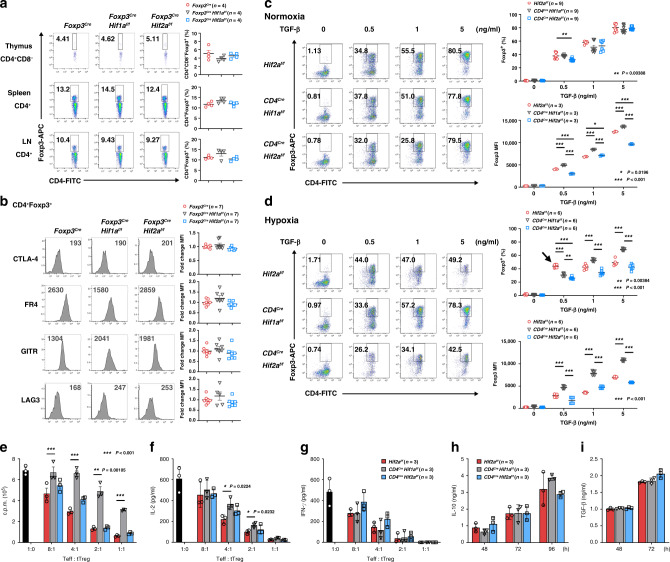
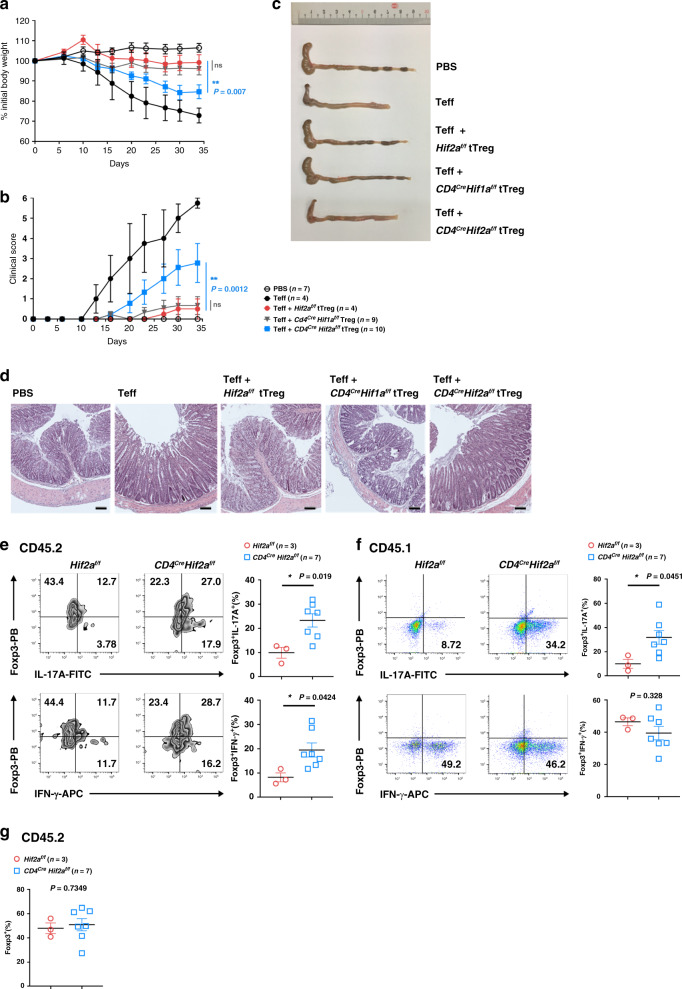
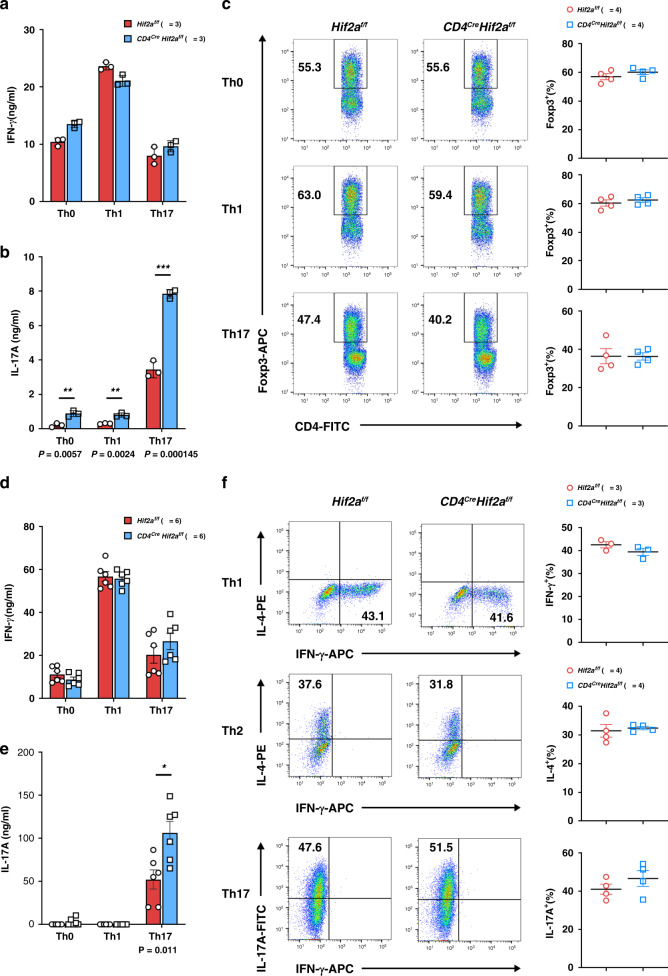
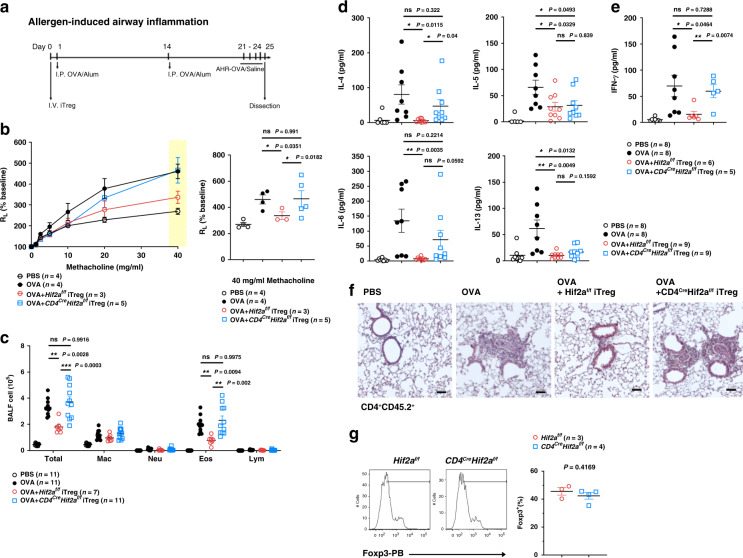
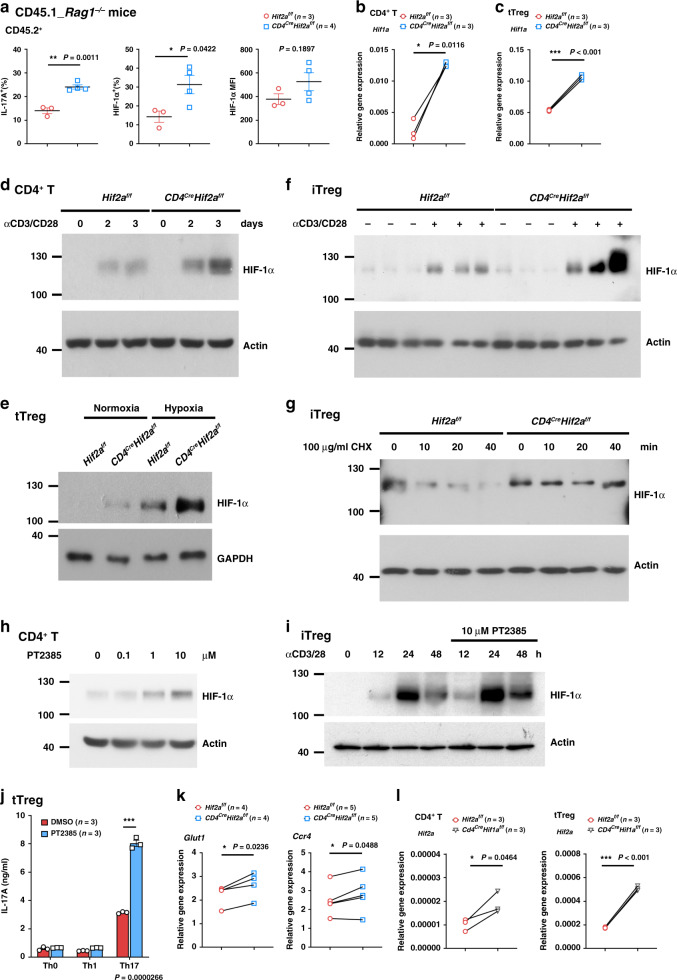
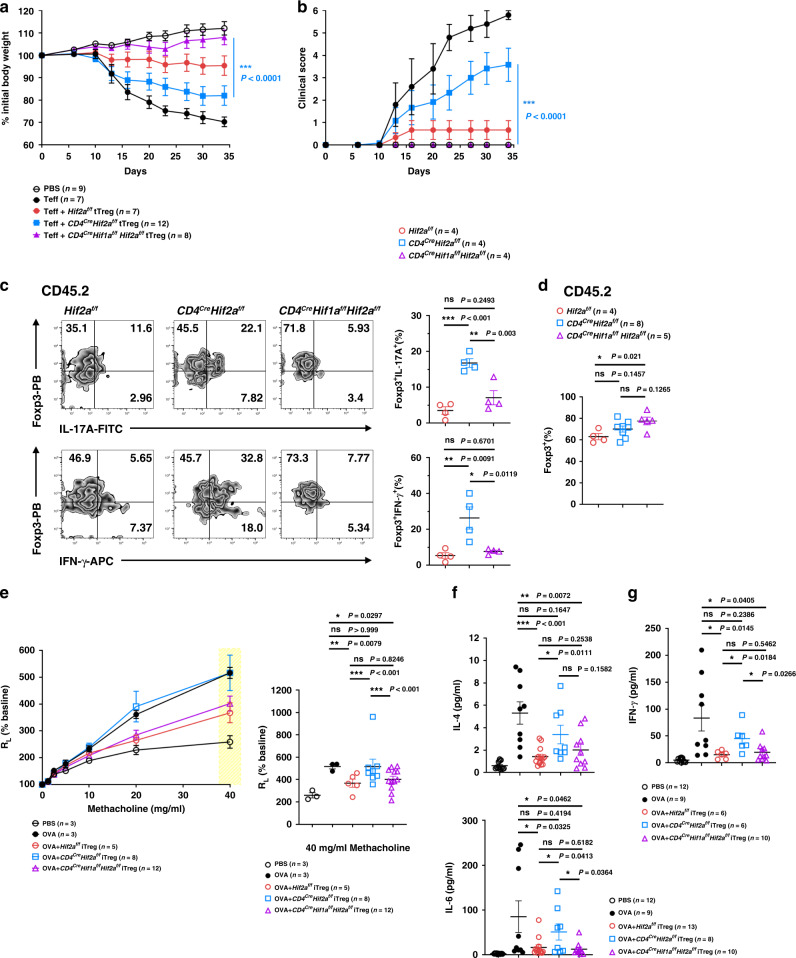
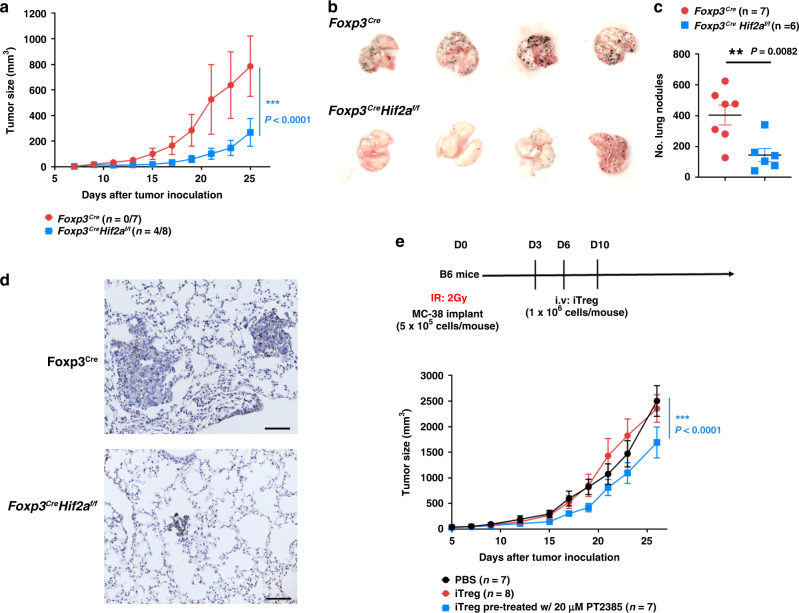
Hypoxia-inducible factor 1α (HIF-1α) and HIF-2α are master transcription factors that regulate cellular responses to hypoxia, but the exact function in regulatory T (Treg) cells is controversial. Here, we show that Treg cell development is normal in mice with Foxp3-specific knockout (KO) of HIF-1α or HIF-2α. However, HIF-2α-KO (but not HIF-1α-KO) Treg cells are functionally defective in suppressing effector T cell-induced colitis and inhibiting airway hypersensitivity. HIF-2α-KO Treg cells have enhanced reprogramming into IL-17-secreting cells. We show crosstalk between HIF-2α and HIF-1α, and that HIF-2α represses HIF-1α expression. HIF-1α is upregulated in HIF-2α-KO Treg cells and further deletion of HIF-1α restores the inhibitory function of HIF-2α-KO Treg cells. Mice with Foxp3-conditional KO of HIF-2α are resistant to growth of MC38 colon adenocarcinoma and metastases of B16F10 melanoma. Together, these results indicate that targeting HIF-2α to destabilize Treg cells might be an approach for regulating the functional activity of Treg cells.
Overview
The claims and statistics of this paper haven’t been checked yet.
Free: it reads the open-access text and checks the first 5 claims that cite a source we can check. Create a free account to check every claim.
Integrity signals
Registry
Cites
Statistics
Figures
Verification
Claims the paper makes
The claims and statistics of this paper haven’t been checked yet.
Free: it reads the open-access text and checks the first 5 claims that cite a source we can check. Create a free account to check every claim.
Claims other papers make about this one
Each is checked against this paper’s own text: does it say what the citing paper says it does?
The check wasn’t confident either way, so it gives no verdict — never disputed.
In the citing paper
“Indeed, acriflavine, which blocks HIF-1/2α-HIF-1β dimerization, dramatically improved the benefit of cancer immunotherapy based on TRP-2 peptide vaccination and anti-PD-1 blocking antibody in the B6–F10 syngeneic mouse melanoma model [74].”
From Revisiting the HIF switch in the tumor and its immune microenvironment. (2022) · cites this paper as [74]
Experimental — accuracy not yet measured
Self-check
Percentages, sums and reported differences re-computed from the paper’s own numbers.
The self-check needs the paper’s full text.
Citations
Cites
Control of Regulatory T Cell Development by the Transcription Factor Foxp3
Hori, S., Nomura, T., & Sakaguchi, S. (2003) · Science · doi:10.1126/science.1079490 · Cited by 8,187
Targeting Hypoxia-Inducible Factors for the Treatment of Anemia in Chronic Kidney Disease Patients
Locatelli, F., Fishbane, S., Block, G. A., & Macdougall, I. C. (2017) · American Journal of Nephrology · doi:10.1159/000455166 · Cited by 4,813
Hypoxia-inducible factors in physiology and medicine
Semenza, G. L. (2012) · Cell · doi:10.1016/j.cell.2012.01.021 · Cited by 3,645
Cellular and developmental control of O 2 homeostasis by hypoxia-inducible factor 1α
Iyer, N. V., Kotch, L. E., Agani, F., Leung, S. W., Laughner, E., Wenger, R. H., Gassmann, M., Gearhart, J. D., Lawler, A. M., Yu, A. Y., et al. (1998) · Genes & Development · doi:10.1101/gad.12.2.149 · Cited by 2,476
Shi, L. Z., Wang, R., Huang, G., Vogel, P., Neale, G., Green, D. R., & Chi, H. (2011) · Journal of Experimental Medicine · doi:10.1084/jem.20110278 · Cited by 1,803
HIF1α and HIF2α: sibling rivalry in hypoxic tumour growth and progression
Keith, B., Johnson, R. S., & Simon, M. C. (2012) · Nature Reviews Cancer · doi:10.1038/nrc3183 · Cited by 1,693
Control of TH17/Treg Balance by Hypoxia-Inducible Factor 1
Dang, E. V., Barbi, J., Yang, H.-Y., Jinasena, D., Yu, H., Zheng, Y., Bordman, Z., Fu, J., Kim, Y., Yen, H.-R., et al. (2011) · Cell · doi:10.1016/j.cell.2011.07.033 · Cited by 1,595
Regulatory T cells in cancer immunosuppression — implications for anticancer therapy
Togashi, Y., Shitara, K., & Nishikawa, H. (2019) · Nature Reviews Clinical Oncology · doi:10.1038/s41571-019-0175-7 · Cited by 1,546
Differential Roles of Hypoxia-Inducible Factor 1α (HIF-1α) and HIF-2α in Hypoxic Gene Regulation
Hu, C.-J., Wang, L.-Y., Chodosh, L. A., Keith, B., & Simon, M. C. (2003) · Molecular and Cellular Biology · doi:10.1128/mcb.23.24.9361-9374.2003 · Cited by 1,386
Thornton, A. M., Korty, P. E., Tran, D. Q., Wohlfert, E. A., Murray, P. E., Belkaid, Y., & Shevach, E. M. (2010) · The Journal of Immunology · doi:10.4049/jimmunol.0904028 · Cited by 1,382
Cited by
Items 101–131 of 131
Regulatory T cells in hypoxic environments
González-Rivera, L., Luna-Gutiérrez, R., Cárdenas, S., Merino-González, C., Handy, Á., Pepper, I., & López, M. N. (2026) · Frontiers in Immunology · doi:10.3389/fimmu.2026.1755928 · Cited by 2
“Mechanistically, this aligns with the pathways outlined above in which sustained hypoxic signaling and in fl ammatory cues reinforce glycolytic programming and epigenetic destabilization of the FOXP3 locus, thereby promoting polarization toward IL-17-producing phenotypes (38 – 40).”
Huang, W., Chaudhary, A., Sun, Z., Reuben, C. S., Balaji, S., Catey, A. R., Luo, S., Cai, W., Hsu, J. C., & Xu, J. (2026) · Journal of Nanobiotechnology · doi:10.1186/s12951-026-04338-w · Cited by 4
“Hypoxia-inducible factor-2α (HIF-2α) is a central oncogenic regulator in RCC, strongly associated with immune evasion, upregulation of PD-L1, and therapeutic resistance [115].”
Hamid, M., Siddig, A. M. A., Suliman, R., Saeed, A., Mussa, A., & Al-Hatamleh, M. A. I. (2026) · Cancer Letters · doi:10.1016/j.canlet.2026.218665 · Cited by 3
Phthalimide Analogs Enhance Genotoxicity of Cyclophosphamide and Inhibit Its Associated Hypoxia
Gamal‐Eldeen, A. M., Agwa, H. S., Zahran, M. A. H., Raafat, B. M., El‐Daly, S. M., Banjer, H. J., Almehmadi, M. M., Alharthi, A., Hawsawi, N. M., Althobaiti, F., et al. (2022) · Frontiers in Chemistry · doi:10.3389/fchem.2022.890675 · Cited by 2
“The HIF function is determined by HIF-1a and HIF-2a (Hsu et al., 2020).”
BackgroundMetabolic reprogramming drives homeostasis and specialization of regulatory T cells in cancer
Li, L., Xiong, Z., Hu, Z., Zeng, X., & Wang, Z. (2022) · Oncology and Translational Medicine · doi:10.1007/s10330-022-0558-8 · Cited by 3
Gasping for air: HIF2α in asthma
Giri, S., & Poholek, A. C. (2024) · Immunity · doi:10.1016/j.immuni.2024.11.015 · Cited by 2
Regulatory T cells: mechanisms of action
Hooda, V., Akhtar, S., & Sharma, A. (2024) · Elsevier eBooks · doi:10.1016/b978-0-443-13947-5.00017-8 · Cited by 1
Impact of hypoxia on the immune system
Игнатенко, Г. А., Prilutsky, A. S., Bondarenko, N. N., Prilutskaia, O. A., Dubovaya, A. V., Tolstoy, V. A., & Kaluga, A. A. (2024) · ASTRAKHAN MEDICAL JOURNAL · doi:10.17021/1992-6499-2024-2-27-36 · Cited by 1
Belzutifan in von Hippel-Lindau disease
Ciccarese, C., Iacovelli, R., & Tortora, G. (2025) · The Lancet Oncology · doi:10.1016/s1470-2045(25)00153-6 · Cited by 1
SET1B Drives Sustained HIF Activity and Disease Progression in Clear-Cell Renal Cell Carcinoma
Ortmann, B. M., Pauzaite, T., Bertlin, J. A. C., Seear, R., Arnaiz, E., Marzec, L. W., Handyside, A., Bowker, L. M., Barnett, S. E., Harcourt, K., et al. (2026) · Cancer Research · doi:10.1158/0008-5472.can-25-1076 · Cited by 1
The Role of Intra-tumor Hypoxia in Cancer Cells Immune Escape Mechanism
Farhangnia, P., Delbandi, A., Aghamohamadi, N., Safdarian, A. R., & Akbarpour, M. (2025) · Springer eBooks · doi:10.1007/978-3-032-00759-9_61 · Cited by 1
Wu, S., Li, S., Zheng, Y., Zhang, L., Pan, J., Zhao, Y., Lin, Y., Lin, J., Pan, Q., Lin, J., et al. (2026) · Cancer Letters · doi:10.1016/j.canlet.2026.218702 · Cited by 2
Self-citationTumor Angiogenesis in Pituitary Adenoma
Yoshida, D., & Teramoto, A. (2022) · IntechOpen eBooks · doi:10.5772/intechopen.102377 · Cited by 1
HIF-1a in immune pathogenesis of SARS-CoV-2-pneumonia
Volchkova, E. V., Кузубова, Н. А., Аleksаndrovich, Y. S., & Lebedeva, E. S. (2022) · Russian Journal of Anesthesiology and Reanimatology · doi:10.17116/anaesthesiology202205171 · Cited by 1
Labuda, J. C., Olsen, T. M., Verma, S., Kimmel, S., Edwards, T. H., Dufort, M. J., & Harrison, O. J. (2025) · The Journal of Immunology · doi:10.1093/jimmun/vkaf138 · Cited by 1
Ajouaou, Y., Azouz, A., Taquin, A., Denanglaire, S., Hussein, H., Krayem, M., Andris, F., Moser, M., Goriely, S., & Léo, O. (2022) · eLife · doi:10.7554/elife.70555.sa2
Hypoxia-Inducible Factors: Regulation and Therapeutic Potential
Lin, I., Chang, K., Cheng, F., Kanwar, R. K., Kamplikar, P., Kanwar, J. R., & Cheung, C. H. A. (2025) · Springer eBooks · doi:10.1007/978-981-96-1016-7_11 · Cited by 1
KCNC3 as a prognostic indicator and a predictive marker for immunotherapy in colorectal cancer
Li, Q., Lv, J., Duan, H., Sun, P., Lü, B., Shi, W., & Cai, Y. (2025) · Journal of Gastrointestinal Oncology · doi:10.21037/jgo-24-718 · Cited by 2
“Previous study has revealed that Treg cells play a crucial role in the immunosuppressive microenvironments of tumors (37).”
Sheng, X., Li, X., Zhang, Q., Ji, Q., & Wang, X. (2025) · Journal of Drug Delivery Science and Technology · doi:10.1016/j.jddst.2025.107137
Crosstalk Between Adhesion Molecules Influences Cell Traction and Migration
Kelly, M. D. (2023) · University of Minnesota Digital Conservancy (University of Minnesota)
Deciphering mechanisms to increase anti-colon cancer NK cell reactivity
von Kries, A. (2025) · heiDOK (Heidelberg University) · doi:10.11588/heidok.00037486
Zou, Q., Zhang, Y., Xian, Z., Fang, Z., Zhang, J., Shang, L., Wang, H., Hu, B., & Chen, Z. (2026) · Human Vaccines & Immunotherapeutics · doi:10.1080/21645515.2026.2631238
“105,106 The spatial distribution of immune cells also differs markedly between early-and advanced-stage gastrointestinal cancers.”
Nair, R. (2025) · TSpace (University of Toronto)
Dib, M. (2025) · Dépôt Institutionnel de lUniversité de Tlemcen
Fu, H., Ibrohimov, A., Zheng, H., Pan, Y., Hu, J., Ruan, B., Huang, H., & Li, S. (2026) · Cancer Medicine · doi:10.1002/cam4.72034
Lung-specific regulatory T cell mediators
Nashath, O. S., Singh, G. K., Agrawal, P., & Singh, R. B. (2026) · Elsevier eBooks · doi:10.1016/b978-0-443-43846-2.00011-8
Ye, K., Jiang, L., Chen, J., Yuan, S., Xiao, T., Chen, Y., Xiong, T., Luo, Z., Deng, C., & Xiao, S. (2026) · Frontiers in Physiology · doi:10.3389/fphys.2026.1865368
Liu, H., Su, Y., Chen, D., He, B., Yuan, N., Wang, Q., Zhang, B., 赵, 峰., Zhang, X., Yao, Y., et al. (2026) · Cell Death and Differentiation · doi:10.1038/s41418-026-01846-y
Luo, C., Li, T., Tak, J., DeBerge, M., Tsai, K., & Eltzschig, H. K. (2026) · Nature Reviews Cardiology · doi:10.1038/s41569-026-01339-y
Menshawy, N. E., Ebraheim, M. A., Diab, H., -Agder, M. E., & Ali, R. M. (2026) · The Egyptian Journal of Haematology · doi:10.4103/ejh.ejh_47_26
Metal–Ligand Coordination Nanomaterials Tailored to the Cancer-Immunity Cycle
Bao, P., Li, B., & Dai, Y. (2026) · Accounts of Chemical Research · doi:10.1021/acs.accounts.6c00430
Metadata
- Authors
- Hsu, T.-S., Lin, Y.-L., Wang, Y.-A., Mo, S.-T., Chi, P.-Y., Lai, A. C.-Y., Pan, H.-Y., Chang, Y.-J., & Lai, M.-Z.
- Affiliations
- Institute of Molecular Biology, Academia Sinica (TW)
- Institute of Biomedical Sciences, Academia Sinica (TW)
- Corresponding author
- Lai, Ming-Zong
- Venue
- Nature Communications
- Published
- 2020-10-06
- Volume
- 11
- Issue
- 1
- Pages
- 5005-5005
- ISSN
- 2041-1723 (ISSN-L)
- PMC
- PMC7538433
- OpenAlex
- W3092326438
- Semantic Scholar
- bcad4e3b4ef4a82e5395fe132749c858aa88c254
- Cited by
- 126
- References
- 68
- Citations by year
- 2026: 15 · 2025: 18 · 2024: 17 · 2023: 26 · 2022: 35 · 2021: 14 · 2020: 1
- FWCI
- 6.66
- Type
- journal article
- Language
- en
- Open access
- gold
- doi.org
- Licence
- cc-by
- creativecommons.org/licenses/by/4.0 (tdm)
- creativecommons.org/licenses/by/4.0 (vor)
- Locations
- Nature Communications (publishedVersion, cc-by)
- PubMed Central (publishedVersion, cc-by)
- PubMed (publishedVersion)
- RePEc: Research Papers in Economics (submittedVersion)
- DOAJ (DOAJ: Directory of Open Access Journals) (submittedVersion, cc-by-sa)
- Funders
- Ministry of Science and Technology, Taiwan (MOST107-2321-B001-031)
- Topics
- Life Sciences › Immunology and Microbiology › Immunology › T-cell and B-cell Immunology
- Life Sciences › Biochemistry, Genetics and Molecular Biology › Cancer Research › Cancer, Hypoxia, and Metabolism
- Health Sciences › Medicine › Oncology › Cancer Immunotherapy and Biomarkers
- Keywords
- HIF-2α, HIF-1α, regulatory T cells, Foxp3, hypoxia, Treg cell function, colitis, airway hypersensitivity, tumor immunosuppression, colon adenocarcinoma, melanoma metastasis, transcription factor regulation
- MeSH terms
- Endothelial PAS Domain-Containing Protein 1, Adenocarcinoma, Animals, Cell Differentiation, Colitis, Colonic Neoplasms, Female, Male, Melanoma, CD4-Positive T-Lymphocytes, Bronchial Hyperreactivity, Mice, Knockout, Interleukin-17, T-Lymphocytes, Regulatory, Basic Helix-Loop-Helix Transcription Factors, Basic Helix-Loop-Helix Proteins, Hypoxia-Inducible Factor 1, alpha Subunit, Forkhead Transcription Factors, Cellular Reprogramming
About these checks
Registry, retraction, Cites and statistics results are computed, not judged, with one exception: a printed reference that no index lists is read once by a model before it counts as a citation error. Claims are extracted by a model and kept only when their quote appears verbatim in the text; each cited source is then checked, with a model’s help, for whether it says what the claim relies on. Those verdicts can be wrong — read the claim’s quote and the cited source before relying on one.
Statistics and arithmetic are recomputed, not judged.
Confidence bands are shown only for fields calibrated on our annotated test set. None is calibrated yet, so no band is shown.
What counts as a claim ›How we measure confidence ›How we check this ›
Are you an author, or do you see a problem with this page? Request a review
Data sources
Bibliographic data: Semantic Scholar, OpenAlex, Crossref.
Contains information from the Semantic Scholar Academic Graph Datasets, made available under the ODC Attribution License (ODC-BY 1.0).
Semantic Scholar’s data is described in: Kinney, R., et al. (2023). The Semantic Scholar Open Data Platform. arXiv:2301.10140.
