

HIF-2α is indispensable for regulatory T cell function
Open accessThe DOI matches its Crossref record; 67 of the 68 references it cites were found in a registry or an index.
Abstract
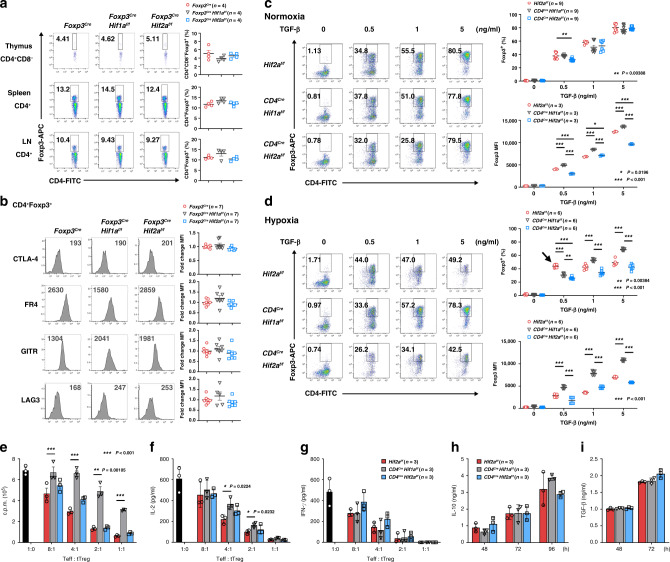
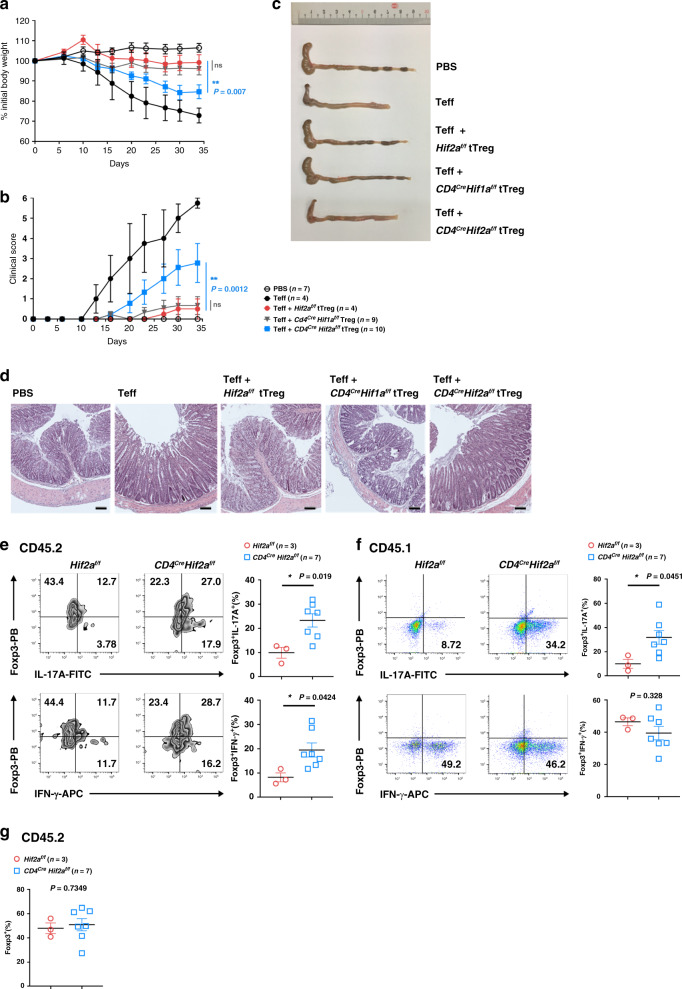
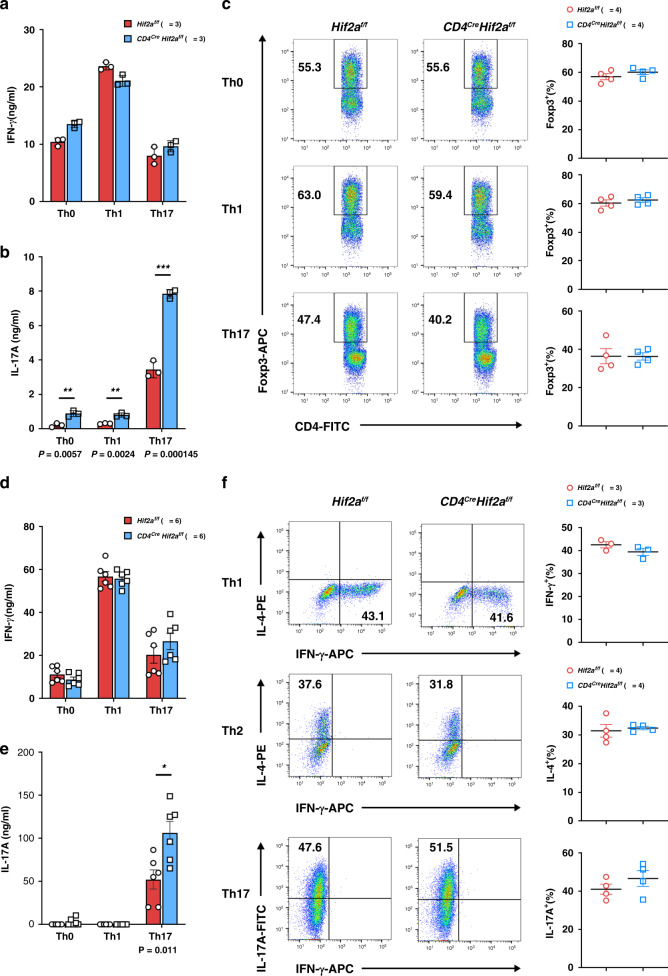
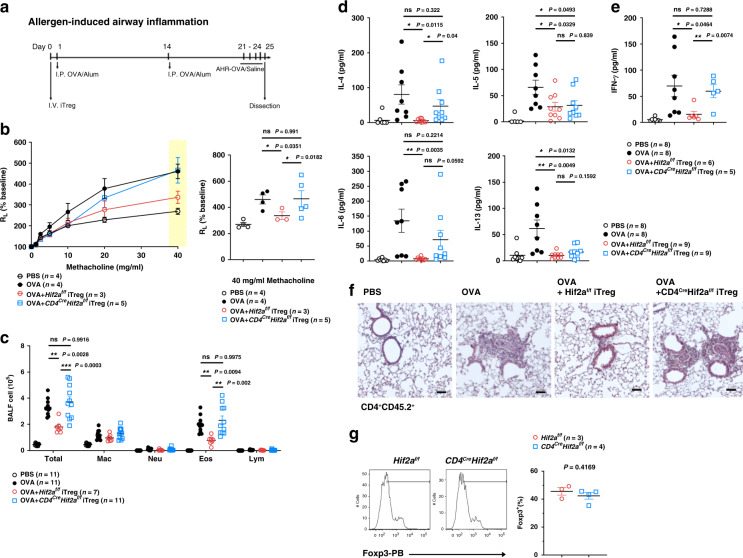
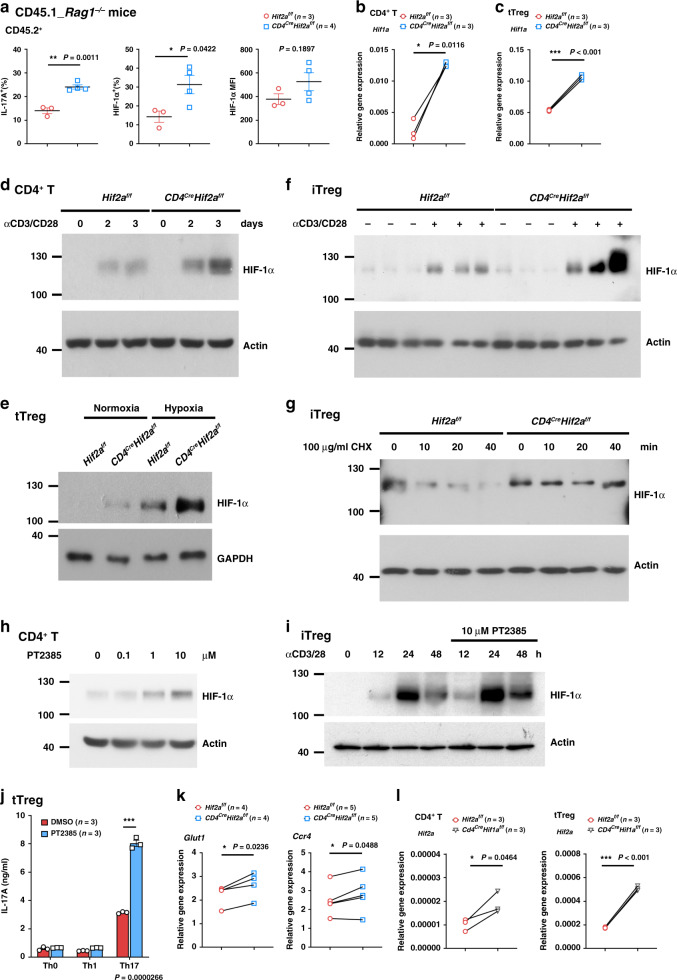
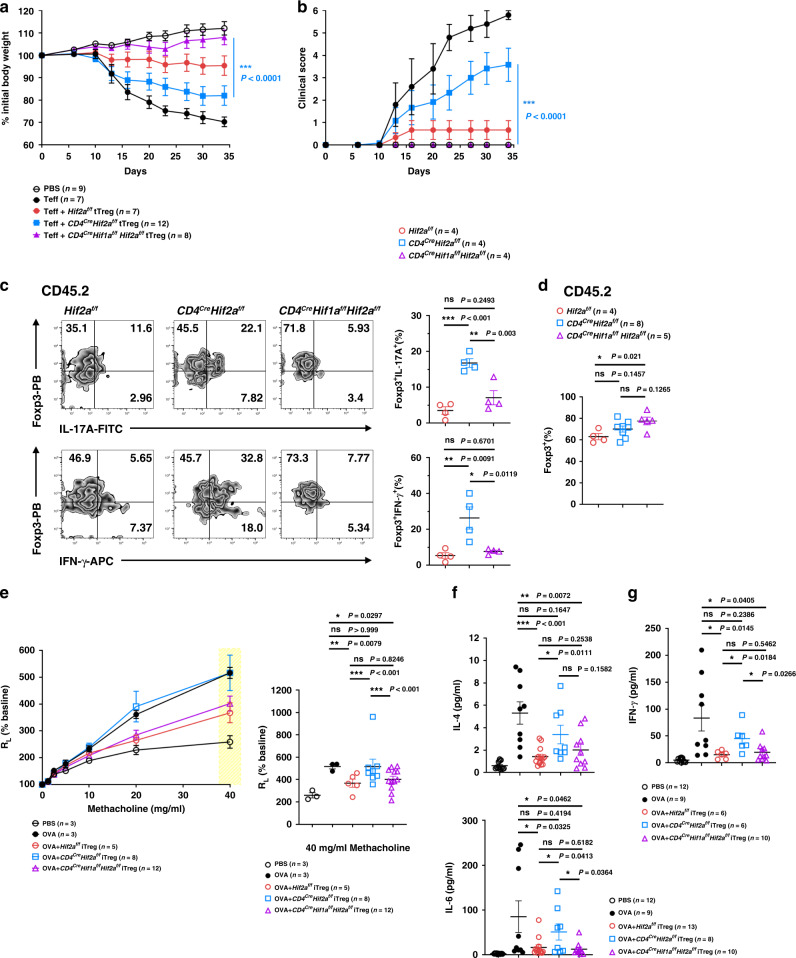
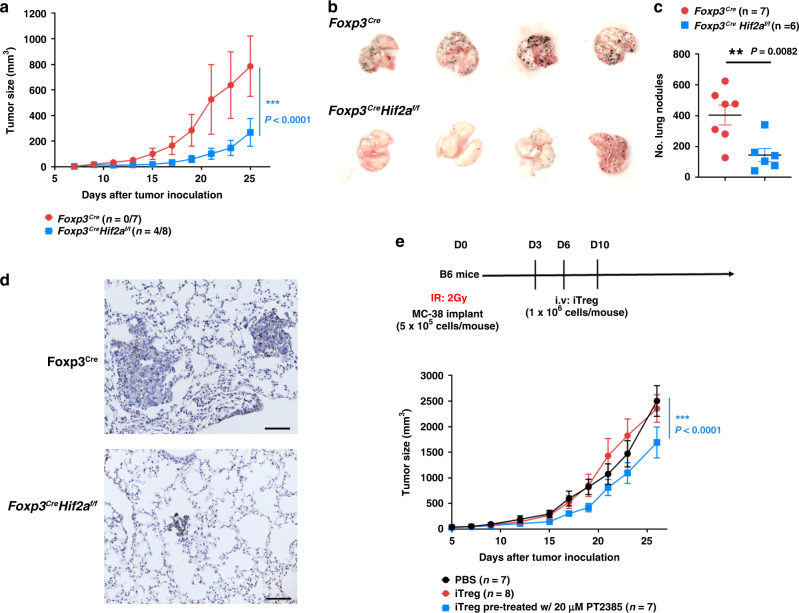
Hypoxia-inducible factor 1α (HIF-1α) and HIF-2α are master transcription factors that regulate cellular responses to hypoxia, but the exact function in regulatory T (Treg) cells is controversial. Here, we show that Treg cell development is normal in mice with Foxp3-specific knockout (KO) of HIF-1α or HIF-2α. However, HIF-2α-KO (but not HIF-1α-KO) Treg cells are functionally defective in suppressing effector T cell-induced colitis and inhibiting airway hypersensitivity. HIF-2α-KO Treg cells have enhanced reprogramming into IL-17-secreting cells. We show crosstalk between HIF-2α and HIF-1α, and that HIF-2α represses HIF-1α expression. HIF-1α is upregulated in HIF-2α-KO Treg cells and further deletion of HIF-1α restores the inhibitory function of HIF-2α-KO Treg cells. Mice with Foxp3-conditional KO of HIF-2α are resistant to growth of MC38 colon adenocarcinoma and metastases of B16F10 melanoma. Together, these results indicate that targeting HIF-2α to destabilize Treg cells might be an approach for regulating the functional activity of Treg cells.
Overview
The claims and statistics of this paper haven’t been checked yet.
Free: it reads the open-access text and checks the first 5 claims that cite a source we can check. Create a free account to check every claim.
Integrity signals
Registry
Cites
Statistics
Figures
Verification
Claims the paper makes
The claims and statistics of this paper haven’t been checked yet.
Free: it reads the open-access text and checks the first 5 claims that cite a source we can check. Create a free account to check every claim.
Claims other papers make about this one
Each is checked against this paper’s own text: does it say what the citing paper says it does?
The check wasn’t confident either way, so it gives no verdict — never disputed.
In the citing paper
“Indeed, acriflavine, which blocks HIF-1/2α-HIF-1β dimerization, dramatically improved the benefit of cancer immunotherapy based on TRP-2 peptide vaccination and anti-PD-1 blocking antibody in the B6–F10 syngeneic mouse melanoma model [74].”
From Revisiting the HIF switch in the tumor and its immune microenvironment. (2022) · cites this paper as [74]
Experimental — accuracy not yet measured
Self-check
Percentages, sums and reported differences re-computed from the paper’s own numbers.
The self-check needs the paper’s full text.
Citations
Cites
Control of Regulatory T Cell Development by the Transcription Factor Foxp3
Hori, S., Nomura, T., & Sakaguchi, S. (2003) · Science · doi:10.1126/science.1079490 · Cited by 8,187
Targeting Hypoxia-Inducible Factors for the Treatment of Anemia in Chronic Kidney Disease Patients
Locatelli, F., Fishbane, S., Block, G. A., & Macdougall, I. C. (2017) · American Journal of Nephrology · doi:10.1159/000455166 · Cited by 4,813
Hypoxia-inducible factors in physiology and medicine
Semenza, G. L. (2012) · Cell · doi:10.1016/j.cell.2012.01.021 · Cited by 3,645
Cellular and developmental control of O 2 homeostasis by hypoxia-inducible factor 1α
Iyer, N. V., Kotch, L. E., Agani, F., Leung, S. W., Laughner, E., Wenger, R. H., Gassmann, M., Gearhart, J. D., Lawler, A. M., Yu, A. Y., et al. (1998) · Genes & Development · doi:10.1101/gad.12.2.149 · Cited by 2,476
Shi, L. Z., Wang, R., Huang, G., Vogel, P., Neale, G., Green, D. R., & Chi, H. (2011) · Journal of Experimental Medicine · doi:10.1084/jem.20110278 · Cited by 1,803
HIF1α and HIF2α: sibling rivalry in hypoxic tumour growth and progression
Keith, B., Johnson, R. S., & Simon, M. C. (2012) · Nature Reviews Cancer · doi:10.1038/nrc3183 · Cited by 1,693
Control of TH17/Treg Balance by Hypoxia-Inducible Factor 1
Dang, E. V., Barbi, J., Yang, H.-Y., Jinasena, D., Yu, H., Zheng, Y., Bordman, Z., Fu, J., Kim, Y., Yen, H.-R., et al. (2011) · Cell · doi:10.1016/j.cell.2011.07.033 · Cited by 1,595
Regulatory T cells in cancer immunosuppression — implications for anticancer therapy
Togashi, Y., Shitara, K., & Nishikawa, H. (2019) · Nature Reviews Clinical Oncology · doi:10.1038/s41571-019-0175-7 · Cited by 1,546
Differential Roles of Hypoxia-Inducible Factor 1α (HIF-1α) and HIF-2α in Hypoxic Gene Regulation
Hu, C.-J., Wang, L.-Y., Chodosh, L. A., Keith, B., & Simon, M. C. (2003) · Molecular and Cellular Biology · doi:10.1128/mcb.23.24.9361-9374.2003 · Cited by 1,386
Thornton, A. M., Korty, P. E., Tran, D. Q., Wohlfert, E. A., Murray, P. E., Belkaid, Y., & Shevach, E. M. (2010) · The Journal of Immunology · doi:10.4049/jimmunol.0904028 · Cited by 1,382
Epigenetic Control of the foxp3 Locus in Regulatory T Cells
Floess, S., Freyer, J., Siewert, C., Baron, U., Olek, S., Polansky, J., Schlawe, K., Chang, H.-D., Bopp, T., Schmitt, E., et al. (2007) · PLoS Biology · doi:10.1371/journal.pbio.0050038 · Cited by 1,270
HIF transcription factors, inflammation, and immunity
Palazon, A., Goldrath, A. W., Nizet, V., & Johnson, R. S. (2014) · Immunity · doi:10.1016/j.immuni.2014.09.008 · Cited by 1,195
Hori, S., Nomura, T., & Sakaguchi, S. (2017) · The Journal of Immunology · doi:10.1093/jimmunol/198.3.981 · Cited by 1,066
Regulatory T-cell functions are subverted and converted owing to attenuated Foxp3 expression
Wan, Y. Y., & Flavell, R. A. (2007) · Nature · doi:10.1038/nature05479 · Cited by 854
Williams, L. M., & Rudensky, A. Y. (2007) · Nature Immunology · doi:10.1038/ni1437 · Cited by 853
DNA methylation controls Foxp3 gene expression
Polansky, J. K., Kretschmer, K., Freyer, J., Floess, S., Garbe, A., Baron, U., Olek, S., Hamann, A., von Boehmer, H., & Huehn, J. (2008) · European Journal of Immunology · doi:10.1002/eji.200838105 · Cited by 785
VHL, the story of a tumour suppressor gene
Gossage, L., Eisen, T., & Maher, E. R. (2015) · Nature Reviews Cancer · doi:10.1038/nrc3844 · Cited by 774
Development and Maintenance of Regulatory T cells
Ohkura, N., Kitagawa, Y., & Sakaguchi, S. (2013) · Immunity · doi:10.1016/j.immuni.2013.03.002 · Cited by 728
Human FOXP3+ Regulatory T Cell Heterogeneity and Function in Autoimmunity and Cancer
Wing, J. B., Tanaka, A., & Sakaguchi, S. (2019) · Immunity · doi:10.1016/j.immuni.2019.01.020 · Cited by 726
Treg cell-based therapies: challenges and perspectives
Raffin, C., Vo, L. T., & Bluestone, J. A. (2020) · Nature Reviews Immunology · doi:10.1038/s41577-019-0232-6 · Cited by 720
Targeting renal cell carcinoma with a HIF-2 antagonist
Chen, W., Hill, H., Christie, A., Kim, M. S., Holloman, E., Pavia-Jimenez, A., Homayoun, F., Ma, Y., Patel, N., Yell, P., et al. (2016) · Nature · doi:10.1038/nature19796 · Cited by 709
Interferon-γ Drives Treg Fragility to Promote Anti-tumor Immunity
Overacre-Delgoffe, A. E., Chikina, M., Dadey, R. E., Yano, H., Brunazzi, E. A., Shayan, G., Horne, W., Moskovitz, J. M., Kolls, J. K., Sander, C., et al. (2017) · Cell · doi:10.1016/j.cell.2017.05.005 · Cited by 627
Takeda, N., O'Dea, E. L., Doedens, A., Kim, J.-W., Weidemann, A., Stockmann, C., Asagiri, M., Simon, M. C., Hoffmann, A., & Johnson, R. S. (2010) · Genes & Development · doi:10.1101/gad.1881410 · Cited by 623
tTregs, pTregs, and iTregs: similarities and differences
Shevach, E. M., & Thornton, A. M. (2014) · Immunological Reviews · doi:10.1111/imr.12160 · Cited by 606
CREB/ATF-dependent T cell receptor–induced FoxP3 gene expression: a role for DNA methylation
Kim, H.-P., & Leonard, W. J. (2007) · The Journal of Experimental Medicine · doi:10.1084/jem.20070109 · Cited by 597
The regulation of immune tolerance by FOXP3
Lu, L., Barbi, J., & Pan, F. (2017) · Nature Reviews Immunology · doi:10.1038/nri.2017.75 · Cited by 580
Oldenhove, G., Bouladoux, N., Wohlfert, E. A., Hall, J. A., Chou, D., Dos santos, L., O'Brien, S., Blank, R., Lamb, E., Natarajan, S., et al. (2009) · Immunity · doi:10.1016/j.immuni.2009.10.001 · Cited by 575
Clambey, E. T., McNamee, E. N., Westrich, J. A., Glover, L. E., Campbell, E. L., Jedlicka, P., de Zoeten, E. F., Cambier, J. C., Stenmark, K. R., Colgan, S. P., et al. (2012) · Proceedings of the National Academy of Sciences · doi:10.1073/pnas.1202366109 · Cited by 560
The updated biology of hypoxia-inducible factor
Greer, S. N., Metcalf, J. L., Wang, Y., & Ohh, M. (2012) · The EMBO Journal · doi:10.1038/emboj.2012.125 · Cited by 545
Self-citationIdentification of T helper type 1–like, Foxp3+ regulatory T cells in human autoimmune disease
Dominguez-Villar, M., Baecher-Allan, C. M., & Hafler, D. A. (2011) · Nature Medicine · doi:10.1038/nm.2389 · Cited by 526
Joshi, N. S., Akama-Garren, E. H., Lu, Y., Lee, D.-Y., Chang, G. P., Li, A., DuPage, M., Tammela, T., Kerper, N. R., Farago, A. F., et al. (2015) · Immunity · doi:10.1016/j.immuni.2015.08.006 · Cited by 520
Peyssonnaux, C., Cejudo-Martin, P., Doedens, A., Zinkernagel, A. S., Johnson, R. S., & Nizet, V. (2007) · The Journal of Immunology · doi:10.4049/jimmunol.178.12.7516 · Cited by 480
Imtiyaz, H. Z., Williams, E. P., Hickey, M. M., Patel, S. A., Durham, A. C., Yuan, L.-J., Hammond, R., Gimotty, P. A., Keith, B., & Simon, M. C. (2010) · Journal of Clinical Investigation · doi:10.1172/jci39506 · Cited by 461
Targeting hypoxia signalling for the treatment of ischaemic and inflammatory diseases
Eltzschig, H. K., Bratton, D. L., & Colgan, S. P. (2014) · Nature Reviews Drug Discovery · doi:10.1038/nrd4422 · Cited by 366
A Small-Molecule Antagonist of HIF2α Is Efficacious in Preclinical Models of Renal Cell Carcinoma
Wallace, E. M., Rizzi, J. P., Han, G., Wehn, P. M., Cao, Z., Du, X., Cheng, T., Czerwinski, R. M., Dixon, D. D., Goggin, B. S., et al. (2016) · Cancer Research · doi:10.1158/0008-5472.can-16-0473 · Cited by 336
DuPage, M., Chopra, G., Quiros, J., Rosenthal, W. L., Morar, M. M., Holohan, D., Zhang, R., Turka, L., Marson, A., & Bluestone, J. A. (2015) · Immunity · doi:10.1016/j.immuni.2015.01.007 · Cited by 332
Targeting EZH2 Reprograms Intratumoral Regulatory T Cells to Enhance Cancer Immunity
Wang, D., Quiros, J., Mahuron, K., Pai, C.-C., Ranzani, V., Young, A., Silveria, S., Harwin, T., Abnousian, A., Pagani, M., et al. (2018) · Cell Reports · doi:10.1016/j.celrep.2018.05.050 · Cited by 318
Chen, Z., Barbi, J., Bu, S., Yang, H.-Y., Li, Z., Gao, Y., Jinasena, D., Fu, J., Lin, F., Chen, C., et al. (2013) · Immunity · doi:10.1016/j.immuni.2013.08.006 · Cited by 304
Regulatory T cells in the treatment of disease
Sharabi, A., Tsokos, M. G., Ding, Y., Malek, T. R., Klatzmann, D., & Tsokos, G. C. (2018) · Nature Reviews Drug Discovery · doi:10.1038/nrd.2018.148 · Cited by 297
IL-2 Controls the Stability of Foxp3 Expression in TGF-β–Induced Foxp3+ T Cells In Vivo
Chen, Q., Kim, Y. C., Laurence, A., Punkosdy, G. A., & Shevach, E. M. (2011) · The Journal of Immunology · doi:10.4049/jimmunol.1100061 · Cited by 263
Akkaya, B., Oya, Y., Akkaya, M., Al Souz, J., Holstein, A. H., Kamenyeva, O., Kabat, J., Matsumura, R., Dorward, D. W., Glass, D. D., et al. (2019) · Nature Immunology · doi:10.1038/s41590-018-0280-2 · Cited by 263
Neuropilin 1 deficiency on CD4+Foxp3+ regulatory T cells impairs mouse melanoma growth
Hansen, W., Hutzler, M., Abel, S., Alter, C., Stockmann, C., Kliche, S., Albert, J., Sparwasser, T., Sakaguchi, S., Westendorf, A. M., et al. (2012) · Journal of Experimental Medicine · doi:10.1084/jem.20111497 · Cited by 250
Oxygen Sensing by T Cells Establishes an Immunologically Tolerant Metastatic Niche
Clever, D., Roychoudhuri, R., Constantinides, M. G., Askenase, M. H., Sukumar, M., Klebanoff, C. A., Eil, R. L., Hickman, H. D., Yu, Z., Pan, J. H., et al. (2016) · Cell · doi:10.1016/j.cell.2016.07.032 · Cited by 242
Targeting the CBM complex causes Treg cells to prime tumours for immune checkpoint therapy
Di Pilato, M., Kim, E. Y., Cadilha, B. L., Prüßmann, J. N., Nasrallah, M. N., Seruggia, D., Usmani, S. M., Misale, S., Zappulli, V., Carrizosa, E., et al. (2019) · Nature · doi:10.1038/s41586-019-1215-2 · Cited by 210
An obligate cell-intrinsic function for CD28 in Tregs
Zhang, R., Huynh, A., Whitcher, G., Chang, J., Maltzman, J. S., & Turka, L. A. (2013) · Journal of Clinical Investigation · doi:10.1172/jci65013 · Cited by 207
Lee, J. H., Elly, C., Park, Y., & Liu, Y.-C. (2015) · Immunity · doi:10.1016/j.immuni.2015.05.016 · Cited by 203
Hypoxia-inducible factors: a central link between inflammation and cancer
Triner, D., & Shah, Y. M. (2016) · Journal of Clinical Investigation · doi:10.1172/jci84430 · Cited by 199
Takahashi, R., Nishimoto, S., Muto, G., Sekiya, T., Tamiya, T., Kimura, A., Morita, R., Asakawa, M., Chinen, T., & Yoshimura, A. (2011) · Journal of Experimental Medicine · doi:10.1084/jem.20110428 · Cited by 188
Helios Controls a Limited Subset of Regulatory T Cell Functions
Sebastian, M., Lopez-Ocasio, M., Metidji, A., Rieder, S. A., Shevach, E. M., & Thornton, A. M. (2016) · The Journal of Immunology · doi:10.4049/jimmunol.1501704 · Cited by 172
Differential but complementary HIF1α and HIF2α transcriptional regulation
Downes, N. L., Laham-Karam, N., Kaikkonen, M. U., & Ylä-Herttuala, S. (2018) · Molecular Therapy · doi:10.1016/j.ymthe.2018.05.004 · Cited by 166
Foxp3+ T Regulatory Cells: Still Many Unanswered Questions—A Perspective After 20 Years of Study
Shevach, E. M. (2018) · Frontiers in Immunology · doi:10.3389/fimmu.2018.01048 · Cited by 150
Hypoxia-inducible factor 2α regulates key neutrophil functions in humans, mice, and zebrafish
Thompson, A. A. R., Elks, P. M., Marriott, H. M., Eamsamarng, S., Higgins, K. R., Lewis, A., Williams, L., Parmar, S., Shaw, G., McGrath, E. E., et al. (2014) · Blood · doi:10.1182/blood-2013-05-500207 · Cited by 149
Hurdles in therapy with regulatory T cells
Trzonkowski, P., Bacchetta, R., Battaglia, M., Berglund, D., Bohnenkamp, H. R., ten Brinke, A., Bushell, A., Cools, N., Geissler, E. K., Gregori, S., et al. (2015) · Science Translational Medicine · doi:10.1126/scitranslmed.aaa7721 · Cited by 147
Chang, J.-H., Xiao, Y., Hu, H., Jin, J., Yu, J., Zhou, X., Wu, X., Johnson, H. M., Akira, S., Pasparakis, M., et al. (2012) · Nature Immunology · doi:10.1038/ni.2267 · Cited by 136
The Genomics and Genetics of Oxygen Homeostasis
Semenza, G. L. (2020) · Annual Review of Genomics and Human Genetics · doi:10.1146/annurev-genom-111119-073356 · Cited by 135
Different molecular complexes that mediate transcriptional induction and repression by FoxP3
Kwon, H.-K., Chen, H.-M., Mathis, D., & Benoist, C. (2017) · Nature Immunology · doi:10.1038/ni.3835 · Cited by 134
Darce, J., Rudra, D., Li, L., Nishio, J., Cipolletta, D., Rudensky, A. Y., Mathis, D., & Benoist, C. (2012) · Immunity · doi:10.1016/j.immuni.2012.04.007 · Cited by 109
Post-translational modification networks regulating FOXP3 function
van Loosdregt, J., & Coffer, P. J. (2014) · Trends in Immunology · doi:10.1016/j.it.2014.06.005 · Cited by 107
Cutting Edge: Hypoxia-Inducible Factor 1 Negatively Regulates Th1 Function
Shehade, H., Acolty, V., Moser, M., & Oldenhove, G. (2015) · The Journal of Immunology · doi:10.4049/jimmunol.1402552 · Cited by 96
Treg Destabilization and Reprogramming: Implications for Cancer Immunotherapy
Munn, D. H., Sharma, M. D., & Johnson, T. S. (2018) · Cancer Research · doi:10.1158/0008-5472.can-18-1351 · Cited by 84
Ubiquitin‐dependent regulation of Foxp3 and Treg function
Barbi, J. J., Pardoll, D. M., & Pan, F. (2015) · Immunological Reviews · doi:10.1111/imr.12312 · Cited by 68
Deltex1 antagonizes HIF-1α and sustains the stability of regulatory T cells in vivo
Hsiao, H.-W., Hsu, T.-S., Liu, W.-H., Hsieh, W.-C., Chou, T.-F., Wu, Y.-J., Jiang, S.-T., & Lai, M.-Z. (2015) · Nature Communications · doi:10.1038/ncomms7353 · Cited by 67
Self-citationGokhale, A. S., Gangaplara, A., Lopez-Occasio, M., Thornton, A. M., & Shevach, E. M. (2019) · Journal of Autoimmunity · doi:10.1016/j.jaut.2019.06.011 · Cited by 66
Dong, F., Khalil, M., Kiedrowski, M., O'Connor, C., Petrovic, E., Zhou, X., & Penn, M. S. (2010) · Circulation Research · doi:10.1161/circresaha.109.208967 · Cited by 44
SOCS1 Is a Key Molecule That Prevents Regulatory T Cell Plasticity under Inflammatory Conditions
Takahashi, R., Nakatsukasa, H., Shiozawa, S., & Yoshimura, A. (2017) · The Journal of Immunology · doi:10.4049/jimmunol.1600441 · Cited by 38
IL-6 receptor blockade corrects defects of XIAP-deficient regulatory T cells
Hsieh, W., Hsu, T.-S., Chang, Y., & Lai, M. (2018) · Nature Communications · doi:10.1038/s41467-018-02862-4 · Cited by 27
Self-citationTumour suppressor death-associated protein kinase targets cytoplasmic HIF-1α for Th17 suppression
Chou, T.-F., Chuang, Y.-T., Hsieh, W., Chang, P.-Y., Liu, H., Mo, S.-T., Hsu, T.-S., Miaw, S., Chen, R., Kimchi, A., et al. (2016) · Nature Communications · doi:10.1038/ncomms11904 · Cited by 26
Self-citation
Cited by
Hypoxic microenvironment in cancer: molecular mechanisms and therapeutic interventions
Chen, Z., Han, F., Du, Y., Shi, H., & Zhou, W. (2023) · Signal Transduction and Targeted Therapy · doi:10.1038/s41392-023-01332-8 · Cited by 1,612
Zhang, H., Yue, X., Chen, Z., Liu, C., Wu, W., Zhang, N., Liu, Z., Yang, L., Jiang, Q., Cheng, Q., et al. (2023) · Molecular Cancer · doi:10.1186/s12943-023-01860-5 · Cited by 424
The role of lipid metabolic reprogramming in tumor microenvironment
Yang, K., Wang, X., Song, C., He, Z., Wang, R., Xu, Y., Jiang, G., Wan, Y., Mei, J., & Mao, W. (2023) · Theranostics · doi:10.7150/thno.82920 · Cited by 270
“However, HIF-1α can also destroy the stability of Treg cells [180].”
Revisiting the HIF switch in the tumor and its immune microenvironment.
Cowman, S. J., & Koh, M. Y. (2022) · Trends in Cancer · doi:10.1016/j.trecan.2021.10.004 · Cited by 256
Yan, Y., Huang, L., Liu, Y., Yi, M., Chu, Q., Jiao, D., & Wu, K. (2022) · Journal of Hematology & Oncology · doi:10.1186/s13045-022-01322-3 · Cited by 212
“A recent study showed that HIF-2α was a potential inhibitor of HIF-1α activity, and knockout of HIF-2α in Treg cells relieved its suppression of HIF-1α and thereby impaired the Treg capacity to inhibit effector T-cell-induced colitis and airway allergic inflammation [121].”
Background
Metadata
- Authors
- Hsu, T.-S., Lin, Y.-L., Wang, Y.-A., Mo, S.-T., Chi, P.-Y., Lai, A. C.-Y., Pan, H.-Y., Chang, Y.-J., & Lai, M.-Z.
- Affiliations
- Institute of Molecular Biology, Academia Sinica (TW)
- Institute of Biomedical Sciences, Academia Sinica (TW)
- Corresponding author
- Lai, Ming-Zong
- Venue
- Nature Communications
- Published
- 2020-10-06
- Volume
- 11
- Issue
- 1
- Pages
- 5005-5005
- ISSN
- 2041-1723 (ISSN-L)
- PMC
- PMC7538433
- OpenAlex
- W3092326438
- Semantic Scholar
- bcad4e3b4ef4a82e5395fe132749c858aa88c254
- Cited by
- 126
- References
- 68
- Citations by year
- 2026: 15 · 2025: 18 · 2024: 17 · 2023: 26 · 2022: 35 · 2021: 14 · 2020: 1
- FWCI
- 6.66
- Type
- journal article
- Language
- en
- Open access
- gold
- doi.org
- Licence
- cc-by
- creativecommons.org/licenses/by/4.0 (tdm)
- creativecommons.org/licenses/by/4.0 (vor)
- Locations
- Nature Communications (publishedVersion, cc-by)
- PubMed Central (publishedVersion, cc-by)
- PubMed (publishedVersion)
- RePEc: Research Papers in Economics (submittedVersion)
- DOAJ (DOAJ: Directory of Open Access Journals) (submittedVersion, cc-by-sa)
- Funders
- Ministry of Science and Technology, Taiwan (MOST107-2321-B001-031)
- Topics
- Life Sciences › Immunology and Microbiology › Immunology › T-cell and B-cell Immunology
- Life Sciences › Biochemistry, Genetics and Molecular Biology › Cancer Research › Cancer, Hypoxia, and Metabolism
- Health Sciences › Medicine › Oncology › Cancer Immunotherapy and Biomarkers
- Keywords
- HIF-2α, HIF-1α, regulatory T cells, Foxp3, hypoxia, Treg cell function, colitis, airway hypersensitivity, tumor immunosuppression, colon adenocarcinoma, melanoma metastasis, transcription factor regulation
- MeSH terms
- Endothelial PAS Domain-Containing Protein 1, Adenocarcinoma, Animals, Cell Differentiation, Colitis, Colonic Neoplasms, Female, Male, Melanoma, CD4-Positive T-Lymphocytes, Bronchial Hyperreactivity, Mice, Knockout, Interleukin-17, T-Lymphocytes, Regulatory, Basic Helix-Loop-Helix Transcription Factors, Basic Helix-Loop-Helix Proteins, Hypoxia-Inducible Factor 1, alpha Subunit, Forkhead Transcription Factors, Cellular Reprogramming
About these checks
Registry, retraction, Cites and statistics results are computed, not judged, with one exception: a printed reference that no index lists is read once by a model before it counts as a citation error. Claims are extracted by a model and kept only when their quote appears verbatim in the text; each cited source is then checked, with a model’s help, for whether it says what the claim relies on. Those verdicts can be wrong — read the claim’s quote and the cited source before relying on one.
Statistics and arithmetic are recomputed, not judged.
Confidence bands are shown only for fields calibrated on our annotated test set. None is calibrated yet, so no band is shown.
What counts as a claim ›How we measure confidence ›How we check this ›
Are you an author, or do you see a problem with this page? Request a review
Data sources
Bibliographic data: Semantic Scholar, OpenAlex, Crossref.
Contains information from the Semantic Scholar Academic Graph Datasets, made available under the ODC Attribution License (ODC-BY 1.0).
Semantic Scholar’s data is described in: Kinney, R., et al. (2023). The Semantic Scholar Open Data Platform. arXiv:2301.10140.
