

HIF-2α is indispensable for regulatory T cell function
Open accessThe DOI matches its Crossref record; 67 of the 68 references it cites were found in a registry or an index.
Abstract
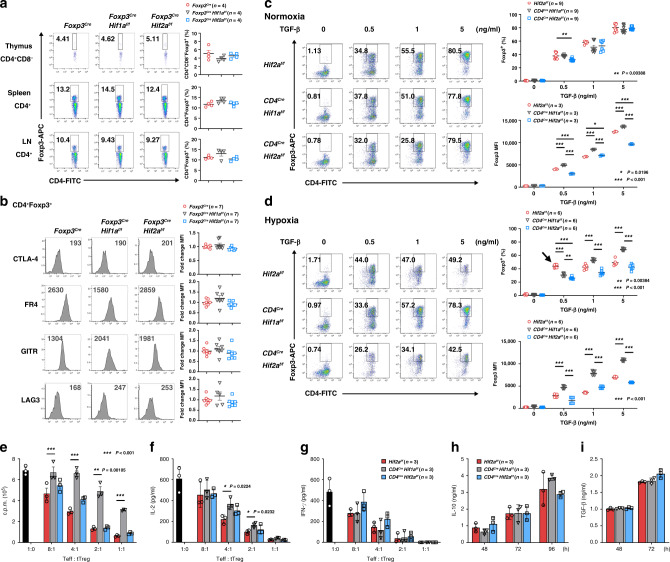
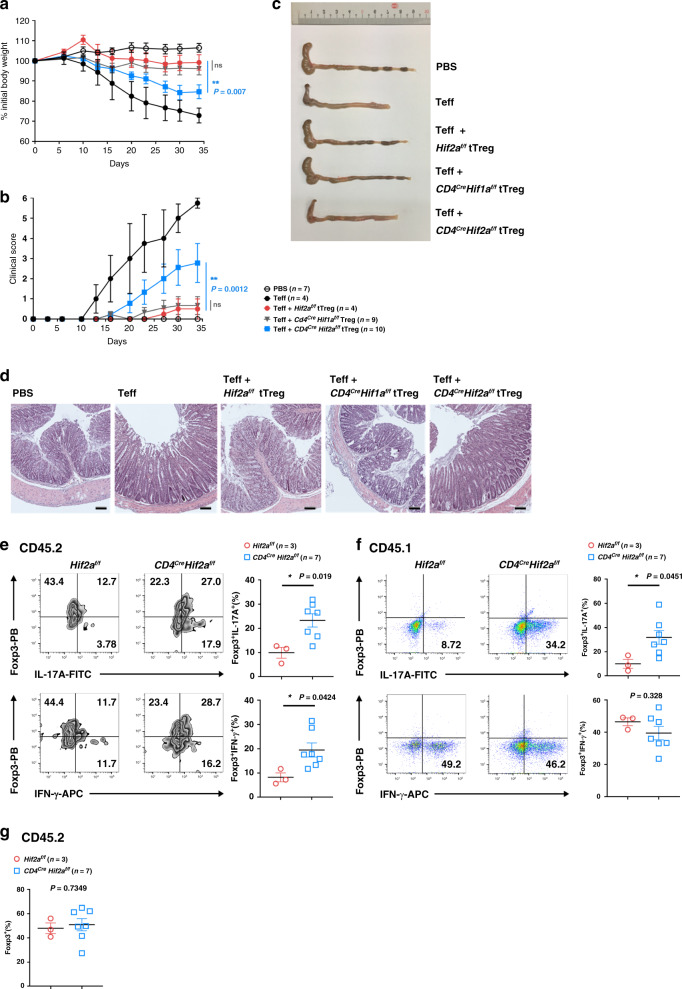
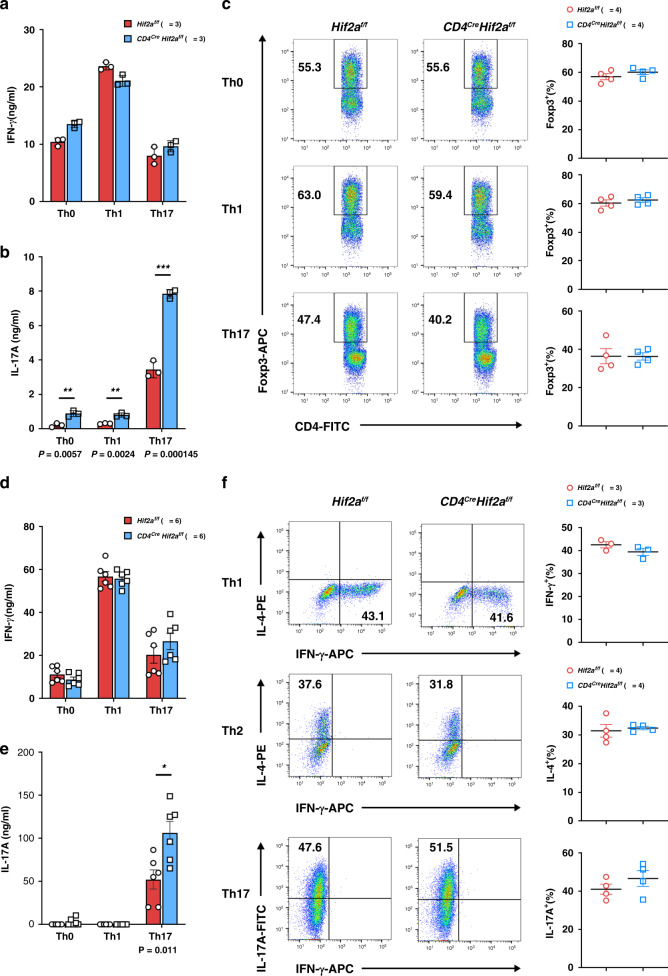
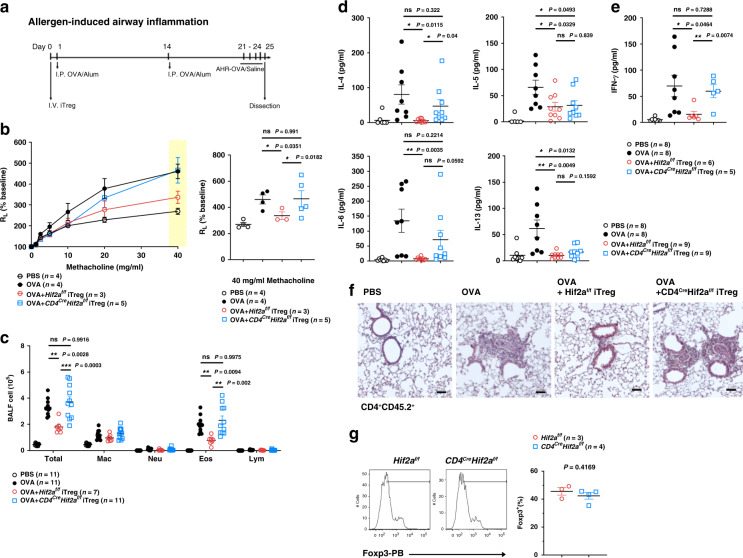
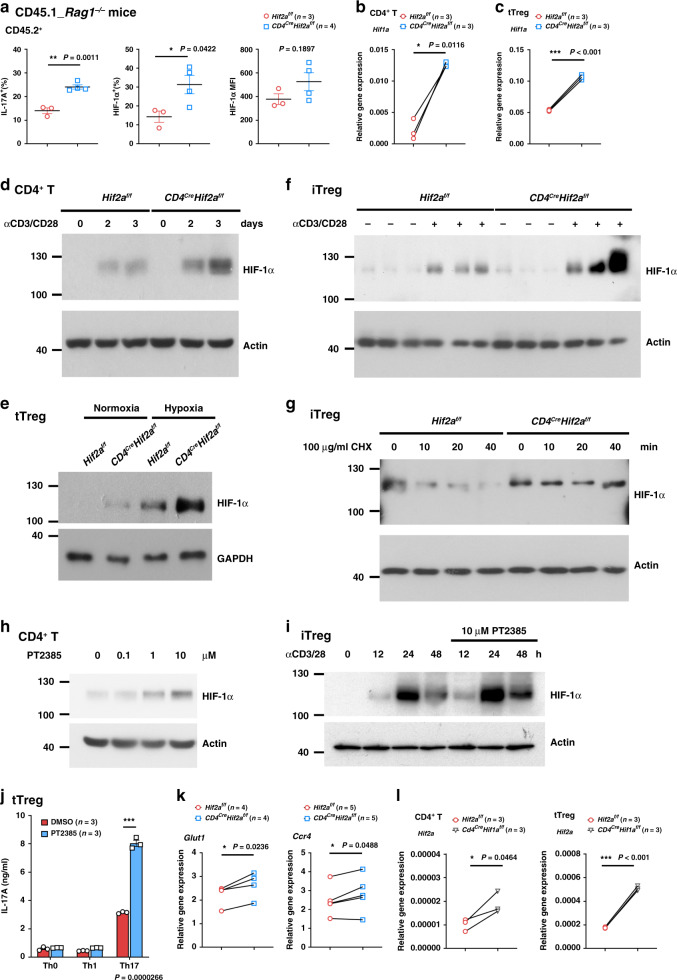
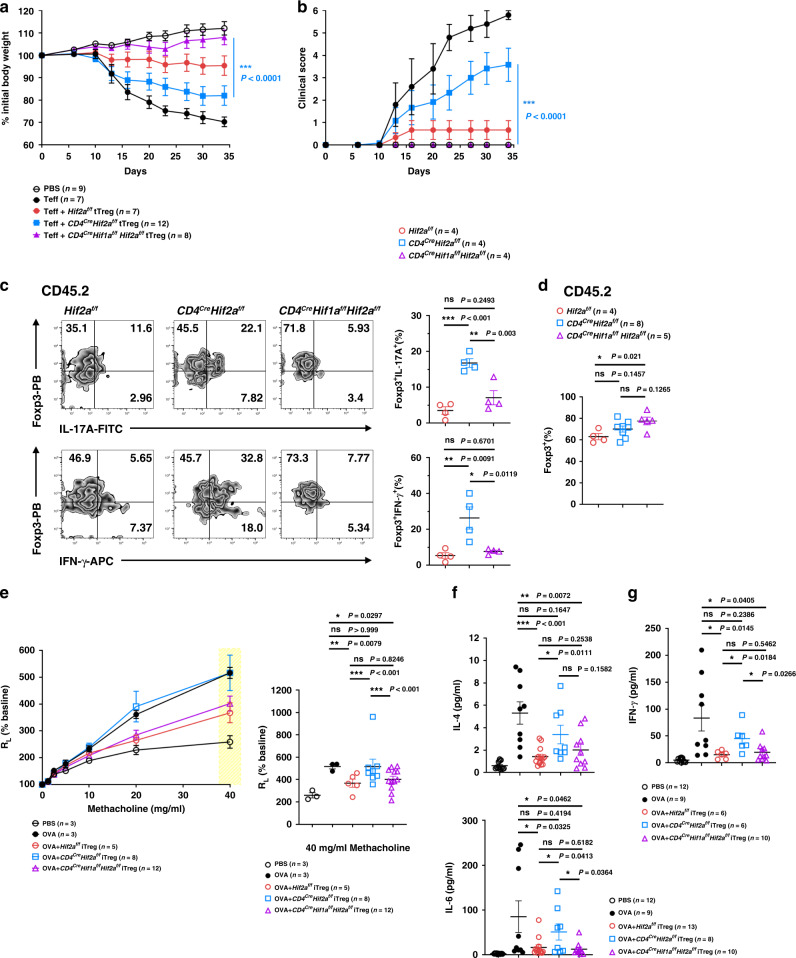
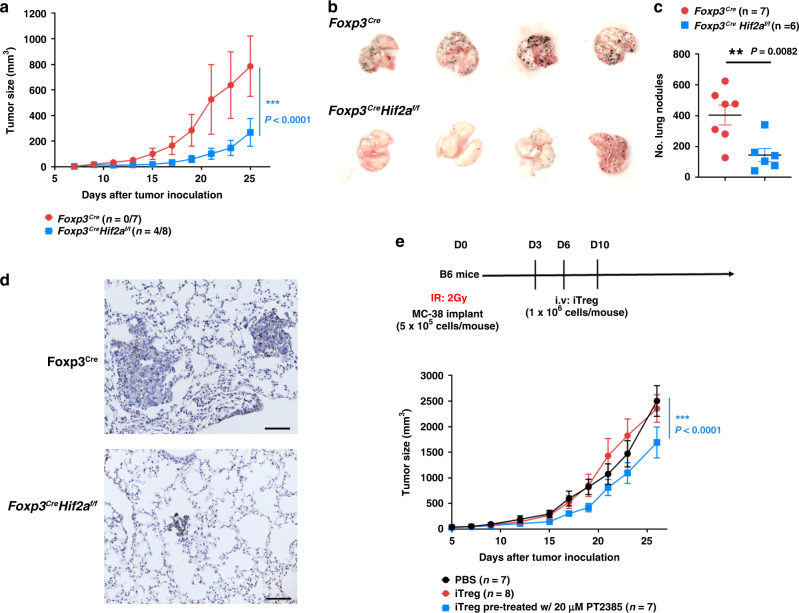
Hypoxia-inducible factor 1α (HIF-1α) and HIF-2α are master transcription factors that regulate cellular responses to hypoxia, but the exact function in regulatory T (Treg) cells is controversial. Here, we show that Treg cell development is normal in mice with Foxp3-specific knockout (KO) of HIF-1α or HIF-2α. However, HIF-2α-KO (but not HIF-1α-KO) Treg cells are functionally defective in suppressing effector T cell-induced colitis and inhibiting airway hypersensitivity. HIF-2α-KO Treg cells have enhanced reprogramming into IL-17-secreting cells. We show crosstalk between HIF-2α and HIF-1α, and that HIF-2α represses HIF-1α expression. HIF-1α is upregulated in HIF-2α-KO Treg cells and further deletion of HIF-1α restores the inhibitory function of HIF-2α-KO Treg cells. Mice with Foxp3-conditional KO of HIF-2α are resistant to growth of MC38 colon adenocarcinoma and metastases of B16F10 melanoma. Together, these results indicate that targeting HIF-2α to destabilize Treg cells might be an approach for regulating the functional activity of Treg cells.
Overview
The claims and statistics of this paper haven’t been checked yet.
Free: it reads the open-access text and checks the first 5 claims that cite a source we can check. Create a free account to check every claim.
Integrity signals
Registry
Cites
Statistics
Figures
Verification
Claims the paper makes
The claims and statistics of this paper haven’t been checked yet.
Free: it reads the open-access text and checks the first 5 claims that cite a source we can check. Create a free account to check every claim.
Claims other papers make about this one
Each is checked against this paper’s own text: does it say what the citing paper says it does?
The check wasn’t confident either way, so it gives no verdict — never disputed.
In the citing paper
“Indeed, acriflavine, which blocks HIF-1/2α-HIF-1β dimerization, dramatically improved the benefit of cancer immunotherapy based on TRP-2 peptide vaccination and anti-PD-1 blocking antibody in the B6–F10 syngeneic mouse melanoma model [74].”
From Revisiting the HIF switch in the tumor and its immune microenvironment. (2022) · cites this paper as [74]
Experimental — accuracy not yet measured
Self-check
Percentages, sums and reported differences re-computed from the paper’s own numbers.
The self-check needs the paper’s full text.
Citations
Cites
Control of Regulatory T Cell Development by the Transcription Factor Foxp3
Hori, S., Nomura, T., & Sakaguchi, S. (2003) · Science · doi:10.1126/science.1079490 · Cited by 8,187
Targeting Hypoxia-Inducible Factors for the Treatment of Anemia in Chronic Kidney Disease Patients
Locatelli, F., Fishbane, S., Block, G. A., & Macdougall, I. C. (2017) · American Journal of Nephrology · doi:10.1159/000455166 · Cited by 4,813
Hypoxia-inducible factors in physiology and medicine
Semenza, G. L. (2012) · Cell · doi:10.1016/j.cell.2012.01.021 · Cited by 3,645
Cellular and developmental control of O 2 homeostasis by hypoxia-inducible factor 1α
Iyer, N. V., Kotch, L. E., Agani, F., Leung, S. W., Laughner, E., Wenger, R. H., Gassmann, M., Gearhart, J. D., Lawler, A. M., Yu, A. Y., et al. (1998) · Genes & Development · doi:10.1101/gad.12.2.149 · Cited by 2,476
Shi, L. Z., Wang, R., Huang, G., Vogel, P., Neale, G., Green, D. R., & Chi, H. (2011) · Journal of Experimental Medicine · doi:10.1084/jem.20110278 · Cited by 1,803
HIF1α and HIF2α: sibling rivalry in hypoxic tumour growth and progression
Keith, B., Johnson, R. S., & Simon, M. C. (2012) · Nature Reviews Cancer · doi:10.1038/nrc3183 · Cited by 1,693
Control of TH17/Treg Balance by Hypoxia-Inducible Factor 1
Dang, E. V., Barbi, J., Yang, H.-Y., Jinasena, D., Yu, H., Zheng, Y., Bordman, Z., Fu, J., Kim, Y., Yen, H.-R., et al. (2011) · Cell · doi:10.1016/j.cell.2011.07.033 · Cited by 1,595
Regulatory T cells in cancer immunosuppression — implications for anticancer therapy
Togashi, Y., Shitara, K., & Nishikawa, H. (2019) · Nature Reviews Clinical Oncology · doi:10.1038/s41571-019-0175-7 · Cited by 1,546
Differential Roles of Hypoxia-Inducible Factor 1α (HIF-1α) and HIF-2α in Hypoxic Gene Regulation
Hu, C.-J., Wang, L.-Y., Chodosh, L. A., Keith, B., & Simon, M. C. (2003) · Molecular and Cellular Biology · doi:10.1128/mcb.23.24.9361-9374.2003 · Cited by 1,386
Thornton, A. M., Korty, P. E., Tran, D. Q., Wohlfert, E. A., Murray, P. E., Belkaid, Y., & Shevach, E. M. (2010) · The Journal of Immunology · doi:10.4049/jimmunol.0904028 · Cited by 1,382
Cited by
Hypoxic microenvironment in cancer: molecular mechanisms and therapeutic interventions
Chen, Z., Han, F., Du, Y., Shi, H., & Zhou, W. (2023) · Signal Transduction and Targeted Therapy · doi:10.1038/s41392-023-01332-8 · Cited by 1,612
Zhang, H., Yue, X., Chen, Z., Liu, C., Wu, W., Zhang, N., Liu, Z., Yang, L., Jiang, Q., Cheng, Q., et al. (2023) · Molecular Cancer · doi:10.1186/s12943-023-01860-5 · Cited by 424
The role of lipid metabolic reprogramming in tumor microenvironment
Yang, K., Wang, X., Song, C., He, Z., Wang, R., Xu, Y., Jiang, G., Wan, Y., Mei, J., & Mao, W. (2023) · Theranostics · doi:10.7150/thno.82920 · Cited by 270
“However, HIF-1α can also destroy the stability of Treg cells [180].”
Revisiting the HIF switch in the tumor and its immune microenvironment.
Cowman, S. J., & Koh, M. Y. (2022) · Trends in Cancer · doi:10.1016/j.trecan.2021.10.004 · Cited by 256
Yan, Y., Huang, L., Liu, Y., Yi, M., Chu, Q., Jiao, D., & Wu, K. (2022) · Journal of Hematology & Oncology · doi:10.1186/s13045-022-01322-3 · Cited by 212
“A recent study showed that HIF-2α was a potential inhibitor of HIF-1α activity, and knockout of HIF-2α in Treg cells relieved its suppression of HIF-1α and thereby impaired the Treg capacity to inhibit effector T-cell-induced colitis and airway allergic inflammation [121].”
BackgroundMTHFD2 is a metabolic checkpoint controlling effector and regulatory T cell fate and function
Sugiura, A., Andrejeva, G., Voss, K., Heintzman, D. R., Xu, X., Madden, M. Z., Ye, X., Beier, K. L., Chowdhury, N. U., Wolf, M. M., et al. (2022) · Immunity · doi:10.1016/j.immuni.2021.10.011 · Cited by 219
Regulatory T Cells: Barriers of Immune Infiltration Into the Tumor Microenvironment
Scott, E. N., Gocher, A. M., Workman, C. J., & Vignali, D. A. A. (2021) · Frontiers in Immunology · doi:10.3389/fimmu.2021.702726 · Cited by 190
Stromal HIF2 Regulates Immune Suppression in the Pancreatic Cancer Microenvironment
Garcia Garcia, C. J., Huang, Y., Fuentes, N. R., Turner, M. C., Monberg, M. E., Lin, D., Nguyen, N. D., Fujimoto, T. N., Zhao, J., Lee, J. J., et al. (2022) · Gastroenterology · doi:10.1053/j.gastro.2022.02.024 · Cited by 158
Targeting oncogene and non-oncogene addiction to inflame the tumour microenvironment
Petroni, G., Buqué, A., Coussens, L. M., & Galluzzi, L. (2022) · Nature Reviews Drug Discovery · doi:10.1038/s41573-022-00415-5 · Cited by 160
Fu, Z., Mowday, A. M., Smaill, J. B., Hermans, I. F., & Patterson, A. V. (2021) · Cells · doi:10.3390/cells10051006 · Cited by 147
The immune microenvironment of colorectal cancer
Kennel, K. B., & Greten, F. R. (2025) · Nature reviews. Cancer · doi:10.1038/s41568-025-00872-1 · Cited by 143
“4).”
The impact of hypoxia on immune state in cancer
Mortezaee, K., & Majidpoor, J. (2021) · Life Sciences · doi:10.1016/j.lfs.2021.120057 · Cited by 107
Metal-Phenolic Nanomedicines Regulate T-Cell Antitumor Function for Sono-Metabolic Cancer Therapy
Yan, J., Li, W., Tian, H., Li, B., Yu, X., Wang, G., Sang, W., & Dai, Y. (2023) · ACS Nano · doi:10.1021/acsnano.3c02428 · Cited by 96
Davis, L., Recktenwald, M., Hutt, E., Fuller, S., Briggs, M., Goel, A., & Daringer, N. (2022) · Cancers · doi:10.3390/cancers14051259 · Cited by 83
Hypoxia as a Modulator of Inflammation and Immune Response in Cancer
Castillo‐Rodríguez, R. A., Trejo‐Solís, C., Cabrera‐Cano, A., Gómez‐Manzo, S., & Dávila‐Borja, V. M. (2022) · Cancers · doi:10.3390/cancers14092291 · Cited by 82
EGFR-HIF1α signaling positively regulates the differentiation of IL-9 producing T helper cells
Roy, S., Rizvi, Z. A., Clarke, A. J., Macdonald, F., Pandey, A., Zaiss, D. M. W., Simon, A. K., & Awasthi, A. (2021) · Nature Communications · doi:10.1038/s41467-021-23042-x · Cited by 75
Recent progress in nitric oxide-generating nanomedicine for cancer therapy
Li, Y., Yoon, B., Dey, A., Nguyen, V. Q., & Park, J. H. (2022) · Journal of Controlled Release · doi:10.1016/j.jconrel.2022.10.012 · Cited by 70
The importance of hypoxia in radiotherapy for the immune response, metastatic potential and FLASH-RT
Moon, E. J., Petersson, K., & Olcina, M. M. (2021) · International Journal of Radiation Biology · doi:10.1080/09553002.2021.1988178 · Cited by 63
“…role of hypoxia in Treg biology remains controversial, HIF-2a but not HIF-1a was recently identified as critical for Treg function, with Treg selective knockout of HIF-2a rendering mice resistant to tumor growth and metastasis (in colorectal and melanoma models, respectively) (Hsu et al. 2020).”
Backgroundde Oliveira, J., Denadai, M. B., & Costa, D. L. (2022) · Antioxidants · doi:10.3390/antiox11050861 · Cited by 67
Hypoxia-inducible factor (HIF): The link between obesity and COVID-19
AbdelMassih, A. F., Yacoub, E., Husseiny, R., Kamel, A., Hozaien, R., Shershaby, M. E., Rajab, M., Yacoub, S., Eid, M. A., ElAhmady, M., et al. (2020) · Obesity Medicine · doi:10.1016/j.obmed.2020.100317 · Cited by 56
Microbiota-assisted iron uptake promotes immune tolerance in the intestine
Zhu, L., Li, G., Liang, Z., Qi, T., Deng, K., Yu, J., Peng, Y., Zheng, J., Song, Y., & Chang, X. (2023) · Nature Communications · doi:10.1038/s41467-023-38444-2 · Cited by 51
Wang, N., Zhu, L., Wang, L., Shen, Z., & Huang, X. (2022) · Computational and Structural Biotechnology Journal · doi:10.1016/j.csbj.2022.06.039 · Cited by 55
Renal cancer: signaling pathways and advances in targeted therapies
Jiang, A., Li, J., He, Z., Liu, Y., Qiao, K., Fang, Y., Qu, L., Luo, P., Lin, A., & Wang, L. (2024) · MedComm · doi:10.1002/mco2.676 · Cited by 51
Regulatory T Cell Metabolism: A Promising Therapeutic Target for Cancer Treatment?
Kim, J., Li, J., Wei, J., & Lim, S. A. (2025) · Immune Network · doi:10.4110/in.2025.25.e13 · Cited by 53
“Targeting HIF-2 α in Tregs emerges as a promising therapeutic strategy to suppress tumor growth and metastasis (48).”
Metabolic rewiring and communication in cancer immunity
Chapman, N. M., & Chi, H. (2024) · Cell chemical biology · doi:10.1016/j.chembiol.2024.02.001 · Cited by 49
Iacobini, C., Vitale, M., Haxhi, J., Pesce, C. M., Pugliese, G., & Menini, S. (2022) · Antioxidants · doi:10.3390/antiox11112183 · Cited by 48
T Lymphocyte Exhaustion During Human and Experimental Visceral Leishmaniasis
Costa-Madeira, J. C., Trindade, G. B., Almeida, P. H. P., Silva, J. S., & Carregaro, V. (2022) · Frontiers in Immunology · doi:10.3389/fimmu.2022.835711 · Cited by 47
“The role of HIF1-a in regulatory T cells has already been explored by others (111).”
BackgroundPerspectives on Hypoxia Signaling in Tumor Stroma
Zhang, Y., Coleman, M., & Brekken, R. A. (2021) · Cancers · doi:10.3390/cancers13123070 · Cited by 39
Immunometabolism of Tregs: mechanisms, adaptability, and therapeutic implications in diseases
Lu, Y., Wang, Y., Ruan, T., Wang, Y., Ju, L., Zhou, M., Liu, L., Dengfu, Y., & Yao, M. (2025) · Frontiers in Immunology · doi:10.3389/fimmu.2025.1536020 · Cited by 51
Self-citationIntegrated BATF transcriptional network regulates suppressive intratumoral regulatory T cells
Shan, F., Cillo, A. R., Cardello, C., Yuan, D. Y., Kunning, S. R., Cui, J., Lampenfeld, C., Williams, A. M., McDonough, A. P., Pennathur, A., et al. (2023) · Science Immunology · doi:10.1126/sciimmunol.adf6717 · Cited by 38
“which encodes the hypoxia-inducible factor 2A, has been recently described for its role in moderating the development and function of Tregs (40, 41).”
BackgroundThe role of hypoxia in the pathophysiology of chronic rhinosinusitis
Zhong, B., Seah, J. J., Liu, F., Ba, L., Du, J., & Wang, D. Y. (2022) · Allergy · doi:10.1111/all.15384 · Cited by 36
Song, C. W., Kim, H., Cho, H., Kim, M., Paek, S.-H., Park, H. J., Griffin, R. J., Terezakis, S. A., & Cho, L. C. (2022) · Cancers · doi:10.3390/cancers14133273 · Cited by 38
“In a recent study, HIF-2α was found to be indispensable for Treg function [67].”
BackgroundHypoxia-Induced Signaling in Gut and Liver Pathobiology
Solanki, S. A., & Shah, Y. M. (2023) · Annual Review of Pathology Mechanisms of Disease · doi:10.1146/annurev-pathmechdis-051122-094743 · Cited by 38
Mitochondrial dysfunctions in T cells: focus on inflammatory bowel disease
Lee, H., Jeon, J., & Kim, E. S. (2023) · Frontiers in Immunology · doi:10.3389/fimmu.2023.1219422 · Cited by 33
“First, the role of Hif1 a in regulatory T cells seems to be debatable in an animal model of colitis (39, 40, 80, 81).”
Zou, X., Wang, K., Deng, Y., Guan, P., Pu, Q., Wang, Y., Mou, J., Du, Y., Lou, X., Wang, S., et al. (2024) · Immunity · doi:10.1016/j.immuni.2024.11.001 · Cited by 35
Self-citationDevelopment and function of FOXP3+ regulators of immune responses
Golzari-Sorkheh, M., & Zúñiga‐Pflücker, J. C. (2023) · Clinical & Experimental Immunology · doi:10.1093/cei/uxad048 · Cited by 37
Xu, W., Zhang, W., Zhao, D., Wang, Q., Zhang, M., Li, Q., Zhu, W., & Xu, C. (2023) · Frontiers in Immunology · doi:10.3389/fimmu.2023.1242909 · Cited by 38
Li, Y., Wu, Y., & Hu, Y. (2021) · Frontiers in Immunology · doi:10.3389/fimmu.2021.641883 · Cited by 34
“HIF-1a expression promotes cancer glycolysis and evasion of immunosurveillance, at the same time, tampering with anti-tumor immunity directly by inhibiting NKG2D expression in NK cells (26, 27), reducing CD4 effector T cell differentiation (28), promoting regulatory T cell differentiation and activity, elevating check…”
BackgroundCelada, L., Cubiella, T., San‐Juan‐Guardado, J., Gutiérrez, G., Beiguela, B., Rodríguez, R. Q., Poch, M., Astudillo, A., Grijalba, A., Sobrino, P. S., et al. (2022) · The Journal of Pathology · doi:10.1002/path.6026 · Cited by 30
“Intriguingly, loss of HIF-2α has been shown to render immune suppressor Treg cells functionally defective, suggesting that HIF2α inhibition could enhance T cell–mediated antitumor cytotoxicity [46].”
BackgroundZhou, Y., Liang, Z., Xia, Y., Li, S., Liang, J., Hu, Z., Tang, C., Zhao, Q., Gong, Q., & Ouyang, Y. (2022) · Chemico-Biological Interactions · doi:10.1016/j.cbi.2022.110260 · Cited by 30
Zaarour, R. F., Ribeiro, M., Azzarone, B. G., Kapoor, S., & Chouaïb, S. (2023) · Frontiers in Oncology · doi:10.3389/fonc.2023.1222575 · Cited by 32
“In addition to its roles in the induction of EMT (15), and CSCs induction (16), HIF-2 a is shown to be essential for T-regs development (17).”
BackgroundHärm, J., Fan, Y.-T., & Brenner, D. (2024) · Current Opinion in Immunology · doi:10.1016/j.coi.2024.102511 · Cited by 27
Perri, F., Scarpati, G. D. V., Pontone, M., Marciano, M. L., Ottaiano, A., Cascella, M., Sabbatino, F., Guida, A., Santorsola, M., Maiolino, P., et al. (2022) · Cancers · doi:10.3390/cancers14153560 · Cited by 29
“Notably, hypoxia favors the production of TGF-b and CCL28, both of which stimulate the T-reg cell activity [49].”
BackgroundHIF-1 stabilization in T cells hampers the control of Mycobacterium tuberculosis infection
Liu, R., Muliadi, V., Mou, W., Li, H., Yuan, J., Holmberg, J., Chambers, B. J., Ullah, N., Wurth, J., Alzrigat, M., et al. (2022) · Nature Communications · doi:10.1038/s41467-022-32639-9 · Cited by 27
Wei, Y., Zhang, D., Shi, H., Qian, H., Chen, H., Zeng, Q., Jin, F., Ye, Y., Ou, Z., Guo, M., et al. (2023) · Genes & Diseases · doi:10.1016/j.gendis.2023.06.013 · Cited by 25
“31 We postulated that PDK1, as a phos-phokinase, maintained protein stability by phosphorylating HIF-1 a .”
BackgroundTargeting HIF-2 Alpha in Renal Cell Carcinoma
Ahmed, R., & Ornstein, M. C. (2023) · Current Treatment Options in Oncology · doi:10.1007/s11864-023-01106-y · Cited by 22
Liu, J., Zhang, B., Zhang, G., & Shang, D. (2024) · Frontiers in Immunology · doi:10.3389/fimmu.2024.1345838 · Cited by 24
HIF-2α-dependent induction of miR-29a restrains TH1 activity during T cell dependent colitis
Czopik, A. K., McNamee, E. N., Vaughn, V., Huang, X., Bang, I. H., Clark, T., Wang, Y., Ruan, W., Nguyen, T. T., Masterson, J. C., et al. (2024) · Nature Communications · doi:10.1038/s41467-024-52113-y · Cited by 25
Self-citationTumor-educated cells in tumor microenvironment: Key drivers of immunotherapy resistance
Zou, J. P., Wang, S., Zhang, Y., Tian, W., Mai, G., Xu, Y., Xiao, W., Graves, E. E., & Wu, F. (2025) · Chinese Journal of Cancer Research · doi:10.21147/j.issn.1000-9604.2025.03.12 · Cited by 24
Clinical and diagnostic potential of regulatory T cell markers: From bench to bedside
Haddadi, M. H., & Negahdari, B. (2021) · Transplant Immunology · doi:10.1016/j.trim.2021.101518 · Cited by 22
Chemotherapy induces immune checkpoint VISTA expression in tumor cells via HIF-2alpha
Li, N., Yang, S., Ren, Y. X., Tai, R., Liu, H., Wang, Y., Li, J., Wang, F., Xing, J., Zhang, Y., et al. (2023) · Biochemical Pharmacology · doi:10.1016/j.bcp.2023.115492 · Cited by 19
Self-citationThomas, J. A., Moly, A. G. G., Xavier, H., Suboj, P., Ladha, A., Gupta, G., Singh, S. K., Palit, P., & Babykutty, S. (2023) · Frontiers in Oncology · doi:10.3389/fonc.2023.1063051 · Cited by 21
Multi-Omics Profiling Identifies Risk Hypoxia-Related Signatures for Ovarian Cancer Prognosis
Chen, X., Lan, H., He, D., Xu, R., Zhang, Y., Cheng, Y., Chen, H., Xiao, S., & Cao, K. (2021) · Frontiers in Immunology · doi:10.3389/fimmu.2021.645839 · Cited by 24
Cellular immune states in SARS-CoV-2-induced disease
Mortezaee, K., & Majidpoor, J. (2022) · Frontiers in Immunology · doi:10.3389/fimmu.2022.1016304 · Cited by 22
Targeting HIF-1 for prostate cancer: a synthesis of preclinical evidence
Zohar, Y., & Mabjeesh, N. J. (2023) · Expert Opinion on Therapeutic Targets · doi:10.1080/14728222.2023.2248381 · Cited by 17
Hypoxia and Hypoxia-Inducible Factors in Lymphedema
Jiang, X., Tian, W., Kim, D., McQuiston, A. S., Vinh, R., Rockson, S. G., Semenza, G. L., & Nicolls, M. R. (2022) · Frontiers in Pharmacology · doi:10.3389/fphar.2022.851057 · Cited by 19
Zhu, Y., Li, Y., Li, X., Yu, Y., Zhang, L., Zhang, H., Chen, C., Chen, D., Wang, M., Xing, N., et al. (2024) · Advanced Healthcare Materials · doi:10.1002/adhm.202402973 · Cited by 20
Bellazzo, A., Montico, B., Guerrieri, R., Colizzi, F., Steffan, A., Polesel, J., & Fratta, E. (2025) · Cell Communication and Signaling · doi:10.1186/s12964-025-02173-4 · Cited by 17
Bourner, L. A., Muro, I., Cooper, A. M., Choudhury, B. K., Bailey, A. O., Russell, W. K., Khanipov, K., Golovko, G., & Wright, C. W. (2022) · Proceedings of the National Academy of Sciences · doi:10.1073/pnas.2114336119 · Cited by 16
Hypoxia inducible factor prolyl hydroxylases in inflammatory bowel disease
Lun, J., Zhang, H., Guo, J., Yu, M., & Fang, J. S. (2023) · Frontiers in Pharmacology · doi:10.3389/fphar.2023.1045997 · Cited by 16
“It was demonstrated recently that mice lacking PHD2 expression in Tregs displayed a proinflammatory phenotype (Ajouaou et al., 2022).”
BackgroundInfluentialIL-5 enhances human mast cell survival and interferon responses to viral infection
Barra, J., Liwski, C. R., Phonchareon, P., Portales‐Cervantes, L., Gaston, D., Karakach, T. K., Haidl, I. D., & Marshall, J. S. (2025) · Journal of Allergy and Clinical Immunology · doi:10.1016/j.jaci.2025.02.025 · Cited by 15
Targeting NF-κB c-Rel in regulatory T cells to treat corneal transplantation rejection
Bian, J., Wang, T., Sun, J., He, X., Wu, Z., Zhang, S., Chi, H., Fan, T., Wang, S., Shi, W., et al. (2021) · American Journal of Transplantation · doi:10.1111/ajt.16760 · Cited by 14
DeBerge, M., Schroth, S. L., Du, F., Yeap, X. Y., Wang, J.-J., Zhang, Z. J., Ansari, M. J., Scott, E. A., & Thorp, E. B. (2024) · Proceedings of the National Academy of Sciences · doi:10.1073/pnas.2319623121 · Cited by 13
Peng, Q., Wu, Y., Li, Y., Lu, C., Yao, R., Hu, S., Ma, N., Chen, S., Yang, X., & Ma, P. (2023) · The Science of The Total Environment · doi:10.1016/j.scitotenv.2023.169613 · Cited by 13
Philip, M., Kal, A. K. K., Mathew, B., Subhahar, M. B., Karatt, T. K., & Perwad, Z. (2022) · Drug Testing and Analysis · doi:10.1002/dta.3348 · Cited by 11
Deciphering molecular pathways in urological cancers: A gateway to precision therapeutics
Hushmandi, K., Farahani, N., Einollahi, B., Salimimoghadam, S., Alimohammadi, M., Liang, L., Liu, L., & Sethi, G. (2025) · Journal of Advanced Research · doi:10.1016/j.jare.2025.06.009 · Cited by 13
Huang, M., & Dong, J. (2021) · Journal of Immunology Research · doi:10.1155/2021/8816055 · Cited by 12
“Moreover, during the severity of allergic airway inflammation and tumor, Treg cells adapt to the local environmental changes through functional and phenotypic reprogramming [213, 214].”
Backgroundvon Kries, A., Garcés-Lázaro, I., Balzasch, B. M., Sticht, C., Shaltiël, I. A., Boonekamp, K. E., Sams, A., Triassi, A., Hofman, T., Burgermeister, E., et al. (2025) · Journal for ImmunoTherapy of Cancer · doi:10.1136/jitc-2025-012988 · Cited by 14
“…results revealed that PDOs can be divided into NK cell-susceptible PDOs by MICA/B high and death receptor (FAS/TRAIL-R2) high expression, as well as NK cell-resistant PDOs by MHC class I high expression, and highlights the potential of our NK cell/PDO platform for the testing of therapeutic mAbs.”
Jantzie, L. L., Muthukumar, S., Kitase, Y., Vasan, V., Fouda, M., Hamimi, S. A., Burkhardt, C., Burton, V. J., Gerner, G. J., Scafidi, J., et al. (2022) · Developmental Neuroscience · doi:10.1159/000524394 · Cited by 10
Xu, Y., Cao, C., Zhu, Z., Wang, Y., Tan, Y., & Xu, X. (2022) · Frontiers in Genetics · doi:10.3389/fgene.2022.901734 · Cited by 12
Self-citationEngineering immunity using metabolically active polymeric nanoparticles
Griffin, K. V., Saunders, M. N., Lyssiotis, C. A., & Shea, L. D. (2024) · Trends in biotechnology · doi:10.1016/j.tibtech.2024.11.016 · Cited by 10
Tang, S., Liu, D., Fang, Y., Yong, L., Zhang, Y., Guan, M., Lin, X., Wang, H., & Cai, F. (2023) · Frontiers in Oncology · doi:10.3389/fonc.2023.1080910 · Cited by 9
Regulatory T cells in cancer and inflammation
Yang, H., Zhang, H., Xia, N., & Cheng, X. (2026) · Signal Transduction and Targeted Therapy · doi:10.1038/s41392-026-02584-w · Cited by 12
Fundamental role for the creatine kinase pathway in protection from murine colitis
Hall, C. H. T., Lanis, J. M., Dowdell, A. S., Murphy, E. M., Bhagavatula, G., Neuhart, R. M., Sai, K. Y. V., & Colgan, S. P. (2023) · Mucosal Immunology · doi:10.1016/j.mucimm.2023.09.002 · Cited by 9
Roach, T., & Morel, L. M. (2022) · Frontiers in Immunology · doi:10.3389/fimmu.2022.887489 · Cited by 9
Bai, S., Chen, L., Yan, Y., Li, R., Zhou, Y., Wang, X., Kang, H., Feng, Z., Li, G., Zhou, S., et al. (2022) · Frontiers in Immunology · doi:10.3389/fimmu.2022.853352 · Cited by 8
Metabolic adaptations of immunosuppressive cells in cancer: mechanisms and therapeutic targets
Kim, J., Shin, J. M., Um, Y., Yuan, S., & Lim, S. A. (2026) · Experimental & Molecular Medicine · doi:10.1038/s12276-026-01713-3 · Cited by 11
Hsiao, H., Lu, G., Liu, Y., & Wu, S. (2021) · Membranes · doi:10.3390/membranes11080636 · Cited by 7
“Hence, the actions could be unlinked to its interaction with the activity of HIF-2α, as stated recently [9,12,14,25].”
BackgroundWang, H., Xu, X., Lu, H., Zheng, Y., Shao, L., Lu, Z., Zhang, Y. L., & Song, X. (2024) · Journal of Inflammation Research · doi:10.2147/jir.s484914 · Cited by 8
Cheng, M., Liu, Y., Suo, M., Wang, K., Chen, X., & Li, Z. (2026) · International Journal of Molecular Sciences · doi:10.3390/ijms27031133 · Cited by 8
Reductive stress in cancer immunology and targeted therapy
Ji, X., & Xiao, G. (2025) · Acta Biochimica et Biophysica Sinica · doi:10.3724/abbs.2025173 · Cited by 6
Selective targeting or reprogramming of intra-tumoral Tregs
Mortezaee, K. (2024) · Medical Oncology · doi:10.1007/s12032-024-02300-0 · Cited by 7
Ajouaou, Y., Azouz, A., Taquin, A., Denanglaire, S., Hussein, H., Krayem, M., Andris, F., Moser, M., Goriely, S., & Léo, O. (2022) · eLife · doi:10.7554/elife.70555 · Cited by 6
The Key Network of mRNAs and miRNAs Regulated by HIF1A in Hypoxic Hepatocellular Carcinoma Cells
Liu, T., Tang, J. Y., Li, X., Lin, Y., Yang, Y., Ma, K., Hui, Z., Ma, H., Qin, Y., Lei, H., et al. (2022) · Frontiers in Genetics · doi:10.3389/fgene.2022.857507 · Cited by 6
Self-citationKitase, Y., Madurai, N. K., Hamimi, S. A., Hellinger, R. L., Odukoya, O. A., Ramachandra, S., Muthukumar, S., Vasan, V., Sevensky, R., Kirk, S. E., et al. (2023) · Frontiers in Physiology · doi:10.3389/fphys.2023.1201699 · Cited by 7
Geng, Y., Wang, H., Bai, Z., & Ge, R. (2025) · Biomolecules · doi:10.3390/biom15050742 · Cited by 5
“# HY-12867, MCE) as previously described [35,36].”
Segawa, R., Kyoda, T., Yagisawa, M., Muramatsu, T., Hiratsuka, M., & Hirasawa, N. (2023) · International Immunopharmacology · doi:10.1016/j.intimp.2023.110127 · Cited by 6
Ye, H., Wu, K., Liu, Y., Zhu, Y., Luo, H., & Zou, W. (2022) · Arabian Journal of Chemistry · doi:10.1016/j.arabjc.2022.103938 · Cited by 5
Role of Hypoxia-Inducible Factors in Respiratory Syncytial Virus Infection-Associated Lung Disease
Morris, D. R., Qu, Y., de Mello, A. H., Jones‐Hall, Y., Liu, T., Weglarz, M., Ivanciuc, T., Garofalo, R. P., & Casola, A. (2025) · International Journal of Molecular Sciences · doi:10.3390/ijms26073182 · Cited by 4
“In contrast, HIF-2 α has been shown to be dispensable for the induction of changes to airway hypersensitivity and bronchoconstriction [34].”
An atlas of gene regulatory networks for memory CD4 + T cells in youth and old agePreprint
Wayman, J. A., Thomas, A. L., Bejjani, A. T., Katko, A., Almanan, M., Godarova, A., Korinfskaya, S., Cazares, T. A., Yukawa, M., Kottyan, L. C., et al. (2023) · bioRxiv (Cold Spring Harbor Laboratory) · doi:10.1101/2023.03.07.531590 · Cited by 7
“Hypoxia-induced gene expression (via hypoxia regulator Hif2a in particular) is known to support Treg homeostasis and immune suppressor function (Ben-Shoshan et al. 2008; Hsu et al. 2020).”
BackgroundLi, C., Qin, C., Li, X., Wang, J., Li, Y., & Sun, Q. (2026) · International Journal of Oncology · doi:10.3892/ijo.2026.5845 · Cited by 3
“Through these activities, the expression of HIF‑1 α in Tregs imparts antitumor immunity, thereby protecting the host from tumor growth.”
InfluentialZhao, Y., Wang, Y., Li, F., & Yu, G. (2026) · Frontiers in Physiology · doi:10.3389/fphys.2026.1779019 · Cited by 4
“HIFs are regulated by multiple factors, including oxygen levels, but also metabolic signals, inflammatory mediators, and other stress conditions, which complicate their precise role in disease progression (Hsu et al., 2020; Haque and Kousoulas, 2019; Luo et al., 2025).”
Self-citationHypoxia in the Pathophysiology of Inflammatory Bowel Disease
Morales, M., & Xue, X. (2023) · Comprehensive physiology · doi:10.1002/cphy.c220002 · Cited by 3
Tumor Angiogenesis and Modulators
Xu, K. (2022) · IntechOpen eBooks · doi:10.5772/intechopen.95139 · Cited by 3
Tuerxun, K., Midtbö, K., Särndahl, E., Vorontsov, E., Karlsson, R., Persson, A., Kruse, R., & Eklund, D. (2022) · Journal of Leukocyte Biology · doi:10.1002/jlb.3a0421-216r · Cited by 5
The Role of Intra-Tumor Hypoxia in Cancer Cells Immune Escape Mechanism
Farhangnia, P., Delbandi, A., Aghamohamadi, N., Safdarian, A. R., & Akbarpour, M. (2022) · Springer eBooks · doi:10.1007/978-3-030-80962-1_61-1 · Cited by 4
Raposo, A. A. S. F., Rosmaninho, P., Silva, S. L., Paço, S., Brazão, M. E., Godinho‐Santos, A., Tokunaga-Mizoro, Y., Nunes‐Cabaço, H., Serra‐Caetano, A., Almeida, A. R. M., et al. (2024) · Frontiers in Immunology · doi:10.3389/fimmu.2024.1458581 · Cited by 4
“Pipeline in http://10.5281/zenodo.12167484.”
InfluentialGao, W., Wang, D., Shi, Y., Sun, Y. H., Deng, J., Song, X., Zhang, M., & Li, J. (2024) · Combinatorial Chemistry & High Throughput Screening · doi:10.2174/0113862073331615241018081811 · Cited by 5
Huang, A. Y., Burke, K. P., Porter, R. M., Meiger, L., Fatouros, P. R., Yang, J., Robitschek, E. J., Vokes, N. I., Ricker, C. A., Rosado, V., et al. (2024) · bioRxiv (Cold Spring Harbor Laboratory) · doi:10.1101/2024.10.29.620300 · Cited by 4
“…although HIF-2 α expression has also been preferentially shown to be expressed in regulatory T cells, as opposed to HIF-1 α in CD8+ T cells [64, 65, 66], alterations in regulatory and CD8+ T cell phenotypes were not seen in our pre-clinical models, suggesting that the impact of HIF-2 α…”
The implied dysregulated RKIP-hypoxia axis in cancer and immune evasion: Clinical implications
McWhorter, R., Chouaïb, S., & Bonavida, B. (2025) · Drug Resistance Updates · doi:10.1016/j.drup.2025.101328 · Cited by 2
Metadata
- Authors
- Hsu, T.-S., Lin, Y.-L., Wang, Y.-A., Mo, S.-T., Chi, P.-Y., Lai, A. C.-Y., Pan, H.-Y., Chang, Y.-J., & Lai, M.-Z.
- Affiliations
- Institute of Molecular Biology, Academia Sinica (TW)
- Institute of Biomedical Sciences, Academia Sinica (TW)
- Corresponding author
- Lai, Ming-Zong
- Venue
- Nature Communications
- Published
- 2020-10-06
- Volume
- 11
- Issue
- 1
- Pages
- 5005-5005
- ISSN
- 2041-1723 (ISSN-L)
- PMC
- PMC7538433
- OpenAlex
- W3092326438
- Semantic Scholar
- bcad4e3b4ef4a82e5395fe132749c858aa88c254
- Cited by
- 126
- References
- 68
- Citations by year
- 2026: 15 · 2025: 18 · 2024: 17 · 2023: 26 · 2022: 35 · 2021: 14 · 2020: 1
- FWCI
- 6.66
- Type
- journal article
- Language
- en
- Open access
- gold
- doi.org
- Licence
- cc-by
- creativecommons.org/licenses/by/4.0 (tdm)
- creativecommons.org/licenses/by/4.0 (vor)
- Locations
- Nature Communications (publishedVersion, cc-by)
- PubMed Central (publishedVersion, cc-by)
- PubMed (publishedVersion)
- RePEc: Research Papers in Economics (submittedVersion)
- DOAJ (DOAJ: Directory of Open Access Journals) (submittedVersion, cc-by-sa)
- Funders
- Ministry of Science and Technology, Taiwan (MOST107-2321-B001-031)
- Topics
- Life Sciences › Immunology and Microbiology › Immunology › T-cell and B-cell Immunology
- Life Sciences › Biochemistry, Genetics and Molecular Biology › Cancer Research › Cancer, Hypoxia, and Metabolism
- Health Sciences › Medicine › Oncology › Cancer Immunotherapy and Biomarkers
- Keywords
- HIF-2α, HIF-1α, regulatory T cells, Foxp3, hypoxia, Treg cell function, colitis, airway hypersensitivity, tumor immunosuppression, colon adenocarcinoma, melanoma metastasis, transcription factor regulation
- MeSH terms
- Endothelial PAS Domain-Containing Protein 1, Adenocarcinoma, Animals, Cell Differentiation, Colitis, Colonic Neoplasms, Female, Male, Melanoma, CD4-Positive T-Lymphocytes, Bronchial Hyperreactivity, Mice, Knockout, Interleukin-17, T-Lymphocytes, Regulatory, Basic Helix-Loop-Helix Transcription Factors, Basic Helix-Loop-Helix Proteins, Hypoxia-Inducible Factor 1, alpha Subunit, Forkhead Transcription Factors, Cellular Reprogramming
About these checks
Registry, retraction, Cites and statistics results are computed, not judged, with one exception: a printed reference that no index lists is read once by a model before it counts as a citation error. Claims are extracted by a model and kept only when their quote appears verbatim in the text; each cited source is then checked, with a model’s help, for whether it says what the claim relies on. Those verdicts can be wrong — read the claim’s quote and the cited source before relying on one.
Statistics and arithmetic are recomputed, not judged.
Confidence bands are shown only for fields calibrated on our annotated test set. None is calibrated yet, so no band is shown.
What counts as a claim ›How we measure confidence ›How we check this ›
Are you an author, or do you see a problem with this page? Request a review
Data sources
Bibliographic data: Semantic Scholar, OpenAlex, Crossref.
Contains information from the Semantic Scholar Academic Graph Datasets, made available under the ODC Attribution License (ODC-BY 1.0).
Semantic Scholar’s data is described in: Kinney, R., et al. (2023). The Semantic Scholar Open Data Platform. arXiv:2301.10140.
