

The HUSH complex is a gatekeeper of type I interferon through epigenetic regulation of LINE-1s
Open accessThe DOI matches its Crossref record; 82 of the 85 references it cites were found in a registry or an index.
Abstract
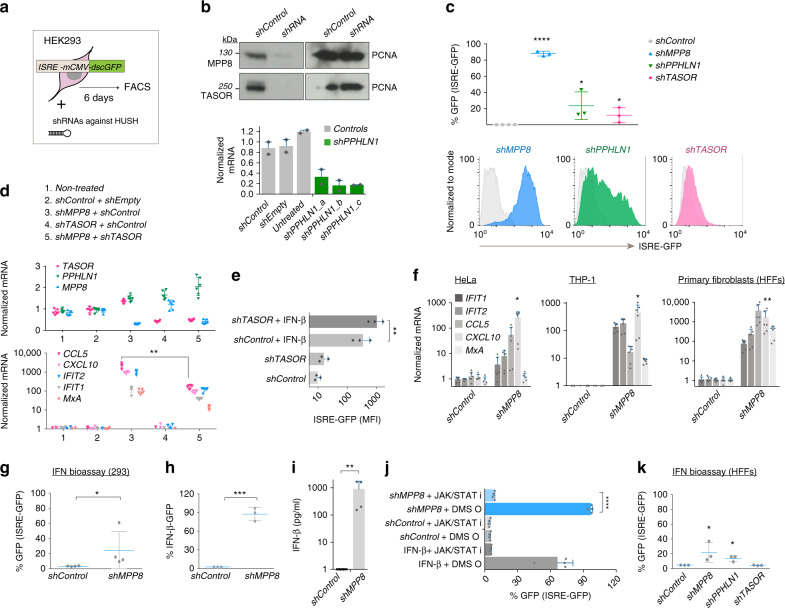
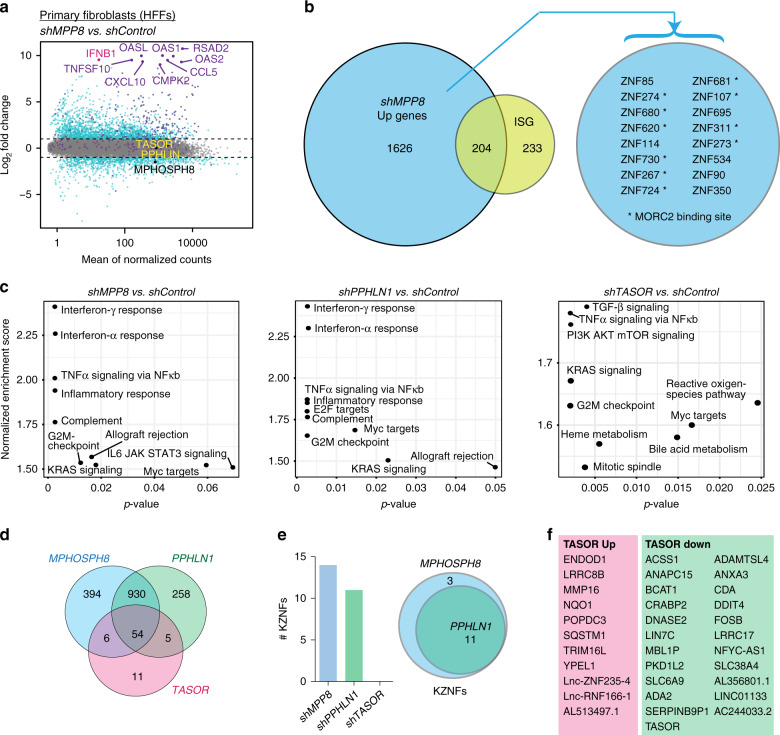
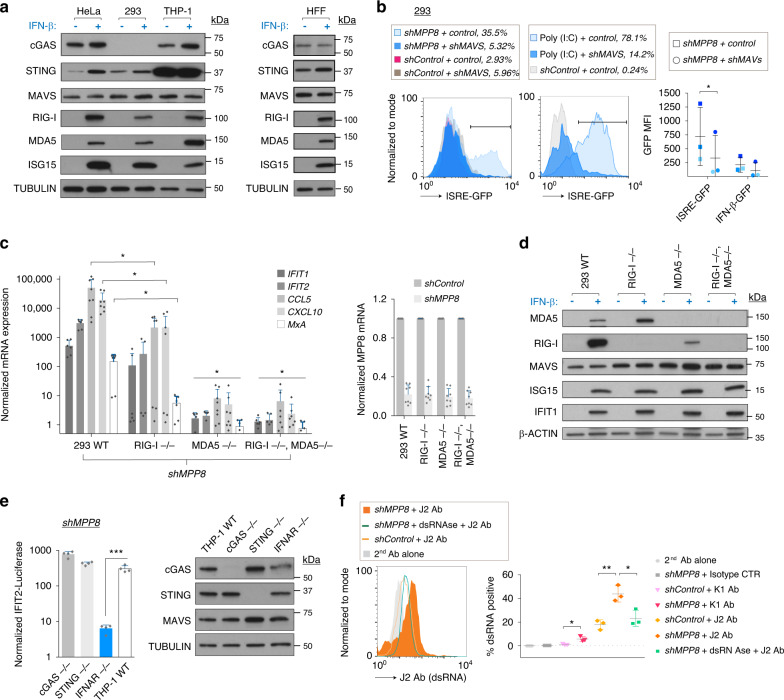
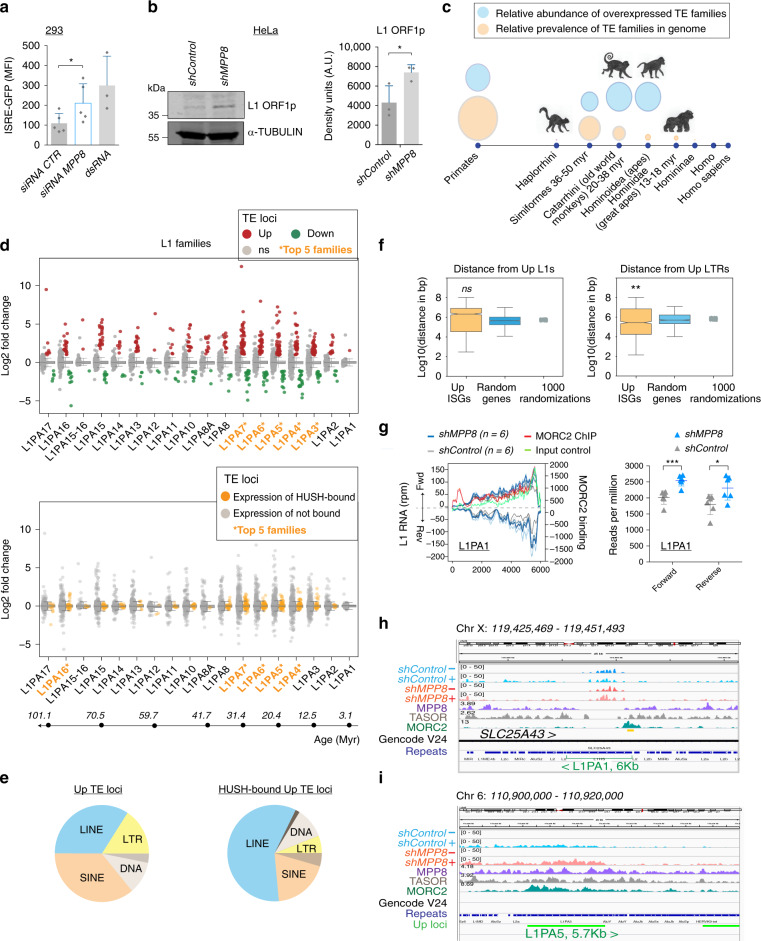
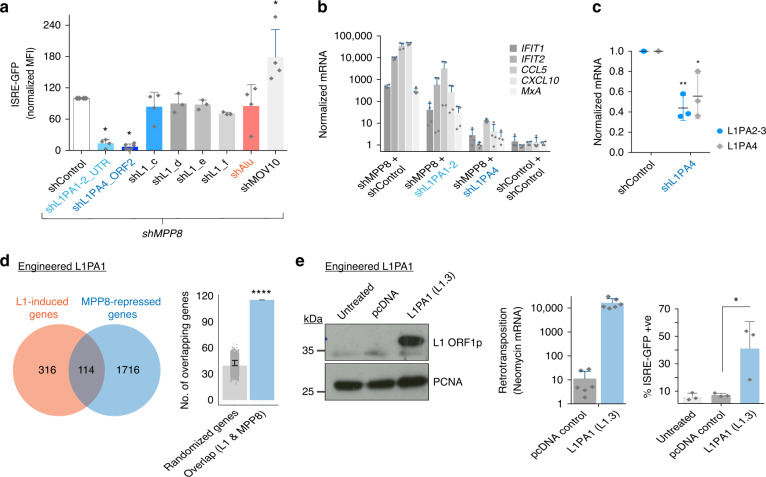
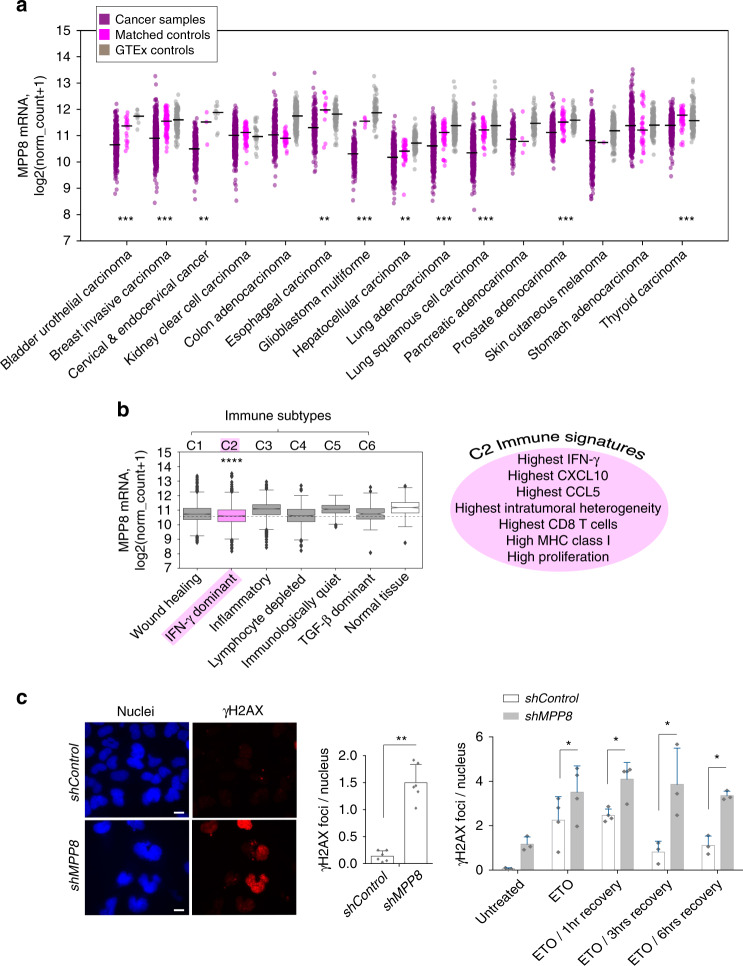
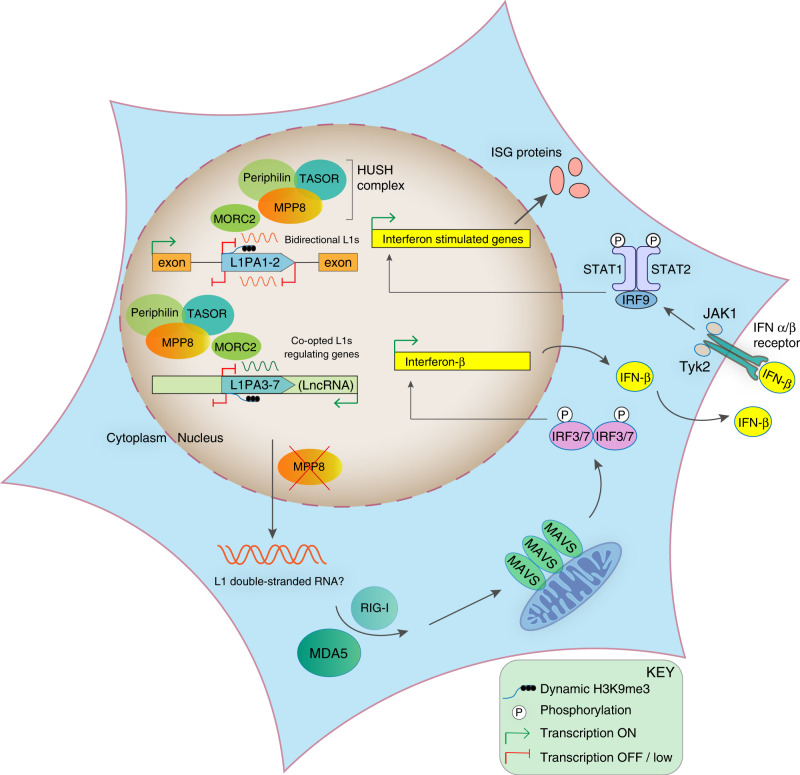
The Human Silencing Hub (HUSH) complex is necessary for epigenetic repression of LINE-1 elements. We show that HUSH-depletion in human cell lines and primary fibroblasts leads to induction of interferon-stimulated genes (ISGs) through JAK/STAT signaling. This effect is mainly attributed to MDA5 and RIG-I sensing of double-stranded RNAs (dsRNAs). This coincides with upregulation of primate-conserved LINE-1s, as well as increased expression of full-length hominid-specific LINE-1s that produce bidirectional RNAs, which may form dsRNA. Notably, LTRs nearby ISGs are derepressed likely rendering these genes more responsive to interferon. LINE-1 shRNAs can abrogate the HUSH-dependent response, while overexpression of an engineered LINE-1 construct activates interferon signaling. Finally, we show that the HUSH component, MPP8 is frequently downregulated in diverse cancers and that its depletion leads to DNA damage. These results suggest that LINE-1s may drive physiological or autoinflammatory responses through dsRNA sensing and gene-regulatory roles and are controlled by the HUSH complex.
Overview
The claims and statistics of this paper haven’t been checked yet.
Free: it reads the open-access text and checks the first 5 claims that cite a source we can check. Create a free account to check every claim.
Integrity signals
Registry
Cites
Statistics
Figures
Verification
Claims the paper makes
The claims and statistics of this paper haven’t been checked yet.
Free: it reads the open-access text and checks the first 5 claims that cite a source we can check. Create a free account to check every claim.
Claims other papers make about this one
Each is checked against this paper’s own text: does it say what the citing paper says it does?
The source backs part of the claim, not all of it — or backs it for a different population, condition or comparison.
In the citing paper
“Overexpression of L1 can elicit an IFN-I response through either MDA5 or RIG-I99, 100, possibly mediated by some secondary structure of the L1 mRNA.”
From The role of retrotransposable elements in ageing and age-associated diseases (2021) · cites this paper as [99]
Experimental — accuracy not yet measured
Self-check
Percentages, sums and reported differences re-computed from the paper’s own numbers.
The self-check needs the paper’s full text.
Citations
Cites
Moderated estimation of fold change and dispersion for RNA-seq data with DESeq2
Love, M. I., Huber, W., & Anders, S. (2014) · Genome Biology · doi:10.1186/s13059-014-0550-8 · Cited by 95,106
clusterProfiler: an R Package for Comparing Biological Themes Among Gene Clusters
Yu, G., Wang, L.-G., Han, Y., & He, Q.-Y. (2012) · OMICS: A Journal of Integrative Biology · doi:10.1089/omi.2011.0118 · Cited by 36,259
BEDTools: a flexible suite of utilities for comparing genomic features
Quinlan, A. R., & Hall, I. M. (2010) · Bioinformatics · doi:10.1093/bioinformatics/btq033 · Cited by 27,437
HTSeq—a Python framework to work with high-throughput sequencing data
Anders, S., Pyl, P. T., & Huber, W. (2015) · Bioinformatics · doi:10.1093/bioinformatics/btu638 · Cited by 21,464
Robinson, J. T., Thorvaldsdóttir, H., Winckler, W., Guttman, M., Lander, E. S., Getz, G., & Mesirov, J. P. (2011) · Nature Biotechnology · doi:10.1038/nbt.1754 · Cited by 15,390
The Molecular Signatures Database Hallmark Gene Set Collection
Liberzon, A., Birger, C., Thorvaldsdóttir, H., Ghandi, M., Mesirov, J. P., & Tamayo, P. (2015) · Cell Systems · doi:10.1016/j.cels.2015.12.004 · Cited by 13,807
Kim, D., Pertea, G., Trapnell, C., Pimentel, H., Kelley, R., & Salzberg, S. L. (2013) · Genome Biology · doi:10.1186/gb-2013-14-4-r36 · Cited by 12,668
Genome engineering using the CRISPR-Cas9 system
Ran, F. A., Hsu, P. D., Wright, J., Agarwala, V., Scott, D. A., & Zhang, F. (2013) · Nature Protocols · doi:10.1038/nprot.2013.143 · Cited by 11,133
The cancer genome atlas pan-cancer analysis project
The Cancer Genome Atlas Research Network, Weinstein, J. N., Collisson, E. A., Mills, G. B., Shaw, K. R. M., Ozenberger, B. A., Ellrott, K., Shmulevich, I., Sander, C., & Stuart, J. M. (2013) · Nature Genetics · doi:10.1038/ng.2764 · Cited by 9,092
Molecular signatures database (MSigDB) 3.0
Liberzon, A., Subramanian, A., Pinchback, R., Thorvaldsdóttir, H., Tamayo, P., & Mesirov, J. P. (2011) · Bioinformatics · doi:10.1093/bioinformatics/btr260 · Cited by 7,111
Cited by
The role of retrotransposable elements in ageing and age-associated diseases
Gorbunova, V., Seluanov, A., Mita, P., McKerrow, W., Fenyö, D., Boeke, J. D., Linker, S. B., Gage, F. H., Kreiling, J. A., Petrashen, A. P., et al. (2021) · Nature · doi:10.1038/s41586-021-03542-y · Cited by 446
Roles of transposable elements in the regulation of mammalian transcription
Fueyo, R., Judd, J., Feschotte, C., & Wysocka, J. (2022) · Nature Reviews Molecular Cell Biology · doi:10.1038/s41580-022-00457-y · Cited by 451
Cellular origins of dsRNA, their recognition and consequences
Chen, Y. G., & Hur, S. (2022) · Nature Reviews Molecular Cell Biology · doi:10.1038/s41580-021-00430-1 · Cited by 433
DNA damage and repair in age-related inflammation
Zhao, Y., Simon, M., Seluanov, A., & Gorbunova, V. (2023) · Nature Reviews Immunology · doi:10.1038/s41577-022-00751-y · Cited by 372
Endogenous Retroelements and the Viral Mimicry Response in Cancer Therapy and Cellular Homeostasis
Chen, R., Ishak, C. A., & De Carvalho, D. D. (2021) · Cancer Discovery · doi:10.1158/2159-8290.cd-21-0506 · Cited by 205
Endogenous retroviruses in the origins and treatment of cancer
Jansz, N., & Faulkner, G. J. (2021) · Genome Biology · doi:10.1186/s13059-021-02357-4 · Cited by 155
“Such experiments expand the viral mimicry model to include non-ERV TEs as potential therapeutic targets in cancer [167, 180, 183].”
BackgroundTransposable element regulation and expression in cancer
Grundy, E. E., Diab, N., & Chiappinelli, K. B. (2021) · FEBS Journal · doi:10.1111/febs.15722 · Cited by 132
Mendez‐Dorantes, C., & Burns, K. H. (2023) · Genes & Development · doi:10.1101/gad.351051.123 · Cited by 125
“In human cancers, compromised HUSH-mediated heterochro-matinization, potentially due to down-regulation of MPP8, may contribute to the activation of LINE-1 expression (Tunbak et al. 2020).”
BackgroundSelf-citationSensing of transposable elements by the antiviral innate immune system
Gázquez-Gutiérrez, A., Witteveldt, J., Heras, S. R., & Macías, S. (2021) · RNA · doi:10.1261/rna.078721.121 · Cited by 109
“Loss of the HUSH complex resulted in increased LINE-1 expression and IFN activation in a RLR/MAVS-dependent manner, suggesting that LINE-1 dsRNA can also act as a trigger of the IFN response (Tunbak et al. 2020).”
BackgroundGarland, W., Müller, I., Wu, M., Schmid, M., Imamura, K., Rib, L., Sandelin, A., Helin, K., & Jensen, T. H. (2022) · Molecular Cell · doi:10.1016/j.molcel.2022.03.004 · Cited by 91
“Intact L1 RNAs encode for L1ORF1 and L1ORF2 proteins, which are required for L1 retrotransposition (Ostertag and Kazazian, 2001), and L1ORF1 levels are significantly increased upon HUSH depletions (Douse et al., 2020; Müller et al., 2021; Tunbak et al., 2020).”
BackgroundThe competitive landscape of the dsRNA world
Cottrell, K. A., Andrews, R. J., & Bass, B. (2023) · Molecular Cell · doi:10.1016/j.molcel.2023.11.033 · Cited by 96
The Immunological Conundrum of Endogenous Retroelements
Kassiotis, G. (2023) · Annual Review of Immunology · doi:10.1146/annurev-immunol-101721-033341 · Cited by 91
“Similarly to ERVs, bidirectional transcription of LINE-1 elements following loss of epigenetic regulators such as SETDB1 or components of the HUSH (human silencing hub) complex generates potentially immunogenic dsRNA in human cells (56, 57).”
The sound of silence: mechanisms and implications of HUSH complex function
Seczyńska, M., & Lehner, P. J. (2023) · Trends in Genetics · doi:10.1016/j.tig.2022.12.005 · Cited by 86
DNMT and EZH2 inhibitors synergize to activate therapeutic targets in hepatocellular carcinoma
Zhang, L., Li, H., Shereda, R., Lu, Q., Weisenberger, D. J., O'Connell, C. L., Machida, K., An, W., Lenz, H., El-Khoueiry, A. B., et al. (2022) · Cancer Letters · doi:10.1016/j.canlet.2022.215899 · Cited by 84
Transposable elements as new players in neurodegenerative diseases
Ravel‐Godreuil, C., Znaidi, R., Bonnifet, T., Joshi, R. L., & Fuchs, J. (2021) · FEBS Letters · doi:10.1002/1873-3468.14205 · Cited by 68
TNRC18 engages H3K9me3 to mediate silencing of endogenous retrotransposons
Zhao, S., Lu, J., Pan, B., Fan, H., Byrum, S. D., Xu, C., Kim, A., Guo, Y., Kanchi, K., Gong, W., et al. (2023) · Nature · doi:10.1038/s41586-023-06688-z · Cited by 69
“Preferential silencing effects by TNRC18 on ERVs are in contrast to those induced by the HUSH complex on LINE1s 3,4 .”
BackgroundTASOR epigenetic repressor cooperates with a CNOT1 RNA degradation pathway to repress HIV
Matkovic, R., Morel, M., Lanciano, S., Larrous, P., Martin, B., Bejjani, F., Vauthier, V., Hansen, M. M. K., Emiliani, S., Cristofari, G., et al. (2022) · Nature Communications · doi:10.1038/s41467-021-27650-5 · Cited by 63
“2a), which may indicate a role of TASOR and partners in Bait: TASOR (1-900) Prey: Human Macrophage Proteome a b”
BackgroundInfluentialFactors Regulating the Activity of LINE1 Retrotransposons
Protasova, M., Андреева, Т. В., & Rogaev, E. I. (2021) · Genes · doi:10.3390/genes12101562 · Cited by 67
3D genome, on repeat: Higher-order folding principles of the heterochromatinized repetitive genome
Haws, S. A., Simándi, Z., Barnett, R. J., & Phillips‐Cremins, J. E. (2022) · Cell · doi:10.1016/j.cell.2022.06.052 · Cited by 62
Lanciano, S., Philippe, C., Sarkar, A., Pratella, D., Domrane, C., Doucet, A. J., van Essen, D., Saccani, S., Ferry, L., Defossez, P., et al. (2024) · Cell Genomics · doi:10.1016/j.xgen.2024.100498 · Cited by 62
“39 Despite these repression mechanisms, L1HS elements can mobilizeinthegermlineandearlyembryonicdevelopment,leading to heritable genetic variations and occasionally causing genetic diseases.”
BackgroundHIF1α-AS1 is a DNA:DNA:RNA triplex-forming lncRNA interacting with the HUSH complex
Leisegang, M. S., Bains, J. K., Seredinski, S., Oo, J. A., Krause, N. M., Kuo, C., Günther, S., Cetin, N. S., Warwick, T., Cao, C., et al. (2022) · Nature Communications · doi:10.1038/s41467-022-34252-2 · Cited by 55
“1 +HIF1α-AS1-Δexon1 (26-78) or control pcDNA3.”
MethodInfluentialPotential health risks of mRNA-based vaccine therapy: A hypothesis
Acevedo‐Whitehouse, K. A., & Bruno, R. (2023) · Medical Hypotheses · doi:10.1016/j.mehy.2023.111015 · Cited by 63
“regulate IFN expression [65] and initiate inflammatory responses via foreign RNA sensing and gene-regulation [66].”
BackgroundCo-transcriptional genome surveillance by HUSH is coupled to termination machinery
Spencley, A. L., Bar, S., Swigut, T., Flynn, R. A., Lee, C. H., Chen, L.-F., Bassik, M. C., & Wysocka, J. (2023) · Molecular Cell · doi:10.1016/j.molcel.2023.04.014 · Cited by 46
“15,16,18,22,24,25 Furthermore, much of our current understanding of HUSH biology is based on transgenic reporter assays.”
Antiviral immunity triggered by infection-induced host transposable elements
Hale, B. G. (2021) · Current Opinion in Virology · doi:10.1016/j.coviro.2021.12.006 · Cited by 50
Transposon–host arms race: a saga of genome evolution
Iwasaki, Y. W., Shoji, K., Nakagwa, S., Miyoshi, T., & Tomari, Y. (2025) · Trends in Genetics · doi:10.1016/j.tig.2025.01.009 · Cited by 46
Lawlor, M. A., & Ellison, C. E. (2023) · Current Opinion in Genetics & Development · doi:10.1016/j.gde.2023.102092 · Cited by 35
Keep quiet: the HUSH complex in transcriptional silencing and disease
Müller, I. I., & Helin, K. (2024) · Nature Structural & Molecular Biology · doi:10.1038/s41594-023-01173-7 · Cited by 44
“Moreover, in addition to its ability to repress exogenous genetic elements, recent studies have linked the HUSH complex to regulation of the human innate immune system 88 .”
Luqman-Fatah, A., Watanabe, Y., Uno, K., Ishikawa, F., Moran, J. V., & Miyoshi, T. (2023) · Nature Communications · doi:10.1038/s41467-022-35757-6 · Cited by 49
Transposable element landscapes in aging Drosophila
Yang, N., Srivastav, S. P., Rahman, R., Ma, Q., Dayama, G., Li, S., Chinen, M., Lei, E. P., Rosbash, M., & Lau, N. C. (2022) · PLoS Genetics · doi:10.1371/journal.pgen.1010024 · Cited by 33
“Mammals have a complex, interconnected network of silencing pathways like the axis of SETDB1 [24,25], KAP1 [26–28] and the HUSH complex [29–32]; and its cooperation with histone deacetylases like SIRT6 [33,34] and histone methyltransferases like Suv39h1 and G9A [35–37].”
Regulation and function of transposable elements in cancer genomes
Lee, M., Ahmad, S. F., & Xu, J. (2024) · Cellular and Molecular Life Sciences · doi:10.1007/s00018-024-05195-2 · Cited by 37
“…double stranded RNAs (dsRNAs) generated by transcription of inverted Alu elements [94], bidirectional transcription of ERVs [95] and possibly LINE-1s [96], as well as complementary DNA (cDNA) derived from cytosolic reverse transcription of LINE-1 RNAs [97–99] by an unclear mechanism [100, 101].”
BackgroundCompetition between two HUSH complexes orchestrates the immune response to retroelement invasion
Danac, J. M. C., Matthews, R. E., Gungi, A., Qin, C., Parsons, H. T., Antrobus, R., Timms, R. T., & Tchasovnikarova, I. A. (2024) · Molecular Cell · doi:10.1016/j.molcel.2024.06.020 · Cited by 41
RNA mis-splicing drives viral mimicry response after DNMTi therapy in SETD2-mutant kidney cancer
Li, H., Jang, H. J., Rohena-Rivera, K., Liu, M., Gujar, H., Kulchycki, J. R., Zhao, S., Billet, S., Zhou, X., Weisenberger, D. J., et al. (2023) · Cell Reports · doi:10.1016/j.celrep.2023.112016 · Cited by 32
“34 Indeed, kidney cancer cells with the SETD2 genetic ablation or loss-of-function SETD2 mutations display a higher number of TEs that were transcriptionally induced after DAC treatment (Figure 3D).”
McKerrow, W., Kagermazova, L., Doudican, N. A., Frazzette, N., Kaparos, E. I., Evans, S. A., Rocha, A. V., Sedivy, J. M., Neretti, N., Carucci, J. A., et al. (2023) · Nucleic Acids Research · doi:10.1093/nar/gkad049 · Cited by 30
Yu, Q., del Valle, A. H., Singh, R., & Modis, Y. (2021) · Nature Communications · doi:10.1038/s41467-021-27062-5 · Cited by 33
Dark genome, bright ideas: Recent approaches to harness transposable elements in immunotherapies
Reid, A., Bhardwaj, N., & Vabret, N. (2022) · Cancer Cell · doi:10.1016/j.ccell.2022.07.003 · Cited by 32
Advances in understanding LINE-1 regulation and function in the human genome
Li, X., & Liu, N. (2025) · Trends in Genetics · doi:10.1016/j.tig.2025.04.011 · Cited by 37
Martins, F., Rosspopoff, O., Carlevaro-Fita, J., Forey, R., Offner, S., Planet, E., Pulver, C., Pak, H., Huber, F., Michaux, J., et al. (2024) · Cancer Research · doi:10.1158/0008-5472.can-23-1237 · Cited by 30
“…SETDB1 methyltransferase was recently found to foster immune evasion in melanoma and lung cancer by repressing TE transcription (21), a source of dsDNA/dsRNA species sensed by intracellular innate immunity pathways and of endogenous viral peptides with immunogenic properties (22).”
Vukić, D., Cherian, A., Keskitalo, S., Bong, Y. T., Marônek, M., Yadav, L., Keegan, L. P., Varjosalo, M., & O’Connell, M. A. (2024) · Nucleic Acids Research · doi:10.1093/nar/gkae1106 · Cited by 24
Yang, G., Yu, X., Weisenberger, D. J., Lü, T., & Liang, G. (2023) · Cancers · doi:10.3390/cancers15112934 · Cited by 28
Ilik, İ., Xu, Y., Zhang, Z. Z., & Aktaş, T. (2025) · Nature Reviews Molecular Cell Biology · doi:10.1038/s41580-025-00867-8 · Cited by 33
“Reduction in the activity of the HUSH complex in human cells leads to increase in LINE1 -derived RNA, some of which can form dsRNA long enough to trigger innate immunity 108 .”
Jensvold, Z. D., Flood, J. R., Christenson, A. E., & Lewis, P. W. (2024) · Nature Communications · doi:10.1038/s41467-024-53761-w · Cited by 22
DNA methylation governs the sensitivity of repeats to restriction by the HUSH-MORC2 corepressor
Pandiloski, N., Horváth, V., Karlsson, O., Koutounidou, S., Dorazehi, F., Christoforidou, G., Matas-Fuentes, J., Gerdes, P., Garza, R., Jönsson, M. E., et al. (2024) · Nature Communications · doi:10.1038/s41467-024-50765-4 · Cited by 25
“In HeLa cells, which (despite global chromosomal instability) have broadly comparable L1 methylation levels to what we observe in hNPCs, modest L1 deregulation was likewise observed 28,43 .”
Co-option of endogenous retroviruses through genetic escape from TRIM28 repression
Enriquez-Gasca, R., Gould, P. A., Tunbak, H., Conde, L., Herrero, J., Chittka, A., Beck, C. R., Gifford, R. J., & Rowe, H. M. (2023) · Cell Reports · doi:10.1016/j.celrep.2023.112625 · Cited by 23
Self-citationOncolytic Virotherapy: The Cancer Cell Side
Ehrlich, M., & Bacharach, E. (2021) · Cancers · doi:10.3390/cancers13050939 · Cited by 26
“activates antiviral signaling cascades, including an IFN response (see [171] and additional examples below).”
BackgroundLINE-1 ORF1p Mimics Viral Innate Immune Evasion Mechanisms in Pancreatic Ductal Adenocarcinoma
You, E., Patel, B. K., Rojas, A. S., Sun, S., Danaher, P. J., Ho, N. I., Phillips, I. E., Raabe, M. J., Song, Y., Xu, K. H., et al. (2025) · Cancer Discovery · doi:10.1158/2159-8290.cd-24-1317 · Cited by 22
“Finally, to investigate the clinical relevance of ORF1p expression in patients with PDAC, we re-analyzed our previously reported CosMx spatial molecular imager (SMI) transcriptomic data (four tissue microarray; TMAs: 1, 28, 31, and 32), based on ORF1p intensity assessed through IHC scoring (Fig.”
Ukadike, K. C., Najjar, R., Ni, K., Laine, A., Wang, X., Bays, A. M., Taylor, M. S., LaCava, J., & Mustelin, T. (2023) · Mobile DNA · doi:10.1186/s13100-023-00293-7 · Cited by 19
Jing, T., Wei, D., Xu, X., Wu, C., Yuan, L., Huang, Y., Liu, Y., Jiang, Y.-Y., & Wang, B. (2024) · Nature Communications · doi:10.1038/s41467-024-49926-2 · Cited by 22
Human LINE-1 retrotransposons: impacts on the genome and regulation by host factors
Luqman-Fatah, A., & Miyoshi, T. (2022) · Genes & Genetic Systems · doi:10.1266/ggs.22-00038 · Cited by 21
Retrotransposon life cycle and its impacts on cellular responses
Luqman-Fatah, A., Nishimori, K., Amano, S., Fumoto, Y., & Miyoshi, T. (2024) · RNA Biology · doi:10.1080/15476286.2024.2409607 · Cited by 23
“Although MDA5, RIG-I, TLR7, and TLR8 have been reported to detect L1 RNA to induce an innate immune response based on their respective down-stream pathways [153,169,170], the exact mechanisms underlying these processes require further elucidation.”
InfluentialAn update on post‐transcriptional regulation of retrotransposons
Warkocki, Z. (2022) · FEBS Letters · doi:10.1002/1873-3468.14551 · Cited by 24
Ward, J. R., Khan, A., Torres, S., Crawford, B., Nock, S. L., Frisbie, T. J., Moran, J. V., & Longworth, M. S. (2022) · Nucleic Acids Research · doi:10.1093/nar/gkac802 · Cited by 23
Contrasting functions of ATP hydrolysis by MDA5 and LGP2 in viral RNA sensing
Singh, R., Wu, Y., Herrero del Valle, A., Leigh, K. E., Mong, S., Cheng, M. T. K., Ferguson, B. J., & Modis, Y. (2024) · Journal of Biological Chemistry · doi:10.1016/j.jbc.2024.105711 · Cited by 16
“…of dsRNA by adenosine deaminase RNA-speci fi c (ADAR1), which weakens base pairing and causes bulges, is nevertheless required to prevent MDA5-dependent autoin fl ammatory signaling induced by endogenous RNAs with high double-stranded content, for example, annealed inverted Alu repeats (27 – 30).”
BackgroundThe HUSH epigenetic repressor complex silences PML nuclear body-associated HSV-1 quiescent genomes
Roubille, S., Escure, T., Juillard, F., Corpet, A., Néplaz, R., Binda, O., Seurre, C., Gonin, M., Bloor, S., Cohen, C., et al. (2024) · Proceedings of the National Academy of Sciences · doi:10.1073/pnas.2412258121 · Cited by 23
“Subsequently, our focus shifted toward families of long interspersed nuclear elements (LINEs) retrotransposons, which have been previously identified as undergoing significant regulation by components of the HUSH complex ( 21 , 23 , 24 , 33 , 34 ).”
Transposable elements as genome regulators in normal and malignant haematopoiesis
Prokopov, D., Tunbak, H., Leddy, E., Drylie, B., Camera, F., & Deniz, Ö. (2025) · Blood Cancer Journal · doi:10.1038/s41408-025-01295-9 · Cited by 19
“However, evolutionarily younger TEs have evaded KRAB-ZFP repression through the loss of binding sites [125, 126] and are instead controlled by the human silencing hub (HUSH) complex [127 – 129].”
Self-citationSilencing by the HUSH Epigenetic Transcriptional Repressor Complex
Lehner, P. J. (2025) · Annual Review of Biochemistry · doi:10.1146/annurev-biochem-020425-045352 · Cited by 23
Viral mimicry in cancer therapy
Rosenberg, L., & Vabret, N. (2025) · Trends in cancer · doi:10.1016/j.trecan.2025.08.010 · Cited by 21
Wiltshire, A. M., Schaal, R. F., Wang, F., Tsou, T., McKerrow, W., & Keefe, D. L. (2023) · Genes · doi:10.3390/genes14061232 · Cited by 19
“TEs comprise over half of the human genome, and presumably evolved from ancient infections of human ancestral genomes by retroviruses [22,23].”
BackgroundInduction of transposable element expression is central to innate sensingPreprint
Rookhuizen, D. C., Bonté, P., Ye, M., Hoyler, T., Gentili, M., Burgdorf, N., Durand, S., Aprahamian, F., Kroemer, G., Manel, N., et al. (2021) · bioRxiv (Cold Spring Harbor Laboratory) · doi:10.1101/2021.09.10.457789 · Cited by 16
“10 TE-derived PAMPs when TE are expressed in various experimental systems: knock out of 347 epigenetic regulators (13), models of senescence/aging (30, 31), cancer (9, 36).”
BackgroundInfluentialNew insights into the functional role of retrotransposon dynamics in mammalian somatic cells
Mangiavacchi, A., Liu, P., Valle, F. D., & Orlando, V. (2021) · Cellular and Molecular Life Sciences · doi:10.1007/s00018-021-03851-5 · Cited by 18
The peptide woods are lovely, dark and deep: Hunting for novel cancer antigens
Oreper, D., Klaeger, S., Jhunjhunwala, S., & Delamarre, L. (2023) · Seminars in Immunology · doi:10.1016/j.smim.2023.101758 · Cited by 14
Unbiased proteomic mapping of the LINE-1 promoter using CRISPR Cas9
Briggs, E. M., Mita, P., Sun, X., Ha, S., Vasilyev, N., Leopold, Z., Nudler, E., Boeke, J. D., & Logan, S. K. (2021) · Mobile DNA · doi:10.1186/s13100-021-00249-9 · Cited by 15
“PPHLN1, a component of the HUSH complex, was highly enriched in our LNCaP screen, and has also been shown to inhibit LINE-1 expression [48, 59].”
BackgroundIn vivo CRISPR screens identify Mga as an immunotherapy target in triple-negative breast cancer
Xu, F., Yang, C. Q., Huang, Y., Su, D., Wang, C., Wilson, L., Yin, L., Tang, M., Li, S., Chen, Z., et al. (2024) · Proceedings of the National Academy of Sciences · doi:10.1073/pnas.2406325121 · Cited by 10
Transposable elements in health and disease: Molecular basis and clinical implications
Hong, Y., & Liu, N. (2025) · Chinese Medical Journal · doi:10.1097/cm9.0000000000003775 · Cited by 17
“[7,44,76,127] TE-derived RNAs and their RT products (complementary single-stranded DNA or DNA/RNA hybrids) can activate nucleic acid-sensing pathways, including RNA receptors like RIG-I-like receptors, Toll-like receptor 3, and the DNA sensor cGAS enzyme.”
Inflammatory mitochondrial signalling and viral mimicry in cancer
Nesci, S., Marchi, S., Hu, J. K., Marincola, F. M., & Algieri, C. (2025) · Journal of Translational Medicine · doi:10.1186/s12967-025-06931-3 · Cited by 16
“Endogenous dsRNAs are often derived from all type I TEs, i.e., LTR, LINEs, and SINEs [2, 26, 27], , whereas LINEs reverse transcribe complementary DNA ( cDNA ) [28] (Fig.”
Binding to DCAF1 distinguishes TASOR and SAMHD1 degradation by HIV-2 Vpx
Martin, M. M., Matkovic, R., Larrous, P., Morel, M., Lasserre, A., Vauthier, V., & Margottin-Goguet, F. (2021) · PLoS Pathogens · doi:10.1371/journal.ppat.1009609 · Cited by 15
“Indeed, it has been proposed that the regulation of LINE-1 by HUSH serves as a gatekeeper of type 1 interferon signaling, which, when deregulated, could lead to autoinflammatory diseases [61].”
BackgroundOsburn, S. C., Mesquita, P. H. C., Neal, F. K., Rumbley, M. N., Holmes, M. T., Ruple, B. A., Mobley, C. B., Brown, M. D., McCullough, D. J., Kavazis, A. N., et al. (2022) · American Journal of Physiology-Cell Physiology · doi:10.1152/ajpcell.00234.2022 · Cited by 11
Epigenetic Restriction Factors (eRFs) in Virus Infection
Roy, A., & Ghosh, A. (2024) · Viruses · doi:10.3390/v16020183 · Cited by 12
“…development [110–112], position-effect variegation of gene expression [113], suppression of inappropriate immune and interferon activation [114,115], control of brain architecture [116], and the transcriptional silencing of foreign RNA-derived DNA elements inside the nucleus, including long…”
BackgroundCancer cells subvert the primate-specific KRAB zinc finger protein ZNF93 to control APOBEC3B
Forey, R., Raclot, C., Pulver, C., Rosspopoff, O., Offner, S., Duc, J., Planet, E., Martins, F., Turelli, P., & Trono, D. (2025) · Proceedings of the National Academy of Sciences · doi:10.1073/pnas.2505021122 · Cited by 8
“Increased expression of epigenetic repressors is frequently selected for in cancer cells, resulting in reduced TE expression, prevention of DNA damage, replication stress, and inflammation, all of which partake in sustaining proliferation (15, 16, 18).”
Impaired activation of Transposable Elements in SARS-CoV-2 infectionPreprint
Sorek, M., Meshorer, E., & Schlesinger, S. (2021) · bioRxiv (Cold Spring Harbor Laboratory) · doi:10.1101/2021.02.25.432821 · Cited by 9
Targeting transposable elements in cancer: developments and opportunities
Wang, Z.-Y., Ge, L., Ouyang, Y., Jin, X., & Jiang, Y. (2024) · Biochimica et Biophysica Acta (BBA) - Reviews on Cancer · doi:10.1016/j.bbcan.2024.189143 · Cited by 11
Ma, J., He, D., Zhang, M., Zhou, Z., Cheng, J., Huang, A., Lian, Y., Shi, Y., Xie, C., Guan, Z., et al. (2025) · Signal Transduction and Targeted Therapy · doi:10.1038/s41392-025-02396-4 · Cited by 9
“31,51 Moreover, LINE1-speci fi c antisense oligonucleotide therapy has been shown to lower LINE1 RNA levels, thereby improving the expression of aging markers.”
Wang, Z., Yang, C., Gao, W., Sun, W., Sun, J., Wang, H., Yan, S., & Xu, D. (2024) · International Immunopharmacology · doi:10.1016/j.intimp.2024.113916 · Cited by 7
Wang, L., Ni, L., Zhang, Y., Guo, S., Liu, C., Lin, C., Zeng, Y., Wu, W., Guo, J., Zhu, C., et al. (2023) · Microbiology Spectrum · doi:10.1128/spectrum.02247-23 · Cited by 9
“PegIFNα can induce various IFN-stimulated genes through JAK-STAT signaling (27).”
BackgroundSterile activation of RNA-sensing pathways in autoimmunity
Li, J., Zhu, J., Yang, H., & Hou, F. (2024) · Journal of Molecular Cell Biology · doi:10.1093/jmcb/mjae029 · Cited by 7
Structure and Methyl-lysine Binding Selectivity of the HUSH Complex Subunit MPP8
Nikolopoulos, N., Oda, S.-I., Prigozhin, D. M., & Modis, Y. (2024) · Journal of Molecular Biology · doi:10.1016/j.jmb.2024.168890 · Cited by 11
The innate immune factor RPRD2/REAF and its role in the Lv2 restriction of HIV
Jackson-Jones, K. A., McKnight, Á., & Sloan, R. D. (2023) · mBio · doi:10.1128/mbio.02572-21 · Cited by 8
“…the expression of genes related to the antiviral, antimicrobial, and inflammatory responses (109–111), whereas by regulating long interspersed element 1 (LINE-1), the HUSH complex prevents the induction of interferon-stimulated genes via sensing of double-stranded DNA and JAK/STAT signaling (112).”
BackgroundStructure and methyl-lysine binding selectivity of the HUSH complex subunit MPP8
Nikolopoulos, N., Oda, S.-I., Prigozhin, D. M., & Modis, Y. (2023) · doi:10.1101/2023.12.21.572340 · Cited by 6
Lemus, A. J. J., Tewelde, E., Bhala, R., Guan, A., Xu, A., & Benayoun, B. A. (2026) · Open Biology · doi:10.1098/rsob.250093 · Cited by 7
Krchlíková, V., Lu, Y., & Sauter, D. (2025) · Journal of Virology · doi:10.1128/jvi.01351-24 · Cited by 7
“Apart from TNRC18, the H3K9me3 reader M-phase phosphoprotein 8 (MPP8) was also shown to be involved in ERV9 restriction, as siRNA-mediated depletion of MPP8 and its interaction partner TASOR increased LTR12 expression (109, 110).”
The ERVK3-1 Microprotein Interacts with the HUSH Complex
Jayatissa, A. H., Jaunbocus, N., Erkalo, B., Jiang, K., Zheng, S.-J., Su, H., Yan, L., Choi, J.-Y., Vaughan, J. M., Bacchiocchi, A., et al. (2025) · Biochemistry · doi:10.1021/acs.biochem.5c00023 · Cited by 6
TASOR expression in naive embryonic stem cells safeguards their developmental potential
Pinzón-Arteaga, C. A., O’Hara, R. A., Mazzagatti, A., Ballard, E. B., Hu, Y., Pan, A., Schmitz, D. A., Wei, Y., Sakurai, M., Ly, P., et al. (2024) · Cell Reports · doi:10.1016/j.celrep.2024.114887 · Cited by 6
“19,69 We speculated whether the cell death observed during the transition from Tasor KO ESCs to EpiLCs could be due to an innate immune response.”
Gloßner, L., Eckstein, M., Mark, C., Beckmann, M. W., Hartmann, A., Strissel, P. L., & Strick, R. (2025) · Molecular Oncology · doi:10.1002/1878-0261.70067 · Cited by 5
“For example, the induction of classical IFN type I signaling via dsRNA possibly stemmed from ERV sense and antisense transcripts [6], L1 bidirectional transcripts, or RNA:DNA hybrids [21,23].”
Pradhan, B., Oikkonen, J., Zhang, K., Botto, J. M., Eriksson, M. R., Sundaresan, S., Genç, F., Pisanic, T. R., Falco, M. M., Li, Y., et al. (2025) · Cancer Research · doi:10.1158/0008-5472.can-24-4419 · Cited by 5
“It is unclear whether or how this observation links with the innate immune activation that is triggered by the presence of L1 cDNA (77–79).”
Self-citationCooles, F. A. H., Vidal‐Pedrola, G., Naamane, N., Pratt, A. G., Barron‐Millar, B., Anderson, A. E., Hilkens, C. M. U., Casement, J., Bondet, V., Duffy, D., et al. (2024) · Arthritis & Rheumatology · doi:10.1002/art.43083 · Cited by 4
“We hypothesize that other retrotransposon regulatory mechanisms may be more relevant in synovial tissue, such as epigenetic silencing, 14,53 with promoter methylation having been shown to affect LINE1 activity in autoimmune diseases.”
Translational Significance of the LINE-1 Jumping Gene in Skeletal Muscle
Romero, M. A., Mumford, P. W., Roberson, P. A., Osburn, S. C., Young, K. C., Sedivy, J. M., & Roberts, M. D. (2022) · Exercise and Sport Sciences Reviews · doi:10.1249/jes.0000000000000301 · Cited by 4
“Similar results have been reported in human cell lines as well (57); specifically, the overexpression of an engineered L1 construct has been shown to activate interferon signaling.”
ResultCrawford, B. I., Talley, M. J., Russman, J., Riddle, J., Torres, S., Williams, T., & Longworth, M. S. (2024) · Nature Communications · doi:10.1038/s41467-024-47042-9 · Cited by 6
Carp, T.-N., Metoudi, M., & Ojha, V. (2024) · Preprints.org · doi:10.20944/preprints202212.0155.v6 · Cited by 4
Viral mimicry acts as a tumor suppressor in colitis
Larsen, F., Jeong, W., Schep, D., Good, H. J., Shin, A. E., Zhang, L., Derouet, M., Wang, T. C., Castellani, C. A., Shooshtari, P., et al. (2026) · Nature Communications · doi:10.1038/s41467-026-68850-1 · Cited by 5
“Notably, some transposable elements, such as SINE B2 and LINE1, are more likely to induce a viral mimicry response than other elements 36,70 , such as LTRs that act in antigen presentation and induce T-cell mediated killing 71 .”
Karlsson, O., Pandiloski, N., Horváth, V., Adami, A., Garza, R., Johansson, P. A., Johansson, J., Douse, C. H., & Jakobsson, J. (2026) · Nucleic Acids Research · doi:10.1093/nar/gkag100 · Cited by 3
“For example, L1 expression has been reported to be increased in senescent cells and to activate an interferon response [ 81 , 82 , 89 , 90 ].”
Molecular mechanisms regulating cGAS/STING activation in health and disease
Cho, M.-G., Lee, R., Johnson, J., & Gupta, G. P. (2026) · Journal of Clinical Investigation · doi:10.1172/jci204548 · Cited by 4
“TEs are canonically silenced through epigenetic modification to restrict genome instability and resulting inflammatory responses, but TEs are commonly derepressed under stress conditions, including cancer and aging (47, 48).”
Research progress of LINE-1 in the diagnosis, prognosis, and treatment of gynecologic tumors
Fu, J., Qin, T., Li, C., Zhu, J., Ding, Y., Zhou, M., Yang, Q., Liu, X., Zhou, J., & Chen, F. (2023) · Frontiers in Oncology · doi:10.3389/fonc.2023.1201568 · Cited by 8
Type I IFN in Glomerular Disease: Scarring beyond the STING
Jiménez‐Uribe, A. P., Mangos, S., & Hahm, E. (2024) · International Journal of Molecular Sciences · doi:10.3390/ijms25052497 · Cited by 3
Pouliquen, D., Malloci, M., Boissard, A., Henry, C., & Guette, C. (2022) · International Journal of Molecular Sciences · doi:10.3390/ijms232213732 · Cited by 3
“, 2020 [37] Frequently downregulated in diverse cancers”
BackgroundInfluentialThe silent guardian: unraveling the roles of H3K9me3 in genome maintenance
Li, Z., & Zhang, Z. (2024) · Genome Instability & Disease · doi:10.1007/s42764-024-00131-x · Cited by 3
“De-repression of L1s also generates double-stranded RNAs that induce interferon-stimulated genes and inflammatory reactions (Tunbak et al., 2020), which present novel therapeutic opportunities in anti-tumor immunotherapy (see more discussions below).”
HIV capsids: orchestrators of innate immune evasion, pathogenesis and pandemicity
Morling, K. L., ElGhazaly, M., Milne, R. S. B., & Towers, G. J. (2025) · Journal of General Virology · doi:10.1099/jgv.0.002057 · Cited by 8
“However, as with SAMHD1, HUSH deregulation may also be a double-edged sword because it may activate innate immunity by inducing the expression of transposable element-related sequences including LINE1 and endogenous retroviruses, which are otherwise silenced by HUSH [175, 181].”
Zhang, H., Yang, T., Wu, H., Wen, Y., Dai, C., Chen, X. X., Zhang, W., & Ye, Y. (2023) · Cells · doi:10.3390/cells12162023 · Cited by 3
SLFN11 Restricts LINE-1 Mobility
Ye, Z., Duan, Y., Zhang, A., Zhang, Z., Guo, S., Liu, Q., Yi, D., Wang, X., Zhao, J., Li, Q., et al. (2025) · Cells · doi:10.3390/cells14110790 · Cited by 2
“The human silencing hub (HUSH) complex, for instance, binds to LINE-1 elements and recruits the histone methyltransferase SETDB1 to deposit H3K9me3 marks at LINE-1 loci [22–24].”
Reawakening retrotransposons: immune modulation in normal and malignant hematopoiesis
Tunbak, H., & Deniz, Ö. (2025) · Trends in cancer · doi:10.1016/j.trecan.2025.07.006 · Cited by 4
Self-citationSekino, Y., Li, H.-T., Kaneko, M., Inoue, Y., Ramacciotti, L. S., Lu, R., Deng, Z., Zhou, X., Song, M. M., Desai, A., et al. (2026) · Biomarker Research · doi:10.1186/s40364-026-00890-7 · Cited by 2
Hu, J., Mao, T., Huang, K., Yang, S., Yu, W., Huang, J., Jin, S., Sun, C., Jiapaer, Z., & Wang, X. (2026) · Cell Cycle · doi:10.1080/15384101.2025.2611968 · Cited by 3
Metadata
- Authors
- Tunbak, H., Enriquez-Gasca, R., Tie, C. H. C., Gould, P. A., Mlcochova, P., Gupta, R. K., Fernandes, L., Holt, J., van der Veen, A. G., Giampazolias, E., Burns, K. H., Maillard, P. V., & Rowe, H. M.
- Affiliations
- Queen Mary University of London (GB)
- University College London (GB)
- University of Cambridge (GB)
- The Francis Crick Institute (GB)
- Johns Hopkins University (US)
- Corresponding author
- Rowe, Helen M.
- ORCID
- Venue
- Nature Communications
- Published
- 2020-11-03
- Volume
- 11
- Issue
- 1
- Pages
- 5387-5387
- ISSN
- 2041-1723 (ISSN-L)
- PMC
- PMC7609715
- OpenAlex
- W3096648529
- Semantic Scholar
- 2be41f795f1c065806a90c9588b59a8f91eaea38
- Cited by
- 162
- References
- 85
- Citations by year
- 2026: 27 · 2025: 32 · 2024: 30 · 2023: 27 · 2022: 21 · 2021: 24 · 2020: 1
- FWCI
- 6.39
- Type
- journal article
- Language
- en
- Open access
- gold
- doi.org
- Licence
- cc-by
- creativecommons.org/licenses/by/4.0 (tdm)
- creativecommons.org/licenses/by/4.0 (vor)
- Locations
- Nature Communications (publishedVersion, cc-by)
- PubMed Central (publishedVersion, cc-by)
- PubMed (publishedVersion)
- Leiden Repository (Leiden University) (submittedVersion, cc-by)
- Data Archiving and Networked Services (DANS) (submittedVersion, cc-by)
- RePEc: Research Papers in Economics (submittedVersion)
- DOAJ (DOAJ: Directory of Open Access Journals) (submittedVersion, cc-by-sa)
- UCL Discovery (University College London) (submittedVersion)
- Queen Mary Research Online (Queen Mary University of London) (submittedVersion, cc-by)
- Apollo (University of Cambridge) (submittedVersion, cc-by)
- Apollo (cc-by)
- Apollo
- Funders
- Wellcome Trust (101200, WT108082AIA, Wellcome) (101200/Z/13/Z, WT108082AIA, WT108082AIA, 101200/Z/13/Z, 101200/Z/13/Z, 101200/Z/13/Z)
- UK Research and Innovation (MR/S034498/1)
- Barts Charity (MGU0459, MMBG1R)
- Rosetrees Trust (A2630)
- Robert Luff Foundation
- H2020 European Research Council (678350)
- Topics
- Life Sciences › Immunology and Microbiology › Immunology › interferon and immune responses
- Life Sciences › Biochemistry, Genetics and Molecular Biology › Genetics › Chromosomal and Genetic Variations
- Life Sciences › Biochemistry, Genetics and Molecular Biology › Molecular Biology › Genomics and Chromatin Dynamics
- Keywords
- HUSH complex, LINE-1 retrotransposons, type I interferon, interferon-stimulated genes, JAK/STAT signaling, MDA5, RIG-I, double-stranded RNA sensing, MPP8, long terminal repeat, epigenetic silencing, DNA damage, autoinflammation, cancer
- MeSH terms
- DEAD Box Protein 58, Interferon-Induced Helicase, IFIH1, DNA Damage, HeLa Cells, Humans, Inflammation, Interferon Type I, Phosphoproteins, Receptors, Immunologic, RNA, Double-Stranded, Signal Transduction, Down-Regulation, Gene Expression Regulation, Neoplastic, Sequence Analysis, RNA, Long Interspersed Nucleotide Elements, Gene Silencing, Epigenesis, Genetic, Gene Knockout Techniques, HEK293 Cells
About these checks
Registry, retraction, Cites and statistics results are computed, not judged, with one exception: a printed reference that no index lists is read once by a model before it counts as a citation error. Claims are extracted by a model and kept only when their quote appears verbatim in the text; each cited source is then checked, with a model’s help, for whether it says what the claim relies on. Those verdicts can be wrong — read the claim’s quote and the cited source before relying on one.
Statistics and arithmetic are recomputed, not judged.
Confidence bands are shown only for fields calibrated on our annotated test set. None is calibrated yet, so no band is shown.
What counts as a claim ›How we measure confidence ›How we check this ›
Are you an author, or do you see a problem with this page? Request a review
Data sources
Bibliographic data: Semantic Scholar, OpenAlex, Crossref.
Contains information from the Semantic Scholar Academic Graph Datasets, made available under the ODC Attribution License (ODC-BY 1.0).
Semantic Scholar’s data is described in: Kinney, R., et al. (2023). The Semantic Scholar Open Data Platform. arXiv:2301.10140.
