

Identification of a myotropic AAV by massively parallel in vivo evaluation of barcoded capsid variants
Open accessThe DOI matches its Crossref record; 44 of the 44 references it cites were found in a registry or an index.
Abstract
Adeno-associated virus (AAV) forms the basis for several commercial gene therapy products and for countless gene transfer vectors derived from natural or synthetic viral isolates that are under intense preclinical evaluation. Here, we report a versatile pipeline that enables the direct side-by-side comparison of pre-selected AAV capsids in high-throughput and in the same animal, by combining DNA/RNA barcoding with multiplexed next-generation sequencing. For validation, we create three independent libraries comprising 183 different AAV variants including widely used benchmarks and screened them in all major tissues in adult mice. Thereby, we discover a peptide-displaying AAV9 mutant called AAVMYO that exhibits superior efficiency and specificity in the musculature including skeletal muscle, heart and diaphragm following peripheral delivery, and that holds great potential for muscle gene therapy. Our comprehensive methodology is compatible with any capsids, targets and species, and will thus facilitate and accelerate the stratification of optimal AAV vectors for human gene therapy.
Overview
The claims and statistics of this paper haven’t been checked yet.
Free: it reads the open-access text and checks the first 5 claims that cite a source we can check. Create a free account to check every claim.
Integrity signals
Registry
Cites
Statistics
Figures
Verification
Claims the paper makes
The claims and statistics of this paper haven’t been checked yet.
Free: it reads the open-access text and checks the first 5 claims that cite a source we can check. Create a free account to check every claim.
Claims other papers make about this one
Each is checked against this paper’s own text: does it say what the citing paper says it does?
In the citing paper
“AAVMYO was also 9-fold detargeted from liver than AAV9 after intravenous administration in mice.”
From A versatile toolkit for overcoming AAV immunity (2022) · cites this paper as [115]
In the citing paper
“AAVMYO, a novel capsid with improved muscle tropism, was generated through random peptide display (115).”
From A versatile toolkit for overcoming AAV immunity (2022) · cites this paper as [115]
Self-check
Percentages, sums and reported differences re-computed from the paper’s own numbers.
The self-check needs the paper’s full text.
Citations
Cites
Error Detecting and Error Correcting Codes
Hamming, R. W. (1950) · Bell System Technical Journal · doi:10.1002/j.1538-7305.1950.tb00463.x · Cited by 5,377
ERROR DETECTING AND ERROR CORRECTING CODES
Chauhan, N., Yadav, P., & Kumari, P. (2014) · Cited by 3,270
RGD AND OTHER RECOGNITION SEQUENCES FOR INTEGRINS
Ruoslahti, E. (1996) · Annual Review of Cell and Developmental Biology · doi:10.1146/annurev.cellbio.12.1.697 · Cited by 3,191
Analysis of AAV Serotypes 1–9 Mediated Gene Expression and Tropism in Mice After Systemic Injection
Zincarelli, C., Soltys, S., Rengo, G., & Rabinowitz, J. E. (2008) · Molecular Therapy · doi:10.1038/mt.2008.76 · Cited by 1,490
Cre-dependent selection yields AAV variants for widespread gene transfer to the adult brain
Deverman, B. E., Pravdo, P. L., Simpson, B. P., Kumar, S. R., Chan, K. Y., Banerjee, A., Wu, W.-L., Yang, B., Huber, N., Pasca, S. P., et al. (2016) · Nature Biotechnology · doi:10.1038/nbt.3440 · Cited by 1,061
Dalkara, D., Byrne, L. C., Klimczak, R. R., Visel, M., Yin, L., Merigan, W. H., Flannery, J. G., & Schaffer, D. V. (2013) · Science Translational Medicine · doi:10.1126/scitranslmed.3005708 · Cited by 734
Grimm, D., Lee, J. S., Wang, L., Desai, T., Akache, B., Storm, T. A., & Kay, M. A. (2008) · Journal of Virology · doi:10.1128/jvi.00254-08 · Cited by 696
Self-citationSelection and evaluation of clinically relevant AAV variants in a xenograft liver model
Lisowski, L., Dane, A. P., Chu, K., Zhang, Y., Cunningham, S. C., Wilson, E. M., Nygaard, S., Grompe, M., Alexander, I. E., & Kay, M. A. (2014) · Nature · doi:10.1038/nature12875 · Cited by 450
Opie, S. R., Warrington, Agbandje-McKenna, M., Zolotukhin, S., & Muzyczka, N. (2003) · Journal of Virology · doi:10.1128/jvi.77.12.6995-7006.2003 · Cited by 364
Leborgne, C., Barbon, E., Alexander, J. M., Hanby, H., Delignat, S., Cohen, D. M., Collaud, F., Muraleetharan, S., Lupo, D., Silverberg, J., et al. (2020) · Nature Medicine · doi:10.1038/s41591-020-0911-7 · Cited by 336
Cited by
Tabebordbar, M., Lagerborg, K. A., Stanton, A., King, E. M., Ye, S., Tellez, L., Krunnfusz, A., Tavakoli, S., Widrick, J. J., Messemer, K. A., et al. (2021) · Cell · doi:10.1016/j.cell.2021.08.028 · Cited by 506
“While this paper was under peer review, Weinmann et al. (2020) reported identification of a muscle-tropic capsid variant containing an RGD motif in mice.”
BackgroundAAV vectors: The Rubik’s cube of human gene therapy
Pupo, A., Fernández, A., Low, S. H., François, A., Suárez-Amarán, L., & Samulski, R. J. (2022) · Molecular Therapy · doi:10.1016/j.ymthe.2022.09.015 · Cited by 360
Base editing correction of hypertrophic cardiomyopathy in human cardiomyocytes and humanized mice
Chai, A. C., Cui, M., Chemello, F., Li, H., Chen, K., Tan, W., Atmanli, A., McAnally, J. R., Zhang, Y., Xu, L., et al. (2023) · Nature Medicine · doi:10.1038/s41591-022-02176-5 · Cited by 184
Adeno-Associated Virus Toolkit to Target Diverse Brain Cells
Challis, R. C., Ravindra Kumar, S., Chen, X., Goertsen, D., Coughlin, G. M., Hori, A. M., Chuapoco, M. R., Otis, T. S., Miles, T. F., & Gradinaru, V. (2022) · Annual Review of Neuroscience · doi:10.1146/annurev-neuro-111020-100834 · Cited by 148
CRISPR Modeling and Correction of Cardiovascular Disease
Liu, N., & Olson, E. N. (2022) · Circulation Research · doi:10.1161/circresaha.122.320496 · Cited by 117
Andari, J. E., Renaud-Gabardos, E., Tulalamba, W., Weinmann, J., Mangin, L., Pham, Q. H., Hille, S. S., Bennett, A. D., Attebi, E., Bourges, E., et al. (2022) · Science Advances · doi:10.1126/sciadv.abn4704 · Cited by 104
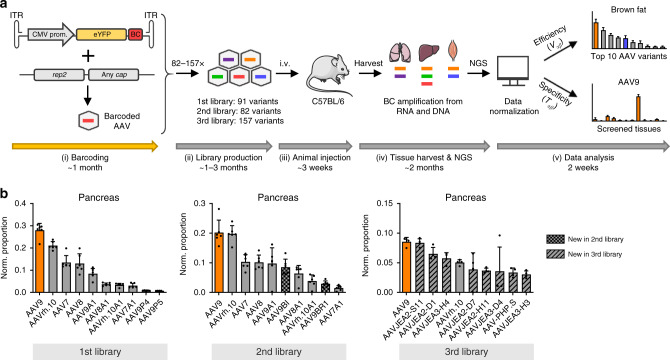
“To enable their direct side-by-side comparison in the same animal, we produced them as barcoded vectors by harnessing our recently reported pipeline (6, 10).”
BackgroundMethodInfluentialSelf-citationAAV vector development, back to the future
Suárez-Amarán, L., Song, L., Tretiakova, A. P., Mikhail, S., & Samulski, R. J. (2025) · Molecular Therapy · doi:10.1016/j.ymthe.2025.03.064 · Cited by 104
“69 74–76 For more comprehensive information about the RGD motif and its application in AAV vectors, please refer to the reviews by Büning and Srivastava and Zolotukhin et al. 31,77 Today, differential library selection systems/platforms serve as a cornerstone of modern AAV-directed evolution,…”
Becker, J., Fakhiri, J., & Grimm, D. (2022) · Pathogens · doi:10.3390/pathogens11070756 · Cited by 79
“These screening methods are not only valuable for the endpoint analysis of pre-selected candidates but have also recently been combined with in vitro or in vivo selection [68,76,89], which significantly improved the identification of more promising and cell-type specific AAVs within complex viral libraries and biologi…”
BackgroundMethodSelf-citationGonzalez, T. J., Simon, K. E., Blondel, L. O., Fanous, M. M., Roger, A. L., Maysonet, M. S., Devlin, G. W., Smith, T. J., Oh, D. K., Havlik, L. P., et al. (2022) · Nature Communications · doi:10.1038/s41467-022-33745-4 · Cited by 85
Huang, Q., Chen, A. T., Chan, K. Y., Sorensen, H., Barry, A. J., Azari, B., Zheng, Q., Beddow, T., Zhao, B., Tobey, I. G., et al. (2023) · PLoS Biology · doi:10.1371/journal.pbio.3002112 · Cited by 90
Split intein-mediated protein trans-splicing to express large dystrophins
Tasfaout, H., Halbert, C. L., McMillen, T. S., Allen, J. M., Reyes, T. R., Flint, G. V., Grimm, D., Hauschka, S. D., Regnier, M., & Chamberlain, J. S. (2024) · Nature · doi:10.1038/s41586-024-07710-8 · Cited by 83
Self-citationSystematic multi-trait AAV capsid engineering for efficient gene delivery
Eid, F.-E., Chen, A. T., Chan, K. Y., Huang, Q., Zheng, Q., Tobey, I. G., Pacouret, S., Brauer, P. P., Keyes, C., Powell, M. M., et al. (2024) · Nature Communications · doi:10.1038/s41467-024-50555-y · Cited by 92
Application of CRISPR/Cas9 in Alzheimer’s Disease
Lu, L., Xi, Y., Cai, Y., Sun, M., & Yang, H. (2021) · Frontiers in Neuroscience · doi:10.3389/fnins.2021.803894 · Cited by 91
Adeno-Associated Viruses (AAV) and Host Immunity – A Race Between the Hare and the Hedgehog
Rapti, K., & Grimm, D. (2021) · Frontiers in Immunology · doi:10.3389/fimmu.2021.753467 · Cited by 79
Self-citation(2023) · doi:10.1126/sciadv.adg6618 · Cited by 67
Srivastava, A. (2023) · Molecular Therapy — Nucleic Acids · doi:10.1016/j.omtn.2023.05.014 · Cited by 71
López-Gordo, E., Chamberlain, K., Riyad, J. M., Kohlbrenner, E., & Weber, T. (2024) · Viruses · doi:10.3390/v16030442 · Cited by 70
“…a novel bioinformatic pipeline for AAV screening using barcodes for the qualitative and quantitative tracking of the DNA and RNA levels of pooled variants, normalization strategies inter/intra-tissue for capsid performance, and the inclusion of AAV controls as benchmarks for various tissues [276].”
BackgroundMethodInfluentialAAV capsid design: A Goldilocks challenge
Zolotukhin, S., & Vandenberghe, L. H. (2022) · Trends in Molecular Medicine · doi:10.1016/j.molmed.2022.01.003 · Cited by 64
A comprehensive atlas of AAV tropism in the mouse
Walkey, C. J., Snow, K. J., Bulcha, J., Cox, A. R., Martinez, A. E., Ljungberg, M. C., Lanza, D. G., Giorgi, M. D., Chuecos, M. A., Alves‐Bezerra, M., et al. (2025) · Molecular Therapy · doi:10.1016/j.ymthe.2025.01.041 · Cited by 68
Striated muscle-specific base editing enables correction of mutations causing dilated cardiomyopathy
Grosch, M., Schraft, L., Chan, A., Küchenhoff, L., Rapti, K., Ferreira, A.-M., Kornienko, J., Li, S., Radke, M. H., Krämer, C., et al. (2023) · Nature Communications · doi:10.1038/s41467-023-39352-1 · Cited by 64
Self-citationA versatile toolkit for overcoming AAV immunity
Li, X., Wei, X., Lin, J., & Ou, L. (2022) · Frontiers in Immunology · doi:10.3389/fimmu.2022.991832 · Cited by 57
“Similarly, AAVMYO, a novel capsid with improved muscle tropism, was generated through random peptide display (115).”
BackgroundSpatial transcriptomics for profiling the tropism of viral vectors in tissues
Jang, M. J., Coughlin, G. M., Jackson, C. R., Chen, X., Chuapoco, M. R., Vendemiatti, J., Wang, A. Z., & Gradinaru, V. (2023) · Nature Biotechnology · doi:10.1038/s41587-022-01648-w · Cited by 71
“Targeting strategies include transgenic animal models, engineered viral vectors with biased tropisms 5–13 , gene regulatory elements (for example, promoters 14–18 , enhancers 19–25 and/or microRNA target sites 26–28 ) and various delivery routes.”
Recent Therapeutic Gene Editing Applications to Genetic Disorders
Deneault, É. (2024) · Current Issues in Molecular Biology · doi:10.3390/cimb46050255 · Cited by 65
“…with barcoded packaged genomes was screened using next-generation sequencing, leading to the identification of a new AAV9 mutant called AAVMYO that showed higher efficiency and specificity in targeting skeletal muscle, the heart, and the diaphragm following peripheral delivery in mice [119].”
MethodHam, A. S., Lin, S., Tse, A., Thürkauf, M., McGowan, T. J., Jörin, L., Oliveri, F., & Rüegg, M. A. (2025) · Nature Communications · doi:10.1038/s41467-025-57487-1 · Cited by 61
CRISPR/Cas9 genome editing for neurodegenerative diseases
Nojadeh, J. N., Eryilmaz, N. S. B., & Ergüder, B. İ. (2023) · EXCLI journal · doi:10.17179/excli2023-6155 · Cited by 76
“Second, AAVs can infect a variety of tissues owing to their diverse capsids (Weinmann et al., 2020).”
BackgroundHindi, S. M., Petrany, M. J., Greenfeld, E., Focke, L. C., Cramer, A., Whitt, M. A., Khairallah, R. J., Ward, C. W., Chamberlain, J. S., Prasad, V., et al. (2023) · Cell · doi:10.1016/j.cell.2023.03.033 · Cited by 57
Systemic delivery of full-length dystrophin in Duchenne muscular dystrophy mice
Zhou, Y., Zhang, C., Xiao, W., Herzog, R. W., & Han, R. (2024) · Nature Communications · doi:10.1038/s41467-024-50569-6 · Cited by 60
Genetic Insights into Primary Restrictive Cardiomyopathy
Brodehl, A., & Gerull, B. (2022) · Journal of Clinical Medicine · doi:10.3390/jcm11082094 · Cited by 47
CRISPR-Editing Therapy for Duchenne Muscular Dystrophy
Chemello, F., Olson, E. N., & Bassel‐Duby, R. (2023) · Human Gene Therapy · doi:10.1089/hum.2023.053 · Cited by 53
CRISPR-Cas9 base editing of pathogenic CaMKIIδ improves cardiac function in a humanized mouse model
Lebek, S., Caravia, X. M., Straub, L. G., Alzhanov, D., Tan, W. H., Li, H. Z., McAnally, J., Chen, K., Xu, L., Scherer, P. E., et al. (2024) · Journal of Clinical Investigation · doi:10.1172/jci175164 · Cited by 49
“It is thus imperative to keep the viral dose as low as possible or to deploy other delivery strategies like lipid nanoparticles or virus-like particles (18, 28, 33–35).”
BackgroundMethodAdeno-associated virus–based gene therapy treats inflammatory kidney disease in mice
Wu, G., Liu, S., Hagenstein, J., Alawi, M., Hengel, F. E., Schaper, M., Akyüz, N., Liao, Z., Wanner, N., Tomas, N. M., et al. (2024) · Journal of Clinical Investigation · doi:10.1172/jci174722 · Cited by 48
Duchenne Muscular Dystrophy Gene Therapy in 2023: Status, Perspective, and Beyond
Duan, D. (2023) · Human Gene Therapy · doi:10.1089/hum.2023.29242.ddu · Cited by 46
High-entropy intermetallics: emerging inorganic materials for designing high-performance catalysts
Nakaya, Y., & Furukawa, S. (2024) · Chemical Science · doi:10.1039/d3sc03897a · Cited by 50
Enhancing gene transfer to renal tubules and podocytes by context-dependent selection of AAV capsids
Furusho, T., Das, R., Hakui, H., Sairavi, A., Adachi, K., Galbraith-Liss, M. S., Rajagopal, P., Horikawa, M., Luo, S., Li, L., et al. (2024) · Nature Communications · doi:10.1038/s41467-024-54475-9 · Cited by 50
“While our data were normalized by the composition of the initial library, we did not perform additional adjustments by multiplying the data with vector genomeper diploid genomic equivalent (vg/dge),the approach employed by Weinmann et al. 18 .”
AAV capsid prioritization in normal and steatotic human livers maintained by machine perfusion
Kim, J.-J., Kurial, S. N. T., Choksi, P. K., Nunez, M., Lunow-Luke, T., Bartel, J., Driscoll, J., Her, C. L., Dhillon, S., Yue, W., et al. (2025) · Nature Biotechnology · doi:10.1038/s41587-024-02523-6 · Cited by 47
“The CMV promoter is ubiquitously active, which allows for comprehensive characterization of AAV capsid tropism 32 .”
Advances in the study and treatment of genetic cardiomyopathies
Parikh, V. N., Day, S. M., Lakdawala, N. K., Adler, E., Olivotto, I., Seidman, C. E., & Ho, C. Y. (2025) · Cell · doi:10.1016/j.cell.2025.01.011 · Cited by 51
Kachanov, A., Kostyusheva, A. P., Brezgin, S. A., Karandashov, I. V., Ponomareva, N. I., Tikhonov, A., Lukashev, A. N., Pokrovsky, V. S., Zamyatnin, A. A., Parodi, A., et al. (2024) · Medicinal Research Reviews · doi:10.1002/med.22036 · Cited by 49
An engineered AAV targeting integrin alpha V beta 6 presents improved myotropism across species
Hong, A. V., Suel, L., Petat, E., Dubois, A., Brun, P., Guerchet, N., Veron, P., Poupiot, J., & Richard, I. (2024) · Nature Communications · doi:10.1038/s41467-024-52002-4 · Cited by 48
“The LICA1 ’ s skeletal muscle transduction level was equivalent to that of AAVMYO 15 , MYOAAV-1A/ − 2A 17 , and signi fi cantly better than AAVMYO2/3 16 .”
BackgroundInfluentialTranslating musculoskeletal bioengineering into tissue regeneration therapies
Khodabukus, A., Guyer, T., Moore, A. C., Stevens, M. M., Guldberg, R. E., & Bursac, N. (2022) · Science Translational Medicine · doi:10.1126/scitranslmed.abn9074 · Cited by 45
“In vivo gene therapies for MSDs most frequently use recombinant adeno-associated viruses (AAVs), which can induce stable and sustained gene expression as a single-dose therapy.”
BackgroundInfluentialStructure-guided AAV capsid evolution strategies for enhanced CNS gene delivery
Gonzalez, T. J., Mitchell-Dick, A., Blondel, L. O., Fanous, M. M., Hull, J. A., Oh, D. K., Møller-Tank, S., Rivera, R. M. C., Piedrahita, J. A., & Asokan, A. (2023) · Nature Protocols · doi:10.1038/s41596-023-00875-y · Cited by 42
The ice age – A review on formulation of Adeno-associated virus therapeutics
Grossen, P., Skaripa-Koukelli, I., van Haasteren, J., Machado, A. H. E., & Dürr, C. (2023) · European Journal of Pharmaceutics and Biopharmaceutics · doi:10.1016/j.ejpb.2023.07.002 · Cited by 43
AAV microdystrophin gene replacement therapy for Duchenne muscular dystrophy: progress and prospects
Chwalenia, K., Feng, V.-Y., Hemmer, N., Friedrichsen, H. J., Vorobieva, I., Wood, M. J. A., & Roberts, T. C. (2025) · Gene Therapy · doi:10.1038/s41434-025-00561-6 · Cited by 45
“Of particular note are the AAVMYO series (1-3) and MyoAAV, both of which were engineered using large parallel screens and show superior ability to target both skeletal and cardiac muscle in vivo [94, 103].”
Molecular Therapies for Myotonic Dystrophy Type 1: From Small Drugs to Gene Editing
Izzo, M., Battistini, J. I., Provenzano, C., Martelli, F., Cardinali, B., & Falcone, G. (2022) · International Journal of Molecular Sciences · doi:10.3390/ijms23094622 · Cited by 39
“Of note, the recently generated myotropic [191,192] and CNS-tropic AAV variants [193] show enhanced expression in these tissues, holding great potential for gene therapy.”
BackgroundGene therapy for cardiac diseases: methods, challenges, and future directions
Grisorio, L., Bongianino, R., Gianeselli, M., & Priori, S. G. (2024) · Cardiovascular Research · doi:10.1093/cvr/cvae207 · Cited by 39
Redirecting AAV vectors to extrahepatic tissues
Asokan, A., & Shen, S. (2023) · Molecular Therapy · doi:10.1016/j.ymthe.2023.10.005 · Cited by 39
“40,41 Improved uptake of peptide display in extrahepatic tissues, particularly the brain 42 – 45 and skeletal muscle, 41,46,47 has been demonstrated by multiple groups.”
Hardwiring tissue-specific AAV transduction in mice through engineered receptor expression
Zengel, J. R., Wang, Y. X., Seo, J. W., Ning, K., Hamilton, J. N., Wu, B., Raie, M. N., Holbrook, C., Su, S., Clements, D. R., et al. (2023) · Nature Methods · doi:10.1038/s41592-023-01896-x · Cited by 38
The road toward AAV-mediated gene therapy of Duchenne muscular dystrophy
Bengtsson, N. E., Tasfaout, H., & Chamberlain, J. S. (2025) · Molecular Therapy · doi:10.1016/j.ymthe.2025.03.065 · Cited by 40
“111–113 Such vectors could reduce, if not eliminate, TMA, thrombocytopenia, and liver toxicity.”
Kremer, L. P. M., Cerrizuela, S., Dehler, S., Stiehl, T., Weinmann, J., Abendroth, H., Kleber, S., Laure, A., Andari, J. E., Anders, S., et al. (2021) · Molecular Therapy — Methods & Clinical Development · doi:10.1016/j.omtm.2021.07.001 · Cited by 35
“Further details on library composition are found in the supplemental information of Weinmann et al.(53) All capsid variants are detailed in Table S4.”
BackgroundMethodInfluentialSelf-citationZhang, Y., Li, H. Z., Nishiyama, T., McAnally, J., Sanchez‐Ortiz, E., Huang, J. H., Mammen, P. P. A., Bassel‐Duby, R., & Olson, E. N. (2022) · Molecular Therapy — Nucleic Acids · doi:10.1016/j.omtn.2022.07.024 · Cited by 34
“Two recent studies showed that screening or engineering a novel AAV capsid with higher muscle tropism and lower liver tropism may reduce the AAV dose used in systemic delivery and potentially prevent liver toxicity.(39,40) In addition, a novel AAV capsid may also prevent potential AAV immunity.”
BackgroundSzwec, S., Kapłucha, Z., Chamberlain, J. S., & Konieczny, P. (2023) · BioDrugs · doi:10.1007/s40259-023-00632-3 · Cited by 41
“In striated muscles, AAV9 and AAVrh74 (highly similar to AAV8) are currently used in clinical trials for DMD [13, 93, 94] and an AAV9 mutant, AAVMYO, showed very high transduction efficiency in more recent studies [95].”
Zhou, X., Liu, J., Xiao, S., Liang, X., Li, Y., Mo, F., Xin, X., Yang, Y., & Gao, C. (2024) · International Journal of Nanomedicine · doi:10.2147/ijn.s459905 · Cited by 34
Kok, C., Tsurusaki, S., Cabanes‐Creus, M., Igoor, S., Rao, R., Skelton, R. J. P., Liao, S. H. Y., Ginn, S. L., Knight, M., Scott, S., et al. (2023) · Molecular Therapy — Methods & Clinical Development · doi:10.1016/j.omtm.2023.08.010 · Cited by 32
“This result contrasts with previous studies that show that cardiotropic capsids selected in mouse heart can also transduce the hiPSC-CMs.(18,19) These differences are most likely due to the initial selection platform used to isolate the capsids with desired specificity restricted to human cardiac cells.”
BackgroundResultSingle-swap editing for the correction of common Duchenne muscular dystrophy mutations
Chai, A. C., Chemello, F., Li, H. Z., Nishiyama, T., Chen, K., Zhang, Y., Sanchez‐Ortiz, E., Alomar, A., Xu, L., Liu, N., et al. (2023) · Molecular Therapy — Nucleic Acids · doi:10.1016/j.omtn.2023.04.009 · Cited by 35
Advances in CRISPR/Cas9 Genome Editing for the Treatment of Muscular Dystrophies
Fatehi, S., Marks, R. M., Rok, M. J., Perillat, L., Ivakine, E. A., & Cohn, R. D. (2023) · Human Gene Therapy · doi:10.1089/hum.2023.059 · Cited by 31
Genome Editing and Cardiac Arrhythmias
Moore, O. M., Ho, K. S., Copeland, J. S., Parthasarathy, V., & Wehrens, X. H. T. (2023) · Cells · doi:10.3390/cells12101363 · Cited by 29
“Recently, evolutiondirected in vivo screens of AAV9 capsids engineered to contain multimers have found success in finding muscle tropic AAV9s [64].”
BackgroundImmune Responses to Muscle-Directed Adeno-Associated Viral Gene Transfer in Clinical Studies
Kumar, S. R. P., Duan, D., & Herzog, R. W. (2023) · Human Gene Therapy · doi:10.1089/hum.2023.056 · Cited by 28
“46,47 Although monoclonal antibody treatments or other drugs targeting complement components are being adopted as an adjunct therapy, the efficacy of such modulators is yet to be discerned.”
Comparative in vivo characterization of newly discovered myotropic adeno-associated vectors
Ji, J., Lefebvre, E., & Laporte, J. (2024) · Skeletal Muscle · doi:10.1186/s13395-024-00341-7 · Cited by 29
“Using the latter strategy, Tabebord-bar et al. [27] and Weinmann et al. [28] generated myot-ropic AAVs, called MyoAAV and AAVMYO, respectively.”
BackgroundMethodLMNA-related cardiomyopathy: From molecular pathology to cardiac gene therapy
Wang, Z., Wu, J., Lv, Z., Liang, P., Li, Q., Li, Y., & Guo, Y. (2025) · Journal of Advanced Research · doi:10.1016/j.jare.2025.01.001 · Cited by 32
“This concern is being solved by engineering AAV capsids with enhanced cardiac tropism, such as AAVMYO [222] and MyoAAV [187].”
Coughlin, G. M., Borsos, M., Barcelona, B. H., Appling, N., Mayfield, A. M. H., Mackey, E. D. W., Eser, R. A., Jackson, C. R., Chen, X., Kumar, S. R., et al. (2025) · Nature Biotechnology · doi:10.1038/s41587-025-02565-4 · Cited by 31
Directed evolution of adeno-associated virus 5 capsid enables specific liver tropism
Wang, Y., Yang, C., Hu, H., Chen, C., Yan, M., Ling, F., Wang, K. C., Wang, X., Deng, Z., Zhou, X., et al. (2022) · Molecular Therapy — Nucleic Acids · doi:10.1016/j.omtn.2022.03.017 · Cited by 27
“The quantification of the vg product was actualized by barcode evaluation, as previously reported.(33)”
MethodAncestral Library Identifies Conserved Reprogrammable Liver Motif on AAV Capsid
Zinn, E. M., Unzu, C., Schmit, P. F., Turunen, H., Zabaleta, N., Sanmiguel, J. C., Fieldsend, A., Bhatt, U., Diop, C. T., Merkel, E., et al. (2021) · Cell Reports Medicine · doi:10.1016/j.xcrm.2022.100803 · Cited by 30
Gene editing innovations and their applications in cardiomyopathy research
Kyriakopoulou, E., Monnikhof, T., & van Rooij, E. (2023) · Disease Models & Mechanisms · doi:10.1242/dmm.050088 · Cited by 29
Thürkauf, M., Lin, S., Oliveri, F., Grimm, D., Platt, R. J., & Rüegg, M. A. (2023) · Nature Communications · doi:10.1038/s41467-023-41769-7 · Cited by 27
“This tool couples the advantages of CRISPR with recently developed, highly ef fi cacious, AAV9-derived viral capsids by using (i)mice engineered to constitutively or inducibly express Cas9 in skeletal muscle fi bers and (ii) delivering single guide (sg) RNAs with the myotropic AAVMYO 8 .”
Self-citationEx vivo and in vivo suppression of SARS-CoV-2 with combinatorial AAV/RNAi expression vectors
Becker, J., Stanifer, M. L., Leist, S. R., Stolp, B., Maiakovska, O., West, A., Wiedtke, E., Börner, K., Ghanem, A., Ambiel, I., et al. (2022) · Molecular Therapy · doi:10.1016/j.ymthe.2022.01.024 · Cited by 25
Self-citationRevolution of AAV in Drug Discovery: From Delivery System to Clinical Application
Yin, L., He, H., Zhang, H., Shang, Y., Fu, C., Wu, S., & Jin, T. (2025) · Journal of Medical Virology · doi:10.1002/jmv.70447 · Cited by 27
“Novel myotropic AAVs named MyoAAVs and AAV-MYOs have been discovered by a directed evolution approach, which share the integrin ‐ interacting Arginine, Glycine, Aspartic Acid (RGD) motif, have skeletal and cardiac muscle tropism, and liver de ‐ targeting effect [42, 43].”
Westhaus, A., Cabanes‐Creus, M., Dilworth, K. L., Zhu, E., Gómez, D. S., Navarro, R. G., Amaya, A. K., Scott, S., Kwiatek, M., McCorkindale, A. L., et al. (2023) · Human Gene Therapy · doi:10.1089/hum.2022.188 · Cited by 25
Sellier, P., Vidal, P., Bertin, B., Gicquel, E., Bertil-Froidevaux, E., Georger, C., van Wittenberghe, L., Miranda, A., Danièle, N., Richard, I., et al. (2023) · Journal of Inherited Metabolic Disease · doi:10.1002/jimd.12625 · Cited by 25
“45 The resulting capsid, named AAV-MT (for Muscle Transduction, 47 ), was used to express the native form of codon-optimized (co), human GAA (hGAAco) 21 under the transcriptional control of the LiMP (Figure S1B).”
MethodTargeting Drug Delivery System to Skeletal Muscles: A Comprehensive Review of Different Approaches
Li, X., Xu, J., Yao, S., Zhang, N., Zhang, B., & Zhang, Z. (2025) · Journal of Cachexia Sarcopenia and Muscle · doi:10.1002/jcsm.13691 · Cited by 26
Progress in Bioengineering of Myotropic Adeno-Associated Viral Gene Therapy Vectors
Liu, J., Koay, T. W., Maiakovska, O., Zayas, M., & Grimm, D. (2023) · Human Gene Therapy · doi:10.1089/hum.2023.057 · Cited by 23
“35,36,38,46 The power of this technique, first introduced into the AAV field on the DNA level in 2014 by the Nakai laboratory, 35 is that the identical expression cassette (except for the barcode) is used in all capsids that are compared, ensuring that any differences observed primarily originate…”
InfluentialSelf-citationStephenson, A. A., Nicolau, S., Vetter, T. A., Dufresne, G., Frair, E. C., Sarff, J., Wheeler, G. L., Kelly, B., White, P., & Flanigan, K. M. (2023) · Molecular Therapy — Methods & Clinical Development · doi:10.1016/j.omtm.2023.08.009 · Cited by 23
“Potency of the system could potentially be improved with recently reported engineered AAV serotypes that have greater transduction efficiency or engineered Cas9 isoforms with greater efficiency.(39,40) Alternatively, protecting muscle tissue from degeneration immediately after AAV transduction may help improve efficie…”
BackgroundGardin, A., & Ronzitti, G. (2023) · Archives de Pédiatrie · doi:10.1016/s0929-693x(23)00227-0 · Cited by 26
Innate and adaptive AAV-mediated immune responses in a mouse model of Duchenne muscular dystrophy
Emami, M. R., Espinoza, A., Young, C. S., Ma, F., Farahat, P. K., Felgner, P. L., Chamberlain, J. S., Xu, X., Pyle, A. D., Pellegrini, M., et al. (2023) · Molecular Therapy - Methods & Clinical Development · doi:10.1016/j.omtm.2023.06.002 · Cited by 22
Therapeutic in vivo genome editing: innovations and challenges in rAAV vector-based CRISPR delivery
Gil, J.-S., Lee, S., & Koo, T. (2025) · Gene Therapy · doi:10.1038/s41434-025-00573-2 · Cited by 22
Intranasal application of adeno-associated viruses: a systematic review
Gadenstaetter, A. J., Schmutzler, L., Grimm, D., & Landegger, L. D. (2022) · Translational research · doi:10.1016/j.trsl.2022.05.002 · Cited by 20
Self-citationDevelopment of capsid- and genome-modified optimized AAVrh74 vectors for muscle gene therapy
Shoti, J., Qing, K., Keeler, G. D., Duan, D., Byrne, B. J., & Srivastava, A. (2023) · Molecular Therapy — Methods & Clinical Development · doi:10.1016/j.omtm.2023.101147 · Cited by 21
“Although our present study was underway, two independent groups reported the development of novel myotropic AAV vectors — AAVMYO 32,33 and MyoAAV.”
BackgroundTreatment of infantile-onset Pompe disease in a rat model with muscle-directed AAV gene therapy
MUÑOZ, S. A., Bertolin, J., Jiménez, V., Jaén, M. L., García, M., Pujol, A., Vilà, L., Sacristan, V., Barbon, E., Ronzitti, G., et al. (2024) · Molecular Metabolism · doi:10.1016/j.molmet.2024.101899 · Cited by 22
Self-citationLi, J., Kelly, S. C., Ivey, J. R., Thorne, P. K., Yamada, K. P., Aikawa, T., Mazurek, R., Turk, J. R., Silva, K. A. S., Amin, A. R., et al. (2022) · Physiological Genomics · doi:10.1152/physiolgenomics.00032.2022 · Cited by 19
Genetic strategies for therapy of Duchenne muscular dystrophy
Łoboda, A., Chamberlain, J. S., & Dulak, J. (2025) · Molecular Therapy — Nucleic Acids · doi:10.1016/j.omtn.2025.102759 · Cited by 21
“121,122 However, the cargo capacity of AAVs is limited, allowing only ∼ 4.7 kb of DNA to be delivered.”
InfluentialWang, X., Klann, P. J., Wiedtke, E., Sano, Y., Fischer, N., Schiller, L., Elfert, A., Güttsches, A., Weyen, U., Grimm, D., et al. (2024) · Frontiers in Immunology · doi:10.3389/fimmu.2024.1450858 · Cited by 21
Self-citationMacdonald, J., Marx, J., & Büning, H. (2021) · Human Gene Therapy · doi:10.1089/hum.2021.169 · Cited by 18
MTM1 overexpression prevents and reverts BIN1-related centronuclear myopathy
Giraud, Q., Spiegelhalter, C., Messaddeq, N., & Laporte, J. (2023) · Brain · doi:10.1093/brain/awad251 · Cited by 19
Giannelli, S. G., Luoni, M., Iannielli, A., Middeldorp, J., Philippens, I. H. C. H. M., Bido, S., Körbelin, J., & Broccoli, V. (2024) · iScience · doi:10.1016/j.isci.2024.109777 · Cited by 18
A comprehensive study of AAV tropism across C57BL/6 mice, BALB/c mice, and crab-eating macaques
Fang, K., Yang, X., Liu, Y., Xia, J., Wu, R., Yang, F., Feng, C., Liu, X., Shi, L., Geng, G., et al. (2025) · Molecular Therapy — Methods & Clinical Development · doi:10.1016/j.omtm.2025.101434 · Cited by 18
Duan, D., & Herzog, R. W. (2026) · Molecular Therapy · doi:10.1016/j.ymthe.2025.12.067 · Cited by 25
Delivery challenges for CRISPR—Cas9 genome editing for Duchenne muscular dystrophy
Padmaswari, M. H., Agrawal, S., Jia, M. S., Ivy, A., Maxenberger, D. A., Burcham, L. A., & Nelson, C. E. (2023) · Biophysics Reviews · doi:10.1063/5.0131452 · Cited by 19
Tasfaout, H., McMillen, T. S., Reyes, T. R., Halbert, C. L., Tian, R., Regnier, M., & Chamberlain, J. S. (2025) · Journal of Clinical Investigation · doi:10.1172/jci189075 · Cited by 21
“Furthermore, our study used the first generation of myotropic AAVMYO1 (38).”
FSHD Therapeutic Strategies: What Will It Take to Get to Clinic?
Himeda, C. L., & Jones, P. L. (2022) · Journal of Personalized Medicine · doi:10.3390/jpm12060865 · Cited by 21
“This can be accomplished by: (1) reducing packaging of partial/truncated genomes and empty capsids that co-purify with the therapeutic vector [110,113–115], (2) reducing immunogenicity [95,96], and (3) detargeting liver while increasing delivery to skeletal muscle [93,94].”
BackgroundMethodTherapeutic Application and Structural Features of Adeno-Associated Virus Vector
Matsuzaka, Y., & Yashiro, R. (2024) · Current Issues in Molecular Biology · doi:10.3390/cimb46080499 · Cited by 16
Gene editing in common cardiovascular diseases
Lauerer, A.-M., Caravia, X. M., Maier, L. S., Chemello, F., & Lebek, S. (2024) · Pharmacology & Therapeutics · doi:10.1016/j.pharmthera.2024.108720 · Cited by 15
“Even though this can be mitigated by corticosteroid treatment, it is imperative to keep the viral dose as low as possible, which can be achieved by engineered AAV variants with an improved tissue tropism (Tabebordbar et al., 2021; Weinmann et al., 2020).”
In Search of Adeno-Associated Virus Vectors With Enhanced Cardiac Tropism for Gene Therapy
Sasaki, N., Kok, C., Westhaus, A., Alexander, I. E., Lisowski, L., & Kizana, E. (2023) · Heart Lung and Circulation · doi:10.1016/j.hlc.2023.06.704 · Cited by 19
Non-canonical amino acid incorporation into AAV5 capsid enhances lung transduction in mice
Chang, H., Du, A., Jiang, J., Ren, L., Liu, N., Zhou, X., Liang, J., Gao, G., & Wang, D. (2023) · Molecular Therapy — Methods & Clinical Development · doi:10.1016/j.omtm.2023.101129 · Cited by 14
“45,46 Alternatively, rational design to incorporate speci fi c ncAAs with desired biological characteristics may also functionalize the resulting vectors.”
BackgroundLerchenmüller, C., Hastings, M. H., Rabolli, C. P., Betge, F., Roshan, M., Liu, L. X., Liu, X., Hess, C., Roh, J. D., Platt, C., et al. (2024) · Molecular Therapy · doi:10.1016/j.ymthe.2024.07.018 · Cited by 15
Self-citationLuo, N., Lin, K., Cai, Y., Zhang, Z., Sui, X., Han, Z., Yuan, W., Xing, J., Gui, Z., Liu, G., et al. (2025) · Journal of Controlled Release · doi:10.1016/j.jconrel.2025.01.021 · Cited by 16
Clinically translatable mitochondrial gene therapy in muscle using tandem mtZFN architecture
Nash, P. A., Turner, K., Powell, C. A., Haute, L. V., Silva-Pinheiro, P., Bubeck, F., Wiedtke, E., Marques, E., Ryan, D. G., Grimm, D., et al. (2025) · EMBO Molecular Medicine · doi:10.1038/s44321-025-00231-5 · Cited by 17
“Therefore, our next objective was to deliver the treatment more broadly to muscle using a novel myotropic AAV9-derived vector, termed AAVMYO (Weinmann et al, 2020).”
Self-citationUnlocking precision gene therapy: harnessing AAV tropism with nanobody swapping at capsid hotspots
Hoffmann, M. D., Gallant, J. P., LeBeau, A. M., & Schmidt, D. (2024) · NAR Molecular Medicine · doi:10.1093/narmme/ugae008 · Cited by 17
“VR4 and VR8 have been particularly targeted in AAV capsid engineering to evade neutralizing antibody binding ( 9 ) and redirect viral tropism ( 10–15 ).”
Current trends in gene therapy to treat inherited disorders of the brain
Matuszek, Ż., Brown, B. L., Yrigollen, C. M., Keiser, M. S., & Davidson, B. L. (2025) · Molecular Therapy · doi:10.1016/j.ymthe.2025.03.057 · Cited by 14
“Peptide libraries used to identify AAVMYO for muscle targeting 49 or AAV-DB-3 for deep brain structures 37 allow high-throughput screening of capsid variants optimized for specific tissues.”
Engineering adeno-associated viral vectors for CRISPR/Cas based in vivo therapeutic genome editing
Moyo, B., Brown, L. B. C., Khondaker, I., & Bao, G. (2025) · Biomaterials · doi:10.1016/j.biomaterials.2025.123314 · Cited by 13
Bauer, A., Puglisi, M., Nagl, D., Schick, J., Werner, T. A., Klingl, A., Andari, J. E., Hornung, V., Kessler, H., Götz, M., et al. (2022) · Advanced Science · doi:10.1002/advs.202104979 · Cited by 21
Self-citationMartino, R. A., Wang, Q., Xu, H. Y., Hu, G. B., Bell, P. L., Arroyo, E. J., Sims, J. J., & Wilson, J. M. (2023) · Journal of Virology · doi:10.1128/jvi.00174-23 · Cited by 13
Bengtsson, N. E., Crudele, J. M., Klaiman, J. M., Halbert, C. L., Hauschka, S. D., & Chamberlain, J. S. (2022) · Molecular Therapy · doi:10.1016/j.ymthe.2022.02.003 · Cited by 14
Metadata
- Authors
- Weinmann, J., Weis, S., Sippel, J., Tulalamba, W., Remes, A., El Andari, J., Herrmann, A.-K., Pham, Q. H., Borowski, C., Hille, S., Schönberger, T., Frey, N., Lenter, M., VandenDriessche, T., Müller, O. J., Chuah, M. K., Lamla, T., & Grimm, D.
- Affiliations
- Heidelberg University (DE)
- Vrije Universiteit Brussel (BE)
- University Hospital Schleswig-Holstein (DE)
- Boehringer Ingelheim (Germany) (DE)
- Corresponding author
- Grimm, Dirk
- ORCID
- Venue
- Nature Communications
- Published
- 2020-10-28
- Volume
- 11
- Issue
- 1
- Pages
- 5432-5432
- ISSN
- 2041-1723 (ISSN-L)
- PMC
- PMC7595228
- OpenAlex
- W3097033736
- Cited by
- 259
- References
- 44
- Citations by year
- 2026: 44 · 2025: 65 · 2024: 54 · 2023: 50 · 2022: 34 · 2021: 12
- FWCI
- 14.07
- Type
- journal article
- Language
- en
- Open access
- gold
- doi.org
- Licence
- cc-by
- creativecommons.org/licenses/by/4.0 (tdm)
- creativecommons.org/licenses/by/4.0 (vor)
- Locations
- Nature Communications (publishedVersion, cc-by)
- PubMed Central (publishedVersion, cc-by)
- PubMed (publishedVersion)
- Lirias (KU Leuven) (submittedVersion, other-oa)
- RePEc: Research Papers in Economics (submittedVersion)
- DOAJ (DOAJ: Directory of Open Access Journals) (submittedVersion, cc-by-sa)
- VUBIR (Vrije Universiteit Brussel) (submittedVersion)
- Funders
- Association Belge contre les Maladies Neuro-Musculaires
- Deutsches Zentrum für Infektionsforschung (TRR179, 04.815, 272983813, TTU.HIV 04.815, TTU-HIV 04.803)
- European Commission (667751, HORIZON2020)
- Deutsche Forschungsgemeinschaft (EXC 81, 240245660, SFB1129, 272983813, TRR179)
- Bundesministerium für Bildung und Forschung (04.803, TTU-HIV 04.815, TTU HIV 04 803)
- Fonds Wetenschappelijk Onderzoek
- Universitätsklinikum Heidelberg
- Heidelberg Biosciences International Graduate School
- Topics
- Life Sciences › Biochemistry, Genetics and Molecular Biology › Genetics › Virus-based gene therapy research
- Life Sciences › Biochemistry, Genetics and Molecular Biology › Molecular Biology › RNA Interference and Gene Delivery
- Health Sciences › Medicine › Genetics (clinical) › Neurogenetic and Muscular Disorders Research
- Keywords
- adeno-associated virus, DNA barcoding, skeletal muscle, heart, diaphragm, gene therapy vectors
- MeSH terms
- Dependovirus, Animals, Capsid, Female, Genetic Vectors, Humans, Mice, Inbred C57BL, Muscles, Mutation, Organ Specificity, Genetic Variation, Genetic Therapy, Gene Library, Capsid Proteins, Mice, DNA Barcoding, Taxonomic, High-Throughput Nucleotide Sequencing
About these checks
Registry, retraction, Cites and statistics results are computed, not judged, with one exception: a printed reference that no index lists is read once by a model before it counts as a citation error. Claims are extracted by a model and kept only when their quote appears verbatim in the text; each cited source is then checked, with a model’s help, for whether it says what the claim relies on. Those verdicts can be wrong — read the claim’s quote and the cited source before relying on one.
Statistics and arithmetic are recomputed, not judged.
Confidence bands are shown only for fields calibrated on our annotated test set. None is calibrated yet, so no band is shown.
What counts as a claim ›How we measure confidence ›How we check this ›
Are you an author, or do you see a problem with this page? Request a review
Data sources
Bibliographic data: Semantic Scholar, OpenAlex, Crossref.
Contains information from the Semantic Scholar Academic Graph Datasets, made available under the ODC Attribution License (ODC-BY 1.0).
Semantic Scholar’s data is described in: Kinney, R., et al. (2023). The Semantic Scholar Open Data Platform. arXiv:2301.10140.
