

Identification of a myotropic AAV by massively parallel in vivo evaluation of barcoded capsid variants
Open accessThe DOI matches its Crossref record; 44 of the 44 references it cites were found in a registry or an index.
Abstract
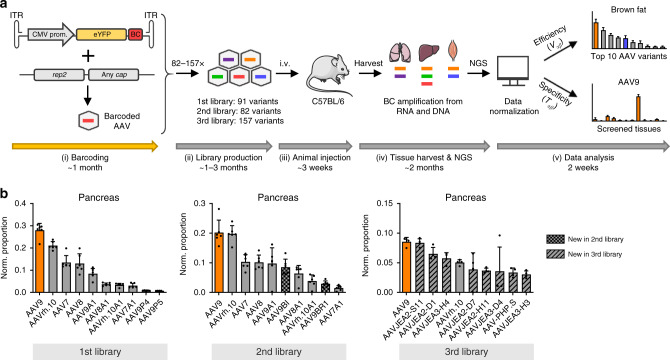
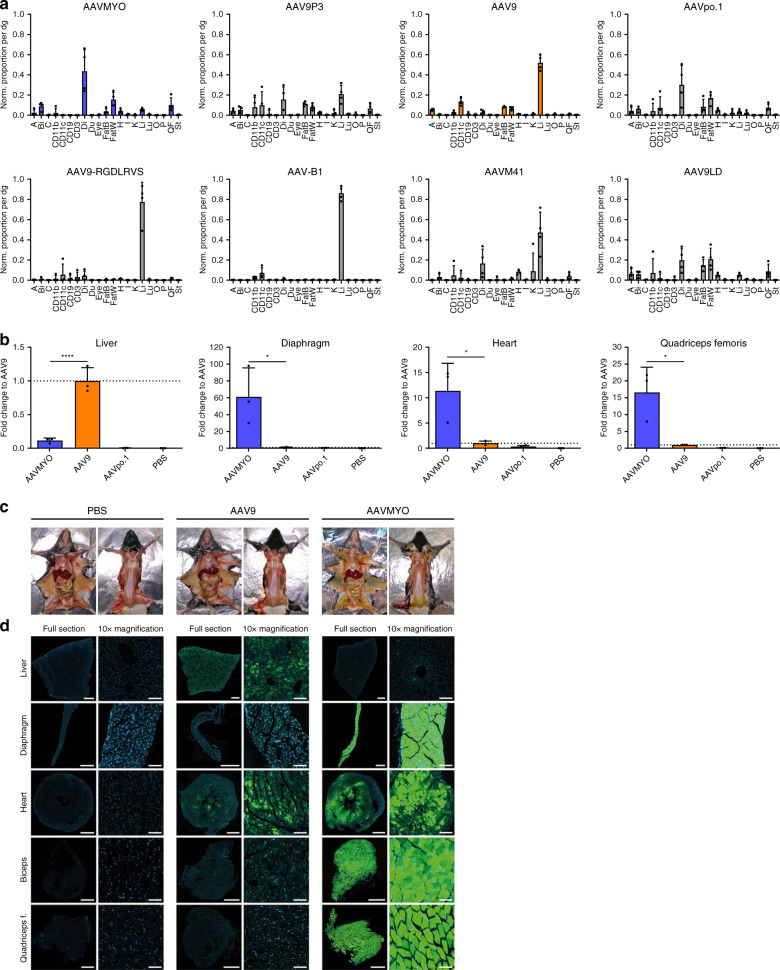
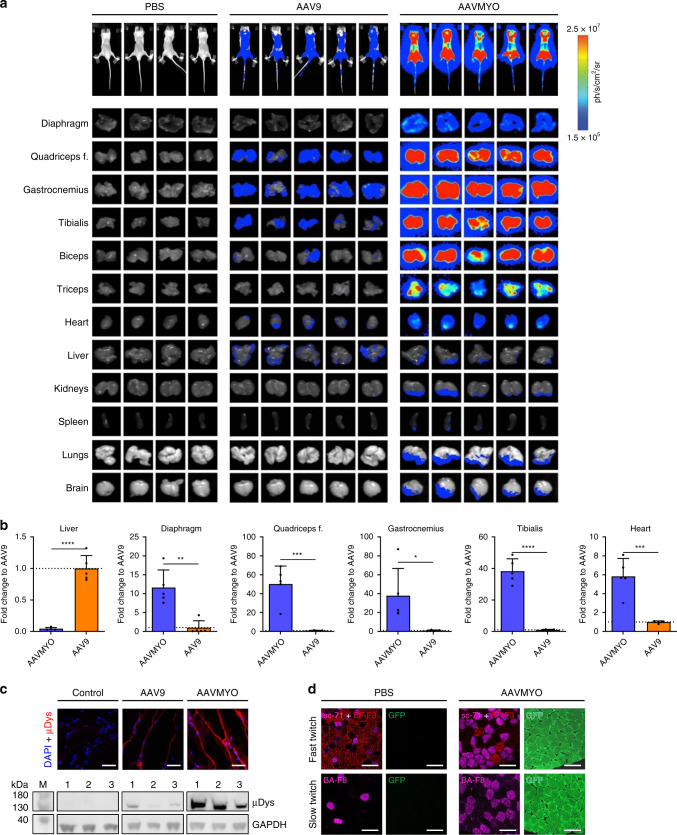
Adeno-associated virus (AAV) forms the basis for several commercial gene therapy products and for countless gene transfer vectors derived from natural or synthetic viral isolates that are under intense preclinical evaluation. Here, we report a versatile pipeline that enables the direct side-by-side comparison of pre-selected AAV capsids in high-throughput and in the same animal, by combining DNA/RNA barcoding with multiplexed next-generation sequencing. For validation, we create three independent libraries comprising 183 different AAV variants including widely used benchmarks and screened them in all major tissues in adult mice. Thereby, we discover a peptide-displaying AAV9 mutant called AAVMYO that exhibits superior efficiency and specificity in the musculature including skeletal muscle, heart and diaphragm following peripheral delivery, and that holds great potential for muscle gene therapy. Our comprehensive methodology is compatible with any capsids, targets and species, and will thus facilitate and accelerate the stratification of optimal AAV vectors for human gene therapy.
Overview
The claims and statistics of this paper haven’t been checked yet.
Free: it reads the open-access text and checks the first 5 claims that cite a source we can check. Create a free account to check every claim.
Integrity signals
Registry
Cites
Statistics
Figures
Verification
Claims the paper makes
The claims and statistics of this paper haven’t been checked yet.
Free: it reads the open-access text and checks the first 5 claims that cite a source we can check. Create a free account to check every claim.
Claims other papers make about this one
Each is checked against this paper’s own text: does it say what the citing paper says it does?
In the citing paper
“AAVMYO was also 9-fold detargeted from liver than AAV9 after intravenous administration in mice.”
From A versatile toolkit for overcoming AAV immunity (2022) · cites this paper as [115]
In the citing paper
“AAVMYO, a novel capsid with improved muscle tropism, was generated through random peptide display (115).”
From A versatile toolkit for overcoming AAV immunity (2022) · cites this paper as [115]
Self-check
Percentages, sums and reported differences re-computed from the paper’s own numbers.
The self-check needs the paper’s full text.
Citations
Cites
Error Detecting and Error Correcting Codes
Hamming, R. W. (1950) · Bell System Technical Journal · doi:10.1002/j.1538-7305.1950.tb00463.x · Cited by 5,377
ERROR DETECTING AND ERROR CORRECTING CODES
Chauhan, N., Yadav, P., & Kumari, P. (2014) · Cited by 3,270
RGD AND OTHER RECOGNITION SEQUENCES FOR INTEGRINS
Ruoslahti, E. (1996) · Annual Review of Cell and Developmental Biology · doi:10.1146/annurev.cellbio.12.1.697 · Cited by 3,191
Analysis of AAV Serotypes 1–9 Mediated Gene Expression and Tropism in Mice After Systemic Injection
Zincarelli, C., Soltys, S., Rengo, G., & Rabinowitz, J. E. (2008) · Molecular Therapy · doi:10.1038/mt.2008.76 · Cited by 1,490
Cre-dependent selection yields AAV variants for widespread gene transfer to the adult brain
Deverman, B. E., Pravdo, P. L., Simpson, B. P., Kumar, S. R., Chan, K. Y., Banerjee, A., Wu, W.-L., Yang, B., Huber, N., Pasca, S. P., et al. (2016) · Nature Biotechnology · doi:10.1038/nbt.3440 · Cited by 1,061
Dalkara, D., Byrne, L. C., Klimczak, R. R., Visel, M., Yin, L., Merigan, W. H., Flannery, J. G., & Schaffer, D. V. (2013) · Science Translational Medicine · doi:10.1126/scitranslmed.3005708 · Cited by 734
Grimm, D., Lee, J. S., Wang, L., Desai, T., Akache, B., Storm, T. A., & Kay, M. A. (2008) · Journal of Virology · doi:10.1128/jvi.00254-08 · Cited by 696
Self-citationSelection and evaluation of clinically relevant AAV variants in a xenograft liver model
Lisowski, L., Dane, A. P., Chu, K., Zhang, Y., Cunningham, S. C., Wilson, E. M., Nygaard, S., Grompe, M., Alexander, I. E., & Kay, M. A. (2014) · Nature · doi:10.1038/nature12875 · Cited by 450
Opie, S. R., Warrington, Agbandje-McKenna, M., Zolotukhin, S., & Muzyczka, N. (2003) · Journal of Virology · doi:10.1128/jvi.77.12.6995-7006.2003 · Cited by 364
Leborgne, C., Barbon, E., Alexander, J. M., Hanby, H., Delignat, S., Cohen, D. M., Collaud, F., Muraleetharan, S., Lupo, D., Silverberg, J., et al. (2020) · Nature Medicine · doi:10.1038/s41591-020-0911-7 · Cited by 336
Cited by
Items 101–200 of 265
Bengtsson, N. E., Crudele, J. M., Klaiman, J. M., Halbert, C. L., Hauschka, S. D., & Chamberlain, J. S. (2022) · Molecular Therapy · doi:10.1016/j.ymthe.2022.02.003 · Cited by 14
Barriers in Heart Failure Gene Therapy and Approaches to Overcome Them
Ravichandran, A. J., Romeo, F. J., Mazurek, R., & Ishikawa, K. (2023) · Heart Lung and Circulation · doi:10.1016/j.hlc.2023.02.011 · Cited by 12
CRISPR/Cas9 Gene Editing: A Novel Approach Towards Alzheimer's Disease Treatment
Tripathi, S., Sharma, Y., Rane, R. A., & Kumar, D. (2024) · CNS & Neurological Disorders - Drug Targets · doi:10.2174/0118715273283786240408034408 · Cited by 12
McGowan, T. J., Lewerenz, N., Maino, E., Thürkauf, M., Jörin, L., & Rüegg, M. A. (2025) · Molecular Therapy — Methods & Clinical Development · doi:10.1016/j.omtm.2025.101451 · Cited by 11
“Thus, the two engineered AAVMYO variants 6,7 achieve transgene expression in FAPs and MuSCs equally well while the naturally occurring AAV8 serotype has a preference toward MuSCs.”
Becker, J., Domenger, C., Choksi, P. K., Krämer, C., Baumgartl, C., Maiakovska, O., Kim, J.-J., Weinmann, J., Huber, G., Schmidt, F., et al. (2025) · Molecular Therapy · doi:10.1016/j.ymthe.2025.04.027 · Cited by 13
“This serotype was chosen for its broad tropism in mice, 37,39 enabling comprehensive in vivo evaluation of promoter performance in a wide variety of tissues and cells, including those in which the selected promoters were expected to be active.”
InfluentialSelf-citationGene Editing Applications as Future Cardiovascular Therapies
Tadokoro, T., Olson, E. N., & Liu, N. (2025) · Annual Review of Genetics · doi:10.1146/annurev-genet-011725-094039 · Cited by 11
“Screening of 183 AAV variants in adult mice identified AAVMYO, a mutant AAV9 capsid with improved efficiency and specificity for muscle tissues, including heart (153).”
A Boost for Muscle with Gene Therapy
Chamberlain, J. S. (2022) · New England Journal of Medicine · doi:10.1056/nejmcibr2118576 · Cited by 11
Blay, E., Hardyman, E., & Morovic, W. (2023) · Molecular Therapy — Methods & Clinical Development · doi:10.1016/j.omtm.2023.101132 · Cited by 11
In Vivo Silencing of Regulatory Elements Using a Single AAV-CRISPRi Vector
Laurette, P., Cao, C., Ramanujam, D. P., Schwaderer, M., Lueneburg, T., Kuss, S., Weiss, L., Dilshat, R., Furlong, E. E. M., Rezende, F., et al. (2023) · Circulation Research · doi:10.1161/circresaha.123.323854 · Cited by 11
Full-length dystrophin gene therapy for Duchenne muscular dystrophy
Duan, D. (2024) · Molecular Therapy · doi:10.1016/j.ymthe.2024.07.026 · Cited by 11
Innovations in RNA therapeutics: a review of recent advances and emerging technologies
Dweh, T. J., Wulu, G. J. E., Jallah, J. K., Miller, D. L., & Sahoo, J. P. (2025) · Nucleosides Nucleotides & Nucleic Acids · doi:10.1080/15257770.2025.2451377 · Cited by 13
“[50] Weinmann et al. [51] also developed a pipeline for the high-throughput evaluation of AAV capsids in vivo , enabling the direct comparison of different variants in adult mice.”
Gene therapy for cardiac arrhythmias
Bains, S., Giudicessi, J. R., Odening, K. E., & Ackerman, M. (2025) · Nature Reviews Cardiology · doi:10.1038/s41569-025-01168-5 · Cited by 12
“This method was used to identify a promising AAV9 variant, AAVMYO, with increased transduction efficiency and specificity for cardiac and skeletal muscle tissues, making it a strong candidate for cardiac gene therapy 100,101 .”
Ziemian, M., Szmydtka, J., Snoch, W., Milner, S., Wojciechowski, S., Dłuszczakowska, A., Chojnowski, J. W., Pallach, Z., Żamojda, K., Węgrzyn, G., et al. (2025) · International Journal of Molecular Sciences · doi:10.3390/ijms26167972 · Cited by 12
Maurer, L., Andari, J. E., Rapti, K., Spreyer, L., Steinmann, E., Grimm, D., & Thi, V. L. D. (2022) · Viruses · doi:10.3390/v14020266 · Cited by 11
“In brief, 10–20 mg of each tissue was homogenized as previously described [47] in RLT buffer supplemented with 1% β-mercaptoethanol.”
MethodSelf-citationEckberg, K., Weisser, I. D., Buttram, D. J., Somia, N. V., Igarashi, P., & Aboudehen, K. (2022) · American Journal of Physiology-Renal Physiology · doi:10.1152/ajprenal.00016.2022 · Cited by 11
Developing AAV-delivered nonsense suppressor tRNAs for neurological disorders
Wang, J., Gao, G., & Wang, D. (2024) · Neurotherapeutics · doi:10.1016/j.neurot.2024.e00391 · Cited by 10
“IV delivery by a more muscle-tropic capsid AAVMYO [111] under the same condition as AAV9 treatment restored IDUA activity in the muscle to 7% of the WT level.”
MethodWiggins, K., Winston, S. M., Reeves, I. L., Gaevert, J. A., Spence, Y., Brimble, M. A., Livingston, B., Morton, C. L., Thomas, P. G., Sant, A. J., et al. (2024) · Journal of Virology · doi:10.1128/jvi.00781-24 · Cited by 10
“Two of the capsids were developed using directed evolution to have high muscle expression and a limited capacity for hepatic transduction (48).”
Peripherally delivered Adeno-associated viral vectors for spinal cord injury repair
Sydney-Smith, J. D., Spejo, A. B., Warren, P. M., & Moon, L. D. F. (2021) · Experimental Neurology · doi:10.1016/j.expneurol.2021.113945 · Cited by 12
Systemic AAV9.BVES delivery ameliorates muscular dystrophy in a mouse model of LGMDR25
Bailin, P. L., Wang, P., Hsu, E., Pinckard, K. M., Stanford, K. I., & Han, R. (2022) · Molecular Therapy · doi:10.1016/j.ymthe.2022.11.012 · Cited by 10
“Moreover, recently engineered AAV capsids with improved muscle and heart transduction ef fi ciency, such as the AAVMYO 33 and MyoAAV, 34 may further lower the required dose and thus improve the safety pro fi le for BVES gene therapy.”
BackgroundFlitsch, L. J., Börner, K., Stüllein, C., Ziegler, S., Sonntag-Buck, V., Wiedtke, E., Semkova, V., Yeung, S. W. C. A., Schlee, J., Hajo, M., et al. (2022) · Scientific Reports · doi:10.1038/s41598-022-12404-0 · Cited by 11
Self-citationLalaguna, L., de Arenas, M. A.-N., López-Olañeta, M. M., Villalba‐Orero, M., Riobóo, R. J. J., Gómez‐Gaviro, M. V., Isern, J., Muñoz‐Cánoves, P., Byrne, B. J., Ochoa, J. P., et al. (2025) · Circulation Research · doi:10.1161/circresaha.124.325848 · Cited by 11
Ravindran, D., Rao, R., Mundisugih, J., Titus, T., Tsurusaki, S., Kok, C., Rashid, F. N., Igoor, S., Kotake, Y., Kumar, S., et al. (2025) · Gene Therapy · doi:10.1038/s41434-025-00553-6 · Cited by 10
Muscle-specific gene editing therapy via mammalian fusogen-directed virus-like particles
Zhou, S., Luo, J.-T., Chen, Y., Lu, Z.-D., Jian, Q.-H., Jiang, S.-Q., Li, J., Zhang, X., Tan, X., Yang, X., et al. (2025) · Nature Communications · doi:10.1038/s41467-025-64200-9 · Cited by 10
Li, N., & Song, Y. (2022) · Genes · doi:10.3390/genes13112021 · Cited by 13
“In addition to retaining all the assets of AAVMYO, AAVMYO2 and AAVMYO3 exhibit a further substantial reduction of off-targeting after the peripheral intravenous delivery [62,63].”
BackgroundKnapman, F. L., Cohen, E. M., Kulaga, T., Lovell, N. H., Lisowski, L., McMullan, S., Burke, P. G. R., & Bilston, L. E. (2023) · SLEEP · doi:10.1093/sleep/zsad226 · Cited by 10
Liu, M., Cook, E., Dai, Y., Ehlert, E., du Plessis, F., Lubelski, J., Sleczka, B. G., Shipkova, P. A., Li, Z., Gamse, J. T., et al. (2025) · Molecular Therapy — Methods & Clinical Development · doi:10.1016/j.omtm.2025.101411 · Cited by 9
Izzo, M., Battistini, J. I., Golini, E., Voellenkle, C., Provenzano, C., Orsini, T., Strimpakos, G., Scavizzi, F., Raspa, M., Baci, D., et al. (2025) · Clinical and Translational Medicine · doi:10.1002/ctm2.70227 · Cited by 9
“57,58 Here, we describe a gene editing application for deletion of the CTG-repeat expansion in the human DMPK gene both in cells derived from a DM1 patient and in DMSXL mice, using novel tools selected for high editing efficiency and specificity.”
MuRF ‐1 is Involved in Laryngeal Muscle Denervation Atrophy by Regulating G‐Actin Ubiquitination
Wang, H., Wang, H., Li, X., & Xu, W. (2023) · The Laryngoscope · doi:10.1002/lary.31021 · Cited by 9
Yuan, L., Ling, C., Shoti, J., Yang, H., Nath, A., Keeler, G. D., Qing, K., & Srivastava, A. (2024) · Molecular Therapy — Nucleic Acids · doi:10.1016/j.omtn.2024.102196 · Cited by 11
Durbacz, M. Z., Zhang, Y. L., Li, H., Nishiyama, T., Ortiz, E. S., McAnally, J., Alzhanov, D., Liu, N., & Olson, E. N. (2025) · Molecular Therapy — Nucleic Acids · doi:10.1016/j.omtn.2025.102569 · Cited by 10
“33 However, recent advances in AAV capsid engineering have enhanced transduction efficiency 34–38 and decreased uptake by the liver 39,40 thereby reducing the likelihood of liver toxicity and lowering the cost of therapy.”
Loeb, E. J., Fergione, S., Yudistyra, V., Fanous, M. M., Benkert, A. R., Fisher, D. G., Hull, J. A., ElMallah, M. K., & Asokan, A. (2025) · Cell Reports Medicine · doi:10.1016/j.xcrm.2025.102475 · Cited by 14
Strategies of AAV capsid engineering for targeted delivery to brain, muscle, and retina
Xu, X. (2026) · Frontiers in Molecular Biosciences · doi:10.3389/fmolb.2025.1750807 · Cited by 10
Molecular regulation of myocyte fusion
Wherley, T. J., Thomas, S., Millay, D. P., Saunders, T. E., & Roy, S. (2024) · Current topics in developmental biology/Current Topics in Developmental Biology · doi:10.1016/bs.ctdb.2024.01.016 · Cited by 10
Wie sicher ist die Gentherapie? Zweiter Todesfall nach Therapie der Duchenne-Muskeldystrophie
Horn, S., & Fehse, B. (2024) · Die Innere Medizin · doi:10.1007/s00108-024-01711-5 · Cited by 13
“AAVMYO [27] und MyoAAV [28]”
Weinmann, J., Söllner, J. F., Abele, S., Zimmermann, G., Zuckschwerdt, K., Mayer, C. A., Danner-Liskus, J., Peltzer, A., Schuler, M. J., Lamla, T., et al. (2022) · Human Gene Therapy · doi:10.1089/hum.2022.109 · Cited by 16
“(14) AAV-Kera2 Peptide insertion 65 (39) AAVrh.”
Self-citationChristensen, C. L., Kan, S., Andrade-Heckman, P., Rha, A. K., Harb, J. F., & Wang, R. (2024) · Molecular Therapy — Nucleic Acids · doi:10.1016/j.omtn.2024.102220 · Cited by 8
“7 The existence of split-intein ABEs 47 quali fi es myotropic AAVs, such as AAVMYO 48 or MyoAAV, 49 as delivery approaches that may reduce possible immunogenicity to AAV, GAA, and ABE.”
Bönnemann, C. G. (2021) · Cell · doi:10.1016/j.cell.2021.08.031 · Cited by 8
Scratching the surface of RGD-directed AAV capsid engineering
Zolotukhin, S., Trivedi, P. D., Corti, M., & Byrne, B. J. (2021) · Molecular Therapy · doi:10.1016/j.ymthe.2021.10.020 · Cited by 8
Wu, J., Hua, Y., Zheng, Y., Liu, X., & Li, Y. (2025) · Biomedicines · doi:10.3390/biomedicines13081994 · Cited by 8
A single amino acid variant in the variable region I of AAV capsid confers liver detargeting
Xing, R., Xu, M., Reil, D., Destefano, A., Cui, M., Liu, N., Liang, J., Xu, G., Luo, L., Xu, M., et al. (2025) · PLoS Pathogens · doi:10.1371/journal.ppat.1013533 · Cited by 8
“In contrast, purifying all capsid vectors in bulk would likely result in skewed representation in favor of “good producers” (e.g., more than 200-fold deviation from the average [30]), which may cause bias in subsequent functional screens.”
InfluentialMultiplex viral tropism assay in complex cell populations with single-cell resolution
Keng, C. T., Guo, K., Liu, Y., Shen, K., Lim, D. S., Lovatt, M., Ang, H.-P., Mehta, J. S., & Chew, W. L. (2022) · Gene Therapy · doi:10.1038/s41434-022-00360-3 · Cited by 7
Wang, H., Li, R., Sadekar, S., Kamath, A. V., & Shen, B. (2024) · Molecular Therapy — Methods & Clinical Development · doi:10.1016/j.omtm.2024.101326 · Cited by 8
“36 To evaluate the correlation between qPCR results and radioactivity measurements, biodistribution results at days 1 and 3 were plotted in the same graph (Figure 6).”
Efficacy and muscle safety assessment of fukutin-related protein gene therapy
Benasutti, H., Maricelli, J. W., Seto, J. T., Hall, J. K., Halbert, C. L., Wicki, J., Huesgen, L., Purvis, N., Regnier, M., Lin, D. C., et al. (2023) · Molecular Therapy — Methods & Clinical Development · doi:10.1016/j.omtm.2023.05.022 · Cited by 7
“These studies delivered the small FKRP cDNA using multiple doses of vectors pseudotyped with capsids from AAV6,(48) AAV9,(49) and the newer myotropic AAVMYO1.(33) Cardiac and muscle physiology did not identify any adverse functional effects because of the exogenous FKRP in wild-type mice when delivered with any of the…”
MethodInfluentialIdentification and validation of novel engineered AAV capsid variants targeting human glia
Giacomoni, J., Åkerblom, M., Habekost, M., Fiorenzano, A., Kajtez, J., Davidsson, M., Parmar, M., & Björklund, T. (2024) · Frontiers in Neuroscience · doi:10.3389/fnins.2024.1435212 · Cited by 7
Boosters for adeno-associated virus (AAV) vector (r)evolution
Szumska, J., & Grimm, D. (2022) · Cytotherapy · doi:10.1016/j.jcyt.2022.07.005 · Cited by 7
Self-citationNing, K., Zhang, X. J., Feng, Z., Hao, S., Küz, Ç. A., Cheng, F., Park, S. Y., McFarlin, S., Engelhardt, J. F., Yan, Z., et al. (2023) · Molecular Therapy — Methods & Clinical Development · doi:10.1016/j.omtm.2023.101115 · Cited by 8
Sellier, P., Collaud, F., Benchekroun, Y. K., Jiménez, V., León, X., Danièle, N., Pham, Q. H., Andari, J. E., VandenDriessche, T., Chuah, M., et al. (2025) · Molecular Therapy — Methods & Clinical Development · doi:10.1016/j.omtm.2025.101464 · Cited by 6
“In this study, we took advantage of two recently developed AAV cap-sids (AAVMYO2 and AAVMYO3) with known enhanced muscle targeting, 43–45 and we tested them in combination with the synthetic SpC5-12 promoter (C512), a known skeletal muscle-specific promoter.”
Self-citationMcGowan, T. J., Reinhard, J. R., Lewerenz, N., Białobrzeska, M., Lin, S., Stępniewski, J., Szade, K., Dulak, J., & Rüegg, M. A. (2025) · Nature Communications · doi:10.1038/s41467-025-65703-1 · Cited by 7
Novel adenovirus vaccine vectors lacking thrombosis-associated interactions with platelet factor 4
Sallard, E., Pembaur, D., Ciancaglini, M., Manov-Bouard, L., Weklak, D., Hamdan, F., Chan, C. K., Jönsson, F., Chabot, E., Musielak, C., et al. (2025) · iScience · doi:10.1016/j.isci.2025.114329 · Cited by 7
Self-citationMuscle satellite cell editing by LNP-CRISPR-Cas9 to resist muscle injury
Mochida, T., Fujimoto, N., Asahina, M., Asano, S., Araki, S., Inukai, N., & Hotta, A. (2025) · Cell Reports · doi:10.1016/j.celrep.2025.116695 · Cited by 9
AAV library screening identifies novel vector for efficient transduction of human aorta
Schröder, L. C., Hüttermann, L., Remes, A. K., Voran, J. C., Hille, S. S., Sommer, W., Lutter, G., Warnecke, G., Frank, D., Schade, D., et al. (2024) · Gene Therapy · doi:10.1038/s41434-024-00511-8 · Cited by 6
“For data processing, the python 2.7 script published by the Grimm lab [16] was applied to fastq fi les to count the 15 nt barcode sequences.”
InfluentialSelf-citationFirnberg, E., Tejada, S. K. S., Yost, S. A., Giles, A. R., Choi, H., Foltz, S. J., Qian, R., Smith, J. B., Heithoff, B. P., Elliott, K., et al. (2025) · Molecular Therapy — Methods & Clinical Development · doi:10.1016/j.omtm.2025.101571 · Cited by 9
Scanning barcodes: A way to explore viral populations
Fitzmeyer, E. A., Gallichotte, E. N., & Ebel, G. D. (2023) · PLoS Pathogens · doi:10.1371/journal.ppat.1011291 · Cited by 6
“Barcoded AAVs (bcAAV) are frequently employed as high-throughput screening tools for recombinant AAV vector pools that allow investigators to quantify multiple AAV genome and transcript abundances in parallel in tissues of interest [27,29].”
BackgroundCRISPR Advancements in Correcting Protein Misfolding: Implications for Neurodegenerative Disorders
Aslam, A., Kumar, D. J. S., Yadav, K., Yadav, A., & Ahmad, R. (2024) · Gene Expression · doi:10.14218/ge.2024.00002 · Cited by 9
The evolving landscape of NF gene therapy: Hurdles and opportunities
O’Donohue, A. K., Ginn, S. L., Burgio, G., Berman, Y. D., Dabscheck, G., & Schindeler, A. (2025) · Molecular Therapy — Nucleic Acids · doi:10.1016/j.omtn.2025.102475 · Cited by 8
Protein Carrier Adeno-Associated Virus
Hoffmann, M. D., Sorensen, R. J., Extross, A., He, Y., & Schmidt, D. (2025) · ACS Nano · doi:10.1021/acsnano.5c01498 · Cited by 6
Fischer, S. E., Strobel, B., Weinmann, J., & Gillardon, F. (2021) · Journal of Neuroscience Methods · doi:10.1016/j.jneumeth.2021.109457 · Cited by 6
Self-citationCRISPR/Cas9-Based Gene Editing for Correcting Inherited Channelopathies
Tran, H. H.-V., Thu, A., Twayana, A. R., Fuertes, A., Gonzalez, M., Mehta, K. A., Basta, M., James, M., Eliáš, D., Figaro, Y. M., et al. (2025) · Cardiology in Review · doi:10.1097/crd.0000000000001076 · Cited by 8
Egorova, T. V., Piskunov, A. A., & Poteryaev, D. A. (2024) · Biological Products Prevention Diagnosis Treatment · doi:10.30895/2221-996x-2024-24-2-123-139 · Cited by 5
Reuning, U., D’Amore, V. M., Hodivala‐Dilke, K., Marinelli, L., & Kessler, H. (2025) · Bioorganic Chemistry · doi:10.1016/j.bioorg.2025.108193 · Cited by 5
Abele, S., Alanis‐Lobato, G., Oti, M., Rust, W., Blazevic, D., Danner-Liskus, J., Mayer, C. A., Zimmermann, G., Zuckschwerdt, K., Schönberger, T., et al. (2025) · Molecular Therapy — Methods & Clinical Development · doi:10.1016/j.omtm.2025.101468 · Cited by 6
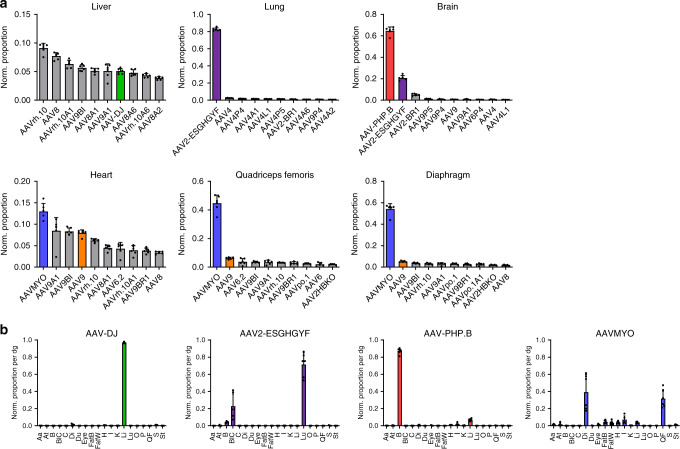
“25,36,43 Of note, the specific tropism of certain benchmark capsids after i.v. administration was successfully reproduced, including brain transduction of AAV-PHP.eB, 3 lung transduction of AAV2-ESGHGYF and AAV4, 4,7 as well as muscle transduction of AAVMYO, 12 confirming the validity of the overall approach.”
InfluentialSelf-citationMapping uterine calcium dynamics during the ovulatory cycle in live mice
Combs, D. J., Moult, E. M., England, S. K., & Cohen, A. E. (2024) · PNAS Nexus · doi:10.1093/pnasnexus/pgae446 · Cited by 5
“We chose the AAV9 capsid serotype, which has been successfully used for in vivo transgene expression in skeletal and cardiac muscle (29).”
MethodOptogenetic Control of Muscles: Potential Uses and Limitations
Cohen, E. M., Knapman, F. L., & Bilston, L. E. (2023) · Human Gene Therapy · doi:10.1089/hum.2022.236 · Cited by 5
“Two recent studies have used directed evolution 28 and barcoding techniques 29 to identify the novel and highly preferentially muscle-trophic capsids, MyoAAV and AAVMYO, respectively.”
Teaching an old vector new tricks: the surprising versatility of AAV vaccines
Winston, S. M., Wiggins, K., Schultz‐Cherry, S., & Davidoff, A. M. (2025) · Journal of Virology · doi:10.1128/jvi.00730-25 · Cited by 4
Cardiac epigenome in heart development and disease
Laurette, P., & Gilsbach, R. (2026) · Nature Reviews Cardiology · doi:10.1038/s41569-025-01223-1 · Cited by 5
mGem: AAV, from almost a virus to an awesome vector—or is it?
Srivastava, A. (2026) · mBio · doi:10.1128/mbio.02957-25 · Cited by 5
“…by a number of investigators to generate more efficient AAV vectors, which include the following: peptide insertions (73–76), directed evolution (77–80), DNA shuffling (81–83), rational design (66–69, 71, 84–86), ancestral reconstruction (87, 88), chimeric vectors (89, 90), dual vectors…”
CRISPR-Cas9-mediated upregulation of utrophin ameliorates Duchenne muscular dystrophy
Ralu, M., Guiraud, S., Dastidar, S., Galbiati, P., Sadaoui, E., Mazed, F., Amor, F., Cian, A. D., Richard, I., Mamchaoui, K., et al. (2026) · Molecular Therapy · doi:10.1016/j.ymthe.2026.03.025 · Cited by 4
“Using myotropic AAV capsids such as AAVMYO, 94 MyoAAV, 95 or LICA1 96 could enhance muscle-targeted delivery and thus increase editing efficiency while limiting liver targeting and associated toxicity.”
Himeda, C. L., Jones, T. I., & Jones, P. L. (2024) · Human Gene Therapy · doi:10.1089/hum.2024.041 · Cited by 4
Scott, S., Westhaus, A., Nazareth, D., Cabanes‐Creus, M., Navarro, R. G., Chandra, D., Zhu, E., Venkateswaran, A., Alexander, I. E., Bauer, D. C., et al. (2024) · Molecular Therapy — Methods & Clinical Development · doi:10.1016/j.omtm.2024.101351 · Cited by 4
Congenital myasthenic syndromes
Spendiff, S., Lochmüller, H., & Maselli, R. A. (2025) · International review of neurobiology · doi:10.1016/bs.irn.2025.04.025 · Cited by 4
Stamataki, M., Lüschow, J., Schlumbohm, C., Alawi, M., Lunding, L. P., Fuchs, E., Trepel, M., Schwaninger, M., & Körbelin, J. (2025) · Gene Therapy · doi:10.1038/s41434-025-00563-4 · Cited by 4
Fischer, J., Fedotova, A., Jaki, L., Sallard, E., Ehrhardt, A., Fuchs, J., & Ruzsics, Z. (2024) · Molecular Therapy — Methods & Clinical Development · doi:10.1016/j.omtm.2024.101241 · Cited by 4
“1 For rAds, the method of choice for fi nding novel vector variants remains rational design.”
MethodDavidsson, M., & Heuer, A. (2021) · Neural Regeneration Research · doi:10.4103/1673-5374.314309 · Cited by 4
Titin cleavage is a driver of cardiomyocyte disengagement and reactive myocardial fibrosisPreprint
López-Unzu, M. Á., Pricolo, M. R., Silva‐Rojas, R., Clemente-Manteca, A., Sánchez-Ortiz, D., Vicente, N., Velázquez-Carreras, D., Morales, C., Gavilán-Herrera, M., Sen-Martín, L., et al. (2025) · bioRxiv (Cold Spring Harbor Laboratory) · doi:10.1101/2025.04.22.645683 · Cited by 4
“…and ex vivo work ( 26-28 ) using SDS-30 PAGE we find 30% reduction of full-length cardiac titin and concomitant increase of Z-I and A-M fragments 6 days post infection (dpi) with 1.6-2.6 x 10 12 GFP-tagged-TEVp-expressing AAVMYO particles ( 29 ) ( Figure 1D,E, Table S1, Supplementary Data S1 ).”
InfluentialCurrent Trends in Duchenne Muscular Dystrophy Research and Therapy: 3D Cardiac Modelling
Przymuszała, M., Białobrzeska, M., Dulak, J., & Florczyk, U. (2026) · Journal of Cachexia Sarcopenia and Muscle · doi:10.1002/jcsm.70180 · Cited by 5
Reinhard, J. R., Lin, S., Maino, E., Ham, D. J., & Rüegg, M. A. (2026) · Molecular Therapy · doi:10.1016/j.ymthe.2026.01.041 · Cited by 6
“Interestingly, the maximal amounts detected with AAVMYO were not higher than those achieved with 1.5 × 10 14 vg/kg AAV9 (Figure 1G), suggesting that we reach saturation at the highest doses irrespective of the delivery AAV capsid.”
InfluentialWagner, J. T., Mueller-Schmucker, S. M., Wang, W., Arnold, P., Uhlig, N., Issmail, L., Eberlein, V., Damm, D., Roshanbinfar, K., Ensser, A., et al. (2024) · Communications Biology · doi:10.1038/s42003-024-06529-3 · Cited by 3
“In the current study, we performed a side-by-side comparison of AAV vector-based delivery of the same SARS-CoV-2 antibody by a recently developed myotropic AAV capsid 39 and the hepatotropic AAV8 capsid.”
MethodInfluentialSelf-citationPrecision Genetic Therapies: Balancing Risk and Benefit in Patients with Heart Failure
Johnston, J. R., & ADLER, E. D. (2024) · Current Cardiology Reports · doi:10.1007/s11886-024-02096-5 · Cited by 4
“…of AAV capsids, two independent groups recently reported the development of these next generation AAV variants dubbed “AAVMYO” and “MyoAAV” [40, 41] In murine and primates preclinical studies these myotropic cap-sids has enabled efficient delivery of therapeutic transgenes at significantly…”
BackgroundRecent developments in gene therapy research in India
Selot, R., & Ghosh, A. (2024) · Journal of Biosciences · doi:10.1007/s12038-024-00423-0 · Cited by 7
Barcoding of Life for Detection and Diagnosis of Diseases and Pests in Potato
Yadav, S., Yadav, N., Khurana, S. M. P., & Yadav, D. K. (2024) · Springer eBooks · doi:10.1007/978-981-97-1223-6_16 · Cited by 3
Rapti, K., Maiakovska, O., Becker, J., Szumska, J., Zayas, M., Bubeck, F., Liu, J., Gerstmann, E., Krämer, C., Wiedtke, E., et al. (2022) · Journal of Visualized Experiments · doi:10.3791/64389 · Cited by 4
Self-citationEngineered microRNA scaffolds for potent gene silencing in vivo
Militello, G., Greig, A., Bi, C., Vasileva, A., Zavodszky, M. I., Lo, S., Guilmette, E. R., Clarner, P., Liu, B., Bhat, G., et al. (2025) · Scientific Reports · doi:10.1038/s41598-025-07061-y · Cited by 3
“Furthermore, extensive research in academia and industry indicates that viral capsid engineering is a promising approach for achieving tissue-specific delivery 18,26–29 .”
Bass-Stringer, S., Donner, D. G., May, C. N., Matsumoto, A., Masterman, E. I., D'Elia, A. A., Chen, Y. C., Kiriazis, H., Luo, J., Chooi, R., et al. (2025) · Journal of Molecular and Cellular Cardiology Plus · doi:10.1016/j.jmccpl.2025.100478 · Cited by 2
“One study engineered an AAV capsid (AAVMYO) which was shown to enhance expression in cardiomyocytes [53].”
Li, A., Dong, L., Li, X., Yi, J., Wu, J.-Y., Ma, J., & Zhou, J. (2026) · Free Radical Biology and Medicine · doi:10.1016/j.freeradbiomed.2026.03.037 · Cited by 2
Galli, R., Vonk, L. A., Baelde, R., van den Heuvel, A., Bogaards, S. J. P., Conijn, S., Siteur, E., Alekhina, O., Granzier, H. L. M., Irving, T. C., et al. (2026) · Science Translational Medicine · doi:10.1126/scitranslmed.adx2116 · Cited by 2
Bella, T. L., Bertin, B., Mihaljevic, A., Nozi, J., Vidal, P., Imbeaud, S., Nault, J., Zucman‐Rossi, J., & Ronzitti, G. (2024) · Molecular Therapy — Methods & Clinical Development · doi:10.1016/j.omtm.2024.101327 · Cited by 2
Kornegay, J. N., Stedman, H. H., Lawlor, M. W., Byrne, B. J., & Childers, M. K. (2024) · Rare Disease and Orphan Drugs Journal · doi:10.20517/rdodj.2024.28 · Cited by 3
Directed Evolution of AAV9 for Efficient Gene Expression in Cardiomyocytes In Vitro and In Vivo
Hüttermann, L., Schröder, L. C., Shetty, P. M. V., Jonker, T., Hille, S. S., Remes, A. K., Matzen, A., Boender, A., Grimm, D., Frank, D., et al. (2025) · Human Gene Therapy · doi:10.1089/hum.2024.126 · Cited by 2
“To validate multiple AAV capsid variants simultaneously, we followed the method previously described by Weinmann et al. 29 Each capsid was packed with a CMV promoter-driven enhanced yellow fl uorescent protein (eYFP) reporter genome containing a unique barcode in the 3 ¢ -untranslated region.”
InfluentialSelf-citationDuchenne muscular dystrophy, one of the most complicated diseases for gene therapy
Braun, S. (2025) · Journal of Translational Genetics and Genomics · doi:10.20517/jtgg.2024.79 · Cited by 5
Preclinical development of genome editing to treat Duchenne muscular dystrophy by exon skipping
Padmaswari, M. H., Agrawal, S., & Nelson, C. E. (2025) · Journal of Neuromuscular Diseases · doi:10.1177/22143602251326993 · Cited by 3
Knapman, F. L., Cohen, E. M., Kulaga, T., Lovell, N. H., Lisowski, L., Burke, P. G. R., & Bilston, L. E. (2025) · Molecular Therapy — Methods & Clinical Development · doi:10.1016/j.omtm.2025.101559 · Cited by 2
“22 AAVMYO and other engineered and highly myotropic rAAVs (e. g., AAVMYO2, AAVMYO3, 24 and MyoAAV 21 ) are potentially safer and more effective options for muscle-targeted gene therapies.”
High-potency MyoAAV capsids enhanced skeletal muscle correction in a mouse model of GSD IIIa
Liao, K.-A., Han, S.-O., Barzi, M., Yi, H., Eisner, W., Bissig-Choisat, B., Bissig, K., & Sun, B. (2025) · Molecular Therapy — Methods & Clinical Development · doi:10.1016/j.omtm.2025.101567 · Cited by 2
“Progress in developing novel muscle-tropic AAV vectors via capsid engineering has been made in the past decade and most recently led to identification of two muscle-tropic AAV capsids, known as AAVMYO 34 and MyoAAVs.”
Saydam, S., & Dinçer, P. (2025) · Gene Therapy · doi:10.1038/s41434-025-00574-1 · Cited by 2
“Another strategy to reduce viral load low is the use of myotropic AAVs, which selectively target striated muscle with reduced liver uptake [74 – 77].”
Stone, D., Meumann, N., Kuhlmann, A.-S., Peterson, C. W., Xie, H. J., Roychoudhury, P., Loprieno, M. A., Vu, X., Strongin, D. E., Kenkel, E. J., et al. (2023) · Hepatology Communications · doi:10.1097/hc9.0000000000000009 · Cited by 2
Timing and Implementation of Viral Gene Therapy for Cardiomyopathy
McNally, E. M. (2024) · JACC Heart Failure · doi:10.1016/j.jchf.2024.01.020 · Cited by 2
Maksimov, D. O., Naumova, D. A., Astakhova, E. A., Artemyev, V., Biryukov, S. A., Abramov, I. S., Navoikova, A., Rudev, N. V., Feoktistova, S. G., Glazova, O., et al. (2024) · Biological Products Prevention Diagnosis Treatment · doi:10.30895/2221-996x-2024-24-2-215-228 · Cited by 1
Fatehi, S., Rok, M. J., Marks, R. M., Huynh, E., Kozman, N., Truong, H. A., Chi, L., Yan, B., Khazeeva, E., Delgado-Olguín, P., et al. (2025) · Molecular Therapy · doi:10.1016/j.ymthe.2025.05.005 · Cited by 1
“31,37,38 Although these vectors have not yet been approved for use in the clinic, they represent a promising avenue for improving the delivery, safety, and overall success of gene therapies.”
Blahetek, G., Abele, S., Schmierer, E., Matera, D., Geisbauer, A., Lempp, C., Schönberger, T., Holdenried-Krafft, S., Gross, P., & Strobel, B. (2025) · Molecular Therapy Advances · doi:10.1016/j.omta.2025.201664 · Cited by 3
“43 These data, together with our AAVMYO-based findings, clearly demonstrate its high potential for conferring skeletal muscle selectivity.”
InfluentialSelf-citationMetagenomic Reconstruction of Adeno-Associated Virus Genomes
Maiakovska, O., Link, L., Zayas, M., Sano, Y., Koay, T. W., Rapti, K., Liu, J., Bubeck, F., Xu, M., Baumgartl, C., et al. (2026) · Human Gene Therapy · doi:10.1177/10430342261419534 · Cited by 1
Self-citationSaylam, E., D'Ambrosio, E. S., Pesco, M. T., & Gushchina, L. V. (2026) · Genes · doi:10.3390/genes17030284 · Cited by 1
“In the mdx mouse model, AAVMYO led to robust transgene expression and improved muscle functional testing [70,71].”
Metadata
- Authors
- Weinmann, J., Weis, S., Sippel, J., Tulalamba, W., Remes, A., El Andari, J., Herrmann, A.-K., Pham, Q. H., Borowski, C., Hille, S., Schönberger, T., Frey, N., Lenter, M., VandenDriessche, T., Müller, O. J., Chuah, M. K., Lamla, T., & Grimm, D.
- Affiliations
- Heidelberg University (DE)
- Vrije Universiteit Brussel (BE)
- University Hospital Schleswig-Holstein (DE)
- Boehringer Ingelheim (Germany) (DE)
- Corresponding author
- Grimm, Dirk
- ORCID
- Venue
- Nature Communications
- Published
- 2020-10-28
- Volume
- 11
- Issue
- 1
- Pages
- 5432-5432
- ISSN
- 2041-1723 (ISSN-L)
- PMC
- PMC7595228
- OpenAlex
- W3097033736
- Cited by
- 259
- References
- 44
- Citations by year
- 2026: 44 · 2025: 65 · 2024: 54 · 2023: 50 · 2022: 34 · 2021: 12
- FWCI
- 14.07
- Type
- journal article
- Language
- en
- Open access
- gold
- doi.org
- Licence
- cc-by
- creativecommons.org/licenses/by/4.0 (tdm)
- creativecommons.org/licenses/by/4.0 (vor)
- Locations
- Nature Communications (publishedVersion, cc-by)
- PubMed Central (publishedVersion, cc-by)
- PubMed (publishedVersion)
- Lirias (KU Leuven) (submittedVersion, other-oa)
- RePEc: Research Papers in Economics (submittedVersion)
- DOAJ (DOAJ: Directory of Open Access Journals) (submittedVersion, cc-by-sa)
- VUBIR (Vrije Universiteit Brussel) (submittedVersion)
- Funders
- Association Belge contre les Maladies Neuro-Musculaires
- Deutsches Zentrum für Infektionsforschung (TRR179, 04.815, 272983813, TTU.HIV 04.815, TTU-HIV 04.803)
- European Commission (667751, HORIZON2020)
- Deutsche Forschungsgemeinschaft (EXC 81, 240245660, SFB1129, 272983813, TRR179)
- Bundesministerium für Bildung und Forschung (04.803, TTU-HIV 04.815, TTU HIV 04 803)
- Fonds Wetenschappelijk Onderzoek
- Universitätsklinikum Heidelberg
- Heidelberg Biosciences International Graduate School
- Topics
- Life Sciences › Biochemistry, Genetics and Molecular Biology › Genetics › Virus-based gene therapy research
- Life Sciences › Biochemistry, Genetics and Molecular Biology › Molecular Biology › RNA Interference and Gene Delivery
- Health Sciences › Medicine › Genetics (clinical) › Neurogenetic and Muscular Disorders Research
- Keywords
- adeno-associated virus, DNA barcoding, skeletal muscle, heart, diaphragm, gene therapy vectors
- MeSH terms
- Dependovirus, Animals, Capsid, Female, Genetic Vectors, Humans, Mice, Inbred C57BL, Muscles, Mutation, Organ Specificity, Genetic Variation, Genetic Therapy, Gene Library, Capsid Proteins, Mice, DNA Barcoding, Taxonomic, High-Throughput Nucleotide Sequencing
About these checks
Registry, retraction, Cites and statistics results are computed, not judged, with one exception: a printed reference that no index lists is read once by a model before it counts as a citation error. Claims are extracted by a model and kept only when their quote appears verbatim in the text; each cited source is then checked, with a model’s help, for whether it says what the claim relies on. Those verdicts can be wrong — read the claim’s quote and the cited source before relying on one.
Statistics and arithmetic are recomputed, not judged.
Confidence bands are shown only for fields calibrated on our annotated test set. None is calibrated yet, so no band is shown.
What counts as a claim ›How we measure confidence ›How we check this ›
Are you an author, or do you see a problem with this page? Request a review
Data sources
Bibliographic data: Semantic Scholar, OpenAlex, Crossref.
Contains information from the Semantic Scholar Academic Graph Datasets, made available under the ODC Attribution License (ODC-BY 1.0).
Semantic Scholar’s data is described in: Kinney, R., et al. (2023). The Semantic Scholar Open Data Platform. arXiv:2301.10140.
