

muscat detects subpopulation-specific state transitions from multi-sample multi-condition single-cell transcriptomics data
Open accessPublished version of a preprint
The DOI matches its Crossref record; 81 of the 81 references it cites were found in a registry or an index.
Abstract
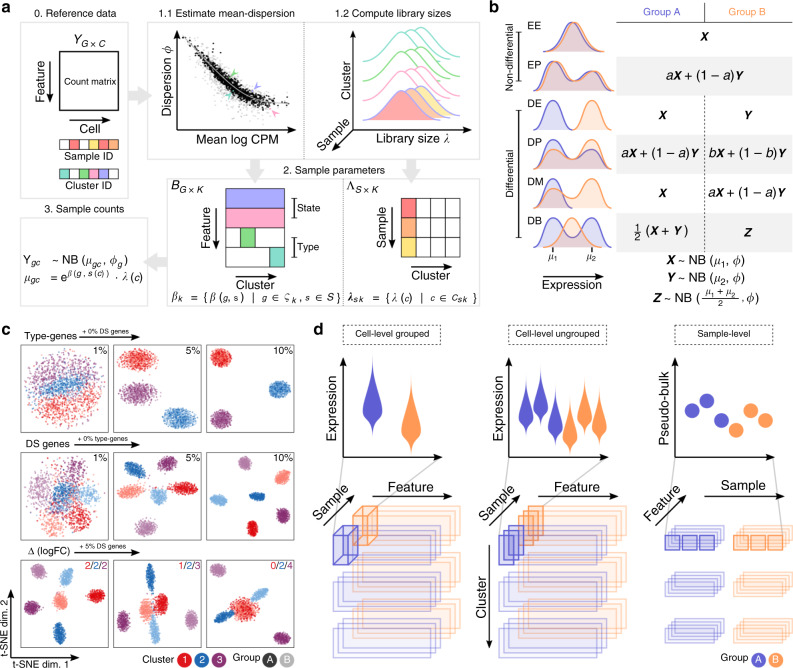
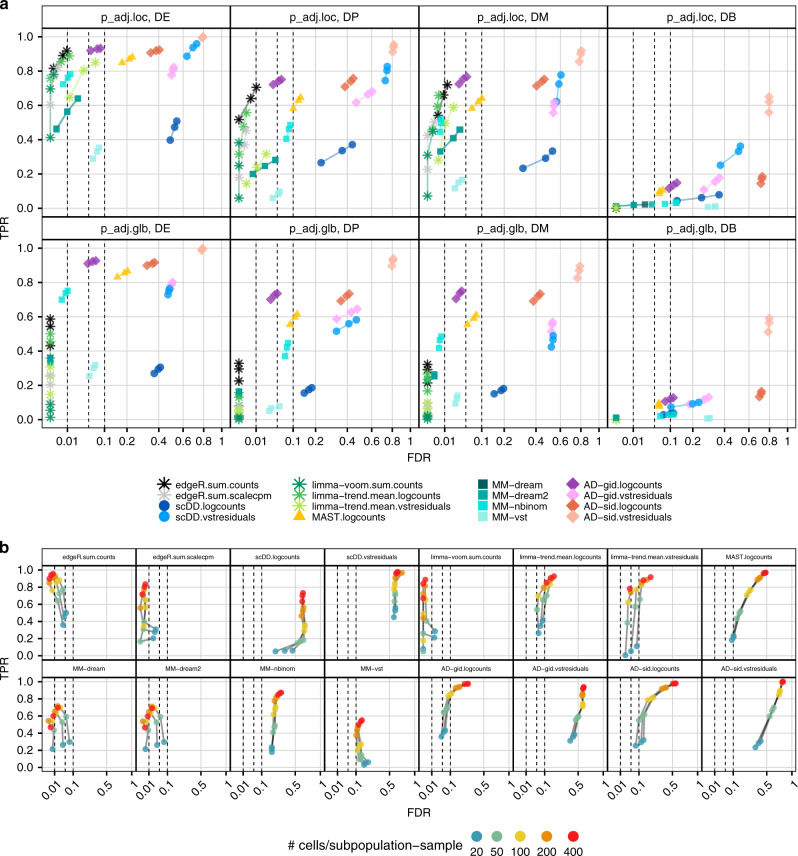
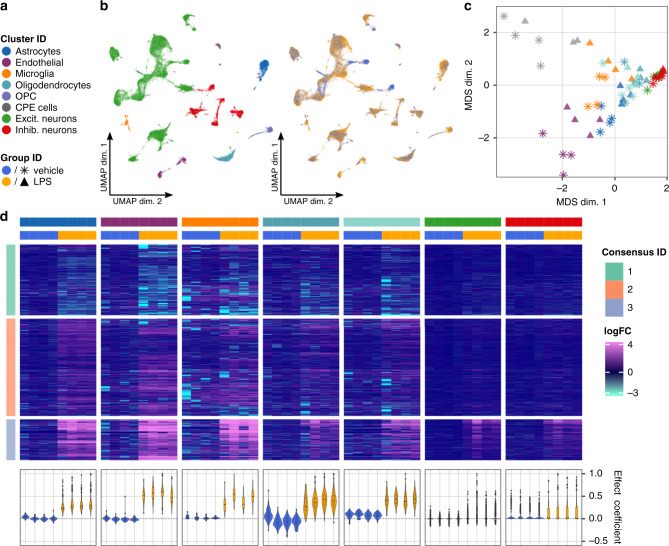
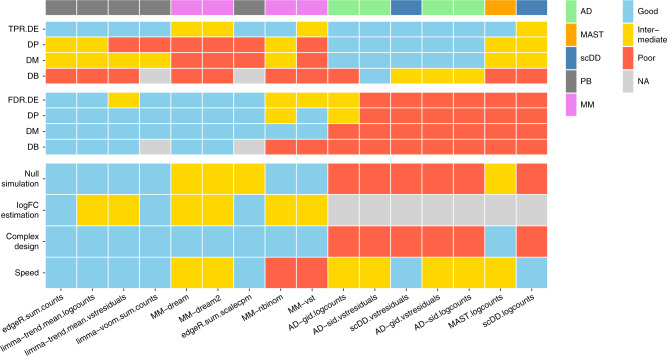
Single-cell RNA sequencing (scRNA-seq) has become an empowering technology to profile the transcriptomes of individual cells on a large scale. Early analyses of differential expression have aimed at identifying differences between subpopulations to identify subpopulation markers. More generally, such methods compare expression levels across sets of cells, thus leading to cross-condition analyses. Given the emergence of replicated multi-condition scRNA-seq datasets, an area of increasing focus is making sample-level inferences, termed here as differential state analysis; however, it is not clear which statistical framework best handles this situation. Here, we surveyed methods to perform cross-condition differential state analyses, including cell-level mixed models and methods based on aggregated pseudobulk data. To evaluate method performance, we developed a flexible simulation that mimics multi-sample scRNA-seq data. We analyzed scRNA-seq data from mouse cortex cells to uncover subpopulation-specific responses to lipopolysaccharide treatment, and provide robust tools for multi-condition analysis within the muscat R package.
Overview
The claims and statistics of this paper haven’t been checked yet.
Free: it reads the open-access text and checks the first 5 claims that cite a source we can check. Create a free account to check every claim.
Integrity signals
Registry
Cites
Statistics
Figures
Verification
Claims the paper makes
The claims and statistics of this paper haven’t been checked yet.
Free: it reads the open-access text and checks the first 5 claims that cite a source we can check. Create a free account to check every claim.
Claims other papers make about this one
Each is checked against this paper’s own text: does it say what the citing paper says it does?
The source backs part of the claim, not all of it — or backs it for a different population, condition or comparison.
In the citing paper
“Previous benchmarks of DE analysis methods for single-cell transcriptomics have relied heavily on simulated data, or else have compared the results of different methods in scenarios where no ground truth was available 10 , 17 .”
From Confronting false discoveries in single-cell differential expression (2021) · cites this paper as [10]
Experimental — accuracy not yet measuredThe source backs part of the claim, not all of it — or backs it for a different population, condition or comparison.
In the citing paper
“Two benchmarking studies, one applying the aforementioned simulation tool and one using different example data sets, demonstrated that the “pseudobulk” approach in combination with classical differential gene expression methods such as edgeR44 and limma-voom45 outperforms single cell specific methods and mixed models in multi sample DE analysis43,46.”
From scPower accelerates and optimizes the design of multi-sample single cell transcriptomic studies (2021) · cites this paper as [43]
Experimental — accuracy not yet measuredThe source backs part of the claim, not all of it — or backs it for a different population, condition or comparison.
In the citing paper
“A recent comparative analysis found that pseudobulk analysis methods are among the best-performing methods for differential state analysis and for making sample-level comparisons from single-cell data, and help to overcome some of the inherent sparsity in scRNA-seq data19,89.”
From Dissection of artifactual and confounding glial signatures by single-cell sequencing of mouse and human brain (2022) · cites this paper as [19]
Experimental — accuracy not yet measuredThe cited source says what the claim attributes to it.
In the citing paper
“Scatter plots demonstrating the strong correlation between the calculated effect sizes of two differential gene expression analysis methods (MAST55 (used here) and pseudobulk74,75) across cell types in the human medial frontal cortex (a) and choroid plexus (b).”
From Dysregulation of brain and choroid plexus cell types in severe COVID-19 (2021) · cites this paper as [74]
The cited source says what the claim attributes to it.
In the citing paper
“These simulations allow for assessing complex single cell multi-sample data, including scenarios of cell to cell heterogeneities other than differential gene expression.”
From scPower accelerates and optimizes the design of multi-sample single cell transcriptomic studies (2021) · cites this paper as [43]
7 more claims about this paper
Create a free account to see every claim other papers make about this one.
Self-check
Percentages, sums and reported differences re-computed from the paper’s own numbers.
The self-check needs the paper’s full text.
Citations
Cites
Moderated estimation of fold change and dispersion for RNA-seq data with DESeq2
Love, M. I., Huber, W., & Anders, S. (2014) · Genome Biology · doi:10.1186/s13059-014-0550-8 · Cited by 95,106
Fitting Linear Mixed-Effects Models Using lme4
Bates, D., Mächler, M., Bolker, B., & Walker, S. (2015) · Journal of Statistical Software · doi:10.18637/jss.v067.i01 · Cited by 86,835
Robinson, M. D., McCarthy, D. J., & Smyth, G. K. (2010) · Bioinformatics · doi:10.1093/bioinformatics/btp616 · Cited by 41,364
Self-citationlimma powers differential expression analyses for RNA-sequencing and microarray studies
Ritchie, M. E., Phipson, B., Wu, D., Hu, Y., Law, C. W., Shi, W., & Smyth, G. K. (2015) · Nucleic Acids Research · doi:10.1093/nar/gkv007 · Cited by 40,458
Wickham, H. (2016) · Use R! · doi:10.1007/978-3-319-24277-4 · Cited by 33,115
(2008) · Journal of Machine Learning Research · Cited by 33,051
Fast unfolding of communities in large networks
Blondel, V. D., Guillaume, J.-L., Lambiotte, R., & Lefebvre, E. (2008) · Journal of Statistical Mechanics: Theory and Experiment · doi:10.1088/1742-5468/2008/10/p10008 · Cited by 21,424
Comprehensive Integration of Single-Cell Data
Stuart, T., Butler, A., Hoffman, P., Hafemeister, C., Papalexi, E., Mauck, W. M., Hao, Y., Stoeckius, M., Smibert, P., & Satija, R. (2019) · Cell · doi:10.1016/j.cell.2019.05.031 · Cited by 15,453
ggplot2: Elegant Graphics for Data Analysis
Wickham, H. (2009) · doi:10.1007/978-0-387-98141-3 · Cited by 14,447
Integrating single-cell transcriptomic data across different conditions, technologies, and species
Butler, A., Hoffman, P., Smibert, P., Papalexi, E., & Satija, R. (2018) · Nature Biotechnology · doi:10.1038/nbt.4096 · Cited by 13,174
Cited by
Items 201–300 of 571
Characterization and Optimization of Multiomic Single-Cell Epigenomic Profiling
Sandoval, L., Ismail, W. M., Mazzone, A., Dumbravă, M., Fernandez, J. A., Munankarmy, A., Lasho, T. L., Binder, M., Simon, V. A., Kim, K., et al. (2023) · Genes · doi:10.3390/genes14061245 · Cited by 16
“Pseudobulk profiles for the principal component analysis were calculated using muscat [38].”
MethodCell Type Composition Analysis: Comparison of statistical methodsPreprint
Simmons, S. (2022) · bioRxiv (Cold Spring Harbor Laboratory) · doi:10.1101/2022.02.04.479123 · Cited by 17
“It is worth noting that a similar divide occurs in single cell differential expression methods [2].”
BackgroundCha, J., Kim, C. G., Sim, N. S., Kim, G., Son, W., Kim, D., Jung, Y., Hong, H. J., Lee, H. B., Kim, J., et al. (2025) · Cell Reports Medicine · doi:10.1016/j.xcrm.2025.102408 · Cited by 19
Frouard, J., Telwatte, S., Luo, X., Gill, N., Thomas, R., Arneson, D. V., Roychoudhury, P., Butte, A. J., Wong, J. K., Hoh, R., et al. (2026) · Nature Communications · doi:10.1038/s41467-026-68797-3 · Cited by 16
“DEG analysisat the RNA level was carried out using the R package muscat 102 , and counts were summed across clusters and samples.”
Li, H., Zhu, B., Xu, Z., Adams, T. S., Kaminski, N., & Zhao, H. (2021) · BMC Bioinformatics · doi:10.1186/s12859-021-04412-0 · Cited by 14
Gulbranson, D. R., Ho, K., Yu, G.-Q., Yu, X., Das, M. M., Shao, E., Kim, D., Zhang, W. J., Choudhary, K., Thomas, R., et al. (2021) · eNeuro · doi:10.1523/eneuro.0089-21.2021 · Cited by 15
“For snRNA-seq data, the significance of genotype effects on Zbtb20 expression was determined in clusters whose medians of Zbtb20 expression were .0 in 3 WT mice using the R packagemuscat (version 1.0.1; Crowell et al., 2020).”
MethodInfluentialData-driven comparison of multiple high-dimensional single-cell expression profiles
Okada, D., Cheng, J. H., Zheng, C., & Yamada, R. (2021) · Journal of Human Genetics · doi:10.1038/s10038-021-00989-9 · Cited by 16
Prolidase Deficiency Causes Spontaneous T Cell Activation and Lupus-like Autoimmunity
Hodgson, R., Crockford, T. L., Bhandari, A., Kepple, J. D., Back, J., Cawthorne, E., Abeler‐Dörner, L., Laing, A. G., Clare, S., Speak, A. O., et al. (2023) · The Journal of Immunology · doi:10.4049/jimmunol.2200212 · Cited by 13
Peng, F., Harper, N. S., Mishra, A. P., Auksztulewicz, R., & Schnupp, J. W. H. (2024) · Journal of Neuroscience · doi:10.1523/jneurosci.1115-23.2023 · Cited by 13
A robust model for cell type-specific interindividual variation in single-cell RNA sequencing data
Chen, M., & Dahl, A. W. (2024) · Nature Communications · doi:10.1038/s41467-024-49242-9 · Cited by 18
“They fi t variance components for batch effects 11,13 ,experimentalcontext 10 ,and/orsomeformofinterindividual variation 11 – 14 .”
InfluentialXu, C., Wu, J., Ye, J., Si, Y., Zhang, J., Wu, B., Pan, L., Fu, J., Quan, R., Xie, S., et al. (2024) · Cell Death and Disease · doi:10.1038/s41419-024-06840-1 · Cited by 13
Single-cell dissection of the genotype–immunophenotype relationship in glioblastoma
Soni, N., Rawat, K., Chen, Z., DiMauro, A., Giotti, B., Hambardzumyan, D., & Tsankov, A. M. (2025) · Brain · doi:10.1093/brain/awaf129 · Cited by 13
Distinct mechanisms of transcriptomic habituation to repeated stress in the mouse hippocampus
Waag, R., von Ziegler, L., Sonder, E., Sturman, O., Leonardi, J., Frei, S., Longster, R., Gapp, K., Germain, P., & Bohacek, J. (2025) · Nature Communications · doi:10.1038/s41467-025-67825-y · Cited by 15
Self-citationCOVID-19-specific transcriptomic signature detectable in blood across multiple cohorts
Välikangas, T., Junttila, S., Rytkönen, K. T., Kukkonen-Macchi, A., Suomi, T., & Elo, L. L. (2022) · Frontiers in Genetics · doi:10.3389/fgene.2022.929887 · Cited by 13
“To identify gene signals comparable to those from bulk RNA-seq datasets, the raw count values were aggregated across all cells belonging to one sample (Crowell et al., 2020).”
ResultImproved EfficientDet Algorithm for Basketball Players’ Upper Limb Movement Trajectory Recognition
Liang, H. (2023) · Applied Artificial Intelligence · doi:10.1080/08839514.2023.2225906 · Cited by 13
“Movement recognition and movement evaluation are two concepts that are significantly different (Crowell et al. 2020).”
BackgroundBarrett, A., Varol, E., Weinreb, A., Taylor, S. R., McWhirter, R. M., Cros, C., Vidal, B., Basavaraju, M., Poff, A., Tipps, J. A., et al. (2022) · bioRxiv (Cold Spring Harbor Laboratory) · doi:10.1101/2022.04.05.487209 · Cited by 13
Human LY9 governs CD4 + T cell IFN-γ immunity to Mycobacterium tuberculosis
Ogishi, M., Puchan, J., Yang, R., Arias, A. A., Han, J. E., Nguyen, T., Gutiérrez-Cózar, R., Conil, C., Seeleuthner, Y., Rinchai, D., et al. (2025) · Science Immunology · doi:10.1126/sciimmunol.ads7377 · Cited by 13
“Pseudobulk differential expression analysis (89) was performed with DESeq2 (90).”
Immune signaling mediates stromal changes to support epithelial reprogramming in celiac duodenum
Richards, D., Sohn, K., Basavarajappa, S. C., Horowitz, D., Rusbuldt, J. J., Tomsho, L., Paget, K., Chavez, I., den Berge, K. V., McRae, B. L., et al. (2025) · Cell Reports · doi:10.1016/j.celrep.2025.116039 · Cited by 12
Shanmugam, V., Tokcan, N., Chafamo, D., Sullivan, S., Borji, M., Martin, H. K., Newton, G. A., Nadaf, N. M., Hanbury, S., Barrera, I., et al. (2025) · Nature Communications · doi:10.1038/s41467-025-67539-1 · Cited by 14
Glass, M. R., Matoba, N., Beltran, A. A., Patel, N. K., Farah, T. M., Eswar, K. K., Bhargava, S., Huang, K., Curtin, I., Ahmed, S., et al. (2025) · Cell stem cell · doi:10.1016/j.stem.2025.12.001 · Cited by 12
Application of single-cell transcriptomics to kinetoplastid research
Briggs, E. M., Warren, F., Matthews, K. R., McCulloch, R., & Otto, T. D. (2021) · Parasitology · doi:10.1017/s003118202100041x · Cited by 13
Ramakrishnan, B., Maddela, N. R., Venkateswarlu, K., & Megharaj, M. (2021) · Environmental Advances · doi:10.1016/j.envadv.2021.100091 · Cited by 12
Hepatitis C virus core protein uses triacylglycerols to fold onto the endoplasmic reticulum membrane
Ajjaji, D., M’Barek, K. B., Boson, B., Omrane, M., Gassama‐Diagne, A., Blaud, M., Pénin, F., Diaz, E., Ducos, B., Cosset, F., et al. (2021) · Traffic · doi:10.1111/tra.12825 · Cited by 13
CellDrift: inferring perturbation responses in temporally sampled single-cell data
Jin, K., Schnell, D., Li, G., Salomonis, N., Prasath, V. B. S., Szczesniak, R., & Aronow, B. J. (2022) · Briefings in Bioinformatics · doi:10.1093/bib/bbac324 · Cited by 11
“More advanced algorithms, such as MAST [18] and muscat [19], have been developed.”
Exploring the heterogeneous transcriptional response of the CNS to systemic LPS and Poly(I:C)
Bormann, D., Copic, D., Klas, K., Direder, M., Riedl, C. J., Testa, G., Kühtreiber, H., Poreba, E., Hametner, S., Golabi, B., et al. (2023) · Neurobiology of Disease · doi:10.1016/j.nbd.2023.106339 · Cited by 11
“In line with previously described transcriptional profiles of endothelial cells derived from the CNS of rodents subjected to acute LPS treatment, both TLR-ligands elicited a similar transcriptional cytokine response in vascular cells in our data set (Crowell et al., 2020; Jambusaria et al., 2020).”
InfluentialVisualizing scRNA-Seq data at population scale with GloScope
Wang, H., Torous, W., Gong, B., & Purdom, E. A. (2024) · Genome biology · doi:10.1186/s13059-024-03398-1 · Cited by 12
“ˆ π i is an estimate of a probability distribution, only now a simpler discrete distribution into K groups.”
Zhang, C., Wu, Q., Yang, H., Zhang, H., Liu, C., Yang, B. H., & Hu, Q. (2024) · Communications Biology · doi:10.1038/s42003-024-07117-1 · Cited by 11
Lin, Y., Zhang, X., Sun, D., Wang, Q., Dou, S., & Zhou, Q. (2025) · The Ocular Surface · doi:10.1016/j.jtos.2025.02.010 · Cited by 11
Wang, M., Pietro-Torres, A. D., Feregrino, C., Luxey, M., Moreau, C., Fischer, S., Fages, A., Ritz, D., & Tschopp, P. (2025) · Nature Communications · doi:10.1038/s41467-025-57480-8 · Cited by 11
“Bright fi eld images were acquired on an Olympus FLUOVIEW FV3000 and globally processed for color balance and brightness using Adobe Photoshop .”
Transcriptomic and morphologic vascular aberrations underlying FCDIIb etiology
Fang, C., Zhang, X., Yang, L., Sun, L., Lu, Y., Liu, Y., Guo, J., Wang, M., Tan, Y., Zhang, J., et al. (2025) · Nature Communications · doi:10.1038/s41467-025-58535-6 · Cited by 11
Single-cell atlas of transcriptomic vulnerability across brain disorders
Lee, D., Koutrouli, M., Masse, N. Y., Hoffman, G. E., Kinrot, S., Wang, X., Prashant, N. M., Pjanic, M., Clarence, T., Tsetsos, F., et al. (2026) · Nature · doi:10.1038/s41586-025-09573-z · Cited by 16
“It starts by aggregating cells by the donor using a pseudobulk approach 161,162 and fits a regression model.”
Tumor-infiltrating CCR2+ inflammatory monocytes counteract specific immunotherapy
Bartneck, J., Hartmann, A., Stein, L., Arnold-Schild, D., Klein, M., Stassen, M., Marini, F., Pielenhofer, J., Meiser, S. L., Langguth, P., et al. (2023) · Frontiers in Immunology · doi:10.3389/fimmu.2023.1267866 · Cited by 11
Huber, M. S., Kovaleva, E., Clark, M. D., Riller, U., & Fourie, F. D. (2021) · Icarus · doi:10.1016/j.icarus.2021.114812 · Cited by 11
iDESC: identifying differential expression in single-cell RNA sequencing data with multiple subjects
Liu, Y., Zhao, J., Adams, T. S., Wang, N., Schupp, J. C., Wu, W., McDonough, J. E., Chupp, G. L., Kaminski, N., Wang, Z., et al. (2023) · BMC Bioinformatics · doi:10.1186/s12859-023-05432-8 · Cited by 14
“To examine subject variation in these two 244 datasets, we estimated cell-level effect coefficients [20] for each subject (Fig.”
BackgroundMethodInfluentialMulti-omic Characterization of HIV Effects at Single Cell Level across Human Brain RegionsPreprint
Yang, J., Agrawal, K., Stanley, J. S., Li, R., Jacobs, N., Wang, H., Lu, C. F., Qu, R., Clarke, D., Chen, Y., et al. (2025) · bioRxiv (Cold Spring Harbor Laboratory) · doi:10.1101/2025.02.05.636707 · Cited by 14
Vitamin B2 and B3 nutrigenomics reveals a therapy for NAXD disease
Garg, A., Blume, S. Y., Huynh, H., Barrios, A. M., Karabulut, O. O., Zhao, Q., Midha, A. D., Turner, A. W., Resnick, B. V., Chen, X., et al. (2026) · Cell · doi:10.1016/j.cell.2026.01.022 · Cited by 11
Deng, Y., Choi, J., & Cao, K. L. (2022) · Briefings in Bioinformatics · doi:10.1093/bib/bbac088 · Cited by 10
“Cell aggregation has been used in single cell studies to use bulk statistical methods, such as DEseq2 for differential expression testing (Crowell et al., 2020; Love et al., 2014).”
MethodscViewer: An Interactive Single-Cell Gene Expression Visualization Tool
Patil, A. R., Kumar, G., Zhou, H., & Warren, L. L. (2023) · Cells · doi:10.3390/cells12111489 · Cited by 11
“[37] presented a well-controlled false discovery rate (FDR) for both the pseudobulk and mixed model compared with the marker-based approach.”
ResultBSDE: barycenter single-cell differential expression for case–control studies
Zhang, M., & Guo, F. R. (2022) · Bioinformatics · doi:10.1093/bioinformatics/btac171 · Cited by 13
Integrated analysis of transcriptomic data reveals the platelet response in COVID-19 disease
Garma, L. D., Deng, H., & Goldschmidt, E. (2022) · Scientific Reports · doi:10.1038/s41598-022-10516-1 · Cited by 10
Palade, J., Alsop, E. B., Tang, N., Antone, J., Paredes, D. M., Ghosh, T., Soldi, R., Bargenquast, T., Schwartz, G., Finholt, J. P., et al. (2025) · Frontiers in Immunology · doi:10.3389/fimmu.2025.1633010 · Cited by 10
Simulating paired and longitudinal single-cell RNA sequencing data with rescueSim
Wynn, E. A., Mould, K. J., Vestal, B. E., & Moore, C. M. (2025) · Bioinformatics · doi:10.1093/bioinformatics/btaf442 · Cited by 9
Genomic characterization of normal and aberrant human milk production
Golan, Y., Nyquist, S. K., Liu, Z., Ennis, D., Zhao, J., Blair, E., Khan, A. R., Prahl, M. K., Gaw, S. L., Yassour, M., et al. (2025) · Science Advances · doi:10.1126/sciadv.adr7174 · Cited by 9
Wang, C., Ord, J., Yan, M., Cai, Y., Shao, H., Lin, L., Salojärvi, J., Liu, L., & Guo, W. (2026) · Genome biology · doi:10.1186/s13059-026-04079-x · Cited by 9
“To enable pseudobulk-level analysis, raw read counts from all cells within each cluster were aggregated by sample, and the original gene-by-cell matrix was transformed to a gene-by-replicate matrix via muscat v 1.22.0 [84].”
InfluentialWong, M. M. K., Sha, Z., Lütje, L., Kong, X., Velthuijs, N., van Heukelum, S., van de Berg, W. D. J., Jonkman, L. E., Fisher, S. E., & Francks, C. (2024) · Proceedings of the National Academy of Sciences · doi:10.1073/pnas.2401687121 · Cited by 10
Cell and tissue reprogramming: Unlocking a new era in medical drug discovery
Sen, C. K., Friday, A. J., & Roy, S. (2025) · Pharmacological Reviews · doi:10.1016/j.pharmr.2025.100077 · Cited by 11
Differential detection workflows for multi-sample single-cell RNA-seq data
Gilis, J., Perin, L., Malfait, M., Crowell, H. L., den Berge, K. V., Assefa, A. T., Verbist, B. M. P., Risso, D., & Clement, L. (2025) · BMC Genomics · doi:10.1186/s12864-025-12102-x · Cited by 9
“Our proposed DD analysis and a workflow for integrating DD and DE analysis results are implemented in the Bioconductor package muscat [17].”
InfluentialSelf-citationThe histone acetyltransferase HBO1 promotes efficient tip cell sprouting during angiogenesis
Grant, Z. L., Hickey, P. F., Abeysekera, W., Whitehead, L. W., Lewis, S. M., Symons, R. C. A., Baldwin, T. M., Amann‐Zalcenstein, D., Garnham, A. L., Naik, S. H., et al. (2021) · Development · doi:10.1242/dev.199581 · Cited by 10
Multiscale adaptive differential abundance analysis in microbial compositional data
Wang, S. (2023) · Bioinformatics · doi:10.1093/bioinformatics/btad178 · Cited by 9
Demultiplexing of single-cell RNA-sequencing data using interindividual variation in gene expression
Nassiri, I., Kwok, A. J., Bhandari, A., Bull, K. R., Garner, L. C., Klenerman, P., Webber, C., Parkkinen, L., Lee, A. W., Wu, Y., et al. (2024) · Bioinformatics Advances · doi:10.1093/bioadv/vbae085 · Cited by 8
“DiffCoEx offers insight into the coordinated response of genes and assists us in understanding the underlying biological networks (McKenzie et al. 2016, Crowell et al. 2020).”
InfluentialConceição‐Neto, N., Pierson, W., Han, Q., Yao, Z., Wu, Q., Dockx, K., Aerts, L., Maeyer, D. D., Beyens, M., den Berge, K. V., et al. (2025) · Frontiers in Immunology · doi:10.3389/fimmu.2025.1421712 · Cited by 8
Dai, D., Si, J., Jiang, L., Han, B., Wang, K., Wang, X., Yan, S., Yin, Y., Chen, W., Mao, H., et al. (2025) · Advanced Science · doi:10.1002/advs.202508847 · Cited by 10
The critical role of the endogenous immune compartment after CAR T cell therapy in recurrent GBM
Freeburg, N. F., Chafamo, D., Gopikrishna, G. K., Murphy, R. M., Peng, J. J., Parthasarathy, S., Dumont, S. D., Estrada, E. G., Logun, M. T., Sun, Y., et al. (2026) · Cell · doi:10.1016/j.cell.2026.05.026 · Cited by 8
Single-nucleus transcriptome-wide association study of human brain disorders
Venkatesh, S., Kosoy, R., Wu, Z., Anyfantakis, M., Dillard, C., Prashant, N. M., Burstein, D., Mathur, D. D., Chatzinakos, C., Ajanaku, B., et al. (2026) · Nature · doi:10.1038/s41586-026-10836-6 · Cited by 9
“Specifically, using a pseudobulk approach reduces measurement noise, while increasing statistical power from sparse single cell measurements 29–32 .”
An essential role for Cmtr2 in mammalian embryonic development
Yermalovich, A. V., Mohsenin, Z., Cowdin, M. A., Giotti, B., Gupta, A. A., Feng, A., Golomb, L., Wheeler, D. B., Xu, K., Tsankov, A. M., et al. (2024) · Developmental Biology · doi:10.1016/j.ydbio.2024.07.019 · Cited by 8
A unified model for interpretable latent embedding of multi-sample, multi-condition single-cell data
Madrigal, A., Lu, T., Soto, L. M., & Najafabadi, H. S. (2024) · Nature Communications · doi:10.1038/s41467-024-50963-0 · Cited by 9
Huo, J., Wang, Z., Zhao, W., Chen, M., Li, H., He, F., Tian, X., Ma, Y., Husanova, F., Ma, L., et al. (2024) · Clinical and Translational Medicine · doi:10.1002/ctm2.70113 · Cited by 8
Detecting gene expression in Caenorhabditis elegans
Calarco, J. A., Taylor, S. R., & Miller, D. M. (2024) · Genetics · doi:10.1093/genetics/iyae167 · Cited by 11
“Several popular methods for testing differential expression have treated each cell as an independent observation, but recent work has shown that this approach can produce false positives especially among highly expressed genes (Lun and Marioni 2017; Crowell et al .”
Prioritizing perturbation-responsive gene patterns using interpretable deep learning
Cui, Y., & Yuan, Z. (2025) · Nature Communications · doi:10.1038/s41467-025-61476-9 · Cited by 9
Palla, G., & Ferrero, E. (2020) · iScience · doi:10.1016/j.isci.2020.101451 · Cited by 9
Integrative Single-Cell Transcriptomic Analysis of Human Fetal Thymocyte Development
Li, Y., Zeng, W., Li, T., Guo, Y., Zheng, G., He, X., Bai, L., Ding, G., Li, J., & Liu, X. (2021) · Frontiers in Genetics · doi:10.3389/fgene.2021.679616 · Cited by 10
“Fortunately, new bioinformatics tools that can simultaneously handle the cell-type identification, different time points and batch correction may help to improve the comparison of transcriptomic dynamic between conditions such as developmental time points (Crowell et al., 2020).”
BackgroundMallick, K., Chakraborty, S., Mallik, S., & Bandyopadhyay, S. (2023) · Briefings in Bioinformatics · doi:10.1093/bib/bbad125 · Cited by 9
Single-cell chromatin accessibility and transcriptomic characterization of Behcet’s disease
Shi, W., Ye, J., Shi, Z., Pan, C., Zhang, Q., Lin, Y., Liang, D., Liu, Y., Lin, X., & Zheng, Y. (2023) · Communications Biology · doi:10.1038/s42003-023-05420-x · Cited by 8
“To validate our results of differential analysis between BD and nonBDs, we also used the Muscat R package 36 .”
MethoduniLIVER: a human liver cell atlas for data-driven cellular state mapping
Wu, Y., Fan, Y., Miao, Y., Li, Y., Du, G., Chen, Z., Diao, J., Chen, Y.-A., Ye, M., You, R., et al. (2025) · Journal of genetics and genomics/Journal of Genetics and Genomics · doi:10.1016/j.jgg.2025.01.017 · Cited by 8
Guzmán-Hidalgo, E., Grajales-Nishimura, J. M., Eberli, G. P., Camargo, J. E. A., Urrutia‐Fucugauchi, J., & Pérez‐Cruz, L. (2021) · Marine Geology · doi:10.1016/j.margeo.2021.106594 · Cited by 10
PSF toolkit: an R package for pathway curation and topology-aware analysis
Hakobyan, S., Stepanyan, A., Nersisyan, L., Binder, H., & Arakelyan, A. (2023) · Frontiers in Genetics · doi:10.3389/fgene.2023.1264656 · Cited by 8
“To overcome sparsity issues in PSF analysis we used the pseudo-bulk approach (Crowell et al., 2020) and aggregated expression values from the same tissue types.”
MethodZhang, Y., Tan, J., Yang, K., Fan, W., Yu, B., & Shi, W. (2023) · Journal of Neuroinflammation · doi:10.1186/s12974-023-02831-9 · Cited by 7
“Besides, the pseudobulk differentially gene expression analysis was performed in the microglia/immune nuclei subset by using the R package muscat (BCAS vs sham) [25].”
MethodB cells require DOCK8 to elicit and integrate T cell help when antigen is limiting
Deobagkar‐Lele, M., Crawford, G., Crockford, T. L., Back, J., Hodgson, R., Bhandari, A., Bull, K. R., & Cornall, R. J. (2024) · Science Immunology · doi:10.1126/sciimmunol.add4874 · Cited by 7
“4.0b (58), respectively.”
Bergiers, I., Köse, M. C., Skerget, S., Malfait, M., Fourneau, N., Ellis, J.-C., Vanhoof, G., Smets, T., Verbist, B. M. P., Maeyer, D. D., et al. (2025) · PLoS Genetics · doi:10.1371/journal.pgen.1011848 · Cited by 8
“For contrasts involving comparisons at the subject level, a pseudobulk approach using the muscat [98] (version 1.4.0) R package was used (see S1 Appendix for additional details).”
InfluentialDing, L., Song, L., Han, Y., Wang, J., Lyu, Y., Song, M., Li, X., He, W., Chen, Q., Ding, P., et al. (2026) · Cell Host & Microbe · doi:10.1016/j.chom.2026.01.017 · Cited by 7
Jiménez-Castaño, R., Narwade, N. P., Gema, M.-B., Sánchez‐Laorden, B. L., Galcerán, J., Youssef, K. K., & Nieto, M. A. (2026) · Nature Communications · doi:10.1038/s41467-026-70242-4 · Cited by 8
Integration of Bulk and Single-Cell RNA Sequencing Analyses in Biomedicine
Golushko, N., & Buzdin, A. A. (2026) · International Journal of Molecular Sciences · doi:10.3390/ijms27073334 · Cited by 8
TRANSCRIPTOMIC DIFFERENCES IN PERIPHERAL MONOCYTE POPULATIONS IN SEPTIC PATIENTS BASED ON OUTCOME
Barrios, E. L., Rincon, J. C., Willis, M. L., Polcz, V. E., Leary, J. R., Darden, D. B., Balch, J. A., Larson, S. D., Loftus, T. J., Mohr, A. M., et al. (2024) · Shock · doi:10.1097/shk.0000000000002379 · Cited by 7
“14.0 after cell counts for each patient type were aggregated and summed (44).”
InfluentialQiu, Y., Wang, Y., Liu, J., Liu, B., Sun, K., & Hou, Q. (2025) · Scientific Reports · doi:10.1038/s41598-025-95731-2 · Cited by 8
Zibetti, C. (2022) · Cells · doi:10.3390/cells11050806 · Cited by 8
Differential analysis of genomics count data with edge*Preprint
Pachter, L. S. (2026) · bioRxiv (Cold Spring Harbor Laboratory) · doi:10.64898/2026.02.16.706223 · Cited by 7
The structure of a hibernating ribosome in a Lyme disease pathogen
Sharma, M. R., Manjari, S. R., Agrawal, E. K., Keshavan, P., Koripella, R. K., Majumdar, S., Marcinkiewicz, A. L., Lin, Y.-P., Agrawal, R. K., & Banavali, N. K. (2023) · Nature Communications · doi:10.1038/s41467-023-42266-7 · Cited by 6
Ladak, S. S., McQueen, L. W., Tomkova, K., Layton, G. R., Murphy, G. J., & Zakkar, M. (2025) · Cells · doi:10.3390/cells14171369 · Cited by 6
“0.0 to better account for spot variation in a multi-sample, multi-batch, multi-state experiment with group replicates [28].”
InfluentialHuang, B., Huang, J., Chiang, N. H., Chen, Z., Lui, G. C.-Y., Ling, L., Kwan, M. Y. W., Wong, J. S. C., Mak, P. Q., Ling, J. W. H., et al. (2024) · Frontiers in Immunology · doi:10.3389/fimmu.2023.1315602 · Cited by 8
Brinkmeier, M. L., Wang, S. Q., Pittman, H., Cheung, L., & Prasov, L. (2025) · PLoS Genetics · doi:10.1371/journal.pgen.1011670 · Cited by 6
“MultiNichenetr and Differential Nichenetr were performed with R packages from the Saeys Lab, using codes provided [38,39,82].”
Wu, M.-Y., Chen, A.-H., Li, L., Yi, Y., Xiong, Q., Chen, K.-T., Cai, Z.-M., Lei, W.-B., Xiong, G., & Fang, S. (2025) · Hearing Research · doi:10.1016/j.heares.2025.109376 · Cited by 8
T cell-mediated SIV dissemination into the CNS: a single-cell transcriptomic analysis
Xu, X., Niu, M., Lamberty, B. G., Emanuel, K. M., Estrella, L. D., & Fox, H. S. (2025) · Journal of Neuroinflammation · doi:10.1186/s12974-025-03543-y · Cited by 6
“Differential state analysis in this study was performed using the muscat R package (version 1.16) [46].”
InfluentialMoro, G., Mallona, I., Barz, M., Maillard, J., Brügger, M. D., Fazilaty, H., Szabo, Q., Valenta, T., Handler, K., Kerlin, F., et al. (2025) · Nature Communications · doi:10.1038/s41467-025-66248-z · Cited by 6
Self-citationDuempelmann, L., Sheppard, S., McKinnon, B. D., Duò, A., Skrabalova, J., Andrieu, T., Lusby, R., Solaß, W., Goehlsdorf, D., Muzumdar, S., et al. (2026) · Nature Communications · doi:10.1038/s41467-026-73020-4 · Cited by 8
“We used four different feature selection methods to reduce the dimensionality of the data prior to model training: 1) PCA, identifying components of the highest variance 67 , 2) CorrgPCA, using correlation-based PCA (Methods), 3) diffgen, based on a non-parametric Wilcoxon rank sum test 68 and 4) hvg, identifying Fig.…”
InfluentialEyring, K. W., Liu, C., Elhajjaoui, N., Abuhanna, K. D., Zhang, Y., von Behren, Z., Tsai, M. J., Eskin, E., Geschwind, D. H., & Luo, C. (2026) · Cell Genomics · doi:10.1016/j.xgen.2026.101278 · Cited by 9
Zhang, H., Chen, Y., Xu, P., Liu, D., Wu, N., Wang, L., & Mo, X. (2024) · Chronic Diseases and Translational Medicine · doi:10.1002/cdt3.124 · Cited by 6
C-ziptf: stable tensor factorization for zero-inflated multi-dimensional genomics data
Chafamo, D., Shanmugam, V., & Tokcan, N. (2024) · BMC Bioinformatics · doi:10.1186/s12859-024-05886-4 · Cited by 6
“More recently, analysis methods that treat individual cells as statistically independent replicates have faced scrutiny as they overlook the correlation between cells originating from the same individual [5, 6].”
BackgroundMethodZhu, B., Li, H., Zhang, L., Chandra, S. S., & Zhao, H. (2022) · Briefings in Bioinformatics · doi:10.1093/bib/bbac166 · Cited by 8
“…count is calculated by aggregating all the counts for a specific cell type in one sample, and these pseudobulk data have been used to evaluate the similarity between bulk and imputed scRNA-seq profiles [26], to alleviate plate effects [27] and to identify cell-type-specific DE genes [19].”
InfluentialSimmons, S., Adiconis, X., Haywood, N., Parker, J. J., Lin, Z., Liao, Z., Tuncali, I., Al’Khafaji, A. M., Shin, A., Jagadeesh, K. A., et al. (2026) · Genome biology · doi:10.1186/s13059-026-04062-6 · Cited by 5
“Similar methods are used for differential expression between conditions in single-cell data except with different underlying noise models [62, 63].”
Liu, J., Li, X., Lü, J., Xi Zhong, S. H. E. N., Li, D., Bai, L., Li, X., Yu, Z., & Li, H. (2025) · Experimental Neurology · doi:10.1016/j.expneurol.2025.115207 · Cited by 5
Single‐cell digital twins identify drug targets and repurposable medicine in Alzheimer’s disease
Ren, Y., Hu, M., Li, Y. E., Pieper, A. A., Cummings, J. L., & Cheng, F. (2025) · Alzheimer s & Dementia · doi:10.1002/alz70859_102982 · Cited by 6
Biradar, R., Ullah, U., Lönnberg, T., Junttila, S., Tomi, S., Norman, S. Z., Starskaia, I., Paulin, N., Mikkola, L., Vaarala, O., et al. (2025) · Genome Medicine · doi:10.1186/s13073-025-01574-x · Cited by 5
“Pseudo-bulks for differential expression analysis were created by aggregating the counts across all cells in one sample in one cell type for each gene using R package muscat (v.1.6.0) [ 22].”
InfluentialAngka, L., Tennakoon, G., Cook, D. P., Martel, A. B., Market, M., de Souza, C. T., Cummins, E., Samudio, I. J., Kekre, N. K., Ardolino, M., et al. (2026) · Journal for ImmunoTherapy of Cancer · doi:10.1136/jitc-2025-013304 · Cited by 5
Grandke, F., Rishik, S., Wagner, V., Engel, A., Ludwig, N., Calcuttawala, K., Kern, F., Keller, V., Krawczyk, M., Stodieck, L., et al. (2026) · Nature Communications · doi:10.1038/s41467-026-68737-1 · Cited by 5
Xu, C., Pouyabahar, D., Voisin, V., Heydari, H., & Bader, G. D. (2026) · Nature Communications · doi:10.1038/s41467-026-69063-2 · Cited by 5
“Maximum likelihood estimation (MLE) and restricted maximum likelihood (REML) are methods for estimating fi xed effects and variance components in LMMs. MLE estimates all parameters of fi xed effects and variance components together, but can produce biased variance component estimates, whereas REML…”
Duc, P. M., Thủy, L. T. T., Hai, H., Bao, T. V., Ha, N. T., Anh, P. T., Ikenaga, H., Fujii, H., Yoshida, K., Enomoto, M., et al. (2026) · JHEP Reports · doi:10.1016/j.jhepr.2026.101783 · Cited by 7
Kendiukhov, I. (2026) · Biogerontology · doi:10.1007/s10522-026-10471-8 · Cited by 7
“Single-cell analyses are uniquely vulnerable to optimistic results when cells are treated as independent evidence, when donor effects leak across splits, or when batch correction silently redefines the contrast (Crowell et al. 2020; Zimmerman et al. 2021; Squair et al. 2021).”
Zhang, H., Fan, K., Zhang, Z., Guo, Y., & Mo, X. (2024) · Autoimmunity · doi:10.1080/08916934.2024.2419117 · Cited by 5
“Subsequently, differential expression analysis for each cell type between the cases and controls was performed using the Muscat package [25].”
Zhang, H., Zhang, Z., Fan, K., Chen, Y., Xu, P., Guo, Y., & Mo, X. (2024) · Molecular Immunology · doi:10.1016/j.molimm.2024.10.005 · Cited by 5
Zhao, W., Zhou, L., Wang, Y., Wang, J., Sun, Y. E., & Wang, Q. (2025) · Frontiers of Medicine · doi:10.1007/s11684-024-1113-3 · Cited by 5
Metadata
- Authors
- Crowell, H. L., Soneson, C., Germain, P.-L., Calini, D., Collin, L., Raposo, C., Malhotra, D., & Robinson, M. D.
- Affiliations
- SIB Swiss Institute of Bioinformatics (CH)
- University of Zurich (CH)
- F. Hoffmann-La Roche AG (CH)
- Corresponding author
- Robinson, Mark D.
- ORCID
- Venue
- Nature Communications
- Published
- 2020-11-30
- Volume
- 11
- Issue
- 1
- Pages
- 6077-6077
- ISSN
- 2041-1723 (ISSN-L)
- PMC
- PMC7705760
- OpenAlex
- W3108941787
- Semantic Scholar
- a32071ad0414bbde089ac3b6f0e479831ab80a27
- Cited by
- 515
- References
- 75
- Citations by year
- 2026: 109 · 2025: 99 · 2024: 80 · 2023: 84 · 2022: 54 · 2021: 61 · 2020: 26
- FWCI
- 18.90
- Type
- journal article
- Language
- en
- Open access
- gold
- doi.org
- Licence
- cc-by
- creativecommons.org/licenses/by/4.0 (tdm)
- creativecommons.org/licenses/by/4.0 (vor)
- Locations
- Nature Communications (publishedVersion, cc-by)
- bioRxiv (Cold Spring Harbor Laboratory) (acceptedVersion, cc-by)
- PubMed Central (publishedVersion, cc-by)
- PubMed (publishedVersion)
- Zurich Open Repository and Archive (University of Zurich) (acceptedVersion, cc-by)
- RePEc: Research Papers in Economics (submittedVersion)
- DOAJ (DOAJ: Directory of Open Access Journals) (submittedVersion, cc-by-sa)
- Repository for Publications and Research Data (ETH Zurich) (submittedVersion, cc-by)
- Zurich Open Repository and Archive (University of Zurich) (submittedVersion, cc-by)
- ETH Zürich Research Collection (cc-by)
- Zurich Open Repository and Archive (University of Zurich)
- Funders
- Schweizerischer Nationalfonds zur Förderung der Wissenschaftlichen Forschung (310030_175841, CRSII5_177208)
- Silicon Valley Community Foundation (2018-182828)
- Topics
- Life Sciences › Biochemistry, Genetics and Molecular Biology › Molecular Biology › Single-cell and spatial transcriptomics
- Life Sciences › Biochemistry, Genetics and Molecular Biology › Molecular Biology › Gene expression and cancer classification
- Life Sciences › Biochemistry, Genetics and Molecular Biology › Molecular Biology › Genomics and Phylogenetic Studies
- Keywords
- mouse cortex, lipopolysaccharide response
- MeSH terms
- Animals, Cerebellar Cortex, Computer Simulation, Lipopolysaccharides, Male, Software, Models, Statistical, Signal Transduction, Cluster Analysis, Sequence Analysis, RNA, Computational Biology, RNA, Small Cytoplasmic, Gene Expression Profiling, Mice, Single-Cell Analysis, Transcriptome
About these checks
Registry, retraction, Cites and statistics results are computed, not judged, with one exception: a printed reference that no index lists is read once by a model before it counts as a citation error. Claims are extracted by a model and kept only when their quote appears verbatim in the text; each cited source is then checked, with a model’s help, for whether it says what the claim relies on. Those verdicts can be wrong — read the claim’s quote and the cited source before relying on one.
Statistics and arithmetic are recomputed, not judged.
Confidence bands are shown only for fields calibrated on our annotated test set. None is calibrated yet, so no band is shown.
What counts as a claim ›How we measure confidence ›How we check this ›
Are you an author, or do you see a problem with this page? Request a review
Data sources
Bibliographic data: Semantic Scholar, OpenAlex, Crossref.
Contains information from the Semantic Scholar Academic Graph Datasets, made available under the ODC Attribution License (ODC-BY 1.0).
Semantic Scholar’s data is described in: Kinney, R., et al. (2023). The Semantic Scholar Open Data Platform. arXiv:2301.10140.
