

muscat detects subpopulation-specific state transitions from multi-sample multi-condition single-cell transcriptomics data
Open accessPublished version of a preprint
The DOI matches its Crossref record; 81 of the 81 references it cites were found in a registry or an index.
Abstract
Single-cell RNA sequencing (scRNA-seq) has become an empowering technology to profile the transcriptomes of individual cells on a large scale. Early analyses of differential expression have aimed at identifying differences between subpopulations to identify subpopulation markers. More generally, such methods compare expression levels across sets of cells, thus leading to cross-condition analyses. Given the emergence of replicated multi-condition scRNA-seq datasets, an area of increasing focus is making sample-level inferences, termed here as differential state analysis; however, it is not clear which statistical framework best handles this situation. Here, we surveyed methods to perform cross-condition differential state analyses, including cell-level mixed models and methods based on aggregated pseudobulk data. To evaluate method performance, we developed a flexible simulation that mimics multi-sample scRNA-seq data. We analyzed scRNA-seq data from mouse cortex cells to uncover subpopulation-specific responses to lipopolysaccharide treatment, and provide robust tools for multi-condition analysis within the muscat R package.
Overview
The claims and statistics of this paper haven’t been checked yet.
Free: it reads the open-access text and checks the first 5 claims that cite a source we can check. Create a free account to check every claim.
Integrity signals
Registry
Cites
Statistics
Figures
Verification
Claims the paper makes
The claims and statistics of this paper haven’t been checked yet.
Free: it reads the open-access text and checks the first 5 claims that cite a source we can check. Create a free account to check every claim.
Claims other papers make about this one
Each is checked against this paper’s own text: does it say what the citing paper says it does?
The source backs part of the claim, not all of it — or backs it for a different population, condition or comparison.
In the citing paper
“Previous benchmarks of DE analysis methods for single-cell transcriptomics have relied heavily on simulated data, or else have compared the results of different methods in scenarios where no ground truth was available 10 , 17 .”
From Confronting false discoveries in single-cell differential expression (2021) · cites this paper as [10]
Experimental — accuracy not yet measuredThe source backs part of the claim, not all of it — or backs it for a different population, condition or comparison.
In the citing paper
“Two benchmarking studies, one applying the aforementioned simulation tool and one using different example data sets, demonstrated that the “pseudobulk” approach in combination with classical differential gene expression methods such as edgeR44 and limma-voom45 outperforms single cell specific methods and mixed models in multi sample DE analysis43,46.”
From scPower accelerates and optimizes the design of multi-sample single cell transcriptomic studies (2021) · cites this paper as [43]
Experimental — accuracy not yet measuredThe source backs part of the claim, not all of it — or backs it for a different population, condition or comparison.
In the citing paper
“A recent comparative analysis found that pseudobulk analysis methods are among the best-performing methods for differential state analysis and for making sample-level comparisons from single-cell data, and help to overcome some of the inherent sparsity in scRNA-seq data19,89.”
From Dissection of artifactual and confounding glial signatures by single-cell sequencing of mouse and human brain (2022) · cites this paper as [19]
Experimental — accuracy not yet measuredThe cited source says what the claim attributes to it.
In the citing paper
“Scatter plots demonstrating the strong correlation between the calculated effect sizes of two differential gene expression analysis methods (MAST55 (used here) and pseudobulk74,75) across cell types in the human medial frontal cortex (a) and choroid plexus (b).”
From Dysregulation of brain and choroid plexus cell types in severe COVID-19 (2021) · cites this paper as [74]
The cited source says what the claim attributes to it.
In the citing paper
“These simulations allow for assessing complex single cell multi-sample data, including scenarios of cell to cell heterogeneities other than differential gene expression.”
From scPower accelerates and optimizes the design of multi-sample single cell transcriptomic studies (2021) · cites this paper as [43]
7 more claims about this paper
Create a free account to see every claim other papers make about this one.
Self-check
Percentages, sums and reported differences re-computed from the paper’s own numbers.
The self-check needs the paper’s full text.
Citations
Cites
Moderated estimation of fold change and dispersion for RNA-seq data with DESeq2
Love, M. I., Huber, W., & Anders, S. (2014) · Genome Biology · doi:10.1186/s13059-014-0550-8 · Cited by 95,106
Fitting Linear Mixed-Effects Models Using lme4
Bates, D., Mächler, M., Bolker, B., & Walker, S. (2015) · Journal of Statistical Software · doi:10.18637/jss.v067.i01 · Cited by 86,835
Robinson, M. D., McCarthy, D. J., & Smyth, G. K. (2010) · Bioinformatics · doi:10.1093/bioinformatics/btp616 · Cited by 41,364
Self-citationlimma powers differential expression analyses for RNA-sequencing and microarray studies
Ritchie, M. E., Phipson, B., Wu, D., Hu, Y., Law, C. W., Shi, W., & Smyth, G. K. (2015) · Nucleic Acids Research · doi:10.1093/nar/gkv007 · Cited by 40,458
Wickham, H. (2016) · Use R! · doi:10.1007/978-3-319-24277-4 · Cited by 33,115
(2008) · Journal of Machine Learning Research · Cited by 33,051
Fast unfolding of communities in large networks
Blondel, V. D., Guillaume, J.-L., Lambiotte, R., & Lefebvre, E. (2008) · Journal of Statistical Mechanics: Theory and Experiment · doi:10.1088/1742-5468/2008/10/p10008 · Cited by 21,424
Comprehensive Integration of Single-Cell Data
Stuart, T., Butler, A., Hoffman, P., Hafemeister, C., Papalexi, E., Mauck, W. M., Hao, Y., Stoeckius, M., Smibert, P., & Satija, R. (2019) · Cell · doi:10.1016/j.cell.2019.05.031 · Cited by 15,453
ggplot2: Elegant Graphics for Data Analysis
Wickham, H. (2009) · doi:10.1007/978-0-387-98141-3 · Cited by 14,447
Integrating single-cell transcriptomic data across different conditions, technologies, and species
Butler, A., Hoffman, P., Smibert, P., Papalexi, E., & Satija, R. (2018) · Nature Biotechnology · doi:10.1038/nbt.4096 · Cited by 13,174
Cited by
Items 501–571 of 571
Li, X., Chen, C., Li, H., He, Y., Tang, K., Lai, G., Yang, Z., Chen, W., & Yang, H. (2026) · Frontiers in Genetics · doi:10.3389/fgene.2026.1855173
“For pseudo-bulk analyses, counts were aggregated at the sample level within the relevant cell groups to generate pseudo-bulk count matrices (Crowell et al., 2020; Lun et al., 2016; Murphy and Skene, 2022).”
How Much of a Donor-Level Signal in Single-Cell Data Is Just Cell-Type Composition?Preprint
Feng, J. (2026) · Research Square · doi:10.21203/rs.3.rs-10599311/v1
Demirdizen, M. (2024) · Bilkent University Institutional Repository (Bilkent University)
Alakwaa, F., Elbaz, A., Azzam, S. A., & Alshebani, T. (2026) · BMC Bioinformatics · doi:10.1186/s12859-026-06632-8 · Cited by 1
Li, Z., James, A. W., & Li, S. Z. (2026) · bioRxiv (Cold Spring Harbor Laboratory) · doi:10.64898/2026.08.03.740741
Allegretti, S., Lanzetta, O., Bilio, M., Ferrentino, R., Salerno, P., Zoppoli, P., Merla, G., Angelini, C., & Baldini, A. (2026) · bioRxiv (Cold Spring Harbor Laboratory) · doi:10.64898/2026.08.08.743664
Ma, Y., Wang, X., Zhang, Y., Li, Q., & Dou, F. (2026) · Translational Oncology · doi:10.1016/j.tranon.2026.102973
“This retains the single-cell resolution needed to define the contributing compartment while preserving donor-level replication for the RRP-versus-HC comparison [18,22, 25 – 27].”
Leakage at the Donor Level Reshapes Aging Predictability Across Tissues in Single-Cell Atlases
Liu, Z., Lu, A., Wang, W., Rao, J., & Yang, Y. (2026) · IEEE Access · doi:10.1109/access.2026.3723344
“The formal mouse-level permutation significance test (observed bAcc versus null and empirical p -value) is reported in Table 4 as a null-calibration summary. sampling noise while maintaining cell-type resolution at a biologically meaningful organismal level [14], [15].”
Xiao, D., Long, S., & Yang, P. (2026) · Cell Reports Methods · doi:10.1016/j.crmeth.2026.101547
Hu, H., Hou, L., Wang, Y., Yu, Z., Zhang, J., & Yang, F. (2026) · Frontiers in Cellular and Infection Microbiology · doi:10.3389/fcimb.2026.1867160
Grandke, F., Diener, C., Becher, B., Becker, A., Ludwig, N., Walch‐Rückheim, B., Tänzer, T., Dillmann, K.-U., Hart, M., Unger, M., et al. (2026) · bioRxiv (Cold Spring Harbor Laboratory) · doi:10.64898/2026.08.13.744357
“6.x; (Crowell et al. 2020)) and tested with limma-voom (limma v3.”
IL-1A promotes inflammation while safeguarding epithelial basal cell identity and barrier function
Eenjes, E., Troost, M. L., Lei, L., Köck, A., Grommisch, D., Mondria, M. T., Truskaite, K., Klevebro, F., Nilsson, M., & Genander, M. (2026) · Journal of Allergy and Clinical Immunology · doi:10.1016/j.jaci.2026.08.003
Guoqiang, L. I. U., Yonggang, Y. U., Liu, F., Fu, Z., & Ye, X. (2026) · Research Square · doi:10.21203/rs.3.rs-10598815/v1
Revisiting differential expression analysis: An updated six-dimensional comparative study
Wu, J., Lu, S., Yao, H., & Fang, Z. (2026) · PLoS ONE · doi:10.1371/journal.pone.0344709 · Cited by 1
Zhang, Z. (2026) · OMICS A Journal of Integrative Biology · doi:10.1177/15578100261495843
Zhao, Y., Jia, Y., Liao, H., Ma, Y., Zhang, Z., Zheng, Y., Zhang, J., Xie, H., & Wang, P. (2026) · Research Square · doi:10.21203/rs.3.rs-10669004/v1
Khan, M. M., Starskaia, I., Rydgren, E., Junttila, S., Smolander, J., Khan, M. H., Biradar, R., Kattelus, R., Ahtikoski, A. M., Gardberg, M., et al. (2026) · bioRxiv (Cold Spring Harbor Laboratory) · doi:10.64898/2026.08.28.746989
Chen, F., Wu, Z., Zhou, Y., Bao, C., Li, Y., & Li, L. (2026) · SSRN Electronic Journal · doi:10.2139/ssrn.7363186
Global tree encoding of atlas-scale single-cell genomicsPreprint
Kiyota, B., Lee, C., Yao, H., & Yachie, N. (2026) · bioRxiv (Cold Spring Harbor Laboratory) · doi:10.64898/2026.08.31.747971
Park, N., Lee, H., & Kim, J. (2026) · Biomolecules · doi:10.3390/biom16091288
“Sample-aware pseudobulk analysis improves differential expression testing by controlling for pseudoreplication and increasing statistical power [16–18], while functional interpretation, transcriptional regulatory analysis, and cell–cell communication are typically performed using dedicated tools…”
Wu, R., Zhang, Y., Xiong, Y., Sun, Y., Fu, M., Cao, S., & Wang, J. (2026) · Functional & Integrative Genomics · doi:10.1007/s10142-026-02125-2
Damara, A., Abassi, N., Mihoc, D. M., Nastaranpour, M., Kraft, P., Sarkar, T., Kübelbeck, T., Kramer, D., Deppermann, C., Mayer, J. U., et al. (2026) · Cell Communication and Signaling · doi:10.1186/s12964-026-03220-4
“20.0 [30] with the default modeling approach.”
InfluentialWeerakkody, J. S., Bokstaller, F., Sthanu, U., & Pitt, D. (2026) · bioRxiv (Cold Spring Harbor Laboratory) · doi:10.64898/2026.09.08.749915
Mapping Uterine Remodeling from Pregnancy to a New Homeostatic StatePreprint
Teves, J. M., Wienskowska, O., Mularoni, L., Arozamena, B., & Guiu, J. (2026) · bioRxiv (Cold Spring Harbor Laboratory) · doi:10.64898/2026.09.07.749876
“To avoid false-discovery inflation caused by treating single cells as independent observations, differential expression testing was performed on aggregated pseudobulk profiles per replicate and cell type (45–48).”
Quiroz, R. N., Escorcia, K., Pinilla, A. J., Díaz-Olmos, Y., Fernandez-Ponce, C. M., Peñata, E. Z., Lemus, Y. B., Pacheco-Lugo, L., Pacheco‐Londoño, L. C., Hoyos, A. A., et al. (2026) · International Journal of Molecular Sciences · doi:10.3390/ijms27188182
“Cells were treated as within-donor subsamples, consistent with replicate-aware single-cell analysis [10–12].”
Single-cell and spatial transcriptomics inform mechanistic physiology in non-model animals
Amin, A., & Zaman, W. (2026) · Functional & Integrative Genomics · doi:10.1007/s10142-026-02054-0
“Pseudobulk or mixed models that retain animal identity are appropriate for differential-state testing, and replicate-aware differential-abundance methods should be used for compo - sition changes (Crowell et al. 2020; Dann et al. 2022).”
Lian, A., Yang, Y., Jiang, Y., & Liu, Y. (2026) · Frontiers in Psychiatry · doi:10.3389/fpsyt.2026.1952880
Yi, L. (2026) · Investigo repository of University of Vigo (University of Vigo) · doi:10.35869/11093/12662
Wen, R., Luo, H., Huang, Z., Huang, H., Tan, M., & Le, G. (2026) · Research Square · doi:10.21203/rs.3.rs-10860793/v1
Zhang, Z., Hu, C., Liu, Y., Zhang, Q., Liu, J., & Zhihua, S. (2026) · Frontiers in Cell and Developmental Biology · doi:10.3389/fcell.2026.1938601
Gu, Y., Li, L., Zhang, Y., Tang, J., Wang, Z., & Luo, X. (2026) · Frontiers in Immunology · doi:10.3389/fimmu.2026.1961075
Chen, C., Xing, R., Wen, Y., Li, M., & Hu, M. (2026) · Frontiers in Oncology · doi:10.3389/fonc.2026.1963032
“All inferential comparisons used the patient as the independent statistical unit, consistent with recommended approaches for controlling pseudoreplication in multisample single-cell studies (49 – 51).”
Decoding epithelial–mesenchymal transitions with multi-omics
Narwade, N. P., & Nieto, M. A. (2026) · Nature Reviews Genetics · doi:10.1038/s41576-026-01015-4
Tran, L. T. H., & Nguyen, V. T. (2026) · bioRxiv (Cold Spring Harbor Laboratory) · doi:10.64898/2026.10.02.754788
Sun, Q., Cao, T., & 张春兆 (2026) · bioRxiv (Cold Spring Harbor Laboratory) · doi:10.64898/2026.10.05.756860
Anand, A., & Natarajan, E. (2026) · bioRxiv (Cold Spring Harbor Laboratory) · doi:10.64898/2026.09.30.755581
“…samples with recoverable AD/Control condition identity, raw counts were aggregated (summed) at the sample level across all cells, preserving biological replication at the sample rather than the cell level (Crowell et al., 2020; Squair et al., 2021; Zimmerman et al., 2021; Murphy and Skene, 2022).”
Shah, T. B. (2022) · Illinois Digital Environment for Access to Learning and Scholarship (University of Illinois at Urbana-Champaign)
Regional tau burden tracks with lower microglial HLA class II transcription in the human brain
Li, F., Jin, S., Wang, P., Yang, H., 庄向华, Feng, F., & Cheng, P. (2026) · Frontiers in Neuroscience · doi:10.3389/fnins.2026.1979981
“Regional comparisons require donor-aware inference because nuclei and regions from one person are not independent biological replicates (Crowell et al., 2020; Squair et al., 2021; Zimmerman et al., 2021).”
“Double-dipping” in testing for phenotypic differences with scRNA-SeqPreprint
Sanchez, N., Etourneau, L., & Purdom, E. A. (2026) · bioRxiv (Cold Spring Harbor Laboratory) · doi:10.64898/2026.10.02.756269
“Usually the summary value is simply the sum of the counts x i,j,g (see [6] for overview), This results in a vector of n sample-level values for each gene and cluster combination.”
InfluentialShydlouskaya, V., Haeryfar, S. M. M., & Andrews, T. S. (2026) · Frontiers in Bioinformatics · doi:10.3389/fbinf.2026.1931243
scStable: assessing scRNA-seq analysis stability under bulk-derived between-sample variationPreprint
Jiang, C. H., & Li, J. J. (2026) · bioRxiv (Cold Spring Harbor Laboratory) · doi:10.64898/2026.10.01.755876
“Existing multi-sample scRNA-seq simulators, such as muscat [12] and rescueSim [13], require multi-sample single-cell data as input and therefore do not apply when only a single scRNA-seq sample is available.”
Liu, W., Fan, L., & Yang, J. (2026) · International Journal of COPD · doi:10.2147/copd.s636559
“29 It is also recommended by benchmarking studies, 30 which show that it correctly accounts for within-sample correlation and substantially reduces false discovery rates compared with single-cell-level tests.”
Zhao, K., Zhang, M., Gao, W., Yan, R., & Zhou, L. (2026) · SN Comprehensive Clinical Medicine · doi:10.1007/s42399-026-02773-2
“Counts were aggregated by patient and broad cell type to form patient-by-cell-type pseudobulk profiles, treating the patient rather than the individual cell as the biological replicate [21, 22 ].”
Dietary magnesium supplement enhances memory through Hippo signalingPreprint
Wu, Y., Treiber, C. D., & Waddell, S. (2026) · bioRxiv (Cold Spring Harbor Laboratory) · doi:10.64898/2026.10.02.756214
“First, we took advantage of the toolset "Muscat", which adapted DE algorithms edgeR ( 68 ) and limma ( 69 ) for the multi-sample, multi-condition single-cell transcriptomics data ( 70 ).”
Zhang, S., Zhang, G., Wang, W., Luo, H., & Chen, H. (2026) · Human Mutation · doi:10.1155/humu/2377057
“To reduce donor-specific bias inherent to single-cell data, pseudobulk profiles were generated by aggregating counts from TP53 signature-high and TP53 signature-low putative malignant hepatocyte-like cells within each patient [29].”
Xu, T., Wang, P., Liu, Q., & Tao, J. (2026) · Biomedicines · doi:10.3390/biomedicines14102317
“The biological kidney, rather than the individual nucleus, served as the statistical unit throughout the pseudobulk analysis [23].”
Ding, W., Zhang, P., & Ding, Y. (2026) · bioRxiv (Cold Spring Harbor Laboratory) · doi:10.64898/2026.10.09.757829
“Count data, including replicate-aware pseudobulk profiles summed per biological sample and cell type 16,41,42 , were modelled using edgeR quasi-likelihood negative-binomial fits 43 or limma on log counts per million after trimmed-mean-of-M-values (TMM) normalization, with or without voom precision…”
Zhang, C., Xin, H., Qin, W., Li, C., Chen, G., & Zhu, B. (2026) · Functional & Integrative Genomics · doi:10.1007/s10142-026-02071-z
“Donor-level raw-count pseudobulk models are appropriate for population-level differential-expression inference, whereas fixed-label donor-state profiles test recurrence of a predefined configuration (Soneson and Robinson 2018 ; Crowell et al. 2020 ; Squair et al. 2021 ; Zimmerman et al. 2021).”
GSNetAct: Task-aware network weighting for single-cell gene-set activity scoring
Garan, Z., & Kaymaz, Y. (2026) · Current Genomics · doi:10.1016/j.curgen.2026.10.004
Jiang, M., Meng, Q., & Xue, L. (2026) · Clinics and Research in Hepatology and Gastroenterology · doi:10.1016/j.clinre.2026.102943
Ouyang, X., Guo, X., Yang, X., & Wen, J. (2026) · International Journal of Genomics · doi:10.1155/ijog/5125648
A Cross-Condition Single-Cell Atlas Defines Skeletal Muscle Adaptation and Its Predictive Limits
Tong, W., Yang, R., Yu, Q., Shao, C., Yang, G., & Wang, Z. (2026) · Current Issues in Molecular Biology · doi:10.3390/cimb48101080
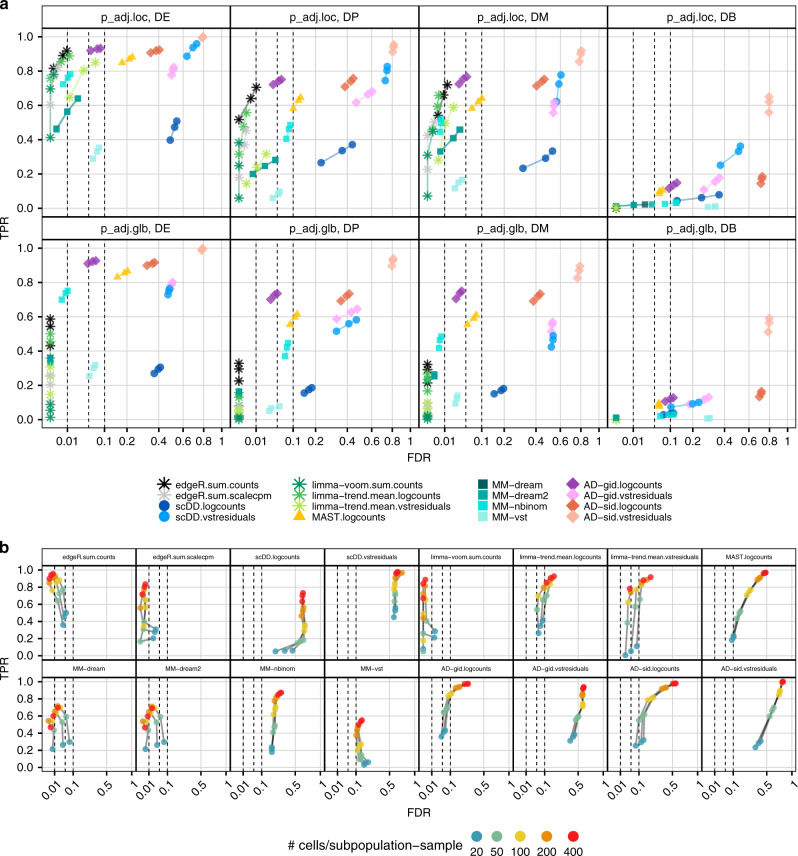
“Sample-level replication follows multi-sample benchmarks favouring replicate-aware pseudobulk inference; established alternatives include edgeR and MAST [29,30,44,45].”
Duan, B., Zhang, Q., & Hao, P. (2026) · Mathematics · doi:10.3390/math14203786
Cheng, Y., Kettlewell, T., Laidlaw, R. F., Hardy, O. M., McCluskey, A., Otto, T. D., & Somma, D. (2026) · NAR Genomics and Bioinformatics · doi:10.1093/nargab/lqag128
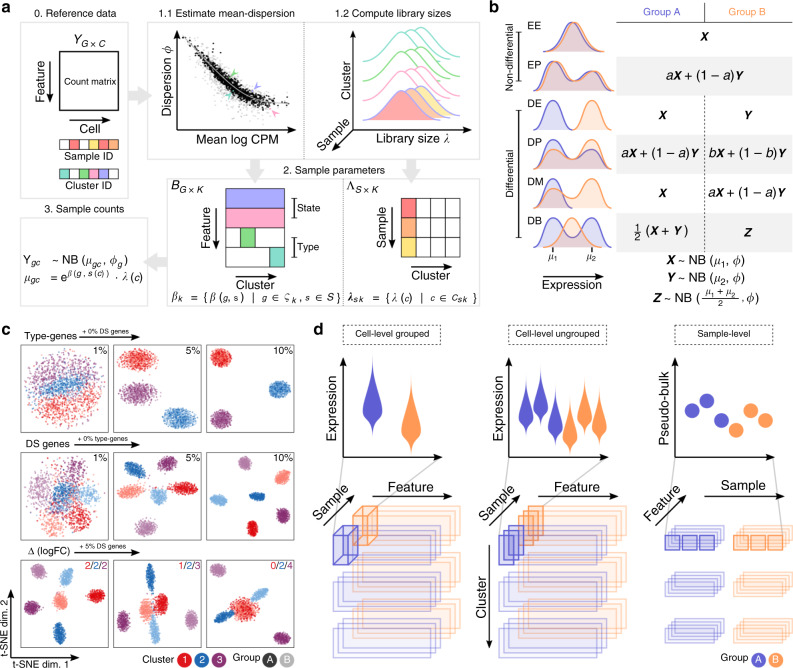
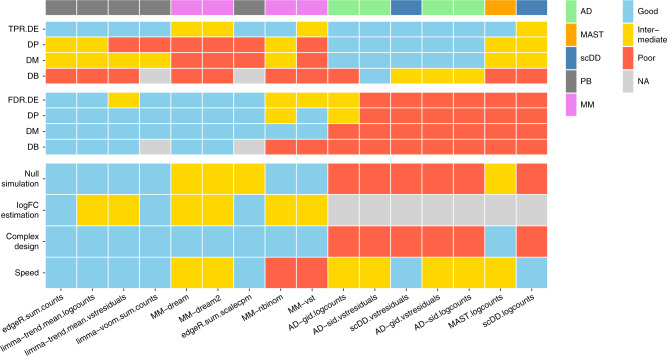
“We first defined a weighted-mixed setting consisting of 15% DE, 2% DP, 2% DM, 1% DB [ 4 , 18 ], 40% EE, and 40% EP genes.”
InfluentialSezin, T., Prayitno, N. O., Gupta, Y., Mousavi, S., Tang, X., Bivona, D. L., Zirpel, H., Staender, S., Luca, D. A. D., Papara, C., et al. (2026) · medRxiv · doi:10.64898/2026.10.21.26365789
Wang, Z., Gui, Q., Zhou, H., 兰小磊, Liu, Y., & Zhang, Y. (2026) · Frontiers in Cell and Developmental Biology · doi:10.3389/fcell.2026.1954743
Huang, C., Yu, Q., Li, Y., Xu, X., Zhu, Z., & Kong, Y. (2026) · SSRN Electronic Journal · doi:10.2139/ssrn.7656044
Cui, X., Ren, Y., Ding, G., & Chen, S. (2026) · International Journal of Molecular Sciences · doi:10.3390/ijms27219418
single-cell RNA-seq of Asian water buffalo
Si), 司. (2025) · China National GeneBank DataBase · doi:10.26036/cnp0006829
Soriano-Díaz, F. J. (2025) · Zenodo (CERN European Organization for Nuclear Research) · doi:10.5281/zenodo.16980670
Huang, S., & Li, Y. (2026) · PLoS ONE · doi:10.1371/journal.pone.0356328
“We used established count-based and patient-level pseudobulk methods [23,24,26–28] to quantify concordance rather than to introduce a new analytical method.”
Yuan, H., Wang, L., Chen, Z., Liu, T., Wang, Y., Zhang, S., & Liu, Z. (2026) · Genes · doi:10.3390/genes17111352
Yamanaka, T., & Matsui, H. (2026) · Neurobiology of Disease · doi:10.1016/j.nbd.2026.107670
Common transcriptional changes in the brain during hibernation and Alzheimer’s disease
Largo‐Barrientos, P., Praschberger, R., León‐Espinosa, G., Bultynck, P.-J., Mallopoulou, A., Machado, J. F., Poovathingal, S. K., Davie, K., & Verstreken, P. (2026) · Science Advances · doi:10.1126/sciadv.aeg3486
Gong, J., Wang, Q., Wang, Z., Shi, Y., Ren, M., Li, T., Wang, D., Li, G., & Peng, R. (2026) · Research Square · doi:10.21203/rs.3.rs-11345830/v1
Plate design confounds donor variation and model evaluation in single-cell perturbation screensPreprint
Ghajari, G., Thirunarayan, K., & Amsaad, F. (2026) · bioRxiv (Cold Spring Harbor Laboratory) · doi:10.64898/2026.11.04.764088
Yu, P., Cao, K., Cheng, Z., Zeng, Y., & Zhang, W. (2026) · Research Square · doi:10.21203/rs.3.rs-11192692/v1
Liu, Z., & Yin, J. (2026) · International Journal of Molecular Sciences · doi:10.3390/ijms27219960
Niu, Q.-Y., Liu, X.-W., Yang, J., Yang, F., He, W., & Yang, X.-Q. (2026) · Frontiers in Cell and Developmental Biology · doi:10.3389/fcell.2026.1953187
He, Y., 谭虎, Pu, R., Ma, J., Zhang, H., Zhang, C., & Lan, X. (2026) · Research Square · doi:10.21203/rs.3.rs-11491507/v1
Metadata
- Authors
- Crowell, H. L., Soneson, C., Germain, P.-L., Calini, D., Collin, L., Raposo, C., Malhotra, D., & Robinson, M. D.
- Affiliations
- SIB Swiss Institute of Bioinformatics (CH)
- University of Zurich (CH)
- F. Hoffmann-La Roche AG (CH)
- Corresponding author
- Robinson, Mark D.
- ORCID
- Venue
- Nature Communications
- Published
- 2020-11-30
- Volume
- 11
- Issue
- 1
- Pages
- 6077-6077
- ISSN
- 2041-1723 (ISSN-L)
- PMC
- PMC7705760
- OpenAlex
- W3108941787
- Semantic Scholar
- a32071ad0414bbde089ac3b6f0e479831ab80a27
- Cited by
- 515
- References
- 75
- Citations by year
- 2026: 109 · 2025: 99 · 2024: 80 · 2023: 84 · 2022: 54 · 2021: 61 · 2020: 26
- FWCI
- 18.90
- Type
- journal article
- Language
- en
- Open access
- gold
- doi.org
- Licence
- cc-by
- creativecommons.org/licenses/by/4.0 (tdm)
- creativecommons.org/licenses/by/4.0 (vor)
- Locations
- Nature Communications (publishedVersion, cc-by)
- bioRxiv (Cold Spring Harbor Laboratory) (acceptedVersion, cc-by)
- PubMed Central (publishedVersion, cc-by)
- PubMed (publishedVersion)
- Zurich Open Repository and Archive (University of Zurich) (acceptedVersion, cc-by)
- RePEc: Research Papers in Economics (submittedVersion)
- DOAJ (DOAJ: Directory of Open Access Journals) (submittedVersion, cc-by-sa)
- Repository for Publications and Research Data (ETH Zurich) (submittedVersion, cc-by)
- Zurich Open Repository and Archive (University of Zurich) (submittedVersion, cc-by)
- ETH Zürich Research Collection (cc-by)
- Zurich Open Repository and Archive (University of Zurich)
- Funders
- Schweizerischer Nationalfonds zur Förderung der Wissenschaftlichen Forschung (310030_175841, CRSII5_177208)
- Silicon Valley Community Foundation (2018-182828)
- Topics
- Life Sciences › Biochemistry, Genetics and Molecular Biology › Molecular Biology › Single-cell and spatial transcriptomics
- Life Sciences › Biochemistry, Genetics and Molecular Biology › Molecular Biology › Gene expression and cancer classification
- Life Sciences › Biochemistry, Genetics and Molecular Biology › Molecular Biology › Genomics and Phylogenetic Studies
- Keywords
- mouse cortex, lipopolysaccharide response
- MeSH terms
- Animals, Cerebellar Cortex, Computer Simulation, Lipopolysaccharides, Male, Software, Models, Statistical, Signal Transduction, Cluster Analysis, Sequence Analysis, RNA, Computational Biology, RNA, Small Cytoplasmic, Gene Expression Profiling, Mice, Single-Cell Analysis, Transcriptome
About these checks
Registry, retraction, Cites and statistics results are computed, not judged, with one exception: a printed reference that no index lists is read once by a model before it counts as a citation error. Claims are extracted by a model and kept only when their quote appears verbatim in the text; each cited source is then checked, with a model’s help, for whether it says what the claim relies on. Those verdicts can be wrong — read the claim’s quote and the cited source before relying on one.
Statistics and arithmetic are recomputed, not judged.
Confidence bands are shown only for fields calibrated on our annotated test set. None is calibrated yet, so no band is shown.
What counts as a claim ›How we measure confidence ›How we check this ›
Are you an author, or do you see a problem with this page? Request a review
Data sources
Bibliographic data: Semantic Scholar, OpenAlex, Crossref.
Contains information from the Semantic Scholar Academic Graph Datasets, made available under the ODC Attribution License (ODC-BY 1.0).
Semantic Scholar’s data is described in: Kinney, R., et al. (2023). The Semantic Scholar Open Data Platform. arXiv:2301.10140.
