

The DOI matches its Crossref record; 93 of the 94 references it cites were found in a registry or an index, and 1 are not checked yet.
A spatially resolved brain region- and cell type-specific isoform atlas of the postnatal mouse brain
Open accessPublished version of a preprint
Abstract
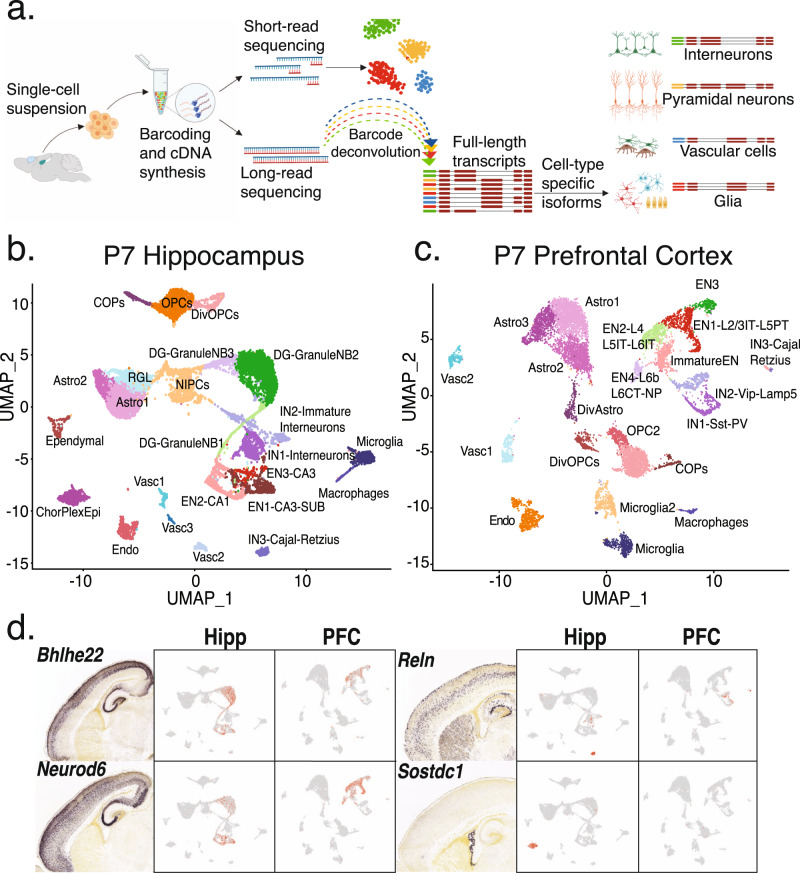
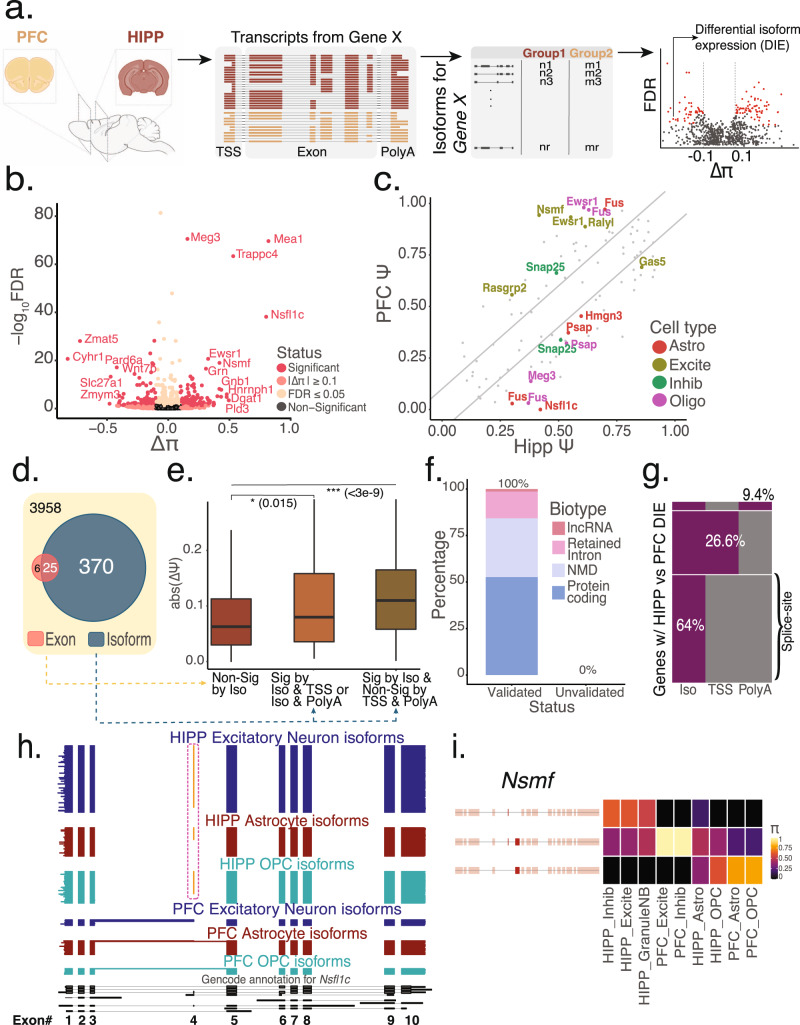
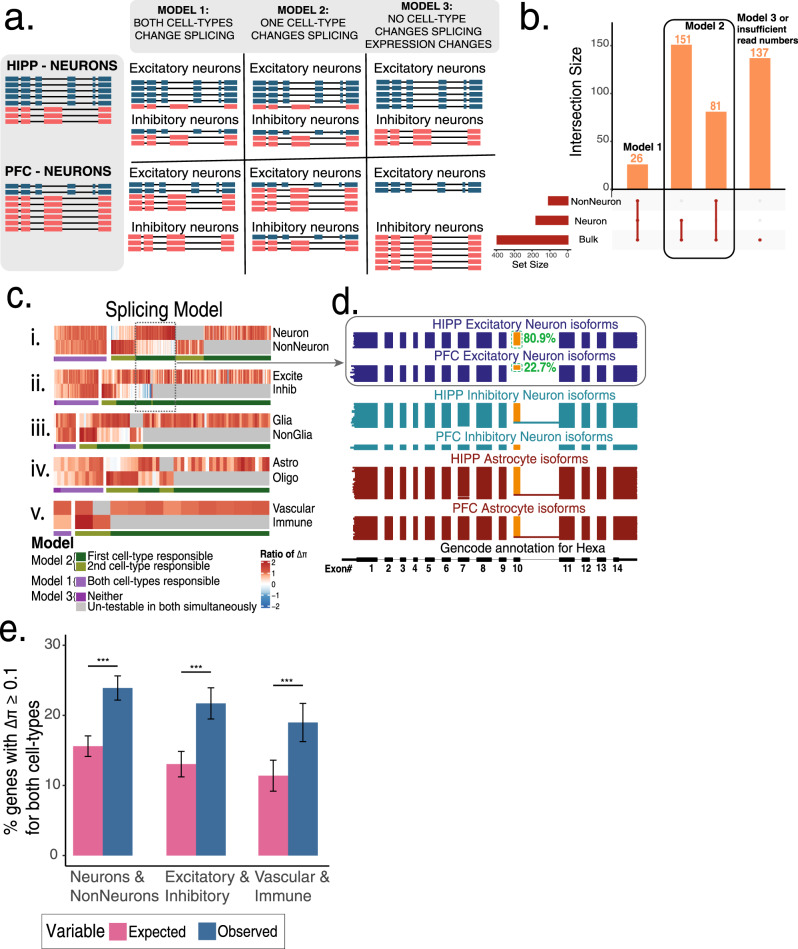
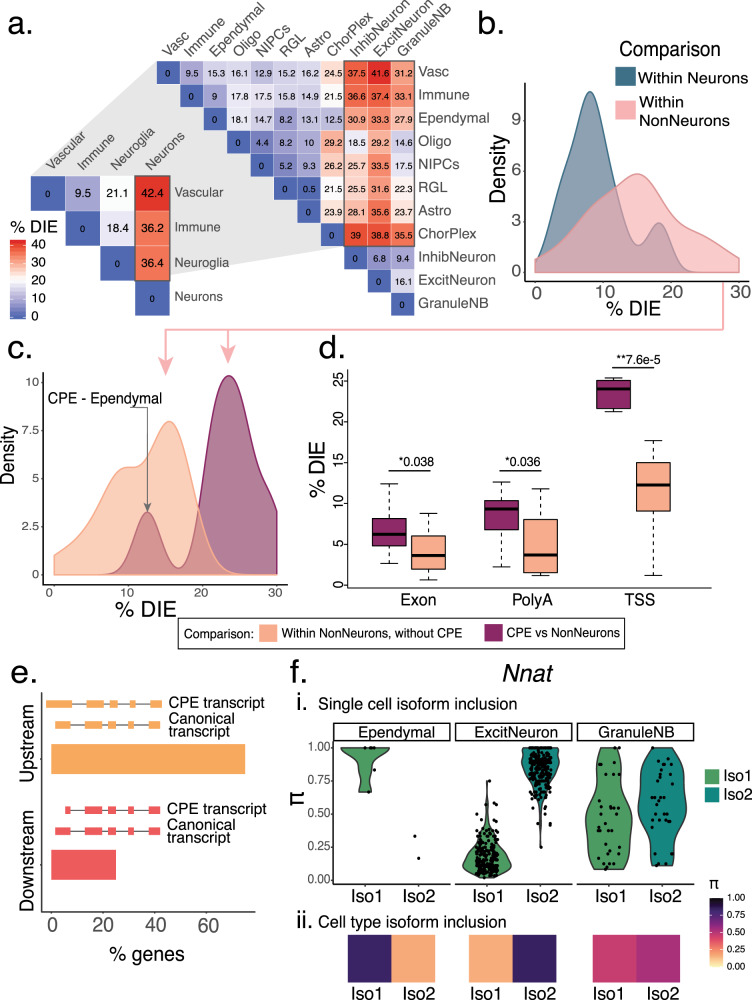
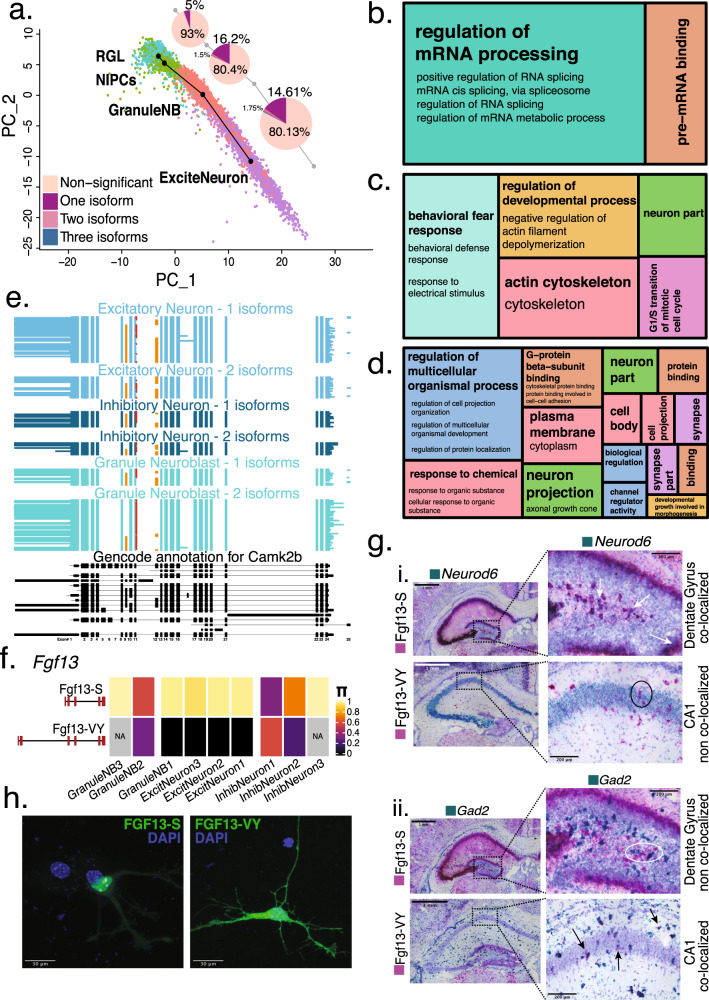
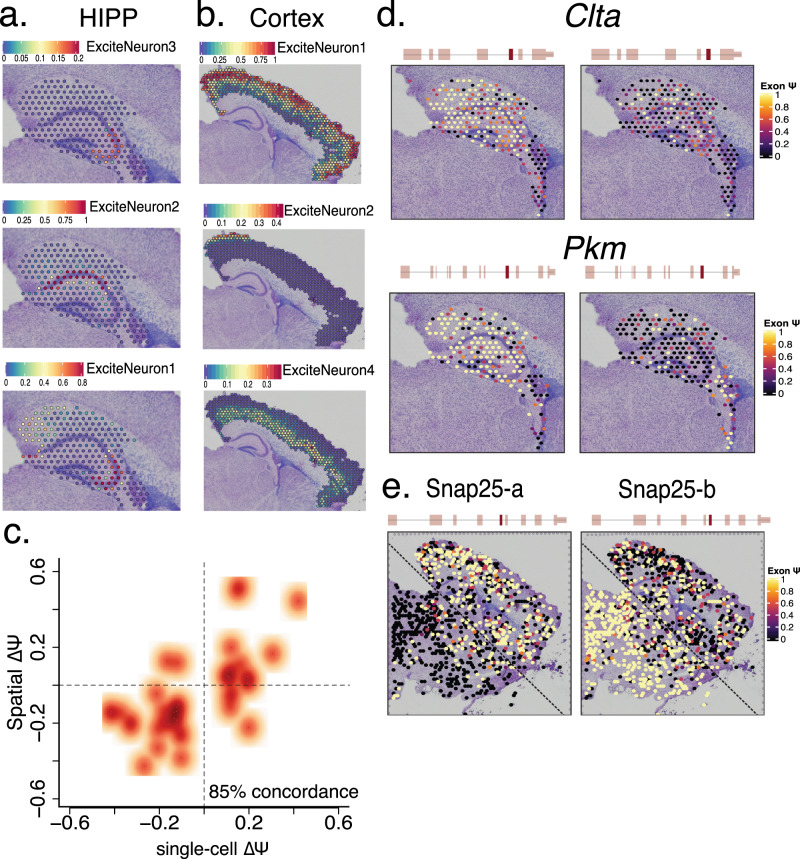
Splicing varies across brain regions, but the single-cell resolution of regional variation is unclear. We present a single-cell investigation of differential isoform expression (DIE) between brain regions using single-cell long-read sequencing in mouse hippocampus and prefrontal cortex in 45 cell types at postnatal day 7 ( www.isoformAtlas.com ). Isoform tests for DIE show better performance than exon tests. We detect hundreds of DIE events traceable to cell types, often corresponding to functionally distinct protein isoforms. Mostly, one cell type is responsible for brain-region specific DIE. However, for fewer genes, multiple cell types influence DIE. Thus, regional identity can, although rarely, override cell-type specificity. Cell types indigenous to one anatomic structure display distinctive DIE, e.g. the choroid plexus epithelium manifests distinct transcription-start-site usage. Spatial transcriptomics and long-read sequencing yield a spatially resolved splicing map. Our methods quantify isoform expression with cell-type and spatial resolution and it contributes to further our understanding of how the brain integrates molecular and cellular complexity.
Overview
The claims and statistics of this paper haven’t been checked yet.
Run the check — free, no account needed. It reads the open-access text and checks the sources it cites.
Integrity signals
Registry
Cites
Statistics
Figures
Verification
Claims the paper makes
The claims and statistics of this paper haven’t been checked yet.
Run the check — free, no account needed. It reads the open-access text and checks the sources it cites.
Claims other papers make about this one
Each is checked against this paper’s own text: does it say what the citing paper says it does?
The cited source says what the claim attributes to it.
In the citing paper
“Using long-read scRNA-seq data from the mouse hippocampus,8 we uncovered splicing isoform co-expression networks in the radial glia lineage involved in cell fate specification.”
From hdWGCNA identifies co-expression networks in high-dimensional transcriptomics data (2023) · cites this paper as [8]
The cited source says what the claim attributes to it.
In the citing paper
“We used hdWGCNA to perform isoform co-expression network analysis in radial glia lineage cells from the mouse hippocampus at postnatal day 7 (P7) profiled with single-cell isoform RNA sequencing (ScISOrSeq)8 (Figure 4A; STAR Methods).”
From hdWGCNA identifies co-expression networks in high-dimensional transcriptomics data (2023) · cites this paper as [8]
The cited source says what the claim attributes to it.
In the citing paper
“Emerging long-read sequencing approaches enable us to profile cellular transcriptomes at isoform resolution,8,31,32,33 thus providing new opportunities to model the relationships between isoforms using co-expression network analysis.”
From hdWGCNA identifies co-expression networks in high-dimensional transcriptomics data (2023) · cites this paper as [8]
Self-check
Percentages, sums and reported differences re-computed from the paper’s own numbers.
The self-check needs the paper’s full text.
Citations
Cites
Controlling the False Discovery Rate: A Practical and Powerful Approach to Multiple Testing
Benjamini, Y., & Hochberg, Y. (1995) · Journal of the Royal Statistical Society Series B: Statistical Methodology · doi:10.1111/j.2517-6161.1995.tb02031.x · Cited by 109,482
clusterProfiler: an R Package for Comparing Biological Themes Among Gene Clusters
Yu, G., Wang, L.-G., Han, Y., & He, Q.-Y. (2012) · OMICS: A Journal of Integrative Biology · doi:10.1089/omi.2011.0118 · Cited by 36,259
Comprehensive Integration of Single-Cell Data
Stuart, T., Butler, A., Hoffman, P., Hafemeister, C., Papalexi, E., Mauck, W. M., Hao, Y., Stoeckius, M., Smibert, P., & Satija, R. (2019) · Cell · doi:10.1016/j.cell.2019.05.031 · Cited by 15,453
Integrating single-cell transcriptomic data across different conditions, technologies, and species
Butler, A., Hoffman, P., Smibert, P., Papalexi, E., & Satija, R. (2018) · Nature Biotechnology · doi:10.1038/nbt.4096 · Cited by 13,174
The control of the false discovery rate in multiple testing under dependency
Benjamini, Y., & Yekutieli, D. (2001) · The Annals of Statistics · doi:10.1214/aos/1013699998 · Cited by 10,490
REVIGO summarizes and visualizes long lists of gene ontology terms
Supek, F., Bošnjak, M., Škunca, N., & Šmuc, T. (2011) · PLoS ONE · doi:10.1371/journal.pone.0021800 · Cited by 6,264
Alternative isoform regulation in human tissue transcriptomes
Wang, E. T., Sandberg, R., Luo, S., Khrebtukova, I., Zhang, L., Mayr, C., Kingsmore, S. F., Schroth, G. P., & Burge, C. B. (2008) · Nature · doi:10.1038/nature07509 · Cited by 5,181
GENCODE: The reference human genome annotation for The ENCODE Project
Harrow, J., Frankish, A., Gonzalez, J. M., Tapanari, E., Diekhans, M., Kokocinski, F., Aken, B. L., Barrell, D., Zadissa, A., Searle, S., et al. (2012) · Genome Research · doi:10.1101/gr.135350.111 · Cited by 4,585
Self-citationLa Manno, G., Soldatov, R., Zeisel, A., Braun, E., Hochgerner, H., Petukhov, V., Lidschreiber, K., Kastriti, M. E., Lönnerberg, P., Furlan, A., et al. (2018) · Nature · doi:10.1038/s41586-018-0414-6 · Cited by 4,118
Some Methods for Strengthening the Common χ 2 Tests
Cochran, W. G. (1954) · Biometrics · doi:10.2307/3001616 · Cited by 3,718
Research works printed but not linked: 6
- Zeisel, A. et al. Molecular architecture of the mouse nervous system. Cell 174, 999–1014.e22 (2018). · DOI · Paper page
- The Mouse Brain in Stereotaxic Coordinates, Compact - 3rd Edition. https://www.elsevier.com/books/the-mouse-brain-in-stereotaxic-coordinates-compact/franklin/978-0-12-374244-5 (2020).
- Pablo, J. L., Wang, C., Presby, M. M. & Pitt, G. S. Polarized localization of voltage-gated Na+ channels is regulated by concerted FGF13 and FGF14 action. Proc. Natl Acad. Sci. U.S.A 113, E2665–E2674 (2016). · DOI
- Stuart, T. et al. Comprehensive integration of single-cell data. Cell 177, 1888–1902.e21 (2019). · DOI · Paper page
- Benjamini, Y. & Yekutieli, D. The control of the false discovery rate in multiple testing under dependency. Ann. Stat. 29, 1165–1188 (2001). · DOI · Paper page
- Forrest, A. R. R. et al. A promoter-level mammalian expression atlas. Nature 507, 462–470 (2014). · DOI · Paper page
Cited by
Sorted by citations
Items 201–230 of 230
Olivieri, J. E., & Salzman, J. (2023) · doi:10.7554/elife.87211
Alieh, L. H. A., de Toledo, B. C., Hadarovich, A., Tóth-Petróczy, Á., & Calegari, F. (2023) · bioRxiv (Cold Spring Harbor Laboratory) · doi:10.1101/2023.10.11.561865
The evolutionary dynamics of alternative splicing during primate neuronal differentiationPreprint
Ritter, A., Wallace, A., Ronaghi, N., & Sanford, J. R. (2024) · bioRxiv (Cold Spring Harbor Laboratory) · doi:10.1101/2024.02.20.581203 · Cited by 1
Widespread changes in alternative splicing in developing and adult mouse brain
(2024) · Nature Neuroscience · doi:10.1038/s41593-024-01617-3
Spatial transcriptomics in transpathology
Zhou, H., & Qian, B. (2024) · Elsevier eBooks · doi:10.1016/b978-0-323-95223-1.00027-8
Interneuron FGF13 regulates seizure susceptibility via a sodium channel-independent mechanismPreprint
Lin, S., Gade, A. R., Wang, H., Niemeyer, J. E., Galante, A., DiStefano, I. A., Towers, P., Nunez, J., Matsui, M., Schwartz, T. H., et al. (2024) · eLife · doi:10.7554/elife.98661.2
Self-citationIntegrating Graph Convolutional Networks for Missing Gene Expression Imputation
Zhang, Y., Yu, H., Yan, Z., Pan, T., Zhang, Y., Liu, Y., Li, S., Guo, Y., Song, J., & Yu, D. (2025) · IEEE Transactions on Computational Biology and Bioinformatics · doi:10.1109/tcbbio.2025.3605719 · Cited by 1
Activity-dependent splicing: A game changer for proteome remodeling in the brain
Mauger, O. (2025) · Current Opinion in Neurobiology · doi:10.1016/j.conb.2025.103110
Essentials of transcriptomic methods: Navigating through RNA sequencing and beyond
Stopa, V., Sopić, M., Li, G., Sluimer, J. C., Basílio, J., van der Laan, S. W., Kreil, D. P., Devaux, Y., & Hochreiter, B. (2025) · Elsevier eBooks · doi:10.1016/b978-0-443-33064-3.00016-5
FGF13 is not secreted from neuronsPreprint
Malvezzi, M., Zhang, H., Towers, P., Lyden, D. C., Marx, S. O., & Pitt, G. S. (2025) · bioRxiv (Cold Spring Harbor Laboratory) · doi:10.1101/2025.11.12.688075
Self-citationFGF13 is not secreted from mouse neurons
Malvezzi, M., Zhang, H., Towers, P., Lyden, D., Marx, S. O., & Pitt, G. S. (2025) · JCI Insight · doi:10.1172/jci.insight.195998 · Cited by 1
Self-citationKhilji, S. F., Xie, S., Becker, G. M., Shira, K. A., Stegemiller, M. R., Woods, J. L., Williams, J. E., Christensen, L. E., Konetchy, D. E., Hagen, D. E., et al. (2025) · BMC Genomics · doi:10.1186/s12864-025-12252-y
Wen, W., Li, H., Lin, L.-C., Chimenti, M. S., Keen, H. L., Leidinger, M., Hu, D., Zhang, Z., Lin, H., & Luo, J. (2025) · Acta Neuropathologica Communications · doi:10.1186/s40478-025-02162-1
Additional file 6 of Identification of cell barcodes from long-read single-cell RNA-seq with BLAZE
You, Y., Prawer, Y. D. J., Paoli‐Iseppi, R. D., Hunt, C. P. J., Parish, C. L., Shim, H., & Clark, M. B. (2023) · Figshare · doi:10.6084/m9.figshare.22617691
Additional file 1 of Identification of cell barcodes from long-read single-cell RNA-seq with BLAZE
You, Y., Prawer, Y. D. J., Paoli‐Iseppi, R. D., Hunt, C. P. J., Parish, C. L., Shim, H., & Clark, M. B. (2023) · Figshare · doi:10.6084/m9.figshare.22617676
Chen, C., Kim, H. J., & Yang, P. (2024) · Figshare · doi:10.6084/m9.figshare.25001736
Roig, M. N. B., Leduc, T., Dufort‐Gervais, J., Maghmoul, Y., Tastet, O., & Mongrain, V. (2024) · Figshare · doi:10.6084/m9.figshare.26587146
Roig, M. N. B., Leduc, T., Dufort‐Gervais, J., Maghmoul, Y., Tastet, O., & Mongrain, V. (2024) · Figshare · doi:10.6084/m9.figshare.26587143
Chen, C., Kim, H. J., & Yang, P. (2024) · Figshare · doi:10.6084/m9.figshare.25001619
Roig, M. N. B., Leduc, T., Dufort‐Gervais, J., Maghmoul, Y., Tastet, O., & Mongrain, V. (2024) · Figshare · doi:10.6084/m9.figshare.26587140
Roig, M. N. B., Leduc, T., Dufort‐Gervais, J., Maghmoul, Y., Tastet, O., & Mongrain, V. (2024) · Figshare · doi:10.6084/m9.figshare.26587149
CellMap: precision mapping of cellular landscape in spatial transcriptomics
Liu, H., Li, H., Sharma, A., Tang, G., Xie, Z., Shen, Y., Li, Q., Chen, G., Sun, X. S., Luo, K., et al. (2025) · Nucleic Acids Research · doi:10.1093/nar/gkaf1484
Michielsen, L., Hsu, J., Joglekar, A., Belchikov, N., Reinders, M. J. T., Tilgner, H., & Mahfouz, A. E. (2026) · Genome biology · doi:10.1186/s13059-026-04015-z · Cited by 3
Self-citationLLOT: application of Laplacian Linear Optimal Transport in spatial transcriptome reconstruction
Zhu, J., Zhang, K., Kong, D., & Zhang, Z. (2026) · Biometrics · doi:10.1093/biomtc/ujag046
Schaeper, D., Chowdhury, U., & Janga, S. C. (2026) · Briefings in Bioinformatics · doi:10.1093/bib/bbag323
Encrypted immunity mediated by peptides
Zhang, Z. J., Merbl, Y., & de la Fuente‐Núñez, C. (2026) · PLoS Biology · doi:10.1371/journal.pbio.3003914
Cell Type-Specific Isoform Function Prediction by Multiplex Heterogeneous Network
Gu, T., Luo, H., Wang, Y., Wang, M., Wang, J., Yan, Z., & Yu, G. (2026) · IEEE Transactions on Computational Biology and Bioinformatics · doi:10.1109/tcbbio.2026.3728504
Systematic benchmarking and optimal strategy selection of cross-species integration methods
Wang, R., Zheng, J., Mao, C., Zhang, Y., Ding, Z., & Wang, G. (2026) · Briefings in Bioinformatics · doi:10.1093/bib/bbag490
Deciphering transcriptome complexity via long‐read sequencing
Xu, C., Li, J., Yin, C., Li, K., Wang, T., Gao, S., Yu, Y., Chang, C., Wang, Y., Tong, G., et al. (2026) · iMeta · doi:10.1002/imt2.70171
Fu, Z.-C., Yan, Y., Wu, C., SONG, R., Wang, X., Wei, J., Lu, Z., Tao, T., Lü, P., Cui, W., et al. (2026) · Nucleic Acids Research · doi:10.1093/nar/gkag1038
Metadata
- Authors
- Joglekar, A., Prjibelski, A., Mahfouz, A., Collier, P., Lin, S., Schlusche, A. K., Marrocco, J., Williams, S. R., Haase, B., Hayes, A., Chew, J. G., Weisenfeld, N. I., Wong, M. Y., Stein, A. N., Hardwick, S. A., Hunt, T., Wang, Q., Dieterich, C., Bent, Z., Fedrigo, O., Sloan, S. A., Risso, D., Jarvis, E. D., Flicek, P., Luo, W., Pitt, G. S., Frankish, A., Smit, A. B., Ross, M. E., & Tilgner, H. U.
- Affiliations
- Weill Cornell Medicine (US)
- St Petersburg University (RU)
- Leiden University Medical Center (NL)
- Rockefeller University (US)
- 10X Genomics (United States) (US)
- Columbia University (US)
- Garvan Institute of Medical Research (AU)
- European Bioinformatics Institute (GB)
- University Hospital Heidelberg (DE)
- Emory University (US)
- University of Padua (IT)
- Howard Hughes Medical Institute (US)
- Amsterdam Neuroscience (NL)
- Corresponding author
- Tilgner, Hagen U.
- ORCID
- Joglekar, Anoushka
- Prjibelski, Andrey
- Mahfouz, Ahmed
- Lin, Susan
- Schlusche, Anna Katharina
- Marrocco, Jordan
- Williams, Stephen R.
- Haase, Bettina
- Wong, Man Ying
- Stein, Alexander N.
- Hardwick, Simon A.
- Hunt, Toby
- Wang, Qi
- Dieterich, Christoph
- Fedrigo, Olivier
- Sloan, Steven A.
- Risso, Davide
- Jarvis, Erich D.
- Flicek, Paul
- Luo, Wenjie
- Pitt, Geoffrey S.
- Frankish, Adam
- Smit, August B.
- Ross, M. Elizabeth
- Tilgner, Hagen U.
- Venue
- Nature Communications
- Published
- 2021-01-19
- Volume
- 12
- Issue
- 1
- Pages
- 463-463
- ISSN
- 2041-1723 (ISSN-L)
- PMC
- PMC7815907
- OpenAlex
- W3122762933
- Cited by
- 229
- References
- 94
- Citations by year
- 2026: 22 · 2025: 39 · 2024: 52 · 2023: 45 · 2022: 30 · 2021: 39
- FWCI
- 13.26
- Type
- journal article
- Language
- en
- Open access
- gold
- doi.org
- Locations
- Nature Communications (publishedVersion, cc-by)
- bioRxiv (Cold Spring Harbor Laboratory) (acceptedVersion, cc-by)
- Europe PMC (PubMed Central) (publishedVersion, other-oa)
- PubMed Central (publishedVersion, cc-by)
- PubMed (publishedVersion)
- VU Research Portal (publishedVersion, other-oa)
- Data Archiving and Networked Services (DANS) (submittedVersion, cc-by)
- RePEc: Research Papers in Economics (submittedVersion)
- Leiden Repository (Leiden University) (submittedVersion, cc-by)
- DOAJ (DOAJ: Directory of Open Access Journals) (submittedVersion, cc-by-sa)
- Research Repository (Delft University of Technology) (submittedVersion)
- Padua Research Archive (University of Padova) (submittedVersion, cc-by)
- Data Archiving and Networked Services (DANS) (submittedVersion, other-oa)
- Funders
- Russian Foundation for Basic Research (19-04-01074)
- U.S. Department of Health & Human Services | NIH | National Institute on Drug Abuse (T32DA03980)
- Silicon Valley Community Foundation (CZF2019-002443)
- U.S. Department of Health & Human Services | NIH | National Cancer Institute (2U24CA180996)
- Wellcome Trust (WT108749/Z/15/Z)
- U.S. Department of Health & Human Services | NIH | National Human Genome Research Institute (2U41HG007234)
- U.S. Department of Health & Human Services | NIH | National Institute of Mental Health (R01MH118934)
- Topics
- Life Sciences › Biochemistry, Genetics and Molecular Biology › Molecular Biology › RNA Research and Splicing
- Life Sciences › Biochemistry, Genetics and Molecular Biology › Molecular Biology › Single-cell and spatial transcriptomics
- Life Sciences › Biochemistry, Genetics and Molecular Biology › Molecular Biology › Genomics and Phylogenetic Studies
- Keywords
- differential isoform expression, alternative splicing, brain region specificity, cell type specificity, hippocampus, prefrontal cortex, postnatal mouse brain, spatial transcriptomics, choroid plexus epithelium
- MeSH terms
- Animals, Animals, Newborn, Female, Hippocampus, Prefrontal Cortex, Alternative Splicing, Gene Expression Regulation, Developmental, Computational Biology, Protein Isoforms, Models, Animal, Mice, Single-Cell Analysis, Spatial Analysis
About these checks
Registry, retraction, Cites and statistics results are computed, not judged, with one exception: a printed reference that no index lists is read once by a model before it counts as a citation error. Claims are extracted by a model and kept only when their quote appears verbatim in the text; each cited source is then checked, with a model’s help, for whether it says what the claim relies on. Those verdicts can be wrong — read the claim’s quote and the cited source before relying on one.
Statistics and arithmetic are recomputed, not judged.
Confidence bands are shown only for fields calibrated on our annotated test set. None is calibrated yet, so no band is shown.
What counts as a claim ›How we measure confidence ›How we check this ›
Are you an author, or do you see a problem with this page? Request a review
