

Meta-analysis of neural systems underlying placebo analgesia from individual participant fMRI data
Open accessThe DOI matches its Crossref record; 79 of the 82 references it cites were found in a registry or an index.
Abstract
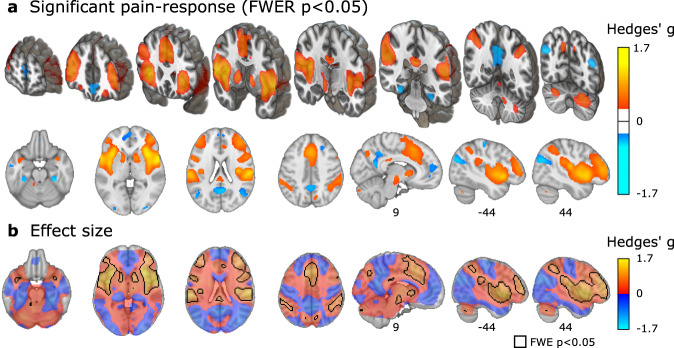
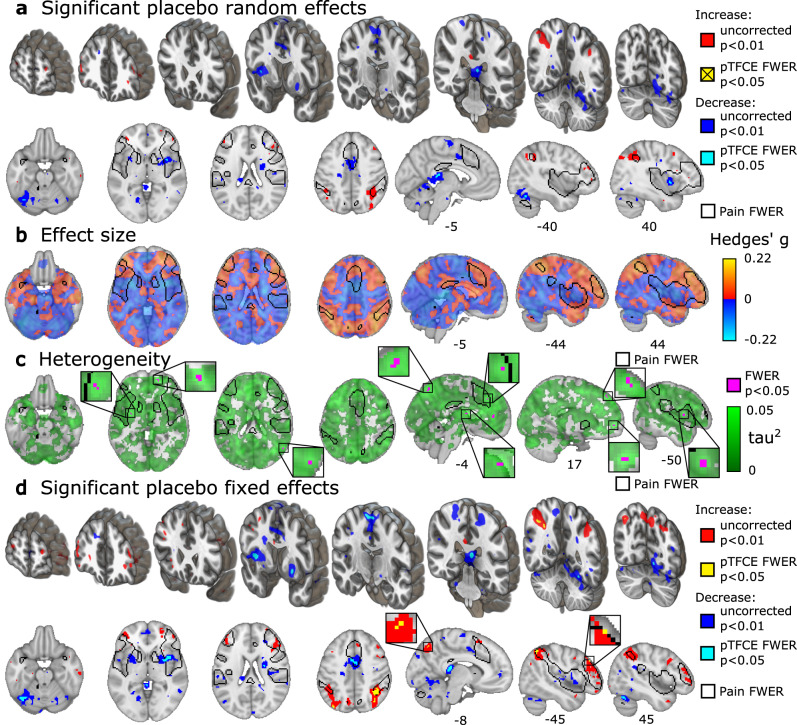
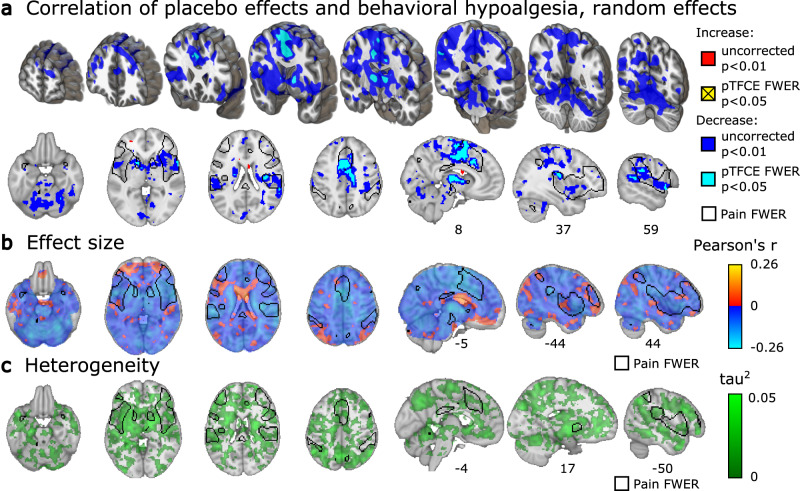
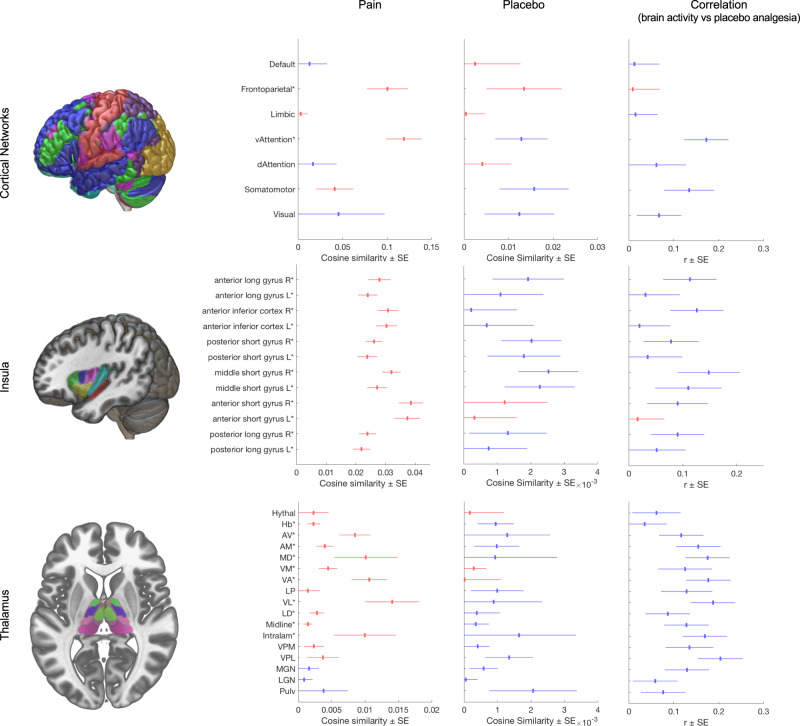
The brain systems underlying placebo analgesia are insufficiently understood. Here we performed a systematic, participant-level meta-analysis of experimental functional neuroimaging studies of evoked pain under stimulus-intensity-matched placebo and control conditions, encompassing 603 healthy participants from 20 (out of 28 eligible) studies. We find that placebo vs. control treatments induce small, widespread reductions in pain-related activity, particularly in regions belonging to ventral attention (including mid-insula) and somatomotor networks (including posterior insula). Behavioral placebo analgesia correlates with reduced pain-related activity in these networks and the thalamus, habenula, mid-cingulate, and supplementary motor area. Placebo-associated activity increases occur mainly in frontoparietal regions, with high between-study heterogeneity. We conclude that placebo treatments affect pain-related activity in multiple brain areas, which may reflect changes in nociception and/or other affective and decision-making processes surrounding pain. Between-study heterogeneity suggests that placebo analgesia is a multi-faceted phenomenon involving multiple cerebral mechanisms that differ across studies.
Overview
The claims and statistics of this paper haven’t been checked yet.
Free: it reads the open-access text and checks the first 5 claims that cite a source we can check. Create a free account to check every claim.
Integrity signals
Registry
Cites
Statistics
Figures
Verification
Claims the paper makes
The claims and statistics of this paper haven’t been checked yet.
Free: it reads the open-access text and checks the first 5 claims that cite a source we can check. Create a free account to check every claim.
Claims other papers make about this one
Each is checked against this paper’s own text: does it say what the citing paper says it does?
The source backs part of the claim, not all of it — or backs it for a different population, condition or comparison.
In the citing paper
“In particular, dlPFC regions appear especially important for exerting top-downregulation of treatment and placebo expectancies, whereas mPFC regions play a key role in encoding value of expected outcomes [218,219].”
From Prefrontal cortex and depression (2022) · cites this paper as [219]
Experimental — accuracy not yet measured
Self-check
Percentages, sums and reported differences re-computed from the paper’s own numbers.
The self-check needs the paper’s full text.
Citations
Cites
Hao (2015) · doi:10.1002/14651858 · Cited by 11,321
Lakens, D. (2013) · Frontiers in Psychology · doi:10.3389/fpsyg.2013.00863 · Cited by 10,303
The organization of the human cerebral cortex estimated by intrinsic functional connectivity
Thomas Yeo, B. T., Krienen, F. M., Sepulcre, J., Sabuncu, M. R., Lashkari, D., Hollinshead, M., Roffman, J. L., Smoller, J. W., Zöllei, L., Polimeni, J. R., et al. (2011) · Journal of Neurophysiology · doi:10.1152/jn.00338.2011 · Cited by 9,182
Cohen, J. (1992) · Psychological Bulletin · doi:10.1037//0033-2909.112.1.155 · Cited by 8,771
The organization of the human cerebellum estimated by intrinsic functional connectivity
Buckner, R. L., Krienen, F. M., Castellanos, A., Diaz, J. C., & Yeo, B. T. T. (2011) · Journal of Neurophysiology · doi:10.1152/jn.00339.2011 · Cited by 7,304
Nonparametric permutation tests for functional neuroimaging: A primer with examples
Nichols, T. E., & Holmes, A. P. (2002) · Human Brain Mapping · doi:10.1002/hbm.1058 · Cited by 6,256
A multi-modal parcellation of human cerebral cortex
Glasser, M. F., Coalson, T. S., Robinson, E. C., Hacker, C. D., Harwell, J., Yacoub, E., Ugurbil, K., Andersson, J., Beckmann, C. F., Jenkinson, M., et al. (2016) · Nature · doi:10.1038/nature18933 · Cited by 5,111
Psychosomatic medicine in Germany: more timely than ever
Zipfel, S., Herzog, W., Kruse, J., & Henningsen, P. (2016) · Psychotherapy and Psychosomatics · doi:10.1159/000447701 · Cited by 2,323
Functional topography in the human cerebellum: A meta-analysis of neuroimaging studies
STOODLEY, C., & SCHMAHMANN, J. (2009) · NeuroImage · doi:10.1016/j.neuroimage.2008.08.039 · Cited by 2,183
Placebo-Induced Changes in fMRI in the Anticipation and Experience of Pain
Wager, T. D., Rilling, J. K., Smith, E. E., Sokolik, A., Casey, K. L., Davidson, R. J., Kosslyn, S. M., Rose, R. M., & Cohen, J. D. (2004) · Science · doi:10.1126/science.1093065 · Cited by 1,992
Self-citation
Research works printed but not linked: 1
- Deeks, J. J. & Higgins, J. P. Statistical algorithms in Review Manager 5 on behalf of the Statistical Methods Group of The Cochrane Collaboration. Documentation 2010, (2010).
Cited by
Prefrontal cortex and depression
Pizzagalli, D. A., & Roberts, A. C. (2022) · Neuropsychopharmacology · doi:10.1038/s41386-021-01101-7 · Cited by 667
Brain circuits for pain and its treatment
Mercer Lindsay, N., Chen, C., Gilam, G., Mackey, S., & Scherrer, G. (2021) · Science Translational Medicine · doi:10.1126/scitranslmed.abj7360 · Cited by 229
Pain and the Triple Network Model
De Ridder, D., Vanneste, S., Smith, M., & Adhia, D. (2022) · Frontiers in Neurology · doi:10.3389/fneur.2022.757241 · Cited by 163
Functional Connectivity Mapping for rTMS Target Selection in Depression
Elbau, I. G., Lynch, C. J., Downar, J., Vila-Rodriguez, F., Power, J. D., Solomonov, N., Daskalakis, Z. J., Blumberger, D. M., & Liston, C. (2023) · American Journal of Psychiatry · doi:10.1176/appi.ajp.20220306 · Cited by 120
Neural circuit basis of placebo pain relief
Chen, C., Niehaus, J. K., Dinç, F., Huang, K. L., Barnette, A. L., Tassou, A., Shuster, S. A., Wang, L., Lemire, A. L., Menon, V., et al. (2024) · Nature · doi:10.1038/s41586-024-07816-z · Cited by 98
Individual variability in brain representations of pain
Kohoutová, L., Atlas, L. Y., Büchel, C., Buhle, J. T., Geuter, S., Jepma, M., Koban, L., Krishnan, A., Lee, D. H., Lee, S., et al. (2022) · Nature Neuroscience · doi:10.1038/s41593-022-01081-x · Cited by 86
Self-citationThe Biology of Placebo and Nocebo Effects on Experimental and Chronic Pain: State of the Art
Rossettini, G., Campaci, F., Bialosky, J. E., Huysmans, E., Vase, L., & Carlino, E. (2023) · Journal of Clinical Medicine · doi:10.3390/jcm12124113 · Cited by 75
Huneke, N. T. M., Veronesi, G. F., Garner, M. J., Baldwin, D. S., & Cortese, S. (2025) · JAMA Psychiatry · doi:10.1001/jamapsychiatry.2025.0085 · Cited by 73
Re-examining the Mysterious Role of the Cerebellum in Pain
Li, C. N., Keay, K. A., Henderson, L. A., & Mychasiuk, R. (2024) · Journal of Neuroscience · doi:10.1523/jneurosci.1538-23.2024 · Cited by 72
A social affective neuroscience lens on placebo analgesia
Atlas, L. Y. (2021) · Trends in Cognitive Sciences · doi:10.1016/j.tics.2021.07.016 · Cited by 64
Self-citationCortical and subcortical mapping of the human allostatic–interoceptive system using 7 Tesla fMRI
Zhang, J.-H., Chen, D.-L., Deming, P., Srirangarajan, T., Theriault, J., Kragel, P., Hartley, L., Lee, K. M., McVeigh, K., Wager, T., et al. (2025) · Nature Neuroscience · doi:10.1038/s41593-025-02087-x · Cited by 33
Self-citationBenedetti, F., Frisaldi, E., & Shaibani, A. I. (2021) · The Annual Review of Pharmacology and Toxicology · doi:10.1146/annurev-pharmtox-052120-104536 · Cited by 62
Self-citationBotvinik‐Nezer, R., Petre, B., Čeko, M., Lindquist, M. A., Friedman, N. P., & Wager, T. D. (2024) · Nature Communications · doi:10.1038/s41467-024-50103-8 · Cited by 54
Self-citationExpectation effects in working memory training
Parong, J. A., Seitz, A. R., Jaeggi, S. M., & Green, C. S. (2022) · Proceedings of the National Academy of Sciences · doi:10.1073/pnas.2209308119 · Cited by 50
Pain, from perception to action: A computational perspective
Chen, Z. S., & Wang, J. (2022) · iScience · doi:10.1016/j.isci.2022.105707 · Cited by 48
Resolving the Delusion Paradox
Petrović, P., & Sterzer, P. (2023) · Schizophrenia Bulletin · doi:10.1093/schbul/sbad084 · Cited by 49
How Instructions, Learning, and Expectations Shape Pain and Neurobiological Responses
Atlas, L. Y. (2023) · Annual Review of Neuroscience · doi:10.1146/annurev-neuro-101822-122427 · Cited by 42
Self-citationPagnini, F., Barbiani, D., Cavalera, C., Volpato, E., Grosso, F., Minazzi, G. A., Riboni, F. V., Graziano, F., Tella, S. D., Manzoni, G. M., et al. (2023) · Perspectives on Psychological Science · doi:10.1177/17456916221141383 · Cited by 41
Placebo and nocebo effects: from observation to harnessing and clinical application
Tu, Y., Zhang, L., & Kong, J. (2022) · Translational Psychiatry · doi:10.1038/s41398-022-02293-2 · Cited by 39
Self-citationKang, H., Miksche, M. S., & Ellingsen, D. (2022) · Pain · doi:10.1097/j.pain.0000000000002753 · Cited by 38
Self-citationMacian, N., Dualé, C., Voute, M., Leray, V., Courrent, M., Bodé, P., Giron, F., Soule-Sonneville, S., Bernard, L., Joanny, F., et al. (2022) · Nutrients · doi:10.3390/nu14102088 · Cited by 39
Neural underpinnings of open-label placebo effects in emotional distress
Schaefer, M., Kühnel, A., Schweitzer, F. M., Enge, S., & Gärtner, M. (2022) · Neuropsychopharmacology · doi:10.1038/s41386-022-01501-3 · Cited by 37
The neural signature of the decision value of future pain
Coll, M., Slimani, H., Woo, C., Wager, T. D., Rainville, P., Vachon‐Presseau, É., & Roy, M. (2022) · Proceedings of the National Academy of Sciences · doi:10.1073/pnas.2119931119 · Cited by 36
Self-citationThe Locus Coeruleus in Chronic Pain
España, J. C., Mohan, A., & Vanneste, S. (2024) · International Journal of Molecular Sciences · doi:10.3390/ijms25168636 · Cited by 35
A cholinergic circuit that relieves pain despite opioid tolerance
Sullere, S., Kunczt, A., & McGehee, D. S. (2023) · Neuron · doi:10.1016/j.neuron.2023.08.017 · Cited by 36
Ashar, Y. K., Sun, M. M. C., Knight, K., Flood, T. F., Anderson, Z. G., Kaptchuk, T. J., & Wager, T. D. (2024) · JAMA Network Open · doi:10.1001/jamanetworkopen.2024.32427 · Cited by 34
Self-citationThe influence of psychological traits and prior experience on treatment expectations
Basedow, L. A., Fischer, A., Benson, S., Bingel, U., Brassen, S., Büchel, C., Engler, H., Mueller, E. M., Schedlowski, M., & Rief, W. (2023) · Comprehensive Psychiatry · doi:10.1016/j.comppsych.2023.152431 · Cited by 33
Self-citationNetwork targets for therapeutic brain stimulation: towards personalized therapy for pain
Motzkin, J., Kanungo, I., D'Esposito, M., & Shirvalkar, P. (2023) · Frontiers in Pain Research · doi:10.3389/fpain.2023.1156108 · Cited by 24
Beltrán-Alacreu, H., Serrano‐Muñoz, D., Álvarez, D. M., Fernández‐Pérez, J. J., Gómez‐Soriano, J., & Avendaño‐Coy, J. (2022) · Pain Medicine · doi:10.1093/pm/pnac027 · Cited by 31
Johansson, E., Xiong, H.-Y., Polli, A., Coppieters, I., & Nijs, J. (2024) · Journal of Clinical Medicine · doi:10.3390/jcm13061645 · Cited by 27
Huneke, N. T. M., Aslan, I. H., Fagan, H. A., Phillips, N., Tanna, R., Cortese, S., Garner, M. J., & Baldwin, D. S. (2022) · The International Journal of Neuropsychopharmacology · doi:10.1093/ijnp/pyac009 · Cited by 27
Opioidergic activation of the descending pain inhibitory system underlies placebo analgesia
Neyama, H., Wu, Y., Nakaya, Y., Kato, S., Shimizu, T., Tahara, T., Shigeta, M., Inoue, M., Miyamichi, K., Matsushita, N., et al. (2025) · Science Advances · doi:10.1126/sciadv.adp8494 · Cited by 26
Yennurajalingam, S., Azhar, A., Lu, Z., Rodriguez, A. J., Arechiga, A. B., Guerra-Sanchez, M., Stanton, P. A., Andersen, C. R., Urbauer, D. L., & Bruera, E. D. (2022) · The Oncologist · doi:10.1093/oncolo/oyac184 · Cited by 26
Mindfulness Meditation and Placebo Modulate Distinct Multivariate Neural Signatures to Reduce Pain
Riegner, G., Dean, J., Wager, T. D., & Zeidan, F. Z. (2024) · Biological Psychiatry · doi:10.1016/j.biopsych.2024.08.023 · Cited by 25
Self-citationShafir, R., Olson, E. M., & Colloca, L. (2022) · Contemporary Clinical Trials · doi:10.1016/j.cct.2022.106734 · Cited by 27
Self-citationBingel, U., Wiech, K., Ritter, C., Wanigasekera, V., Mhuircheartaigh, R. N., Lee, M., Ploner, M., & Tracey, I. (2022) · European Journal of Neuroscience · doi:10.1111/ejn.15687 · Cited by 24
Self-citationMamud-Meroni, L., Tarcaya, G. E., Carrasco‐Uribarren, A., Rossettini, G., Flores-Cortés, M., & Ceballos‐Laita, L. (2025) · Biomedicines · doi:10.3390/biomedicines13020392 · Cited by 24
Human ventromedial prefrontal cortex lesions enhance the effect of expectations on pain perception
Motzkin, J. C., Hiser, J., Carroll, I. C., Wolf, R. C., Başkaya, M. K., Koenigs, M. R., & Atlas, L. Y. (2023) · Cortex · doi:10.1016/j.cortex.2023.04.017 · Cited by 22
Self-citationAmerio, A., Baccino, C., Breda, G. S., Cortesi, D., Spiezio, V., Magnani, L., Berardis, D. D., Conio, B., Costanza, A., Paola, G. D., et al. (2023) · Psychiatry Research · doi:10.1016/j.psychres.2023.115491 · Cited by 22
A three-dimensional model of neural activity and phenomenal-behavioral patterns
Martino, M., & Magioncalda, P. (2023) · Molecular Psychiatry · doi:10.1038/s41380-023-02356-w · Cited by 22
Bagnis, A., Meeuwis, S. H., Haas, J. W., O’Keeffe, M., Bajcar, E. A., Bąbel, P., Evers, A. W. M., Glogan, E., Oleszczyk, M., Portolés, A., et al. (2025) · Health Psychology Review · doi:10.1080/17437199.2025.2471792 · Cited by 21
Mao, Y., Zhang, P., Sun, R., Zhang, X., He, Y., Li, S., Yin, T., & Zeng, F. (2023) · Frontiers in Neuroscience · doi:10.3389/fnins.2023.1174287 · Cited by 21
Does Active Inference Provide a Comprehensive Theory of Placebo Analgesia?
Milde, C., Brinskelle, L. S., & Glombiewski, J. A. (2023) · Biological Psychiatry Cognitive Neuroscience and Neuroimaging · doi:10.1016/j.bpsc.2023.08.007 · Cited by 21
Decoding the impact of the placebo response in clinical trials for chronic cough
Zhang, M., Zhang, B., & Morice, A. H. (2024) · ERJ Open Research · doi:10.1183/23120541.00335-2024 · Cited by 20
Words hurt: common and distinct neural substrates underlying nociceptive and semantic pain
Borelli, E., Benuzzi, F., Ballotta, D., Bandieri, E., Luppi, M., Cacciari, C., Porro, C. A., & Lui, F. (2023) · Frontiers in Neuroscience · doi:10.3389/fnins.2023.1234286 · Cited by 19
Self-citationOxytocin and the social facilitation of placebo effects
Itskovich, E., Bowling, D. L., Garner, J. P., & Parker, K. J. (2022) · Molecular Psychiatry · doi:10.1038/s41380-022-01515-9 · Cited by 19
Enacting the mind/body connection: the role of self-induced placebo mechanisms
Pagnini, F., Barbiani, D., Grosso, F., Cavalera, C., Volpato, E., Minazzi, G. A., Poletti, V., Riva, G., & Phillips, D. (2024) · Humanities and Social Sciences Communications · doi:10.1057/s41599-024-03492-6 · Cited by 17
Evaluating cognitive penetrability of perception across the senses
Vetter, P., Badde, S., Ferrè, E. R., Seubert, J., & Shinn‐Cunningham, B. G. (2024) · Nature Reviews Psychology · doi:10.1038/s44159-024-00382-1 · Cited by 16
Saccà, V., Wen, Y., Hodges, S., & Kong, J. (2023) · NeuroImage · doi:10.1016/j.neuroimage.2023.120433 · Cited by 15
Self-citationOzpolat, M. C., Okcay, Y., Ulusoy, K. G., & Yıldız, O. (2025) · European Journal of Clinical Pharmacology · doi:10.1007/s00228-025-03818-6 · Cited by 15
The Placebo Effect in Psychosis: Why It Matters and How to Measure It
Hird, E., Diederen, K. M. J., Leucht, S., Jensen, K. B., & McGuire, P. K. (2023) · Biological Psychiatry Global Open Science · doi:10.1016/j.bpsgos.2023.02.008 · Cited by 15
How side effects can improve treatment efficacy: a randomized trial
Schenk, L. A., Fadai, T., & Büchel, C. (2024) · Brain · doi:10.1093/brain/awae132 · Cited by 15
Self-citationBranchi, I. (2024) · European Journal of Neuroscience · doi:10.1111/ejn.16331 · Cited by 14
Branco, P., Berger, S., Abdullah, T. B., Vachon‐Presseau, É., Cecchi, G., & Apkarian, A. V. (2022) · Pain · doi:10.1097/j.pain.0000000000002808 · Cited by 14
Vinckier, F., Betka, S., Nion, N., Serresse, L., & Similowski, T. (2021) · European Respiratory Journal · doi:10.1183/13993003.01876-2021 · Cited by 13
Reverse-engineering placebo analgesia
Chen, B., Goldstein, N., Dziubek, J., Sundai, A., Zhao, S., Harrahill, A., Choi, S., Prevosto, V., & Wang, F. (2024) · Current Biology · doi:10.1016/j.cub.2024.08.004 · Cited by 12
Murillo, C., López‐Solà, M., Cagnie, B. J., Suñol, M., Smeets, R., Coppieters, I., Cnockaert, E., Meeus, M., & Timmers, I. (2024) · Journal of Pain · doi:10.1016/j.jpain.2024.01.336 · Cited by 12
Targeting neural correlates of placebo effects
Romanella, S. M., Mencarelli, L., Burke, M. J., Rossi, S., Kaptchuk, T. J., & Santarnecchi, E. (2022) · Cognitive Affective & Behavioral Neuroscience · doi:10.3758/s13415-022-01039-3 · Cited by 11
Self-citationBoorman, D. C., & Keay, K. A. (2023) · Physiology & Behavior · doi:10.1016/j.physbeh.2023.114116 · Cited by 11
An externally validated resting-state brain connectivity signature of pain-related learning
Kincses, B., Forkmann, K., Schlitt, F., Pawlik, R. J., Schmidt, K., Timmann, D., Elsenbruch, S., Wiech, K., Bingel, U., & Spisák, T. (2024) · Communications Biology · doi:10.1038/s42003-024-06574-y · Cited by 11
Self-citationFunctional connectivity-based attractor dynamics of the human brain in rest, task, and disease
Englert, R., Kincses, B., Kotikalapudi, R., Gallitto, G., Li, J., Hoffschlag, K., Woo, C., Wager, T. D., Timmann, D., Bingel, U., et al. (2024) · eLife · doi:10.1101/2023.11.03.565516 · Cited by 10
Self-citationThe neural dynamics of positive and negative expectations of pain
Wittkamp, C. A., Wolf, M., & Rose, M. (2024) · eLife · doi:10.7554/elife.97793.3 · Cited by 12
Boorman, D. C., Crawford, L. S., Henderson, L. A., & Keay, K. A. (2025) · Communications Biology · doi:10.1038/s42003-025-07993-1 · Cited by 10
Chmiel, J., & Kurpas, D. (2026) · Journal of Clinical Medicine · doi:10.3390/jcm15020909 · Cited by 10
Analgesia Effect of Verum and Sham Acupuncture Treatments in Primary Dysmenorrhea: A MRI Pilot Study
Peng, S., Yang, H., Lee, Y., Chen, C., Chen, Y., & Tu, C. (2021) · Journal of Personalized Medicine · doi:10.3390/jpm11121244 · Cited by 11
Choi, J. C., Park, H., Park, J. A., Kang, D. R., Choi, Y.-S., Choi, S., Lee, H. G., Choi, J.-H., Choi, I., Yoon, M., et al. (2022) · Scientific Reports · doi:10.1038/s41598-022-18181-0 · Cited by 10
Self-citationIndependent effects of transcranial direct current stimulation and social influence on pain
Dehghani, A., Bango, C. I., Murphy, E. K., Halter, R. J., & Wager, T. D. (2024) · Pain · doi:10.1097/j.pain.0000000000003338 · Cited by 9
Self-citationKhayretdinova, M., Pshonkovskaya, P., Zakharov, I., Adamovich, T., Kiryasov, A., Zhdanov, A. V., & Shovkun, A. (2025) · Neuroinformatics · doi:10.1007/s12021-025-09725-6 · Cited by 9
Daoust, R., Paquet, J., Marquis, M., Williamson, D. R., Fontaine, G., Chauny, J., Frégeau, A., Orkin, A. M., Upadhye, S., Lessard, J., et al. (2023) · Academic Emergency Medicine · doi:10.1111/acem.14790 · Cited by 9
Luo, Y., Lohrenz, T. M., Lumpkin, E. A., Montague, P. R., & Kishida, K. T. (2024) · PLoS Biology · doi:10.1371/journal.pbio.3002818 · Cited by 8
Aslaksen, P. M. (2021) · Scientific Reports · doi:10.1038/s41598-021-98874-0 · Cited by 8
Placebo, nocebo: Believing in the field of medicine
Meißner, K. (2022) · Frontiers in Pain Research · doi:10.3389/fpain.2022.972169 · Cited by 8
Rodrigues, B., Raghuraman, N., Shafir, R., Wang, Y., Watson, L., Cottam, J., Nabi, M., Akintola, T., & Colloca, L. (2025) · Pain · doi:10.1097/j.pain.0000000000003637 · Cited by 7
Self-citationYang, S., Wang, Y., Wu, Z., Wang, D., Zhang, X., Hu, S.-W., Zhang, Q., Bu, Y., Liu, C., Huang, C., et al. (2024) · Neuropharmacology · doi:10.1016/j.neuropharm.2024.110168 · Cited by 7
Poulson, S. J., Skvortsova, A., Zahra, F. T., Boorman, D. C., Karimi, S. A., Paz, L. V., Cui, W., Mandatori, A., Burek, J., Siddiqi, Z., et al. (2026) · Nature Communications · doi:10.1038/s41467-026-73266-y · Cited by 7
Зорин, Ю. (2026) · PhilPapers (PhilPapers Foundation) · doi:10.5281/zenodo.23240031 · Cited by 6
Is WADA creating and then prosecuting thought crimes?
Morrison, J., & Moore, E. (2023) · Journal of the Philosophy of Sport · doi:10.1080/00948705.2023.2279572 · Cited by 6
Neural mechanisms underlying placebo and nocebo effects in tonic muscle pain
Chen, M., Wu, X. X., Zhang, L., Zhang, F., Li, L., Zhang, Y., Xiong, D., Qiu, Y., Hu, L., & Xiao, W. (2024) · NeuroImage · doi:10.1016/j.neuroimage.2024.120877 · Cited by 6
Musio, F. M. (2025) · Applied Sciences · doi:10.3390/app15052446 · Cited by 6
Ramos, G. S. L., & da Silva, G. M. M. (2022) · Colloquium Vitae · doi:10.5747/cv.2021.v13.n2.v326 · Cited by 6
Neurobiologische und neurochemische Mechanismen der Placeboanalgesie
Asan, L., Bingel, U., & Kunkel, A. (2022) · Der Schmerz · doi:10.1007/s00482-022-00630-4 · Cited by 6
Self-citationThe power of integrating data: advancing pain research using meta-analysis
Fundaun, J., Thomas, E. T., Schmid, A. B., & Baskozos, G. (2022) · PAIN Reports · doi:10.1097/pr9.0000000000001038 · Cited by 6
Kunkel, A., Asan, L., Krüger, I., Erfurt, C., Ruhnau, L., Caliskan, E. B., Hackert, J., Wiech, K., Schmidt, K., & Bingel, U. (2024) · PLoS Biology · doi:10.1371/journal.pbio.3002772 · Cited by 6
Self-citationDistinct prefrontal lateralization in placebo and reappraisal mechanisms: An ALE meta-analysis
Monachesi, B., Pisanu, E., Chiffi, D., Rumiati, R. I., & Grecucci, A. (2025) · NeuroImage · doi:10.1016/j.neuroimage.2025.121459 · Cited by 6
Marcinkowska, A. B., Wiśniewski, J., Sobstyl, M. R., Kierońska-Siwak, S., & Winklewski, P. J. (2026) · Frontiers in Psychology · doi:10.3389/fpsyg.2026.1783577 · Cited by 5
Wolf, M., Wittkamp, C. A., & Rose, M. (2024) · Scientific Reports · doi:10.1038/s41598-024-77693-z · Cited by 5
bibi, N., & Aqeel, M. (2025) · Nature-Nurture Journal of Psychology · doi:10.53107/nnjp.v5i2.104 · Cited by 5
Hartmann, H., Banwinkler, M., Riva, F., & Lamm, C. (2023) · Frontiers in Psychology · doi:10.3389/fpsyg.2023.1257522 · Cited by 5
Self-citationConnectome-Based Attractor Dynamics Underlie Brain Activity in Rest, Task, and DiseasePreprint
Englert, R., Kincses, B., Kotikalapudi, R., Gallitto, G., Li, J., Hoffschlag, K., Woo, C., Wager, T. D., Timmann, D., Bingel, U., et al. (2024) · eLife · doi:10.7554/elife.98725.1 · Cited by 5
Self-citationExpectation generation and its effect on subsequent pain and visual perception
Botvinik‐Nezer, R., Geuter, S., Lindquist, M. A., & Wager, T. D. (2025) · PLoS Computational Biology · doi:10.1371/journal.pcbi.1013053 · Cited by 4
Self-citationGromakovskis, V., & Gūtmanis, M. (2025) · Journal of Pain Research · doi:10.2147/jpr.s564395 · Cited by 4
Rubanets, D., Badzińska, J., Honcharova, S., Bąbel, P., & Bajcar, E. A. (2025) · Psychological Review · doi:10.1037/rev0000521 · Cited by 4
Placebo treatment entails resource-dependent downregulation of negative inputs
Mostauli, A., Rauh, J., Gamer, M., Büchel, C., Rief, W., & Brassen, S. (2025) · Scientific Reports · doi:10.1038/s41598-025-93589-y · Cited by 4
Self-citationYoga and massage are associated with small experimental placebo effects in chronic orofacial pain
Yin, M., Muhammed, S., Wang, Y., & Colloca, L. (2023) · European Journal of Pain · doi:10.1002/ejp.2111 · Cited by 4
Self-citationThe role of dorsolateral prefrontal cortex on placebo effect of regulating social pain: A TMS study
Wang, M., Cheng, S. Y., Yiwei, L. I., Li, H., & ZHANG, D. (2023) · Acta Psychologica Sinica · doi:10.3724/sp.j.1041.2023.01063 · Cited by 4
Alter, B. J., Maurer, M., O'Connell, B., Sanchez, A. G., Kaynar, A. M., DiGioia, A. M., Huppert, T. J., & Wasan, A. D. (2025) · Pain · doi:10.1097/j.pain.0000000000003648 · Cited by 4
Noor, J., & Aqeel, M. (2025) · Nature-Nurture Journal of Psychology · doi:10.53107/nnjp.v5i2.124 · Cited by 4
Gorantla, S., Reddy, G. M. M., Bhat, A., Ayyasamy, L., Jaishankar, S. K. J., Kherallah, B., & Nersesyan, H. (2022) · Cephalalgia Reports · doi:10.1177/25158163221120103 · Cited by 4
Eken, A., Erdoğan, S. B., Yükselen, G., & Yüce, M. (2024) · Neurophotonics · doi:10.1117/1.nph.11.4.045015 · Cited by 3
Bush, N. J., Boissoneault, J., Letzen, J. E., Staud, R. M., & Robinson, M. E. (2023) · European Journal of Pain · doi:10.1002/ejp.2145 · Cited by 3
Metadata
- Authors
- Zunhammer, M., Spisák, T., Wager, T. D., Bingel, U., The Placebo Imaging Consortium, Atlas, L., Benedetti, F., Büchel, C., Choi, J. C., Colloca, L., Duzzi, D., Eippert, F., Ellingsen, D.-M., Elsenbruch, S., Geuter, S., Kaptchuk, T. J., Kessner, S. S., Kirsch, I., Kong, J., Lamm, C., Leknes, S., Lui, F., Müllner-Huber, A., Porro, C. A., Rütgen, M., Schenk, L. A., Schmid, J., Theysohn, N., Tracey, I., Wrobel, N., & Zeidan, F.
- Affiliations
- Essen University Hospital (DE)
- Dartmouth College (US)
- National Institutes of Health (US)
- University of Turin (IT)
- University Medical Center Hamburg-Eppendorf (DE)
- Yonsei University (KR)
- University of Maryland, Baltimore (US)
- University of Modena and Reggio Emilia (IT)
- Max Planck Institute for Human Cognitive and Brain Sciences (DE)
- Oslo University Hospital (NO)
- Ruhr University Bochum (DE)
- Johns Hopkins University (US)
- Beth Israel Deaconess Medical Center (US)
- Harvard University (US)
- University of Vienna (AT)
- University of Oxford (GB)
- Karolinska Institutet (SE)
- Wake Forest University Health Sciences (US)
- Corresponding author
- Wager, Tor D.
- Bingel, Ulrike
- ORCID
- Zunhammer, Matthias
- Spisák, Tamás
- Wager, Tor D.
- Bingel, Ulrike
- Atlas, Lauren
- Büchel, Christian
- Choi, Jae Chan
- Colloca, Luana
- Eippert, Falk
- Ellingsen, Dan-Mikael
- Elsenbruch, Sigrid
- Geuter, Stephan
- Kaptchuk, Ted J.
- Kessner, Simon S.
- Kirsch, Irving
- Kong, Jian
- Lamm, Claus
- Leknes, Siri
- Lui, Fausta
- Porro, Carlo A.
- Rütgen, Markus
- Schenk, Lieven A.
- Tracey, Irene
- Wrobel, Nathalie
- Zeidan, Fadel
- Venue
- Nature Communications
- Published
- 2021-03-02
- Volume
- 12
- Issue
- 1
- Pages
- 1391-1391
- ISSN
- 2041-1723 (ISSN-L)
- PMC
- PMC7925520
- OpenAlex
- W3134682531
- Cited by
- 171
- References
- 82
- Citations by year
- 2026: 16 · 2025: 33 · 2024: 46 · 2023: 32 · 2022: 32 · 2021: 12
- FWCI
- 4.46
- Type
- journal article
- Language
- en
- Open access
- gold
- doi.org
- Licence
- cc-by
- creativecommons.org/licenses/by/4.0 (tdm)
- creativecommons.org/licenses/by/4.0 (vor)
- Locations
- Nature Communications (publishedVersion, cc-by)
- PubMed Central (publishedVersion, cc-by)
- PubMed (publishedVersion)
- RePEc: Research Papers in Economics (submittedVersion, cc-by)
- IRIS UNIMORE (University of Modena and Reggio Emilia) (submittedVersion, cc-by)
- Universitätsbibliographie, Universität Duisburg-Essen (submittedVersion)
- DOAJ (DOAJ: Directory of Open Access Journals) (submittedVersion, cc-by-sa)
- DuEPublico (University of Duisburg-Essen) (submittedVersion, cc-by)
- Institutional Research Information System University of Turin (University of Turin) (submittedVersion)
- Funders
- Mercator Research Center Ruhr
- U.S. Department of Health & Human Services | National Institutes of Health (MH076136)
- Deutsche Forschungsgemeinschaft (TRR 289)
- Topics
- Life Sciences › Neuroscience › Cognitive Neuroscience › Pain Management and Placebo Effect
- Health Sciences › Medicine › Physiology (medical) › Pain Mechanisms and Treatments
- Health Sciences › Medicine › Anesthesiology and Pain Medicine › Pain Management and Treatment
- Keywords
- placebo analgesia, placebo effect, pain processing, ventral attention network, posterior insula, sensorimotor network, thalamus, habenula, midcingulate cortex, supplementary motor area, frontoparietal cortex, nociception, study heterogeneity
- MeSH terms
- Adult, Analgesia, Behavior, Brain, Female, Humans, Image Enhancement, Magnetic Resonance Imaging, Male, Nervous System, Pain, Placebos
About these checks
Registry, retraction, Cites and statistics results are computed, not judged, with one exception: a printed reference that no index lists is read once by a model before it counts as a citation error. Claims are extracted by a model and kept only when their quote appears verbatim in the text; each cited source is then checked, with a model’s help, for whether it says what the claim relies on. Those verdicts can be wrong — read the claim’s quote and the cited source before relying on one.
Statistics and arithmetic are recomputed, not judged.
Confidence bands are shown only for fields calibrated on our annotated test set. None is calibrated yet, so no band is shown.
What counts as a claim ›How we measure confidence ›How we check this ›
Are you an author, or do you see a problem with this page? Request a review
Data sources
Bibliographic data: Semantic Scholar, OpenAlex, Crossref.
Contains information from the Semantic Scholar Academic Graph Datasets, made available under the ODC Attribution License (ODC-BY 1.0).
Semantic Scholar’s data is described in: Kinney, R., et al. (2023). The Semantic Scholar Open Data Platform. arXiv:2301.10140.
