

Bioengineered bacteria-derived outer membrane vesicles as a versatile antigen display platform for tumor vaccination via Plug-and-Display technology
Open accessThe DOI matches its Crossref record; 51 of the 51 references it cites were found in a registry or an index.
Abstract
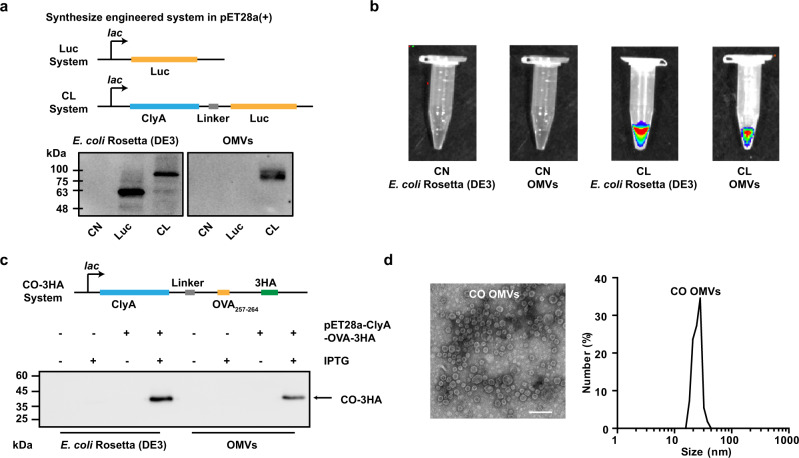
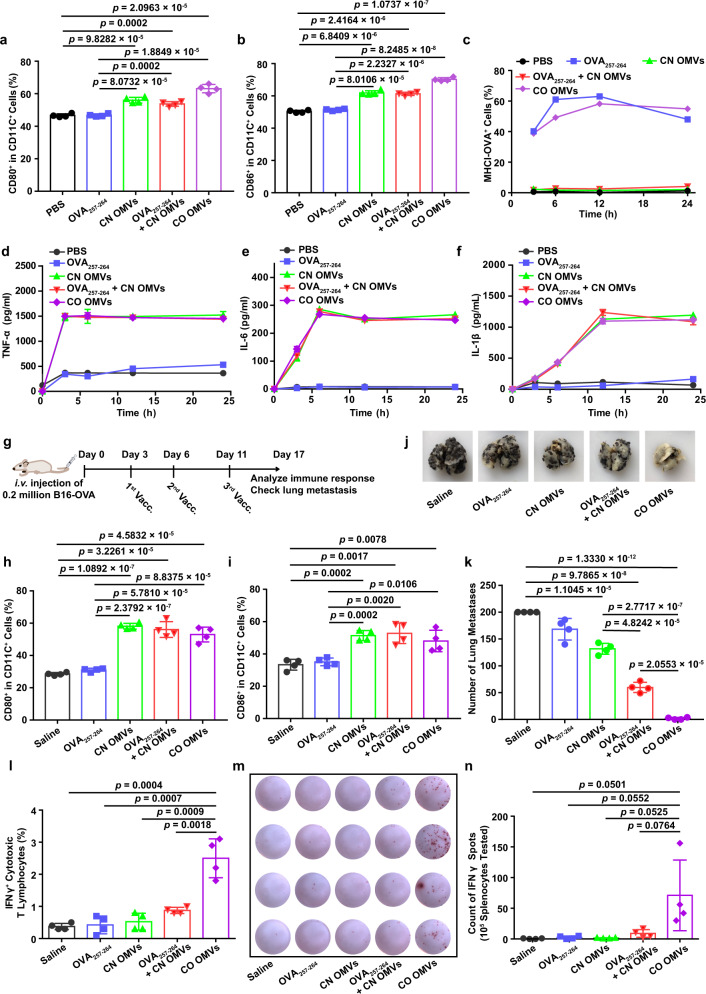
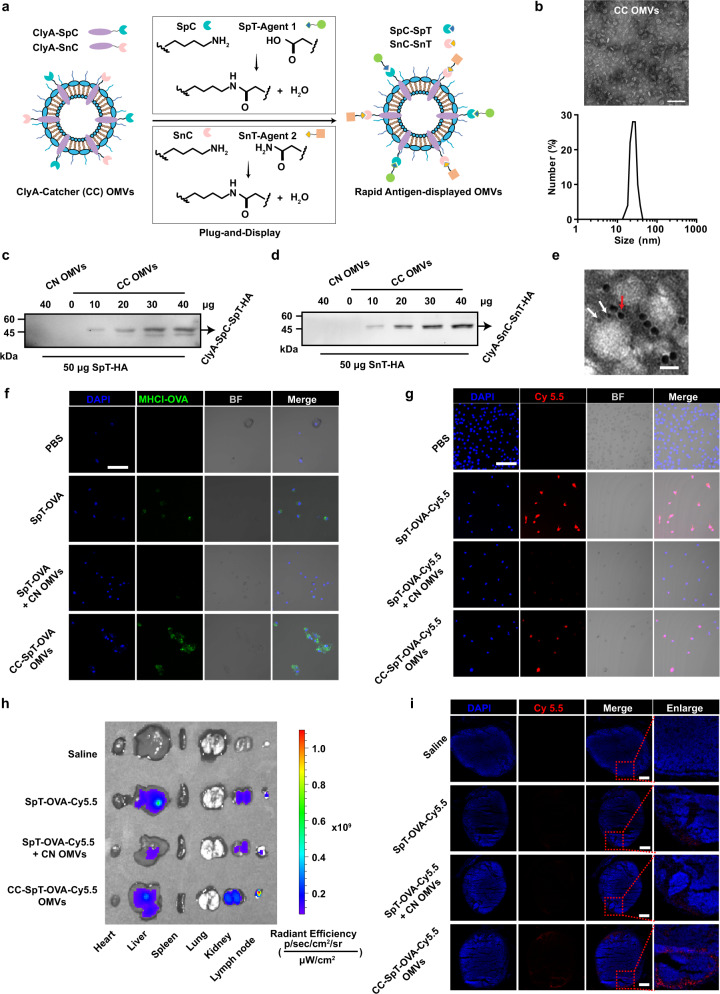
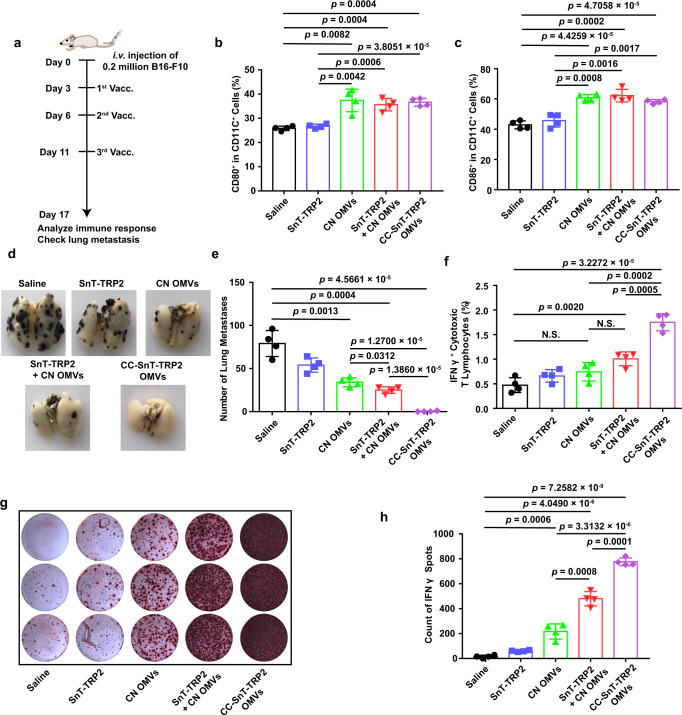
An effective tumor vaccine vector that can rapidly display neoantigens is urgently needed. Outer membrane vesicles (OMVs) can strongly activate the innate immune system and are qualified as immunoadjuvants. Here, we describe a versatile OMV-based vaccine platform to elicit a specific anti-tumor immune response via specifically presenting antigens onto OMV surface. We first display tumor antigens on the OMVs surface by fusing with ClyA protein, and then simplify the antigen display process by employing a Plug-and-Display system comprising the tag/catcher protein pairs. OMVs decorated with different protein catchers can simultaneously display multiple, distinct tumor antigens to elicit a synergistic antitumour immune response. In addition, the bioengineered OMVs loaded with different tumor antigens can abrogate lung melanoma metastasis and inhibit subcutaneous colorectal cancer growth. The ability of the bioengineered OMV-based platform to rapidly and simultaneously display antigens may facilitate the development of these agents for personalized tumour vaccines.
Overview
The claims and statistics of this paper haven’t been checked yet.
Free: it reads the open-access text and checks the first 5 claims that cite a source we can check. Create a free account to check every claim.
Integrity signals
Registry
Cites
Statistics
Figures
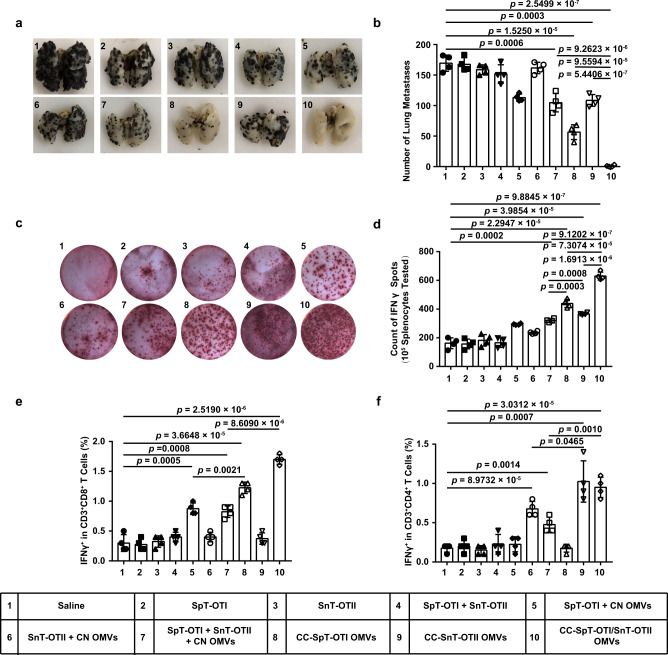
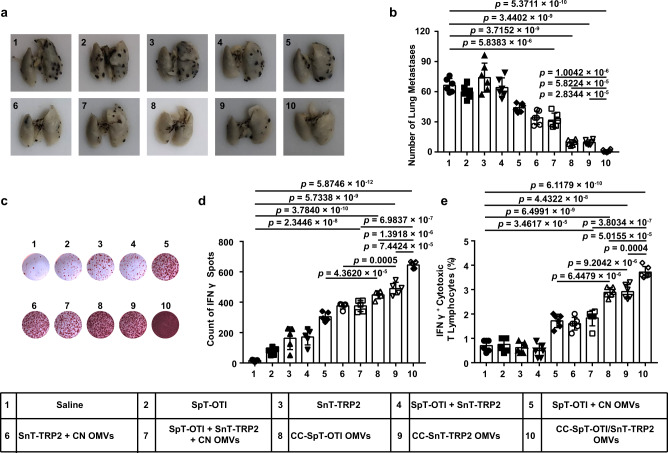
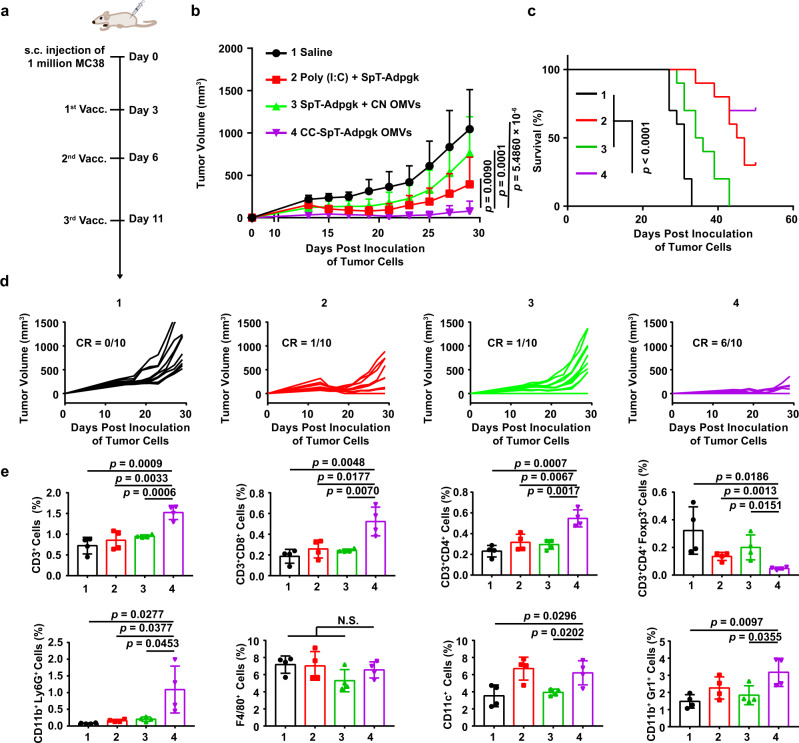
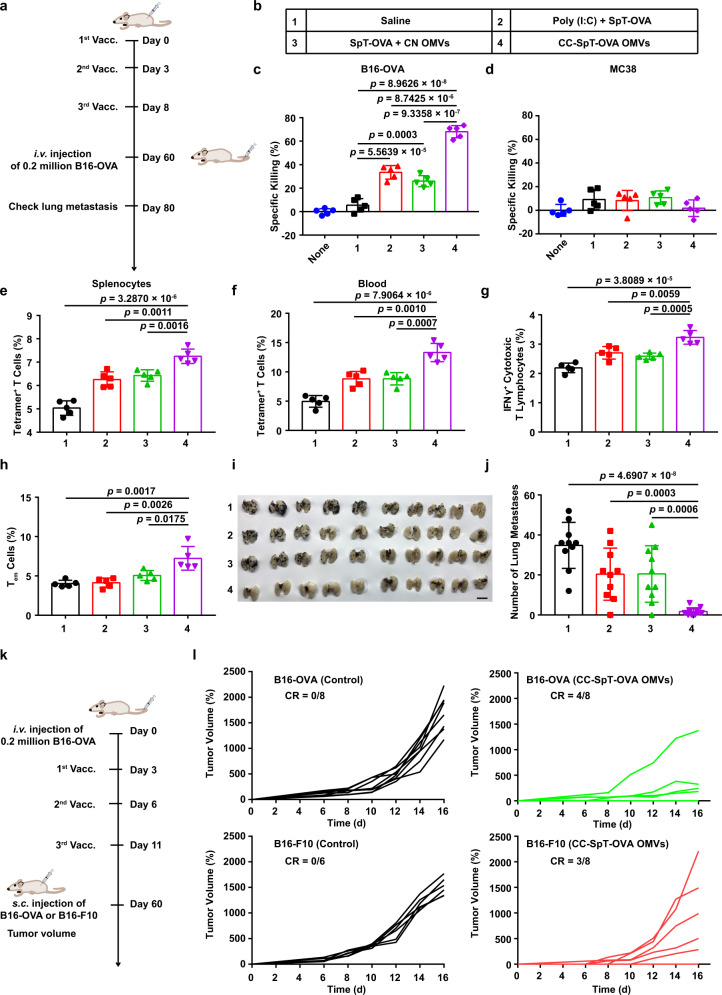
Verification
Claims the paper makes
The claims and statistics of this paper haven’t been checked yet.
Free: it reads the open-access text and checks the first 5 claims that cite a source we can check. Create a free account to check every claim.
Claims other papers make about this one
Each is checked against this paper’s own text: does it say what the citing paper says it does?
In the citing paper
“OMVs express tumor antigens, inducing innate immune responses and antigen-specific T cell-mediated antitumor immunity; bioengineered bacterial OMVs expressing multiple tumor antigens can trigger a synergistic antitumor immune response [122] (Fig. 5H).”
From Gut microbiota influence immunotherapy responses: mechanisms and therapeutic strategies (2022) · doi:10.1186/s13045-022-01273-9 · cites this paper as [122]
Self-check
Percentages, sums and reported differences re-computed from the paper’s own numbers.
The self-check needs the paper’s full text.
Citations
Cites
Oncology meets immunology: the cancer-immunity cycle.
Chen, D. S., & Mellman, I. (2013) · Immunity · doi:10.1016/j.immuni.2013.07.012 · Cited by 6,929
Neoantigens in cancer immunotherapy
Schumacher, T. N., & Schreiber, R. D. (2015) · Science · doi:10.1126/science.aaa4971 · Cited by 4,783
The innate immune response to bacterial flagellin is mediated by Toll-like receptor 5
Hayashi, F., Smith, K. D., Ozinsky, A., Hawn, T. R., Yi, E. C., Goodlett, D. R., Eng, J. K., Akira, S., Underhill, D. M., & Aderem, A. (2001) · Nature · doi:10.1038/35074106 · Cited by 3,601
An immunogenic personal neoantigen vaccine for patients with melanoma
Ott, P. A., Hu, Z., Keskin, D. B., Shukla, S. A., Sun, J., Bozym, D. J., Zhang, W., Luoma, A., Giobbie-Hurder, A., Peter, L., et al. (2017) · Nature · doi:10.1038/nature22991 · Cited by 2,936
Vaccine delivery: a matter of size, geometry, kinetics and molecular patterns
Bachmann, M. F., & Jennings, G. T. (2010) · Nature Reviews Immunology · doi:10.1038/nri2868 · Cited by 2,106
Outer-membrane vesicles from Gram-negative bacteria: biogenesis and functions
Schwechheimer, C., & Kuehn, M. J. (2015) · Nature Reviews Microbiology · doi:10.1038/nrmicro3525 · Cited by 1,922
Peptide tag forming a rapid covalent bond to a protein, through engineering a bacterial adhesin
Zakeri, B., Fierer, J. O., Celik, E., Chittock, E. C., Schwarz-Linek, U., Moy, V. T., & Howarth, M. (2012) · Proceedings of the National Academy of Sciences · doi:10.1073/pnas.1115485109 · Cited by 1,662
Biological Functions and Biogenesis of Secreted Bacterial Outer Membrane Vesicles
Kulp, A., & Kuehn, M. J. (2010) · Annual Review of Microbiology · doi:10.1146/annurev.micro.091208.073413 · Cited by 1,533
Neoantigen vaccine generates intratumoral T cell responses in phase Ib glioblastoma trial
Keskin, D. B., Anandappa, A. J., Sun, J., Tirosh, I., Mathewson, N. D., Li, S., Oliveira, G., Giobbie-Hurder, A., Felt, K., Gjini, E., et al. (2019) · Nature · doi:10.1038/s41586-018-0792-9 · Cited by 1,432
Personalized vaccines for cancer immunotherapy
Sahin, U., & Türeci, Ö. (2018) · Science · doi:10.1126/science.aar7112 · Cited by 1,147
Cited by
Therapeutic cancer vaccines: Advancements, challenges, and prospects
Fan, T., Zhang, M., Yang, J., Zhu, Z., Cao, W., & Dong, C. (2023) · Signal Transduction and Targeted Therapy · doi:10.1038/s41392-023-01674-3 · Cited by 597
Cullin, N., Azevedo Antunes, C., Straussman, R., Stein-Thoeringer, C. K., & Elinav, E. (2021) · Cancer Cell · doi:10.1016/j.ccell.2021.08.006 · Cited by 578
Gut microbiota influence immunotherapy responses: mechanisms and therapeutic strategies
(2022) · doi:10.1186/s13045-022-01273-9 · Cited by 495
“OMVs express tumor antigens, inducing innate immune responses and antigen-specific T cell-mediated antitumor immunity; bioengineered bacterial OMVs expressing multiple tumor antigens can trigger a synergistic antitumor immune response [122] (Fig.”
BackgroundCancer nanotechnology: current status and perspectives
Kemp, J. A., & Kwon, Y. J. (2021) · Nano Convergence · doi:10.1186/s40580-021-00282-7 · Cited by 266
Yue, Y., Xu, J., Li, Y., Cheng, K., Feng, Q., Ma, X., Ma, N., Zhang, T., Wang, X., Zhao, X., et al. (2022) · Nature Biomedical Engineering · doi:10.1038/s41551-022-00886-2 · Cited by 264
Self-citationEngineered Living Materials For Sustainability
An, B., Wang, Y., Huang, Y., Wang, X., Liu, Y., Xun, D., Church, G. M., Dai, Z., Yi, X., Tang, T.-C., et al. (2023) · Chemical Reviews · doi:10.1021/acs.chemrev.2c00512 · Cited by 252
Self-citationHarnessing extracellular vesicle heterogeneity for diagnostic and therapeutic applications
Carney, R. P., Mizenko, R. R., Bozkurt, B. T., Lowe, N., Henson, T., Arizzi, A., Wang, A., Tan, C., & George, S. C. (2025) · Nature Nanotechnology · doi:10.1038/s41565-024-01774-3 · Cited by 208
“For example, the bacterial cytolytic toxin ClyA has been attached to bacteria-derived vesicles using a SpyCatcher/SpyTag pair and a SnoopCatcher/ SnoopTag pair 138 .”
Ma, X., Liang, X., Li, Y., Feng, Q., Cheng, K., Ma, N., Zhu, F., Guo, X., Yue, Y., Liu, G., et al. (2023) · Nature Communications · doi:10.1038/s41467-023-37225-1 · Cited by 243
Self-citationLi, Y., Ma, X., Yue, Y., Zhang, K., Cheng, K., Feng, Q., Ma, N., Liang, J., Zhang, T., Zhang, L., et al. (2022) · Advanced Materials · doi:10.1002/adma.202109984 · Cited by 247
Self-citationThe tremendous biomedical potential of bacterial extracellular vesicles
Xie, J., Li, Q., Haesebrouck, F., Van Hoecke, L., & Vandenbroucke, R. E. (2022) · Trends in Biotechnology · doi:10.1016/j.tibtech.2022.03.005 · Cited by 240
Development of Extracellular Vesicle Therapeutics: Challenges, Considerations, and Opportunities
Claridge, B., Lozano, J., Poh, Q. H., & Greening, D. W. (2021) · Frontiers in Cell and Developmental Biology · doi:10.3389/fcell.2021.734720 · Cited by 227
Feng, Q., Ma, X., Cheng, K., Liu, G., Li, Y., Yue, Y., Liang, J., Zhang, L., Zhang, T., Wang, X., et al. (2022) · Advanced Materials · doi:10.1002/adma.202206200 · Cited by 208
Self-citationNanocarriers based on bacterial membrane materials for cancer vaccine delivery
Zhao, X., Zhao, R., & Nie, G. (2022) · Nature Protocols · doi:10.1038/s41596-022-00713-7 · Cited by 191
Self-citationBacteria-derived nanovesicles enhance tumour vaccination by trained immunity
Liu, G., Ma, N., Cheng, K., Feng, Q., Ma, X., Yue, Y., Li, Y., Zhang, T., Gao, X., Liang, J., et al. (2024) · Nature Nanotechnology · doi:10.1038/s41565-023-01553-6 · Cited by 176
Self-citationXu, J., Xu, J., Shi, T., Zhang, Y., Chen, F., Yang, C., Guo, X., Liu, G., Shao, D., Leong, K. W., et al. (2023) · Advanced Materials · doi:10.1002/adma.202207890 · Cited by 178
Self-citationNanoparticle-based medicines in clinical cancer therapy
Wang, S., Cheng, K., Chen, K., Xu, C., Ma, P., Dang, G., Yang, Y., Lei, Q., Huang, H., Yu, Y., et al. (2022) · Nano Today · doi:10.1016/j.nantod.2022.101512 · Cited by 182
Self-citationBioengineering of bacteria for cancer immunotherapy
Nguyen, D.-H., Chong, A., Hong, Y., & Min, J. (2023) · Nature Communications · doi:10.1038/s41467-023-39224-8 · Cited by 169
Advanced strategies to evade the mononuclear phagocyte system clearance of nanomaterials
Lu, J., Gao, X., Wang, S., He, Y., Ma, X., Zhang, T., & Liu, X. (2023) · Exploration · doi:10.1002/exp.20220045 · Cited by 172
Wang, J., Zhu, M., & Nie, G. (2021) · Advanced Drug Delivery Reviews · doi:10.1016/j.addr.2021.113974 · Cited by 153
Self-citationLi, Y., Zhang, K., Wu, Y., Yue, Y., Cheng, K., Feng, Q., Ma, X., Liang, J., Ma, N., Liu, G., et al. (2022) · Small · doi:10.1002/smll.202107461 · Cited by 147
Self-citationExtracellular vesicles: Emerging tools as therapeutic agent carriers
Liu, S., Wu, X., Chandra, S., Lyon, C. J., Ning, B., Jiang, L., Fan, J., & Hu, Y. (2022) · Acta Pharmaceutica Sinica B · doi:10.1016/j.apsb.2022.05.002 · Cited by 158
Pan, J., Li, X., Shao, B., Xu, F., Huang, X., Guo, X., & Zhou, S. (2022) · Advanced Materials · doi:10.1002/adma.202106307 · Cited by 150
Exosome for mRNA delivery: Strategies and therapeutic applications
Iqbal, Z., Rehman, K., Mahmood, A., Shabbir, M., Liang, Y., Duan, L., & Zeng, H. (2024) · Journal of Nanobiotechnology · doi:10.1186/s12951-024-02634-x · Cited by 144
“These OMV-LL-mRNA complexes successfully delivered mRNA to DCs, leading to a significant inhibition of melanoma progression [102].”
BackgroundBiomimetic and bioinspired nano‐platforms for cancer vaccine development
Feng, C., Tan, P., Nie, G., & Zhu, M. (2023) · Exploration · doi:10.1002/exp.20210263 · Cited by 158
Self-citationGut OncoMicrobiome Signatures (GOMS) as next-generation biomarkers for cancer immunotherapy
Thomas, A. M., Fidelle, M., Routy, B., Kroemer, G., Wargo, J. A., Segata, N., & Zitvogel, L. (2023) · Nature Reviews Clinical Oncology · doi:10.1038/s41571-023-00785-8 · Cited by 141
Clinical relevance of extracellular vesicles in cancer — therapeutic and diagnostic potential
Greening, D. W., Xu, R., Rai, A., Suwakulsiri, W., Chen, M., & Simpson, R. J. (2025) · Nature Reviews Clinical Oncology · doi:10.1038/s41571-025-01074-2 · Cited by 144
Yong, T., Wei, Z., Gan, L., & Yang, X. (2022) · Advanced Materials · doi:10.1002/adma.202201054 · Cited by 130
Roles of exosomes in immunotherapy for solid cancers
Lyu, C., Sun, H., Sun, Z., Liu, Y., & Wang, Q. (2024) · Cell Death and Disease · doi:10.1038/s41419-024-06494-z · Cited by 132
“Apart from Dex-based vaccines, exosomal vaccines from antigen-stimulated M1-type macrophages and outer membrane vesicles (OMVs)-based vaccines also displayed antitumour effects in a wide variety of solid tumours [167, 168].”
BackgroundMethodBan, W., Sun, M., Huang, H., Huang, W., Pan, S., Liu, P., Li, B., Cheng, Z., He, Z., Liu, F., et al. (2023) · Nature Communications · doi:10.1038/s41467-023-38679-z · Cited by 125
Biomimetic Nano-Drug Delivery System: An Emerging Platform for Promoting Tumor Treatment
Han, X., Gong, C., Yang, Q., Zheng, K., Wang, Z., & Zhang, W. (2024) · International Journal of Nanomedicine · doi:10.2147/ijn.s442877 · Cited by 121
“220,221 For example, Li et al 222 proposed an in situ vaccine based on OMVs from E. coli BL21-CodonPlus (DE3) to promote immune-mediated tumor clearance after photothermal therapy by orchestrating antigen capture and immune regulation.”
BackgroundSelf-citationNanotechnology-empowered vaccine delivery for enhancing CD8+ T cells-mediated cellular immunity
Liu, G., Zhu, M., Zhao, X., & Nie, G. (2021) · Advanced Drug Delivery Reviews · doi:10.1016/j.addr.2021.113889 · Cited by 121
Self-citationLong, Q., Zheng, P., Zheng, X. W., Li, W., Hua, L., Yang, Z., Huang, W., & Ma, Y. (2022) · Advanced Drug Delivery Reviews · doi:10.1016/j.addr.2022.114321 · Cited by 118
Fan, M., Liu, H., Yan, H., Che, R., Jin, Y., Yang, X., Zhou, X., Yang, H., Ge, K., Liang, X.-J., et al. (2022) · Biomaterials · doi:10.1016/j.biomaterials.2022.121424 · Cited by 107
Extracellular vesicle-based therapeutics: Extracellular vesicles as therapeutic targets and agents
Takahashi, Y., & Takakura, Y. (2023) · Pharmacology & Therapeutics · doi:10.1016/j.pharmthera.2023.108352 · Cited by 94
Liu, H., Song, P., Zhang, H., Zhou, F., Ji, N., Wang, M., Zhou, G., Han, R., Liu, X., Weng, W., et al. (2024) · Journal of Extracellular Vesicles · doi:10.1002/jev2.12429 · Cited by 112
“BEVs were isolated and characterized as previous described (Cheng et al., 2021).”
BackgroundMethodZhuang, W., Wang, Y., Yao, L., Zuo, L., Jiang, A., Wu, G., Nie, W., Huang, L., & Xie, H. (2022) · Nano Letters · doi:10.1021/acs.nanolett.2c01280 · Cited by 106
Self-citationLiu, H., Zhang, H., Han, Y., Hu, Y., Geng, Z., & Su, J. (2022) · Theranostics · doi:10.7150/thno.78034 · Cited by 106
“[86] developed an efficient “Plug and display” system for displaying exogenous proteins on BEVs.”
BackgroundWeyant, K. B., Oloyede, A., Pal, S., Liao, J., Jesus, M. R.-D., Jaroentomeechai, T., Moeller, T. D., Hoang-Phou, S. A., Gilmore, S. F., Singh, R., et al. (2023) · Nature Communications · doi:10.1038/s41467-023-36101-2 · Cited by 104
Patti, S., Alunno, I. M., Pedroni, S., Riva, S., Ferrandi, E. E., & Monti, D. (2024) · ChemSusChem · doi:10.1002/cssc.202402007 · Cited by 103
Bacteria and bacterial derivatives as delivery carriers for immunotherapy
Kang, S., Nguyen, D.-H., Yoo, S. W., & Min, J. (2021) · Advanced Drug Delivery Reviews · doi:10.1016/j.addr.2021.114085 · Cited by 106
Bacterial membrane vesicles for vaccine applications
Krishnan, N., Kubiatowicz, L. J., Holay, M., Zhou, J., Fang, R. H., & Zhang, L. (2022) · Advanced Drug Delivery Reviews · doi:10.1016/j.addr.2022.114294 · Cited by 108
Bacterial nanotechnology as a paradigm in targeted cancer therapeutic delivery and immunotherapy
Gholami, A., Mohkam, M., Soleimanian, S., Sadraeian, M., & Lauto, A. (2024) · Microsystems & Nanoengineering · doi:10.1038/s41378-024-00743-z · Cited by 105
“ClyA is a cytotoxin engineered with a high degree of speci fi city to target neoplastic cells selectively 70,74 .”
BackgroundZhang, J., Fan, B., Cao, G., Huang, W., Jia, F., Nie, G., & Wang, H. (2022) · Advanced Materials · doi:10.1002/adma.202205950 · Cited by 95
Self-citationLipid-based nanosystems: the next generation of cancer immune therapy
Cheng, Z., Fobian, S., Gurrieri, E., Amin, M., D’Agostino, V., Falahati, M., Zalba, S., Debets, R., Garrido, M. J., Saeed, M., et al. (2024) · Journal of Hematology & Oncology · doi:10.1186/s13045-024-01574-1 · Cited by 106
“…bacteria-derived outer membrane vesicles (OMVs) have been used as potent immunoadjuvants, with similar functionalization potential [363–365], and interesting unique benefits such as TAM activation and polarization [366], specific CD8 + T cell response induction [367, 368], and…”
MethodOuter membrane vesicles: A bacterial-derived vaccination system
Lieberman, L. A. (2022) · Frontiers in Microbiology · doi:10.3389/fmicb.2022.1029146 · Cited by 102
“This type of system provides flexibility in the neoantigens displayed on the OMV surface and could enable personalized treatment for the cancer patient (Cheng et al., 2021).”
BackgroundZhao, M., Cheng, X., Shao, P., Yao, D., Wu, Y., Xiao, L., Cui, Z., Sun, X., Gao, C., Chen, J., et al. (2024) · Nature Communications · doi:10.1038/s41467-024-44941-9 · Cited by 102
“Bacteria can be genetically modi fi ed to endow vesicles (e.g. outer membrane vesicles, OMVs) with in vivo targeting properties and the ability to encapsulate endogenously expressed therapeutic agents 12,13 .”
Zheng, K., Feng, Y., Li, L., Kong, F., Gao, J., & Kong, X. (2024) · Theranostics · doi:10.7150/thno.85917 · Cited by 97
“Ultimately, these OMVs induce a systemic, memory-based anti-tumor immune response in vivo [42].”
BackgroundChen, H., Zhou, M., Zeng, Y., Miao, T., Luo, H., Tong, Y., Zhao, M., Mu, R., Gu, J., Yang, S.-D., et al. (2022) · Advanced Science · doi:10.1002/advs.202105854 · Cited by 98
Biomimetic cell-derived nanocarriers in cancer research
Soprano, E., Polo, E., Pelaz, B., & del Pino, P. (2022) · Journal of Nanobiotechnology · doi:10.1186/s12951-022-01748-4 · Cited by 91
“developed engineered OMVs co-expressing specific tumoral antigens and promoting the maturation of DCs to trigger a subsequent antigen-specific T-cell-mediated adaptive immune response [156].”
BackgroundLiu, X. Z., Wen, Z. J., Li, Y. M., Sun, W. R., Hu, X. Q., Zhu, J. Z., Li, X. Y., Wang, P. Y., Pedraz, J. L., Lee, J., et al. (2023) · ACS Applied Materials & Interfaces · doi:10.1021/acsami.2c18244 · Cited by 93
Self-citationBacterial Membrane Vesicles: Physiological Roles, Infection Immunology, and Applications
Gan, Y., Zhao, G., Wang, Z., Zhang, X., Wu, M. X., & Lu, M. (2023) · Advanced Science · doi:10.1002/advs.202301357 · Cited by 89
Wang, H., Chen, Y., Wei, R., Zhang, J., Zhu, J., Wang, W., Wang, Z., Wupur, Z., Li, Y., & Meng, H. (2023) · Advanced Materials · doi:10.1002/adma.202309591 · Cited by 98
Self-citationCancer Nanovaccines: Nanomaterials and Clinical Perspectives
Desai, N., Chavda, V. P., Singh, T. R. R., Thorat, N. D., & Vora, L. K. (2024) · Small · doi:10.1002/smll.202401631 · Cited by 91
Liu, H., Zhang, H., Wang, S., Cui, J., Weng, W., Liu, X., Tang, H., Hu, Y., Li, X., Zhang, K., et al. (2023) · Composites Part B Engineering · doi:10.1016/j.compositesb.2023.110610 · Cited by 90
Su, L., Tian, Y., Zheng, Q., Cao, Y., Yao, M., Wang, S., Xu, W., Xi, C., Clocchiatti, A., Nie, G., et al. (2024) · Cell chemical biology · doi:10.1016/j.chembiol.2024.01.002 · Cited by 85
Self-citationEngineered bacterial extracellular vesicles for osteoporosis therapy
Liu, H., Li, M., Zhang, T., Liu, X., Zhang, H., Geng, Z., & Su, J. (2022) · Chemical Engineering Journal · doi:10.1016/j.cej.2022.138309 · Cited by 82
Engineered Cell Membrane‐Derived Nanoparticles in Immune Modulation
Yang, Y., Wang, K., Pan, Y., Rao, L., & Luo, G. (2021) · Advanced Science · doi:10.1002/advs.202102330 · Cited by 80
Bacteria-based immunotherapy for cancer: a systematic review of preclinical studies
Zhou, M., Tang, Y., Xu, W., Hao, X., Li, Y., Huang, S. Q., Xiang, D., & Wu, J. (2023) · Frontiers in Immunology · doi:10.3389/fimmu.2023.1140463 · Cited by 92
Self-citationBoarding Oncolytic Viruses onto Tumor-Homing Bacterium-Vessels for Augmented Cancer Immunotherapy
Sun, M., Yang, S., Huang, H., Gao, P. D., Pan, S., Cheng, Z., He, Z., Wang, Z., Sun, J., & Liu, F. (2022) · Nano Letters · doi:10.1021/acs.nanolett.2c00699 · Cited by 77
Nanomaterials: small particles show huge possibilities for cancer immunotherapy
Chen, Z., Yue, Z., Yang, K., & Li, S. (2022) · Journal of Nanobiotechnology · doi:10.1186/s12951-022-01692-3 · Cited by 80
“[106, 107] has designed a "plug-and-play" universal tumor vaccine platform using genetic engineering techniques to fuse tumor antigens with the ClyA protein on the surface of OMVs.”
BackgroundEnhancing therapeutic performance of personalized cancer vaccine via delivery vectors
Ye, T., Li, F., Ma, G., & Wei, W. (2021) · Advanced Drug Delivery Reviews · doi:10.1016/j.addr.2021.113927 · Cited by 77
Cancer vaccines: Target antigens, vaccine platforms and preclinical models
Ruzzi, F., Riccardo, F., Conti, L., Tarone, L., Semprini, M. S., Bolli, E., Barutello, G., Quaglino, E., Lollini, P., & Cavallo, F. (2024) · Molecular Aspects of Medicine · doi:10.1016/j.mam.2024.101324 · Cited by 81
“…et al., 2022; Kong et al., 2019), alternative splicing variants such as those produced by exitron (exonic intron) splicing, which increase proteome diversity by creating cryptic introns within protein-coding exons (Wang et al., 2021), and post-translational modifications (Kacen et al., 2023).”
Yin, N., Li, X., Zhang, X., Xue, S., Cao, Y., Niedermann, G., Lu, Y., & Xue, J. (2024) · Signal Transduction and Targeted Therapy · doi:10.1038/s41392-024-01826-z · Cited by 80
Wen, M., Wang, J., Ou, Z., Nie, G., Chen, Y., Li, M., Wu, Z., Xiong, S., Zhou, H., Yang, Z., et al. (2023) · Interdisciplinary medicine · doi:10.1002/inmd.20230017 · Cited by 77
Self-citationZheng, P., He, J., Fu, Y., Yang, Y., Li, S., Duan, B., Yang, Y., Hu, Y., Yang, Z., Wang, M., et al. (2024) · ACS Nano · doi:10.1021/acsnano.3c06987 · Cited by 78
Application of lipid nanovesicle drug delivery system in cancer immunotherapy
Ding, Y., Wang, L., Li, H., Miao, F., Zhang, Z., Hu, C., Yu, W., Tang, Q., & Shao, G. (2022) · Journal of Nanobiotechnology · doi:10.1186/s12951-022-01429-2 · Cited by 75
“Therefore, this OMV-based tumor vaccine platform can stably integrate with antigens and efficiently accumulate in lymph nodes, which means that OMV-based tumor vaccines can efficiently deliver antigens to lymph nodes and present antigens to DCs, leading to antigen-specific T-lymphocyte-mediated anticancer immune respo…”
BackgroundLi, L., Yang, C., Ma, B., Lu, S., Liu, J., Pan, Y., Wang, X., Zhang, Y., Wang, H., Sun, T., et al. (2023) · ACS Applied Materials & Interfaces · doi:10.1021/acsami.2c20399 · Cited by 78
Self-citationChen, F., Li, C., Shang, C., Wang, K., Huang, Q. J., Zhao, Q., Zhu, H., & Ding, J. (2022) · Small · doi:10.1002/smll.202203565 · Cited by 70
Self-citationChen, L., Ma, X., Liu, W., Hu, Q., & Yang, H. (2023) · Nano Letters · doi:10.1021/acs.nanolett.3c02728 · Cited by 71
Self-citationTumor associated macrophage and microbe: The potential targets of tumor vaccine delivery
Jiang, J., Mei, J., Yi, S., Feng, C., Ma, Y., Liu, Y., Liu, Y., & Chen, C. (2021) · Advanced Drug Delivery Reviews · doi:10.1016/j.addr.2021.114046 · Cited by 72
Bacterial outer membrane vesicle nanorobot
Tang, S., Tang, D., Zhou, H., Li, Y., Zhou, D., Peng, X., Ren, C., Su, Y., Zhang, S., Zheng, H., et al. (2024) · Proceedings of the National Academy of Sciences · doi:10.1073/pnas.2403460121 · Cited by 74
Self-citationOuter Membrane Vesicles: An Emerging Vaccine Platform
Kashyap, D., Panda, M., Baral, B., Varshney, N., Sajitha, R., Bhandari, V., Parmar, H. S., Prasad, A., & Jha, H. C. (2022) · Vaccines · doi:10.3390/vaccines10101578 · Cited by 71
“, reported that due to higher sequence similarity in S protein of MERS-CoV and SARS-CoV-2 it shows the cross-reactivity against the spike protein of each other [34].”
BackgroundInfluentialOpportunities and challenges of bacterial extracellular vesicles in regenerative medicine
Guo, J., Huang, Z., Wang, Q., Wang, M., Ming, Y., Chen, W., Huang, Y., Tang, Z., Huang, M., Liu, H., et al. (2025) · Journal of Nanobiotechnology · doi:10.1186/s12951-024-02935-1 · Cited by 69
Qin, J., Yang, T., Li, J., Zhan, G., Li, X., Wei, Z., Chen, Z., Zheng, W., Chen, H., Yang, X., et al. (2022) · Nano Today · doi:10.1016/j.nantod.2022.101591 · Cited by 66
Gram-Negative Bacteria’s Outer Membrane Vesicles
Kim, J. Y., Suh, J. W., Kang, J. S., Kim, S. B., Yoon, Y. K., & Sohn, J. W. (2023) · Infection and Chemotherapy · doi:10.3947/ic.2022.0145 · Cited by 69
“The ability of OMVs to rapidly display antigens may lead to the development of personalized cancer vaccines [82].”
Advances in Engineered Macrophages: A New Frontier in Cancer Immunotherapy
Yang, S., Wang, Y., Jia, J., Fang, Y., Yang, Y., Yuan, W., & Hu, J. (2024) · Cell Death and Disease · doi:10.1038/s41419-024-06616-7 · Cited by 76
“The fi rst is by constructing different tumour antigen types immobilised on the surface of OMVs, such as Spy C and L7Ae [61, 62].”
MethodSelf-citationColorectal cancer vaccines: The current scenario and future prospects
Jia, W., Zhang, T., Huang, H., Feng, H., Wang, S., Guo, Z., Luo, Z., Ji, X., Cheng, X., & Zhao, R. (2022) · Frontiers in Immunology · doi:10.3389/fimmu.2022.942235 · Cited by 62
Self-citationEngineering bacterial membrane nanovesicles for improved therapies in infectious diseases and cancer
Gao, J., Su, Y., & Wang, Z. (2022) · Advanced Drug Delivery Reviews · doi:10.1016/j.addr.2022.114340 · Cited by 67
Li, M., Mao, B., Tang, X., Zhang, Q., Zhao, J., Chen, W., & Cui, S. (2024) · Gut Microbes · doi:10.1080/19490976.2024.2427311 · Cited by 66
“51,52”
Bacteria extracellular vesicle as nanopharmaceuticals for versatile biomedical potential
Ho, M. Y., Liu, S., & Xing, B. (2024) · Nano Convergence · doi:10.1186/s40580-024-00434-5 · Cited by 64
Manling, W., Wang, M., Jia, H., & Wu, P. (2022) · Drug Delivery · doi:10.1080/10717544.2022.2104404 · Cited by 63
“In addition, Cheng et al. developed a versatile OMV-based antigen display platform to elicit a synergistic antitumor immune response by presenting multiple distinct tumor antigens onto OMV surface (Cheng et al., 2021).”
BackgroundLi, J., Sun, M., Liu, L., Yang, W., Sun, A., Yu, J., Liu, D., Zhao, W., Cheng, M., He, Z., et al. (2023) · Nano Letters · doi:10.1021/acs.nanolett.3c02408 · Cited by 64
Bacterial outer membrane vesicle-based cancer nanovaccines
Gao, X., Feng, Q., Wang, J., & Zhao, X. (2022) · Cancer Biology and Medicine · doi:10.20892/j.issn.2095-3941.2022.0452 · Cited by 64
Self-citationBacterial extracellular vesicle applications in cancer immunotherapy
Suri, K., D’souza, A. A., Huang, D., Bhavsar, A., & Amiji, M. M. (2022) · Bioactive Materials · doi:10.1016/j.bioactmat.2022.10.024 · Cited by 74
“A recent study has demonstrated OMV as a cancer vaccine platform, using genetically engineered “Plug-and-Display” technology [121].”
MethodExtracellular vesicles as next generation immunotherapeutics
Greening, D. W., Xu, R., Ale, A., Hagemeyer, C. E., & Chen, W. (2023) · Seminars in Cancer Biology · doi:10.1016/j.semcancer.2023.02.002 · Cited by 62
Murase, K. (2022) · Toxins · doi:10.3390/toxins14020078 · Cited by 65
Wang, T., Mo, L., Ou, J., Fang, Q., Wu, H., Wu, Y., & Nandakumar, K. S. (2022) · Frontiers in Immunology · doi:10.3389/fimmu.2022.833040 · Cited by 64
“Based on their immunomodulatory properties, these vesicles can be used for developing vaccines and in many bioengineering applications (45, 46).”
BackgroundBiosynthetic neoantigen displayed on bacteria derived vesicles elicit systemic antitumour immunity
Meng, F., Li, L., Zhang, Z., Lin, Z., Zhang, J., Song, X., Xue, T., Xing, C., Liang, X., & Zhang, X. (2022) · Journal of Extracellular Vesicles · doi:10.1002/jev2.12289 · Cited by 67
Luo, Z., Cheng, X., Feng, B., Fan, D., Liu, X., Xie, R., Luo, T., Wegner, S. V., Ma, D., Chen, F., et al. (2024) · Advanced Science · doi:10.1002/advs.202400049 · Cited by 67
Hybrid M13 bacteriophage-based vaccine platform for personalized cancer immunotherapy
Dong, X., Pan, P., Ye, J., Zhang, Q., & Zhang, X. (2022) · Biomaterials · doi:10.1016/j.biomaterials.2022.121763 · Cited by 58
Immunological nanomaterials to combat cancer metastasis
Pan, Y., Cheng, J., Zhu, Y., Zhang, J., Fan, W., & Chen, X. S. (2024) · Chemical Society Reviews · doi:10.1039/d2cs00968d · Cited by 61
Nanovaccines for Cancer Prevention and Immunotherapy: An Update Review
Fang, X., Lan, H., Jin, K., Gong, D., & Qian, J. (2022) · Cancers · doi:10.3390/cancers14163842 · Cited by 61
“It is possible that the rapid and concurrent display antigens simplify the development of bioengineered OMVs for individualized cancer vaccines [42].”
BackgroundGenetically engineered cellular nanoparticles for biomedical applications
Krishnan, N., Peng, F.-X., Mohapatra, A., Fang, R. H., & Zhang, L. (2023) · Biomaterials · doi:10.1016/j.biomaterials.2023.122065 · Cited by 58
Extracellular vesicles: From large-scale production and engineering to clinical applications
Wang, Y., Xiong, J., Ouyang, K., Ling, M., Luo, J., Sun, J., Xi, Q., Chen, T., & Zhang, Y. (2025) · Journal of Tissue Engineering · doi:10.1177/20417314251319474 · Cited by 62
“57,130,131 EVs can be engineered to display viral antigens, inducing strong and specific CD8( + ) T cell and B cell reactions.”
Self-citationBacterial‐Mediated Tumor Therapy: Old Treatment in a New Context
Liu, Y., Niu, L., Li, N., Wang, Y., Liu, M., Su, X., Bao, X., Yin, B., & Shen, S. (2023) · Advanced Science · doi:10.1002/advs.202205641 · Cited by 60
Self-citationZhang, J., Wan, S., Zhou, H., Du, J., Li, Y., Zhu, H., Weng, L., Ding, X., & Wang, L. (2024) · ACS Nano · doi:10.1021/acsnano.3c13194 · Cited by 61
Self-citationBacterial outer membrane vesicles as a candidate tumor vaccine platform
Wang, S., Guo, J., Bai, Y., Sun, C., Wu, Y., Liu, Z., Liu, X., Wang, Y., Wang, Z., Zhang, Y., et al. (2022) · Frontiers in Immunology · doi:10.3389/fimmu.2022.987419 · Cited by 57
“It was found that the plug-and-display treatment group had the most effective anti-cancer effect, and the subsequent immunological comparative experiments also showed that: the plug-and-display system can simultaneously present OVA257-264 and OVA++223-339 or OVA257-264 and TRP2 and stimulate good immunotherapeutic eff…”
BackgroundSelf-citationBacteria-based bioactive materials for cancer imaging and therapy
Chen, Y., Li, Z.-H., Zeng, X., & Zhang, X. (2023) · Advanced Drug Delivery Reviews · doi:10.1016/j.addr.2023.114696 · Cited by 54
Engineered bacterial extracellular vesicles for central nervous system diseases
Ji, N., Wang, F., Wang, M., Zhang, W. C., Liu, H., & Su, J. (2023) · Journal of Controlled Release · doi:10.1016/j.jconrel.2023.10.027 · Cited by 58
Chang, M., Feng, W., Ding, L., Zhang, H., Dong, C., Chen, Y., & Shi, J. (2021) · Bioactive Materials · doi:10.1016/j.bioactmat.2021.08.030 · Cited by 58
Self-citation
Metadata
- Authors
- Cheng, K., Zhao, R., Li, Y., Qi, Y., Wang, Y., Zhang, Y., Qin, H., Qin, Y., Chen, L., Li, C., Liang, J., Li, Y., Xu, J., Han, X., Anderson, G. J., Shi, J., Ren, L., Zhao, X., & Nie, G.
- Affiliations
- Xiamen University (CN)
- Chinese Academy of Sciences (CN)
- QIMR Berghofer Medical Research Institute (AU)
- Corresponding author
- Zhao, Xiao
- Nie, Guangjun
- ORCID
- Venue
- Nature Communications
- Published
- 2021-04-06
- Volume
- 12
- Issue
- 1
- Pages
- 2041-2041
- ISSN
- 2041-1723 (ISSN-L)
- PMC
- PMC8024398
- OpenAlex
- W3148011207
- Semantic Scholar
- 235aec3f62f11fb9b1324887d4c9104fe37c4abe
- Cited by
- 480
- References
- 51
- Citations by year
- 2026: 76 · 2025: 100 · 2024: 113 · 2023: 105 · 2022: 67 · 2021: 18
- FWCI
- 28.22
- Type
- journal article
- Language
- en
- Open access
- gold
- doi.org
- Licence
- cc-by
- creativecommons.org/licenses/by/4.0 (tdm)
- creativecommons.org/licenses/by/4.0 (vor)
- Locations
- Nature Communications (publishedVersion, cc-by)
- PubMed Central (publishedVersion, cc-by)
- PubMed (publishedVersion)
- RePEc: Research Papers in Economics (submittedVersion)
- DOAJ (DOAJ: Directory of Open Access Journals) (submittedVersion, cc-by-sa)
- Funders
- National Nature Science Foundation, China
- Topics
- Life Sciences › Immunology and Microbiology › Immunology › Immunotherapy and Immune Responses
- Life Sciences › Biochemistry, Genetics and Molecular Biology › Biotechnology › Bacterial Cancer Therapy
- Life Sciences › Immunology and Microbiology › Microbiology › Bacterial Infections and Vaccines
- Keywords
- outer membrane vesicles, cancer vaccination, antigen display, neoantigens, personalized cancer vaccines, melanoma metastasis, colorectal cancer, immunoadjuvant
- MeSH terms
- Extracellular Vesicles, Animals, Antigens, Bacterial, Antigens, Neoplasm, Bacterial Outer Membrane Proteins, Dendritic Cells, Disease Models, Animal, Female, Immunity, Innate, Immunologic Memory, Mice, Inbred C57BL, Peptides, T-Lymphocytes, Vaccination, Antigen Presentation, Cancer Vaccines, Mice, Bioengineering
About these checks
Registry, retraction, Cites and statistics results are computed, not judged, with one exception: a printed reference that no index lists is read once by a model before it counts as a citation error. Claims are extracted by a model and kept only when their quote appears verbatim in the text; each cited source is then checked, with a model’s help, for whether it says what the claim relies on. Those verdicts can be wrong — read the claim’s quote and the cited source before relying on one.
Statistics and arithmetic are recomputed, not judged.
Confidence bands are shown only for fields calibrated on our annotated test set. None is calibrated yet, so no band is shown.
What counts as a claim ›How we measure confidence ›How we check this ›
Are you an author, or do you see a problem with this page? Request a review
Data sources
Bibliographic data: Semantic Scholar, OpenAlex, Crossref.
Contains information from the Semantic Scholar Academic Graph Datasets, made available under the ODC Attribution License (ODC-BY 1.0).
Semantic Scholar’s data is described in: Kinney, R., et al. (2023). The Semantic Scholar Open Data Platform. arXiv:2301.10140.
