

PD‐1 suppresses TCR‐CD8 cooperativity during T‐cell antigen recognition
Open accessThe DOI matches its Crossref record; 77 of the 77 references it cites were found in a registry or an index.
Abstract
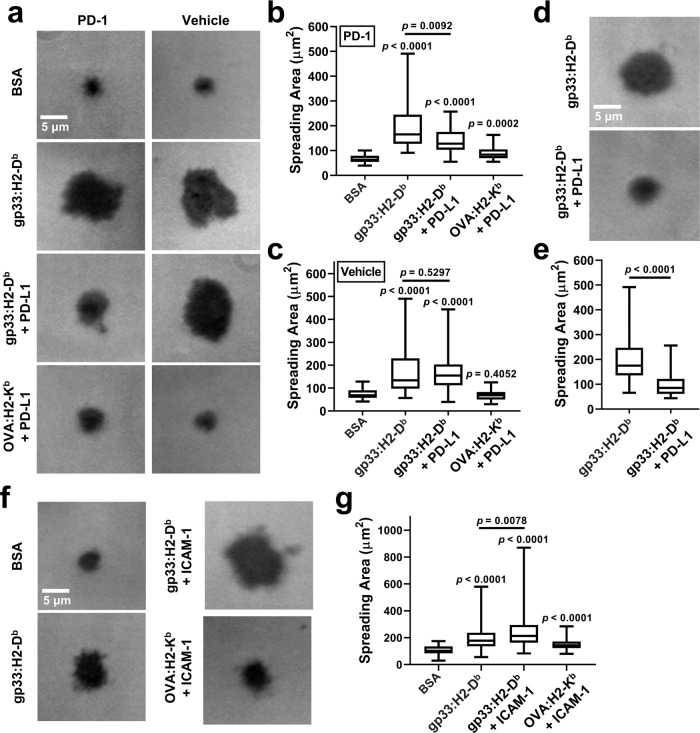
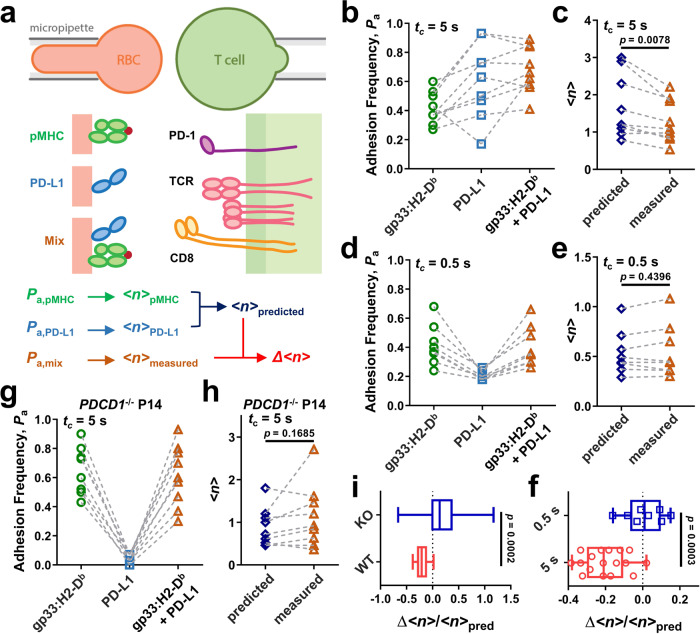
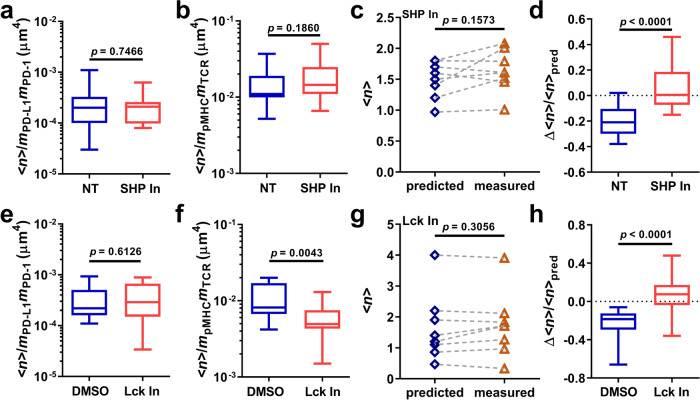
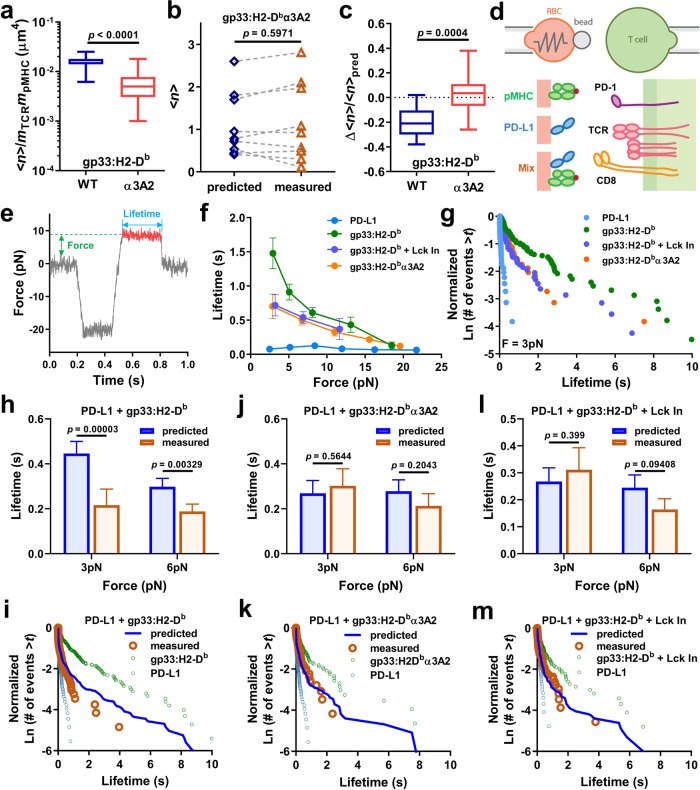
Despite the clinical success of blocking its interactions, how PD-1 inhibits T-cell activation is incompletely understood, as exemplified by its potency far exceeding what might be predicted from its affinity for PD-1 ligand-1 (PD-L1). This may be partially attributed to PD-1's targeting the proximal signaling of the T-cell receptor (TCR) and co-stimulatory receptor CD28 via activating Src homology region 2 domain-containing phosphatases (SHPs). Here, we report PD-1 signaling regulates the initial TCR antigen recognition manifested in a smaller spreading area, fewer molecular bonds formed, and shorter bond lifetime of T cell interaction with peptide-major histocompatibility complex (pMHC) in the presence than absence of PD-L1 in a manner dependent on SHPs and Leukocyte C-terminal Src kinase. Our results identify a PD-1 inhibitory mechanism that disrupts the cooperative TCR-pMHC-CD8 trimolecular interaction, which prevents CD8 from augmenting antigen recognition, explaining PD-1's potent inhibitory function and its value as a target for clinical intervention.
Overview
The claims and statistics of this paper haven’t been checked yet.
Free: it reads the open-access text and checks the first 5 claims that cite a source we can check. Create a free account to check every claim.
Integrity signals
Registry
Cites
Statistics
Figures
Verification
Claims the paper makes
The claims and statistics of this paper haven’t been checked yet.
Free: it reads the open-access text and checks the first 5 claims that cite a source we can check. Create a free account to check every claim.
Claims other papers make about this one
Each is checked against this paper’s own text: does it say what the citing paper says it does?
The check wasn’t confident either way, so it gives no verdict — never disputed.
In the citing paper
“CTLA4 disrupted the ZAP70 cluster formation in most T cells, although 5%‐10% of T cells demonstrated cluster forming followed by anti‐CD3 treatment [302, 303, 304].”
From Tumor microenvironment signaling and therapeutics in cancer progression (2023) · cites this paper as [303]
Experimental — accuracy not yet measured
Self-check
Percentages, sums and reported differences re-computed from the paper’s own numbers.
The self-check needs the paper’s full text.
Citations
Cites
Ishida, Y., Agata, Y., Shibahara, K., & Honjo, T. (1992) · The EMBO Journal · doi:10.1002/j.1460-2075.1992.tb05481.x · Cited by 3,256
The diverse functions of the PD1 inhibitory pathway
Sharpe, A. H., & Pauken, K. E. (2018) · Nature Reviews Immunology · doi:10.1038/nri.2017.108 · Cited by 1,971
CTLA-4 and PD-1 Receptors Inhibit T-Cell Activation by Distinct Mechanisms
Parry, R. V., Chemnitz, J. M., Frauwirth, K. A., Lanfranco, A. R., Braunstein, I., Kobayashi, S. V., Linsley, P. S., Thompson, C. B., & Riley, J. L. (2005) · Molecular and Cellular Biology · doi:10.1128/mcb.25.21.9543-9553.2005 · Cited by 1,931
Advanced methods of microscope control using μManager software
D. Edelstein, A., A. Tsuchida, M., Amodaj, N., Pinkard, H., D. Vale, R., & Stuurman, N. (2014) · Journal of Biological Methods · doi:10.14440/jbm.2014.36 · Cited by 1,909
T cell costimulatory receptor CD28 is a primary target for PD-1–mediated inhibition
Hui, E., Cheung, J., Zhu, J., Su, X., Taylor, M. J., Wallweber, H. A., Sasmal, D. K., Huang, J., Kim, J. M., Mellman, I., et al. (2017) · Science · doi:10.1126/science.aaf1292 · Cited by 1,689
T-cell receptor cross-linking transiently stimulates adhesiveness through LFA-1
Dustin, M. L., & Springer, T. A. (1989) · Nature · doi:10.1038/341619a0 · Cited by 1,538
PD-1 and PD-1 ligands: from discovery to clinical application
Okazaki, T., & Honjo, T. (2007) · International Immunology · doi:10.1093/intimm/dxm057 · Cited by 1,310
Chemnitz, J. M., Parry, R. V., Nichols, K. E., June, C. H., & Riley, J. L. (2004) · The Journal of Immunology · doi:10.4049/jimmunol.173.2.945 · Cited by 1,246
Yokosuka, T., Takamatsu, M., Kobayashi-Imanishi, W., Hashimoto-Tane, A., Azuma, M., & Saito, T. (2012) · Journal of Experimental Medicine · doi:10.1084/jem.20112741 · Cited by 1,161
Coinhibitory Pathways in Immunotherapy for Cancer
Baumeister, S. H., Freeman, G. J., Dranoff, G., & Sharpe, A. H. (2016) · Annual Review of Immunology · doi:10.1146/annurev-immunol-032414-112049 · Cited by 910 · cited 1×
“The imaging surface was then prepared in the following incubation steps with three washes using PBS after each step: (1) coating with 50 μg/ml biotinylated bovine serum albumin (BSA); (2) coating with streptavidin; (3) coating with mixture of biotinylated pMHC and biotinylated antiPentaHis (Qiagen) or biotinylated ant…”
MethodOkazaki, T., Maeda, A., Nishimura, H., Kurosaki, T., & Honjo, T. (2001) · Proceedings of the National Academy of Sciences · doi:10.1073/pnas.231486598 · Cited by 848 · cited 1×
“The imaging surface was then prepared in the following incubation steps with three washes using PBS after each step: (1) coating with 50 μg/ml biotinylated bovine serum albumin (BSA); (2) coating with streptavidin; (3) coating with mixture of biotinylated pMHC and biotinylated antiPentaHis (Qiagen) or biotinylated ant…”
MethodSheppard, K.-A., Fitz, L. J., Lee, J. M., Benander, C., George, J. A., Wooters, J., Qiu, Y., Jussif, J. M., Carter, L. L., Wood, C. R., et al. (2004) · FEBS Letters · doi:10.1016/j.febslet.2004.07.083 · Cited by 791
Interactions between PD-1 and PD-L1 promote tolerance by blocking the TCR–induced stop signal
Fife, B. T., Pauken, K. E., Eagar, T. N., Obu, T., Wu, J., Tang, Q., Azuma, M., Krummel, M. F., & Bluestone, J. A. (2009) · Nature Immunology · doi:10.1038/ni.1790 · Cited by 759
Rudd, C. E., Trevillyan, J. M., Dasgupta, J. D., Wong, L. L., & Schlossman, S. F. (1988) · Proceedings of the National Academy of Sciences · doi:10.1073/pnas.85.14.5190 · Cited by 705
The Interaction Properties of Costimulatory Molecules Revisited
Collins, A. V., Brodie, D. W., Gilbert, R. J. C., Iaboni, A., Manso-Sancho, R., Walse, B., Stuart, D. I., van der Merwe, P. A., & Davis, S. J. (2002) · Immunity · doi:10.1016/s1074-7613(02)00362-x · Cited by 684
Self-citationCD8 T Cell Exhaustion in Chronic Infection and Cancer: Opportunities for Interventions
Hashimoto, M., Kamphorst, A. O., Im, S. J., Kissick, H. T., Pillai, R. N., Ramalingam, S. S., Araki, K., & Ahmed, R. (2018) · Annual Review of Medicine · doi:10.1146/annurev-med-012017-043208 · Cited by 656
Self-citationAccumulation of Dynamic Catch Bonds between TCR and Agonist Peptide-MHC Triggers T Cell Signaling
Liu, B., Chen, W., Evavold, B. D., & Zhu, C. (2014) · Cell · doi:10.1016/j.cell.2014.02.053 · Cited by 611
Self-citationTCR Signaling: Mechanisms of Initiation and Propagation
Courtney, A. H., Lo, W.-L., & Weiss, A. (2018) · Trends in Biochemical Sciences · doi:10.1016/j.tibs.2017.11.008 · Cited by 571
TCR–peptide–MHC interactions in situ show accelerated kinetics and increased affinity
Huppa, J. B., Axmann, M., Mörtelmaier, M. A., Lillemeier, B. F., Newell, E. W., Brameshuber, M., Klein, L. O., Schütz, G. J., & Davis, M. M. (2010) · Nature · doi:10.1038/nature08746 · Cited by 504
Dustin, M. L. (2014) · Cancer Immunology Research · doi:10.1158/2326-6066.cir-14-0161 · Cited by 502
The kinetics of two-dimensional TCR and pMHC interactions determine T-cell responsiveness
Huang, J., Zarnitsyna, V. I., Liu, B., Edwards, L. J., Jiang, N., Evavold, B. D., & Zhu, C. (2010) · Nature · doi:10.1038/nature08944 · Cited by 501
Self-citationTargeting T Cell Co-receptors for Cancer Therapy
Callahan, M. K., Postow, M. A., & Wolchok, J. D. (2016) · Immunity · doi:10.1016/j.immuni.2016.04.023 · Cited by 469
Large-Scale Structural Analysis of the Classical Human Protein Tyrosine Phosphatome
Barr, A. J., Ugochukwu, E., Lee, W. H., King, O. N. F., Filippakopoulos, P., Alfano, I., Savitsky, P., Burgess-Brown, N. A., Müller, S., & Knapp, S. (2009) · Cell · doi:10.1016/j.cell.2008.11.038 · Cited by 467
Autophagy is essential for effector CD8+ T cell survival and memory formation
Xu, X., Araki, K., Li, S., Han, J.-H., Ye, L., Tan, W. G., Konieczny, B. T., Bruinsma, M. W., Martinez, J., Pearce, E. L., et al. (2014) · Nature Immunology · doi:10.1038/ni.3025 · Cited by 433
Self-citationMeasuring Two-Dimensional Receptor-Ligand Binding Kinetics by Micropipette
Chesla, S. E., Selvaraj, P., & Zhu, C. (1998) · Biophysical Journal · doi:10.1016/s0006-3495(98)74074-3 · Cited by 417
Self-citationStructural and Functional Analysis of the Costimulatory Receptor Programmed Death-1
Zhang, X., Schwartz, J.-C. D., Guo, X., Bhatia, S., Cao, E., Chen, L., Zhang, Z.-Y., Edidin, M. A., Nathenson, S. G., & Almo, S. C. (2004) · Immunity · doi:10.1016/s1074-7613(04)00051-2 · Cited by 410
Integrin inside-out signaling and the immunological synapse
Springer, T. A., & Dustin, M. L. (2012) · Current Opinion in Cell Biology · doi:10.1016/j.ceb.2011.10.004 · Cited by 393
Sugiura, D., Maruhashi, T., Okazaki, I.-M., Shimizu, K., Maeda, T. K., Takemoto, T., & Okazaki, T. (2019) · Science · doi:10.1126/science.aav7062 · Cited by 386
Zhao, Y., Lee, C. K., Lin, C.-H., Gassen, R. B., Xu, X., Huang, Z., Xiao, C., Bonorino, C., Lu, L.-F., Bui, J. D., et al. (2019) · Immunity · doi:10.1016/j.immuni.2019.11.003 · Cited by 383
Wolfer, A., Wilson, A., Nemir, M., MacDonald, H. R., & Radtke, F. (2002) · Immunity · doi:10.1016/s1074-7613(02)00330-8 · Cited by 347
Structure and Interactions of the Human Programmed Cell Death 1 Receptor
Cheng, X., Veverka, V., Radhakrishnan, A., Waters, L. C., Muskett, F. W., Morgan, S. H., Huo, J., Yu, C., Evans, E. J., Leslie, A. J., et al. (2013) · Journal of Biological Chemistry · doi:10.1074/jbc.m112.448126 · Cited by 323
Self-citationStrength of PD-1 signaling differentially affects T-cell effector functions
Wei, F., Zhong, S., Ma, Z., Kong, H., Medvec, A., Ahmed, R., Freeman, G. J., Krogsgaard, M., & Riley, J. L. (2013) · Proceedings of the National Academy of Sciences · doi:10.1073/pnas.1305394110 · Cited by 304
Self-citationPD-1 promotes immune exhaustion by inducing antiviral T cell motility paralysis
Zinselmeyer, B. H., Heydari, S., Sacristán, C., Nayak, D., Cammer, M., Herz, J., Cheng, X., Davis, S. J., Dustin, M. L., & McGavern, D. B. (2013) · Journal of Experimental Medicine · doi:10.1084/jem.20121416 · Cited by 258
Self-citationA kinase-independent function of Lck in potentiating antigen-specific T cell activation
Xu, H., & Littman, D. R. (1993) · Cell · doi:10.1016/0092-8674(93)90511-n · Cited by 252
Honda, T., Egen, J. G., Lämmermann, T., Kastenmüller, W., Torabi-Parizi, P., & Germain, R. N. (2014) · Immunity · doi:10.1016/j.immuni.2013.11.017 · Cited by 237
Conformational states of the kinase Lck regulate clustering in early T cell signaling
Rossy, J., Owen, D. M., Williamson, D. J., Yang, Z., & Gaus, K. (2013) · Nature Immunology · doi:10.1038/ni.2488 · Cited by 223
Jiang, N., Huang, J., Edwards, L. J., Liu, B., Zhang, Y., Beal, C. D., Evavold, B. D., & Zhu, C. (2011) · Immunity · doi:10.1016/j.immuni.2010.12.017 · Cited by 210
Self-citationArcaro, A., Grégoire, C., Bakker, T. R., Baldi, L., Jordan, M., Goffin, L., Boucheron, N., Wurm, F., van der Merwe, P. A., Malissen, B., et al. (2001) · The Journal of Experimental Medicine · doi:10.1084/jem.194.10.1485 · Cited by 208
Mechanosensing through immunoreceptors
Zhu, C., Chen, W., Lou, J., Rittase, W., & Li, K. (2019) · Nature Immunology · doi:10.1038/s41590-019-0491-1 · Cited by 203
Self-citationMcClanahan, F., Hanna, B., Miller, S., Clear, A. J., Lichter, P., Gribben, J. G., & Seiffert, M. (2015) · Blood · doi:10.1182/blood-2015-01-622936 · Cited by 188
Zamoyska, R., Derham, P., Gorman, S. D., von Hoegen, P., Bolen, J. B., Veillette, A., & Parnes, J. R. (1989) · Nature · doi:10.1038/342278a0 · Cited by 179
PD-1 Primarily Targets TCR Signal in the Inhibition of Functional T Cell Activation
Mizuno, R., Sugiura, D., Shimizu, K., Maruhashi, T., Watada, M., Okazaki, I.-M., & Okazaki, T. (2019) · Frontiers in Immunology · doi:10.3389/fimmu.2019.00630 · Cited by 171
p56lck interacts via its src homology 2 domain with the ZAP-70 kinase.
Duplay, P., Thome, M., Hervé, F., & Acuto, O. (1994) · The Journal of experimental medicine · doi:10.1084/jem.179.4.1163 · Cited by 159
An integrin αIIbβ3 intermediate affinity state mediates biomechanical platelet aggregation
Chen, Y., Ju, L. A., Zhou, F., Liao, J., Xue, L., Su, Q. P., Jin, D., Yuan, Y., Lu, H., Jackson, S. P., et al. (2019) · Nature Materials · doi:10.1038/s41563-019-0323-6 · Cited by 158
Self-citationIn vitro membrane reconstitution of the T-cell receptor proximal signaling network
Hui, E., & Vale, R. D. (2014) · Nature Structural & Molecular Biology · doi:10.1038/nsmb.2762 · Cited by 144
A TCR mechanotransduction signaling loop induces negative selection in the thymus
Hong, J., Ge, C., Jothikumar, P., Yuan, Z., Liu, B., Bai, K., Li, K., Rittase, W., Shinzawa, M., Zhang, Y., et al. (2018) · Nature Immunology · doi:10.1038/s41590-018-0259-z · Cited by 144
Self-citationYachi, P. P., Ampudia, J., Żal, T., & Gascoigne, N. R. J. (2006) · Immunity · doi:10.1016/j.immuni.2006.05.015 · Cited by 119
Ionic CD3−Lck interaction regulates the initiation of T-cell receptor signaling
Li, L., Guo, X., Shi, X., Li, C., Wu, W., Yan, C., Wang, H., Li, H., & Xu, C. (2017) · Proceedings of the National Academy of Sciences · doi:10.1073/pnas.1701990114 · Cited by 119
McClanahan, F., Riches, J. C., Miller, S., Day, W. P., Kotsiou, E., Neuberg, D., Croce, C. M., Capasso, M., & Gribben, J. G. (2015) · Blood · doi:10.1182/blood-2015-02-626754 · Cited by 114
PD‐L2:PD‐1 involvement in T cell proliferation, cytokine production, and integrin‐mediated adhesion
Saunders, P. A., Hendrycks, V. R., Lidinsky, W. A., & Woods, M. L. (2005) · European Journal of Immunology · doi:10.1002/eji.200526347 · Cited by 114
Force-Regulated In Situ TCR–Peptide-Bound MHC Class II Kinetics Determine Functions of CD4+ T Cells
Hong, J., Persaud, S. P., Horvath, S. C., Allen, P. M., Evavold, B. D., & Zhu, C. (2015) · The Journal of Immunology · doi:10.4049/jimmunol.1501407 · Cited by 110
Self-citationLigand-engaged TCR is triggered by Lck not associated with CD8 coreceptor
Casas, J., Brzostek, J., Zarnitsyna, V. I., Hong, J., Wei, Q., Hoerter, J. A. H., Fu, G., Ampudia, J., Zamoyska, R., Zhu, C., et al. (2014) · Nature Communications · doi:10.1038/ncomms6624 · Cited by 98
Self-citationSyk and ZAP-70 mediate recruitment of p56lck/CD4 to the activated T cell receptor/CD3/zeta complex.
Thome, M., Duplay, P., Guttinger, M., & Acuto, O. (1995) · The Journal of experimental medicine · doi:10.1084/jem.181.6.1997 · Cited by 98
Arnold, L. D., Calderwood, D. J., Dixon, R. W., Johnston, D. N., Kamens, J., Munschauer, R., Rafferty, P., & Ratnofsky, S. E. (2000) · Bioorganic & Medicinal Chemistry Letters · doi:10.1016/s0960-894x(00)00441-8 · Cited by 97
Tabdanov, E., Gondarenko, S., Kumari, S., Liapis, A., Dustin, M. L., Sheetz, M. P., Kam, L. C., & Iskratsch, T. (2015) · Integrative Biology · doi:10.1039/c5ib00032g · Cited by 96
Chen, W., Zarnitsyna, V. I., Sarangapani, K. K., Huang, J., & Zhu, C. (2008) · Cellular and Molecular Bioengineering · doi:10.1007/s12195-008-0024-8 · Cited by 86
Self-citationBurgess, K. E., Odysseos, A. D., Zalvan, C. H., Druker, B. J., Anderson, P., Schlossman, S. F., & Rudde, C. E. (1991) · European Journal of Immunology · doi:10.1002/eji.1830210712 · Cited by 84
Molecular Force Spectroscopy on Cells
Liu, B., Chen, W., & Zhu, C. (2015) · Annual Review of Physical Chemistry · doi:10.1146/annurev-physchem-040214-121742 · Cited by 78
Self-citationCoreceptors and TCR Signaling – the Strong and the Weak of It
Mørch, A. M., Bálint, Š., Santos, A. M., Davis, S. J., & Dustin, M. L. (2020) · Frontiers in Cell and Developmental Biology · doi:10.3389/fcell.2020.597627 · Cited by 78
Self-citationOptimized retroviral transduction of mouse T cells for in vivo assessment of gene function
Kurachi, M., Kurachi, J., Chen, Z., Johnson, J., Khan, O., Bengsch, B., Stelekati, E., Attanasio, J., McLane, L. M., Tomura, M., et al. (2017) · Nature Protocols · doi:10.1038/nprot.2017.083 · Cited by 75
2 D TCR –p MHC – CD 8 kinetics determines T ‐cell responses in a self‐antigen‐specific TCR system
Liu, B., Zhong, S., Malecek, K., Johnson, L. A., Rosenberg, S. A., Zhu, C., & Krogsgaard, M. (2013) · European Journal of Immunology · doi:10.1002/eji.201343774 · Cited by 69
Self-citationPielak, R. M., O’Donoghue, G. P., Lin, J. J., Alfieri, K. N., Fay, N. C., Low-Nam, S. T., & Groves, J. T. (2017) · Proceedings of the National Academy of Sciences · doi:10.1073/pnas.1613140114 · Cited by 69
Insights from in situ analysis of TCR– pMHC recognition: response of an interaction network
Zhu, C., Jiang, N. J., Huang, J., Zarnitsyna, V. I., & Evavold, B. D. (2012) · Immunological Reviews · doi:10.1111/imr.12016 · Cited by 67
Self-citationThome, M., Germain, V., Santo, J. P. D., & Acuto, O. (1996) · European Journal of Immunology · doi:10.1002/eji.1830260920 · Cited by 62
Memory in receptor–ligand-mediated cell adhesion
Zarnitsyna, V. I., Huang, J., Zhang, F., Chien, Y.-H., Leckband, D. E., & Zhu, C. (2007) · Proceedings of the National Academy of Sciences · doi:10.1073/pnas.0704811104 · Cited by 57
Self-citationConcurrent and Independent Binding of Fcγ Receptors IIa and IIIb to Surface-Bound IgG
Williams, T. E., Nagarajan, S., Selvaraj, P., & Zhu, C. (2000) · Biophysical Journal · doi:10.1016/s0006-3495(00)76436-8 · Cited by 50
Self-citationLiu, B., Chen, W., Natarajan, K., Li, Z., Margulies, D. H., & Zhu, C. (2015) · European Journal of Immunology · doi:10.1002/eji.201445358 · Cited by 45
Self-citationJu, L. A., Chen, Y., Li, K., Yuan, Z., Liu, B., Jackson, S. P., & Zhu, C. (2017) · Scientific Reports · doi:10.1038/s41598-017-13793-3 · Cited by 42
Self-citationConcurrent Binding to Multiple Ligands: Kinetic Rates of CD16b for Membrane-Bound IgG1 and IgG2
Williams, T. E., Selvaraj, P., & Zhu, C. (2000) · Biophysical Journal · doi:10.1016/s0006-3495(00)76435-6 · Cited by 40
Self-citationModeling Concurrent Binding of Multiple Molecular Species in Cell Adhesion
Zhu, C., & Williams, T. E. (2000) · Biophysical Journal · doi:10.1016/s0006-3495(00)76434-4 · Cited by 35
Self-citationSeo, Y., Jothikumar, P., Suthar, M. S., Zhu, C., & Grakoui, A. (2016) · Immunity · doi:10.1016/j.immuni.2016.10.024 · Cited by 32
Self-citationRole of the Lck Src Homology 2 and 3 Domains in Protein Tyrosine Phosphorylation
Lee-Fruman, K. K., Collins, T. L., & Burakoff, S. J. (1996) · Journal of Biological Chemistry · doi:10.1074/jbc.271.40.25003 · Cited by 23
Li, K., Cheng, X., Tilevik, A., Davis, S. J., & Zhu, C. (2017) · Journal of Biological Chemistry · doi:10.1074/jbc.m116.763888 · Cited by 22
Self-citationBenchmarks of Biomembrane Force Probe Spring Constant Models
Ju, L. A., & Zhu, C. (2017) · Biophysical Journal · doi:10.1016/j.bpj.2017.10.013 · Cited by 16
Self-citationLegrand, N., & Freitas, A. A. (2001) · The Journal of Immunology · doi:10.4049/jimmunol.167.11.6150 · Cited by 9
Stage-dependent reactivity of thymocytes to self-peptide–MHC complexes
Leng, Q., Ge, Q., Nguyen, T., Eisen, H. N., & Chen, J. (2007) · Proceedings of the National Academy of Sciences · doi:10.1073/pnas.0700674104 · Cited by 8
Transduction of Primary Hematopoietic Cells by Retroviral VectorsPreprint
Cornetta, K. G., Pollok, K. E., & Miller, A. D. (2008) · Cold Spring Harbor Protocols · doi:10.1101/pdb.prot4884 · Cited by 4
Cited by
Combination strategies with PD-1/PD-L1 blockade: current advances and future directions
Yi, M., Zheng, X., Niu, M., Zhu, S., Ge, H., & Wu, K. (2022) · Molecular Cancer · doi:10.1186/s12943-021-01489-2 · Cited by 1,445
“1 Department of Oncology, Tongji Hospital of Tongji Medical College, Huazhong University of Science and Technology, Wuhan 430030, China 2 Department of Radiation Oncology, The Affiliated Cancer Hospital of Zhengzhou University & Henan Cancer Hospital, Zhengzhou 450008, China inhibiting some early activating pathways o…”
BackgroundTumor microenvironment signaling and therapeutics in cancer progression
Goenka, A., Khan, F., Verma, B., Sinha, P., Dmello, C. C., Jogalekar, M. P., Gangadaran, P., & Ahn, B. (2023) · Cancer Communications · doi:10.1002/cac2.12416 · Cited by 323
Co-inhibition of TIGIT and PD-1/PD-L1 in Cancer Immunotherapy: Mechanisms and Clinical Trials
Chu, X., Tian, W., Wang, Z., Zhang, J., & Zhou, R. (2023) · Molecular Cancer · doi:10.1186/s12943-023-01800-3 · Cited by 220
“While, other co-inhibitory molecules such as PD-1, interfere with processes further downstream in the signaling cascade [37].”
BackgroundTargeting the tumor microenvironment: Potential strategy for cancer therapeutics
Babar, Q., Saeed, A., Tabish, T. A., Sarwar, M., & Thorat, N. D. (2023) · Biochimica et Biophysica Acta (BBA) - Molecular Basis of Disease · doi:10.1016/j.bbadis.2023.166746 · Cited by 125
CD8+ T cell-based cancer immunotherapy
Chen, Y., Yu, D., Qian, H., Shi, Y., & Tao, Z. (2024) · Journal of Translational Medicine · doi:10.1186/s12967-024-05134-6 · Cited by 132
“For instance, the interaction between TCR and PD-1 had a negative regulatory role in T cell antigen recognition [133, 134].”
Background
Metadata
- Authors
- Li, K., Yuan, Z., Lyu, J., Ahn, E., Davis, S. J., Ahmed, R., & Zhu, C.
- Affiliations
- Georgia Institute of Technology (US)
- Emory University (US)
- John Radcliffe Hospital (GB)
- Corresponding author
- Zhu, Cheng
- Venue
- Nature Communications
- Published
- 2021-05-12
- Volume
- 12
- Issue
- 1
- Pages
- 2746-2746
- ISSN
- 2041-1723 (ISSN-L)
- PMC
- PMC8115078
- OpenAlex
- W3163417555
- Cited by
- 81
- References
- 77
- Citations by year
- 2026: 11 · 2025: 15 · 2024: 18 · 2023: 21 · 2022: 11 · 2021: 5
- FWCI
- 5.22
- Type
- journal article
- Language
- en
- Open access
- gold
- doi.org
- Licence
- cc-by
- creativecommons.org/licenses/by/4.0 (tdm)
- creativecommons.org/licenses/by/4.0 (vor)
- Locations
- Nature Communications (publishedVersion, cc-by)
- PubMed Central (publishedVersion, cc-by)
- PubMed (publishedVersion)
- RePEc: Research Papers in Economics (submittedVersion)
- DOAJ (DOAJ: Directory of Open Access Journals) (submittedVersion, cc-by-sa)
- Funders
- U.S. Department of Health & Human Services | NIH | National Cancer Institute (U01CA214354, R01CA243486, U01CA250040)
- Topics
- Life Sciences › Immunology and Microbiology › Immunology › T-cell and B-cell Immunology
- Health Sciences › Medicine › Oncology › Cancer Immunotherapy and Biomarkers
- Life Sciences › Biochemistry, Genetics and Molecular Biology › Molecular Biology › Protein Tyrosine Phosphatases
- Keywords
- PD-1, PD-L1, T cell activation, CD28, SHP2, Lck, antigen recognition, T cell receptor signaling, immune checkpoint blockade
- MeSH terms
- Animals, Calcium, Humans, Lymphocyte Activation, Major Histocompatibility Complex, Mice, Transgenic, Protein Binding, Receptors, Antigen, T-Cell, T-Lymphocytes, Signal Transduction, CD8 Antigens, Lymphocyte Specific Protein Tyrosine Kinase p56(lck), Mice, B7-H1 Antigen, Programmed Cell Death 1 Receptor
About these checks
Registry, retraction, Cites and statistics results are computed, not judged, with one exception: a printed reference that no index lists is read once by a model before it counts as a citation error. Claims are extracted by a model and kept only when their quote appears verbatim in the text; each cited source is then checked, with a model’s help, for whether it says what the claim relies on. Those verdicts can be wrong — read the claim’s quote and the cited source before relying on one.
Statistics and arithmetic are recomputed, not judged.
Confidence bands are shown only for fields calibrated on our annotated test set. None is calibrated yet, so no band is shown.
What counts as a claim ›How we measure confidence ›How we check this ›
Are you an author, or do you see a problem with this page? Request a review
Data sources
Bibliographic data: Semantic Scholar, OpenAlex, Crossref.
Contains information from the Semantic Scholar Academic Graph Datasets, made available under the ODC Attribution License (ODC-BY 1.0).
Semantic Scholar’s data is described in: Kinney, R., et al. (2023). The Semantic Scholar Open Data Platform. arXiv:2301.10140.
