

The DOI matches its Crossref record; 43 of the 43 references it cites were found in a registry or an index.
iPLA2β-mediated lipid detoxification controls p53-driven ferroptosis independent of GPX4
Open accessAbstract
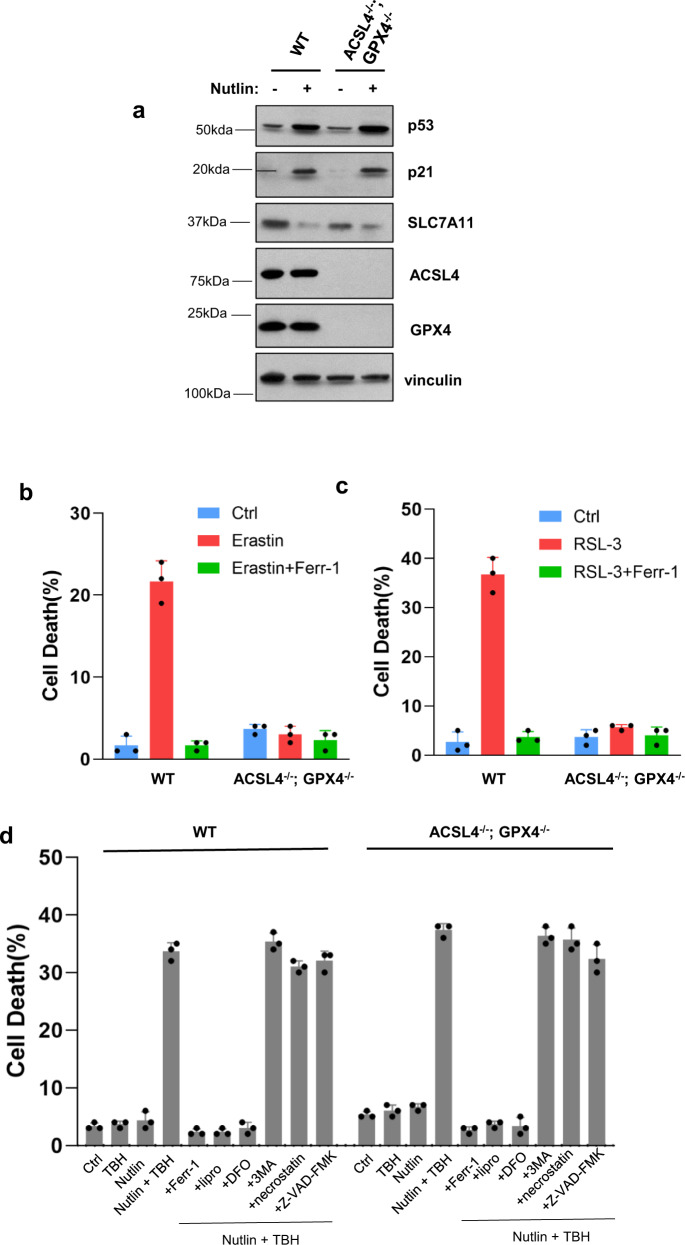
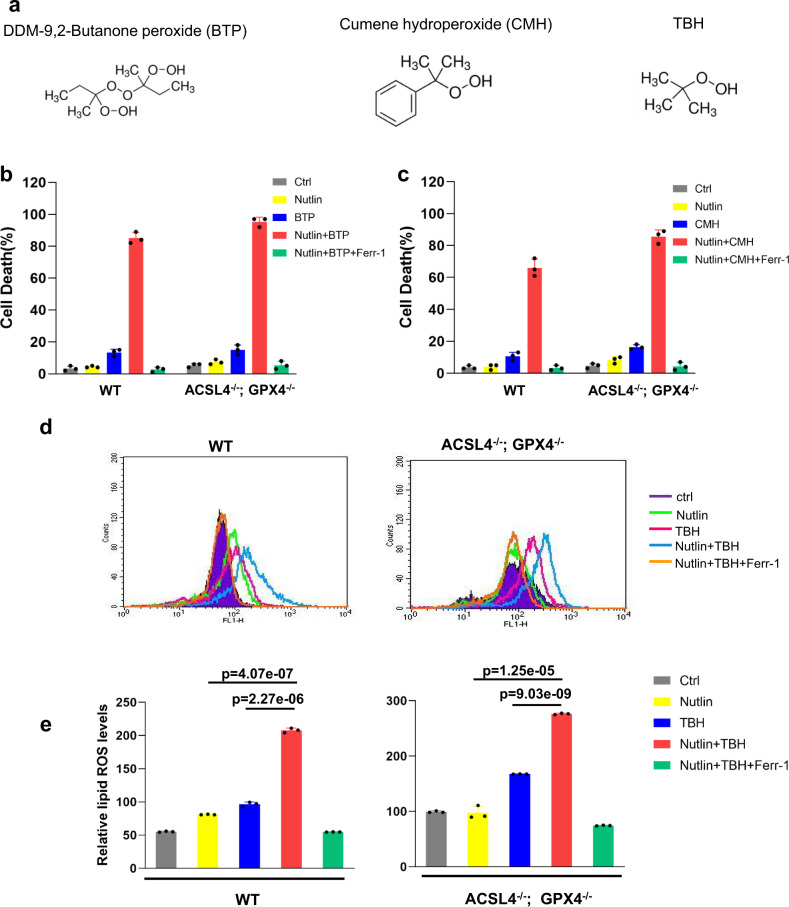
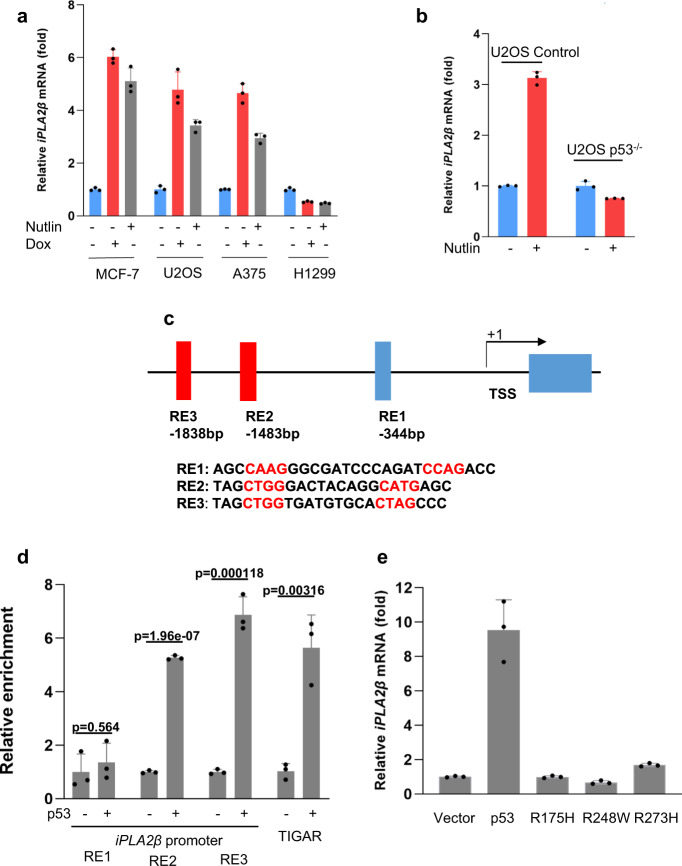
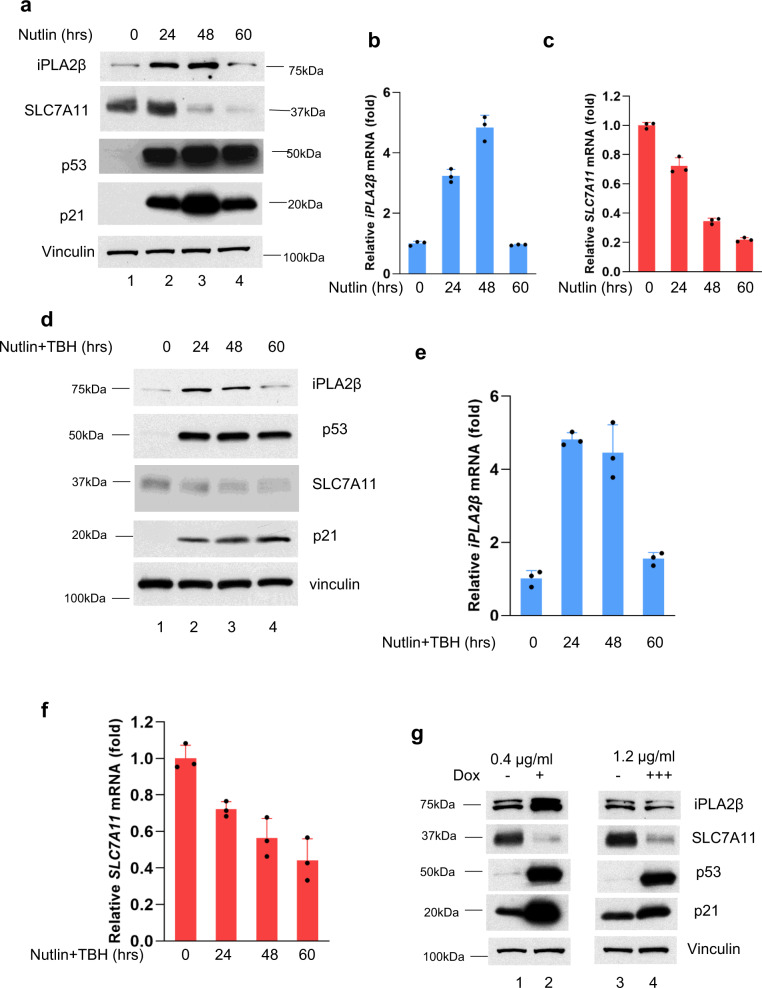
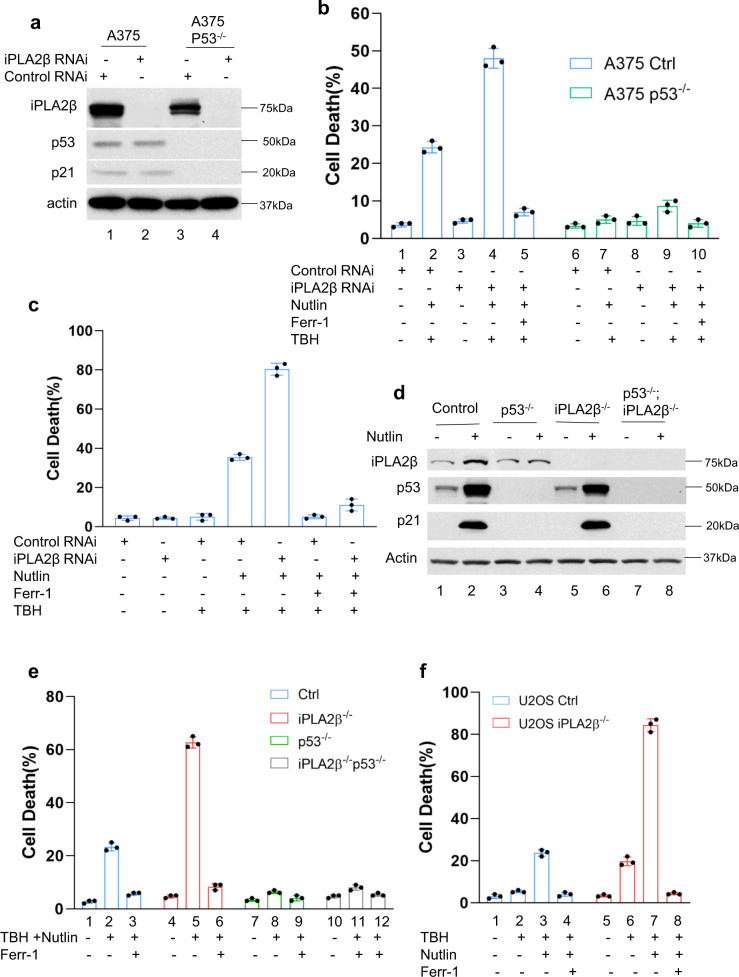
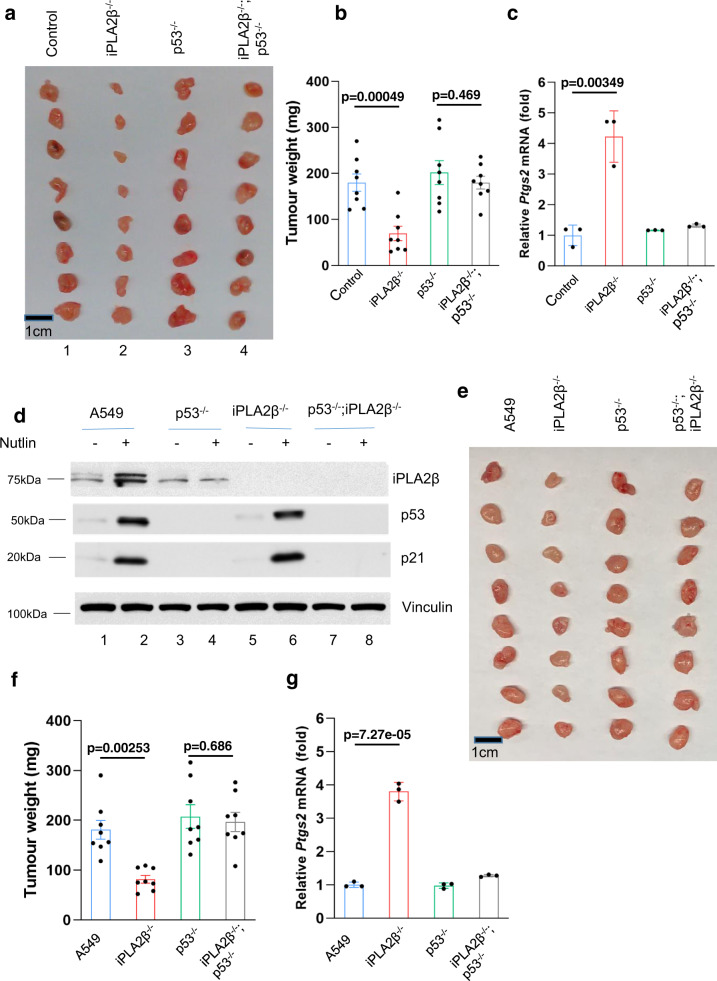
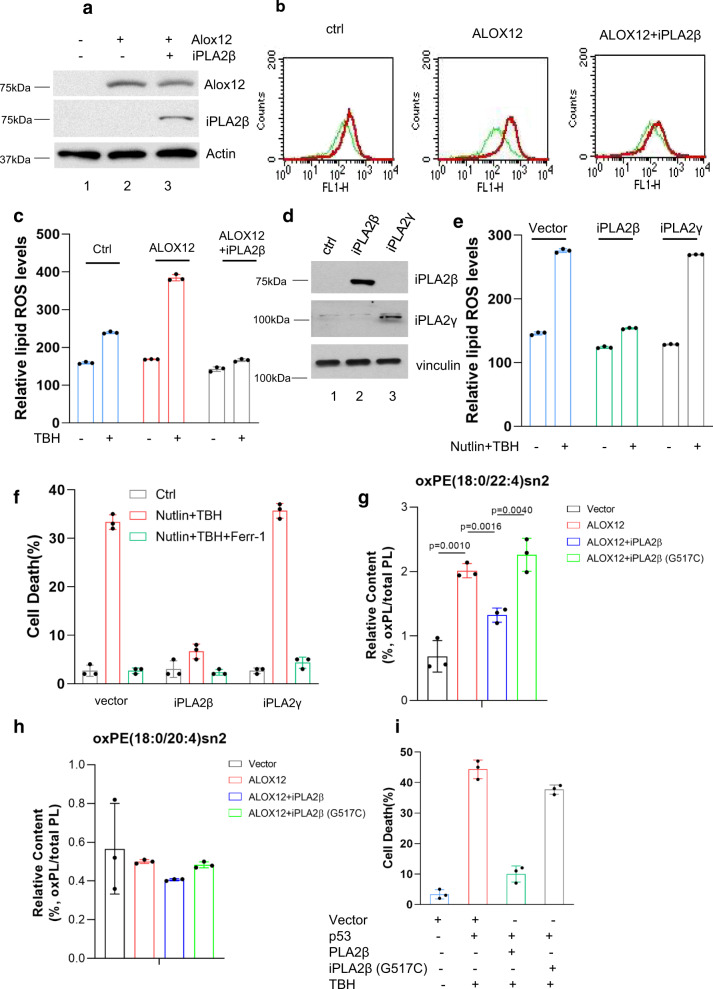
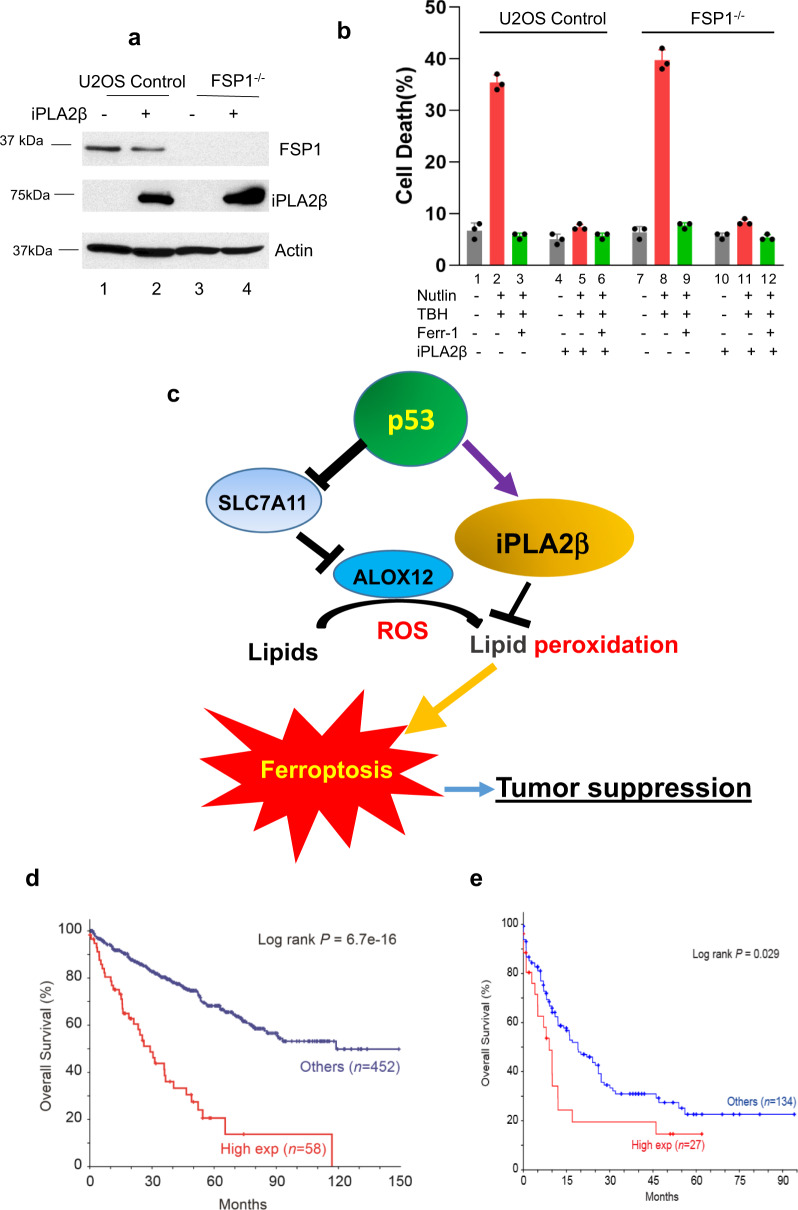
Here, we identify iPLA2β as a critical regulator for p53-driven ferroptosis upon reactive oxygen species (ROS)-induced stress. The calcium-independent phospholipase iPLA2β is known to cleave acyl tails from the glycerol backbone of lipids and release oxidized fatty acids from phospholipids. We found that iPLA2β-mediated detoxification of peroxidized lipids is sufficient to suppress p53-driven ferroptosis upon ROS-induced stress, even in GPX4-null cells. Moreover, iPLA2β is overexpressed in human cancers; inhibition of endogenous iPLA2β sensitizes tumor cells to p53-driven ferroptosis and promotes p53-dependent tumor suppression in xenograft mouse models. These results demonstrate that iPLA2β acts as a major ferroptosis repressor in a GPX4-independent manner. Notably, unlike GPX4, loss of iPLA2β has no obvious effect on normal development or cell viability in normal tissues but iPLA2β plays an essential role in regulating ferroptosis upon ROS-induced stress. Thus, our study suggests that iPLA2β is a promising therapeutic target for activating ferroptosis-mediated tumor suppression without serious toxicity concerns.
Overview
The claims and statistics of this paper haven’t been checked yet.
Run the check — free, no account needed. It reads the open-access text and checks the sources it cites.
Integrity signals
Registry
Cites
Statistics
Figures
Verification
Claims the paper makes
The claims and statistics of this paper haven’t been checked yet.
Run the check — free, no account needed. It reads the open-access text and checks the sources it cites.
Claims other papers make about this one
Each is checked against this paper’s own text: does it say what the citing paper says it does?
The source backs part of the claim, not all of it — or backs it for a different population, condition or comparison.
In the citing paper
“Each type of PLA2 has a substrate-specific activity, and depending on the substrate, PLA2 can either promote or block ferroptosis (28–31).”
From Secreted Apoe rewires melanoma cell state vulnerability to ferroptosis (2024) · cites this paper as [28]
Experimental — accuracy not yet measuredThe source backs part of the claim, not all of it — or backs it for a different population, condition or comparison.
In the citing paper
“In contrast, inhibition of the calcium-independent iPLA2β, which cleaves acyl tails from the glycerol backbone of lipids, fostered p53-driven ferroptosis and tumor suppression by depleting the pool of oxidized lipids in response to ROS-generating drugs (28).”
From Secreted Apoe rewires melanoma cell state vulnerability to ferroptosis (2024) · cites this paper as [28]
Experimental — accuracy not yet measured
Self-check
Percentages, sums and reported differences re-computed from the paper’s own numbers.
The self-check needs the paper’s full text.
Citations
Cites
Regulation of Ferroptotic Cancer Cell Death by GPX4
Yang, W. S., SriRamaratnam, R., Welsch, M. E., Shimada, K., Skouta, R., Viswanathan, V. S., Cheah, J. H., Clemons, P. A., Shamji, A. F., Clish, C. B., et al. (2014) · Cell · doi:10.1016/j.cell.2013.12.010 · Cited by 7,713
Self-citationACSL4 dictates ferroptosis sensitivity by shaping cellular lipid composition
Doll, S., Proneth, B., Tyurina, Y. Y., Panzilius, E., Kobayashi, S., Ingold, I., Irmler, M., Beckers, J., Aichler, M., Walch, A., et al. (2017) · Nature Chemical Biology · doi:10.1038/nchembio.2239 · Cited by 4,293
Inactivation of the ferroptosis regulator Gpx4 triggers acute renal failure in mice
Friedmann Angeli, J. P., Schneider, M., Proneth, B., Tyurina, Y. Y., Tyurin, V. A., Hammond, V. J., Herbach, N., Aichler, M., Walch, A., Eggenhofer, E., et al. (2014) · Nature Cell Biology · doi:10.1038/ncb3064 · Cited by 3,732
Self-citationFerroptosis: process and function
Xie, Y., Hou, W., Song, X., Yu, Y., Huang, J., Sun, X., Kang, R., & Tang, D. (2016) · Cell Death & Differentiation · doi:10.1038/cdd.2015.158 · Cited by 3,727
The CoQ oxidoreductase FSP1 acts parallel to GPX4 to inhibit ferroptosis
Bersuker, K., Hendricks, J. M., Li, Z., Magtanong, L., Ford, B., Tang, P. H., Roberts, M. A., Tong, B., Maimone, T. J., Zoncu, R., et al. (2019) · Nature · doi:10.1038/s41586-019-1705-2 · Cited by 3,703
Ferroptosis as a p53-mediated activity during tumour suppression
Jiang, L., Kon, N., Li, T., Wang, S.-J., Su, T., Hibshoosh, H., Baer, R., & Gu, W. (2015) · Nature · doi:10.1038/nature14344 · Cited by 3,398
Self-citationFSP1 is a glutathione-independent ferroptosis suppressor
Doll, S., Freitas, F. P., Shah, R., Aldrovandi, M., da Silva, M. C., Ingold, I., Goya Grocin, A., Xavier da Silva, T. N., Panzilius, E., Scheel, C. H., et al. (2019) · Nature · doi:10.1038/s41586-019-1707-0 · Cited by 3,341
Oxidized arachidonic and adrenic PEs navigate cells to ferroptosis
Kagan, V. E., Mao, G., Qu, F., Angeli, J. P. F., Doll, S., Croix, C. S., Dar, H. H., Liu, B., Tyurin, V. A., Ritov, V. B., et al. (2017) · Nature Chemical Biology · doi:10.1038/nchembio.2238 · Cited by 3,029
Self-citationTIGAR, a p53-Inducible Regulator of Glycolysis and Apoptosis
Bensaad, K., Tsuruta, A., Selak, M. A., Vidal, M. N. C., Nakano, K., Bartrons, R., Gottlieb, E., & Vousden, K. H. (2006) · Cell · doi:10.1016/j.cell.2006.05.036 · Cited by 2,019
Dependency of a therapy-resistant state of cancer cells on a lipid peroxidase pathway
Viswanathan, V. S., Ryan, M. J., Dhruv, H. D., Gill, S., Eichhoff, O. M., Seashore-Ludlow, B., Kaffenberger, S. D., Eaton, J. K., Shimada, K., Aguirre, A. J., et al. (2017) · Nature · doi:10.1038/nature23007 · Cited by 2,011
Self-citationKastenhuber, E. R., & Lowe, S. W. (2017) · Cell · doi:10.1016/j.cell.2017.08.028 · Cited by 1,906
Drug-tolerant persister cancer cells are vulnerable to GPX4 inhibition
Hangauer, M. J., Viswanathan, V. S., Ryan, M. J., Bole, D., Eaton, J. K., Matov, A., Galeas, J., Dhruv, H. D., Berens, M. E., Schreiber, S. L., et al. (2017) · Nature · doi:10.1038/nature24297 · Cited by 1,799
Selenium Utilization by GPX4 Is Required to Prevent Hydroperoxide-Induced Ferroptosis
Ingold, I., Berndt, C., Schmitt, S., Doll, S. G., Poschmann, G., Buday, K., Roveri, A., Peng, X., Freitas, F. P., Seibt, T., et al. (2017) · Cell · doi:10.1016/j.cell.2017.11.048 · Cited by 1,712
Cancer metabolism: a therapeutic perspective
Martinez-Outschoorn, U. E., Peiris-Pagés, M., Pestell, R. G., Sotgia, F., & Lisanti, M. P. (2017) · Nature Reviews Clinical Oncology · doi:10.1038/nrclinonc.2016.60 · Cited by 1,505
Emerging Mechanisms and Disease Relevance of Ferroptosis
Stockwell, B. R., Jiang, X., & Gu, W. J. (2020) · Trends in Cell Biology · doi:10.1016/j.tcb.2020.02.009 · Cited by 1,126
Self-citationP53 in survival, death and metabolic health: a lifeguard with a licence to kill.
Kruiswijk, F., Labuschagne, C. F., & Vousden, K. H. (2015) · Nature Reviews Molecular Cell Biology · doi:10.1038/nrm4007 · Cited by 1,080
BAP1 links metabolic regulation of ferroptosis to tumour suppression
Zhang, Y., Shi, J., Liu, X., Li, F., Gong, Z., Koppula, P., Sirohi, K., Li, X., Wei, Y., Lee, H., et al. (2018) · Nature Cell Biology · doi:10.1038/s41556-018-0178-0 · Cited by 1,043
ALOX12 is required for p53-mediated tumour suppression through a distinct ferroptosis pathway
Chu, B., Kon, N., Chen, D., Li, T., Liu, T., Jiang, L., Song, S., Tavana, O., & Gu, W. J. (2019) · Nature Cell Biology · doi:10.1038/s41556-019-0305-6 · Cited by 902
Self-citationActivation of SAT1 engages polyamine metabolism with p53-mediated ferroptotic responses
Ou, Y., Wang, S.-J., Li, D., Chu, B., & Gu, W. J. (2016) · Proceedings of the National Academy of Sciences · doi:10.1073/pnas.1607152113 · Cited by 803
Self-citationFerroptosis Inhibition: Mechanisms and Opportunities
Angeli, J. P. F., Shah, R., Pratt, D. A., & Conrad, M. (2017) · Trends in Pharmacological Sciences · doi:10.1016/j.tips.2017.02.005 · Cited by 563
Acetylation Is Crucial for p53-Mediated Ferroptosis and Tumor Suppression
Wang, S.-J., Li, D., Ou, Y., Jiang, L., Chen, Y., Zhao, Y., & Gu, W. J. (2016) · Cell Reports · doi:10.1016/j.celrep.2016.09.022 · Cited by 467
Self-citationp53 modifications: exquisite decorations of the powerful guardian
Liu, Y., Tavana, O., & Gu, W. (2019) · Journal of Molecular Cell Biology · doi:10.1093/jmcb/mjz060 · Cited by 392
Self-citationJennis, M., Kung, C.-P., Basu, S., Budina-Kolomets, A., Leu, J. I.-J., Khaku, S., Scott, J. P., Cai, K. Q., Campbell, M. R., Porter, D. K., et al. (2016) · Genes & Development · doi:10.1101/gad.275891.115 · Cited by 360
Early embryonic lethality caused by targeted disruption of the mouse PHGPx gene
Imai, H., Hirao, F., Sakamoto, T., Sekine, K., Mizukura, Y., Saito, M., Kitamoto, T., Hayasaka, M., Hanaoka, K., & Nakagawa, Y. (2003) · Biochemical and Biophysical Research Communications · doi:10.1016/s0006-291x(03)00734-4 · Cited by 357
p53 and Tumor Suppression: It Takes a Network
Boutelle, A. M., & Attardi, L. D. (2021) · Trends in Cell Biology · doi:10.1016/j.tcb.2020.12.011 · Cited by 335
NRF2 Is a Major Target of ARF in p53-Independent Tumor Suppression
Chen, D., Tavana, O., Chu, B., Erber, L. N., Chen, Y., Baer, R. J., & Gu, W. J. (2017) · Molecular Cell · doi:10.1016/j.molcel.2017.09.009 · Cited by 322
Self-citationThe Roles of MDM2 and MDMX in Cancer
Karni-Schmidt, O., Lokshin, M., & Prives, C. L. (2016) · Annual Review of Pathology Mechanisms of Disease · doi:10.1146/annurev-pathol-012414-040349 · Cited by 302
MDM2 and MDMX promote ferroptosis by PPARα-mediated lipid remodelingPreprint
Venkatesh, D., O'Brien, N. A., Zandkarimi, F., Tong, D. R., Stokes, M. E., Dunn, D., Kengmana, E. S., Aron, A. T., Klein, A. M., Csuka, J. M., et al. (2020) · Genes & Development · doi:10.1101/gad.334219.119 · Cited by 274
Self-citationCalcium-independent phospholipases A2 and their roles in biological processes and diseases
Ramanadham, S., Ali, T., Ashley, J. W., Bone, R. N., Hancock, W. D., & Lei, X. (2015) · Journal of Lipid Research · doi:10.1194/jlr.r058701 · Cited by 200
TIGAR Is Required for Efficient Intestinal Regeneration and Tumorigenesis
Cheung, E. C., Athineos, D., Lee, P., Ridgway, R. A., Lambie, W., Nixon, C., Strathdee, D., Blyth, K., Sansom, O. J., & Vousden, K. H. (2013) · Developmental Cell · doi:10.1016/j.devcel.2013.05.001 · Cited by 193
Wortmann, M., Schneider, M., Pircher, J., Hellfritsch, J., Aichler, M., Naidu, V. M., Kölle, P., Kuhlencordt, P., Walch, A. K., Pohl, U., et al. (2013) · Circulation Research · doi:10.1161/circresaha.113.279984 · Cited by 163
Exploiting Metabolic Vulnerabilities of Cancer with Precision and Accuracy
Wolpaw, A. J., & Dang, C. V. (2017) · Trends in Cell Biology · doi:10.1016/j.tcb.2017.11.006 · Cited by 150
SOCS1 regulates senescence and ferroptosis by modulating the expression of p53 target genes
Saint‐Germain, E., Mignacca, L., Vernier, M., Bobbala, D., Ilangumaran, S., & Ferbeyre, G. (2017) · Aging · doi:10.18632/aging.101306 · Cited by 103
Bao, S. S., Song, H., Wohltmann, M., Ramanadham, S., Jin, W., Bohrer, A., & TURK, J. W. (2006) · Journal of Biological Chemistry · doi:10.1074/jbc.m600075200 · Cited by 96
Targeting Dependency on the GPX4 Lipid Peroxide Repair Pathway for Cancer Therapy
Liu, H., Schreiber, S. L., & Stockwell, B. R. (2018) · Biochemistry · doi:10.1021/acs.biochem.8b00307 · Cited by 90
Self-citationLiu, G.-Y., Moon, S. H., Jenkins, C. M., Li, M., Sims, H. F., Guan, S., & Gross, R. W. (2017) · Journal of Biological Chemistry · doi:10.1074/jbc.m117.783068 · Cited by 89
Malley, K. R., Koroleva, O., Miller, I. J., Sanishvili, R., Jenkins, C. M., Gross, R. W., & Korolev, S. (2018) · Nature Communications · doi:10.1038/s41467-018-03193-0 · Cited by 81
Chao, H., Anthonymuthu, T. S., Kenny, E., Amoscato, A. A., Cole, L., Hatch, G. M., Ji, J., Kagan, V. E., & Bayır, H. (2018) · JCI Insight · doi:10.1172/jci.insight.97677 · Cited by 45
Mullard, A. (2020) · Nature Reviews Drug Discovery · doi:10.1038/d41573-020-00130-z · Cited by 33
Complement-mediated Activation of Calcium-independent Phospholipase A2γ
Elimam, H., Papillon, J., Takano, T., & Cybulsky, A. V. (2012) · Journal of Biological Chemistry · doi:10.1074/jbc.m112.396614 · Cited by 31
Otto, A.-C., Gan‐Schreier, H., Zhu, X., Tuma‐Kellner, S., Staffer, S., Ganzha, A., Liebisch, G., & Chamulitrat, W. (2019) · Biochimica et Biophysica Acta (BBA) - Molecular and Cell Biology of Lipids · doi:10.1016/j.bbalip.2019.01.012 · Cited by 30
Taking up the reins of power: metabolic functions of p53
Humpton, T. J., & Vousden, K. H. (2019) · Journal of Molecular Cell Biology · doi:10.1093/jmcb/mjz065 · Cited by 29
Buland, J. R., Wasserloos, K., Tyurin, V. A., Tyurina, Y. Y., Amoscato, A. A., Mallampalli, R. K., Chen, B. B., Zhao, J., Zhao, Y., Ofori-Acquah, S. F., et al. (2016) · American Journal of Physiology-Lung Cellular and Molecular Physiology · doi:10.1152/ajplung.00038.2016 · Cited by 25
Cited by
Sorted by citations
Ferroptosis turns 10: Emerging mechanisms, physiological functions, and therapeutic applications
Stockwell, B. R. (2022) · Cell · doi:10.1016/j.cell.2022.06.003 · Cited by 3,211
Self-citationTargeting Ferroptosis as a Vulnerability in Cancer
Lei, G., Zhuang, L., & Gan, B. (2022) · Nature reviews. Cancer · doi:10.1038/s41568-022-00459-0 · Cited by 2,252
The Cell Biology of Ferroptosis
Dixon, S. J., & Olzmann, J. A. (2024) · Nature Reviews Molecular Cell Biology · doi:10.1038/s41580-024-00703-5 · Cited by 1,596
Ferroptosis at the intersection of lipid metabolism and cellular signaling
Liang, D., Minikes, A. M., & Jiang, X. (2022) · Molecular Cell · doi:10.1016/j.molcel.2022.03.022 · Cited by 1,411
Self-citationFerroptosis in cancer: from molecular mechanisms to therapeutic strategies
Zhou, Q., Meng, Y., Li, D., Yao, L., Le, J., Liu, Y., Sun, Y., Zeng, F., Chen, X., & Deng, G. (2024) · Signal Transduction and Targeted Therapy · doi:10.1038/s41392-024-01769-5 · Cited by 1,056
Metadata
- Authors
- Chen, D., Chu, B., Yang, X., Liu, Z., Jin, Y., Kon, N., Rabadan, R., Jiang, X., Stockwell, B. R., & Gu, W.
- Affiliations
- Herbert Irving Comprehensive Cancer Center (US)
- Columbia University (US)
- Memorial Sloan Kettering Cancer Center (US)
- Corresponding author
- Gu, Wei
- ORCID
- Venue
- Nature Communications
- Published
- 2021-06-15
- Volume
- 12
- Issue
- 1
- Pages
- 3644-3644
- ISSN
- 2041-1723 (ISSN-L)
- PMC
- PMC8206155
- OpenAlex
- W3168103972
- Cited by
- 348
- References
- 43
- Citations by year
- 2026: 51 · 2025: 72 · 2024: 88 · 2023: 86 · 2022: 40 · 2021: 10
- FWCI
- 36.53
- Type
- journal article
- Language
- en
- Open access
- gold
- doi.org
- Locations
- Nature Communications (publishedVersion, cc-by)
- PubMed Central (publishedVersion, cc-by)
- PubMed (publishedVersion)
- RePEc: Research Papers in Economics (submittedVersion)
- DOAJ (DOAJ: Directory of Open Access Journals) (submittedVersion, cc-by-sa)
- Funders
- U.S. Department of Health & Human Services | NIH | National Cancer Institute (5R01CA216884, 5R01CA085533, 5R01CA254970, 5RO1CA224272)
- Topics
- Life Sciences › Biochemistry, Genetics and Molecular Biology › Cancer Research › Ferroptosis and cancer prognosis
- Life Sciences › Biochemistry, Genetics and Molecular Biology › Cancer Research › Cancer, Lipids, and Metabolism
- Health Sciences › Medicine › Hematology › Iron Metabolism and Disorders
- Keywords
- iPLA2β, phospholipase A2, ferroptosis, p53, lipid peroxidation, reactive oxygen species, tumor suppression, cancer therapy targets
- MeSH terms
- A549 Cells, Ferroptosis, Phospholipid Hydroperoxide Glutathione Peroxidase, Animals, Cell Survival, Disease Models, Animal, Fatty Acids, Female, Humans, Mice, Nude, Phospholipids, Tumor Suppressor Protein p53, Reactive Oxygen Species, Xenograft Model Antitumor Assays, Cell Line, Tumor, Mice, Group VI Phospholipases A2
About these checks
Registry, retraction, Cites and statistics results are computed, not judged, with one exception: a printed reference that no index lists is read once by a model before it counts as a citation error. Claims are extracted by a model and kept only when their quote appears verbatim in the text; each cited source is then checked, with a model’s help, for whether it says what the claim relies on. Those verdicts can be wrong — read the claim’s quote and the cited source before relying on one.
Statistics and arithmetic are recomputed, not judged.
Confidence bands are shown only for fields calibrated on our annotated test set. None is calibrated yet, so no band is shown.
What counts as a claim ›How we measure confidence ›How we check this ›
Are you an author, or do you see a problem with this page? Request a review
