

Epigenetic memories and the evolution of infectious diseases
Open accessThe DOI matches its Crossref record; 57 of the 57 references it cites were found in a registry or an index.
Abstract
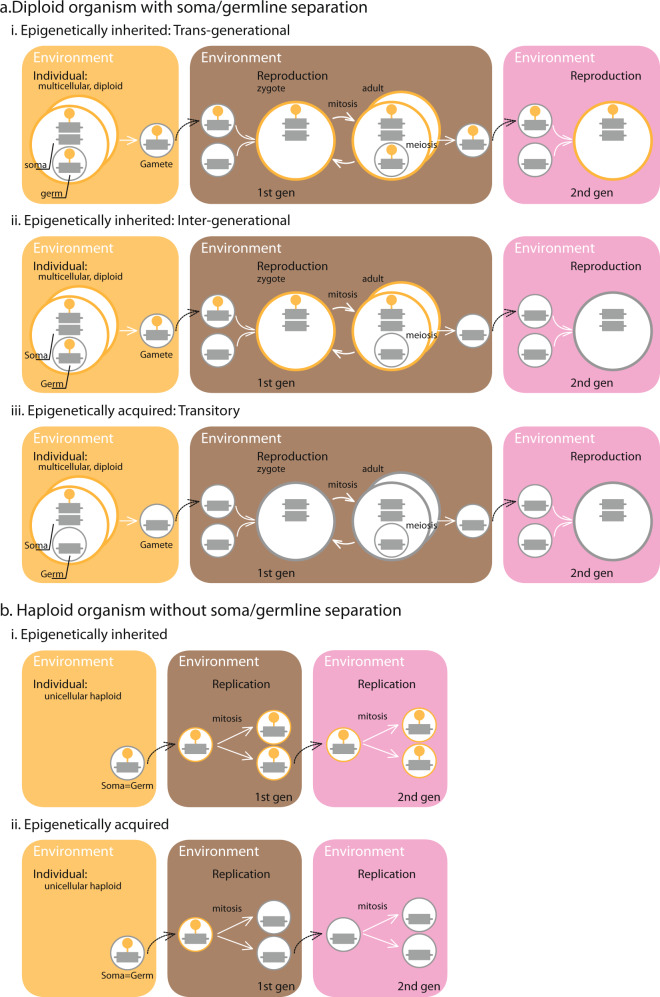
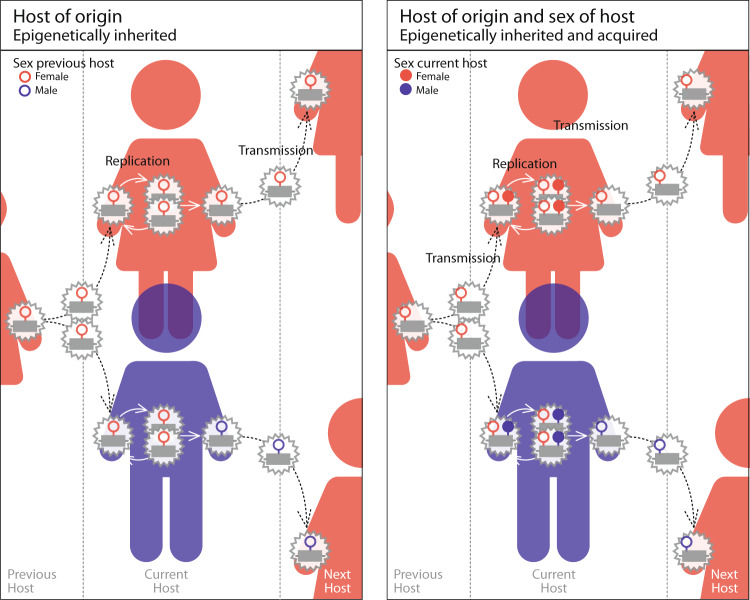
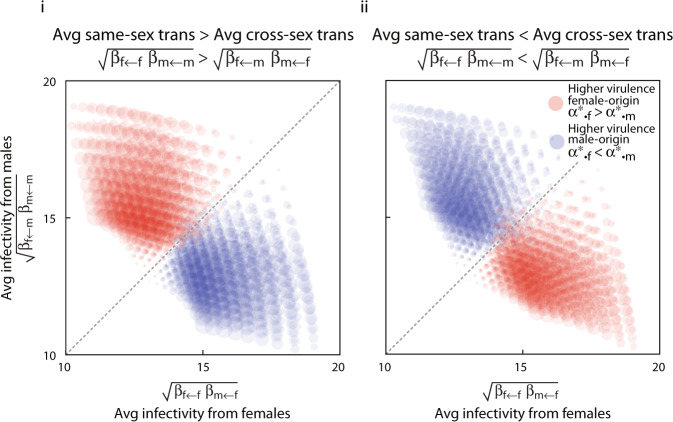
Genes with identical DNA sequence may show differential expression because of epigenetic marks. Where epigenetic marks respond to past conditions, they represent a form of “memory”. Despite their medical relevance, the impact of memories on the evolution of infectious diseases has rarely been considered. Here we explore the evolution of virulence in pathogens that carry memories of the sex of their previous host. We show that this form of memory provides information about the sex of present and future hosts when the sexes differ in their pathogen’s transmission pattern. Memories of past hosts enable the evolution of greater virulence in infections originating from one sex and infections transmitted across sexes. Thus, our results account for patterns of virulence that have, to date, defied medical explanation. In particular, it has been observed that girls infected by boys (or boys infected by girls) are more likely to die from measles, chickenpox and polio than girls infected by girls (or boys infected by boys). We also evaluate epigenetic therapies that tamper with the memories of infecting pathogens. More broadly, our findings imply that pathogens can be selected to carry memories of past environments other than sex. This identifies new directions in personalised medicine.
Overview
The claims and statistics of this paper haven’t been checked yet.
Free: it reads the open-access text and checks the first 5 claims that cite a source we can check. Create a free account to check every claim.
Integrity signals
Registry
Cites
Statistics
Figures
Verification
Claims the paper makes
The claims and statistics of this paper haven’t been checked yet.
Free: it reads the open-access text and checks the first 5 claims that cite a source we can check. Create a free account to check every claim.
Claims other papers make about this one
Each is checked against this paper’s own text: does it say what the citing paper says it does?
The source backs part of the claim, not all of it — or backs it for a different population, condition or comparison.
In the citing paper
“These mechanisms are therefore considered key to the evolution of the onset and manifestation of infectious diseases (70, 71).”
From Transcriptomics and Phenotyping Define Genetic Signatures Associated with Echinocandin Resistance in Candida auris (2022) · cites this paper as [70]
Experimental — accuracy not yet measured
Self-check
Percentages, sums and reported differences re-computed from the paper’s own numbers.
The self-check needs the paper’s full text.
Citations
Cites
Epigenetics in human disease and prospects for epigenetic therapy
Egger, G., Liang, G., Aparicio, A., & Jones, P. A. (2004) · Nature · doi:10.1038/nature02625 · Cited by 3,232
Transgenerational epigenetic inheritance: myths and mechanisms
Heard, E., & Martienssen, R. A. (2014) · Cell · doi:10.1016/j.cell.2014.02.045 · Cited by 1,864 · cited 5×
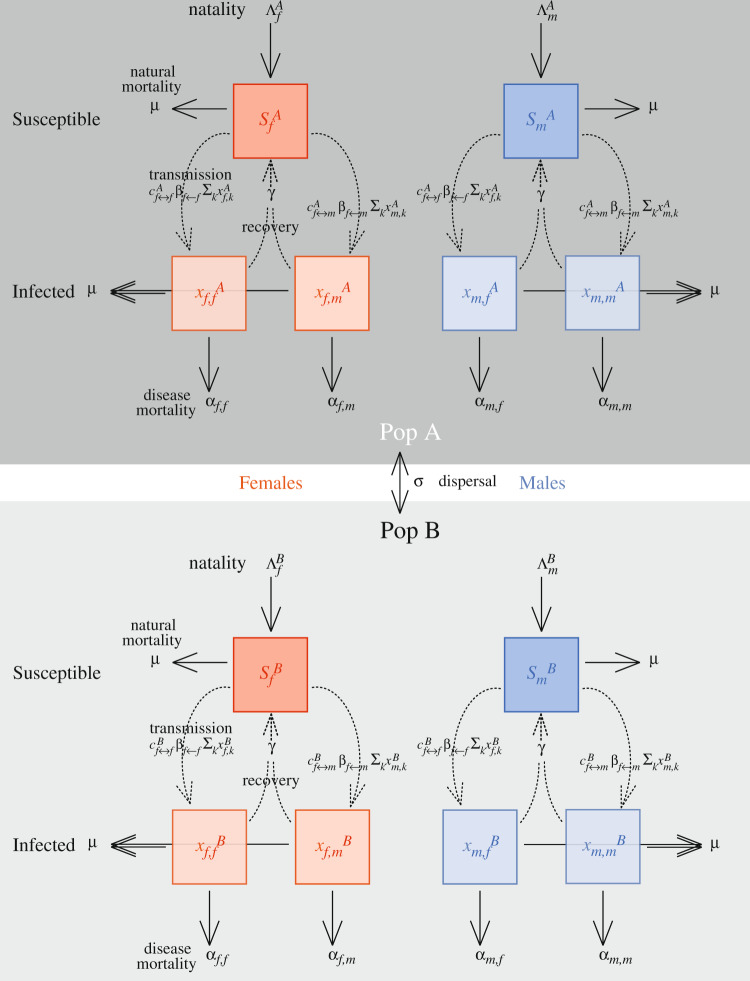
“(2) expresses the rate at which secondary i ← j infections in subpopulation l rise with increasing mutant virulence.”
BackgroundInfluentialJablonka, E., & Raz, G. (2009) · The Quarterly Review of Biology · doi:10.1086/598822 · Cited by 1,662
Coevolution of hosts and parasites
Anderson, R. M., & May, R. M. (1982) · Parasitology · doi:10.1017/s0031182000055360 · Cited by 1,630
Targeting the cancer epigenome for therapy
Jones, P. A., Issa, J.-P. J., & Baylin, S. (2016) · Nature Reviews Genetics · doi:10.1038/nrg.2016.93 · Cited by 1,128
Epigenetic transmission of the impact of early stress across generations
Franklin, T. B., Russig, H., Weiss, I. C., Gräff, J., Linder, N., Michalon, A., Vizi, S., & Mansuy, I. M. (2010) · Biological Psychiatry · doi:10.1016/j.biopsych.2010.05.036 · Cited by 1,125
Virulence evolution and the trade‐off hypothesis: history, current state of affairs and the future
ALIZON, S., HURFORD, A., MIDEO, N., & VAN BAALEN, M. (2009) · Journal of Evolutionary Biology · doi:10.1111/j.1420-9101.2008.01658.x · Cited by 932
Epigenetic modulators, modifiers and mediators in cancer aetiology and progression
Feinberg, A. P., Koldobskiy, M. A., & Göndör, A. (2016) · Nature Reviews Genetics · doi:10.1038/nrg.2016.13 · Cited by 841
Epigenetic Gene Regulation in the Bacterial World
Casadesús, J., & Low, D. (2006) · Microbiology and Molecular Biology Reviews · doi:10.1128/mmbr.00016-06 · Cited by 646
A Biologist's Guide to Mathematical Modeling in Ecology and Evolution
Otto, S. P., & Day, T. (2007) · Princeton University Press eBooks · doi:10.1515/9781400840915 · Cited by 589
How to Make a Kin Selection Model
Taylor, P. D., & Frank, S. A. (1996) · Journal of Theoretical Biology · doi:10.1006/jtbi.1996.0075 · Cited by 581
Bartolomei, M. S., & Ferguson-Smith, A. C. (2011) · Cold Spring Harbor Perspectives in Biology · doi:10.1101/cshperspect.a002592 · Cited by 518
Genomic imprinting and the strange case of the insulin-like growth factor II receptor
Halg, D., & Graham, C. (1991) · Cell · doi:10.1016/0092-8674(91)90256-x · Cited by 494
The role of genomic imprinting in biology and disease: an expanding view
Peters, J. (2014) · Nature Reviews Genetics · doi:10.1038/nrg3766 · Cited by 432
Transgenerational inheritance: Models and mechanisms of non–DNA sequence–based inheritance
Miska, E. A., & Ferguson-Smith, A. C. (2016) · Science · doi:10.1126/science.aaf4945 · Cited by 367
The adaptive evolution of virulence: a review of theoretical predictions and empirical tests
CRESSLER, C. E., McLEOD, D. V., ROZINS, C., VAN DEN HOOGEN, J., & DAY, T. (2016) · Parasitology · doi:10.1017/s003118201500092x · Cited by 358
Self-citationBiological Differences Between the Sexes and Susceptibility to Tuberculosis
Nhamoyebonde, S., & Leslie, A. (2014) · Journal of Infectious Diseases · doi:10.1093/infdis/jiu147 · Cited by 313
A Unified Approach to the Evolutionary Consequences of Genetic and Nongenetic Inheritance
Day, T., & Bonduriansky, R. (2011) · The American Naturalist · doi:10.1086/660911 · Cited by 305
Sánchez-Romero, M. A., & Casadesús, J. (2020) · Nature Reviews Microbiology · doi:10.1038/s41579-019-0286-2 · Cited by 280
Epigenetics of Host–Pathogen Interactions: The Road Ahead and the Road Behind
Gómez-Díaz, E., Jordà, M., Peinado, M. A., & Rivero, A. (2012) · PLoS Pathogens · doi:10.1371/journal.ppat.1003007 · Cited by 269 · cited 2×
“Briefly, results are obtained by guessing the ES levels of virulence, then carrying out the following five-step procedure: (i) Substitute the most recent guess into the system of equations in (1), then integrate forward in time to find the equilibrium levels of susceptible and infected hosts.”
BackgroundMethodThe adaptive advantage of phenotypic memory in changing environments
Jablonka, E., Oborny, B., Molnár, I., Kisdi, É., Hofbauer, J., & Czárán, T. (1995) · Philosophical Transactions of the Royal Society of London. Series B: Biological Sciences · doi:10.1098/rstb.1995.0147 · Cited by 247
EVOLUTION OF MULTIHOST PARASITES
Gandon, S. (2004) · Evolution · doi:10.1111/j.0014-3820.2004.tb01669.x · Cited by 245
Epigenetic memory at malaria virulence genes
Chookajorn, T., Dzikowski, R., Frank, M., Li, F., Jiwani, A. Z., Hartl, D. L., & Deitsch, K. W. (2007) · Proceedings of the National Academy of Sciences · doi:10.1073/pnas.0609084103 · Cited by 230
Effects of Copper Chelation on BRAFV600E Positive Colon Carcinoma Cells
Baldari, S., Di Rocco, G., Heffern, M. C., Su, T. A., Chang, C. J., & Toietta, G. (2019) · Cancers · doi:10.3390/cancers11050659 · Cited by 210
EVOLUTION OF MULTIHOST PARASITES
Gandon, S. (2004) · Evolution · doi:10.1554/03-390 · Cited by 194
Sex Differences in Infectious Diseases-Common but Neglected
van Lunzen, J., & Altfeld, M. (2014) · Journal of Infectious Diseases · doi:10.1093/infdis/jiu159 · Cited by 176
Genomic Imprinting: Insights From Plants
Gehring, M. (2013) · Annual Review of Genetics · doi:10.1146/annurev-genet-110711-155527 · Cited by 175
Sexual dimorphism in bacterial infections
Vázquez-Martínez, E. R., García-Gómez, E., Camacho-Arroyo, I., & González-Pedrajo, B. (2018) · Biology of Sex Differences · doi:10.1186/s13293-018-0187-5 · Cited by 171
Inheritable Effect of Unpredictable Maternal Separation on Behavioral Responses in Mice
Weiss, I. C., Franklin, T. B., Vizi, S., & Mansuy, I. M. (2011) · Frontiers in Behavioral Neuroscience · doi:10.3389/fnbeh.2011.00003 · Cited by 170
Volz, J. C., Bártfai, R., Petter, M., Langer, C., Josling, G. A., Tsuboi, T., Schwach, F., Baum, J., Rayner, J. C., Stunnenberg, H. G., et al. (2012) · Cell Host & Microbe · doi:10.1016/j.chom.2011.11.011 · Cited by 165
Sex-Based Differences in HIV Type 1 Pathogenesis
Addo, M. M., & Altfeld, M. (2014) · Journal of Infectious Diseases · doi:10.1093/infdis/jiu175 · Cited by 162
Natural History and Management of Hepatitis C: Does Sex Play a Role?
Baden, R. P., Rockstroh, J. K., & Buti, M. (2014) · The Journal of Infectious Diseases · doi:10.1093/infdis/jiu057 · Cited by 159
Virulence‐driven trade‐offs in disease transmission: A meta‐analysis*
Acevedo, M. A., Dillemuth, F., Flick, A. J., Faldyn, M. J., & Elderd, B. D. (2019) · Evolution · doi:10.1111/evo.13692 · Cited by 155
McNamara, J. M., Dall, S. R. X., Hammerstein, P., & Leimar, O. (2016) · Ecology Letters · doi:10.1111/ele.12663 · Cited by 138
When is incomplete epigenetic resetting in germ cells favoured by natural selection?
Uller, T., English, S., & Pen, I. R. (2015) · Proceedings of the Royal Society B Biological Sciences · doi:10.1098/rspb.2015.0682 · Cited by 119
The Information Value of Non-Genetic Inheritance in Plants and Animals
English, S., Pen, I. R., Shea, N. J., & Uller, T. (2015) · PLoS ONE · doi:10.1371/journal.pone.0116996 · Cited by 101
Using sociometers to quantify social interaction patterns
Onnela, J.-P. “., Waber, B. N., Pentland, A., Schnorf, S., & Lazer, D. M. J. (2014) · Scientific Reports · doi:10.1038/srep05604 · Cited by 99
Gabriel, G., & Arck, P. C. (2014) · Journal of Infectious Diseases · doi:10.1093/infdis/jiu020 · Cited by 93
Epigenetic mechanisms regulate stage differentiation in the minimized protozoan Giardia lamblia
Sonda, S., Morf, L., Bottová, I., Baetschmann, H., Rehrauer, H., Caflisch, A., Hakimi, M., & Hehl, A. B. (2010) · Molecular Microbiology · doi:10.1111/j.1365-2958.2010.07062.x · Cited by 87
DNA hypomethylation in 5-azacytidine-induced early-flowering lines of flax
Fieldes, M. A., Schaeffer, S. M., Krech, M. J., & Brown, J. C. L. (2005) · Theoretical and Applied Genetics · doi:10.1007/s00122-005-2005-9 · Cited by 85
DNA methylation regulates phenotype-dependent transcriptional activity in Candida albicans
Mishra, P. K., Baum, M., & Carbon, J. (2011) · Proceedings of the National Academy of Sciences · doi:10.1073/pnas.1109631108 · Cited by 84
Epigenetic Regulation of Virulence Gene Expression in Parasitic Protozoa
Duraisingh, M. T., & Horn, D. (2016) · Cell Host & Microbe · doi:10.1016/j.chom.2016.04.020 · Cited by 75
Gene-Specific Targeting of DNA Methylation in the Mammalian Genome
Urbano, A., Smith, J., Weeks, R. J., & Chatterjee, A. (2019) · Cancers · doi:10.3390/cancers11101515 · Cited by 72
The epigenome: the next substrate for engineering
Park, M., Keung, A. J., & Khalil, A. S. (2016) · Genome biology · doi:10.1186/s13059-016-1046-5 · Cited by 61
The evolution of sex-specific virulence in infectious diseases
Úbeda, F., & Jansen, V. A. A. (2016) · Nature Communications · doi:10.1038/ncomms13849 · Cited by 61
Self-citationEpigenetic Regulation of Viral Biological Processes
Balakrishnan, L., & Milavetz, B. I. (2017) · Viruses · doi:10.3390/v9110346 · Cited by 60
Ukaegbu, U. E., Zhang, X., Heinberg, A. R., Wélé, M., Chen, Q., & Deitsch, K. (2015) · PLoS Genetics · doi:10.1371/journal.pgen.1005234 · Cited by 56
Aaby, P. (1995) · Social Science & Medicine · doi:10.1016/0277-9536(95)00038-9 · Cited by 46
Influence of cross-sex transmission on measles mortality in rural Senegal
Aaby, P. (1992) · The Lancet · doi:10.1016/0140-6736(92)91470-s · Cited by 40
Role of Epigenetics in EBV Regulation and Pathogenesis
Niller, H. H., Tarnai, Z., Decsi, G., Zsedényi, Á., Bánáti, F., & Minárovits, J. (2014) · Future Microbiology · doi:10.2217/fmb.14.41 · Cited by 33
Cross-Sex Transmission of Infection and Increased Mortality Due to Measles
Aaby, P., Bukh, J., HOFF, G., Lisse, I. M., & Smits, A. J. (1986) · Clinical Infectious Diseases · doi:10.1093/clinids/8.1.138 · Cited by 28
Epigenetic determinants of phenotypic plasticity in Candida albicans
Rai, L. S., Singha, R., Brahma, P., & Sanyal, K. (2017) · Fungal Biology Reviews · doi:10.1016/j.fbr.2017.07.002 · Cited by 26
The Challenge of Infectious Disease: Time to Take Gender into Account
Tolhurst, R., de Koning, K. A., Price, J., Kemp, J., Theobald, S., & Squire, S. B. (2002) · Journal of Health Management · doi:10.1177/097206340200400204 · Cited by 24
A Household Study of Chickenpox in Guinea-Bissau: Intensity of Exposure is a Determinant of Severity
Poulsen, A., Qureshi, K., Lisse, I. M., Kofoed, P., Nielsen, J. O., Vestergaard, B. F., & Aaby, P. (2002) · Journal of Infection · doi:10.1053/jinf.2002.1049 · Cited by 22
Nielsen, N. M., Wohlfahrt, J., Melbye, M., Mølbak, K., & Aaby, P. (2002) · Scandinavian Journal of Infectious Diseases · doi:10.1080/00365540110080160 · Cited by 12
Muzny, C. A., Kapil, R., Austin, E. L., Hook, E. W., & Geisler, W. M. (2014) · Sexual Health · doi:10.1071/sh14181 · Cited by 8
Using sociometers to quantify social interaction patternsPreprint
Onnela, J., Waber, B. N., Alex, et al. (2014) · arXiv (Cornell University) · doi:10.48550/arxiv.1405.6224 · Cited by 4
Cited by
An ancestral molecular response to nanomaterial particulates
del Giudice, G., Serra, A., Saarimäki, L. A., Kotsis, K., Rouse, I., Colibaba, S. A., Jagiełło, K., Mikołajczyk, A., Fratello, M., Papadiamantis, A. G., et al. (2023) · Nature Nanotechnology · doi:10.1038/s41565-023-01393-4 · Cited by 61
Jenull, S., Shivarathri, R., Tsymala, I., Penninger, P., Trinh, P.-C., Nogueira, F., Chauhan, M., Singh, A., Petryshyn, A., Stoiber, A., et al. (2022) · mBio · doi:10.1128/mbio.00799-22 · Cited by 32
“to the evolution of the onset and manifestation of infectious diseases (70, 71).”
BackgroundCellular and Natural Viral Engineering in Cognition-Based Evolution
Miller, W. B., Reber, A. S., Marshall, P., & Baluška, F. (2023) · Communicative & Integrative Biology · doi:10.1080/19420889.2023.2196145 · Cited by 25
“Prior configurations that contribute to adaptation have deterministic features [224].”
BackgroundThe lessons of COVID-19, SARS, and MERS: Implications for preventive strategies
Semenova, Y. M., Trenina, V., Pivina, L. M., Glushkova, N., Е.Т., Ж., Ospanov, E., & Bjørklund, G. (2022) · International Journal of Healthcare Management · doi:10.1080/20479700.2022.2051126 · Cited by 13
“pathogens or even have congenital immunity to certain pathogen groups [28].”
BackgroundNing, K., Sun, T., Wang, Z., Li, H., Fang, P., Cai, X., Wu, X., Xu, M., & Xu, P. (2024) · Journal of the Science of Food and Agriculture · doi:10.1002/jsfa.13429 · Cited by 5
Metadata
- Authors
- McLeod, D. V., Wild, G., & Úbeda, F.
- Affiliations
- Centre National de la Recherche Scientifique (FR)
- Western University (CA)
- Royal Holloway University of London (GB)
- Corresponding author
- Úbeda, Francisco
- Venue
- Nature Communications
- Published
- 2021-07-13
- Volume
- 12
- Issue
- 1
- Pages
- 4273-4273
- ISSN
- 2041-1723 (ISSN-L)
- PMC
- PMC8277771
- OpenAlex
- W3179991202
- Cited by
- 12
- References
- 56
- Citations by year
- 2026: 3 · 2025: 1 · 2024: 2 · 2023: 3 · 2022: 3
- FWCI
- 1.13
- Type
- journal article
- Language
- en
- Open access
- gold
- doi.org
- Licence
- cc-by
- creativecommons.org/licenses/by/4.0 (tdm)
- creativecommons.org/licenses/by/4.0 (vor)
- Locations
- Nature Communications (publishedVersion, cc-by)
- PubMed Central (publishedVersion, cc-by)
- PubMed (publishedVersion)
- HAL (submittedVersion, cc-by)
- RePEc: Research Papers in Economics (submittedVersion)
- DOAJ (DOAJ: Directory of Open Access Journals) (submittedVersion, cc-by-sa)
- Scholarship@Western (Western University) (submittedVersion)
- Repository for Publications and Research Data (ETH Zurich) (submittedVersion, cc-by)
- Zenodo (CERN European Organization for Nuclear Research) (submittedVersion, cc-by)
- ETH Zürich Research Collection (cc-by)
- Funders
- Natural Sciences and Engineering Research Council of Canada
- Natural Environment Research Council (NE/T009322/1)
- Topics
- Life Sciences › Biochemistry, Genetics and Molecular Biology › Genetics › Evolution and Genetic Dynamics
- Physical Sciences › Mathematics › Applied Mathematics › Mathematical and Theoretical Epidemiology and Ecology Models
- Life Sciences › Agricultural and Biological Sciences › Ecology, Evolution, Behavior and Systematics › Animal Behavior and Reproduction
- Keywords
- epigenetic memory, virulence evolution, sex differences in infection, host sex, pathogen transmission, epigenetic modifications, measles, varicella, poliomyelitis, epigenetic therapy, personalized medicine
- MeSH terms
- Animals, Communicable Diseases, Humans, Memory, Virulence, Epigenesis, Genetic
About these checks
Registry, retraction, Cites and statistics results are computed, not judged, with one exception: a printed reference that no index lists is read once by a model before it counts as a citation error. Claims are extracted by a model and kept only when their quote appears verbatim in the text; each cited source is then checked, with a model’s help, for whether it says what the claim relies on. Those verdicts can be wrong — read the claim’s quote and the cited source before relying on one.
Statistics and arithmetic are recomputed, not judged.
Confidence bands are shown only for fields calibrated on our annotated test set. None is calibrated yet, so no band is shown.
What counts as a claim ›How we measure confidence ›How we check this ›
Are you an author, or do you see a problem with this page? Request a review
Data sources
Bibliographic data: Semantic Scholar, OpenAlex, Crossref.
Contains information from the Semantic Scholar Academic Graph Datasets, made available under the ODC Attribution License (ODC-BY 1.0).
Semantic Scholar’s data is described in: Kinney, R., et al. (2023). The Semantic Scholar Open Data Platform. arXiv:2301.10140.
