

Embodied intelligence via learning and evolution
Open accessThe DOI matches its Crossref record; 71 of the 71 references it cites were found in a registry or an index.
Abstract
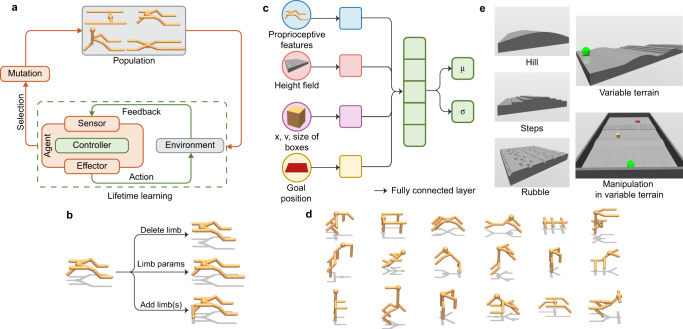
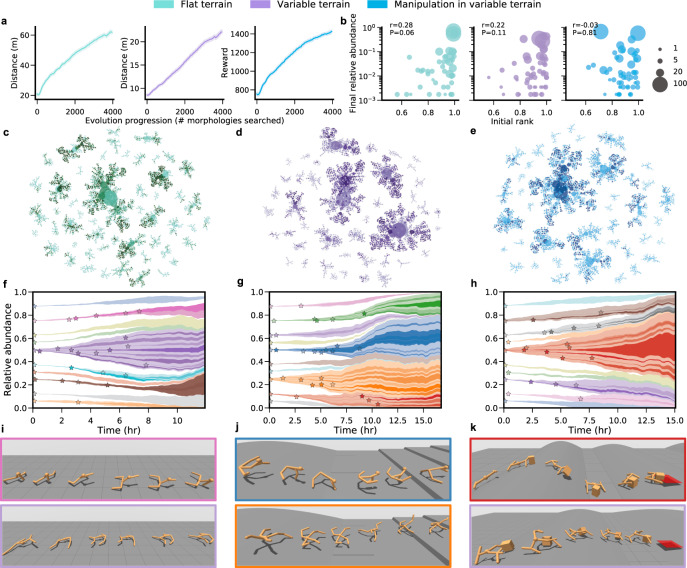
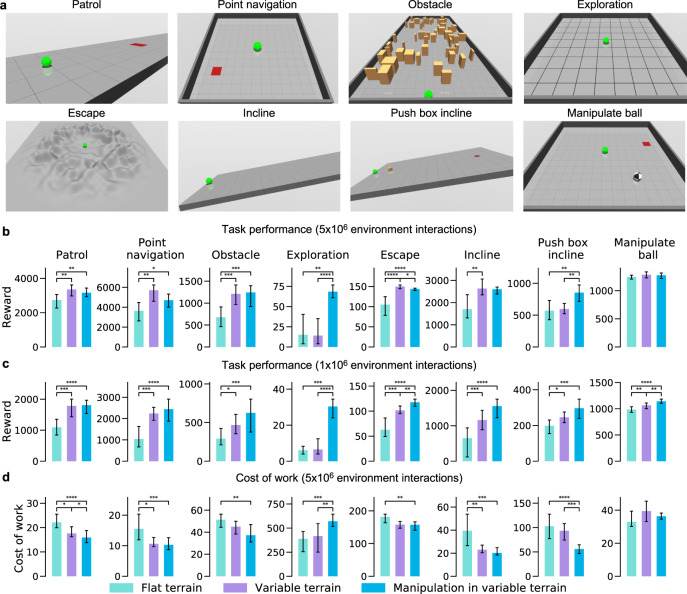
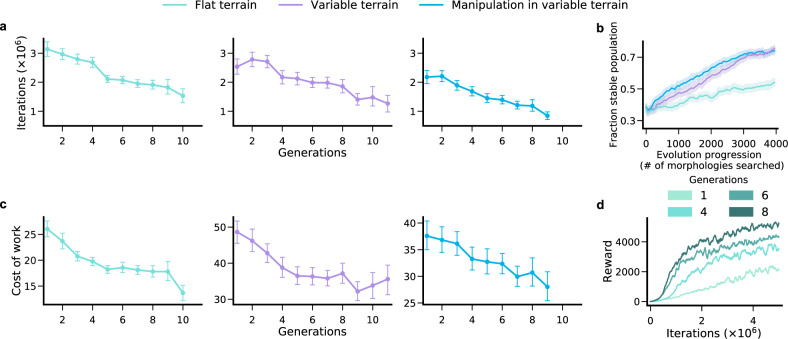
The intertwined processes of learning and evolution in complex environmental niches have resulted in a remarkable diversity of morphological forms. Moreover, many aspects of animal intelligence are deeply embodied in these evolved morphologies. However, the principles governing relations between environmental complexity, evolved morphology, and the learnability of intelligent control, remain elusive, because performing large-scale in silico experiments on evolution and learning is challenging. Here, we introduce Deep Evolutionary Reinforcement Learning (DERL): a computational framework which can evolve diverse agent morphologies to learn challenging locomotion and manipulation tasks in complex environments. Leveraging DERL we demonstrate several relations between environmental complexity, morphological intelligence and the learnability of control. First, environmental complexity fosters the evolution of morphological intelligence as quantified by the ability of a morphology to facilitate the learning of novel tasks. Second, we demonstrate a morphological Baldwin effect i.e., in our simulations evolution rapidly selects morphologies that learn faster, thereby enabling behaviors learned late in the lifetime of early ancestors to be expressed early in the descendants lifetime. Third, we suggest a mechanistic basis for the above relationships through the evolution of morphologies that are more physically stable and energy efficient, and can therefore facilitate learning and control.
Overview
The claims and statistics of this paper haven’t been checked yet.
Free: it reads the open-access text and checks the first 5 claims that cite a source we can check. Create a free account to check every claim.
Integrity signals
Registry
Cites
Statistics
Figures
Verification
Claims the paper makes
The claims and statistics of this paper haven’t been checked yet.
Free: it reads the open-access text and checks the first 5 claims that cite a source we can check. Create a free account to check every claim.
Claims other papers make about this one
Each is checked against this paper’s own text: does it say what the citing paper says it does?
The source backs part of the claim, not all of it — or backs it for a different population, condition or comparison.
In the citing paper
“our approach uniquely evolves embodied agents with both eyes and behaviors together”
From What if eye...? Computationally recreating vision evolution (2025) · cites this paper as [40]
Experimental — accuracy not yet measuredThe source backs part of the claim, not all of it — or backs it for a different population, condition or comparison.
In the citing paper
“Spatial cognition, the ability to acquire, organize, exploit, and update knowledge about external space, is fundamental to both human beings and artificial intelligence (AI)1,2.”
From Brain-inspired spatial intelligence for embodied agents (2026) · cites this paper as [1]
Experimental — accuracy not yet measured
Self-check
Percentages, sums and reported differences re-computed from the paper’s own numbers.
The self-check needs the paper’s full text.
Citations
Cites
Deep Residual Learning for Image Recognition
He, K., Zhang, X., Ren, S., & Sun, J. (2016) · 2016 IEEE Conference on Computer Vision and Pattern Recognition (CVPR) · doi:10.1109/cvpr.2016.90 · Cited by 235,474
Proximal Policy Optimization Algorithms
Schulman, J., Wolski, F., Dhariwal, P., Radford, A., & Klimov, O. (2017) · arXiv · doi:10.48550/arxiv.1707.06347 · Cited by 40,403 · cited 4×
“1b) that are learned via proximal policy optimization (PPO) 28 .”
BackgroundMethodInfluentialLanguage Models are Few-Shot Learners
Brown, T. B., Mann, B., Ryder, N., Subbiah, M., Kaplan, J., Dhariwal, P., Neelakantan, A., Shyam, P., Sastry, G., Askell, A., et al. (2020) · arXiv · doi:10.48550/arxiv.2005.14165 · Cited by 23,372 · cited 2×
“In contrast, the field of artificial intelligence (AI) has focused primarily on disembodied cognition, for example in domains of language 6 , vision 7 or games 8 .”
BackgroundMastering the game of Go with deep neural networks and tree search
Silver, D., Huang, A., Maddison, C. J., Guez, A., Sifre, L., van den Driessche, G., Schrittwieser, J., Antonoglou, I., Panneershelvam, V., Lanctot, M., et al. (2016) · Nature · doi:10.1038/nature16961 · Cited by 15,612 · cited 2×
“2i-k, 7, 8).”
BackgroundMomentum Contrast for Unsupervised Visual Representation Learning
He, K., Fan, H., Wu, Y., Xie, S., & Girshick, R. (2020) · 2020 IEEE/CVF Conference on Computer Vision and Pattern Recognition (CVPR) · doi:10.1109/cvpr42600.2020.00975 · Cited by 13,347
A simple framework for contrastive learning of visual representations
Chen, T., Kornblith, S., Norouzi, M., & Hinton, G. (2020) · arXiv · doi:10.48550/arxiv.2002.05709 · Cited by 10,857
Scaling Laws for Neural Language Models
Kaplan, J., McCandlish, S., Henighan, T., Brown, T. B., Chess, B., Child, R., Gray, S., Radford, A., Wu, J., & Amodei, D. (2020) · arXiv · doi:10.48550/arxiv.2001.08361 · Cited by 9,550
Design, fabrication and control of soft robots
Rus, D., & Tolley, M. T. (2015) · Nature · doi:10.1038/nature14543 · Cited by 5,825
MuJoCo: A physics engine for model-based control
Todorov, E., Erez, T., & Tassa, Y. (2012) · 2012 IEEE/RSJ International Conference on Intelligent Robots and Systems · doi:10.1109/iros.2012.6386109 · Cited by 4,767
Neural Architecture Search with Reinforcement Learning
Zoph, B., & Le, Q. V. (2016) · arXiv (Cornell University) · doi:10.48550/arxiv.1611.01578 · Cited by 3,974
Research works printed but not linked: 15
- Darwin, C. On the Origin of Species by Means of Natural Selection, Vol. 167 (John Murray, London, 1859).
- Wang, T., Zhou, Y., Fidler, S. & Ba, J. In International Conference on Learning Representations (2019).
- Luck, K. S., Amor, H. B. & Calandra, R. Data-efficient co-adaptation of morphology and behaviour with deep reinforcement learning. in Conference on Robot Learning, 854–869 (PMLR, 2020).
- Zoph, B. & Le, Q. V. In International Conference on Learning Representations (2017).
- Sutton, R. S. & Barto, A. G. Reinforcement Learning: An Introduction (MIT Press, 2018).
- Turney, P. D. In ICML Workshop on Evolutionary Computation and Machine Learning, 135–142 (1996).
- Hinton GE Nowlan SJ How learning can guide evolution Complex Syst. 1987 1 495 502
- Ackley D Littman M Interactions between learning and evolution Artif. life II 1991 10 487 509
- Bongard, J. C. & Paul, C. in From Animals to Animats: The Sixth International Conference on the Simulation of Adaptive Behaviour (Citeseer, 2000).
- Wang, T., Liao, R., Ba, J. & Fidler, S. In International Conference on Learning Representations (2018).
- Pathak, D., Lu, C., Darrell, T., Isola, P. & Efros, A. A. In Advances in Neural Information Processing Systems (eds Wallach, H. et al.) Vol. 32 (Curran Associates, Inc., 2019).
- Huang, W., Mordatch, I. & Pathak, D. One policy to control them all: shared modular policies for agent-agnostic control. In International Conference on Machine Learning, 4455–4464 (PMLR, 2020).
- Schulman, J., Moritz, P., Levine, S., Jordan, M. & Abbeel, P. In Proceedings of the International Conference on Learning Representations (ICLR) (2016).
- Henderson, P. et al. In Thirty-Second AAAI Conference on Artificial Intelligence (2018).
- Siciliano, B. & Khatib, O. In Springer Handbooks (2016).
Cited by
Items 101–200 of 350
Sariman, C., Hallawa, A., & Schmeink, A. (2025) · Ocean Engineering · doi:10.1016/j.oceaneng.2025.121841 · Cited by 7
Optomechanical reservoir computing
Kiyabu, S., Nelson, D., Thomson, J., Schultz, B., Vincent, T., Hertlein, N., Gillman, A. S., Criner, A. K., & Buskohl, P. R. (2025) · Proceedings of the National Academy of Sciences · doi:10.1073/pnas.2424991122 · Cited by 13
Zhao, P., Yao, M., Xiao, X., & Cui, H. (2025) · Astrodynamics · doi:10.1007/s42064-024-0259-8 · Cited by 7
“[40] proposed DRL, which combines the representation learning with the global optimization of EAs to evolve diverse agent morphologies.”
Artificial Intelligence for Materials Science: Transforming Research Paradigms
Li, Y., Wang, S., Wang, J., Liu, Q., & Zhang, J. (2026) · Chemical Reviews · doi:10.1021/acs.chemrev.6c00012 · Cited by 14
Existence and practice of gaming: thoughts on the development of multi-agent system gaming
Dong, Q., Wu, Z., Lu, J., Sun, F., Wang, J., Yang, Y., & Shang, X. (2022) · Frontiers of Information Technology & Electronic Engineering · doi:10.1631/fitee.2100593 · Cited by 7
“Multi-agent gaming (MAG) algorithms based on evolutionary thought have become a hotspot in gaming research (Nowak, 2006; Hilbe et al., 2018; Omidshafiei et al., 2019; Gupta et al., 2021).”
Causal action empowerment for efficient reinforcement learning in embodied agents
Cao, H., Feng, F., Huo, J., & Gao, Y. (2025) · Science China Information Sciences · doi:10.1007/s11432-024-4396-3 · Cited by 11
Embodied Perception, Interaction, and Cognition for Wearable Robotics: A Survey
Wu, X., Liang, J., Yu, Y., Li, G., Yen, G. G., & Yu, H. (2024) · IEEE Transactions on Cognitive and Developmental Systems · doi:10.1109/tcds.2024.3463194 · Cited by 9
“This progress has introduced the notion of “embodied intelligence” (EI), where robotic systems exhibit physical intelligence and resilience [7], [8].”
Embodied and Contextual Intelligence: Towards a Policy Framework for Higher Education
Prabakaran, M. (2024) · Higher Education for the Future · doi:10.1177/23476311241286107 · Cited by 9
“Embodiment is not considered a functionality separate from its environment but is seen as a seamlessly integrated learning system, spanning from microbial cell infrastructure to the external world (Gupta et al., 2021).”
Sariman, C., Hallawa, A., & Schmeink, A. (2025) · Ocean Engineering · doi:10.1016/j.oceaneng.2025.120402 · Cited by 6
Encoding mechanical intelligence using ultraprogrammable joints
Wu, R., Girardi, L., & Mintchev, S. (2025) · Science Advances · doi:10.1126/sciadv.adv2052 · Cited by 13
Du, Y., Chen, X., Yu, Z., Meng, F., Zhou, Z., Zhang, Y., Li, Q., & Huang, Q. (2025) · Biomimetic Intelligence and Robotics · doi:10.1016/j.birob.2025.100255 · Cited by 12
Embodied intelligence for robot manipulation: development and challenges
Song, H., Wang, L., Qiao, X., Chen, Y., Sun, D. M., & Sun, Z. (2025) · Vicinagearth. · doi:10.1007/s44336-025-00020-1 · Cited by 14
“In complex, ever-changing ecosystems, learning and evolution intertwine to yield morphological diversity and robust adaptability [57].”
Learn How to See: Collaborative Embodied Learning for Object Detection and Camera Adjusting
Shen, L., Huo, C., Xu, N., Han, C., & Wang, Z. (2024) · Proceedings of the AAAI Conference on Artificial Intelligence · doi:10.1609/aaai.v38i5.28281 · Cited by 8
“This issue stimulated the exploration of active vision (Blake and Yuille 1993) and embodied intelligence (Gupta et al. 2021), which urges an agent to learn to see objects through interactions with the environment.”
BackgroundEvolving Robotic Hand Morphology Through Grasping and Learning
Yang, B., Jiang, L., Wu, W., & Zhen, R. (2024) · IEEE Robotics and Automation Letters · doi:10.1109/lra.2024.3440707 · Cited by 7
“The combination of RL and evolutionary algorithms is an intuitive approach inspired by human learning and evolution, which can be employed to optimize robot morphology [19], [20].”
BackgroundA Morphological Transfer-Based Multi-Fidelity Evolutionary Algorithm for Soft Robot Design
Zhao, J., Peng, W., Wang, H., Yao, W., & Zhou, W. (2024) · IEEE Computational Intelligence Magazine · doi:10.1109/mci.2024.3431456 · Cited by 10
“(2) Evaluating a robot design involves running a computationally expensive control simulation [8], [9].”
BackgroundEmergent behavior and neural dynamics in artificial agents tracking turbulent plumesPreprint
Singh, S. H., van Breuge, F., Rao, R. P. N., & Brunton, B. W. (2022) · doi:10.31219/osf.io/c9wtq · Cited by 6
Task-Driven Co-Design of Mobile Manipulators
Schneider, R., Honerkamp, D., Welschehold, T., & Valada, A. (2025) · IEEE Robotics and Automation Letters · doi:10.1109/lra.2025.3573622 · Cited by 11
“…conceptually follow a black-box approach that uses a decoupled inner policy optimization loop with a sampling-based outer loop to maintain a distribution over designs [27], [30], [31], [32], and directly optimize for task success across representative tasks instead of weaker correlated heuristics.”
Liu, C., Tang, D., Zhu, H., Zhang, Z., Wang, L., & Zhang, Y. (2025) · Journal of Industrial Information Integration · doi:10.1016/j.jii.2025.100943 · Cited by 19
Multi-Modal Intelligent Channel Modeling Framework for 6G-Enabled Networked Intelligent Systems
Bai, L., Han, Z., Cai, X., & Cheng, X. (2025) · IEEE Wireless Communications · doi:10.1109/mwc.2025.3624714 · Cited by 5
“The emergence of 6G-enabled intelligent systems signals a shift from “Internet intelligence” to “Embodied intelligence” ecosystems [15].”
Wang, G., Liu, J., Wang, Y., Yu, G., Yuan, S., Zhang, J. C., Zhao, D., Cheng, J., Chai, Z., & Lu, X. (2026) · ACS Nano · doi:10.1021/acsnano.6c04738 · Cited by 5
Co-Designing Manipulation Systems Using Task-Relevant Constraints
Vaish, A., & Brock, O. (2024) · Proceedings - IEEE International Conference on Robotics and Automation/Proceedings · doi:10.1109/icra57147.2024.10611686 · Cited by 5
Indoor energy-saving strategy optimization based on deep reinforcement learning and DDPG algorithm
Wan, Y., Zhai, Y., Cui, C., & Song, D. (2024) · Computing · doi:10.1007/s00607-024-01378-8 · Cited by 6
“2 [11, 12] (Fig.”
Surface-based manipulation with modular foldable robots
Wang, Z., Demirtas, S., Zuliani, F., & Paik, J. K. (2026) · npj Robotics · doi:10.1038/s44182-025-00069-6 · Cited by 7
“Physical morphologies significantly shape how a system interacts with and perceives its environment [1–6].”
Evolutionary Computation and the Reinforcement Learning Problem
Kelly, S., & Schossau, J. (2023) · Genetic and evolutionary computation · doi:10.1007/978-981-99-3814-8_4 · Cited by 6
C2: Co-design of Robots via Concurrent-Network Coupling Online and Offline Reinforcement Learning
Chen, C., Xiang, P., Lu, H., Wang, Y., & Xiong, R. (2023) · IEEE/RSJ International Conference on Intelligent Robots and Systems (IROS) · doi:10.1109/iros55552.2023.10341983 · Cited by 11
“Morphology-changing methods [6]–[8], [13] change the robot’s topology, whereas unchanging methods [5], [9], [14]–[16] do not.”
BackgroundHorvath, A.-S., & Pouliou, P. (2024) · CRC Press eBooks · doi:10.1201/9781003425724-46 · Cited by 9
From CAD to URDF: Co-Design of a Jet-Powered Humanoid Robot Including CAD Geometry
Vanteddu, P. R., Nava, G., Bergonti, F., L’Erario, G., Paolino, A., & Pucci, D. (2024) · IEEE/RSJ International Conference on Intelligent Robots and Systems (IROS) · doi:10.1109/iros58592.2024.10802023 · Cited by 5
“This concept, known as embodied intelligence , leverages the idea that these capabilities should be addressed collectively rather than individually [1], [2].”
CrowdIM: Crowd-Inspired Intelligent Manufacturing Space Design
Guo, B., Liu, J., Liu, S., Wang, J., Li, M., Wang, C., & Yu, Z. (2022) · IEEE Internet of Things Journal · doi:10.1109/jiot.2022.3165523 · Cited by 5
“Recently, Li et al. from Stanford University proposed a new computational framework—deep evolutionary reinforcement learning (DERL) [53]—a computational framework which can evolve diverse agent morphologies to learn challenging locomotion and manipulation tasks in complex environments.”
BackgroundWhat if eye...? Computationally recreating vision evolution
Tiwary, K., Young, A., Tasneem, Z., Klinghoffer, T., Dave, A., Poggio, T., Nilsson, D.-E., Cheung, B., & Raskar, R. (2025) · Science Advances · doi:10.1126/sciadv.ady2888 · Cited by 10
“While previous work has used evolutionary algorithms to independently design optical systems ( 38 , 39 ), embodied agent morphologies ( 7 , 40 , 41 ), or visually guided behaviors ( 42 ), our approach uniquely evolves embodied agents with both eyes and behaviors together.”
SPC: Self-supervised point cloud completion
Song, J., Wu, X., Yao, J., Zhang, Q., Shang, C., Qian, Q., & Song, J. (2025) · Neural Networks · doi:10.1016/j.neunet.2025.108107 · Cited by 5
Gu, J., Ye, Z., Rae-Grant, T., Wang, S., Zhao, D. X., Hester, J. D., Webster‐Wood, V. A., & Yao, L. (2025) · Nature Communications · doi:10.1038/s41467-025-63373-7 · Cited by 9
“Rigid body simulators like Newton Game Dynamics 21 , Open Dynamics Engine 37 , Mujoco, and Bullet 2 – 4 provide a balance of speed and accuracy, making them suitable for interactive use and optimization.”
Li, W., Wang, Z., Guan, C., Chen, C., Wang, B., Ren, P., Qiu, Y., Zhang, Q., Wang, H., Wang, D., et al. (2025) · Robotics and Autonomous Systems · doi:10.1016/j.robot.2025.105245 · Cited by 11
Embodied Interactive Intelligence Towards Autonomous Driving
Ma, N., Pan, J., Liu, Y., Yang, Y., Han, Y., Guo, J., Wu, Z., Yang, Z., Yang, Z., & Li, D. (2025) · Engineering · doi:10.1016/j.eng.2025.09.032 · Cited by 13
Review of optical pre-sensor computing
Huang, Z., Wang, C., Shi, W., Wu, S., He, Y., Li, Y., Zhang, C., & Chen, H. (2026) · PhotoniX Synergy · doi:10.1007/s44519-026-00009-3 · Cited by 6
“Machine vision constitutes the perceptual front end of physical AI, whereas physical AI extends vision-based perception into an embodied system that integrates sensing, reasoning, planning and action in the physical world [92–94].”
Embodied intelligence for drumming; a reinforcement learning approach to drumming robots
Karbasi, S. M., Jensenius, A. R., Godøy, R. I., & Tørresen, J. (2024) · Frontiers in Robotics and AI · doi:10.3389/frobt.2024.1450097 · Cited by 9
Embodied Intelligent Driving: Key Technologies and Applications
Wang, Y., Chen, S., Li, Z., Shen, T., & Wang, K. (2024) · IEEE International Conference on Digital Twins and Parallel Intelligence (DTPI) · doi:10.1109/dtpi61353.2024.10778821 · Cited by 6
“Fei-Fei Li has further refined the concept of embodied intelligence, emphasizing that its core lies not only in its physical entity but also in its dynamic interaction with the environment and the capabilities and demands demonstrated through such interaction [5].”
Embodied Intelligence in Additive Manufacturing
Xu, J., Xie, Y. H., & Iida, F. (2024) · IOP Conference Series Materials Science and Engineering · doi:10.1088/1757-899x/1321/1/012005 · Cited by 7
Efficient and Diverse Generative Robot Designs Using Evolution and Intrinsic Motivation
Goff, L. K. L., & Smith, S. C. (2025) · Proceedings - IEEE International Conference on Robotics and Automation/Proceedings · doi:10.1109/icra55743.2025.11127289 · Cited by 6
“In comparison, authors in [6] use MEL with deep RL using 1152 CPUs to generate 4000 designs.”
InfluentialLearning for embodiment and embodiment for learning
Liu, H., Guo, D., & Huang, K. (2025) · Nature Reviews Electrical Engineering · doi:10.1038/s44287-025-00203-4 · Cited by 11
“After all, interaction is not limited to the physical environment, and other agents are also good sources for learning 5,14 .”
Co-optimization of robotic design and skill inspired by human hand evolution
Yang, B., Jiang, L., Bao, G., Yu, H., & Zhou, X. (2022) · Bioinspiration & Biomimetics · doi:10.1088/1748-3190/ac884e · Cited by 5
“In 2021, a novel algorithm, DERL [31], was used for learning gait and optimizing the morphology of a multi-legged robot in a simulated multi-terrain environment, demonstrating for the first time the morphological Baldwin effect in evolutionary developmental biology.”
MethodLarge Language Model for Humanoid Cognition in Proactive Human-Robot Collaboration
Li, S., Wang, Z., Yan, Z., Gao, Y., Jiang, H., & Zheng, P. (2024) · IEEE International Conference on Automation Science and Engineering (CASE) · doi:10.1109/case59546.2024.10711379 · Cited by 9
“Embodied intelligence [20] refers to the ability of human and robotic agents to learn intelligent behaviors by utilizing multi-modal information from the surrounding environment, such as vision, language, haptics, etc.”
BackgroundRobot Embodied Dynamic Tactile Perception of Liquid in Containers
Xu, Y., Ma, Y., Lin, W., Sun, Z., Zhang, T., & Wang, Z. (2024) · IEEE-RAS International Conference on Humanoid Robots (Humanoids) · doi:10.1109/humanoids58906.2024.10769944 · Cited by 6
“This capability enables them to perceive interaction processes, thus facilitating embodied intelligence [4], [5].”
Brock, O. (2024) · IOP Conference Series Materials Science and Engineering · doi:10.1088/1757-899x/1321/1/012001 · Cited by 8
“Morphological Intelligence (MI) is the “ability of a morphology to facilitate the learning of novel tasks” [Gupta et al., 2021].”
Conducting eco-hydraulic simulation experiments using embodied intelligent fish
Li, T., Zhang, C., Zhang, G., Zhou, Q., Hou, J., & Zhang, X. (2025) · Physics of Fluids · doi:10.1063/5.0259251 · Cited by 5
An energy-efficient obstacle-crossing control framework for quadruped robots
Han, J., Wan, B., Zheng, Y., & Song, Z. (2025) · Results in Engineering · doi:10.1016/j.rineng.2025.104661 · Cited by 4
A fractal gripper with switchable mode for geometry adaptive manipulation
Huang, J., Shen, J., Zheng, Y., Guo, Y., & Song, Z. (2025) · Scientific Reports · doi:10.1038/s41598-025-98752-z · Cited by 4
Liu, H., Liu, X., Huang, K., & Guo, D. (2025) · Machine learning · doi:10.1007/978-981-96-5871-8_1 · Cited by 4
Co-imitation: Learning Design and Behaviour by Imitation
Rajani, C., Arndt, K., Blanco–Mulero, D., Luck, K. S., & Kyrki, V. (2023) · Proceedings of the AAAI Conference on Artificial Intelligence · doi:10.1609/aaai.v37i5.25764 · Cited by 10
Body size as a metric for the affordable world
Feng, X., Xu, S., Li, Y., & Liu, J. (2024) · eLife · doi:10.7554/elife.90583 · Cited by 6
“This development would significantly facilitate AI’s role in robotics, particularly in actions essential for survival and goal accomplishment, a promising direction for the next breakthrough in AI (Gupta et al., 2021; Smith & Gasser, 2005).”
BackgroundActive Surface with Passive Omni-Directional Adaptation for In-Hand Manipulation
Li, S., Wan, F., & Song, C. (2024) · International Conference on Reconfigurable Mechanisms and Robots (ReMAR) · doi:10.1109/remar61031.2024.10619925 · Cited by 6
“Manipulation and locomotion share morphological intelligence fostered by the evolutional adaptation to the complex environment, which can also be achieved in robotic systems through evolutionary reinforcement learning [1], [2].”
BackgroundWhat Robot do I Need? Fast Co-Adaptation of Morphology and Control using Graph Neural NetworksPreprint
Luck, K. S., Calandra, R., & Mistry, M. (2021) · arXiv (Cornell University) · doi:10.48550/arxiv.2111.02371 · Cited by 6
“Over time, different approaches have been developed to optimize the morphology of moving machines, some considering simple or static behaviours [36, 7, 17] while others co-learn both the design and complex behaviour simultaneously [52, 10, 47].”
InfluentialA Group-Based Many-Task Collaborative Optimization Framework for Evolutionary Robots Design
Hou, Y., Zhao-ping, Y., Guo, Z., Pei, W., Wu, Y., Ge, H., Xue, B., & Zhang, M. (2025) · IEEE Transactions on Systems Man and Cybernetics Systems · doi:10.1109/tsmc.2025.3541002 · Cited by 4
“…logic of each morphology, either encoding the robot morphological parameters together with the control parameters using gene regulatory networks [32], [33] and direct coding [29], [34], [35], or using more complex methods, such as co-evolution [36] and reinforcement learning [37], [38], [39], [40].”
Embodied Intelligence for Micro‐Integrated Energy Systems: Key Technologies and Applications
Liu, D., & Wang, Y. (2025) · IET Smart Energy Systems · doi:10.1049/ses2.70012 · Cited by 4
PV-EIR: An embodied intelligent robot for solar panel cleaning in desert regions
Wang, X., Yang, L., & Zhang, D. (2026) · Journal of Industrial Information Integration · doi:10.1016/j.jii.2026.101069 · Cited by 4
6G and Embodied AI: Benefits and Risks of Increasingly Extended Minds
Farina, M., & Lavazza, A. (2026) · Neuroethics · doi:10.1007/s12152-026-09632-w · Cited by 4
Yang, X., Li, Y., Cui, T., & Bai, R. (2026) · Transportation Research Part E Logistics and Transportation Review · doi:10.1016/j.tre.2026.104885 · Cited by 3
Zhang, X., Li, C. Z., Mo, H., Jiang, Y., Cao, W., Xu, X., Jiang, W., Bing, Z., Yang, Y., Li, X., et al. (2026) · Nature Communications · doi:10.1038/s41467-026-72491-9 · Cited by 3
“Withtheriseofembodiedintelligence,therehasbeengrowinginterest in enhancing the intelligent manipulation capabilities of robotic arms, focusing primarily on rigid body designs 46 .”
Physics-constrained learning framework for trustworthy microrobot navigation autonomy
Zhao, J., Li, Y., Sun, Y. W., Wang, Y., Zhu, A., Shi, D., Li, X., Chen, Q., Yuan, C., Ferreira, A., et al. (2026) · Science Advances · doi:10.1126/sciadv.aef7326 · Cited by 3
“Reinforcement learning (RL) is an important branch of ML, which has been shining brightly in the field of embodied intelligence ( 16 ).”
Structural Optimization of Lightweight Bipedal Robot via SERL
Cheng, Y. L., Han, C., Min, Y., Liu, H., Ye, L., & Liu, H. (2024) · IEEE/RSJ International Conference on Intelligent Robots and Systems (IROS) · doi:10.1109/iros58592.2024.10801349 · Cited by 12
“In addition, [5], [6], and [7] share a common emphasis on combining evolutionary strategies with reinforcement learning techniques to address various challenges.”
Co-evolving embodied intelligence with design for artificial intelligence architecture
Dai, Y., & Wang, J. (2025) · Nature Reviews Electrical Engineering · doi:10.1038/s44287-025-00146-w · Cited by 3
“Moreover, embodied feedback seems crucial for the evolution of intelligence 5 ; feelings of pain from falling or contacting a hot surface can help robots to learn and adapt to their environments.”
Neural Network Architecture of Embodied Intelligence
Nurutdinov, A. R. (2024) · Automatic Documentation and Mathematical Linguistics · doi:10.3103/s0005105525700311 · Cited by 3
“Embodied intelligence allows organisms to control the complex ensemble of components of their bodies, ensuring adequately intelligent behavior in the real world around them [48].”
Morphology Evolution for Embodied Robot Design With a Classifier-Guided Diffusion Model
Liu, S., Yan, J., Wang, H., & Jin, Y. (2025) · IEEE Transactions on Evolutionary Computation · doi:10.1109/tevc.2025.3569723 · Cited by 4
“In evolutionary-learning-based methods, the robot’s morphology is typically represented in discrete terms [4], and the search space is intentionally designed to be large to mirror the diversity found in natural evolution.”
Chen, X., Wang, T., Li, Q., & Cai, H. (2025) · IEEE International Conference on Web Services (ICWS) · doi:10.1109/icws67624.2025.00094 · Cited by 3
Artificial Human Intelligence: The Role of Humans in the Development of Next Generation AI
Arslan, Ş. S. (2025) · IEEE Transactions on Emerging Topics in Computational Intelligence · doi:10.1109/tetci.2025.3645582 · Cited by 10
Sakharov, M., Houllier, T., & Lépine, T. (2022) · Lecture notes in networks and systems · doi:10.1007/978-3-031-19620-1_47 · Cited by 3
Do We Trust Embodied Agents who Look Like us?
Tang, L. R., & Bashir, M. N. (2023) · International Conference on Intelligent Metaverse Technologies & Applications (iMETA) · doi:10.1109/imeta59369.2023.10294444 · Cited by 4
“Given the human cortex’s significant role in visual processing, trust decisions are often based on visual cues [50].”
BackgroundeVTOL Dispatch Cost Optimization Under Time-Varying Low-Altitude Delivery Demand
Li, T., Du, Y. F., Zhang, Z., & Wang, Y. (2025) · World Electric Vehicle Journal · doi:10.3390/wevj16040220 · Cited by 3
Scanning planar Yagi-Uda antenna for fluorescence detection
Soltani, N., Esfahany, E. R., Druzhinin, S. I., Schulte, G., Müller, J. M., Sledz, F., Flatae, A. M., Butz, B., Schönherr, H., Markešević, N., et al. (2021) · Journal of the Optical Society of America B · doi:10.1364/josab.434980 · Cited by 3
Automatic robot design inspired by evolution of vertebrates
Koike, R., Ariizumi, R., & Matsuno, F. (2022) · Artificial Life and Robotics · doi:10.1007/s10015-022-00793-4 · Cited by 3
“Recent research [8] has shown the efficacy of using evolutionary algorithms for improving the morphology design and Proximal Policy Optimization (PPO) algorithm for controller design improvement.”
MethodThe evolution of goals in AI agents
Breeden, J. L. (2025) · AI and Ethics · doi:10.1007/s43681-025-00691-y · Cited by 4
“Although significant work in embodied AI is focused on AI systems deployed in the physical world, an important area of research uses simulation to study the learning and evolution of an AI within a hypothetical physical form and world [ 48 ].”
Embodied Intelligence Applications in Assistive Technologies for the Visually Impaired
Zhang, Q., & Zhou, Y. (2024) · International Conference on Robotics, Intelligent Control and Artificial Intelligence (RICAI) · doi:10.1109/ricai64321.2024.10911190 · Cited by 2
“This classification provides a structured understanding of the diverse needs within the BLV community and guides the development of targeted assistive technologies [1].”
Cross-Task Collaborative Optimization Based on Knowledge Transfer for Soft Robot Design
Zhao, J., Peng, W., Wang, H., Zhou, W., Yang, Y., & Yao, W. (2025) · IEEE Transactions on Evolutionary Computation · doi:10.1109/tevc.2025.3573828 · Cited by 5
“In the previous work on evolving soft robots, reinforcement learning (RL) has proven effective for discovering good control policies [6], [7].”
Mertan, A., & Cheney, N. (2025) · Genetic and Evolutionary Computation Conference (GECCO) · doi:10.1145/3712256.3726368 · Cited by 8
“…seen a surge of interest in brain-body co-optimization, where agents are conceptualized as a combination of morphology (often modeled by rigid links and joints, or volumetri-cally actuated voxels, in simulation) and controller (often modeled by neural networks) [1, 3, 4, 9, 17–20, 23, 26, 31, 32].”
Fertility During Learning in Evolutionary Robot Systems
Matteo, J. M. D., Weißl, O., & Eiben, A. E. (2025) · Genetic and Evolutionary Computation Conference (GECCO) · doi:10.1145/3712256.3726382 · Cited by 2
“One interesting finding is that learning actively shapes the evolution of morphologies and the Baldwin effect [3] in evolutionary biology seems to be present in evolutionary robotics as well [1, 10, 14, 18, 20].”
Liu, P., Liu, X., Hu, Y., Bao, G., Li, J., Wang, Y., Ya, L., & Wen, J. (2025) · ACS Applied Materials & Interfaces · doi:10.1021/acsami.5c13471 · Cited by 3
Learngene: Inheritable “genes” in intelligent agents
Feng, F., Wang, J., Yang, X., & Geng, X. (2025) · Artificial Intelligence · doi:10.1016/j.artint.2025.104421 · Cited by 16
Tan, T., Hou, K., Xu, Y., Zhang, Y., Tian, B., & Yan, Z. (2025) · Advanced Functional Materials · doi:10.1002/adfm.202521940 · Cited by 2
Designing passive stability in mountain goat-inspired robotic feet through situated heuristics
Kalogroulis, C., Ranjan, A., Hewett, J., Angelini, F., Garabini, M., & Nanayakkara, T. (2025) · npj Robotics · doi:10.1038/s44182-025-00061-0 · Cited by 7
Flow-induced dorso-ventral deformation enhances propulsive efficiency in flexible caudal fins
Kumar, S., McHenry, M. J., Seo, J.-H., & Mittal, R. (2026) · Bioinspiration & Biomimetics · doi:10.1088/1748-3190/ae39c0 · Cited by 10
“This capacity to offload computation for passive mechanics in a dynamic system is known as “mechanical intelligence” and it offers inspiration for the design of a variety of robots and other devices [9, 10, 11, 12].”
Space Computing Constellation: System Architecture, Implementations, and Challenges
Wang, H., Yao, K., Gong, L., Jin, Y., Zhang, P., Liu, Y., Yuan, Y., Xue, J., Wan, Z., Liu, Y., et al. (2025) · IEEE Internet of Things Journal · doi:10.1109/jiot.2025.3648643 · Cited by 7
“Embodied intelligent satellites represent a paradigm shift toward fully autonomous and intelligent space systems that are not only reactive but also proactive and adaptive [85].”
A detachable crawling robotic hand
Gao, X., Yao, K., Junge, K., Hughes, J., & Billard, A. (2026) · Nature Communications · doi:10.1038/s41467-025-67675-8 · Cited by 11
The trusted evolution framework: governing cognitive stability in self-evolving foundation models
Chen, Y., & Chu, S. (2026) · Pattern Analysis and Applications · doi:10.1007/s10044-026-01615-0 · Cited by 2
“( 17 ) and related local indicators, providing quantitative feedback that guides the mechanism layer.”
Ren, Z., Chen, J., Sun, M., & Fu, R. (2026) · Computers and Electronics in Agriculture · doi:10.1016/j.compag.2026.111525 · Cited by 2
Physical embodiment enables information processing beyond explicit flow sensing in active matter
Paul, D., Milošević, N., Scherf, N., & Cichos, F. (2026) · Science Advances · doi:10.1126/sciadv.aec0783 · Cited by 6
“These results highlight an important paradigm for microrobotics: rather than miniaturizing sensors and processors, we can exploit morphological computation where robot bodies become information processors [10, 14, 16, 31].”
Tsai, Y.-K., Chen, Y.-P., Karkaria, V. N., & Chen, W. (2026) · Structural and Multidisciplinary Optimization · doi:10.1007/s00158-026-04304-y · Cited by 13
“…architecture, in which the inner loop trains a control policy for a fixed physical configuration, while the outer loop searches the design space through methods such as evolutionary algorithms or Bayesian optimization (Schaff et al. 2019; Wang et al. 2019; Gupta et al. 2021; Chen et al. 2023b).”
Deep learning–enabled versatile shape perception for soft robots via single-ended multimode fiber
He, Z., Wang, L., Geng, H., Lu, Z., He, T., Zhong, H., Zhang, H., Zhu, R., Zhao, Q., Meng, Y., et al. (2026) · Science Advances · doi:10.1126/sciadv.aef6263 · Cited by 6
Towards embodied AI in manufacturing: Review, Evaluation, and Future directions
Zheng, Y., Ling, Z., Wang, Q., Zhou, Y., Tang, Y., Zhou, H., Li, Y., & Sheil, B. B. (2026) · Robotics and Computer-Integrated Manufacturing · doi:10.1016/j.rcim.2026.103372 · Cited by 3
Reinforcement Learning for Central Pattern Generation in Dynamical Recurrent Neural Networks
Yoder, J. A., Anderson, C. B., Wang, C., & Izquierdo, E. J. (2022) · Frontiers in Computational Neuroscience · doi:10.3389/fncom.2022.818985 · Cited by 2
“Increasingly, work combining evolution and lifetime learning mechanisms have been proposed and explored (Todd et al., 2020; Gupta et al., 2021) and this offers yet another opportunity to combine lifetime learning and evolution.”
BackgroundA Comparative Study of Brain Reproduction Methods for Morphologically Evolving Robots
Luo, J., Longhi, C., & Eiben, A. E. (2023) · Conference on Artificial Life (ALIFE) · doi:10.1162/isal_a_00640 · Cited by 3
Surrogate-Assisted Morphology Optimization by Genetic Algorithms
Jiang, J., Chen, Y., Pei, W., Zhang, J., Hou, Y., Ge, H., & Feng, L. (2023) · IEEE Congress on Evolutionary Computation (CEC) · doi:10.1109/cec53210.2023.10254185 · Cited by 2
“Restrictions apply. art method DERL [31], while only 2.5% of the number of morphology need to be sampled as the original dataset.”
MethodInfluentialA spatial cognition approach based on grid cell group representation for embodied intelligence
Chai, Q., Huang, G., Fei, Y., Ma, G., Zhang, G., & Tang, H. (2023) · Chinese Science Bulletin (Chinese Version) · doi:10.1360/tb-2023-0850 · Cited by 2
Task2Morph: Differentiable Task-Inspired Framework for Contact-Aware Robot Design
Cai, Y., Yang, S., Li, M., Chen, X., Mao, Y., Yi, X., & Yang, W. (2023) · IEEE/RSJ International Conference on Intelligent Robots and Systems (IROS) · doi:10.1109/iros55552.2023.10341360 · Cited by 7
“These benefits are consistent with the embodied intelligence hypothesis, which states that agents with appropriate morphologies can rapidly acquire intelligent behaviors [4].”
BackgroundMethodResultInfluentialA Comparison of Controller Architectures and Learning Mechanisms for Arbitrary Robot Morphologies
Luo, J., Tomczak, J. M., Miras, K., & Eiben, A. E. (2023) · IEEE Symposium Series on Computational Intelligence (SSCI) · doi:10.1109/ssci52147.2023.10371941 · Cited by 6
“It was used in recent research [24] and performs well across various morphologies.”
MethodEvolution-Based Shape and Behavior Co-Design of Virtual Agents
Wang, Z., Beneš, B., Qureshi, A. H., & Mousas, C. (2024) · IEEE Transactions on Visualization and Computer Graphics · doi:10.1109/tvcg.2024.3355745 · Cited by 9
“Gupta et al. [16] evolve the agent’s structure by mutations and sampling without merging the parents’ genes to reproduce the children.”
Learning and Evolution: Factors Influencing an Effective Combination
Pagliuca, P. (2024) · AI · doi:10.3390/ai5040118 · Cited by 7
Morphology generalizable reinforcement learning via multi-level graph features
Pan, Y., Zhang, R., Guo, J., Peng, S., Wu, F., Yuan, K., Gao, Y., Lan, S., Chen, R., Li, L., et al. (2025) · Neurocomputing · doi:10.1016/j.neucom.2025.129644 · Cited by 5
Text2Robot: Evolutionary Robot Design from Text Descriptions
Ringel, R. P., Charlick, Z. S., Liu, J., Xia, B., & Chen, B. (2025) · Proceedings - IEEE International Conference on Robotics and Automation/Proceedings · doi:10.1109/icra55743.2025.11128168 · Cited by 16
“Moreover, existing solutions do not scale well with increasing design complexity [21] and face significant challenges in balancing multiple objectives, such as control and morphology co-optimization [17, 22].”
RealGraph: A Multiview Dataset for 4D Real-world Context Graph Generation
Lin, H., Chen, Z., Zhang, J., Bai, B., Wang, Y., Huang, R., & Fang, L. (2023) · IEEE/CVF International Conference on Computer Vision (ICCV) · doi:10.1109/iccv51070.2023.00348 · Cited by 3
“2 Lu Fang is the corresponding author (www.luvision.net). embodied AI [24, 17] in a caf´e, as shown in Fig.”
BackgroundBody size as a metric for the affordable worldPreprint
Feng, X., Xu, S., Li, Y., & Jia Liu, B. (2024) · eLife · doi:10.7554/elife.90583.2 · Cited by 2
Evolutionary Machine Learning in Robotics
Medvet, E., Nadizar, G., Pigozzi, F., & Salvato, E. (2023) · Genetic and evolutionary computation · doi:10.1007/978-981-99-3814-8_23 · Cited by 3
Metadata
- Authors
- Gupta, A., Savarese, S., Ganguli, S., & Fei-Fei, L.
- Affiliations
- Stanford University (US)
- Corresponding author
- Gupta, Agrim
- Fei-Fei, Li
- Venue
- Nature Communications
- Published
- 2021-10-06
- Volume
- 12
- Issue
- 1
- Pages
- 5721-5721
- ISSN
- 2041-1723 (ISSN-L)
- PMC
- PMC8494941
- OpenAlex
- W3127203205
- Cited by
- 352
- References
- 70
- Citations by year
- 2026: 97 · 2025: 111 · 2024: 65 · 2023: 47 · 2022: 26 · 2021: 6
- FWCI
- 12.61
- Type
- journal article
- Language
- en
- Open access
- gold
- doi.org
- Licence
- cc-by
- creativecommons.org/licenses/by/4.0 (tdm)
- creativecommons.org/licenses/by/4.0 (vor)
- Locations
- Nature Communications (publishedVersion, cc-by)
- Europe PMC (PubMed Central) (publishedVersion, other-oa)
- PubMed Central (publishedVersion, cc-by)
- PubMed (publishedVersion)
- arXiv (Cornell University) (submittedVersion)
- RePEc: Research Papers in Economics (submittedVersion)
- DOAJ (DOAJ: Directory of Open Access Journals) (submittedVersion, cc-by-sa)
- arXiv (Cornell University) (cc-by)
- Funders
- United States Department of Defense | United States Navy | Office of Naval Research (N00014-16-1-2127)
- Topics
- Physical Sciences › Computer Science › Artificial Intelligence › Reinforcement Learning in Robotics
- Physical Sciences › Computer Science › Artificial Intelligence › Evolutionary Algorithms and Applications
- Life Sciences › Biochemistry, Genetics and Molecular Biology › Genetics › Evolution and Genetic Dynamics
- Keywords
- embodied AI, morphological evolution, environmental complexity, locomotion, manipulation tasks, morphological stability, energy efficiency
- MeSH terms
- Deep Learning, Animals, Computer Simulation, Biological Evolution, Reward
About these checks
Registry, retraction, Cites and statistics results are computed, not judged, with one exception: a printed reference that no index lists is read once by a model before it counts as a citation error. Claims are extracted by a model and kept only when their quote appears verbatim in the text; each cited source is then checked, with a model’s help, for whether it says what the claim relies on. Those verdicts can be wrong — read the claim’s quote and the cited source before relying on one.
Statistics and arithmetic are recomputed, not judged.
Confidence bands are shown only for fields calibrated on our annotated test set. None is calibrated yet, so no band is shown.
What counts as a claim ›How we measure confidence ›How we check this ›
Are you an author, or do you see a problem with this page? Request a review
Data sources
Bibliographic data: Semantic Scholar, OpenAlex, Crossref.
Contains information from the Semantic Scholar Academic Graph Datasets, made available under the ODC Attribution License (ODC-BY 1.0).
Semantic Scholar’s data is described in: Kinney, R., et al. (2023). The Semantic Scholar Open Data Platform. arXiv:2301.10140.
