

Toxin secretion and trafficking by Mycobacterium tuberculosis
Open accessThe DOI matches its Crossref record; 65 of the 67 references it cites were found in a registry or an index.
Abstract
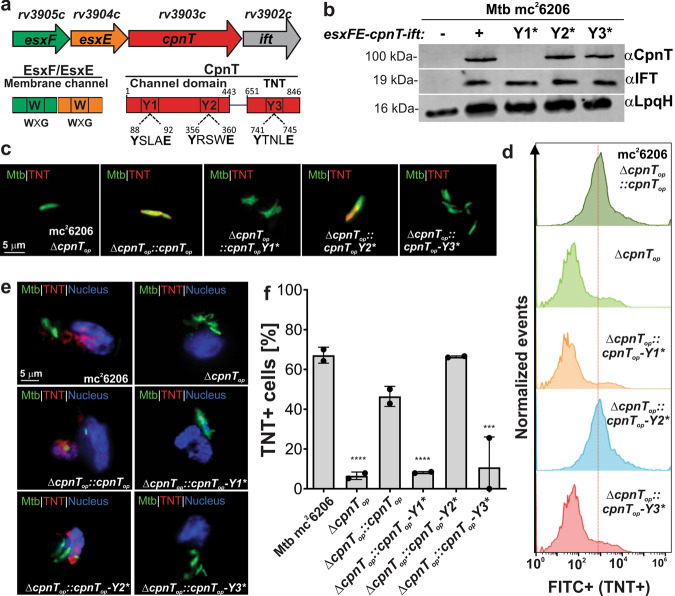
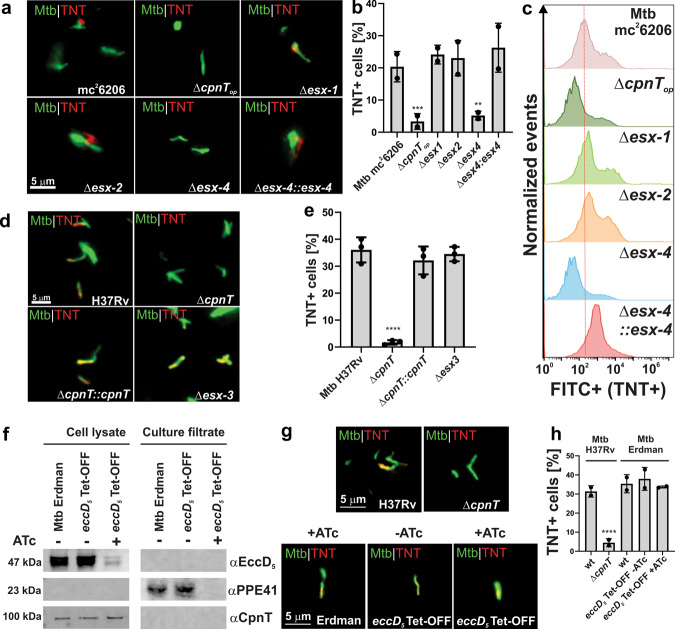
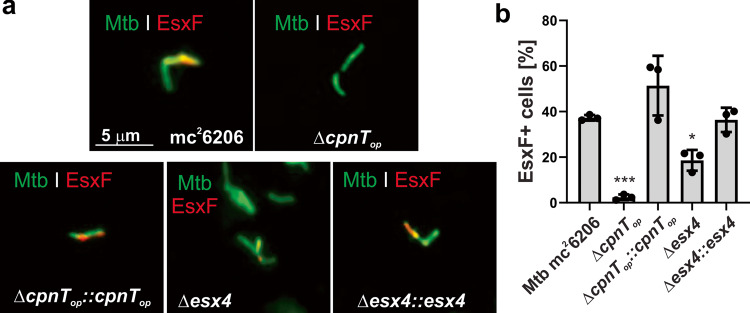
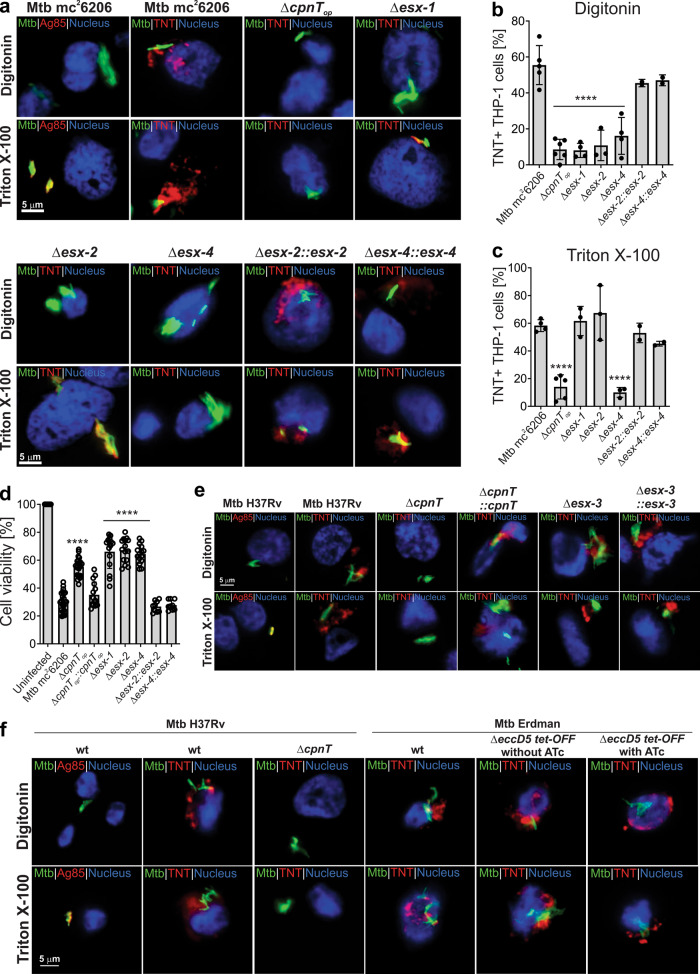
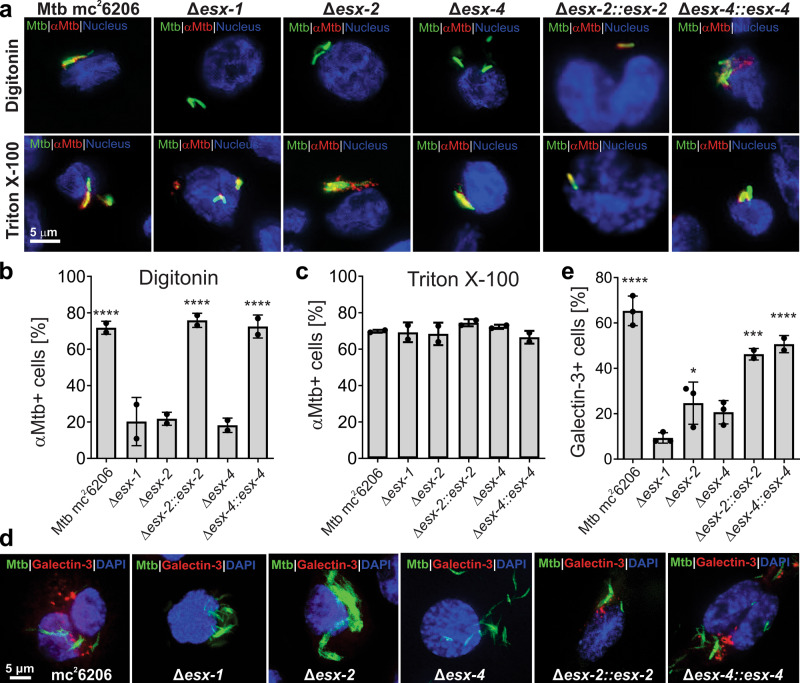
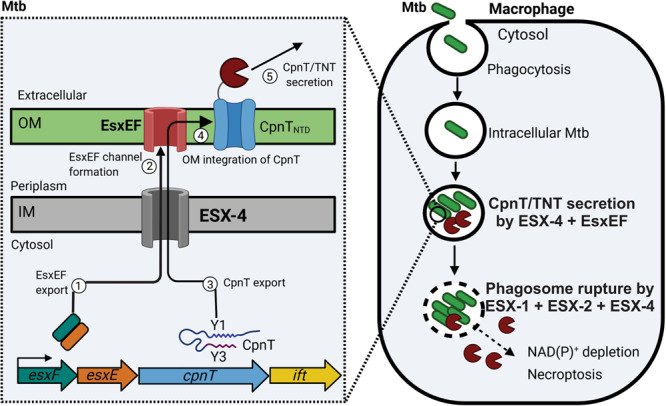
The tuberculosis necrotizing toxin (TNT) is the major cytotoxicity factor of Mycobacterium tuberculosis (Mtb) in macrophages. TNT is the C-terminal domain of the outer membrane protein CpnT and gains access to the cytosol to kill macrophages infected with Mtb. However, molecular mechanisms of TNT secretion and trafficking are largely unknown. A comprehensive analysis of the five type VII secretion systems of Mtb revealed that the ESX-4 system is required for export of CpnT and surface accessibility of TNT. Furthermore, the ESX-2 and ESX-4 systems are required for permeabilization of the phagosomal membrane in addition to the ESX-1 system. Thus, these three ESX systems need to act in concert to enable trafficking of TNT into the cytosol of Mtb-infected macrophages. These discoveries establish new molecular roles for the two previously uncharacterized type VII secretion systems ESX-2 and ESX-4 and reveal an intricate link between toxin secretion and phagosomal permeabilization by Mtb.
Overview
The claims and statistics of this paper haven’t been checked yet.
Free: it reads the open-access text and checks the first 5 claims that cite a source we can check. Create a free account to check every claim.
Integrity signals
Registry
Cites
Statistics
Figures
Verification
Claims the paper makes
The claims and statistics of this paper haven’t been checked yet.
Free: it reads the open-access text and checks the first 5 claims that cite a source we can check. Create a free account to check every claim.
Claims other papers make about this one
Each is checked against this paper’s own text: does it say what the citing paper says it does?
The cited source says what the claim attributes to it.
In the citing paper
“ESX-4 has since been shown to be important for macrophage infection in M. abscessus (59) and contributes to phagosome permeabilization and protein trafficking in M. tuberculosis (60).”
From Mycobacterium smegmatis: The Vanguard of Mycobacterial Research (2023) · cites this paper as [60]
Self-check
Percentages, sums and reported differences re-computed from the paper’s own numbers.
The self-check needs the paper’s full text.
Citations
Cites
M. tuberculosis and M. leprae Translocate from the Phagolysosome to the Cytosol in Myeloid Cells
van der Wel, N., Hava, D., Houben, D., Fluitsma, D., van Zon, M., Pierson, J., Brenner, M., & Peters, P. J. (2007) · Cell · doi:10.1016/j.cell.2007.05.059 · Cited by 960
Role of a Highly Conserved Bacterial Protein in Outer Membrane Protein Assembly
Voulhoux, R., Bos, M. P., Geurtsen, J., Mols, M., & Tommassen, J. (2003) · Science · doi:10.1126/science.1078973 · Cited by 742
Hsu, T., Hingley-Wilson, S. M., Chen, B., Chen, M., Dai, A. Z., Morin, P. M., Marks, C. B., Padiyar, J., Goulding, C., Gingery, M., et al. (2003) · Proceedings of the National Academy of Sciences · doi:10.1073/pnas.1635213100 · Cited by 731
Watson, R. O., Bell, S. L., MacDuff, D. A., Kimmey, J. M., Diner, E. J., Olivas, J., Vance, R. E., Stallings, C. L., Virgin, H. W., & Cox, J. S. (2015) · Cell Host & Microbe · doi:10.1016/j.chom.2015.05.004 · Cited by 645
The ubiquitin ligase parkin mediates resistance to intracellular pathogens
Manzanillo, P. S., Ayres, J. S., Watson, R. O., Collins, A. C., Souza, G., Rae, C. S., Schneider, D. S., Nakamura, K., Shiloh, M. U., & Cox, J. S. (2013) · Nature · doi:10.1038/nature12566 · Cited by 588
Phagosomal Rupture by Mycobacterium tuberculosis Results in Toxicity and Host Cell Death
Simeone, R., Bobard, A., Lippmann, J., Bitter, W., Majlessi, L., Brosch, R., & Enninga, J. (2012) · PLoS Pathogens · doi:10.1371/journal.ppat.1002507 · Cited by 561
Protein export through the bacterial Sec pathway
Tsirigotaki, A., De Geyter, J., Šoštaric´, N., Economou, A., & Karamanou, S. (2017) · Nature Reviews Microbiology · doi:10.1038/nrmicro.2016.161 · Cited by 447
Detection of Mycoplasma in cell cultures
Young, L., Sung, J., Stacey, G., & Masters, J. R. (2010) · Nature Protocols · doi:10.1038/nprot.2010.43 · Cited by 437
ESX‐1‐mediated translocation to the cytosol controls virulence of mycobacteria
Houben, D., Demangel, C., van Ingen, J., Perez, J., Baldeón, L., Abdallah, A. M., Caleechurn, L., Bottai, D., van Zon, M., de Punder, K., et al. (2012) · Cellular Microbiology · doi:10.1111/j.1462-5822.2012.01799.x · Cited by 413
Gao, L., Guo, S., McLaughlin, B., Morisaki, H., Engel, J. N., & Brown, E. J. (2004) · Molecular Microbiology · doi:10.1111/j.1365-2958.2004.04261.x · Cited by 405
Cited by
Immune evasion and provocation by Mycobacterium tuberculosis
Chandra, P., Grigsby, S. J., & Philips, J. A. (2022) · Nature Reviews Microbiology · doi:10.1038/s41579-022-00763-4 · Cited by 614
Pathogenicity and virulence of Mycobacterium tuberculosis
Rahlwes, K. C., Dias, B. R. S., Campos, P. C., Alvarez-Arguedas, S., & Shiloh, M. U. (2023) · Virulence · doi:10.1080/21505594.2022.2150449 · Cited by 207
“Once it reaches the host cyto-plasm through the combined activities of Mtb ESX-1, ESX-2, ESX-4, and ESX-5 Type VII secretion systems [370,371], TNT hydrolyzes NAD+ and induces macrophage necroptosis with associated mitochondrial depolarization [285,372].”
BackgroundMycobacterium smegmatis: The Vanguard of Mycobacterial Research
Sparks, I. L., Derbyshire, K. M., Jacobs, W. R., & Morita, Y. S. (2023) · Journal of Bacteriology · doi:10.1128/jb.00337-22 · Cited by 149
Evolution and emergence ofMycobacterium tuberculosis
Orgeur, M., Sous, C., Madacki, J., & Brosch, R. (2024) · FEMS Microbiology Reviews · doi:10.1093/femsre/fuae006 · Cited by 117
“…secretion of the exotoxin CpnT, which contains the TB necrotizing toxin (TNT) as C-terminal domain (Danilchanka et al. 2014 ), was shown to depend on the ESX-4 machinery in conjunction with other ESX systems in M. marinum (Izquierdo Lafuente et al. 2021 ) and M. tuberculosis (Pajuelo et al. 2021 ).”
BackgroundMycobacterium tuberculosis biology, pathogenicity and interaction with the host
Warner, D. F., Barczak, A. K., Gutierrez, M. G., & Mizrahi, V. (2025) · Nature Reviews Microbiology · doi:10.1038/s41579-025-01201-x · Cited by 102
“Cell envelope lipids and lipoarabinomannan dampen Toll-like receptor signalling and arrest maturation, whereas proteases and antioxidant systems neutralize acid, reactive oxygen, nitrogen and chlorine species 110,196 .”
Proteo-genetic analysis reveals clear hierarchy of ESX-1 secretion in Mycobacterium marinum
Cronin, R. M., Ferrell, M. J., Cahir, C. W., Champion, M. M., & Champion, P. A. D. (2022) · Proceedings of the National Academy of Sciences · doi:10.1073/pnas.2123100119 · Cited by 44
“Esx proteins paralogous to EsxA and EsxB are required for protein secretion across the MOM (64).”
BackgroundInfluentialSankey, N., Merrick, H., Singh, P., Rogers, J., Reddi, A. R., Hartson, S. D., & Mitra, A. (2023) · mSphere · doi:10.1128/msphere.00573-22 · Cited by 39
Shah, M., Khan, F., Ahmad, I., Deng, C., Perveen, A., Iqbal, A., Nishan, U., Zaman, A., Ullah, R., Ali, E. A., et al. (2023) · Frontiers in Pharmacology · doi:10.3389/fphar.2023.1325227 · Cited by 30
“In TB, where the bacterial toxin can contribute to disease severity, this property could provide a dual approach to treatment, targeting both the bacteria and the toxins produced (Pajuelo et al., 2021).”
BackgroundVilchèze, C., Yan, B., Casey, R., Hingley‐Wilson, S., Ettwiller, L. M., & Jacobs, W. R. (2022) · Frontiers in Immunology · doi:10.3389/fimmu.2022.909904 · Cited by 30
“The ESX2 system, also implicated in host cell permeabilization (66), was”
BackgroundMycobacterial type VII secretion systems
Famelis, N., Geibel, S., & van Tol, D. J. C. (2023) · Biological Chemistry · doi:10.1515/hsz-2022-0350 · Cited by 24
Silva‐Pereira, T. T., Camargo, N., & Guimarães, A. M. S. (2024) · Microbiology Spectrum · doi:10.1128/spectrum.02289-23 · Cited by 29
“SigM (Rv3911), pseudogenized in M. tuberculosis L1, has been shown to regulate genes of the synthesis of secreted or surface molecules, including genes of PDIM, ESX-4 secretion system, mycolic acid biosynthesis, and the CpnT exotoxin (87, 88).”
The ESX-4 substrates, EsxU and EsxT, modulate Mycobacterium abscessus fitness
Lagune, M., Moigne, V. L., Johansen, M. D., Sotomayor, F. V., Daher, W., Petit, C., Cosentino, G., Paulowski, L., Gutsmann, T., Wilmanns, M., et al. (2022) · PLoS Pathogens · doi:10.1371/journal.ppat.1010771 · Cited by 25
“An important aspect of this work relies on the role of ESX-4 in phagosomal membrane permeabilization/disruption [8], a feature previously ascribed to ESX-1, but without incriminating the EsxU or EsxT secreted substrates, encoded by the M.”
BackgroundInfluentialBunduc, C. M., Ding, Y., Kuijl, C. P., Marlovits, T. C., Bitter, W., & Houben, E. N. G. (2023) · mSphere · doi:10.1128/msphere.00402-23 · Cited by 23
“In M. tuberculosis, the EsxE/EsxF heterodimer has recently been proposed to play a role in the transport of the CpnT toxin over the mycobacterial outer membrane (55, 56).”
BackgroundMycobacterium marinum as a model for understanding principles of mycobacterial pathogenesis
Menon, A. R., Prest, R. J., Tobin, D. M., & Champion, P. A. D. (2025) · Journal of Bacteriology · doi:10.1128/jb.00047-25 · Cited by 26
“Work in M. tuberculo sis revealed that the ESX-2 and ESX-4 systems do not have clearly defined roles, but these systems may work with ESX-1 to promote phagosomal membrane permeabilization and with ESX-5 to promote secretion of the CpnT toxin (148, 149).”
The heterogenous and diverse population of prophages in Mycobacterium genomes
Abad, L., Gauthier, C. H., Florian, I., Jacobs‐Sera, D., & Hatfull, G. F. (2023) · mSystems · doi:10.1128/msystems.00446-23 · Cited by 17
“4C) analogous to the esxF and esxE genes upstream of cpnT (44).”
BackgroundInfluentialNicholson, K. R., & Champion, P. A. D. (2022) · PLoS Pathogens · doi:10.1371/journal.ppat.1010610 · Cited by 18
Collars, O. A., Jones, B. S., Hu, D. D., Weaver, S. D., Sherman, T. A., Champion, M. M., & Champion, P. A. D. (2023) · mBio · doi:10.1128/mbio.00987-23 · Cited by 19
Xander, C. J., Saranathan, R., Jacobs, W. R., & Braunstein, M. (2024) · Infection and Immunity · doi:10.1128/iai.00217-24 · Cited by 20
“However, currently, there are only two Mtb proteins, Tuberculosis Necrotizing Toxin (TNT) and Mpt64, demonstrated to require ESX-1 for their delivery to the macrophage cytosol and neither protein has a known role in PMA (40, 47).”
BackgroundDaher, W., Moigne, V. L., Tasrini, Y., Parmar, S., Sexton, D. L., Aguilera-Correa, J. J., Berdal, V., Tocheva, E. I., Herrmann, J., & Kremer, L. (2025) · Communications Biology · doi:10.1038/s42003-025-07572-4 · Cited by 20
Jiang, Z., Zhen, J., Abulikena, Y., Gao, C., Huang, L., Huang, T., & Xie, J. (2024) · Microbiology Spectrum · doi:10.1128/spectrum.01188-24 · Cited by 15
“ESX-2 can assist the transport of MTB exotoxin CpnT into host cells and promote the toxic effect of CpnT (4).”
BackgroundZhang, W., Dong, C., & Xiong, S. (2024) · iScience · doi:10.1016/j.isci.2024.109671 · Cited by 19
Zhang, M., Adroub, S. A., Ummels, R., Asaad, M., Song, L., Pain, A., Bitter, W., Guan, Q., & Abdallah, A. (2024) · Scientific Reports · doi:10.1038/s41598-024-75228-0 · Cited by 13
Advances in computational frameworks in the fight against TB: The way forward
Naidu, A., Nayak, S. S., Sajitha Lulu, S., & Sundararajan, V. (2023) · Frontiers in Pharmacology · doi:10.3389/fphar.2023.1152915 · Cited by 12
Koleske, B. N., Saranathan, R., Schill, C., Lun, S., Vilchèze, C., Das, L., Gupta, M. K., Martinez-Martinez, Y. B., Bishai, W. R., & Jacobs, W. R. (2025) · Proceedings of the National Academy of Sciences · doi:10.1073/pnas.2509997122 · Cited by 11
Defensins: A novel weapon against Mycobacterium tuberculosis?
Gao, X., Feng, J., Wei, L., Dong, P., Chen, J., Zhang, L., Yang, Y., Xu, L., Wang, H., Luo, J., et al. (2023) · International Immunopharmacology · doi:10.1016/j.intimp.2023.111383 · Cited by 10
Self-citationFang, H., Xiong, Y., Fu, B., & Wu, H. (2025) · International Immunopharmacology · doi:10.1016/j.intimp.2025.115211 · Cited by 8
Dekhil, N., & Mardassi, H. (2023) · Frontiers in Microbiology · doi:10.3389/fmicb.2023.1159994 · Cited by 11
“The fact that esx genes of different loci were found to function in concert (Pajuelo et al., 2021), raises the possibility that the identified mutations in esxK and eccC2 of the successful TUN4.”
BackgroundLi, J., Liu, Y., Ruan, Y., Kong, X., Jin, X., Wang, J., Liao, K., Shen, L., & Pi, J. (2025) · Microbial Pathogenesis · doi:10.1016/j.micpath.2025.107914 · Cited by 7
Ferrario, E., Kallio, J. P., Emdadi, M., Strømland, Ø., Rack, J. G. M., & Ziegler, M. (2024) · Protein Science · doi:10.1002/pro.5071 · Cited by 5
Dunken, N., Thomsen, T., & Zuccaro, A. (2025) · FEMS Microbiology Reviews · doi:10.1093/femsre/fuaf029 · Cited by 8
“Mtb depletes c ytosolic N AD + and N ADP + pools of macr opha ges via gl ycohydr olase activity of the MtbCpnT proteins TNT domain, leading to necroptosis and therefore reduced imm une r esponse (Mittal et al. 2018 , Tak et al. 2019 , Pajuelo et al. 2021 ).”
Block, A. M., Nair, R. R., Meikle, V., Wiegert, P. C., White, D. W., Zhang, L., Niederweis, M., & Tischler, A. D. (2026) · mBio · doi:10.1128/mbio.03500-25 · Cited by 5
“Surface detection of PPE51 His6 in M. tuberculosis Erdman and derivative strains was performed as previously described (3).”
Self-citationCollars, O. A., Jones, B. S., Hu, D. D., Weaver, S. D., Champion, M. M., & Champion, P. A. D. (2023) · bioRxiv (Cold Spring Harbor Laboratory) · doi:10.1101/2023.03.14.532585 · Cited by 5
“Following ESX-1 dependent phagosomal lysis, M. marinum are released into the cytoplasm, promoting macrophage cytolysis through ESX-1-independent mechanisms (3, 6, 7, 69-72).”
Li, Z. Y., Wang, P., Ma, J., Chen, Y., & Pan, D. (2024) · Nutrition in Clinical Practice · doi:10.1002/ncp.11223 · Cited by 4
Olmo-Fontánez, A. M., Allué‐Guardia, A., Garcia‐Vilanova, A., Glenn, J. P., Wang, S., Merritt, R. E., Schlesinger, L. S., Turner, J., Wang, Y., & Torrelles, J. B. (2024) · Microbiology Spectrum · doi:10.1128/spectrum.01790-24 · Cited by 6
Canestrari, J. G., Gordon, E. C., Bruce, S. A., Lasek‐Nesselquist, E., Schultz, S. R., Marietta, H. A., Biegas, K. J., Swarts, B. M., Champion, M. M., Derbyshire, K. M., et al. (2025) · Molecular Microbiology · doi:10.1111/mmi.70030 · Cited by 4
Kondratov, I. G., Огарков, О. Б., Sinkov, V. V., Suzdalnitsky, A. E., Koshcheev, M., Андреевна, О. Е., Belkova, N. L., Николаевна, Ж. С., Рычкова, Л. В., & Kolesnikova, L. I. (2025) · Bulletin of Experimental Biology and Medicine · doi:10.1007/s10517-025-06508-6 · Cited by 3
Protein-Mediated Virulence in Mycobacterium tuberculosis
Farnia, P., Velayati, A. A., Ghanavi, J., & Farnia, P. (2025) · Advances in experimental medicine and biology · doi:10.1007/978-3-031-96883-9_5 · Cited by 3
Contribution of Proteins to Membrane and Cell Wall Structures in Mycobacterium tuberculosis
Farnia, P., Velayati, A. A., Ghanavi, J., & Farnia, P. (2025) · Advances in experimental medicine and biology · doi:10.1007/978-3-031-96883-9_4 · Cited by 4
Nair, R. R., Meikle, V., Dubey, S., Pavlenok, M., Tischler, A. D., & Niederweis, M. (2025) · Nature Communications · doi:10.1038/s41467-025-65061-y · Cited by 9
“ESX-1, ESX-2 and ESX-4 are required to permeabilize the phagosomal membrane, a critical step in M. tuberculosis survival in and escape from macrophages 7 , a process essential for virulence 8 .”
InfluentialSelf-citationComín, J., Campos, E., Gonzalo‐Asensio, J., & Samper, S. (2023) · Microbiology Spectrum · doi:10.1128/spectrum.04685-22 · Cited by 4
“MtZ strain also presented part of the ESX-2 system to be upregulated ( eccD2 , mycP2 , eccE2 , and eccA2 genes), recently described to be involved in phagosome permeabiliza tion and bacterial scape (13).”
BackgroundRole of Divalent Cations in Infections in Host–Pathogen Interaction
D’Elia, J. A., & Weinrauch, L. A. (2024) · International Journal of Molecular Sciences · doi:10.3390/ijms25189775 · Cited by 3
“Genomic adaptations to the intake and efflux of divalent cations for their nutritional values vs. their cellular toxicities are being reported in remarkable detail [118].”
BackgroundAlexei, A. G., Bullen, N. P., Garrett, S., Sychantha, D., & Whitney, J. C. C. (2024) · Journal of Biological Chemistry · doi:10.1016/j.jbc.2024.108007 · Cited by 3
“…in that its activity does not antagonize eukaryotic cells but instead supports host colonization by driving the release of digestible nucleosides, which suggests cooperation between the F Bxa lysogen and the non-phage related ribose-utilization system(s) of B. stercoris (14, 15, 30, 42, 44, 47).”
Yang, J.-J., Hu, Y., Sun, P.-Y., Wang, L., Xie, X.-J., & Wang, T. (2025) · Frontiers in Cellular and Infection Microbiology · doi:10.3389/fcimb.2025.1573643 · Cited by 2
Ge, F., Zhang, M., Ye, H., Zhou, S., Shenmei, P. A. N. G., Xiaojun, Y. A. N., & Zhen, T. A. O. (2026) · Fish & Shellfish Immunology · doi:10.1016/j.fsi.2026.111276 · Cited by 2
Padilla‐Gómez, J., McGinn, R. A., Andrade, V., Liang, Y., Libby, K. A., Ni, H. M., Ringel, A. E., Evavold, C. L., & Bryson, B. D. (2026) · mSphere · doi:10.1128/msphere.00141-26 · Cited by 2
“Also, it would be interesting to see, in addition to ESX-1, if mutating other secretion systems that have been shown to be required for permeabilization of the phagosomal membrane secretion, such as ESX-2 and ESX-4 (40, 41), would also affect Mtb ILI formation during macrophage infection.”
Ferrario, E., Kallio, J. P., Strømland, Ø., & Ziegler, M. (2023) · Biochemistry · doi:10.1021/acs.biochem.3c00360 · Cited by 2
Manikoth, A. G., Bisht, M. K., Ghosh, S. K., & Mukhopadhyay, S. (2025) · FEBS Journal · doi:10.1111/febs.70084 · Cited by 1
Advances in immune escape mechanisms of Mycobacterium tuberculosis
Li, N., Song, Y., & Chu, Y. (2023) · Chinese Science Bulletin (Chinese Version) · doi:10.1360/tb-2023-0818 · Cited by 3
Master control of protein secretion by Mycobacterium tuberculosisPreprint
Nair, R. R., Meikle, V., Dubey, S., Pavlenok, M., & Niederweis, M. (2025) · bioRxiv (Cold Spring Harbor Laboratory) · doi:10.1101/2025.03.13.643117 · Cited by 2
“ESX-1, ESX-2 and ESX-4 are required to permeabilize the phagosomal membrane, a critical step in the survival and escape of M. tuberculosis from macrophages 4 .”
InfluentialSelf-citationFan, J., Feng, H., Yang, D., Zhao, H., Shi, T., & Li, T. (2025) · Infection Genetics and Evolution · doi:10.1016/j.meegid.2025.105799 · Cited by 1
Deciphering macrophage dynamics and immune evasion strategies by the intracellular bacteria
Munir, F., He, B., Shakoor, A., Liu, J., & Ma, W. (2025) · Immunologic Research · doi:10.1007/s12026-025-09696-5 · Cited by 1
“Moreover, it can also secrete molecules that help Helps Mtb in the transportation of its exotoxin (CpnT) into the cells of the host and promotes its toxic effects [143] ESX-3 Helps in the inhibition of MHC-II antigen presentation, CD4 + T cells activation, and transport of ESCRT.”
Abudureheman, Z., Gong, H., Axirejiang, T., Xu, J., Abuduwake, A., Alimu, A., Mamuti, M., Zheng, A., & Li, L. (2025) · Infection and Drug Resistance · doi:10.2147/idr.s560253 · Cited by 2
Zhang, X., Ma, W., Zheng, Y., & Lyu, L. W. (2026) · Frontiers in Immunology · doi:10.3389/fimmu.2025.1696299 · Cited by 1
Impact of MSMEG5257 Deletion on Mycolicibacterium smegmatis Growth
He, P., Zhao, B. T., He, W., Song, Z., Pei, S., Liu, D., Xia, H., Wang, S., Ou, X., Zheng, Y., et al. (2024) · Microorganisms · doi:10.3390/microorganisms12040770 · Cited by 1
“For instance, with respect to CpnT, a channel protein located in the outer membrane of Mtb [59], the N-terminal domain forms an embedded channel that facilitates efficient glycerol uptake [60].”
BackgroundLee, B. S., Godejohann, M., Mishra, R., Bousquet, C., Gürtler, F., Deloria, A. J., Liu, M., Leitgeb, R. A., Drexler, W., Weiss, G. L., et al. (2025) · bioRxiv (Cold Spring Harbor Laboratory) · doi:10.1101/2025.11.07.687260 · Cited by 2
“To this end, we examined four H37Rv-derived auxotrophic strains based on mc² 6230 or mc² 6206 33–36 that differed in their ability to produce PDIM and in the presence or absence of the RD1 locus encoding the ESX-1 secretion system (see Methods).”
Chinta, K. C., Naicker, D., Nadeem, S., Sevalkar, R. R., Pillay, V., Naidoo, T., Wells, G., Lumamba, K. D., Nargan, K., Govender, A., et al. (2026) · bioRxiv (Cold Spring Harbor Laboratory) · doi:10.64898/2026.05.05.722986 · Cited by 2
Typ-VII-Sekretionssysteme: Ziele gegen Tuberkulose
Geibel, S. (2022) · BIOspektrum · doi:10.1007/s12268-022-1713-x
Olmo-Fontánez, A. M., Allué‐Guardia, A., Garcia‐Vilanova, A., Glenn, J. P., Wang, S., Merritt, R. E., Schlesinger, L. S., Turner, J., Wang, Y., & Torrelles, J. B. (2024) · bioRxiv (Cold Spring Harbor Laboratory) · doi:10.1101/2024.05.06.592753
Interaction of Mycobacterium tuberculosis with the Host from the Pathogen’s Perspective
Yeremeev, V., & Сергеевна, Ш. Г. (2026) · Biochemistry (Moscow) · doi:10.1134/s0006297925603302
“This toxin triggers production of reactive oxygen species (ROS) in the Mtb-infected macrophages, leading to cell death, promoting mycobacterial replication, and providing access to cytosolic metabolites and co-factors [13].”
Sigma factor M induces an ESX-4-focused regulon in Mycobacterium abscessus
Canestrari, J. G., Gianola, S., Derbyshire, K. M., & Gray, T. A. (2026) · Frontiers in Tuberculosis · doi:10.3389/ftubr.2026.1797268
Dagan, Y., Deboosère, N., Boulagnon, E., Burette, A., Machelart, A., Molendi‐Coste, O., Salomé‐Desnoulez, S., Werkmeister, E., Siméone, R., Grassart, A., et al. (2026) · bioRxiv (Cold Spring Harbor Laboratory) · doi:10.64898/2026.06.04.730029
VULLO, C., Luca, M. D., Rizzato, C., Frigui, W., Sayes, F., Poma, N., Farinella, R., Lupetti, A., Signore, G., Tavanti, A., et al. (2026) · Microbiology Spectrum · doi:10.1128/spectrum.01299-26
“…was found to be required for optimal Mtb fitness in primary human dendritic cells infected with an Mtb transposon library (43), while EsxC was found to be involved in phagosomal membrane alteration in CRISPR-Cas esx gene inactivation assays using strongly attenuated MTB mc2 6206 model strain (44).”
Haynes, A. M., Cohen, S. B., Pesaladinne, A., Sherman, D. R., Urdahl, K. B., Cox, J. S., & Hawn, T. R. (2026) · iScience · doi:10.1016/j.isci.2026.117966
Metadata
- Authors
- Pajuelo, D., Tak, U., Zhang, L., Danilchanka, O., Tischler, A. D., & Niederweis, M.
- Affiliations
- University of Alabama at Birmingham (US)
- University of Colorado Boulder (US)
- Merck & Co., Inc., Rahway, NJ, USA (United States) (US)
- University of Minnesota (US)
- Corresponding author
- Niederweis, Michael
- Venue
- Nature Communications
- Published
- 2021-11-15
- Volume
- 12
- Issue
- 1
- Pages
- 6592-6592
- ISSN
- 2041-1723 (ISSN-L)
- PMC
- PMC8593097
- OpenAlex
- W3211775897
- Semantic Scholar
- f64efd989da9bcfb4fced75f4ec2e51383f5dc84
- Cited by
- 63
- References
- 67
- Citations by year
- 2026: 10 · 2025: 19 · 2024: 13 · 2023: 14 · 2022: 7
- FWCI
- 2.69
- Type
- journal article
- Language
- en
- Open access
- gold
- doi.org
- Licence
- cc-by
- creativecommons.org/licenses/by/4.0 (tdm)
- creativecommons.org/licenses/by/4.0 (vor)
- Locations
- Nature Communications (publishedVersion, cc-by)
- PubMed Central (publishedVersion, cc-by)
- PubMed (publishedVersion)
- RePEc: Research Papers in Economics (submittedVersion)
- DOAJ (DOAJ: Directory of Open Access Journals) (submittedVersion, cc-by-sa)
- Funders
- U.S. Department of Health & Human Services | National Institutes of Health (AI121354)
- Topics
- Health Sciences › Medicine › Infectious Diseases › Tuberculosis Research and Epidemiology
- Life Sciences › Biochemistry, Genetics and Molecular Biology › Genetics › Bacterial Genetics and Biotechnology
- Life Sciences › Immunology and Microbiology › Microbiology › Escherichia coli research studies
- Keywords
- Mycobacterium tuberculosis, toxin secretion, toxin trafficking, type VII secretion system, ESX-1, macrophage killing, bacterial virulence factors
- MeSH terms
- Type VII Secretion Systems, Antigens, Bacterial, Bacterial Outer Membrane Proteins, Bacterial Proteins, Bacterial Toxins, Macrophages, Mycobacterium tuberculosis, Phagosomes, Toxins, Biological, Cell Death
About these checks
Registry, retraction, Cites and statistics results are computed, not judged, with one exception: a printed reference that no index lists is read once by a model before it counts as a citation error. Claims are extracted by a model and kept only when their quote appears verbatim in the text; each cited source is then checked, with a model’s help, for whether it says what the claim relies on. Those verdicts can be wrong — read the claim’s quote and the cited source before relying on one.
Statistics and arithmetic are recomputed, not judged.
Confidence bands are shown only for fields calibrated on our annotated test set. None is calibrated yet, so no band is shown.
What counts as a claim ›How we measure confidence ›How we check this ›
Are you an author, or do you see a problem with this page? Request a review
Data sources
Bibliographic data: Semantic Scholar, OpenAlex, Crossref.
Contains information from the Semantic Scholar Academic Graph Datasets, made available under the ODC Attribution License (ODC-BY 1.0).
Semantic Scholar’s data is described in: Kinney, R., et al. (2023). The Semantic Scholar Open Data Platform. arXiv:2301.10140.
