

Synergistic insights into human health from aptamer- and antibody-based proteomic profiling
Open accessThe DOI matches its Crossref record; 67 of the 67 references it cites were found in a registry or an index.
Abstract
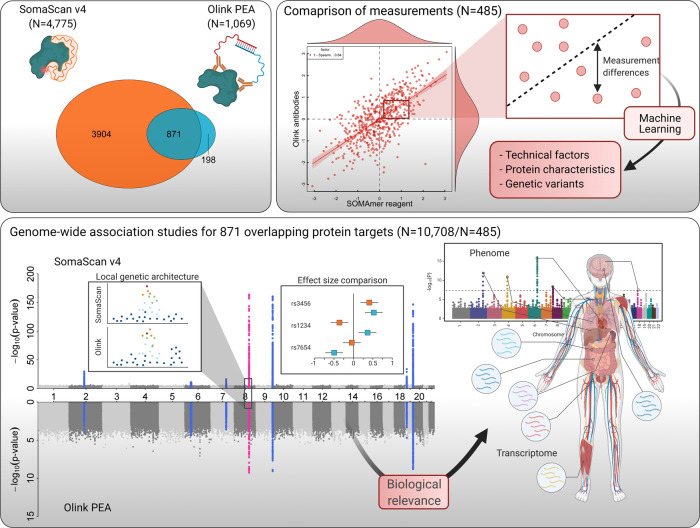
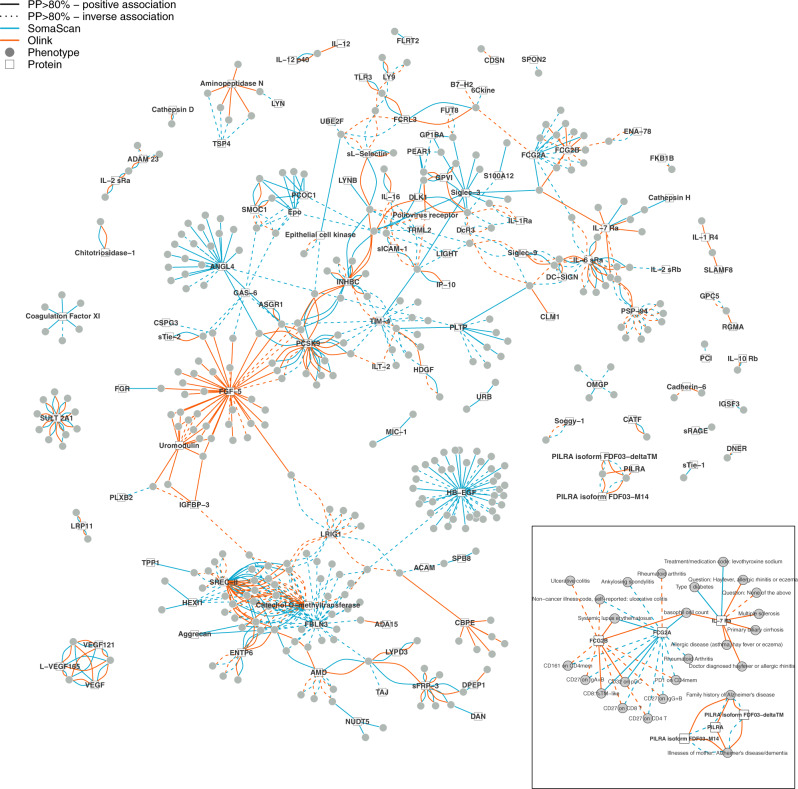
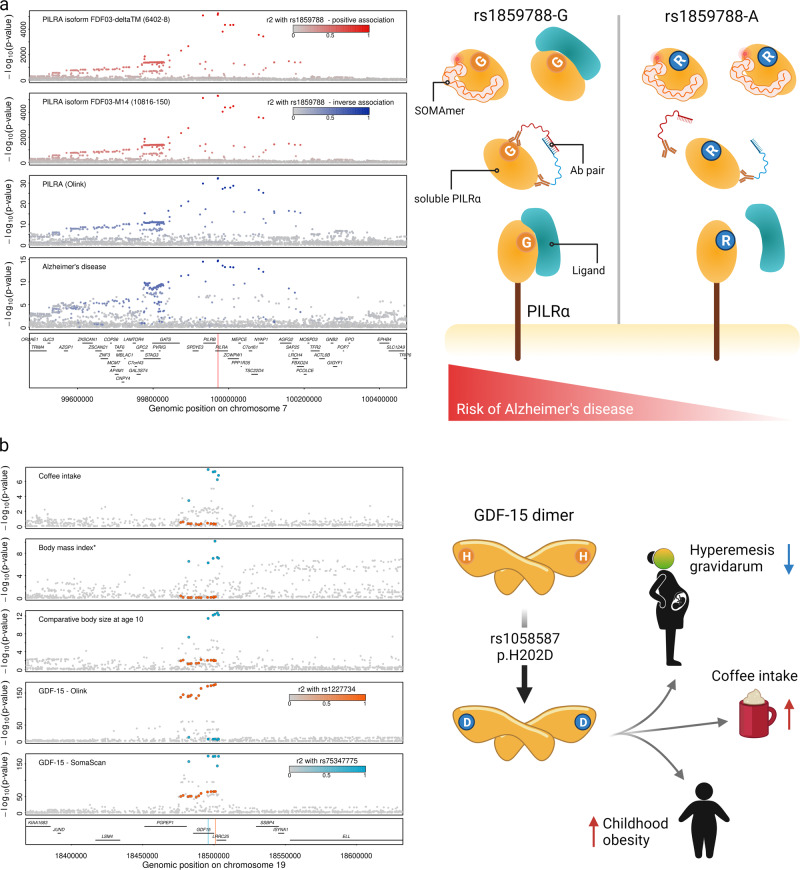
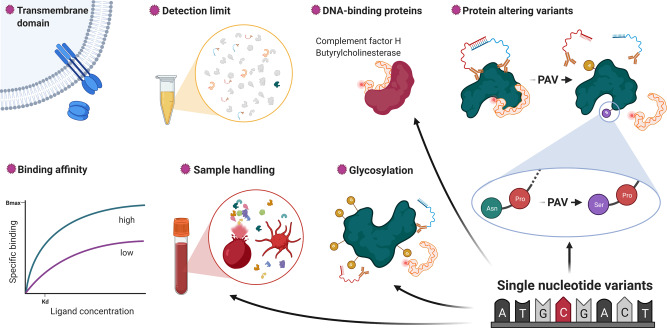
Affinity-based proteomics has enabled scalable quantification of thousands of protein targets in blood enhancing biomarker discovery, understanding of disease mechanisms, and genetic evaluation of drug targets in humans through protein quantitative trait loci (pQTLs). Here, we integrate two partly complementary techniques—the aptamer-based SomaScan ® v4 assay and the antibody-based Olink assays—to systematically assess phenotypic consequences of hundreds of pQTLs discovered for 871 protein targets across both platforms. We create a genetically anchored cross-platform proteome-phenome network comprising 547 protein–phenotype connections, 36.3% of which were only seen with one of the two platforms suggesting that both techniques capture distinct aspects of protein biology. We further highlight discordance of genetically predicted effect directions between assays, such as for PILRA and Alzheimer’s disease. Our results showcase the synergistic nature of these technologies to better understand and identify disease mechanisms and provide a benchmark for future cross-platform discoveries.
Overview
The claims and statistics of this paper haven’t been checked yet.
Free: it reads the open-access text and checks the first 5 claims that cite a source we can check. Create a free account to check every claim.
Integrity signals
Registry
Cites
Statistics
Figures
Verification
Claims the paper makes
The claims and statistics of this paper haven’t been checked yet.
Free: it reads the open-access text and checks the first 5 claims that cite a source we can check. Create a free account to check every claim.
Claims other papers make about this one
Each is checked against this paper’s own text: does it say what the citing paper says it does?
The source backs part of the claim, not all of it — or backs it for a different population, condition or comparison.
In the citing paper
“The detection of a cis-pQTL for a given protein measure is often used as a metric to confirm on-target affinity-probe binding12,15,16; existing studies comparing SomaScan and Olink measures have established that the detection of a cis-pQTL is a strong predictor of inter-platform correlation coefficients for a given protein12,15,16.”
From Cross-ancestry comparison of aptamer and antibody protein measures (2026) · cites this paper as [16]
Experimental — accuracy not yet measuredThe source backs part of the claim, not all of it — or backs it for a different population, condition or comparison.
In the citing paper
“This protein showed strong platform-discordant measures (Pearson’s r = -0.35) across the present and prior studies16,17 (Fig. 4A).”
From Cross-ancestry comparison of aptamer and antibody protein measures (2026) · cites this paper as [16]
Experimental — accuracy not yet measuredThe source backs part of the claim, not all of it — or backs it for a different population, condition or comparison.
In the citing paper
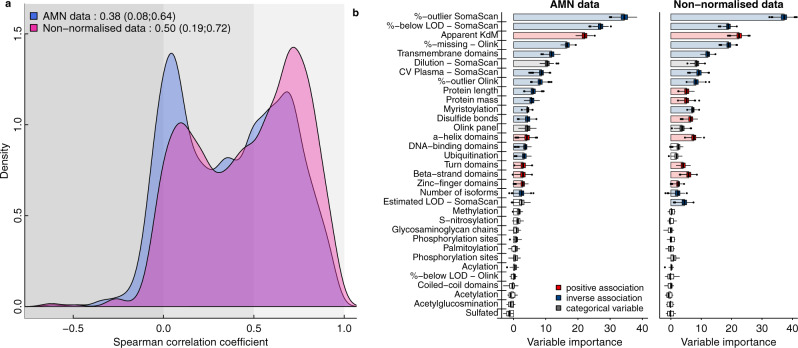
“One prior study demonstrated that biological (such as presence of a trans-membrane domain, protein length) and technical factors (percentage of outlier or below limit of detection protein measures, etc.) can explain this wide range of correlation coefficients16.”
From Cross-ancestry comparison of aptamer and antibody protein measures (2026) · cites this paper as [16]
Experimental — accuracy not yet measuredThe source backs part of the claim, not all of it — or backs it for a different population, condition or comparison.
In the citing paper
“We observed similar proportions of protein measures associated with any cis-pQTL on each platform (39% SomaScan, 48% Olink), with more distinct cis-pQTL identified for Olink overall (for the set of 2157 proteins measured on both platforms), consistent with single-ancestry genetic comparisons of earlier versions of SomaScan and Olink platforms12,16,17.”
From Cross-ancestry comparison of aptamer and antibody protein measures (2026) · cites this paper as [16]
Experimental — accuracy not yet measuredThe source backs part of the claim, not all of it — or backs it for a different population, condition or comparison.
In the citing paper
“Here, and across prior studies, cis-pQTL presence/absence is thought to provide one predictor of on-target protein measures12,15,16.”
From Cross-ancestry comparison of aptamer and antibody protein measures (2026) · cites this paper as [16]
Experimental — accuracy not yet measured
5 more claims about this paper
Create a free account to see every claim other papers make about this one.
Self-check
Percentages, sums and reported differences re-computed from the paper’s own numbers.
The self-check needs the paper’s full text.
Citations
Cites
Sudlow, C., Gallacher, J., Allen, N., Beral, V., Burton, P., Danesh, J., Downey, P., Elliott, P., Green, J., Landray, M., et al. (2015) · PLOS Medicine · doi:10.1371/journal.pmed.1001779 · Cited by 12,728
The UK Biobank resource with deep phenotyping and genomic data
Bycroft, C., Freeman, C., Petkova, D., Band, G., Elliott, L. T., Sharp, K., Motyer, A., Vukcevic, D., Delaneau, O., O’Connell, J., et al. (2018) · Nature · doi:10.1038/s41586-018-0579-z · Cited by 8,876
The Ensembl Variant Effect Predictor
McLaren, W., Gil, L., Hunt, S. E., Riat, H. S., Ritchie, G. R. S., Thormann, A., Flicek, P., & Cunningham, F. (2016) · Genome Biology · doi:10.1186/s13059-016-0974-4 · Cited by 8,099
Feature Selection with the Boruta Package
Kursa, M. B., & Rudnicki, W. R. (2010) · Journal of Statistical Software · doi:10.18637/jss.v036.i11 · Cited by 5,659
The GTEx Consortium atlas of genetic regulatory effects across human tissues
The GTEx Consortium, Aguet, F., Anand, S., Ardlie, K. G., Gabriel, S., Getz, G. A., Graubert, A., Hadley, K., Handsaker, R. E., Huang, K. H., et al. (2020) · Science · doi:10.1126/science.aaz1776 · Cited by 5,547
METAL: fast and efficient meta-analysis of genomewide association scans
Willer, C. J., Li, Y., & Abecasis, G. R. (2010) · Bioinformatics · doi:10.1093/bioinformatics/btq340 · Cited by 5,205
Giambartolomei, C., Vukcevic, D., Schadt, E. E., Franke, L., Hingorani, A. D., Wallace, C., & Plagnol, V. (2014) · PLoS Genetics · doi:10.1371/journal.pgen.1004383 · Cited by 4,261
Self-citationBuniello, A., MacArthur, J. A. L., Cerezo, M., Harris, L. W., Hayhurst, J., Malangone, C., McMahon, A., Morales, J., Mountjoy, E., Sollis, E., et al. (2019) · Nucleic Acids Research · doi:10.1093/nar/gky1120 · Cited by 4,000
A reference panel of 64,976 haplotypes for genotype imputation
the Haplotype Reference Consortium (2016) · Nature Genetics · doi:10.1038/ng.3643 · Cited by 2,836
A comprehensive map of molecular drug targets
Santos, R., Ursu, O., Gaulton, A., Bento, A. P., Donadi, R. S., Bologa, C. G., Karlsson, A., Al-Lazikani, B., Hersey, A., Oprea, T. I., et al. (2017) · Nature Reviews Drug Discovery · doi:10.1038/nrd.2016.230 · Cited by 2,427
Genetics of rheumatoid arthritis contributes to biology and drug discovery
the RACI consortium, Okada, Y., the GARNET consortium, Wu, D., Trynka, G., Raj, T., Terao, C., Ikari, K., Kochi, Y., Ohmura, K., et al. (2014) · Nature · doi:10.1038/nature12873 · Cited by 2,310
Jansen, I. E., Savage, J. E., Watanabe, K., Bryois, J., Williams, D. M., Steinberg, S., Sealock, J., Karlsson, I. K., Hägg, S., Athanasiu, L., et al. (2019) · Nature Genetics · doi:10.1038/s41588-018-0311-9 · Cited by 2,277
Genomic atlas of the human plasma proteome
Sun, B. B., Maranville, J. C., Peters, J. E., Stacey, D., Staley, J. R., Blackshaw, J., Burgess, S., Jiang, T., Paige, E., Surendran, P., et al. (2018) · Nature · doi:10.1038/s41586-018-0175-2 · Cited by 2,268 · cited 3×
“Single-nucleotide polymorphisms (SNPs) were removed if: (1) call rate <95%; (2) clusters failed Affymetrix SNPolisher standard tests and thresholds; (3) MAF was significantly affected by plate; (4) SNP was a duplicate based on chromosome, position and alleles (selecting the best probeset according to Affymetrix SNPoli…”
BackgroundAncient DNA and the rewriting of human history: be sparing with Occam’s razor
Haber, M., Mezzavilla, M., Xue, Y., & Tyler-Smith, C. (2016) · Genome Biology · doi:10.1186/s13059-015-0866-z · Cited by 1,924
Assarsson, E., Lundberg, M., Holmquist, G., Björkesten, J., Bucht Thorsen, S., Ekman, D., Eriksson, A., Rennel Dickens, E., Ohlsson, S., Edfeldt, G., et al. (2014) · PLoS ONE · doi:10.1371/journal.pone.0095192 · Cited by 1,874
Aptamer-Based Multiplexed Proteomic Technology for Biomarker Discovery
Gold, L., Ayers, D., Bertino, J., Bock, C., Bock, A., Brody, E. N., Carter, J., Dalby, A. B., Eaton, B. E., Fitzwater, T., et al. (2010) · PLoS ONE · doi:10.1371/journal.pone.0015004 · Cited by 1,754
The support of human genetic evidence for approved drug indications
Nelson, M. R., Tipney, H., Painter, J. L., Shen, J., Nicoletti, P., Shen, Y., Floratos, A., Sham, P. C., Li, M. J., Wang, J., et al. (2015) · Nature Genetics · doi:10.1038/ng.3314 · Cited by 1,666
Bruhns, P., Iannascoli, B., England, P., Mancardi, D. A., Fernandez, N., Jorieux, S., & Daëron, M. (2009) · Blood · doi:10.1182/blood-2008-09-179754 · Cited by 1,479
de Lange, K. M., Moutsianas, L., Lee, J. C., Lamb, C. A., Luo, Y., Kennedy, N. A., Jostins, L., Rice, D. L., Gutierrez-Achury, J., Ji, S.-G., et al. (2017) · Nature Genetics · doi:10.1038/ng.3760 · Cited by 1,445
Genome-wide association study identifies eight loci associated with blood pressure
Wellcome Trust Case Control Consortium, Newton-Cheh, C., Johnson, T., Gateva, V., Tobin, M. D., Bochud, M., Coin, L., Najjar, S. S., Zhao, J. H., Heath, S. C., et al. (2009) · Nature Genetics · doi:10.1038/ng.361 · Cited by 1,215
Self-citationvan der Harst, P., & Verweij, N. (2018) · Circulation Research · doi:10.1161/circresaha.117.312086 · Cited by 1,141
Effect of friction on oxidative graphite intercalation and high-quality graphene formation
Seiler, S., Halbig, C. E., Grote, F., Rietsch, P., Börrnert, F., Kaiser, U., Meyer, B., & Eigler, S. (2018) · Nature Communications · doi:10.1038/s41467-018-03211-1 · Cited by 969
The MRC IEU OpenGWAS data infrastructure
Elsworth, B., Lyon, M., Alexander, T., Liu, Y., Matthews, P., Hallett, J., Bates, P., Palmer, T., Haberland, V., Smith, G. D., et al. (2020) · bioRxiv (Cold Spring Harbor Laboratory) · doi:10.1101/2020.08.10.244293 · Cited by 916
Biobank-driven genomic discovery yields new insight into atrial fibrillation biology
Nielsen, J. B., Thorolfsdottir, R. B., Fritsche, L. G., Zhou, W., Skov, M. W., Graham, S. E., Herron, T. J., McCarthy, S., Schmidt, E. M., Sveinbjornsson, G., et al. (2018) · Nature Genetics · doi:10.1038/s41588-018-0171-3 · Cited by 876
Zheng, J., Haberland, V., Baird, D., Walker, V., Haycock, P., Hurle, M., Gutteridge, A., Erola, P., Liu, Y., Luo, S., et al. (2019) · doi:10.1101/627398 · Cited by 812
Connecting genetic risk to disease end points through the human blood plasma proteome
Suhre, K., Arnold, M., Bhagwat, A. M., Cotton, R. J., Engelke, R., Raffler, J., Sarwath, H., Thareja, G., Wahl, A., DeLisle, R. K., et al. (2017) · Nature Communications · doi:10.1038/ncomms14357 · Cited by 800
Genomic and drug target evaluation of 90 cardiovascular proteins in 30,931 individuals
Folkersen, L., Gustafsson, S., Wang, Q., Hansen, D. H., Hedman, Å. K., Schork, A., Page, K., Zhernakova, D. V., Wu, Y., Peters, J., et al. (2020) · Nature Metabolism · doi:10.1038/s42255-020-00287-2 · Cited by 705
Type 1 Diabetes Genetics Consortium, Onengut-Gumuscu, S., Chen, W.-M., Burren, O., Cooper, N. J., Quinlan, A. R., Mychaleckyj, J. C., Farber, E., Bonnie, J. K., Szpak, M., et al. (2015) · Nature Genetics · doi:10.1038/ng.3245 · Cited by 680
Co-regulatory networks of human serum proteins link genetics to disease
Emilsson, V., Ilkov, M., Lamb, J. R., Finkel, N., Gudmundsson, E. F., Pitts, R., Hoover, H., Gudmundsdottir, V., Horman, S. R., Aspelund, T., et al. (2018) · Science · doi:10.1126/science.aaq1327 · Cited by 680
for the Multiple Sclerosis Genetics Group, Gregory, S. G., Schmidt, S., Seth, P., Oksenberg, J. R., Hart, J., Prokop, A., Caillier, S. J., Ban, M., Goris, A., et al. (2007) · Nature Genetics · doi:10.1038/ng2103 · Cited by 657
Mapping the proteo-genomic convergence of human diseases
Pietzner, M., Wheeler, E., Carrasco-Zanini, J., Cortes, A., Koprulu, M., Wörheide, M. A., Oerton, E., Cook, J., Stewart, I. D., Kerrison, N. D., et al. (2021) · Science · doi:10.1126/science.abj1541 · Cited by 657
Self-citationKing, E. A., Davis, J. W., & Degner, J. F. (2019) · PLOS Genetics · doi:10.1371/journal.pgen.1008489 · Cited by 649
Zhou, X., Li, X., Ye, Y., Zhao, K., Zhuang, Y., Li, Y., Wei, Y., & Wu, M. (2015) · Nature Communications · doi:10.1038/ncomms9679 · Cited by 628
Cell type–specific genetic regulation of gene expression across human tissues
Kim-Hellmuth, S., Aguet, F., Oliva, M., Muñoz-Aguirre, M., Kasela, S., Wucher, V., Castel, S. E., Hamel, A. R., Viñuela, A., Roberts, A. L., et al. (2020) · Science · doi:10.1126/science.aaz8528 · Cited by 547
Plasma protein patterns as comprehensive indicators of health
Williams, S. A., Kivimaki, M., Langenberg, C., Hingorani, A. D., Casas, J. P., Bouchard, C., Jonasson, C., Sarzynski, M. A., Shipley, M. J., Alexander, L., et al. (2019) · Nature Medicine · doi:10.1038/s41591-019-0665-2 · Cited by 506
Self-citationGenetics meets proteomics: perspectives for large population-based studies
Suhre, K., McCarthy, M. I., & Schwenk, J. M. (2021) · Nature Reviews Genetics · doi:10.1038/s41576-020-0268-2 · Cited by 478 · cited 6×
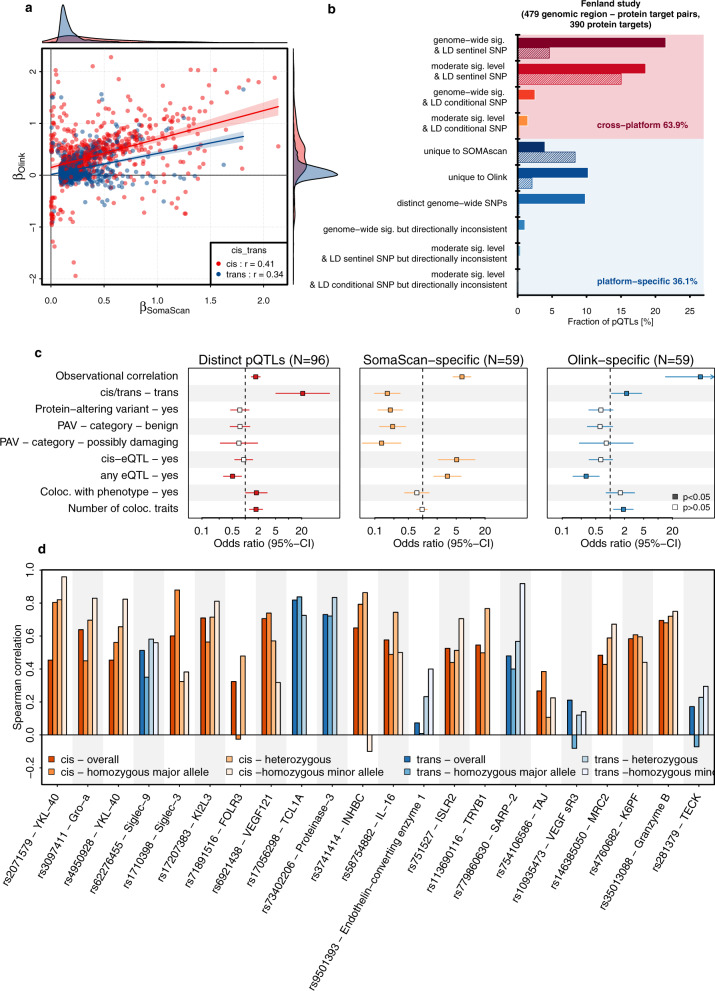
“Based on this assessment we identified the following factors to be associated with a higher likelihood of a distinct or platformspecific pQTL: (1) a lower observational correlation, (2) lower binding affinity of the SOMAmer reagent to the protein target, (3) linkage to a protein altering variant (PAV) (in particular f…”
BackgroundMethodInfluentialInterpreting type 1 diabetes risk with genetics and single-cell epigenomics
Chiou, J., Geusz, R. J., Okino, M.-L., Han, J. Y., Miller, M., Melton, R., Beebe, E., Benaglio, P., Huang, S., Korgaonkar, K., et al. (2021) · Nature · doi:10.1038/s41586-021-03552-w · Cited by 458
Yao, C., Chen, G., Song, C., Keefe, J., Mendelson, M., Huan, T., Sun, B. B., Laser, A., Maranville, J. C., Wu, H., et al. (2018) · Nature Communications · doi:10.1038/s41467-018-05512-x · Cited by 431 · cited 2×
“Single-nucleotide polymorphisms (SNPs) were removed if: (1) call rate <95%; (2) clusters failed Affymetrix SNPolisher standard tests and thresholds; (3) MAF was significantly affected by plate; (4) SNP was a duplicate based on chromosome, position and alleles (selecting the best probeset according to Affymetrix SNPoli…”
Backgroundthe Swiss Kidney Project on Genes in Hypertension (SKIPOGH) team, Trudu, M., Janas, S., Lanzani, C., Debaix, H., Schaeffer, C., Ikehata, M., Citterio, L., Demaretz, S., Trevisani, F., et al. (2013) · Nature Medicine · doi:10.1038/nm.3384 · Cited by 370
Mapping of 79 loci for 83 plasma protein biomarkers in cardiovascular disease
Folkersen, L., Fauman, E., Sabater-Lleal, M., Strawbridge, R. J., Frånberg, M., Sennblad, B., Baldassarre, D., Veglia, F., Humphries, S. E., Rauramaa, R., et al. (2017) · PLOS Genetics · doi:10.1371/journal.pgen.1006706 · Cited by 343 · cited 1×
“Single-nucleotide polymorphisms (SNPs) were removed if: (1) call rate <95%; (2) clusters failed Affymetrix SNPolisher standard tests and thresholds; (3) MAF was significantly affected by plate; (4) SNP was a duplicate based on chromosome, position and alleles (selecting the best probeset according to Affymetrix SNPoli…”
BackgroundImproved imputation of low-frequency and rare variants using the UK10K haplotype reference panel
Huang, J., Howie, B., McCarthy, S., Memari, Y., Walter, K., Min, J. L., Danecek, P., Malerba, G., Trabetti, E., Zheng, H.-F., et al. (2015) · Nature Communications · doi:10.1038/ncomms9111 · Cited by 342
Robertson, C. C., Inshaw, J. R. J., Onengut-Gumuscu, S., Chen, W.-M., Santa Cruz, D. F., Yang, H., Cutler, A. J., Crouch, D. J. M., Farber, E., Bridges, S. L., et al. (2021) · Nature Genetics · doi:10.1038/s41588-021-00880-5 · Cited by 302
GDF15: a hormone conveying somatic distress to the brain
Lockhart, S. M., Saudek, V., & O’Rahilly, S. (2020) · Endocrine Reviews · doi:10.1210/endrev/bnaa007 · Cited by 256
Petrera, A., von Toerne, C., Behler, J., Huth, C., Thorand, B., Hilgendorff, A., & Hauck, S. M. (2021) · Journal of Proteome Research · doi:10.1021/acs.jproteome.0c00641 · Cited by 216
A cross-platform approach identifies genetic regulators of human metabolism and health
MacTel Consortium, Lotta, L. A., Pietzner, M., Stewart, I. D., Wittemans, L. B. L., Li, C., Bonelli, R., Raffler, J., Biggs, E. K., Oliver-Williams, C., et al. (2021) · Nature Genetics · doi:10.1038/s41588-020-00751-5 · Cited by 200
Self-citationPlacenta and appetite genes GDF15 and IGFBP7 are associated with hyperemesis gravidarum
Fejzo, M. S., Sazonova, O. V., Sathirapongsasuti, J. F., Hallgrímsdóttir, I. B., Vacic, V., MacGibbon, K. W., Schoenberg, F. P., Mancuso, N., Slamon, D. J., Mullin, P. M., et al. (2018) · Nature Communications · doi:10.1038/s41467-018-03258-0 · Cited by 184
Comparison of Proteomic Assessment Methods in Multiple Cohort Studies
Raffield, L. M., Dang, H., Pratte, K. A., Jacobson, S., Gillenwater, L. A., Ampleford, E., Barjaktarevic, I., Basta, P., Clish, C. B., Comellas, A. P., et al. (2020) · PROTEOMICS · doi:10.1002/pmic.201900278 · Cited by 184
Ramsland, P. A., Farrugia, W., Bradford, T. M., Sardjono, C. T., Esparon, S., Trist, H. M., Powell, M. S., Tan, P. S., Cendron, A. C., Wines, B. D., et al. (2011) · The Journal of Immunology · doi:10.4049/jimmunol.1101467 · Cited by 163
Genetic architecture of host proteins involved in SARS-CoV-2 infection
Pietzner, M., Wheeler, E., Carrasco-Zanini, J., Raffler, J., Kerrison, N. D., Oerton, E., Auyeung, V. P. W., Luan, J., Finan, C., Casas, J. P., et al. (2020) · Nature Communications · doi:10.1038/s41467-020-19996-z · Cited by 143
Self-citationLee, L.-F., Logronio, K., Tu, G. H., Zhai, W., Ni, I., Mei, L., Dilley, J., Yu, J., Rajpal, A., Brown, C., et al. (2012) · Proceedings of the National Academy of Sciences · doi:10.1073/pnas.1203795109 · Cited by 136
Medical relevance of protein-truncating variants across 337,205 individuals in the UK Biobank study
DeBoever, C., Tanigawa, Y., Lindholm, M. E., McInnes, G., Lavertu, A., Ingelsson, E., Chang, C., Ashley, E. A., Bustamante, C. D., Daly, M. J., et al. (2018) · Nature Communications · doi:10.1038/s41467-018-03910-9 · Cited by 126
Genome-wide association analyses identify new loci influencing intraocular pressure
Gao, X. R., Huang, H., Nannini, D. R., Fan, F., & Kim, H. (2018) · Human Molecular Genetics · doi:10.1093/hmg/ddy111 · Cited by 109
Fournier, N., Chalus, L., Durand, I., Garcia, E., Pin, J.-J., Churakova, T., Patel, S., Zlot, C., Gorman, D., Zurawski, S., et al. (2000) · The Journal of Immunology · doi:10.4049/jimmunol.165.3.1197 · Cited by 102
Nagelkerke, S. Q., Schmidt, D. E., de Haas, M., & Kuijpers, T. W. (2019) · Frontiers in Immunology · doi:10.3389/fimmu.2019.02237 · Cited by 94
Rathore, N., Ramani, S. R., Pantua, H., Payandeh, J., Bhangale, T., Wuster, A., Kapoor, M., Sun, Y., Kapadia, S. B., Gonzalez, L., et al. (2018) · PLOS Genetics · doi:10.1371/journal.pgen.1007427 · Cited by 93
Descriptive epidemiology of physical activity energy expenditure in UK adults (The Fenland study)
Lindsay, T., Westgate, K., Wijndaele, K., Hollidge, S., Kerrison, N., Forouhi, N., Griffin, S., Wareham, N., & Brage, S. (2019) · International Journal of Behavioral Nutrition and Physical Activity · doi:10.1186/s12966-019-0882-6 · Cited by 83
Self-citationCharacterisation of genetic regulatory effects for osteoporosis risk variants in human osteoclasts
Mullin, B. H., Tickner, J., Zhu, K., Kenny, J., Mullin, S., Brown, S. J., Dudbridge, F., Pavlos, N. J., Mocarski, E. S., Walsh, J. P., et al. (2020) · Genome Biology · doi:10.1186/s13059-020-01997-2 · Cited by 67
Growth differentiation factor 15 as a potential therapeutic for treating obesity
Hale, C., & Véniant, M. M. (2020) · Molecular Metabolism · doi:10.1016/j.molmet.2020.101117 · Cited by 55
Cheung, C.-L., Tan, K. C. B., Au, P. C. M., Li, G. H. Y., & Cheung, B. M. Y. (2019) · EBioMedicine · doi:10.1016/j.ebiom.2019.02.021 · Cited by 48
Erratum: Connecting genetic risk to disease end points through the human blood plasma proteome
Suhre, K., Arnold, M., Bhagwat, A. M., Cotton, R. J., Engelke, R., Raffler, J., Sarwath, H., Thareja, G., Wahl, A., DeLisle, R. K., et al. (2017) · Nature Communications · doi:10.1038/ncomms15345 · Cited by 45
Herold, K. C., Bucktrout, S. L., Wang, X., Bode, B. W., Gitelman, S. E., Gottlieb, P. A., Hughes, J., Joh, T., McGill, J. B., Pettus, J. H., et al. (2019) · JCI Insight · doi:10.1172/jci.insight.126054 · Cited by 43
Cyclosporine A impairs wound healing of ureterocystoneostomy in rats
Recker, F., Marquardt, K., Redha, F., Uhlschmid, G. K., & Largiad�r, F. (1989) · Urological Research · doi:10.1007/bf00261043 · Cited by 22
Lundtoft, C., Seyfarth, J., & Jacobsen, M. (2020) · Genes and Immunity · doi:10.1038/s41435-019-0091-y · Cited by 14
Non-complementing rct40- mutant of poliovirus.
Ghendon, Y. Z. (1966) · PubMed · Cited by 11
Early risk stratification of patients with a first inferior wall acute myocardial infarction
Feinberg, M. S., Boyko, V., Goldbourt, U., Reicher-Reiss, H., Mandelzweig, L., Zion, M. M., Kaplinsky, E., & Behar, S. (1995) · International Journal of Cardiology · doi:10.1016/0167-5273(94)02162-c · Cited by 4
Shipley, S. B. (2005) · Nursing Standard · doi:10.7748/ns.19.26.30.s57 · Cited by 3
Kleppe, H. (1980) · PubMed · Cited by 1
Cited by
Genetic regulation of the human plasma proteome in 54,306 UK Biobank participants
Sun, B. B., Chiou, J., Traylor, M., Benner, C., Hsu, Y.-H., Richardson, T. G., Surendran, P., Mahajan, A., Robins, C., Vasquez-Grinnell, S. G., et al. (2022) · doi:10.1101/2022.06.17.496443 · Cited by 1,833
Plasma proteomic associations with genetics and health in the UK Biobank
Sun, B. B., Chiou, J., Traylor, M., Benner, C., Hsu, Y.-H., Richardson, T. G., Surendran, P., Mahajan, A., Robins, C., Vasquez-Grinnell, S. G., et al. (2023) · Nature · doi:10.1038/s41586-023-06592-6 · Cited by 1,880
“As population-scale proteogenomic investigations expand, orthogonal comparisons of different proteomics assays applied across the same samples will help to decipher complementarities and differences between antibody, aptamer and emerging, high-throughput mass-spectrometry-based techniques 50,51 .”
BackgroundZhao, J. H., Stacey, D., Eriksson, N., Macdonald-Dunlop, E., Hedman, Å. K., Kalnapenkis, A., Enroth, S., Cozzetto, D., Digby-Bell, J., Marten, J., et al. (2023) · Nature Immunology · doi:10.1038/s41590-023-01588-w · Cited by 747
“PAVs can result in false-positive cis -pQTL signals by altering protein epitopes recognized by antibodies used in proteomic assays 13 .”
Mapping the proteo-genomic convergence of human diseases
Pietzner, M., Wheeler, E., Carrasco-Zanini, J., Cortes, A., Koprulu, M., Wörheide, M. A., Oerton, E., Cook, J., Stewart, I. D., Kerrison, N. D., et al. (2021) · Science · doi:10.1126/science.abj1541 · Cited by 657
Self-citationLarge-scale plasma proteomics comparisons through genetics and disease associations
Eldjarn, G. H., Ferkingstad, E., Lund, S. H., Helgason, H., Magnusson, O. T., Gunnarsdottir, K., Olafsdottir, T. A., Halldorsson, B. V., Olason, P. I., Zink, F., et al. (2023) · Nature · doi:10.1038/s41586-023-06563-x · Cited by 583
“Studies using Olink have either measured hundreds of proteins in tens of thousands of people 3 or thousands of proteins in about a thousand individuals 7,9 .”
Influential
Metadata
- Authors
- Pietzner, M., Wheeler, E., Carrasco-Zanini, J., Kerrison, N. D., Oerton, E., Koprulu, M., Luan, J., Hingorani, A. D., Williams, S. A., Wareham, N. J., & Langenberg, C.
- Affiliations
- University of Cambridge (GB)
- Health Data Research UK (GB)
- Corresponding author
- Langenberg, Claudia
- ORCID
- Venue
- Nature Communications
- Published
- 2021-11-24
- Volume
- 12
- Issue
- 1
- Pages
- 6822-6822
- ISSN
- 2041-1723 (ISSN-L)
- PMC
- PMC8613205
- OpenAlex
- W3212460220
- Cited by
- 234
- References
- 67
- Citations by year
- 2026: 55 · 2025: 49 · 2024: 55 · 2023: 44 · 2022: 29 · 2021: 2
- FWCI
- 18.50
- Type
- journal article
- Language
- en
- Open access
- gold
- doi.org
- Licence
- cc-by
- creativecommons.org/licenses/by/4.0 (tdm)
- creativecommons.org/licenses/by/4.0 (vor)
- Locations
- Nature Communications (publishedVersion, cc-by)
- PubMed Central (publishedVersion, cc-by)
- PubMed (publishedVersion)
- RePEc: Research Papers in Economics (submittedVersion)
- DOAJ (DOAJ: Directory of Open Access Journals) (submittedVersion, cc-by-sa)
- UCL Discovery (University College London) (submittedVersion)
- Queen Mary Research Online (Queen Mary University of London) (submittedVersion, cc-by)
- Apollo (University of Cambridge) (submittedVersion)
- Apollo (University of Cambridge) (submittedVersion, cc-by)
- Apollo
- Apollo (cc-by)
- Funders
- Wellcome Trust
- UK Research and Innovation (MR/V033867/1)
- National Institute for Health and Care Research (MC_UU_12015/1, NIHR202383)
- British Heart Foundation (AA/18/6/34223)
- University of Cambridge (00001)
- Cambridge Trust
- Medical Research Council (MC_UU_12015/1, MC_PC_13046, MC_UU_12015, MR/V033867/1)
- Topics
- Life Sciences › Biochemistry, Genetics and Molecular Biology › Genetics › Genetic Associations and Epidemiology
- Life Sciences › Biochemistry, Genetics and Molecular Biology › Molecular Biology › Advanced Biosensing Techniques and Applications
- Physical Sciences › Chemistry › Spectroscopy › Advanced Proteomics Techniques and Applications
- Keywords
- protein quantitative trait loci, pQTL, aptamer-based proteomics, SomaScan, Alzheimer's disease, biomarker discovery, disease mechanisms
- MeSH terms
- Adult, Alzheimer Disease, Antibodies, Female, Humans, Male, Membrane Glycoproteins, Middle Aged, Phenotype, Receptors, Immunologic, Cohort Studies, Proteome, Protein Interaction Mapping, Quantitative Trait Loci, Proteomics, Aptamers, Peptide, Protein Interaction Maps
About these checks
Registry, retraction, Cites and statistics results are computed, not judged, with one exception: a printed reference that no index lists is read once by a model before it counts as a citation error. Claims are extracted by a model and kept only when their quote appears verbatim in the text; each cited source is then checked, with a model’s help, for whether it says what the claim relies on. Those verdicts can be wrong — read the claim’s quote and the cited source before relying on one.
Statistics and arithmetic are recomputed, not judged.
Confidence bands are shown only for fields calibrated on our annotated test set. None is calibrated yet, so no band is shown.
What counts as a claim ›How we measure confidence ›How we check this ›
Are you an author, or do you see a problem with this page? Request a review
Data sources
Bibliographic data: Semantic Scholar, OpenAlex, Crossref.
Contains information from the Semantic Scholar Academic Graph Datasets, made available under the ODC Attribution License (ODC-BY 1.0).
Semantic Scholar’s data is described in: Kinney, R., et al. (2023). The Semantic Scholar Open Data Platform. arXiv:2301.10140.
