

Synergistic insights into human health from aptamer- and antibody-based proteomic profiling
Open accessThe DOI matches its Crossref record; 67 of the 67 references it cites were found in a registry or an index.
Abstract
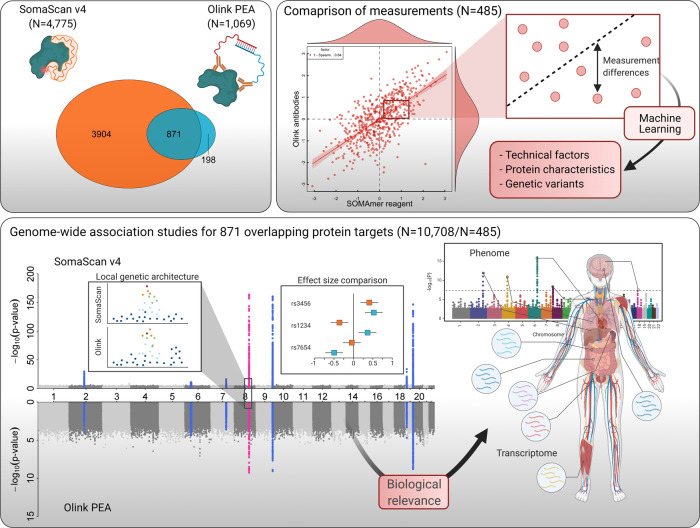
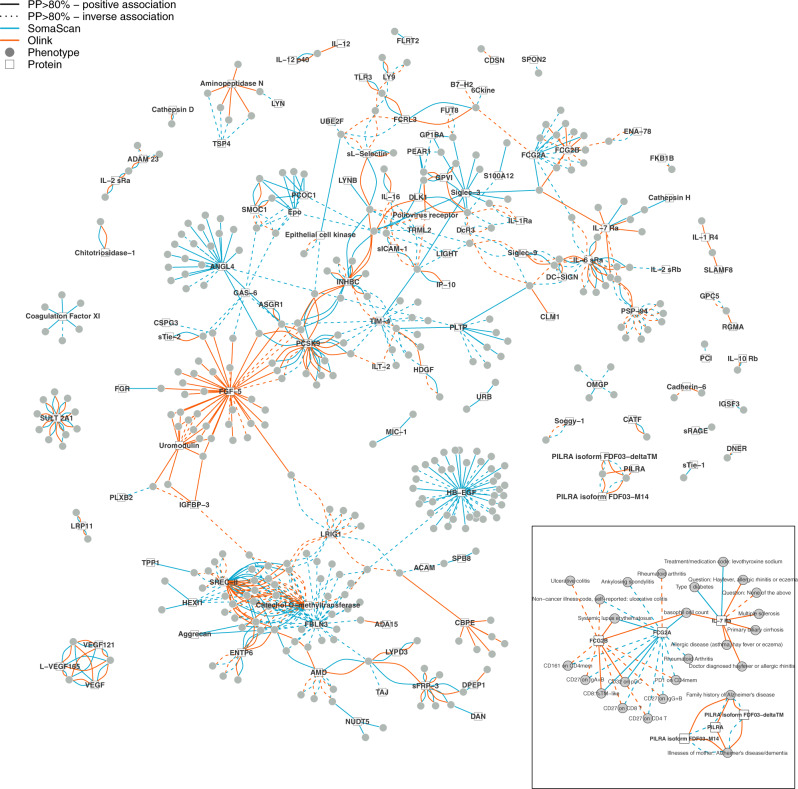
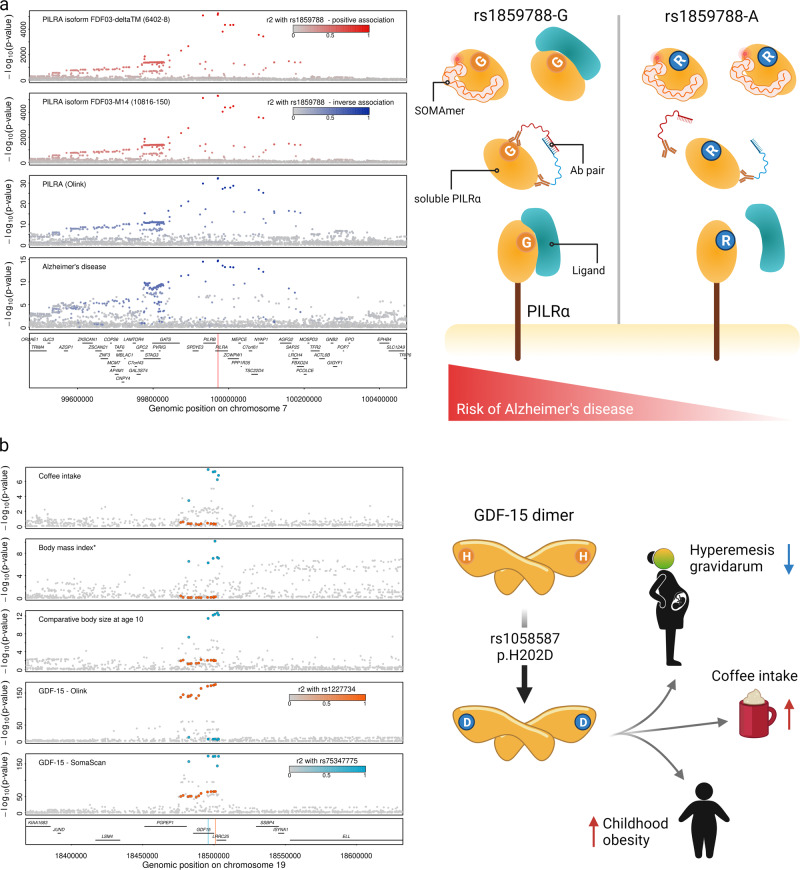
Affinity-based proteomics has enabled scalable quantification of thousands of protein targets in blood enhancing biomarker discovery, understanding of disease mechanisms, and genetic evaluation of drug targets in humans through protein quantitative trait loci (pQTLs). Here, we integrate two partly complementary techniques—the aptamer-based SomaScan ® v4 assay and the antibody-based Olink assays—to systematically assess phenotypic consequences of hundreds of pQTLs discovered for 871 protein targets across both platforms. We create a genetically anchored cross-platform proteome-phenome network comprising 547 protein–phenotype connections, 36.3% of which were only seen with one of the two platforms suggesting that both techniques capture distinct aspects of protein biology. We further highlight discordance of genetically predicted effect directions between assays, such as for PILRA and Alzheimer’s disease. Our results showcase the synergistic nature of these technologies to better understand and identify disease mechanisms and provide a benchmark for future cross-platform discoveries.
Overview
The claims and statistics of this paper haven’t been checked yet.
Free: it reads the open-access text and checks the first 5 claims that cite a source we can check. Create a free account to check every claim.
Integrity signals
Registry
Cites
Statistics
Figures
Verification
Claims the paper makes
The claims and statistics of this paper haven’t been checked yet.
Free: it reads the open-access text and checks the first 5 claims that cite a source we can check. Create a free account to check every claim.
Claims other papers make about this one
Each is checked against this paper’s own text: does it say what the citing paper says it does?
The source backs part of the claim, not all of it — or backs it for a different population, condition or comparison.
In the citing paper
“The detection of a cis-pQTL for a given protein measure is often used as a metric to confirm on-target affinity-probe binding12,15,16; existing studies comparing SomaScan and Olink measures have established that the detection of a cis-pQTL is a strong predictor of inter-platform correlation coefficients for a given protein12,15,16.”
From Cross-ancestry comparison of aptamer and antibody protein measures (2026) · cites this paper as [16]
Experimental — accuracy not yet measuredThe source backs part of the claim, not all of it — or backs it for a different population, condition or comparison.
In the citing paper
“This protein showed strong platform-discordant measures (Pearson’s r = -0.35) across the present and prior studies16,17 (Fig. 4A).”
From Cross-ancestry comparison of aptamer and antibody protein measures (2026) · cites this paper as [16]
Experimental — accuracy not yet measuredThe source backs part of the claim, not all of it — or backs it for a different population, condition or comparison.
In the citing paper
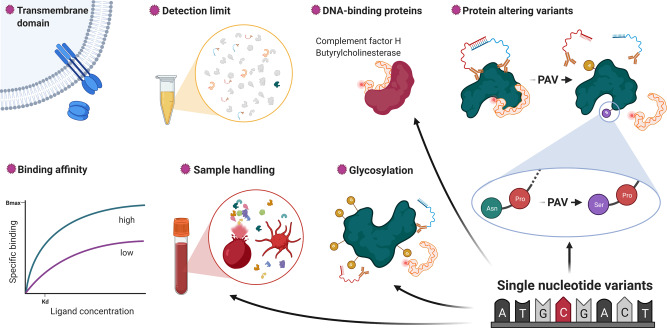
“One prior study demonstrated that biological (such as presence of a trans-membrane domain, protein length) and technical factors (percentage of outlier or below limit of detection protein measures, etc.) can explain this wide range of correlation coefficients16.”
From Cross-ancestry comparison of aptamer and antibody protein measures (2026) · cites this paper as [16]
Experimental — accuracy not yet measuredThe source backs part of the claim, not all of it — or backs it for a different population, condition or comparison.
In the citing paper
“We observed similar proportions of protein measures associated with any cis-pQTL on each platform (39% SomaScan, 48% Olink), with more distinct cis-pQTL identified for Olink overall (for the set of 2157 proteins measured on both platforms), consistent with single-ancestry genetic comparisons of earlier versions of SomaScan and Olink platforms12,16,17.”
From Cross-ancestry comparison of aptamer and antibody protein measures (2026) · cites this paper as [16]
Experimental — accuracy not yet measuredThe source backs part of the claim, not all of it — or backs it for a different population, condition or comparison.
In the citing paper
“Here, and across prior studies, cis-pQTL presence/absence is thought to provide one predictor of on-target protein measures12,15,16.”
From Cross-ancestry comparison of aptamer and antibody protein measures (2026) · cites this paper as [16]
Experimental — accuracy not yet measured
5 more claims about this paper
Create a free account to see every claim other papers make about this one.
Self-check
Percentages, sums and reported differences re-computed from the paper’s own numbers.
The self-check needs the paper’s full text.
Citations
Cites
Sudlow, C., Gallacher, J., Allen, N., Beral, V., Burton, P., Danesh, J., Downey, P., Elliott, P., Green, J., Landray, M., et al. (2015) · PLOS Medicine · doi:10.1371/journal.pmed.1001779 · Cited by 12,728
The UK Biobank resource with deep phenotyping and genomic data
Bycroft, C., Freeman, C., Petkova, D., Band, G., Elliott, L. T., Sharp, K., Motyer, A., Vukcevic, D., Delaneau, O., O’Connell, J., et al. (2018) · Nature · doi:10.1038/s41586-018-0579-z · Cited by 8,876
The Ensembl Variant Effect Predictor
McLaren, W., Gil, L., Hunt, S. E., Riat, H. S., Ritchie, G. R. S., Thormann, A., Flicek, P., & Cunningham, F. (2016) · Genome Biology · doi:10.1186/s13059-016-0974-4 · Cited by 8,099
Feature Selection with the Boruta Package
Kursa, M. B., & Rudnicki, W. R. (2010) · Journal of Statistical Software · doi:10.18637/jss.v036.i11 · Cited by 5,659
The GTEx Consortium atlas of genetic regulatory effects across human tissues
The GTEx Consortium, Aguet, F., Anand, S., Ardlie, K. G., Gabriel, S., Getz, G. A., Graubert, A., Hadley, K., Handsaker, R. E., Huang, K. H., et al. (2020) · Science · doi:10.1126/science.aaz1776 · Cited by 5,547
METAL: fast and efficient meta-analysis of genomewide association scans
Willer, C. J., Li, Y., & Abecasis, G. R. (2010) · Bioinformatics · doi:10.1093/bioinformatics/btq340 · Cited by 5,205
Giambartolomei, C., Vukcevic, D., Schadt, E. E., Franke, L., Hingorani, A. D., Wallace, C., & Plagnol, V. (2014) · PLoS Genetics · doi:10.1371/journal.pgen.1004383 · Cited by 4,261
Self-citationBuniello, A., MacArthur, J. A. L., Cerezo, M., Harris, L. W., Hayhurst, J., Malangone, C., McMahon, A., Morales, J., Mountjoy, E., Sollis, E., et al. (2019) · Nucleic Acids Research · doi:10.1093/nar/gky1120 · Cited by 4,000
A reference panel of 64,976 haplotypes for genotype imputation
the Haplotype Reference Consortium (2016) · Nature Genetics · doi:10.1038/ng.3643 · Cited by 2,836
A comprehensive map of molecular drug targets
Santos, R., Ursu, O., Gaulton, A., Bento, A. P., Donadi, R. S., Bologa, C. G., Karlsson, A., Al-Lazikani, B., Hersey, A., Oprea, T. I., et al. (2017) · Nature Reviews Drug Discovery · doi:10.1038/nrd.2016.230 · Cited by 2,427
Cited by
Genetic regulation of the human plasma proteome in 54,306 UK Biobank participants
Sun, B. B., Chiou, J., Traylor, M., Benner, C., Hsu, Y.-H., Richardson, T. G., Surendran, P., Mahajan, A., Robins, C., Vasquez-Grinnell, S. G., et al. (2022) · doi:10.1101/2022.06.17.496443 · Cited by 1,833
Plasma proteomic associations with genetics and health in the UK Biobank
Sun, B. B., Chiou, J., Traylor, M., Benner, C., Hsu, Y.-H., Richardson, T. G., Surendran, P., Mahajan, A., Robins, C., Vasquez-Grinnell, S. G., et al. (2023) · Nature · doi:10.1038/s41586-023-06592-6 · Cited by 1,880
“As population-scale proteogenomic investigations expand, orthogonal comparisons of different proteomics assays applied across the same samples will help to decipher complementarities and differences between antibody, aptamer and emerging, high-throughput mass-spectrometry-based techniques 50,51 .”
BackgroundZhao, J. H., Stacey, D., Eriksson, N., Macdonald-Dunlop, E., Hedman, Å. K., Kalnapenkis, A., Enroth, S., Cozzetto, D., Digby-Bell, J., Marten, J., et al. (2023) · Nature Immunology · doi:10.1038/s41590-023-01588-w · Cited by 747
“PAVs can result in false-positive cis -pQTL signals by altering protein epitopes recognized by antibodies used in proteomic assays 13 .”
Mapping the proteo-genomic convergence of human diseases
Pietzner, M., Wheeler, E., Carrasco-Zanini, J., Cortes, A., Koprulu, M., Wörheide, M. A., Oerton, E., Cook, J., Stewart, I. D., Kerrison, N. D., et al. (2021) · Science · doi:10.1126/science.abj1541 · Cited by 657
Self-citationLarge-scale plasma proteomics comparisons through genetics and disease associations
Eldjarn, G. H., Ferkingstad, E., Lund, S. H., Helgason, H., Magnusson, O. T., Gunnarsdottir, K., Olafsdottir, T. A., Halldorsson, B. V., Olason, P. I., Zink, F., et al. (2023) · Nature · doi:10.1038/s41586-023-06563-x · Cited by 583
“Studies using Olink have either measured hundreds of proteins in tens of thousands of people 3 or thousands of proteins in about a thousand individuals 7,9 .”
InfluentialArgentieri, M. A., Xiao, S., Bennett, D., Winchester, L., Nevado-Holgado, A. J., Ghose, U., Albukhari, A., Yao, P., Mazidi, M., Lv, J., et al. (2024) · Nature Medicine · doi:10.1038/s41591-024-03164-7 · Cited by 347
“…SOMAscan and Olink data directly demonstrated substantial discrepancies in protein–phenotype associations and genetic protein quantitative trait loci mapping between the two platforms 26 ; however, an alternative explanation may be small sample sizes in these previous proteomic age clock studies.”
ResultAssessment of variability in the plasma 7k SomaScan proteomics assay
Candia, J., Daya, G. N., Tanaka, T., Ferrucci, L., & Walker, K. A. (2022) · Scientific Reports · doi:10.1038/s41598-022-22116-0 · Cited by 220
Katz, D. H., Robbins, J. M., Deng, S., Tahir, U. A., Bick, A. G., Pampana, A., Yu, Z., Ngo, D., Benson, M. D., Chen, Z.-Z., et al. (2022) · Science Advances · doi:10.1126/sciadv.abm5164 · Cited by 206
“More recently, a larger effort to compare these platforms (N = 485 overlapping samples) demonstrated very poor correlation between a large number of reagents targeting the same protein (18).”
BackgroundConnecting aging biology and inflammation in the omics era
Walker, K. A., Basisty, N., Wilson, D. M., & Ferrucci, L. (2022) · Journal of Clinical Investigation · doi:10.1172/jci158448 · Cited by 189
“Although the advances in aptamer and proximity extension assay technology have significantly expanded access to large-scale proteomics, there remain certain limitations to these approaches, including platformspecific measurement variation, incomplete target validation, a bias toward measurement of secreted proteins, a…”
BackgroundDammer, E. B., Ping, L., Duong, D. M., Modeste, E. S., Seyfried, N. T., Lah, J. J., Levey, A. I., & Johnson, E. C. B. (2022) · Alzheimer's Research & Therapy · doi:10.1186/s13195-022-01113-5 · Cited by 188
“Such proteoform complexity is very likely to be a large driver of variation across proteomic measurements within and across platforms, where a given platform is targeting a particular epitope or peptide for measurement of protein levels that could be obscured by splice variation, PTMs, or complex formation [18, 33].”
BackgroundResultProteomics and lipidomics in atherosclerotic cardiovascular disease risk prediction
Nurmohamed, N. S., Kraaijenhof, J. M., Mayr, M., Nicholls, S. J., Köenig, W., Catapano, A. L., & Stroes, E. S. G. (2023) · European Heart Journal · doi:10.1093/eurheartj/ehad161 · Cited by 173
“Two recent studies have compared the targeted proteomics approaches by Olink and Somalogic.52,53 Approximately one-third of ∼600 overlapping proteins from both platforms showed at best a modest correlation between platforms, and another one-third only showed medium correlations.53 Thus, there are discrepancies between…”
ResultAn atlas of genetic scores to predict multi-omic traits
Xu, Y., Ritchie, S. C., Liang, Y., Timmers, P. R. H. J., Pietzner, M., Lannelongue, L., Lambert, S. A., Tahir, U. A., May-Wilson, S., Foguet, C., et al. (2023) · Nature · doi:10.1038/s41586-023-05844-9 · Cited by 144
Self-citationBlood protein assessment of leading incident diseases and mortality in the UK Biobank
Gadd, D. A., Hillary, R. F., Kuncheva, Z., Mangelis, T., Cheng, Y., Dissanayake, M., Admanit, R., Gagnon, J., Lin, T., Ferber, K. L., et al. (2024) · Nature Aging · doi:10.1038/s43587-024-00655-7 · Cited by 142
“Fourth, variation in protein analyte levels across measurement technologies has been reported 42 .”
Yuan, S., Xu, F., Li, X., Chen, J., Zheng, J., Mantzoros, C. S., & Larsson, S. C. (2023) · Cell Reports Medicine · doi:10.1016/j.xcrm.2023.101174 · Cited by 174
Messner, C. B., Demichev, V., Wang, Z., Hartl, J., Kustatscher, G., Mülleder, M., & Ralser, M. (2022) · PROTEOMICS · doi:10.1002/pmic.202200013 · Cited by 154
Chen, L., Peters, J. E., Prins, B. P., Persyn, E., Traylor, M., Surendran, P., Karthikeyan, S., Yonova‐Doing, E., Angelantonio, E. D., Roberts, D. J., et al. (2022) · Nature Communications · doi:10.1038/s41467-022-33675-1 · Cited by 149
Wolf, J., Rasmussen, D. K., Sun, Y. J., Vu, J. T., Wang, E., Espinosa, C. A., Bigini, F., Chang, R. T., Montague, A. A., Tang, P. H., et al. (2023) · Cell · doi:10.1016/j.cell.2023.09.012 · Cited by 140
Yoshiji, S., Butler‐Laporte, G., Lu, T., Willett, J., Su, C., Nakanishi, T., Morrison, D., Chen, Y., Liang, K. Y. H., Hultström, M., et al. (2023) · Nature Metabolism · doi:10.1038/s42255-023-00742-w · Cited by 123
Pan-cancer proteogenomics connects oncogenic drivers to functional states
Li, Y., Porta‐Pardo, E., Tokheim, C. J., Bailey, M. H., Yaron, T. M., Stathias, V., Geffen, Y., Imbach, K. J., Cao, S., Anand, S. K., et al. (2023) · Cell · doi:10.1016/j.cell.2023.07.014 · Cited by 136
“Proteogenomic analyses reveal the heterogeneity of cis-effects of cancer mutations Although genetic variants can broadly impact the proteome, the most proximal effect is at the transcriptional, translational, and post-translational product of the mutated gene itself.(35,36) To”
Molecular quantitative trait loci
Aguet, F., Alasoo, K., Li, Y. I., Battle, A., Im, H. K., Montgomery, S. B., & Lappalainen, T. (2023) · Nature Reviews Methods Primers · doi:10.1038/s43586-022-00188-6 · Cited by 98
Decoding the glycoproteome: a new frontier for biomarker discovery in cancer
He, K., Baniasad, M., Kwon, H., Čaval, T., Xu, G., Lebrilla, C. B., Hommes, D. W., & Bertozzi, C. R. (2024) · Journal of Hematology & Oncology · doi:10.1186/s13045-024-01532-x · Cited by 96
“Beyond MS, emerging proximity extension and aptamer assays directly quantify plasma proteins without relying on antibodies [67–69].”
BackgroundRooney, M. R., Chen, J., Ballantyne, C. M., Hoogeveen, R. C., Tang, O., Grams, M. E., Tin, A., Ndumele, C. E., Zannad, F., Couper, D. J., et al. (2023) · Clinical Chemistry · doi:10.1093/clinchem/hvac186 · Cited by 77
Bourgault, J., Abner, E., Manikpurage, H. D., Pujol‐Gualdo, N., Laisk, T., Gobeil, É., Gagnon, É., Girard, A. S., Mitchell, P. L., Thériault, S., et al. (2023) · Gastroenterology · doi:10.1053/j.gastro.2023.01.028 · Cited by 86
Xu, F., Yu, E. Y.-W., Cai, X., Yue, L., Jing, L.-P., Liang, X., Fu, Y., Miao, Z., Yang, M., Shuai, M., et al. (2023) · Nature Communications · doi:10.1038/s41467-023-36491-3 · Cited by 69
Self-citationPlasma proteome variation and its genetic determinants in children and adolescents
Niu, L., Stinson, S. E., Holm, L. A., Lund, M. A. V., Fonvig, C. E., Cobuccio, L., Meisner, J., Juel, H. B., Fadista, J., Thiele, M., et al. (2025) · Nature Genetics · doi:10.1038/s41588-025-02089-2 · Cited by 65
“2a). specificity in identifying and quantifying proteins 17–19 , as MS measures the mass of peptides and their fragments down to several parts per million.”
Wang, B., Pozarickij, A., Mazidi, M., Wright, N., Yao, P., Said, S., Iona, A., Kartsonaki, C., Fry, H., Lin, K., et al. (2025) · Nature Communications · doi:10.1038/s41467-025-56935-2 · Cited by 64
The 2022 Report on the Human Proteome from the HUPO Human Proteome Project
Omenn, G. S., Lane, L., Overall, C. M., Pineau, C., Packer, N. H., Cristea, I. M., Lindskog, C., Weintraub, S. T., Orchard, S. E., Roehrl, M. H. A., et al. (2022) · Journal of Proteome Research · doi:10.1021/acs.jproteome.2c00498 · Cited by 66
Suhre, K., Venkataraman, G. R., Guturu, H., Halama, A., Stephan, N., Thareja, G., Sarwath, H., Motamedchaboki, K., Donovan, M. K. R., Siddiqui, A., et al. (2024) · Nature Communications · doi:10.1038/s41467-024-45233-y · Cited by 57
Variability of 7K and 11K SomaScan Plasma Proteomics Assays
Candia, J., Fantoni, G., Delgado‐Peraza, F., Shehadeh, N., Tanaka, T., Moaddel, R., Walker, K. A., & Ferrucci, L. (2024) · Journal of Proteome Research · doi:10.1021/acs.jproteome.4c00667 · Cited by 62
Proteogenomic links to human metabolic diseases
Koprulu, M., Carrasco-Zanini, J., Wheeler, E., Lockhart, S., Kerrison, N. D., Wareham, N. J., Pietzner, M., & Langenberg, C. (2023) · Nature Metabolism · doi:10.1038/s42255-023-00753-7 · Cited by 57
Self-citationSystemic proteome adaptions to 7-day complete caloric restriction in humans
Pietzner, M., Uluvar, B., Kolnes, K. J., Jeppesen, P. B., Frivold, S. V., Skattebo, Ø., Johansen, E. I., Skålhegg, B. S., Wojtaszewski, J. F. P., Kolnes, A. J., et al. (2024) · Nature Metabolism · doi:10.1038/s42255-024-01008-9 · Cited by 64
“For example, we showed that the same genetic variant that increases plasma levels of IL7R also increased the risk for multiple sclerosis 39 .”
Self-citationThe Circulating Proteome─Technological Developments, Current Challenges, and Future Trends
Geyer, P. E., Hornburg, D., Pernemalm, M., Hauck, S. M., Palaniappan, K. K., Albrecht, V., Dagley, L. F., Moritz, R. L., Yu, X., Edfors, F., et al. (2024) · Journal of Proteome Research · doi:10.1021/acs.jproteome.4c00586 · Cited by 63
Proteomic signatures for identification of impaired glucose tolerance
Carrasco-Zanini, J., Pietzner, M., Lindbohm, J. V., Wheeler, E., Oerton, E., Kerrison, N., Simpson, M., Westacott, M., Drolet, D., Kivimaki, M., et al. (2022) · Nature Medicine · doi:10.1038/s41591-022-02055-z · Cited by 52
Self-citationEvaluation of circulating plasma proteins in breast cancer using Mendelian randomisation
Mälarstig, A., Graßmann, F., Dahl, L., Dimitriou, M., McLeod, D., Gabrielson, M., Smith‐Byrne, K., Thomas, C. E., Huang, T.-H., Forsberg, S. K. G., et al. (2023) · Nature Communications · doi:10.1038/s41467-023-43485-8 · Cited by 63
Yarmolinsky, J. W., Robinson, J. W., Mariosa, D., Karhunen, V., Huang, J. V., Dimou, N. L., Murphy, N., Burrows, K., Bouras, E., Smith‐Byrne, K., et al. (2024) · EBioMedicine · doi:10.1016/j.ebiom.2024.104991 · Cited by 56
The Proteomic Profile of Interstitial Lung Abnormalities
Axelsson, G. T., Guðmundsson, G., Pratte, K., Aspelund, T., Putman, R. K., Sanders, J. L., Gudmundsson, E. F., Hatabu, H., Guðmundsdóttir, V., Guðjónsson, A., et al. (2022) · American Journal of Respiratory and Critical Care Medicine · doi:10.1164/rccm.202110-2296oc · Cited by 57
Plasma proteomics identifies CRTAC1 as a biomarker for osteoarthritis severity and progression
Szilagyi, I. A., Vallerga, C. L., Boer, C. G., Schiphof, D., Ikram, M. A., Bierma-Zeinstra, S. M. A., & van Meurs, J. B. J. (2023) · Rheumatology · doi:10.1093/rheumatology/keac415 · Cited by 51
Girard, D., & Vandiedonck, C. (2022) · Frontiers in Cardiovascular Medicine · doi:10.3389/fcvm.2022.991716 · Cited by 58
“If the first studies relying on quantification of protein expression by mass-spectrometry appeared somewhat disappointing, more reliable quantitative measurements are now achievable with affinity-based methods and brought positive results such as protein expression of IL-7R in T1D (151), ADIPOQ in T2D (152), or IL-1B…”
BackgroundPlasma proteins related to inflammatory diet predict future cognitive impairment
Duggan, M. R., Butler, L., Peng, Z., Daya, G. N., Moghekar, A., An, Y., Rapp, S. R., Hayden, K. M., Shadyab, A. H., Natale, G., et al. (2023) · Molecular Psychiatry · doi:10.1038/s41380-023-01975-7 · Cited by 57
“Correlations of measurements for the same protein across Somascan and Olink platforms were calculated previously in ARIC and in the Fenland study [54].”
Plasma protein and venous thromboembolism: prospective cohort and mendelian randomisation analyses
Yuan, S., Titova, O. E., Zhang, K., Gou, W., Schillemans, T., Natarajan, P., Chen, J., Li, X., Åkesson, A., Bruzelius, M., et al. (2023) · British Journal of Haematology · doi:10.1111/bjh.18679 · Cited by 46
“57 Thus, future studies using a combination of different proteomic profiling platforms are needed to confirm the direction of these associations.”
Panyard, D. J., McKetney, J., Deming, Y. K., Morrow, A. R., Ennis, G. E., Jonaitis, E. M., Van Hulle, C. A., Yang, C., Sung, Y. J., Ali, M., et al. (2023) · Alzheimer's & Dementia · doi:10.1002/alz.13130 · Cited by 44
Mapping biological influences on the human plasma proteome beyond the genome
Carrasco-Zanini, J., Wheeler, E., Uluvar, B., Kerrison, N. D., Koprulu, M., Wareham, N. J., Pietzner, M., & Langenberg, C. (2024) · Nature Metabolism · doi:10.1038/s42255-024-01133-5 · Cited by 53
“No statistical methods were used to pre-determine sample sizes but our sample sizes are similar to those reported in previous publications 4,12 .”
BackgroundMethodInfluentialSelf-citationWang, Q. S., Hasegawa, T., Namkoong, H., Saiki, R., Edahiro, R., Sonehara, K., Tanaka, H., Azekawa, S., Chubachi, S., Takahashi, Y., et al. (2024) · Nature Genetics · doi:10.1038/s41588-024-01896-3 · Cited by 43
“24).”
Perry, A., Farber‐Eger, E. H., Gonzales, T. I., Tanaka, T., Robbins, J., Murthy, V. L., Stolze, L. K., Zhao, S., Huang, S., Colangelo, L. A., et al. (2024) · Nature Medicine · doi:10.1038/s41591-024-03039-x · Cited by 47
“Fenland (5k aptamer platform), HERITAGE (5k aptamer platform) and BLSA (7k aptamer platform) also used SomaScan proteomics technology with methods described previously 10,16,88,89 .”
MethodSelf-citationYuan, S., Merino, J., & Larsson, S. C. (2023) · Diabetologia · doi:10.1007/s00125-023-05879-7 · Cited by 47
“However, these MR associations can still be influenced by the genome-wide associations analyses on metabolites and proteins as well as corresponding profiling process (possible bias caused by batch effects) [59] and different highthroughput platforms [60].”
BackgroundLarge-Scale Proteomics Improve Prediction of Chronic Kidney Disease in People With Diabetes
Ye, Z., Zhang, Y., Zhang, Y., Yang, S., He, P., Liu, M., Zhou, C., Gan, X., Huang, Y., Xiang, H., et al. (2024) · Diabetes Care · doi:10.2337/dc24-0290 · Cited by 49
Proteomics for the Discovery of Clinical Delirium Biomarkers: A Systematic Review of Major Studies
Wiredu, K., Aduse-Poku, E., Shaefi, S., & Gerber, S. A. (2022) · Anesthesia & Analgesia · doi:10.1213/ane.0000000000006246 · Cited by 39
Tsukita, K., Sakamaki‐Tsukita, H., Kaiser, S., Zhang, L., Messa, M., Serrano‐Fernández, P., & Takahashi, R. (2023) · Neurology · doi:10.1212/wnl.0000000000207725 · Cited by 45
“(Boulder, CO), blinded to clinical information, quantified proteins in the CSF, as previously detailed.(25,27,35,38-39) Briefly, SomaScan quantified each protein as relative fluorescence units of slow off-rate modified aptamers (SOMAmers) that bound to each target protein in slide-based hybridization microarrays.”
Plasma Proteomic Kinetics in Response to Acute Exercise
Mi, M., Barber, J. L., Rao, P., Farrell, L. A., Sarzynski, M. A., Bouchard, C., Robbins, J., & Gerszten, R. E. (2023) · Molecular & Cellular Proteomics · doi:10.1016/j.mcpro.2023.100601 · Cited by 37
“In addition to our findings in HERITAGE, we reported Spearman correlations (40, 41) and Pearson correlations (42) from three other studies that systematically compared the two platforms as well.”
ResultCorrelations Within and Between Highly Multiplexed Proteomic Assays of Human Plasma
Rooney, M. R., Chen, J., Ballantyne, C. M., Hoogeveen, R. C., Boerwinkle, E., Yu, B., Walker, K. A., Schlosser, P., Selvin, E., Chatterjee, N., et al. (2025) · Clinical Chemistry · doi:10.1093/clinchem/hvaf030 · Cited by 33
Elevated plasma complement factor H related 5 protein is associated with venous thromboembolism
Iglesias, M. J., Sánchez‐Rivera, L., Ibrahim‐Kosta, M., Naudin, C., Munsch, G., Goumidi, L., Farm, M., Smith, P. M., Thibord, F., Kral-Pointner, J. B., et al. (2023) · Nature Communications · doi:10.1038/s41467-023-38383-y · Cited by 42
“S1f) 78,79 .”
BackgroundInfluentialSelf-citationGrännö, O., Bergemalm, D., Salomon, B., Lindqvist, C. M., Hedin, C. R. H., Carlson, M., Dannenberg, K., Andersson, E., Keita, Å. V., Magnusson, M. K., et al. (2024) · Gastroenterology · doi:10.1053/j.gastro.2024.11.006 · Cited by 32
“Pietzner et al 29 noted the high variability between the 2 platforms (median correlation coef fi cient 0.38), which may account for the disparities in results.”
InfluentialELF5 is a potential respiratory epithelial cell-specific risk gene for severe COVID-19
Pietzner, M., Chua, R. L., Wheeler, E., Jechow, K., Willett, J., Radbruch, H., Trump, S., Heidecker, B., Zeberg, H., Heppner, F. L., et al. (2022) · Nature Communications · doi:10.1038/s41467-022-31999-6 · Cited by 33
“Secondly, genetic variants near protein-encoding loci (cis-pQTLs) that associate withproteinlevelsinhealthyindividualsbeforeviralexposurecanserve as instruments for lifelong exposure to higher or lower protein levels.”
InfluentialSelf-citationMolecular bioengineering of functional nucleic acids
Du, Z., Wu, X., Dang, Y., Wu, Q., Fu, T., He, L., Wang, X., Mou, S., Fang, X., Qu, F., et al. (2025) · Nature Reviews Bioengineering · doi:10.1038/s44222-025-00361-y · Cited by 38
“This approach has been used in proteomics research and the biopharmaceutical industry to achieve high-precision protein purification 16 .”
Zhao, J. H., Stacey, D., Eriksson, N., Macdonald-Dunlop, E., Hedman, Å. K., Kalnapenkis, A., Enroth, S., Cozzetto, D., Digby-Bell, J. L., Marten, J., et al. (2023) · Nature Immunology · doi:10.1038/s41590-023-01635-6 · Cited by 32
Cronjé, H. T., Karhunen, V., Hovingh, G. K., Coppieters, K. T., Lagerstedt, J. O., Nyberg, M., & Gill, D. (2023) · BMC Medicine · doi:10.1186/s12916-023-02867-x · Cited by 26
Precision Medicine for Cardiovascular Prevention and Population Health: A Bridge Too Far?
Giugni, F., Berry, J. D., Khera, A., Shah, A. M., & de Lemos, J. A. (2024) · Circulation · doi:10.1161/circulationaha.124.070081 · Cited by 26
Mendelian randomization identifies proteins involved in neurodegenerative diseases
Belbasis, L., Morris, S., van Duijn, C. M., Bennett, D., & Walters, R. G. (2025) · Brain · doi:10.1093/brain/awaf018 · Cited by 36
“32 For this reason, when an assay in both platforms targeted the same protein, we considered the lead cis pQTL from both platforms.”
Donovan, M. K. R., Huang, Y., Blume, J. E., Wang, J., Hornburg, D., Ferdosi, S., Mohtashemi, I., Kim, S., Ko, M., Benz, R. W., et al. (2023) · PLoS ONE · doi:10.1371/journal.pone.0282821 · Cited by 22
SomaScan Bioinformatics: Normalization, Quality Control, and Assessment of Pre-Analytical Variation
Candia, J. (2025) · Methods in molecular biology · doi:10.1007/978-1-0716-4595-6_9 · Cited by 27
The proteogenomic landscape of the human kidney and implications for cardio-kidney-metabolic health
Hirohama, D., Fadista, J., Ha, E., Liu, H., Abedini, A., Levinsohn, J. L., Vassalotti, A., Zeng, L., Li, C., Mohandes, S., et al. (2025) · Nature Medicine · doi:10.1038/s41591-025-03872-8 · Cited by 32
“A total of 151 prioritized protein–outcome pairs (90 proteins and 26 outcomes) were significant in both analyses, where 22 proteins were associated with more than one outcome, and eight proteins showed associations across multiple categories (Supplementary Table 26).”
InfluentialGiontella, A., Zagkos, L., Geybels, M. S., Larsson, S. C., Tzoulaki, I., Mantzoros, C. S., Andersen, B., Gill, D., & Cronjé, H. T. (2023) · Metabolism · doi:10.1016/j.metabol.2023.155616 · Cited by 24
“…SomaScan data for our proteome-wide association study benefited us in terms of the broad proteomic coverage, we acknowledge that all aptamers have not been technically validated and a subset of aptamers are likely to have limited specificity and sensitivity for detecting proteins of interest [43].”
BackgroundDuijvelaar, E., Gisby, J., Peters, J. E., Bogaard, H. J., & Aman, J. (2024) · Nature Communications · doi:10.1038/s41467-024-44986-w · Cited by 27
“However, inter-platform reproducibility varies strongly for each protein target, with median correlations coef fi cients between measurements using the Somascan and Olink platforms of 0.38-0.50 92,93 .”
InfluentialYuan, S., Chen, J., Ruan, X., Li, Y., Abramowitz, S. A., Wang, L., Jiang, F., Xiong, Y., Levin, M. G., Voight, B. F., et al. (2025) · Nature Communications · doi:10.1038/s41467-025-61720-2 · Cited by 31
“Fifth, the inclusion of coding variants may alter epitope binding in aptamer-based proteomic analyses for certain proteins, potentially introducing measurement bias that could affect the accuracy of MR results 40 .”
A standardized framework for circulating blood proteomics
Cai, X., Geyer, P. E., Pérez‐Riverol, Y., Omenn, G. S., Dong, L., Winkler, R., Ahadi, S., Lössl, P., Yu, X., Chang, C., et al. (2025) · Nature Genetics · doi:10.1038/s41588-025-02319-7 · Cited by 22
“Several studies have compared PEA and SOMAmer consistency 44,45 .”
Harnessing the power of proteomics in precision diabetes medicine
Kurgan, N., Larsen, J. K., & Deshmukh, A. S. (2024) · Diabetologia · doi:10.1007/s00125-024-06097-5 · Cited by 24
“This can lead to missing co-localisation with quantitative trait loci (QTLs) and phenotypic traits in genetic association studies, extreme values, or a higher proportion of false positive results [80–82].”
Abe, K., Beer, J. C., Nguyen, T. T., Ariyapala, I. S., Holmes, T. H., Feng, W., Zhang, B., Kuo, D., Luo, Y., Ma, X.-J., et al. (2024) · The Journal of Immunology · doi:10.4049/jimmunol.2300729 · Cited by 21
Cerebrospinal fluid proteomics identification of biomarkers for amyloid and tau PET stages
Wang, Z., Chen, Y., Gong, K., Zhao, B., Ning, Y., Chen, M., Li, Y., Ali, M., Timsina, J., Liu, M., et al. (2025) · Cell Reports Medicine · doi:10.1016/j.xcrm.2025.102031 · Cited by 31
Identifying causal serum protein–cardiometabolic trait relationships using whole genome sequencing
Png, G., Gerlini, R., Hatzikotoulas, K., Barysenka, A., Rayner, N. W., Klarić, L., Rathkolb, B., Aguilar‐Pimentel, J. A., Rozman, J., Fuchs, H., et al. (2022) · Human Molecular Genetics · doi:10.1093/hmg/ddac275 · Cited by 21
Bioinformatics tools and data resources for assay development of fluid protein biomarkers
Waury, K., Willemse, E. A. J., Vanmechelen, E., Zetterberg, H., Teunissen, C. E., & Abeln, S. (2022) · Biomarker Research · doi:10.1186/s40364-022-00425-w · Cited by 23
“Because of their complementary nature, integration of these methods has recently been suggested [23, 24].”
BackgroundThe Human Gastric Juice: A Promising Source for Gastric Cancer Biomarkers
Felípez, N., Montori, S., Mendizuri, N., Llach, J., Delgado‐Guillena, P., Moreira, L., Santamaría, E., Fernández‐Irigoyen, J., & Albéniz, E. (2023) · International Journal of Molecular Sciences · doi:10.3390/ijms24119131 · Cited by 22
Tin, A., Fohner, A. E., Yang, Q., Brody, J. A., Davies, G., Yao, J., Liu, D., Caro, I., Lindbohm, J. V., Duggan, M. R., et al. (2023) · Communications Biology · doi:10.1038/s42003-023-05454-1 · Cited by 22
“We considered the replication analysis using SomaScan data as primary and the replication analysis using Olink data as exploratory given that the two platforms may not measure the same characteristics of a protein 14,59 .”
InfluentialSelf-citationFu, W., & Ho, P. C. (2026) · Ageing Research Reviews · doi:10.1016/j.arr.2026.103058 · Cited by 21
Casu, A., Grippo, P. J., Wasserfall, C. H., Sun, Z., Linsley, P. S., Hamerman, J. A., Fife, B. T., Lacy‐Hulbert, A., Toledo, F. G. S., Hart, P. A., et al. (2022) · Pancreas · doi:10.1097/mpa.0000000000002076 · Cited by 18
Differences in the Circulating Proteome in Individuals with versus without Sickle Cell Trait
Cai, Y., Franceschini, N., Surapaneni, A., Garrett, M. E., Tahir, U. A., Hsu, L.-I., Telen, M. J., Yu, B., Tang, H., Li, Y., et al. (2023) · Clinical Journal of the American Society of Nephrology · doi:10.2215/cjn.0000000000000257 · Cited by 19
“We note that some of the remaining proteins ( e.g. , TGF-b receptor type-2, lysosome membrane protein 2) have very low ( , 0.3) correlations between SomaScan and Olink platforms in prior reports 16,19 (Supplemental Table 3) and thus would be unlikely to replicate using the SomaScan platform.”
MethodInfluentialFan, C., Gao, Y., & Sun, Y. (2023) · Frontiers in Endocrinology · doi:10.3389/fendo.2023.1191768 · Cited by 24
“Thus, future research combining different proteomic platforms is needed to confirm the association between microarrays and MR analyses (61, 62).”
BackgroundPuerta, R., Cano, A. C., García‐González, P., García‐Gutiérrez, F., Capdevila, M., de Rojas, I., Olivé, C., Blázquez-Folch, J., Sotolongo‐Grau, Ó., Miguel, A., et al. (2024) · International Journal of Molecular Sciences · doi:10.3390/ijms26010286 · Cited by 20
Zhan, H., Cammann, D., Cummings, J. L., Dong, X., & Chen, J. (2025) · Journal of Translational Medicine · doi:10.1186/s12967-025-06317-5 · Cited by 17
“Pietzner et al. reported a discordant association direction between the missense variant rs1859788 and PILRA levels measured by Olink and SomaScan assays [92].”
Chen, T. K., Estrella, M. M., Appel, L. J., Surapaneni, A., Köttgen, A., Obeid, W., Parikh, C. R., & Grams, M. E. (2023) · American Journal of Kidney Diseases · doi:10.1053/j.ajkd.2023.05.017 · Cited by 16
Circadian protein expression patterns in healthy young adults
Specht, A., Kolosov, G., Cederberg, K. L. J., Bueno, F. F., Arrona‐Palacios, A., Pardilla‐Delgado, E., Herrera, N. R., Zitting, K., Kramer, A., Zeitzer, J. M., et al. (2023) · Sleep Health · doi:10.1016/j.sleh.2023.10.005 · Cited by 18
Proteome-wide Mendelian randomization identifies causal plasma proteins in lung cancer
Li, H., Du, S., Dai, J., Jiang, Y., Li, Z., Fan, Q., Zhang, Y., You, D., Zhang, R., Zhao, Y., et al. (2024) · iScience · doi:10.1016/j.isci.2024.108985 · Cited by 22
Tambets, R., Kolde, A., Kolberg, P., Love, M. I., & Alasoo, K. (2024) · Human Genetics and Genomics Advances · doi:10.1016/j.xhgg.2024.100348 · Cited by 31
“…in the protein sequence might alter aptamer binding affinity without changing protein abundance, thus giving rise to false positive pQTLs. 10,13,20,21 We expected these variants to reduce the recall of our colocalization approach without substantially affecting precision as artifactual pQTLs…”
Proteomics for heart failure risk stratification: a systematic review
Kuku, K. O., Oyetoro, R. O., Hashemian, M., Livinski, A. A., Shearer, J. J., Joo, J., Psaty, B. M., Levy, D. A., Ganz, P., & Roger, V. L. (2024) · BMC Medicine · doi:10.1186/s12916-024-03249-7 · Cited by 15
“Three studies [10, 13, 15] utilized the SomaScan aptamer platform which is reported as having a wider human proteome coverage [37, 38].”
MethodAkenroye, A. T., Nopsopon, T., Hacker, J. J., & Laidlaw, T. M. (2024) · Scientific Reports · doi:10.1038/s41598-024-60864-3 · Cited by 17
“We followed standard protocols for analyzing proteomics data 23,24 .”
MethodSuhre, K., Chen, Q., Halama, A., Mendez, K., Dahlin, A., Stephan, N., Thareja, G., Sarwath, H., Guturu, H., Dwaraka, V. B., et al. (2025) · Nature Genetics · doi:10.1038/s41588-025-02413-w · Cited by 14
Proteomics in thrombosis research
Edfors, F., Iglesias, M. J., Butler, L. M., & Odeberg, J. (2022) · Research and Practice in Thrombosis and Haemostasis · doi:10.1002/rth2.12706 · Cited by 16
Austin, T. R., Fink, H. A., Jalal, D. I., Törnqvist, A. E., Bůžková, P., Barzilay, J. I., Lu, T., Carbone, L. D., Gabrielsen, M. E., Grahnemo, L., et al. (2024) · Journal of Bone and Mineral Research · doi:10.1093/jbmr/zjad011 · Cited by 14
“21,23,34,40,41 Collectively, we believe that there is strong evidence that most of the circulating proteins identified in the present study were associated with hip fracture risk and that they were accurately quantified using the aptamer-based assays.”
InfluentialA review on trends in development and translation of omics signatures in cancer
Ma, W., Tang, W., Kwok, J. S.-L., Tong, A. H. Y., Lo, C. W. S., Chu, A. T.-W., Chung, B. H., & Hong Kong Genome Project (2024) · Computational and Structural Biotechnology Journal · doi:10.1016/j.csbj.2024.01.024 · Cited by 16
Candia, J., Fantoni, G., Moaddel, R., Delgado‐Peraza, F., Shehadeh, N., Tanaka, T., & Ferrucci, L. (2025) · Journal of Proteome Research · doi:10.1021/acs.jproteome.5c00069 · Cited by 20
“Pietzner et al. 21 used SomaScan and Olink to create a genetically anchored cross-platform proteome-phenome network comprising 547 protein − phenotype connections, 36.3% of which were only seen with one of the two platforms suggesting that both techniques capture distinct aspects of protein biology.”
InfluentialCross-ancestry comparison of aptamer and antibody protein measures
Nicholas, J. C., Katz, D. H., Tahir, U. A., Debban, C. L., Aguet, F., Blackwell, T., Bowler, R. P., Broadaway, K. A., Chen, J., Clish, C. B., et al. (2026) · Nature Communications · doi:10.1038/s41467-025-67814-1 · Cited by 13
“We and others observed a platform-discordant PAV cis-pQTL for this protein 16 .”
InfluentialIntegrating genetic data with biological insight: A practical guide to cis-Mendelian randomization
Karhunen, V., Woolf, B. A. R., Bhatnagar, P., Gill, D., & Burgess, S. (2026) · The American Journal of Human Genetics · doi:10.1016/j.ajhg.2026.03.011 · Cited by 17
“…when using molecular QTL data for variant selection include cell-type-specific, dynamic, or context-specific effects, 43–46 protein abundance measurement artifacts due to protein-truncating missense variants, 47,48 and pleiotropic effects due to cis -co-regulation 48,49 or trans-acting effects.”
Xia, X., Chan, K. H., Niu, Y., Liu, C., Guo, Y., Ho, K., Yim, S. H. L., Wang, B., Doherty, A., Avery, D., et al. (2024) · Environment International · doi:10.1016/j.envint.2024.109060 · Cited by 17
Five tenets for advancing evidence-based precision medicine
Coral, D., Sargent, J. L., Carrasco-Zanini, J., Coral, L., Deutsch, A. J., Udler, M. S., Giordano, G. N., Pare, G. P., Pearson, E. R., van Smeden, M., et al. (2026) · Nature Medicine · doi:10.1038/s41591-026-04309-6 · Cited by 12
Self-citationMulti-cohort proteogenomic analyses reveal genetic effects across the proteome and diseasome
Koprulu, M., Smith‐Byrne, K., Ferolito, B. R., Macdonald-Dunlop, E., Luan, J., Hedman, Å. K., Ogamba, C. F., Kuliesius, J., Repetto, L., Ramisch, A., et al. (2026) · Cell · doi:10.1016/j.cell.2026.03.049 · Cited by 18
Self-citationSittipongpittaya, N., Skinner, K. A., Jeffery, E. D., Watts, E. F., & Sheynkman, G. M. (2025) · Journal of Proteome Research · doi:10.1021/acs.jproteome.4c00978 · Cited by 10
Analytical Considerations of Large-Scale Aptamer-Based Datasets for Translational Applications
Jiang, W. M., Jones, J. C., Shankavaram, U. T., Sproull, M. T., Camphausen, K. A., & Krauze, A. V. (2022) · Cancers · doi:10.3390/cancers14092227 · Cited by 12
“Prospective-based studies striving for aptamer diagnostics require an intricate consideration for sample size, sensitivity, and specificity of the targets in study design [33].”
BackgroundProteomics for the prediction and prevention of atherosclerotic disease
Ridker, P. M. (2022) · European Heart Journal · doi:10.1093/eurheartj/ehac036 · Cited by 10
“notype connections were seen with only one of the two platforms.(12) Part of this mismatch was explained by genetic variants”
(2024) · doi:10.1101/2024.11.04.621980 · Cited by 10
A Method for Comparing Proteins Measured in Serum and Plasma by Olink Proximity Extension Assay
Shraim, R., Diorio, C. J., Canna, S., Macdonald-Dunlop, E., Bassiri, H., Martinez, Z., Mälarstig, A., Abbaspour, A., Teachey, D. T., Lindell, R. B., et al. (2025) · Molecular & Cellular Proteomics · doi:10.1016/j.mcpro.2025.101000 · Cited by 10
Blatt, S., Kämmerer, P. W., Krüger, M., Surabattula, R., Thiem, D. G. E., Dillon, S. T., Al‐Nawas, B., Libermann, T. A., & Schuppan, D. (2023) · Cancers · doi:10.3390/cancers15072071 · Cited by 11
Metadata
- Authors
- Pietzner, M., Wheeler, E., Carrasco-Zanini, J., Kerrison, N. D., Oerton, E., Koprulu, M., Luan, J., Hingorani, A. D., Williams, S. A., Wareham, N. J., & Langenberg, C.
- Affiliations
- University of Cambridge (GB)
- Health Data Research UK (GB)
- Corresponding author
- Langenberg, Claudia
- ORCID
- Venue
- Nature Communications
- Published
- 2021-11-24
- Volume
- 12
- Issue
- 1
- Pages
- 6822-6822
- ISSN
- 2041-1723 (ISSN-L)
- PMC
- PMC8613205
- OpenAlex
- W3212460220
- Semantic Scholar
- a15b545a66caf9a17b93262cd49d4092ba235110
- Cited by
- 234
- References
- 67
- Citations by year
- 2026: 55 · 2025: 49 · 2024: 55 · 2023: 44 · 2022: 29 · 2021: 2
- FWCI
- 18.50
- Type
- journal article
- Language
- en
- Open access
- gold
- doi.org
- Licence
- cc-by
- creativecommons.org/licenses/by/4.0 (tdm)
- creativecommons.org/licenses/by/4.0 (vor)
- Locations
- Nature Communications (publishedVersion, cc-by)
- PubMed Central (publishedVersion, cc-by)
- PubMed (publishedVersion)
- RePEc: Research Papers in Economics (submittedVersion)
- DOAJ (DOAJ: Directory of Open Access Journals) (submittedVersion, cc-by-sa)
- UCL Discovery (University College London) (submittedVersion)
- Queen Mary Research Online (Queen Mary University of London) (submittedVersion, cc-by)
- Apollo (University of Cambridge) (submittedVersion)
- Apollo (University of Cambridge) (submittedVersion, cc-by)
- Apollo
- Apollo (cc-by)
- Funders
- Wellcome Trust
- UK Research and Innovation (MR/V033867/1)
- National Institute for Health and Care Research (MC_UU_12015/1, NIHR202383)
- British Heart Foundation (AA/18/6/34223)
- University of Cambridge (00001)
- Cambridge Trust
- Medical Research Council (MC_UU_12015/1, MC_PC_13046, MC_UU_12015, MR/V033867/1)
- Topics
- Life Sciences › Biochemistry, Genetics and Molecular Biology › Genetics › Genetic Associations and Epidemiology
- Life Sciences › Biochemistry, Genetics and Molecular Biology › Molecular Biology › Advanced Biosensing Techniques and Applications
- Physical Sciences › Chemistry › Spectroscopy › Advanced Proteomics Techniques and Applications
- Keywords
- protein quantitative trait loci, pQTL, aptamer-based proteomics, SomaScan, Alzheimer's disease, biomarker discovery, disease mechanisms
- MeSH terms
- Adult, Alzheimer Disease, Antibodies, Female, Humans, Male, Membrane Glycoproteins, Middle Aged, Phenotype, Receptors, Immunologic, Cohort Studies, Proteome, Protein Interaction Mapping, Quantitative Trait Loci, Proteomics, Aptamers, Peptide, Protein Interaction Maps
About these checks
Registry, retraction, Cites and statistics results are computed, not judged, with one exception: a printed reference that no index lists is read once by a model before it counts as a citation error. Claims are extracted by a model and kept only when their quote appears verbatim in the text; each cited source is then checked, with a model’s help, for whether it says what the claim relies on. Those verdicts can be wrong — read the claim’s quote and the cited source before relying on one.
Statistics and arithmetic are recomputed, not judged.
Confidence bands are shown only for fields calibrated on our annotated test set. None is calibrated yet, so no band is shown.
What counts as a claim ›How we measure confidence ›How we check this ›
Are you an author, or do you see a problem with this page? Request a review
Data sources
Bibliographic data: Semantic Scholar, OpenAlex, Crossref.
Contains information from the Semantic Scholar Academic Graph Datasets, made available under the ODC Attribution License (ODC-BY 1.0).
Semantic Scholar’s data is described in: Kinney, R., et al. (2023). The Semantic Scholar Open Data Platform. arXiv:2301.10140.
