

Siderophore-mediated zinc acquisition enhances enterobacterial colonization of the inflamed gut
Open accessPublished version of a preprint
The DOI matches its Crossref record; 91 of the 91 references it cites were found in a registry or an index.
Abstract
Zinc is an essential cofactor for bacterial metabolism, and many Enterobacteriaceae express the zinc transporters ZnuABC and ZupT to acquire this metal in the host. However, the probiotic bacterium Escherichia coli Nissle 1917 (or “Nissle”) exhibits appreciable growth in zinc-limited media even when these transporters are deleted. Here, we show that Nissle utilizes the siderophore yersiniabactin as a zincophore, enabling Nissle to grow in zinc-limited media, to tolerate calprotectin-mediated zinc sequestration, and to thrive in the inflamed gut. We also show that yersiniabactin’s affinity for iron or zinc changes in a pH-dependent manner, with increased relative zinc binding as the pH increases. Thus, our results indicate that siderophore metal affinity can be influenced by the local environment and reveal a mechanism of zinc acquisition available to commensal and pathogenic Enterobacteriaceae .
Overview
The claims and statistics of this paper haven’t been checked yet.
Free: it reads the open-access text and checks the first 5 claims that cite a source we can check. Create a free account to check every claim.
Integrity signals
Registry
Cites
Statistics
Figures
![Fig. 2 Yersiniabactin is produced by E. coli Nissle and directly binds zinc in a pH-dependent manner. a, b Native spray metal metabolomics was used to identify zinc-binding small molecules present in isolated EcN supernatant extracts. Zinc-binding molecules, including Ybt and other truncations, are concentrated in the boxed molecular families enlarged in panel b. Zinc-binding small molecules are observed when post-LC infusion of Zn2+ and post-pH adjustment are performed. Zinc-bound molecules are shown in salmon, while the corresponding protonated (Apo) form of these molecules is shown in dark blue. Structures and molecular formulas (generated using SIRIUS 4.078) are provided. c Extracted ion chromatogram (XIC) for apo-Ybt ([M + H+]+ = 482.1236) is observed as two peaks (present at 4.0 and 4.3 m) in wild-type EcN supernatant (WT extract); tautomerization occurring at C10 results in the racemic mixture (Fig. 3). When post-LC pH adjustment and Zn2+-infusion are performed, the majority of the peak at 4.3 remains apo-Ybt (WT extract, +Zn). Neither apo-Ybt peak is present in the EcN irp2 knockout supernatant (irp2 extract). Commercial Ybt (commercial std) also elutes with a minor peak at 4.0 and a major peak at 4.3 m. d Zn2+-bound Ybt ([M + Zn2+-H+]+ = 544.0371) is not observed in the XIC of wild-type samples (WT extract), in irp2 knockout samples (irp2 extract), or in the commercial standard (commercial std) when the standard LC-MS/MS method is applied; however, when native spray metal metabolomics is applied (WT extract, +Zn; post-LC infusion of Zn2+ in conjunction with pH neutralization), Zn2+-bound Ybt is observed ([M + Zn2+-H+]+ = 544.0371) as the major species in the first peak (at retention time = 4.01 m). e, f Mirror plots show that peaks present at e 4.0 min and f 4.3 min (black; MS/MS of [(M + 2H+)/2 = 241.5654) both match the MS/MS from commercial Ybt standard (green). g Metal competition data for direct injection experiments run at pH 4, 7, and 10, in which Ybt was added to buffer in the presence of both iron and zinc; n = 3 biologically independent replicates). The ratio of extracted peak area of Zn2+-bound Ybt ([M + Zn2+-H+]+ = 544.0371) to extracted peak area of Fe3+-bound Ybt ([M + Fe3+-H+]+ = 535.0351) is shown at each of the three tested pH values.](https://figures.cochat.ai/paper-figures/2e19fee7d7f24e74ae3c18d18aa5b2ac/siderophore-mediated-zinc-acquisition-enhances-enterobacterial-colonization-of-figure-2.jpg)
Verification
Claims the paper makes
The claims and statistics of this paper haven’t been checked yet.
Free: it reads the open-access text and checks the first 5 claims that cite a source we can check. Create a free account to check every claim.
Claims other papers make about this one
Each is checked against this paper’s own text: does it say what the citing paper says it does?
The source backs part of the claim, not all of it — or backs it for a different population, condition or comparison.
In the citing paper
“In fact, scavenging of Zn by yersiniabactin promotes Enterobactericae colonization in the inflamed gut, illustrating the importance of siderophore- mediated Zn acquisition in host colonization 121 .”
From Nutritional immunity: the battle for nutrient metals at the host–pathogen interface (2022) · cites this paper as [121]
Experimental — accuracy not yet measuredThe cited source says what the claim attributes to it.
In the citing paper
“However, bacteria can also compete for other compounds that support their growth, such as iron and zinc reservoirs [69, 70].”
From Role of the gut microbiota in nutrient competition and protection against intestinal pathogen colonization (2023) · cites this paper as [70]
The cited source says what the claim attributes to it.
In the citing paper
“Next, researchers were able to use this method to elucidate the novel zinc-binding to yersiniabactin91 (Fig. 4C).”
From Connecting metabolome and phenotype: recent advances in functional metabolomics tools for the identification of bioactive natural products (2024) · cites this paper as [91]
Self-check
Percentages, sums and reported differences re-computed from the paper’s own numbers.
The self-check needs the paper’s full text.
Citations
Cites
One-step inactivation of chromosomal genes in Escherichia coli K-12 using PCR products
Datsenko, K. A., & Wanner, B. L. (2000) · Proceedings of the National Academy of Sciences · doi:10.1073/pnas.120163297 · Cited by 14,782
ANNOVAR: functional annotation of genetic variants from high-throughput sequencing data
Wang, K., Li, M., & Hakonarson, H. (2010) · Nucleic Acids Research · doi:10.1093/nar/gkq603 · Cited by 14,621
Structure, function and diversity of the healthy human microbiome
The Human Microbiome Project Consortium (2012) · Nature · doi:10.1038/nature11234 · Cited by 11,726 · cited 1×
“During homeostasis, the gut microbiota is primarily composed of obligate anaerobes belonging to the phyla Bacteroidetes and Firmicutes 6 .”
BackgroundAligning sequence reads, clone sequences and assembly con*gs with BWA-MEM
Li, H. (2014) · arXiv (Cornell University) · doi:10.6084/m9.figshare.963153.v1 · Cited by 4,932
Wang, M., Carver, J. J., Phelan, V. V., Sanchez, L. M., Garg, N., Peng, Y., Nguyen, D. D., Watrous, J., Kapono, C. A., Luzzatto-Knaan, T., et al. (2016) · Nature Biotechnology · doi:10.1038/nbt.3597 · Cited by 4,629
Pluskal, T., Castillo, S., Villar-Briones, A., & Orešič, M. (2010) · BMC Bioinformatics · doi:10.1186/1471-2105-11-395 · Cited by 3,845
Haplotype-based variant detection from short-read sequencing
Garrison, E., & Marth, G. (2012) · arXiv · doi:10.48550/arxiv.1207.3907 · Cited by 3,700
Liang, S. C., Tan, X.-Y., Luxenberg, D. P., Karim, R., Dunussi-Joannopoulos, K., Collins, M., & Fouser, L. A. (2006) · The Journal of Experimental Medicine · doi:10.1084/jem.20061308 · Cited by 2,330 · cited 1×
“CP constitutes up to 40% of neutrophil cytosolic content 26 , and the expression of its two subunits can be induced in epithelial cells following stimulation with IL-17 and IL-22 1,27 .”
BackgroundSIRIUS 4: a rapid tool for turning tandem mass spectra into metabolite structure information
Dührkop, K., Fleischauer, M., Ludwig, M., Aksenov, A. A., Melnik, A. V., Meusel, M., Dorrestein, P. C., Rousu, J., & Böcker, S. (2019) · Nature Methods · doi:10.1038/s41592-019-0344-8 · Cited by 2,060
Self-citationProteoWizard: open source software for rapid proteomics tools development
Kessner, D., Chambers, M., Burke, R., Agus, D., & Mallick, P. (2008) · Bioinformatics · doi:10.1093/bioinformatics/btn323 · Cited by 2,024
Urban, C. F., Ermert, D., Schmid, M., Abu-Abed, U., Goosmann, C., Nacken, W., Brinkmann, V., Jungblut, P. R., & Zychlinsky, A. (2009) · PLoS Pathogens · doi:10.1371/journal.ppat.1000639 · Cited by 1,673
Feature-based molecular networking in the GNPS analysis environment
Nothias, L.-F., Petras, D., Schmid, R., Dührkop, K., Rainer, J., Sarvepalli, A., Protsyuk, I., Ernst, M., Tsugawa, H., Fleischauer, M., et al. (2020) · Nature Methods · doi:10.1038/s41592-020-0933-6 · Cited by 1,634
Self-citationNutritional immunity: transition metals at the pathogen–host interface
Hood, M. I., & Skaar, E. P. (2012) · Nature Reviews Microbiology · doi:10.1038/nrmicro2836 · Cited by 1,535 · cited 2×
“Moreover, nutrient metal availability is further restricted during in fl ammation in a process termed “ nutritional immunity ” 13 , wherein the host secretes antimicrobial proteins that sequester iron, zinc, and manganese from microbes to limit their growth.”
BackgroundSelf-citationLupp, C., Robertson, M. L., Wickham, M. E., Sekirov, I., Champion, O. L., Gaynor, E. C., & Finlay, B. B. (2007) · Cell Host & Microbe · doi:10.1016/j.chom.2007.06.010 · Cited by 1,307
Gut inflammation provides a respiratory electron acceptor for Salmonella
Winter, S. E., Thiennimitr, P., Winter, M. G., Butler, B. P., Huseby, D. L., Crawford, R. W., Russell, J. M., Bevins, C. L., Adams, L. G., Tsolis, R. M., et al. (2010) · Nature · doi:10.1038/nature09415 · Cited by 1,290
Kruis, W., Frič, P., Pokrotnieks, J., Lukáš, M., Fixa, B., Kaščák, M., Kamm, M. A., Weismueller, J., Beglinger, C., Stolte, M., et al. (2004) · Gut · doi:10.1136/gut.2003.037747 · Cited by 1,285 · cited 1×
“Since then, EcN has proven to be effective in the treatment and prevention of intestinal disorders including chronic constipation, ulcerative colitis, and infantile diarrhea 29 – 32 , albeit its mechanisms of action are not well understood.”
BackgroundStecher, B., Robbiani, R., Walker, A. W., Westendorf, A. M., Barthel, M., Kremer, M., Chaffron, S., Macpherson, A. J., Buer, J., Parkhill, J., et al. (2007) · PLoS Biology · doi:10.1371/journal.pbio.0050244 · Cited by 1,048
Host-Derived Nitrate Boosts Growth of E. coli in the Inflamed Gut
Winter, S. E., Winter, M. G., Xavier, M. N., Thiennimitr, P., Poon, V., Keestra, A. M., Laughlin, R. C., Gomez, G., Wu, J., Lawhon, S. D., et al. (2013) · Science · doi:10.1126/science.1232467 · Cited by 1,019
Enterobactin: an archetype for microbial iron transport.
Raymond, K. N., Dertz, E. A., & Kim, S. S. (2003) · Proceedings of the National Academy of Sciences · doi:10.1073/pnas.0630018100 · Cited by 933 · cited 1×
“In response to iron limitation, STm secretes enterobactin and salmochelin, which are small iron-scavenging molecules called siderophores 17,18 .”
BackgroundRivera-Chávez, F., Zhang, L. F., Faber, F., Lopez, C. A., Byndloss, M. X., Olsan, E. E., Xu, G., Velazquez, E. M., Lebrilla, C. B., Winter, S. E., et al. (2016) · Cell Host & Microbe · doi:10.1016/j.chom.2016.03.004 · Cited by 864 · cited 1×
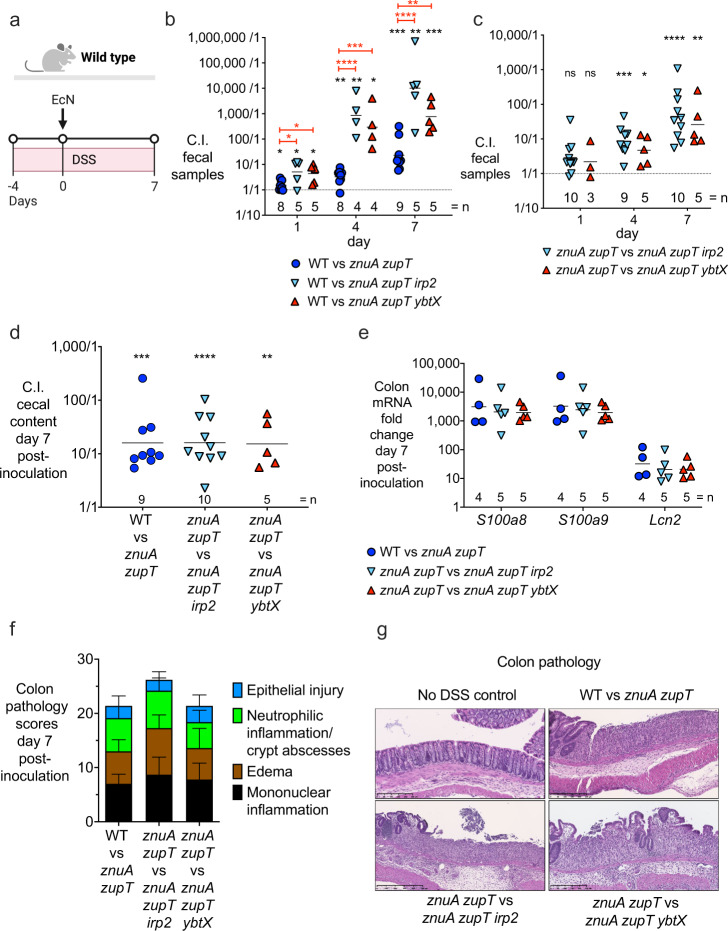
“In the in fl amed gut, however, the oxidative environment suppresses obligate anaerobes and favors the growth of facultative anaerobes, which include pathogenic and commensal Enterobacteriaceae 1,2,4,5,7,8 .”
BackgroundMetal Chelation and Inhibition of Bacterial Growth in Tissue Abscesses
Corbin, B. D., Seeley, E. H., Raab, A., Feldmann, J., Miller, M. R., Torres, V. J., Anderson, K. L., Dattilo, B. M., Dunman, P. M., Gerads, R., et al. (2008) · Science · doi:10.1126/science.1152449 · Cited by 857
Self-citationMZmine: toolbox for processing and visualization of mass spectrometry based molecular profile data
Katajamaa, M., Miettinen, J., & Orešič, M. (2006) · Bioinformatics · doi:10.1093/bioinformatics/btk039 · Cited by 831
Zinc in Infection and Inflammation
Gammoh, N., & Rink, L. (2017) · Nutrients · doi:10.3390/nu9060624 · Cited by 818
Reproducible molecular networking of untargeted mass spectrometry data using GNPS
Aron, A. T., Gentry, E. C., McPhail, K. L., Nothias, L.-F., Nothias-Esposito, M., Bouslimani, A., Petras, D., Gauglitz, J. M., Sikora, N., Vargas, F., et al. (2020) · Nature Protocols · doi:10.1038/s41596-020-0317-5 · Cited by 725
Self-citationZinc through the Three Domains of Life
Andreini, C., Banci, L., Bertini, I., & Rosato, A. (2006) · Journal of Proteome Research · doi:10.1021/pr0603699 · Cited by 648 · cited 1×
“The other most abundant metal ion is zinc, which is a cofactor for an estimated 5 – 6% of all proteins 12 , and whose functions include acting as the catalytic center in enzymes such as metalloproteases, superoxide dismutases, and metallo-β - lactamases.”
BackgroundIntraluminal pH of the human gastrointestinal tract.
Fallingborg, J. (1999) · PubMed · Cited by 630
Probiotic Bacteria Reduce Salmonella Typhimurium Intestinal Colonization by Competing for Iron
Deriu, E., Liu, J. Z., Pezeshki, M., Edwards, R. A., Ochoa, R. J., Contreras, H., Libby, S. J., Fang, F. C., & Raffatellu, M. (2013) · Cell Host & Microbe · doi:10.1016/j.chom.2013.06.007 · Cited by 550 · cited 4×
“We have previously shown that pathogenic STm and probiotic EcN evade lipocalin-2-mediated iron sequestration in the in fl amed gut via the production of stealth siderophores 16,33 .”
BackgroundInfluentialSelf-citationMicrocins mediate competition among Enterobacteriaceae in the inflamed gut
Sassone-Corsi, M., Nuccio, S.-P., Liu, H., Hernandez, D., Vu, C. T., Takahashi, A. A., Edwards, R. A., & Raffatellu, M. (2016) · Nature · doi:10.1038/nature20557 · Cited by 549 · cited 1×
“Briefly, each of four histological criteria (mononuclear infiltration, edema, epithelial injury, and neutrophilic inflammation/crypt abscesses) was determined as absent (0), mild (1), moderate (2), or severe (3).”
BackgroundSelf-citationRaffatellu, M., George, M. D., Akiyama, Y., Hornsby, M. J., Nuccio, S.-P., Paixao, T. A., Butler, B. P., Chu, H., Santos, R. L., Berger, T., et al. (2009) · Cell Host & Microbe · doi:10.1016/j.chom.2009.03.011 · Cited by 525 · cited 2×
“We have previously shown that pathogenic STm and probiotic EcN evade lipocalin-2-mediated iron sequestration in the in fl amed gut via the production of stealth siderophores 16,33 .”
BackgroundSelf-citationLupp, C., Robertson, M. L., Wickham, M. E., Sekirov, I., Champion, O. L., Gaynor, E. C., & Finlay, B. B. (2007) · Cell Host & Microbe · doi:10.1016/j.chom.2007.08.002 · Cited by 501 · cited 1×
“Briefly, each of four histological criteria (mononuclear infiltration, edema, epithelial injury, and neutrophilic inflammation/crypt abscesses) was determined as absent (0), mild (1), moderate (2), or severe (3).”
BackgroundTransition Metals and Virulence in Bacteria
Palmer, L. D., & Skaar, E. P. (2016) · Annual Review of Genetics · doi:10.1146/annurev-genet-120215-035146 · Cited by 449
Self-citationKehl-Fie, T. E., Chitayat, S., Hood, M. I., Damo, S., Restrepo, N., Garcia, C., Munro, K. A., Chazin, W. J., & Skaar, E. P. (2011) · Cell Host & Microbe · doi:10.1016/j.chom.2011.07.004 · Cited by 419 · cited 1×
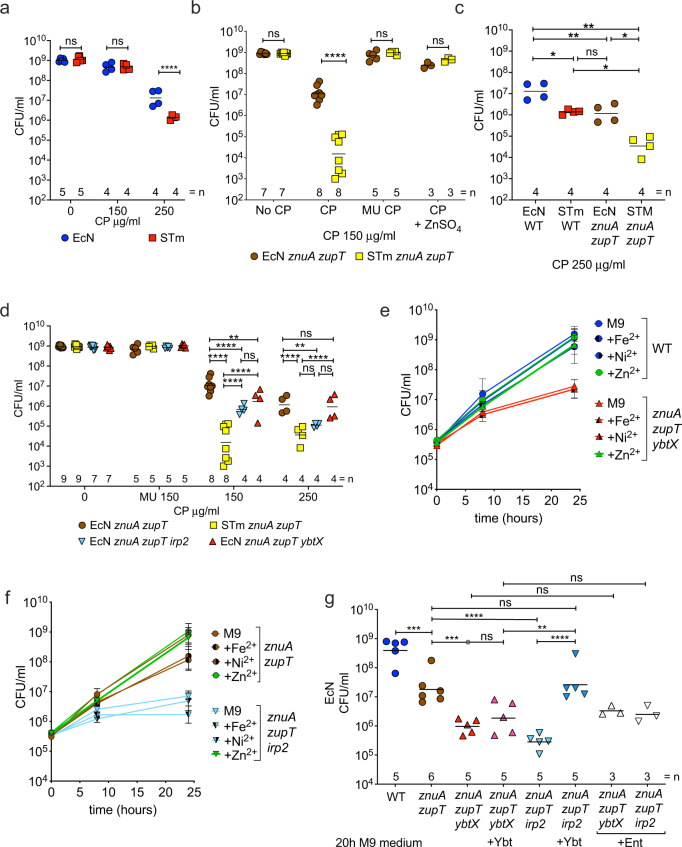
“As expected, both mutant strains (EcN znuA zupT and STm znuA zupT ) grew slower than their respective parental strains in the presence of CP, but not in the presence of a Site I/II knockout mutant CP (MU CP; lacks the ability to bind zinc) 36,37 , or when ZnSO 4 was added to the media (Fig.”
BackgroundSelf-citationBeyond iron: non-classical biological functions of bacterial siderophores
Johnstone, T. C., & Nolan, E. M. (2015) · Dalton Transactions · doi:10.1039/c4dt03559c · Cited by 410
Damo, S. M., Kehl-Fie, T. E., Sugitani, N., Holt, M. E., Rathi, S., Murphy, W. J., Zhang, Y., Betz, C., Hench, L., Fritz, G., et al. (2013) · Proceedings of the National Academy of Sciences · doi:10.1073/pnas.1220341110 · Cited by 388 · cited 1×
“As expected, both mutant strains (EcN znuA zupT and STm znuA zupT ) grew slower than their respective parental strains in the presence of CP, but not in the presence of a Site I/II knockout mutant CP (MU CP; lacks the ability to bind zinc) 36,37 , or when ZnSO 4 was added to the media (Fig.”
BackgroundSelf-citationHantke, K., Nicholson, G., Rabsch, W., & Winkelmann, G. (2003) · Proceedings of the National Academy of Sciences · doi:10.1073/pnas.0737682100 · Cited by 359
Liu, J. Z., Jellbauer, S., Poe, A. J., Ton, V., Pesciaroli, M., Kehl-Fie, T. E., Restrepo, N. A., Hosking, M. P., Edwards, R. A., Battistoni, A., et al. (2012) · Cell Host & Microbe · doi:10.1016/j.chom.2012.01.017 · Cited by 328 · cited 8×
“We thus compared the growth of EcN to the growth of STm in a rich medium supplemented with CP, a host antimicrobial protein that sequesters zinc and limits its availability to microbes 15,25 .”
BackgroundMethodInfluentialSelf-citationManitz, M.-P., Horst, B., Seeliger, S., Strey, A., Skryabin, B. V., Gunzer, M., Frings, W., Schünlau, F., Roth, J., Sorg, C., et al. (2003) · Molecular and Cellular Biology · doi:10.1128/mcb.23.3.1034-1043.2003 · Cited by 319
The siderophore yersiniabactin binds copper to protect pathogens during infection
Chaturvedi, K. S., Hung, C. S., Crowley, J. R., Stapleton, A. E., & Henderson, J. P. (2012) · Nature Chemical Biology · doi:10.1038/nchembio.1020 · Cited by 301 · cited 1×
“For example, the siderophore ferrioxamine was shown to bind manganese 59,60 , and Ybt was shown to bind copper as a means to evade toxicity 61 and to scavenge copper and nickel in vitro 62,63 .”
BackgroundThe Cytokine IL-22 Promotes Pathogen Colonization by Suppressing Related Commensal Bacteria
Behnsen, J., Jellbauer, S., Wong, C. P., Edwards, R. A., George, M. D., Ouyang, W., & Raffatellu, M. (2014) · Immunity · doi:10.1016/j.immuni.2014.01.003 · Cited by 282
Self-citationDysbiosis-Associated Change in Host Metabolism Generates Lactate to Support Salmonella Growth
Gillis, C. C., Hughes, E. R., Spiga, L., Winter, M. G., Zhu, W., Furtado de Carvalho, T., Chanin, R. B., Behrendt, C. L., Hooper, L. V., Santos, R. L., et al. (2018) · Cell Host & Microbe · doi:10.1016/j.chom.2017.11.006 · Cited by 274
Garcia, E. C., Brumbaugh, A. R., & Mobley, H. L. T. (2011) · Infection and Immunity · doi:10.1128/iai.01222-10 · Cited by 256
Lopez, C. A., Winter, S. E., Rivera-Chávez, F., Xavier, M. N., Poon, V., Nuccio, S.-P., Tsolis, R. M., & Bäumler, A. J. (2012) · mBio · doi:10.1128/mbio.00143-12 · Cited by 249
Self-citationGastrointestinal pH profiles in patients with inflammatory bowel disease
Press, Hauptmann, Hauptmann, Fuchs, Fuchs, Ewe, & Ramadori (1998) · Alimentary Pharmacology & Therapeutics · doi:10.1046/j.1365-2036.1998.00358.x · Cited by 246
The Metals in the Biological Periodic System of the Elements: Concepts and Conjectures
Maret, W. (2016) · International Journal of Molecular Sciences · doi:10.3390/ijms17010066 · Cited by 240
Ammendola, S., Pasquali, P., Pistoia, C., Petrucci, P., Petrarca, P., Rotilio, G., & Battistoni, A. (2007) · Infection and Immunity · doi:10.1128/iai.00559-07 · Cited by 235
Calcium-dependent complex assembly of the myeloic differentiation proteins MRP-8 and MRP-14
Teigelkamp, S., Bhardwaj, R. S., Roth, J., Meinardus-Hager, G., Karas, M., & Sorg, C. (1991) · Journal of Biological Chemistry · doi:10.1016/s0021-9258(18)98862-9 · Cited by 229
Gehring, A. M., DeMoll, E., Fetherston, J. D., Mori, I., Mayhew, G. F., Blattner, F. R., Walsh, C. T., & Perry, R. D. (1998) · Chemistry & Biology · doi:10.1016/s1074-5521(98)90115-6 · Cited by 227
Self-citationBrandel, J., Humbert, N., Elhabiri, M., Schalk, I. J., Mislin, G. L. A., & Albrecht-Gary, A.-M. (2012) · Dalton Transactions · doi:10.1039/c1dt11804h · Cited by 218
The Metal Permease ZupT from Escherichia coli Is a Transporter with a Broad Substrate Spectrum
Grass, G., Franke, S., Taudte, N., Nies, D. H., Kucharski, L. M., Maguire, M. E., & Rensing, C. (2005) · Journal of Bacteriology · doi:10.1128/jb.187.5.1604-1611.2005 · Cited by 218
JANSEN, T. (2001) · International Journal of Medical Microbiology · doi:10.1078/1438-4221-00143 · Cited by 199
Host-mediated sugar oxidation promotes post-antibiotic pathogen expansion
Faber, F., Tran, L., Byndloss, M. X., Lopez, C. A., Velazquez, E. M., Kerrinnes, T., Nuccio, S.-P., Wangdi, T., Fiehn, O., Tsolis, R. M., et al. (2016) · Nature · doi:10.1038/nature18597 · Cited by 180
Self-citationYersiniabactin iron uptake: mechanisms and role in Yersinia pestis pathogenesis
Perry, R. D., & Fetherston, J. D. (2011) · Microbes and Infection · doi:10.1016/j.micinf.2011.04.008 · Cited by 178
Self-citationHeesemann, J., Hantke, K., Vocke, T., Saken, E., Rakin, A., Stojiljkovic, I., & Berner, R. (1993) · Molecular Microbiology · doi:10.1111/j.1365-2958.1993.tb01583.x · Cited by 172
Diaz-Ochoa, V. E., Lam, D., Lee, C. S., Klaus, S., Behnsen, J., Liu, J. Z., Chim, N., Nuccio, S.-P., Rathi, S. G., Mastroianni, J. R., et al. (2016) · Cell Host & Microbe · doi:10.1016/j.chom.2016.05.005 · Cited by 164
Self-citationBobrov, A. G., Kirillina, O., Fetherston, J. D., Miller, M. C., Burlison, J. A., & Perry, R. D. (2014) · Molecular Microbiology · doi:10.1111/mmi.12693 · Cited by 149 · cited 5×
“Intriguingly, a product of the Ybt gene cluster has been proposed to contribute to zinc acquisition by the pathogen Yersinia pestis 40,41 ; however, its identity and mechanism are unknown, as two prior studies did not provide evidence of direct zinc binding by Ybt 39,41 .”
BackgroundMethodResultInfluentialSelf-citationCampoy, S., Jara, M., Busquets, N., Pérez de Rozas, A. M., Badiola, I., & Barbé, J. (2002) · Infection and Immunity · doi:10.1128/iai.70.8.4721-4725.2002 · Cited by 146
Valdebenito, M., Crumbliss, A. L., Winkelmann, G., & Hantke, K. (2006) · International Journal of Medical Microbiology · doi:10.1016/j.ijmm.2006.06.003 · Cited by 145 · cited 2×
“In addition to Yersinia species, many Enter-obacteriaceae also produce Ybt, including both pathogenic and commensal E. coli 46,66 – 68 .”
BackgroundResultFeature-based Molecular Networking in the GNPS Analysis EnvironmentPreprint
Nothias-Scaglia, L.-F., Petras, D., Schmid, R., et al. (2019) · bioRxiv (Cold Spring Harbor Laboratory) · doi:10.1101/812404 · Cited by 144
Self-citationNutrient Zinc at the Host–Pathogen Interface
Lonergan, Z. R., & Skaar, E. P. (2019) · Trends in Biochemical Sciences · doi:10.1016/j.tibs.2019.06.010 · Cited by 129 · cited 1×
“53 Having now discovered that Ybt can bind zinc in a physiologically relevant pH range, even in the presence of iron, we next tested whether the addition of exogenous Ybt could rescue the growth of an EcN strain that is highly susceptible to zinc limitation due to mutations in ZnuABC, ZupT, and Ybt…”
BackgroundSelf-citationCopper import in Escherichia coli by the yersiniabactin metallophore system
Koh, E.-I., Robinson, A. E., Bandara, N., Rogers, B. E., & Henderson, J. P. (2017) · Nature Chemical Biology · doi:10.1038/nchembio.2441 · Cited by 128
The Yersiniabactin Transport System Is Critical for the Pathogenesis of Bubonic and Pneumonic Plague
Fetherston, J. D., Kirillina, O., Bobrov, A. G., Paulley, J. T., & Perry, R. D. (2010) · Infection and Immunity · doi:10.1128/iai.01236-09 · Cited by 119
Self-citationLodinová-Žádniková, R., & Sonnenborn, U. (1997) · Neonatology · doi:10.1159/000244421 · Cited by 118
Sabri, M., Houle, S., & Dozois, C. M. (2009) · Infection and Immunity · doi:10.1128/iai.01082-08 · Cited by 118 · cited 1×
“Although the function of these two transporters in EcN has not been directly investigated, their disruption signi fi cantly diminishes the capacity of the closely-related uropathogenic E. coli strain CFT073 to grow in zinc-depleted culture media and to cause urinary tract infection 35 .”
BackgroundStructure elucidation of yersiniabactin, a siderophore from highly virulent Yersinia strains
Drechsel, H., Stephan, H., Lotz, R., Haag, H., Zähner, H., Hantke, K., & Jung, G. (1995) · Liebigs Annalen · doi:10.1002/jlac.1995199510243 · Cited by 117
Complete genome sequence of the Gram-negative probiotic Escherichia coli strain Nissle 1917
Reister, M., Hoffmeier, K., Krezdorn, N., Rotter, B., Liang, C., Rund, S. A., Dandekar, T., Sonnenborn, U., & Oelschlaeger, T. A. (2014) · Journal of Biotechnology · doi:10.1016/j.jbiotec.2014.07.442 · Cited by 113
Karlinsey, J. E., Maguire, M. E., Becker, L. A., Crouch, M. V., & Fang, F. C. (2010) · Molecular Microbiology · doi:10.1111/j.1365-2958.2010.07357.x · Cited by 102
(1994) · PubMed · Cited by 93
Native mass spectrometry-based metabolomics identifies metal-binding compounds
Aron, A. T., Petras, D., Schmid, R., Gauglitz, J. M., Büttel, I., Antelo, L., Zhi, H., Nuccio, S.-P., Saak, C. C., Malarney, K. P., et al. (2022) · Nature Chemistry · doi:10.1038/s41557-021-00803-1 · Cited by 79
Self-citationYersiniabactin Reduces the Respiratory Oxidative Stress Response of Innate Immune Cells
Paauw, A., Leverstein-van Hall, M. A., van Kessel, K. P. M., Verhoef, J., & Fluit, A. C. (2009) · PLoS ONE · doi:10.1371/journal.pone.0008240 · Cited by 77
Dysbiosis-Associated Change in Host Metabolism Generates Lactate to Support Salmonella Growth
Gillis, C. C., Hughes, E. R., Spiga, L., Winter, M. G., Zhu, W., de Carvalho, T. F., Chanin, R. B., Behrendt, C. L., Hooper, L. V., Santos, R. L., et al. (2018) · Cell Host & Microbe · doi:10.1016/j.chom.2018.03.013 · Cited by 77
Cerasi, M., Liu, J. Z., Ammendola, S., Poe, A. J., Petrarca, P., Pesciaroli, M., Pasquali, P., Raffatellu, M., & Battistoni, A. (2014) · Metallomics · doi:10.1039/c3mt00352c · Cited by 75 · cited 2×
“Both EcN and STm encode two known zinc transport systems: the high-af fi nity zinc transporter ZnuABC and the permease ZupT 15,19,20,23,24 .”
BackgroundSelf-citationMetal selectivity by the virulence-associated yersiniabactin metallophore system
Koh, E.-I., Hung, C. S., Parker, K. S., Crowley, J. R., Giblin, D. E., & Henderson, J. P. (2015) · Metallomics · doi:10.1039/c4mt00341a · Cited by 75 · cited 3×
“Intriguingly, a product of the Ybt gene cluster has been proposed to contribute to zinc acquisition by the pathogen Yersinia pestis 40,41 ; however, its identity and mechanism are unknown, as two prior studies did not provide evidence of direct zinc binding by Ybt 39,41 .”
BackgroundPoint mutations change specificity and kinetics of metal uptake by ZupT from Escherichia coli
Taudte, N., & Grass, G. (2010) · BioMetals · doi:10.1007/s10534-010-9319-z · Cited by 67
Geoffroy, V. A., Fetherston, J. D., & Perry, R. D. (2000) · Infection and Immunity · doi:10.1128/iai.68.8.4452-4461.2000 · Cited by 61
Self-citationEllermann, M., Gharaibeh, R. Z., Fulbright, L. E., Dogan, B., Moore, L. N., Broberg, C. A., Lopez, L. R., Rothemich, A., Herzog, J., Rogala, A. R., et al. (2019) · Infection and Immunity · doi:10.1128/iai.00587-19 · Cited by 60
Uropathogenic enterobacteria use the yersiniabactin metallophore system to acquire nickel
Robinson, A. E., Lowe, J. E., Koh, E.-I., & Henderson, J. P. (2018) · Journal of Biological Chemistry · doi:10.1074/jbc.ra118.004483 · Cited by 59
Characterization of the integration site of Yersinia high-pathogenicity island in Escherichia coli
Schubert, S. (1999) · FEMS Microbiology Letters · doi:10.1016/s0378-1097(99)00442-5 · Cited by 57
Crystal structure of ferric-yersiniabactin, a virulence factor of Yersinia pestis
Miller, M. C., Parkin, S., Fetherston, J. D., Perry, R. D., & DeMoll, E. (2006) · Journal of Inorganic Biochemistry · doi:10.1016/j.jinorgbio.2006.04.007 · Cited by 56
Self-citationBobrov, A. G., Kirillina, O., Fosso, M. Y., Fetherston, J. D., Miller, M. C., VanCleave, T. T., Burlison, J. A., Arnold, W. K., Lawrenz, M. B., Garneau-Tsodikova, S., et al. (2017) · Metallomics · doi:10.1039/c7mt00126f · Cited by 54
Self-citationMicacocidin A, B and C, Novel Antimycoplasma Agents from Pseudomonas sp. II. Structure Elucidation.
KOBAYASHI, S., NAKAI, H., IKENISHI, Y., SUN, W.-Y., OZAKI, M., HAYASE, Y., & TAKEDA, R. (1998) · The Journal of Antibiotics · doi:10.7164/antibiotics.51.328 · Cited by 49 · cited 1×
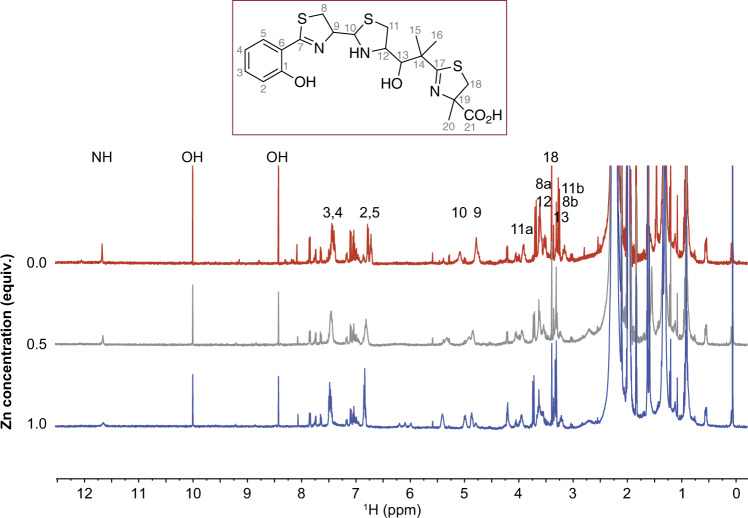
“3), in a manner similar to Ybt binding of iron 50 and copper 51 , and zinc binding by the Pseudomonas sp.-derived compound micacocidin A 52 .”
BackgroundOxidative Formation and Removal of Complexed Mn(III) by Pseudomonas Species
Wright, M. H., Geszvain, K., Oldham, V. E., Luther, G. W., & Tebo, B. M. (2018) · Frontiers in Microbiology · doi:10.3389/fmicb.2018.00560 · Cited by 47
Iron at the host-microbe interface
Gerner, R. R., Nuccio, S.-P., & Raffatellu, M. (2020) · Molecular Aspects of Medicine · doi:10.1016/j.mam.2020.100895 · Cited by 45 · cited 1×
“In addition to taking advantage of new metabolic resources, Enterobacteriaceae must also overcome host-mediated mechanisms of nutritional immunity 13 , including metal ion starvation 57 .”
BackgroundSelf-citationMiller, M. C., Fetherston, J. D., Pickett, C. L., Bobrov, A. G., Weaver, R. H., DeMoll, E., & Perry, R. D. (2010) · Microbiology · doi:10.1099/mic.0.037945-0 · Cited by 39
Self-citationNissle, A. (1959) · PubMed · Cited by 38
Kuzela, L. (2001) · The American Journal of Gastroenterology · doi:10.1016/s0002-9270(01)03856-4 · Cited by 36
Ahmadi, M. K., Fawaz, S., Jones, C. H., Zhang, G., & Pfeifer, B. A. (2015) · Applied and Environmental Microbiology · doi:10.1128/aem.01373-15 · Cited by 35 · cited 1×
“3), in a manner similar to Ybt binding of iron 50 and copper 51 , and zinc binding by the Pseudomonas sp.-derived compound micacocidin A 52 .”
BackgroundLeiomyoma of the Female Urethra
Deka, P. M., & Rajeev, T. P. (2003) · Urologia Internationalis · doi:10.1159/000071854 · Cited by 33
Different iron-chelating properties of pyochelin diastereoisomers revealed by LC/MS
Hayen, H., & Volmer, D. A. (2006) · Analytical and Bioanalytical Chemistry · doi:10.1007/s00216-006-0443-0 · Cited by 20
The Royal Institute of Chemistry of Great Britain and Ireland. Journal and Proceedings. Part V: 1944
(1944) · Journal of the Royal Institute of Chemistry · doi:10.1039/rg9446800149 · Cited by 20
Farkas, E., Szabó, O., Parajdi-Losonczi, P. L., Balla, G., & Pócsi, I. (2014) · Journal of Inorganic Biochemistry · doi:10.1016/j.jinorgbio.2014.06.005 · Cited by 15
Native Electrospray-based Metabolomics Enables the Detection of Metal-binding CompoundsPreprint
Aron, A. T., Petras, D., Schmid, R., Gauglitz, J. M., Büttel, I., Antelo, L., Zhi, H., Saak, C. C., Malarney, K. P., Thines, E., et al. (2019) · bioRxiv (Cold Spring Harbor Laboratory) · doi:10.1101/824888 · Cited by 5
Self-citation
Cited by
Nutritional immunity: the battle for nutrient metals at the host–pathogen interface
Murdoch, C. C., & Skaar, E. P. (2022) · Nature Reviews Microbiology · doi:10.1038/s41579-022-00745-6 · Cited by 701
Self-citationCross-feeding in the gut microbiome: Ecology and mechanisms
Culp, E. J., & Goodman, A. L. (2023) · Cell Host & Microbe · doi:10.1016/j.chom.2023.03.016 · Cited by 504
Microbiota-mediated colonization resistance: mechanisms and regulation
Caballero-Flores, G., Pickard, J. M., & Núñez, G. (2023) · Nature Reviews Microbiology · doi:10.1038/s41579-022-00833-7 · Cited by 474
Bacterial siderophores: diversity, uptake pathways and applications
Schalk, I. J. (2025) · Nature Reviews Microbiology · doi:10.1038/s41579-024-01090-6 · Cited by 227
“Moreover, it has been shown that the probiotic bacterium E. coli Nissle 1917 (or ‘Nissle’) utilizes yersinia-bactin to import Zn, enabling Nissle to grow in zinc-limited media 117 .”
Multifunctional role of zinc in human health: an update
Kiouri, D. P., Tsoupra, E., Peana, M., Perlepes, S. P., Stefanidou, M. E., & Chasapis, C. T. (2023) · EXCLI journal · doi:10.17179/excli2023-6335 · Cited by 171
Metadata
- Authors
- Behnsen, J., Zhi, H., Aron, A. T., Subramanian, V., Santus, W., Lee, M. H., Gerner, R. R., Petras, D., Liu, J. Z., Green, K. D., Price, S. L., Camacho, J., Hillman, H., Tjokrosurjo, J., Montaldo, N. P., Hoover, E. M., Treacy-Abarca, S., Gilston, B. A., Skaar, E. P., Chazin, W. J., Garneau-Tsodikova, S., Lawrenz, M. B., Perry, R. D., Nuccio, S.-P., Dorrestein, P. C., & Raffatellu, M.
- Affiliations
- University of California, Irvine (US)
- University of California San Diego (US)
- University of Illinois Chicago (US)
- University of Kentucky (US)
- University of Louisville (US)
- Vanderbilt University Medical Center (US)
- Chiba University (JP)
- Corresponding author
- Raffatellu, Manuela
- ORCID
- Behnsen, Judith
- Zhi, Hui
- Aron, Allegra T.
- Santus, William
- Lee, Michael H.
- Gerner, Romana R.
- Petras, Daniel
- Liu, Janet Z.
- Price, Sarah L.
- Hillman, Hannah
- Montaldo, Nicola P.
- Treacy-Abarca, Sean
- Skaar, Eric P.
- Chazin, Walter J.
- Lawrenz, Matthew B.
- Perry, Robert D.
- Nuccio, Sean-Paul
- Dorrestein, Pieter C.
- Raffatellu, Manuela
- Venue
- Nature Communications
- Published
- 2021-12-01
- Volume
- 12
- Issue
- 1
- Pages
- 7016-7016
- ISSN
- 2041-1723 (ISSN-L)
- PMC
- PMC8636617
- OpenAlex
- W3217560133
- Cited by
- 101
- References
- 90
- Citations by year
- 2026: 20 · 2025: 23 · 2024: 20 · 2023: 18 · 2022: 16 · 2021: 4
- FWCI
- 9.59
- Type
- journal article
- Language
- en
- Open access
- gold
- doi.org
- Licence
- cc-by
- creativecommons.org/licenses/by/4.0 (tdm)
- creativecommons.org/licenses/by/4.0 (vor)
- Locations
- Nature Communications (publishedVersion, cc-by)
- bioRxiv (Cold Spring Harbor Laboratory) (acceptedVersion)
- PubMed Central (publishedVersion, cc-by)
- PubMed (publishedVersion)
- eScholarship (California Digital Library) (submittedVersion, cc-by)
- UKnowledge (University of Kentucky) (submittedVersion, cc-by)
- RePEc: Research Papers in Economics (submittedVersion)
- BOA (University of Milano-Bicocca) (submittedVersion, cc-by)
- DOAJ (DOAJ: Directory of Open Access Journals) (submittedVersion, cc-by-sa)
- Funders
- U.S. Department of Health & Human Services | NIH | National Institute of Allergy and Infectious Diseases (AI143641, AI126277, AI114625, AI145325)
- U.S. Department of Health & Human Services | NIH | Center for Scientific Review (DK098170, T32AI132146, F31AI147404, AI101171, P20GM125504, R21AI119557, 5U01AI124316, P41GM103484, GMS10RR029121)
- U.S. Department of Health & Human Services | National Institutes of Health (DK007202)
- Crohn’s and Colitis Foundation
- Gordon and Betty Moore Foundation
- Burroughs Wellcome Fund
- Topics
- Life Sciences › Biochemistry, Genetics and Molecular Biology › Genetics › Bacterial Genetics and Biotechnology
- Life Sciences › Immunology and Microbiology › Microbiology › Escherichia coli research studies
- Life Sciences › Immunology and Microbiology › Microbiology › Enterobacteriaceae and Cronobacter Research
- Keywords
- zinc uptake, siderophores, yersiniabactin, Escherichia coli Nissle 1917, Enterobacteriaceae, intestinal colonization, intestinal inflammation, calprotectin, zinc sequestration, zinc transporters, probiotics, commensal bacteria
- MeSH terms
- Animals, Bacterial Proteins, Carrier Proteins, Colon, Enterobacteriaceae, Escherichia coli, Female, Mice, Inbred C57BL, Phenols, Salmonella typhi, Thiazoles, Zinc, Siderophores, ATP-Binding Cassette Transporters, Membrane Transport Proteins, Escherichia coli Proteins, Leukocyte L1 Antigen Complex, Mice
About these checks
Registry, retraction, Cites and statistics results are computed, not judged, with one exception: a printed reference that no index lists is read once by a model before it counts as a citation error. Claims are extracted by a model and kept only when their quote appears verbatim in the text; each cited source is then checked, with a model’s help, for whether it says what the claim relies on. Those verdicts can be wrong — read the claim’s quote and the cited source before relying on one.
Statistics and arithmetic are recomputed, not judged.
Confidence bands are shown only for fields calibrated on our annotated test set. None is calibrated yet, so no band is shown.
What counts as a claim ›How we measure confidence ›How we check this ›
Are you an author, or do you see a problem with this page? Request a review
Data sources
Bibliographic data: Semantic Scholar, OpenAlex, Crossref.
Contains information from the Semantic Scholar Academic Graph Datasets, made available under the ODC Attribution License (ODC-BY 1.0).
Semantic Scholar’s data is described in: Kinney, R., et al. (2023). The Semantic Scholar Open Data Platform. arXiv:2301.10140.
