

Whole-cell modeling in yeast predicts compartment-specific proteome constraints that drive metabolic strategies
Open accessPublished version of a preprint
The DOI matches its Crossref record; 66 of the 66 references it cites were found in a registry or an index.
Abstract
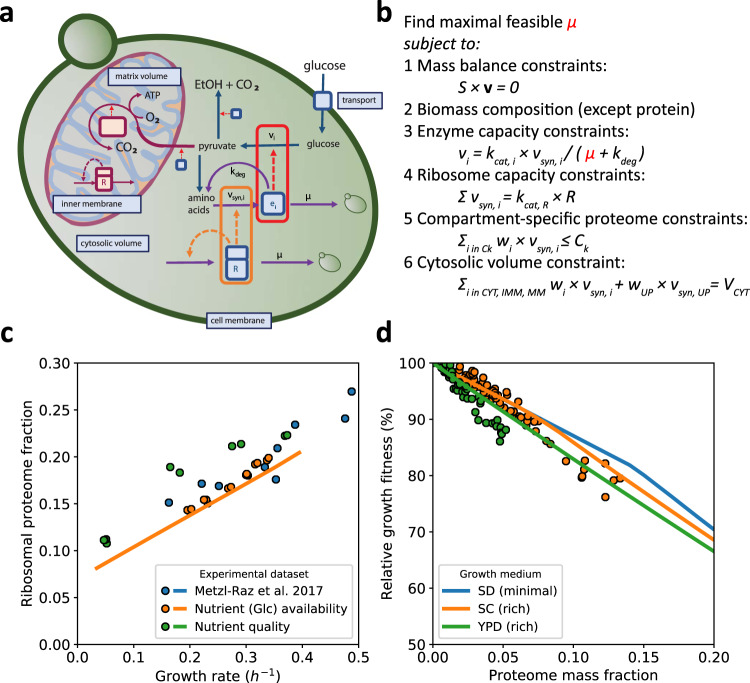
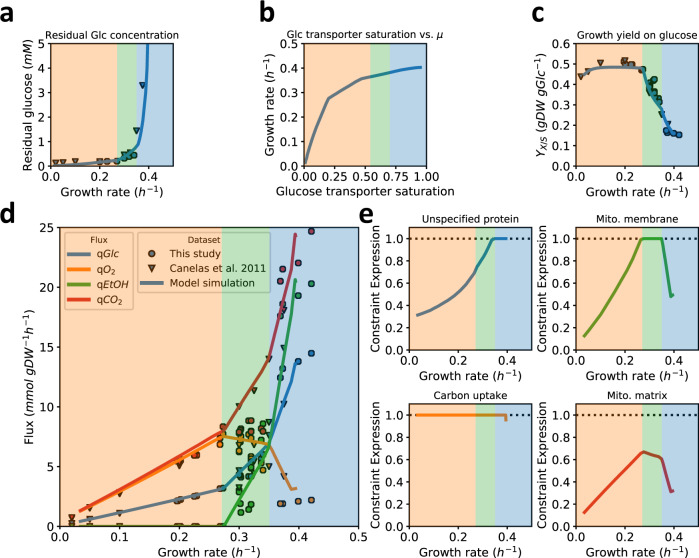
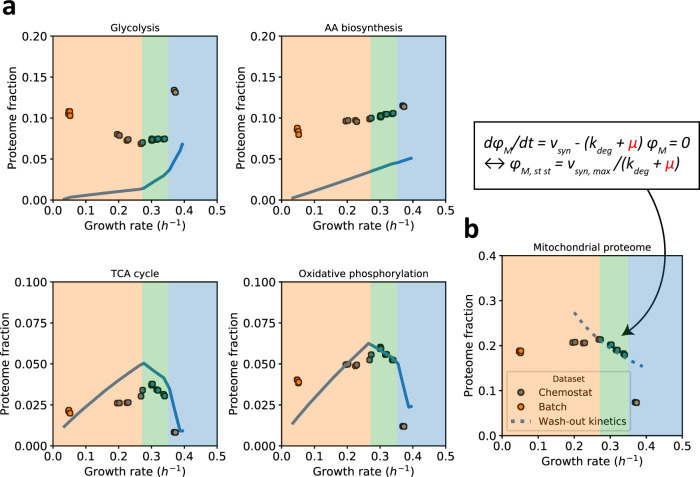
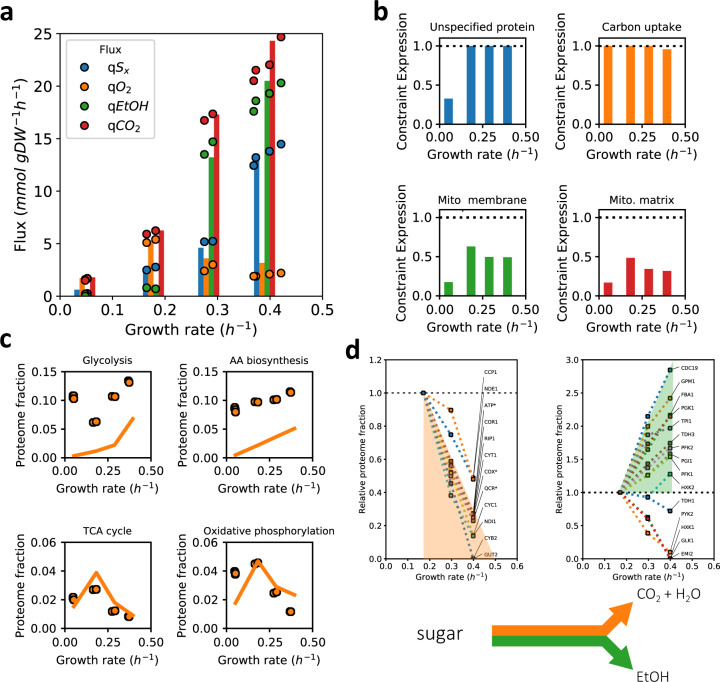
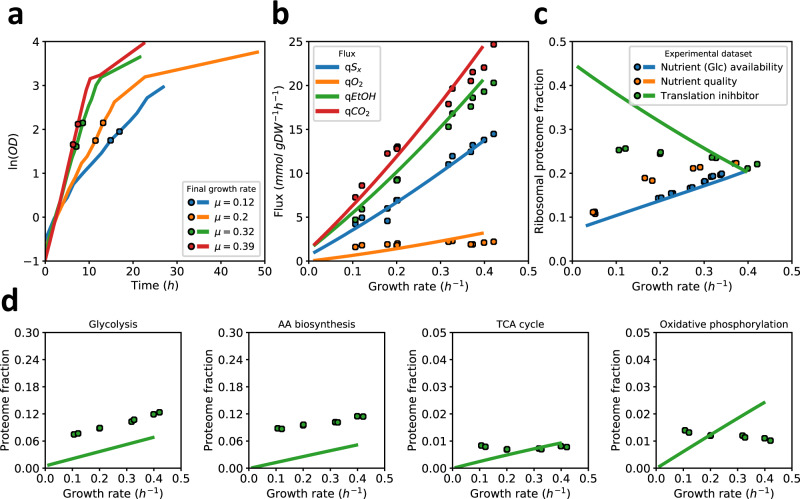
When conditions change, unicellular organisms rewire their metabolism to sustain cell maintenance and cellular growth. Such rewiring may be understood as resource re-allocation under cellular constraints. Eukaryal cells contain metabolically active organelles such as mitochondria, competing for cytosolic space and resources, and the nature of the relevant cellular constraints remain to be determined for such cells. Here, we present a comprehensive metabolic model of the yeast cell, based on its full metabolic reaction network extended with protein synthesis and degradation reactions. The model predicts metabolic fluxes and corresponding protein expression by constraining compartment-specific protein pools and maximising growth rate. Comparing model predictions with quantitative experimental data suggests that under glucose limitation, a mitochondrial constraint limits growth at the onset of ethanol formation—known as the Crabtree effect. Under sugar excess, however, a constraint on total cytosolic volume dictates overflow metabolism. Our comprehensive model thus identifies condition-dependent and compartment-specific constraints that can explain metabolic strategies and protein expression profiles from growth rate optimisation, providing a framework to understand metabolic adaptation in eukaryal cells.
Overview
The claims and statistics of this paper haven’t been checked yet.
Free: it reads the open-access text and checks the first 5 claims that cite a source we can check. Create a free account to check every claim.
Integrity signals
Registry
Cites
Statistics
Figures
Verification
Claims the paper makes
The claims and statistics of this paper haven’t been checked yet.
Free: it reads the open-access text and checks the first 5 claims that cite a source we can check. Create a free account to check every claim.
Claims other papers make about this one
Each is checked against this paper’s own text: does it say what the citing paper says it does?
The cited source says what the claim attributes to it.
In the citing paper
“k cat values are also important parameters in other resource allocation models such as proteome-constrained GEMs 51-53 and metabolism/macromolecular-expression models 7,54,55 .”
From Deep learning-based kcat prediction enables improved enzyme-constrained model reconstruction (2022) · cites this paper as [52]
Self-check
Percentages, sums and reported differences re-computed from the paper’s own numbers.
The self-check needs the paper’s full text.
Citations
Cites
Perez-Riverol, Y., Csordas, A., Bai, J., Bernal-Llinares, M., Hewapathirana, S., Kundu, D. J., Inuganti, A., Griss, J., Mayer, G., Eisenacher, M., et al. (2019) · Nucleic Acids Research · doi:10.1093/nar/gky1106 · Cited by 6,693
The MaxQuant computational platform for mass spectrometry-based shotgun proteomics
Tyanova, S., Temu, T., & Cox, J. (2016) · Nature Protocols · doi:10.1038/nprot.2016.136 · Cited by 4,797
Understanding the Intersections between Metabolism and Cancer Biology
Vander Heiden, M. G., & DeBerardinis, R. J. (2017) · Cell · doi:10.1016/j.cell.2016.12.039 · Cited by 2,293
Verduyn, C., Postma, E., Scheffers, W. A., & Van Dijken, J. P. (1992) · Yeast · doi:10.1002/yea.320080703 · Cited by 1,510
Interdependence of Cell Growth and Gene Expression: Origins and Consequences
Scott, M., Gunderson, C. W., Mateescu, E. M., Zhang, Z., & Hwa, T. (2010) · Science · doi:10.1126/science.1192588 · Cited by 1,470
Choi, M., Chang, C.-Y., Clough, T., Broudy, D., Killeen, T., MacLean, B., & Vitek, O. (2014) · Bioinformatics · doi:10.1093/bioinformatics/btu305 · Cited by 1,035
The Crabtree Effect: A Regulatory System in Yeast
DE DEKEN, R. H. (1966) · Journal of General Microbiology · doi:10.1099/00221287-44-2-149 · Cited by 876
Overflow metabolism in Escherichia coli results from efficient proteome allocation
Basan, M., Hui, S., Okano, H., Zhang, Z., Shen, Y., Williamson, J. R., & Hwa, T. (2015) · Nature · doi:10.1038/nature15765 · Cited by 785
Shifts in growth strategies reflect tradeoffs in cellular economics
Molenaar, D., van Berlo, R., de Ridder, D., & Teusink, B. (2009) · Molecular Systems Biology · doi:10.1038/msb.2009.82 · Cited by 653
Self-citationCoordination of microbial metabolism
Chubukov, V., Gerosa, L., Kochanowski, K., & Sauer, U. (2014) · Nature Reviews Microbiology · doi:10.1038/nrmicro3238 · Cited by 602
Cited by
Deep learning-based kcat prediction enables improved enzyme-constrained model reconstruction
Li, F., Yuan, L., Lu, H., Li, G., Chen, Y., Engqvist, M. K. M., Kerkhoven, E. J., & Nielsen, J. (2022) · Nature Catalysis · doi:10.1038/s41929-022-00798-z · Cited by 466
Self-citationMitochondrial ATP generation is more proteome efficient than glycolysis
Shen, Y., Dinh, H. V., Cruz, E. R., Chen, Z., Bartman, C. R., Xiao, T., Call, C. M., Ryseck, R.-P., Pratas, J., Weilandt, D., et al. (2024) · Nature Chemical Biology · doi:10.1038/s41589-024-01571-y · Cited by 116
CatPred: a comprehensive framework for deep learning in vitro enzyme kinetic parameters
Boorla, V. S., & Maranas, C. D. (2025) · Nature Communications · doi:10.1038/s41467-025-57215-9 · Cited by 162
Li, F., Chen, Y., Qi, Q., Wang, Y., Yuan, L., Huang, M., Elsemman, I. E., Feizi, A., Kerkhoven, E. J., & Nielsen, J. (2022) · Nature Communications · doi:10.1038/s41467-022-30689-7 · Cited by 105
“Due to the requirement of the linear programming (LP) solver (SoPlex, https://soplex.zib.de), all constraints were written in a LP fi le for solving in each simulation 21,72 .”
BackgroundMethodSelf-citationLi, F., Chen, Y., Qi, Q., Wang, Y., Yuan, L., Huang, M., Elsemman, I. E., Feizi, A., Kerkhoven, E. J., & Nielsen, J. (2021) · doi:10.1101/2021.10.16.464630 · Cited by 91
Self-citationThe Warburg Effect is the result of faster ATP production by glycolysis than respiration
Kukurugya, M. A., Rosset, S., & Titov, D. V. (2024) · Proceedings of the National Academy of Sciences · doi:10.1073/pnas.2409509121 · Cited by 81
“Our measurements for E. coli and S. cerevisiae complement previous estimates of these parameters ( 22 , 23 , 38 ).”
InfluentialAlgal photosystem I dimer and high-resolution model of PSI-plastocyanin complex
Naschberger, A., Mosebach, L., Tobiasson, V., Kuhlgert, S., Scholz, M., Perez-Boerema, A., Ho, T. T. H., Vidal‐Meireles, A., Takahashi, Y., Hippler, M., et al. (2022) · Nature Plants · doi:10.1038/s41477-022-01253-4 · Cited by 71
Genome-scale modeling of yeast metabolism: retrospectives and perspectives
Chen, Y., Li, F., & Nielsen, J. (2022) · FEMS Yeast Research · doi:10.1093/femsyr/foac003 · Cited by 68
“6 with protein synthesis and degradation reactions for all proteins involved in metabolism, protein expression and degradation processes (Elsemman et al. 2021).”
Self-citationCell factory design with advanced metabolic modelling empowered by artificial intelligence.
Lu, H.-Z., Xiao, L., Liao, W.-B., Yan, X.-F., & Nielsen, J. (2024) · Metabolic Engineering · doi:10.1016/j.ymben.2024.07.003 · Cited by 57
Self-citationQiao, L., Khalilimeybodi, A., Linden-Santangeli, N. J., & Rangamani, P. (2025) · Annual Review of Biomedical Engineering · doi:10.1146/annurev-bioeng-102723-065309 · Cited by 62
“…and enzymes, they are extensively used in the field of systems medicine (102), for example, to understand metabolic strategies under different nutrition conditions (103), to identify functional metabolic shifts in disease states (104, 105), and to predict biomarkers of diseases (106, 105).”
BackgroundA framework for understanding collective microbiome metabolism
Huelsmann, M., Schubert, O. T., & Ackermann, M. (2024) · Nature Microbiology · doi:10.1038/s41564-024-01850-3 · Cited by 43
“Accordingly, a switch to partial catabolism at high electron donor concentrations was observed for sugar oxidation in E. coli 66 , S. cerevisiae 110 , B. subtilis 111 and L. lactis 112 and for sulphide oxidation in Thiomicrospira species strain CVO 113 .”
Bruggeman, F. J., Teusink, B., & Steuer, R. (2023) · BioEssays · doi:10.1002/bies.202300015 · Cited by 41
Self-citationConstruction of Multiscale Genome-Scale Metabolic Models: Frameworks and Challenges
Bi, X., Liu, Y., Li, J., Du, G., Lv, X., & Liu, L. (2022) · Biomolecules · doi:10.3390/biom12050721 · Cited by 33
“Importantly, this model identifies protein compartment-specific constraints to reveal growth rate-optimized protein expression profiles, providing a framework for understanding metabolic mechanisms in eukaryotic cells [116].”
BackgroundUse and limitations of genome-scale metabolic models in food microbiology
Somerville, V., Grigaitis, P., Battjes, J., Moro, F., & Teusink, B. (2021) · Current Opinion in Food Science · doi:10.1016/j.cofs.2021.12.010 · Cited by 32
Self-citationKerkhoven, E. J. (2022) · Current Opinion in Microbiology · doi:10.1016/j.mib.2022.102168 · Cited by 32
Lao‐Martil, D., Schmitz, J. P. J., Teusink, B., & van Riel, N. A. W. (2023) · Metabolic Engineering · doi:10.1016/j.ymben.2023.03.005 · Cited by 27
Self-citationGopalakrishnan, S., Joshi, C. J., Valderrama-Gómez, M. Á., Içten, E., Rolandi, P. A., Johnson, W., Kontoravdi, C., & Lewis, N. E. (2022) · Metabolic Engineering · doi:10.1016/j.ymben.2022.12.003 · Cited by 30
Statistical prediction of microbial metabolic traits from genomes
Li, Z., Selim, A., & Kuehn, S. (2023) · PLoS Computational Biology · doi:10.1371/journal.pcbi.1011705 · Cited by 38
Enhanced precision and efficiency in metabolic regulation: Compartmentalized metabolic engineering
Wang, R., Su, Y., Yang, W., Zhang, H., Wang, J., & Gao, W. (2024) · Bioresource Technology · doi:10.1016/j.biortech.2024.130786 · Cited by 22
Perspective: a stirring role for metabolism in cells
Losa, J., Leupold, S., Alonso-Martinez, D., Vainikka, P. A., Thallmair, S., Tych, K. M., Marrink, . J., & Heinemann, M. (2022) · Molecular Systems Biology · doi:10.15252/msb.202110822 · Cited by 24
den Ridder, M., van den Brandeler, W., Altiner, M., Daran-Lapujade, P. A. S., & Pabst, M. (2023) · Molecular & Cellular Proteomics · doi:10.1016/j.mcpro.2023.100552 · Cited by 20
Self-citationEngineering is evolution: a perspective on design processes to engineer biology
Castle, S. D., Stock, M., & Gorochowski, T. E. (2024) · Nature Communications · doi:10.1038/s41467-024-48000-1 · Cited by 31
Grigaitis, P., & Teusink, B. (2022) · FEBS Letters · doi:10.1002/1873-3468.14484 · Cited by 22
Self-citationLao‐Martil, D., Verhagen, K. J. A., Schmitz, J. P. J., Teusink, B., Wahl, A., & van Riel, N. A. W. (2022) · Metabolites · doi:10.3390/metabo12010074 · Cited by 24
Self-citationStrategies in engineering sustainable biochemical synthesis through microbial systems
Song, Y., & Prather, K. L. J. (2024) · Current Opinion in Chemical Biology · doi:10.1016/j.cbpa.2024.102493 · Cited by 19
Evaluating proteome allocation of Saccharomyces cerevisiae phenotypes with resource balance analysis
Dinh, H. V., & Maranas, C. D. (2023) · Metabolic Engineering · doi:10.1016/j.ymben.2023.04.009 · Cited by 23
Rewiring Saccharomyces cerevisiae metabolism for optimised Taxol® precursors production
Nowrouzi, B., Torres-Montero, P., Kerkhoven, E. J., Martínez, J. L., & Rios‐Solis, L. (2023) · Metabolic Engineering Communications · doi:10.1016/j.mec.2023.e00229 · Cited by 19
Resource allocation in mammalian systems
Baghdassarian, H. M., & Lewis, N. E. (2024) · Biotechnology Advances · doi:10.1016/j.biotechadv.2023.108305 · Cited by 17
Metabolic and Evolutionary Engineering of Food Yeasts
Dagariya, S., Bhatankar, J., Dakal, T. C., Gadi, B. R., & Giudici, P. (2025) · Processes · doi:10.3390/pr13061852 · Cited by 19
Overflow metabolism in bacterial, yeast, and mammalian cells: different names, same game
Gosselin‐Monplaisir, T., Enjalbert, B., Uttenweiler‐Joseph, S., Portais, J., Heux, S., & Millard, P. (2025) · Molecular Systems Biology · doi:10.1038/s44320-025-00145-x · Cited by 21
“Other studies suggest that compartment-speci fi c macromolecular crowding also imposes a fundamental limit on how much oxidative metabolism a cell can sustain, potentially driving over fl ow in bacterial, yeast and mammalian cells (Vazquez and Oltvai, 2016; Vazquez et al, 2010; Elsemman et al, 2022).”
Quantitative physiology and biomass composition of Cyberlindnera jadinii in ethanol-grown cultures
Vieira‐Lara, M. A., Warmerdam, M., de Hulster, E. A. F., van den Broek, M. A., Daran, J.-M. G., & Pronk, J. T. (2024) · Biotechnology for Biofuels and Bioproducts · doi:10.1186/s13068-024-02585-3 · Cited by 14
Grigaitis, P., Grundel, D. A. J., van Pelt‐KleinJan, E., Isaku, M., Xie, G., Mendoza, S. N., Teusink, B., & van Heerden, J. H. (2022) · mSystems · doi:10.1128/msystems.00423-22 · Cited by 14
Self-citationCFSA: Comparative flux sampling analysis as a guide for strain design
van Rosmalen, R. P., Paz, S. M., Duman‐Özdamar, Z. E., & Diez, M. S. (2024) · Metabolic Engineering Communications · doi:10.1016/j.mec.2024.e00244 · Cited by 12
“This project has been founded by the Netherlands Organization for Scientific Research (NWO; project number GSGT.2019.008) and the Dutch Ministry of Agriculture through the “TKI-toeslag” project LWV19221 “Tailor-made microbial oils and fatty acids”.”
BackgroundInfluentialTazza, G., Moro, F., Ruggeri, D., Teusink, B., & Vidács, L. (2025) · Computational and Structural Biotechnology Journal · doi:10.1016/j.csbj.2025.08.004 · Cited by 21
Self-citationSchnitzer, B., Österberg, L., & Cvijović, M. (2022) · PLoS ONE · doi:10.1371/journal.pone.0276112 · Cited by 15
“amount of work has been dedicated to making resulting optimal flux distributions more realistic, by adding biologically motivated constraints, such as resource [15], enzyme [16], proteome [17] or thermodynamic constraints [18, 19].”
BackgroundOptimal modeling of fermentation process using hybrid support vector regression
Zhu, K., Zhao, S., Luan, X., & Liu, F. (2025) · Journal of Process Control · doi:10.1016/j.jprocont.2025.103429 · Cited by 13
The rate of glucose metabolism sets the cell morphology across yeast strains and species
Li, X., Souza, R. D. A., & Heinemann, M. (2025) · Current Biology · doi:10.1016/j.cub.2024.12.039 · Cited by 12
Toward mechanistic modeling and rational engineering of plant respiration
Wendering, P., & Nikoloski, Z. (2023) · PLANT PHYSIOLOGY · doi:10.1093/plphys/kiad054 · Cited by 13
Sjöberg, G., Reķēna, A., Fornstad, M., Lahtvee, P., & van Maris, A. J. A. (2024) · Metabolic Engineering · doi:10.1016/j.ymben.2024.01.007 · Cited by 11
Emergence of Orchestrated and Dynamic Metabolism of Saccharomyces cerevisiae
Nguyen, V., Li, Y., & Lu, T. (2024) · ACS Synthetic Biology · doi:10.1021/acssynbio.3c00542 · Cited by 10
Proteome capacity constraints favor respiratory ATP generationPreprint
Shen, Y., Dinh, H. V., Cruz, E. R., Call, C. M., Baron, H., Ryseck, R.-P., Pratas, J., Subramanian, A. M., Fatma, Z., Weilandt, D., et al. (2022) · bioRxiv (Cold Spring Harbor Laboratory) · doi:10.1101/2022.08.10.503479 · Cited by 9
Mitochondrial efficiency determines Crabtree effect across yeastsPreprint
Battjes, J., Grigaitis, P., Hoving, M., Visser, T. D., Stampfl, K., Miguel, G. A., van Heerden, J. H., Andersen, J. K., Bruggeman, F. J., & Teusink, B. (2024) · bioRxiv (Cold Spring Harbor Laboratory) · doi:10.1101/2024.11.01.621473 · Cited by 12
Self-citationA fast method to distinguish between fermentative and respiratory metabolisms in single yeast cells
Luzia, L., Battjes, J., Zwering, E., Jansen, D., Melkonian, C., & Teusink, B. (2023) · iScience · doi:10.1016/j.isci.2023.108767 · Cited by 9
Self-citationTuranlı, B., Gülfidan, G., Aydogan, O. O., Kula, C., Selvaraj, G., & Arğa, K. Y. (2024) · Molecular Omics · doi:10.1039/d3mo00152k · Cited by 11
Mousavi, S. N., Mousavi, S. M., & Beolchini, F. (2025) · Journal of Environmental Management · doi:10.1016/j.jenvman.2024.123984 · Cited by 8
Li, Y., Lai, Y.-H., & Lu, T. (2025) · ACS Synthetic Biology · doi:10.1021/acssynbio.4c00803 · Cited by 7
Understanding methanol metabolism through systems biology: advances and future perspectives
Wang, H., Bai, F., Lu, H., & Zhou, Y. J. (2025) · Current Opinion in Biotechnology · doi:10.1016/j.copbio.2025.103370 · Cited by 7
Grigaitis, P., van den Bogaard, S., & Teusink, B. (2023) · FEMS Yeast Research · doi:10.1093/femsyr/foad008 · Cited by 5
Self-citationSchnitzer, B., Österberg, L., Skopa, I., & Cvijović, M. (2022) · PLoS Computational Biology · doi:10.1371/journal.pcbi.1010261 · Cited by 9
“In order to improve their predictive power, 45 they have been extended by additional constraints, such as enzymatic and regulatory constraints [31–35] and 46 lately proteome constraints [36].”
BackgroundOkahashi, N., Shima, T., Kondo, Y., Araki, C., Tsuji, S., Sawai, A., Uehara, H., Kohno, S., Shimizu, H., Takahashi, C., et al. (2025) · Metabolic Engineering · doi:10.1016/j.ymben.2025.08.002 · Cited by 8
Resource allocation models: theory and applications in microbial biotechnology
Teusink, B., Grigaitis, P., Remeijer, M., Bruggeman, F. J., & Steuer, R. (2025) · Current Opinion in Biotechnology · doi:10.1016/j.copbio.2025.103391 · Cited by 6
Self-citationMembrane and proteome allocation constraints in Escherichia coli models during overflow metabolism
Benitez, M. G., Scott, M., Carlson, R. P., & Mahadevan, R. (2026) · Biophysical Journal · doi:10.1016/j.bpj.2026.01.028 · Cited by 8
Towards the construction of a virtual yeast
Qian, L., Zhou, Z., Zhou, P., Dong, Z., Zhang, X., Dai, Z., Gao, Z., Sun, S., Roy, K. R., Wang, S., et al. (2026) · Nature · doi:10.1038/s41586-026-10574-9 · Cited by 13
Vanoni, M., Palumbo, P. J., Papa, F., Busti, S., Gotti, L., Wortel, M. T., Teusink, B., Orlandi, I., Pessina, A., Airoldi, C., et al. (2025) · PLoS Computational Biology · doi:10.1371/journal.pcbi.1013296 · Cited by 7
Self-citationAlacatDesigner─Computational Design of Peptide Concatamers for Protein Quantitation
Rusilowicz, M. J., Newman, D. W., Creamer, D. R., Johnson, J. R., Adair, K., Harman, V. M., Grant, C. M., Beynon, R. J., & Hubbard, S. J. (2023) · Journal of Proteome Research · doi:10.1021/acs.jproteome.2c00608 · Cited by 6
Self-citationCochrane, R. R., dos Santos, L. V., & Cai, Y. (2026) · Current Opinion in Biotechnology · doi:10.1016/j.copbio.2026.103503 · Cited by 9
Whole-cell metabolic control analysis
Bruggeman, F. J., Remeijer, M., Droste, M. J., Salinas, L., Wortel, M. T., Planqué, R., Sauro, H. M., Teusink, B., & Westerhoff, H. V. (2023) · Biosystems · doi:10.1016/j.biosystems.2023.105067 · Cited by 7
Self-citationA coarse-grained resource allocation model of carbon and nitrogen metabolism in unicellular microbes
Kleijn, I. T., Marguerat, S., & Shahrezaei, V. (2023) · Journal of The Royal Society Interface · doi:10.1098/rsif.2023.0206 · Cited by 5
Technologies for whole‐cell modeling: Genome‐wide reconstruction of a cell in silico
Kaizu, K., & Takahashi, K. (2023) · Development Growth & Differentiation · doi:10.1111/dgd.12897 · Cited by 6
“Genome-scale metabolic modeling of yeast continues to be developed and extended to whole-cell modeling (WCM) in a manner open to the scientific community (Dobson et al., 2010; Elsemman et al., 2022; Heavner et al., 2012, 2013; Lu et al., 2019).”
BackgroundNolte, T. M., Peijnenburg, W. J. G. M., Rios‐Miguel, A. B., Zhang, Y., & Hendriks, A. J. (2022) · Water Research · doi:10.1016/j.watres.2022.118333 · Cited by 5
Robustness of mitochondrial biogenesis and respiration explain aerobic glycolysisPreprint
Arunachalam, E., Keber, F. C., Law, R. C., Kumar, C. K., Shen, Y., Park, J. O., Wühr, M., & Needleman, D. J. (2024) · bioRxiv (Cold Spring Harbor Laboratory) · doi:10.1101/2024.07.04.601975 · Cited by 6
“A labeled septin ring component, mRuby2-Cdc3p, which is only visible when cells are not in G1, was used as a cell cycle marker 8,9 .”
BackgroundMethodResultInfluentialMapping, Modeling, and Reprogramming Cell-Fate Decision-Making Systems
Ham, L., Woodward, T. E., Coomer, M. A., & Stumpf, M. P. H. (2025) · Annual Review of Biomedical Data Science · doi:10.1146/annurev-biodatasci-101424-121439 · Cited by 11
“Particularly for bacteria, starting with Mycoplasma gen-italium [104] ( ≈ 525 genes) and advancing to E. coli [105], and for yeast, we now have powerful models that extend beyond metabolism [106] to include cellular compartments, gene regulation, and signaling.”
Data integration strategies for whole-cell modeling
Tummler, K., & Klipp, E. (2024) · FEMS Yeast Research · doi:10.1093/femsyr/foae011 · Cited by 6
“Elsemman et al. ( 2022 ) applied comparable principles to yeast to analyze metabolic adaptation to nutrient conditions .”
BackgroundSystems Metabolic Engineering of Corynebacterium glutamicum to Create a Producer of L-Valine
Sheremetieva, M. E., Khlebodarova, T. M., Derbikov, D. D., Розанцева, В. В., Kolchanov, N. A., & Yanenko, A. S. (2024) · Applied Biochemistry and Microbiology · doi:10.1134/s0003683824090023 · Cited by 3
“…which were reconstructed based on whole-genome data, including for microorganisms such as E. coli [125] , Clostridium acetobutylicum [126] and C. tyrobutyricum [127], Anaerotignum neopropion-icum [128], Bacillus subtilis [129], Saccharomyces cerevisiae [130], and Chlamydomonas reinhardtii [131].”
Leischtfeld, S. F., Hämmerli, A., Lehmann, A., Tönz, A., Beck, B. M., Wild, J., Weis, S., Neutsch, L., & Schwenninger, S. M. (2025) · Applied Microbiology · doi:10.3390/applmicrobiol5020043 · Cited by 4
Immobilised-enzyme microreactors for the identification and synthesis of conjugated drug metabolites
Doyle, B., Madden, L. A., Pamme, N., & Jones, H. S. (2023) · RSC Advances · doi:10.1039/d3ra03742h · Cited by 4
Understanding and computational design of genetic circuits of metabolic networks
Berkvens, A., Salinas, L., Remeijer, M., Planqué, R., Teusink, B., & Bruggeman, F. J. (2024) · Essays in Biochemistry · doi:10.1042/ebc20230045 · Cited by 4
Self-citationPáez-Watson, T., Medina, R. H., Vellekoop, L., van Loosdrecht, M. C. M., & Wahl, A. (2024) · Bioinformatics Advances · doi:10.1093/bioadv/vbae174 · Cited by 2
Lao‐Martil, D., Verhagen, K. J. A., Caetano, A. H. V., Pardijs, I. H., van Riel, N. A. W., & Wahl, A. (2023) · Metabolites · doi:10.3390/metabo13010088 · Cited by 4
Kadekar, A., Naik, N., Samrot, A. V., Bhat, P., & Salmataj, S. A. (2023) · Engineered Science · doi:10.30919/es1063 · Cited by 4
Jalili, M., Scharm, M., Wolkenhauer, O., & Salehzadeh‐Yazdi, A. (2023) · npj Systems Biology and Applications · doi:10.1038/s41540-023-00281-w · Cited by 5
Sensing cellular growth rate facilitates its robust optimal adaptation to changing conditionsPreprint
Planqué, R., Hulshof, J., & Bruggeman, F. J. (2024) · bioRxiv (Cold Spring Harbor Laboratory) · doi:10.1101/2024.07.09.602663 · Cited by 4
“However, these contributions have primarily focused on balanced growth conditions [50]; theoretical principles, modeling methodologies, and the integration of ”omics” data have mostly been developed for exponentially growing cultures displaying steady state metabolism [17, 42].”
BackgroundSelf-citationSingle-cell metabolic oscillations are pervasive and may alleviate a proteome constraintPreprint
Wongprommoon, A., Muñoz, A. F., Oyarzún, D. A., & Swain, P. S. (2024) · bioRxiv (Cold Spring Harbor Laboratory) · doi:10.1101/2024.11.25.625147 · Cited by 3
Glycolytic ATP production enables rapid cell growthPreprint
Kukurugya, M. A., Zhang, S., Ha, B. T., Ekvik, A. E., & Titov, D. V. (2025) · bioRxiv (Cold Spring Harbor Laboratory) · doi:10.1101/2025.10.30.685682 · Cited by 3
“A similar preferential decrease in the glycolytic rate was previously reported in S. cerevisiae , where cycloheximide treatment reduced ethanol production 8 , and in E. coli , where chloramphenicol-mediated translation inhibition reduced acetate production 47 .”
InfluentialDroste, M. J., Remeijer, M., Planqué, R., & Bruggeman, F. J. (2025) · The Journal of Physical Chemistry B · doi:10.1021/acs.jpcb.4c08559 · Cited by 2
Self-citationVerhagen, K. J. A., Eerden, S. A., Sikkema, B., & Wahl, A. (2022) · Frontiers in Molecular Biosciences · doi:10.3389/fmolb.2022.863470 · Cited by 3
A Hybrid Model Simulating Multi‐Stage Continuous Fermentation of Saccharomyces cerevisiae
Zhu, H., & Xia, J. (2024) · Biotechnology Journal · doi:10.1002/biot.202400232 · Cited by 2
Teusink, B. (2022) · Wageningen Academic Publishers eBooks · doi:10.3920/978-90-8686-933-6_8 · Cited by 2
Self-citationGlycolysis revisited: from steady state growth to glucose pulsesPreprint
Lao‐Martil, D., Schmitz, J. P. J., Teusink, B., & van Riel, N. A. W. (2022) · bioRxiv (Cold Spring Harbor Laboratory) · doi:10.1101/2022.06.22.497165 · Cited by 2
“We therefore suggest making use of growingly available proteomics data to constrain the parameter solution space, as it is the case for GSM (Chan et al, 2017; Sánchez et al, 2017; Elsemman et al, 2022).”
BackgroundMethodSelf-citationOn the conditions for shifts in metabolic strategies
Droste, M. J., Planqué, R., & Bruggeman, F. J. (2026) · PLoS Computational Biology · doi:10.1371/journal.pcbi.1014417 · Cited by 5
Self-citationNugroho, A. D. W., van Olst, B., Molenaar, D., Li, S., Guiso, A., Boeren, S. A., Kleerebezem, M., & Bachmann, H. (2026) · International Journal of Food Microbiology · doi:10.1016/j.ijfoodmicro.2026.111662 · Cited by 1
From Genome to Function: Metabolism-Wide Models of Lifecycle Stages of Parasites
Pinto, B. R., Montanaro, G. T., Alencar, M. B., Hoving, M., Haanstra, J. R., Silber, A. M., & Grigaitis, P. (2026) · Methods in molecular biology · doi:10.1007/978-1-0716-5142-1_19 · Cited by 1
Self-citationWang, X., Wang, Y., Zhuang, Y., Wang, G., & Lu, H. (2026) · Nature Communications · doi:10.1038/s41467-026-73744-3 · Cited by 8
Wang, H., Zhang, M., Zhang, C., He, S., Liao, W., Zhu, R., Zhou, Y. J., & Lu, H. (2026) · Fundamental Research · doi:10.1016/j.fmre.2026.07.008 · Cited by 5
Making sense of gene expression control by flux sensing
Teusink, B., Planqué, R., & Bruggeman, F. J. (2025) · Nature Metabolism · doi:10.1038/s42255-024-01182-w · Cited by 1
Self-citationGrigaitis, P., & Teusink, B. (2022) · bioRxiv (Cold Spring Harbor Laboratory) · doi:10.1101/2022.07.06.498936 · Cited by 1
“Additionally, we recently reported a stable fraction of total S. cerevisiae proteome occupied by glycolytic enzymes in glucose-limited chemostats spanning D = 0.20 to 0.34 h-1 ((Elsemman et al, 2022), Figure 1a, 1b).”
BackgroundMethodSelf-citationMetabolic modeling of microorganisms and dynamics of microbial communities in the food industry
Mendoza, S. N. (2023) · doi:10.5463/thesis.540 · Cited by 2
Quantitative physiology and biomass composition of Cyberlindnera jadinii in ethanol-grown culturesPreprint
Vieira‐Lara, M. A., Warmerdam, M., de Hulster, E. A. F., van den Broek, M. A., Daran, J.-M. G., & Pronk, J. T. (2024) · bioRxiv (Cold Spring Harbor Laboratory) · doi:10.1101/2024.08.31.610600 · Cited by 1
Valenzuela, L. F., François, P., & Skotheim, J. M. (2025) · eLife · doi:10.7554/elife.105265.2 · Cited by 1
Wang, X., Zhuang, Y., Wang, G., & Lu, H. (2025) · bioRxiv (Cold Spring Harbor Laboratory) · doi:10.1101/2025.08.23.670849 · Cited by 1
Lu, H., Zhang, Z., He, S., Zhang, Y., Wang, Y. G., Tao, F., & Nielsen, J. (2026) · Proceedings of the National Academy of Sciences · doi:10.1101/2025.09.04.674116 · Cited by 1
“For example, the mitochondrial protein mass fraction calculated by absolute proteomics could be used to constrain metabolic models to simulate the Crabtree effect in yeast under at high specific growth rates (23).”
Self-citationWang, H., Zhang, M., Zhang, C., He, S., Liao, W., Zhu, R., Zhou, Y. J., & Lu, H. (2025) · bioRxiv (Cold Spring Harbor Laboratory) · doi:10.1101/2025.11.03.685948 · Cited by 1
“Cells must optimally partition their finite proteome to meet both intrinsic functional demands (e.g., energy and precursor synthesis) ( 9 , 10 ) and extrinsic physic constraint (e.g., cellular and organellar crowding) ( 11 , 12 ) .”
Structural reorganization underlying stress-induced cytoplasmic solidification in yeastPreprint
Goetz, S. K., Spindler, M.-C., Jensen, R. K., Scholz, W., Zagoriy, I., & Mahamid, J. (2025) · bioRxiv (Cold Spring Harbor Laboratory) · doi:10.64898/2025.12.22.696049 · Cited by 2
Grigaitis, P. (2023) · doi:10.5463/thesis.15
Self-citationMetabolism of Lactococcus cremoris under non-growing and cheese production conditions
Nugroho, A. D. W. (2023) · doi:10.18174/585657
Métodos numéricos para modelos de redes metabólicas.
de Oliveira, R. D. (2022) · Digital Library of Theses and Dissertations (Universidade de São Paulo) · doi:10.11606/t.3.2022.tde-05072023-111915
Mechanistic Model-Driven Biodesign in Mammalian Synthetic Biology
Chew, Y. H., & Marucci, L. (2024) · Methods in molecular biology · doi:10.1007/978-1-0716-3718-0_6
Valenzuela, L. F., François, P., & Skotheim, J. M. (2025) · eLife · doi:10.1101/2024.11.29.626097
“That this analysis generally works, i.e., the gene clusters have discernible biological meaning, can be viewed as further support of the Product neutrality function.”
The design of unit cells by combining the self-reproduction systems and metabolic cushioning loads
Abner, K., Šverns, P., Arold, J., Lints, T., Eller, N.-A., Morell, I., Seiman, A., Adamberg, K., & Vilu, R. (2025) · Communications Biology · doi:10.1038/s42003-025-07655-2
“30,42,63,64wheresuchcellcomponentshavebeennamed dummy,uselessandunspeci fi ed proteins, respectively.”
InfluentialValenzuela, L. F., François, P., & Skotheim, J. M. (2025) · eLife · doi:10.7554/elife.105265 · Cited by 1
Metadata
- Authors
- Elsemman, I. E., Rodriguez Prado, A., Grigaitis, P., Garcia Albornoz, M., Harman, V., Holman, S. W., van Heerden, J., Bruggeman, F. J., Bisschops, M. M. M., Sonnenschein, N., Hubbard, S., Beynon, R., Daran-Lapujade, P., Nielsen, J., & Teusink, B.
- Affiliations
- Novo Nordisk Foundation (DK)
- Vrije Universiteit Amsterdam (NL)
- University of Liverpool (GB)
- University of Manchester (GB)
- Delft University of Technology (NL)
- Corresponding author
- Nielsen, Jens
- Teusink, Bas
- ORCID
- Venue
- Nature Communications
- Published
- 2022-02-10
- Volume
- 13
- Issue
- 1
- Pages
- 801-801
- ISSN
- 2041-1723 (ISSN-L)
- PMC
- PMC8831649
- OpenAlex
- W4221135528
- Cited by
- 120
- References
- 66
- Citations by year
- 2026: 25 · 2025: 29 · 2024: 23 · 2023: 22 · 2022: 20
- FWCI
- 7.67
- Type
- journal article
- Language
- en
- Open access
- gold
- doi.org
- Licence
- cc-by
- creativecommons.org/licenses/by/4.0 (tdm)
- creativecommons.org/licenses/by/4.0 (vor)
- Locations
- Nature Communications (publishedVersion, cc-by)
- bioRxiv (Cold Spring Harbor Laboratory) (acceptedVersion, cc-by)
- PubMed Central (publishedVersion, cc-by)
- PubMed (publishedVersion)
- Research Explorer (The University of Manchester) (publishedVersion, other-oa)
- VU Research Portal (publishedVersion, other-oa)
- RePEc: Research Papers in Economics (submittedVersion)
- DOAJ (DOAJ: Directory of Open Access Journals) (submittedVersion, cc-by-sa)
- Technical University of Denmark, DTU Orbit (Technical University of Denmark, DTU) (submittedVersion, cc-by)
- Chalmers Research (Chalmers University of Technology) (submittedVersion)
- Research Repository (Delft University of Technology) (submittedVersion, cc-by)
- Data Archiving and Networked Services (DANS) (submittedVersion, other-oa)
- Funders
- Vrije Universiteit Amsterdam
- Nederlandse Organisatie voor Wetenschappelijk Onderzoek (053.80.722)
- Novo Nordisk Fonden (NNF10CC1016517)
- Directorate for Biological Sciences
- Biotechnology and Biological Sciences Research Council (BB/M025748/1, BB/M025756/1)
- H2020 Marie Skłodowska-Curie Actions (764591)
- Topics
- Life Sciences › Biochemistry, Genetics and Molecular Biology › Molecular Biology › Microbial Metabolic Engineering and Bioproduction
- Life Sciences › Biochemistry, Genetics and Molecular Biology › Molecular Biology › Gene Regulatory Network Analysis
- Life Sciences › Biochemistry, Genetics and Molecular Biology › Molecular Biology › Fungal and yeast genetics research
- Keywords
- yeast metabolism, protein synthesis and degradation, Crabtree effect, ethanol production, glucose limitation, overflow metabolism, metabolic flux prediction, protein expression, metabolic adaptation
- MeSH terms
- Fermentation, Glucose, Mitochondria, Saccharomyces cerevisiae, Yeasts, Gene Expression Regulation, Fungal, Proteome, Saccharomyces cerevisiae Proteins, Proteomics, Metabolic Networks and Pathways
About these checks
Registry, retraction, Cites and statistics results are computed, not judged, with one exception: a printed reference that no index lists is read once by a model before it counts as a citation error. Claims are extracted by a model and kept only when their quote appears verbatim in the text; each cited source is then checked, with a model’s help, for whether it says what the claim relies on. Those verdicts can be wrong — read the claim’s quote and the cited source before relying on one.
Statistics and arithmetic are recomputed, not judged.
Confidence bands are shown only for fields calibrated on our annotated test set. None is calibrated yet, so no band is shown.
What counts as a claim ›How we measure confidence ›How we check this ›
Are you an author, or do you see a problem with this page? Request a review
Data sources
Bibliographic data: Semantic Scholar, OpenAlex, Crossref.
Contains information from the Semantic Scholar Academic Graph Datasets, made available under the ODC Attribution License (ODC-BY 1.0).
Semantic Scholar’s data is described in: Kinney, R., et al. (2023). The Semantic Scholar Open Data Platform. arXiv:2301.10140.
