

A programmable qudit-based quantum processor
Open accessThe DOI matches its Crossref record; 79 of the 79 references it cites were found in a registry or an index.
Abstract
Controlling and programming quantum devices to process quantum information by the unit of quantum dit, i.e., qudit, provides the possibilities for noise-resilient quantum communications, delicate quantum molecular simulations, and efficient quantum computations, showing great potential to enhance the capabilities of qubit-based quantum technologies. Here, we report a programmable qudit-based quantum processor in silicon-photonic integrated circuits and demonstrate its enhancement of quantum computational parallelism. The processor monolithically integrates all the key functionalities and capabilities of initialisation, manipulation, and measurement of the two quantum quart (ququart) states and multi-value quantum-controlled logic gates with high-level fidelities. By reprogramming the configuration of the processor, we implemented the most basic quantum Fourier transform algorithms, all in quaternary, to benchmark the enhancement of quantum parallelism using qudits, which include generalised Deutsch-Jozsa and Bernstein-Vazirani algorithms, quaternary phase estimation and fast factorization algorithms. The monolithic integration and high programmability have allowed the implementations of more than one million high-fidelity preparations, operations and projections of qudit states in the processor. Our work shows an integrated photonic quantum technology for qudit-based quantum computing with enhanced capacity, accuracy, and efficiency, which could lead to the acceleration of building a large-scale quantum computer.
Overview
The claims and statistics of this paper haven’t been checked yet.
Free: it reads the open-access text and checks the first 5 claims that cite a source we can check. Create a free account to check every claim.
Integrity signals
Registry
Cites
Statistics
Figures
Verification
Claims the paper makes
The claims and statistics of this paper haven’t been checked yet.
Free: it reads the open-access text and checks the first 5 claims that cite a source we can check. Create a free account to check every claim.
Self-check
Percentages, sums and reported differences re-computed from the paper’s own numbers.
The self-check needs the paper’s full text.
Citations
Cites
Quantum supremacy using a programmable superconducting processor
Arute, F., Arya, K., Babbush, R., Bacon, D., Bardin, J. C., Barends, R., Biswas, R., Boixo, S., Brandao, F. G. S. L., Buell, D. A., et al. (2019) · Nature · doi:10.1038/s41586-019-1666-5 · Cited by 7,720 · cited 1×
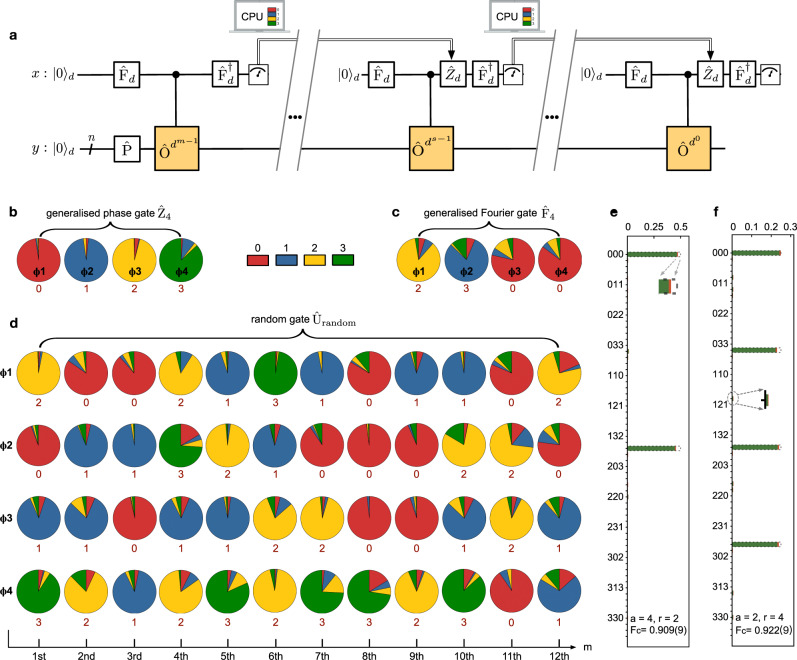
“The order-finding algorithm together with classical processing using the continued fraction algorithm returns the factor of gcd(ar/2 ± 1,N) = (3, 5).”
MethodRapid solution of problems by quantum computation
Deutsch, D., & Jozsa, R. (1992) · Proceedings of the Royal Society of London. Series A: Mathematical and Physical Sciences · doi:10.1098/rspa.1992.0167 · Cited by 2,700
Satellite-to-ground quantum key distribution
Liao, S.-K., Cai, W.-Q., Liu, W.-Y., Zhang, L., Li, Y., Ren, J.-G., Yin, J., Shen, Q., Cao, Y., Li, Z.-P., et al. (2017) · Nature · doi:10.1038/nature23655 · Cited by 1,821 · cited 1×
“The order-finding algorithm together with classical processing using the continued fraction algorithm returns the factor of gcd(ar/2 ± 1,N) = (3, 5).”
MethodSelf-citationIntegrated photonic quantum technologies
Wang, J., Sciarrino, F., Laing, A., & Thompson, M. G. (2020) · Nature Photonics · doi:10.1038/s41566-019-0532-1 · Cited by 1,576 · cited 1×
“We designed the integrated quantum photonic circuit and use 248nm deep ultraviolet lithography to fabricate the silicon-based quantum photonic chip shown in Fig 1A on 220nm silicon-on-insulator (SOI) [3].”
MethodSelf-citationSignificant-Loophole-Free Test of Bell’s Theorem with Entangled Photons
Giustina, M., Versteegh, M. A. M., Wengerowsky, S., Handsteiner, J., Hochrainer, A., Phelan, K., Steinlechner, F., Kofler, J., Larsson, J.-Å., Abellán, C., et al. (2015) · Physical Review Letters · doi:10.1103/physrevlett.115.250401 · Cited by 1,529
Bernstein, E., & Vazirani, U. (1997) · SIAM Journal on Computing · doi:10.1137/s0097539796300921 · Cited by 1,503
Simulated Quantum Computation of Molecular Energies
Aspuru-Guzik, A., Dutoi, A. D., Love, P. J., & Head-Gordon, M. (2005) · Science · doi:10.1126/science.1113479 · Cited by 1,418
Strong Loophole-Free Test of Local Realism
Shalm, L. K., Meyer-Scott, E., Christensen, B. G., Bierhorst, P., Wayne, M. A., Stevens, M. J., Gerrits, T., Glancy, S., Hamel, D. R., Allman, M. S., et al. (2015) · Physical Review Letters · doi:10.1103/physrevlett.115.250402 · Cited by 1,402 · cited 1×
“967(2) was measured to quantify its success probability.”
BackgroundSecurity of Quantum Key Distribution Usingd-Level Systems
Cerf, N. J., Bourennane, M., Karlsson, A., & Gisin, N. (2002) · Physical Review Letters · doi:10.1103/physrevlett.88.127902 · Cited by 1,354 · cited 1×
“922(9) were obtained in comparison with theoretical distributions, showing successful estimations of the order of r= 2 (Fig.”
BackgroundOptimal design for universal multiport interferometers
Clements, W. R., Humphreys, P. C., Metcalf, B. J., Kolthammer, W. S., & Walsmley, I. A. (2016) · Optica · doi:10.1364/optica.3.001460 · Cited by 1,216 · cited 1×
“Together with the combination of on-chip integrated Mach-Zehnder interferometers (MZI) [4], we achieved high-dimensional quantum state generations, unitary operations, coherent state compression, and projection measurements.”
Method
Research works printed but not linked: 1
- Shor, P. W. Algorithms for quantum computation: Discrete logarithms and factoring. Proc. 35nd Annual Symposium on Foundations of Computer Science, IEEE Computer Society Press (1994).
Cited by
Prospects and applications of on-chip lasers
Zhou, Z., Ou, X., Fang, Y., Alkhazraji, E., Xu, R., Wan, Y., & Bowers, J. E. (2023) · eLight · doi:10.1186/s43593-022-00027-x · Cited by 319
“For a programmable qudit-based quantum processor, by reprogramming the integrated reconfigurable MZIs on a silicon photonics platform, basic Fourier transform algorithms can be implemented in quaternary [154].”
MethodSelf-citationVery-large-scale integrated quantum graph photonics
Bao, J., Fu, Z., Pramanik, T., Mao, J., Chi, Y., Cao, Y., Zhai, C., Mao, Y., Dai, T., Chen, X., et al. (2023) · Nature Photonics · doi:10.1038/s41566-023-01187-z · Cited by 198
“Entangling multiple particles in multiple dimensions could provide the key resources for strong quantum correlation tests 33 and qudit-based quantum computing 34 .”
BackgroundMethodSelf-citationQuantum many-body simulations on digital quantum computers: State-of-the-art and future challenges
Fauseweh, B. (2024) · Nature Communications · doi:10.1038/s41467-024-46402-9 · Cited by 152
Hardware Efficient Quantum Simulation of Non-Abelian Gauge Theories with Qudits on Rydberg Platforms
González-Cuadra, D., Zache, T. V., Carrasco, J. A., Kraus, B., & Zoller, P. (2022) · Physical Review Letters · doi:10.1103/physrevlett.129.160501 · Cited by 197
High-fidelity qutrit entangling gates for superconducting circuits
Goss, N., Morvan, A., Marinelli, B., Mitchell, B. K., Nguyen, L. B., Naik, R. K., Chen, L., Jünger, C., Kreikebaum, J. M., Santiago, D. I., et al. (2022) · Nature Communications · doi:10.1038/s41467-022-34851-z · Cited by 129
Fully on-chip photonic turnkey quantum source for entangled qubit/qudit state generation
Mahmudlu, H., Johanning, R., van Rees, A., Kashi, A. K., Epping, J. P., Haldar, R., Boller, K. J., & Kues, M. (2023) · Nature Photonics · doi:10.1038/s41566-023-01193-1 · Cited by 156
Native qudit entanglement in a trapped ion quantum processor
Hrmo, P., Wilhelm, B., Gerster, L., van Mourik, M. W., Huber, M., Blatt, R., Schindler, P., Monz, T., & Ringbauer, M. (2023) · Nature Communications · doi:10.1038/s41467-023-37375-2 · Cited by 192
Wei, M., Xu, K. J., Tang, B., Li, J., Yun, Y., Zhang, P., Wu, Y., Bao, K., Lei, K., Chen, Z., et al. (2024) · Nature Communications · doi:10.1038/s41467-024-47206-7 · Cited by 117
“Silicon photonics have broad prospects for practical applications in high-speed optical communication 1 , microwave photonics 2 , optical neural networks 3 , and optical quantum computing 4 .”
BackgroundSelf-citationMolecular nanomagnets: a viable path toward quantum information processing?
Chiesa, A., Santini, P. M., Garlatti, E., Luis, F., & Carretta, S. (2024) · Reports on Progress in Physics · doi:10.1088/1361-6633/ad1f81 · Cited by 106
Integrated Photonics for Quantum Communications and Metrology
Labonté, L., Alibart, O., D’Auria, V., Doutre, F., Etesse, J., Sauder, G., Martin, A., Picholle, É., & Tanzilli, S. (2024) · PRX Quantum · doi:10.1103/prxquantum.5.010101 · Cited by 120
An elementary review on basic principles and developments of qubits for quantum computing
Chae, E., Choi, J., & Kim, J. (2024) · Nano Convergence · doi:10.1186/s40580-024-00418-5 · Cited by 120
“Utilizing a high-dimensional Hilbert space with multiple qubits [99, 100] or a single qudit [101, 102], a d -dimensional information unit, can be encoded into a single physical system.”
BackgroundExperimental Single-Setting Quantum State Tomography
Stricker, R., Meth, M., Postler, L., Edmunds, C., Ferrie, C., Blatt, R., Schindler, P., Monz, T., Kueng, R., & Ringbauer, M. (2022) · PRX Quantum · doi:10.1103/prxquantum.3.040310 · Cited by 108
Silicon photonic devices for scalable quantum information applications
Feng, L., Zhang, M., Wang, J., Zhou, X., Qiang, X., Guo, G., & Ren, X. (2022) · Photonics Research · doi:10.1364/prj.464808 · Cited by 80
“[193]. with a visibility of 96% (Fig.”
Self-citationUniversal Qudit Gate Synthesis for Transmons
Fischer, L. E., Chiesa, A., Tacchino, F., Egger, D. J., Carretta, S., & Tavernelli, I. (2023) · PRX Quantum · doi:10.1103/prxquantum.4.030327 · Cited by 95
“[36] Yulin Chi, Jieshan Huang, Zhanchuan Zhang, Jun Mao, Zinan Zhou, Xiaojiong Chen, Chonghao Zhai, Jueming Bao, Tianxiang Dai, Huihong Yuan, Ming Zhang, Daoxin Dai, Bo Tang, Yan Yang, Zhihua Li, Yunhong Ding, Leif K.”
BackgroundQuantum error correction of qudits beyond break-even
Brock, B. L., Singh, S., Eickbusch, A., Sivak, V. V., Ding, A. Z., Frunzio, L., Girvin, S. M., & Devoret, M. H. (2025) · Nature · doi:10.1038/s41586-025-08899-y · Cited by 64
“…considerable experimental effort has been spent in recent years on developing qudit-based platforms for quantum computing, using donor spins in silicon 8 , ultracold atoms and molecules 9,10 , optical photons 11,12 , superconducting circuits 13–15 , trapped ions 16,17 , and vacancy centers 18,19 .”
Decoding algorithms for surface codes
deMarti iOlius, A., Fuentes, P., Orús, R., Crespo, P. M., & Etxezarreta Martinez, J. (2024) · Quantum · doi:10.22331/q-2024-10-10-1498 · Cited by 60
“…towards the construction of quantum processors such as qubit gate-based quantum computing (Nielsen and Chuang, 2011), quditbased quantum computing (Chi et al., 2022), measurement based quantum computing (Briegel et al., 2009; Raussendorf and Briegel, 2001), quantum annealers (Chandra et al.,…”
BackgroundExperimental Realization of Two Qutrits Gate with Tunable Coupling in Superconducting Circuits
Luo, K., Huang, W., Tao, Z., Zhang, L., Zhou, Y., Chu, J., Liu, W., Wang, B.-Y., Cui, J., Liu, S., et al. (2023) · Physical Review Letters · doi:10.1103/physrevlett.130.030603 · Cited by 79
Quantum and Classical Spin-Network Algorithms for q -Deformed Kogut-Susskind Gauge Theories
Zache, T. V., González-Cuadra, D., & Zoller, P. (2023) · Physical Review Letters · doi:10.1103/physrevlett.131.171902 · Cited by 106
Quantum Walk Computing: Theory, Implementation, and Application
Qiang, X., Ma, S., & Song, H. (2024) · Intelligent Computing · doi:10.34133/icomputing.0097 · Cited by 92
Integrated photonics in quantum technologies
Giordani, T., Hoch, F., Carvacho, G., Spagnolo, N., & Sciarrino, F. (2023) · Rivista Del Nuovo Cimento · doi:10.1007/s40766-023-00040-x · Cited by 71
Liu, P., Wang, R., Zhang, J.-N., Zhang, Y., Cai, X., Xu, H., Li, Z., Han, J., Li, X., Xue, G., et al. (2023) · Physical Review X · doi:10.1103/physrevx.13.021028 · Cited by 81
“For example, the accuracy and efficiency of simple quantum circuits and algorithms can be enhanced by qudit-based architecture [5].”
BackgroundMethodSelf-citationFernández de Fuentes, I., Botzem, T., Johnson, M. A. I., Vaartjes, A., Asaad, S., Mourik, V., Hudson, F. E., Itoh, K. M., Johnson, B. C., Jakob, A. M., et al. (2024) · Nature Communications · doi:10.1038/s41467-024-45368-y · Cited by 46
“Experimental qudit platforms can be found in optics 6,7 , superconductors 8 – 10 , trapped ions 11 , atomic ensembles 12 and molecular magnets 13 .”
Efficient realization of quantum algorithms with qudits
Nikolaeva, A. S., Kiktenko, E. O., & Fedorov, A. K. (2024) · EPJ Quantum Technology · doi:10.1140/epjqt/s40507-024-00250-0 · Cited by 77
Realizing quantum gates with optically addressable Yb + 171 ion qudits
Aksenov, M. A., Zalivako, I. V., Semerikov, I. A., Borisenko, A. S., Semenin, N. V., Sidorov, P., Fedorov, A. K., Khabarova, K. Y., & Kolachevsky, N. (2023) · Physical Review A · doi:10.1103/physreva.107.052612 · Cited by 52
Quantum computing and chemistry
Weidman, J. D., Sajjan, M., Mikolas, C. A., Stewart, Z. J., Pollanen, J., Kais, S., & Wilson, A. K. (2024) · Cell Reports Physical Science · doi:10.1016/j.xcrp.2024.102105 · Cited by 71
Quantum Technologies for Beyond 5G and 6G Networks: Applications, Opportunities, and Challenges
Zeydan, E., de Alwis, C., Khan, R., Türk, Y., Aydeger, A., Gadekallu, T. R., & Liyanage, M. (2025) · IEEE Open Journal of the Communications Society · doi:10.1109/ojcoms.2025.3591842 · Cited by 65
“C. Products and Chipsets for Communication and Computing 1) Quantum Processing Units (QPUs): The prospects of quantum computing have accelerated efforts to realize fully functional QPUs [60].”
Chip-based photonic graph states
Huang, J., Chen, X., Li, X., & Wang, J. (2023) · AAPPS bulletin · doi:10.1007/s43673-023-00082-7 · Cited by 42
Self-citationProgrammable simulations of molecules and materials with reconfigurable quantum processors
Maskara, N., Ostermann, S., Shee, J., Kalinowski, M., Gomez, A. M., Bravo, R. A., Wang, D. S., Krylov, A. I., Yao, N. Y., Head‐Gordon, M., et al. (2025) · Nature Physics · doi:10.1038/s41567-024-02738-z · Cited by 78
High cooperativity coupling to nuclear spins on a circuit quantum electrodynamics architecture
Rollano, V., de Ory, M. C., Buch, C. D., Rubín-Osanz, M., Zueco, D., Sánchez‐Azqueta, C., Chiesa, A., Granados, D., Carretta, S., Gómez, A., et al. (2022) · Communications Physics · doi:10.1038/s42005-022-01017-8 · Cited by 39
Variational quantum simulation of U(1) lattice gauge theories with qudit systems
Popov, P. P., Meth, M., Lewenstein, M., Hauke, P., Ringbauer, M., Zohar, E., & Kasper, V. (2024) · Physical Review Research · doi:10.1103/physrevresearch.6.013202 · Cited by 47
Digital Quantum Simulation of a (1+1)D SU(2) Lattice Gauge Theory with Ion Qudits
Calajò, G., Magnifico, G., Edmunds, C., Ringbauer, M., Montangero, S., & Silvi, P. (2024) · PRX Quantum · doi:10.1103/prxquantum.5.040309 · Cited by 74
“One potential avenue to perform large-scale quantum computation relies on qudit-based quantum processors, which have been proposed in several platforms such as Rydberg arrays [58, 59], photonic circuits [60] and ultra-cold atomic mixture [61].”
BackgroundHigh- E J / E C transmon qudits with up to 12 levels
Wang, Z., Parker, R. W., Champion, E., & Blok, M. S. (2025) · Physical Review Applied · doi:10.1103/physrevapplied.23.034046 · Cited by 29
Extending the computational reach of a superconducting qutrit processor
Goss, N., Ferracin, S., Hashim, A., Carignan-Dugas, A., Kreikebaum, J. M., Naik, R., Santiago, D., & Siddiqi, I. A. (2024) · npj Quantum Information · doi:10.1038/s41534-024-00892-z · Cited by 58
“Coherent control of higher-level quantum systems has been demonstrated in superconducting circuits 12 – 18 , trapped ions 19,20 , and in photonic circuits 21,22 .”
Qudit Dynamical Decoupling on a Superconducting Quantum Processor
Tripathi, V., Goss, N., Vezvaee, A., Nguyen, L. B., Siddiqi, I. A., & Lidar, D. A. (2025) · Physical Review Letters · doi:10.1103/physrevlett.134.050601 · Cited by 60
Programmable integrated photonic coherent matrix: Principle, configuring, and applications
Wu, B., Zhou, H., Dong, J., & Zhang, X. (2024) · Applied Physics Reviews · doi:10.1063/5.0184982 · Cited by 33
Qu8its for quantum simulations of lattice quantum chromodynamics
Illa, M., Robin, C., & Savage, M. J. (2024) · Physical review. D/Physical review. D. · doi:10.1103/physrevd.110.014507 · Cited by 48
Practical Introduction to Benchmarking and Characterization of Quantum Computers
Hashim, A., Nguyen, L. B., Goss, N., Marinelli, B., Naik, R., Chistolini, T., Hines, J., Marceaux, J. P., Kim, Y., Gokhale, P., et al. (2025) · PRX Quantum · doi:10.1103/prxquantum.6.030202 · Cited by 133
High-dimensional quantum information processing on programmable integrated photonic chips
Chi, Y., Yu, Y., Gong, Q., & Wang, J. (2023) · Science China Information Sciences · doi:10.1007/s11432-022-3602-0 · Cited by 34
Self-citationDemonstration of hypergraph-state quantum information processing
Huang, J., Li, X., Chen, X., Zhai, C., Zheng, Y., Chi, Y., Li, Y., He, Q., Gong, Q., & Wang, J. (2024) · Nature Communications · doi:10.1038/s41467-024-46830-7 · Cited by 54
“We implement a qudit-qubit mapping in which the four-qubit states are encoded into two-ququart states of photonsand arbitraryentangling operations can be performed 28 .”
MethodSelf-citationColloquium : Qudits for decomposing multiqubit gates and realizing quantum algorithms
Kiktenko, E. O., Nikolaeva, A. S., & Fedorov, A. K. (2025) · Reviews of Modern Physics · doi:10.1103/revmodphys.97.021003 · Cited by 62
Experimental realization of high-dimensional quantum gates with ultrahigh fidelity and efficiency
Meng, Z., Liu, W., Song, B.-W., Wang, X., Zhang, A., & Yin, Z. (2024) · Physical Review A · doi:10.1103/physreva.109.022612 · Cited by 30
Qudit-based variational quantum eigensolver using photonic orbital angular momentum states
Kim, B., Hu, K.-M., Sohn, M., Kim, Y., Kim, Y., Lee, S.-W., & Lim, H. (2024) · Science Advances · doi:10.1126/sciadv.ado3472 · Cited by 46
“In addition, by leveraging multi-qudit quantum gates ( 16 , 42 , 43 ), our method can be further extended to multi-qudit–based VQE, which can estimate the ground energy of more complex molecules in quantum chemistry ( 44 – 46 ).”
Information processing at the speed of light
AbuGhanem, M. (2024) · Frontiers of Optoelectronics · doi:10.1007/s12200-024-00133-3 · Cited by 35
Kazmina, A. S., Zalivako, I. V., Borisenko, A. S., Nemkov, N. A., Nikolaeva, A. S., Simakov, I. A., Kuznetsova, A. V., Egorova, E. Y., Galstyan, K. P., Semenin, N. V., et al. (2024) · Physical Review A · doi:10.1103/physreva.109.032619 · Cited by 30
“Various physical platforms supporting qudit-based computing are being developed [111, 120–124].”
Noisy qudit vs multiple qubits: conditions on gate efficiency for enhancing fidelity
Janković, D., Hartmann, J.-G., Ruben, M., & Hervieux, P.-A. (2024) · npj Quantum Information · doi:10.1038/s41534-024-00829-6 · Cited by 49
Chizzini, M., Crippa, L., Chiesa, A., Tacchino, F., Petiziol, F., Tavernelli, I., Santini, P. M., & Carretta, S. (2022) · Physical Review Research · doi:10.1103/physrevresearch.4.043135 · Cited by 30
Programmable Photonic Quantum Circuits with Ultrafast Time-Bin Encoding
Bouchard, F., Fenwick, K. L., Bonsma-Fisher, K., England, D. G., Bustard, P. J., Heshami, K., & Sussman, B. (2024) · Physical Review Letters · doi:10.1103/physrevlett.133.090601 · Cited by 33
Continuous dynamical decoupling of optical 171Yb+ qudits with radiofrequency fields
Zalivako, I. V., Borisenko, A. S., Semerikov, I. A., Korolkov, A. E., Sidorov, P., Galstyan, K. P., Semenin, N. V., Smirnov, V. N., Aksenov, M. D., Fedorov, A. K., et al. (2023) · Frontiers in Quantum Science and Technology · doi:10.3389/frqst.2023.1228208 · Cited by 23
Visualizing entanglement in multiqubit systems
Bley, J., Rexigel, E., Arias, A., Longen, N., Krupp, L., Kiefer-Emmanouilidis, M., Lukowicz, P., Donhauser, A., Küchemann, S., Kühn, J., et al. (2024) · Physical Review Research · doi:10.1103/physrevresearch.6.023077 · Cited by 32
Crosstalk-robust quantum control in multimode bosonic systems
You, X., Lu, Y., Kim, T. W., Kürkçüog̃lu, D. M., Zhu, S., van Zanten, D. M. T., Roy, T., Lu, Y., Chakram, S., Grassellino, A., et al. (2024) · Physical Review Applied · doi:10.1103/physrevapplied.22.044072 · Cited by 29
“The first approach involves encoding quantum information directly into d > 2 computational states of a system, known as qudits [9–12].”
BackgroundZalivako, I. V., Nikolaeva, A. S., Borisenko, A. S., Korolkov, A. E., Sidorov, P., Galstyan, K. P., Semenin, N. V., Smirnov, V. N., Aksenov, M. A., Makushin, K. M., et al. (2025) · Quantum Reports · doi:10.3390/quantum7020019 · Cited by 40
“In the Recently, multiqudit processors have been realized with the use of trapped ions [99, 100], superconducting circuits [90, 101, 102], and optical systems [78].”
Duncan, C. W., Poggi, P. M., Bukov, M., Zinner, N. T., & Campbell, S. (2025) · PRX Quantum · doi:10.1103/j8c7-v2hd · Cited by 44
Inspired lightweight robust quantum Q-learning for smart generation control of power systems
Yin, L., & Cao, X. (2022) · Applied Soft Computing · doi:10.1016/j.asoc.2022.109804 · Cited by 20
Almost Qudits in the Prepare-and-Measure Scenario
Pauwels, J., Pironio, S., Woodhead, E., & Tavakoli, A. (2022) · Physical Review Letters · doi:10.1103/physrevlett.129.250504 · Cited by 22
A Review of Quantum-Inspired Metaheuristic Algorithms for Automatic Clustering
Dey, A., Bhattacharyya, S., Dey, S., Konar, D., Platoš, J., Snåšel, V., Mršić, L., & Pal, P. (2023) · Mathematics · doi:10.3390/math11092018 · Cited by 25
Taguchi, Y., Wang, Y., Tanomura, R., Tanemura, T., & Ozeki, Y. (2023) · Physical Review Applied · doi:10.1103/physrevapplied.19.054002 · Cited by 20
Photonic-reconfigurable entanglement distribution network based on silicon quantum photonics
Liu, D., Liu, J., Ren, X., Feng, X., Liu, F., Cui, K., Huang, Y., & Zhang, W. (2023) · Photonics Research · doi:10.1364/prj.489139 · Cited by 25
Universal quantum computing with qubits embedded in trapped-ion qudits
Nikolaeva, A. S., Kiktenko, E. O., & Fedorov, A. K. (2024) · Physical Review A · doi:10.1103/physreva.109.022615 · Cited by 28
Dissipative stabilization of high-dimensional GHZ states for neutral atoms
Zhao, Y., Yang, Y.-Q., Li, W., & Shao, X. (2024) · Applied Physics Letters · doi:10.1063/5.0192602 · Cited by 21
“37 In the realm of linear optics, only a limited number of theoretical and experimental strategies have been proposed to create high-dimensional GHZ states.”
BackgroundSelf-citationSimulators for quantum network modeling: A comprehensive review
Bel, O., & Kiran, M. (2025) · Computer Networks · doi:10.1016/j.comnet.2025.111204 · Cited by 33
Harnessing optical advantages in computing: a review of current and future trends
Kibebe, C. G., Liu, Y., & Tang, J. (2024) · Frontiers in Physics · doi:10.3389/fphy.2024.1379051 · Cited by 28
“However, there are essential advances in transmission rates, while current technology may not be good enough for applications that have to go sky-high [69, 75].”
Advances in integrated quantum photonics for quantum sensing and communication
Dutta, T., Safinezhad, A., Zhuldybina, M., Llamas‐Garro, I., Velázquez-González, J. S., Sharma, A. K., Ung, B., & Mishra, S. K. (2025) · Journal of Materials Chemistry C · doi:10.1039/d4tc05290k · Cited by 20
Efficient Control of a Transmon Qudit Using Effective Spin- 7 / 2 Rotations
Champion, E., Wang, Z., Parker, R. W., & Blok, M. (2025) · Physical Review X · doi:10.1103/vbh4-lysv · Cited by 57
“Experimental qudit processors have recently been demonstrated using high-dimensional nuclear spins [2, 3], hyperfine states of trapped ions [4], photonic circuits [5], and superconducting circuits [23].”
BackgroundCoexistence of extended and localized states in finite-sized mosaic Wannier-Stark lattices
Gao, J., Khaymovich, I. M., Iovan, A., Wang, X., Krishna, G., Xu, Z.-S., Tortumlu, E., Balatsky, A. V., Zwiller, V., & Elshaari, A. W. (2023) · Physical review. B./Physical review. B · doi:10.1103/physrevb.108.l140202 · Cited by 22
“Our results offer a promising avenue for on-chip high-dimensional quantum information encoding [46– 50], and will also inspire particle statistics induced quantum correlation in ME studies by using multi-photon state excitation [51–53].”
BackgroundPhoton‐pair generation in a lossy waveguide
Shin, W., Park, K., Kim, H., Lee, D., Kwon, K., & Shin, H. (2023) · Nanophotonics · doi:10.1515/nanoph-2022-0582 · Cited by 17
Nikolaeva, A. S., Kiktenko, E. O., & Fedorov, A. K. (2023) · Entropy · doi:10.3390/e25020387 · Cited by 29
Optimal Quantum Circuits for General Multi‐Qutrit Quantum Computation
Jiang, G., Liu, W., & Wei, H. (2024) · Advanced Quantum Technologies · doi:10.1002/qute.202400033 · Cited by 22
Qutrit and qubit circuits for three-flavor collective neutrino oscillations
Turro, F., Chernyshev, I. A., Bhaskar, R., & Illa, M. (2025) · Physical review. D/Physical review. D. · doi:10.1103/physrevd.111.043038 · Cited by 40
“…physics systems has generated significant interest [2–16], as a result of recent advancements in experimental realizations of qudit-based platforms, including trapped-ion systems [17–21], superconducting circuits [22–25], superconducting radio-frequency cavities [26], and photonic systems [27].”
On the role of entanglement in qudit-based circuit compression
Gao, X., Appel, P., Friis, N., Ringbauer, M., & Huber, M. (2023) · Quantum · doi:10.22331/q-2023-10-16-1141 · Cited by 26
“Indeed, control over the inherently high-dimensional Hilbert space has been demonstrated in all major quantum technology platforms [17–20], motivating the exploitation of a new paradigm of quantum computing based on d -dimensional qudits , rather than qubits.”
BackgroundSimulating neutrino oscillations on a superconducting qutrit
Nguyen, H. C., Bach, B. G., Nguyen, T. D., Tran, D. M., Nguyen, H. Q., & Nguyen, H. Q. (2023) · Physical review. D/Physical review. D. · doi:10.1103/physrevd.108.023013 · Cited by 21
Sun, F.-X., Fang, Y., He, Q., & Liu, Y. (2023) · 中国科学通报:英文版 · doi:10.1016/j.scib.2023.06.006 · Cited by 17
“The substantial progress has been made in controllable creation of various quantum states of light [1], providing a novel technology for implementing quantum communication [2–8], quantum computing [9–11], quantum imaging [12], and quantum metrology [13–15].”
Quantum Information with Integrated Photonics
Piergentili, P., Amanti, F., Andrini, G., Armani, F., Bellani, V., Bonaiuto, V., Cammarata, S., Campostrini, M., Cornia, S., Dao, T. H., et al. (2023) · Applied Sciences · doi:10.3390/app14010387 · Cited by 16
“One year later, the same group presented an advanced chip a quantum processing unit [45], that integrated all the necessary components to initialize, manipulate, and measure quantum-quart (ququart) states.”
Progress in integrated and fiber optics for time-bin based quantum information processing
Montaut, N., George, A., Monika, M., Nosrati, F., Yu, H., Sciara, S., Crockett, B., Peschel, U., Wang, Z. M., Franco, R. L., et al. (2025) · Advanced Optical Technologies · doi:10.3389/aot.2025.1560084 · Cited by 31
Variational quantum multiobjective optimization
Ekstrøm, L., Wang, H., & Schmitt, S. (2025) · Physical Review Research · doi:10.1103/physrevresearch.7.023141 · Cited by 24
“Finally, we discuss the results, present our conclusions from this work and give an outlook for future directions of investigations.”
ResultLow-loss, broadband MMI coupler based on thin film lithium niobate platform
Li, M., Rao, L., He, X., Tian, F., Pan, X., & Xin, X. (2023) · Physica Scripta · doi:10.1088/1402-4896/acb6bf · Cited by 13
Universal composite pulses for robust quantum state engineering in four-level systems
Shi, Z., Wang, J.-H., Zhang, C., Song, J., & Xia, Y. (2024) · Physical Review A · doi:10.1103/physreva.109.022441 · Cited by 17
Self-citationUnitary control of partially coherent waves. II. Transmission or reflection
Guo, C., & Fan, S. (2024) · Physical review. B./Physical review. B · doi:10.1103/physrevb.110.035431 · Cited by 20
Universal conservation laws of the wave-particle-entanglement triad: theory and experiment
Ding, Z., Deng, Y., Fei, S.-M., Zhou, S.-Q., Chen, X., Rui, Z., Ma, Z., Xiao, Y., & Wang, J. (2025) · Light Science & Applications · doi:10.1038/s41377-025-01759-4 · Cited by 17
Self-citationSymmetry-Protected Topological Haldane Phase on a Qudit Quantum Processor
Edmunds, C., Rico, E., Arrazola, Í., Brennen, G. K., Meth, M., Blatt, R., & Ringbauer, M. (2025) · PRX Quantum · doi:10.1103/prxquantum.6.020349 · Cited by 31
“Here we use trapped-ion qudits [31], which have emerged as an exciting experimental platform [25, 31– 33] for natively studying high-dimensional spin systems [23, 24, 26, 27].”
Completeness for arbitrary finite dimensions of ZXW-calculus, a unifying calculus
Poór, B., Wang, Q., Shaikh, R. A., Yeh, L., Yeung, R. W. K., & Coecke, B. (2023) · ACM/IEEE Symposium on Logic in Computer Science (LICS) · doi:10.1109/lics56636.2023.10175672 · Cited by 45
“In recent years, qudit-based quantum computation has been realised with ion traps [45], [46], photonic devices [47], and superconducting devices [48]– [51].”
BackgroundProgrammable Photonic Time Circuits for Highly Scalable Universal Unitaries
Piao, X., Yu, S., & Park, N. (2024) · Physical Review Letters · doi:10.1103/physrevlett.132.103801 · Cited by 20
Dancing the Quantum Waltz: Compiling Three-Qubit Gates on Four Level Architectures
Litteken, A., Seifert, L. M., Chadwick, J. D., Nottingham, N., Roy, T., Li, Z., Schuster, D., Chong, F. T., & Baker, J. M. (2023) · Proceedings - International Symposium on Computer Architecture/Proceedings · doi:10.1145/3579371.3589106 · Cited by 21
“Previously, this strategy was avoided due to more error-prone operations [11, 56] and lower coherence times.”
BackgroundSelf-citationMeasurement-Based Quantum Sealed-Bid Auction
Ye, C.-Q., Li, J., Chen, X., Dong, M., & Ota, K. (2023) · IEEE Transactions on Circuits and Systems I Regular Papers · doi:10.1109/tcsi.2023.3314646 · Cited by 14
“While achieving large-scale high-dimensional quantum states still poses challenges, significant progress has been made in this area [31], [32].”
BackgroundSelf-citationImplementation of Shor’s algorithm with a single photon in 32 dimensions
Weng, H., & Chuu, C. (2024) · Physical Review Applied · doi:10.1103/physrevapplied.22.034003 · Cited by 19
“Alternatively, the information can be encoded in high dimensions [15–21] such as the optical modes of a single physical DOF.”
BackgroundDetecting the dimensionality of genuine multiparticle entanglement
Cobucci, G., & Tavakoli, A. (2024) · Science Advances · doi:10.1126/sciadv.adq4467 · Cited by 26
“Such states are also interesting for high-dimensional quantum computing [51, 52], quantum nonlocality [53, 54] and various other tasks [19, 55, 56].”
BackgroundChip-to-chip photonic quantum teleportation over optical fibers of 12.3 km
Liu, D., Jin, Z., Liu, J., Zou, X., Ren, X., Li, H., You, L., Feng, X., Liu, F., Cui, K., et al. (2025) · Light Science & Applications · doi:10.1038/s41377-025-01920-z · Cited by 21
“…chip, compact and stable integrated quantum photonic systems can be developed to realize complicated and large-scale quantum information functions, such as complicated entanglement state generation 19 – 22 , quantum communication 23 – 26 , quantum computation and simulation 27 – 29 , and so on.”
Wang, C., Chen, Y., & Chen, L. (2022) · Optics Express · doi:10.1364/oe.469704 · Cited by 13
Hernández‐Rodríguez, M. A., Zanella, S., Fu, L., Neto, A. N. C., Carlos, L. D., & Brites, C. D. S. (2023) · Laser & Photonics Review · doi:10.1002/lpor.202200877 · Cited by 12
Li, Z., Yu, G.-F., Wang, Y., Xing, Z.-Y., Kong, L.-W., & Zhou, X. (2023) · Science China Physics Mechanics and Astronomy · doi:10.1007/s11433-023-2130-9 · Cited by 12
Self-citationQudit-based quantum simulation of fermionic systems
Chizzini, M., Tacchino, F., Chiesa, A., Tavernelli, I., Carretta, S., & Santini, P. M. (2024) · Physical Review A · doi:10.1103/physreva.110.062602 · Cited by 16
On-chip high-dimensional entangled photon sources
Kaur, T., Peace, D., & Romero, J. (2025) · Journal of Optics · doi:10.1088/2040-8986/ada0c5 · Cited by 16
“High-dimensional entanglement can also be achieved on-chip via SFWM in SOI [38] and SiN [203] platforms.”
InfluentialQuantum Simulation of Polarized Light-Induced Electron Transfer with a Trapped-Ion Qutrit System
Sun, K., Fang, C., Kang, M., Zhang, Z., Zhang, P., Beratan, D. N., Brown, K. R., & Kim, J. (2023) · The Journal of Physical Chemistry Letters · doi:10.1021/acs.jpclett.3c01166 · Cited by 13
Self-citationQutrit circuits and algebraic relations: A pathway to efficient spin-1 Hamiltonian simulation
Ogunkoya, O., Kim, J., Peng, B., Özgüler, A. B., & Alexeev, Y. (2024) · Physical Review A · doi:10.1103/physreva.109.012426 · Cited by 18
“Recent efforts have demonstrated that the universal qudit gate set and their coherent control can be implemented in superconducting transmons [8, 25, 31], photonic circuits [20], and trapped ions [34, 61].”
BackgroundA Prototype For Quantum Database in Hybrid QuantumPreprint
chakraborty, S. (2022) · TechRxiv · doi:10.36227/techrxiv.20237202 · Cited by 11
Roca-Jerat, S., Román-Roche, J., & Zueco, D. (2024) · Machine Learning Science and Technology · doi:10.1088/2632-2153/ad360d · Cited by 17
Quantum Generative Adversarial Networks in a Silicon Photonic Chip with Maximum Expressibility
Ma, H., Ye, L., Guo, X., Ruan, F., Zhao, Z., Li, M., Wang, Y., & Yang, J. (2024) · Advanced Quantum Technologies · doi:10.1002/qute.202400171 · Cited by 13
Huang, S.-Y., & Barz, S. (2025) · Scientific Reports · doi:10.1038/s41598-025-86161-1 · Cited by 19
“…circuits have been a promising platform for practical implementation in various fields, especially for emerging quantum technologies such as quantum key distribution, 1–7 quantum communication 8,9 and photonic quantum computing, 10–14 due to their scalability and mechanical and thermal stability.”
A Quantum Tanimoto Coefficient Fidelity for Entanglement Measurement
Zhao, Y., Xiao, F., Aritsugi, M., & Ding, W. (2023) · IEEE/CAA Journal of Automatica Sinica · doi:10.1109/jas.2022.106079 · Cited by 10
“It is applied to quantum error correction [20], quantum communication [21], and measurement of quantum entanglement [22], [23].”
BackgroundHiesmayr, B. C., Popp, C., & Sutter, T. C. (2025) · International Journal of Quantum Information · doi:10.1142/s0219749925300037 · Cited by 23
Realizing ultrahigh capacity quantum superdense coding on quantum photonic chip
Li, Y., Zhu, H., Luo, W., Cai, H. N., Karim, M. F., Luo, X., Gao, F., Wu, X. X., Zhou, X., Song, Q., et al. (2025) · npj Quantum Information · doi:10.1038/s41534-025-01007-y · Cited by 13
“Moreover, in the context of constructing a quantum network for multiple users 31 , our approach enables enhanced resource ef fi ciency and compatibility with high-dimensional quantum computation 32 – 34 .”
Self-citation
Metadata
- Authors
- Chi, Y., Huang, J., Zhang, Z., Mao, J., Zhou, Z., Chen, X., Zhai, C., Bao, J., Dai, T., Yuan, H., Zhang, M., Dai, D., Tang, B., Yang, Y., Li, Z., Ding, Y., Oxenløwe, L. K., Thompson, M. G., O’Brien, J. L., Li, Y., Gong, Q., & Wang, J.
- Affiliations
- Peking University (CN)
- State Key Laboratory of Modern Optical Instruments (CN)
- Chinese Academy of Sciences (CN)
- Technical University of Denmark (DK)
- University of Bristol (GB)
- The University of Western Australia (AU)
- Shanxi University (CN)
- Corresponding author
- Wang, Jianwei
- ORCID
- Venue
- Nature Communications
- Published
- 2022-03-04
- Volume
- 13
- Issue
- 1
- Pages
- 1166-1166
- ISSN
- 2041-1723 (ISSN-L)
- PMC
- PMC8897515
- OpenAlex
- W4214944326
- Semantic Scholar
- a4390a7f1c46ff8a7fdae863295d0b610023d977
- Cited by
- 273
- References
- 78
- Citations by year
- 2026: 44 · 2025: 73 · 2024: 72 · 2023: 61 · 2022: 23
- FWCI
- 18.77
- Type
- journal article
- Language
- en
- Open access
- gold
- doi.org
- Licence
- cc-by
- creativecommons.org/licenses/by/4.0 (tdm)
- creativecommons.org/licenses/by/4.0 (vor)
- Locations
- Nature Communications (publishedVersion, cc-by)
- PubMed Central (publishedVersion, cc-by)
- PubMed (publishedVersion)
- UWA Profiles and Research Repository (UWA) (submittedVersion, cc-by)
- UWA Profiles and Research Repository (University of Western Australia) (submittedVersion)
- RePEc: Research Papers in Economics (submittedVersion)
- DOAJ (DOAJ: Directory of Open Access Journals) (submittedVersion, cc-by-sa)
- Technical University of Denmark, DTU Orbit (Technical University of Denmark, DTU) (submittedVersion, other-oa)
- Technical University of Denmark, DTU Orbit (Technical University of Denmark, DTU) (submittedVersion)
- Greater South Information System
- Funders
- Villum Fonden (00013367, 00025371)
- National Natural Science Foundation of China (61975001, 61675007, 61775003, 61590933, 61904196, 2018B030329001)
- Topics
- Physical Sciences › Computer Science › Artificial Intelligence › Quantum Computing Algorithms and Architecture
- Physical Sciences › Physics and Astronomy › Atomic and Molecular Physics, and Optics › Quantum Information and Cryptography
- Physical Sciences › Engineering › Electrical and Electronic Engineering › Photonic and Optical Devices
- Keywords
- qudits, silicon photonics, photonic integrated circuits, programmable quantum processors, quantum parallelism, quantum Fourier transform, Deutsch-Jozsa algorithm, Bernstein-Vazirani algorithm, phase estimation, quantum state preparation and measurement, monolithic integration
About these checks
Registry, retraction, Cites and statistics results are computed, not judged, with one exception: a printed reference that no index lists is read once by a model before it counts as a citation error. Claims are extracted by a model and kept only when their quote appears verbatim in the text; each cited source is then checked, with a model’s help, for whether it says what the claim relies on. Those verdicts can be wrong — read the claim’s quote and the cited source before relying on one.
Statistics and arithmetic are recomputed, not judged.
Confidence bands are shown only for fields calibrated on our annotated test set. None is calibrated yet, so no band is shown.
What counts as a claim ›How we measure confidence ›How we check this ›
Are you an author, or do you see a problem with this page? Request a review
Data sources
Bibliographic data: Semantic Scholar, OpenAlex, Crossref.
Contains information from the Semantic Scholar Academic Graph Datasets, made available under the ODC Attribution License (ODC-BY 1.0).
Semantic Scholar’s data is described in: Kinney, R., et al. (2023). The Semantic Scholar Open Data Platform. arXiv:2301.10140.
