

A programmable qudit-based quantum processor
Open accessThe DOI matches its Crossref record; 79 of the 79 references it cites were found in a registry or an index.
Abstract
Controlling and programming quantum devices to process quantum information by the unit of quantum dit, i.e., qudit, provides the possibilities for noise-resilient quantum communications, delicate quantum molecular simulations, and efficient quantum computations, showing great potential to enhance the capabilities of qubit-based quantum technologies. Here, we report a programmable qudit-based quantum processor in silicon-photonic integrated circuits and demonstrate its enhancement of quantum computational parallelism. The processor monolithically integrates all the key functionalities and capabilities of initialisation, manipulation, and measurement of the two quantum quart (ququart) states and multi-value quantum-controlled logic gates with high-level fidelities. By reprogramming the configuration of the processor, we implemented the most basic quantum Fourier transform algorithms, all in quaternary, to benchmark the enhancement of quantum parallelism using qudits, which include generalised Deutsch-Jozsa and Bernstein-Vazirani algorithms, quaternary phase estimation and fast factorization algorithms. The monolithic integration and high programmability have allowed the implementations of more than one million high-fidelity preparations, operations and projections of qudit states in the processor. Our work shows an integrated photonic quantum technology for qudit-based quantum computing with enhanced capacity, accuracy, and efficiency, which could lead to the acceleration of building a large-scale quantum computer.
Overview
The claims and statistics of this paper haven’t been checked yet.
Free: it reads the open-access text and checks the first 5 claims that cite a source we can check. Create a free account to check every claim.
Integrity signals
Registry
Cites
Statistics
Figures
Verification
Claims the paper makes
The claims and statistics of this paper haven’t been checked yet.
Free: it reads the open-access text and checks the first 5 claims that cite a source we can check. Create a free account to check every claim.
Self-check
Percentages, sums and reported differences re-computed from the paper’s own numbers.
The self-check needs the paper’s full text.
Citations
Cites
Quantum supremacy using a programmable superconducting processor
Arute, F., Arya, K., Babbush, R., Bacon, D., Bardin, J. C., Barends, R., Biswas, R., Boixo, S., Brandao, F. G. S. L., Buell, D. A., et al. (2019) · Nature · doi:10.1038/s41586-019-1666-5 · Cited by 7,720 · cited 1×
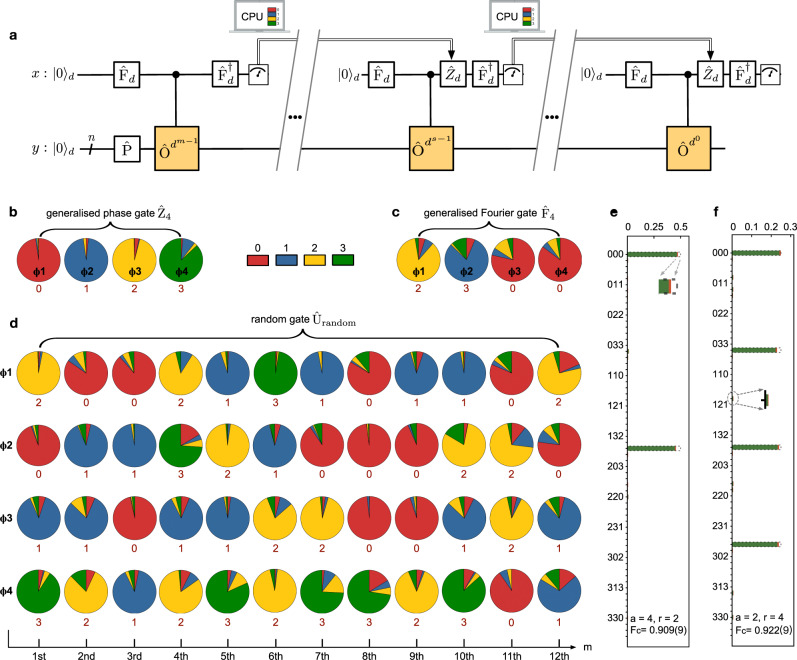
“The order-finding algorithm together with classical processing using the continued fraction algorithm returns the factor of gcd(ar/2 ± 1,N) = (3, 5).”
MethodRapid solution of problems by quantum computation
Deutsch, D., & Jozsa, R. (1992) · Proceedings of the Royal Society of London. Series A: Mathematical and Physical Sciences · doi:10.1098/rspa.1992.0167 · Cited by 2,700
Satellite-to-ground quantum key distribution
Liao, S.-K., Cai, W.-Q., Liu, W.-Y., Zhang, L., Li, Y., Ren, J.-G., Yin, J., Shen, Q., Cao, Y., Li, Z.-P., et al. (2017) · Nature · doi:10.1038/nature23655 · Cited by 1,821 · cited 1×
“The order-finding algorithm together with classical processing using the continued fraction algorithm returns the factor of gcd(ar/2 ± 1,N) = (3, 5).”
MethodSelf-citationIntegrated photonic quantum technologies
Wang, J., Sciarrino, F., Laing, A., & Thompson, M. G. (2020) · Nature Photonics · doi:10.1038/s41566-019-0532-1 · Cited by 1,576 · cited 1×
“We designed the integrated quantum photonic circuit and use 248nm deep ultraviolet lithography to fabricate the silicon-based quantum photonic chip shown in Fig 1A on 220nm silicon-on-insulator (SOI) [3].”
MethodSelf-citationSignificant-Loophole-Free Test of Bell’s Theorem with Entangled Photons
Giustina, M., Versteegh, M. A. M., Wengerowsky, S., Handsteiner, J., Hochrainer, A., Phelan, K., Steinlechner, F., Kofler, J., Larsson, J.-Å., Abellán, C., et al. (2015) · Physical Review Letters · doi:10.1103/physrevlett.115.250401 · Cited by 1,529
Bernstein, E., & Vazirani, U. (1997) · SIAM Journal on Computing · doi:10.1137/s0097539796300921 · Cited by 1,503
Simulated Quantum Computation of Molecular Energies
Aspuru-Guzik, A., Dutoi, A. D., Love, P. J., & Head-Gordon, M. (2005) · Science · doi:10.1126/science.1113479 · Cited by 1,418
Strong Loophole-Free Test of Local Realism
Shalm, L. K., Meyer-Scott, E., Christensen, B. G., Bierhorst, P., Wayne, M. A., Stevens, M. J., Gerrits, T., Glancy, S., Hamel, D. R., Allman, M. S., et al. (2015) · Physical Review Letters · doi:10.1103/physrevlett.115.250402 · Cited by 1,402 · cited 1×
“967(2) was measured to quantify its success probability.”
BackgroundSecurity of Quantum Key Distribution Usingd-Level Systems
Cerf, N. J., Bourennane, M., Karlsson, A., & Gisin, N. (2002) · Physical Review Letters · doi:10.1103/physrevlett.88.127902 · Cited by 1,354 · cited 1×
“922(9) were obtained in comparison with theoretical distributions, showing successful estimations of the order of r= 2 (Fig.”
BackgroundOptimal design for universal multiport interferometers
Clements, W. R., Humphreys, P. C., Metcalf, B. J., Kolthammer, W. S., & Walsmley, I. A. (2016) · Optica · doi:10.1364/optica.3.001460 · Cited by 1,216 · cited 1×
“Together with the combination of on-chip integrated Mach-Zehnder interferometers (MZI) [4], we achieved high-dimensional quantum state generations, unitary operations, coherent state compression, and projection measurements.”
Method
Research works printed but not linked: 1
- Shor, P. W. Algorithms for quantum computation: Discrete logarithms and factoring. Proc. 35nd Annual Symposium on Foundations of Computer Science, IEEE Computer Society Press (1994).
Cited by
Items 101–200 of 273
Frequency-tunable microwave quantum light source based on superconducting quantum circuits
Li, Y., Wang, Z., Bao, Z., Wu, Y., Wang, J., Yang, J., Xiong, H., Song, Y., Zhang, H., & Duan, L. (2023) · Chip · doi:10.1016/j.chip.2023.100063 · Cited by 13
Self-citationNon–Pauli Errors Can Be Efficiently Sampled in Qudit Surface Codes
Ma, Y., Hanks, M., & Kim, M. S. (2023) · Physical Review Letters · doi:10.1103/physrevlett.131.200602 · Cited by 12
Dark path holonomic qudit computation
André, T., & Sjöqvist, E. (2022) · Physical Review A · doi:10.1103/physreva.106.062402 · Cited by 11
Pauli-based model of quantum computation with higher-dimensional systems
Peres, F. C. R. (2023) · Physical Review A · doi:10.1103/physreva.108.032606 · Cited by 20
Programmable photonic unitary circuits for light computing
Kim, K., Park, K., Park, H., Yu, S., Park, N., & Piao, X. (2025) · Nanophotonics · doi:10.1515/nanoph-2024-0602 · Cited by 14
Noise-adapted qudit codes for amplitude-damping noise
Dutta, S., Biswas, D., & Mandayam, P. (2025) · Physical Review A · doi:10.1103/physreva.111.032438 · Cited by 18
Qudit Shadow Estimation Based on the Clifford Group and the Power of a Single Magic Gate
Mao, C., Yi, C., & Zhu, H. (2025) · Physical Review Letters · doi:10.1103/physrevlett.134.160801 · Cited by 24
“Meanwhile, developments on the experimental control of qudit systems with photonics, solid-state, trapped ion, and superconducting platforms have made universal and programmable qudit-based quantum processors possible [41–44].”
Universal Pulses for Superconducting Qudit Ladder Gates
Li, B., Cárdenas-López, F. A., Lupaşcu, A., & Motzoi, F. (2025) · PRX Quantum · doi:10.1103/9dxw-4c7y · Cited by 15
“…various physical platforms, including trapped-ions [17–20], Ryd-berg atoms [21], ultracold atomic mixtures [22], molecu-∗ lar spins [23, 24], photonic systems [25–29] and superconducting circuits [30–37]; such implementations contribute to significant progress on qudit-based quantum computation.”
Optimal Synthesis of Multi-Controlled Qudit Gates
Zi, W., Li, Q., & Sun, X. (2023) · ACM/IEEE Design Automation Conference (DAC) · doi:10.1109/dac56929.2023.10247925 · Cited by 17
“the quantum processors based on photonic systems [8, 9], ion traps [10, 11], and superconducting devices [12, 13], have much higher natural dimensions, where the proposed type of qubit is actually a restricted subspace of the higher-dimensional systems.”
BackgroundRecent progress towards large-scale integrated photonic quantum computation
zhu, H., Chen, T., Ma, H., Zhao, Z., Jia, G. U. O., Liang, Q., Tu, Y., He, T., Luo, W., Wang, B., et al. (2026) · npj Nanophotonics · doi:10.1038/s44310-026-00114-8 · Cited by 24
Self-citationPoór, B., Booth, R. I., Carette, T., van de Wetering, J., & Yeh, L. (2023) · Electronic Proceedings in Theoretical Computer Science · doi:10.4204/eptcs.384.13 · Cited by 21
High-dimensional two-photon quantum controlled phase-flip gate
Chen, M., Tang, J.-S., Cai, M., Lu, Y., Nori, F., & Xia, K. (2024) · Physical Review Research · doi:10.1103/physrevresearch.6.033004 · Cited by 9
“We note that a multidimensional photon-photon gate has also been realized by using auxiliary photons and linear devices [38], but it is probabilistic.”
BackgroundRandomised benchmarking for universal qudit gates
Amaro-Alcalá, D., Sanders, B. C., & de Guise, H. (2024) · New Journal of Physics · doi:10.1088/1367-2630/ad6635 · Cited by 8
Unitary control of multiport wave transmission
Guo, C., Miller, D. A. B., & Fan, S. (2025) · Physical Review A · doi:10.1103/physreva.111.023507 · Cited by 11
Compilation of Entangling Gates for High-Dimensional Quantum Systems
Mato, K., Ringbauer, M., Hillmich, S., & Wille, R. (2023) · Asia and South Pacific Design Automation Conference (ASP-DAC) · doi:10.1145/3566097.3567930 · Cited by 15
“More recently, efforts have intensified with the demonstration of universal qudit quantum processors with error rates that are competitive to qubit systems [7], [22].”
BackgroundScaling W State Circuits in the qudit Clifford Hierarchy
Yeh, L. (2023) · International Conference on Art, Science, and Engineering of Programming (<Programming>) · doi:10.1145/3594671.3594687 · Cited by 16
“As of recent, error rates of universal qudit processors were shown to be competitive relative to qubit processors [20, 75], and maximally entangling qudit gates have been physically realized [50].”
BackgroundNonvolatile silicon photonic MEMS switches enabled by van der Waals force
Hu, Y., Zhu, J., Peng, Y., Hong, S., Lyu, L., Shi, Y., Liu, L., Wang, J., Li, H., & Dai, D. (2025) · Science Advances · doi:10.1126/sciadv.adv7099 · Cited by 14
Self-citationGeneralized Indefinite Causal Orders in an Integrated Quantum Switch
Deng, Y., Liu, S., Chen, X., Fu, Z., Bao, J., Zheng, Y., Gong, Q., He, Q., & Wang, J. (2025) · Physical Review Letters · doi:10.1103/39vh-84n1 · Cited by 11
Self-citationIntegrated bound-state-in-the-continuum photon-pair source
Ye, F., Qin, Y., Cui, C., Sun, X., & Tsang, H. K. (2024) · Photonics Research · doi:10.1364/prj.521058 · Cited by 9
Exact Synthesis of Multiqutrit Clifford-Cyclotomic Circuits
Glaudell, A. N., Ross, N. J., van de Wetering, J., & Yeh, L. (2024) · Electronic Proceedings in Theoretical Computer Science · doi:10.4204/eptcs.406.2 · Cited by 6
Programmable silicon-photonic quantum simulator based on a linear combination of unitaries
Yu, Y., Chi, Y., Zhai, C., Huang, J., Gong, Q., & Wang, J. (2024) · Photonics Research · doi:10.1364/prj.517294 · Cited by 8
Self-citationTang, S., Chen, C., Qin, Q., & Liu, X. (2024) · IEEE photonics journal · doi:10.1109/jphot.2024.3453898 · Cited by 7
“These MZI mesh-based architectures realized on photonic integrated circuits (PICs) can perform universal unitary transformations at the speed of light, which have widespread applications in quantum computations [8], [9], [10], [11] and neural networks [4], [12], [13], [14], [15].”
BackgroundOutcome determinism in measurement-based quantum computation with qudits
Booth, R. I., Kissinger, A., Markham, D., Meignant, C., & Perdrix, S. (2023) · Journal of Physics A Mathematical and Theoretical · doi:10.1088/1751-8121/acbace · Cited by 19
A quantum information processing machine for computing by observables
Remacle, F., & Levine, R. D. (2023) · Proceedings of the National Academy of Sciences · doi:10.1073/pnas.2220069120 · Cited by 7
Boosting the dimensionality of frequency entanglement using a reconfigurable microring resonator
Wu, C., Zheng, Q., Liu, Y., Wang, Y., Ding, J., Zhu, P., Xue, S., Yu, M., Luo, W., Zhang, K., et al. (2023) · Science China Physics Mechanics and Astronomy · doi:10.1007/s11433-022-2072-4 · Cited by 6
Efficient measurement schemes for bosonic systems
Gu, T., Yuan, X., & Wu, B. (2023) · Quantum Science and Technology · doi:10.1088/2058-9565/ace6cd · Cited by 9
“When the excitation is low, such as the nuclei, we can truncate the dimension and effectively simulate bosons using qudits, which is implementable with a qudit-based quantum computer [4, 5].”
MethodComparison of encoding schemes for quantum computing of S > 1 / 2 spin chains
Lötstedt, E., & Yamanouchi, K. (2025) · Physical Review A · doi:10.1103/7mvy-zq7j · Cited by 6
Zhou, K., Xu, J., Su, Q.-P., Zhang, Y., Yu, X., Ma, Z., Zhang, H.-Y., Shi, H.-Y., Zheng, W., Pan, S., et al. (2025) · Physical Review Letters · doi:10.1103/5lm1-2kpk · Cited by 11
“These benefits have motivated the extensive study of qudit-based quantum technologies in photonics [33, 34], neutral atoms and ions [35, 36], and superconducting platforms [30, 37].”
Zhang, D., Qiu, X., & Chen, L. (2024) · Physical Review A · doi:10.1103/physreva.110.012202 · Cited by 5
Litteken, A., Seifert, L. M., Chadwick, J. D., Nottingham, N., Chong, F. T., & Baker, J. M. (2023) · International Conference on Architectural Support for Programming Languages and Operating Systems (ASPLOS) · doi:10.1145/3575693.3575726 · Cited by 10
“These works opt to avoid any computation on the compressed information, apart from compression and decompression, as it becomes increasingly challenging to effectively control qudits with larger dimension [12].”
BackgroundFPGA based hardware platform for trapped-ion-based multi-level quantum systems
朱, M.-D. 明. Z., 闫, L. 林. Y., Qin, X., 张, W.-Z. 闻. Z., Lin, Y., & Du, J. (2023) · Chinese Physics B · doi:10.1088/1674-1056/accb48 · Cited by 7
Symmetry verification for noisy quantum simulations of non-Abelian lattice gauge theories
Ballini, E., Mildenberger, J., Wauters, M. M., & Hauke, P. (2025) · Quantum · doi:10.22331/q-2025-07-22-1802 · Cited by 29
Acar, E., & Yılmaz, İ. (2025) · Neurocomputing · doi:10.1016/j.neucom.2025.129404 · Cited by 8
N-qubit universal quantum logic with a photonic qudit and O(N) linear optics elements
Delteil, A. (2024) · APL Quantum · doi:10.1063/5.0223431 · Cited by 7
Qudit vs. qubit: Simulated performance of error-correction codes in higher dimensions
Keppens, J., Eggerickx, Q., Levajac, V., Simion, G., & Sorée, B. (2025) · Physical Review A · doi:10.1103/2w52-qd2j · Cited by 15
“These advantages sparked the interest in qudit basic control and led to several pro-∗ posals and demonstrations in photonic systems [14, 15], superconducting circuits [16, 17], spin systems [18, 19], trapped ions [20] and Rydberg atoms [21, 22].”
Quantum simulation of oscillatory Unruh effect with superposed trajectories
Cheng, X., Li, Y., Tian, Z., Zhao, X., Qin, X., & Lin, Y. (2026) · Science China Physics Mechanics and Astronomy · doi:10.1007/s11433-025-2841-0 · Cited by 5
“Meanwhile, our simulation could be readily scaled to more levels for internal qudit systems coupled with bosonic modes for various experimental systems including ions [74, 76], neutral atoms [77, 78], photons [79] and superconducting circuits [80, 81].”
Self-citationA Novel Authenticated Quantum Anonymous Secret Sharing for Classical and Quantum Information
Wang, Q., Xu, Y., Li, G., Han, Y.-G., Zhou, Y., Li, X., & Cheng, L. F. (2024) · Advanced Quantum Technologies · doi:10.1002/qute.202400295 · Cited by 6
Efficient preparation of the AKLT State with Measurement-based Imaginary Time Evolution
Chen, T., & Byrnes, T. (2024) · Quantum · doi:10.22331/q-2024-12-10-1557 · Cited by 13
“This can be physically implemented us-ing qutrits [92, 93] on various platorms such as trapped ions [94], superconducting quantum processors [95], silicon carbide [96], as well as silicon-photonic integrated circuits [97].”
Benchmarking of universal qutrit gates
Amaro-Alcalá, D., Sanders, B. C., & de Guise, H. (2024) · Physical Review A · doi:10.1103/physreva.109.012621 · Cited by 7
Shallow Quantum Circuit Implementation of Symmetric Functions With Limited Ancillary Qubits
Zi, W., Nie, J., & Sun, X. (2025) · IEEE Transactions on Computer-Aided Design of Integrated Circuits and Systems · doi:10.1109/tcad.2025.3539002 · Cited by 18
“In recent years, the implementation of qutrit and even qudit systems in experiments has made significant progress [34], [35], [36], [37], [38], [39], [40], [41].”
Quantum Computation via Multiport Discretized Quantum Fourier Optical Processors
Rezai, M., & Salehi, J. A. (2023) · IEEE Transactions on Quantum Engineering · doi:10.1109/tqe.2023.3336514 · Cited by 4
“Spatial light modulation technology allows Fourier optical quantum computation to be electronically programmable [19], [20], [21], a feature that offers many promises [22].”
BackgroundDynamics of qudit gates and effects of spectator modes on optimal control pulses
Özgüler, A. B., & Job, J. (2024) · Physical Review A · doi:10.1103/physreva.109.052404 · Cited by 9
“With the demonstrations of qudit control in quantum devices, such as trapped ions [1], photonic processors [2], and circuit quantum electrodynamics (cQED) systems [3–7], many computational levels can be successfully manipulated in order to de-sign and execute quantum algorithms [8].”
BackgroundA Prototype For Quantum Database In Hybrid Quantum: A Complete EcosystemPreprint
chakraborty, S. (2022) · Research Square · doi:10.21203/rs.3.rs-2156463/v1 · Cited by 3
Li, X.-R., Zhou, Y.-H., Yang, Y., & Shi, W. (2025) · The Journal of Supercomputing · doi:10.1007/s11227-025-07924-1 · Cited by 3
Self-citationTwo-local modifications of Sachdev-Ye-Kitaev model with quantum chaos
Hanada, M., van Leuven, S., Oktay, O., & Tezuka, M. (2025) · Physical review. E · doi:10.1103/3gry-qtl3 · Cited by 5
“For the qudit SYK model introduced above, specific details of the operators acting on each qudit should not be important.”
Efficient fidelity estimation: alternative derivation and related applications
Starke, D. S., Basso, M. L. W., & Maziero, J. (2024) · Communications in Theoretical Physics · doi:10.1088/1572-9494/ad5664 · Cited by 3
Enhancement of the photon pair generation rate by spontaneous four-wave mixing in bent waveguides
Paszkiewicz, M., & Rockstuhl, C. (2025) · Physical Review A · doi:10.1103/physreva.111.013507 · Cited by 3
“This paves the way to quantum communications and optical quantum computation [8, 9], e.g. Gaussian boson sampling [10], as well as quantum metrology to light-sensitive samples [11].”
Inequality constraints in variational quantum circuits with qudits
Bottarelli, A., Schmitt, S., & Hauke, P. (2025) · Physical Review Research · doi:10.1103/3l96-41xf · Cited by 11
Jia, H., Chen, H., Wang, T., & Yang, J. (2022) · Annalen der Physik · doi:10.1002/andp.202200161 · Cited by 3
A Programmable Photonic Chip for High-dimensional Quantum Computing
Huang, J., Chi, Y., Zhang, Z., Yang, Y., Gong, Q., & Wang, J. (2022) · IEEE Region 10 Conference (TENCON) · doi:10.1109/tencon55691.2022.9977476 · Cited by 3
“In this work, we demonstrate a programmable qudit-based quantum processing unit ( d -QPU) on a large-scale silicon-photonic quantum chip [11].”
MethodSelf-citationToward Universal Transformations of Orbital Angular Momentum of a Single Photon
Chen, D., Wang, Y., Wang, F., Zhao, J., & Yang, C. (2023) · Laser & Photonics Review · doi:10.1002/lpor.202300277 · Cited by 4
Quadrupole excitation of atoms with tightly focused Laguerre-Gaussian beams
Mashhadi, L., & Shayeganrad, G. (2024) · Optics Express · doi:10.1364/oe.500848 · Cited by 4
Identification of a natural fieldlike entanglement resource in trapped-ion chains
Klco, N., & howard, B. D. (2024) · Physical Review A · doi:10.1103/physreva.109.062419 · Cited by 4
Scalable and Programmable Emulation of Photonic Hyperbolic Lattices
Park, H., Piao, X., & Yu, S. (2024) · ACS Photonics · doi:10.1021/acsphotonics.4c01184 · Cited by 9
Characterising Semi-Clifford Gates Using Algebraic Sets
Chen, I., & de Silva, N. (2024) · Communications in Mathematical Physics · doi:10.1007/s00220-024-05050-2 · Cited by 12
de Oliveira, M., Subramanian, S., Mendes, L. R. D. S., & Hsieh, M.-H. (2025) · Nature Communications · doi:10.1038/s41467-025-58545-4 · Cited by 13
“They offer greater accuracy and ef fi ciencyininformation storage and processing, along with improved noise resilience 28,29 .”
Barren plateaus are amplified by the dimension of qudits
Friedrich, L., Farias, T. D. S., & Maziero, J. (2025) · Quantum Machine Intelligence · doi:10.1007/s42484-025-00282-4 · Cited by 8
“Although the leading quantum computers currently in development are designed using qubits, an alternative quantum information processing strategy is to utilize qudits.”
Qonductor: A Cloud Orchestrator for Quantum Computing
Giortamis, E., Romão, F., Tornow, N., Lugovoy, D., & Bhatotia, P. (2025) · International Conference for High Performance Computing, Networking, Storage and Analysis (SC) · doi:10.1145/3712285.3759785 · Cited by 34
Study on the Design of Simple Quantum Communications Based on Orbital Angular Momentum
Basudewa, M. I., Anwar, K., & Meylani, L. (2022) · IEEE International Symposium on Future Telecommunication Technologies (SOFTT) · doi:10.1109/softt56880.2022.10009936 · Cited by 3
“However, high-dimensional quantum states d > 2 , called qudits, provide greater potential benefits [7] and becoming a promising successor qudit-based quantum technology [17] that boost quantum capabilities [18].”
BackgroundDissipation and dephasing of interacting photons in transmon arrays
Busel, O., Laine, S., Mansikkamäki, O., & Silveri, M. (2023) · Physical Review Research · doi:10.1103/physrevresearch.5.023121 · Cited by 7
Chamorro, N. L. (2024) · Documento ocasional/Documento ocasional - Banco de España · doi:10.53479/36696 · Cited by 10
Feng, L., Hu, X., Zhang, M., Cheng, Y., Zhang, C., Guo, Y. H., Ding, Y., Hou, Z., Sun, F., Guo, G., et al. (2025) · Optica · doi:10.1364/optica.551264 · Cited by 9
“Many quantum applications including logic gates [34, 35], higher-dimensional entanglement with standard measurements [30, 36, 37], tests of Boson Sampling [38, 39], quantum teleportation [40] and frustrated quantum interference [41] have been demonstrated with PICs.”
Self-citationA Complete and Natural Rule Set for Multi-Qutrit Clifford Circuits
Li, S. M., Mosca, M., Ross, N. J., van de Wetering, J., & Zhao, Y. (2025) · Electronic Proceedings in Theoretical Computer Science · doi:10.4204/eptcs.426.2 · Cited by 6
Qudit low-density parity-check codes
Spencer, D. J., Tanggara, A., Haug, T., Khu, D., & Bharti, K. (2026) · Quantum · doi:10.22331/q-2026-03-13-2023 · Cited by 12
Robust control and entanglement of qudits in neutral atom arrays
Burshtein, A., Fraenkel, S., Goldstein, M., & Finkelstein, R. (2025) · Physical Review Research · doi:10.1103/4xcd-wyxx · Cited by 13
“Basic qutrit ( d = 3) and ququart ( d = 4) logic has also been successfully demonstrated using superconducting trans-mon circuits [18–21], microwave cavities [22], and integrated photonic circuits [23].”
Reprogrammable All‐Photonic Molecular Logic With Ln 3+ Luminescent Hybrids in Solid State
de‐Saralegui, M. P., Fu, L., Neto, A. N. C., Brites, C. D. S., & Hernández‐Rodríguez, M. A. (2025) · Laser & Photonics Review · doi:10.1002/lpor.202502281 · Cited by 5
Lima, P., Cardoso, W. R., & Pádua, S. (2024) · Optics Express · doi:10.1364/oe.504966 · Cited by 3
Programmable Quantum Gate Operations Using Qutrit Quantum Dots
Pogosyan, E. A., & Gazazyan, E. A. (2023) · Optical Memory and Neural Networks · doi:10.3103/s1060992x23070160 · Cited by 2
“Qutrits [1–3], represents a three-level quantum system dimensional Hilbert spaces, introduce additional levels of superposition and entanglement, providing a larger state space for encoding, processing quantum information and quantum gate [4, 5].”
Minimal orthonormal bases for pure quantum state estimation
Zambrano, L., Pereira, L., & Delgado, A. (2024) · Quantum · doi:10.22331/q-2024-02-08-1244 · Cited by 6
All-Optical Ultrafast Arbitrary Rotation of Hole Orbital Qubits with Direct Phase Control
Yan, J.-Y., Zhai, L., Babin, H.-G., Li, Y., Pei, S.-H., Cygorek, M., Fang, W., Gao, F., Wieck, A. D., Ludwig, A., et al. (2024) · Physical Review Letters · doi:10.1103/physrevlett.133.203603 · Cited by 4
“This SRT protocol can also be extended to manipulate other higher orbital states (see Supplementary Section III [45]), suggesting the potential for high-dimensional quantum information processing [50, 51].”
Self-citationHartmann, J.-G., Janković, D., Pasquier, R., Ruben, M., & Hervieux, P.-A. (2025) · Quantum · doi:10.22331/q-2025-04-07-1690 · Cited by 7
“Therefore, for d ≫ 2, it is computationally preferred to use the operator-based expression, while for smaller qu-dits with d ∼ 2, the superoperator representation is generally preferable for numerical simulations.”
Protecting cyclic controlled remote preparation of qudit states in a chain network
Jin, S., Ma, S.-Y., & Lu, Y. (2025) · Journal of Physics A Mathematical and Theoretical · doi:10.1088/1751-8121/ade8b9 · Cited by 2
“Chi et al [35] reported a programmable qudit-based quantum processor in silicon-photonic integrated circuits and demonstrated its enhancement of quantum computational parallelism.”
Symmetry-enhanced counterdiabatic quantum algorithm for qudits
Bottarelli, A., de Andoin, M. G., Chandarana, P., Paul, K., Chen, X., Sanz, M., & Hauke, P. (2025) · Physical Review Research · doi:10.1103/6ldg-3w1f · Cited by 7
“Propelled by recent advances in their experimental control [13–16], qudit-based algorithms and their applications in solving diverse problems are currently receiving significant interest in the quantum computing community [12].”
Self-citationOptical nuclear electric resonance as single qubit gate for trapped neutral atoms
Krondorfer, J. K., Pucher, S., Diez, M., Blatt, S., & Hauser, A. W. (2025) · Journal of Physics B Atomic Molecular and Optical Physics · doi:10.1088/1361-6455/ae21b2 · Cited by 3
Single-qudit quantum neural networks for multiclass classification
de Souza, L. C., & Portugal, R. (2025) · Quantum Information Processing · doi:10.1007/s11128-025-04998-x · Cited by 6
“Recent experimental advancements in qudit-based quantum processors, including implementations with trapped ions [29] and photonic platforms [30], further support the practical viability of qudit systems.”
Auxiliary-Free Replica Shadows: Efficient Estimation of Multiple Nonlinear Quantum Properties
Liu, Q. Y., Li, Z., Yuan, X., Zhu, H., & Zhou, Y. (2026) · Physical Review Letters · doi:10.1103/5khs-7dyz · Cited by 25
Self-citationA Prototype For Quantum Database in Hybrid QuantumPreprint
chakraborty, S. (2022) · doi:10.36227/techrxiv.20237202.v5 · Cited by 2
High Dimensional Quantum Digital Signature Depending on Entanglement Swapping
Aktaş, A., & Yılmaz, İ. (2023) · International Journal of Information Security Science · doi:10.55859/ijiss.1294840 · Cited by 1
Chen, K., Collauto, A., Rogers, C. J., Yu, S., Oxborrow, M., & Attwood, M. (2024) · Materials for Quantum Technology · doi:10.1088/2633-4356/ad8719 · Cited by 1
Tradeoff between noise and banding in a quantum adder with qudits
Agrawal, G., Konar, T. K., Lakkaraju, L. G. C., & Sen, A. (2025) · Physical Review A · doi:10.1103/physreva.111.032408 · Cited by 1
“These dimensional advantages have also been verified in numerous physical systems including superconducting qudits [50], silicon-photonic circuits [51, 52], trapped ions [53–55], photonic circuits [56].”
Applications of Hybrid Machine Learning Methods to Large Datasets: A Case Study
Maragkopoulos, G., Stefanakos, N., Mandilara, A., & Syvridis, D. (2025) · International Conference on Quantum Communications, Networking, and Computing (QCNC) · doi:10.1109/qcnc64685.2025.00114 · Cited by 1
“(b) The modified hybrid ML pipeline that we test in the current work.”
Multi-Dimensional Quantum-like Resources from Complex Synchronized Networks
Saha, D., & Scholes, G. D. (2025) · Entropy · doi:10.3390/e27090963 · Cited by 1
“Examples include superconducting circuits with higher-energy excitations [1–3], trapped ions with multiple accessible electronic states [4], photonic systems utilizing different spatial or frequency modes [5–8], nuclear magnetic resonance [9,10], spin donors [11], and molecular magnets [12].”
Local fermion-to-qudit mappings: A practical recipe for four-level systems
Carobene, R., Giachero, A., Barison, S., & Nys, J. (2025) · Physical Review A · doi:10.1103/bcs4-hxl3 · Cited by 4
Measurement-based quantum computing with qudit stabilizer states
Romanova, A., & Dür, W. (2026) · Quantum Science and Technology · doi:10.1088/2058-9565/ae3b6f · Cited by 8
Resource-efficient entanglement detection in high-dimensional states via two-qubit witnesses
Kadlec, J., Barasiński, A., & Lemr, K. (2026) · Physical Review Research · doi:10.1103/7swz-fdw9 · Cited by 3
The Clifford hierarchy for one qubit or qudit
de Silva, N., & Lautsch, O. (2025) · Proceedings of the Royal Society A Mathematical Physical and Engineering Sciences · doi:10.1098/rspa.2025.0035 · Cited by 20
A Quantum Support Vector Machine with Multilevel Systems
Glazkova, E. V., Kiktenko, E. O., & Fedorov, A. K. (2025) · Bulletin of the Russian Academy of Sciences Physics · doi:10.1134/s1062873825713340 · Cited by 1
Quantum circuits for high-dimensional absolutely maximally entangled states
Casas, B., Rajchel-Mieldzioć, G., Rather, S. A., Płodzień, M., Bruzda, W., Cervera-Lierta, A., & Życzkowski, K. (2026) · Quantum Science and Technology · doi:10.1088/2058-9565/ae46d6 · Cited by 7
“Photonic [7] and superconducting circuit platforms [5, 14] also provide qudit control, though scalability beyond four levels and three-party interactions remains challenging.”
InfluentialAll-Photonic Tunable Molecular Transistor Analog Based on Trivalent Lanthanide Ions Luminescence
Hernández‐Rodríguez, M. A., Neto, A. N. C., de Varona, O., & Brites, C. D. S. (2025) · Journal of Alloys and Compounds · doi:10.1016/j.jallcom.2025.185360 · Cited by 2
Single-qudit control in Sr 87 via optical nuclear electric resonance
Krondorfer, J. K., Diez, M., & Hauser, A. W. (2025) · Physical Review A · doi:10.1103/tw3x-zswm · Cited by 2
Quantum Meets AI: Pioneering the Future of Intelligent Technology of Multiple-Valued Logic
Babu, H. M. H. (2025) · IEEE Access · doi:10.1109/access.2025.3637714 · Cited by 3
“Algorithms such as Deutsch–Jozsa, Quantum Fourier Transform (QFT), and phase estimation benefit from MVL by requiring fewer entangling operations, resulting in more compact and noise-resilient circuits [102].”
Heralded high-dimensional photon–photon quantum gate
Liu, Z., Ren, Z., Wan, P., Zhu, W.-Z., Cheng, Z.-M., Wang, J., Shi, Y.-P., Xi, H.-B., Huber, M., Friis, N., et al. (2026) · Nature Photonics · doi:10.1038/s41566-026-01846-x · Cited by 10
Self-citationEngineering non-Gaussian bosonic gates through quantum signal processing
Anonymous, & Lau, H.-K. (2026) · Physical Review A · doi:10.1103/gdbf-cjz4 · Cited by 11
“Due to the enlarged Hilbert space, using qudits for QIP could reduce circuit complexity and simplify experimental setups [63, 64].”
Reinforcement learning for robust calibration of multiqudit quantum gates
Jaouadi, A., & Ashhab, S. (2026) · Physical Review A · doi:10.1103/717q-ypkg · Cited by 2
“Qudits— d -level quantum systems with d > 2—are increasingly recognized as promising building blocks for quantum information processing, offering larger local Hilbert spaces, richer entangling operations, and potential resource savings in circuit depth and error correction [1–3].”
Photon sources and their applications in quantum science and technologies
(2023) · Progress in optics · doi:10.1016/bs.po.2023.01.002 · Cited by 5
State transfer and entanglement between two- and four-level atoms in a cavity
李, S.-W. 思. L., Feng, T., 胡, X.-L. 骁. H., & 周, X. 晓. Z. (2023) · Chinese Physics B · doi:10.1088/1674-1056/acf205 · Cited by 1
Liu, J., Mu, Q.-X., Wang, Q., Li, G., & Zhang, Z. (2023) · Physica Scripta · doi:10.1088/1402-4896/acf740 · Cited by 2
Self-citationLi, J., Wei, M., Xu, K. J., Tang, B., Yun, Y., Zhang, P., Wu, Y., Bao, K., Lei, K., Chen, Z., et al. (2023) · Optoelectronic devices and integration. Conference · doi:10.1117/12.2687022 · Cited by 1
“Silicon-based photonics is currently the most mature platform for scalable integrated photonics, which has opened up vast prospects for optical communication[1], computing[2, 3], and signal processing[4].”
BackgroundSelf-citationIntegrated photonic quantum computing
Zhang, Y. Y. (2024) · Elsevier eBooks · doi:10.1016/b978-0-323-91765-0.00008-6 · Cited by 2
An on-chip quantum splitter of degenerate photon pairs using a spiral waveguide
Ma, H., Liao, Y. H., Ruan, F., Wang, Y., & Yang, J. (2024) · Applied Optics and Photonics China (AOPC) · doi:10.1117/12.3047784 · Cited by 1
“While non-degenerate photons are valuable for certain quantum applications, 4 frequency-degenerate photons are essential in scenarios requiring indistinguishable photons, such as CNOT gates 5 and fusion-based gates 6 for quantum photonic computing.”
Metadata
- Authors
- Chi, Y., Huang, J., Zhang, Z., Mao, J., Zhou, Z., Chen, X., Zhai, C., Bao, J., Dai, T., Yuan, H., Zhang, M., Dai, D., Tang, B., Yang, Y., Li, Z., Ding, Y., Oxenløwe, L. K., Thompson, M. G., O’Brien, J. L., Li, Y., Gong, Q., & Wang, J.
- Affiliations
- Peking University (CN)
- State Key Laboratory of Modern Optical Instruments (CN)
- Chinese Academy of Sciences (CN)
- Technical University of Denmark (DK)
- University of Bristol (GB)
- The University of Western Australia (AU)
- Shanxi University (CN)
- Corresponding author
- Wang, Jianwei
- ORCID
- Venue
- Nature Communications
- Published
- 2022-03-04
- Volume
- 13
- Issue
- 1
- Pages
- 1166-1166
- ISSN
- 2041-1723 (ISSN-L)
- PMC
- PMC8897515
- OpenAlex
- W4214944326
- Semantic Scholar
- a4390a7f1c46ff8a7fdae863295d0b610023d977
- Cited by
- 273
- References
- 78
- Citations by year
- 2026: 44 · 2025: 73 · 2024: 72 · 2023: 61 · 2022: 23
- FWCI
- 18.77
- Type
- journal article
- Language
- en
- Open access
- gold
- doi.org
- Licence
- cc-by
- creativecommons.org/licenses/by/4.0 (tdm)
- creativecommons.org/licenses/by/4.0 (vor)
- Locations
- Nature Communications (publishedVersion, cc-by)
- PubMed Central (publishedVersion, cc-by)
- PubMed (publishedVersion)
- UWA Profiles and Research Repository (UWA) (submittedVersion, cc-by)
- UWA Profiles and Research Repository (University of Western Australia) (submittedVersion)
- RePEc: Research Papers in Economics (submittedVersion)
- DOAJ (DOAJ: Directory of Open Access Journals) (submittedVersion, cc-by-sa)
- Technical University of Denmark, DTU Orbit (Technical University of Denmark, DTU) (submittedVersion, other-oa)
- Technical University of Denmark, DTU Orbit (Technical University of Denmark, DTU) (submittedVersion)
- Greater South Information System
- Funders
- Villum Fonden (00013367, 00025371)
- National Natural Science Foundation of China (61975001, 61675007, 61775003, 61590933, 61904196, 2018B030329001)
- Topics
- Physical Sciences › Computer Science › Artificial Intelligence › Quantum Computing Algorithms and Architecture
- Physical Sciences › Physics and Astronomy › Atomic and Molecular Physics, and Optics › Quantum Information and Cryptography
- Physical Sciences › Engineering › Electrical and Electronic Engineering › Photonic and Optical Devices
- Keywords
- qudits, silicon photonics, photonic integrated circuits, programmable quantum processors, quantum parallelism, quantum Fourier transform, Deutsch-Jozsa algorithm, Bernstein-Vazirani algorithm, phase estimation, quantum state preparation and measurement, monolithic integration
About these checks
Registry, retraction, Cites and statistics results are computed, not judged, with one exception: a printed reference that no index lists is read once by a model before it counts as a citation error. Claims are extracted by a model and kept only when their quote appears verbatim in the text; each cited source is then checked, with a model’s help, for whether it says what the claim relies on. Those verdicts can be wrong — read the claim’s quote and the cited source before relying on one.
Statistics and arithmetic are recomputed, not judged.
Confidence bands are shown only for fields calibrated on our annotated test set. None is calibrated yet, so no band is shown.
What counts as a claim ›How we measure confidence ›How we check this ›
Are you an author, or do you see a problem with this page? Request a review
Data sources
Bibliographic data: Semantic Scholar, OpenAlex, Crossref.
Contains information from the Semantic Scholar Academic Graph Datasets, made available under the ODC Attribution License (ODC-BY 1.0).
Semantic Scholar’s data is described in: Kinney, R., et al. (2023). The Semantic Scholar Open Data Platform. arXiv:2301.10140.
